Tag Archives: Goodwood

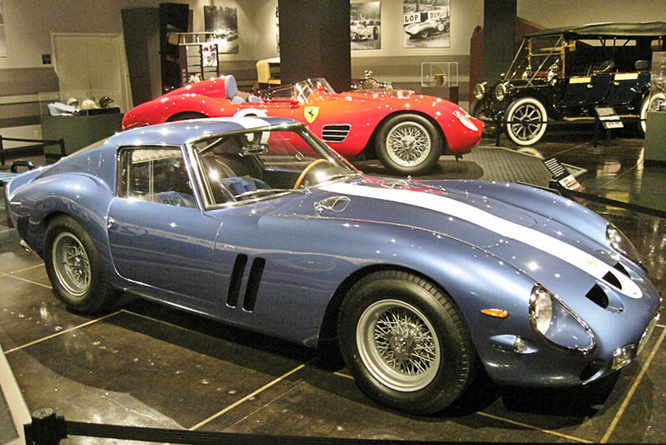
Raced, Crashed, Stolen & Returned – Ferrari 250 GTO #3387

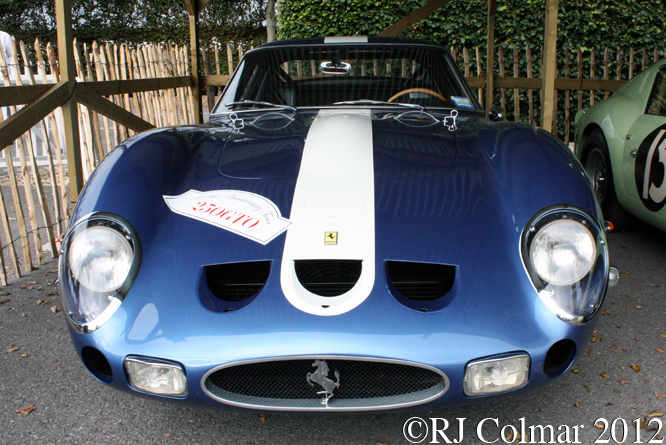
With the price of Ferrari 250 GTO’s in the 20 – 30 million US dollar range it occurred to me recently that to be a mere millionaire is probably no longer enough to purchase one of the 39 cars built.

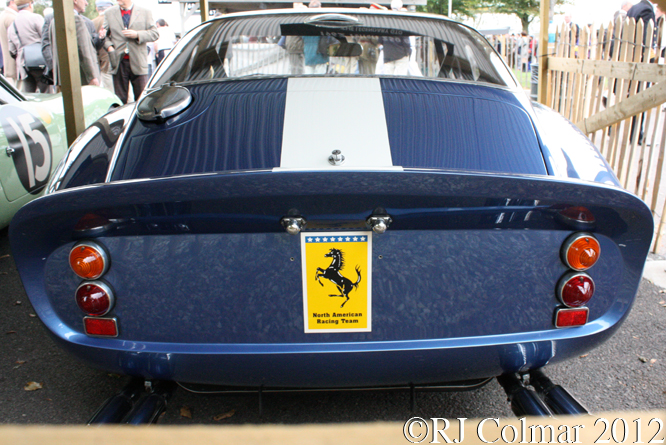
Today’s featured Ferrari 250 GT0 #3387 was sold to Luigi Chinetti in March 1962 after the factory had done some testing with it at Monza earlier in the month.Chinetti entered the car for Phil Hill and Oliver Gendebien in the Sebring 12 hours under his NART banner and came home 2nd OA, 1st in class.

Ferrari 250 GTO, Goodwood Revival

Bob Grossman bought the car and entered it for himself and George Roberts jr in the ’62 Le Mans 24 hours coming home 6th overall 3rd in class behind two more GTO’s. Grossman scored one more class win at Bridgehampton in ’62 before selling the car to the Gammino family.

Mike Gammino raced the car through ’63 and ’64 scoring 4 class wins and 2 outright victories, during practice for ’64 Daytona 2000kms Mike crashed the car and ended up replacing the body with a new body from Scaglietti

Ferrari 250 GTO, Petersen Automotive Museum

Gammino sold the car back to Grossman who drove #3387 to another class victory at Nassau in 1965 before the car retired from active competition and was sold to K F White.

In 1979 R Finger bought the car and eleven years later a Kawasaki motorcycle dealer masterminded a plan to relieve Dr Finger of #3387 after offering the car to interested parties from his fax machine.

Ferrari 250 GTO, Goodwood Revival

Six men from the Savanah manged to steal #3387 and K F White showed up with a US$ 4.3 million cashiers cheque, but backed out of the deal when he suspected the car was a fake because the “real” #3387 was confirmed to be with Dr R Finger. The FBI picked up #3387 later that afternoon returning the car to it’s rightful owner and sending the perpetrators on their way to a Federal Penitentiary.

The car as seen today is seen wearing the colours the original body wore at the Sebring in 1962.

My thanks to Geoffrey Horton for his photo of #3387 seen at the Petersen Automotive Museum in 2011, the two other photo’s were taken at the 2012 Goodwood Revival.

Thanks for joining me on this “Raced, Crashed, Stolen & Returned” edition of “Gettin’ a li’l psycho on tyres”, I hope you will join me again tomorrow. Don’t forget to come back now !

Share

Engineering Adventure Get Involved – The BLOODHOUND Project

Earlier this year a team of 300 workers in the Hakskeen Pan in the Nothern Cape of South Africa set about clearing rocks and obstacles from 9,500,000 square meters of desert, by hand, in order to prepare a 19 km long surface 500 meters wide in anticipation of the arrival in the new year of what may well prove to be the biggest land based engineering adventure of the decade.
BLOOHOUND SSC, Mock Up, Goodwood Festival Of Speed

The Hakskeen Pan was chosen by former World Land Speed Record Holder Richard Noble, 633 mph in 1983, and present World Land Speed Record Holder Wing Commander Andy Green, 763mph in 1997, and their BLOODHOUND Project team as the most suitable venue to realise a £15 million pound dream in just over 80 seconds by driving their six and a half ton vehicle at a two way average speed of over 1,000 mph in 2 consecutive runs.
BLOOHOUND SSC, Mock Up, Goodwood Festival Of Speed

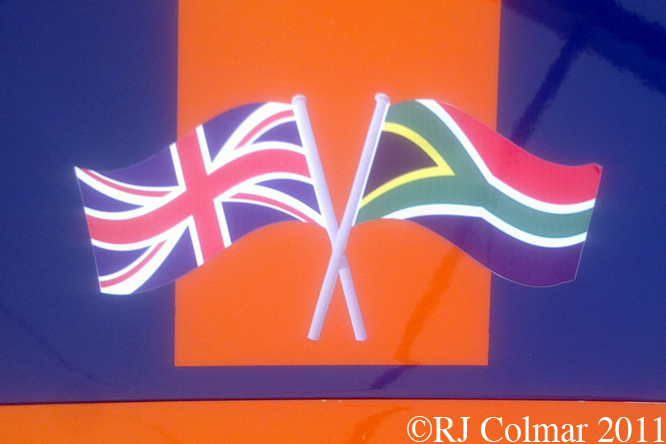
In order to achieve this goal some lateral thinking was required in order to get some basic backing. The BLOODHOUND project was announced in 2008 as one who’s primary mission is too inspire future generations of engineers with a program of school projects in both the UK and South Africa which are designed to inspire youngsters to see the possibilities and realise their dreams through engineering and team work. One school has already broken the Land Speed Record, for a model car.
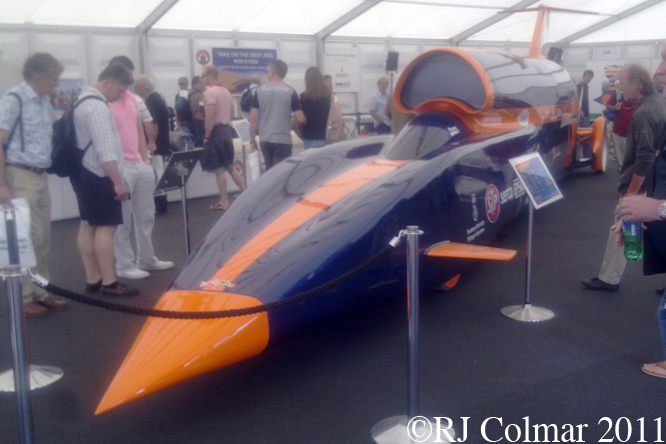
BLOOHOUND SSC, Mock Up, Goodwood Festival Of Speed

Serving RAF pilot Wing Comander Andy Green will be taking the wheel of the BLOODHOUND SSC when it gets to Hakskeen Pan and to train for the 2.5g he will experience during acceleration and 3g he will experience during breaking he will be engaged in stunt flying exercises that expose his body to similar forces.
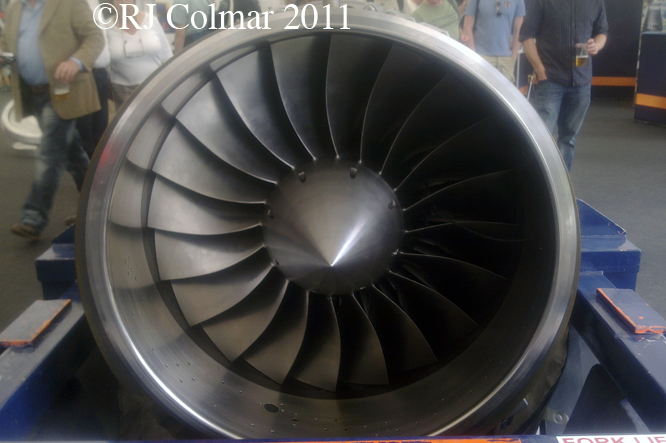
BLOOHOUND SSC, Mock Up, Goodwood Festival Of Speed

To propel the 6.5 ton BLOODHOUND SSC to 300 mph the team have acquired a prototype Eurojet EJ200 jet engine which produces 90 kN / 20,000 lb/f of thrust with the after burner on.
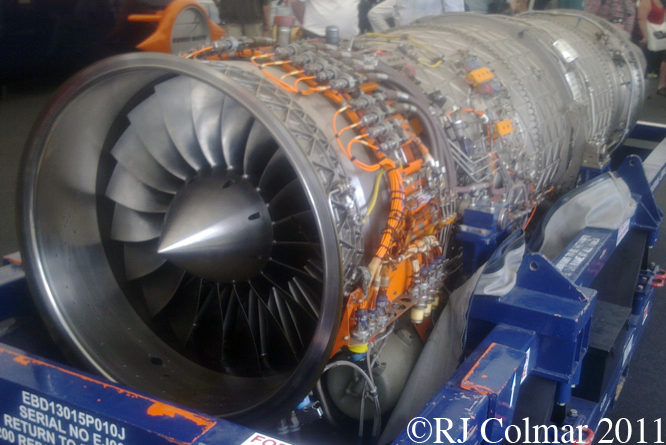
BLOOHOUND SSC, Mock Up, Goodwood Festival Of Speed

Allegedly the motor was destined for a Museum before getting reassigned to Land Speed Record breaking duties.
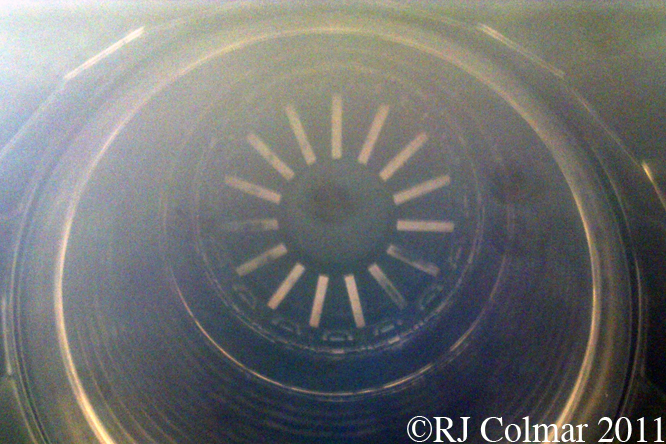
BLOOHOUND SSC, Mock Up, Goodwood Festival Of Speed

Two such motors are usually to be found in the Eurofighter Typhoon.
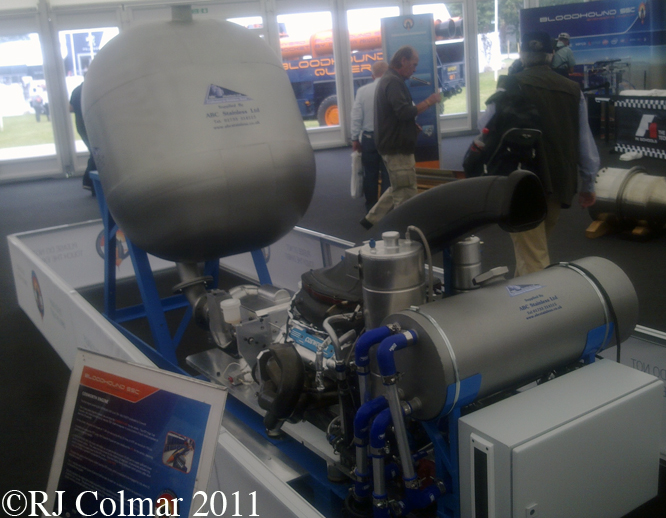
BLOOHOUND SSC, Mock Up, Goodwood Festival Of Speed

In order to accelerate another 700 mph this device will pump a ton of High Test Peroxide (HTP), highly concentrated hair dye, at 820 psi in 20 seconds through a silver catalyst which instantly decomposes the HTP into a 600°C stream of steam and oxygen which ignites the rockets fuel grain hydroxyl-terminated polybutadiene, like rubber pellets which will generate another 111 kN / 25,000 lb/f of thrust.
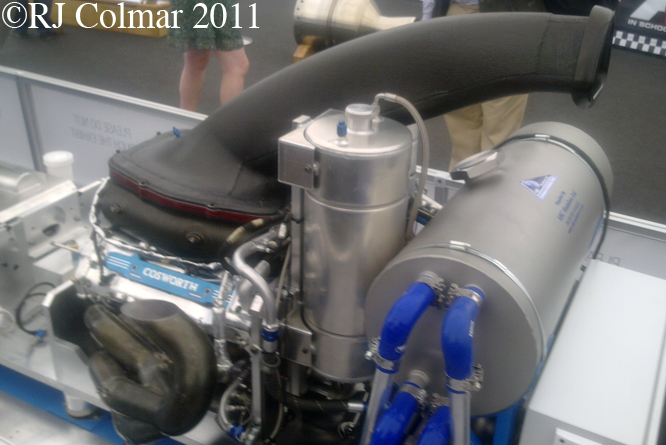
BLOOHOUND SSC, Mock Up, Goodwood Festival Of Speed

Already dubbed the most expensive fuel pump on a four wheeled vehicle in the world the pump is powered by a 2.4 litre / 146 cui Cosworth CA 2010 V8 motor which was designed for Formula One applications where the revolutions are restricted to 18,000 rpm.
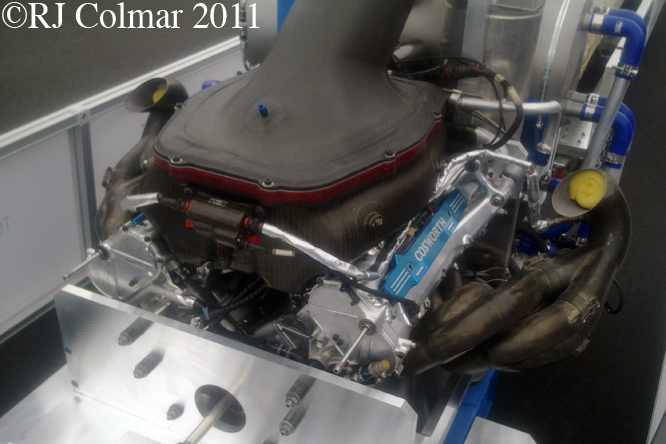
BLOOHOUND SSC, Mock Up, Goodwood Festival Of Speed

The 18″ rocket was designed by Manchesters Daniel ‘Rocket Dan’ Jubb a self taught roketeer who has been building rackets since he was 5 years old. The first test of the BLOODHOUND SSC rocket were carried out earlier this year and the results exceeded expectations.
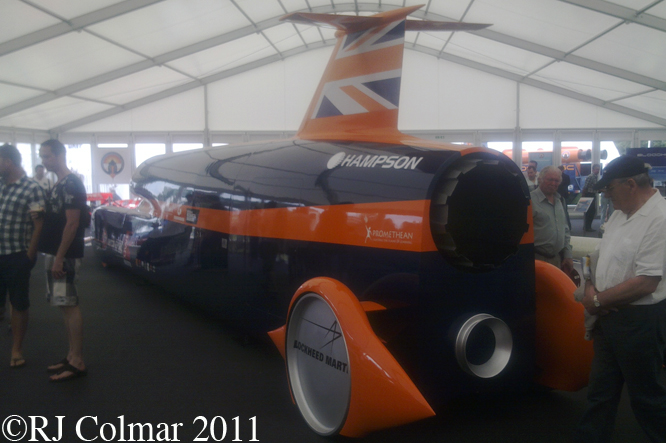
BLOOHOUND SSC, Mock Up, Goodwood Festival Of Speed

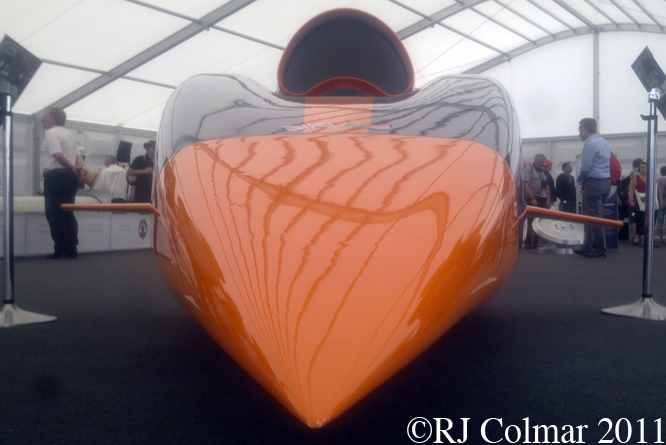
The vehicle shown here is a full scale mock up of the real thing which is being built a few miles down the road for me here in Bristol next to the SS Great Britain.
BLOOHOUND SSC, Mock Up, Goodwood Festival Of Speed

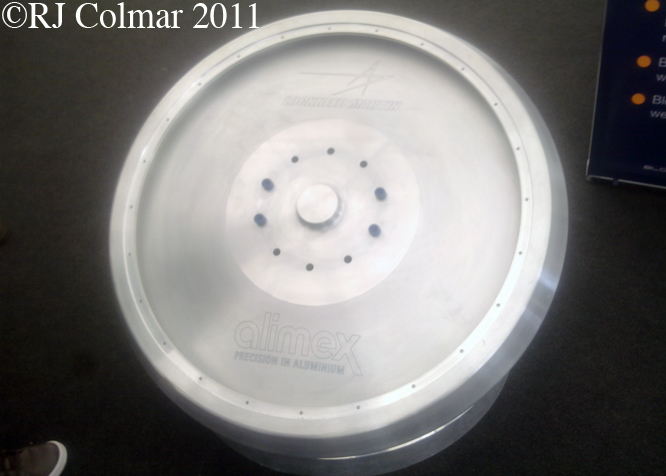
The 95 kg / 209 lb , Alimex aluminium wheels have been designed with the help of Lockheed Martin, at 1000 mph they will rotate at 10,000 rpm and the rims will experience 50,000 radial G !
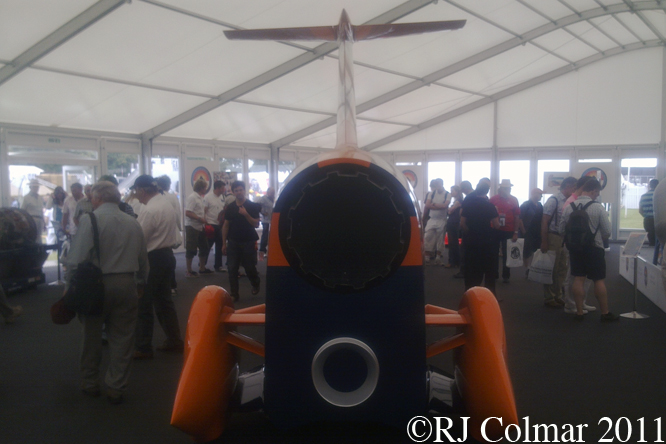
BLOOHOUND SSC, Mock Up, Goodwood Festival Of Speed

In order to take the world record over 1,000 mph the car will have to make two runs in opposite directions with a combined average timed speed over the flying mile of over 1,000 mph. With only 19 kms of straight desert on which to play with stopping the car safely and turning it around, with in one hour, is crucial to slow the car down air brakes will be deployed once the car has slowed down to 800 mph and once the car has been slowed to 600 mph parachutes will be deployed with disc brakes available at speeds below 250 mph.

Early next year should see BLOODHOUND SSC being given it’s first test runs in the UK before being shipped to South Africa for a crack at setting a 1000mph Land Speed Record.
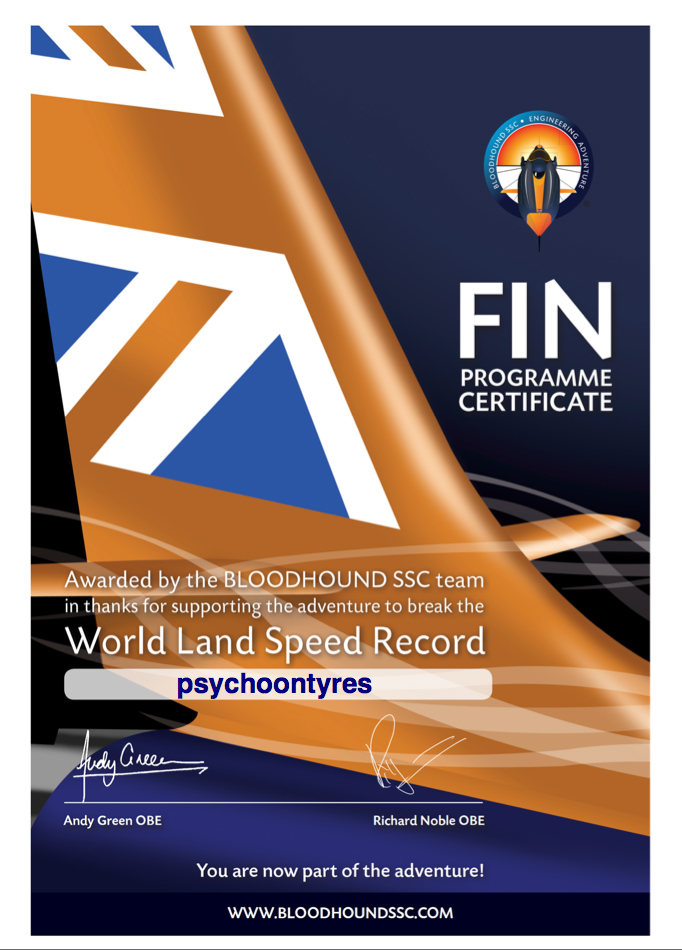
psychoontyres BLOODHOUND SSC Certificate

If you’d like to get involved with this Land Speed Record Engineering Adventure check out the BLOODHOUND SSC website linked here, the legend ‘psychoontyres’ will be appearing on the car as part of the Name on the Tail Fin program.

Wishing all GALPOT readers and contributors all the best for the New Year.

Thanks for joining me on this “Engineering Adventure Get Involved” edition of “Gettin a li’l psychoontyres” I hope you will join me again tomorrow. Don’t forget to come back now !

Share

Celebrity Car – Ferrari 550 Maranello GTS

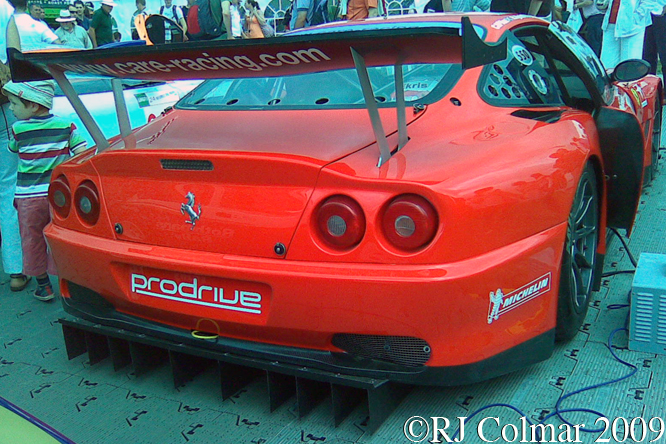
The 200 mph front engine rear gearbox 550 Maranello road model was introduced in 1996 with a 485 hp 5474 cc / 334 cui 4 valve quad cam V12 motor that could take the GT car from zero to 62 mph in 4.5 secs.

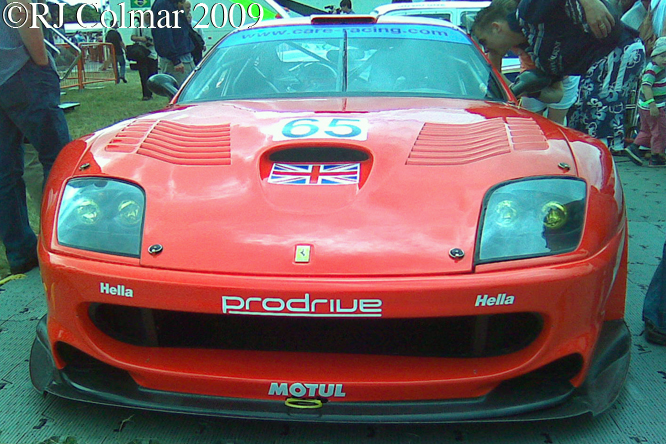
Ferrari 550 Maranello GTS, Goodwood Festival of Speed

Prodrive prepared a batch of 20 550 Maranello GTS’s for racing in Europe and the States where they were regular winners in the GT/GTS class in 2001.

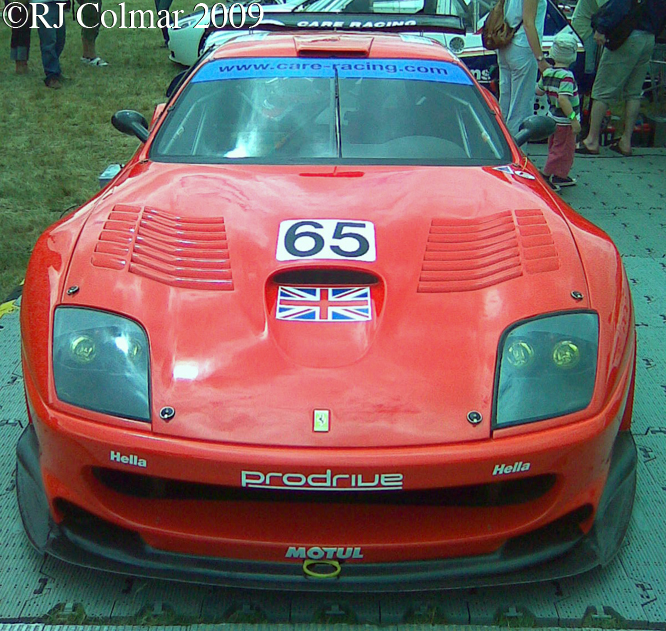
Ferrari 550 Maranello GTS, Goodwood Festival of Speed

In 2003 another Prodrive 550 Maranello GTS beat the Corvettes by 10 laps at the Le Mans 24 hour race coming home 10th overall.

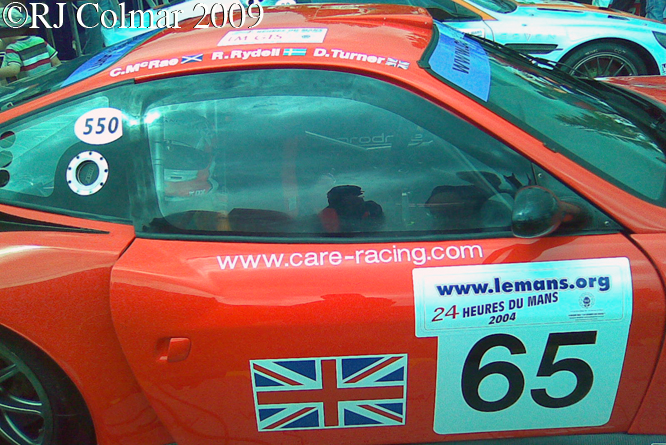
Ferrari 550 Maranello GTS, Goodwood Festival of Speed

This chassis has taken part in at least 42 Races in the GT/GTS class for at least four different teams from 2002 to 2006 it has never recorded an out right win but has scored several class wins.

In 2004 this chassis (Prodrive 03) driven by Darren Turner, Rickard Rydell and Colin McRae came in 9th overall at Le Mans but was beaten by two Corvettes which finished 16 and 5 laps ahead respectively.

Ferrari 550 Maranello GTS, Goodwood Festival of Speed

Today’s featured Celebrity Car has been driven by a number of well known drivers including Colin McRae former World Rally Champion, Rickard Rydell former British Touring Car Champion, Alain Menu former British Touring Car Champion, Luc Alphand former World Cup Skiing Champion and Dakar winner, David Brabham, former Japanese GT Champion and Le Mans winner 2009, Jan Magnussen, former Danish Touring Car Champion, Danica Patrick queen of IRL and NASCAR, Darren Manning IRL driver, Christophe Bouchut 1993 Le Mans Winner, and one of my former racing instructors Tim Sugden former British and Asia Pacific GT Champion.

Thanks for joining me on today’s “Celebrity Car” edition of “Gettin’ a li’l psycho on tyres”, I hope you will join me again tomorrow, when I’ll be looking at a Formula One Lotus. Don’t forget to come back now !

Share

Torrey Canyon – Lotus Ford T86

On March 18th 1967 Shipmaster Pastrengo Rugiati elected to take his charge the 974 ft Torrey Canyon carrying 120,000 tons of crude oil on a disastrous short cut between the Scilly Isles and the Cornish mainland on his way to Milford Haven and ended up causing the worlds largest ship wreck when the boat grounded on the Seven Stones Reef. As the consequent environmental disaster unfolded the ship was bombed sending it 98ft below and the oil spill was repeatedly bombed in a vain effort to keep the oil off the beached of England, France and surrounding islands.

In 1969 Peter Wright was working on the ground breaking BRM P142 which would have introduced aerodynamically induced ground effects to racing car design when John Surtees joined BRM and insisted on opting for a conservative approach and developing the existing BRM P138 and P139 chassis with which Big John scored a season best 3rd place driving the P 139 at the 1969 US Grand Prix before quitting BRM to start his own team.

Peter left BRM and some years later started work for Technocraft to develop a vacuum assisted resin injection composite process which was to be used for the manufacture of body shells for the Lotus Elite, Eclat and Esprit road cars and Colin Chapman’s boat companies.

After the failure of the Lotus 76 in 1975 Colin Chapman asked another ex BRM employee Tony Rudd, now group engineering director at Lotus, to re-think how a Formula One car might be made to make proper use of the front tyres.

Rudd drafted his former colleague Peter Wright in to run the wind tunnel “in his spare time” after his commitments at Technocraft. The fruit of this collaboration was the successful Lotus 78 and world championship winning Lotus 79.

Lotus Ford 86, Goodwood Festival of Speed

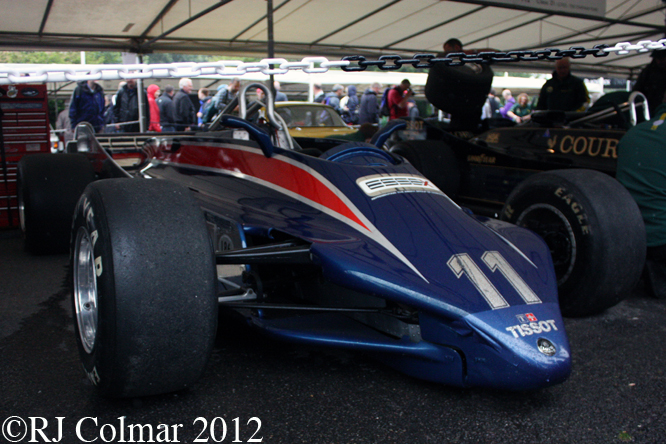
The team were not so lucky with the Lotus 80, from which they took a step back with the Lotus 81 before regrouping with their next innovation the twin chassis Lotus 86 seen here.

What Peter had found out was that the Lotus 80 and to a lesser extent the Lotus 81 were suffering from aero flutter causing the cars to porpoise as a result of having springs that were too soft for the aerodynamic loads being put through the wheels and suspension.

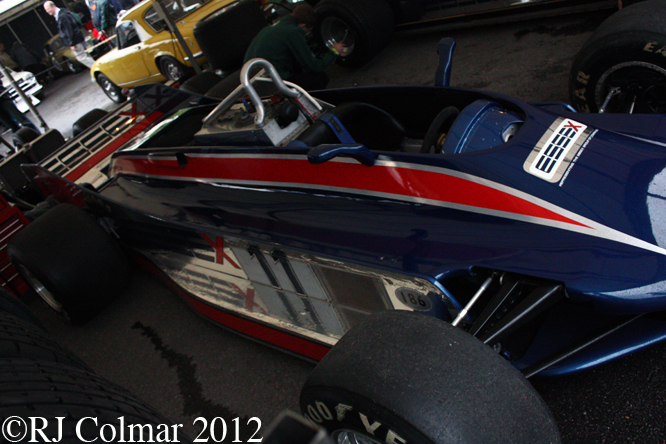
By having a twin chassis Peter hoped to use a conventional monocoque chassis in which the driver sat and a separate independently sprung ground effect chassis attached to the first at the outboard ends of the lower suspension. The suspension for the outer ground effect chassis was much stiffer than for the inner monocoque chassis and as a result in theory should not be quite so sensitive to flutter or likely to porpoise.

In order for the car to work not only would the science have to be proven but the rule book scrutinised to ensure the car remained legal. By having the outer ground effect chassis suspended from the bottom suspension links using very stiff rubber bump stops the criteria for having all parts of the car with an aerodynamic influence entirely sprung, was met.

To check the science the team took a 1980 Lotus 81 added a spacer between the engine and the fuel tank through which the central cross member of the outer chassis would pass, made provision for the front cross member of the outer chassis to pass under the driver legs and had had the third rear cross member of the outer chassis pass over the gearbox.

The weight of the outer chassis was kept low using the in house developed carbon fibre process that Peter had been developing for the Lotus road cars and Champman’s boats.

Lotus Ford 86, Goodwood Festival of Speed

Amid much secrecy the Lotus 86 was built and then taken to Jarama for a private test, thanks to the motors heavily revised oil pumps, that were required by the second chassis, a lot of oil was spilled, hence the Torrey Canyon nick name for the car.

Once the leaks had been fixed the Lotus 86 proved that the aerodynamic outer chassis worked providing plenty of down force while the inner monocoque chassis, in which the driver sat, remained free of the porpoising effect that made the car difficult to control.

Upon completion of the test the Lotus 86 which was never subsequently raced was put aside and work started on the Lotus 88 using the same principles.

Thanks for joining me on this “Torry Canyon” edition of “Gettin’ a li’l psycho on tyres” I hope you will join me again tomorrow for a look at an old Rolls Royce. Don’t forget to come back now !

Share

Nothing Better – Ferrari 250MM Pininfarina Berlinetta #0353 MM (0239 EU)

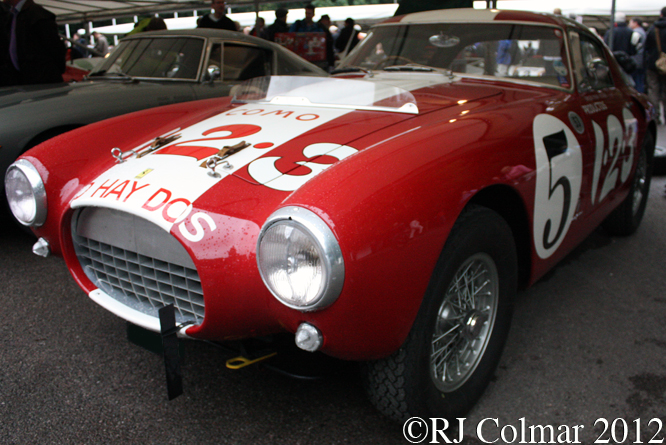
After beating Phil Hill on the second stage of the 1952 Carrera Panamerica Mexican hot shot Efrian Ruiz Echeverria skidded of the road while in 10th place overall on the third, of five, stage of the race in his Ferrari 212 Inter Berlinetta chassis #0239 EU.

Ferrari 250 MM, Goodwood Festival of Speed

He sent the car back to Ferrari for repairs and while it was there Efrian asked if the factory would build him a Ferrari 250MM like the one used by Giovanni Bracco which had proved to be the fastest car in the 1952 Carrera Panamerica field although transmission failure 300 miles from the finish handed a 1-2 victory to the Mercedes Benz Team.

Ferrari 250 MM, Goodwood Festival of Speed

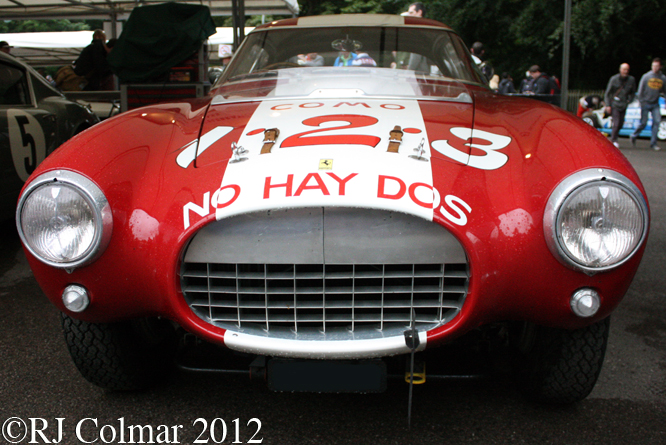
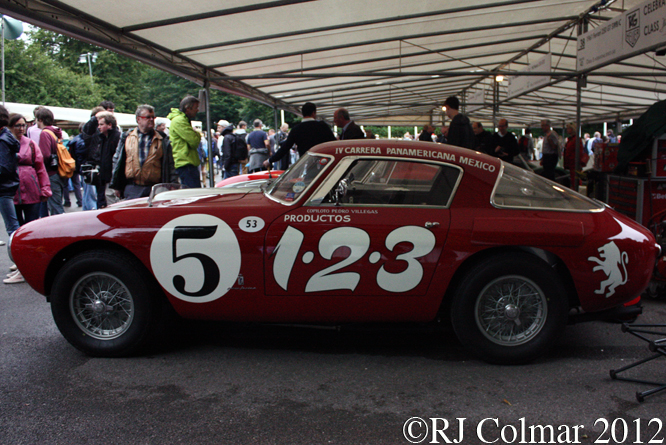
Ferrari were happy to oblige going so far as swapping the identity from Efrian’s old 212 Inter #0239EU to that of the new 250MM chassis #0353MM at the owners request so that import duty would not have to be paid on the new car.

Ferrari 250 MM, Goodwood Festival of Speed

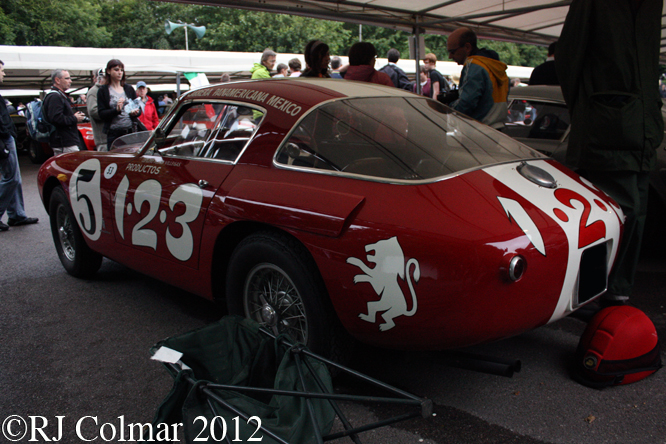
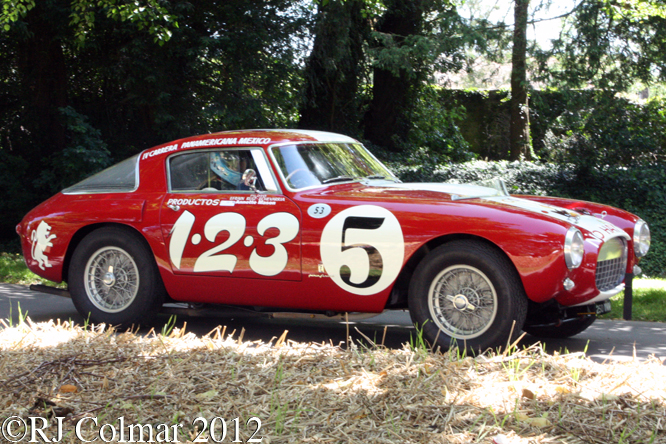
The 1953 Panamerica entry list included five works Lancia’s with Juan Manuel Fangio in the lead car and five non works Ferrari’s. Fangio led a 1/2/3 finish for the Lancia Team and Efrian came in as first privateer in 7th place. A result that remains the best for any Mexican driver in the original series of Carrera Panamerica races run from 1950 to 1954.

Ferrari 250 MM, Goodwood Festival of Speed

Thanks to William (WDH74) at The Nostalgia Forum I have found out what the meaning of the legend “Como 123 no hay dos” which appears to be a sponsors strap line on the bonnet of the car. “No hay dos” translates to “nothing better” from Mexican in this case nothing better than products from sponsor Industrias 1-2-3 owned by Santiago Ontanon who’s products include vegetable cooking oil and laundry detergent.

Ferrari 250 MM, Goodwood Festival of Speed

The 1953 Carrera Panamerica was #0353 MM (0239 EU)’s only in period competitive outing, the car passed through various hands and 3 restorations later the car is seen above at Goodwood Festival of Speed where it was entered by Nick Mason for his wife Annette to drive.

Ferrari 250 MM, Goodwood Festival of Speed

My thanks to WDH74, Arjan de Roos, Doug Nye, Regazzoni and Tmeranda at The Nostalgia Forum for lessons in Mexican and Mexican house hold product marketing.

Thanks for joining me on this “Nothing Better” edition of “Gettin’ a li’l psycho on tyres” I hope you will join me again tomorrow when I’ll be looking at a Lotus rally car project. Don’t forget to come back now !

Share

Hot Rover #2 – MG ZS

The MG ZS was the second prong of Rover MG’s three pronged attack on the market for hot vehicles launched in 2001 alongside the MG ZR I looked at last week.

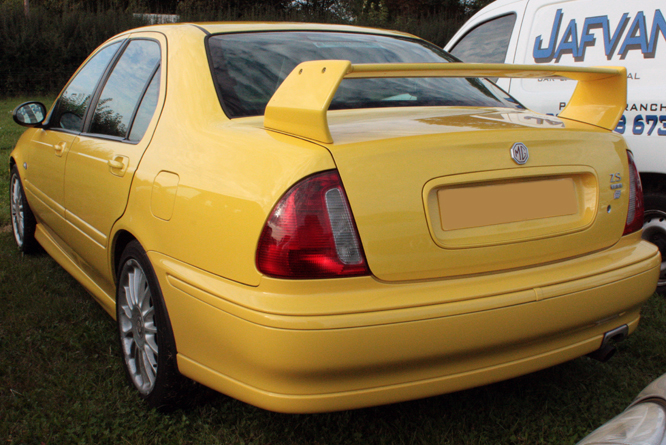
MG ZS, Goodwood Revival

The ancestry of the MG ZS can be traced back to fifth generation Honda Civic, the floor pan of which Rover used to build the Rover 400 model which when face lifted became the Rover 45.

MG ZS, Goodwood Revival

The ZS was made available with a range of tuned motors from the Rover 45 and a tuned 175hp version of the 2.5 litre / 152 cui V6 from the larger Rover 75.

MG ZS, Goodwood Revival

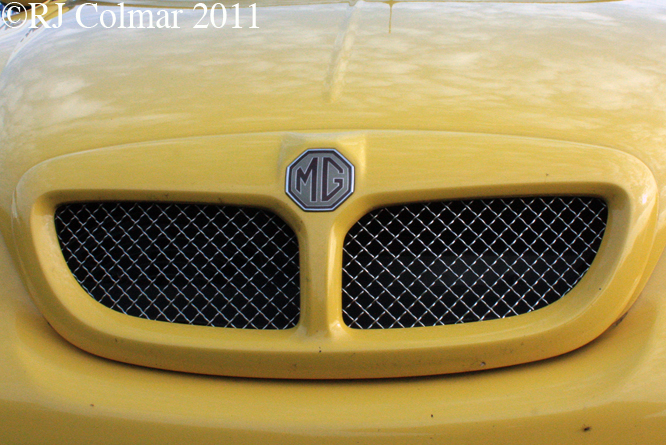
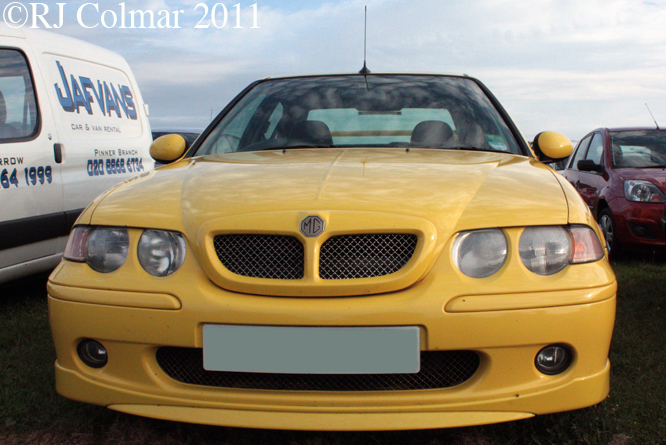
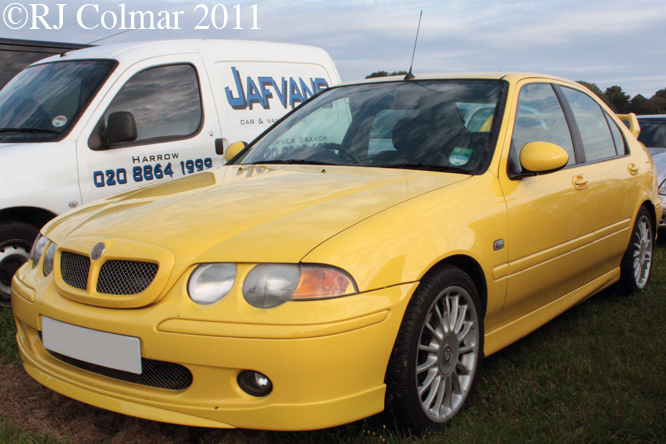
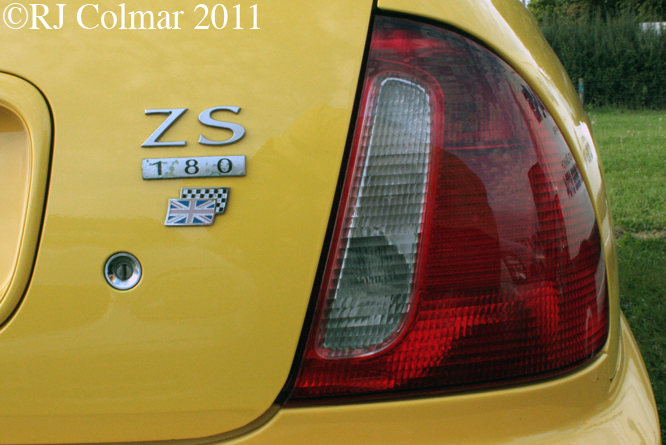
The 2001 vehicle seen here at the Goodwood Revival last year is the model topping ZS 180 with the 175 hp V6 that gives the ZS a rest to 60 mph time 7.3 seconds and top speed of 139 mph. The ZS 180 has larger brakes discs and brake calipers than all of the other ZS models.

MG ZS, Goodwood Revival

The Honda based chassis pan with double wishbone front suspension and multi link rear suspension proved eminently adaptable to switch from optimised for comfort settings required for Rover 45 customers to optimised for handling settings required for MG ZS customers which along with the ZS steering came in for praise from press when launched.

MG ZS, Goodwood Revival

The large rear spoiler was standard on ZS 180 models up until 2004 when the model was face lifted with a much smarter body kit.

Thanks for joining me on this “Hot Rover #2” edition of “Gettin a li’l psycho on tyres” I hope you will join me again tomorrow. Don’t for get to come back now !

Share

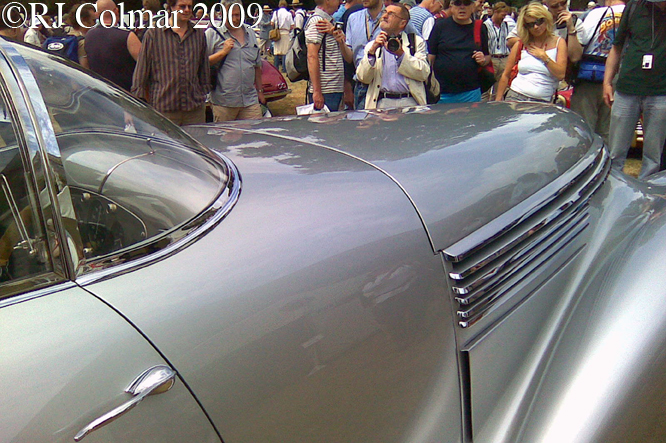
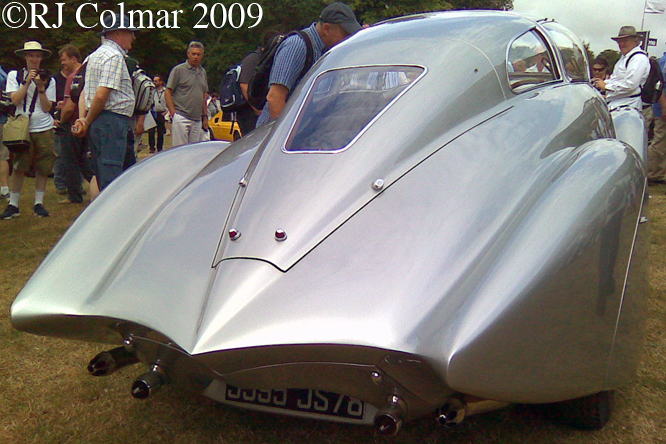
Hydro-pneumatic Independent Suspension – Hispano Suiza H6C Xenia

This unique 1938 Hispano-Suiza H6C Xenia is powered by a six cylinder 8 litre / 488 cui 160 hp engine.

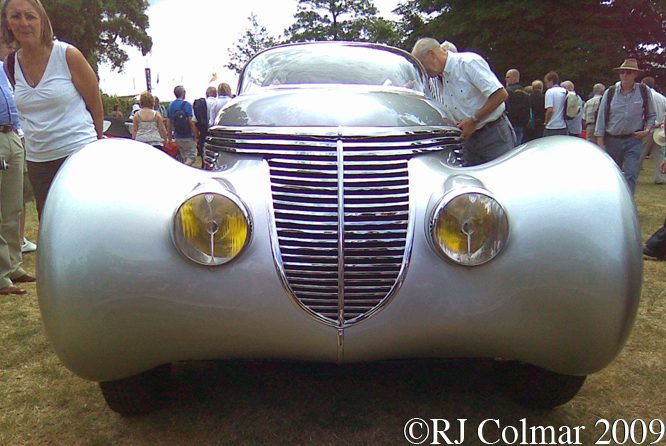
Hispano Suiza H6C Xenia, Goodwood Festival of Speed

Styling was by aerodynamicist Jean Andreau and crafted by Saoutchick on a modified Hispano – Suiza H6B chassis.

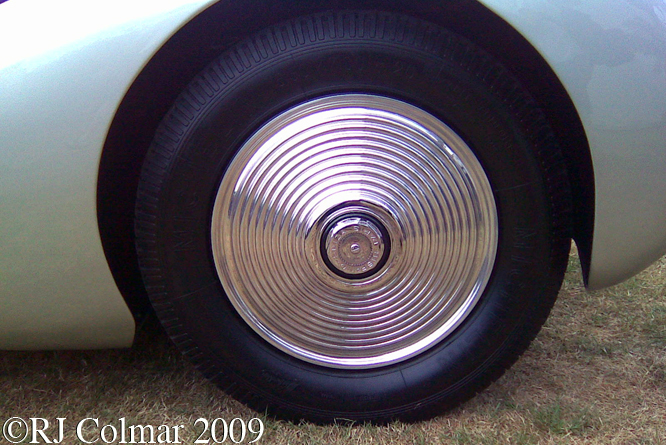
Hispano Suiza H6C Xenia, Goodwood Festival of Speed

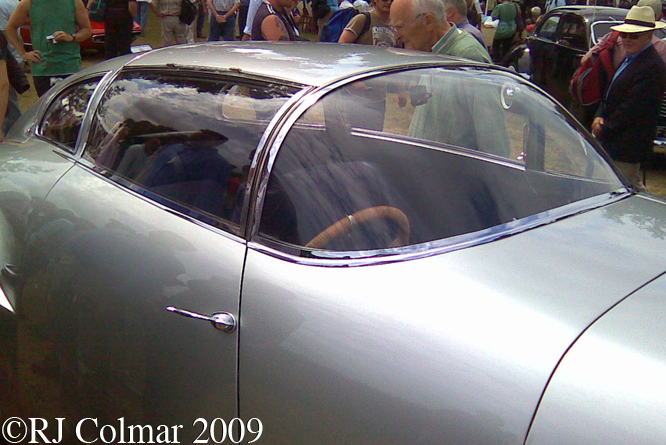
The doors open in parallel with the coachwork in much the same way as the rear side door of a VW Microbus.

Hispano Suiza H6C Xenia, Goodwood Festival of Speed

Xenia was commissioned by Andre Dubonnet to showcase his company’s latest patent hydro-pneumatic independent suspension which was subsequently used under license by General Motors, Alfa Romeo and Fiat amongst others.

Hispano Suiza H6C Xenia, Goodwood Festival of Speed

The vehicle features a Hispano – Suiza power assisted brake system which was one of several patented Hispano – Suiza features used under license by Rolls Royce.

Hispano Suiza H6C Xenia, Goodwood Festival of Speed

This car was named after Andre Dubonnet’s wife Xenia, allegedley the was kept hidden for the duration of WW2 in the Saint Cloud road tunnel.

Thanks for joining me on this “Hydro-pneumatic Independent Suspension” of ‘Gettin’ a li’l psycho on tyres”, I hope you will join me again tomorrow. Don’t forget to come back now !
Share