Tag Archives: Goodwood

Goodwood Revival 2012 – #1 Track Action

I planned to get up at 4am on Friday and head to Goodwood at 5 prompt, the first part of the plan worked well but by the time I’d corrected a false start and gone back home to collect my ticket it was 5:30 am before I hit the road in earnest.
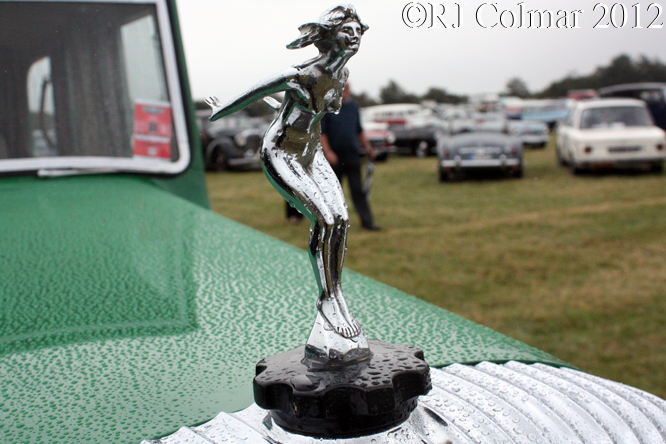
Daimler LQ20, Goodwood Revival

As I arrived at Goodwood the 8 O’clock news headline on the radio was about a controversy surrounding pictures of naked Royalty that had been published in France. I switched the radio off before the whole story had been told and headed off into a car park full of classic and cars where I found this mascot on a Daimler LQ20.
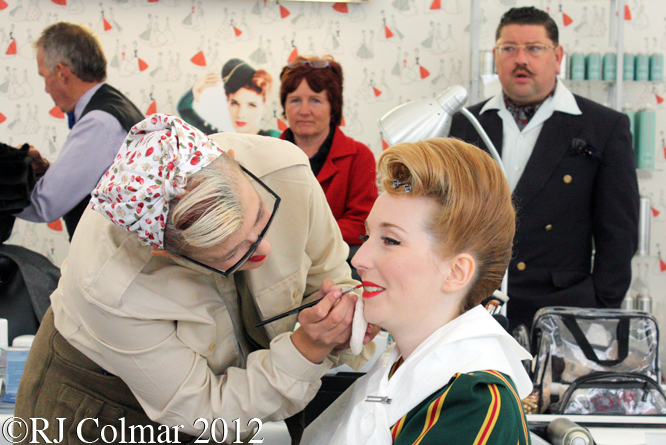
Make Up, Goodwood Revival

As I approached the bridge that acted as an entrance into the circuit I observed a tent full of people being transformed from 21st Century to mid 20th Century citizens for what is one of the worlds biggest, if not the biggest, three day Fancy Dress Nostalgia events.
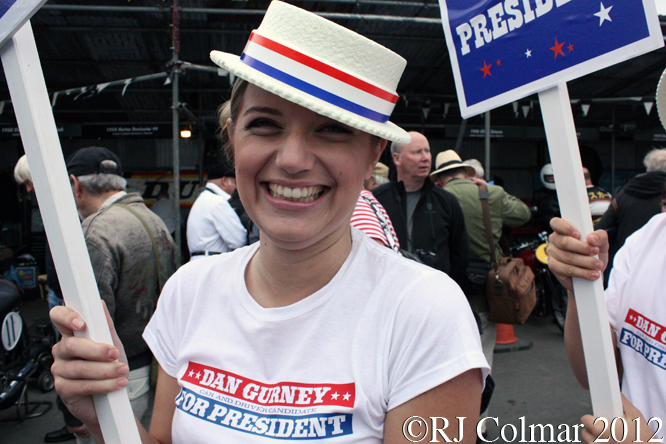
Gurney For President, Goodwood Revival

Once inside evidence of the Dan Gurney for President campaign was hard to ignore, I bet the guy I would vote for is faster than any other presidential candidate that ever lived.
Paul Chenard, Goodwood Revival

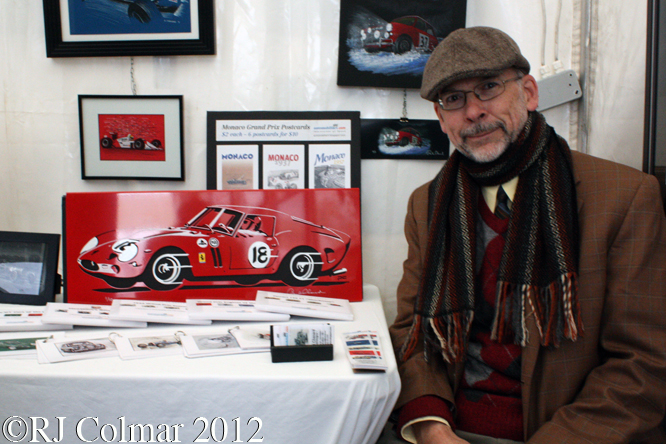
On my way to the pits I popped by to say hi to Paul Chenard from Nova Scotia in Canada, Paul is seen above with one of the ten limited edition laser cut in steel Ferrari GTO’s he has recently been working on. Given that there were 15 250 GTO’s present to celebrate the 50th Anniversary of the model which these day’s are conservatively valued at $20 million dependent on provenance I imagine Paul did not have to take too many of these cool pieces home with him.
Walker Climax Tec Mec 10, Goodwood Revival

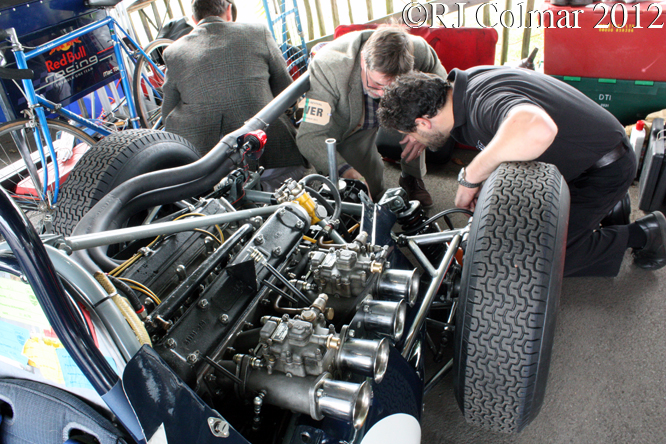
Thanks to an armband kindly lent to me by the owner of the Porsche in this linked photo, I was able to get into the pits to see and hear some of the cars as they were being fettled ready for qualifying for the Goodwood Revival invitation races. Above the Walker Climax Tec Mec Tipo 10 apparently was commissioned by Rob Walker for Stirling Moss in 1960 but was never raced in period.
Tatra T603, Goodwood Revival

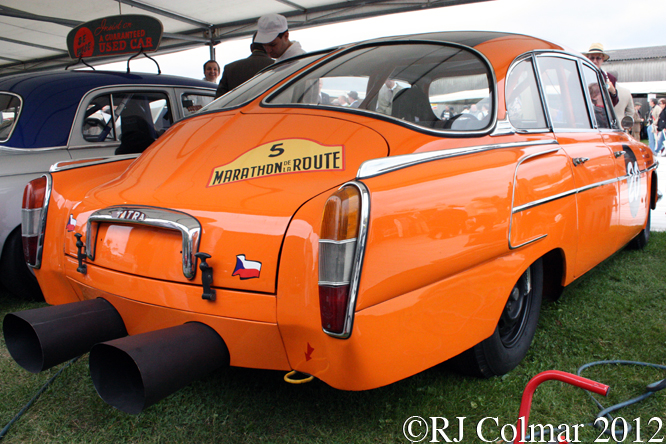
The Tartra T603 from the former Czechoslovakia easily won the unofficial biggest exhaust pipes in the pits competition, they are attached to an air cooled V8. The car qualified a respectable 8th for both rounds of the St Mary’s Trophy with John Haugland and Arne Berg driving in the first and second races respectively.
Siver Arrows, Goodwood Revival

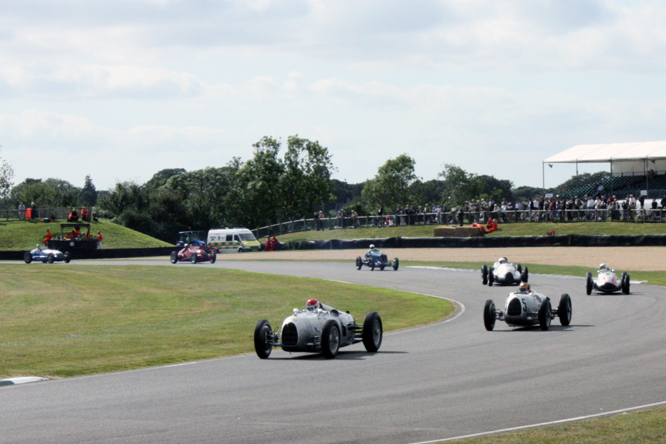
After a short break for lunch, during which I caught up with acquaintances from The Nostalgia Forum, I started an anticlockwise walk of the circuit as Kenny Brack was securing pole for the Shelby Cup in a Shelby Daytona Coupé. I got to the Lavant Corners in time to see a demonstration of pre 1939 Grand Prix Cars which included V12 and V16 Auto Unions, Mercedes Benz silver arrows models running together for what is thought to be the first time since 1939. Unfortunately the poor commentators had no idea who was driving what and the programme notes are no help either. Above two V16 Auto Unions lead a Mercedes Benz, the V12 Auto Union an ERA and a pair of 8 cylinder Maserati’s.
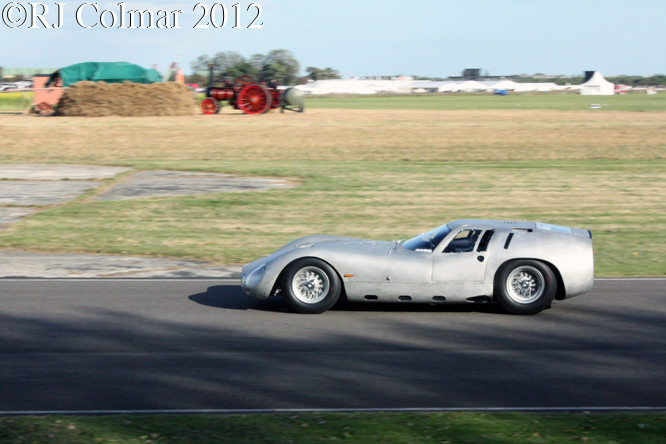
Maserati 151/3, Goodwood Revival

As the autumnal afternoon unfolded a seemingly endless stream of storied automobiles passed by including this recreation of a 39 inch tall prototype Maserati 151/3 driven by Jochen Mass and owner Barrie Baxter, which was invited to join the GT cars in the TT Celebration race.
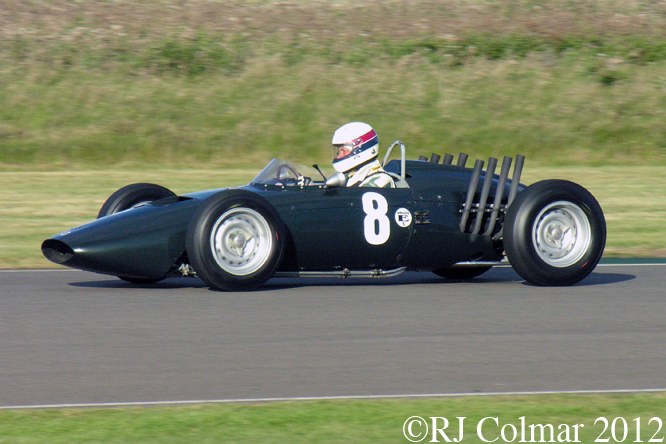
BRM P57, Goodwood Revival

After the many trials and all to few tribulations of BRM with it’s V16 P15 built in 1950 the team eventually evolved into Grand Prix and World Championship contenders winning the 1962 World Manufacturers and Drivers Championships with Graham Hill at the wheel of a V8 powered BRM P57, with 8 neat exhaust stacks, similar to the one above driven by David Clark in the Glover Trophy.
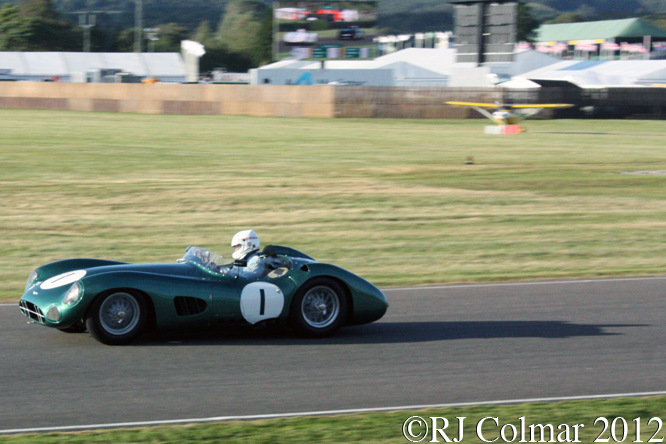
Aston Martin DBR 1, Goodwood Revival

The last time I remember seeing Brian Redman at the wheel of an Aston Martin was at Donington Park in 1989 when he was driving the brutal Aston Martin AMR 1 Group C car. Here Brian is driving a 1957 DBR 1 of the type which, unlike the AMR 1, won at Le Mans in 1959 with Carol Shelby and Roy Salvadori at the wheel. Brian is seen above on his way to 18th on the grid for the Sussex Trophy race.
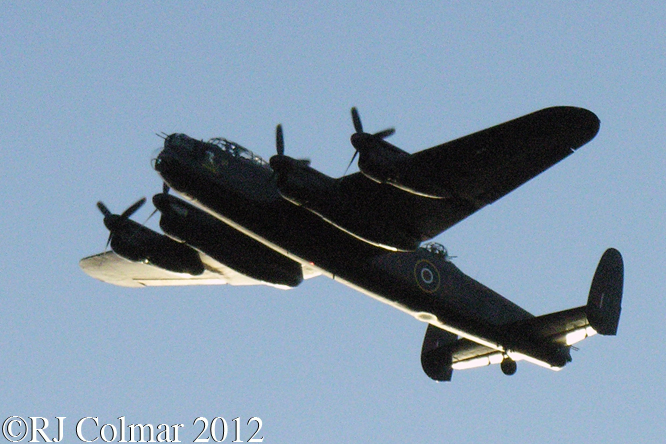
Avro Lancaster PA474, Goodwood Revival

Having started the morning in the fog bound Channel Islands one of only two remaining Avro Lancaster PA474 bombers, powered by four Rolls Royce Merlin V12’s made a flyover of the track just before the day’s only scheduled race started.
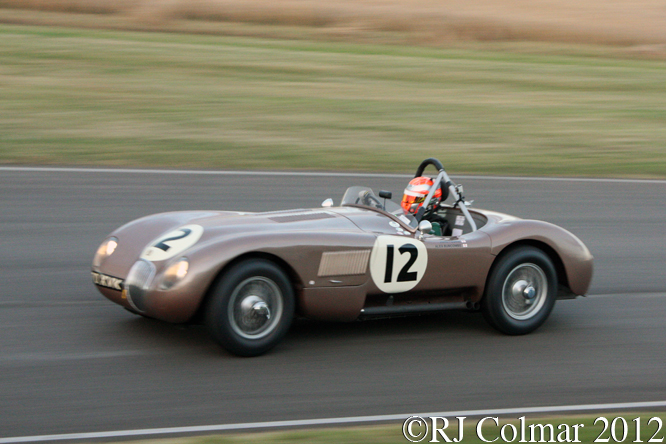
Jaguar C-type, Goodwood Revival

Anthony Reid stormed off into what looked like an invincible lead for the 90 minuet Freddie March Memorial Trophy race as the evening drew to dusk. However a gear box fault meant that when owner Nigel Webb took over there was only one gear available, 4th and so the #24 C-type fell back to an eventual twelfth place. This meant that all Alex Buncombe had to do was keep his #12 Jaguar Heritage Racing C-Type,which had started with John Young at the wheel, on the road to keep the lead. Alex did take the win but only after a lawn mowing incident at St Mary’s corner which resulted in Alex loosing his head lights for a good half an our before remembering where the switch was.

Thanks for joining me on this Goodwood Revival 2012 – #1 Track Action edition of “Gettin’ a li’l psycho on tyres” I hope you will join me again tomorrow when I’ll be taking a look at some of the MG’s at Goodwood. Don’t forget to come back now !

Share

Class But No Championships – Ferrari 312P #0872

For 1968 a new championship was announced for 3 litre / 183 cui prototype sports cars called Championnat Internationale des Marques. A lack of entries for the series led to a late change in the rules which extended the life of the Ford GT40 and Lola T70 for four years and inadvertently gave Ferrari and Porsche a window in which to build the 512S and 917 models respectively.

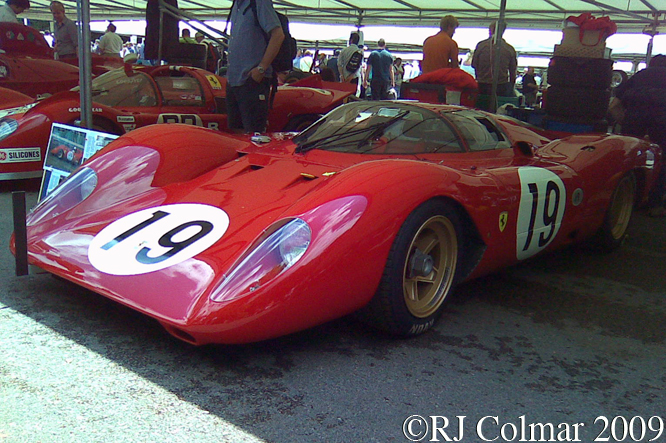
Ferrari 312P, Goodwood Festival of Speed

For 1969 Ferrari built it’s first 3 litre / 183 cui prototypes using detuned V12 engines from it’s Formula One programme. In all three 312P’s were built by the factory two open top Spyders and the closed top Berlinetta chassis #0872 featured today.

Although the 312P’s are not remembered as being a match for the Porsche 908’s that ran in the same class they did take several class wins when they finished. #0872 won it’s class at Daytona in 1970, 4th overall, driven by Mike Parkes and Sam Posey, and again at Sebring driven by Parkes and Chuck Parsons who replaced Posey.

In 1971 #0872 appeared with Spyder bodywork and Luigi Chinetti and Garcia Veiga took another class victory at Daytona in the 24 hour marathon.

Ferrari 312P, Goodwood Festival of Speed

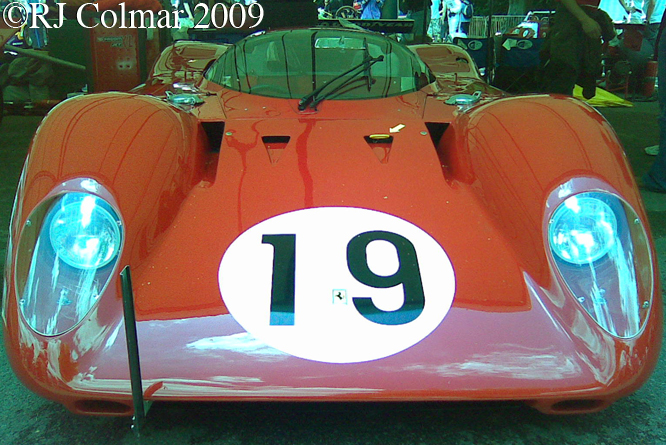
When #0872 was first raced by Chris Amon and Peter Schetty at Le Mans in 1969 carrying the #19 the car was a last minuet substitute for chassis #0868, which had crashed a couple of weeks earlier at Monza, and was raced with the #0868 identity due to the difficulty in getting the correct international travel documents for #0872 ready in time.

Chris Amon hit a fuel tank from the fatally disintegrated Porsche 917 of John Woolfe on the opening lap, causing #0872 to catch fire and it’s subsequent retirement without injury to the New Zealander.

Ferrari 312P, Goodwood Festival of Speed

In the spring of 1971 #0872 was dismantled, the engine, transmission, suspension and steering were subsequently fitted to a brand new chassis known as the Chinetti Special / Flying Shingle, a car which did not finish at Daytona in 1972 and manged 9th overall 6th in class at Le Mans in 1974 driven by Jean-Claude Andruet and Teodoro Zeccoli.

In 1980/81 all the parts of #0872 were reunited along with it’s original Berlinetta body, and the Flying Shingle has been reconstructed without any of the original parts from #0872.

Thanks for joining me on this “Class But No Championships” edition of “Gettin’ a li’l psycho on tyres”, I hope you will join me again tomorrow. Don’t forget to come back now !
Share

E Day – Ford Edsel

With a surplus cash from the success of the Ford Thunderbird Ford executives decided to create a new intermediate line of vehicles to compete with Oldsmobile which included a network of over 1,000 dealers through which the new brand was to be distributed. Fifty five years ago today amidst much fan fare Ford launched it’s new baby to an unsuspecting American public with much fan fare which included labeling September 4th 1957 “E Day”.

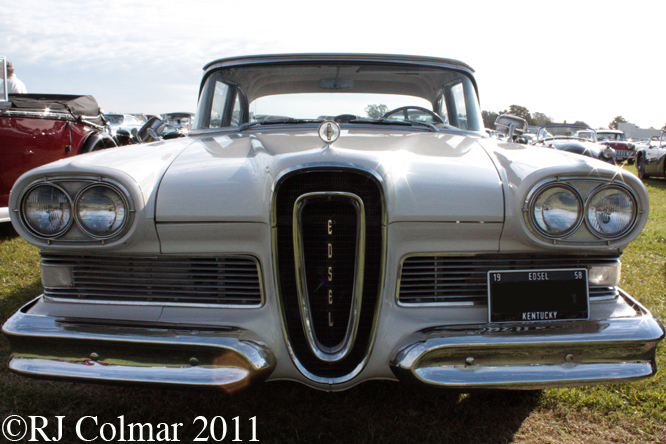
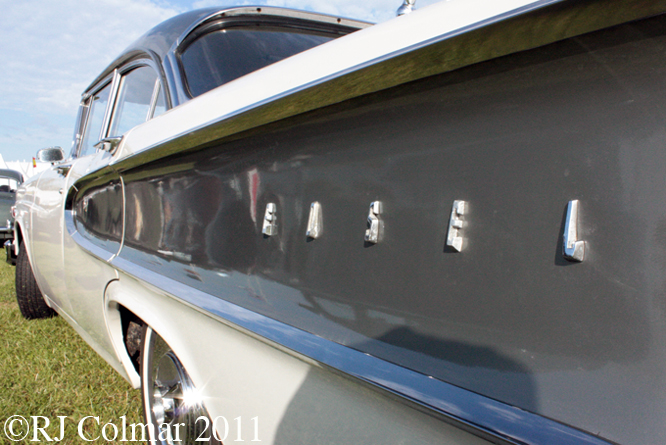
Edsel Ranger, Goodwood Revival

Fifty years after the event Time said of the Edsel “Ford’s marketing mavens had led the public to expect some plutonium-powered, pancake-making wondercar; what they got was a Mercury.” More unkindly some described the Edsel as looking like an Olds sucking a lemon.

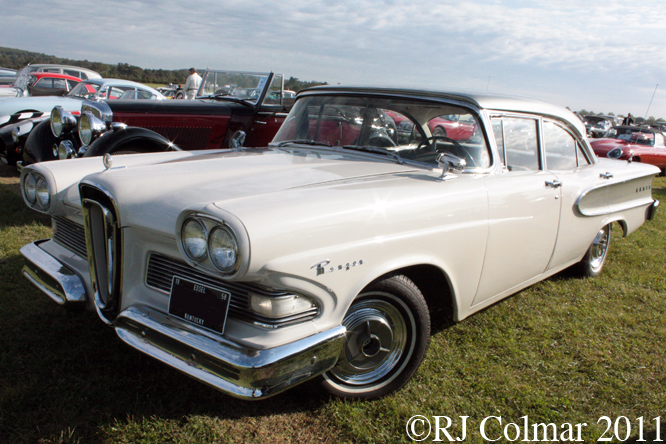
Edsel Ranger, Goodwood Revival

To get sales of the vehicle “unlike any other car you have ever seen” underway Ford on October 13th organised a television special live from Television City in Hollywood “The Edsel Show” which combined the talents of Bing Crosby, Frank Sinatra, Louis Armstrong, and Rosemary Clooney to “pump” it’s target market. Highlights included Frank Sinatra smoking a cigarette standing next to Louis Armstrong while performing a “number”.

Edsel Ranger, Goodwood Revival

For 1958 model year the Edsel was available in four flavours Citation and Corsair based on a Mercury platform, with the smaller Pacer and Ranger based on a Ford 118 inch platform. Today’s featured base model Ranger is powered by a 5.9 litre / 361 cui 303hp FE V8 which could be ordered with Teletouch automatic transmission operated by button’s on the hub of the steering wheel.

Edsel Ranger, Goodwood Revival

Ford needed to sell 200,000 Edsels to break even on it’s $400,000,000 dollar investment in the new range, despite the second largest brand launch, exceeded only by Plymouth in 1928, to date with over 60,000 sales in the 1958 model year it quickly became apparent that the Edsel concept was struggling to fly.

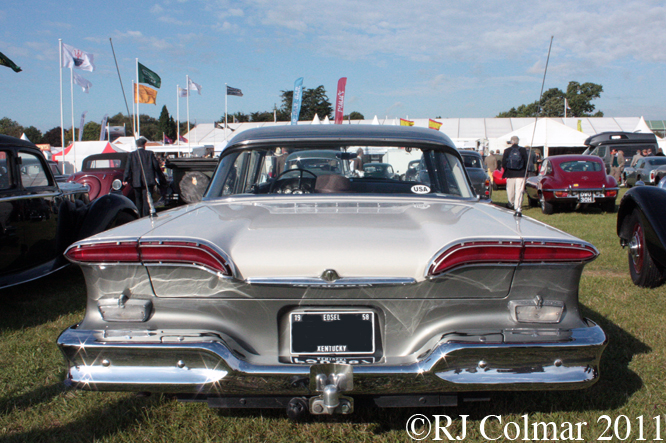
Edsel Ranger, Goodwood Revival

In November 1959 with just over 120,000 models built Ford pulled the plug on the Edsel. Among the many reasons for it’s failure was a pricing policy that did not clearly fill a gap between the Ford, Mercury and Lincoln Brands, in particular the most expensive Fords being too closely priced to the cheapest Edsels. It is estimated Ford lost of the order of $350,000,000 dollars on the project.

Thanks for joining me on this “E Day” edition of Gettin’ a li’l psycho on tyres, Tuesdays regular MG blog will appear on Thursday, I hope you will join me again for a continental curiosity tomorrow. Don’t forget to come back now !

Share

OK, But Not Very Fast – Lotus 58

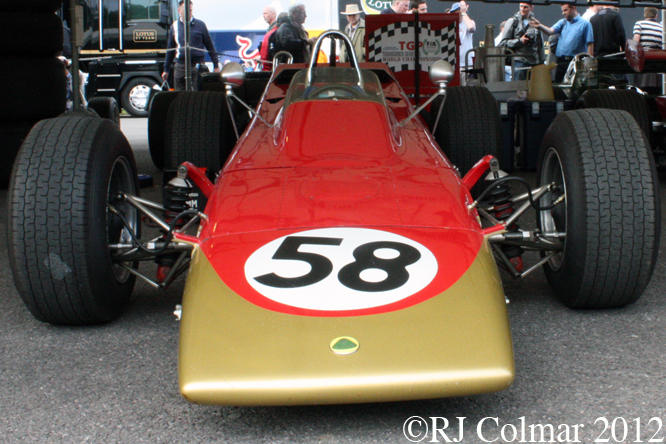
The Lotus 58 was designed with de Dion suspension front and rear, in Colin Chapman’s eternal quest for more grip, to take part in Formula 2 races for the 1968 season.

Lotus 58, Goodwood Festival of Speed

Chapman’s original intention was for the 58 to be used as a development vehicle for the Lotus 57 Grand Prix car which was to have used a similar chassis but fitted with a larger Ford Cosworth 3 litre / 183 cui that powered the various iterations of the Lotus 49.

The Lotus 58 chassis and wedge shaped body closely resembles that of the Lotus 56 Indy challenger but is powered by a 225 hp four cylinder 1598 cc / 97.5 cui Ford Cosworth FVA motor which met the requirements of the second tier open wheel Formula 2 regulations.

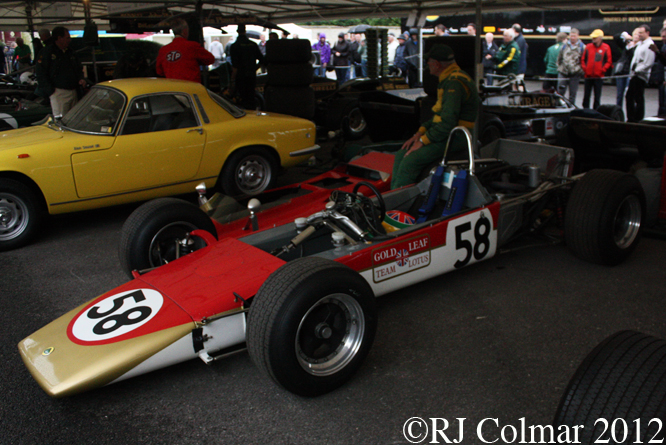
Lotus 58, Goodwood Festival of Speed

The one and only Lotus 58 chassis was completed the day Jim Clark was killed at Hockenheim, his death along with that of Jim’s replacement Mike Spence at Indy in a Lotus 56 along with numerous crashes that befell Jackie Oliver in his Lotus 49’s meant that development of the Lotus 58 was pushed back until the end of 1968 when Lotus had to decide which cars to take to the Antipodes for the Tasman Series.

Graham Hill thoroughly tested the car with a Tasman Spec 2.5 litre / 152.5 cui Cosworth DFW motor and came to the conclusion that it was “OK, but not very fast”. It would appear the advantages of the de Dion suspension which keep the wheels vertical in the corners and thereby keep a larger tyre footprint on the ground were not obvious enough to pursue. The Lotus 58 was pushed aside never having raced in Formula 2 as originally intended, or in the Tasman series, while the similar Cosworth DFV powered Lotus 57 never even left the drawing board.

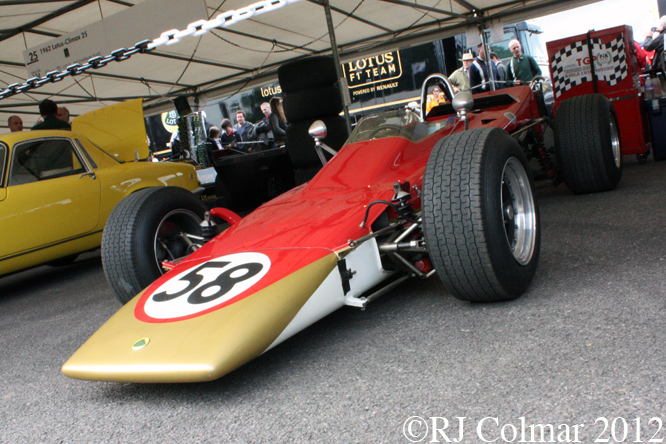
Lotus 58, Goodwood Festival of Speed

In 1998 two enthusiasts persuaded Colin’s son Clive Chapman to restore the Lotus 58 and he gave the task to former Hill and Clark engineer at Lotus Eddie Dennis. After some 1500 hours of work Dennis ran the car at the former works Lotus test track at Hethel before handing it over to the new owners Malcolm Ricketts and Don Hands.

Thanks for joining me on this “OK, But Not Very Fast” edition of “Gettin’ a li’l psycho on tyres” I hope you will join me again tomorrow. Don’t forget to come back now !
Share

Additions And Corrections – Ferrari 166MM #0040M

Having run well over 50 consecutive Ferrari Friday blog’s I have to confess I have temporarily run out of Ferrari’s to write about, however while I find some more I will recover some of the vehicles that I first blogged about on the much missed rowdy.com website, adding additional information and corrections where ever applicable in the light of new sources of information.

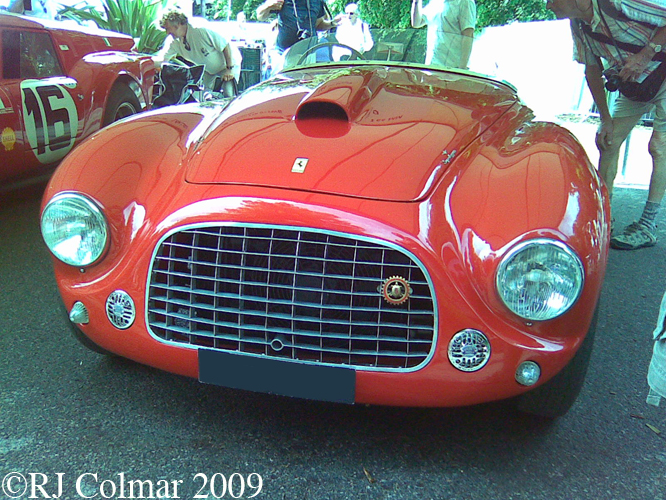
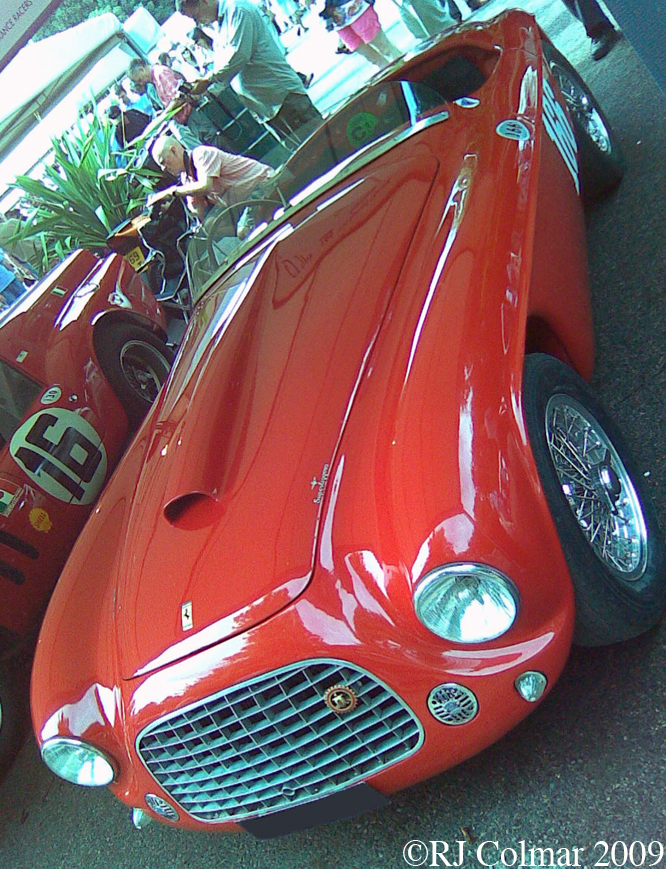
Ferrari 166MM, Goodwood, Festival Of Speed

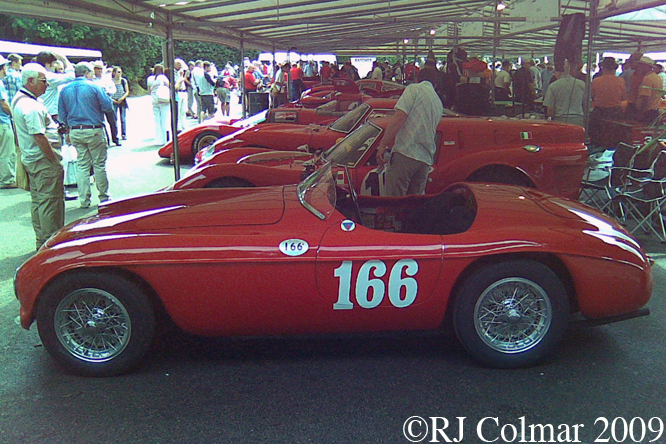
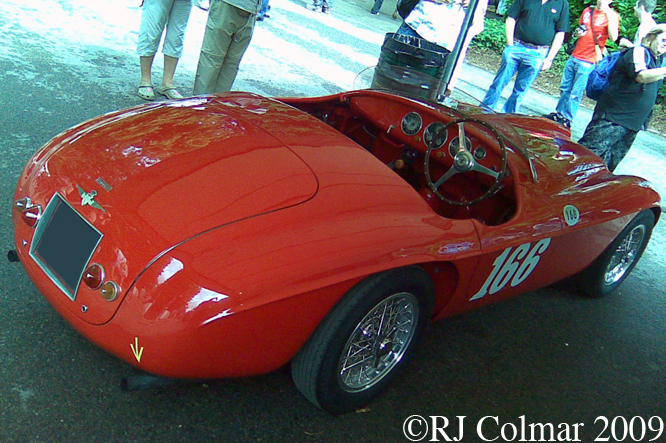
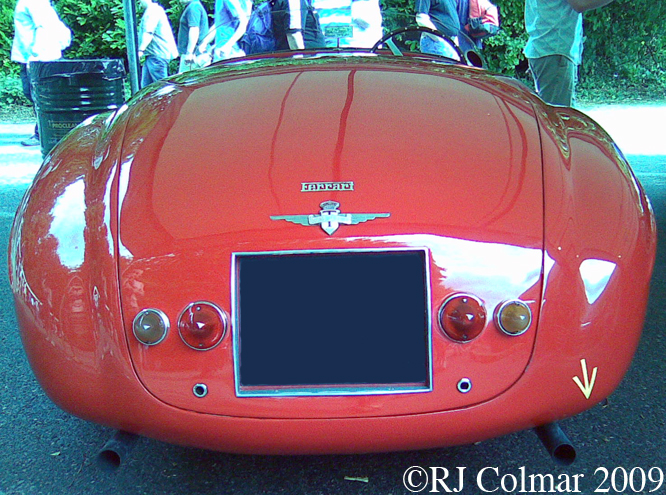
Only 25 166 MM’s were commissioned by Enzo Ferrari to be built by Carrozzeria Touring who built the roadsters nick named Brachetta’s (small boat) using the patented Superleggra technique of fixing aluminium alloy panels directly to a tubular space frame.

The cars featured a 135 hp 1992cc / 121 cui V12 single overhead cam all alloy engine designed by Gioacchino Colombo. Each cylinder has a displacement of 166 cc / 10 cui from which the model derives its 166 name the MM comes from Mille Miglia, the name of a 1000 mile road race from Brescia to Rome and back which the 166 MM won in 1949.

Ferrari 166MM, Goodwood, Festival Of Speed

The 166 in various guises put Ferrari on the the sports car map, a 166 S being driven to victory in the 1948 Milie Miglia by Clemente Biondetti and Giuseppe Navine. In 1949 Biondetti repeated the feat at the wheel of a 166 MM (chassis 0008M) he shared with Ettore Salani.

The same #0008M chassis was then entered by Lord Selsdon, for the 24 hour Le Mans race, who let his team mate Luigi Chinetti drive for an amazing 23 (twenty three) hours en route to victory. Another 166MM, chassis #0010, with Luigi Chinetti and Jean Lucas sharing the driving went on to win the 1949 Spa 24 hour race.

Ferrari 166MM, Goodwood, Festival Of Speed

Today’s featured car chassis #0040M vehicle was driven by Luigi Villoresi and Pasquale Cassani finished 12th overall in the 1950 Targa Florio. Note, some sources using “Targa Florio: 20th Century Epic” by Pino Fondi as reference material suggest that Villoresi did not finish, this is probably because Fondi only lists the top ten finishers.

Several weeks later chassis #0040M was entered in the 1950 Mille Miglia for Aldo Bassi with Aldo Berardi in the co drivers seat. The car left the road in wet conditions and hit a tree outside Ponte San Marco, Bassi succumbed to his injuries later that day.

Ferrari 166MM, Goodwood, Festival Of Speed

After repairs which included a replacement body, Touring body #3453, the car went to Portugal where Vasco Sameiro is known to have driven it to 9th place in a race at Vila Real on June 20th 1950. The car remained in Portugal changing hands at least twice before turning up in the UK in 1973.

Ferrari 166MM, Goodwood, Festival Of Speed

Ferrari 166 MM #0040M has been owned by the Mason-Styrron family since 1989 who have used it in many classic competitions since. #0040M was restored by the Ferrari factory prior to it’s appearance at the 2009 Goodwood Festival of speed where the car is seen here.

Thanks for joining me on this “Additions and Corrections” editions of “Gettin’ a li’l psycho on tyres”, I hope you will join me again tomorrow. Don’t forget to come back now !
Share

World Wide Racing – Lotus 56B R1

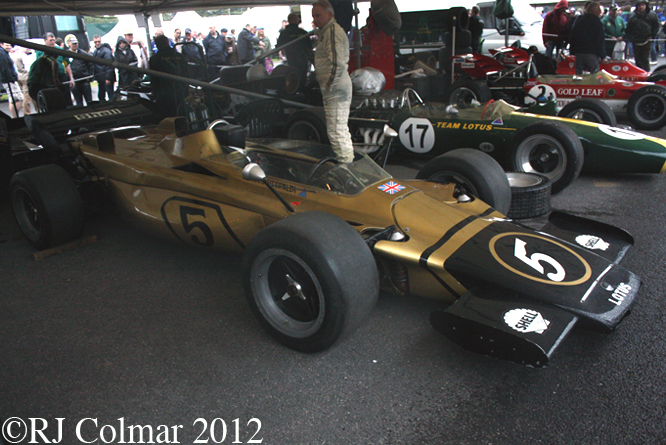
The Lotus 56B is the Formula One version of the “Son of Silent Sam” Lotus 56 Indy challenger that came within a couple of laps of winning the 1968 Indianapolis 500 with Joe Leonard at the wheel.

Lotus 56B, Goodwood Festival of Speed

This Formula One version of the Lotus 56 was a fresh chassis built with additional fuel capacity, it was unusual to make scheduled pits stops of fuel back during Grand Prix races in the 1970’s, and with additional wings front and rear to aid the considerable traction and handling advantages of the the all wheel drive transmission.

Just as at Indianapolis in 1968 the Pratt and Whitney STN6/76 had to be considerably detuned to meet the regulations which tried to keep it competitive with the 3 liter / 183 cui piston motors in use at the time.

56B R1 had four non-championship outings before taking part in three Grand Prix. The upshot was that the car was the class of the field in wet conditions, where it’s weight disadvantage was minimised but it struggled to make the top half of the grid in dry conditions.

Three drivers were given a shot in the car, Emerson Fittipaldi, Reine Wisell, and Dave Walker. Fittipaldi managed the cars only finish at the 1971 Italian Grand Prix where he qualified a lowly 18th on the grid and came home 8th well ahead of expectations for the car which was never to be seen in a Grand Prix again.

Regular followers of GALPOT maybe wondering why the car is painted Gold and Black instead of the by now traditional Red, White & Gold of the Gold Leaf Team Lotus.

In 1970 Jochen Rindt had been killed in an accident at Monza driving a Gold Leaf Team Lotus 72. Fearing legal repercussions from the notoriously slow and fickle Italian authorities investigating Rindt’s accident Colin Chapman took steps to avoid encumbrance or at worst arrest by opting to keep a low profile by entering just the one car in place of the usual two in the 1971 Italian Grand Prix.

To further keep the Italian authorities off his trail he entered the Lotus 56B under the World Wide Racing banner and had the car painted in Gold and Black, weather this was to obscurely promote the John Player Special brand which was owned by the same, Imperial, tobacco company as Gold Leaf remains unclear, though in 1972 Imperial switched the brand being promoted by Lotus to John Player Special whose black and gold colours are echoed on the current incarnation of Lotus on the Grand Prix grid.

Thanks for joining me on this “World Wide Racing” edition of “Gettin’ a li’l psycho on tyres” I hope you will join me again tomorrow. Don’t forget to come back now !
Share

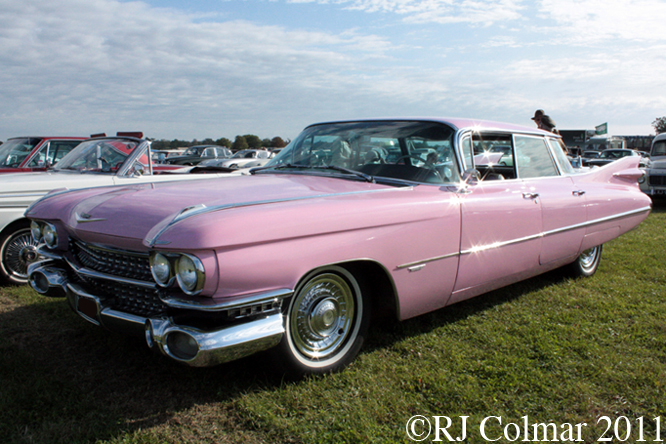
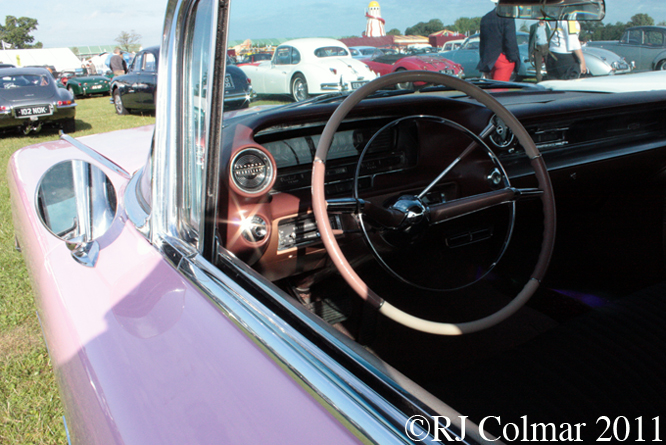
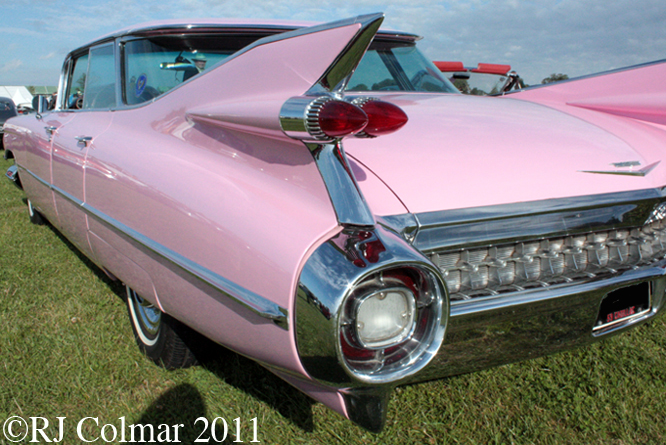
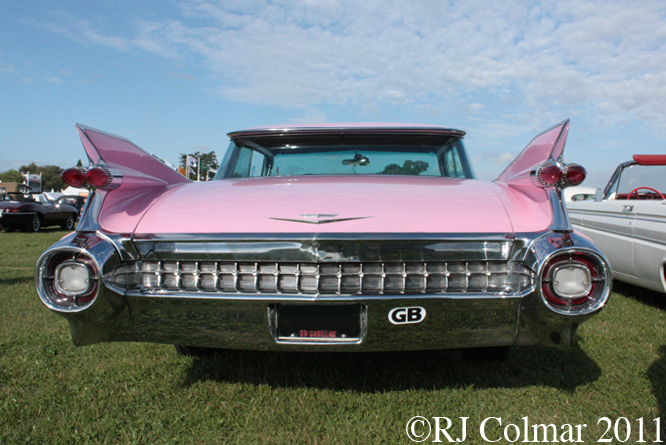
Shopping Around #1 – Cadillac Series 62 4 Window Hard Top Sedan

Shopping Around for ideas to mark the 35th Anniversary of Elvis Presley’s passing I thought it would be interesting to look at one of the few Cadillac models that evaded the King on his notorious Cadillac buying sprees.

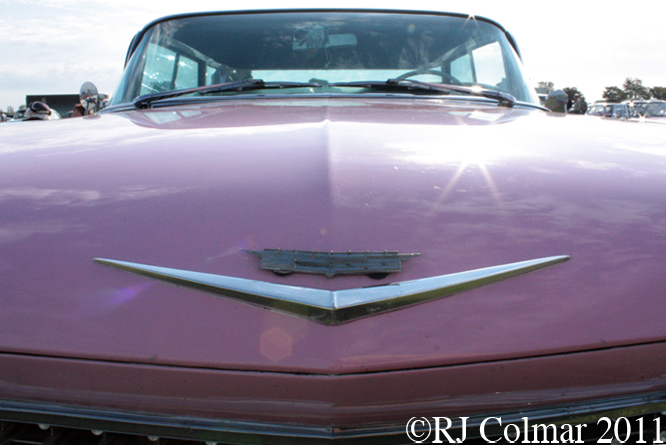
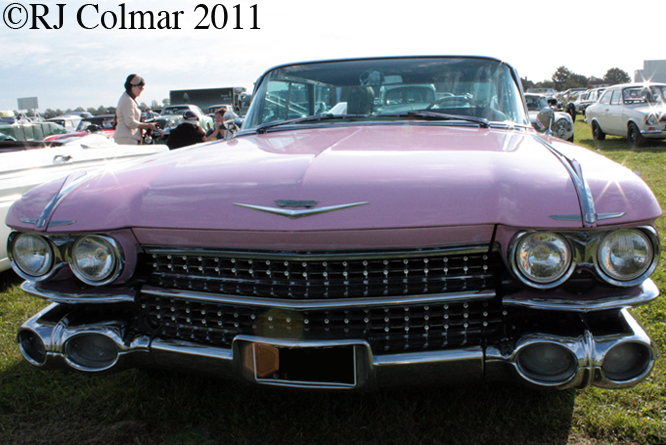
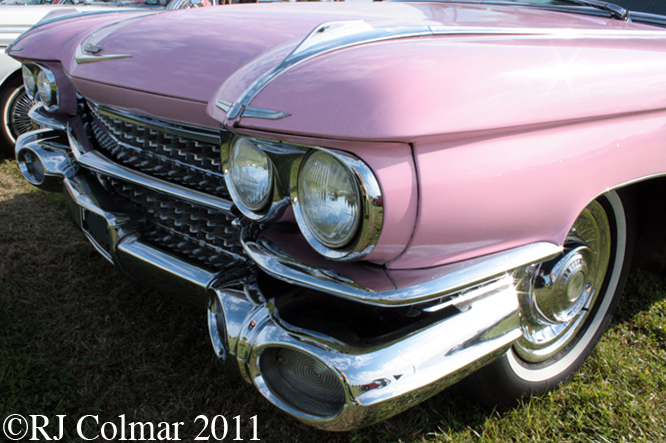
Cadillac Series 62 Sedan 4 Window Flat Top, Goodwood Revival

Bill Mitchel was responsible for the design of the 1959 13 model Cadillac range, 11 of which shared the same chassis with a 130″ wheelbase, the Fleetwood 75 Limousine and Sedan shared a chassis with a 149.5″ wheelbase.

Cadillac Series 62 Sedan 4 Window Flat Top, Goodwood Revival

A 6.4 liter / 390 cui V8 was used to power all of the ’59 Cadillacs, which weighed between 4690 and 5570 lbs, all tuned to produce 325 hp with the exception of the Eldorado which had 345 hp.

Cadillac Series 62 Sedan 4 Window Flat Top, Goodwood Revival

Differentiating the ’59 models from the exterior can be quite easy, if all of the exterior trim is attached.

Cadillac Series 62 Sedan 4 Window Flat Top, Goodwood Revival

We can tell this is a base 6239 model by the small badge below the arrow behind the front wheel on the front wing / fender.

Cadillac Series 62 Sedan 4 Window Flat Top, Goodwood Revival

Popular options for the ’59 Cadillacs included radio with rear speaker for $165, or radio with rear speaker AND remote control $247, a six way power seat came in at $89.

Cadillac Series 62 Sedan 4 Window Flat Top, Goodwood Revival

The 4 window sedans with their distinctive wrap around rear screens are also known as ‘flat tops’.

Cadillac Series 62 Sedan 4 Window Flat Top, Goodwood Revival

It may seem strange that Elvis, a well documented Cadillac enthusiast, never bought or owned a ’59 model, which is so clearly identified with the rock’n’roll era. Until one realises that he was doing his duty for his country at the time, serving with the 3rd Armoured Division in Friedburg Germany where he enjoyed the delights of his VW Beetle and BMW 507 convertible while keeping a lowish, by his standards, profile.

Thanks for joining me on this “Shopping Around #1” edition of “Gettin’ a li’l psycho on tyres” I hope you will join me again tomorrow. Don’t forget to come back now !
Share