Tag Archives: Goodwood

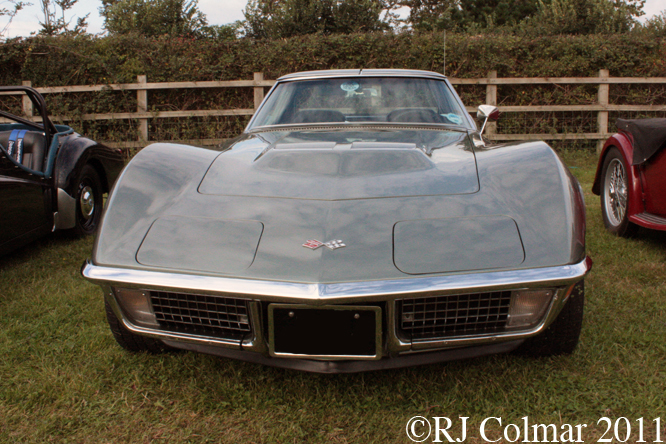
Low Lead 454 – Chevrolet Stingray Corvette (C3)

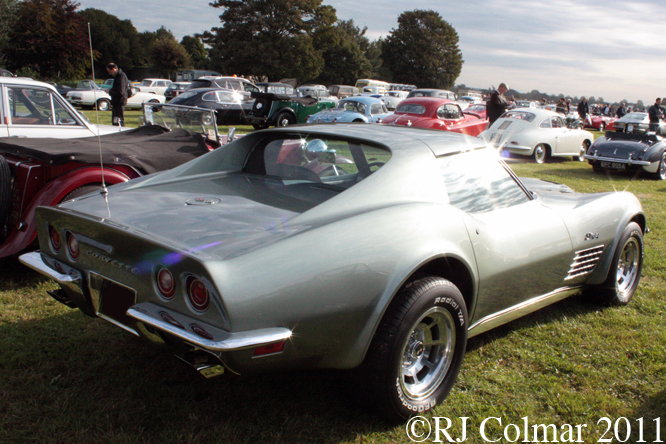
Longest running of the Chevrolet Corvette incarnations was the third generation C3 built between 1968 and 1982.

Chevrolet Stingray Corvette, Goodwood Revival

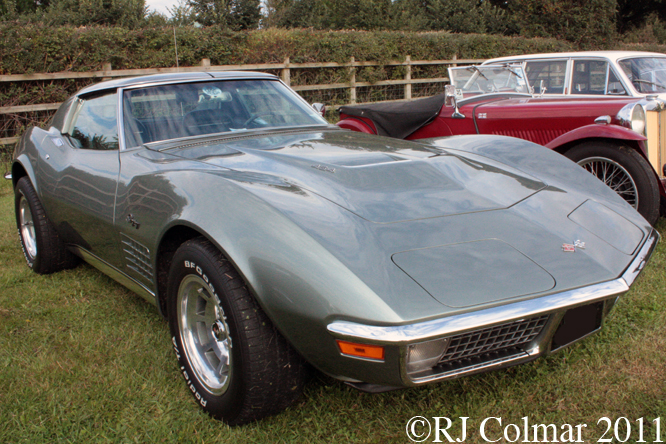
The C3 Corvette took it’s styling cues from the 1965 Mako Shark II Concept Car.

Chevrolet Stingray Corvette, Goodwood Revival

A new feature of the C3 Corvette’s was the T Top removable roof panels, an idea first patented Gordon Buehrig in 1951 for his, unsuccessful, TASCO Sports Car.

Chevrolet Stingray Corvette, Goodwood Revival

The T-Top proved so successful that production of convertible Stingray Corvettes ceased in 1975 and was not revised again until 1986.

Chevrolet Stingray Corvette, Goodwood Revival

For 1971 the engine options were base L48, performance LT1 and ZR1 using the 350 cui 5.7 litre small block and the 454cui / 7.4 litre LS5 and LS6 big block options. With the introduction of low lead fuel in 1971 the LS6 454’s power was detuned from 450 hp as used on the Chevelle SS to 425 hp. I have been unabke to determine if the car in these photo’s taken at last years Goodwood Revival is one of the 188 LS6 powered cars or one of the 5097 365 LS5 powered cars built in 1971.

Chevrolet Stingray Corvette, Goodwood Revival

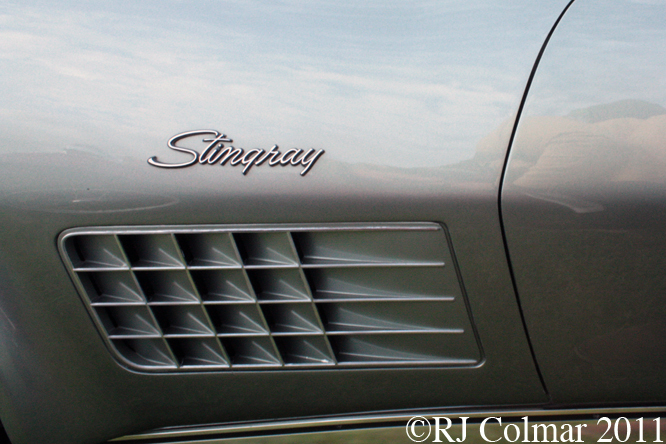
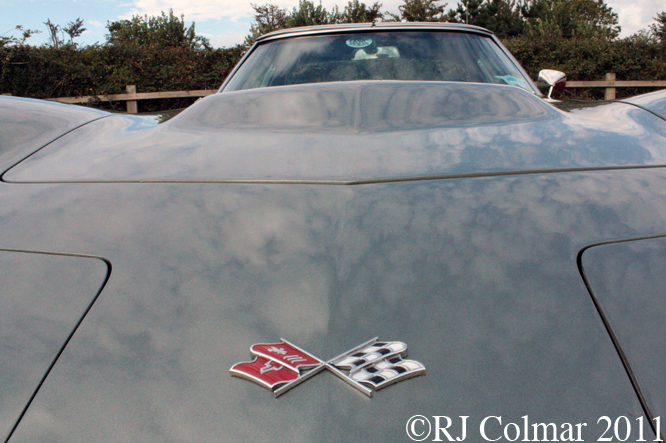
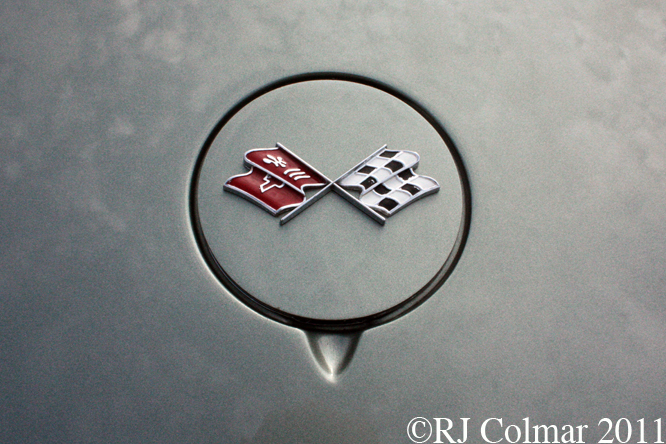
The absence of “Sting Ray” name plates as used on the C2 Corvettes distinguish 1968 Corvette’s, the single word “Stingray” moniker was used from 1969 until 1976.

Chevrolet Stingray Corvette, Goodwood Revival

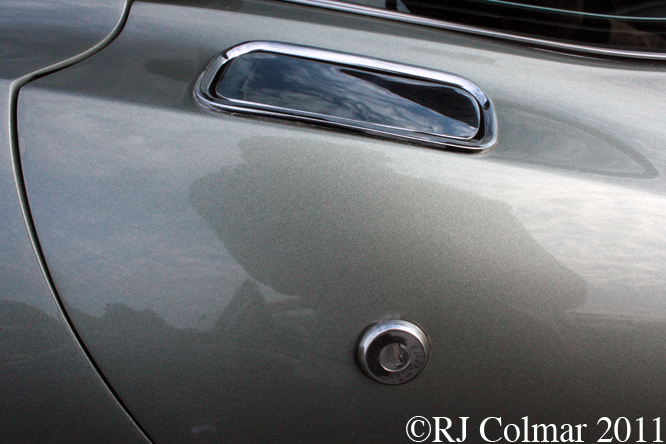
The futuristic door entry mechanism replaced with the hitherto ubiquitous release button and door handle combining them into a single recessed unit.

Chevrolet Stingray Corvette, Goodwood Revival

The C3 is said to be the first US car to do away with the side vent window in the door, power window’s were an option for the remaining pain of glass.

Chevrolet Stingray Corvette, Goodwood Revival

Among the 1971 options were white striped tyres at $28 or white lettered tyres at $42, 6,711 and 12,499 vehicles were delivered with these options respectively.

Chevrolet Stingray Corvette, Goodwood Revival

’71 Corvette advertising concluded that “it’s underneath what counts when it comes to performance”.

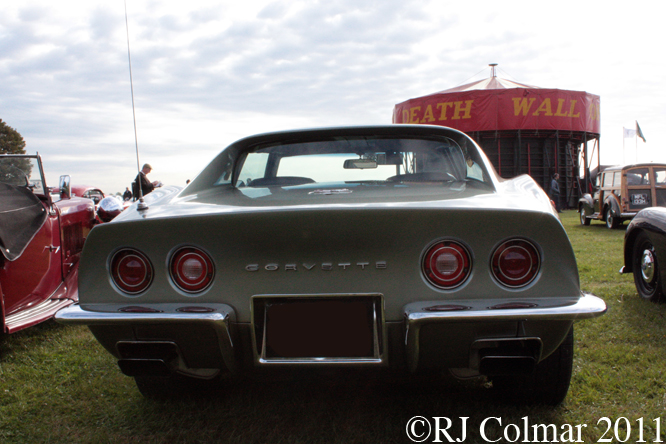
Chevrolet Stingray Corvette, Goodwood Revival

Despite strikes interrupting production 9,936 Stingray Corvette Coupé’s were manufactured in 1971.

Thanks for joining me on this “Low Lead 454” edition of “Gettin’ a li’l psycho on tyres” I hope you will join me again tomorrow. Don’t forget to come back now !

Share

Fourth Season Swan Song – Lotus 49C #R6/2 & #R10

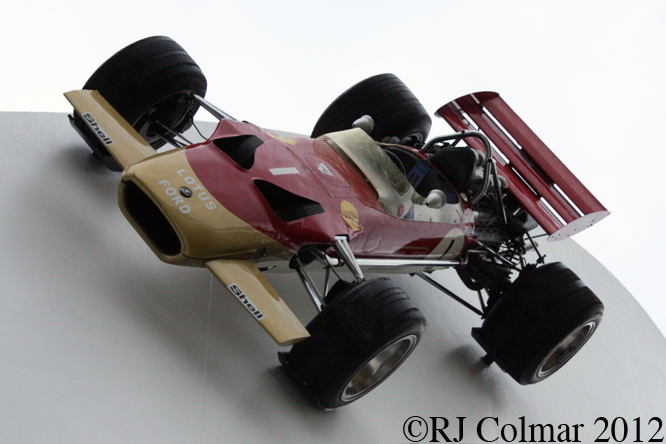
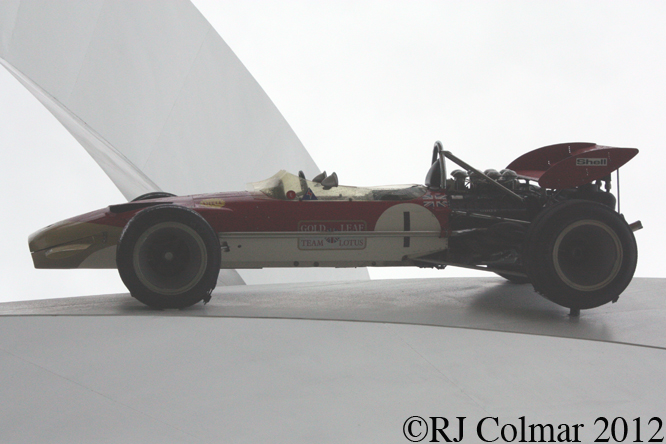
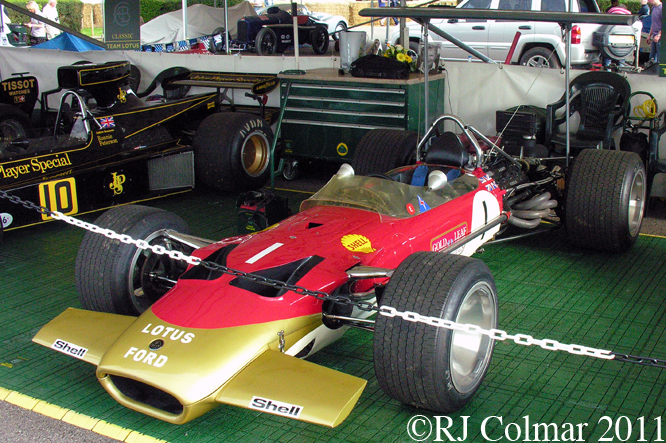
For 1970 Lotus had planned to have the 4 Wheel Drive Lotus 63 ready to challenge for championship honours however even Mario Andretti could not capitalise on any of the cars supposed advantages during 1969 and so the Lotus 49 was updated for a fourth season of competition with 13 inch front wheels to make use of the latest Firestone Tyres as a stop gap while the design and build of the Lotus 72 was finalised.

Lotus 49C, Goodwood Festival Of Speed

The car seen above is Lotus #R6/2 the second car to carry the #R6 chassis plate. The first incarnation of #R6 was the first 49 to be built to ‘B’ spec. Unfortunately it was written off by Jackie Oliver during practice for the 1968 French Grand Prix, and in order to make use of existing travel documents the eighth Lotus 49 to be built was given the #R6 chassis plate and is known as #R6/2. Some parts of #R6/1 damaged beyond repair by Oliver are thought to have been used in the replacement #R6/2 seen here, Rob Walkers privately entered 49 #R7, and the #R12 show car built for Ford which was donated to the Donington Museum.

In it’s second incarnation #R6/2 still in high wing ‘B’ spec was used by Graham Hill to win the 1968 Mexican Grand Prix which clinched the 1968 World Championships for Graham and Team Lotus. Graham continued to use #R6/2 in 1969 before the car was given to Jochen Rindt to drive. Jochen scored his first two Grand Prix victories with R6/2 the 1968 US Grand Prix with the car in ‘B’ spec and the 1970 Monaco Grand Prix with the car ‘C’ spec with the low triple plane rear wing that was designed for the Lotus 72. Jochens win at Monaco would be the third consecutive win in the Principality and also the 12th and final Grand Prix win for the Lotus 49 type.

Lotus 49C, Goodwood Festival Of Speed

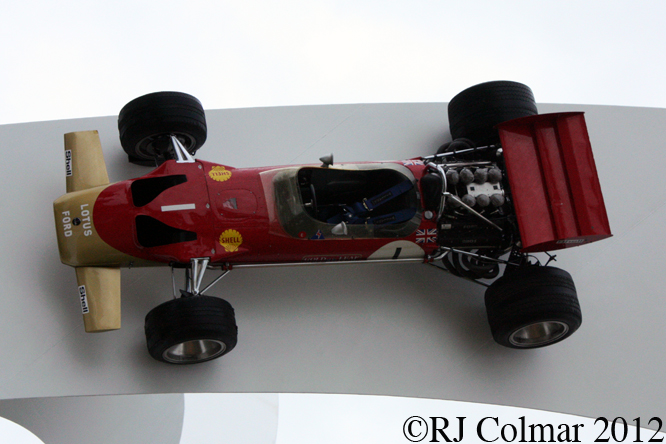
The second Lotus 49C featured today appears to be chassis #R10 which has given me a bit of a mental run around. This car appeared at Goodwood last year in high wing ‘B’ spec.

Lotus 49C, Goodwood Festival Of Speed

As you can see from my heavily revised Lotus 49B blog the car started life as Lotus 49 #R5 and for reasons that are not clear the car was renumbered #R10 and sent to the Antipodes for Jochen Rindt to use in the Tasman Series.

Lotus 49C, Goodwood Festival Of Speed

Graham Hill used #R10 to win the 1969 Monaco Grand Prix as he had done in 1968 when the car carried the chassis #R5. In 1970 Graham drove #R10 in the 1970 Monaco Grand Prix to fifth place when it was loaned out to the Rob Walker team for whom he was driving.

Emerson Fittipaldi made his first three Grand Prix starts in #R10 towards the end of 1970 scoring a best 4th place finish second time out in the 1970 German Grand Prix at Hockenheim.

Thanks for joining me on this “Forth Season Swan Song” edition of “Gettin’ a li’l psycho on tyres” I hope you will join me again tomorrow. Don’t forget to come back now !

Share

More, More, More – Dodge Ram Mega Cab 3500 4X4 Larimie

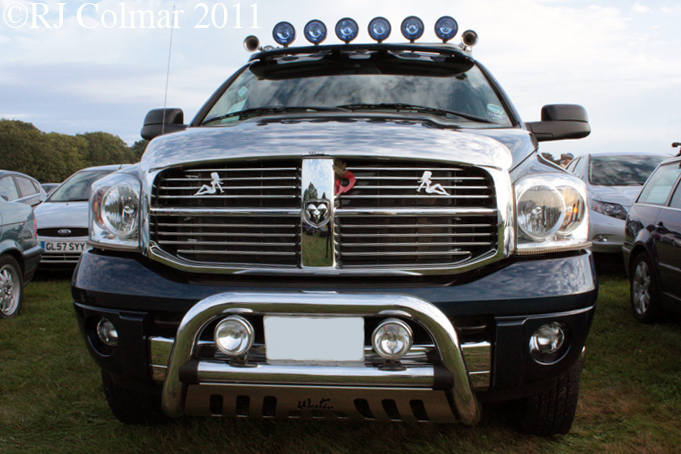
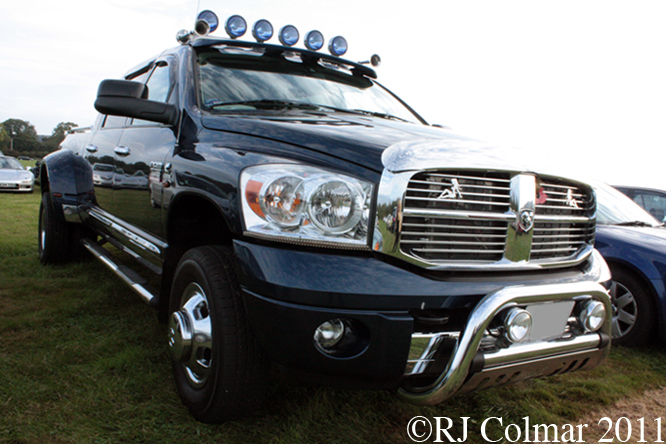
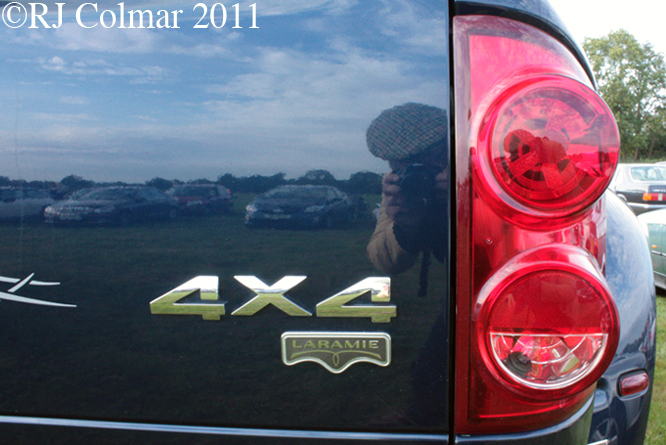
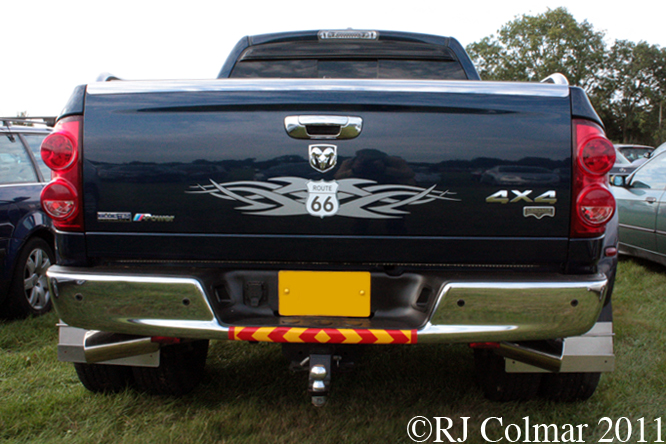
When the Dodge Ram Mega Cab hit the market in late 2007 it was all about more, isn’t it always when anything new hits the market ?

Dodge Mega Cab 3500 4X4 Larimie, Goodwood Revival

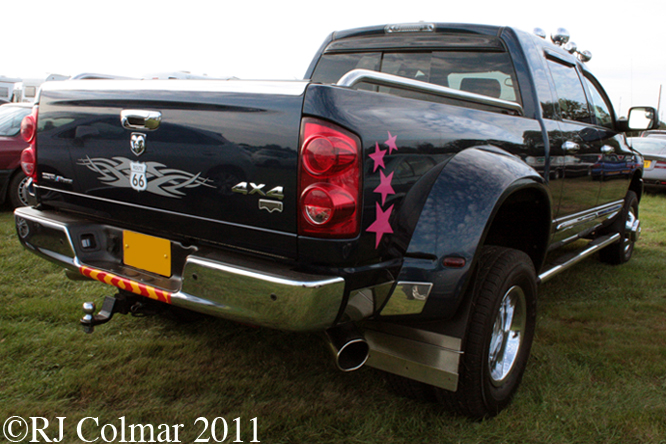
The 2008 Mega Cab offered more space, more comfort and more practicality setting new standards in the ‘room with a view’ pick up market.

Dodge Mega Cab 3500 4X4 Larimie, Goodwood Revival

Mega Cab featured the largest ever cab with 143 cubic feet of interior space, room for six which included reclining seats for passengers in the back.

Dodge Mega Cab 3500 4X4 Larimie, Goodwood Revival

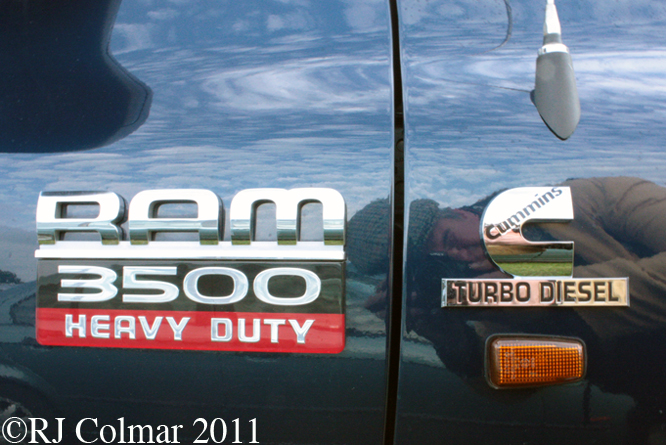
This particular model is powered by a 350 hp 6.7 litre / 408 cui straight six Cummins turbo diesel motor which can deliver class leading 650lb/ft torque.

Dodge Mega Cab 3500 4X4 Larimie, Goodwood Revival

Payload capacity for the Mega Cab was given as 3,150 lbs, that’s a little more than what a first generation generation Ford Thunderbird would weigh.

Dodge Mega Cab 3500 4X4 Larimie, Goodwood Revival

The emissions system of the Cummins diesel is Government certified 120,000 miles, that’s about 10 years for the average British motorist.

Dodge Mega Cab 3500 4X4 Larimie, Goodwood Revival

Unique features to the 2008 Larimie Spec Mega Cab include Dual Zone Climate Control, steering wheel mounted audio controls security alarm and Sentry Key® engine immobiliser.

Dodge Mega Cab 3500 4X4 Larimie, Goodwood Revival

Towing capacity for the 2008 3500 version of the Mega Cab is 16,000 lbs to give a gross combined weight rating of 24,000 lbs which was up 1000lbs from the 2007 model.

Thanks for joining me on this ‘More, More, More’ edition of “Gettin a li’l psycho on tyres’, I hope you will join me again tomorrow. Don’t forget to come back now !

Share

What’s In A Tooth ? – Lotus Ford 49 #R2 & #R3

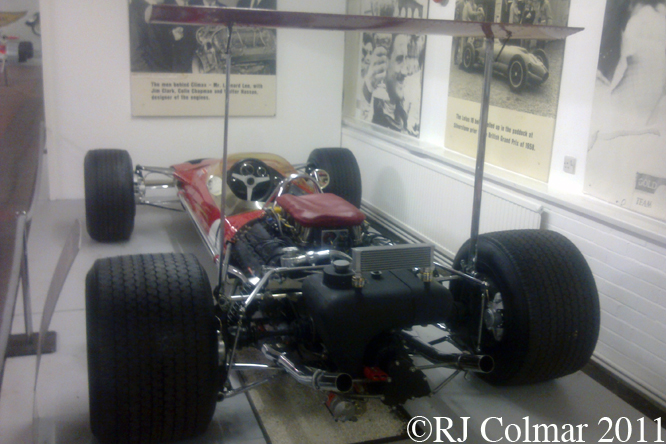
The Lotus 49 consolidated the principle of using the motor that as an integral structural component of the design that was first seen on the BRM P83 and Lotus 43 which were both powered by the novel BRM H16 motor in 1966. The 49, designed by Maurice Phillipe however was powered by the then brand new, and much simpler Ford sponsored 3 litre / 183 cui 8 cylinder Cosworth DFV that was the brainchild of Keith Duckworth and Mike Costin.
Lotus 49, Goodwood Festival of Speed

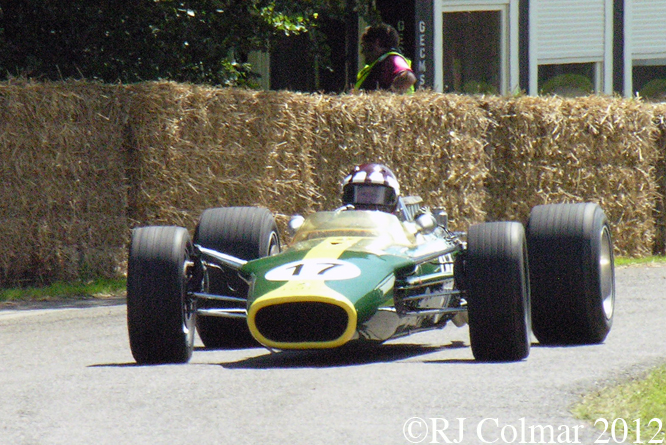
Despite many faults that would surface and be ironed out over the ensuing seasons the Lotus 49’s made a dream debut at Zandvoort for the 1967 Dutch Grand Prix with Graham Hill qualifying on pole and Jim Clark who had never so much as sat in the car before the first practice qualifying 8th. During the race Clark driving chassis #R2, seen above with Jackie Oliver at the wheel at Goodwood, used his legendary speed and mechanical sympathy to well judged victory while Hill experienced timing gear failure with two teeth next to each other on the timing gear breaking. After the race it was discovered Clark’s car had experienced a similar failure however a single tooth remained between the two broken teeth on Clarks timing gear ensuring just enough drive to make it to the finish.

Clark used Chassis #R2 to win both the 1967 British and US Grand Prix before being converted to 49T spec for the Tasman Series of races in Australasia which required an engine capacity of 2.5 litres / 152.5 cui which was achieved by fitting a different crankshaft with a shorter stroke to the DFV motors making them DFW spec. Jim won 4 races in the 8 race Series with the 49T spec chassis #R2 which combined with a couple of points paying places was enough to win the Championship from Chris Amon in his Ferrari 246 Dino.

Chassis #R2 was then loaned to Rob Walker racing during 1968 to replace chassis #R4 which driver Jo Siffert had crashed on his debut in a non championship race at Brands Hatch. Although #R4 was not damaged beyond repair by that accident it was subsequently destroyed in a workshop fire at Rob Walkers premises necessitating the loan of #R2. Once Walkers team had built up a new car, chassis #R7 now in B spec with the tall rear wing, which Siffert used to win the 1968 British GP.

Once chassis #R2 was returned by Rob Walker to Lotus it was immediately pressed into service again after Jackie Oliver had a comprehensive accident in #R6 at the 1968 French GP. For the British Grand Prix #R2 was repainted in Gold Leaf Team Lotus colours and fitted with the winged 49B spec nose cone and high rear wing. The car received further B spec upgrades for the German Grand Prix. Oliver would use chassis #R2 for the remainder of the 1968 season scoring a best 3rd place finish at the season finale in Mexico.
Lotus 49, National Motor Museum Beaulieu

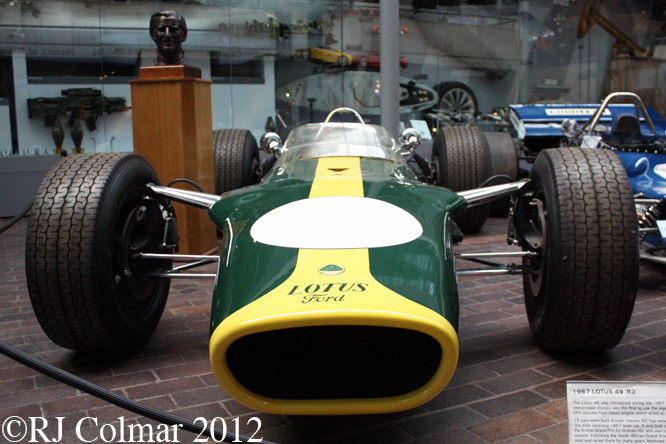
The car seen above at Beaulieu National Motor Museum is chassis #R3 which featured subtle differences to chassis #R1 and #R2 to aid the distribution of loads under braking at the front and to aid access to the brake balance adjuster which had previously only been possible by two mechanics picking up a third smaller mechanic and lowering him into the cockpit upside down ! Note the sculpture of Graham Hill on the plinth to the left of the car in this photo.
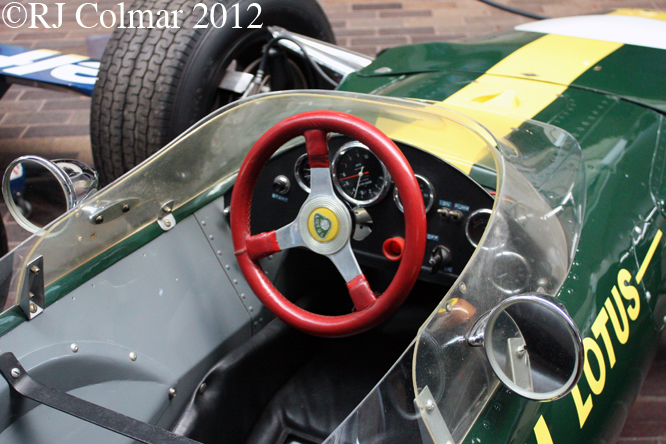
Lotus 49, National Motor Museum Beaulieu

Chassis #R3 first appeared at the 1967 British Grand Prix with Graham Hill at the wheel, he qualified 2nd behind Clark but while leading the race first an allen screw dropped off the rear suspension and after it was replaced the engine failed while he was making up good time. Chassis #R3 has the second longest track record of the 12 Lotus 49’s built.

After Hill scored a season best 2nd place in the 1967 US Grand Prix, behind Clark, and opened his championship winning 1968 season with another second place, again behind Clark at Kyalami chassis #R3 was sold to Rhodesian John Love who used the car to win the last two of six consecutive South African Formula One titles in 1968 and 1969, his successor Dave Carlton won the 1970 South African Championship driving the Lotus 49 chassis #R8 which was built to the final C spec.

Lotus 49, National Motor Museum Beaulieu

The 400 hp Ford Cosworth DFV was to become the mainstay of Formula One right through the 1970’s, it was far in advance of the Lotus 49 chassis and would only be toppled by the hugely more expensive turbocharged motors in the early 1980’s after 155 Grand Prix Victories. One of the triangular aluminium top engine mountings can be seen bolted with three bolts on the leading edge of the cam cover tapering into the back of the monocoque to which it was attached by a single bolt. Three further such mountings were all that were required to integrate the motor into the structure of the car.
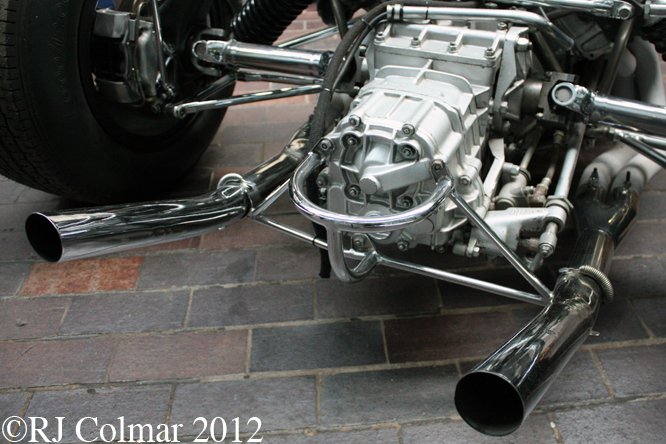
Lotus 49, National Motor Museum Beaulieu

The rear suspension and drive shafts and gearbox would repeatedly prove trouble some for team Lotus as they got to grips with having such a powerful motor. The ZF gearbox in it’s original form was not strong enough and required additional strengthening which can be seen in the form of the thick vertical plate into which the drive shaft disappears. The ZF gearboxes were replaced on the 1968 B spec cars with Hewland units which were much easier to maintain trackside.
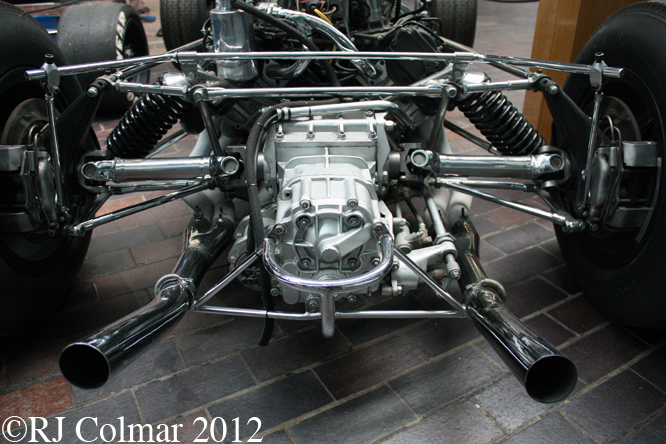
Lotus 49, National Motor Museum Beaulieu

The vestigal nudge bar was added to the back of the ZF gearboxes after the 1967 Dutch Grand Prix win in order to comply with a regulation about the dimensions between the end of the exhaust pipe and the back of the car. In other words when Jim Clark won the 1967 Dutch Grand Prix his Lotus 49 did not comply fully to the letter of the existing regulations.

Chassis #R3 is the only one of the Lotus 49’s never to run in B or C spec. Since it has been in the care of the National Motor Museum it has been involved in two serious accidents. The first, on a demonstration run, involved a tree in the Beaulieu grounds where it is kept in 1999 further details of the accident damage can be seen on this link. The second accident with the same driver occurred at a Silverstone Press Day in 2009 fortunately the damage was restricted ‘only’ to the left side suspension as can be seen in these linked photo’s.

Thanks for joining me on this “What Is In A Tooth ?” edition of “Gettin’ a li’l psycho on tyres”, I hope you will join me again tomorrow when I will be looking at a GSM Delta. Don’t forget to come back now !
Share

Enzo’s Big Banger – Ferrari 712 #1010

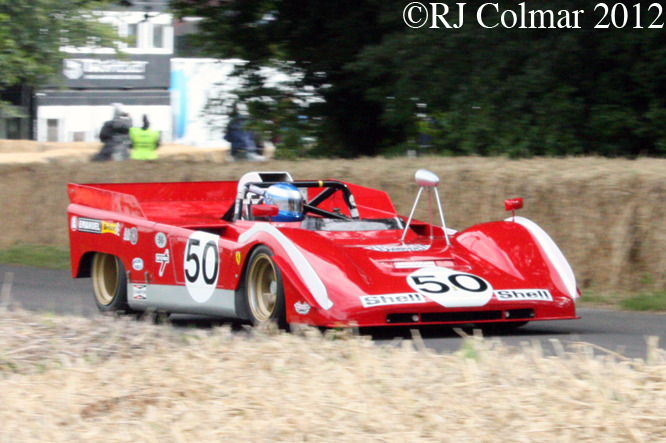
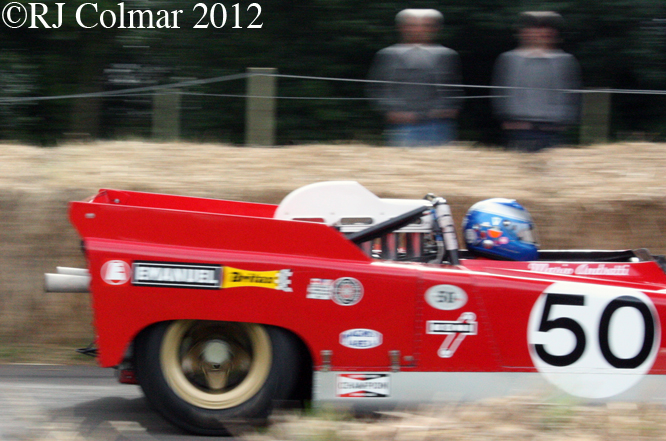
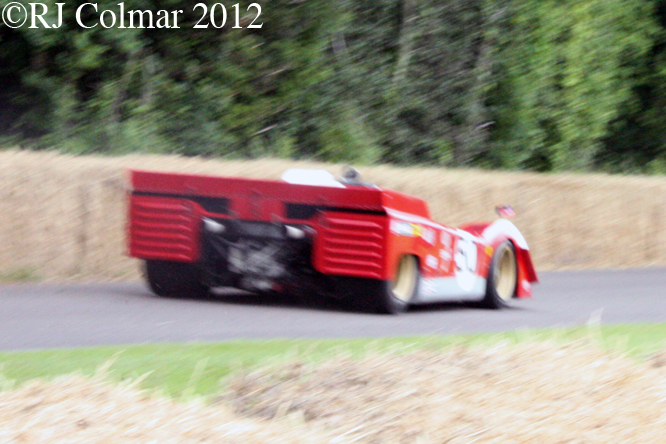
Today’s featured Ferrari began life as a Ferrari 512S chassis #1010 which was qualified on pole for it’s first race by Mario Andretti at the 1970 Sebring 12 hours. Andretti and co driver Art Mezario retired from the race leaving Andretti free to jump into the sister car, chassis #1026, which up to that point had been driven by Ignazio Giunti / Nino Vaccarella, from seventh on the grid. Andretti famously chased down the Solar Productions Porsche 908 which was driven primarily by Peter Revson and shared with Steve McQueen to win the race.

During the remainder of the 1970 season #1010 was driven by the likes of Jackie Oliver, Peter Schetty and Jackie Ickx who teamed up with Giunti won the season finale 1970 Kayalami 9 Hours.

Ferrari 712, Goodwood Festival of Speed

For 1971 a larger 6.3 litre / 384 cui V12 replaced the original 5 litre / 305 cui motor and Art Mezario used it to win the Interserie (Unlimitied Can Am style) race at Imola under the watchful of eye of Enzo Ferrari himself. Later in 1971 #1010 appeared at Watkins Glen with new open body work and now with a 6.86 litre / 418 cui V12 for Mario Andretti to drive in the Can Am Series. Despite a lack of development Andretti managed to qualify 5th and finish 4th only for the car to disappear for the remainder of the season.

Ferrari 712, Goodwood Festival of Speed

For 1972 Luigi Chinetti acquired the largest Ferrari V12 engine ever built along with chassis #1010 in which to run it and entered Jean-Pierre Jarier in for two more Can Am races, he finished 4th from 10th on the grid at Road America where it had become obvious the by now turbo charged Porsche 917’s were in a completely different class from the Ferrari 712 and indeed the rest of the field.

Ferrari 712, Goodwood Festival of Speed

Brian Redman had the honour of driving the car for the last time in the 1974 in the Watkins Glen Can Am round, which almost eliminated all non turbocharged vehicles with a maximum permitted fuel limit, he qualified 19th and retired with broken rear suspension. Today Enzo’s Big Banger chassis #1010 is run by Paul Knapfield and is seen here at the recent Goodwood Festival of Speed.

Thanks for joining me on this “Enzo’s Big Banger” edition of “Gettin’ a li’l psycho on tyres”. I hope you will join me again tomorrow when I shall be looking at the original version of the Lotus 49 that revolutionised Grand Prix Racing in 1967. Don’t forget to come back now !
Share

Flattery Will Get You Anywhere – Lotus 47 #47-GT-04/78

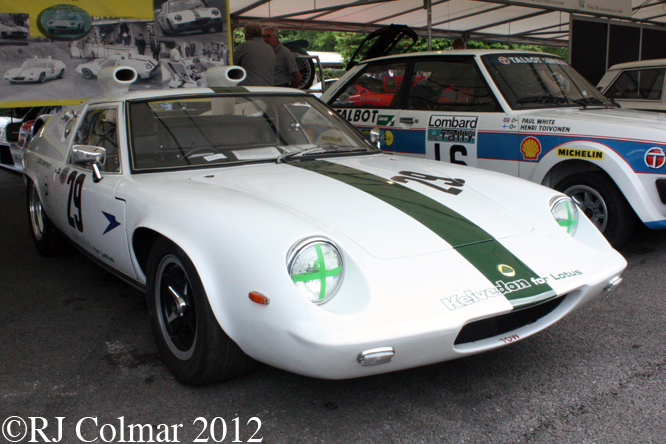
The Lotus 47 was conceived as a racing version of the Lotus Europa (Type 46). The 47 featured a lightened backbone chassis, 168 hp fuel injected Ford Cosworth C13 motor, in place of the Renault used in the road going Europa, Hewland FT200 Formula Two gearbox and suspension derived from the Lotus 22 and Lotus 23 racing cars.

Lotus 47, Goodwood Festival of Speed

The Lotus 47 first appeared at Brands Hatch on Boxing Day 1966 making an immediate impression finishing 1-2 on the road with John Miles winning and Jackie Oliver in second place, though Jackie was penalised for a push start off the grid and so did not figure in the final classification.

The car seen here started life as chassis # 47-GT-04 and was driven by Miles and Oliver to a 9th place overall, first in class, in the 1967 Brands Hatch 6 hours. The car was then acquired by John Calvert and raced under the Sunderland Racing Developments banner in 1968. An collision with Doug Hardwick, driving #47-GT-61 in April ’68 necessitated the replacement of the chassis and so the car became identified as #47-GT-04/78.

While no further International success was attributed to Lotus 47’s after the class win at the 1967 Brands Hatch six hours they did score many wins in national events. Of the many drivers who raced 47’s one was rookie B Rahal who made his first appearance on the race track in #47-GT-60, a car he purchased from Lotus Midwest near Janesville, Wisconsin in the summer of 1972.

In all around 55 cars seems to be the accepted number of Lotus 47’s built confusingly some appear to have been built solely for the road and the chassis numbers run to #47-GT-85.

Several special 47’s were built with Climax motor’s and one, known a Type 47D, with a Rover V8 was built by the factory for GKN that is said to have been capable of 186 mph.

When John Blundsten tested the prototype 47 for Motor Racing magazine he said that while a couple of recent Lotuses had not “exactly flattered their owners. This one is very different … and flattery will get you anywhere !’

Thanks for joining me on this “Flattery Will Get You Anywhere” edition of “Gettin’ a li’l psycho on tyres”, I hope you will join me again tomorrow. Don’t forget to come back now !
Share

Full Throttle – Enzo Ferrari

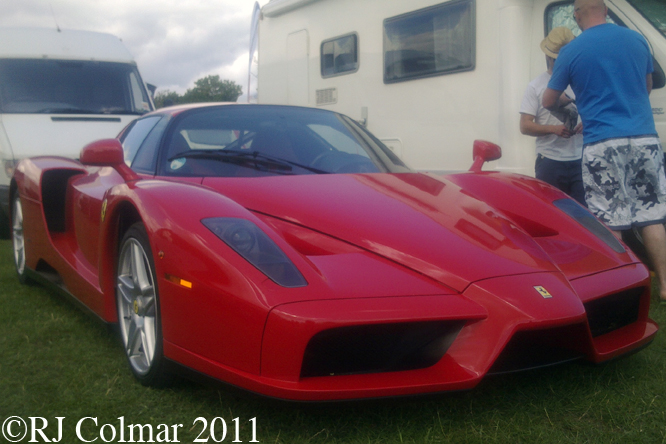
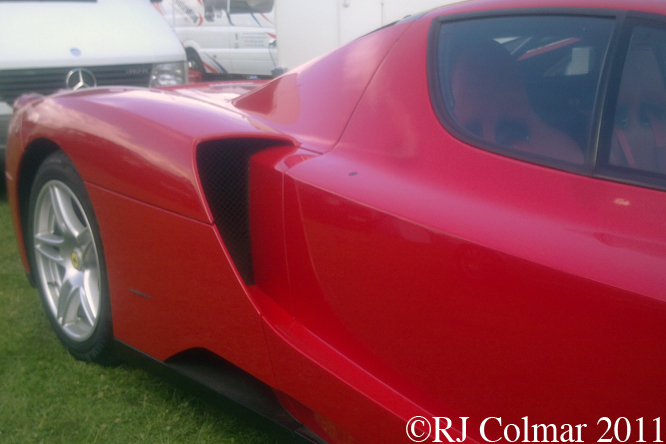
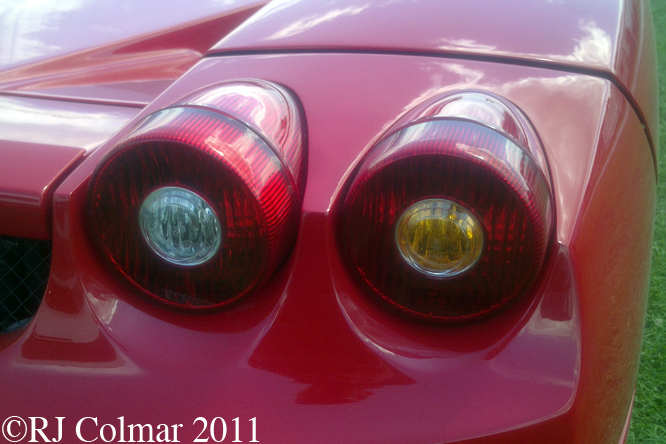
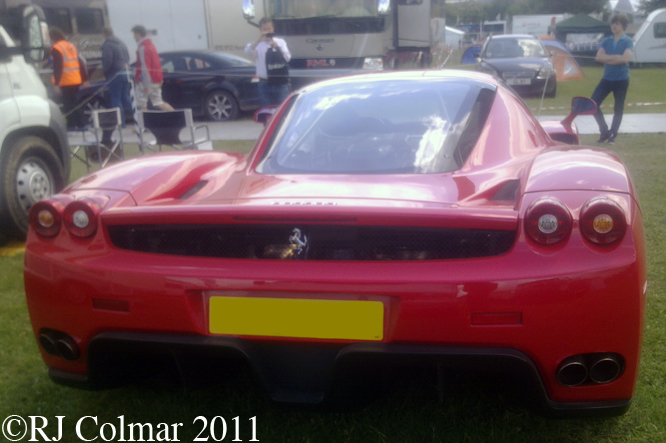
Before commencing production of the Enzo in 2003, Ferrari contacted a select list of previous F40 and F50 owners inviting them to purchase one of the 349 limited production run vehicles. All of the cars costing US $659,330 were thus sold in advance.

Ferrari Enzo, Goodwood Festival of Speed

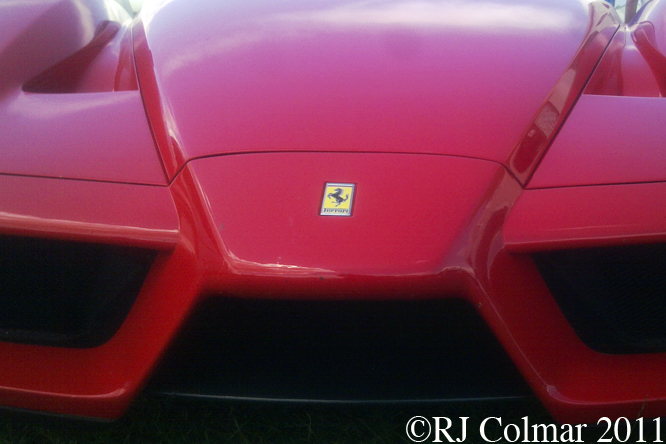
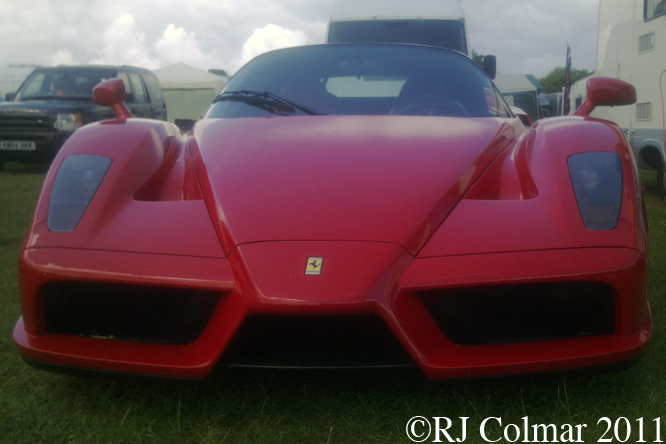
Designed by former lead designer at Pininfarina Ken Okuyama the Enzo can generate 775 kgs / 1709 lbs of downforce at 186 mph to aid handling. The design seems to have split opinion as to it’s attractiveness between those who believe form should follow function and those who believe in higher aesthetic values.

Ferrari Enzo, Goodwood Festival of Speed

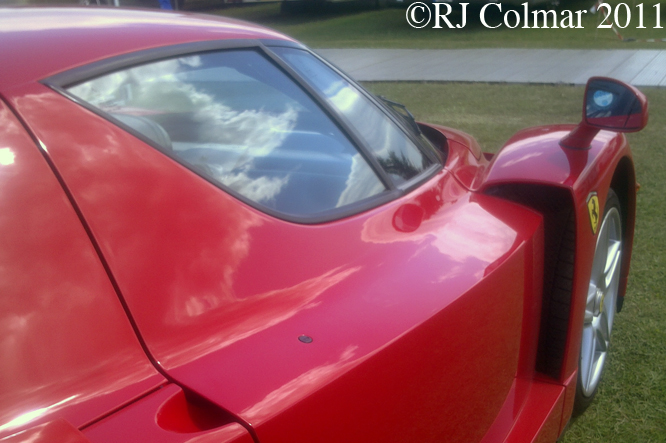
Dripping with technology from it’s Formula One programme the Enzo carries a carbon fiber body and technologies banned from Formula One like active aerodynamics, which have recently been reinstated to the top echelon of the sport, and traction control.

Ferrari Enzo, Goodwood Festival of Speed

Before it’s launch at the Paris Motor Show a bikini clad Demi Moore stepped into the show car on a California beech for a scene in “Charlie’s Angels Full Throttle“.

Ferrari Enzo, Goodwood Festival of Speed

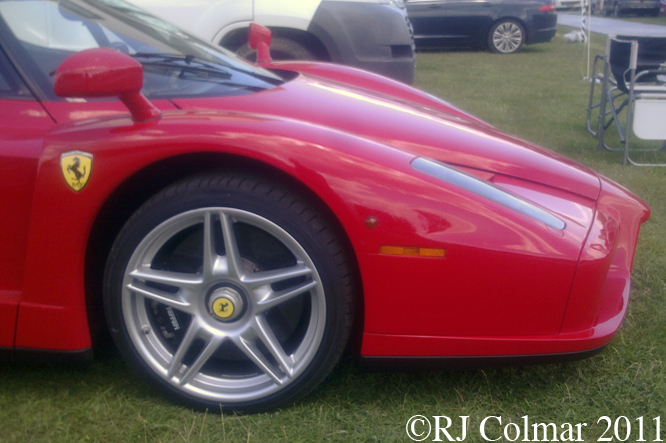
The brakes all round are manufactured from a Carbon fiber reinforced Silicon Carbide (C/SiC) ceramic composite, another carry over from the Ferrari racing programme.

Ferrari Enzo, Goodwood Festival of Speed

Such was the demand from customers not originally invited to own an Enzo that a further 50 were made for sale and a 400th was donated to the Vatican for a charity auction at Sotherby’s where it fetched a cool US$1.1 million, which is the kind of price one would expect to pay for one today if one became available.

Ferrari Enzo, Goodwood Festival of Speed

Inside the cockpit gears are shifted using an electrohydraulic shift transmission operated by paddles on the steering wheel with LED lights advising drivers when to shift, another transfer of technology from Ferrari’s racing programme.

Ferrari Enzo, Goodwood Festival of Speed

The Enzo’s front to rear weight distribution was designed to be 43.9 / 56.1 % again to optimise the handling at speed.

Ferrari Enzo, Goodwood Festival of Speed

Capable of reaching 60 mph in a lightening 3.14 secs and 100 mph in 6.6 secs and covering the quartermile in 11 seconds the Enzo highest speed ever recorded in an Enzo is 221 mph and has been timed around the Nurburgring Nordschliefe at 7m 25.21 secs with a broken electronic damper. Interestingly the F430 Scuderia has since equalled the Enzo’s lap times at Fiorano, Ferrari’s in house test circuit.

Ferrari Enzo, Goodwood Festival of Speed

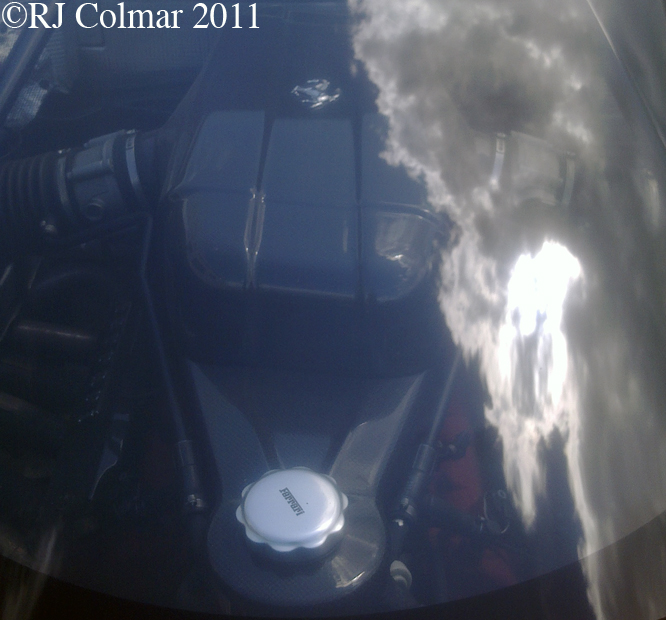
The jewel in the crown of the Enzo is the 651 hp 65 degree V12 which shares the same basic architecture as the contemporary V8’s used by both Ferrari and Maserati.

Ferrari Enzo, Goodwood Festival of Speed

Three pre production Enzo’s were disguised as to look like Ferrari 348’s, the third of which raised $195,500 in the same auction as the 400th Enzo. The Enzo was used as the basis for a number of other models including the FXX, FXX Evoluzione and one off P4/5 by Pinninfarina carrying Ferrari badges, along with the Maserati MC 12, MC 12 Corsa and one off Maserati Birdcage 75th concept car.

Thanks for joining me on this “Full Throttle” edition of “Gettin’ a li’l psycho on tyres” I hope you will join me again tomorrow when I will be looking at a Lotus 47. Don’t forget to come back now !
Share