Tag Archives: Goodwood

5900 Miles To Fame And Fortune – Chevrolet Master 85 Coupé

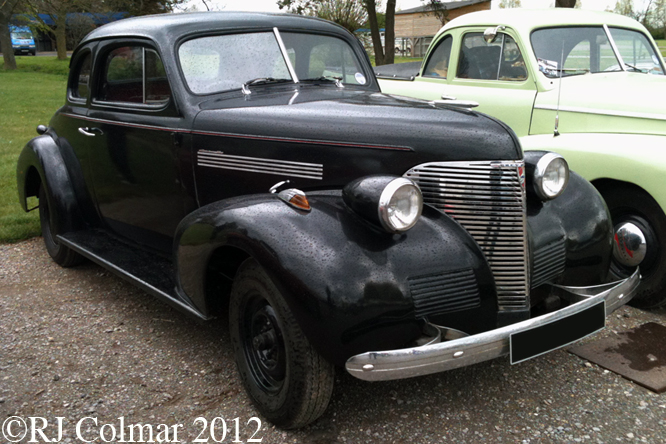
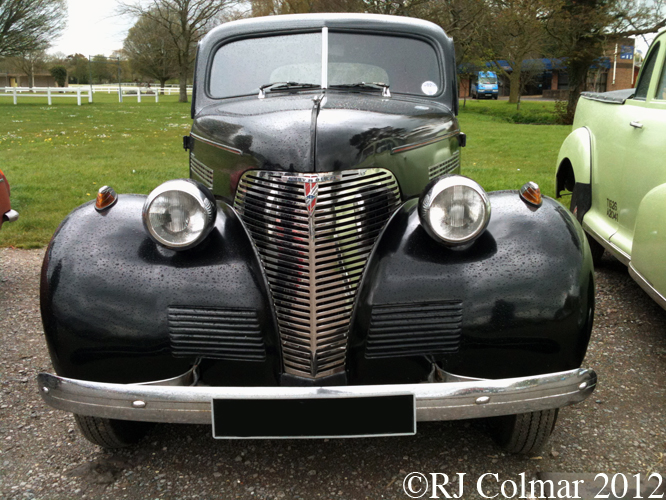
The origins of the Chevrolet Master 85 Coupé can be traced back to 1928 when Chevrolet started to switch from building four cylinder motors to six cylinder motors.

Chevrolet Master 85 Coupé, Bristol Classic Car Show

The introduction of this innovation played to Chevrolet’s advantage as coincidentally Fords experienced a downturn in fortunes as it belatedly switched production from the Model T to the Model A.

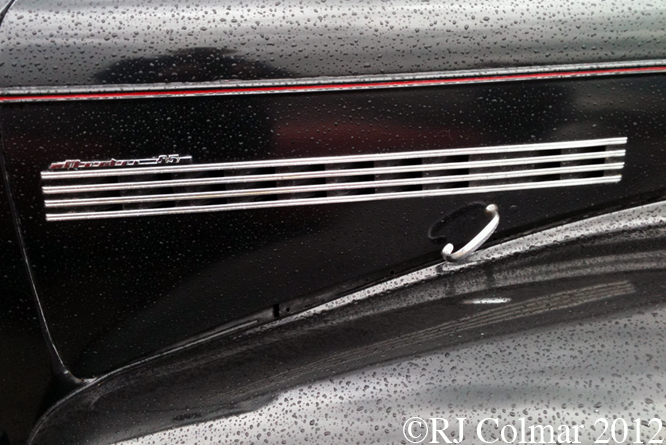
Chevrolet Master 85 Coupé, Bristol Classic Car Show

In 1933 the Master series was introduced as an above base (Standard) range of vehicles and in 1937 this series received an 85 hp 3.5 litre / 216 cui six cylinder motor from which the marketing department added the 85 to the Master Series name.

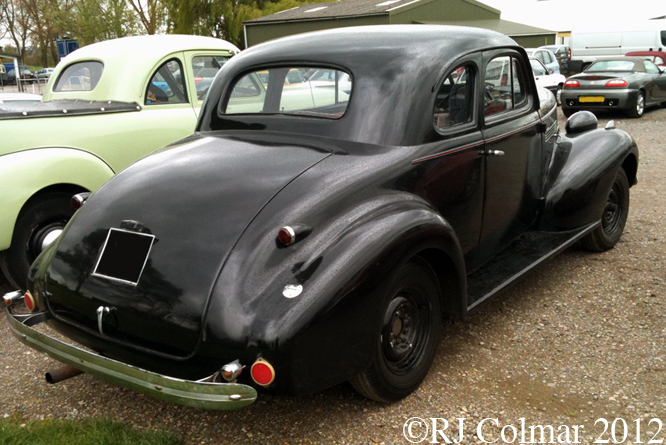
Chevrolet Master 85 Coupé, Bristol Classic Car Show

A ‘tiptoe-matic’ diaphragm spring clutch aided smooth changes between the three forward gears in the gearbox.

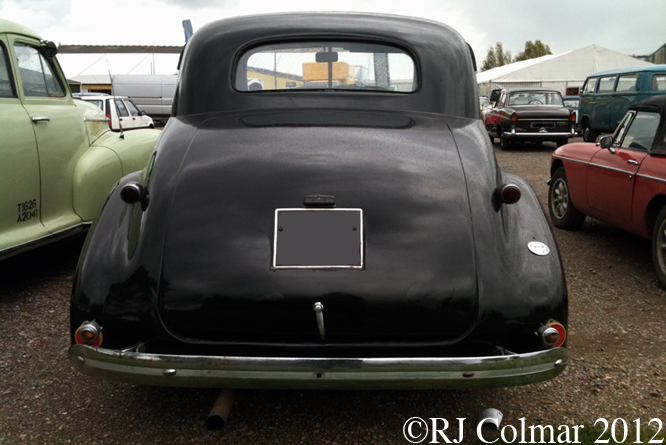
Chevrolet Master 85 Coupé, Bristol Classic Car Show

In 1939 the sealed Dubonnet inspired ‘Knee Action’ independent front suspension was abandoned in favour of coil springs and wishbones.

Chevrolet Master 85 Coupé, Bristol Classic Car Show

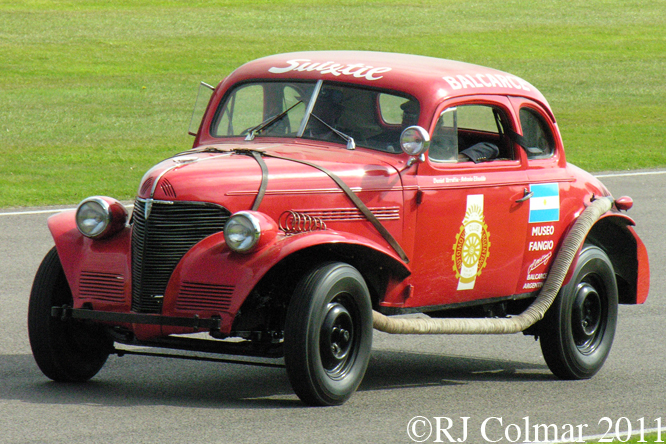
In 1940 a little known 29 year old Argentinian Juan Manuel Fangio, who had started making a name for himself racing a Ford Model A, and his friends modified a Chevrolet Master 85 Coupé for the demands of a 5900 mile race from Buenos Aires, Argentina to Lima, Peru and back.

Chevrolet Master 85 Coupé, Goodwood Revival

Juan managed to average 53.5 miles per hour on some of the worlds roughest roads traversing some of the worlds most isolated regions to win the race. He backed up the performance with back to back Turismo Carretera Series championship wins in 1940 and 1941 which was enough to secure backing from the Argentinian government in 1948 for a trip to Europe that would herald the arrival of the worlds first 5 time World Champion.

The copper pipe clearly seen on the wing / fender of Juan’s Master 85 above acts as an oil cooler.

Thanks for joining me on this ‘5900 miles to Fame And Fortune edition of “Gettin’ a li’l psycho on tyres”, I hope you will join me again tomorrow when GALPOT will feature a Ferrari 458. Don’t forget to come back now !

Share

Two Pedal Open Wheeler – Tecno DAF

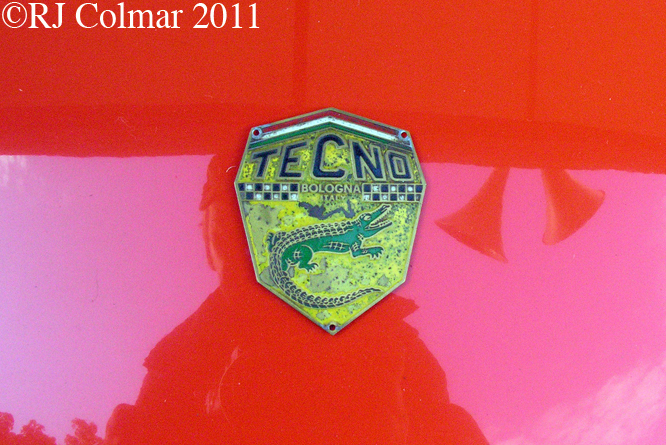
In 1961 the Pederzani brother sought to diversify their Tecno company from the manufacture of hydraulic pumps and take advantage of the expanding market for karts. After building the first offset sidewinder karts powered by Parilla motors their karts won the World Championships in 1964, ’65 and ’66.

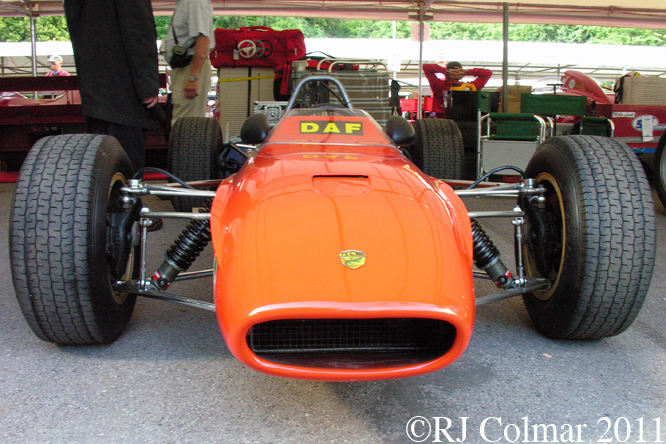
Techno DAF, Goodwood Festival Of Speed

In 1966 the company started building Formula 3 cars and in 1968 Francois Cevert, Ronnie Peterson and Franco Bernabei won the French, Swedish and Italian Formula 3 championships respectively, driving cars similar to the one featured here.

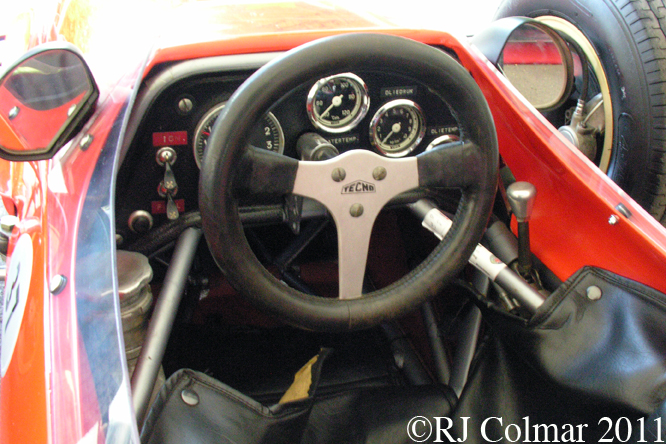
Techno DAF, Goodwood Festival Of Speed

In 1965 DAF, wanting to prove the value of their Variomatic transmission system first seen in the 1959 DAF 600, bought an Alexis Formula 3 car to which they fitted a variomatic transmission but found the drive belts designed for road use could not cope with the additional stresses found on the race Techno DAF, Goodwood Festival Of Speedtrack.

Techno DAF, Goodwood Festival Of Speed

With better belts DAF returned in 1966 with a Brabham chassis for Mike Beckwith with which he scored points and a third place during the season. In 1967 the London Checkered Flag Team ran Gemini chassis for Beckwith and Gijs van Lennep and both scored victories despite the fact that it was becoming clear that the Variomatic was absorbing more power than a conventional gearbox.

Techno DAF, Goodwood Festival Of Speed

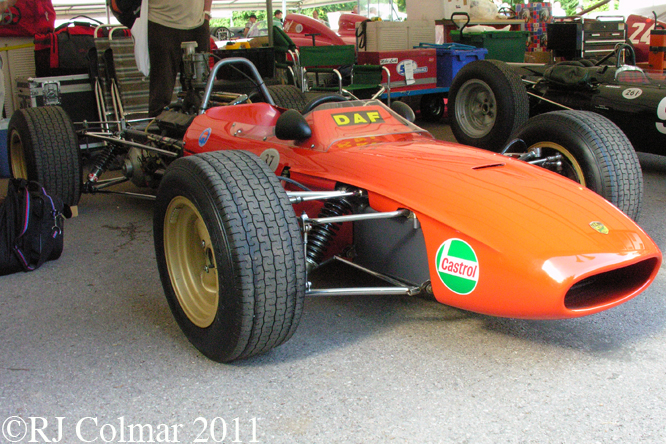
For 1968 DAF acquired a couple of Techno’s for Racing Team Halland to run, of which today’s featured car is one, with which Beckwith won his heat at the Monte Carlo F3 meeting with van Lennep following him in second. Beckwith scored a couple of more second places during the season and at the end of the year the team led the final race before the team mates Beckwith and van Lennep took each other out. DAF retired from Formula 3 having made their point.

Techno DAF, Goodwood Festival Of Speed

The DAF Techno’s were powered by 1 litre / 61 cui 4 cylinder Ford MAE motors that could be tuned to develop 120 hp.

Techno DAF, Goodwood Festival Of Speed

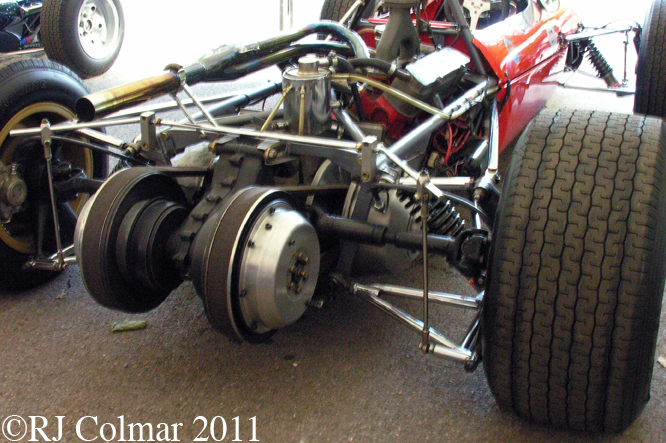
The Continuously Variable Transmission (CVT), the earliest concept of which Leornado da Vinchi is credited with, seen here is almost identical to that seen on later Volvo 300 series cars. By the 1990’s CVT belt technology had advanced to completely overcome the power absorption that had been highlighted by the DAF F3 programme. When David Coultard tested a CVT system in 1993 it was immediately so fast that the governing body of Formula One specifically banned CVT for the 1994 season before it was used on the track.

CVT also had a successful competition record in European Rallycross when mounted first in a DAF 66 Marathon Coupé and then in a Volvo 343.

Continuously Variable Transmission is available in a variety of cars today including automatic versions of the Jeep Patriot, Mitsubishi Lancer and SEAT Exeo.

Techno went on to build a championship winning Formula 2 car for Clay Regazonni in 1970 before becoming involved in a Martini Rossi sponsored F1 project for which they designed and built a flat 12 motor with cheap materials that was powerful but too heavy. The car made it’s debut in 1972 in 1973 Chris Amon scored the teams only World Championship point before the haphazardly chaotically organised team folded.

DAF Cars was taken over by Volvo in the mid 1970’s and Volvo became part of the Ford empire at the turn of the century. The Dutch NedCar factory founded in a partnership between Volvo, Mitsubishi and the Dutch Government in 1991 passed wholly in to the hands of Mitsubishi in 2001.

Mike Beckwith, who made a single non championship Formula One start in 1963, made several starts in Formula 2 and a variety of sports car races up until the end of 1970, last photo I can find of him competing was in a Citroen XM production car in 1972.

Gijs van Lennep made 8 Grand Prix starts which included two sixth place finishes including his last GP start in the 1975 German GP. 1972 proved to be van Lennep’s most successful season when he won the British F5000 championship driving a Surtees and also won the Le Mans 24 Hours sharing a Porsche 917 with Helmut Marko covering 5335 kms / 3315 miles a record that stood for 38 years.

Sharing a Porsche 911 RSR with Herbert Muller Gijs won the last Targa Florio in 1973 and in 1976 Gijs won Le Mans for the second time in his last professional race sharing a Porsche 936 with Jacky Ickx.

Thanks for joining me on this ‘Two Pedal Open Wheel’ edition of “Gettin’ a li’l psycho on tyres’ I hope you will join me again tomorrow. Don’t forget to come back now.

Share

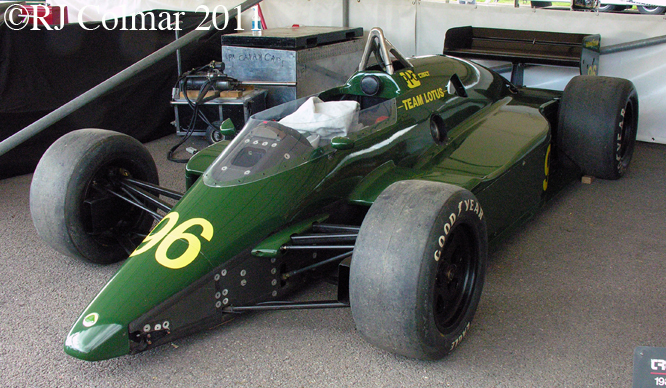
Still Born Beauty – Lotus Cosworth 96T

Trained as a criminologist Roy Winklemann found employment as an investigator for the US Airforce before being employed by ‘the company’, assummed to be the CIA. During this time Roy had occasional outings as a driver in sportscars before setting up a team to run Dan Collins in a Chevrolet Corvette in Europe.

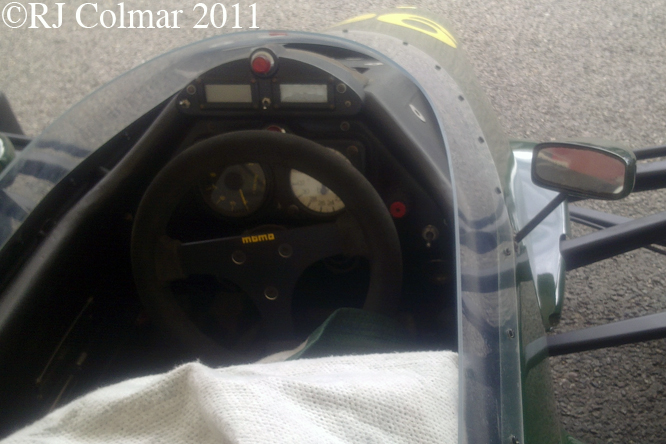
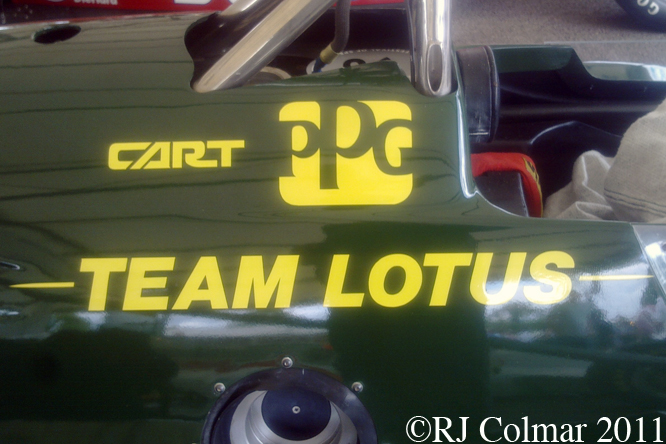
Lotus Cosworth 96T, Goodwood FoS

While founding a number of security related businesses Roy went on to run a variety of vehicles in Europe’s lower open wheel formula which culminated in him entering Jochen Rindt in a Formula 2 Brabham a combination which over 20 races dominating the formula in 1967 and 1968.

Lotus Cosworth 96T, Goodwood FoS

After his success with Jochen Rindt Roy Winkelmann disappeared from the racing scene through the 1970’s while he built up his diverse security empire, only to reappear in the US with a proposed Indy Car programme in the mid 1980’s. The plan was to compete with the unfair advantages of a works car and works motor rather than the customer route taken by almost all the teams except Penske, who made their cars available to customers.

Lotus Cosworth 96T, Goodwood FoS

Roy chose to hook up with his erstwhile partner Lotus and received assurances from Cosworth for a supply of works backed motors. The new car the 96T was built using current Formula One technology in the form of a carbon fiber monocoque, something that had yet to make an appearance at Indy, and rising star Al Unser Jr was signed up to drive the car for the 1985 season.

Lotus Cosworth 96T, Goodwood FoS

Under the direction of Gérard Ducarouge, Gene Varnier and Martin Ogilvy designed the Lotus 96T along similar lines to the Formula One Lotus Renault 97 T with which Ayrton Senna would win his first two Grand Prix in 1985.

Lotus Cosworth 96T, Goodwood FoS

However that is pretty much where the story ends because following the announcement, fearful of how a carbon fiber chassis would react to a secondary impact, USAC, organisers of Indy 500 moved to have carbon fiber banned from competition.

Lotus Cosworth 96T, Goodwood FoS

With rumours of the possible ban sponsors became impossible to sign up and the project came to a standstill without so much as the motor being fired up in the workshop.

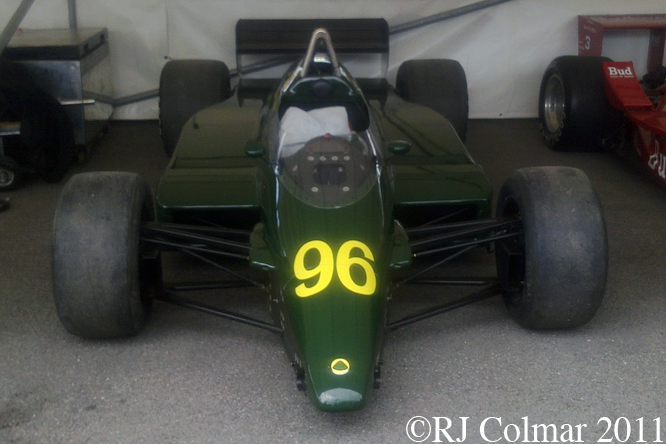
Al Unser Jnr signed up late to join Doug Shierson for the 1985 and no more was heard from Winkelmann or the Lotus Cosworth 96T. The car, along with the Ferrari 637 among the most beautiful cars never to have been raced is seen here at last years Goodwood Festival of Speed.

Thanks for joining me on this “Still Born Beauty” edition of “Gettin’ a li’l psycho on tyres” I hope you will join me again tomorrow for a feature on the 1962 Indianapolis 500. Don’t forget to come back now !

Share

Goat Nimble Variomatic – DAF 600 Luxe

Despite innovations like the worlds first four wheel drive car, a 60 hp Spyker, with a single engine the Dutch motor industry failed to really take off prior to the Second World War.

DAF 600 Luxe, Goodwood FoS

Prior to the war Hubert Van Doorne founded a trailer manufacturing business with finance from a brewery in 1932 Van Doorne’s Aanhangen Fabriek that was abbreviated to DAF.

DAF 600 Luxe, Goodwood FoS

In the early 1950’s after the reestablishment of DAF, now as a manufacturer of military and commercial vehicles and trailers the company became Van Doorne’s Autombiel Fabriek and Hub van Doorne set about designing a passenger vehicle.

DAF 600 Luxe, Goodwood FoS

Allegedly impressed by the Dyna Flow automatic transmission in his Buick Roadmaster, but unimpressed with it’s inefficiency Hub developed his own belt driven vacuum controlled continuously variable transmission CVT operating with centrifugal clutch, getting inspiration from the belt driven machines operating in his factory.

DAF 600 Luxe, Goodwood FoS

In 1958 the 22 hp DAF 600 with variomatic transmission was demonstrated and became the second commercially available motor car CVT, after the British Clyno system which was available from 1923 to 1927.

DAF 600 Luxe, Goodwood FoS

With additional design work attributed to Johan van der Brugghen the DAF 600 was manufactured from 1959 to 1963. Harry Walton in the December 1959 edition of Popular Science applauded the DAF 600 for it’s fully automatic drive, and positive differential action, which meant the car was unlikely to get stuck in mud, sand or snow because if one wheel slipped additional drive would automatically be transferred to the other wheel.

Harry also noted that the 600 although standing on only 12 inch wheels it had seven inches of ground clearance making it as “goat nimble on rough roads as the mourned Model T”. One thing Harry did not notice, or try as I once inadvertently did on a far more recent CVT equipped vehicle, is that it will go as fast backwards as it does forwards, all of 57 mph in the case of the DAF 600 Luxe.

Thanks for joining me on this “Goat Nimble Variomatic” edition of “Gettin’ a li’l psycho on tyres” I hope you will join me again tomorrow when I’ll be looking at a 1965 Studebaker which made an early appearance at Indianapolis. Don’t forget to come back now.

Share

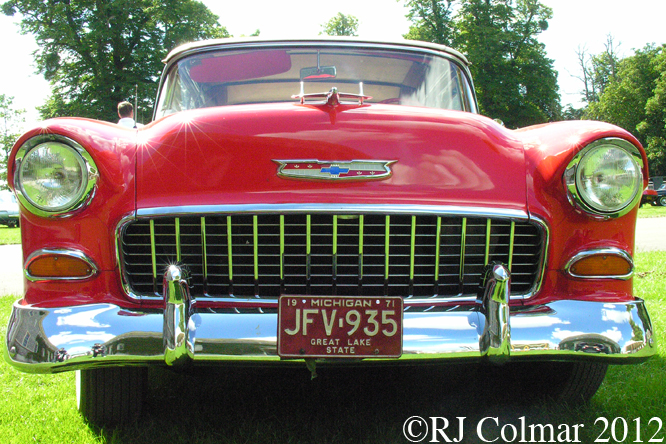
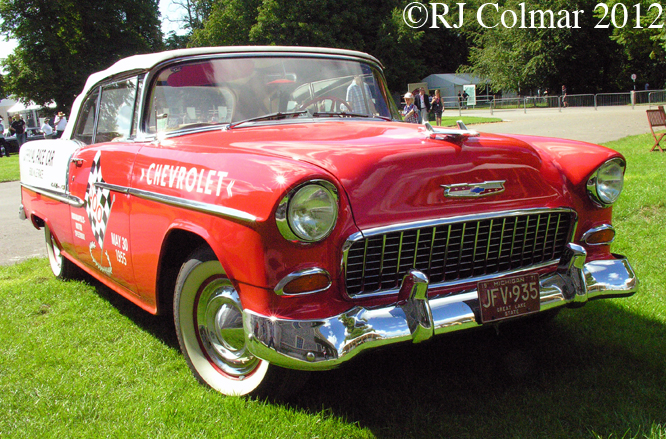
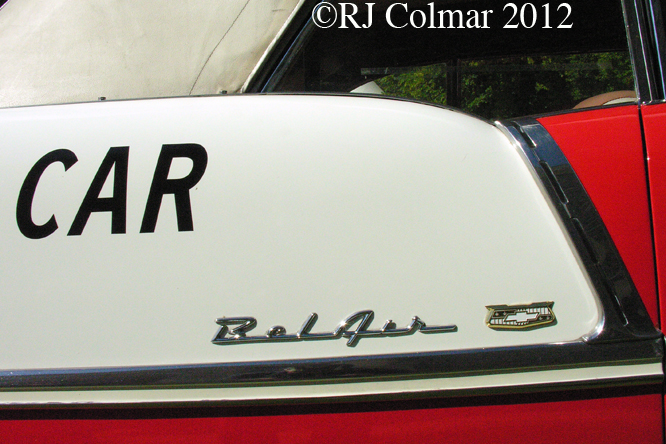
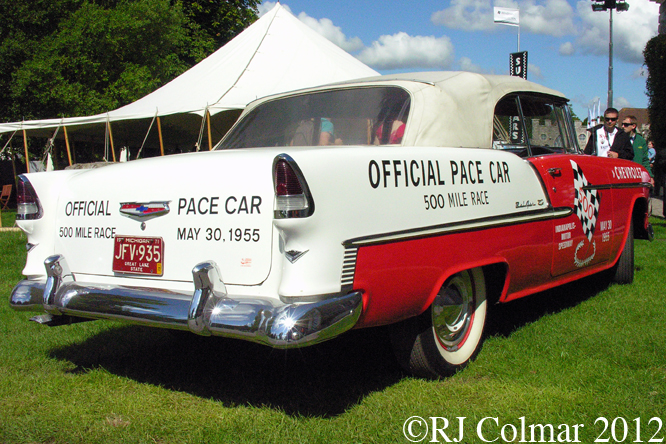
Hot One Of Fifteen – 1955 Chevrolet Bel Air Indy Pace Car

For 1955 Chevrolet launched it’s second generation full size Bel Air range, to replace the almost entirely new 1954 Bel Air. with two tone paintwork and for the first time a new 4.3 litre 265 cui V8 ‘small block’ engine option that would remain part of General Motors product mix with many improvements over several decades.

Chevrolet Bel Air, Goodwood FoS

The crisp clean styling of the 1955 Bel Air was set off by a Ferrari inspired chrome square potato chip grill as seen on the car below photographed at last years Goodwood Festival of Speed.

Chevrolet Bel Air, Goodwood FoS

Alongside two straight six motor options the new ‘small block’ came tuned with either a 162 hp Turbo-Fire with twin barrel carburetor, 180 hp Power Pack Super Turbo – Fire with four barrel carburetor or towards the end of the model year a 195 hp competition option with a high compression motor.

Chevrolet Bel Air, Goodwood FoS

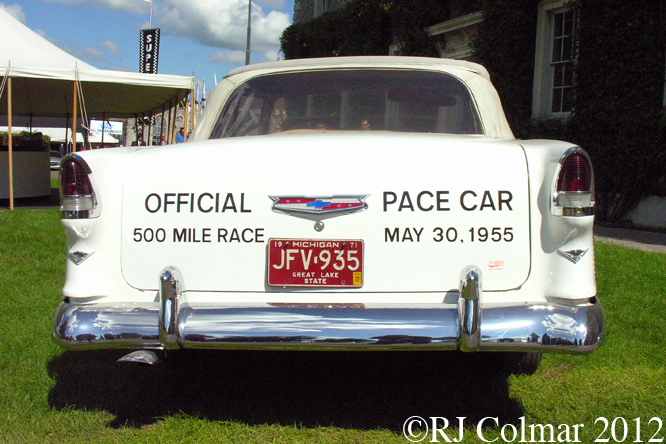
Being selected to perform pace car duties for the 1955 Indy 500 is reckoned to have given Chevrolet’s Bel Air marketing campaign a terrific boost, it is said that a fleet of 15 two tone Red & White Bel Airs were in attendance at what proved to be an unforgettable race.

Chevrolet Bel Air, Goodwood FoS

Chevrolet Sales Manager Thomas H Keating was given the honour of pacing the field for the Indy 500 on May 30th 1955 and he can be seen at the wheel of what Keating claimed to be a 180 hp vehicle, on this linked photo, sitting beside him is thought to be Indianapolis Motor Speedway owner Tony Hulman. The linked photo is telling for what it does not show, namely it is quite clearly not about to pace the Indy 500 and as we shall see it might not even be the actual vehicle used to pace the event.

Chevrolet Bel Air, Goodwood FoS

The give away as to which vehicle paced the event can be seen at 13m 37 secs into this linked clip when the pace car that actually led the field away can be clearly seen to be carrying a movie camera in the boot / trunk necessitating a rather large slit to afford the camera rearward vision and to accommodate the upper film reel. No one knows for sure what happened to that particular car after the event.

Chevrolet Bel Air, Goodwood FoS

Bill Vukovich looked to be on course for a third straight Indy victory in 1955 with a 17 second lead on the 57th lap, of 200, when he ran into someone else’s accident and ended flying over the back stretch perimeter fence and coming to rest up turned and on fire giving the two time defending champion no chance of survival. Bob Sweikert who had worked his way up from 14th on the grid, and was second in the John Zink Special at the time of the accident crossed the line 3 hours 53 mins and 59 secinds after the Bel Air pace car had entered pit road to start the race.

Bob took home one of the fifteen Bel Air pace cars with his wife and their kids, he went on to win the 1955 AAA big car championship and Midwest Sprint Car Championship, becoming the only winner of what is known cumulatively as the American Motor Sports Triple Crown. The following year Sweikert was killed in a sprint car accident at Salem Speedway racing Ed Elisan whom he had raced as a teenager in his home town of East Bay California.

Thanks for joining me on this ‘Hot One Of Fifteen’ edition of ‘Gettin’ a li’l psycho on tyres’ I hope you will join me again tomorrow. Don’t forget to come back now !

Share

Electronic Clutch & Four Pedals – Lotus Ford 76 #76/1 (JPS 9)

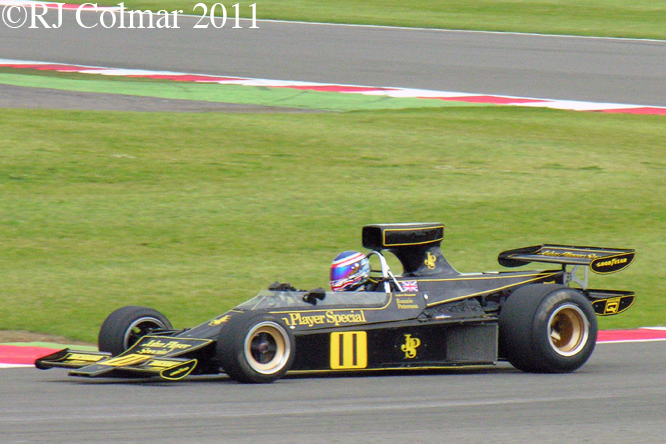
I remember when I first set eyes on the publicity photo’s of the Lotus 76, my reaction was an instant WOW ! The two team cars which had been completed a little late were to replace the venerable Lotus 72 and be driven by Ronnie Peterson and Jacky Ickx in the 1974 season starting at the South African Grand Prix.

The new car was intended to be slimmer and lighter than the Lotus 72 which had helped Jochen Rindt and Emerson Fittipaldi to win World Drivers Championships in 1970 and 1972 and helped Lotus secure the World Constructors Championship in 1970, ’72 and ’73.
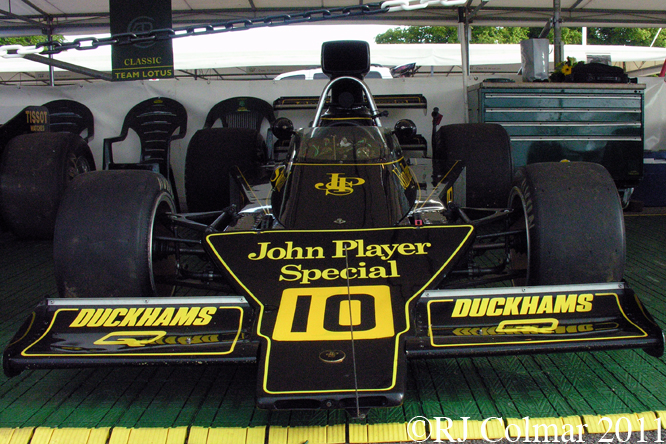
Lotus 76, Goodwood FoS

Innovations on the car included an electronic clutch operated by a button on the gear stick, except when starting from rest for smoother gear changes. Two brake pedals were fitted either side of the steering column operating a single split leaver to encourage left foot breaking to minimise the upset of the balance of the car when approaching corners and two thin, for the period, rear wings mounted one above the other.

Much to the consternation of the press and Lotus fans Colin Chapman sold the naming rights to the Lotus 76 which for the 1974 season was to be known as a John Player Special the chassis number of the car seen here at Goodwood was referred to as JPS 9 though the chassis was unofficially referred to in the press and by enthusiasts as 76/1.
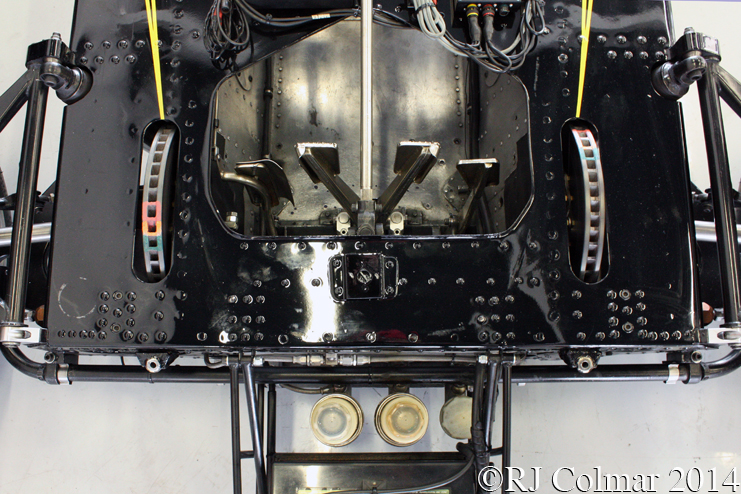
Lotus 76, Silverstone Classic

A pattern of retirements set in at the South African GP which was to repeat itself until by the Monaco Grand Prix Lotus Team had decided to revive the Lotus 72 which Ronnie Peterson promptly drove to the first of 3 against the odds victories during the season.

Development of Lotus 76 was split between the ageing Lotus 72 during 1974, to generate more down force larger front wings and the larger rear wing of the Lotus 72 were fitted to the Lotus 76 which appeared in Belgium.
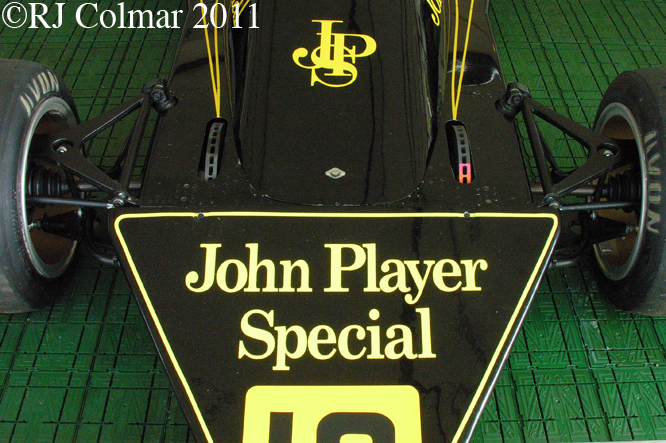
Lotus 76, Goodwood FoS

With the 76 having been observed to be popping wheelies after additional down force had been added the front nose cone was then replaced with a cut down version from the Lotus 72, the radiators moved from ahead of the rear wheels to behind the front wheels and horizontal boards were added along the top of chassis between the front and rear wheels as seen in this linked photo of 76/2 (JPS 10) at the 1974 British GP.

By now the 76 was being taken to races purely in case of an emergency and during practice of the 1974 German Grand Prix such such an emergency arose after Ronnie Peterson crashed Lotus 72/8. The team had no option but to press the by now overweight and unloved 76 back into service and did so by grafting the rear suspension engine and gearbox from the wrecked 72 onto the back of 76/2 (JPS 10). With the car now looking more like it’s predecessor Lotus 72 than a Lotus 76 Ronnie Peterson recorded the 76’s only finish with a forth place on the toughest circuit on the calender !
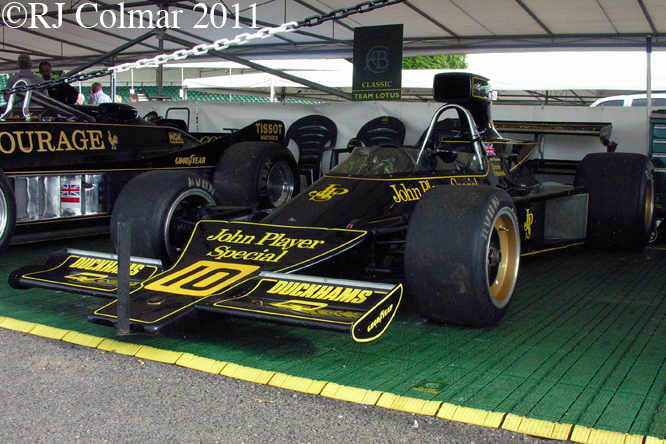
Lotus 76, Goodwood FoS

After confusion about Mario Andretti starting from 3rd place in the 1974 US Grand Prix, in his Parnelli, third Lotus driver Tim Schenken took the flag of the 1974 US Grand Prix only to be disqualified for being outside the top 26 qualifiers as Andretti had managed to get his car onto the grid, ironically only to be also disqualified for a push start away from the line ! This was Schenken’s and the Lotus 76 last Grand Prix start.

However this was not quite the end of the Lotus 76 story, Colin Chapman was a long time member of a motor club in North London and after a little badgering for ‘something a bit quick’ from fellow long time member, David Render, who participated in Sprints and Hillclimbs, Colin relented and told his friend to turn up at the Lotus factory at Hethel with a trailer.
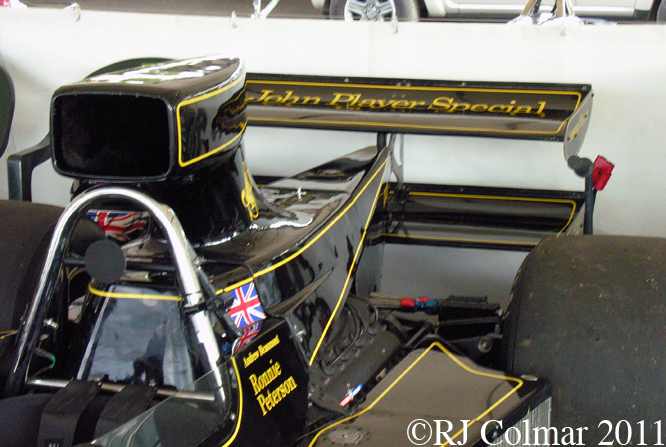
Lotus 76, Goodwood FoS

When David turned up at Hethel early in 1976 he saw this huge black car with twin wings and asked who is this for ? He was quite surprised to learn that it was intended for him !

David drove what is believed to be 76/2 (JPS 10), in original lightweight form, for 2 years and among many victories won the 1976 Brighton Speed Trials when the event was run over a standing kilometer 0.6 miles and clocked a time of 18.77 seconds reaching a 118 mph as he crossed the line.
Lotus 76, Goodwood FoS

At a recent talk, David gave to the Bristol Pegasus Motor Club, he related how on finding the car suffered from terrible understeer / push he added a lump of lead, taken from his old Allard trials car, beneath the nose cone of the 76 and that solved the problem, though he never told Colin ‘Added Lightness’ Chapman what he had done.

The car featured in today’s post 76/1 (JPS 9) seen at Goodwood Festival of Speed and at the 2011 Silverstone Classic belongs to Andrew Beaumont. According to Classic Team Lotus during the first of two races at the 2011 Silverstone Classic meeting Andrew’s double rear wing got savaged, but it did not have much detriment to the performance of the car and he finished 22nd.

John Barnard eventually perfected a semi automatic electronic clutch and gearshift mechanism with a steering wheel mounted paddle shift for the 1989 Ferrari 640 which won first time out at the Brazilian GP in the hands of Nigel Mansell. This system is now de riguer in almost all top line racing cars.

My thanks to MCS, Gregor Marshall, and Tim Murray on the Lotus 76 thread at The Nostlgia Thread who helped identify a Lotus 76 at the Abbaye de Stavelot Museum as the possible home of the second Lotus 76 chassis #76/2 (JPS10).

Thanks for joining me on this ‘Electronic Clutch & Four Pedals’ edition of ‘Gettin’ a li’l psycho on tyres’ I hope you will join me again tomorrow when I’ll be looking at last weekend’s Auto Italia Day at Brooklands. Don’t forget to come back now !
Share

Big Valve Special – Lotus 74 Europa Special

In 1971 Chief Engineer Mike Kimberley oversaw the development of the upgraded Lotus Europa Twin Cam Type 74. featuring a 105 hp Twin Cam motor coupled with a stronger Renault 4 speed gearbox.

Lotus Europa Special, Goodwood FoS

The upgraded Europa featured a 105 hp Twin Cam motor coupled with a stronger Renault 4 speed gearbox.

Lotus Europa Special, Goodwood FoS

After the first 1580 Europa Twin Cams has been built the Europa model was again upgraded with a 126 hp ‘big valve variant of the twin cam motor.

Lotus Europa Special, Goodwood FoS

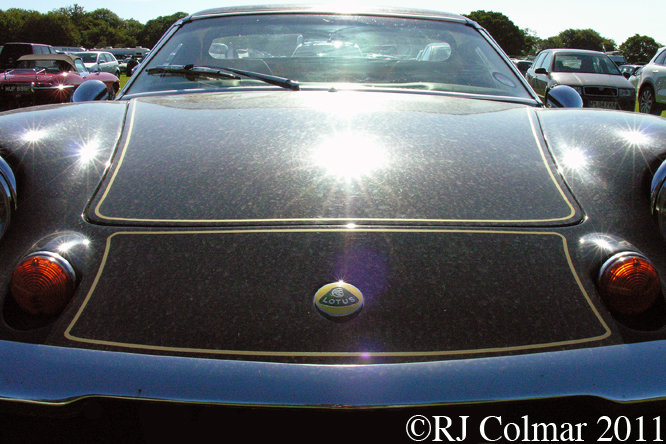
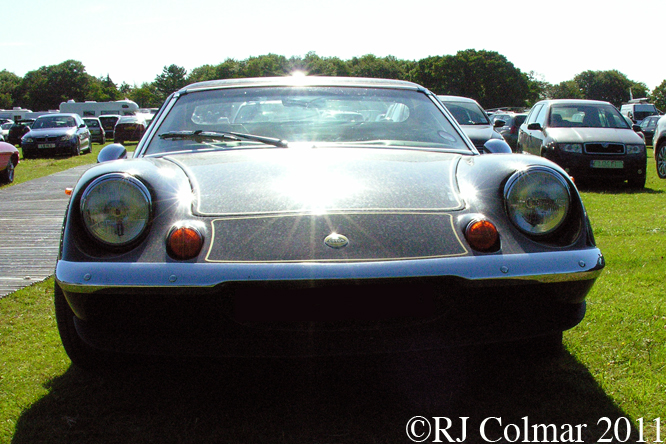
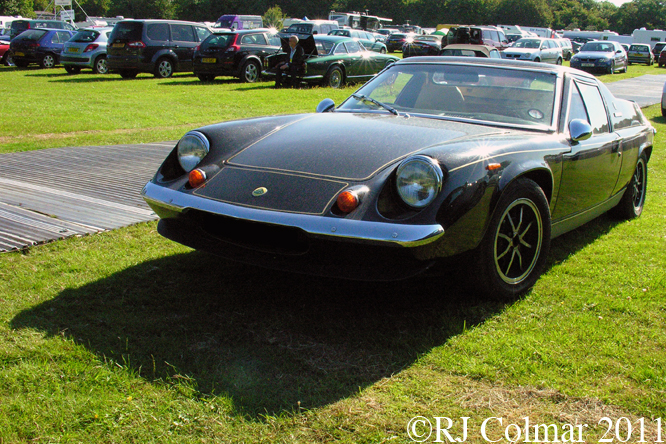
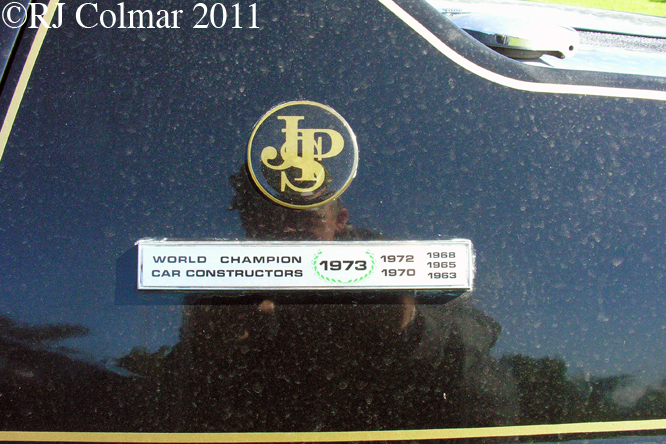
The first 200 ‘Big Valve’ Europa’s were planned as a limited ‘Europa Special’ edition of 200 featuring the black and gold “John Player Special”, tobacco brand, paint work of the works Lotus Racing cars which won the 1972 World Constructors Championship and World Drivers Championship with Emerson Fittipaldi at the wheel.

Lotus Europa Special, Goodwood FoS

The 200 ‘Europa Special’ limited edition vehicles, all featuring a 5 speed gearbox, launched in September 1972 are distinguishable by a numbered badge on the dash panel.

Lotus Europa Special, Goodwood FoS

Such was the popularity of the Europa Special that the model was continued after the initial planned batch of 200 had been built sans numbered dashboard badges and in a variety of colours including black and gold until 1975.

Lotus Europa Special, Goodwood FoS

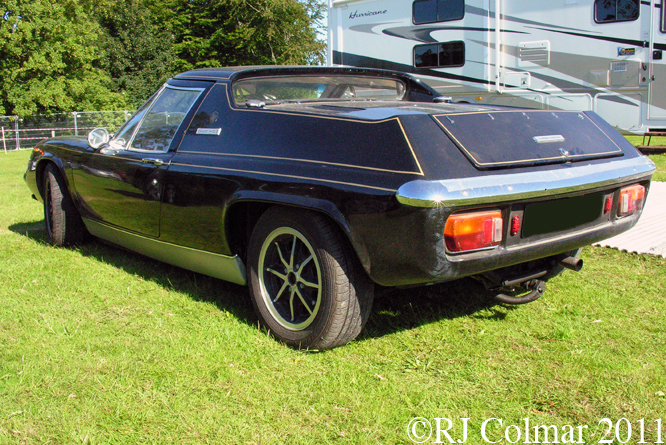
I was unable to discern if the 1972 Europa Special seen here is one of the first 200 numbered cars, or one of post limited edition models, when I saw it at last years Goodwood Festival of Speed. Note how the rear bodywork has been tidied up to give better rear visibility when compared to the Type 54 Europa I looked at last week.

Lotus Europa Special, Goodwood FoS

A Europa with the big valve motor was tested in period carrying a passenger from rest to 60 mph in 6.6 seconds and with a maximum speed of 122 mph. In all 3130 big valve Europa Specials were built from September 1972 to 1975.

Thanks for joining me on this ‘Big Valve Special’ edition of ‘Gettin’ a li’l psycho’ on tyres’ I hope you will join me again tomorrow when I’ll be reviewing last weeks Bristol Italian Auto Moto Festival. Don’t forget to come back now !
12 05 09 Lotus Type 74 disambiguation, it has come to light that at least one internet source lists two Lotus Type 74’s one the Europa Twin Cam / Europa Special and the other an open wheel Formula 2 car, former Lotus employee Rob, Kayemod on The Nostalgia Forum, has kindly informed me that the Formula 2 cars were only ever referred to at the Lotus factory as “Texaco Stars” in deference to their sponsor and that the Type 74 designation seems to have been applied to the racing car retrospectively.

Share