Tag Archives: Goodwood

Son of Silent Sam – Lotus 56

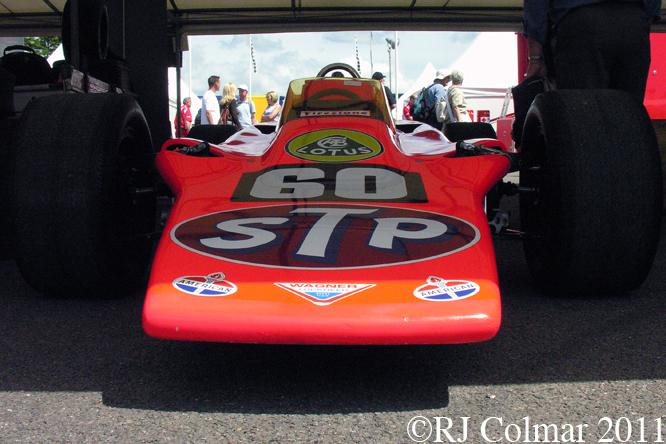
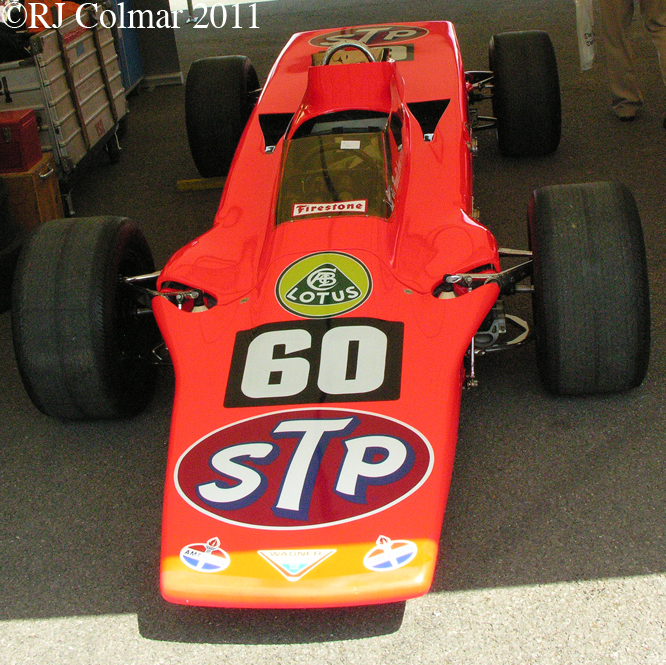
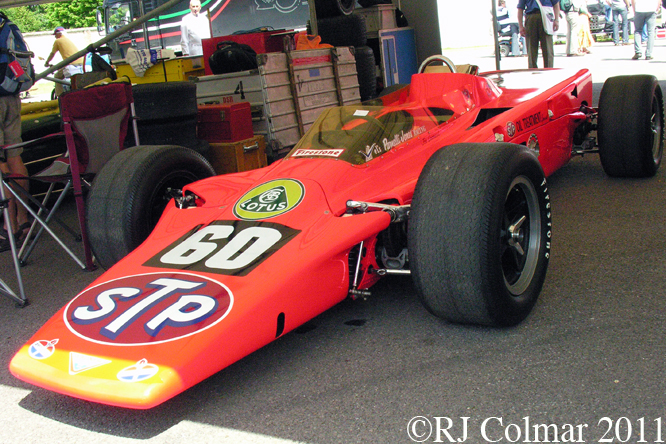
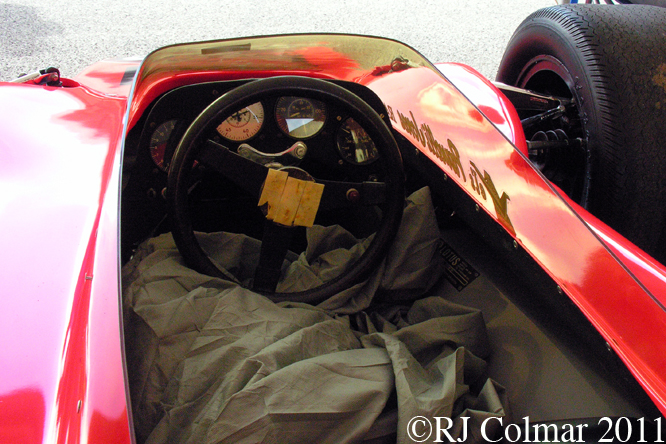
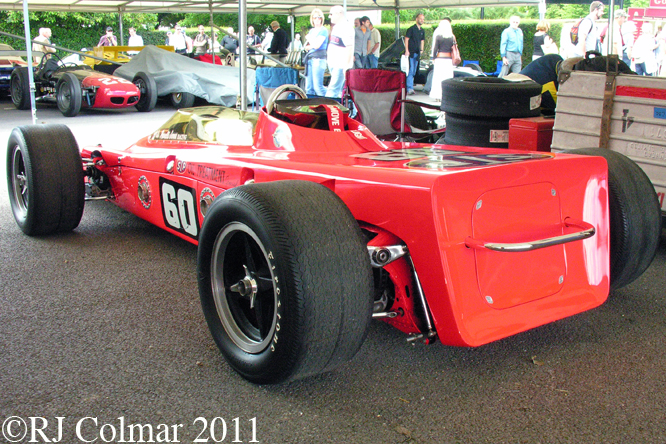
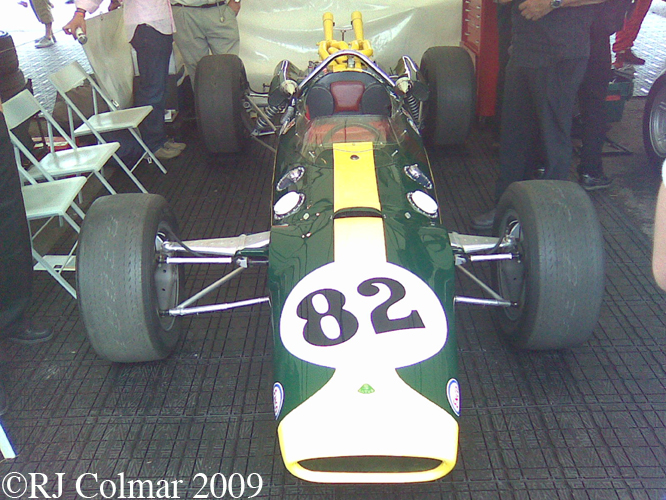
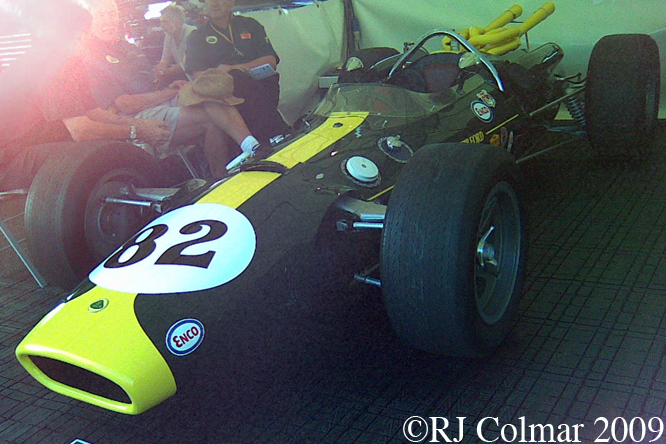
The 1968 Lotus 56 picked up on the technology used by the STP-Paxton Turbocar “Silent Sam designed by Ken Wallis for the 1967 Indy 500 with which Parnelli Jones came within 8 miles of winning before a transmission bearing failure intervened.

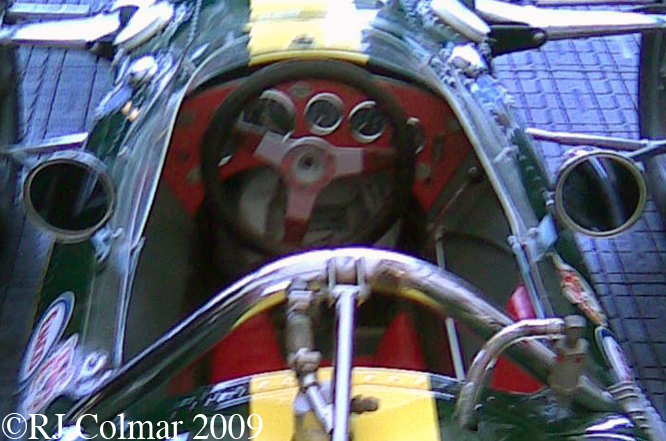
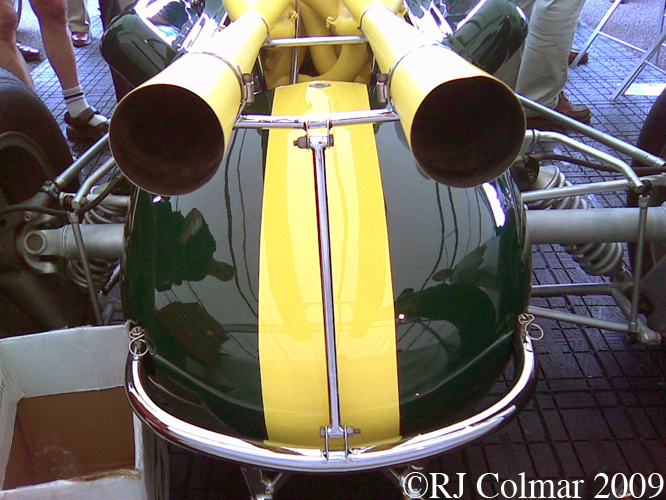
Lotus 56, Goodwood, FoS

Like the STP Paxton Turbocar the Lotus 56, was also bankrolled by STP’s Andy Granatelli, used four wheel drive transmission.

The Lotus 56Lotus 56, Goodwood, FoS

However the Lotus 56 rather than mounting the engine alongside the driver on a backbone chassis as had been the case with the STP Paxton Turbocar, Maurice Phillipe’s design had the motor conventionally mounted behind the driver in what was to become an influential wedge shaped vehicle.

Lotus 56, Goodwood, FoS

Jim Clark was originally penciled in to drive the Lotus 56 but his death during a race in Germany in April ’68 meant British driver Mike Spence was called in to do the early testing of the Lotus 56, unfortunately Mike was killed during practice three weeks before the start of the Indy 500 after hitting the wall in turn one.

Lotus 56, Goodwood, FoS

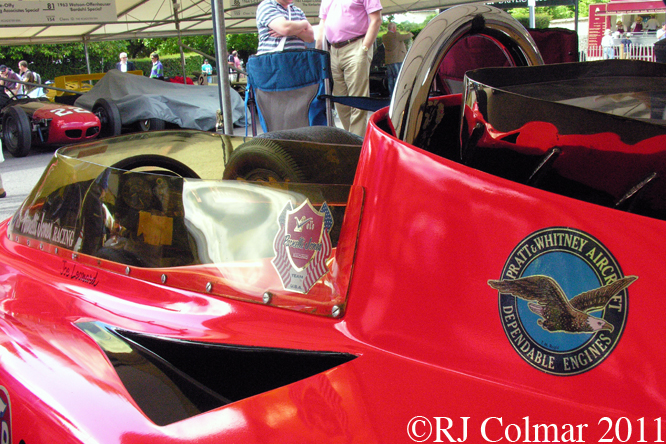
After an accident with in older STP Paxton Turbo car Joe Leonard joined Graham Hill and Art Pollard in the remaining Lotus 56’s.

Lotus 56, Goodwood, FoS

Despite running with an air restrictor plate mandated for 1968 Joe managed to qualify on pole for the ‘500’ thanks in part to the efficient aerodynamics and superior 4wd handling.

Lotus 56, Goodwood, FoS

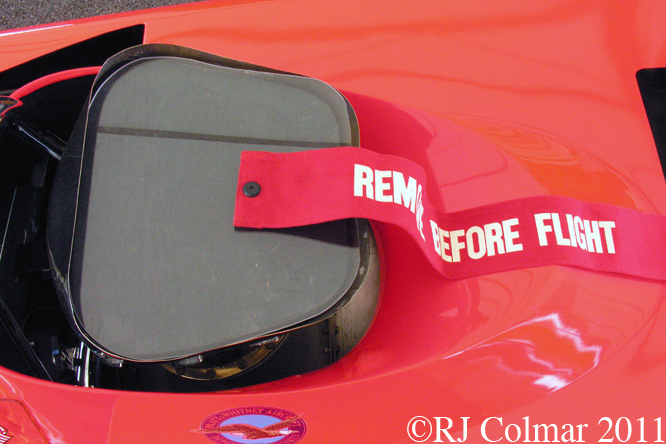
The big advantage of using a Pratt & Whitney Canada PT6 turbo shaft motor, more familiarly seen in a variety of fixed wing and rotary wing aircraft, was reliability these motors are known to have a mean time between outages (MTBO) of 9000 hours !

Lotus 56, Goodwood, FoS

The disadvantage of turbo shaft motor was eye watering fuel consumption which means turbine powered cars carry more weight and have to re fuel more often than cars powered by conventional piston motor’s.

Lotus 56, Goodwood, FoS

In the 1968 500 Graham Hill had an accident Art Pollard broke down while Joe Leonard was leading with a few laps to go when a fuel pump shaft failed meaning Granatelli came close but failed to win a cigar for the second year running.

Turbo shaft motors and four wheel drive were outlawed from the Champ Car circuit from 1969. The Lotus 56 design, in 56B specification, was subsequently sporadically used in Grand Prix races during 1971, but apart from phenomenal performance in the wet no overall advantage was found by using the combination of four wheel drive and turbine shaft propelled vehicles.

Thanks for joining me on this ‘Son of Silent Sam’ edition of ‘Gettin’ a lil psycho on tyres’, I hope you will join me again tomorrow. Don’t forget to come back now !

Share

African Adventurer – Ferrari 340 America #0122A Touring Coupé

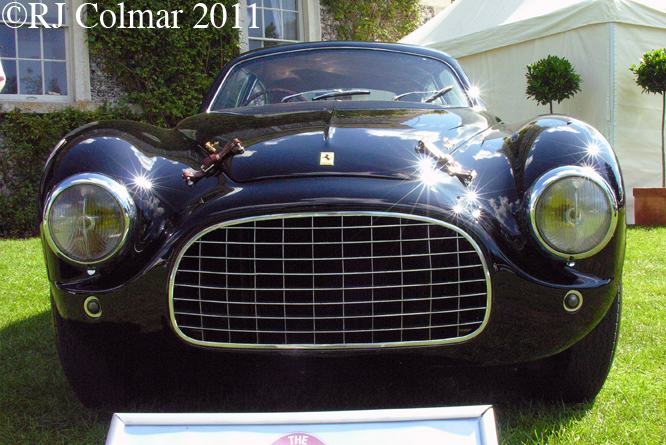
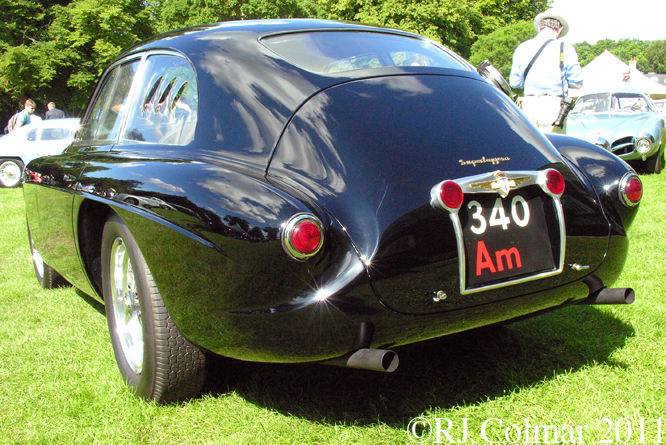
Today’s featured car is the 340 America, seen here at Gooodwood Festival of Speed, a bye product of Ferrari’s Lamperdi V12 powered Grand Prix programme. With the failure of Ferrari’s Colombo designed 1.5 litre / 122 cui supercharged V12 Grand prix cars to make any impression on the pre war Colombo designed straight 8 supercharged 1.5 litre / 122cui Grand Prix cars thanks to poor fuel economy, Enzo Ferrari asked Lamperdi to design what has become known as the all alloy 4.5 litre / 274 cui long block V12 which was to run in Grand Prix racing without a super charger.

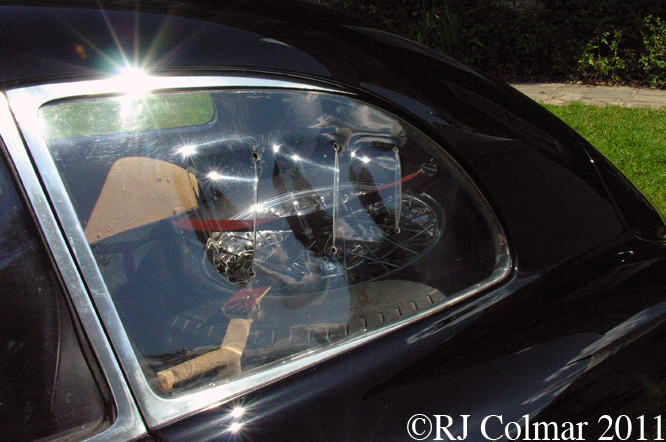
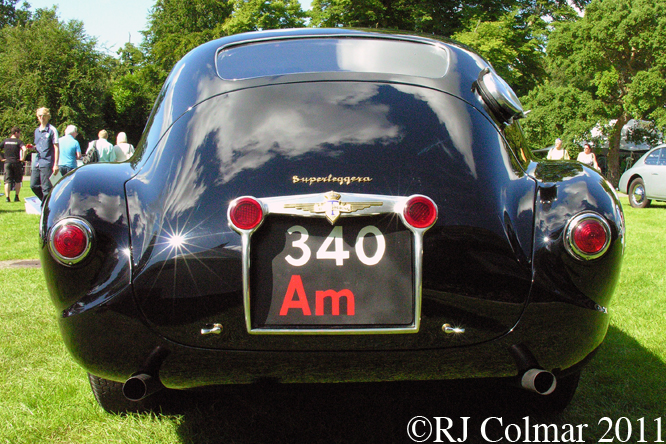
Ferrari 340 America Touring Coupé, Goodwood, FoS

The new V12 was first built in a 3.3 litre / 201 cui guise and then in a 4.1 litre / 250 cui configuration before being stretched to a full 4.5 litre / 274 cui specification. No sooner had the new motor been developed into a winner, in the 375 chassis, than it was made redundant for World Championship Grand Prix racing thanks to a lack of competition which led to an immediate rule change.

Ferrari 340 America Touring Coupé, Goodwood, FoS

As the 375 Grand Prix programme was in progress in 1950 Ferrari started to build a series of 23 340 America sports car chassis fitted with the 200 hp 4.1 litre / 250 cui spec motor. Only 2 of these chassis were fitted with a Coupé body by Touring, a model fitted with a Vignale Barchetta body won the 1951 Mille Miglia with Luigi Villoresi at the wheel and Pierro Cassani doing the co driving.

Ferrari 340 America Touring Coupé, Goodwood, FoS

So far as I can establish this car might be chassis #0122A which was sent to the 1951 Brussels Motor Show and sold to a Belgian. I believe this is the same car as entered by Equipe Nationale Belge for Alain de Changy in the 1958 Grand Prix Leopodville now known as Kinshasa in Belgian Congo where it did not finish. Two weeks later the car was entered in the Angolan Grand Prix for Yves Tassin who finished 10th behind a far more modern D type Jaguar, a Riley Special, unspecified Triumph and Austin Healey amongst others.

Ferrari 340 America Touring Coupé, Goodwood, FoS

As seen here at Goodwood Festival of Speed Councour’s d’Elegance the car won the best in show Award.

Thanks for joining me on this ‘African Adventurer’ edition of ‘Gettin’ a li’l psycho on tyres’, I hope you will join me again tomorrow. Don’t forget to come back now !

Share

Choice Of Champions – Lotus 49B #R10 & #R12

The story of the Lotus 49 in all of it’s guises is inextricably linked to the one component that was a decade ahead of it’s time the Ford DFV motor, which did not win it’s last race until 1983 and was still being used in 1985 running against turbocharged powered cars.
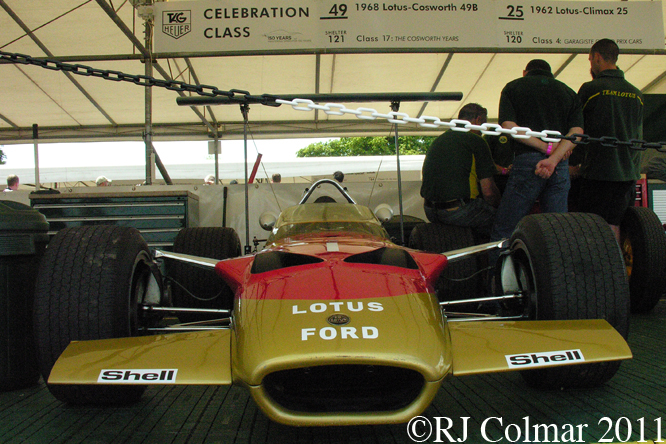
Lotus 49B, Goodwood, FoS

The Lotus 49 was originally built to compete in the 1967 Formula One season for drivers Jim Clark and Graham Hill. Colin Chapman had arranged for Ford to finance the building of the 3 litre / 183 cui Ford Cosworth V8 engine which like the BRM H16 Colin had used in 1966 was to be used as an integral component of the chassis, ie, if you take the motor out of the car the rear wheels would no longer be connected to the rest of the car sufficiently to be able to even push it.
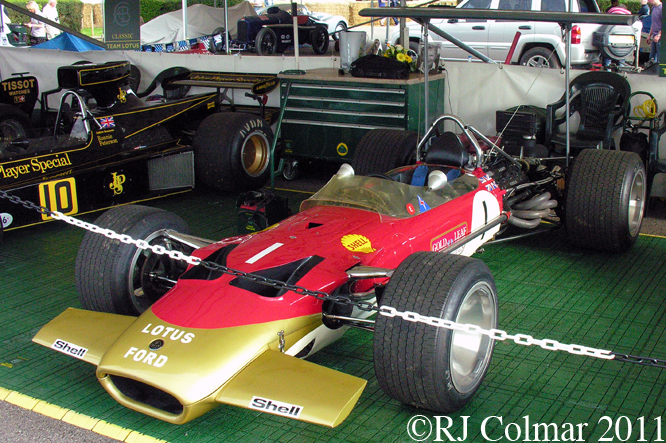
Lotus 49B, Goodwood, FoS

The Lotus 49 design, credited to Maurice Phillipe, was based on the 1965 Indy winning Lotus 38 which Len Terry is credited with being responsible for. Jim Clark drove the Lotus 49 to a debut win in the 1967 Dutch Grand Prix. The Type 49 in all it’s guises won 12 Grand Prix in total the last a lucky last lap win at the 1970 Monaco Grand Prix with Jochen Rindt at the wheel.
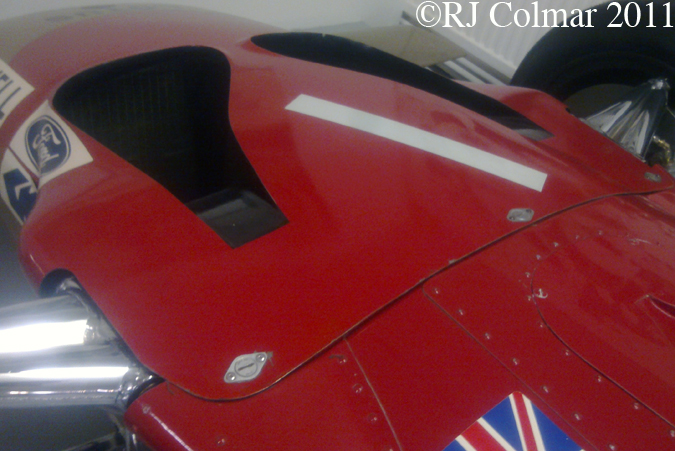
Lotus 49B, Donington Park Museum

These air ducts, introduced on the 49B in 1969, allowed air to pass through the radiator and escape over the top of the car, where as on the original car the air had passed through the nose cone and out the sides of the car ahead of the front suspension units.
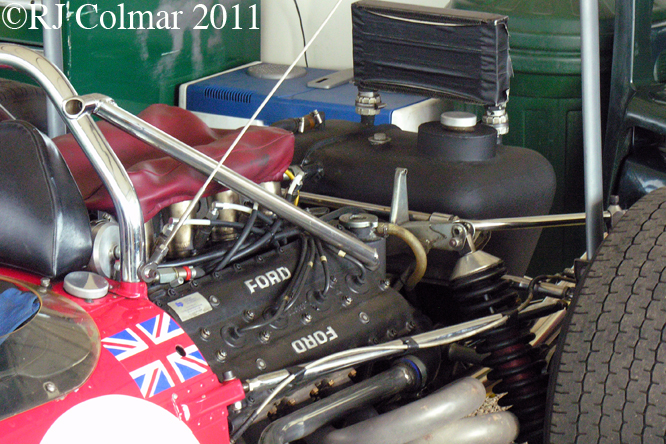
Lotus 49B, Goodwood, FoS

Producing around 400 hp when it first became available, Colin Chapman had an advantage over every other car in the field with the light and reliable Cosworth DFV which had years of development ahead of it that would see it’s output reach just short of 500 hp in 1985. Unfortunately, for Colin Chapman, realising that they needed to be seen running against other competitive teams Ford renegade on it’s exclusive deal with Lotus at the end of 1967 and allowed Ken Tyrrells Matra team to use Ford engines as well in 1968. By the mid 1970’s only Ferrari and BRM were the only regular runners not using Cosworth DFV’s.
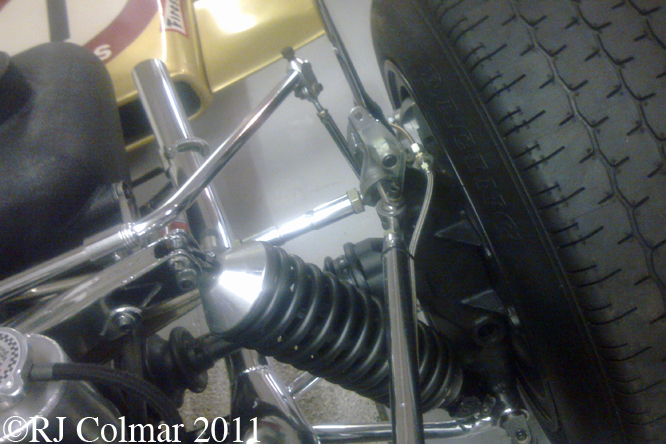
Lotus 49B, Donington Park Museum

In 1968 Brabham and Ferrari copied the high aerofoil concept first seen on the Chaparral 2E Can Am car in 1966 and on the 1967 Chaparral 2F in the World Prototype championship, a month later the Lotus 49B with new rear hubs to carry the 400 lbs of downforce generated by the rear wing appeared at the French Grand Prix.
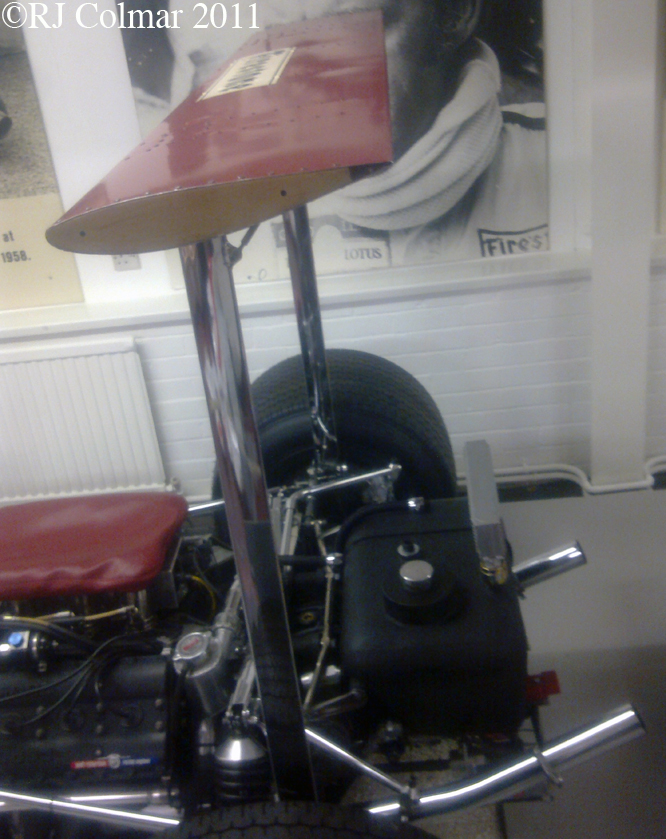
Lotus 49B, Donington Park Museum

This photo shows clearly how big an issue rear grip was back in 1968 not only is their a rear wing but the Hewland gearbox is surrounded by a large oil tank in an effort to distribute as much weight to the rear of the car as possible to improve road holding.
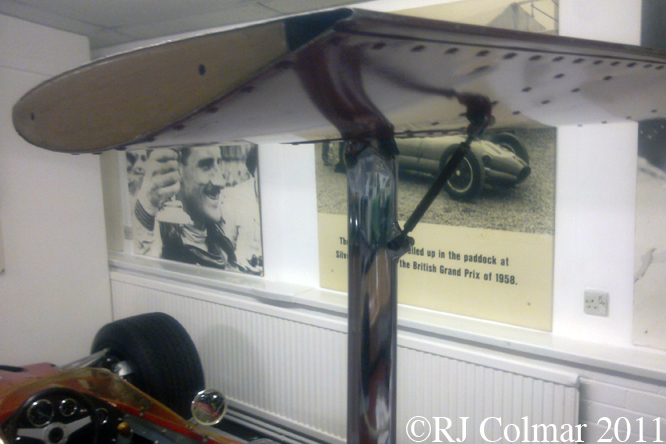
Lotus 49B, Donington Park Museum

The inverted aeroplane wing shape and light construction of the rear wing can be seen here, in 1969 similar wings were attached to the front hubs as well, but two bad accidents caused by collapsing wings for Lotus Team mates Graham Hill and Jochen Rindt led to these devices being strictly controlled from the 1969 Monaco Grand Prix on.
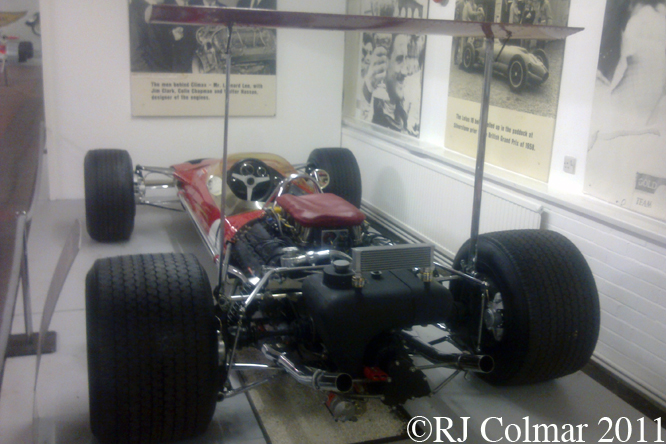
Lotus 49B, Donington Park Museum

So far as I can tell the chassis seen here, in the first, second and forth photo’s, at Goodwood is #R10. Chassis R10 was probably the original 49 #R5 which for reasons that are not clear was renumbered.

While carrying the #R5 chassis plate the car was raced in his second world championship winning year by Graham Hill to win the 1968 Monaco Grand Prix, #R10 was subsequently used by 1978 World Champion Mario Andretti to win pole for his first Grand Prix start in the 1968 US Grand Prix at Watkins Glen.

Future 1970 champion Jochen Rindt was the first to use running with a 2.5 litre / 152.6 cui version of the Ford Cosworth DFV. Jochen won two Tasman Championship races in #R10.

Reigning 1968 World Champion Graham next used #R10 to win the 1969 Monaco Grand Prix. The following season Graham was driving the Lotus 49 #R7 for the privateer Rob Walker team which he crashed beyond immediate repair during practice at Monaco. Fortunately Lotus number 2 driver John Miles had failed to qualify for the race in #R10 and so it was hastily repainted in Rob Walkers colours the night before the race for Graham to drive. He finished 5th despite having broken his legs in the 1969 season ending US Grand Prix driving the same chassis just 7 months earlier !

1972 & 1974 double world champion Emerson Fittipaldi made his Grand Prix debut in Lotus Ford 49 #R10, at the British Grand Prix in 1970.

Finally the first race I ever recall seeing on TV was the 1968 British Grand Prix which was led by first Graham Hill, then his team mate Jackie Oliver before being won by Jo Siffert all three were driving Lotus 49 B’s Jo’s being the odd one out being entered by Rob Walker, who GALPOT regulars may recall had a lot of success running Stirling Moss in his Lotus 18 during the early 1960’s. Jo’s victory was the last to be recorded by a private entrant in a ‘customer’ non works customer car.

Thanks for joining me on this ‘Choice Of Champions’ edition of ‘Gettin’ a li’l psycho on tyres. I hope you will join me again tomorrow. Don’t forget to come back now !

24 04 12 PS Tim Murray has kindly pointed out that I originally incorrectly attributed the design of the Lotus 49 to Len Terry when it should have been Maurice Phillipe, apologies for any confusion. If you see an error of fact anywhere in GALPOT blogs please do not hesitate to inform me in the comments box. Thanks to Tim for the correction.

03 08 12 Serious Errata further reading of Micheal Olivers “Lotus 49 the story of a Legend” has shown that the car which is seen in the 3rd, 5th, 6th and 7th photo’s above at the Donington Collection is actually chassis #R12 and not chassis #R10 as seen in the 1st, 2nd 4th photo’s above, there are several distinguishing features which should have made this obvious at the time I originally posted this blog including the black ‘Lotus Ford’ lettering on the nose various decals and the chrome exhaust at the rear !

Chassis R12 was built up as a show car, for the Ford Motor Company, using the floor from the Lotus 49B R6/1 which was crashed by Jackie Oliver at the 1968 French Grand Prix. Built as a non runner chassis #R12 is consequently the only Lotus 49 which has never been raced, it was donated to Tom Wheatcroft’s Donington Collection when Ford no longer had a use for it.

Sincerest apologies for this error.
Share

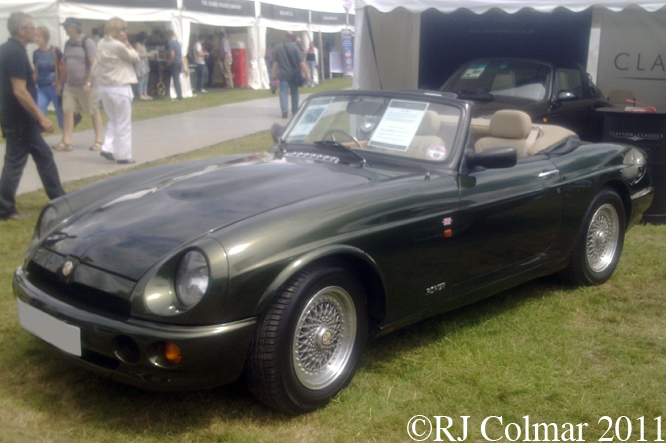
Japanese Edition – MG RV8

After the success of the Mazda MX5/Miata/Eunos launched in 1989 that all the models sited by Mazda as having been influential on it’s design instantly experienced an increase in demand on the classic market, those cited influences included the Triumph Spitfire, Austin Healey Sprite, MG MGB and Lotus Elan.

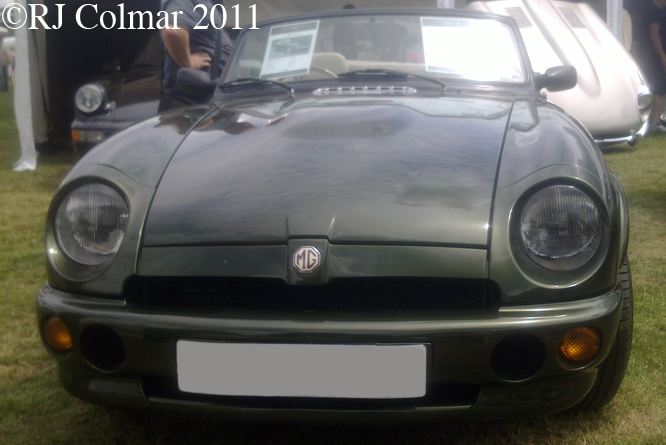
MG RV8, Goodwood, FoS

Such was the demand for all things British in Japan in the early 1990’s that several specialists including Central England Sports Cars and the Frogeye Company on the Isle of White ran thriving businesses exporting renovated Spridgets by the half dozen to Japan. MG also saw the interest in British sports cars created by the MX5 as a opportunity and built a limited edition of 2000 MG RV8’s loosely based around the MG B Roadster.

MG RV8, Goodwood, FoS

At the heart of the RV8 roadster was a 3,946 cc / 240 cui V8 based on the aluminium Buick Rover V8 that had become the motor of choice amongst British sports car builders, slightly ironically the original MG B Roadster had never been available the the V8 that was an option for the B GT Coupé bodyshell.

MG RV8, Goodwood, FoS

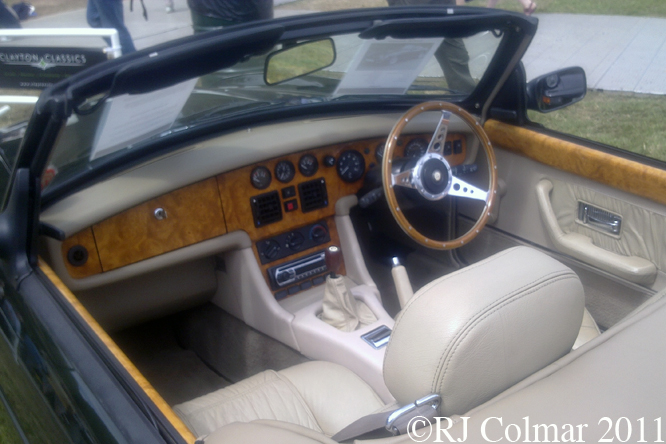
BBS wheels a good dose of Connolly leather and a splash of veneered Burr Elm completed the look of the reincarnation of the worlds most numerous sports car.The boot / trunk lid and doors are the only panels to carry over from the original MG B all though beneath the skin the rear drum brakes and some suspension components were also carried over from the MG B that was phased out in 1980.

MG RV8, Goodwood, FoS

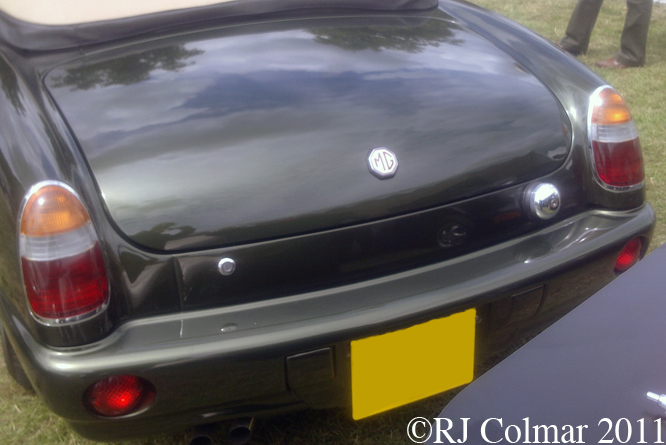
The RV8 is built for those who travel light the floor of the boot trunk is so high that there is little space for anything beside the full size spare wheel. Between 1993 and 1995 1579 MG RV8’s were exported to Japan leaving just 421 to be distributed through the rest of the world.

Thanks for joining me on this ‘Japanese Edition’ of ‘Gettin’ a li’l psycho on tyres’, I hope you will join me again tomorrow. Don’t forget to come back now !

Share

Indy 500 Winner & Swiss Hillclimber – Lotus Ford 38/1

Apologies again to GALPOT readers who read my posts at rowdy.com who may have seen these photo’s before, but once again I have found some more interesting information about the Lotus 38 model since my original post nearly 3 years ago.

Lotus 38, Goodwood Revival

The Lotus 38 was devised by Colin Chapman and designed by Len Terry to win the 1965 Indy 500 on his third attempt with star driver Jim Clark behind the wheel.

Lotus 38, Goodwood Revival

With the aid of the legendary Wood Brothers NASCAR pit crew Clark driving 38/1, seen here at Goodwood a couple of years ago, beat Parnelli Jones, driving Clarks 1964 Lotus 34/3, to win the race. In a reversal of fortunes from their first encounter in 1963, Jim Clark became the first foreign driver to win the Indy 500 since 1916 !

Lotus 38, Goodwood Revival

It turns out that there were eight Lotus 38 eight chassis built all powered by the 500 hp quad cam version of the Ford Fairlane motor, a potted history of each of the 8 cars can be seen on this Nostalgia Forum link.

Lotus 38, Goodwood Revival

News to me since my original post is that after the 1965 Indy 500 Victory a fourth Lotus 38 was built and this car with symmetrical suspension was tested by well known British racer Jack Sears and was then taken on a publicity tour to Switzerland apparently at the behest of Ford’s Swiss agent Mr. Georges Filipinetti, himself a well known racing entrant of a mouthwatering variety of cars.

Lotus 38, Goodwood Revival

While in Switzerland Jim Clark demonstrated the Lotus 38 on at least two hillclimb tracks including Ollon – Villars Hillclimb and Ste Ursanne-Les Rangiers. If you speak French, which I like Jim Clark don’t, you may find this interview with Jo Bonnier Jim Clark and Jo Siffert quite amusing.

The Lotus 38/1 seen in these photo’s has recently been completely restored by Classic Team Lotus and was driven for some demonstration laps last year by Dario Franchitti which can be seen here.

My thanks to Doug Nye and Andrew Kitson at the Nostalgia Forum for their help with uncovering more facts about the Lotus 38 cars.

Thanks for joining me on this Indy 500 winner & Swiss Hillclimber edition of ‘Gettin’ a li’l psycho on tyres’, I hope you will join me again tomorrow, when I’ll be looking at a large Mercedes. Don’t forget to come back now !

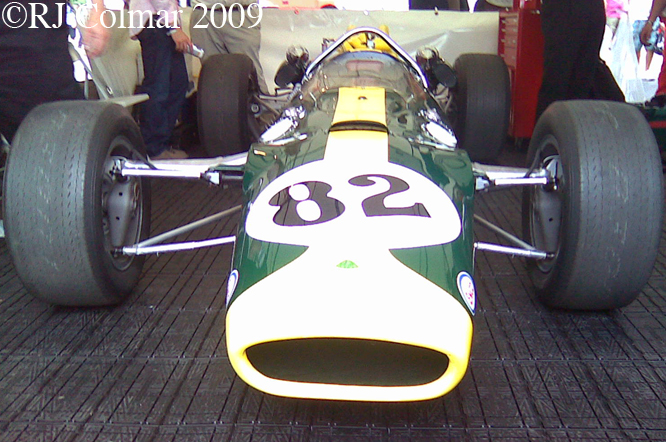
Late PS just noticed Paul Chenard has an evocative illustration of the #82 Lotus 38 on his facebook page linked here.

Share

NASCAR Contender ? – MG MGA 1600 Mk II

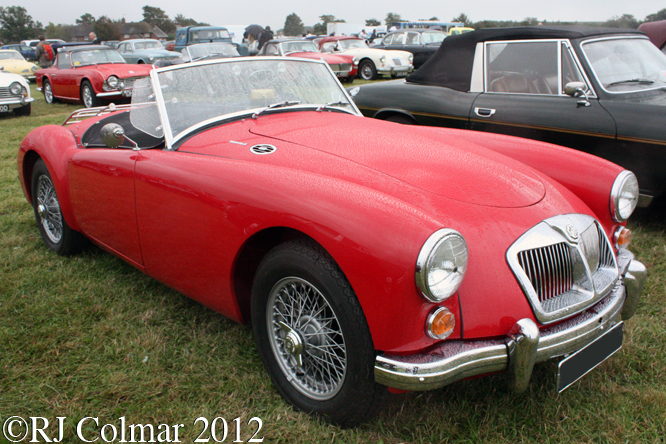
Launched in 1960 the MGA 1600 MK II was the last of the MG A series cars to enter production. From the front the 1600 MkII wasdistinguishable from the original MGA 1600 by the bottom of the radiator grill with the bars either side of the central grill bar dropping away more radically on the later model.

MG A 1600 MK II, Goodwood Revival

There were many changes under the bonnet / hood that included a larger 1622 cc / 98.9 cui 90 hp 4 cylinder motor up from 1588cc / 96.9 cui which combined with larger valves and reworked combustion chambers in the cylinder brought the power up from 78 hp to 90 hp.

The new motor combined with new rear axle ratio’s improved the cars top speed to 102 mph, thought the acceleration from rest to 60 mph was slightly slower than than the model it replaced at 13.7 secs, as was the fuel consumption which dropped to 22.3 mpg imperial.

The is no truth in the internet rumour that Spencer Tracey backed his Dodge into an MGA at the Drive In in the film ‘Guess who is coming to dinner’, it was a hopped up hi boy. Among the films the MGA did have bit parts in was “Fast Lady”, blink and you might miss it in the linked trailer.

There is also speculation on the internet that Smokey Cook may have driven an MGA at Bowman-Gray Stadium in 1963 to record the last start by a foreign manufacturer in a NASCAR race until the arrival of Toyota in the 21st Century. No pictorial evidence has been found of what type of MG Smokey drove that day, though at least one photo has been found of Fred Harb driving a TD at Bowman fitted with a small block Chevy V8 allegedly picked up with a transmission for just $150 from a junk yard. It seems most likely that this is the type of “hobby stock class” grid filler from the tracks regular series rather than a specially prepared for NASCAR MGA. If you know different and have either documents or photographs to prove what kind of MG Smokey Cook drove at Bowman in 1963 please chime in below.

Like the MGA Twin Cam and 1600 De Luxe the 1600 MkII and MkII De Luxe had disc brakes all round with competition center lock wheels an optional extra. Between 1960 and 1962 MGA production tailed off with just 8,719 of these Mk II vehicles being built. Total MGA production between 1955 and 1962 reached 101,081 making it the all time best selling sports car of the day. Amazingly all but 5000 of the total MGA production run remained in the country of origin.

Thanks for joining me on this “NASCAR Contender ?” edition of ‘Gettin’ a li’l psycho on tyres’. I hope you will join me again tomorrow. Don’t forget to come back now !

16 09 12 Errata :- it has come to my attention that the original set of photo’s posted with this blog were of the earlier MG 1600 not the MkII with the distinctive grill now seen above at the 2012 Goodwood Revival. Apologies for any confusion.

Share

Niki’s Ford – Ford Capri RS 3100

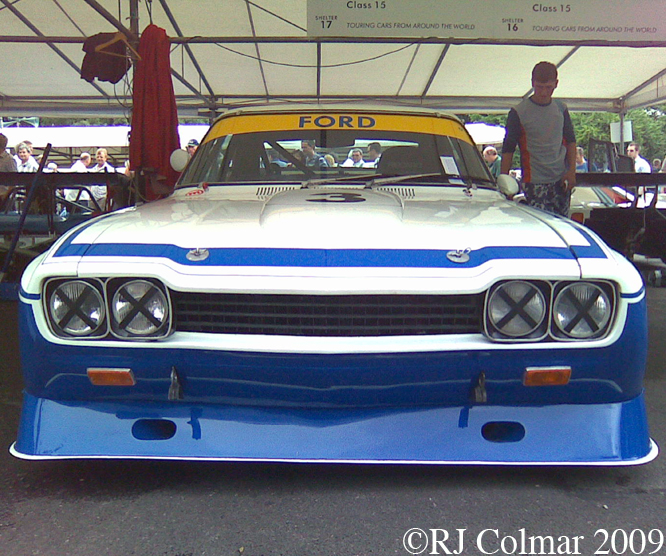
With apologies to my Rowdy friends who will have read much of this before, I hope you will agree that there is good reason for reposting this blog today. The Ford Capri RS 3100 was the final 1974 racing evolution of the Mk1 Ford Capri that was launched in 1969. It is thought that four RS3100’s were built by the Ford Competitions department in Cologne, Germany.

Ford Capri RS3100, Goodwood FoS

The racing debut of the RS3100 appears to have been by the Harry Theodoracopoulos team in the the 1974 Atlanta Six Hours where Harry and team mate Horst Kwech qualified 32nd but are not recorded as finishing the race.

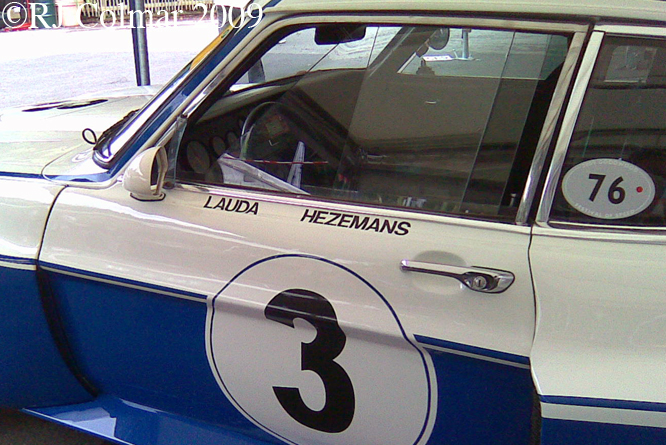
A week later Ford’s Cologne factory team entered two RS3100’s at the Nurburgring Eifelrennen in Germany, where one time German NASCAR racer, ‘dega 1971, Rolf Stommelen & Toine Hezemans scored a one, two in the German Touring car championship.

Ford Capri RS3100, Goodwood FoS

Power comes from a 440 hp Cosworth developed GAA quad cam 24 valve V6 motor, a similar type was also used in European Formula 5000 races with some success. To improve engine bat aerodynamics and weight distribution the radiators were mounted ahead of the rear wheels.

Despite it’s high state of tune the RS3100 was generally outclassed by the BMW CSL ‘Batmobiles’ much as it’s predecessors the Capri RS 2600 and Capri RS had been in 1973.

Ford Capri RS3100, Goodwood FoS

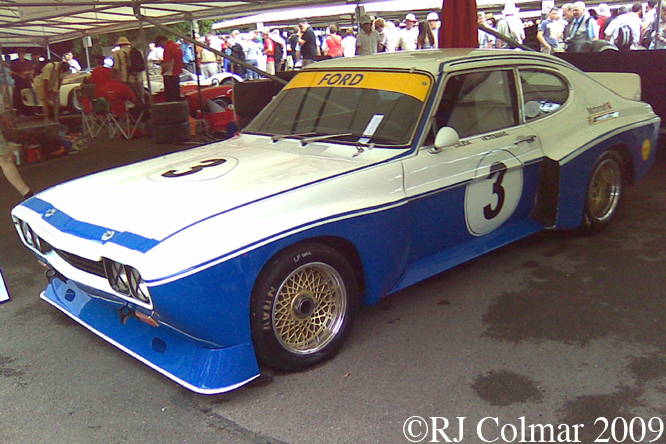
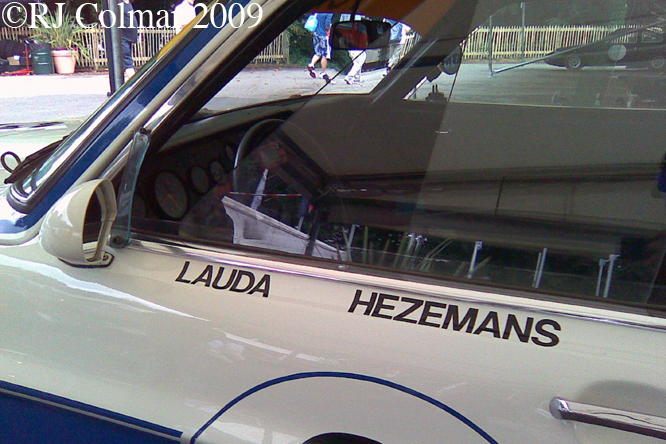
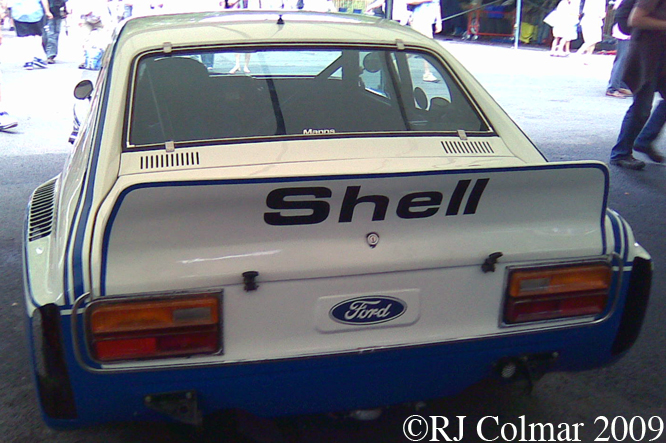
This vehicle appear’s painted up at Goodwood as the #3 Niki Lauda used at the two Norisring races on the 15th of September 1974 where he finished 6th and 20th.

Toine Hezemans was Lauda’s team mate that day in the #4 entry who in a symmetrical reversal of fortunes came in 16th in the first race and 2nd in the second race.

Ford Capri RS3100, Goodwood FoS

Not sure how Niki Lauda who was in the first year of a Ferrari contract was allowed to race for the work’s Ford team given that just a decade earlier Enzo Ferrari and Ford had spectacularly fallen out over a deal in which Ferrari was supposed to sell out to Ford. These days it is extremely rare for a contracted Formula One driver to be allowed to race in any other category.

Ford Capri RS3100, Goodwood FoS

The RS 3100 differed visibly from it smaller engined Capri RS 2600 and Capri RS brethren with the addition of this large Gurney flap on the back.

I hope you will join me in wishing one of my all time hero’s Niki Lauda a very Happy Birthday.

Thanks for joining me on the Birthday Boy edition of ‘Gettin’ a li’l psycho on tyres’, I hope you will join me again tomorrow don’t forget to come back now !

Share