Tag Archives: Hill

Britain’s World Beater – BRM P578 #P578/1 Old Faithful

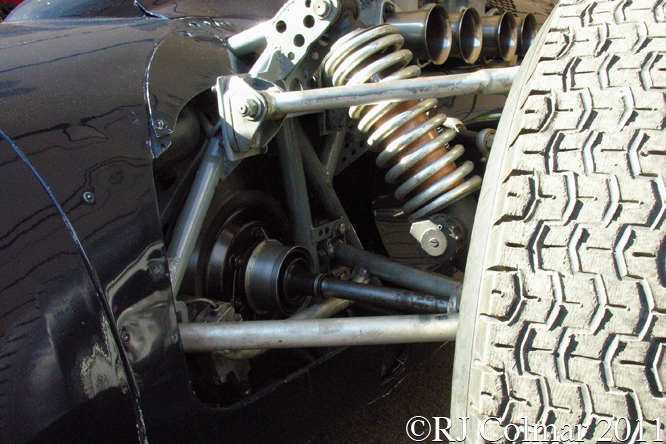
In 1961 BRM were running late with their 1.5 litre 91.5 cui engine program to meet the new Formula One engine regualtions and so came up with an interim design the P48/57 which was powered by a proprietary Coventry Climax engine like most of the British ‘Garagiste’ teams. For 1962 their new V8 was ready and though it was no more powerful than the Coventry Climax the BRM V8 did rev to 11,000 rpm as against only 7,500 for the Climax. The space frame from the 1961 car formed the basis of the ’62 challenger which was known as the P578.
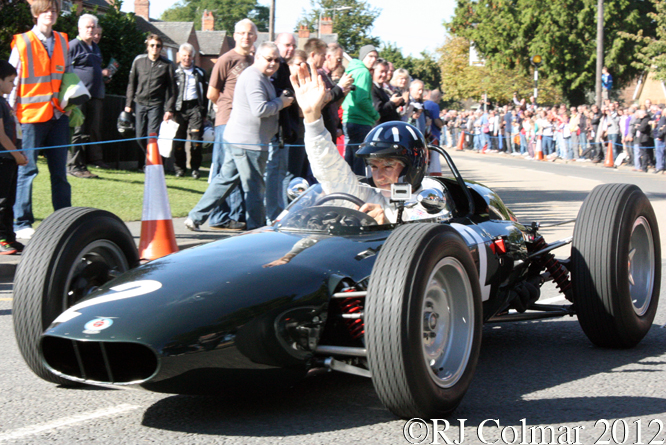
D Hill, BRM P578, BRM Day, Bourne, Lincs

Richie Ginther joined incumbent Graham Hill on the BRM driving strength from ’61 World Champions Ferrari. The main challengers for the 1962 World Drivers and Constructors Championships emerged as BRM and Lotus who had introduced a revolutionary new Climax powered car the Lotus 25 which featured a sheet aluminium monocoque chassis in place of the space frame constructed from tubes as was common practice up to that time.
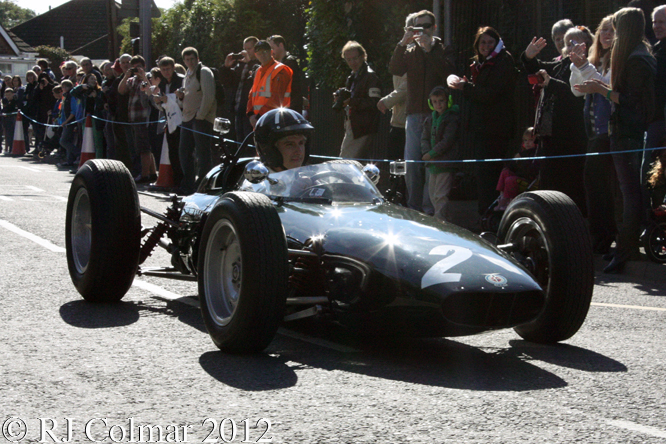
D Hill, BRM P578, BRM Day, Bourne, Lincs

First blood in the 1962 season fell to Graham Hill in the Netherlands where Jim Clark finished last of the runners in 9th place 10 laps down in the new Lotus 25. Bruce McLaren won the Monaco Grand Prix in his Cooper Climax, the last win for the marque for three years until 1966. Jim Clark won for the first time in 1962 at the Belgian Grand Prix where he was followed home Graham Hill. The French Grand Prix saw a fourth different winner in the form of Dan Gurney who was driving a Porsche 804.
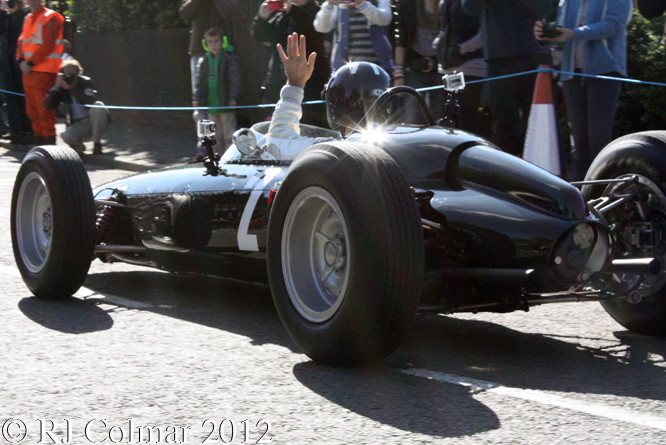
D Hill, BRM P578, BRM Day, Bourne, Lincs

Jim Clark became the first repeat winner of the ’62 season when he won the British Grand Prix from John Surtees driving a Lola Climax Mk 4. Graham Hill then won the German Grand Prix again from Surtees in the Lola. In Italy Graham became the first three time winner in ’62 when he led team mate Ritchie Ginther across the line. At the ’62 US Grand Prix Clark led Hill home by nearly 10 seconds.

Going into the last race of the season the superior reliability of the less radical BRM meant that Jim Clarks only opportunity to win the ’62 Championship was to win the South African Grand Prix held in East London. Clark won pole with Hill alongside him and dominated the race until he developed an oil leak with 25 laps to go. Five laps later Clark retired leaving Graham to claim his fourth victory of the season and his first World Drivers Championship. BRM also won their only World Constructors Championship seventeen years after Raymond Mays had founded the team to build a “British World Beater“.

Today’s featured car BRM 578 chassis #P578/1 known as ‘Old Faithful’ was driven for much of the 1962 season by Graham Hill. The car which belongs Collier Collection in Florida is seen here at last years BRM Day being driven by Graham’s son 1996 World Drivers Champion Damon Hill.

Thanks for joining me on this “Britain’s World Beater” edition of “Gettin’ a li’l psycho on tyres” I hope you will join me again tomorrow. Don’t forget to come back now !

Share

Stirling’s Favourite – Ferguson Climax P99

“Harry” Ferguson was born on Novmeber 4th 1884 in Growell, County Down, Nothern Ireland. He started work with his brother in a bicycle and car repair business in 1902, while there Harry started racing motorcycles in 1904 and on the 31st December 1909, having designed and built a monoplane, he became the first person to fly in Ireland.

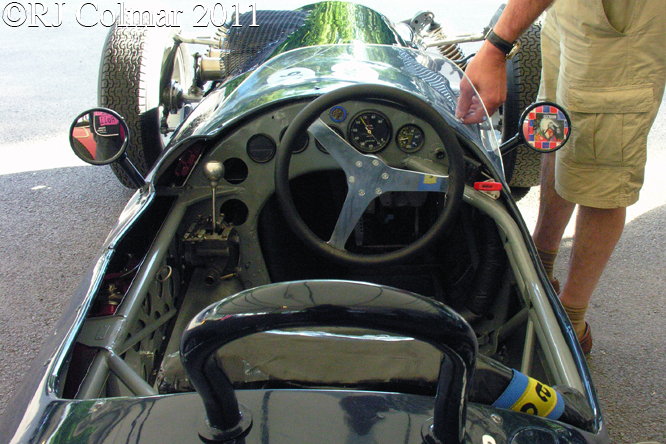
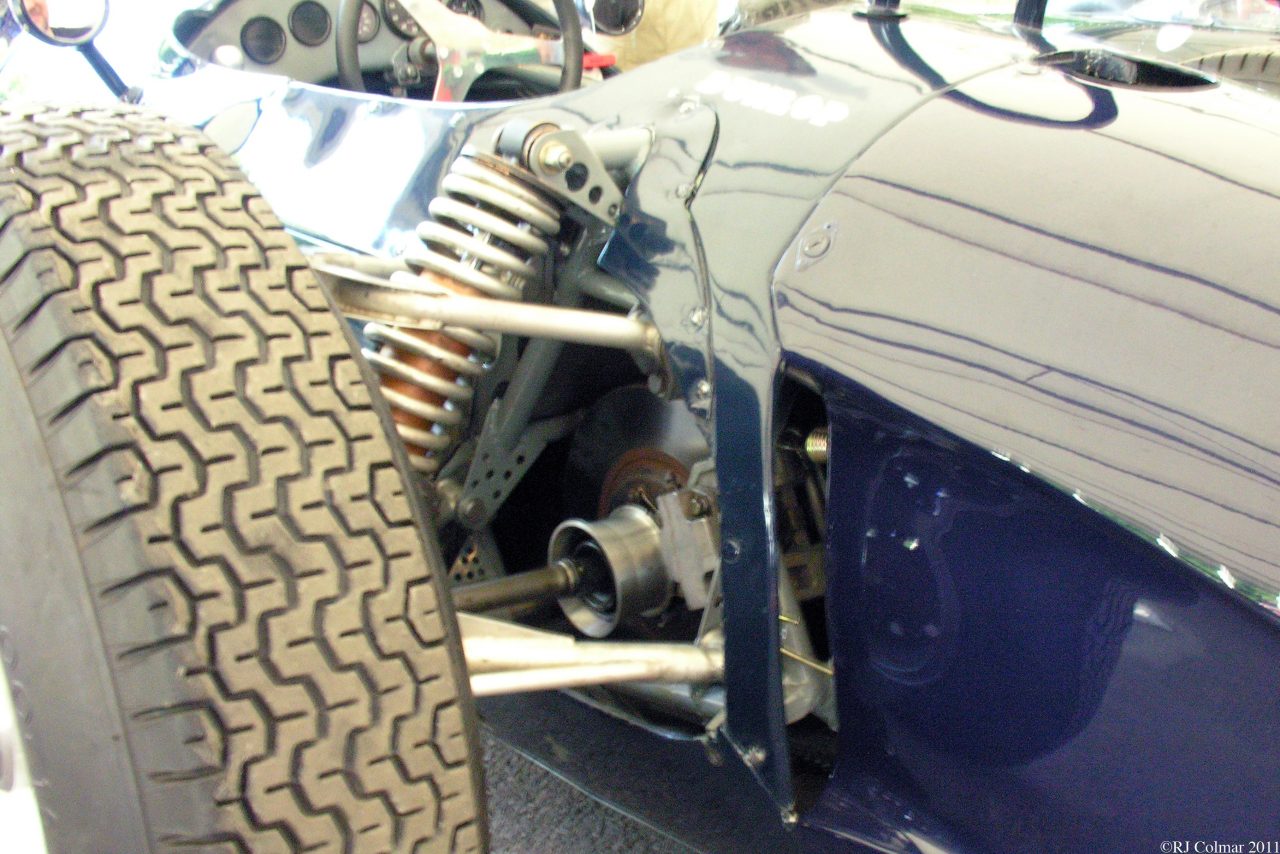
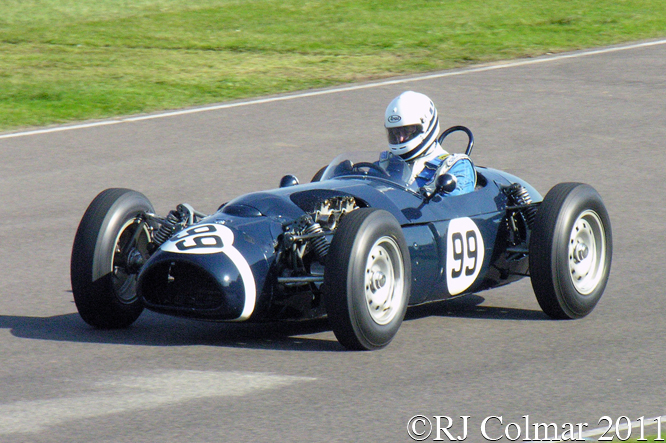
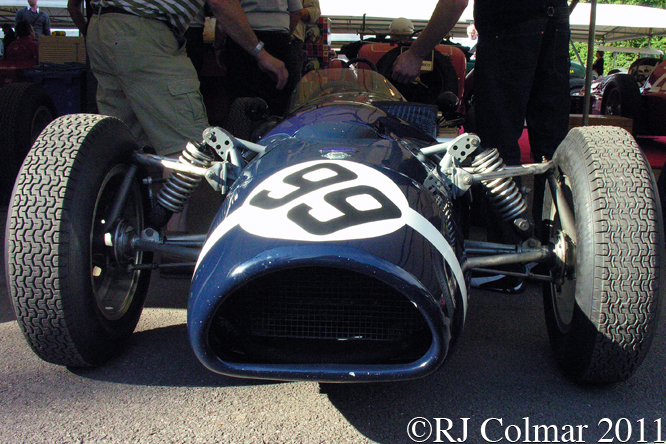
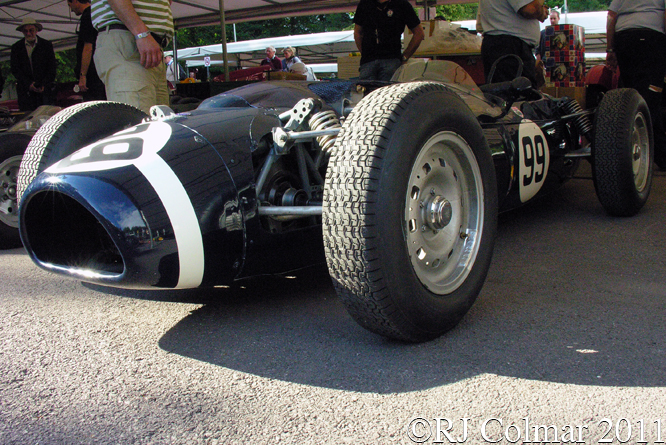
Ferguson Climax P99, Goodwood Festival of Speed

In 1911 Harry went into business selling motor and agricultural vehicles. On seeing the short comings of some of the agricultural products he was selling he began devising his own, including a new hydraulic system and three point linkage for attaching ploughs.

Harry entered into a hand shake agreement with Henry Ford Snr for Ford to manufacture the Ferguson patents under license in 1939. In 1947 Henry Ford II, Seniors grandson, reneged on the deal and five years later settled with Harry out of court to the tune of $9 million, around half of which went to Harry’s legal representatives.

Ferguson Climax P99, Goodwood Festival of Speed

In 1950 Harry employed Aston Martin designer Claude Hill and along with two pre 1939/45 war friends Fred Dixon, who prewar had proposed building an all wheel drive Land Speed Record (LSR) car and former ERA racer Tony Rolt began working on an innovative all wheel drive road car featuring electric windows, disc brakes and access to the rear through a hatchback, all idea’s which were unknown in European passenger car production at the time.

Project 99 a research vehicle, that became the worlds first all wheel drive Formula One car, to promote the all wheel drive concept was given the green light in May 1960, just 6 months before Harry’s death at the age of 75.

Ferguson Climax P99, Goodwood Festival of Speed

The P99 made it’s public debut in an Intercontinental Formula race with a 2.5 litre / 152 cui Coventry Climax motor at Silverstone in 1961 where Tony Rolt’s former entrant Rob Walker entered the car for Jack Fairman alongside Stirling Moss in a similarly powered Cooper.

Fairman retired from the race with a broken gearbox that may have resulted from excessive engine braking in the absence of reliable brakes, while Moss went on to a comfortable victory in the Cooper. At the British Grand Prix, where the Fergusson appeared with a 1.5 litre / 91.5 cui Climax, Fairman qualified 20th but ran into electrical problems, after Stirling Moss had retired his Rob Walker entered Lotus 18 he took over from Fairman in the P99. The car was later disqualified for receiving a push start.

Ferguson Climax P99, Goodwood Festival of Speed

Stirling Moss was entered to drive the Ferguson in the Oulton Park Gold Cup, a non championship race for Formula One cars entered by most of the top teams except Ferrari and Porsche. Stirling won easily to record the first, and only, win of a (non championship) Formula One race with an all wheel drive car and coincidentally the last (non championship) win for a front engined Formula One car.

The Fergusons 1.5 litre / 91.5 cui Formula One motor was uprated to 2.5 litres / 152 cui and subsequently entered in a series of non championship Antipodean Formula Libre, unrestricted, races in early 1963 where Graham Hill drove the car to a second place finish in the Australian rain at Lakeside and a forth place in the sub tropical summer heat of New Zealand at Pukekoe where with a mile to go his gearbox packed up while again running in second place.

Innes Ireland drove the P99 in the next three events finishing third at Leven, but retired from both of the other races. Graham Hill raced the car one more time at Warwick Farm where he came home sixth.

Ferguson Climax P99, Goodwood Festival of Speed

After a conversation with Stirling Moss, who had praised the benefits of the P99’s all wheel drive,Indy 500 entrant Andy Granatelli instigated a test in which Jack Fairman and Bobby Marshman drove the P99 at Indianapolis with the 2.5 litre / 152 cui motor and recorded average speeds of over 140 mph, Marshman claimed he did not need to lift at all for any of the corners, the car was so underpowered. Andy was sufficiently impressed that he employed Ferguson Research to develop all wheel drive for his 1964 Indy 500 challenger the Studebaker STP Special.

Granatelli never won the Indy 500 with an all wheel drive car but kept backing the concept through various incarnations the last of which was the all wheel drive Lotus 64 built in 1969, after which all wheel drive was banned from the brick yard.

Rolt, Fergusson P99, Richmond Trophy, Goodwood Revival

Ferguson Research was also involved with five all wheel drive Formula One projects including the 1969 Lotus 63, Cosworth and McLaren M9A, the last two of which I’ll be looking at in the weeks to come.

Although not the easiest car to drive Stirling Moss once described the Ferguson P99, which fascinated him, as his favourite racing car. Stuart Rolt, of the same Tony Rolt family is seen driving the P99 in practice for the 2011 Richmond Trophy at Goodwood above.

My thanks to Alan Cox, E.B., Ray Bell, Roger Clark and Michael Ferner at The Nostalgia Forum for their patience answering my questions about the the Ferguson P99.

Thanks for joining me on this “Stirling’s Favourite” edition of “Gettin’ a li’l psycho on tyres” I hope you will join me again tomorrow for a look at the first BRM to win a Grand Prix. Don’t forget to come back now !

08 07 13 Errata, I originally stated that Moss was entered in a Lotus 18 for a non championship race at Silverstone when the Ferguson made it’s debut, when in fact Stirling drove a Cooper Climax to victory in the race run to the Intercontinental Formula as now stated in the amended text. Thanks to Roger Clark for pointing out the error.

Share

La Gloire de Legardére – Matra Simca MS 670

Aerospace company Matra became involved in the motor industry when it started manufacturing fiber glass bodies for René Bonnet’s mid engined Djet sports cars in 1962. In 1965 after Bonnet ran into financial difficulties, as a consequence of it’s racing activities, Matra took over Bonnets manufacturing operations putting Jean-Luc Legardére in charge.

Like Bonnet Legardére saw the sense in promoting the company through motor racing and over a period of several years the company produced winning designs for various open wheel and sportscar series including the 1969 Ford Cosworth powered Matra MS80 which won the World Drivers and Constructors Championships with Jackie Stewart at the wheel of the Matra International team cars run by Ken Tyrrell.

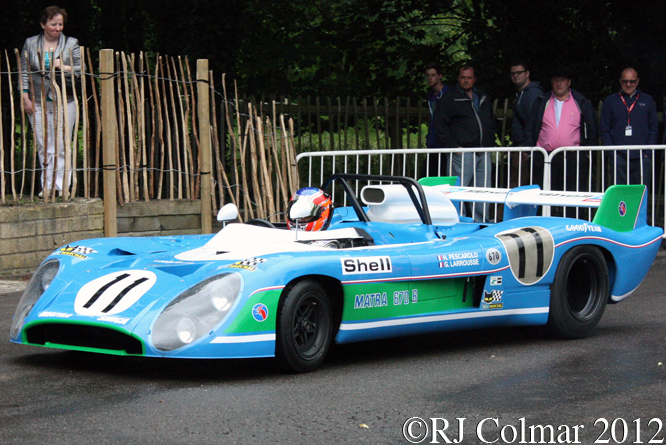
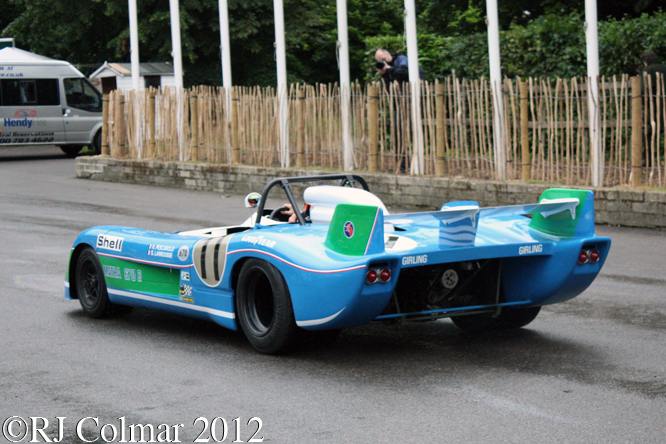
Matra Simca MS670, Goodwood Festival of Speed

Tyrrell and Stewart went their own way in 1970 with sponsors Ford and Elf while Matra’s car division was acquired by Chrysler France in December 1969 and the Matra racing cars became known as Matra Simca’s powered by 3 litre /183 cui V12 Matra motors that had been first seen in Formula One and Sports cars in 1968.

The Matra V12 powered Matra Simca MS670 cars won the Le Mans 24 hours in 1972, driven by Henri Pescarolo and Graham Hill, ’73 and ’74 with Gérard Larrousse joining Pescarolo at the wheel. For 1972 Le Mans was the sole focus of the sportscar teams activities while Ferrari missed the Le Mans 24 hours to focus on winning the 1972 World Championship for Makes. In 1973 Matra Simca withdrew from Formula One and contested and won the World Championship for Makes with the upgraded MS670B beating strong competition from the Ferrari 312 P, a car that had also unsuccessfully appeared at Le Mans.

Matra Simca MS670, Goodwood Festival of Speed

Thanks in part to Niki Lauda persuading Enzo Ferrari to focus on winning the Formula One championships for the 1974 season Matra Simca easily won both the Le Mans 24 hours and the World Championship for makes in 1974 with it’s further upgraded MS670C, after which the team was disbanded although Matra V12 motors were supplied to Shadow for a limited program in 1975 and to Ligier for full programmes from 1976 to 1978 and again from 1981 to 1982 .

I’m not sure of the exact identity of today’s featured car it carries the MS670B body work of the 1973 Le Mans winning entry driven by Pescarolo/Larrouse, that car chassis #MS670B-02 belonged to Matra driver Jean-Pierre Beltoise until it was sold at auction for over a million dollars in 2005 carrying 1974 MS670C bodywork. It has been documented that the 1972 Le Mans winning chassis MS670 – 01 driven by Pescarolo/Hill was fitted with the 1973 Le Mans wining MS670B body work when it was seen at the Lohéac Museum halfway between Brest and Le Mans.

If you know the identity of this car seen at Goodwood last year with Omni Ventures listed as the owners please do not hesitate to chime in below.

Thanks for joining me on this “La Gloire de Legardére” edition of “Gettin’ a li’l psycho on tyres”, I hope you will join me again tomorrow. Don’t forget to come back now !

Share

Dealer Pressure – Aston Martin DP 212

Following the success of the Aston Martin DBR1 at Le Mans and the 1959 World Sports Car championship the Aston Martin team refocused it’s attentions on an ill timed Grand Prix effort that folded by the end of 1960, by which time the front engined Aston Martin DBR4 and DBR5 were completely out classed by rear engined cars.

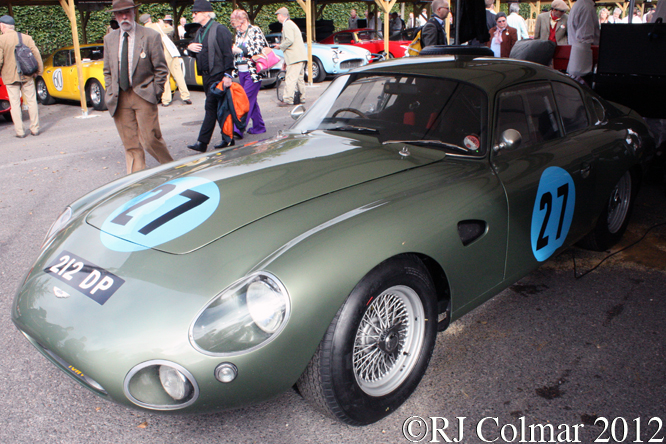
Aston Martin DP212, Goodwood Revival

Under pressure from dealers to come up with a new racing program David Brown sanctioned the development of the DP 212 for the 1962 Le Mans 24 hours.

The cars was built using an Aston Martin DB4GT frame with a 345hp 4 litre / 244 cui six cylinder motor and a sensuous slippery long body to suit the potential of 4 mile Mulsanne straight at Le Mans.

Graham Hill and Richie Ginther were engaged to drive the car at Le Mans where it had a brief moment of glory leading the opening lap of the 24 hour endurance race with Graham Hill at the wheel, however from there on the car dropped down the field over the next six hours until it retired from 9th place with piston failure following an oil pipe fracture.

The original bodywork was found to experience stability problems at speed and after aerodynamic tests was replaced with a Kamm tail of the sort that was later used on the back of the Aston Martin DB6.

Subsequently DP212’s only other appearance was at the 1963 Le Mans test weekend where Jo Schlesser, Bruce McLaren, Lucien Bianchi and William Kimberly drove the car which recorded 5th fastest time. By the 1963 Le Mans 24 hour race the DP212 had been replaced by the DP 214 and DP215 models.

DP212 was later converted to a road car with even larger 349 hp motor and driven in a variety of events by Hon.John Dawnay, later Viscount Downe, and Mike Salmon the later winning the 1974 Classic Car Championship with it.

Thanks for joining me on this “Dealer Pressure” edition of “Gettin’ a li’l psycho on tyres” I hope you will join me again tomorrow for a look at a Le Mans winner from Germany. Don’t forget to come back now !

Share

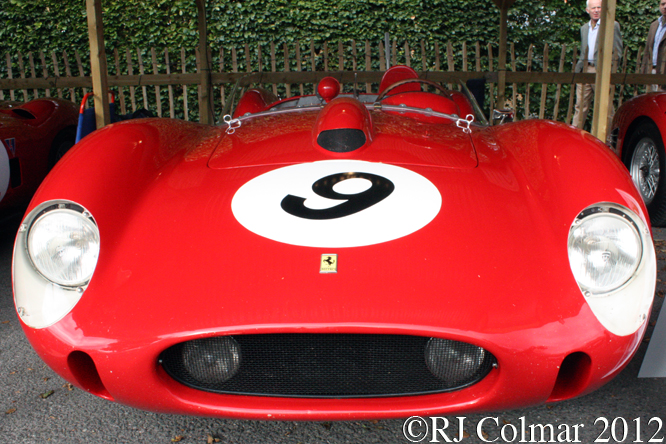
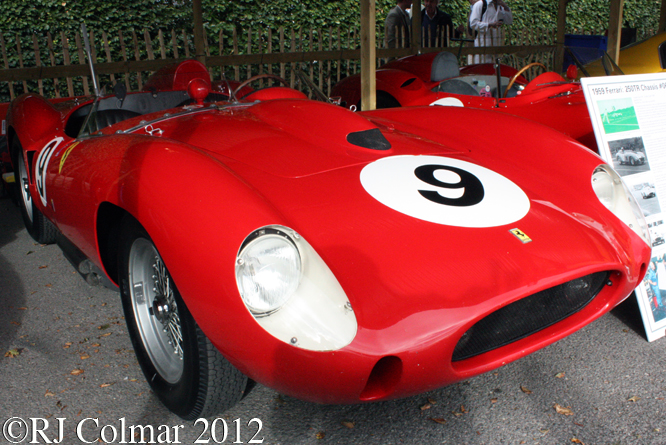
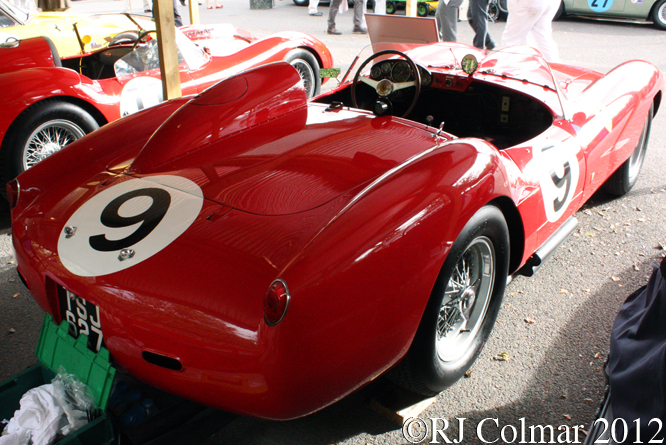
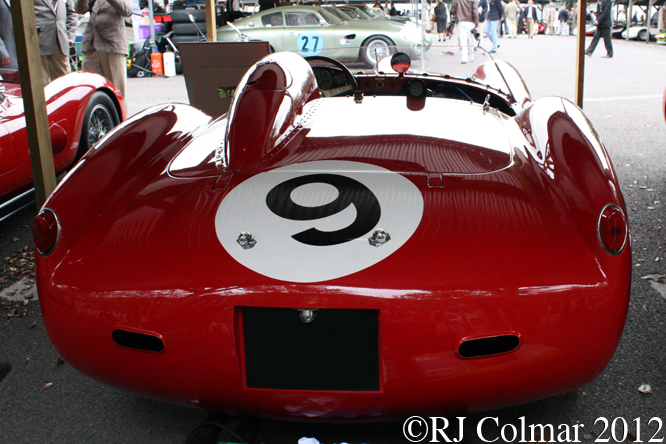
Biting The Hand – Ferrari 250 Testa Rossa 59/60 #0774

After attracting the attention of US Ferrari importer Luigi Chinetti in 1957 Dan Gurney found himself at the wheel of a North American Racing Team Ferrari 250 Testa Rossa, owned by Chinetti at Le Mans in 1958 and drove the car up to 5th place before handing over to his team mate Bruce Kessler who got caught up in someone elses accident before the car retired. That drive impressed Ferrari sufficiently to earn Dan a drive with the works Ferrari team.

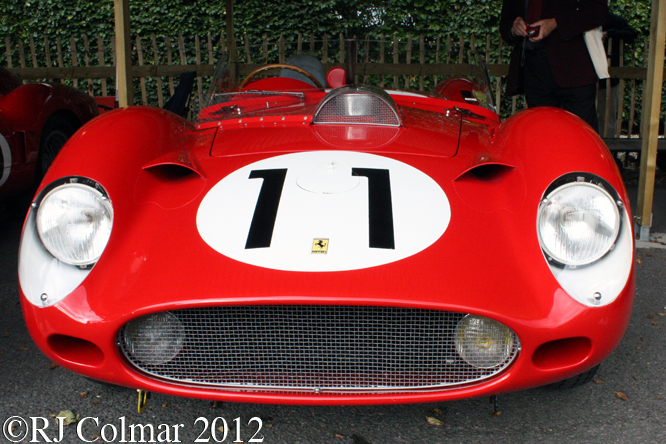
Ferrari 250 TR, Goodwood Revival

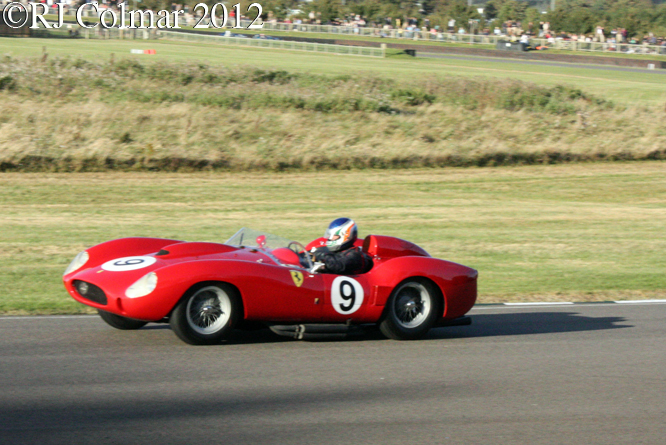
For their 1959 Le Mans effort Ferrari built today’s featured Ferrari 250 TR chassis #0774 for Gurney to share with Jean Behra the car managed twice as many laps as Dan’s first attempt but still fell way short of a result.

Next time out Phil Hill and Olivier Gendebien drove the car at Goodwood in the TT Race where they also failed to score a result both the 1959 Le Mans and Goodwood TT had been won by Aston Martin in what turned out to be a championship winning season for them.

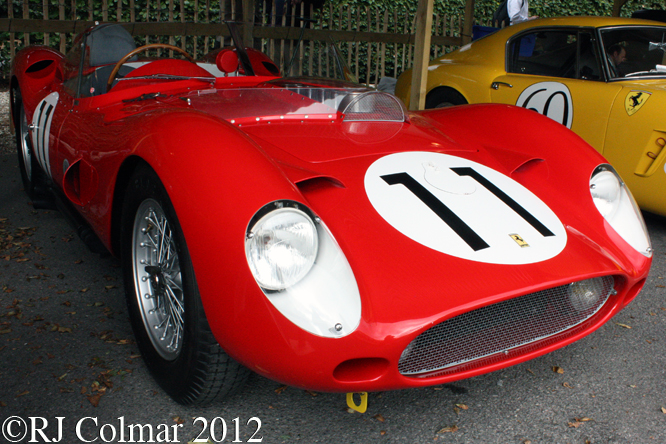
Ferrari 250 TR, Goodwood Revival

1960 would see a return of fortune for the Ferrari sports car team and chassis #0744 played an important role winning two championship races first Phil Hill and Cliff Alison won the 1000 kms at Buenos Aires and then Olivier Gendebien and Paul Frére won the Le Mans 24 hours scoring Ferrari’s third win in the Endurance Classic and helping Ferrari to their sixth World Sports Car title.

Ferrari 250 TR, Goodwood Revival

Between these successes #0774 was loaned to Chinetti’s NART team for Ritchie Ginther and Chuck Daigh to drive in the Sebring 12 hours but they failed to finish and after Le Mans the car was sold to Eleanor von Neumann who entered it for Phil Hill to drive in the 1960 LA Times Grand Prix at Riverside where he finished 7th overall.

Ferrari 250 TR, Goodwood Revival

In 1963 Tom O’Connor bought the car for his Rose Bud racing team which promptly stripped the motor out and fitted it to their Lotus 19 chassis 952 that featured here on GALPOT a couple of years ago.

Ferrari 250 TR, Goodwood Revival

Under the ownership of Paul Pappalardo #0774 was reunited with it’s original motor in the 1980’s and the car won two class Concours d’Elegance awards at Palm Beach and Pebble Beach in 1993.

Ferrari 250 TR, Goodwood Revival

In a twist of biting the hand that feeds irony Dan Gurney eventually won the 24 Hours of Le Mans in 1967 with co driver AJ Foyt driving for Ferrari’s sworn enemy Ford in a Mk IV.

After 26 years in Paul’s custody ownership of #0774 passed to Hong Kong sourcing and logistics magnate William E ‘Chip’ Connor who kindly took it to the 2012 Gooodwood Revival for the Tribute to Dan Gurney Parade.

Thanks for joining me on this “Biting The Hand” edition of “Gettin’ a li’l psycho on tyres”, I hope you will join me again tomorrow. Don’t for get to come back now !

Share

Mistaken Identity – Ferrari 290MM #0606

In April 1956 Luigi Musso was given a brand new Right Hand Drive Ferrari 290 MM chassis #0606 by the factory team to drive in the Giro di Sicilia he did not finish but the next occupants Phil Hill and Maurice Trintignant did win the Swedish Grand Prix, for sports cars, on the cars second appearance in August 1956.

Ferrari, 290 MM, Goodwood Revival

In 1957 the car was variously entered under the Ecurie Francochamps and Equipe Nationale Belge banners with Willy Mairesse winning pole for a 2 hour race held at St Etienne in France and Alain de Changy finishing 4th in Monsanto, Portugal being the cars most notable race performances.

Ferrari, 290 MM, Goodwood Revival

After the car was returned to the factory it was driven by Austrian Gotfried Koechert in August 1958. His best result being 3rd overall and 1st in class in the Großer Bergpreis von Oesterreich, hillclimb at the Gaisbergrennen in Austria.

Ferrari, 290 MM, Goodwood Revival

In September 1959 the car was converted to 250 TR specs with a TR motor and sold to Brazilian Jean Luis Lacerda who appears to have won at least two races at Interlagos and Brasilia with #0606 during 1960.

Late in 1960 ownership of #0606 was transferred to Aguinaldo Goes who scored a second place finish in a 500 km race at Intelagos in Spetember of that year.

In 1962 Fernando Mafra Moriera borrowed the car to make up the numbers for a race at Interlagos with strict instructions to park it at the end of lap 1, unfortunately Fernando who raced under the name Rio Negro did not do as he was asked with fatal consequences as he ended up hitting a eucalyptus tree with the unfamiliar right hand drive and equally unfamiliar central throttle pedal thought to have played a role in the tragedy.

The engine and front of the car was separated from the gear box and the back of the car which remained embedded in the tree.

Ferrari, 290 MM, Goodwood Revival

What remained of the car was given by goes to Camilo Christofaro who used the fuel tank and de Dion rear suspension in a fearsome Corvette engined special called Carrettera 18 in March 1965 Christofaro and Goes drove the car to a 3rd place finish, 1st in class, in a 1600 km race at Interlagos.

The TR motor that had been installed in #0606 when it went to Brazil went into another Brazilian racing car the Furia Ferrari owned by Toni Bianco and later still it replaced a blown up motor in a street Ferrari.

Ferrari, 290 MM, Goodwood Revival

In 1986 Paolo Sebastiani bought some Ferrari parts including part of a type 520 Ferrari 290MM chassis frame from Camilo Christofaro and allegedly mistook them for parts from a type 525 Ferrari 250 TR chassis frame which he thought came from chassis #0726TR which had also been involved in a fatal crash and abandoned in Cuba in 1960.

Sebastiani had Ferrari chassis builder Viccari “guide” him in the construction of a Left Hand Drive type 525 250TR chassis using the salvaged parts he had acquired from Brazil. The car was given a new body by Len Pritchard and sold to John Godfrey who upon further inspection realised that the parts Sebastiani had found in Brazil were actually from the Right Hand Drive #0606 290MM.

The car is seen here at last years Goodwood Revival by Mike Malone.

Thanks for joining me on this “Mistaken Identity” edition of “Gettin’ a li’l psycho on tyres” I hope you will join me again tomorrow. Don’t forget to come back now !
Share

Four Pot Revisited – Ferrari 860 Monza #0604M

A couple of years ago Steve Arnaudin sent me a photo of todays featured 1956 Ferrari 860 Monza, chassis #0604, purchased by his father from the Californian photographer and racing driver Carlyle Blackwell. I wrote a blog which summarised the 1956 World Sports Car Championship which is linked here.

Ferrari 860 Monza. Goodwood Revival

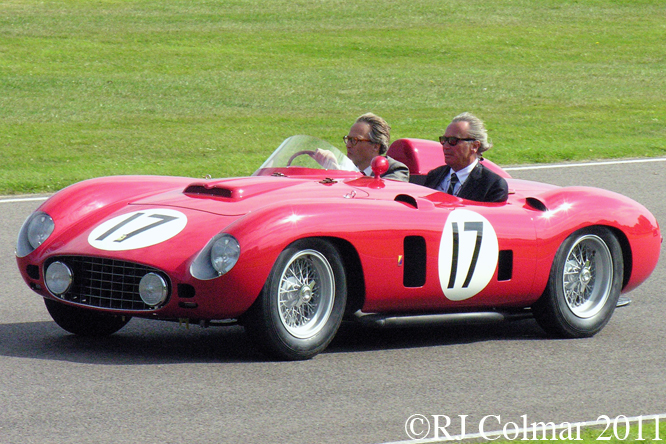
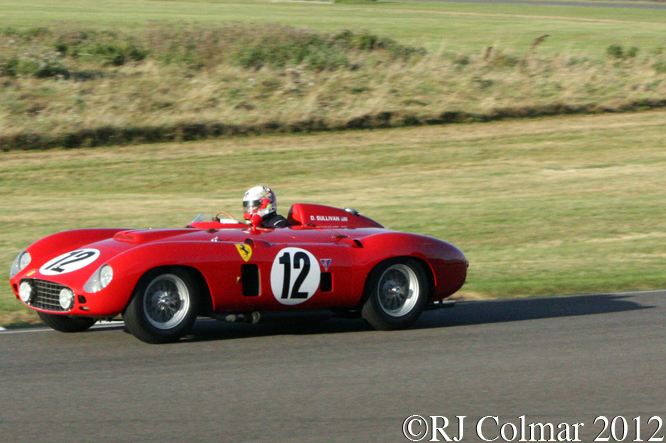
Today’s blog will focus on the story of this particular chassis which is seen above with Lord March at the wheel in the Juan Manuel Fangio Celebration parade at the Goodwood Revival in 2011. The car is seen above carrying the same #17 as when Fangio and Eugenio Castellotti drove it to a debut victory in the Sebring 12 Hours Race in March 1956.

Ferrari 860 Monza. Goodwood Revival

#0604M was subsequently sold to Californian John von Neuman and the following month he entered it for Phil Hill to drive at Pebble Beech where he finished second overall and first in class behind Carrol Shelby who was driving 1955 Ferrari 750 Monza #0510M.

Ferrari 860 Monza. Goodwood Revival

John Von Neuman took over the driving duties in #0604M for the rest of the 1956 season and through 1957 until he put Ritchie Ginther in the car at Laguna Secca at the end of 1957 and at Riverside at the beginning of 1958. Ginther scored a class win and 5th overall first time out and 2nd overall at Riverside. Up to that point von Neumans best results had been a couple of 2nd place finishes in ’56

Ferrari 860 Monza. Goodwood Revival

Jerry Barker bought the car for the 1959 season and on every occasion it finished it was either 1st or 2nd driven by Lew Florence, Barker took the wheel at the Maryhill Lops Hillclimb and also won setting a new record.

Ferrari 860 Monza. Goodwood Revival

Charles Caverns was the owner of 0604M in 1960 and he also recorded a win in the Novice Race at Shelton in April 1960 which is the car last recorded contemporary race appearance.

Ferrari 860 Monza. Goodwood Revival

Amongst the owners of #0604M since 1960 was Jean Sage former Sporting Director of the Renault Formula One team from it’s inception in 1977 and eventual, temporary closure, in 1987. Not long before the top photo was taken #0604M was bought by the current owner a DJ by the name of Chris Evans.

Ferrari 860 Monza. Goodwood Revival

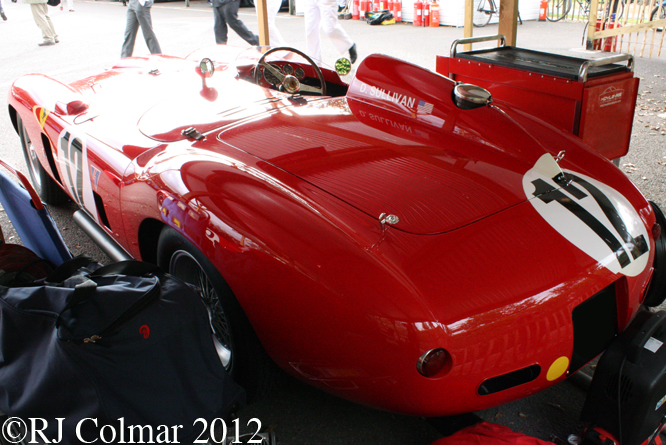
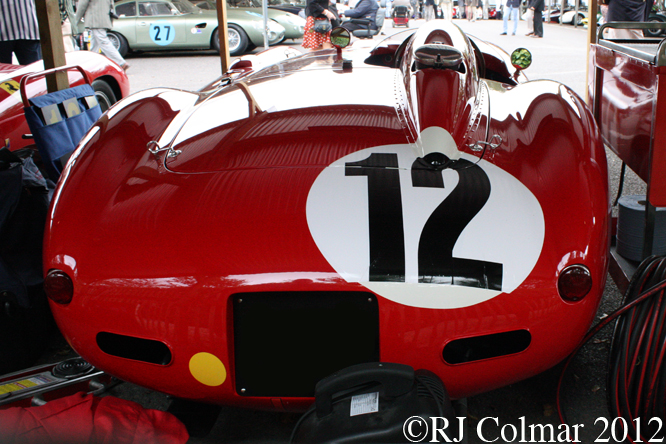
At last years Goodwood Revival meeting Danny Sullivan became the fifth Grand Prix driver to sit at the wheel, after Fangio, Castellotti Hill and Ginther, and only Indy 500 winner to race the car powered by a Lampredi designed 4 cylinder motor. He qualified 15th for the Sussex Trophy Race but did not finish.

Thanks for joining me one this ‘Four Pot Revisited’ edition of “Gettin’ a li’l psycho on tyres”, I hope you will join me again tomorrow. Don’t forget to come back now !
Share