Tag Archives: Horton

Blakely Oil Special – Schroeder Offenhauser

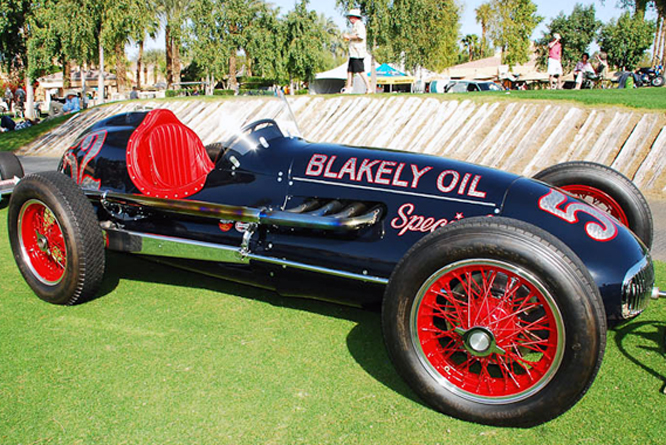
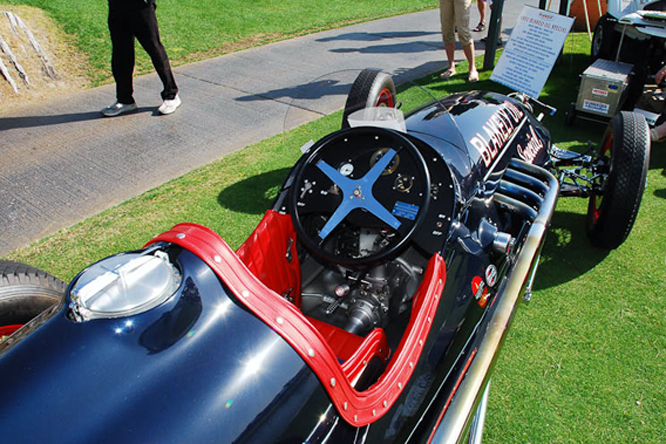
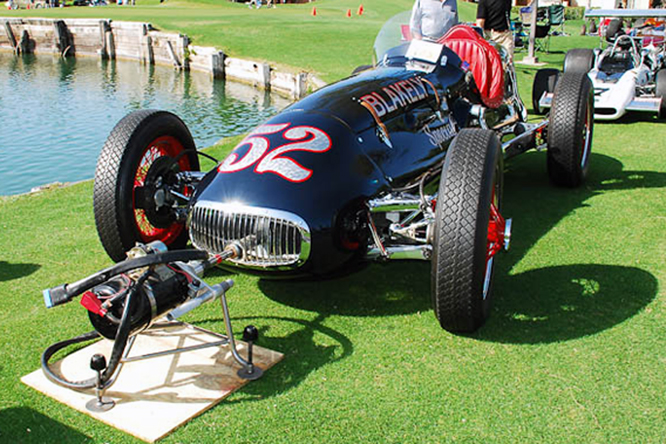
The Blakely Oil Special was designed and built by Gordon Schroeder for owner John McDaniel to enter in the 1951 Indianapolis 500.

Blakely Oil Special, Schroeder Offenhauser, Desert Classics, Concours d'Elegance

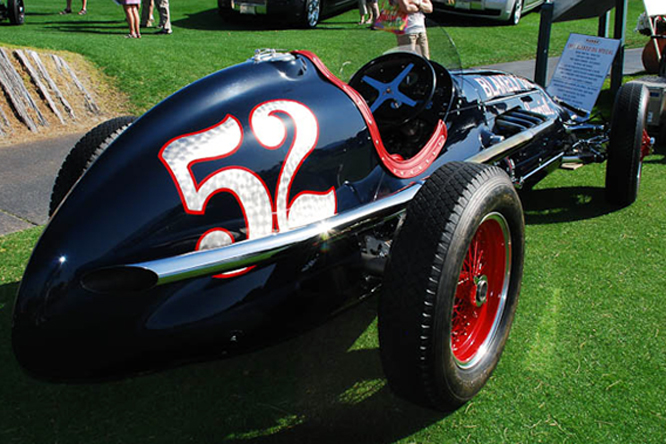
The #52 qualified 29th and finished 5th, having run has high as second, with rookie Bobby Ball at the wheel. Schroeder and Clint Brawner were on the crew led by Myron Stevens formerly of Miller who was also responsible for the fabrication of the chassis and the body work.

The Blakely Special was powered by a 4 cylinder 4.4 litre / 270 cui Offenhauser motor as were all the other cars in the 1951 Indy field apart from the two Novi powered Novi Purelube entered Kurtis chassis. Indy 500 historian Michael Ferner informs me that the The Blakely Oil Special failed to qualify for the 1952 500 after Bobby Ball crashed the car in practice.

Blakely Oil Special, Schroeder Offenhauser, Desert Classics, Concours d'Elegance

The Blakely Oil Specials next appearance in the Greatest Spectacle in Racing came in 1953 with Jimmy Bryan at the wheel. Jimmy qualified 31st and was classified as a runner in 14th place with 183 laps completed.

Blakely Oil Special, Schroeder Offenhauser, Desert Classics, Concours d'Elegance

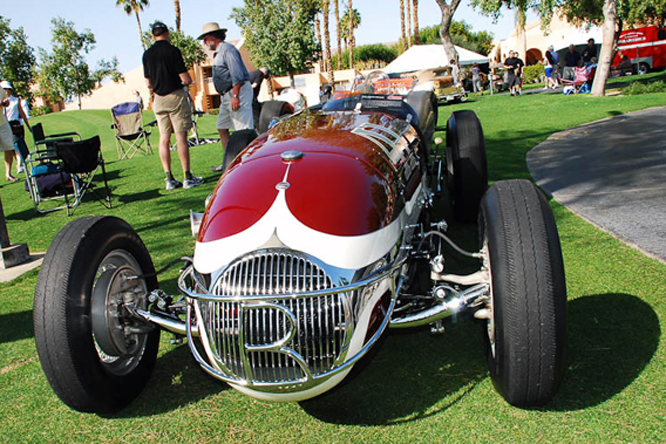
In 1954 Andy Linden and Len Duncan driving for entrants Brown Motor Company and Brady qualified 23rd and 26th were classified 25th and 31st respectively driving Schroeder Offenhausers. Today’s featured car, seen in these photographs by Geoffrey Horton at last years Desert Classics Concours d’Elegance, did not qualify for the ’54 Indy 500 after Frank Mundy failed to complete his rookie orientation programme.

Blakely Oil Special, Schroeder Offenhauser, Desert Classics, Concours d'Elegance

John McDaniel nearly had a third DNQ at Indy in 1955 when Duke Nalon failed to make the cut, but rookie Keith Andrews saved the day by qualifying 28th and was classified 20th with 120 laps completed.

Michael Ferner has also told me that Tony Bettenhausen raced the car on dirt tracks in 1954 as did Bill Cheesebourg in 1956 when the car ran as the #23 McDaniels. Dick, father of 1979 Le Mans winners Bill and Don, Whittington bought the car in 1957 and ran it in dirt events and at Pikes Peak where the #36 came home with 21st fastest time slowest of the USAC entires to complete the course.

The car has been restored by Gary Schroeder, Dick Russell and Gary McCourt the original body by Wayne Ewing and Jerry Weeks, upholstery by Darel ‘Whitey’ Morgan and the motor by Phil Reilly & Co.

My thanks to Geoffrey Horton for sharing today’s photographs and to Michael Ferner at The Nostalgia Forum for sharing his wealth of knowledge.

Thanks for joining me on this “Blakely Oil Special” edition of “Gettin’ a li’l psycho on tyres” I hope you will join me again for Ferrari Friday tomorrow. Don’t forget to come back now !

Share

Ross Page Special – Kurtis Duray

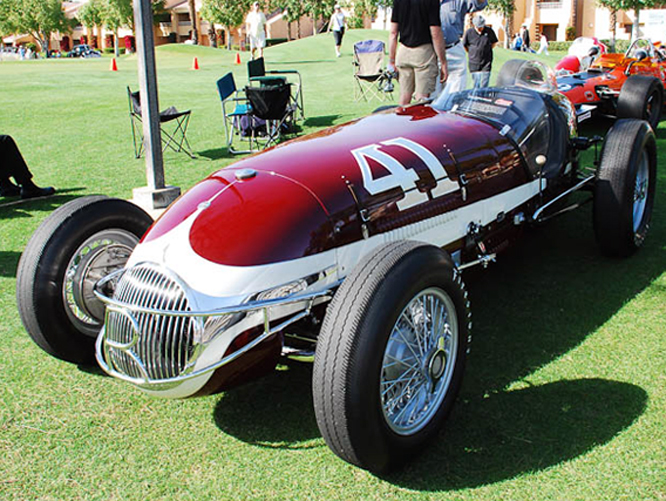
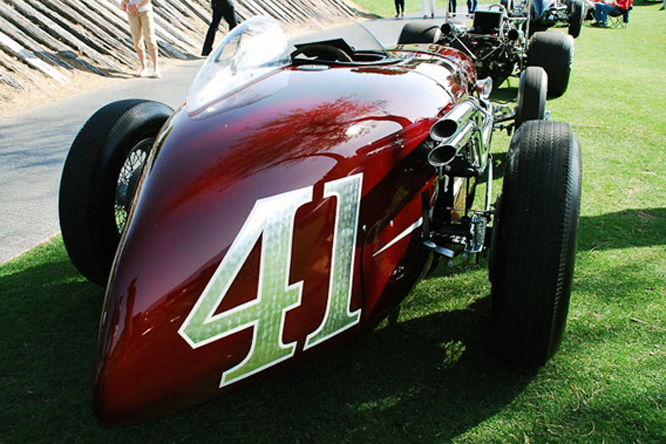
Today’s featured Ross Page Special was built around a frame designed by Frank Kurtis in California using some parts that were taken from Leon Duray’s Indy Car originally built 1931.

Ross Page Special, Kurtis Miller, Desert Classic Concours d' Elegance, Palm Springs

It was one of the few post war designed and built cars that went to the start line of the 1946 Indy 500.

Ross Page Special, Kurtis Miller, Desert Classic Concours d' Elegance, Palm Springs

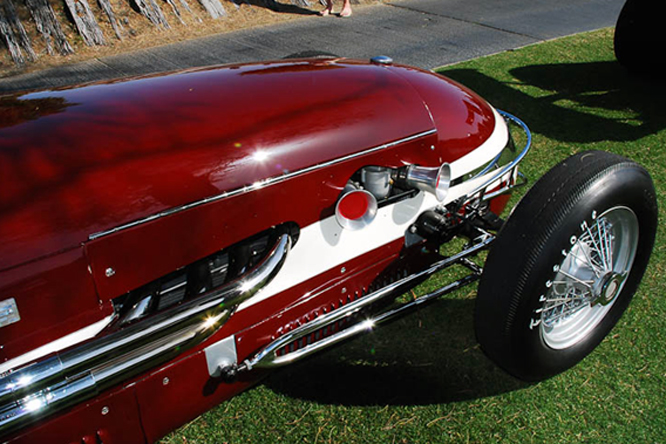
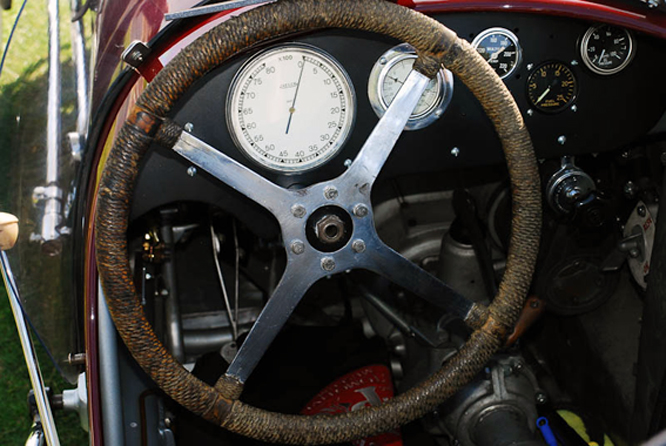
The Ross Page Special is recorded on the Indy 500 website as being a Kurtis Duray, it ran with a motor that started life as a 1932 Miller 220 but which was modified by 2 time Indy winner George Stewart better known as Leon Duray and the Offenhauser Engineering Company who fitted a super charger. Though the badge on the front carries the words Miller Ross Page, Indy 500 historian Michael Ferner tells me the car was referred to in period as “Offenhauser Special”, “Page Offenhauser Special”, “Ross Page Offenhauser Special”, “Page Special” and “Ross Page Special”. The names of frame and bodywork builder Kurtis, engine originator Miller and engine modifier Duray have all been added retrospectively.

Ross Page Special, Kurtis Miller, Desert Classic Concours d' Elegance, Palm Springs

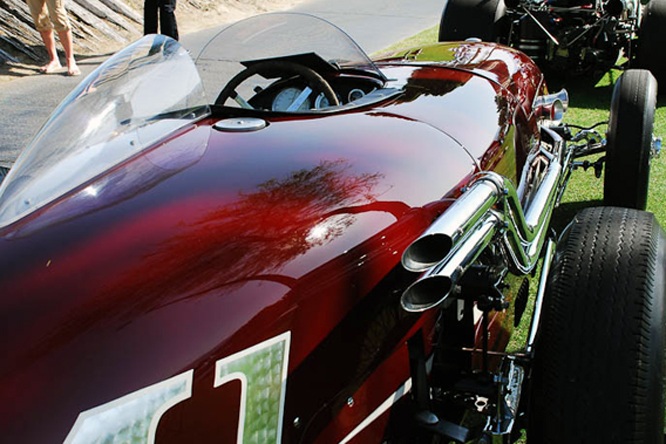
Mel Hansen started the 1946 Indy 500 from 27th on the grid and was classified 11th having retired on lap 143 with a crankshaft issue. For some reason that is not clear to me the car is listed in the official Indy 500 results as the #4 though the photographic evidence shows the car carrying the #41.

Ross Page Special, Kurtis Miller, Desert Classic Concours d' Elegance, Palm Springs

In 1947 rookie Fred Agabashian started the Indy 500 from 23rd on the grid and was classified 9th and running with 191 laps completed.

Ross Page Special, Kurtis Miller, Desert Classic Concours d' Elegance, Palm Springs

The following year Fred could only start from 32nd on the grid and only managed 58 laps before retiring with a broken oil line and was classified 23rd with the car now carrying the #26.

Ross Page Special, Kurtis Miller, Desert Classic Concours d' Elegance, Palm Springs

When the car was restored by John and Heather Mozart it was briefly used raced in vintage events before being donated to the Peterson Automotive Museum. The car is seen here at last years Desert Classics Concours d’Elegance.

My thanks to Geoffrey Horton for the photographs and Michael Ferner for the details about the cars name and build.

Thanks for joining me on this “Ross Page Special edition of getting a li’l psycho on tyres, I hope you will join me again tomorrow. Don’t forget to come back now !

Share

Room For Two – Maserati 8CTF #3030

In 1937 the Maserati brothers harvested a reputation for building unprofitable but successful racing cars by agreeing a deal Adolfo Orsi in which Orsi took financial control of Maserati in return for the brothers commitment to work for the company that bore their name for at least ten years.

Maserati 8CTF, Palo Alto Concours d'Elegance

For 1938 new rules were introduced for the top echelon of European open wheel racing that had been dominated by Auto Union and Mercedes Benz since 1934. The new rules introduced for the first time a minimum weight depending on engine displacement of either 3 litres / 183 cui supercharged or 4.5 litres / 274 cui normally aspirated.

Maserati 8CTF, Palo Alto Concours d'Elegance

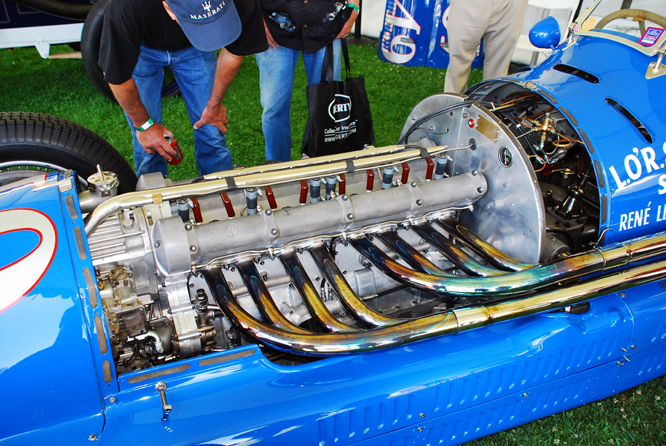
The Maserati brothers decided to go the supercharged route with a 3 litre / 183 cui in line 8 cylinder motor that featured a fixed ‘testa fissa” cylinder head that did away with the need for leaky cylinder head gaskets and allowed the motor to run with high supercharger pressure which was provided by two Roots type superchargers. in all 4 8CTF twin cam two valve motors were built that produced 365 hp. Well down on the 470 plus quoted for the contemporary V12 Auto Union D-type and Mercedes Benz W154.

Maserati 8CTF, Palo Alto Concours d'Elegance

Along with the 4 motors Maserati built 3 8CTF chassis numbers #3030, #3031 and #3032 all of which were entered for races in Europe with the greatest success being recorded by Paul Pietsch who led the 1939 German Grand Prix before six pit stops ensured a best 3rd place finish 1 lap down behind the winning W154 of Rudolf Carraciola and 2nd place D-Type of Hermann Paul Müller.

Maserati 8CTF, Palo Alto Concours d'Elegance

By the time of the 1939 German Grand Prix 8CTF chassis #3032 had been sold to Chicago Electricians Unionist Michael J. “Umbrella Mike” Boyle who had fielded the winning Boyle Products Special/Miller Indianapolis 500 entry for “Wild Bill” Cummings in 1934 eight years after his first entry in the Greatest Race On Earth. For the ’39 Indy 500 the Maserati was prepared by Crew Cheif Harry “Cotton” Henning and renamed “Boyle Special” that driven to Victory Lane by Wilbur Shaw who the following year using the same car became the first back to back repeat Indy 500 winner.

Maserati 8CTF, Palo Alto Concours d'Elegance

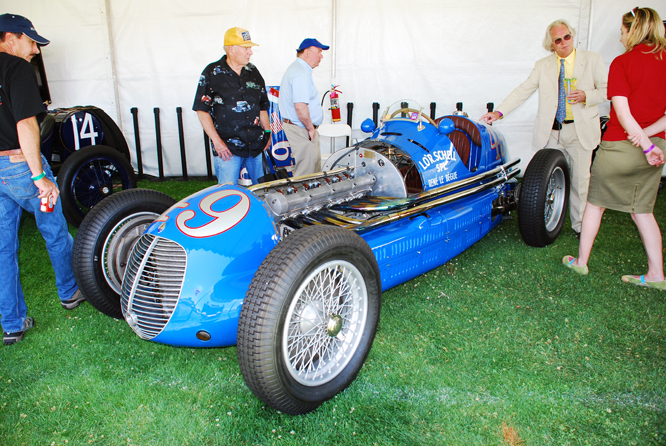
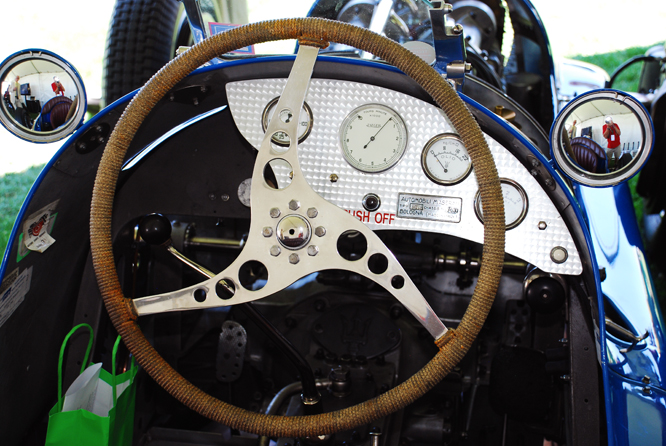
Today’s featured chassis #3030, seen in photographs by Geoffrey Horton at the 2011 Palo Alto Concours d’Elegance, was acquired by owner Lucy O’Reilly Schell along with the sister #3031 chassis who entered both cars in the 1939 Swiss Grand Prix for René Dreyfus and Comte Georges Raphael Bethenod de Montbressieux also known in racing circles as “Raph”. Dreyfus driving #3030 finished 8th in the second heat run in the rain 2 laps down while “Raph” appears not to have taken the start in the sister car.

Maserati 8CTF, Palo Alto Concours d'Elegance

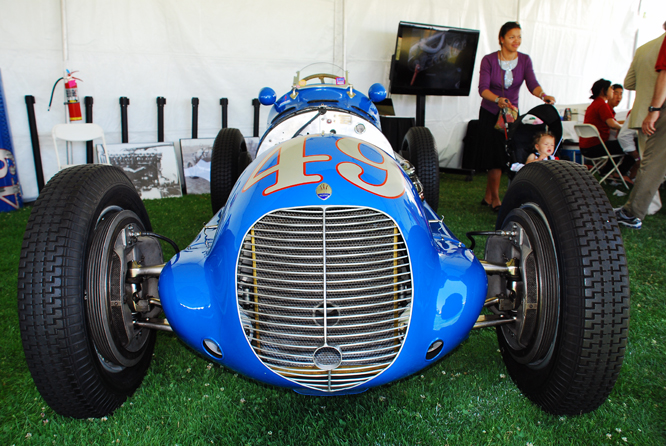
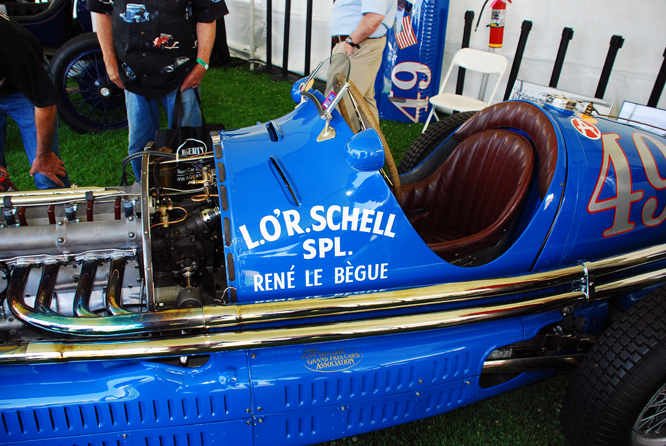
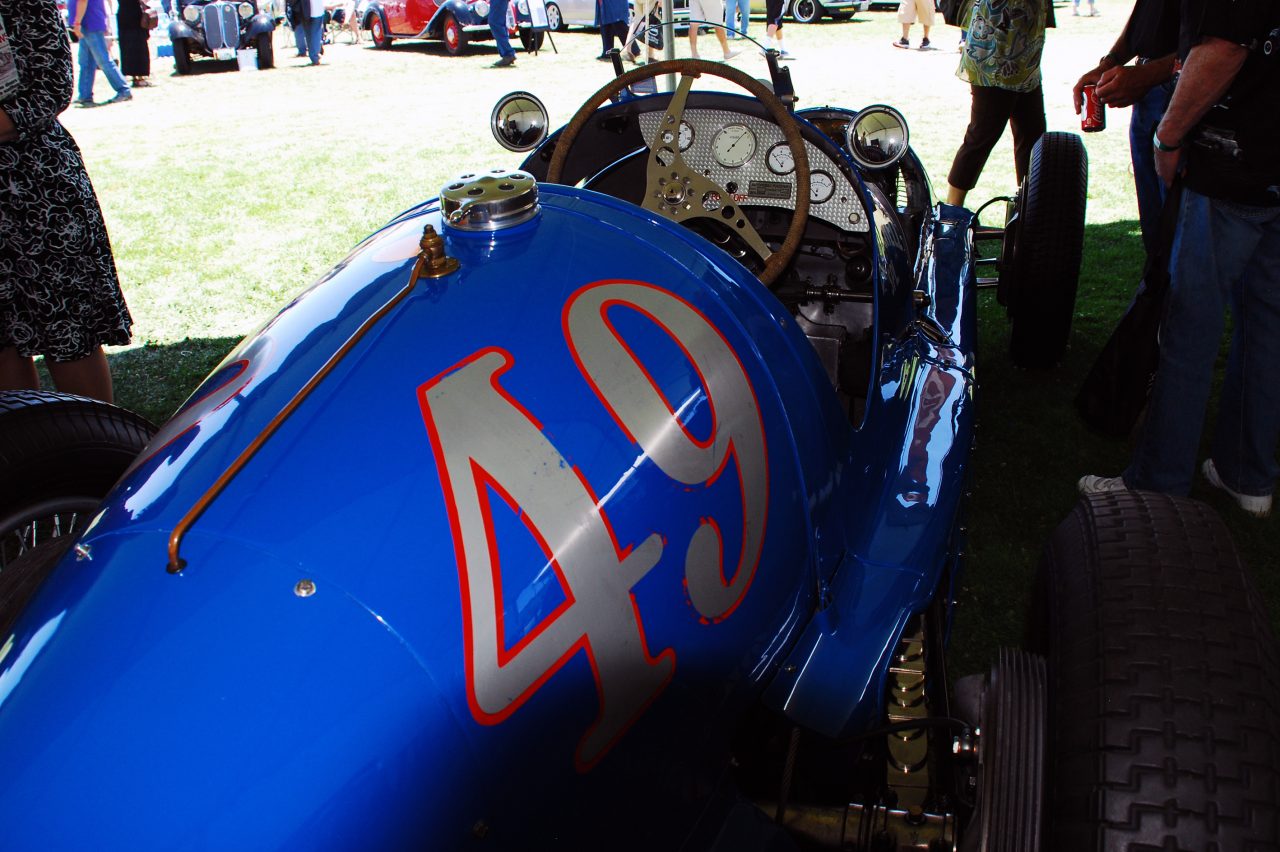
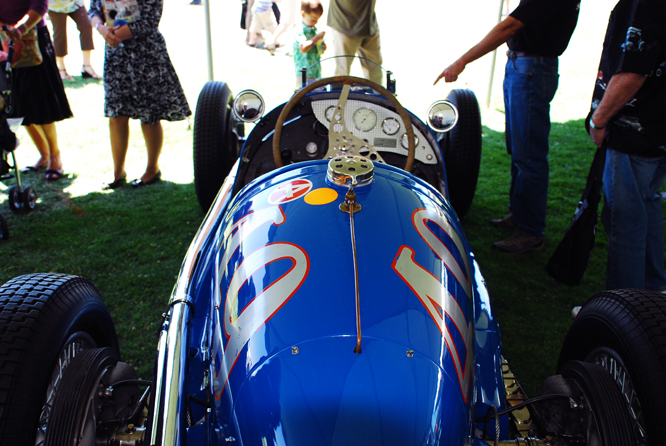
In 1940 all three 8CTF’s were entered in the Indy 500 with the Écurie Lucy O’Reilly Schell chassis #3030 for René Le Bègue and #3031 for Dreyfus joining Wilbur Shaw in the #3032 Boyle Special entry. Unfortunately the Écurie Lucy O’Reilly Schell team did not understand the bump day rules during qualifying so although Dreyfus qualified in the #22 entry on speed this did not exclude him from being bumped off the grid. Despite the protestations of the likes of ’39 winner Shaw. Dreyfus accepted his fate, sportingly Le Bègue offered to share the driving of the #49 chassis 3030 in the race.

Maserati 8CTF, Palo Alto Concours d'Elegance

While familiarising himself with today’s featured #3030 chassis the engine blew, after Dreyfeus had improved on the lap times recorded with his bumped chassis, with the result that the #49 chassis #3030 went to the grid for the 1940 Indy 500 with the engine from chassis #3031 fitted. Le Bègue started the race and handed over to Dreyfus as agreed with the car classified 10th on 192 laps at the races end.

Thanks to the research skills of Michael Ferner, who from contemporary reports has identified at least 21 possibly 23 Maserati’s entered for The Greatest Spectacle In Racing between 1930 and 1957, we know #3030 appeared as an entry at the Indy 500 in ’41, ’46 and ’48 through to ’53 recording a best finish of 4th in ’46 with Emil Andres at the wheel of what was now known as the Elgin Piston Pin one place behind Ted Horn in the Boyle entered #3032 chassis. The car’s last Indy start was in 1948 when Harry McQuinn completed just 1 lap from 26th on the grid to be classified 33rd and last.

Perhaps #3030’s greatest achievement was a 2nd place finish at Pikes Peak with Louis Unser at the wheel in 1949, two years earlier Unser won the Pikes Peak Hillclimb outright in the sister #3031 chassis.

My thanks to Michael Ferner, Alan Cox, David McKinney, VWV, Vitesse2 and fbarratt at The Nostalgia Forum who in one way or another all contributed to my understanding of the history of the Maserati 8CTF’s, finally thanks to Geoffrey Horton without whom today’s blog would be about something else.

Thanks for joining me on this “Room For Two” edition of “Gettin’ a li’l psycho on tyres” I hope you will join me again tomorrow. Don’t forget to come back now !

Share

Baby Hemi – Peugeot EX4/L3

May used to be the month where US open wheel racing was centered entirely on the story coming out of Indianapolis Motor Speedway, this month the iZod Indy Car Series breaks with tradition and will also be visiting Sao Paolo on May 6th, however GALPOT will be dedicating the next 5 Americana Thursday Posts to The Greatest Spectacle in Racing in years long gone by thanks to Geoffrey Horton who over the last two years has sent me numerous photo’s of Indy Cars from the Concours d’Elegance scene in California.
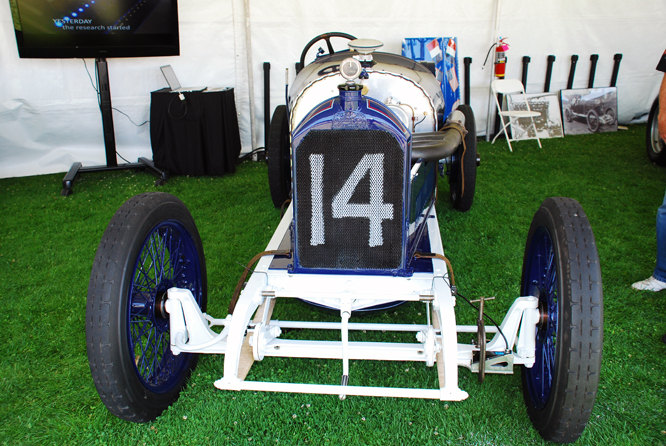
Peugeot EX4/L3, Palo Alto, 2011

This months five part potted history of the Indy 500 returns to 1914 when, as I found out two years ago, rookie René Thomas went to victory lane driving Delage Y, I forgot to mention René was accompanied by riding mechanic Robert Laly.

Today’s featured car the #14 Peugeot EX4/L3 was also entered in the 4th running of the Indy 500 for another rookie called Arthur Duray and US riding mechanician Henry Mattheys by Jacques Menier a member of the French Menier Chocolatier dynasty.
Peugeot EX4/L3, Palo Alto, 2011

In 1914 qualification for the 500 was slightly different procedure from what we are familiar with today, in the first two editions of the Indy 500 qualification was by date the entries were received providing a minimum speed had been achieved over a measure mile of the circuit in 1911 and a full flying lap in 1912. For 1913 and 14 with the arrival of foreign competitors a qualifying lap with a minimum speed was compulsory but the grid positions were determined by blind draw.
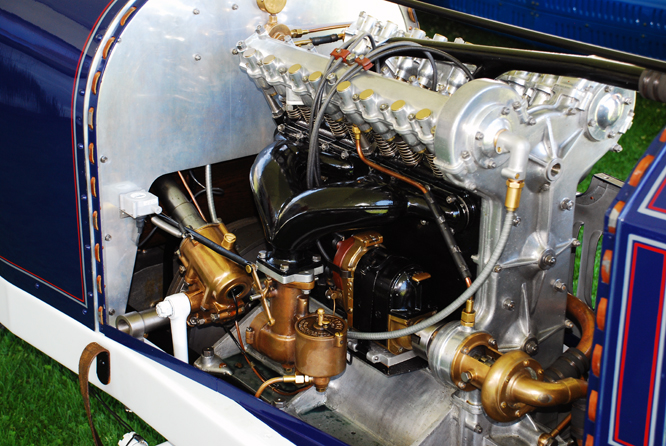
Peugeot EX/4 L3, Palo Alto, 2011

The Peugeot EX4/L3 that Jaques Menier bought featured an ‘L3’ 4 cylinder 3 litre / 183 cui version of the giant killing 7.6 litre / 463.78 L76 Motor that had successfully seen off the 15 litre / 915 cui FIAT’s in the 1912 French Grand Prix. Having proved with success the benefits of technical innovations that included twin gear driven overhead cams operating 4 valves per cylinder, which also featured the original hemi heads, designer Ernst Henry, aided by his driver engineers collectively known as “Les Charlatans”, proceeded to produce three further evolutions of of the motor with sizes of 5.6 litre / 341 cui, as used by Georges Boillot and riding mechanic Prévost to win their second consecutive French Grand Prix in 1913, 4.5 litre / 274 cui and the smallest of the family 3 litre / 183 cui L3 seen here.

For those interested in the minutiae of veteran era production methods there is a fascinating story regarding this particular motor whose block was found to have inconsistent longitudinal bore center lines on this thread on The Nostalgia Forum led by distinguished historian Doug Nye linked here.
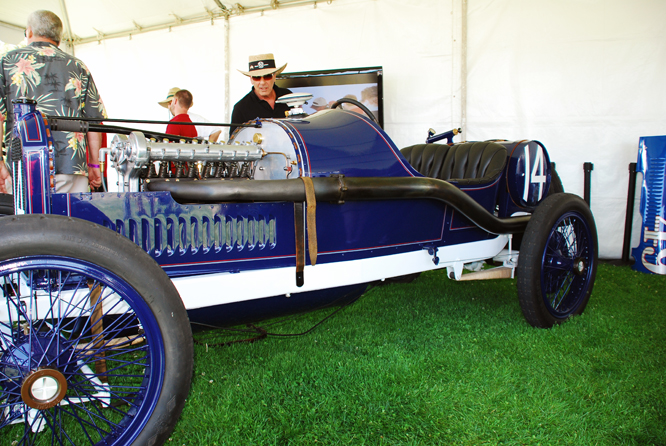
Peugeot EX4/L3, Palo Alto, 2011

Alongside the winning two car Delage team Arthur Duray faced two EX3/L56 powered Peugeots of Georges Boillot with a riding mechaninc M. Brevot who ‘might’ have been Boillot’s regular mechanic Prévost with 1913 rookie winners Jules Goux partnered by Emil Begin. Boillot set the fastest time in practice of 99.860 mph but the draw by ballot for grid slots saw Jean Chassagne’s Sunbeam start from pole.
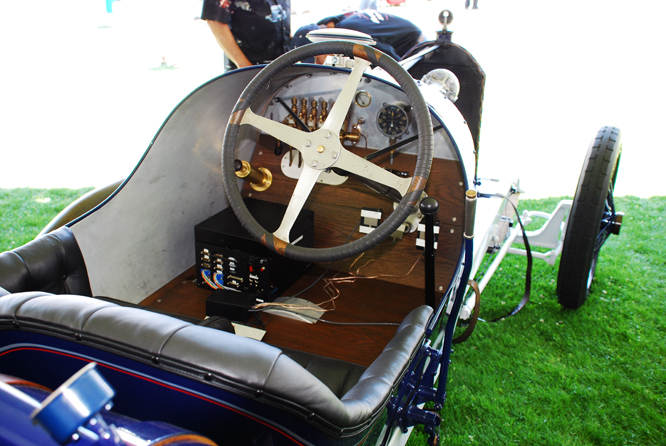
Peugeot EX4/L3, Palo Alto, 2011

Boillot was in a comfortable position to win the 1914 Indy 500 until repeated tyre failures led to a 14th place finish while Goux in the second large Peugeot finished 4th with Duray coming home second to the Delage of René Thomas.
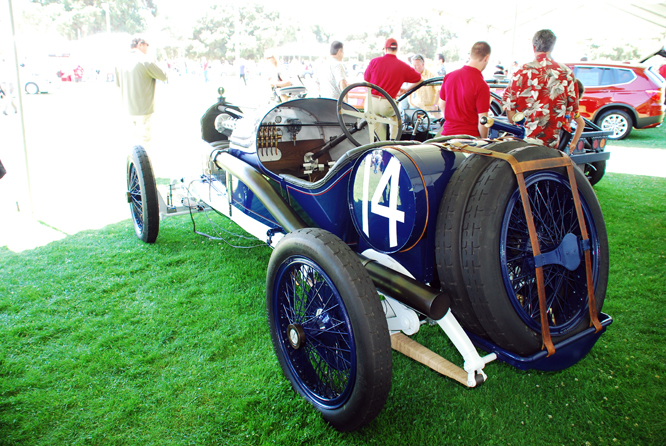
Peugeot EX4/L3, Palo Alto, 2011

Arthur Duray who set three land speed records between 1903 and 1904 carried on racing until the 1930’s for manufacturers that included Hispano-Suiza, Ariès, B.N.C and Amilcar. At the 1921 French Grand Prix he was a spectator when running in second place Albert Guyot’s riding mechanic got hit on the head by a rock, Guyot pulled his Duesenberg up in the pits and it became apparent that his mechanic was too dazed to continue. On seeing this Arthur Duray is said to have vaulted the spectator fence pushed the mechanic aside cranked the Dusenbergs motor to life and jumped into the mechanics seat alongside Guyot who went on to record a sixth place finish.

The aforementioned Mr Nye has kindly informed me courtesy of Scott George at the Collier Collection, current owners of the vehicle, that “After its Indy days there is some suggestion it (today’s featured car) returned to France, plus a parallel suggestion that it stayed in the US. Sold to Harry Harkness who ran it a little in the north-eastern area, then sold to Kaufman, himself a New York Peugeot agent and team owner. The engine might have been “swapped out” of the chassis at some stage. Car then found at Benny Brandfon’s yard for old race cars and exotics in NY…”

Esteemed Indy historian Michael Ferner has expanded on what may have become of the car while in the care of Peugeot Dealer Alphonse Kaufman “The (#14) Meunier/Duray car, on the other hand, is a possible candidate for having served as the basis for the 1916 “Peusun Special”, apparently a Peugeot chassis with a Sunbeam engine and a Delage radiator!” If today’s featured EX4/L3 did form part of the Peusun Special this may tie up with Doug’s suggestion that the engine “might have been ‘swapped out’.”

Michael suggests James O’Keefes forthcoming book ‘Peugeot Racing In America (pre-WW II)’ should be a worthwhile read on the subject.

Harry Miller who had maintained and rebuilt a Peugeot L series motor copied the basic twin over head cam 4 valves per cylinder hemi head architecture for his own Miller motors that would come to dominate the Indy 500 in the 1920’s and 1930’s which would in turn be succeeded by “Offy” engines that former Miller employee Fred Offenhauser developed having bought the rights to the Miller motors when Miller went bust. The Offenhausers would remain competitive in ultimate turbocharged form at Indy until the mid 1970’s.

Of the 900 odd blogs I have posted to date this has without question proved one of the more challenging and I hope I have given an accurate summary of our knowledge of the car to date, my thanks to Doug Nye, Michael Ferner and Tim Murray, at The Nostalgia Forum and Scott George at the Collier Collection for their contributions to my understanding of the fascinating history of today’s featured Peugeot EX4/L3. Finally thanks to Geoffrey Horton without whose photographs their would have been no Peugeot EX4/L3 to blog about.

Thanks for joining me on this “Baby Hemi” edition of “Gettin’ a li’l psycho on tyres” I hope you will join me again tomorrow. Don’t forget to come back now !

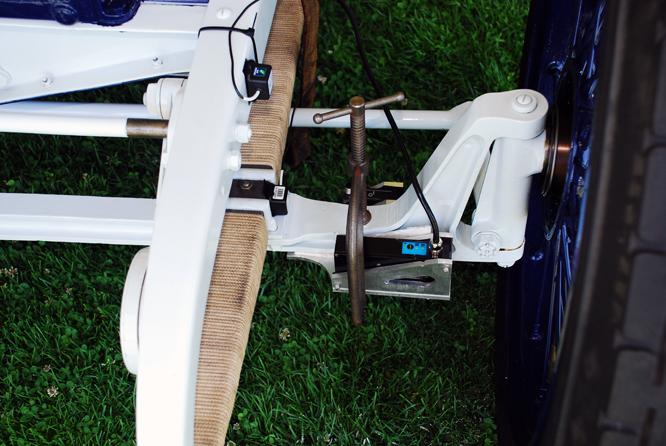
03/05/13 PS Geoffrey has informed me the electrical equipment attached to the front axle was a sensor connected to a computer seen in the cockpit by students of the Revs Programme at Stanford University to examine the Peugeot’s dynamics in motion.
Share

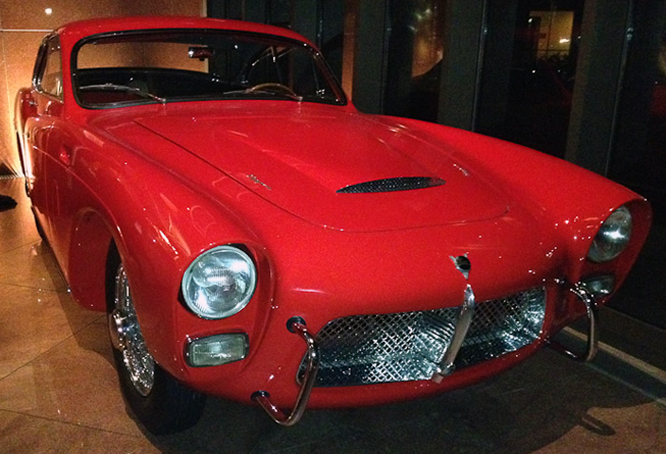
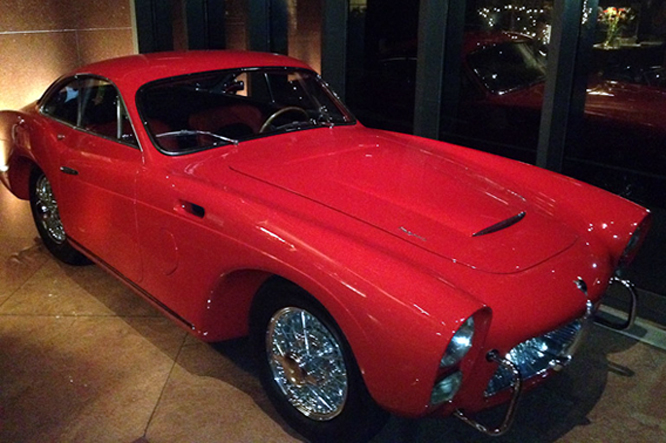
Cost No Object – Pegaso Z-102B

Former Alfa Romeo designer Wilfredo Ricart returned to his home town of Barcelona after the 1939 – 45 war and was offered a position as cheif technical manager with the Spanish automotive group ENASA which acquired the assets from the Spanish arm of Hispano-Suiza. ENASA sold trucks and buses under the Pegaso brand from 1946 and in 1951 entered the luxury sports car market.

Pegaso Z-102B, Danville Concours d' Elegance

The Tipo Z-102B was launched in Coupé and Convertible forms. They were powered by double over head cam motors that produced between 175 and 360 hp depending on size and state of tune, twin superchargers were available with the 360 hp variant. Unusually the transaxle had the 5 speed gearbox mounted behind the differential.

In September 1953 Celso Fernández was recorded driving a smaller engined Z-102B with single supercharger at 151 mph over a measured flying kilometer in Belgium to become the worlds fastest production car, a record it held for just over a month until Norman Dewis reclaimed the record for Jaguar in October 1953 with a speed of 172 mph.

Pegaso Z-102B, Danville Concours d' Elegance

The Coupé seen in these photographs by Geoffrey Horton taken at last years Danville Concours d’Elegance is powered by a 250 hp 2.8 litre 171 cui normally aspirated motor and was one of a pair of show cars with aluminium body work by Saoutchick built in 1955.

In all just 86 Z-102B’s were built unprofitably on a cost no object basis until 1958, it is thought just 56 Tipo Z-102B’s still remain.

My thanks to Geoffrey Horton for sharing his photographs of today’s featured car.

Thanks for joining me on this “Cost No Object” edition of “Gettin’ a li’l psycho on tyres” I hope you will join me again tomorrow. Don’t forget to come back now !

Share

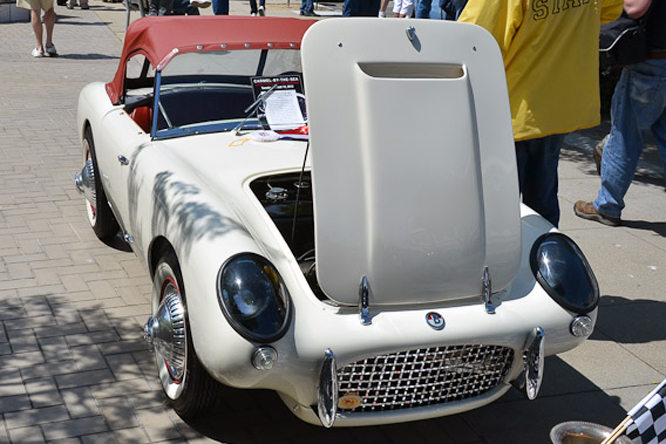
Excelsior Twin Carb – Berkeley Sports SE328 Deluxe

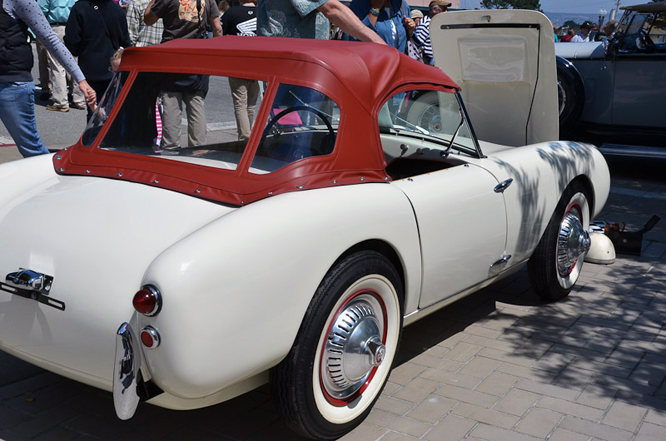
Berkeley was Europe’s leading manufacturer of fiber glass caravans when it diversified into car manufacture in 1956 to fill seasonal gaps in it’s manufacturing capacity.

Berkeley SE328, Carmel By The Sea, Concours On The Avenue

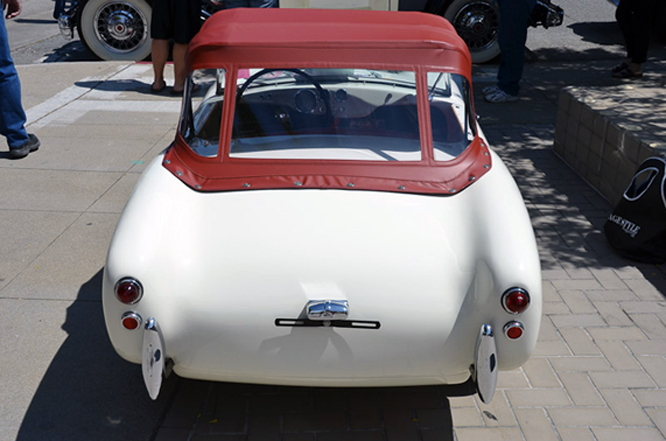
The first Berkeley sports car was the SA322 designed by Lawrence “Lawrie” Bond featured an all fiber glass shell and body beating the Lotus Elite which used similar technology to market by a full year.

Berkeley SE328, Carmel By The Sea, Concours On The Avenue

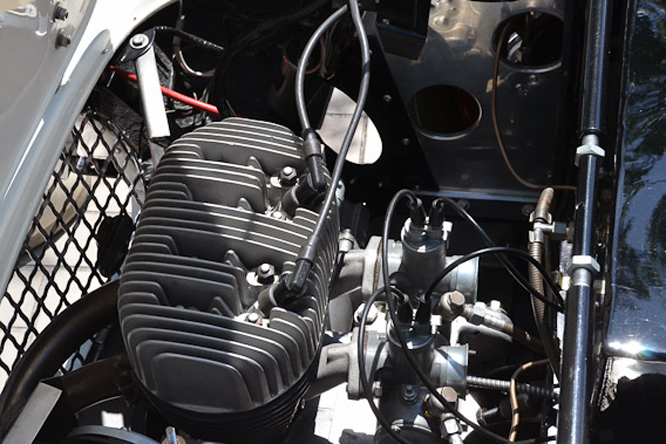
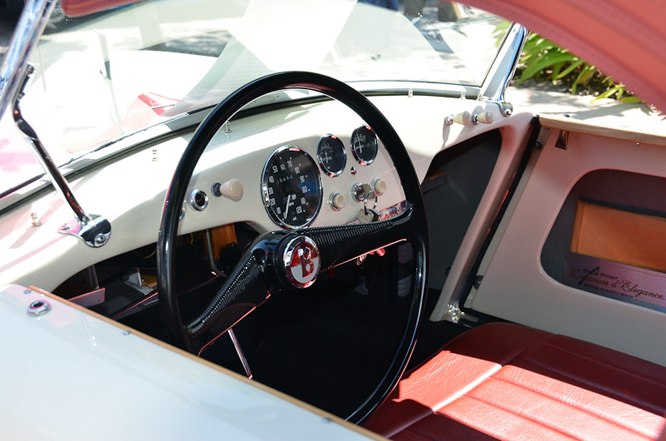
After 163 SA322’s had been built the original 11 hp 322cc/19.65 British Anzani motorcycle engine was replaced by a 18hp 328cc / 20 cui Excelsior motorcycle engine of the type seen above. Today’s featured car is a Delux version distinguished by the twin carburetors. The two stroke motor is started with the aid of a Dynastart electric motor that also served to charge the battery once the 2 stroke motor was set in motion.
Berkeley SE328, Carmel By The Sea, Concours On The Avenue

Fuel gauges were optional extra’s on Berkeley sports cars however the Deluxe models were fitted with tachometers and a fuel gauges as standard. Early Berkeleys were fitted with a column shift for the chain driven three speed gearbox that drives the front wheels.

Berkeley SE328, Carmel By The Sea, Concours On The Avenue

Stirling Moss’s sister Pat drove a Berkeley Sports SE328 in the 1958 Liége-Brescia-Liége Rally as part of a six car works team and was leading as far Slovinia before the heat on the Italian hills took it’s toll and resulted in her being towed by another team car.

Berkeley SE328, Carmel By The Sea, Concours On The Avenue

The diminutive chrome hub caps fitted with ‘spinners’ were another standard feature of the SE328 Deluxe. In all around 1259 SE 328’s that were capable of 70 mph accelerating from rest to 50 mph in just over 30 seconds while achieving over 50 mpg are thought to have been built.

My thanks to Geoffrey Horton for sharing today’s photographs that were taken at last years Concours on the Avenue at Carmel by the Sea.

Thanks for joining me on this “Excelsior Twin Carb” edition of ‘Gettin’ a li’l psycho on tyres” I hope you will join me again tomorrow. Don’t forget to come back now !

Share

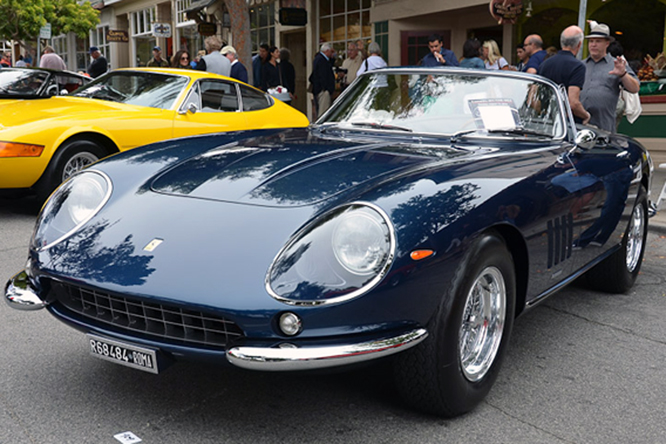
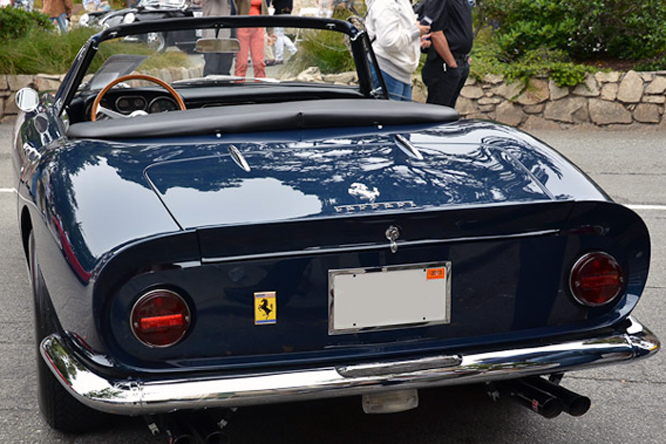
One Of Those Blue Italian Things – Ferrari 275 GTB/4 NART Spyder #10691

Way back when I was a teenager my folks took me to the Cinema to see a film staring Steve McQueen and Faye Dunaway called the Thomas Crown Affair, a story about a millionaire businessman, Thomas Crown played by Steve McQueen, who got his kicks by executing a near faultless bank robbery.

Ferrari 275 GTB/4, Concours by the Sea, Carmel

After the job a dirty thinking insurance investigator Vicki Anderson played by Faye Dunaway is sent to help squeaky clean Detective Eddie Malone solve the case, and after narrowing the list of suspects down correctly intuits that Thomas Crown is her man. She shows up in a high profile dark read Ferrari 275 GTB/4 NART Spyder at a polo match in which Thomas is playing and starts to openly film with on a small movie camera, they inevitably meet and she introduces herself as an investigator and makes no secret of the fact that he is the person she is investigating.

Ferrari 275 GTB/4, Concours by the Sea, Carmel

Later on Thomas turns up at an auction room and parked outside is the dark red NART Spyder which catches his attention and his assistant remarks “isn’t that one of those red Italian things” to which Thomas responds in the affirmative.

Ferrari 275 GTB/4, Concours by the Sea, Carmel

After much cat and mouse Thomas decides to do one more job and lets Vicki in on the idea to see if she really loves him or wants to turn him in. I’ll leave it to you to see the film to find out what happens, here is a link to the trailer.

Ferrari 275 GTB/4, Concours by the Sea, Carmel

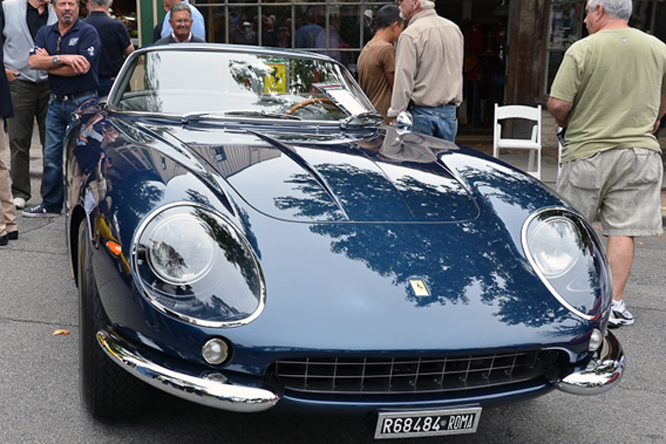
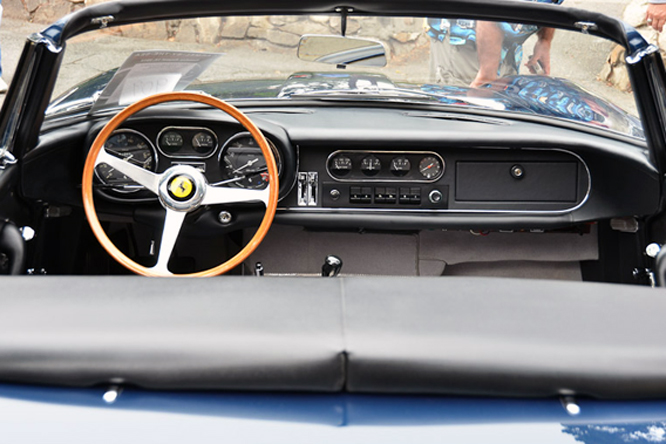
Luigi Chinetti had plans to have 25 Ferrari 275 GTB/4 NART Spyders built with Pininfarina bodies in 1967. The first chassis 09437 was supplied with a 330 hp race motor, Chinetti had a roll cage fitted and entered it into the 1967 Sebring 12 hours for Marianne ‘Pinky’ Rollo and Denise McCluggage who finished a credible 17th overall and second in class behind a Ford Mustang. The car was later scouted for The Thomas Crown Affair and painted dark red for the film.

McQueen liked the car that Dunaway had in the film and ended up buying chassis #10453. Todays featured car is chassis #10691 which won the Carmel by the Sea Concours d’Elegance best in show award last August where these photographs were taken by Geoffrey Horton.

Despite the good performance at Sebring and the appearance in the Oscar winning, best original song, Thomas Crown Affair Chinetti had trouble selling ten NART Spyders with out heavy discounts and so only ten were built. They now change hands depending on history and condition for between US$ 3 to 4 million.

My thanks to Geoffrey Horton for sharing his photographs.

Thanks for joining me on this “One Of Those Blue Italian Things” edition of “Gettin’ a li’l psycho on tyres” I hope you will join me again tomorrow. Don’t for get to come back now !

Share