Tag Archives: Jones

Turbo Erika – Ford Escort RS Turbo

Launched with the strap line “Simple is Efficient” the third generation Ford Escort was code named “Erika” while in development taking the name from Fords Product Planning Dept leader Erick A. Reikert.
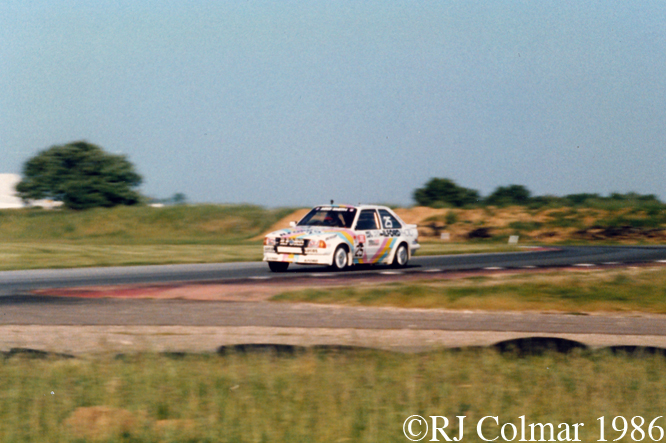
Ford Escort RS Turbo, Snetterton

The Escort MKIII went head to head in the market place with the popular Volkswagen Golf which had turned VW fortunes around after the demise of the ‘Beetle’.

Ford Escort RS Turbo, Snetterton

Like the Golf the 3rd iteration of the Escort employed front wheel drive, unlike the Golf the Escort was a conservative hatchback retaining some vestige of a three box shape bodywork at the rear, although the tailgate included the rear sloping window.
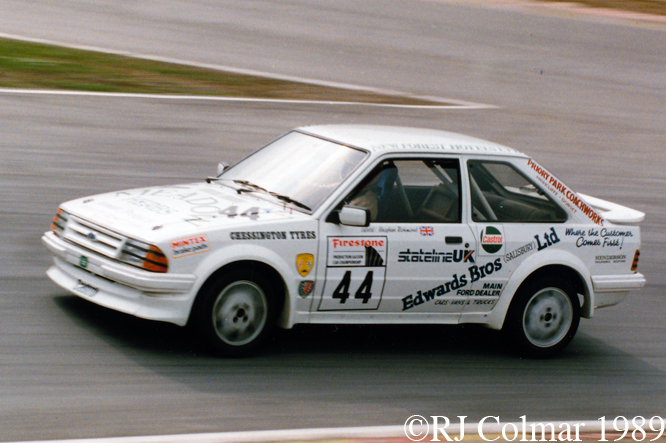
Ford Escort RS Turbo, Brands Hatch

The 132hp RS Turbo version of the Escort was launched in 1984 with the 5 speed transmission driving the front wheels through a viscous coupling differential that was a world first for a front wheel drive car. The RS Turbo proved a strong competitor in production saloon racing where it rendered the hitherto dominant Ford Capri 2.8i obsolete in the space of 12 months.
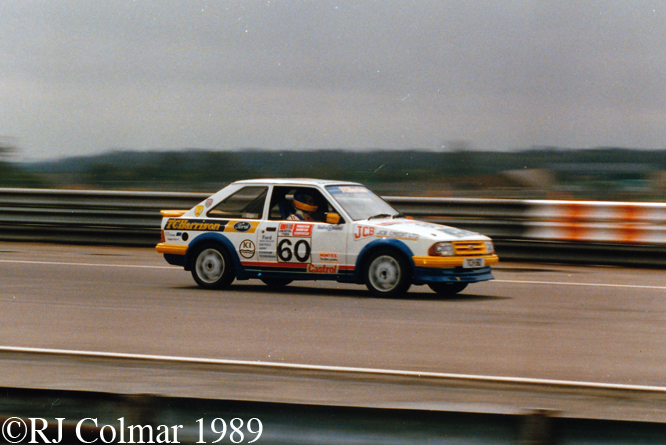
Ford Escort RS Turbo, Silverstone

In the top photo national radio DJ Mike Smith and Lionel Abbot shared the #25 to win the 1986 Willhire 24 hour race at Snetterton at their second attempt becoming the first two driver team to win the race since it’s inception in 1980. The #32 was driven by Karl Jones, Patrick Watts and Chris Creswell in the 1987 Willhire 24 hours qualifying 2nd, to a Ford Sierra RS Cosworth, and finishing sixth, third in class after a late driveshaft failure. By 1989 the Escort RS Turbo’s driven by Vaughan Richmond, #44 seen at Brands Hatch and Jonathon Harrison, #60 seen at Silverstone, were overwhelmed in class B by half a dozen faster BMW M3’s.

My thanks to Tim Murray on The Nostalgia Forum for the race details on the #32 at Snetterton.

Thanks for joining me on this ‘Turbo Erika’ edition of ‘Gettin’ a li’l psycho on tyres’ I hope you will join me again tomorrow for Americana Thursday. Don’t forget to come back now !

Share

Quad Cam – Lotus Ford 34 #34/3

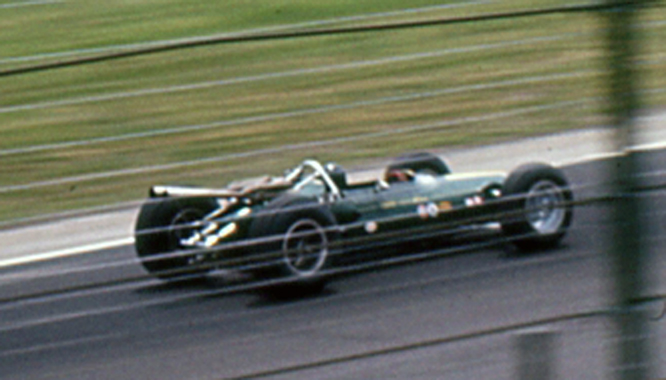
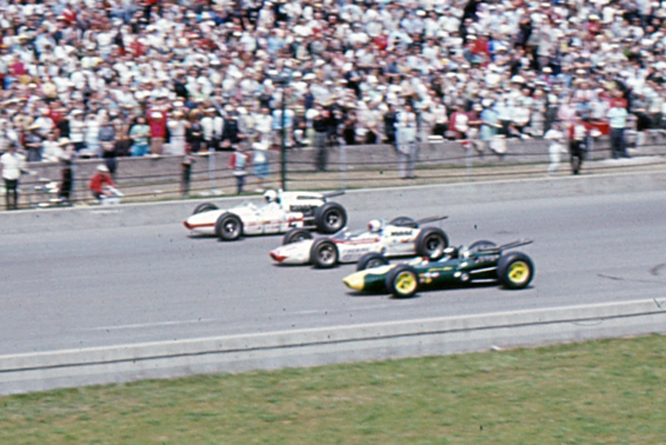
In 1964 Team Lotus returned to Indianapolis for a second crack at the 500 with the new Lotus 34 and the same driving squad, Clark and Gurney, as 1963.

Lotus 34, Indy 500, Ed Arnaudin

This time Jim Clark started from pole as seen above with Bobby Marshman driving Jim’s 1963 Lotus 29 and Rodger Ward in the fastest of the new rear engined space frame Watson Ford, the only Ford running methanol that day, on the outside of the front row. Following the tragic accident on the opening lap of the 1964 500 Jim completed only eight more laps than early front runner Bobby Marshman before a tyre issue damaged his suspension which caused his retirement on lap 47 after the race was restarted. Team mate Dan Gurney starting from the outside of row two completed 110 laps before Dunlop tire issues also caused his retirement.

Lotus 34, Indy 500, Ed Arnaudin

The Lotus 34 featured a similar monocoque chassis to the Lotus 29 but the 4195 cc / 255cui stock block Ford motor was fitted with new twin overhead cam heads and Hilbron fuel injection which boosted the power up to 425 hp. This particular car is chassis 34/3 which ended up with Clark’s 1963 rival Parnelli Jones who drove it two a second place finish behind Jim Clarks Lotus 38 in 1965. Parnelli still owns the car today, which is kept at his Museum the Parnelli Racing Collection at Torrence, CA, restored to 1964 spec as seen in Ed Arnaudin’s photo’s

My thanks to Steve Arnaudin for kindly sending me his late Dad Ed’s photo’s and to B Squared for patiently answering my questions about this car and Sisyphus for helping to confirm the identification over at The Nostalgia Forum.

Thanks for joining me on this ‘Quad Cam’ edition of ‘Gettin’ a li’l psycho on tyres’ I hope you will join me again tomorrow. Don’t forget to come back now !
Share

Cherry & Jones – Vauxhall XVR

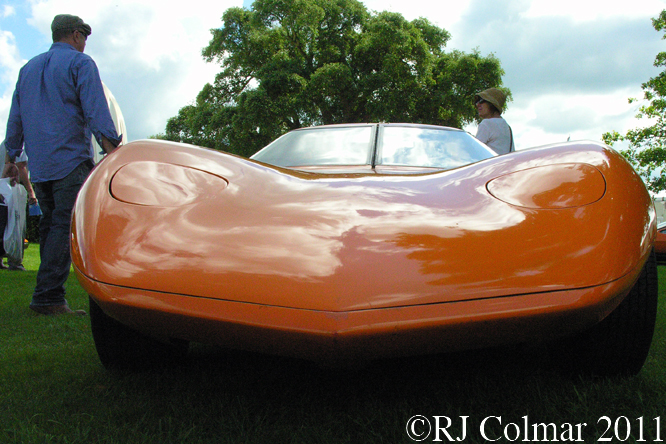
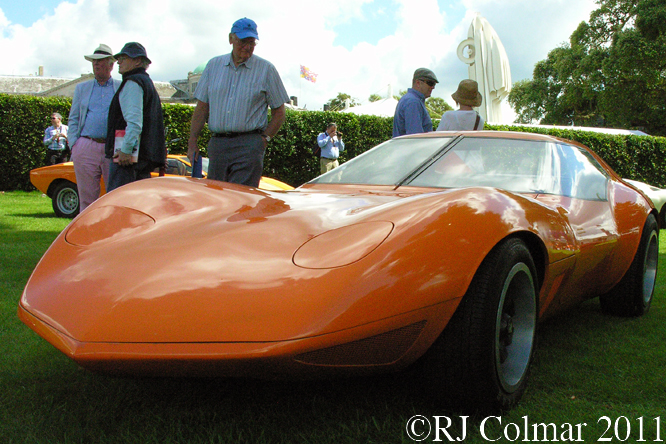
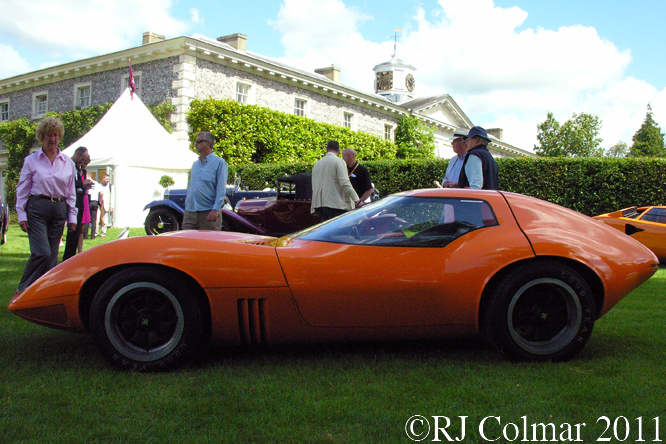
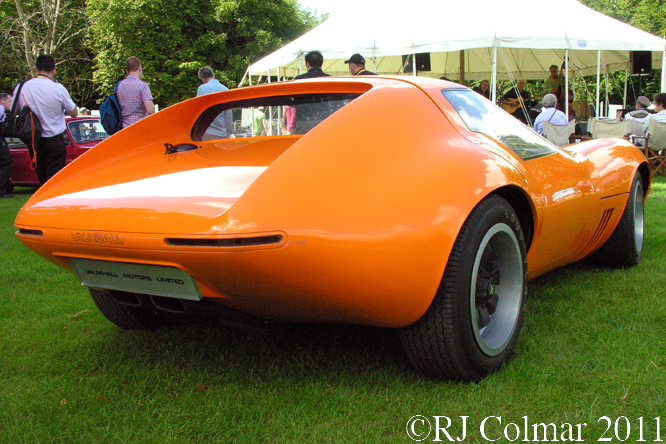
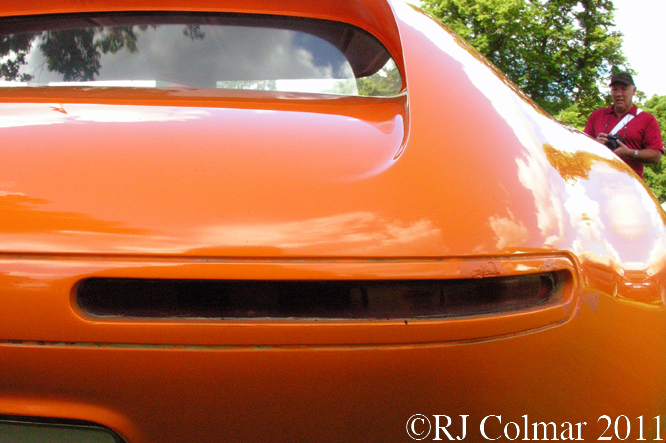
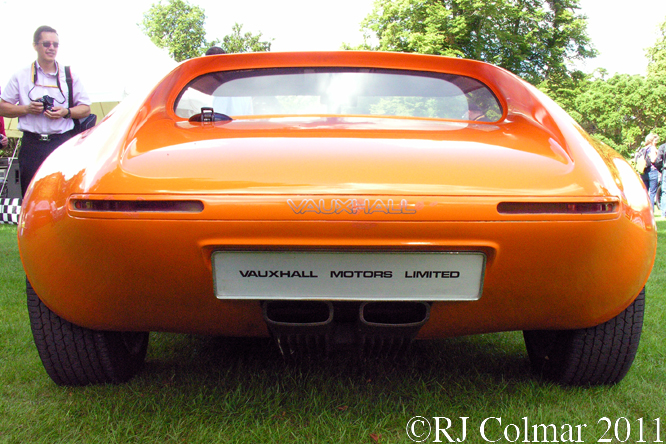
The Vauxhall XVR, seen here at Goodwood Festival of Speed, was the first Concept Car ever exhibited by Vauxhall Motors, it appeared in public at the Geneva motor show in 1966.

Vauxhall XVR, Goodwood FoS

Wayne Cherry who had been involved in the design of the Chevrolet Camaro / Pontiac Firebird and Oldsmobile Tornado was transferred from GM central in Detroit to GMs English manufacturer Vauxhall Motors in 1965 and with is credited with the Stingrayesque styling of the XVR alongside the Director of Styling David Jones.

Vauxhall XVR, Goodwood FoS

3 XVR models were built powered by 71 hp twin carburetor 1594 cc / 97 cui 4 cylinder motors as used in the performance VX 4/90 variation on the Vauxhall 101.

Vauxhall XVR, Goodwood FoS

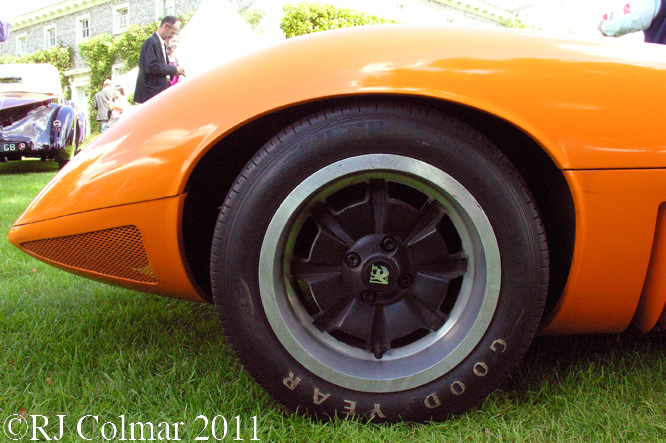
The XVR was built on a custom built chassis with independent suspension and disc brakes all round.

Vauxhall XVR, Goodwood FoS

Gull wing doors were part of the futuristic XVR package, even though they had already been seen on the production Mercedes 300 SL dating back to 1954, though unlike the Mercedes the doors on the XVR also form the unusual for the period split windscreen.

Vauxhall XVR, Goodwood FoS

It is not known why Vauxhall halted production of the XVR concept which is known to have been put through trials at Vauxhall’s Research and Test center after it’s public debut in Geneva.

Vauxhall XVR, Goodwood FoS

Elements of the concept are said to have found their way into the design of the Vauxhall Firenza including the styling of the dashboard and tail lights.

Vauxhall XVR, Goodwood, FoS

Although as we shall see next week the German chapter of GM, Opel, would build a car that took it’s styling from it’s own Opel Experimental GT concept dating from 1965 it would take another 34 years before the Vauxhall brand name would appear on a two seat sports car namely the Vauxhall VX220.

Thanks for joining me on this XVR edition of ‘Gettin’ a li’l psycho on tyres’, I hope you will join me again tomorrow. Don’t forget to come back now !
Share

Phil Hill Tribute – Peterson Museum

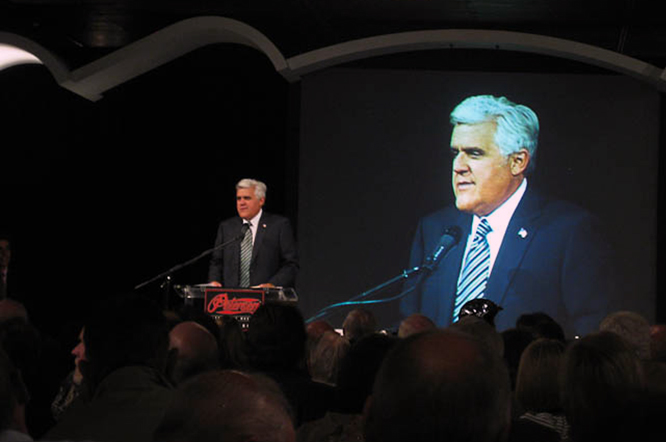
It’s a great pleasure to blog about the recent tribute to Phil Hill, celebrating the 50th anniversary of his World Championship win, at the Peterson Automotive Museum thanks to GALPOT’s roving correspondent Geoffrey Horton.

Jay Leno, Phil Hill Tribute, PAM

Ueber car enthusiast Jay Leno was amongst the guests to lend humour to the occasion.

Pierce Arrow, PAM

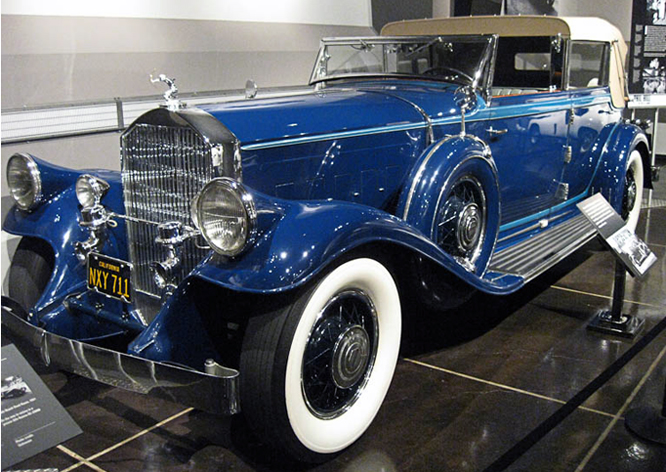
Amongst the exhibits was this 1931 Pierce Arrow convertible sedan by Lebaron that was ordered new by Phil’s Aunt and in which Phil leaned to drive. He also used the car to attend USC and in 1955 he restored the car with his brother Jerry and promptly unexpectedly won the Best in Show award at Pebble Beach.

Peterson Automotive Museum

Some of Phil’s competitors from his early days at this event shared with the appreciative audience stories of Phil’s early exploits with an MG TC in Cal Club events which were not always entirely legal events held on circuits.

Ferrari 375MM Vignale, Peterson Automotive Museum

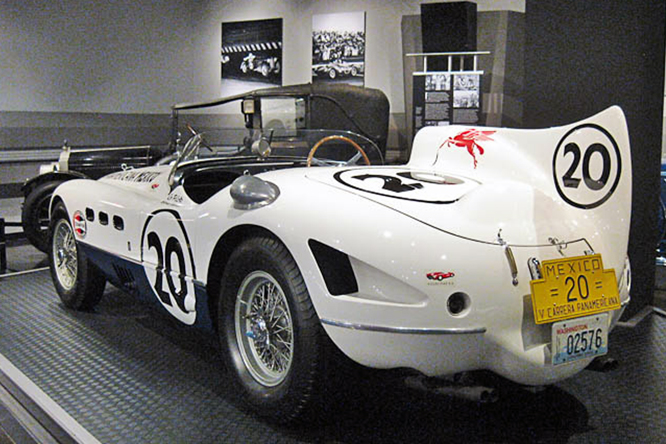
Of the delectable Ferrari’s present that Phil has driven was this unique 1953 375MM with Vignale bodywork and non stock tailfin that was added after the car was built in 1954. Phil drove this car to a second place finish in the 1954 Carrera Panamericana. It was also later driven by Carol Shelby.

Peterson Automotive Museum

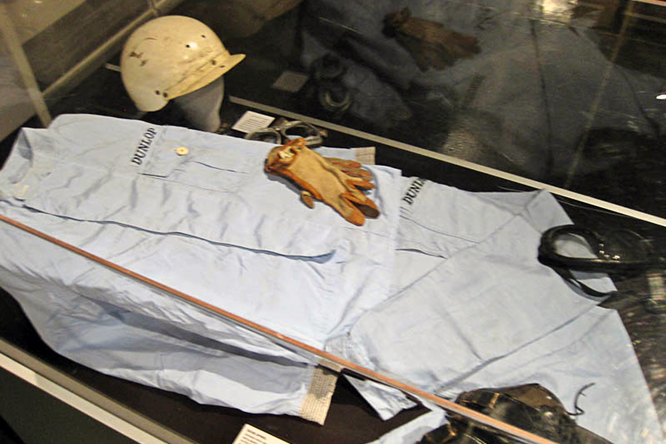
Nothing remains of the original Shark Nose Ferrari 156 which he used to win the 1961 World Drivers Championship, they were all destroyed on the instruction of Enzo Ferrari, but the helmet seen here was used by Phil in his Championship winning season.

Packard Model 30, Peterson Automotive Museum

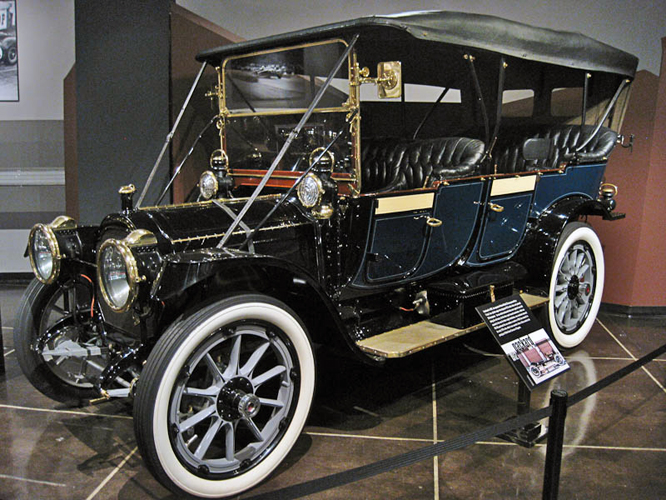
This 1912 Packard Model 30 with a gearbox mounted ahead of the rear axle and rear cable operated brakes only was purchased by Phil in 1966 and won it’s class at Pebble Beach Concours d’Elegance in the 1970’s

Peterson Automotive Museum

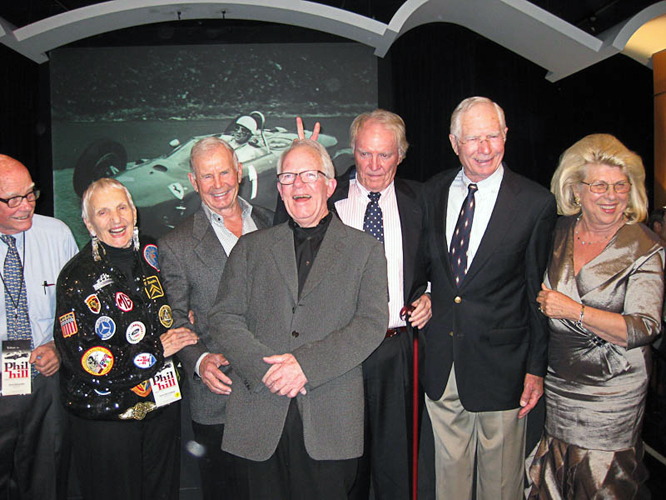
Guests who discussed the life and times of Phil were left to right, John Lamm, Editor at Large “Road and Track, Denise McLuggage racing driver and journalist, Parnelli Jones, Jesse Alexander photographer, Dan Gurney, Jim Hall and Phil’s wife Alma.

My thanks to Geoffrey Horton for sending me the photo’s and the details of the Phil Hill Tribute evening at Peterson Automotive Museum.

Thanks for joining me on this Phil Hill edition of ‘Gettin’ a li’l psycho on tyres’ I hope you will join me again tomorrow. Don’t forget to come back now !
Share

It’s The Real Thing – Ferrari 512BB

In 1974 Niki Lauda tested a prototype Ferrari 312 PB in preparation for the 1974 World Sports Car Championship and when Enzo asked him what he thought Niki is alleged to have said something to the effect that if Mr Ferrari wanted to win the Grand Prix World Championship he ought to forget about the prototype 312PB. Enzo seems to have concurred with his new drivers opinion and his cars were never to contest the World Sports Car Championship during his lifetime again.

However many privateers never tired of entering Ferrari’s in the World Sports Car Championships lesser IMSA classes and today we will be looking at the fortunes of 3 privateer Ferrari 512 BBs that I was lucky enough to see in the early 80’s.

The Ferrari 512 BB was an update of the 365 GT4 BB we looked at last week. Introduced in 1976 the 512 featured an enlarged 360 hp 4942 cc / 301 cui 180 degree 12 cylinder engine with a 9.2:1 compression ratio and dry sump engine lubrication which is ideal for the higher cornering forces experienced in racing cars. 929 examples of the 512 BB were made before the 512i BB was introduced in 1981.

512 BB / LM #27577 1980 Silverstone 6 Hours, O’Rourke/Craft/Norman Q18 F 7th o/a 2nd IMSA, those with an interest in all things musical might recognise EMKA and Steve O’Rourke in connection with Pink Floyd whom Steve is credited as managing post Syd Barrat, Nick Mason was listed to drive the #11 but didn’t, after Steve died in 1994 Nick acquired this car to join his 250 GTO.

On the inside you can just make out the winning #8 De Cadenet – Ford driven by Alain De Cadenet (seen here) and Desiré Wilson who I believe a couple of weeks earlier became the first female to win a World Championship race of any kind in the same De Cadenet – Ford with the same co-driver at Monza.

512 BB / LM #35523 1981 Silverstone 6 Hours, Phillips/Salmaon/Earle Q25 DNF (Flat battery) A not untypical horribly wet and cold day at Silverstone the race was won by a Porsche 935 which will be the subject of a future blog.

512 BB / LM #31589 Andruet/Ballot-Léna 1981 Le Mans 24 hours, Q 37th, F 5th o/a 1st in IMSA GTX, my first holiday abroad alone was always going to be to go see the Le Mans 24 hours and I was not disappointed. Bell & Ickx won and there was an entertaining battle between 5 of these 512 BB’s for much of the race, though all but one other did not finish.

512 BB / LM #35523 1982 Silverstone 6 Hours, Phillips/Earle/Jones Q34, F 17th, regrettably this was the last time I saw the 512’s on the track, these fabulous sounding machines continued to be raced until 1985.

Hope you have enjoyed today’s ‘It’s The Real Thing’ edition of ‘Gettin’ a lil’ psycho on tyres’ and that you will join me again tomorrow for a look at some Porsches from Thompson CT in the first day of my first Porsche week. Don’t forget to come back now !
Share

The Boss’s Car – Morgan AeroMax

A couple of weeks ago I was fortunate enough to go on a guided tour of the Morgan Motor Company. To arrange the tour I visited the Morgan website two weeks in advance and made a booking. As I hope you shall see over the next couple of days I had a fabulous time.

The Morgan Motor Company was founded in 1909 by HFS Morgan in Malvern Worcestershire and is the oldest British motor manufacturer in continuous private ownership. Today the company is run by the Grandson of HFS, Charles Morgan and as luck would have it this is his personal one of a limited edition of just one hundred AeroMax models.

The Aeromax is capable of 0 – 60 mph in 4.5 seconds and will take you on to a 170mph.

Every detail of a Morgan is a testament to the genius of craftsmen, as we shall see there are power tools in the factory but there is no mechanised assembly line or machines stamping out parts.

Power for the AeroMax comes courtesy of a BMW V8, so far as I know Morgan has always used proprietary motors.

From the trunk of the Aeromax allegedly is large enough for a couple of Golf bags.

In 1991 the Britain’s first reality TV businessman Sir John Harvey Jones was horrified to find Morgan with a seven year backlog of orders were still crafting their vehicles by hand in the Troubleshooter TV series, he advised Peter Morgan to modernise, increase production and prices. Bravely Morgan ignored this advice and the TV coverage led to the waiting list for new Morgans to extend from 7 years to 10 years. Sir John says he is pleased that Peter Morgan stuck to his guns and ignored his advice.

Hope you enjoyed my introduction to the Morgan Car Company, tomorrow I’ll take you inside the factory to see how these cars are made, wishing everyone a sunny day, don’t forget to come back now !
Share