Tag Archives: Le Mans

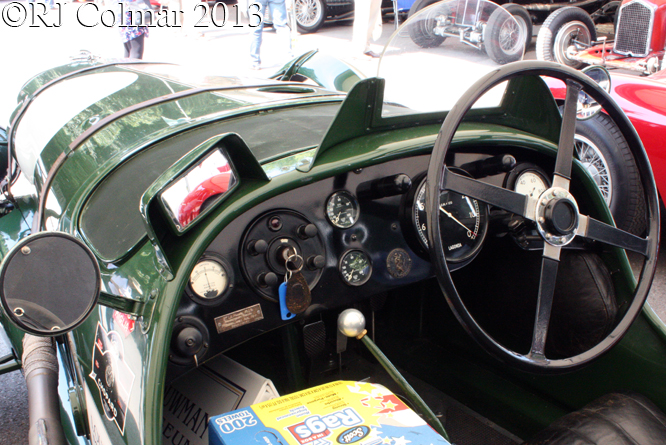
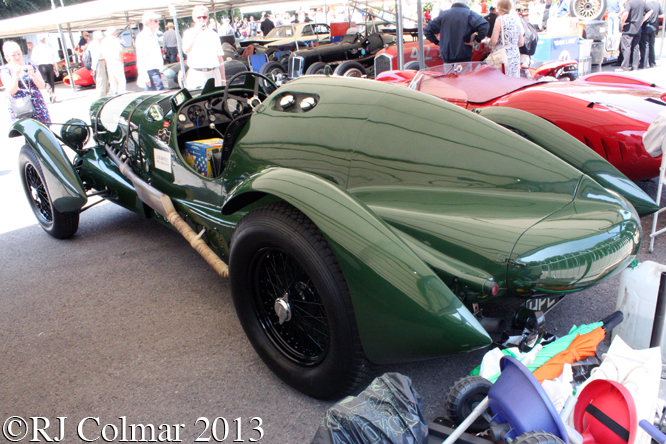
Prototype, Racer, Decoy – Jaguar #E2A

After Jaguars bitter sweet success at Le Mans in 1955, when the works D-Type driven by Mike Hawthorn and Ivor Bueb won the ill feted race following Mercedes Benz mid race withdrawal, Sir William Lyons concluded, as did the board of Mercedes Benz, that Jaguar’s resources would be better spent turning it’s racing success into commercial production success.

The Jaguar racing department became the Jaguar prototype department as all Jaguar works racing programmes were left to customer teams like Ecurie Eccose who promptly won Le Mans in 1956 and 1957 with their D-Types and Briggs Cunningham, who realised he did not have the resources to build and compete with an American sports car with the best Europe had to offer, but still had the resources to buy top line European cars to race.
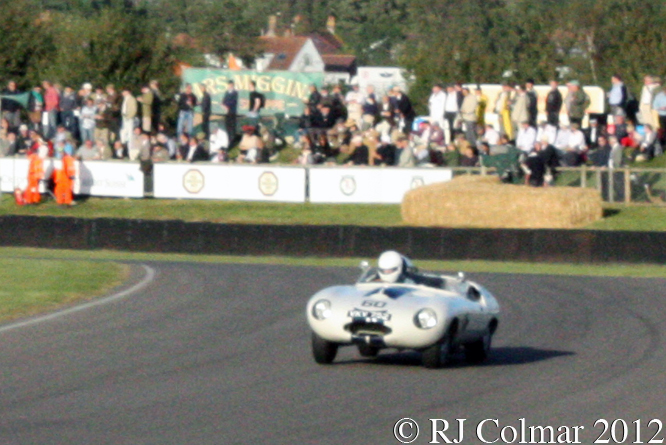
Jaguar E2A, Ziegler, Goodwood Revival

The Jaguar prototype team’s first job was to build a production version of the D-Type using monocoque construction and replacing the D-type’s live rear axle with independent rear suspension.

This prototype, known as #E(Type)1A(Aluminium), was a 130 mph 2/3rds scale drivable vehicle built in 1957 which after much testing was broken up and scrapped somewhere between 1959 and 1960 without ever having been shown to the press or public.
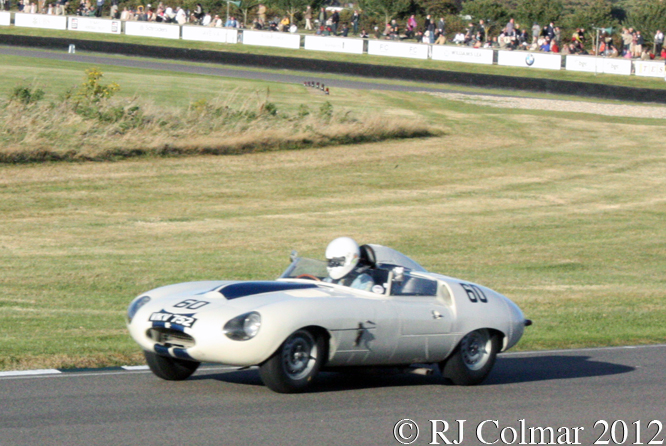
Jaguar E2A, Ziegler, Goodwood Revival

Today’s featured car #E2A was a full scale second prototype with a monocoque and aluminium body styled by Malcolm Sayer. The car was fitted with a 3 litre / 183 cui fuel injected aluminium straight 6 motor in order to meet the Le Mans prototype regulations. E2A was entrusted to Briggs Cunninghams team and painted in his teams white with two blue stripes colours.

Before going to Le Mans in 1960 E2A was tested at the oval MIRA test facility and the suspension was set up for this purpose when it arrived at Le Mans unknown to Dan Gurney and Walt Hangsen who were employed to drive it.
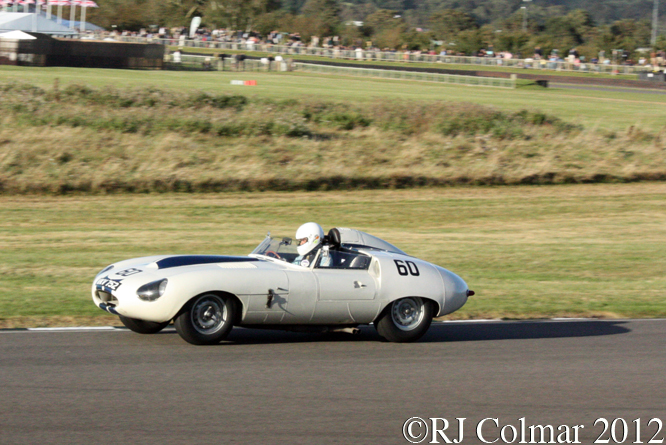
Jaguar E2A, Ziegler, Goodwood Revival

Dan and Walt found the car extremely twitchy and it was late before the race that the suspension settings were changed to something more suitable to a public road used as a race track rather than a steeply banked oval at MIRA.

#E2A completed the opening lap of the 1960 Le Mans 24 hours in third place, but after just 3 laps the car was in the pits with a broken injector pipe. This was replaced but a train of damage had been set in motion which resulted in E2A retiring after six hours with a failed head gasket and burned piston.
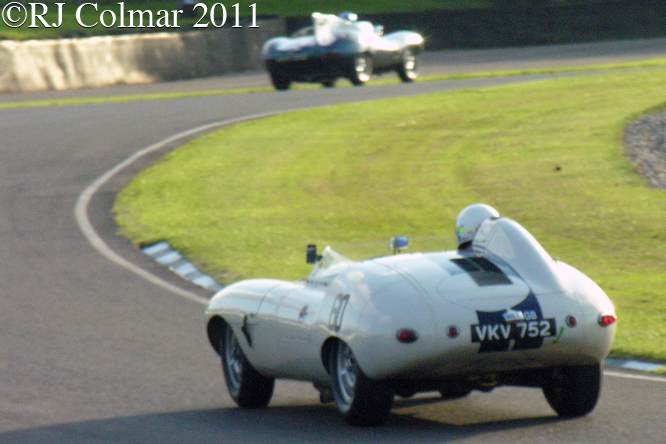
Jaguar E2A, Dron, Goodwood Revival

Back at the Jaguar factory the 3 litre #E2A engine was swapped for a 3.8 litre / 231 cui unit and the car was shipped to the USA Walt Hangsen drove it to a win in the 2nd Annual Inter-club Championship Bridgehampton and class win in the 500 mile Road America race.

Reigning double world champion “Black” Jack Brabham drove #E2A 10th place finish in the 200 mile Grand Prix Riverside, a twisty track to which E2A was as poorly suited as Laguna Seca where Bruce McLaren drove #E2A in two heats of the First Pacific Grand Prix to 12th and 17th place finishes.
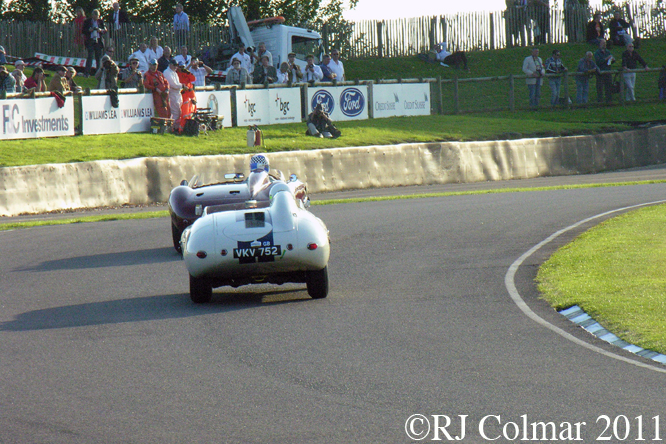
Jaguar E2A, Dron, Goodwood Revival

Thereafter #E2A was returned to Jaguar for further testing which included an early anti lock braking system called ‘Wheel Slide Protector’ as used by the Ferguson P99.

#E2A was eventually put into storage, only to be pulled out and painted green in 1965 so that it could be used as a decoy while testing of the top secret XJ13 was carried out at MIRA.

In 1967 Jaguar customer car competition manager Roger Woodley managed to save E2A from the usual destruction for scrap prototype fate by mediating a deal for his father in law Guy Griffiths Camden Car Collection in the Cotswolds to take it with Jaguars insistence that #E2A should never be used in competition.

Jaguar kindly repainted #E2A in Briggs Cunninghams original racing colours and some time after handing it over manged to supply Guy with a 3 litre fuel injected motor.

In 2008 Roger’s wife sold the car for just short of US$5 million at Bonham’s, owner Stefan Ziegler has since had the car prepared to ‘weapons grade racer’ standard much to the chagrin of some old curmudgeons, myself included.

Stefan is seen at the wheel of the car at Goodwood in the photo’s dated 2012, while Tony Dron is seen driving the car in the older images.

Thanks for joining me on this “Prototype, Racer, Decoy” edition of “Gettin’ a li’l psycho on tyres” I hope you will join me again for Ferrari Friday tomorrow. Don’t forget to come back now !

Share

185mph Motorway Test – AC Cobra Coupé #A98

Having concluded that the original AC Shelby Cobra Roadster needed some more straight line speed in order to compete with the Ferrari 250 GT0’s at Le Mans both Shelby and AC set about building Coupé’s independently of one another in late 1963.

AC turned to Alan Turner to design their Cobra Coupé for the 1964 Le Mans 24 Hours. The less than complete car was taken to the Le Mans Test Weekend in April 1964 and Paul Bolton recorded the 27th fastest time in the 355 hp Coupé chassis #A98. Upon completion and with a spoiler fitted to help reduce lift the car was tested at the high speed MIRA test facility for which it proved to be too fast.

AC Cobra Coupé,  Goodwood Revival

In order to test the cars top speed it was decided to go and test it on Britain’s M1 motorway at 4 am two weeks before the 1964 Le Mans 24 hours and both Jack Sears and Paul Bolton took turns at driving the car up a couple of junctions and returning at a time of day when there was no other traffic on the road.

Based on the revs used as reported by the drivers, axle ratio and tyre sizes the AC engineers calculated on their slide rules that the car had reached 185 mph.

AC Cobra Coupé,  Goodwood Revival

One of the people present at the test was AC owner Derek
Hurlock’s nephew Tony Martin, who held an administrative position at the Sunday Times and spilled the beans to reporters with whom he worked later in the day.

Naturally the story was taken up and made front page news, however the incident did not contribute to the implementation of a blanket 70 mph on British Motorways in 1964 as a trial and made permanent in December 1965, as has become myth. The Ministry of Transport had been working on that legislation since far earlier in an effort to reduce death’s on Britain’s motorways which had been unrestricted since the first section of the Preston By Pass that was to become the M6 was opened in 1958.

#A98 was taken to Le Mans where it was qualified in 13th and gave the GT class winning Shelby Daytona Coupé designed by Pete Brock and driven by Dan Gurney and Bob Bondurant a good run for it’s money until fuel starvation intervened.

Foul play was suspected when newspaper was found in the petrol tank, after being told by their tyre supplier to not change their tyres Paul suffered a tyre failure on lap 77 which put him in hospital and caused a Ferrari avoiding the incident to leave the track which killed 3 spectators in an unauthorised spectating area.

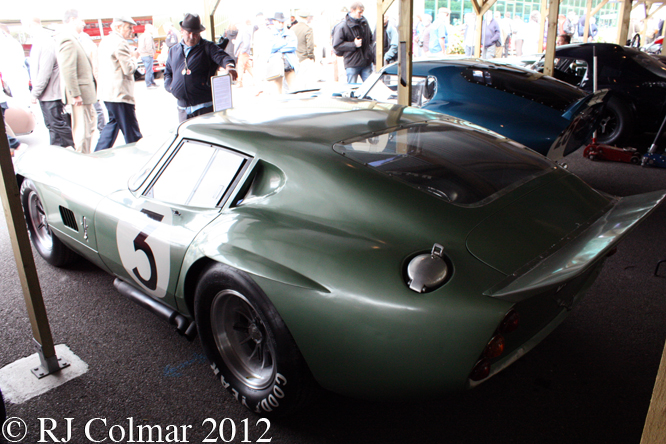
It took an AC enthusiast 12 years to rebuild the wreck of #A98 into the condition seen here at Goodwood Revival in 2012.

Thanks for joining me on this “185 mph Motorway Test” edition of “Gettin’ a li’l psycho on tyres” I hope you will join me again tomorrow when I’ll be looking at a unique British built US entered vehicle that competed in the Le Mans 24 Hours. Don’t forget to come back now !

Share

Polska Kronika Filmowa ? – Talbot T150 / T26 #82935 / 90202

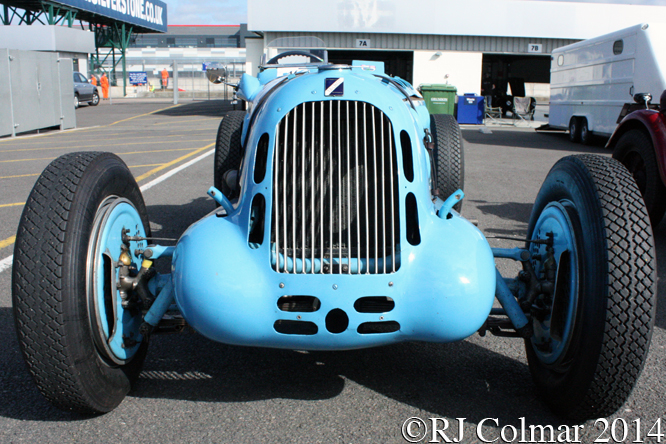
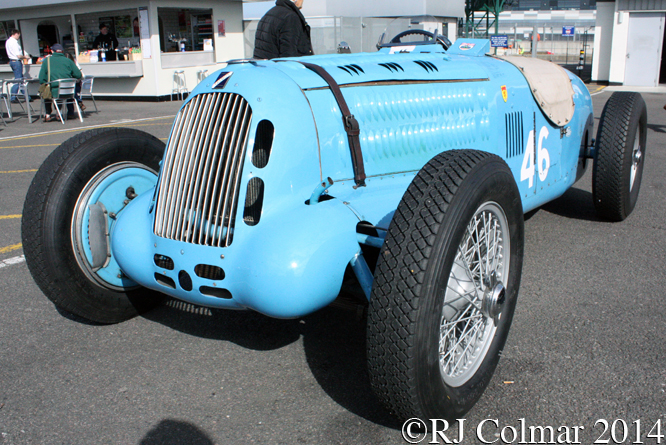
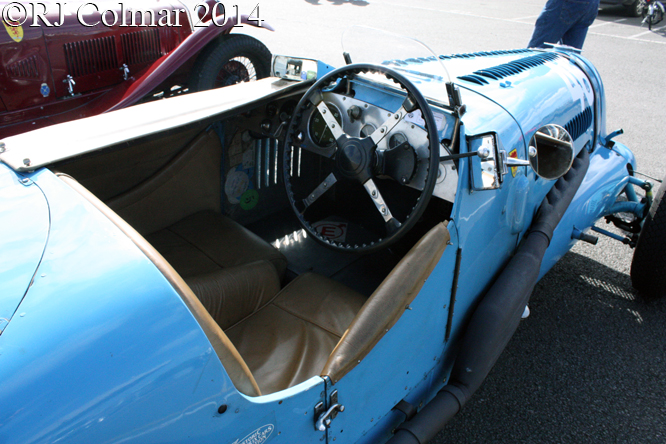
Today’s blog tells the story of how I came to wonder if today’s Talbot T26C 90202 seen a couple of months ago at the VSCC Spring Start meeting featured in a 1948 edition of Polska Kronika Filmowa a Polish weekly newsreel.

Talbot T26, VSCC Spring Start, Silverstone

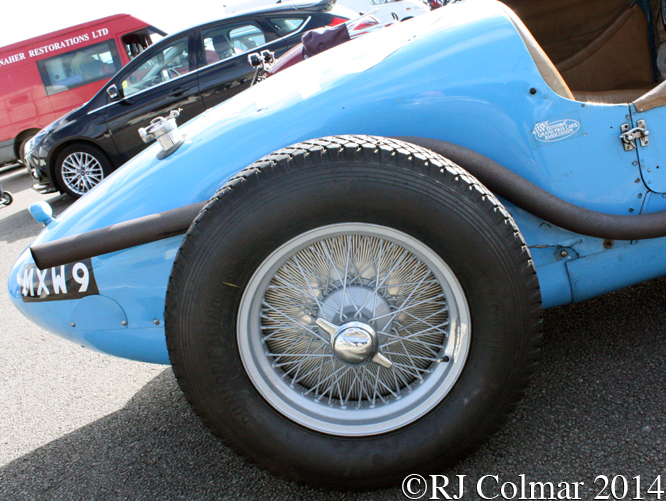
So far as I have been able to discern this vehicle was originally built in 1937 as a T150 chassis number #82935 and fitted with a 4 litre / 244 cui 6 cylinder motor and registered for road use with the French licence plate 439W1.

Talbot T26, VSCC Spring Start, Silverstone

Albert Divo raced the car on at least 3 occasions with a best finish of 2nd in the 1937 Marne Grand Prix. In September 1937 Raymond Sommer driving #82935 now bearing the French licence plate 4397RL2 retired from the Tourist Trophy with engine problems. #82935 is shown by one source to have been intended to be part of a two car Talbot-Lago team at the 1937 Le Mans 24 hours that did not show up.

Talbot T26, VSCC Spring Start, Silverstone

In 1938 René Carrière and Anthony Hannoyer drove the works entered #82935 to a fifth place finish on the Mille Miglia, two months later René shared the now Luigi Chinetti entered car with René Le Bègue at Le Mans, but retired after completing 101 laps.

Talbot T26, VSCC Spring Start, Silverstone

Two weeks later the mudguards came off and René Carrière drove #82935, entered once again by the Talbot factory and carrying the #4, seen at 1:03 in this linked clip, to a gallant 4th place finish, first non Mercedes and only 10 laps down, on the French Grand Prix winning Mercedes Benz W154 of winner Manfred von Brauchitsch.

Talbot T26, VSCC Spring Start, Silverstone

For it’s final two known appearances in 1938 #82935 was fitted with a 4.5 litre / 274 cui straight six and given a T26 identity with the chassis number #90202, it was not the only T150 to become a T26. René Carrière won pole position driving the car, with it mudguards refitted for the Tourist Trophy, but could only finish 4th. Philippe Etancelin joined René Carrière to drive the upgraded car in the 1938 Paris 12 Hours from which it was retired after an accident.

Talbot T26, VSCC Spring Start, Silverstone

The renumbered chassis #90202 made only two known appearances in 1939 the first at Le Mans where entered by Chinetti and driven by Luigi Chinetti and T.A.S O. Mathieson the car suffered another accident and retired on lap 154. T.A.S.O. Mathieson is credited with entering #90202 in the Grand Prix du Comminges run at St. Gaudens for Luigi Chinetti to drive, but once again the car retired. Chinetti entered himself to drive #90202 in the Liege Grand Prix on the 26th August 1939 a week before WW2 hostilities broke out on 1st September, but the race was cancelled.

Talbot T26, VSCC Spring Start, Silverstone

After the war Lord Selsdon, who coincidentally raced against #90202 in a Lagonda V12 at Le Mans in 1939, became the owner of #90202 by 1946, a time when almost anything that could move was thrown in to race at almost every available opportunity. Louis Chiron drove #90202 entered by Lord Selsdon at an event run at Bois de la Cambre in June 1946 but retired with a fuel pump ‘issue’.

Talbot T26, VSCC Spring Start, Silverstone

Chiron then appears to have played a part in ensuring that French patron of the Ecurie France team Paul Vallée rented or at least borrowed #90202 from Lord Selsdon for part of the 1947 season when the car was to be driven by Chiron, so far as I know he never did, but Yves Giraud-Cabantous may have driven the car referred to a ‘26SS‘ in 1947, though in which events I have not been able to ascertain.

Lord Selsdon had the car back by the 1948 British Grand Prix which was featured on the Polska Kronika Filmowa newsreel I mentioned on the top of this thread, but #90202 took no part in that event as Lord Selsdon had only been given a reserve entry.

The last mention I have found for #90202 in Lord Selsdon’s ownership is in 1949 the Jersey Road Race where Frank Le Gallais retired with a gearbox problem.

Peter Waring is known to have finished at least three races driving #90202 in 1953 recording a best 3rd at Silverstone. It was left to Dick Fitzwilliam to record the chassis last known in period win in a National Handicap event at Goodwood in 1954 nearly twenty years after the versatile chassis which had raced Mercedes Benz as an open wheeler, completed a Mille Miglia and competed in two Le Mans 24 hour races.

The Talbot #90202 seen here at the VSCC Spring Start at Silverstone earlier this year is raced by Richard Pilkington with and without mud guards and road lights.

Thanks for joining me on this “Polska Kronika Filmowa ?” edition of “Gettin’ a li’l psycho on tyres, I hope you’ll join me again tomorrow for a car that is often incorrectly given the wrap for the blanket 70 mph restriction on Britain’s motorway network. Don’t forget to come back now !

Share

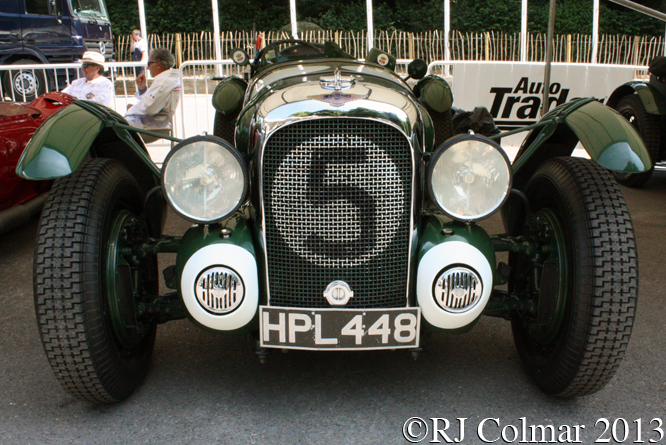
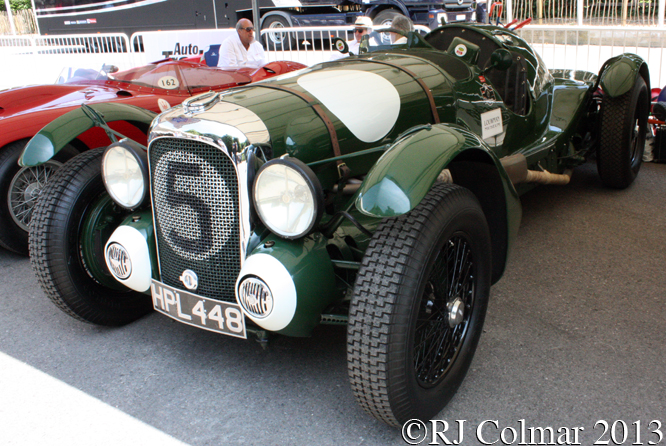
Old Number 5 – Lagonda V12 #14089

Despite winning Le Mans in 1935 Lagonda looked to be going the same way as Bentley financially until it was rescued with an injection of cash by it’s new chairman 30 year old Alan Good.

Good hired two former Rolls Royce employees to design today’s featured car, none other than W.O. Bentley himself was responsible for the chassis while his colleague Stuart Tresilian was responsible for the 4.5 litre / 274 cui single overhead cam V12 motor.

Lagonda V12, Goodwood Festival of Speed

In late 1938 early 1939 Good announced that he would like to enter a Lagonda V12 into the 1939 Le Mans 24 Hours race.

W.O. Bentley who was to be prepare the car, originally designed as a production vehicle and never intended for racing, was adamant that this should only be done to see if the cars would last the distance in anticipation of a full onslaught in 1940 to which Good agreed.

Lagonda V12, Goodwood Festival of Speed

A short V12 chassis was lightened by drilling out as much dead weight as possible from the chassis members and independent front suspension arms. The V12 aluminium block motor was fitted with four carburetors and produced over 200 hp.

Good had hoped that Mercedes Benz star Richard “Dick” Seaman would drive chassis #14089 but Mercedes objected and so leading ERA runner Arthur Dobson was joined by Brooklands regular Charles Brackenbury at the wheel of the car which would become known as Old Number 5.

Lagonda V12, Goodwood Festival of Speed

During the preparations Lord Selsdon came into a substantial inheritance and persuaded Alan Good to enter a second car which he was to share with Lord William Waleran.

Observing strict instructions from W.O. the drivers of the two Lagonda’s lapped at a pre arranged speed and they completed 239 laps and 238 laps respectively, four more than the 235 laps completed by the winning Delahaye in 1938, but short of the 248 laps recorded Jean-Pierre Wimille and Pierre Veyron in their winning supercharged Bugatti type 57C.

Lagonda V12, Goodwood Festival of Speed

The Lagondas finished third and forth behind the Ecurie Walter Watney Delage with Old Number 5 ahead of it’s sister to secure first and second in the over 5 litre / 302 cui class.

Dick Seaman tragically was killed at Spa after an accident in his Mercedes Benz the following week.

The beginning of hostilities in 1939 meant the 1940 Le Mans 24 hours would not take place and so the Lagonda V12’s never got the chance to prove their true potential although they did finish first and second in one of the last races run at Brooklands before war broke out.

Lord Selsdon would, briefly, share the winning 1949 Le Mans winning Ferrari 166MM with Luigi Chinetti.

While Old Number 5 seen here at last years Goodwood Festival of Speed would briefly end up in the hands of Fighter Pilot and Racing Driver Robert, later Roberta, Cowell.

After war Lagonda became part of David Brown’s portfolio which included Aston Martin and was merged to become Aston Martin Lagonda.

Thanks for joining me on this “Old Number 5” edition of “Gettin’ a li’l psycho on tyres” I hope you will join me again tomorrow for Maserati Monday when I’ll be looking at the prototype Maserati Tipo 60. Don’t forget to come back now !

Share

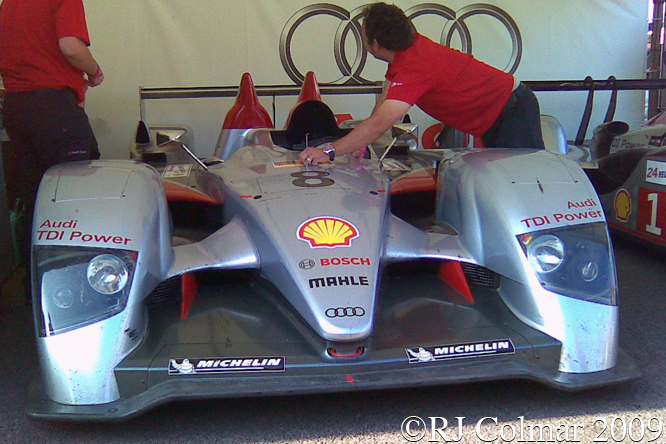
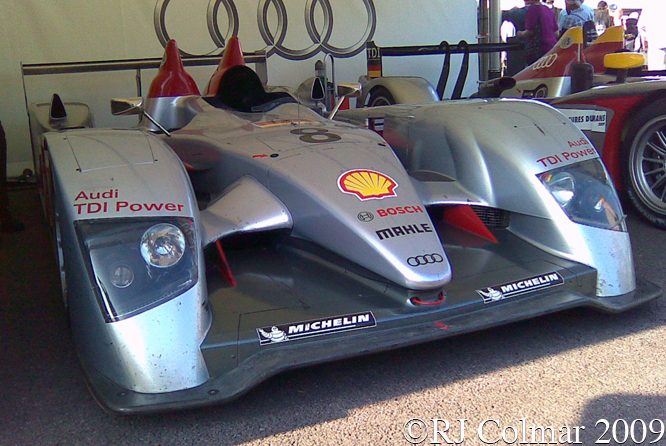
Diesel Über Alles – Audi R10 TDI #102

After winning Le Mans five times from six attempts between 2000 and 2005, interrupted only by Bentley with it’s Audi derived V8 motor, Audi entered the 2006 season with a real game changer.

The turbocharged 5.5 litre V12 335 cui motor used to power the Audi R10 TDI was to run on diesel, and thus reopen a frontier of development in top line motorsport not seriously looked at since the turbocharged Cummins Diesel Special appeared at Indianapolis Motor Speedway in 1952.

Audi R10 TDI, Goodwood Festival of Speed

Chassis #102 seen here at Goodwood Festival of Speed appeared in just six races in 2006, after being the fastest car in testing at the Sebring it disgraced it’s self by retiring with an overheating motor in the Sebring 12 hours with Frank Biela, Marco Werner and Emanuele Pirro at the wheel. It’s sister car chassis #101 driven by Rinaldo Capello, Tom Kristensen and Allan McNish became the first diesel powered vehicle to win an international sports car race.

The #102 was 4th fastest on it’s next appearance at the Le Mans test day and two weeks later qualified second for the 2006 Le Mans 24 Hour Race with the Frank, Marco and Emmanuel again sharing the driving.

Audi R10 TDI, Goodwood Festival of Speed

The 2006 Le Mans 24 Hours was won by today’s featured car which finished four laps ahead of the petrol powered Pescarolo Sport C60 Hybrid driven by Rally legend Sebastian Loeb with Eric Hélary and Franck Montagny.

After Le Mans #102 was sent back to the States to compete in the American Le Mans series where it competed in four more events with Emanuele Pirro and Frank Biela sharing the car for two second place finishes at Portland and Laguna Seca.

The R10 TDI claimed two further Le Mans victories in 2007 and 2008 and every Le Mans winner between 2006 and 2011 would be diesel powered with Peugeot interrupting the Audi juggernaut with it diesel powered 908 HDI in 2009. In 2012 and 2013 Audi continued winning Le Mans with it’s diesel electric hybrid R18 e-tron quattro model.

Thanks for joining me on this “Diesel Überalles” edition of “Gettin’ a li’l psycho on tyres”, I hope you will join me again tomorrow for another pre ’39/’45 war British Le Mans competitor designed by W.O.Bentley, that is not a Bentley. Don’t forget to come back now !

Share

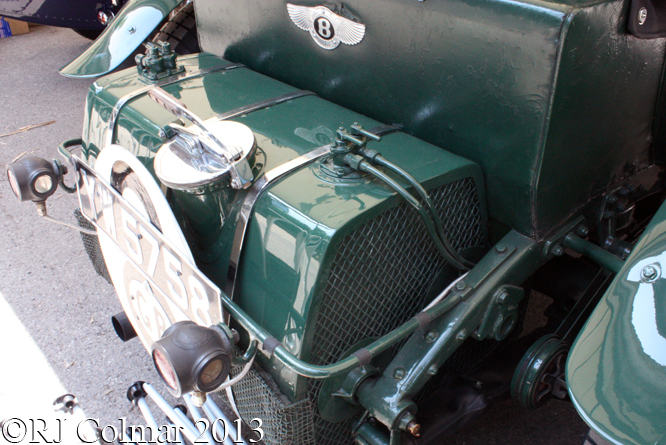
4th Of Four – Bentley 4 1/2 Litre #TX3246

Just as May is the month motorsport turns it’s attentions to the Indianapolis 500 and Monaco Grand Prix June is traditionally the sports interest focuses on the Le Mans 24 Hours. This month I have lined up 29 vehicles that either competed in the event, are of a type that competed in the event and or were designed to compete in the event but for one reason or another did not compete on the fastest roundabout in the world.

Humphrey Wyndham Cook is listed on the peerage.com as being born in 1893 to Wyndham Francis Cook and Frederica Evelyn Stillwell Freeland he attending Harrow on the Hill School and Christ Church, Oxford University.

Bentley 4 1/2 Litre, Goodwood Festival of Speed

Described as quiet and enthusiastic Humphrey started racing in 1914 and continued after The Great 1914/18 war racing Vauxhall’s and Bugatti’s mostly at Brooklands.

In 1928 he entered today’s featured car an unsupercharged 4 1/2 litre Bentley, chassis #TX3246 in the 1928 Tourist Trophy at Ards where he finished 7th.

Bentley 4 1/2 Litre, Goodwood Festival of Speed

The car next appears to have been entered by W.O. Bentley in to the Double Twelve at Brooklands, two 12 hour races being run in daylight on the same weekend, so as not to disturb the neighbors at night, in May 1929 where Humphrey and Frank Clement retired with a big end failure.

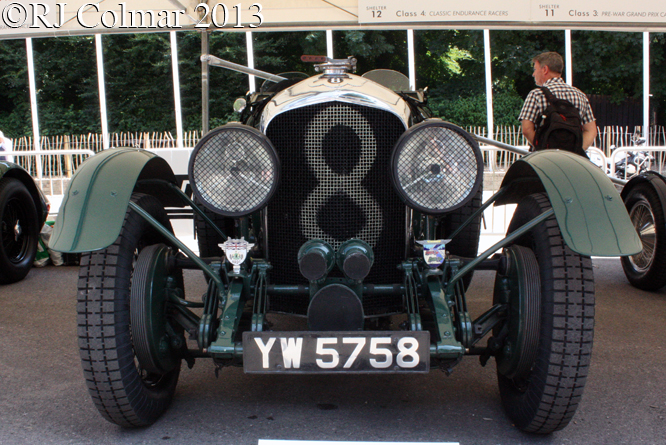
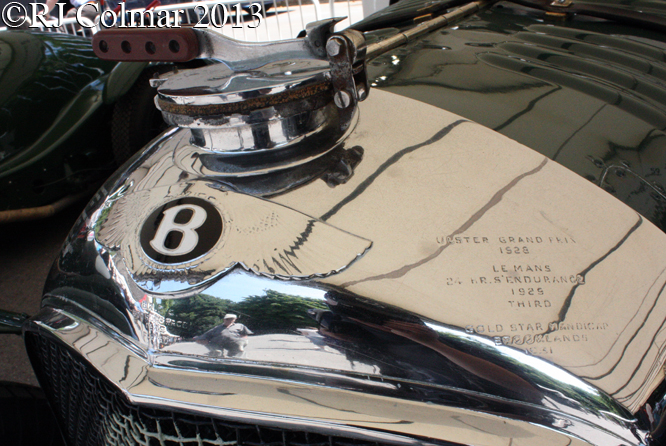
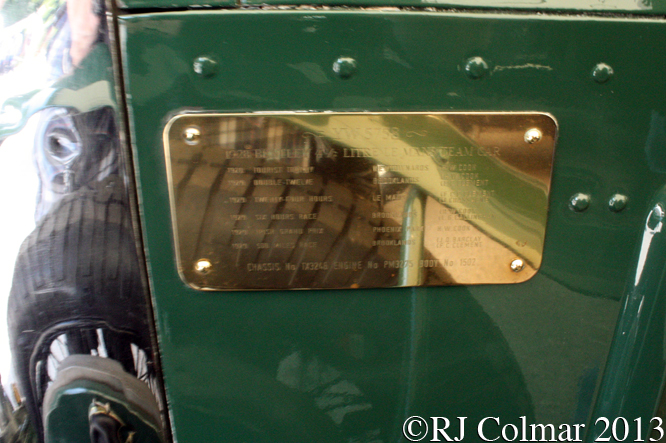
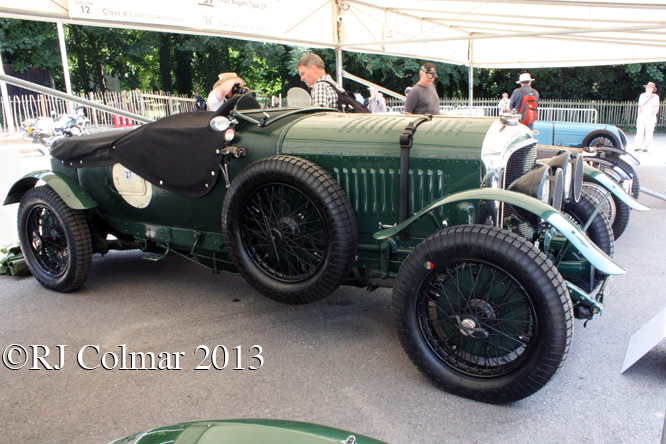
A month later and with the big end repaired #TX3246 powered by it’s original motor #PM3275 was entered into the Le Mans 24 Hour race by Bentley Motors Ltd for Frank Clement and Jean Chassagne to drive. Carrying the #8 They finished 4th completing a 1st to 4th place sweep for the Marque behind the Woolf Barnato and Henry Birkin driving the #1 Speed Six and the #9 and #10 4 1/2 litre cars driven by Jack Dunfee and Glen Kidston with Dr. Dudley Benjafield and André d’Erlanger in the latter.

Bentley 4 1/2 Litre, Goodwood Festival of Speed

Humphrey Cook and Leslie Callingham drove #TX3246 to a third place finish in the Brooklands 6 hour race at the end of June 1929 where a Bentley 1,2 finish interupted by an ALFA Romeo running in the 2 litre / 122cui class.

Two weeks later in the Irish GP Eireann Cup run at Phoenix Park Humphrey finished 5th before #TX3246 returned to Brooklands where Jack Barclay and Frank Clement drove her to victory lane in the Brooklands 500, the first race ever organised by the British Racing Drivers Club, BRDC, in October 1929.

Bentley 4 1/2 Litre, Goodwood Festival of Speed

Humphrey Cook went on to fund and race Raymond Mays and Peter Berthon’s English Racing Automobiles, ERA, project.

While Jack Barclay is still best known in London for his Rolls Royce and Bentley Dealerships in Mayfair.

Bentley 4 1/2 Litre, Goodwood Festival of Speed

#TX3246 powered by the 4 1/2 litre motor number #PM3275 is seen in these photographs at Goodwood Festival of Speed last year.

Thanks for joining me on this “4th Of Four” edition of “Getting A Little Psycho On Tyres” I hope you will join me again tomorrow. Don’t forget to come back now !
Share

The Tax Man Has Taken All My Bugs – Bugatti Type 15 #366

Milanese Ettore Bugatti was working for, the company founded by Nicolas Otto that became, Deutz Gasmotoren Fabrik in Cologne, Germany where he designed his Type 8 and Type 9 between 1907 and 1909 when he decided to build his own car in his basement.

Upon completion of the project, known as the Type 10, in 1909 Ettore packed his possessions and family into his new creation and headed for Alsace to found Automobiles E. Bugatti and look for a factory in which to build more cars of his own design.

Bugatti Type 15, National Motor Museum, Beaulieu

Settling in Molsheim, Alsace Ettore set about building the Type 13 which like the Type 10 featured advanced, for the period in which chain drive was the norm, shaft drive, a larger 1368cc /83 cui version of the 4 cylinder Type 10 motor and for racing variants only cutting edge of technology 4 valve heads.

Unlike the Type 10 which only had leaf springs at the front and an unsprung rear axle the Type 13 featured leaf springs all round.

Bugatti Type 15, National Motor Museum, Beaulieu

The 16 valve Type 13 produced around 30 hp at 4,500 rpm an extraordinary high output for such a small motor thanks to the 4 valve heads, bearing in mind that the slightly earlier 35/45 hp Itala required a 7.4 litre / 453 cui motor to produce only 5 – 15hp more.

Automobiles E. Bugatti produced 5 Type 13’s in 1910 and in 1911 Ernest Friderich drove one of them in the 7 hour marathon French Grand Prix in which he finished 2nd, albeit 2 laps down, to the winning 10 litre / 589 cui 4 cylinder FIAT S61 driven by Victor Hemery.

Bugatti Type 15, National Motor Museum, Beaulieu

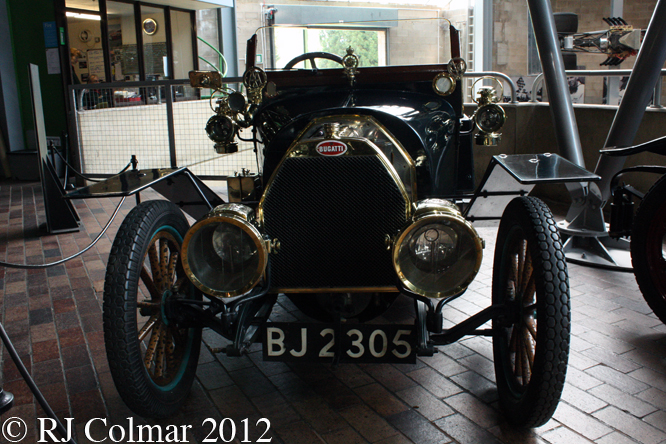
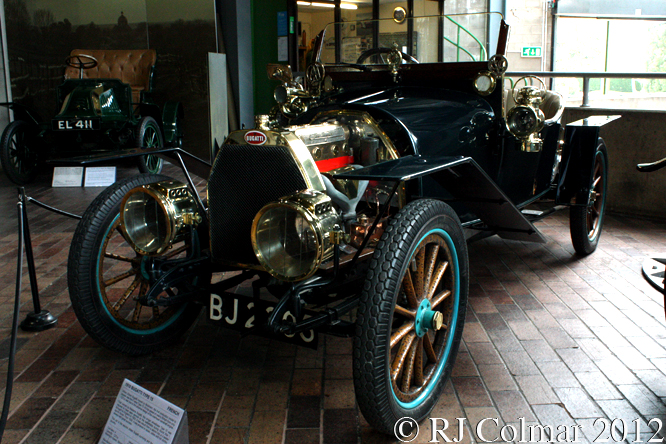
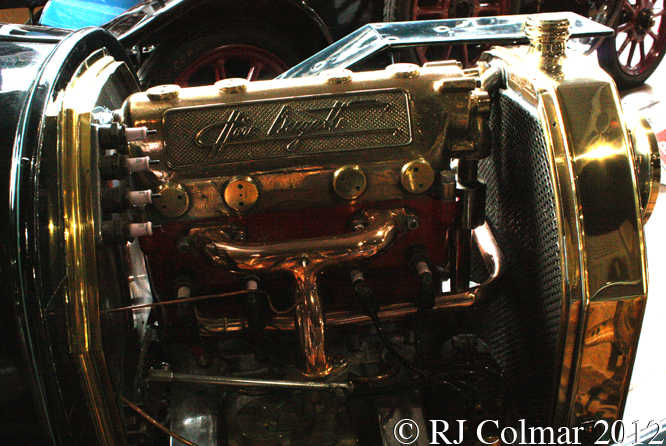
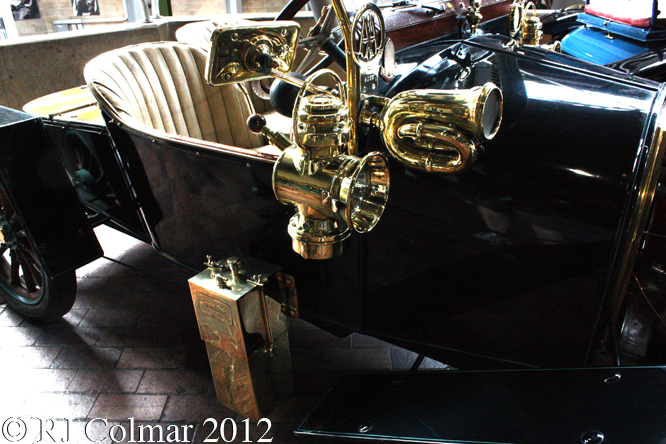
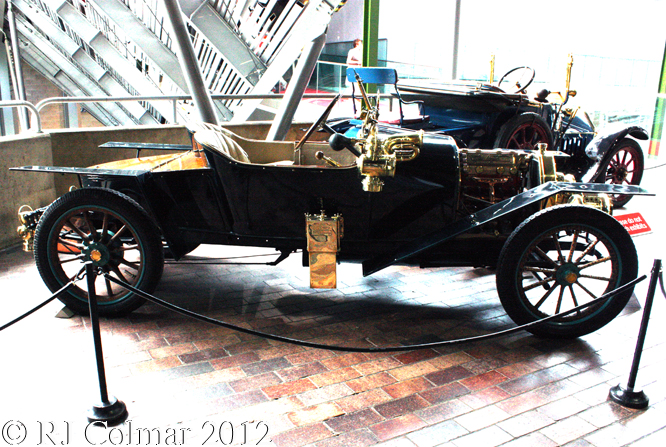
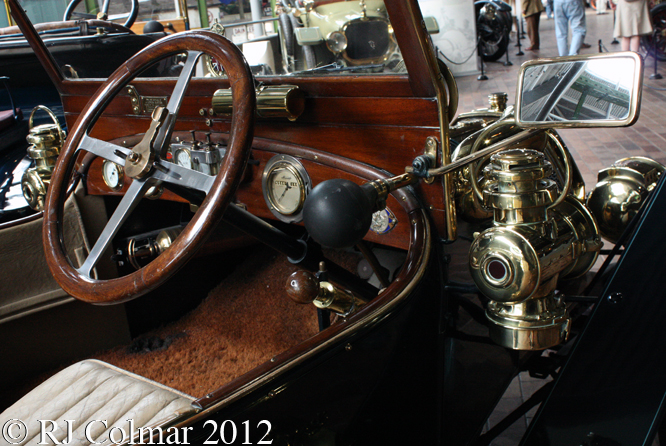
Today’s featured 1910 Type 15 is similar to the Type 13, except that it was built with a longer chassis, 14 inch longer wheel base and is fitted with a 15hp 8 valve motor number #16.

This car, seen at the National Motor Museum at Beaulieu was first owned by Ettore’s wife Mdme Barbra Bugatti and fitted with a saloon / sedan body. Before being registered in the UK by Col. Dowson in 1921, #366 is said to have been of service on the battlefields of the 1914 – 18 war.

Bugatti Type 15, National Motor Museum, Beaulieu

The next known owner of #366 was Bugatti enthusiast CWP ‘Peter’ Hampton, the head of an international firm of land agents who lived in Effingham Common, Surrey and later Bolney, Sussex where he tended his collection reported to include Rolls-Royces, Mercedes Benz of all ages, at least one Hispano Suiza and 25 Bugattis, one of which was ‘recovered’ from Czechoslovakia in what has been described as a James Bond style operation when the country was still heavily under Soviet influence behind the Iron Curtain.

Peter replaced the original saloon / sedan body on #366 for the 2 seat sports tourer seen today in the 1930’s and used to compete with it regularly at Prescott along with four of his other competition Bugatti’s which included a Type 13, Type 18, Type 30, and Type 57C of which the Type 15 was unsurprisingly the slowest having achieved a best time of 80.7 seconds.

Bugatti Type 15, National Motor Museum, Beaulieu

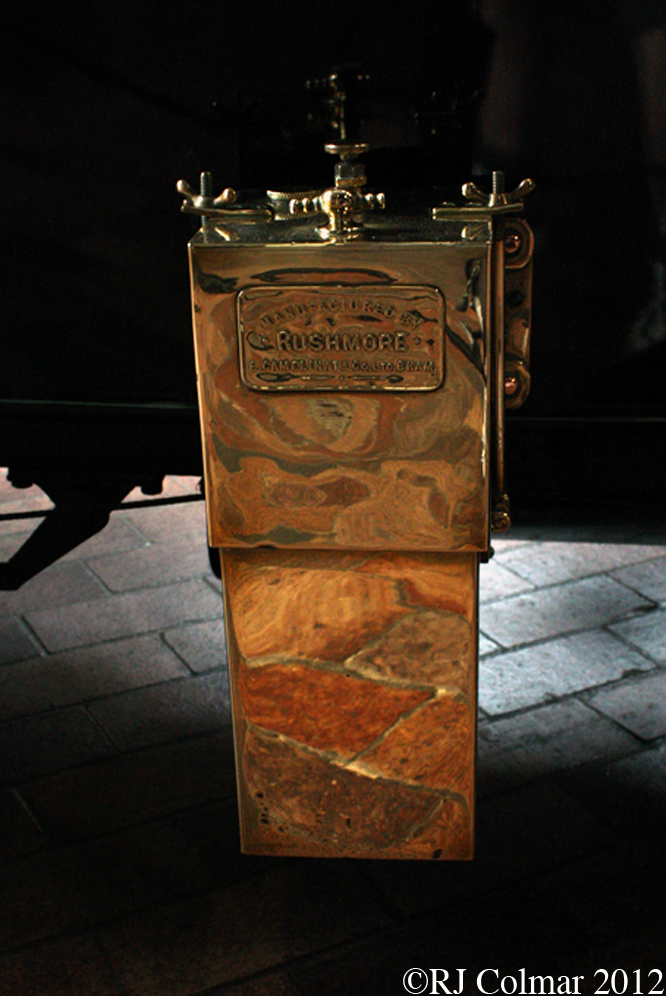
The highly polished brass box above is an acetylene gas generator, for the gas powered headlights, which featured a Patented Automatic Shaking Grate Generator manufactured by Rushmore Dynamo Works at Plainfields N.J., U.S.A between 1905 and 1914 when the company was bought for $750,000 cash by Bosch Magneto Co.

During the ’39 – ’45 war, Peter served as a War Substantive Lieutenant in the 4th/7th Royal Dragoon Guards, Royal Armoured Corps and was in the first wave to land at Gold Beach in the D-Day landings at Normandy in support of the infantry regiments.

 Bugatti Type 15, National Motor Museum, Beaulieu

Five of the 4th/7th’s tanks were lost before making shore despite being dropped off 200 yards from the beach, instead of the planned two miles, because of the unexpectedly high seas.

During the landings Peter received a permanent shrapnel injury to his left arm which was henceforth completely unusable, after relinquishing his commission due to his injuries Peter returned to Suffolk where his cars had been kept in working condition by farmer Stanley Sears, father of two time British Saloon / Sedan champion Jack.

Bugatti Type 15, National Motor Museum, Beaulieu

To over come the problem of his left arm Peter had Stanley convert all of his vehicles to right hand gear change and Peter kept competing at Prescott and other events with #366 until 1952.

#366 is the oldest example of the marque in the UK and thought to be the second oldest Bugatti in the world and it along with the rest of the cars in Peter’s collection were dispersed after his death in the 1980’s.

Bugatti Type 15, National Motor Museum, Beaulieu

Although #366 is road fund licence exempt it has not been issued with a valid tax exempt disc since 1985, though ironically, the vehicle actually belongs to Her Majesties Government who acquired it from Peter Hampton’s estate in lieu of inheritance tax.

My thanks to Allan Lupton for enlightening me about the Rushmore Dynamo Works Patented Automatic Shaking Grate Acetylene Generator, to Doug Nye, Roger Lund, John Winfield, Vitesse2, Carl R.S. and Hipperson who all contributed to the ‘C.W.P. ‘Peter’ Hampton; racing driver and collector’ at The Nostalgia Forum and likewise to everyone who contributed to the ‘great bugatti collectors’ thread at Bugattibuilder.com forum.

Thanks for joining me on this “The Tax Man Has Taken All My Bugs” edition of “Gettin’ a li’l psycho on tyres” I hope you will join me again tomorrow when I’ll be looking at McLaren’s 50th Anniversary efforts in the 2013 Formula One season. Don’t forget to come back now !
Share