Tag Archives: Le Mans

Three Wheels On My Wagon – Ford GT Prototype Roadster #GT/111

In 1965 Ford’s open check book approach to winning the Le Mans 24 hours was in full swing when today’s car, first appeared in public at the Le Mans Test weekend where it was driven by John Whitmore and Richard Attwood to a 6th fastest time.

In all four steel chassis Ford GT Prototype Roadsters were built, #GT/108 and #GT/109 were sent straight from Ford Advanced Vehicles in Slough, England to Carrol Shelby for testing #GT/108 never raced and #GT/109 made a single race appearance, entered by Ford France at Le Mans in 1965 where Maurice Trintignant and Guy Ligier retired with gearbox problems. Additionally a fifth roadster was built with an aluminium chassis #GT110 this car was developed by Bruce McLaren and Howden Ganely and is known as the GT X1 which was further differentiated from it’s siblings by the use of a Ford Galaxie derived 7 litre / 427 cui motor and a Hewland gearbox all of which resulted in a car 1000 lbs lighter than the original Ford GT Prototypes.

#GT/111 and #GT112 were the last of 12 Ford GT prototypes to be built in Slough and the pair took part in just three races entered by Ford Advanced Vehicles run by John Wyer. Wyer had been team manager at Aston Martin when Roy Salvadori and Carrol Shelby drove the Aston Martin DBR1 to victory in Le Mans in 1959.

Carrol Shelby now running his own race shop and contracted to enter some of Ford’s GT cars persuaded Ford to run the heavier more powerful iron block 4.7 litre 289 cui V8 from the Cobra racing programme in place of the original GT Spec 4.2 litre / 256 cui Windsor derived motor, apart from X1 all the GT Roadsters appear to have been fitted with Shelby’s Cobra 289 cui V8’s.

Newall, Ford GT Roadster, Goodwood Revival

#GT/111 was painted white and fitted with wire wheels for it’s first public appearance was at Le Mans, a month later #GT/111 was painted a curious shade of Green, a gesture to the chassis and entrants British heritage, it was also fitted with Shelby magnesium wheels for the Targa Florio.

John, now Sir John, Whitmore and Bob Bondurant were chosen as Ford’s sole representatives in #GT111 which was to compete against three works Ferrari 275P/2’s fitted with the latest 3.3 litre / 201 cui 4 cam V12 motors.

A couple of months ago I went to a talk by Sir John organised by the Club Lotus Avon, in which he related how he was speeding along when the left front wheel came adrift forcing him to stop, Sir John replaced the wheel with the mandatory spare and secured it with the original hub nut which had been returned to him by a policeman and continued on his way, contemporary reports tell how the loose wheel took down some overhead railway power lines !

On lap 8 of the 10 lap race, each lap being run over a 44 mile 72 km closed (narrow) road circuit, Bob Bondurant crashed after sliding on gravel into a wall and then bouncing into a water trough which tore off a front wheel and it’s suspension. The 1965 Targa Florio was won in 7 hours and 1 min by local hero Nino Vacarrela and Lorenzo Bandini driving a Ferrari 275P/2.

The damage to #GT/111 was never repaired and a similarly painted #GT112 appeared in it’s only works entered appearance for the 1000 km race at the Nurburgring driven by Attwood and Whitmore who retired with an engine mounting failure having started from 6th on the grid.

Of all the GT Roadsters the aluminium light weight #GT110 X1 had the longest works supported career having been entered in 4 races by Bruce McLaren for Chris Amon in 1965 who scored a best 5th place finish in the 200 mile race at Riverside. The following season X1 appeared with original GT Roadster type bodywork in the Sebring 12 hours entered by Shelby American for Ken Miles and Lloyd Ruby who won the race from 5th on the grid. X1 was subsequently ordered destroyed by customs officials.

At he end of 1965 Ford moved it’s entire GT racing developemnt programme out of Ford Advanced Vehicles in Slough to Shelby and Kar Kraft in the United States, #GT/112 was sold to Peter Sutcliffe who raced the car in 1966 and scored a couple of season high second place finishes one in South Africa and the other in France during the 1967 season. For 1968 Bob Vincent acquired the car and appears to have won second time out in an open class race run at Aintree.

The damaged #GT/111 was scheduled to be scrapped, however the scrap yard saved the chassis which was acquired by the present owner, in 2006, after Ford GT expert Ronnie Spain verified #GT/111’s identity. The car seen in this photo driven by Andrew Newall at the Goodwood revival a couple of years ago, has been restored by Glescoe Motorsport and is to appear at RM auctions in May 2014.

Thanks for joining me on this “Three Wheels On My Wagon” edition of “Gettin’ a li’l psycho on tyres”, I hope you will join me again for Ferrari Friday tomorrow. Don’t forget to come back now !

Share

Group B Race Car – Porsche 961#WP0ZZZ93ZFS010016

One afternoon soon after taking over as CEO of Porsche AG American Peter Schultz noticed a chart on the wall of the office of his Chief Engineer Dr Helmut Bott which outlined the developement schedules for Porsche’s three models the 924, 928 and 911, the first two extended far into the future while that for the 911 came to a stop in 1981.

Porsche 961, Le Mans 24 Hours

Schultz took a marker pen and walked over to the chart and drew a line extending the 911’s development clear off the chart, much to the relief of Dr Bott who set about initiating the design of a new concept car which would become a flagship for the future development of the 911 called the Porsche Gruppe B.

Porsche 961, Le Mans 24 Hours

The Gruppe B, which was first seen at the Frankfurt Motor Show in October 1983 was designed with new GT regulations for race and rally cars in mind and made use of emergent all wheel drive technology and a version of the Bi Turbo 750 hp 3.2 litre 195 cui flat 6 with 4 valves per cylinder in water cooled cylinder heads that had been developed for the 1978 Porsche 935/78 known as Mody Dick.

Porsche 961, Le Mans 24 Hours

The Gruppe B was developed into a rally raid version called the 959 which won the Paris Dakar Rally at it’s second attempt with René Metge and Dominique Lemoyne in the cockpit in 1986. A US$ 225,000 road version of the 959 appeared in 1985 of which 300 examples were built up until 1987.

Porsche 961, Le Mans 24 Hours

Porsche also developed a single road racing version of the Gruppe B, today’s featured car, known as the 961. It had been anticipated that several manufacturers would build Group B race cars but in the end only the Ferrari 288 GTO saw the light of day and then only as a street car.

Porsche 961, Le Mans 24 Hours

The Porsche 961 made it’s competition debut at the 1986 Le Mans test weekend with twice Paris Dakar winner René Metge sharing the wheel with Claude Ballot-Léna, because there was only one 961 in existence instead of the mandated 20 required for Group B the 961 was entered in the even more relaxed IMSA GTX class. Metge set 10th fastest time in the official Le Mans Test Session but the car retired from the first of two sprints with transmission failure.

Porsche 961, Goodwood Festival of Speed

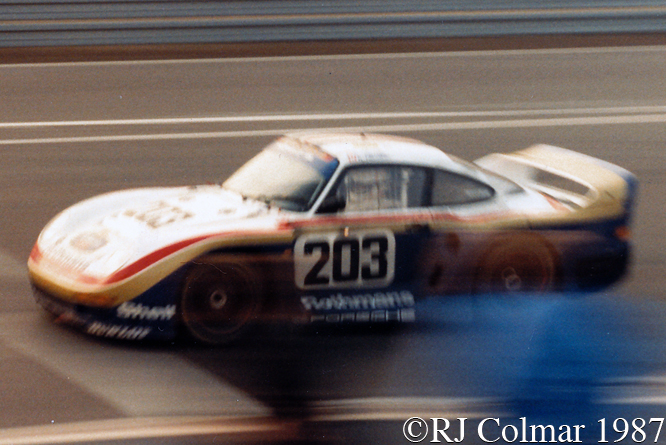
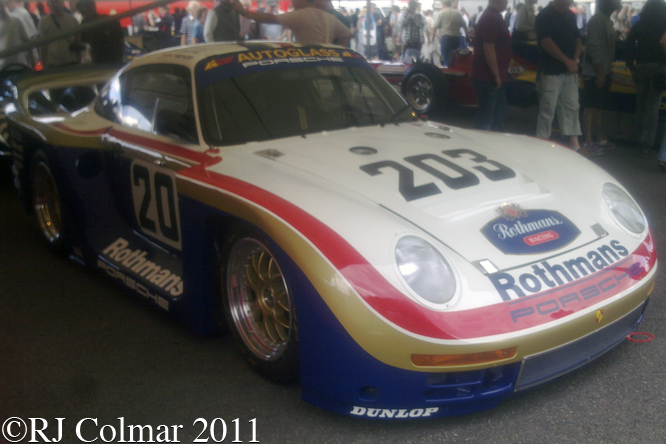
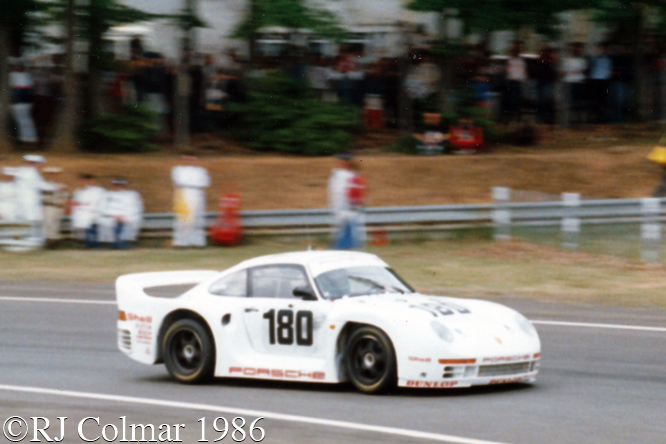
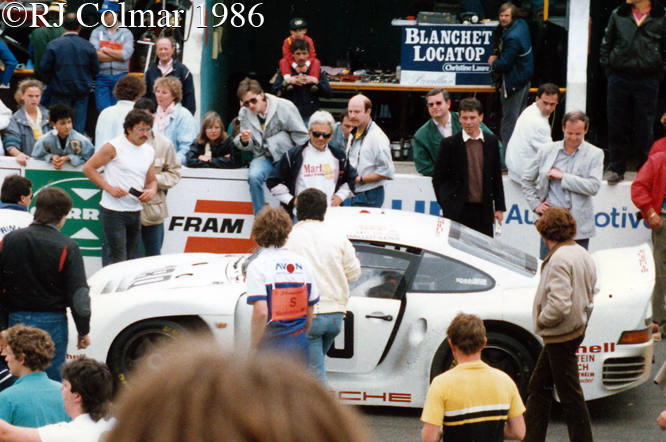
The 961 still running in the GTX class, then appeared at the 1986 Le Mans 24 hours, as seen in the top two photographs, for which it qualified 26th and came home a respectable 7th. The only Group B runner in this race was a venerable BMW M1 a design dating back to the 1970’s which crossed the finish line with it’s hazard lights on to a huge cheers from the crowd but 60 laps behind the 961 and unclassified due to running it’s last lap too slow.

Porsche 961, Goodwood Festival of Speed

In October 1986 Günter Steckkönig and Canadian Kees Nierop drove the 961, now entered as a GTP Prtotype in the Daytona 3 Hour endurance race for which they qualified 29th and came home 24th after experiencing multiple tyre failures on the banked section of the track.

Porsche 961, Goodwood Festival of Speed

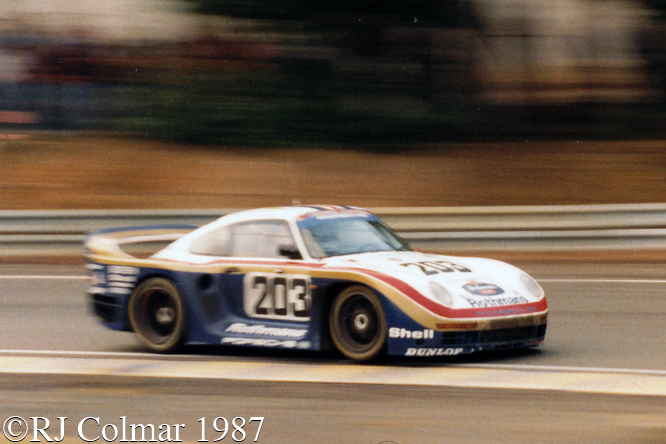
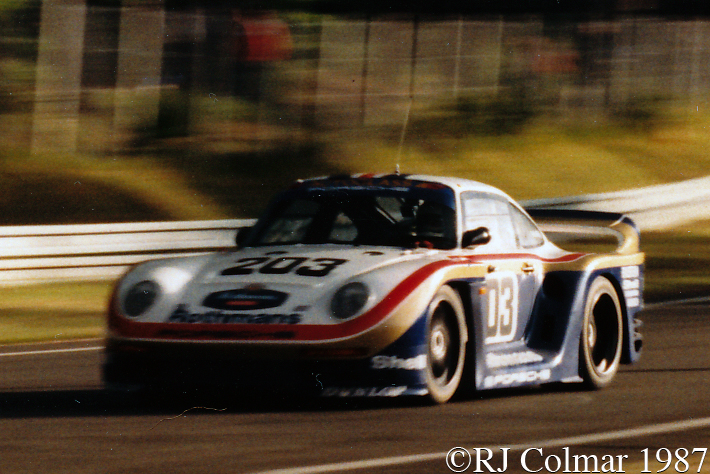
For 1987 the 961 carried the Rothmans livery like it’s sister Group C 962C’s and was driven at the Le Mans Test day by Steckkönig and Claude Haldi who set 16th fastest time with the car now entered in the rationalised IMSA class.

Porsche 961, Goodwood Festival of Speed

A month later Haldi was teamed with Metge for the Le Mans 24 hour race and after the Porsche team ran out of 962C’s Nierop was added to the 961’s driving strength in place of Steckkönig too.

The #203 961 qualified 31st on the grid and was running as high as 11th when around 2/3rds distance Nierop crashed at Indianapolis corner after experiencing a gearbox problem. While trying to return to the pits the 961 caught fire and eventually came to a stop and retirement.

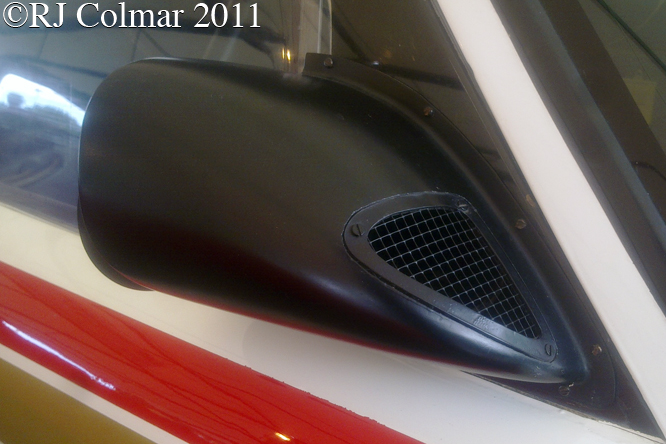
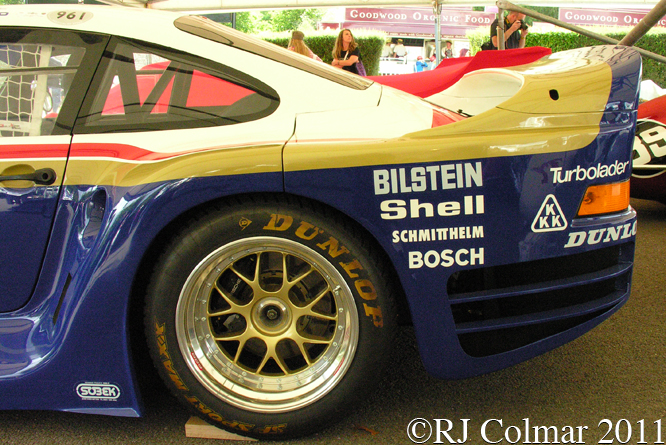
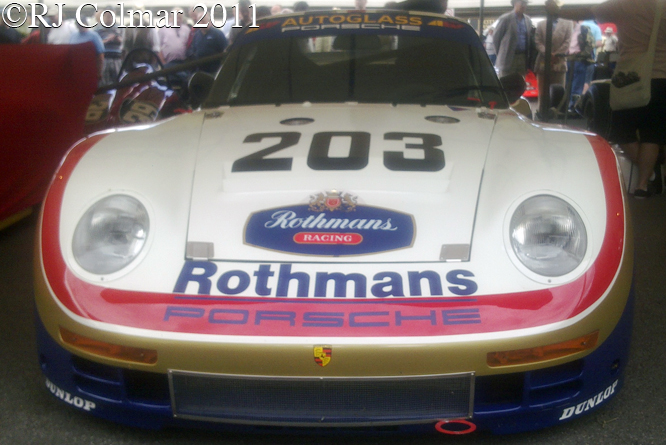
With no sign of any Group B competition on the race track Porsche abandoned the 961 with just one example built and never having actually entered the car in the class it was designed to compete in. The 961 was subsequently rebuilt for the Porsche Museum and demonstrations, it is seen in the last four photo’s at Goodwood Festival of Speed running on out of period pattern BBS wheels.

Thanks for joining me on this “Group B Race Car” edition of “Gettin’ a li’l psycho on tyres” I hope you will join me for a look at some Porsche Automobillia tomorrow. Don’t forget to come back now !
Share

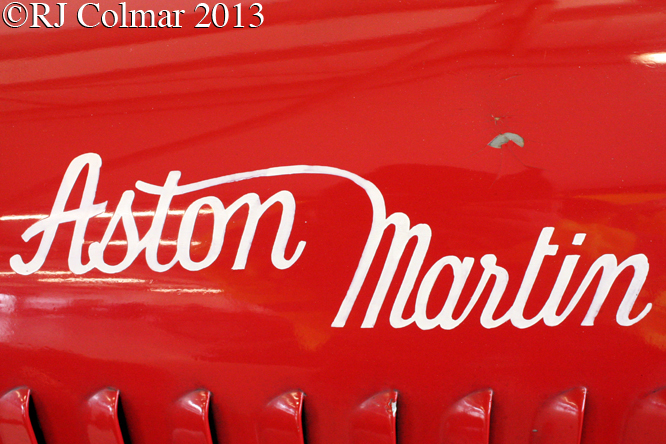
White Mouse Mystery – Aston Martin Ulster #LM18

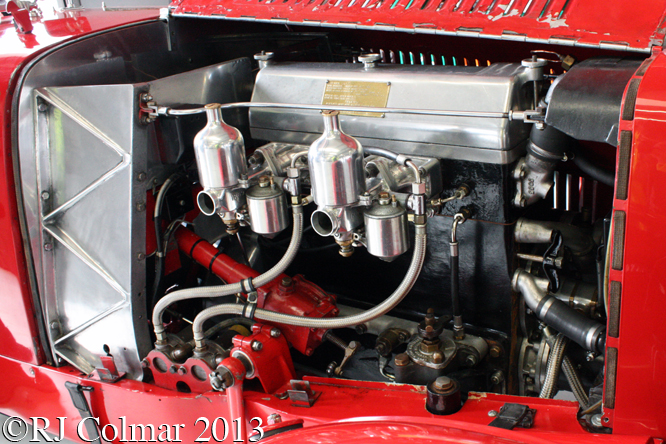
Aston Martin Motors Ltd was formed in 1926 by the Charnwood family from the remnants of Bamford & Martin who had originally created the Aston Martin marque. The new company moved to Feltham on the outskirts of London and under the direction of A C Bertelli a new 1.5 litre / 91 cui single overhead cam motor was developed that would be the foundation stone of a great deal of track success.

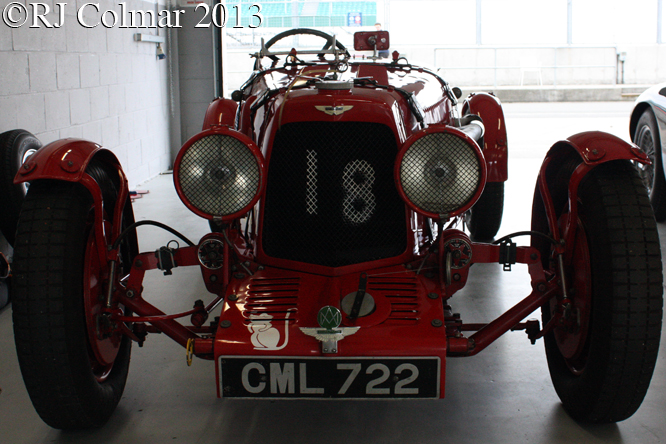
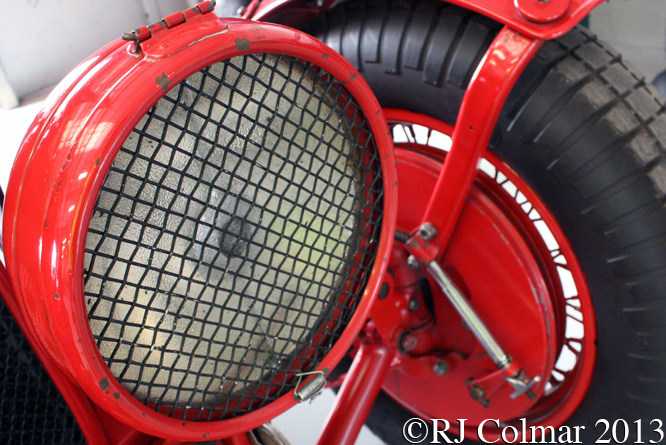
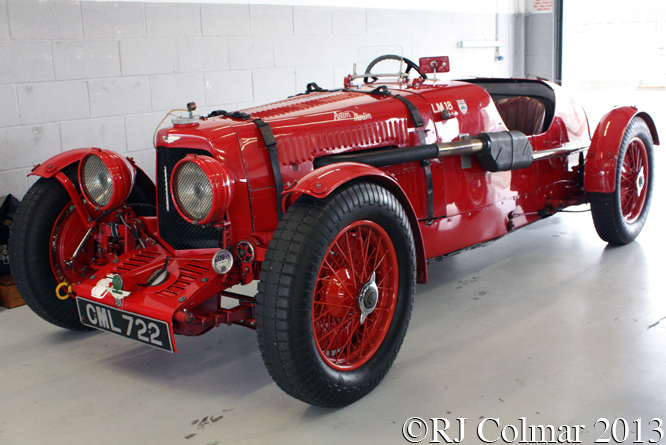
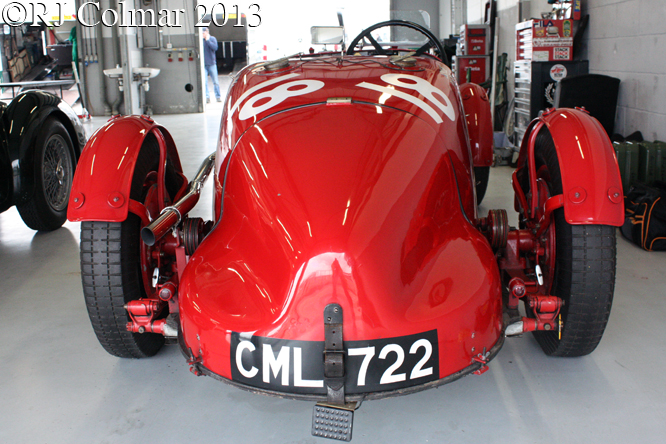
Aston Martin Ulster LM 18, Silverstone

The new company moved to Feltham on the outskirts of London and under the direction of well known racing driver A C Bertelli a new 1.5 litre / 91 cui single overhead cam motor was developed that would be the foundation stone of a great deal of track success.

Aston Martin Ulster LM 18, Silverstone

From 1928 to 1936 Aston Martin built a series of 21 1.5 litre / 91.5 cui racing cars with light weight aluminium bodies on production based Mk II chassis for use by the works team with the chassis numbers LM1 trough 21, all bar one of of these cars still exist and are known by various different names according to when they were built.

Aston Martin Ulster LM 18, Silverstone

In 1931 AC Bertelli and Maurice Harvey shared a 1.5 litre / 91.5 cui Aston Martin at Le Mans and won their class driving #LM7, when the model was known as an International. Sammy Newsome and Henk Widengren repeated the feat in 1932 with the “Le Mans” model chassis #LM10 equaling the 5th place overall of Bertelli and Harvey, amazingly in 1933 Aston Martin’s Pat Driscroll and Clifton Penn – Hughes also finished a class winning 5th overall, all though this time the finished one spot behind a Riley in the 1.1 litre / 61.6 cui class.

Aston Martin Ulster LM 18, Silverstone

Despite completing the same 188 laps as in 1933 the best Aston Martin, the now privately entered chassis #LM10 driven by Reggie Tounge and Maurice Faulkner could only finish tenth in 1934, behind four Riley’s, two of them from the smaller class, a smaller class winning MG K3 and two 1.5 litre / 91.5 cui Singers.

Aston Martin Ulster LM 18, Silverstone

After the debacle Bertelli, who was born in Italy but only lived their until he was four, ordered the works team cars to be painted red to change their luck.
At the Tourist Trophy run over the Ards closed road course outside Belfast Ulster the three red team cars; LM16 driven by Thomas Fotheringham-Parker, LM15 driven by Pat Driscoll and LM17 driven by Clifton Penn Hughes finised 3rd, 6th and 7th respectively and won the team prize after which the LM series subsequently took their name.

Aston Martin Ulster LM 18, Silverstone

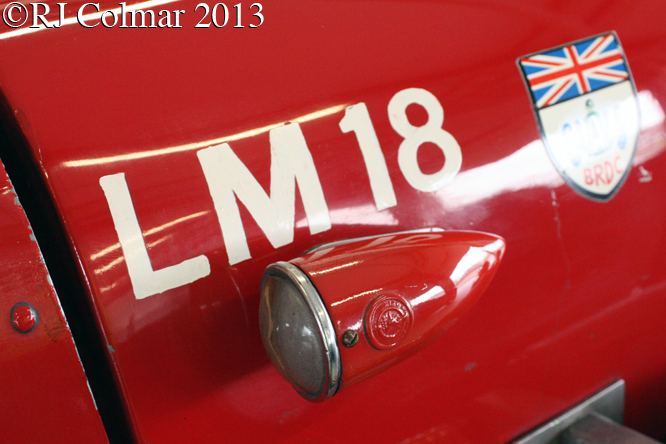
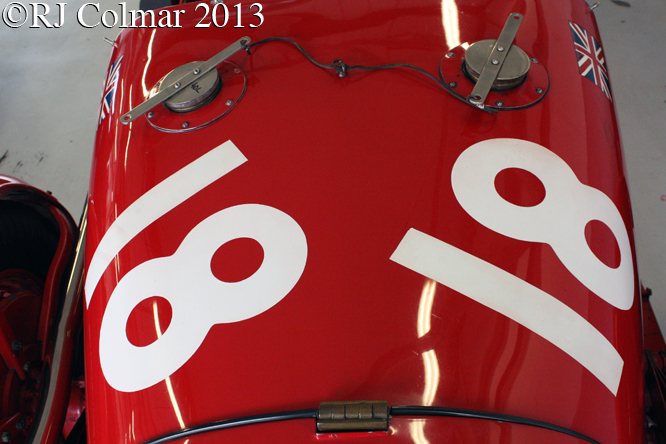
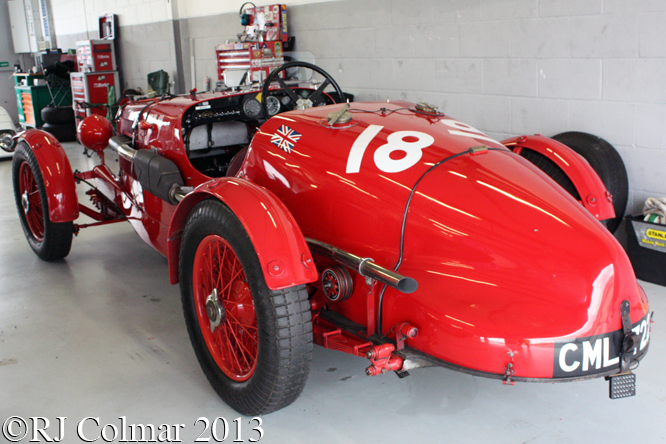
Today’s featured car LM18 was built for the 1935 season an was driven at Le Mans by Jim Elwes and Mortimer Morris-Goodall to a distant 12th place finish overall. Charles Martin and Charles Brackenbury in the sister LM 20 finished 3rd overall to reclaim the 1.5 litre / 91.5 cui class award for Aston Martin.

Aston Martin Ulster LM 18, Silverstone

Four team cars appeared at the 1935 Tourist Trophy three of which finished 4th, 5th and 11th to again claim the team prize, Clifton Penn-Hughes drove LM18 to 5th 1 second behind Charles Brackenbury driving LM20.

Aston Martin Ulster LM 18, Silverstone

Aston Martin switched it’s attention to racing new 2 litre models in 1936, with the works cars continuing to be given LM chassis numbers, Le Mans was cancelled due to nationwide workers strikes, but the new cars were raced elsewhere alongside privately entered 1 1/2 litre Ulsters.

Aston Martin Ulster LM 18, Silverstone

Frenchman Victor Polledry had acquired LM18 by 1937 and continued to race it up until the out break of war in 1939, scoring a known best 3rd place overall, 1st in class, in the Bol d’Or run at Montlhéry outside Paris in June 1938.

Aston Martin Ulster LM 18, Silverstone

Victor raced the car on at least one occasion after the ’39 – ’45 war recording a 15th place finish and class victory, driving solo, in the Paris 12 Hours run at Montlhéry in July 1950.

Aston Martin Ulster LM 18, Silverstone

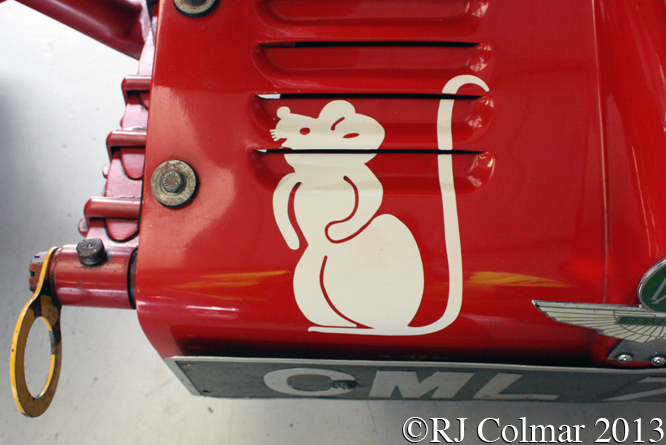
Some of you may have noticed the white mouse painted on the front of LM18, when I saw it I, incorrectly, assumed it signified some in period connection with Prince Bira and his patron HRH Prince Chula of Siam who ran the White Mouse Stable. It turns out that HRH Prince Chula of Siam did buy a factory built replica 1 1/2 litre Aston Martin Ulster, chassis #G5/588/U, for Prince Bira to race in the 1935 RAC TT where he retired with a broken oil pipe.

Thanks to Tim Murray, Roy C and Alan Cox at The Nostalgia Forum it transpires that the reason that LM 18 carries The White Mouse is most likely because LM 18 now owned by Nick Mason’s family has occasionally been teamed up with the original #G5/588/U owned and raced by Hubert Fabri for relay races at vintage meetings.

My thanks to Tim, Roy and Alan for their help in solving the White Mouse Mystery.

Thanks for joining me on this “White Mouse Mystery” edition of “Gettin’ a li’l psycho on tyres”, I hope you will join me again for a look at another Aston Martin tomorrow. Don’t forget to look back now !

Share

99 Le Mans Class Wins – Porsche 991 RSR

The Porsche 991 RSR is the latest Porsche GT2 racer which replaces the Porsche 997 GT3 RSR.

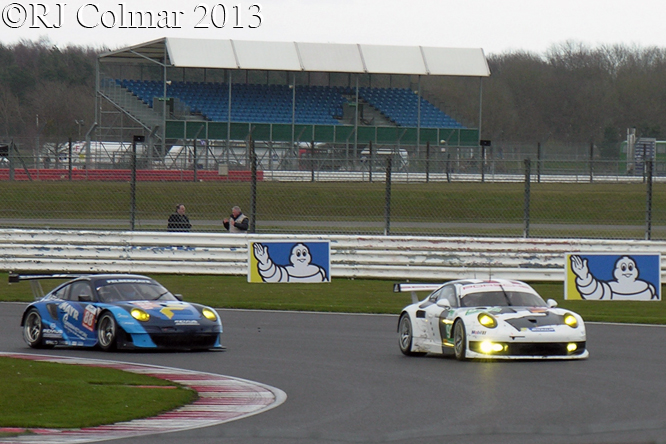
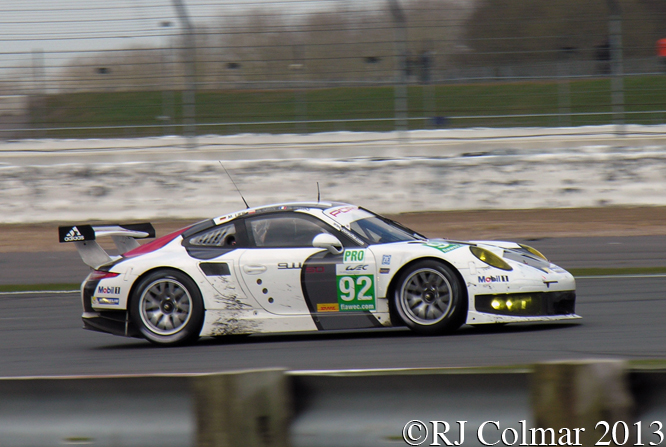
Lieb, Lietz, Dumas, Porsche, 991 RSR, 6 Hours of Silverstone

With the extensive use of carbon fiber for the quick release body work panels, polycarbonate windows and a lithium battery the center of gravity of the 991 RSR is considerably lower than on the 997 GT3 RSR.

Lieb, Lietz, Dumas, Porsche, 991 RSR, 6 Hours of Silverstone

The wheel base is a little longer than the older model thanks to a new six speed transmission operated from the steering wheel by paddle shift. The air restricted flat six 4 litre / 244 cui motor produces 460 hp which is comparable to both the Aston Martin V8 Vantage GTE and Ferrari 458 Italia GT2 cars against which it competes.

Lieb, Lietz, Dumas, Porsche, 991 RSR, 6 Hours of Silverstone

For 2013 Porsche AG have teamed up with 1990 Porsche Super Cup Champion Olaf Manthey who’s team Manthey Racing won it’s class first time out at Le Mans with a Porsche 911 GT3R in 1999.

Lieb, Lietz, Dumas, Porsche, 991 RSR, 6 Hours of Silverstone

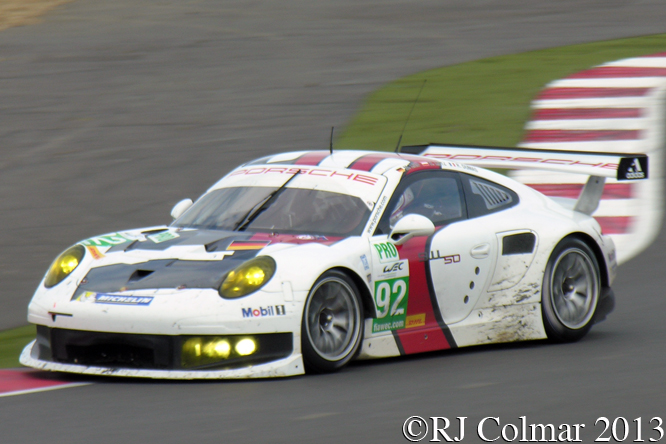
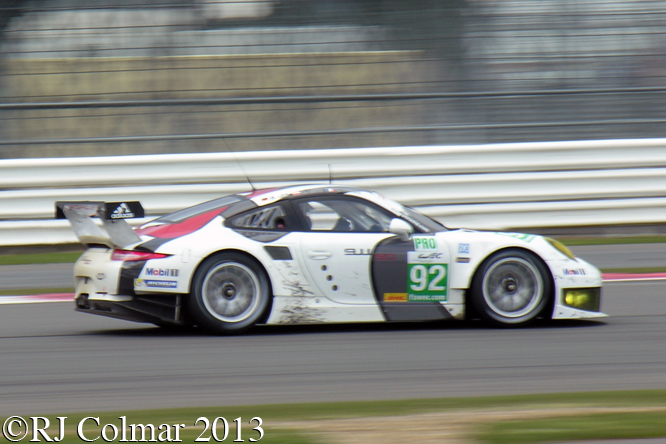
Jörg Bergmeister, Patrick Pilet and Timo Bernhard are the drivers of the #91 Porshe AG Team Manthey entry while, Marc Lieb, Richard Lietz and Romain Dumas drive the #92.

Lieb, Lietz, Dumas, Porsche, 991 RSR, 6 Hours of Silverstone

At Silverstone where the cars are seen here they finished 17 and 20th overall and 4th and 6th in the GTE Pro class in reverse order on their debut. At Spa the #92 finished 19th overall and 15th in class while the #91 retired.

Bergmeister, Pilet, Bernhard Porsche, 991 RSR, 6 Hours of Silverstone

At Le Mans Aston Martin out qualified both Porshe AG Team Manthey cars but in the race Marc Lieb, Richard Lietz and Romain Dumas finished 16th overall and first in class to secure Porsche’s 99th class win in the endurance classic. They were followed by the #91 which was on the same lap to make it a Porsche 1-2 in the GTE Pro class.

I hope you have enjoyed my potted history of Le Mans over the past month, I am intending to continue it next June. Tomorrow I’ll be starting a month long potted history of Formula One cars, thanks for joining me, liking and linking my blogs on fb and else where. I hope you will join me again tomorrow. Don’t forget to come back now !
Share

RIP – Allan Simonsen

Simonsen, Poulsen, Nygaard. Aston Martin V8 Vantage GTE, 6 Hours of Silverstone

Allan Simonsen, who was born in Odense Denmark, won the Danish Formula Ford Championship in 1999. When the money for his open wheel aspirations ran out he found he was in demand as a driver of GT cars and ended up running in 30 to 40 events a year across the globe driving models from Ferrari, Porsche and more recently Aston Martin.

Such was his enthusiasm and the demand for his services that in 2007 by missing the last race Le Mans GT2 Series he gave up his chance to become champion in order to drive in the Australian GT Series which he won outright the same year with a pair of Mark Coffey Racing Ferraris.

Two years later Allan Simonsen won the 2009 Asian Le Mans GT2 series driving a Ferrari F430 for Team Farnbacher. Allan also competed in the Australian International V8 Supercar Championship and made seven starts at Le Mans with a best finish of second in class in a Farnbacher Ferrari.

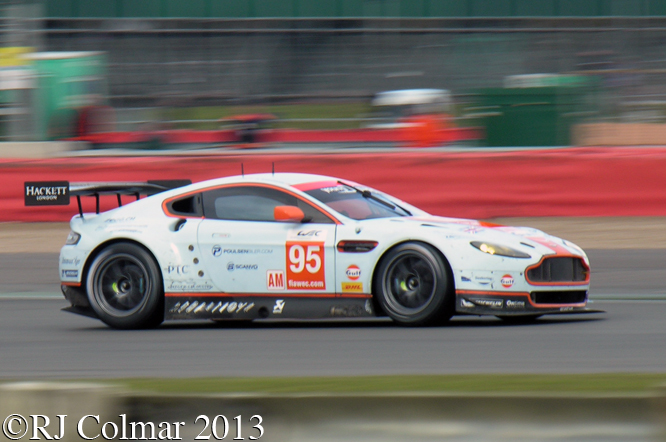
Known as a ‘cheeky chappie’ Allan teamed up for a full season in LMGTE Am driving an Aston Martin V8 Vantage GTE with fellow Danes Christoffer Nygaard and Kristian Poulsen for 2013. Their car is seen winning the LMGTE Am class at Silverstone in April above.

Having qualified for LMGTE Am class pole at Le Mans and with a victory well within the teams grasp Allan lost his life while at the top of his game after an accident at Tetra Rouge on lap two of the 24 hour classic last Saturday.

His family bravely asked the Aston Martin team to race on in Allan’s memory when informed of the tragedy. A Danish flag flew at half mast for the remainder of the race while overall race winner and fellow Dane Tom Kristensen dedicated his victory to the memory of his fallen friend.

Condolences to Allan’s family and friends.

RIP Allan Simonsen 1978 – 2013.

Share

90 Hours and 500 Zip Ties – Ferrari 458 Italia GT2 #2844

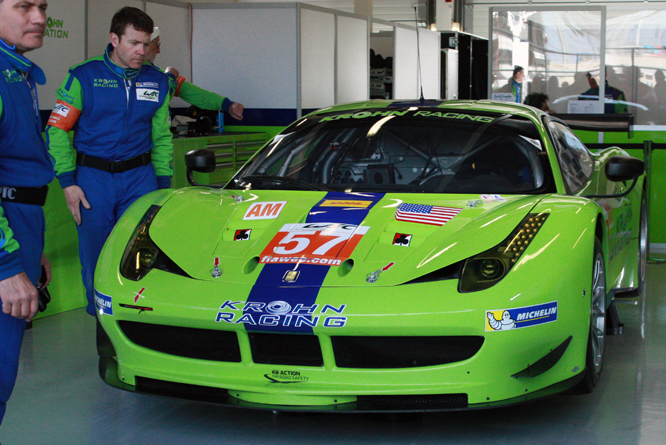
3 years after starting race car driving, in which the highlight was winning the 2005 Six Hours of the Glen with Niclas Jönsson in the Grand Am series, Tracey W Krohn founded his own Grand Am team in late 2005 and started competing in the at the 2006 Daytona 24 hours.

Ferrari 458 Italia GT2, 6 Hours of Silverstone

Success was immediate as Krohn team driver Jörg Bergmeister won the drivers championship and Krohn Racing finished second in the top DP division of the championship. Right from the start Krohn Racing also ran a parallel GT program mostly at Le Mans with Risi Competizione running Ferrari’s.

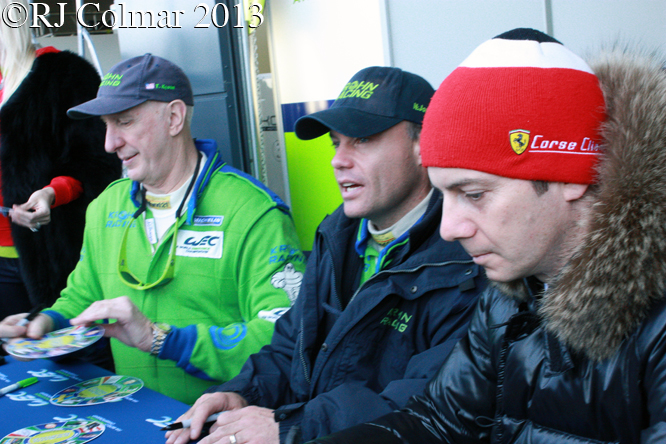
Krohn, Jönsson, Mediani, 6 Hours of Silverstone

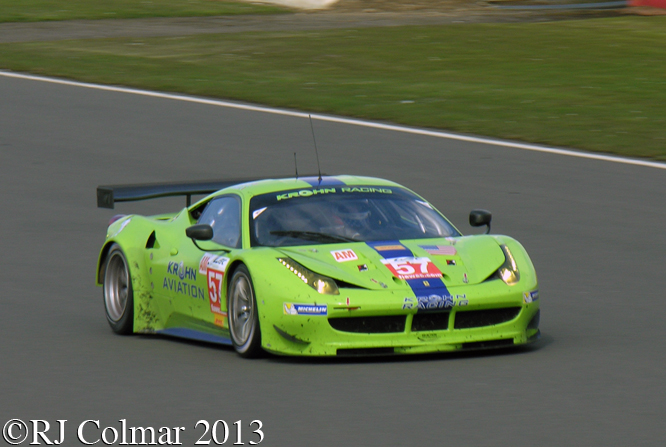
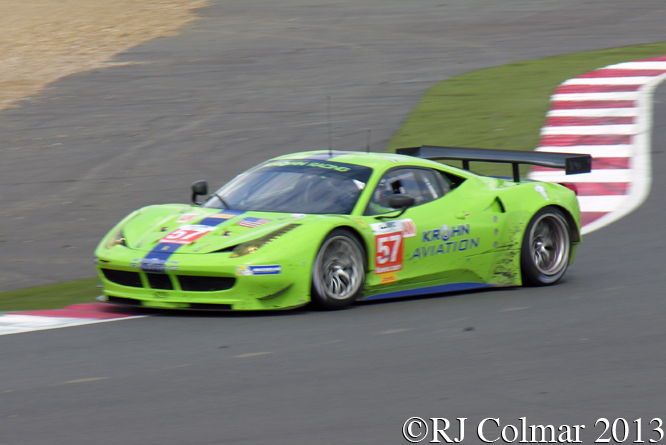
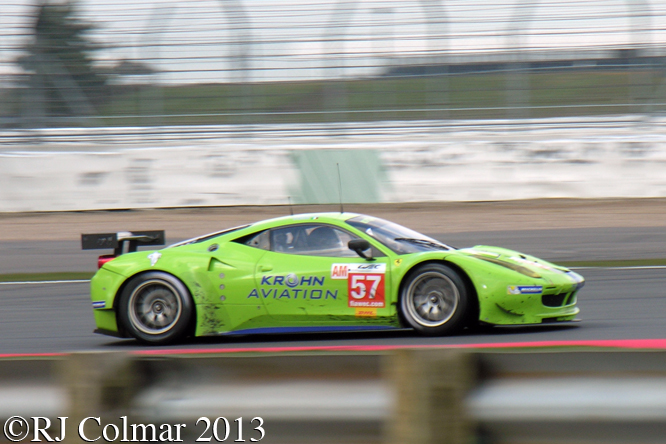
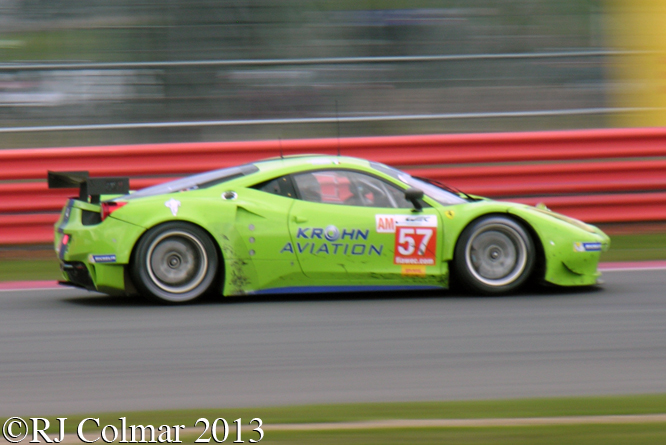
Since 2011 Krohn Racing has run it’s own GT programme to compete in the US and European Le Mans series, which in Europe last year became the FIA World Endurance Championship (WEC). Krohn Racing started competing in the GTE Am class of the WEC last year with today’s featured car the Ferrari 458 Italia GT2 chassis #2844 that this year has been driven by Tracey, Swede Niclas Jönsson with whom he won the Watkins Glen six hours and former Russian Formula 3 Open Wheel champion Maurizio Mediani.

Ferrari 458 Italia GT2, 6 Hours of Silverstone

There seems to be some confusion about the name of this model with various sources quoting it as a GTC others including Krohn Racing’s own website calling it an F458 GTE however the Ferrari website calls the model a GT2 which is good enough for me. If you know different chime in below.

Ferrari 458 Italia GT2, 6 Hours of Silverstone

Based on the stunning Ferrari 458 Italia road car the GT2 differs with it’s more aggressive aerodynamic aids, however like the road car it has power steering, air conditioning to keep the cockpit temperatures tolerable and perhaps most surprisingly electric mirrors.

Ferrari 458 Italia GT2, 6 Hours of Silverstone

Power from the 4.5 litre / 274.6 cui V8 is restricted by air intake restrictor plates that means the motor produces a maximum 465hp at 6,250 rpm down from 562hp at 9,000 rpm in the road car.

Ferrari 458 Italia GT2, 6 Hours of Silverstone

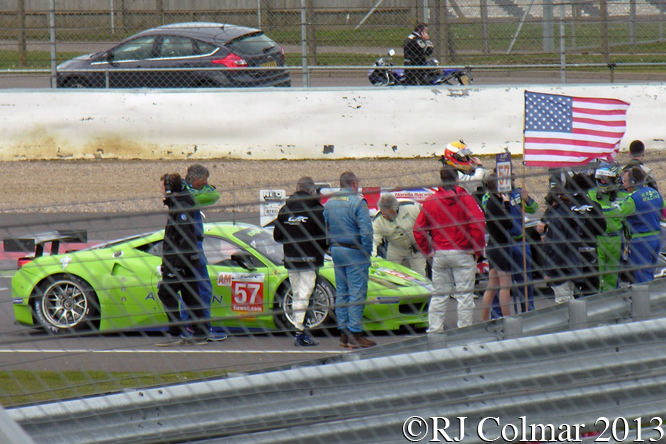
#2844 is seen here at the recent 6 Hours of Silverstone where the team came home 25th overall and 6th in class. Since then the car has competed at the Spa 6 Hours where the team came home 28th overall and 8th in class and at the Le Mans test where Will and Maurizio recorded 61st fastest time.

Ferrari 458 Italia GT2, 6 Hours of Silverstone

The chassis final appearance was at the Le Mans 24 hours where during the opening day of practice Will, as Tracey is known, skidded off the track in the Dunlop Curves and wrecked the €480,000 / US$ 628,000 car fortunately with out any injury to himself.

Ferrari 458 Italia GT2, 6 Hours of Silverstone

By 11pm that night Krohn Racing had concluded a deal with Edelcriss Racing in Northern Italy to lease a their racing 458 chassis. Only problem was it was a more powerful GT3 spec car and it was 1,100 miles away. The Edelcriss Racing transporter set off with the car for a 15 hour sprint to Le Mans.

Ferrari 458 Italia GT2, 6 Hours of Silverstone

When it arrived it was promptly stripped and refettled to GT2 spec using all of the salvageable parts from #2844 a task which took a team of ten technicians 9 hours and some 500 Zip (cable) ties.

The new car was ready to roll for the Thursday qualification session in which Le Mans rookie Maurizio had yet to complete 5 laps in order to qualify.

The car made it to the grid but had to retire at 1am after another accident at the Porsche Curves left the new car stranded out on the track.

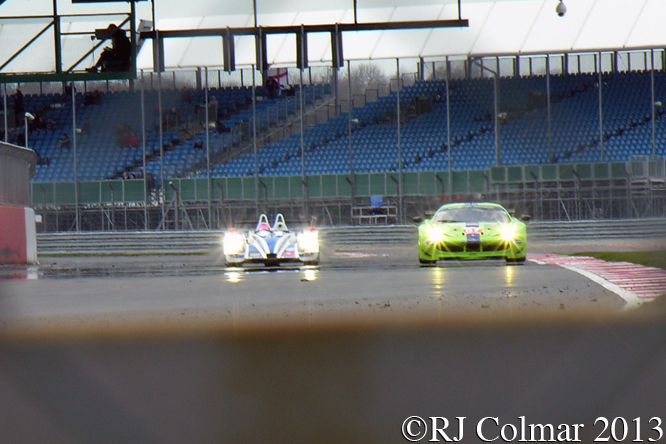
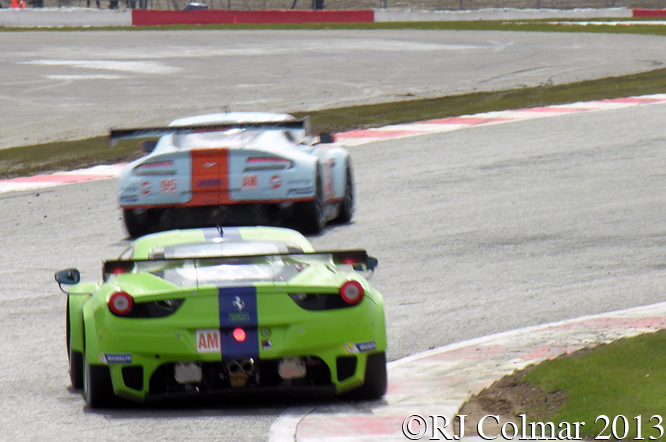
All of Krohn Racing troubles were put into perspective when they learned that fellow GTE Am competitor Allan Simonsen, seen above leading the Krohn Ferrari in the #95 Aston Martin, was killed in after a crash during the opening laps of the Le Mans 24 hours after he left the circuit at Tetre Rouge.

An appreciation of Allan’s life will be appearing in tomorrow’s blog.

Thanks for joining me on this ’90 Hours and 500 Zip Ties’ edition of “Gettin’ a li’l psycho on tyres”. I hope you will join me again tomorrow. Don’t forget to come back now !
Share

Spirit Of ’76 – Chevrolet Corvette Greenwood #007

John and Burt Greenwood were the children of a WW2 fighter pilot who worked at the GM Tech Center. As a teenager John was working paper rounds so that he could build a Briggs Stratton powered kart. From there the Greenwood’s moved into street racing, preparing a car, racing it and then selling it to so that they could build up another.

Around 1968 the Greenwoods set up Auto Research Engineering to build engines and tune suspension and the following year started racing. John won back to back SCCA championships in 1970 and 1971. Over the following two years the Greenwood Corvettes had made trips to the Le Mans 24 hours where they had failed to finish having a best 16th place on the grid in ’72 to show for their efforts.

Chevrolet Corvette, Goodwood Festival of Speed

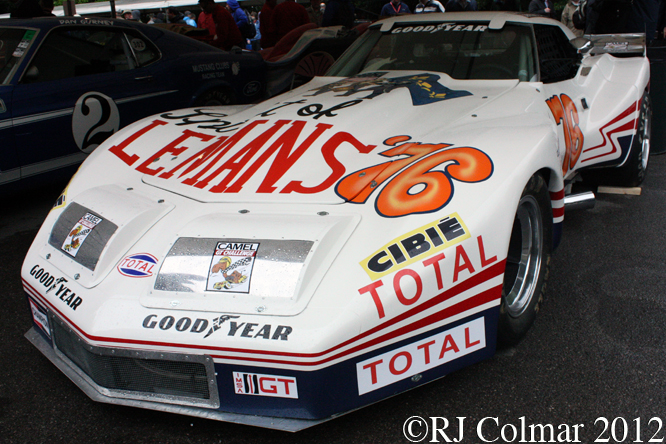
In 1976 John Greenwood was invited to return to Le Mans and this time he brought a wide bodied car to share with Bernard Darniche. Featuring a body that was developed the the aid of ‘Farther of the Corvette’ Zora Arkus-Duntov and aerodynamicist Randy Wittine that covered a 700 hp fuel injected 7 litre / 427 cui motor.

Chassis #007 had been built up for Rick Mancuso a racer from Illinois who entered the car in the ’76 Sebring 12 hours but crashed it in practice so that it did not start, #007 is not to be confused with John Greenwoods “Spirit of Sebring ’76” which started from pole in the same race, but retired after 36 laps with clutch failure.

Chevrolet Corvette, Goodwood Festival of Speed

At his third attempt John’s Corvette, which was timed at over 215 mph on Mulsanne straight, qualified 9th behind a the turbocharged BMW CSl driven by Brian Redman and Peter Gregg and was one of just 12 cars to get below 4 mins in qualifying beating his own previous best time by a clear 20 seconds.

Unfortunately it was not third time lucky in the race as the car was retired with a split fuel cell during the early hours bringing to an end John’s hugely popular presence at the La Sarthe circuit.

Thanks for joining me on this “Spirit of ’76” edition of “Gettin’ a li’l psycho on tyres” I hope you will join me again tomorrow for “Ferrari Friday”. Don’t forget to come back now !
Share