Tag Archives: Le Mans

Cubic Inches – Bentley Speed Six #HM2689

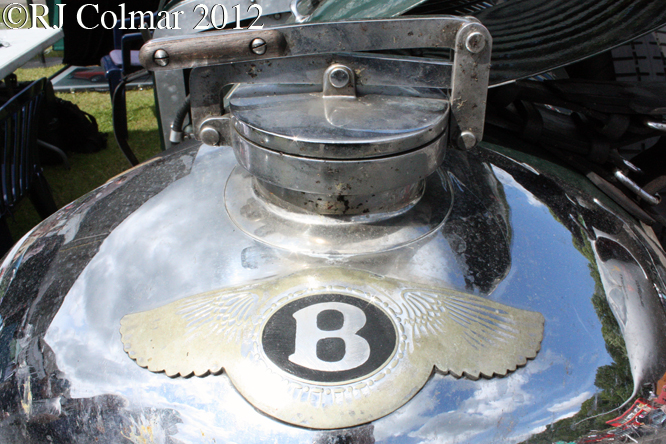
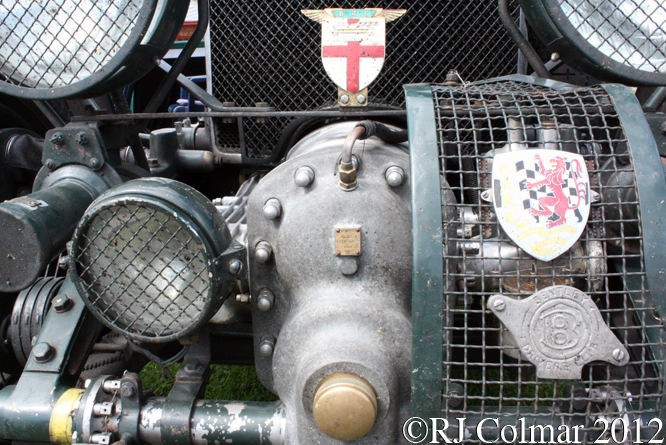
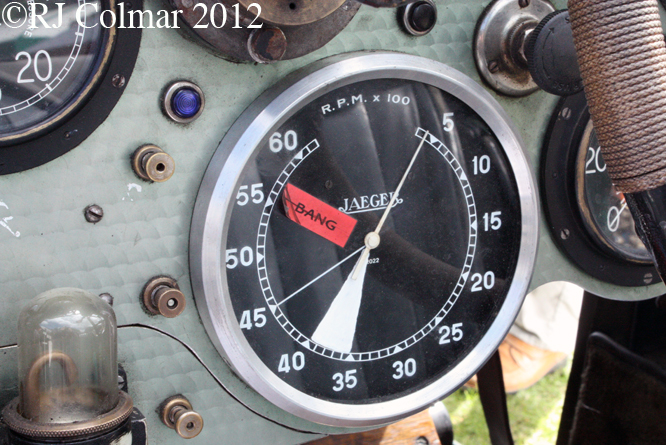
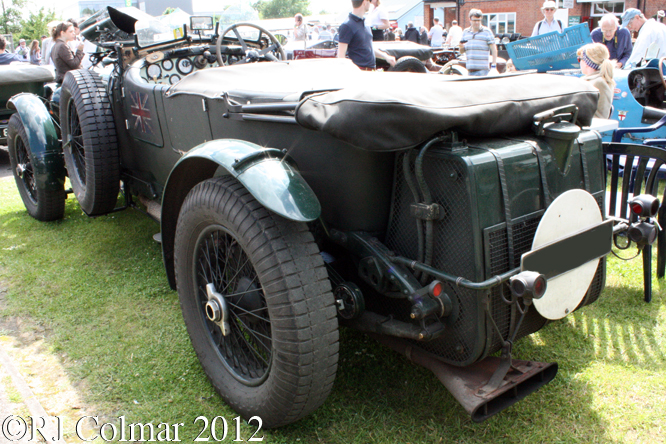
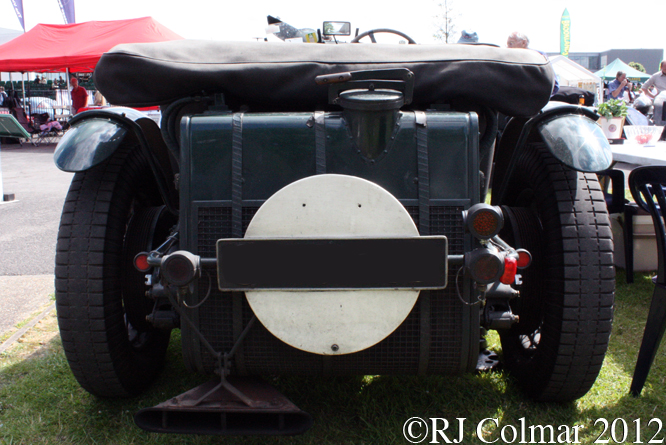
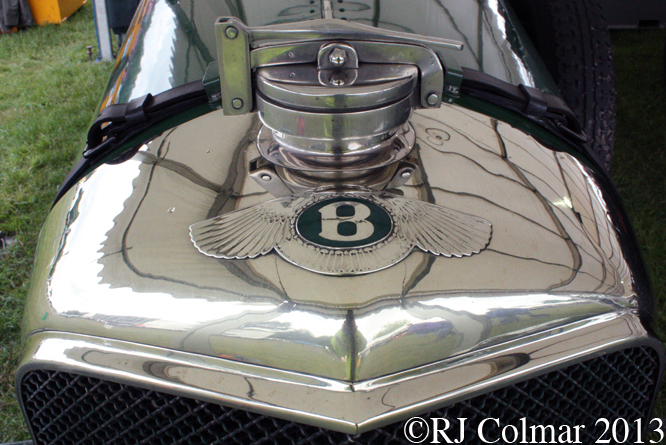
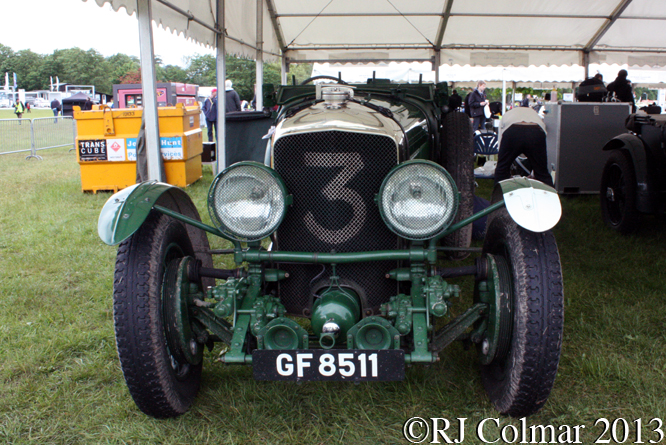
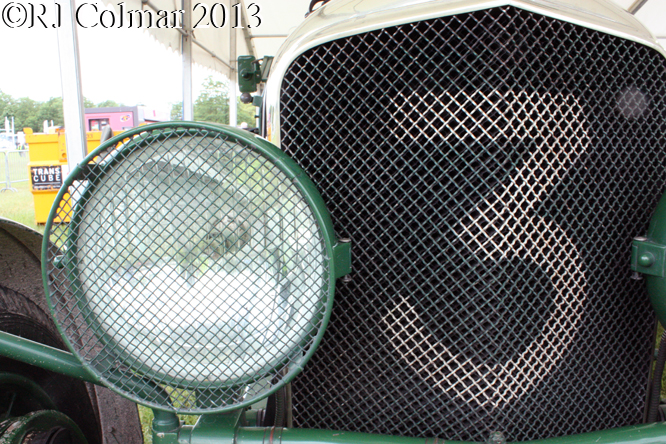
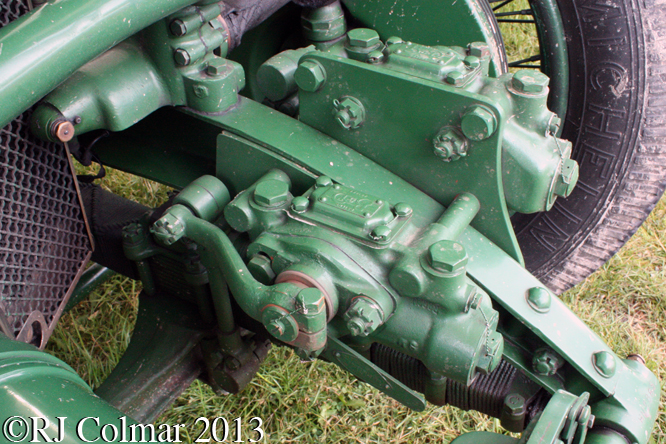
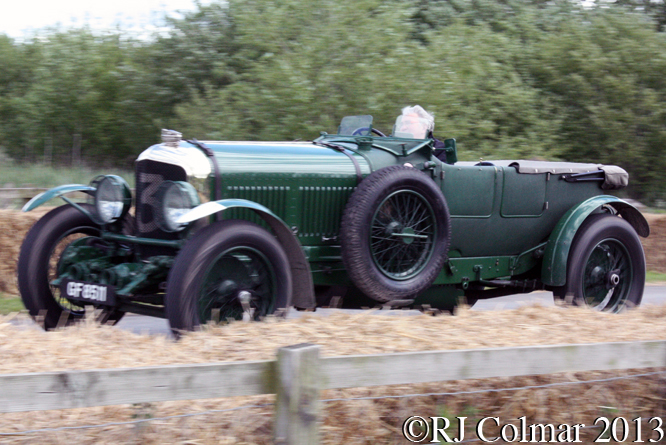
At the weekend I popped up to the Cholmondeley Pageant of Power where several Bentley’s were present that have taken part in Le Mans 24 hour races including today’s featured example chassis #HM2869 which was driven by Sammy Davis and Clive Dunfee in the 1930 race.

Bentley Speed Six, Cholomondeley Pageant Of Power

The Bentley Speed Six was the high performance version of the Bentley 6 1/2 litre first seen in 1926. The 6 1/2 litre was conceived to challenge the Rolls Royce Phantom as a preeminent limousine.

Bentley Speed Six, Cholomondeley Pageant Of Power

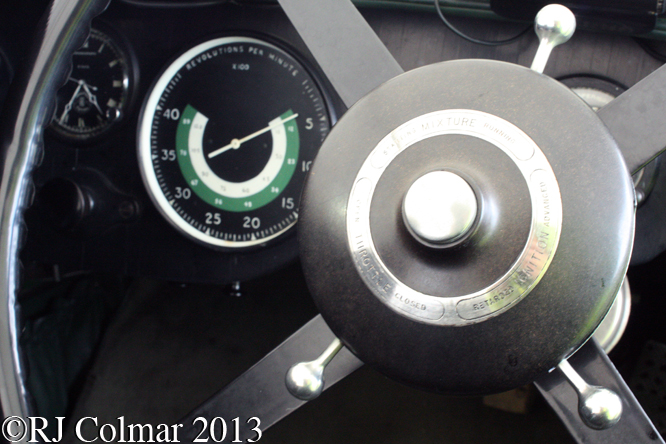
Launched in 1928 the Speed Six used the same 24 valve twin cam, twin spark 6,597 cc / 402.6 cui six cylinder motor as the Bentley 6 1/2 litre but tuned to give 160 – 180 hp, up from the standard 147 hp. This motor was considered the jewel in the crown of W.O. Bentley’s portfolio.

Bentley Speed Six, Cholomondeley Pageant Of Power

The Speed Six of Woolf Barnato “Old Number One” is one of a handful of cars to have won the Le Mans 24 hour race twice. In 1929 Barnato shared the driving with “Tim” Birkin leading home three Bentley 4 1/2 litre cars. The following year Baranto and Glen Kidston led home a Speed Six one-two finish with Frank Clement and Richard Watney at the wheel of the second placed car.

Bentley Speed Six, Cholomondeley Pageant Of Power

Driving a Mulliner Saloon bodied Speed Six Barnato also won a bet with his pals that he could arrive at his club in London faster than Le Train Bleu could cover the distance between Cannes on the French Riviera and the cross channel port of Calais in Northern France. With his secretary Dale Burn as relief driver he won the bet of £100 by four mins, but was heavily fined by French authorities for racing on public roads.

Bentley Speed Six, Cholomondeley Pageant Of Power

The Mulliner Saloon Speed Six with which Barnato won the bet is often incorrectly depicted and confused with a Gurney Nutting Sportsman Coupé Speed Six which Barnato named the Blue Train Special to commemorate his feat. The Mulliner Saloon body on the car Barnato and Burn drove the 570 miles from Cannes to London has recently been restored to the original chassis by it’s current owners Bruce and Jolene McCaw, who also own the Barnato’s Gurney Nutting Coupé.

Bentley Speed Six, Cholomondeley Pageant Of Power

Despite proving W.O’s maxim “that there is no substitute for cubic inches” over the 4 1/2 litre super charged Blower Bentley it is the faster but less reliable latter car that is the better known instantly recognisable “icon” of it’s day.

Clive Dunfee crashed #HM2689 out of the 1930 Le Mans 24 hours on laps 22, the month before Le Mans race Clive and Sammy drove the car car to a 2nd place finish in the Brooklands Double Twelve. “Tim” Birkin and Jack Barclay shared #HM2689 at the Brooklands Double Twelve in 1931 but retired with engine failure.

#HM2689 has been owned by Peter Neumark for the last twenty years and he assured me “it is not going anywhere” in the future when I spoke to him on Saturday.

Thanks for joining me on this “Cubic Inches” edition of “Gettin’ a li’l psycho on tyres” I hope you will join me again tomorrow when I’ll be looking at the 1978 Le Mans winner. Don’t forget to come back now !

Share

Musical Spares – Porsche 962C #006

The Porsche 962 was built in two specs, the original was the 1984 IMSA GTP spec which was a variation of the dominant Group C Porsche 956 sports car first seen in 1982. The 962 differed in two important aspects from it’s Group C cousin. First the 962 had a longer wheel base so that the drivers feet were behind the center line of the front axle and second IMSA mandated a single turbo while the Group C 956 ran more powerful twin turbo’s.
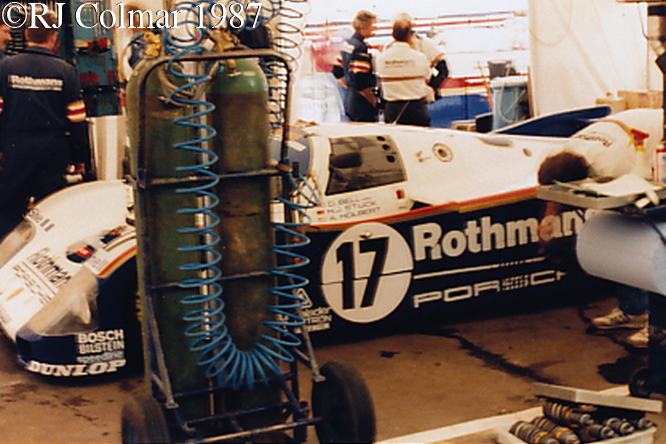
Porsche 962C, Le Mans, France

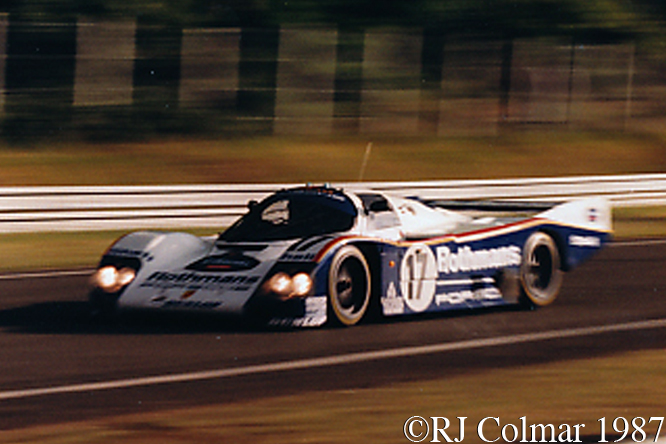
For 1986 the FIA mandated that Group C cars should follow the lead set by IMSA and have the drivers feet behind the the center line of the front axle line while making no changes to the engine regulations so the more powerful Porsche 962C came into being sweeping all before it much as the 956 and 956B had done. Derek Bell became the first driver to successfully defend his World Sports Car Drivers Championship won driving a 956B in ’85 and 962C in ’86. In 1986 Derek also won the Le Mans 24 hours for the forth time sharing his 962C with Hans Joachim Stuck and Al Holbert, Derek was also awarded the MBE for services to motorsport, a Royal honour which even Porsche AG noted on the door of Dereks #17 car as seen above at Le Mans in 1987.
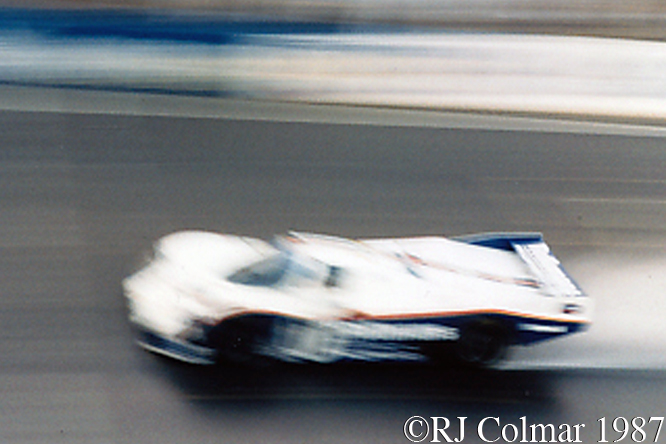
Porsche 962C, Le Mans, France

Going into Le Mans 1987 Derek Bell and Al Holbert were on a roll of three consecutive 24 hour race wins going back to Daytona ’86 where they shared an IMSA GTP 962 with Al Unser Jr. As mentioned above Bell and Holbert followed that up at Le Mans winning with Hans Stuck and made it a three peat of 24 hour victories at Daytona sharing Holberts Löwenbrau Porsche 962 with Unser Jr and Chip Robinson. Only a complete idiot would have bet against Bell, Stuck and Holbert claiming victory at Le Mans in 1987. The #17 chassis #006 seen in the rain above qualified 2nd on the grid by Hans Stuck next to the #18 chassis #008 which Bob Wollek qualified on pole.
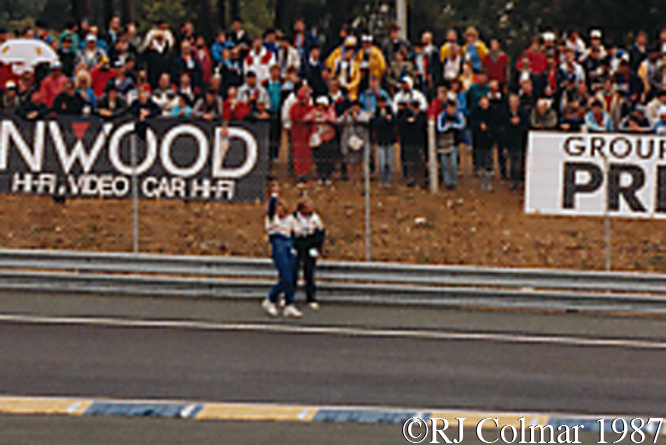
Derek Bell, Hans Joachim Stuck, Le Mans, France

But the fourpeat of consecutive 24 hour victories very nearly did not happen, things started to go wrong for the works Porsche team a week before the race when Hans Stuck tested all the Le Mans cars at Porsche’s Weisach test facility. Stuck experienced a puncture while driving the car designated for his team mates Jochen Mass and Brilliant Bob Wollek. As a consequence Mass and Wollek were given the car designated as the race car for Stuck, Bell and Holbert chassis #008 while the ’86 winning trio took over the car designated for Vern Schuppan, Kees Nierop and Price Cobb chassis #006, today’s featured car, and the Schuppan, Nierop, Cobb combination were given the older chassis #002 which had been designated as a spare. Bell and Stuck are seen above returning from the new chicane an hour before the start of the race.
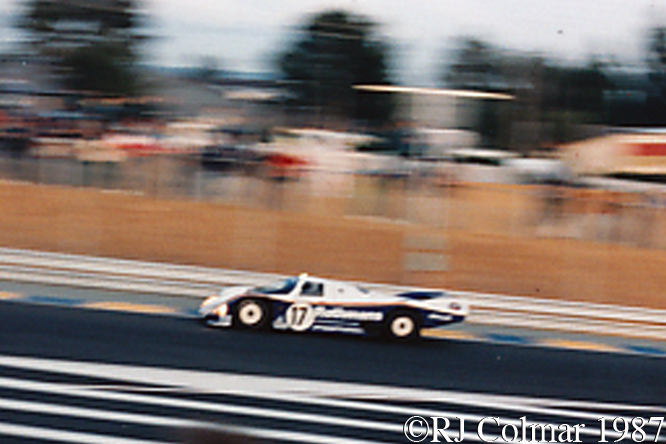
Porsche 962C, Le Mans, France

The next problem for the Porsche team occurred in practice when Price Cobb had an accident which wrote chassis #002 off during the first day of practice so that there were now only two works entered cars to challenge for the win, but as designer Norbert Singer observed ‘only one of them can win’. Schuppan, Nierop and Cobb all found rides in other cars.
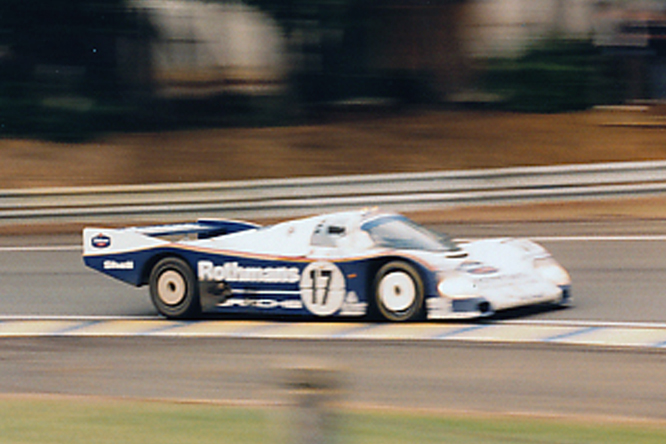
Porsche 962C, Le Mans, France

An hour into the 1987 race it looked as if Jaguar who were at least 3 seconds slower than the lead Porsche in practice might pull off a remarkable win as they held first third and fifth. The Porsche cars were falling like a chain of domino’s with engine failures, something in the fuel was causing the latest in Bosch (ECU) electronic management systems to run the Porsche engines much too lean which resulted in engine failures for the pole sitting works car; 2 Joest Porsche 962C’s and a Kremer 962C.
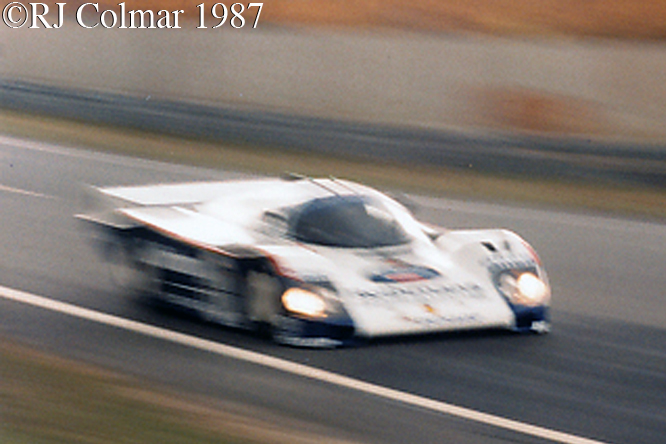
Porsche 962C, Le Mans, France

Fortunately the #17 had managed to get into the pits to change to an older ECU before any permanent damage was done and 2nd placed Bell, Stuck and Holbert proceeded to pursue the lead Jaguar at break neck speed until midnight when it took the lead for the final time as the four 7 litre / 427 cui V12 Jaguar XJR 8LM’s started to fall by the wayside with a puncture, an accident, a cracked cylinder head and a missed gear change respectively.
Porsche 962C, Le Mans, France

The punctured #5 Jaguar driven by Win Percy had required an 80 minuet safety car period to clear up the debris in the dead of night as the Jaguar had been pitched at 200 mph into the barriers of the Mulasanne straight ripping off the gearbox and engine, Win Percy unlike his helmet was completely unscratched. The relentless pace at which the #17 Porsche had been chasing the Jaguars meant that Bell, Stuck and Holbert were way over their fuel allowance as the safety car period started but right back on schedule once the mess created by the Jaguar had been cleaned up.

By the end of the race Bell, Stuck and Holbert were 20 laps to the good; from the private Primagaz Competition 962C of Juergen Lässig, Pierre Yver and Bernard de Dryver; as they recorded their fifth, second and third Le Mans wins respectively, their second consecutively as a winning Le Mans trio and Bell and Holberts 4th consecutive 24 Hour race win. Porsche also recorded their seventh consecutive Le Mans win in 1987.

The following year things would not be so easy as Jaguar, who won the 1987 World Sports Car Championship and who’s driver Raul Bosel won the 1987 World Sports Car Drivers Championship took the fight even more convincingly to Porsche at Le Mans.

Chassis #006 was driven at Spa in 1986 by Jochen Mass and Bob Wollek on it’s debut where it was qualified third and finished 7th it’s only other race start was at Fuji where Holbert and Pescarolo started from 12th and retired with transmission problems. Prior to the Le Mans 24 hours #006 had primarily been used as a spare car at Jarama, Jerez, Monza and Silverstone in 1987. #006 was driven by Bob Wollek and Canadian Kees Nierop for the ’87 Le Mans test weekend where carrying the #17 it recorded the 2nd fastest time. After the 24 hour win in ’87 #006 returned to Le Mans in 1988 as a spare that was briefly used by Micheal Andretti in practice before it was retired for good.

Thanks for joining me on this “Musical Spares” edition of “Gettin’ a li’l psycho on tyres” I hope you will join me again tomorrow. Don’t forget to come back now !
Share

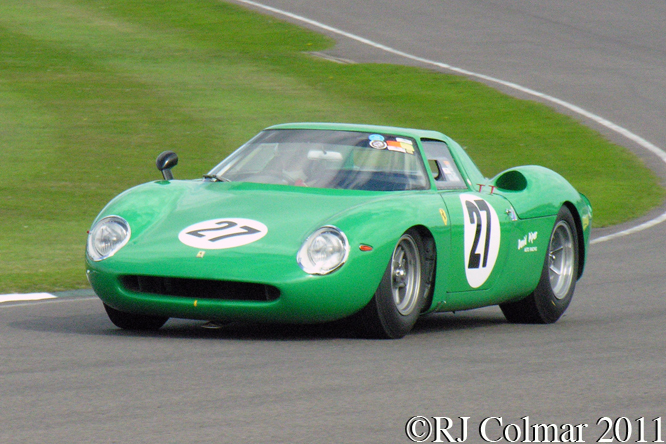
Fiberglass Body – Ferrari 250 LM #8165

This November sees the 50th anniversary of the unveiling of the Ferrari 250 LM which to date was the last Ferrari to cross the finishing line first at Le Mans in 1965.

Today’s featured car chassis #8165, the last 250 LM to be built, was sold new to Scuderia Filipentti and entered by them in the 1966 1000kms race at the Nurburgring for Willy Mairesse and Herbert Mueller who finished 9th.

Ferrari 250LM, Goodwood Revival

The car was then sold to David Piper and in June 1966 David fitted fiber glass body panels front and rear and painted #8165 BP Green. Subsequently David is known to have driven the car to victories at Brands Hatch, Oulton Park and the 1000kms Paris at Monthlery in 1966 sharing the car with Mike Parkes in the latter.

In 1967 David won at Silverstone and entered the #8165 for Hugh Dibley and Roy Pierpoint for the 1000kms at Brands Hatch where they finished 10th overall and first in class. At Monthlery Richard Attwood and Brian Redman came 6th overall and first in class.

Ferrari 250LM, Goodwood Revival

In 1968 Pedro Rodriguez joined Roy Pierpoint in #8165 for the 1000 kms at Brands Hatch where they finished 5th but only 3rd in class. #8165’s last ‘in period’ appearance was in the 1968 Le Mans 24 hours where Piper and Attwood qualified 28th and came through to a seventh place finish.

David Piper is seen driving #8165 in these photo’s in practice for the Whitsun Trophy at the Goodwood Revival a couple of years ago. David finished the race in 27th place.

My thanks to Athanase and Miurasv for clarifying the early ownership of this car over at FerrariChat.com.

Thanks for joining me on this “Fiberglass Body” edition of “Gettin’ a li’l psycho on tyres” I hope you will join me again tomorrow. Don’t forget to come back now !
Share

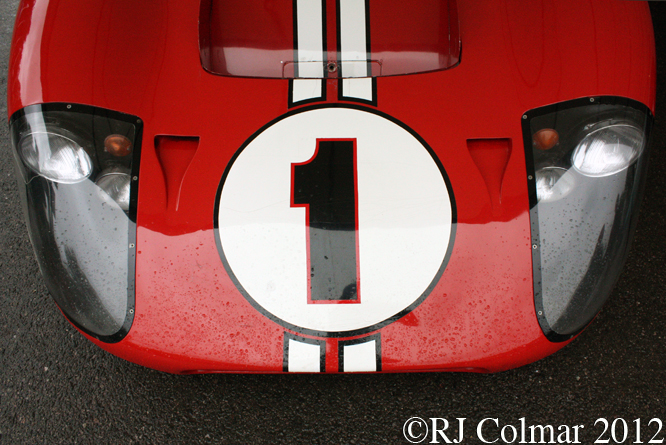
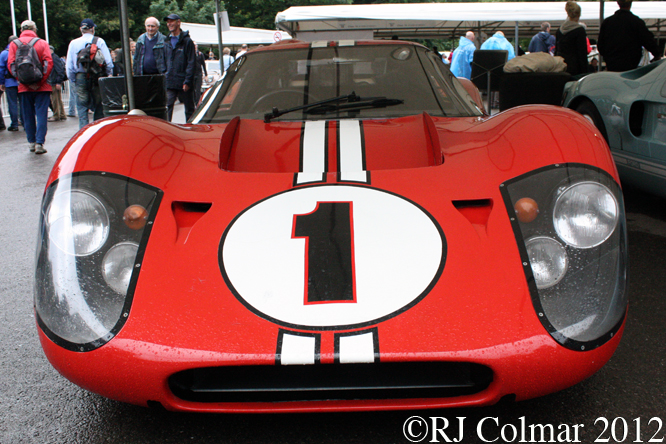
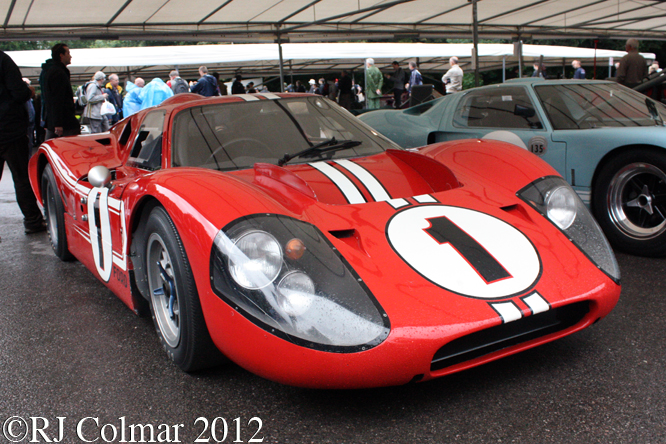
Shimmying Past Scrutineers – Ford Mark IV #J5

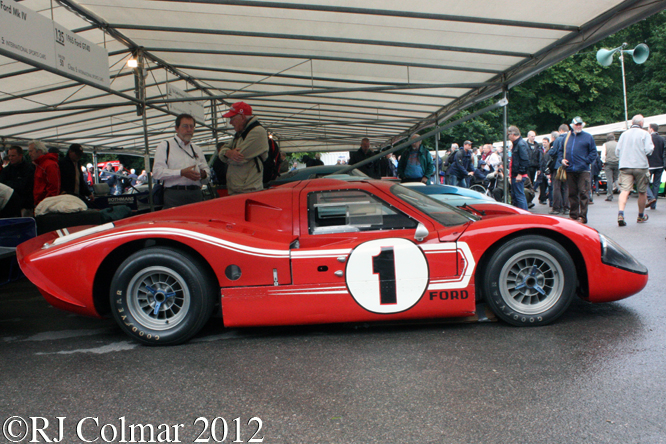
The Ford Mark IV was the culmination of Ford’s determination to crush Ferrari on it’s own turf, after Enzo had bailed out of selling his eponymous company to the men from Dearborn at the last minute in 1963.

Ford Mark IV, Goodwood Festival of Speed

What started out as an Eric Broadley designed Lola GT powered by a Ford Indy spec V8 in 1963 had been developed into the Ford GT40 with input from Ford’s designers led by Roy Lunn. The GT40 was the subject of two humiliating failures at Le Mans in ’64 and ’65 but then blossomed into the Shelby developed 7 litre / 427 cui Ford GT40 Mark II that swept to a 1,2,3 victory at Le Mans in 1966.

Ford Mark IV, Goodwood Festival of Speed

Unable to convince Ford that they needed to build the GT40 with an aluminium frame to save weight Eric Broadley left the GT40 project in 1965 and returned to Lola while Ford and Shelby got to grips with producing a steel framed car that was both powerful enough and strong enough to last 24 hours at a race winning pace.

Ford Mark IV, Goodwood Festival of Speed

Ford soon realised that Eric was right about the extra weight carried by the steel framed cars and before the steel framed GT40 Mk II’s romped to victory, in ’66, they set about building an aluminium framed version of the GT40 with the same drive train and suspension components known as the J-Car featuring an innovative aluminium honeycomb monocoque manufactured by Brunswick Aerospace.

Ford Mark IV, Goodwood Festival of Speed

The J-Car was subject to much experimentation with body shapes and even crash testing after Ken Miles had been killed in a freak accident testing a J-Car. By 1967 Ford had four of the new Mark IV’s ready for the Le Mans 24 hours powered by 7 litre / 427 cui motors.

Ford Mark IV, Goodwood Festival of Speed

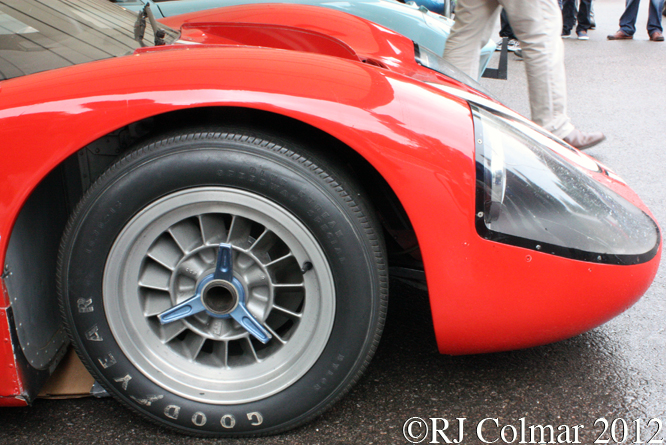
According to Dan Gurney the Mark IV’s were fitted with suspension shims to ensure they passed the scrutineers / tech inspectors minimum ride height test held in the middle of town, these shims then “fell off” on the way back to the race track to ensure the Fords had some aerodynamic stability when they hit 200 plus mph on the 4 mile Mulsanne straight.

Ford Mark IV, Goodwood Festival of Speed

Dan Gurney set the winning car up then he and Le Mans rookie AJ Foyt then set about winning the race, during the middle of the night Dan over slept forcing AJ to do a double stint behind the wheel but other than that their car had no problems on it’s way to a four lap victory over the Ferrari P4 of Ludovico Scarfiotti and Mike Parkes. The sister Shelby run Goodyear shod car of Bruce McLaren and Mark Donohue came forth behind another Ferrari P4 after loosing time with a tale piece that was ripped off.

Ford Mark IV, Goodwood Festival of Speed

On the podium Dan Gurney started a tradition of shaking up the winners bottle and spraying champagne all over the gathered revelers which has been repeated by race winners around the world countless times since. The day after the race the Mark IV’s were effectively banned from racing in 1968 and Ford withdrew from any further factory participation on the spot.

Ferrari ended up winning the World Sports Car Championship in 1967 but it hardly mattered since everyone remembers who won the signature event of the series the Le Mans 24 hour race.

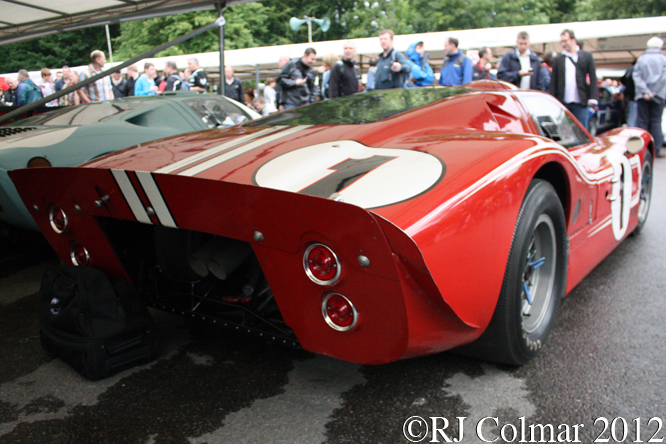
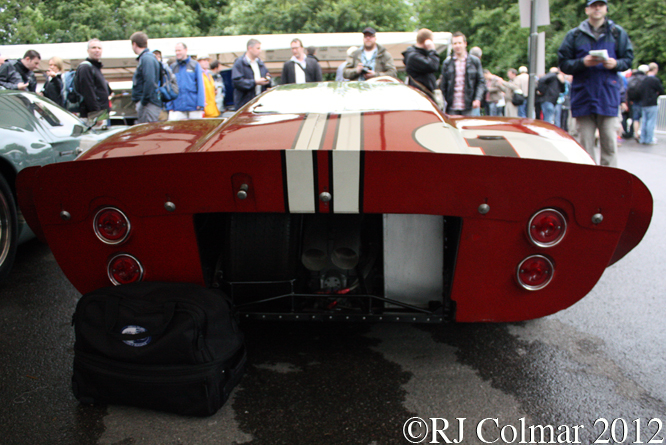
The car driven by Gurney was different from the three other Mark IV’s in the race because to accommodate Dan’s 6’3″ frame a blister was built into the roof and the seat was lowered. After the race all four Mark IV’s, the two Firestone shod cars run by Holman Moody had crashed out, returned to the States were overhauled and all four painted to look like the winner complete with a blister in the roof.

The winning car chassis #J5 has been kept at the Ford Museum however I am led to believe this is the same car that appeared at Goodwood last year, but I maintain an open mind since Ford sold chassis #J6 to New York collector James Glickenhaus believing they had sold him the 1967 winning car until closer inspection revealed otherwise.

Thanks for joining me on this “Shimmying Past Scrutineers” edition of “Gettin’ a li’l psycho on tyres” I hope you will join me again tomorrow. Don’t forget to come back now !
PS Don’t miss my Canadian Grand Prix opinions at Motorsports Unplugged.

Share

La Gloire de Legardére – Matra Simca MS 670

Aerospace company Matra became involved in the motor industry when it started manufacturing fiber glass bodies for René Bonnet’s mid engined Djet sports cars in 1962. In 1965 after Bonnet ran into financial difficulties, as a consequence of it’s racing activities, Matra took over Bonnets manufacturing operations putting Jean-Luc Legardére in charge.

Like Bonnet Legardére saw the sense in promoting the company through motor racing and over a period of several years the company produced winning designs for various open wheel and sportscar series including the 1969 Ford Cosworth powered Matra MS80 which won the World Drivers and Constructors Championships with Jackie Stewart at the wheel of the Matra International team cars run by Ken Tyrrell.

Matra Simca MS670, Goodwood Festival of Speed

Tyrrell and Stewart went their own way in 1970 with sponsors Ford and Elf while Matra’s car division was acquired by Chrysler France in December 1969 and the Matra racing cars became known as Matra Simca’s powered by 3 litre /183 cui V12 Matra motors that had been first seen in Formula One and Sports cars in 1968.

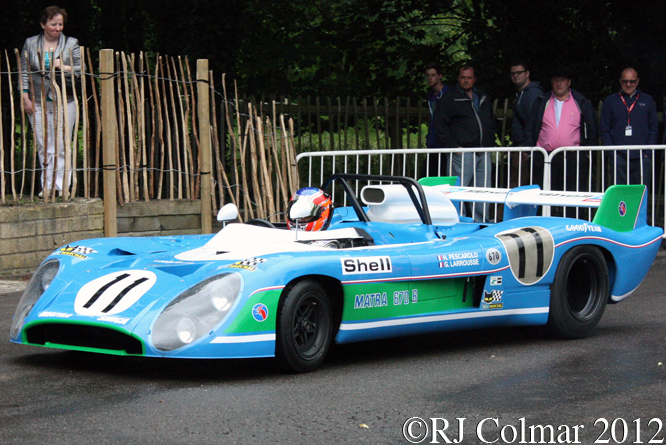
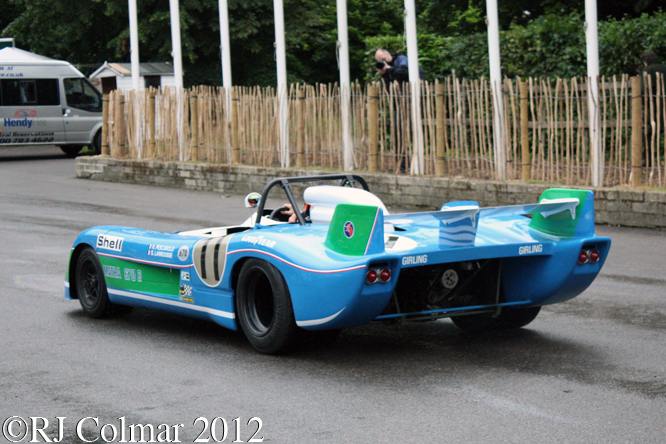
The Matra V12 powered Matra Simca MS670 cars won the Le Mans 24 hours in 1972, driven by Henri Pescarolo and Graham Hill, ’73 and ’74 with Gérard Larrousse joining Pescarolo at the wheel. For 1972 Le Mans was the sole focus of the sportscar teams activities while Ferrari missed the Le Mans 24 hours to focus on winning the 1972 World Championship for Makes. In 1973 Matra Simca withdrew from Formula One and contested and won the World Championship for Makes with the upgraded MS670B beating strong competition from the Ferrari 312 P, a car that had also unsuccessfully appeared at Le Mans.

Matra Simca MS670, Goodwood Festival of Speed

Thanks in part to Niki Lauda persuading Enzo Ferrari to focus on winning the Formula One championships for the 1974 season Matra Simca easily won both the Le Mans 24 hours and the World Championship for makes in 1974 with it’s further upgraded MS670C, after which the team was disbanded although Matra V12 motors were supplied to Shadow for a limited program in 1975 and to Ligier for full programmes from 1976 to 1978 and again from 1981 to 1982 .

I’m not sure of the exact identity of today’s featured car it carries the MS670B body work of the 1973 Le Mans winning entry driven by Pescarolo/Larrouse, that car chassis #MS670B-02 belonged to Matra driver Jean-Pierre Beltoise until it was sold at auction for over a million dollars in 2005 carrying 1974 MS670C bodywork. It has been documented that the 1972 Le Mans winning chassis MS670 – 01 driven by Pescarolo/Hill was fitted with the 1973 Le Mans wining MS670B body work when it was seen at the Lohéac Museum halfway between Brest and Le Mans.

If you know the identity of this car seen at Goodwood last year with Omni Ventures listed as the owners please do not hesitate to chime in below.

Thanks for joining me on this “La Gloire de Legardére” edition of “Gettin’ a li’l psycho on tyres”, I hope you will join me again tomorrow. Don’t forget to come back now !
Share

Forced Induction Push – Bentley 4 1/2 litre #DS3573

Following the disappointments of it’s Le Mans appearances from 1925 to 1926, after the success with the 3 litre / 183 cui cars in 1924 Bentley employed his maxim ‘there is no substitute for cubic inches’ to his new prototype Le Mans challenger, known as “Old Mother Gun”, for 1927 by fitting it with a 4 1/2 litre / 319.5 cui motor.

Bentley 4 1/2 litre, Brooklands Double 12

During the 1927 running of the endurance classic there was a six car pileup involving five of the leading cars; two Théophile Schneiders, an Ariés two three litre Bentleys and the 4 1/2 litre Old Mother Gun which Leslie Callingham rolled into a ditch having chosen to avoid a head on collision.

Bentley 4 1/2 litre, Brooklands Double 12

With the 4 1/2 litre car out of the running the race was won by the 3 litre Bentley of Dr. Dudley Benjafield and Sammy Davis, the last car to arrive at the scene of the accident, after repairs had been effected that included the judicious use of string to hold one of the front wings and the team used a pocket torch to replace the damaged head light !

Bentley 4 1/2 litre, Brooklands Double 12

“Old Mother Gun” was subsequently repaired and Woolf Barnato driving with Bernard Rubin came out winners of the 1928 Le Mans 24 hours after a race long duel with the more powerful 8 cylinder Stutz DV16 Blackhawk driven by F Éduoard Brisson and Robert Bloch.

Bentley 4 1/2 litre, Brooklands Double 12

By this time Sir Henry “Tim” Birkin” who shared the forth placed 4 1/2 litre Bentley with Jean Chassagne at Le Mans in 1928 was convinced the way forward was to build light cars with super chargers. With the tacit agreement of Bentley’s chairman Woolf Barnato and independent finance from Dorothy Paget. Birkin set about building 55 supercharged four cylinder 4 1/2 litre Bentley’s, commonly referred to as Blower Bentleys, against the wishes of designer W.O. Bentley who simultaneously built a new Speed Six model for 1929 complete with straight six cylinder 6 1/2 litre 396.5 cui motor.

Bentley 4 1/2 litre, Brooklands Double 12

Such was W.O. Bentley’s opposition to the idea of supercharging, which had been tried on a 3 litre Bentley built 1926/7, that he refused to countenance the modification of the Bentley 4 1/2 litre motor in any way that would allow Birkin to mount the supercharger along side the 4 cylinder block with the result that the only place the superchager could be fitted was ahead of the front axle line so that it could be driven from the front of the crankshaft.

Bentley 4 1/2 litre, Brooklands Double 12

This mounting position and it’s attendant weight adversely affect the cars propensity to understeer / push where as the new Speed Six had all the weight of it’s motive power mounted between the axles.

Bentley 4 1/2 litre, Brooklands Double 12

Ironically the Speed Six model was ready before the Blower Bentley and Tim Birkin shared a Speed Six, known as Old Number One, with Woolf Barnato to easily win the 1929 Le Mans 24 hours ahead of three unsupercharged 4 1/2 litre Bentley’s.

Bentley 4 1/2 litre, Brooklands Double 12

The Bentley Blowers were ready for 1930 and three cars were entered by the Hon. Miss Dorothy Paget, including one for Sir Tim co driving with Jean Chassagne in the 1930 Le Mans 24 hours, but none were running at the finish. Woolf Barnato now sharing the Speed Six Old Number One with Glen Kidston meanwhile led home a Speed Six one two finish. Strategically playing the hare for the highly fancied supercharged 7.1 litre / 433 cui Mercedes Benz of Rudolf Caracciola and Christian Werner to catch and forcing the German car to run at a faster pace than would have been ideal, Birkins Bentley Blower contribute to the Mercedes Benz premature retirement and indirectly to Barnato and Kidston’s victory.

Bentley 4 1/2 litre, Brooklands Double 12

At the end of 1930 Dorothy Paget withdrew her support for Birkin’s Blowers and in 1931 despite 4 consecutive Le Mans Wins and 5 wins since 1923 Bentley was forced to sell out to Rolls Royce. This however was not quite the end of the Bentley Blower story as a special single seater Blower Bentley that Birkin has built in 1929, chassis HB3402 was just hitting it’s stride at Brooklands leaving the lap record at 137.96 mph in 1932.

Bentley 4 1/2 litre, Brooklands Double 12

In 1931 Sir Tim returned to Le Mans to co drive Lord Howe’s Alfa Romeo 8C 2300 LM and together they became the first drivers to win the 24 hour race with a supercharged car comfortably beating the much larger supercharged 7.1 litre Mercedes Benz SSK driven by Boris Ivanowski and Henri Stoffel by seven laps.

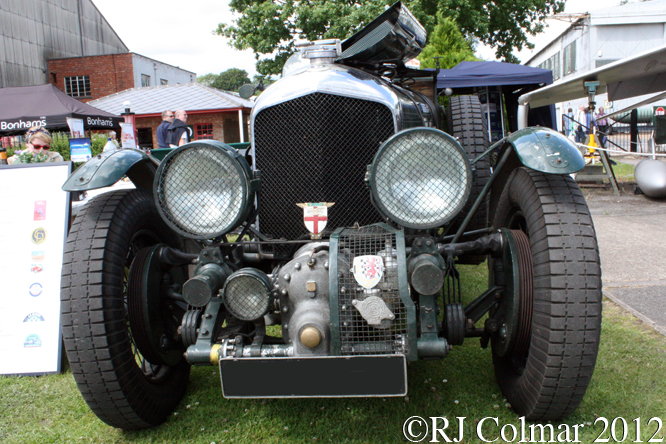
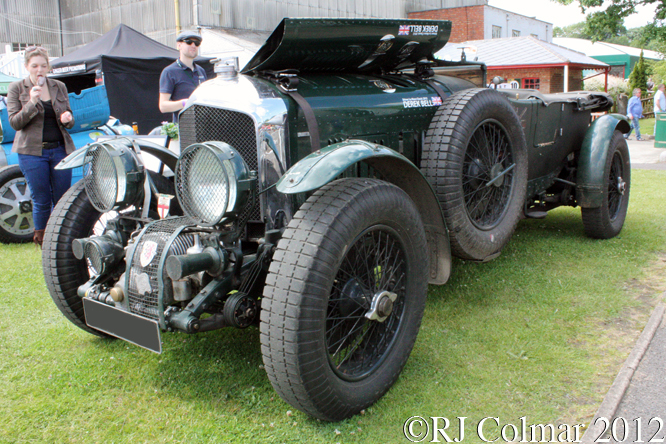
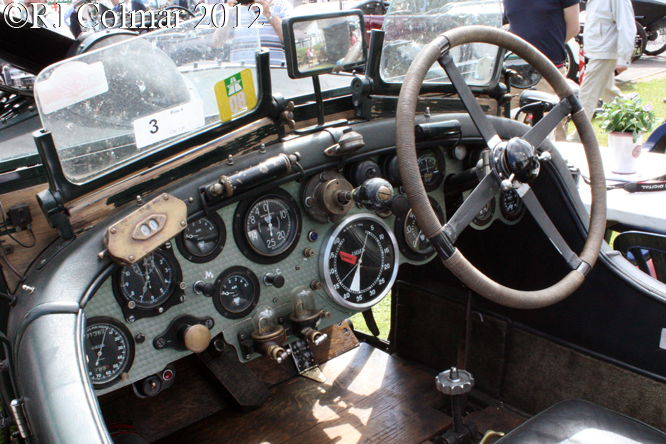
Today’s featured car looks and sounds like a Bentley Blower, but was supplied new in 1929 to Sir L.Lyle with a saloon / sedan body by HJ Mulliner with an unsupercharged 4 1/2 litre motor. The car was rebuilt with an open tourer body as seen today in 1973 when #DS3573 competed in the Scottish Weekend Whit Rally with flying colours.

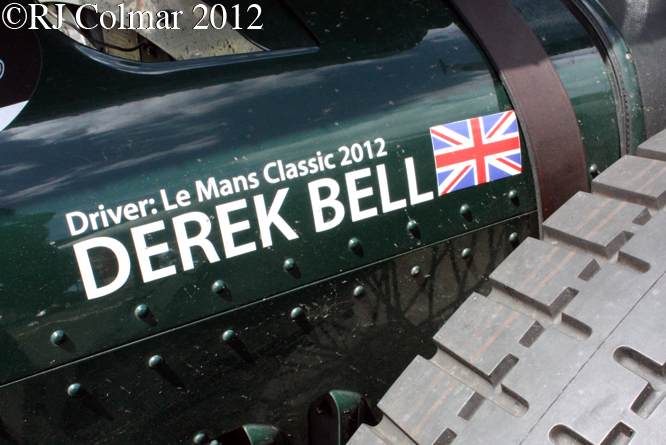
The supercharger appears to have been first seen on chassis #DS3573 in 2005. Just after these photo’s were taken at Brooklands last year, five time Le Mans winner, Derek Bell drove the car at the Le Mans Classic with owner Martin Overington supported by a three man pit crew, comprising three ex service men injured in combat, on behalf of the Misson Motorsport charity.

Thanks for joining me on this “Forced Induction Push” edition of “Gettin’ a li’l psycho on tyres” which happens to be the 1000th GALPOT posting. My thanks to all those who have contributed and stayed with me on this journey, especially those who have liked and spread the word on their social media pages. I hope you will join me for the first of the next 1000 GALPOT posts again tomorrow. Don’t forget to come back now !
Share

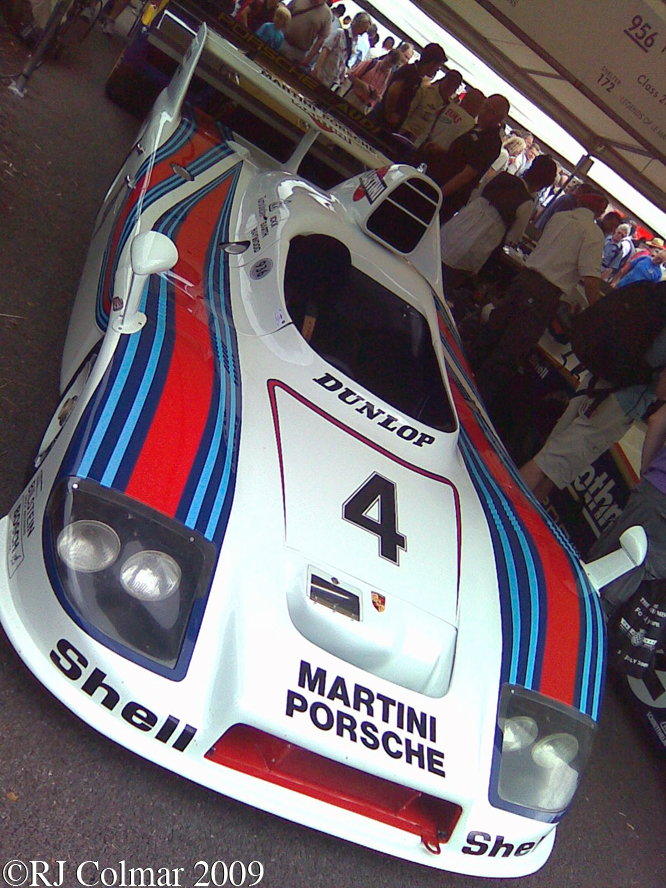
Comeback Kid – Porsche 936 #001

The Porsche 936 was the successor to the 908 and 917 models, it was used to win the World Sports Car Championsip in 1976. Three chassis based on many parts from the Porsche 917 parts bin were made.

All three chassis won the Le Mans 24 hour race; chassis #002 in 1976, #001 in 1977, both with a 540 hp 2140 cc / 130 cui turbocharged flat 6 motors and #003 in 1981 with a 600 hp 2649 cc / 161 cui turbocharged flat 6, a design that had started out as the alcohol burning engine used by Danny Ongias in the unraced Interscope Parnelli Indy Car. Remarkably Jacky Ickx co drove each of these 936’s to Victory Lane at Le Mans.

Porsche 936, Goodwood Festival Of Speed,

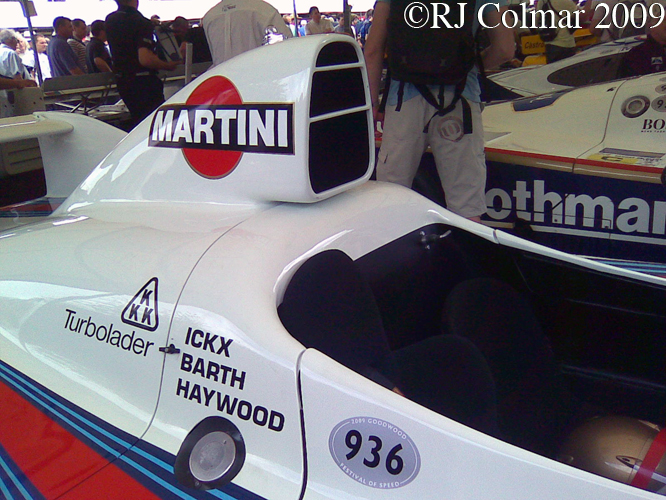
This car represents chassis #001 which was slated to be driven by Juergen Barth and Le Mans rookie Hurley Haywood in the 1977 Le Mans 24 hours, a fuel pump replacement in the 3rd hour dropped #001 down to 42nd place. Around this time Henri Pescarolo’s engine had expired in the sister #002 chassis and Pescarolo’s team mate, Jacky Ickx, was drafted in to join Barth and Haywood.

By his own admission Jacky drove the race of his life through the night and after 19 hours the #001 was in the lead of the race, the three works Renault Alpines dropped out while dominating the race in the Porsche’s absence with engine failures. With 45 mins to go the engine in #001 developed a second misfire, the mechanics shut down the problematic cylinder by taking out the spark plug and blanking the fuel injector.

Porsche 936, Goodwood Festival Of Speed,

Ten mins before the end of the race Juergen Barth was then sent out with a stop watch taped to the steering wheel and instructed to complete the last two laps, within the necessary percentage of each other, to seal an unlikely victory by 11 laps over the Renault powered Mirage GR8 of Vern Schuppan and Jean Pierre Jarrier.

During the race a wheel balance weight tore off the right front wheel ripped through the wheel arch, and both stalk mounted mirrors were lost. The large air box was primarily used to cool the turbocharged air running through the intercoolers.

Porsche 936, Goodwood Festival Of Speed,

The following year Bob Wollek joined Juergen Barth in #001 and when the sister #003 car retired after an accident Jacky Ickx joined Bob and Juergen too however this time they could only finish 2nd to the Alpine Renault of Didier Pironi and Jean-Pierre Jaussaud.

#001’s next two appearances were at the Silverstone 6 hours and Le Mans 24 hours in 1979 it qualified on pole for both of these events, but was classified 10th at Silverstone after an accident which caused Jochen Mass and Brian Redmans retirement from the lead at Silverstone. Bob Wollek and Hurley Haywood retired with engine failure at Le Mans in 1981 as has Jurgen Barth and Reinhold Joest driving #001 at Le Mans in 1976. The cars final appearance as a works car was at the 1981 Le Mans 24 hours where despite starting from 2nd on the grid Jochen Mass, Vern Schuppan and Hurley Haywood could only finish 12th.

Porsche 936, Goodwood Festival Of Speed,

The following linked films document the 1977 Le Mans race; the first shows fabulous in car footage of a lap of Le Mans the second show’s the start and continues into the evening and the third the finish, I afraid most of the commentary is in German except a couple of interviews with Jacky Ickx and Hurley Haywood.

Thanks for joining me on this “Comeback Kid” edition of “Gettin’ a li’l psycho on tyres” I hope you will join me again tomorrow for the 1000th edition of “Gettin’ a li’l psycho on tyres”. Don’t forget to come back now !
Share