Tag Archives: Le Mans

Dealer Pressure – Aston Martin DP 212

Following the success of the Aston Martin DBR1 at Le Mans and the 1959 World Sports Car championship the Aston Martin team refocused it’s attentions on an ill timed Grand Prix effort that folded by the end of 1960, by which time the front engined Aston Martin DBR4 and DBR5 were completely out classed by rear engined cars.
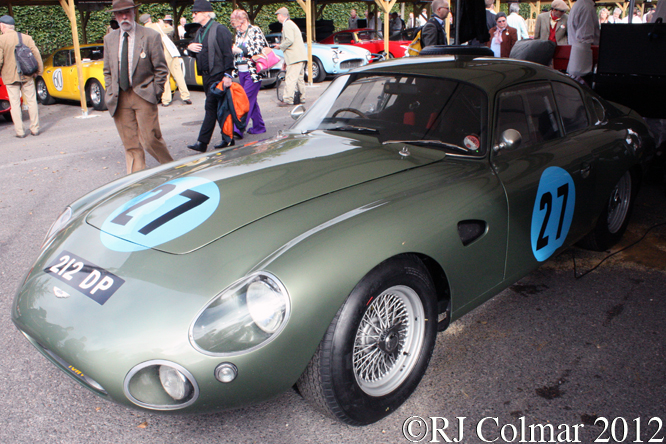
Aston Martin DP212, Goodwood Revival

Under pressure from dealers to come up with a new racing program David Brown sanctioned the development of the DP 212 for the 1962 Le Mans 24 hours.

The cars was built using an Aston Martin DB4GT frame with a 345hp 4 litre / 244 cui six cylinder motor and a sensuous slippery long body to suit the potential of 4 mile Mulsanne straight at Le Mans.

Graham Hill and Richie Ginther were engaged to drive the car at Le Mans where it had a brief moment of glory leading the opening lap of the 24 hour endurance race with Graham Hill at the wheel, however from there on the car dropped down the field over the next six hours until it retired from 9th place with piston failure following an oil pipe fracture.

The original bodywork was found to experience stability problems at speed and after aerodynamic tests was replaced with a Kamm tail of the sort that was later used on the back of the Aston Martin DB6.

Subsequently DP212’s only other appearance was at the 1963 Le Mans test weekend where Jo Schlesser, Bruce McLaren, Lucien Bianchi and William Kimberly drove the car which recorded 5th fastest time. By the 1963 Le Mans 24 hour race the DP212 had been replaced by the DP 214 and DP215 models.

DP212 was later converted to a road car with even larger 349 hp motor and driven in a variety of events by Hon.John Dawnay, later Viscount Downe, and Mike Salmon the later winning the 1974 Classic Car Championship with it.

Thanks for joining me on this “Dealer Pressure” edition of “Gettin’ a li’l psycho on tyres” I hope you will join me again tomorrow for a look at a Le Mans winner from Germany. Don’t forget to come back now !

Share

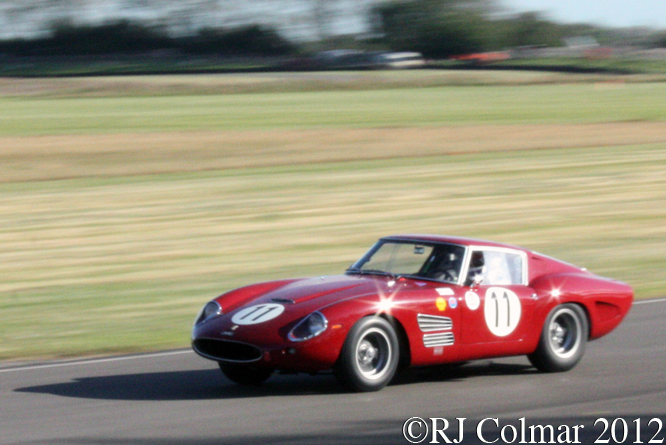
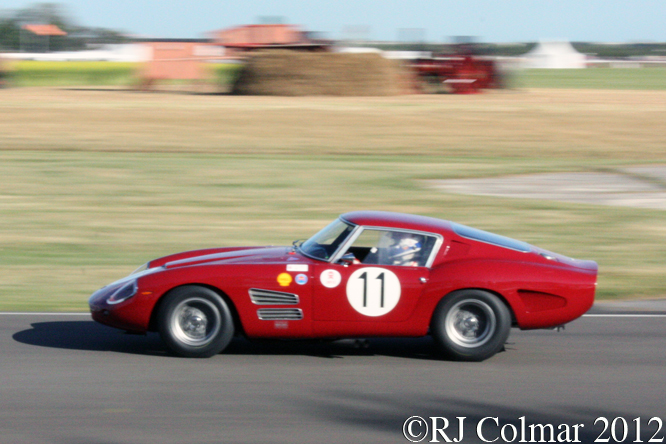
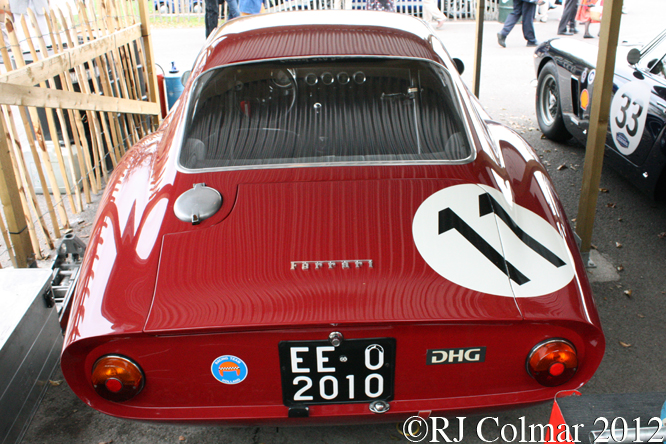
Le Mans to Hollywood – Ferrari 250 GT SWB Competizione Drogo #2445GT

Today’s Ferrari started life as a 250 GT SWB (Short Wheel Base) Competizione chassis #2445GT in 1961, it was supplied to Garages Francorchamps in Belgium.

Ferrari 250 GT Drogo, Goodwood Revival

Jacques van den Haute drove the car competitively at least three times between May and June 1961 with two 3rds in hillclimbs being his best results.

Ferrari 250 GT Drogo, Goodwood Revival

From July 1961 to May 1962 Robert Crevits drove the car competitively in at least 14 events mostly hillclimbs and is known to have won eight of them.

Ferrari 250 GT Drogo, Goodwood Revival

Gustave Gosselin shared the car with Robert in the 1962 1000km Paris, Montlhery where they finished 11th and drove the car alone to a second place finish in an event run at Zandvoort in the Netherlands.

Ferrari 250 GT Drogo, Goodwood Revival

Georges Berger and Robert Darville shared the driving of 2445GT in its last in period race the 1962 Le Mans 24 hours where the car was heavily damaged at the sharp right hand corner Arnage and retired.

Ferrari 250 GT Drogo, Goodwood Revival

The #2445GT was subsequently repaired by Piero Drogo who fitted the body that is seen on the car in these photo’s, the car was renumbered 1965GT for ‘customs reasons’ during the early 1960’s and for a while in 1964 it was one of several Ferrari’s owned by Nebraskan garage owners son James Coburn.

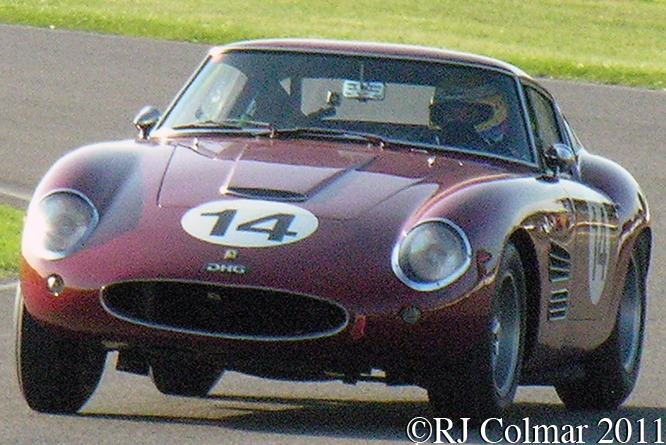
In the late ’70’s #2445GT returned to Europe and is currently owned by Dutchman Hans Hugenholtz who entered the #14 in the 2011 Goodwood Revival meeting for David Hart and Maserati GT racer Micheal Bartels. Last year Hugenholtz shared the driving at Goodwood with one of former New York taxi driver and Indy champion Danny Sullivan.

Thanks for joining me on this “Le Mans to Hollywood edition of “Gettin’ a li’l psycho on tyres” I hope you will join me again tomorrow. Don’t forget to come back now !

Share

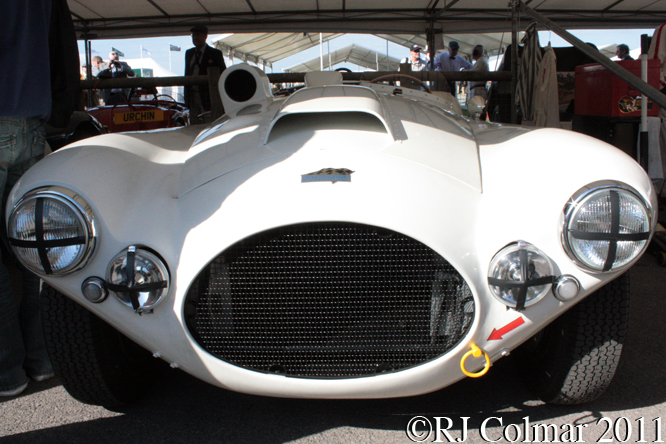
Once Round The Clock – Cunningham C4-R C3 #5238 Continuatuation

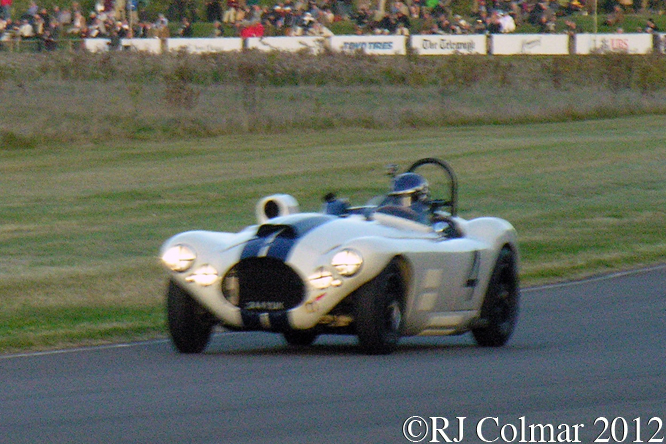
Legendary American Sportsman Briggs Swift Cunningham II was introduced to motor racing by his uncle as a teenager just after the 1914/18 war and in 1930 he started racing cars founding the Automobile Racing Club of America in 1933 which was renamed Sports Car Club Of America (SCCA) in 1944 with his college friends Miles and Samuel Collier.

By 1940 he was building specials including the Bu-Merc which featured a Buick chassis and Mercedes SSK chassis. In 1950 Cunningham took to Cadillacs one Le Petit Pataud a Series 61 Coupé the other Il Montre fitted with a special body to Le Mans where the cars finished 10th and 11th.

Cunningham C4-R, Goodwood Revival

Such was the success and popularity of the Cunningham Cadillacs that Brigg announced he would build an American car to challenge for over all victory at Le Mans in 1951. The first challenger the Cunningham C2R of which two were built managed an 18th place finish and retirement between them in 1951.

The Cunningham Continental C3 was a road car using a chassis derived from the racer with a Chrysler Hemi motor and an Italian body built by Vignale. 25 C3’s were built.

Cunningham C4-R, Goodwood Revival

In 1952 Cunningham entered 3 Chrysler Hemi powered C4R cars into the Le Mans 24 hour race one of which had a Coupé body fitted. Like Pierre Levegh driving a Talbot Lago Briggs Cunningham spent over 12 hours racing at the wheel of his #1 entry unlike Levegh at that point he handed the #1 over to his co driver William Spear and between them they a 4th place finish behind the two winning Mercedes Benz team cars and a Nash Healey.

The C4-R’s would continue to be raced until at least 1956 clocking up at least 12 overall wins the best known of which was at the 1953 Sebring 12 hours where John Fitch and Phil Walters were at the wheel of the winning car. In 1954 Bill Spear and Sherwood Johnston finished 3rd to record the models best finish at Le Mans. Surprisingly Jaguar D-type designer Malcom Slayer observed that the C4-R chassis had “no effective diagonal bracing. It therefore twists so much that the door cannot work if one rear wheel is jacked up”.

Cunningham C4-R, Goodwood Revival

Cunningham entered vehicles including Jaguars, Listers and and an OSCA among many more dominated SCCA racing for a period but never did win Le Mans. Briggs went of to win the 1958 America’s cup on his 12 metre yacht Colombia.

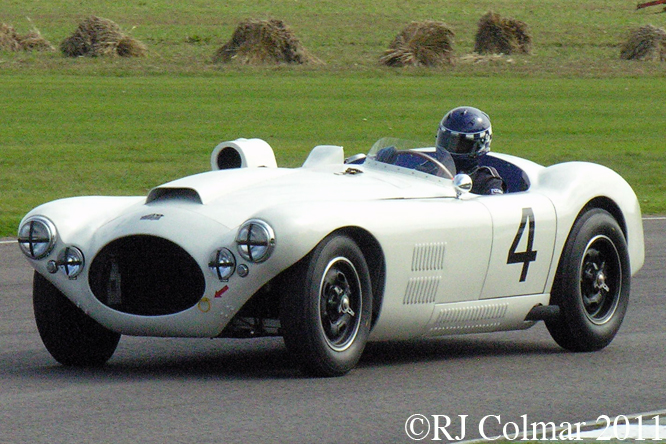
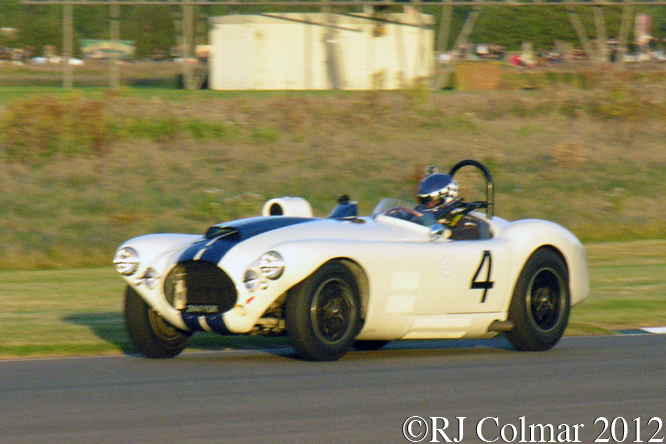
The car seen in these photo’s is a Continuation model, built with the co operation of the Collier Museum around the last Cunningham C3 chassis #5238 which never received it’s intended Vignale bodywork after Briggs shutdown the C3 manufacturing operation.

Cunningham C4-R, Goodwood Revival

#5238 has been built as an exact recreation of a C4-R by Jim Stokes Workshops, Waterlooville, Hampshire, UK using a many parts donated by the Collier Museum and a body built by Roach Manufacturing who used a digital scan of one of the original C4_R’s as a template. Even the wheels have been cast in magnesium using the original Cunningham wheel moulds.

Ben Shuckburgh is seen driving the car at the Goodwood revival in 2011 and 2012, it is the fifth C4-R continuation to be built four examples were built in the 1990’s by Cunningham Historic Motor Cars, owned by Larry Black & Briggs S. Cunningham III that were authorized by the Cunningham family.

Cunningham C4-R, Goodwood Revival

My thanks to Cunningham Motorsport Historian Lawrence W. Berman for the information on the build of today’s featured car.

Thanks for joining me on this “Once Around The Clock” edition of “Gettin’ a li’l psycho on tyres” I hope you will join me again tomorrow. Don’t forget to come back now !

Share

One Shift Short Of A Hero – Talbot Lago T26 GS #11056

In 1947 Anthony F. Lago and Carlo Marchetti designed the Talbot T26C Grand Prix open wheeler which featured a 4.5 litre / 274 cui straight six cylinder motor with triple carburetors which made it’s racing debut at Monaco in 1948. Despite requiring less fuel and fewer tyres during the course of races than the more powerful supercharged cars built by Maserati, Alfa Romeo and Ferrari the T26C was considered out dated but they did win two Grand Prix races in 1949.

In 1950 3 Talbot Lago Grand Prix cars, fitted with crude 2 seat bodies, cycle wings over the wheels and the necessary lighting for night driving, were entered in the Le Mans 24 hour race. The #5 driven for 23 and a quarter hours by Louis Rosier and the remainder by his son Jean-Louis came home first one lap ahead of the similar #7 driven by Pierre Meyrat and Guy Mairesse.

Six Talbot Lago’s were privately entered, as they had been in 1950, at Le Mans for 1952 but this time the French cars were comprehensively beaten by the Peter Walker entered Jaguar XK 129 C, C-Type, driven by Walker and Peter Whitehead who finished 9 laps ahead of Pierre Meyrat and Guy Mairesse who’s Talbot Lago completed three laps more than the previous year with the same overall result.

Talbot Lago T26 GS, Goodwood Festival Of Speed

All six Talbot Lago’s were rebodied as a result of a change in body work regulations which effectively outlawed cycle winged cars at Le Mans in 1952. Pierre “Levegh” Eugène Alfred Bouillon took it upon himself to stay in his car chassis #11056 that he was supposed to be sharing with René Marchand for over 22 hours. While leading the pursuing Mercedes Benz cars by 4 laps “Levegh” missed a gear selecting 2nd instead of 4th with terminal consequences for his engine that caused his retirement, with just over an hour to go, handing an unpopular 1-2 victory to the Mercedes Benz team.

So far as I have been able to ascertain today’s featured car seen at Goodwood in 2009 is chassis #11056 raced in 1951 at Le Mans by the Argentinians Froilan Gonzales and Onofre Marimon who retired before half distance with a broken radiator.”Pierre Levegh” acquired the car in 1952 and body work by Charles Deutsch was fitted to comply with the new regulations effectively outlawing cycle wings over the wheels.

Talbot Lago T26 GS, Goodwood Festival Of Speed

In 1953 “Levegh”, racing under the name of his uncle a racer who died at the wheel of a racing car in 1904, returned to Le Mans for a second time with #11056 now sharing the car with Charles Pozzi to finish a distant 8th 400 kms behind the winning C type Jaguar of Tony Rolt and Duncan Hamilton. Lino Fayen joined Levegh in 1954 but this time #11056 retired after just 33 laps.

Pierre Levegh raced this car in at least a dozen other events between 1952 and April 1955 winning two of them in 1952 and 1954 at Montlhéry. On the 11th of June 1955 Pierre Levegh was invited to join the returning works Mercedes Benz team at Le Mans, on lap 34 he was involved with a collision with a slower car that saw him and his blazing 300SLR fatally land on barriers while parts of his car were hurled into the crowd and killing 82 spectators and injuring 100 more.

During the 1970’s the Deutsch body work was abandoned and the car was refitted with cycle wing bodywork as used by Gonzalez and Marimon in 1951. In 2006 11056 appeared at Pebble Beach with a likeness of the Deutsch bodywork as used by Pierre Levegh but there are significant differences not least the wider radiator grill than seen in 1952 and the curious addition of a NACA submerged duct in the spare wheel cover on the right side of the vehicle. So far as I know such ducts did not appear on Talbot Lago’s until 1953 on chassis #11055 and certainly not on chassis #11056.

If this outline is at variance with your understanding of today’s featured car please do not hesitate to chime in below.

Thanks for joining me on this “One Shift Short Of A Hero” edition of “Gettin’ a li’l psycho on tyres” I hope you will join me again tomorrow. Don’t for get to come back now !

Share

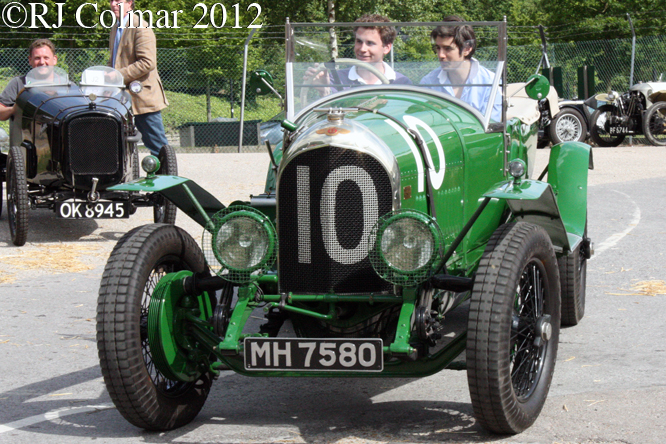
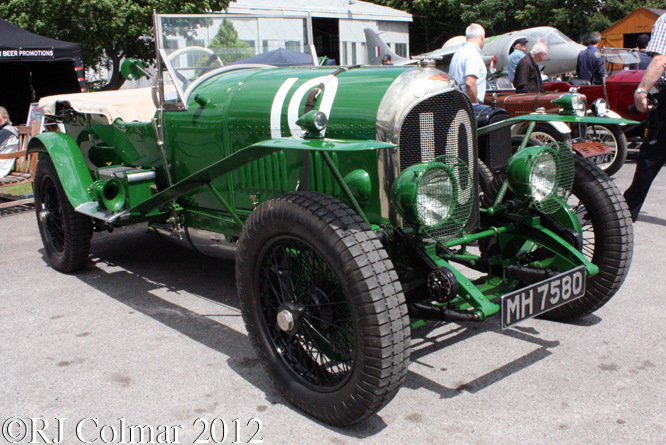
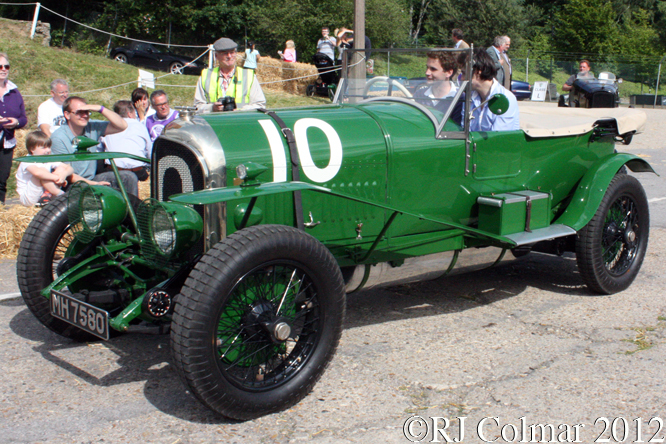
Hooded Fuel Consumption – Bentley 3 litre #1138

Le Mans is not so well remembered by numerous teams for quirky rules which have seen them retire if not be outright disqualified from the 24 hours of Le Mans endurance race.

Bentley 3 litre, Brooklands Double 12, Brooklands Museum

1925 saw the organisers of the third running of the 24 hour endurance classic introduce a rule that cars had to run the first 20 laps of the race with the hood, convertible roof, up.

Bentley 3 litre, Brooklands Double 12, Brooklands Museum

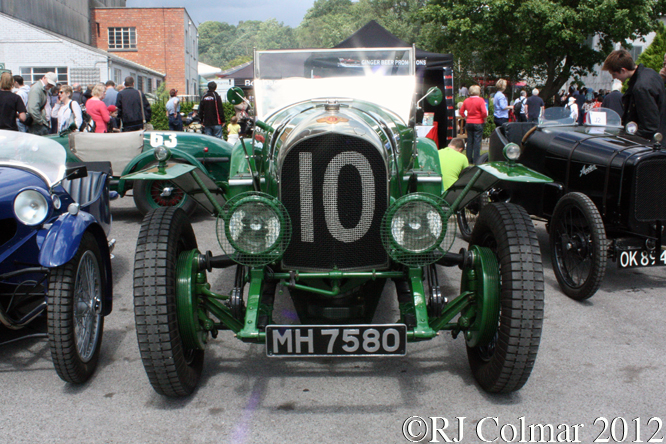
After winning the twice round the clock race in 1924, Bentley Motors Ltd had two 3 litre cars entered in the 1925 event one of which is chassis #1138, seen here at last years Brooklands Double 12 meeting, which was to have Herbert Kensington-Moir and Dudley Benjafield at the wheel.

Bentley 3 litre, Brooklands Double 12, Brooklands Museum

It appears that Bentley aimed to make their fuel stop at 20 laps to coincide with being able to lower the hood and put in just enough fuel to cover the distance. Herbert Kensington-Moir is said to have made a good start and was timed at speeds of over 90 mph, however on the 19th lap the car ground to a halt out of fuel.

Bentley 3 litre, Brooklands Double 12, Brooklands Museum

It would appear no one had factored in the additional fuel consumption created by the additional drag created by the hood and so Dudley Benjafield never got to race the car. The sister car chassis #1040 driven by 1924 Le Mans winners Captain John Duff and Frank Clement ground to a halt just short of half distance after a carburetor fire.

Bentley 3 litre, Brooklands Double 12, Brooklands Museum

The following year Bentley returned to Le Mans with 3 cars but all three retired but in 1927 Dudley Benjafield joined Sammy Davis and their 3 litre Sport known as Old No. 7 delivered Bentley a second victory in the French endurance classic.

Thanks for joining me on this “Hooded Fuel Consumption” edition of “Gettin a li’l psycho on tyres” I hope you will join me again tomorrow. Don’t for get to come back now !

Share

Ultimate Cars Ultimate Race – Porsche 917K #053

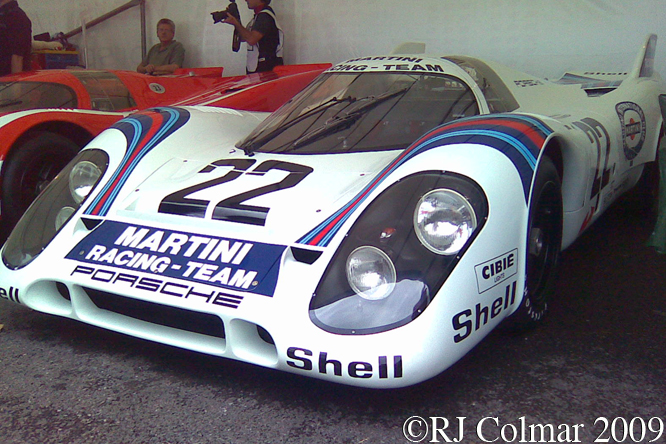
If there is one race I’d love to be able to turn the clock back for in order to attend it would be the 1971 Le Mans 24 hours which for my money was the ultimate road race with the ultimate cars.

Porsche 917K, Goodwood Festival Of Speed

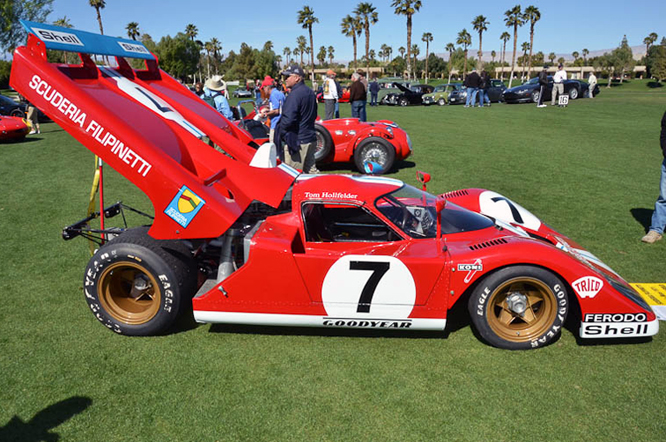
Lined up on the grid were seven Porsche 917’s with a variety of body configurations against 9 Ferrari 512s in both closed M spec, earlier open S Spec and two unique 512’s one from the Penske team which had a large rear wing and the F spec car of Scuderia Filipinetti that had a narrow cockpit built around a Porsche 917 windscreen.

Porsche 917K, Goodwood Festival Of Speed

The race was an uneven contest between the Porsches as the Ferraris suffered from inferior reliability and top speeds were down on the Porsche’s 230 mph plus capabilities. However it was the fastest to be run at the circuit until 2010.

Porsche 917K, Goodwood Festival Of Speed

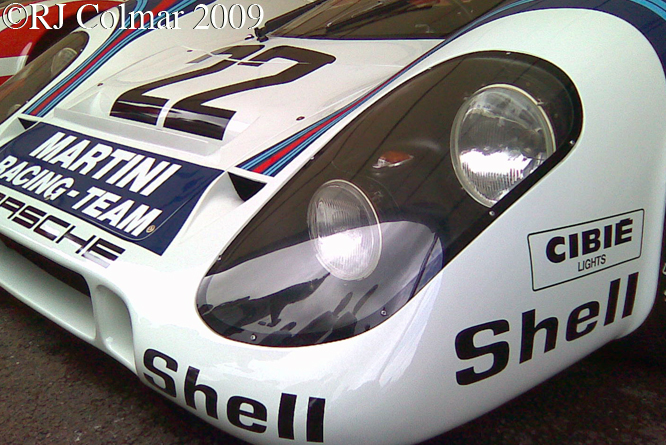
The winning car chassis #056 seen here at Goodwood Festival of Speed featured a special lightweight magnesium chassis built only for the works supported Porsche Salzburg team much to the annoyance of Porsche’s other works supported team run by John Wyer who’s employees had developed the Porsche body work in short (K Kurz) and long (LH Lang heck) tail forms and shared them freely with all the other teams running 917’s.

Porsche 917K, Goodwood Festival Of Speed

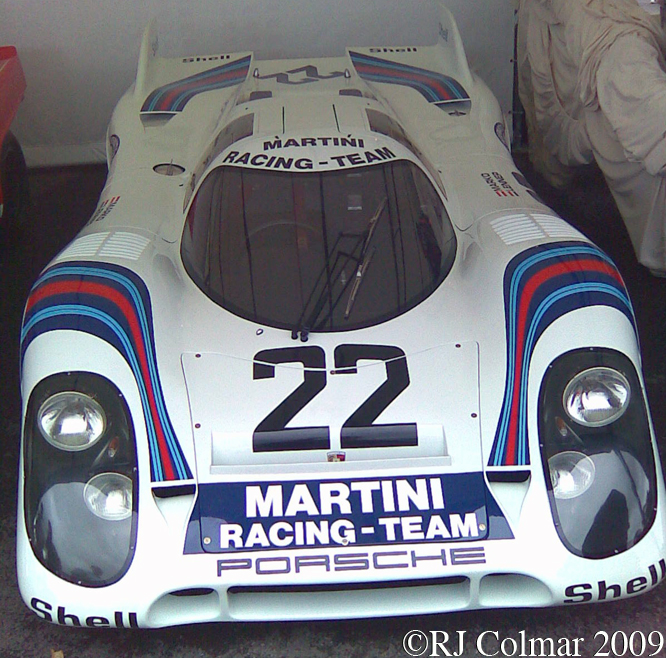
Gils van Lennep and Helmut Marko shared the winning 600 hp 4.9 litre 299 cui aircooled flat 12 powered #22 car which traveled 3,107.7 miles in 24 hours covering 397 laps at an average speed of 138.6 mph the equivalent to five consecutive Coke 600’s !

They beat the next car driven by Richard Attwood, Herbert Muller and Brian Redman in a Gulf Porsche 917 by two laps, 16 miles, and the third finisher the Ferrari of Sam Posey and Tony Adamowicz by 31 laps.

After the race chassis #053 was immediately retired and so has a 100% winning record.

Thanks for joining me on this “Ultimate Cars Ultimate Race” edition of “Gettin’ a li’l psycho on tyres”, I hope you will join me again tomorrow when I’ll be looking at a 1925 3 litre / 183 cui Bentley. Don’t forget to come back now !
Share

$20m Winner – Aston Martin DBR 1/2

This month sees the 90th Anniversary of the first running of the 24 Heures du Mans or Le Mans 24 Hour race which is organised by the Automobile Club de l’Ouest and run on the Circuit de la Sarthe much of which today follows the same course as in 1923.

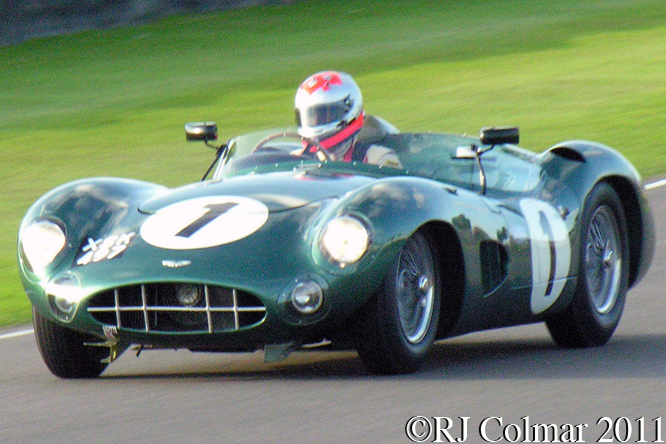
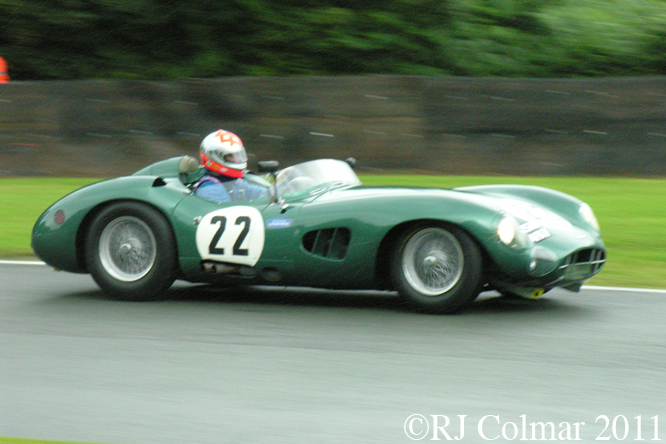
In order to celebrate one of my favourate events in the international motorsports calender I will be posting 26 blogs that cover just a fraction of the Le Mans story, starting with the Aston Martin DBR 1 that coincidentally won the Le Mans 24 Hours in 1959, the year I was born.

Verdon-Roe, Aston Martin DBR1/2, Goodwood Revival

Today’s featured Aston Martin was the second of a run of five racing cars that were built to more or less the same design between between 1956 and 1959. DBR1/2 was the first to be fitted with a 3 litre / 183 cui 6 cylinder motor from new in 1957. DBR 1/1 built in 1956 was orginally fitted with a 2.5 litre / 152 cui motor which was replaced in 1957.

Tony Brooks and Noël Cunningham-Reid drove DBR1/2 to victory at the World Sports Car Championship round held at the Nurburgring in 1957 two weeks after Tony Brooks had led an Aston Martin 1-2 result driving the same car in the non championship race at Spa. Brooks and Cunningham-Reid shared DBR1/2 again at the 1957 Le Mans 24 hours which they did not finish after being involved in an accident. The same pairing shared DBR 1/2 at a second non championship race at Spa which they won.

Verdon-Roe, Aston Martin DBR1/2, Goodwood Revival

In 1958 Stirling Moss shared this car with Brooks at Sebring where they retired from the 12 hour race with an axle problem. Two more retirements followed at the Nurburgring and Le Mans but at the end of the ’58 season Brooks and Moss won the Tourist Trophy at Goodwood, where the car is seen above with Bobby Verdon-Roe at the wheel.

Verdon-Roe, Aston Martin DBR1/2, Gold Cup, Oulton Park

In 1959 Stirling Moss won a minor race at Silverstone with the Aston before Roy Salvadori and Carrol Shelby took over the driving duties for the 1959 Le Mans 24 Hours to score the Marques only out right Le Mans victory having covered 323 laps one more than the second placed sister car, DBR 1/4 driven by Maurice Trintignant and Paul Frère. At the end of the year DBR1/2 was driven to victory by Salvadori and Shelby in the TT at Goodwood again which secured the World Sports Car Championship for Aston Martin.

In 1960 Major I. B. Bailie acquired the car entering it for the 1000 km race at the Nurburgring where he came 22nd with Edward Greenhall and for the Le Mans 24 Hours with Jack Fairman sharing the driving the car finished it’s forth consecutive Le Mans 24 hour race in 9th place. Bailie scored further podium finishes with the car up to 1961. In 1963 David Ham acquired DBR1/2 and raced it on at least 2 occasions which netted podium results in class but no overall wins.

Last year DBR1/2 which played a leading role in Aston Martin’s 1959 World Sportscar Championship success was offered for sale with an asking price of US$20 million. If DBR1/2 ever does change hands at that price it will become the most expensive Aston Martin ever.

Thanks for joining me on this “$20m Winner” edition of “Gettin’ a li’l psycho on tyres”, I hope you will join me again tomorrow. Don’t forget to come back now !
Share