Tag Archives: Lotus

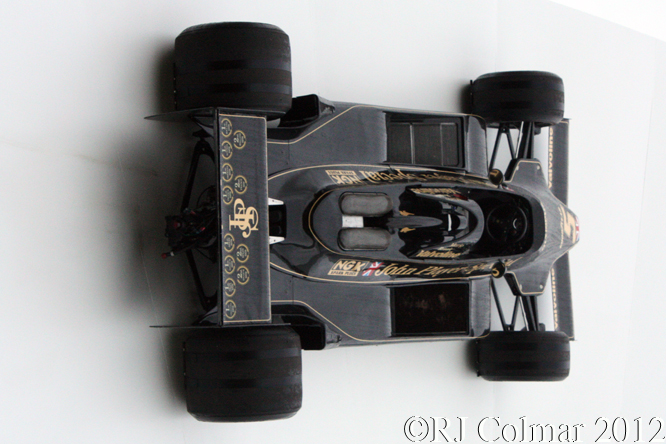
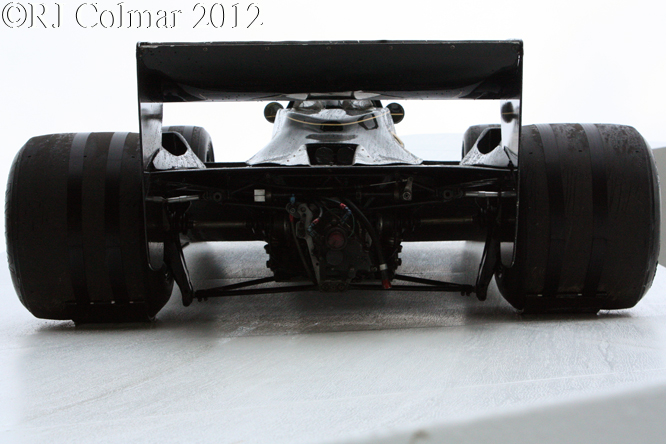
Not A Bolt On – Lotus Turbo Esprit Type 82

In 1979 Monaco based oil traders Essex Petrolium joined Martini as sponsors of the Team Lotus Formula One team, something that Martini were not too thrilled with as they decided not to pursue there sponsorship for a second year. For 1980 Essex became the teams primary sponsor which carried over into Lotus production car operations with the launch, at the Royal Albert Hall, of the Lotus Turbo Esprit as a limited edition Lotus Essex Turbo Esprit of which just 100 were built in 1980 and 1981.
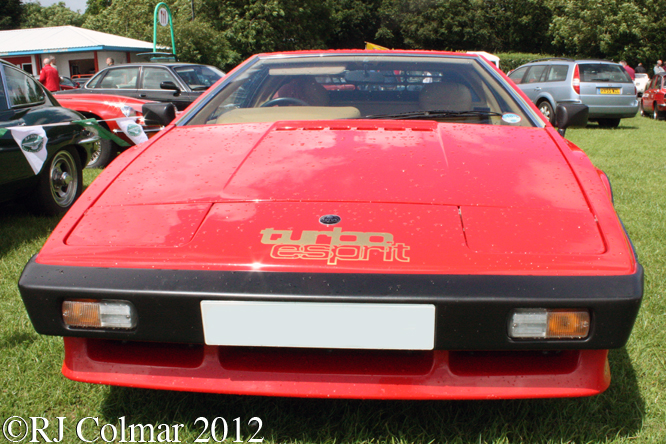
Lotus Turbo Esprit, Classic and Sports Car Action Day , Castle Combe

Unlike the single carburetor bolt on turbo that Lotus dealers Bell & Colvill had been offering customers since 1978 the official Lotus Turbo Esprit was a substantial upgrade of the normally aspirated Lotus Esprit Type 79, which included a new chassis with a wider engine bay, new front suspension derived from the latest Lotus Elite, new rear suspension and a new 210 hp type 910 development of the 4 cylinder Type 907 motor with twin carburetors and Garrett T3 Turbocharger.
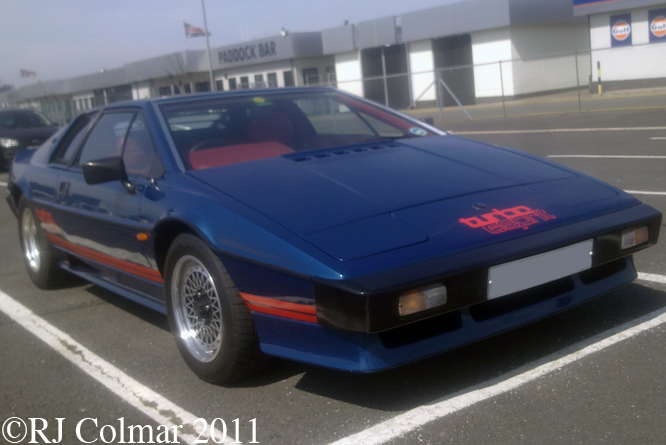
Lotus Turbo Esprit, Silverstone Classic

After the production run of 100 Lotus Essex Turbo Esprit’s had been completed a variation of the originals blue red and silver colour scheme was offered with red leather interior like the one seen above in the Paddock at Silverstone which features rare three piece Compomotive wheels as used by James Bond in the 1981 film “For Your Eyes Only“.
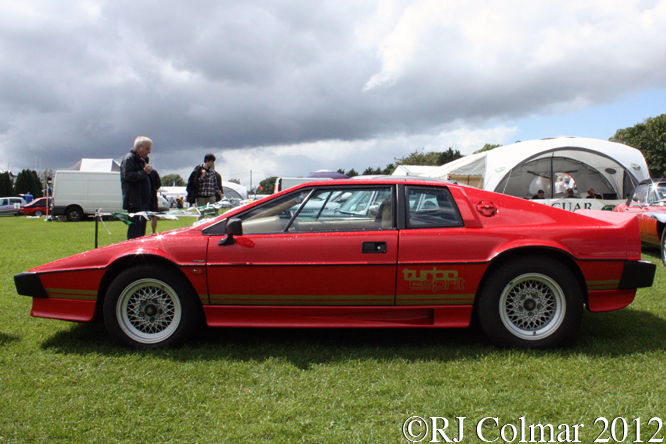
Lotus Turbo Esprit, Classic and Sports Car Action Day , Castle Combe

Most Turbo Esprit’s were supplied with one piece BBS wheels. The Turbo Esprit body work is differentiated from earlier Giorgetto Giugiaro designed Esprit body by the addition of a front below the bumper spoiler and side “skirts” with NACA air ducts for the engine bay.
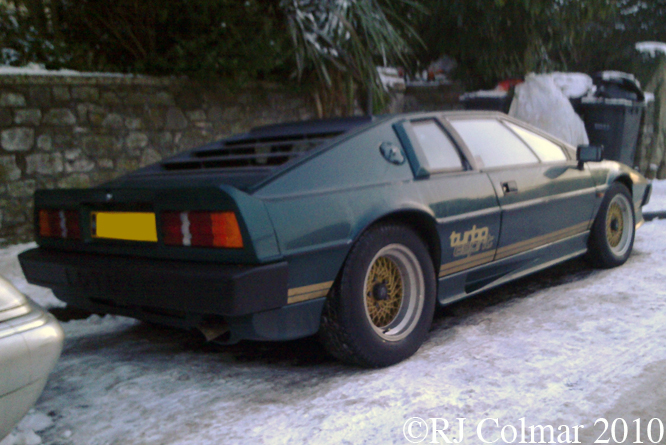
Lotus Turbo Esprit, Bristol

The significance of the wider engine bay of the Turbo Esprit’s new chassis would not become clear until the launch of the V8 Esprit which although initially developed alongside it’s turbo sibling did not come to market until 1996 having been delayed by numerous other projects including Colin Chapman’s involvement with De Lorean.
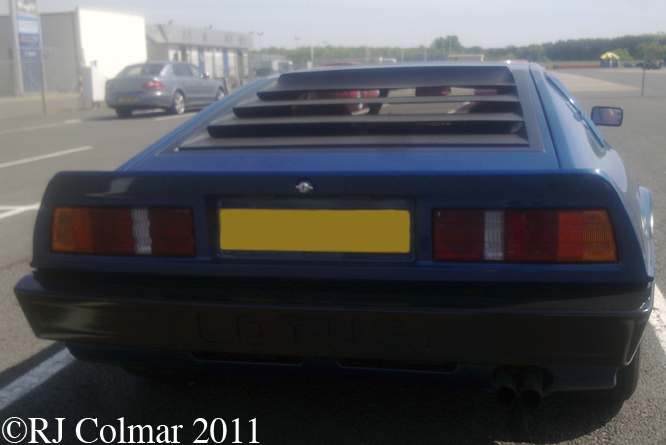
Lotus Turbo Esprit, Silverstone Classic

Although well received by the press the Turbo Esprit failed to gain a substantial foot hold anticipated in the USA and the 846 examples built between 1980 and 1984 marked the beginning of a steady decline in the fortunes of Lotus Cars.

Thanks for joining me on this “Not A Bolt On” edition of “Gettin’ a li’l psycho on tyres” I hope you will join me again tomorrow. Don’t forget to come back now !

Share

Wheels & Ears – Lotus Esprit S2 Type 79

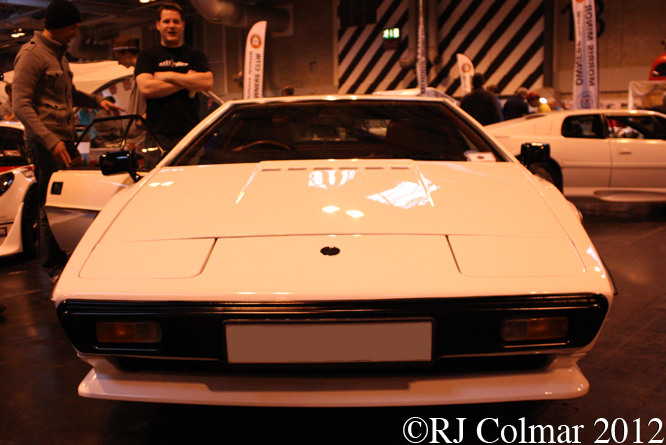
The pace of innovation and development at Lotus was far too high for organised record keeping to be a strong point and some how the Lotus Type 79 number ended up being given to both the 1978 World Championship winning Formula One car and the otherwise unrelated Lotus Esprit S1 & S2 variations.

Lotus Esprit S2, The Classic Motor Show, NEC, Birmingham

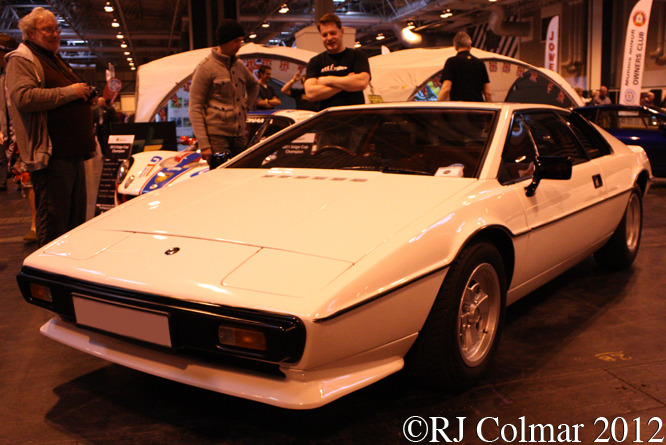
The second iteration of the Giugiaro designed Esprit, launched in 1978, featured a wrap around bumper which brought down the aerodynamic measure to Cd 0.355 and improved the handling in cross winds.

Lotus Esprit S2, The Classic Motor Show, NEC, Birmingham

The Gotti alloy wheels of the original Elite were replaced by Lotus designed alloy wheels manufactured by Speedline. Inside wider seats were fitted along side new instrumentation and switch gear illuminated by fibre optics, the external rear view mirrors became remotely operated too.

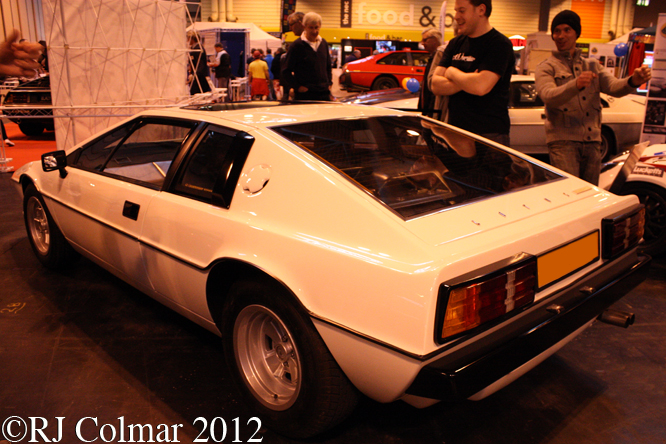
Lotus Esprit S2, The Classic Motor Show, NEC, Birmingham

Ears behind the rear 3/4 window were used to feed air into the carburetor on the left and into the engine bay on the right.

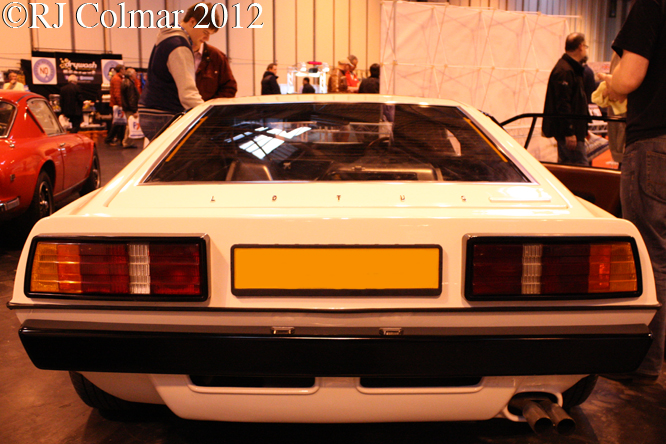
Lotus Esprit S2, The Classic Motor Show, NEC, Birmingham

The Rover SD1 sourced rear lights now incorporated high intensity fog lamps. 1061 Esprit S2’s were built with the original Type 907 2 litre / 122 cui motor that gave the car a top speed of 124 mph. A further 88 S2.2’s were built with the an identical body, galvanised chassis and Type 912 motors of 2.2 litre / 134 cui with the same 160 hp but much improved torque which made the Esprit much easier to drive around town.

Thanks for joining me on this “Wheels & Ears” edition of “Gettin’ a li’l psycho on tyres” I hope you will join me again tomorrow. Don’t forget to come back now !
Share

Championship Clincher – Talbot Sunbeam Lotus (Type 81)

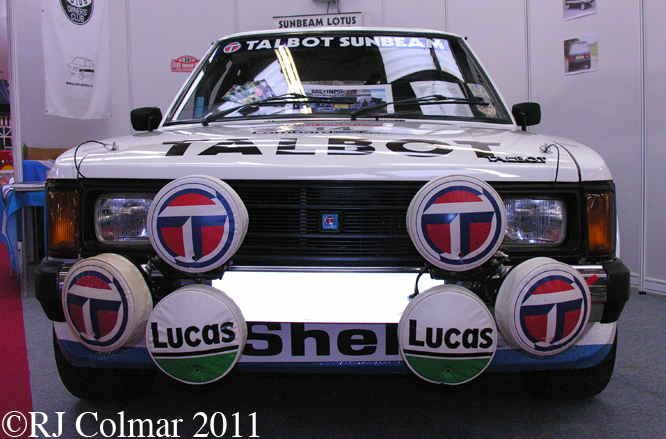
In 1977 the European division of Chrysler launched the Chrysler Sunbeam hatchback which was financed with Government aid that was part of a strategic plan to keep jobs at Chryslers Linwood factory in Scotland where the Hillman Imp production had come to a halt in 1976.

The new hatchback used the floor plan of the Hillman Avenger, another model manufactured at Linwood, of which sales were falling and which was to be discontinued in 1981.

Talbot Sunbeam Lotus, Race Retro, Stoneleigh

In 1978 Chrysler commissioned Lotus to develop a competition version of the Sunbeam hatchback, which appears to have shared the same type number ’81’ as the Lotus Ford ’81’ Formula One car.

Incidentally this appears to be the third of two completely unrelated projects have shared a Lotus Type number, I have read suggestions this occurred because some one lost the book in which the Lotus projects were recorded, I have also seen suggestions that what ever Lotus type numbers vehicles have now, they were not necessarily the same as those that appeared on the original Lotus drawings.

The Sunbeam Lotus was produced with a 150 hp for road trim and 250 hp for competition rally trim both versions using variants of the Lotus Type 907 motor first seen in the Lotus 62 sports racing car and later in the Lotus Elite, Type 75, road car.

Talbot Sunbeam Lotus, Race Retro, Stoneleigh

The Sunbeam Lotus was first seen in early 1979 but by the end of the year Chrysler had sold it’s European operations to Peugeot for US$1 (One US Dollar) which came packaged with all of Chrysler Europe’s debt. For 1980 all of Chrysler Europe’s models including the Chrysler Sunbeam Lotus were rebranded as Talbots and all of the road going Sunbeam Lotus models appear with Talbot badges.

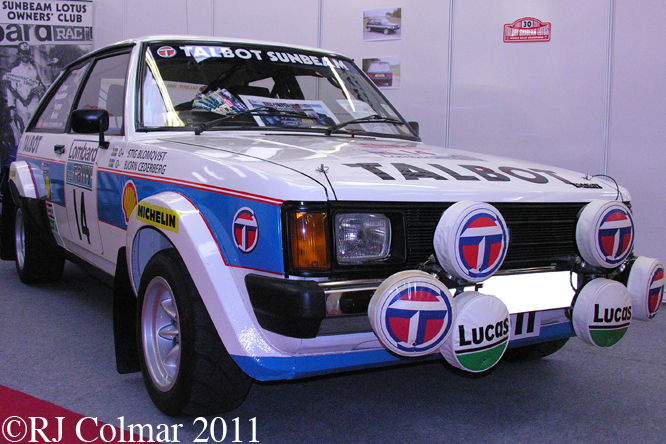
In 1979 a works Chrysler Sunbeam Lotus team entered selected World Championship Rally events in anticipation for a full scale onslaught in 1981. The following year the now Talbot entered team scored three wins two for Henri Toivonen one on snow and the other on gravel, while Frenchman Guy Fréquelin partnered by Jean Todt, since of Peugeot and Ferrari management and now president of the FIA.

In 1981 going into the final rally of the season the RAC Rally Guy and Jean led the World Rally Drivers Chanpionship and Talbot the manufacturers championship despite only managing to score one overall victory. For some reason Guy never got to grips with his second RAC Rally start and he retired while Ari Vatenen his only challenger finished second in a Ford Escort behind Hannu Mikkola in his Audi. After Henri Toivonen also retired the manufacturers championship was clinched for Talbot by Swedes Stig Blomqvist and Bjorn Cederberg in the #14 Swedish Dealer Team entered Talbot which carried the registration/license plated LAC999V.

However I can’t be sure that the car shown in the two photos above is the same car because all thought the car above carries the LAC999V plates it is painted in the factory Talbot Sunbeam Lotus colours which were not the same as the colours carried on Stig’s car in the 1981 RAC Rally.

Thanks for joining me on this “Championship Clincher” edition of “Gettin’ a li’l psycho on tyres” I hope you will join me again tomorrow when I’ll be looking at a Rolls Royce. Don’t forget to come back now !

Share

Improvement Is Not Enough – Lotus Ford 81 #R2

Through out the 1970s Colin Chapman had come up with a string of innovative if not always successful designs and concepts for his Formula One team on the successful side there was the wedge shaped Lotus 72 which remained competitive from 1970 to 1974, the Lotus 78 wing car which won more races than any other design in 1977 but did not win the championship and the Lotus 79 ground effects car which clinched the 1978 World Championships for Mario Andretti and Lotus.

On the less successful side Colin had developed the Lotus 76 with it’s novel twin wing and push button clutch which was abandoned in 1974, Lotus 77 with it’s infinitely variable suspension geometry which caused team leader Ronnie Peterson to quit the team, before it was turned into a one time race winner with Mario Andretti at the wheel in 1976 and the Lotus 80 which took the ground effects concept a little too far and was abandoned after just three starts in 1979.

This left Lotus and Ferrari tied on championships for the 1970’s with three drivers titles each and four constructors titles each with Lotus winning 35 races between 1970 and 1979 to Ferrari’s 39.

Lotus 81, 1980 British Grand Prix, Brands Hatch

1980 proved to be a bad year for both Ferrari and Lotus, Ferrari were busy building a new turbo charged motor and the Ferrari T5 used in the interim was an improvement on the previous years championship winning Ferrari T4, but was way behind the development curve of its competitors, Colin Champman’s Lotus 1981 mean while did not appear to feature any innovations and is probably best described as an improvement on the 1978 championship winning Lotus 79, but was also way behind the development curve of it’s competitors.

Mario Andretti and Elio de Angelis were employed to drive the new cars and it was de Angelis in his second season in the sports top tier that scored the teams best result a second place in the Brazilian Grand Prix along with three further top six, points paying finish. Mario meanwhile had a miserable last season at Lotus with nine retirements and just a single sixth place finish in his last race for the team in the US Grand Prix at Watkins Glen.

The Lotus 81 introduced future world champion Nigel Mansell to Formula One when he became a third member of the team for three races towards the end of the year starting at the 1980 Austrian Grand Prix. Nigel recorded two retirements and a DNQ but had done enough to secure a seat with the team for the following season.

Lotus finished the season in a poor and distant, by their standards 5th place in the constructors championship while Ferrari finished an even more disappointing 10th.

Elio de Angelis is seen above in chassis 81 #R2 on the opening lap of the 1980 British Grand Prix at Brands Hatch from which he retired. 81/R2 was used by all three Lotus drivers in 1980, Mario scored a best 7th place finish at Monaco, Elio a best 4th place finish at the 1980 US GP at Watkins Glen while Nigel failed to qualify R2 at the 1980 Italian GP at Monza.

For 1981 chassis 81/R2 was updated to B spec which included a tea tray front wing, as a has been in use by Ferrari since 1974. Nigel Mansell raced the car four times in 1981 scoring a best 10th place finish in the 1981 South African Grand Prix, the cars last race was the 1981 Argentinian Grand Prix from which Nigel retired. The car was subsequently taken to races as a spare car up until the French Grand Prix after which it was replaced by the new Lotus 87/88 design.

Thanks for joining me on this “Improvement Is Not Enough” edition of “Gettin’ a li’l psycho on tyres” I hope you will join me again tomorrow. Don’t forget to come back now !
Share

Definetly Not The Right One – Lotus Ford 80 #R1

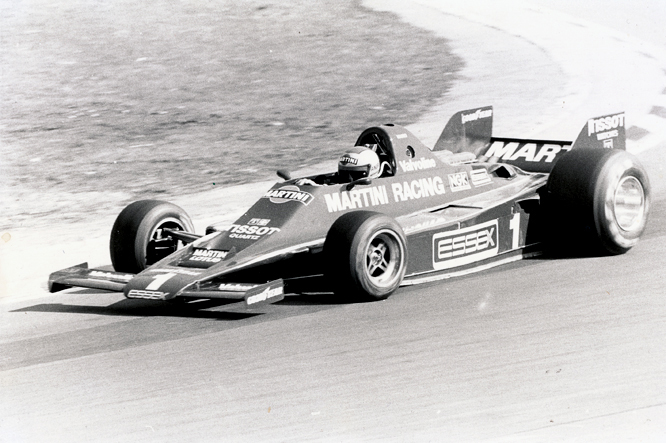
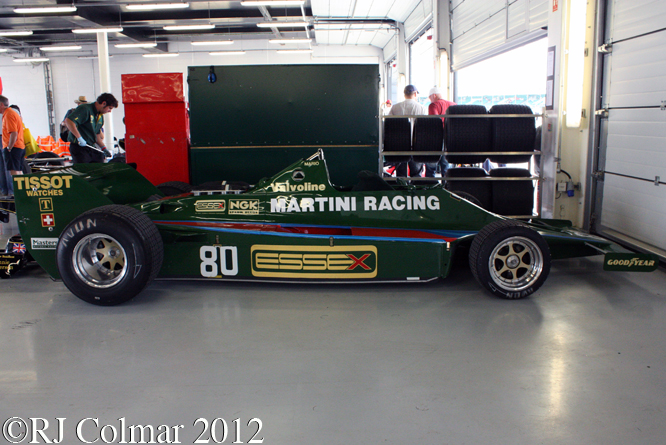
Colin Chapman described the Lotus Ford 80 at it’s launch in the Kentagon at Brands Hatch in 1979 as the best looking Lotus he had ever built. Reigning World Champion Mario Andretti said it would make the Lotus Ford 79 with which he won the 1978 World Championship look like a London Bus.

Lotus Ford 80, Goodwood Festival of Speed

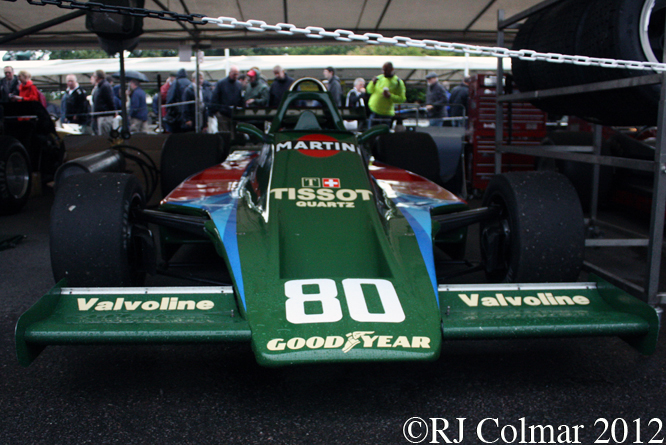
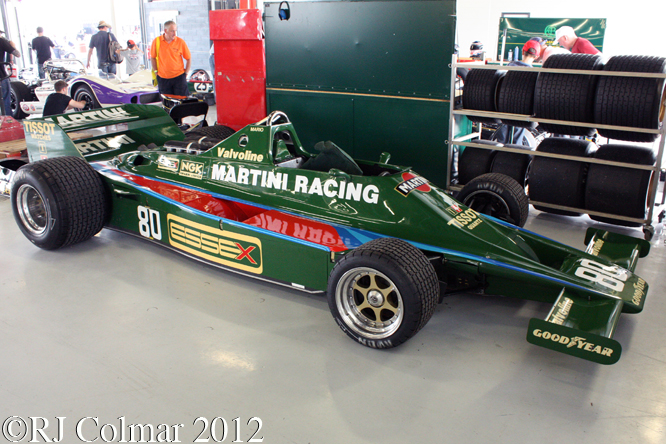
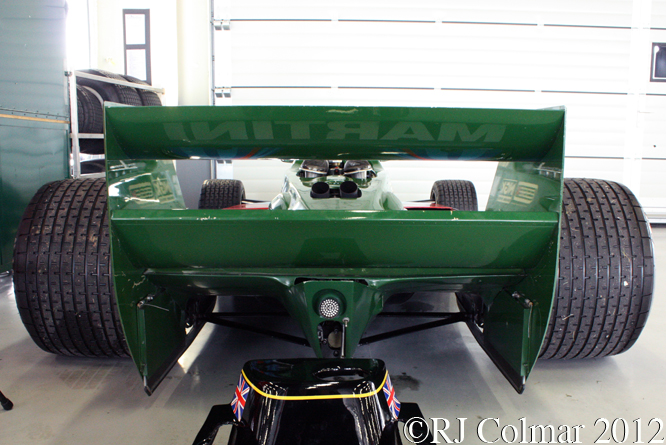
Unfortunately the car with the revolutionary venturi under the nose and a second under the rest of the body and with out the usual wings front and rear proved to be a bit of a handful with unpredictable handling once it started running on the track and it was only a matter of time before Colin Chapman and his engineers were removing the skirts that sealed the airflow beneath the nose and fitting conventional front wings to aid the aerodynamic poise and balance of the car.

Lotus Ford 80, Silverstone Classic

The whole point of the design was to make the Lotus 80 faster down the straights than the Lotus 79 by not having any wings fitted at all. However all was not lost at Brands Hatch, as seen in Sven Platts photo below, the car was only used as a spare, but in the next race the Spanish Grand Prix Mario Andretti qualified a respectable forth behind the two hitherto dominant Ligiers that were the most effective copies of the previous seasons Lotus 79 and the more powerful Ferrari 312 T4 of Gilles Villeneuve.

Lotus Ford 80, Race of Chapions, Brands Hatch

Patrick Depaillier won the Spanish Grand Prix in his Ligier from Carlos Reutemann, in the Lotus Teams older Lotus 79, who finished ahead of Mario in the Lotus 80. The Spanish Grand Prix turned out to be the highlight of the Lotus 80’s short life, at Monaco Mario could only qualify 13th and at the French GP where a heavily revised second Lotus 80 was tested Mario qualified 12th but he retired with suspension and brake issues from each of these races respectively.

Lotus Ford 80, Silverstone Classic

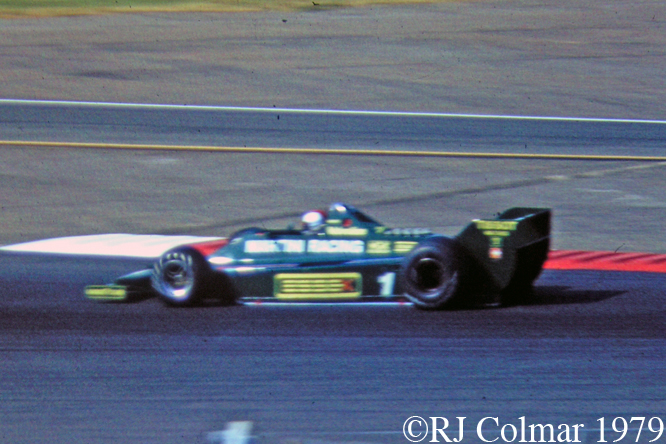
The final appearance of the Lotus 80 was at the British Grand Prix at Silvestone where I took the photograph below. Mario practised in the car but decided he was better off with his year old Lotus 79 which by now was swamped by new designs which emulated it and the more powerful, ultimately 1979 championship winning, Ferrari T4s.

Lotus Ford 80, British Grand Prix, Silverstone

I believe these photographs all show the same chassis namely Lotus Ford 80 R1 which today appears to be owned by Manfredo Rossi a member of the Martini Rossi family that sponsored team Lotus in 1979.

Lotus Ford 80, Silverstone Classic

Thanks for joining me on this “Definitely Not The Right One” edition of ‘Gettin’ a li’l psycho on tyres’ I hope you will join me again tomorrow. Don’t forget to come back now !

Share

Coffee, Croissant & Cars #6 – Avenue Drivers Club

One of the simple joys I have discovered this year is the Avenue Drivers Club meetings at Queen Square in Bristol, part of the pleasure of these events is that they are only 5 mins away from where I live and the other is the ever lengthening list of acquaintances I’m making. Yesterday morning I woke up to find my car frozen shut for the first time this year, once I had ‘broken’ in deiced the windows I set off to pick up my friend Tim. On the way back into town we caught up with Rich in his MG BGT as he tried to navigate his way through a couple of diversions.

Bristol 403, Avenue Drivers Club, Queen Sq, Bristol

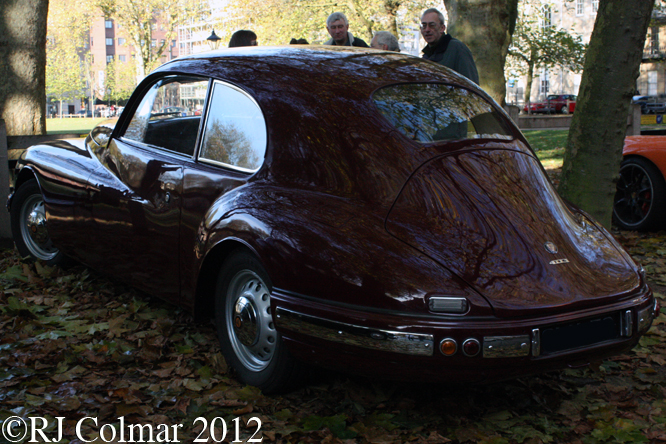
After parking I Tim met several friends he had not seen in nearly a decade and we met Ted who brought out his trusty yellow 911 GT2. Ted kindly invited me to join him at the NEC for the Classic Car Show next weekend. Among the cars that I have not seen at the Avenue Drivers Club before is this 1953 Bristol 403.

Volvo P1800, Avenue Drivers Club, Queen Sq, Bristol

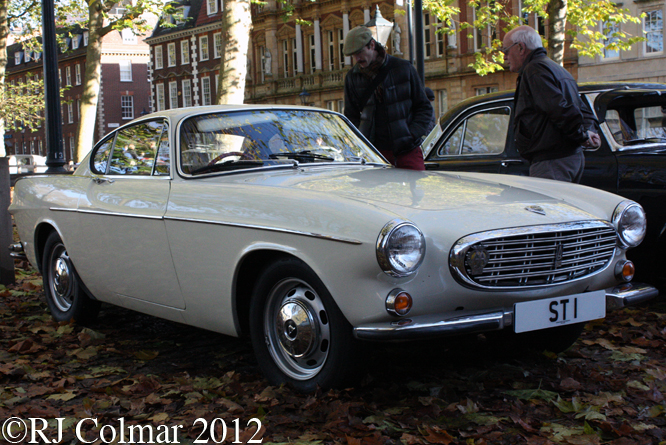
The registration ST 1 was made famous back in the 1960’s by a TV series called The Saint about an international man of mystery played by (Sir) Roger Moore who drove a white Volvo P1800 on Minilite alloy wheels registered “ST 1” in the show, today the registration belongs to a Mercedes A190 Elegance.

Bentley Arnage Red Label, Avenue Drivers Club, Queen Sq, Bristol

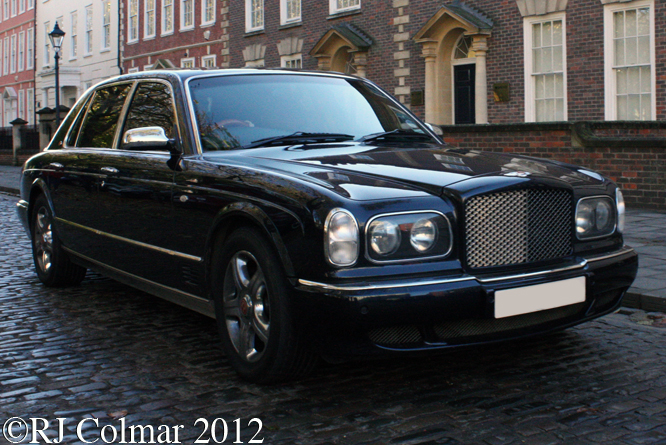
Among a handful of Bentleys that put in an appearance yesterday was this smart 2002 Arnage Red Label, romantically named after a 90 degree right hand corner that is one of the two slowest corners on the Le Mans 24 hour circuit.

Morris Minor 1000, Avenue Drivers Club, Queen Sq, Bristol

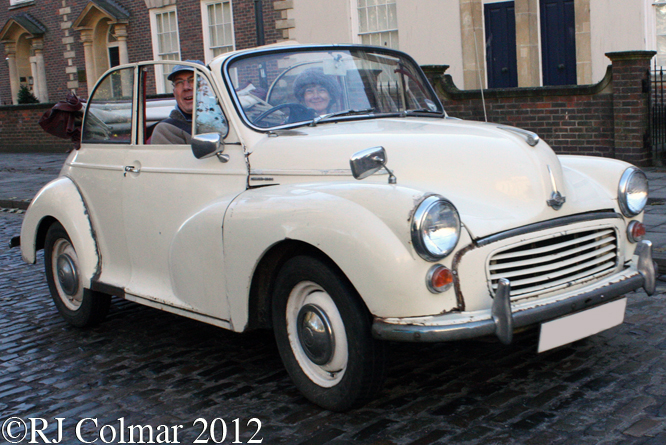
Proof positive of the Simple Joy nature of second Sunday Avenue Drivers Club meetings can be seen on the faces of the occupants of this 1965 Morris Minor 1000 Tourer.

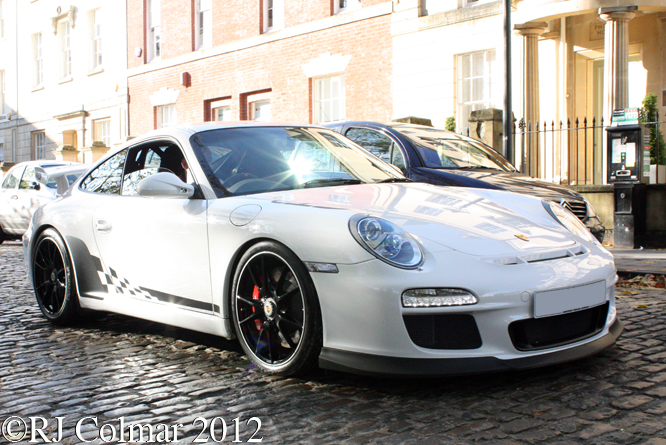
Porsche 911 GT3, Avenue Drivers Club, Queen Sq, Bristol

At the more expensive end of the spectrum was this 2010 Porsche 911 GT3, which for some reason was running on 2003/4 registration plates.

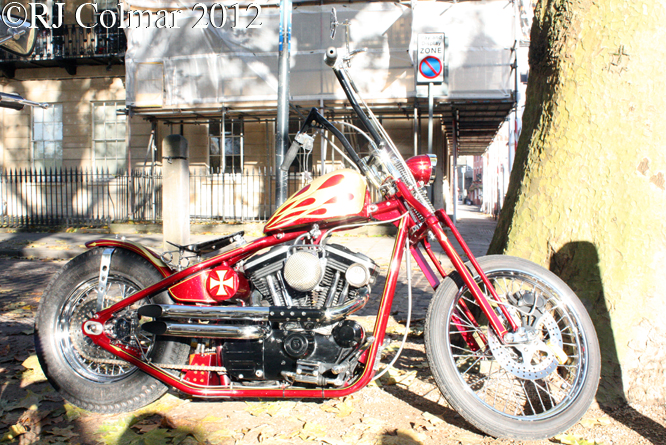
Chopper, Avenue Drivers Club, Queen Sq, Bristol

Just as Ted was observing that there were not many motorcycles present this work of customised art turned up, cant imagine what riding it on cobbled streets must be like with what looks like a seriously masochistic saddle.

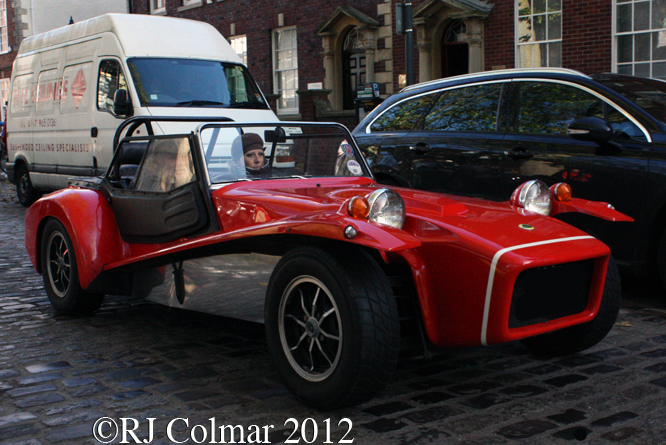
Lotus 7 Series 4, Avenue Drivers Club, Queen Sq, Bristol

Again probably not the most of comfortable vehicles to drive across the streets was this 1972 Lotus 7 Series 4 complete with period Cosmic alloy wheels.

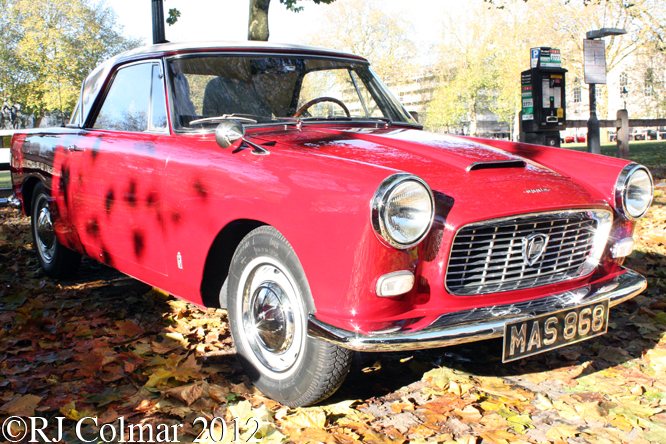
Lancia Aprilla, Avenue Drivers Club, Queen Sq, Bristol

David Roots’s Lenham ALFA Romeo was parked up next to this pristine 1959 Lancia Aprilla.

13/11/12 Correction the vehicle above is a Lancia Appia not Aprila as stated above.

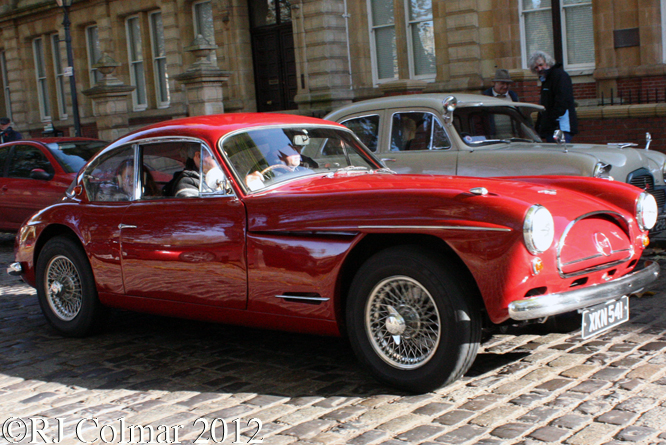
Jensen 541, Avenue Drivers Club, Queen Sq, Bristol

Looking photogenic as ever was this Jensen 541 which I showed a detail of in last months Avenue Drivers Club blog.

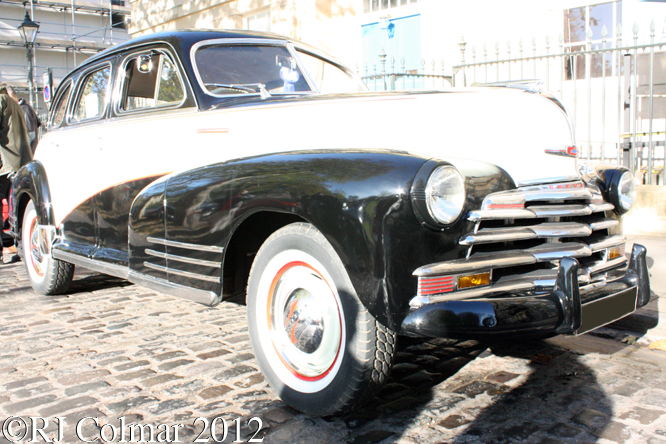
Chevrolet Fleetline, Avenue Drivers Club, Queen Sq, Bristol

Harking back to 1948 was this Chevrolet Fleetline with what appears to be a non standard two tone paint job.

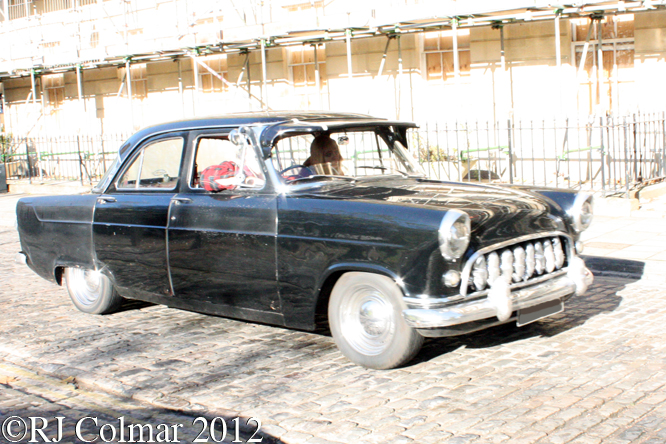
Ford Consul Mk II, Avenue Drivers Club, Queen Sq, Bristol

Another ’59er was this customised Ford Consul Mk II with fetching period sun visor.

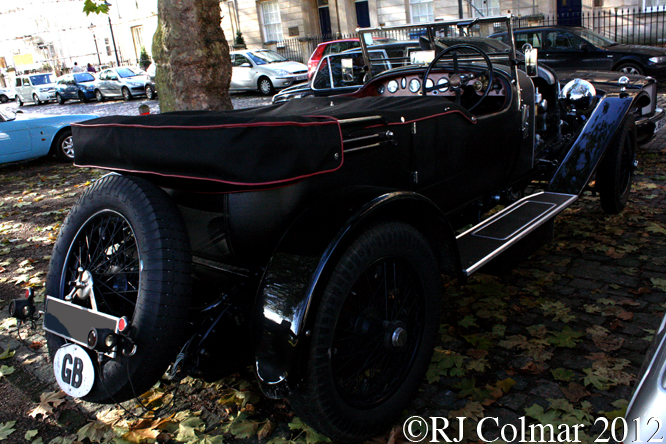
Bentley 4 1/2 litre Vanden Plas, Avenue Drivers Club, Queen Sq, Bristol

You would not know it looking at it but this 1929 4 1/2 litre Bentley Vanden Plas has survived not one but two fires, the second of which melted the front bulkhead and original radiator core. It has since been restored using photogrpahs of it’s original body over a period of ten years.

John the owner of the 4 1/2 litre Bentley Van Plas was telling me that the owner of this 1965 Sunbeam Tiger used to go to school with the owner of the Bristol 403 at the top of this post and that they met for the first time since yesterday. As I said the Avenue Drivers Club is a great place to meet old friends and make new acquaintances.

Thanks for joining me on this “Coffee, Croissant & Cars #6” edition of “Gettin’ a li’l psycho on tyres” I hope you will join me again tomorrow. Don’t forget to come back now !
Share

Mario & Ronnie Show – Lotus Ford 79 #79/2 & #79/3

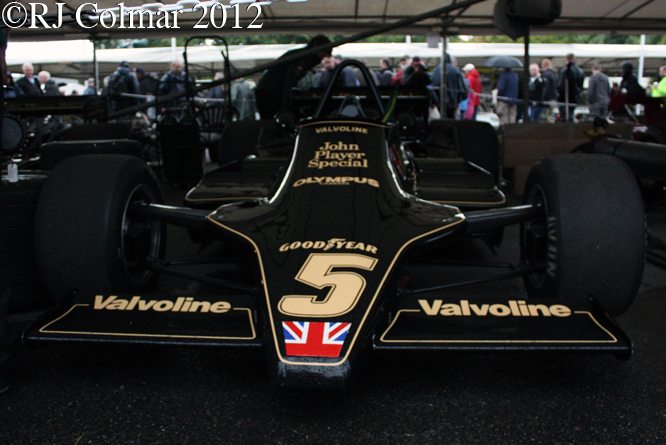
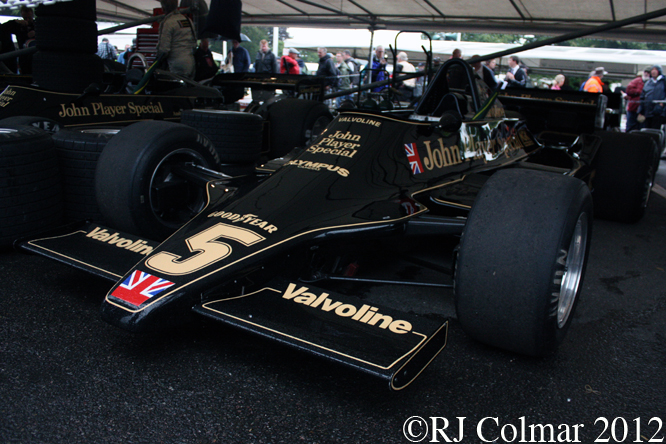
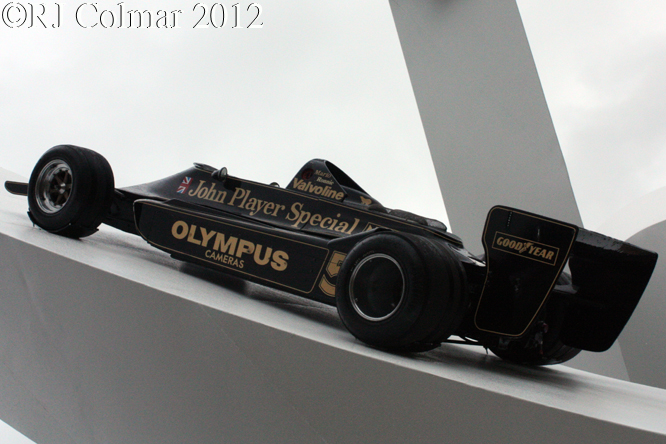
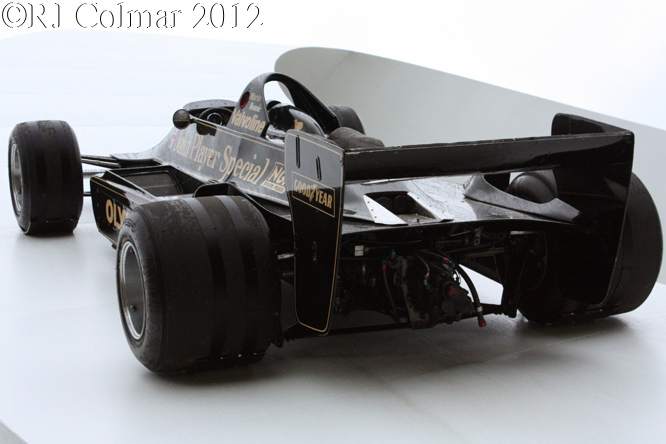
John Player Team Lotus hit the track running in 1978 with Mario Andretti winning the opening race of the season in Argentina and his team mate Ronnie Peterson winning the third race of the season after a thrilling last couple of laps in South Africa. Both of these victories were achieved with the previous seasons Lotus Ford 78 ‘wing car design’ for 1978 Colin Chapman and his engineers came up with something even more refined in the shape of today’s featured car the ‘ground effect’ Lotus Ford 79.

Lotus Ford 79, Goodwood, Festival of Speed

The Mario Andretti first raced a Lotus 79 in the non championship International Trophy race at Silverstone a race well remembered because the front row qualifiers Ronnie Peterson and Niki Lauda both spun of on the warm up lap leaving Andretti and James Hunt to start at the front of the grid despite qualifying 3rd and 4th. Andretti only lasted two laps before he spun out with Hunt spinning out one lap earlier at the same spot.

Lotus Ford 79, Goodwood, Festival of Speed

However for the Belgium Grand Prix there were no mistakes Mario qualified on pole and won, driving I believe from Ronnie who started 7th in the older Lotus Ford 78. At the Spanish Grand Prix Mario was I believe given the #79/3 seen above while Ronnie took over Mario’s Belgium winning #79/2 seen below. Mario qualified on pole and Ronnie 2nd and that is how the Spanish Grand Prix finished.

Lotus Ford 79, Goodwood, Festival of Speed

Mario retired from the Swedish Grand Prix after qualifying on pole leaving Ronnie to finish 3rd behind the controversial Brabham fan cars of Lauda and Watson. Bernie Ecclestone chose to withdraw the Brabham BT46 fan cars after just one race. At the following French Grand Prix Mario qualified 2nd and Ronnie 5th, however they finished 1st and 2nd respectively for the 3rd time in the 1978 season.

Lotus Ford 79, Goodwood, Festival of Speed

For the British Grand Prix it was Ronnie and pole and Mario next to him but both cars retired. In Germany Mario qualified on pole with Ronnie sat next to him on the grid and by now unsurprisingly that is how they finished the race. In Austria Ronnie was again on pole with Mario starting second however Mario retired leaving Ronnie to take an unchallenged win which would prove to be his last.

Lotus Ford 79, Goodwood, Festival of Speed

At the Dutch Grand Prix Mario qualified on pole in #79/3 with Ronnie beside him in #79/2 and the pair duly took their fifth and final 1-2 result of the season. This would prove to be Mario’s last Grand Prix win and indeed the last for any American driver and Ronnie’s last ever finish too. Ronnie crashed #79/2 during practice for the Italian GP and started the race from fifth in an older Lotus 78 while Andretti started from pole in the latest #79/4. Ronnie was involved in a start line accident which broke his legs, unfortunately during the night bone marrow from his injuries got into his blood stream and he died the following morning. The race was restarted and a subdued Mario finished sixth which was enough to claim the championship, but in truth Mario was far more concerned for Ronnie with whom he had been good friends since there time as team mates driving Ferrari sports cars in the early 1970’s. Ronnie for the second time in his career finished second in the World Drivers Championship.

Lotus Ford 79, Goodwood, Festival of Speed

The success of the Lotus 79 was largely due to what was happening to the airflow beneath the bodywork, by building the monocoque just wide enough to hold the driver with fuel tank behind him and the motor behind that, Colin Chapman and his engineers Peter Wright, Geoff Aldridge, Martin Ogilvie and Tony Rudd used the side pods to create venturi by using a low wide neck at the front entrance to the side pods and tall wide exit, with side skirts sealing airflow under the car. When the car was moving air was guided into a partial vacuum created between the venturi side pods under surface and the surface of the road and this had the effect of sucking the car to road which allowed the car to negotiate corners at higher speeds than their competitors, most of whom had still not got to grips with the wing car aerodynamics advanced by the previous years Lotus 78.

For the last two races of the 1979 season perennial Formula One under achiever Jean Pierre Jarrier joined Mario in the team Mario qualified on pole in the USA with J-PJ 8th but neither car finished in the US Grand Prix. The final race of the season was held in Canada where Mario could only qualify 9th and Jean Pierre sat on pole. During the race Jean Pierre looked set for a win until he retired with an oil leak.

Mario finished tenth. The Lotus 79’s were set to be replaced by even more radical Lotus 80’s in 1979 but everything did not go to plan and so the 79’s were pressed into service again for most of the season but were out classed by their competitors who were getting to grips with ground effects aerodynamics.

A little post script courtesy Barry Boor, Mario Andretti was invited to drive the inauguration lap of the next home of the United States Grand Prix at Circuit of the America’s on October 21st, the car he drove was naturally a Lotus Ford 79 with which he won his world Championship, you can see how he got on in this linked youtube clip.

Thanks for joining me on this “Mario & Ronnie Show” edition of “Gettin’ a li’l psycho on tyres, I hope you will join me again tomorrow. Don’t forget to come back now !
Share