Tag Archives: Lotus

The Sunlight Textile Services – Pegasus Sprint

Last Saturday I had another 6am start, but this time not to go and spectate at an event but to act as a marshall for the The Sunlight Textile Services Pegasus Sprint run by the Bristol Pegasus Motor Club. Despite a healthy breakfast which included melon, tangerine, kiwi and a banana by the time I got through signing on I was ready to wolf down a traditional Full English Heart Attack in the Castle Combe Canteen. Even with long johns double layer trousers, three fleeces and a coat I was going to get cold under the cloudless skies with temperatures peaking at 8 degress C but with the wind chill factor making it feel like 9 below zero.

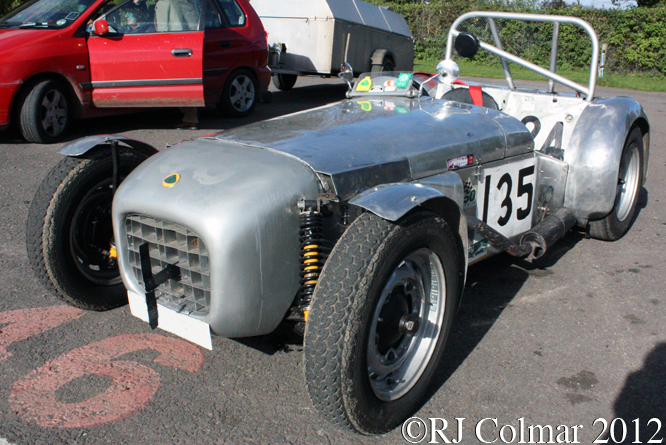
Lotus MG Mk 6, Bristol Pegasus MC Sprint, Castle Combe

In between my second breakfast and the marshalls briefing I managed to snap Jack Taylors 1954 Lotus MG Mk VI this car is chassis #6-18 in theory the 24th Lotus ever built, it’s powered by an MG XPAG motor and appears to have a one off body, quite possibly by Williams and Pritchard though I have yet to confirm that.

Lotus Mk 6, Bristol Pegasus MC Sprint, Castle Combe

Wondering around the pits during the half hour lunch break I managed to take a few more photo’s including John Marshall’s Lotus Mk VI, followers of my blogs at the much missed Rowdy.com, and I know there are one or two of you, will remember me originally mis recognising this car as a Lotus 7. Many mis recognitions since I have found out it was also originally supplied with an MG motor and gearbox which has since been swapped for a Ford 100E motor and Triumph gearbox. In John’s hands this car has won at least 54 trophy’s most no bigger than egg cups.

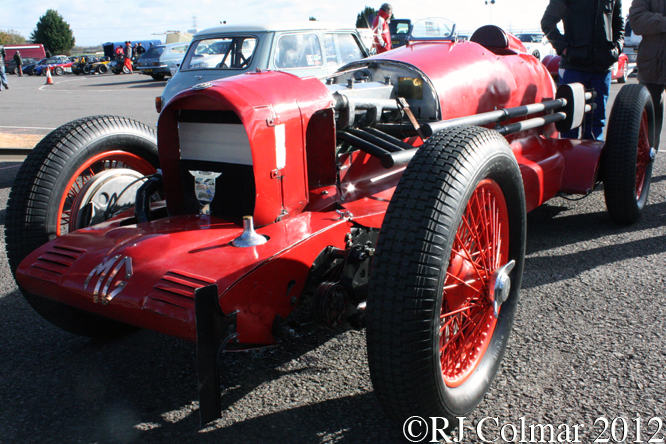
MK K3, Bristol Pegasus MC Sprint, Castle Combe

Perhaps the most extraordinary car and for my money cor of the day was Jeremy Hawkes 1933 MG K3, built as on offset single seater to compete at Brooklands where like the 24 litre “Napier Railton” it holds a record in perpetuity, for vehicles up 1100 cc / 67.126 cui having recorded laps in excess of 120 mph.

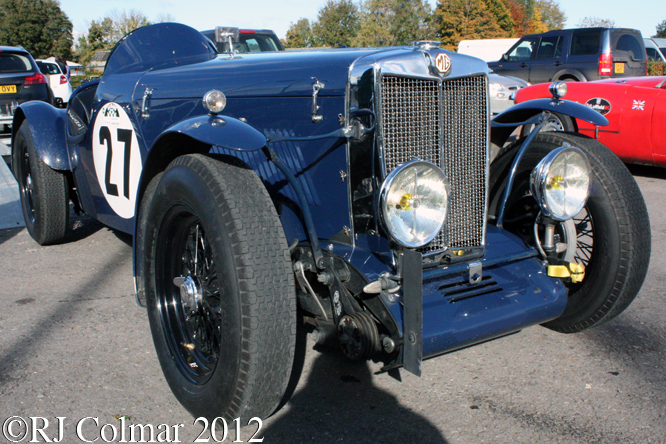
MG TA Midget, Bristol Pegasus MC Sprint, Castle Combe

Anthony Smith brought his 1937 MG TA along to compete in the production road going A2 class.

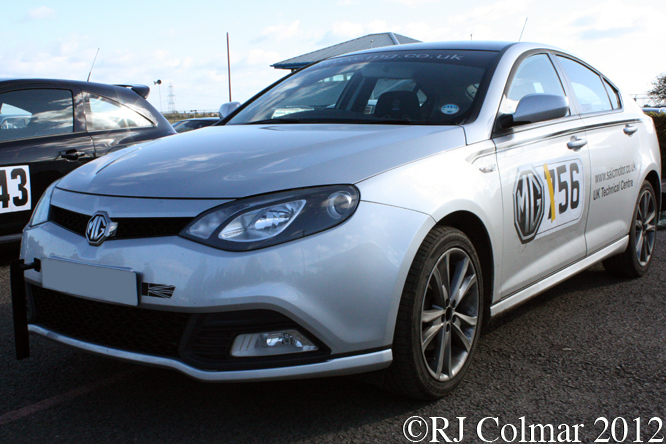
MG A Coupé, Bristol Pegasus MC Sprint, Castle Combe

This was only the second occasion on which I have ever seen a contemporary MG A Coupé this one was driven by Martin Wollacot in Class A2.

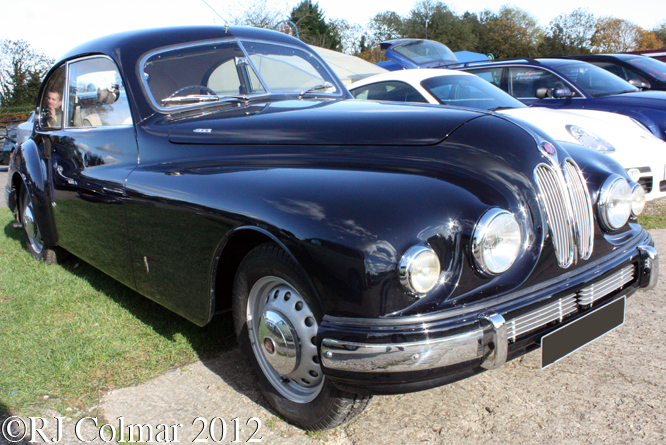
Bristol 403, Bristol Pegasus MC Sprint, Castle Combe

Regular readers might recognise this Bristol 403, which was not competing from the first Coffee Croissant and Cars blog I posted back in April.

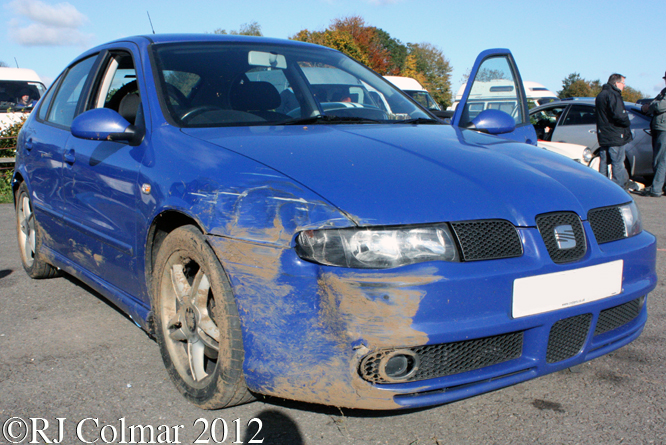
SEAT Leon Tdi, Bristol Pegasus MC Sprint, Castle Combe

SEAT’s León Cupra R (Typ 1M) was voted 7th best hatch back of all time in a poll conducted by Autocar in 2010, four years after production had switched to the newer Typ 1P. This 2004 Tdi Cupra R shows signs of how tricky the conditions were forcing the brothers who competed with it to go home after the practice sessions were completed to repair the damage which was incurred some where between Avon Rise and Quarry Corner during the second practice runs.

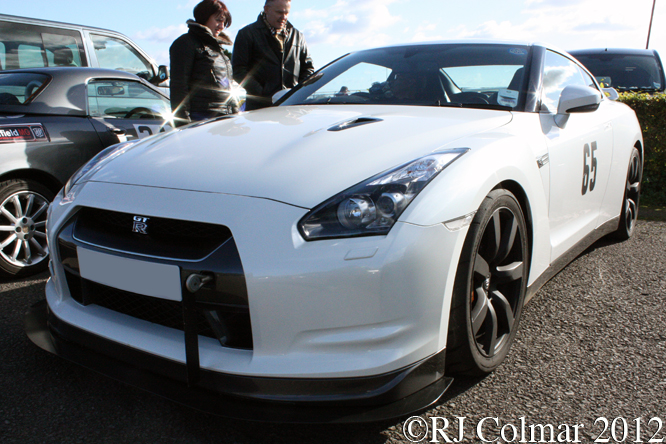
Nissan GTR R35, Bristol Pegasus MC Sprint, Castle Combe

Richard Girling was running his 1st generation 2009 all wheel drive Nissan GTR R35 in the most powerful A4 road going series production class, his car left the factory with 478 hp and a conservative 193 mph capability matched by a rest to 60 mph of 3.2 seconds. Needless to say the car looked quick on the track.

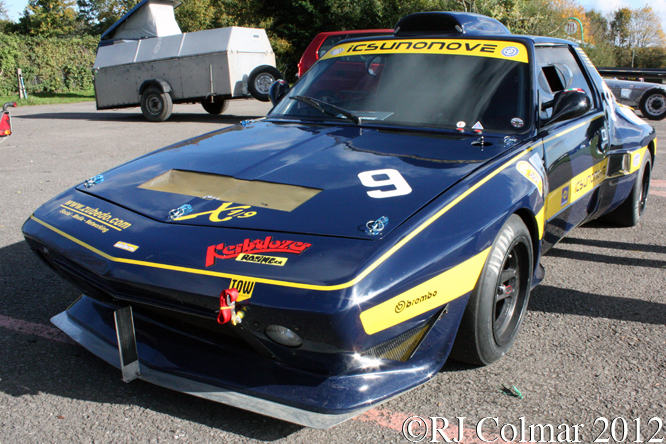
FIAT X1/9, Bristol Pegasus MC Sprint, Castle Combe

Micheal Kason was running his 2 litre / 122 cui FIAT X1/9 in the modified limited prodiction class C3, notice it sits on slick tyres which would not have been easy to heat up in the prevailing conditions.

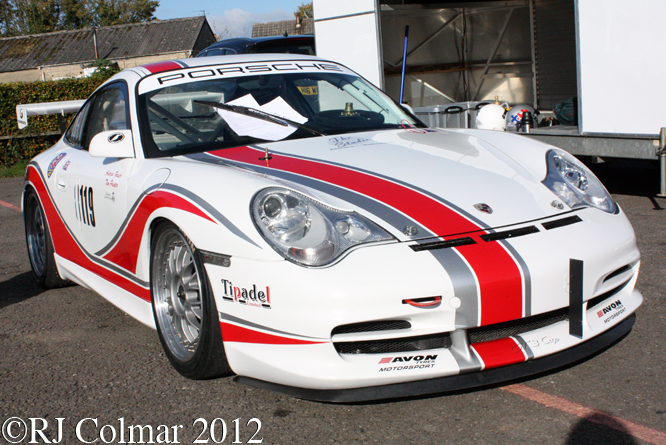
Porsche 911 GT3, Bristol Pegasus MC Sprint, Castle Combe

Running in the largest C4 modified production class were Andrew Fraser and Tim Painter in this 2004 Porsche (996) 911 GT3. This car is for sale at £37,500, if you would like Andrew and Tim’s phone numbers send me an e-mail and I’ll gladly forward the details, usual disclaimers apply.

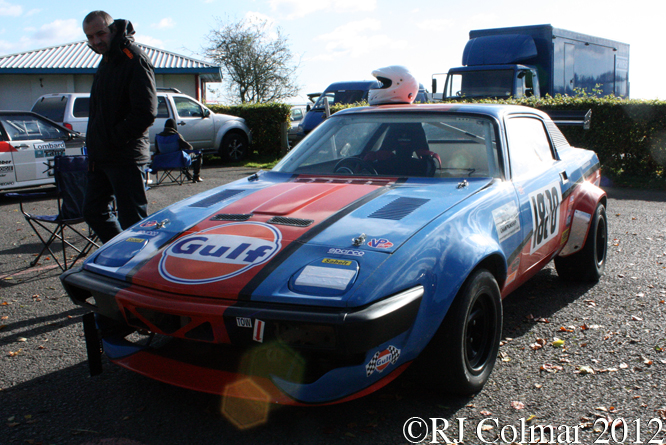
Triumph TR7 V8, Bristol Pegasus MC Sprint, Castle Combe

Last runners of the day were David Hardcastle and Simon Allaby who were competing in the Revington TR / TR Register Sprint & Hillclimb Championship.

Darrian T98-GTR, Bristol Pegasus MC Sprint, Castle Combe

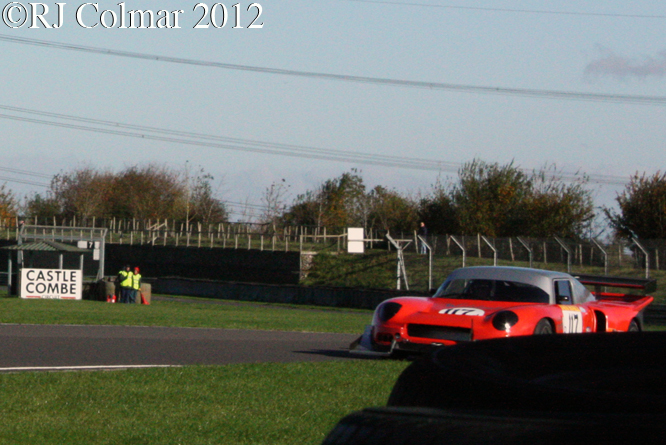
I did not manage to get many photographs of the on track action but while taking a break from marshaling duties I did get a photo of Ian Hall’s 5.2 litre / Darrian T98 GTR which set fastest time of the day by nearly ten seconds.

Thanks to a combination of few too many thrills and spills with short hours of sunlight competitors only got one timed run in before the event started to get too far behind schedule for everyone to get a second time in. Out at Tower we were great full for the hour or so this spared us standing in the delightful sunshine but freezing wind.

Thanks for joining me on this “The Sunlight Textile Services – Pegasus Sprint” edition of “Gettin’ a li’l psycho on tyres”, I hope you will join me tomorrow. Don’t forget to come back now !

Share

Improving The Breed ? – Lotus Elite Type 75

A couple of weeks ago I went to a Q&A session hosted by the voice of British motor sport Murray Walker with Formula One designers Frank Dernie and Niel Oatley, one of the questions was about the carry over of Formula One technology to road car production and both vigorously nodded in the negative. However that does not mean if you win on Sunday you will not sell on Monday anymore than winning on Sunday will guarantee selling on Monday either. If there is any benefit to manufacturers racing on Sunday it is in the commodity of Brand awareness. Similarly by the 1970’s road car manufacturers like Lotus and Ferrari had found that road car manufacture was never going to meet all the expenses of racing in the sports top table, though Enzo Ferrari did his best to keep the toothpaste manufacturers off his cars for as long as possible while Colin Chapman bit the commercial sponsorship bullet at the earliest opportunity in 1968.

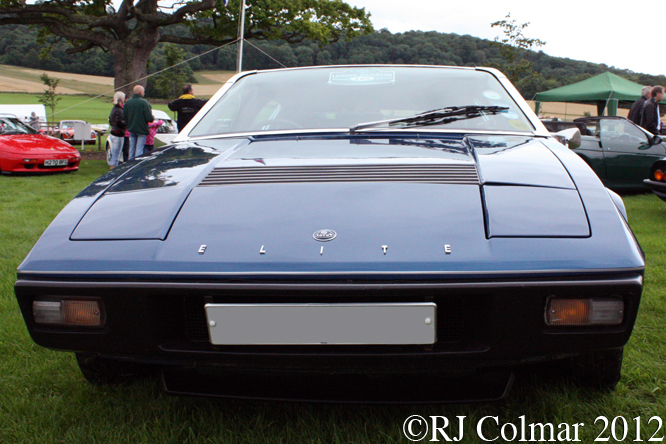
Lotus Elite Type 75, Classics at the Castle, Sherbourne

Either way in 1974 Lotus launched it’s new 2+2 Lotus Elite, it is not recorded how or if Ronnie Peterson’s three wins in the ageing Lotus 72 during 1974 aided sales or not. The 907 aluminium bloc motor for the new car was partly developed on the track by the noisy 1969 Lotus 62 sports car which I looked at a couple of months ago.

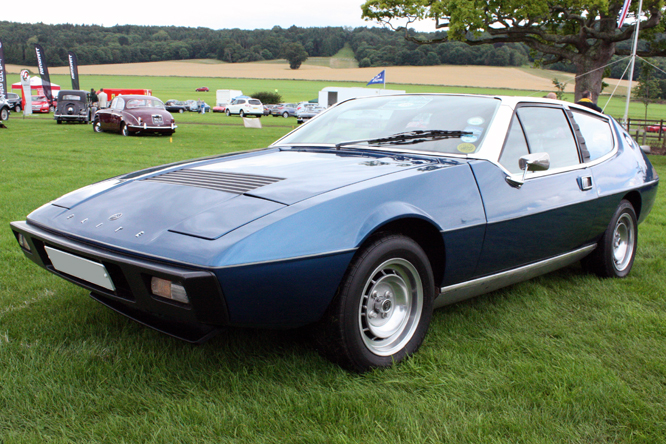
Lotus Elite Type 75, Classics at the Castle, Sherbourne

The chassis of the Type 75 Elite was the latest development of the back bone type first seen in the Lotus Elan in 1962 with independent suspension front and rear.

Lotus Elite Type 75, Classics at the Castle, Sherbourne

The only time I have come close to speaking to Mario Andretti was in 1979 while I was ambling along from the pits at Silverstone to the campsite on a beautiful summers evening with a large crowd of people during the 1979 British Grand Prix meeting. Behind me I felt something touch my leg, when I looked round to see what it was there was a blue Lotus Elite and at the wheel was none other than reigning World Champion Mario Andretti at the wheel, I was speechless as I stood aside to let him pass.

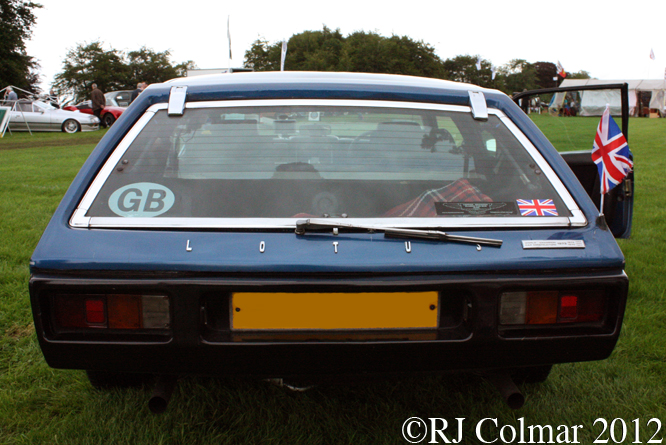
Lotus Elite Type 75, Classics at the Castle, Sherbourne

The Lotus Elite Type 75 was phased out in 1982 with 2,820 units built. A second variation, Elite Type 83, was built between 1980 and 1983 with just 153 units built. It is thought that less than 100 Elite type 75’s like this 1976 example are to be found on British roads today.

Thanks for joining me on this “Improving The Breed ?” edition of “Gettin’ a li’l psycho on tyres” I hope you will join me again tomorrow. Don’t forget to come back now !

Share

Ronnie’s Rocket – Lotus Ford 72 E

Lotus went into the 1973 Formula One Championship season as World Champion Constructors with reigning World Drivers Champion Emerson Fittipaldi being joined by a new team mate 1971 Championship runner up Ronnie Peterson.

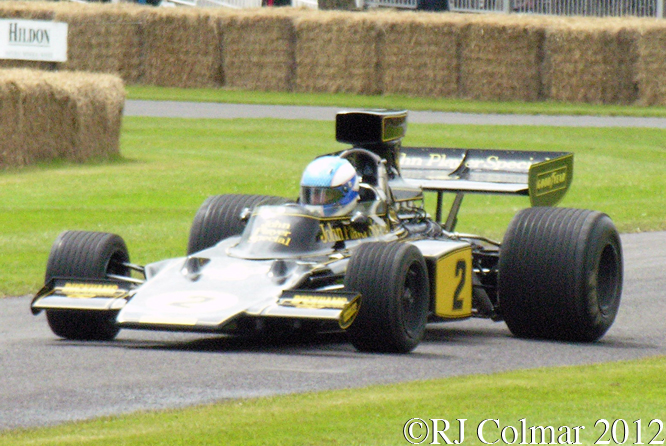
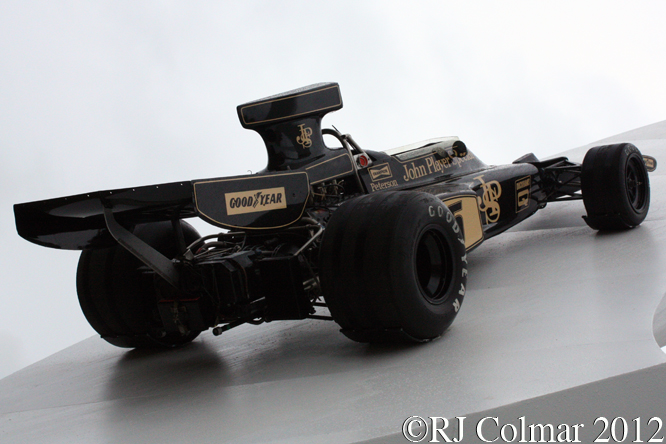
Lotus 72 E, Goodwood Festival of Speed

The team started the season with the same Lotus 72 D model as they had used through out 1972 albeit now running on Goodyear tyres in place of the previous seasons Firestones. Emerson started the season well with 2 wins and a 3rd place from his first 3 starts while Ronnie had only two retirements and an 11th place finish to show from the same three races.

Lotus 72 E, Goodwood Festival of Speed

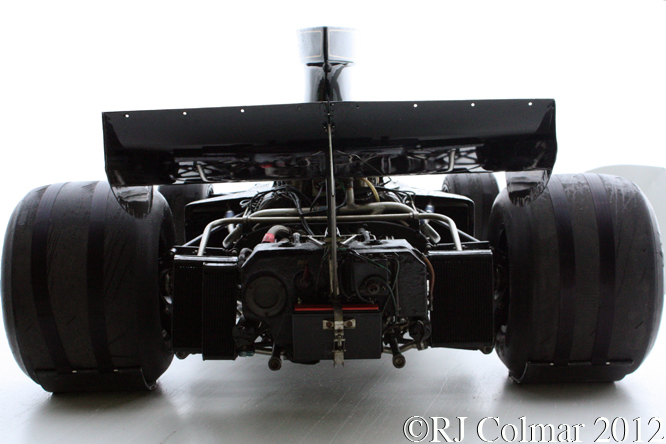
At the non championship Race of Championship the Lotus 72 D were brought up to E specification which included mounting the rear wing above the oil tank further back from the rear wheels and a wider track for the wheels front and rear. I well remember seeing both of the new cars spectacularly bottoming out on their debut at Brands Hatch as they approached the fearsome off camber and steep drop to Paddock Bend sending a shower of sparks from under the cars.

Lotus 72 E, Goodwood Festival of Speed

Both cars retired from the Race of Champions but Emerson won the 1973 Spanish Grand Prix, his last in a Lotus, before scoring three further second place finishes and a third on his way to a distant 2nd place championship finish behind Jackie Stewart and his Tyrrell Ford 006 who had clocked up five wins and two seconds on his way to his third and final title.

Lotus 72 E, Goodwood Festival of Speed

Ronnie meanwhile scored his first four Grand Prix wins and two second place finishes on his way to third in the championship title, helping Lotus win their second consecutive constructors championship. For 1974 Jackie Stewart retired, Emerson moved to McLaren to drive the M23, based very much on the principles of the Lotus 72, and Ronnie was joined at Lotus by Belgian Jacky Ickx.

Lotus 72 E, Goodwood Festival of Speed

Lotus started the 1974 season with the 72 E for the first two championship races and then Ickx used a 72E at the non championship Race of Champions and won after pulling off a brilliant overtaking move on Niki Lauda in his Ferrari 312 B3 going into Paddock Bend right in front of my nose. If all had gone to plan this would have been the last ever race for the Lotus 72 which had been introduced in 1970.

Lotus 72 E, Goodwood Festival of Speed

The Lotus 76 was first raced in the 1976 South African Grand Prix where neither car finished, Ronnie qualified his 76 at the non championship International Trophy at Silverstone and again at the Spanish Grand Prix but getting the car to finish proved impossible and so the Lotus 72 E’s were wheeled out again for the 1974 Monaco Grand Prix where Ronnie won from third on the grid, Ronnie added to more victories to the Lotus 72 E’s tally during the season to finish a distant fifth in the Championship which was won by his former team mate Emerson Fittipaldi in his Lotus 72 copy the McLaren M23.

For 1975 the Lotus 72 E’s were wheeled out again as the Lotus 76 had been abandoned as a failure, it would take a full twelve months for Lotus to build a new challenger such was the lack of financial resources and Lotus commitment to road car and sundry other projects. Ronnie gamely struggled on scoring just three points paying finishes while Jacky Ickx quit the team before the seasons end having scored a single second place finish.

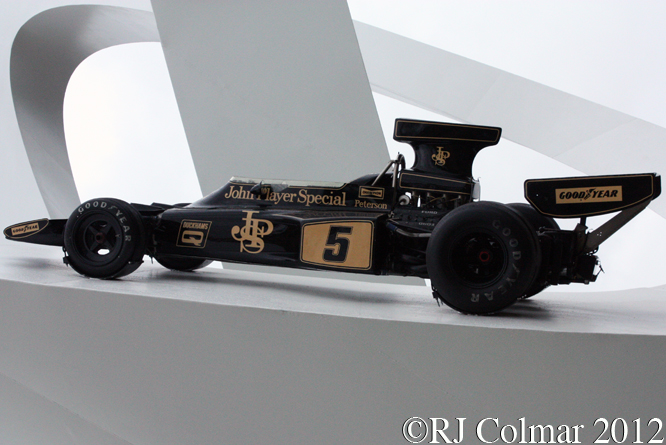
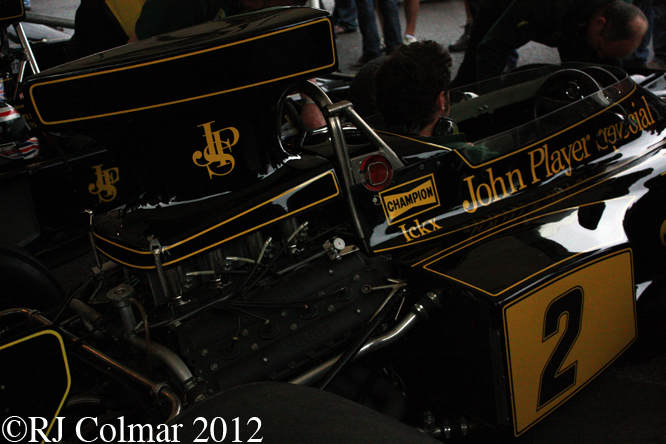
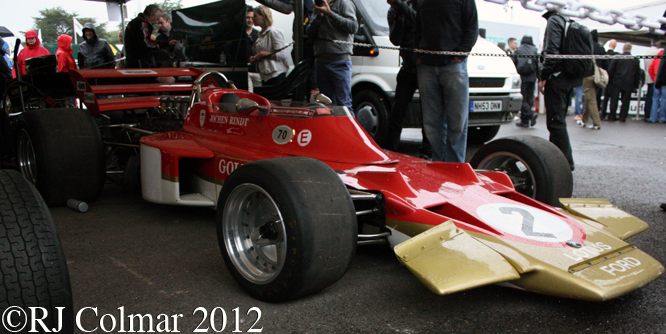
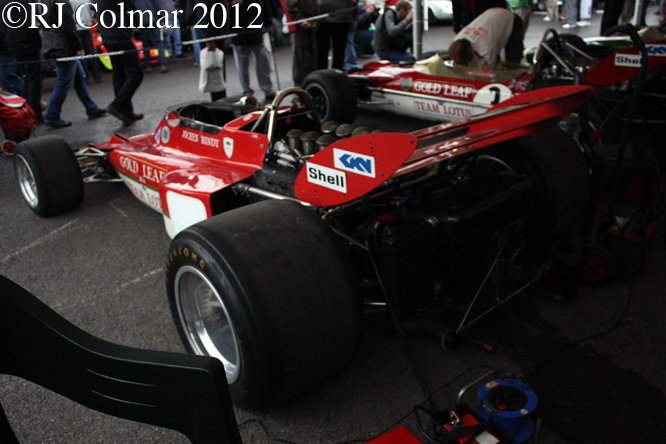
I believe the two cars seen here both belong to Classic Team Lotus with the #2 most likely being a replacement chassis for the wrecked Lotus 72/R5 driven by Emerson Fittipaldi in C spec to victory in the 1970 US Grand Prix and last used in E spec by Brian Henton in the 1975 US Grand Prix.

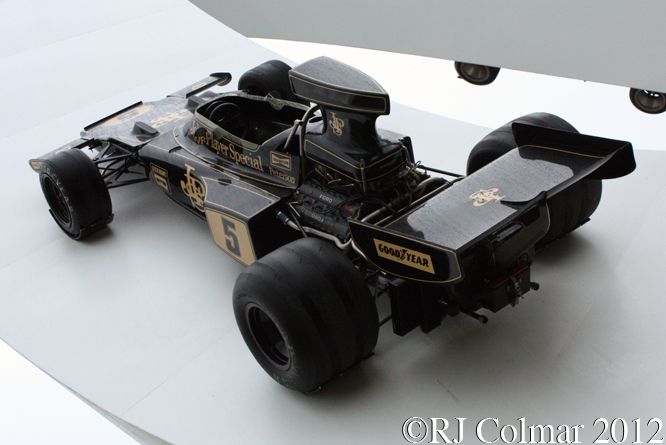
The #5 appears to be #72/R9 built new for the 1975 season and used exclusively by Ronnie Peterson who scored a best third place finish in the non championship 1975 Race of Champions at Brands Hatch, and three further points paying finishes including a 5th place finish in the 1975 United States Grand Prix which would be the cars final appearance.

Fans of the Lotus 72 in the UK will be interested to know that there will be a 24 min documentary on the story behind the Lotus 72 on Motors TV in December, keep your eye out for it in the schedule. The films director Gary Crichter will also be releasing a full 90 min version with 60 mons of extra’s of the film on dvd in the near future. Keep your eye out on the www.lotus72dvd.com website for further announcements.

Thanks for joining me on this “Ronnie’s Rocket” edition of “Gettin’ a li’l psycho on tyres” I hope you will join me again tomorrow, don’t forget to come back now !

Share

April Fool ? – Lotus 72 B #72/R1

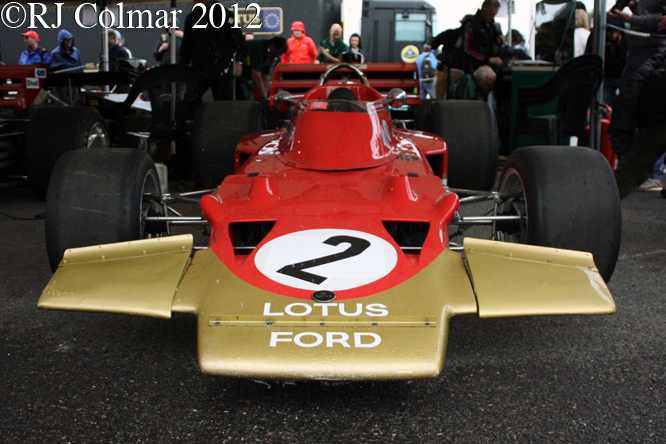
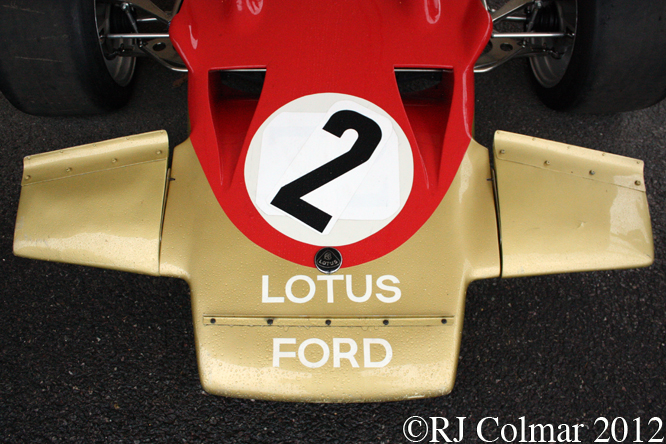
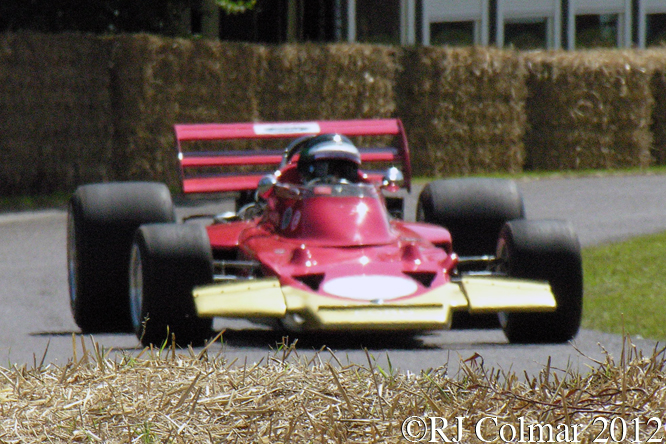
On the 1st of April 1970 the press were invited to see the Lotus 72 for the first time. The clean wedge shape was a return to the theme from the 1968 Lotus 56 Indy Car and Lotus 58 Formula 2/Tasman car.

Lotus 72C, Goodwood Festival of Speed

When the car was first tested by works drivers Jochen Rindt, John Miles and John Walkers driver Graham Hill they all reported the cars innovative front anti dive and rear anti squat suspension which aimed to reduced suspension travel under braking and acceleration was difficult to drive on the limit.

Lotus 72C, Goodwood Festival of Speed

As a result of this Jochen Rindt got his 1970 championship campaign under way with a fortuitous win in Monaco driving an updated four year old design in the form of a Lotus 49 C.

Lotus 72C, Goodwood Festival of Speed

At the 1970 Dutch Prix Lotus arrived with the second 72 chassis #72R2 updated to C-specification, with the anti dive and anti squat features of the suspension removed, for Jochen Rindt to drive which he found much more to his liking and proceeded a sting of four successive wins in Holland, France, Britain and Germany which gave Jochen what would become an unassailable lead in the World Championship.

Lotus 72C, Goodwood Festival of Speed

Unfortunately during practice for the 1970 Italian GP when he was testing #72/R2 without any wings, under braking an inboard front brake shaft broke, sending the 28 year old Jochen into a crash barrier post with fatal results.

Lotus 72C, Goodwood Festival of Speed

New team leader Emerson Fittipaldi won the last race of the 1970 season driving a new 72 C. Jochen Rindt became the only posthumous World Champion and Lotus won their 4th Constructors Championship. For 1971 the Lotus 72 C proved to be not quite so competitive against Jackie Stewart and the Tyrrell Team, but otus would bounce back with the upgraded Lotus 72 D in 1972.

Lotus 72C, Goodwood Festival of Speed

Lotus 72 #72/R1 is the only remaining 1970 spec car left, it was the car shown to the press on April 1st 1970 and subsequently entered and raced for Jochen’s team mate John Miles in original and B spec with only the anti squat removed from the rear suspension. John’s best result was a 7th place finish in the 1970 Dutch Grand Prix.

The Lotus 72 spawned many successful imitations including the McLaren M16 multiple winning Indy car and the McLaren M23 multiple world championship winning Grand Prix car.

Today’s Grand Prix and Indy cars all fitted with side radiators in side pods can all be said to be descendants of the Lotus 72.

Note the cockpit surround of #72/R1 has a shallow perspex screen from a later post 1972 Lotus 72.

Thanks for joining me on this “April Fool ?” edition of “Gettin’ a li’l psycho on tyres” I hope you will join me again tomorrow. Don’t forget to come back now !

Share

Pride In Bourne – BRM Day

A 3:30 am start on Sunday saw me head over to my friend Tim’s to the lilt of early morning Drum ‘n’ Bass on Radio One and then off to what turned out to be the hillier than expected climbs of Bourne, Lincolnshire, where BRM Day was to celebrate the 50th Anniversary of Graham Hills and BRM’s 1962 World Championship victories with a stupendous parade of motor vehicles.
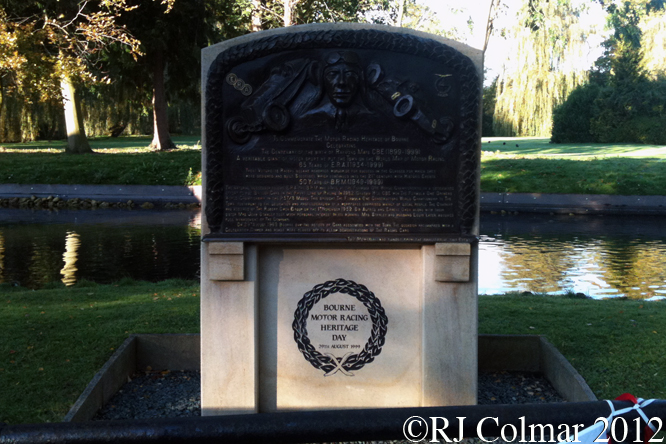
Raymond Mays Centenary Memorial, Bourne, Lincolnshire

Bourne was the home of Raymand Mays, a well respected hill climber, who founded English Racing Automobiles, ERA, with Humphrey Cook, and Peter Berthon in Bourne in 1933 with the aim of “upholding British prestige in Continental European racing”. With the German Mercedes Benz and Auto Union teams given almost unlimited resources to operate in the top echelon of the sport ERA focused on the second tier Voiturette class of open wheel racing. After the ’39 / ’45 war Raymond May’s persuaded numerous parties in the automotive industry to join him in a new collaborative (ad)venture called British Racing Motors, BRM, which like ERA was based in Bourne. Above is a memorial to the 100th anniversary of the birth of Mays which was marked in 1999 with a similar event to last weekends BRM Day.
BRM P30 Mark II, BRM Day, Bourne, Lincolnshire

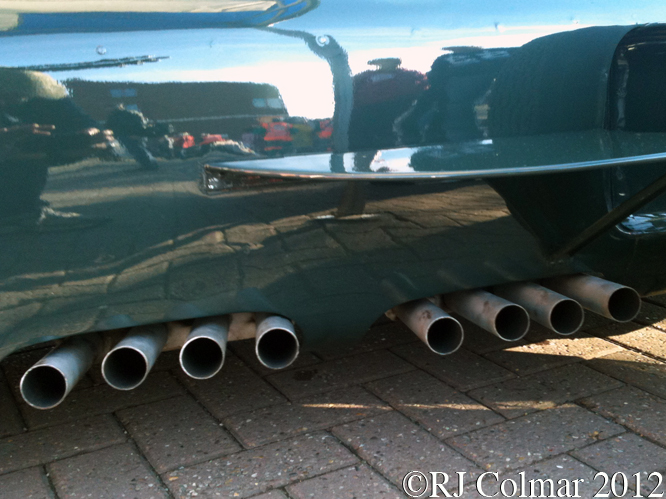
Before the start of the festivities I managed to wonder around the main paddock and to be honest I did not know where to look, there were so many storied cars on display. The Donington Collections 1954 BRM P30 Mark II was the second version of the 1.5 litre / 91.5 cui super charged V16 that had spectacularly failed an expectant nation in 1950. Back in those days these cars ran on strange mixtures of fuel that often included alcohol which meant the cars not only sounded great but smelt great too !
BRM P25, BRM Day, Bourne, Lincolnshire

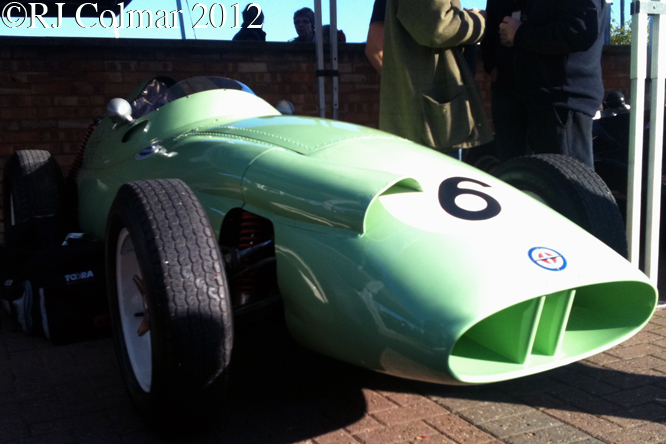
Among the cars that did not run was the British Racing Partnership teams 1959 BRM Type 25 chassis #25/10 which Stirling Moss drove to a second place finish in the 1959 British Grand Prix while taking a two race sojourn from Rob Walkers fast if unreliable Cooper T51. At the next race, the German Grand Prix at Avus, Hans Hermann drove this car and was captured falling out of it in some of the most spectacular motor racing photographs of all time.
Rover BRM, BRM Day, Bourne, Lincolnshire

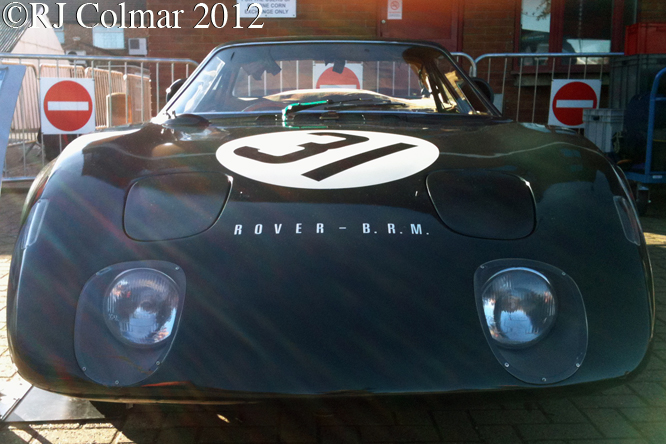
The Rover BRM Le Mans car started life as a BRM P57 Formula One car which Richie Ginther crashed at Monaco in 1962, when Rover and BRM discussed the idea of building a Rover gas turbine contender for Le Mans BRM rebuilt Ginthers wrecked car into a challenger for 1963 when it was driven to a 7th place finish by Ginther and Graham Hill. The car was subsequently rebodied for the 1965 race, as seen here when it finished in 10th place driven by Hill and Jackie Stewart. The gas turbine motor is being rebuilt and one day the car should be a runner again.
BRM P180, BRM Day, Bourne, Lincolnshire

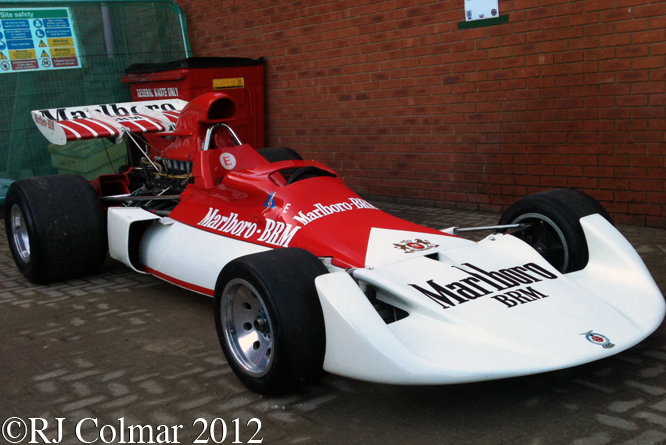
For 1972 BRM attracted a new sponsor Marlboro that wanted to follow the brand awareness lead set by the successful partnership of John Player and Lotus Cars which had netted two championships and many victories with the Lotus 49 and Lotus 72 models. In an act of supreme folly BRM announced it would run an A team of three drivers with two more forming a B team. The cars used would be a mixture of older P153’s dating back to 1970, P160’s first seen in 1971 and a third new for ’72 P 180 design as seen above that proved to be difficult to handle. JP Beltoise drove a P 180 at Brands Hatch for the last time in a non championship race at Brands Hatch in October 1972 where a wise tyre choice led to the cars one and only victory in it’s last ever race.
Howden Ganley, BRM Day, Bourne, Lincolnshire

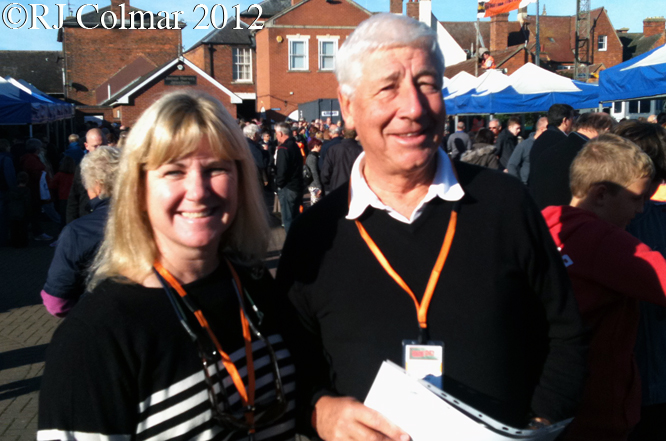
New Zealander Howden Ganley seen above with his step daughter Erin drove for BRM in 1971 and 1972, after his driving career came to an end in 1974 Howden joined forces with Australian Tim Schenken to form Tiga a highly successful manufacturer of racing cars for Formula Ford/Formula Ford 2000 and Sports 2000 before going on to build a successful run of Group C2 sports cars. Today Howden is President of Ancien Pilotes a group of retired drivers. Howden is allegedly trying to get his unfinished Formula One car from the 1970’s completed.
MG ZB, BRM Day, Bourne, Lincolnshire

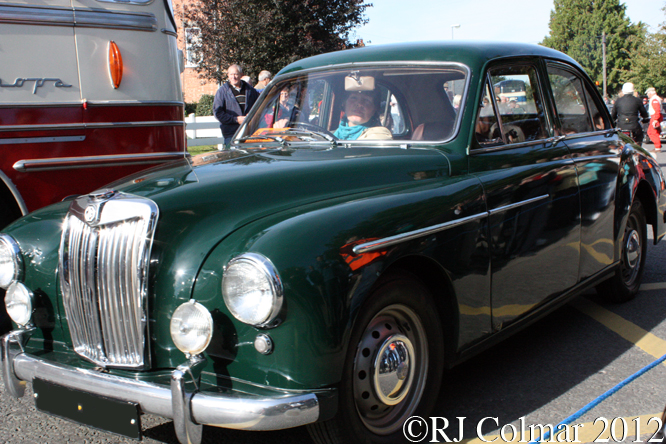
Tim and I found a nice spot to relax at the end of Abbey Road from which to watch the proceedings, we liked it so much we stayed there for the whole parade which started in the morning with a large number of pre 1962 vehicles of all sorts which nearly came to a stand still as an assortment of private and commercial vehicles negotiated the narrow roads. Above the owner of a 1958 MG ZB Magnette carefully negotiates the narrow gap between my toes and a big bus opposite me.
Rolls Royce Silver Ghost, BRM Day, Bourne, Lincolnshire

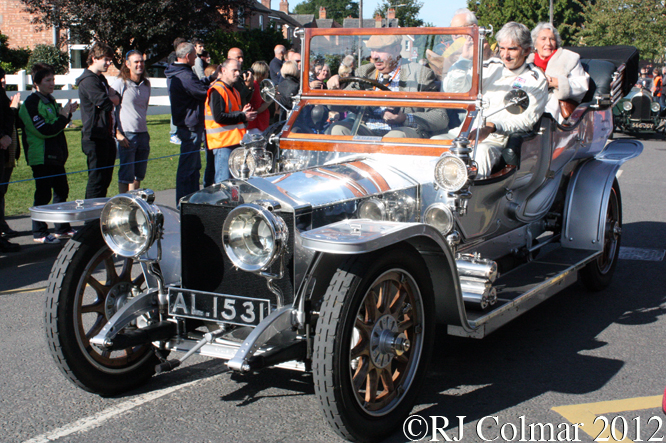
Guest family of honor at Bourne on Sunday naturally enough were the surviving Hills. Graham Hill’s widow Bette and son Damon, who followed his fathers career path to become 1996 World Drivers Champion are seen above on the passenger side of a 1910 Rolls Royce Silver Ghost.
ERA 1B, BRM Day, Bourne, Lincolnshire

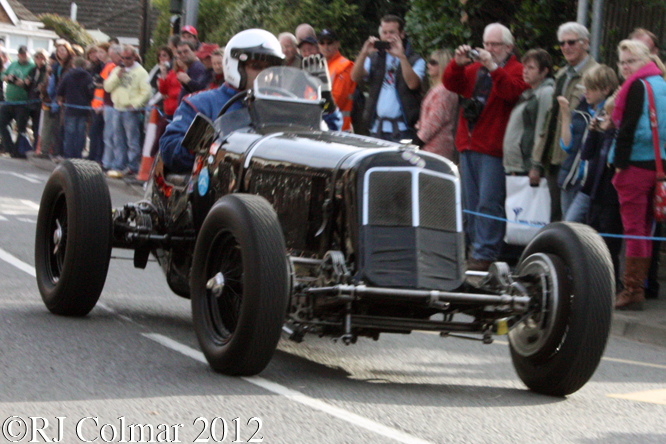
ERA 1B is the 5th ERA to be built, the first of the 2nd B series is seen above with Tim Cottam at the wheel. In 1935 the car was delivered new to Dick Seaman who impressed the ERA team so much they offered to prepare his car for him. Dick was not happy with the arrangement and eventually had the car prepared by Giulio Ramponi. Dick won races at Pescara, Italy, Berne, Switzerland and Brno, Czechoslovakia with R1B in 1935 before moving onto a Delage in 1936 and the works Mercedes Benz team in 1937.
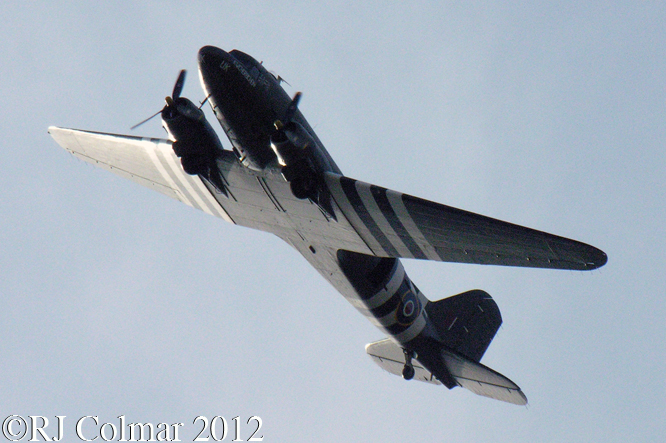
Douglas C 47, BRM Day, Bourne, Lincolnshire

During the 1939/45 war Raymond Mays hatched his plan for BRM and ERA passed into the hands of Leslie Johnson who relocated ERA to Dunstable when the company reopened for business in 1947. Less than ten miles north of Bourne RAF Folkingham was commissioned to serve as a decoy airbase in 1940, it attracted at least three German bombing raids before being upgraded to operational status in 1943. In January 1944 the 313th Troop Carrier Group arrived with it’s Douglas C47’s which were used to land troops in Normandy as part of Operation Overlord in June 1944 and again to land paratroops in Arnhem in September 1944 as part of Operation Market Garden, which made the flyover of the C47 last Sunday particularly poingnant. BRM would use the base to test it’s vehicles in the 50’s and 60’s when it was not required as a missile base in the run up to the Cuban Missile Crisis of 1962.
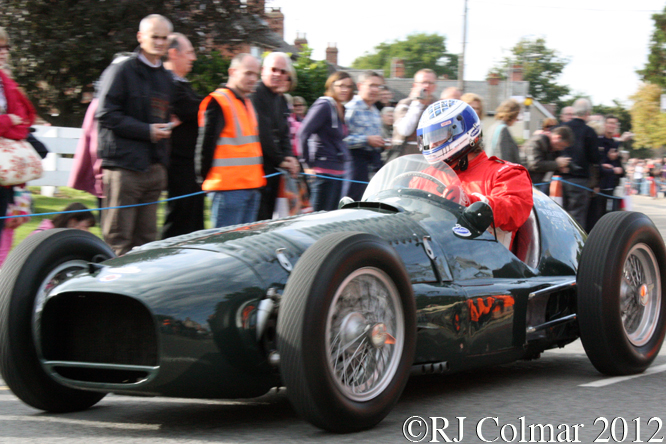
BRM P30 Mark II, BRM Day, Bourne, Lincolnshire

BRM’s first car the supercharged V16 Type 15 was a little on the recalcitrant side in the early days, but it was replaced by a shorter wheel base V16 P30 Mark II model in 1954 designed to take part in shorter non championship Formula One races. Kevin Wheatcroft is seen in the car above which I believe was used by Ken Wharton to win the five lap Chichester Cup at Goodwood first time out in April 1954. The sound and fumes from the 460 hp V16 at this range were thoroughly intoxicating !
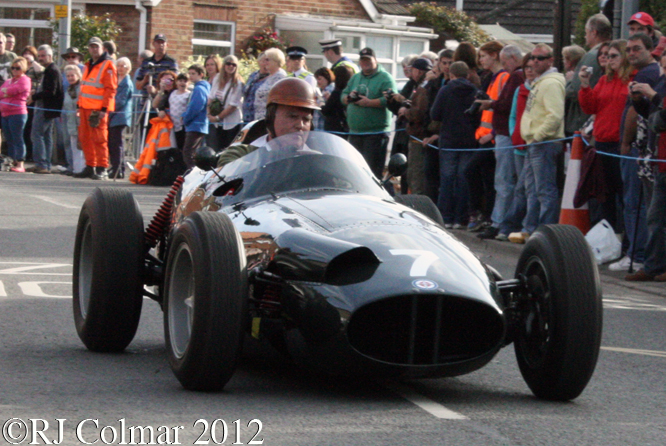
BRM P25, BRM Day, Bourne, Lincolnshire

If the V16’s were a little on the complex side the 2.5 litre / 152 cui 4 cylinder Type 25’s were much simpler reflecting a change in management from BRM’s original Trust Committee’s to BRM’s new owner Sir Alfred Owen who purchased the Trust assets in 1953. John Pearson is seen here at the wheel of the 1958 chassis 258, which originally had 27/3 stamped on the chassis, for chassis Project 27 3rd of, which is the car that Jo Bonnier drove to victory in the 1959 Dutch Grand Prix ending 10 years of under achievement for the Bourne based operation. Spencer Flack who owned the car from 2001 was killed when driving it at Philip Island, Australia in 2003. His widow insisted the car which had split in two and caught fire be rebuilt by Hall & Hall the respected restoration experts who are based in Bourne.

As an aside BRM chassis type and project numbers do not follow any particular numerical sequence for example the first five Type 25’s were given chassis numbers #251 – #255 the remaining cars with slightly different chassis construction were given chassis numbers 27/1 to 27/6, P27 was the project number given to both chassis variations of the the Type 25 cars while project number P25 was given to the 2.5 litre / 152 cui 4 cylinder motors for the Type 25 BRM’s. To further confuse the matter the later cars with the 27/1 to 27/6 numbers stamped on the chassis were referred to as continuations of the earlier 251 – 255 numbering system hence chassis 27/3 is ALSO known as 258 @-)
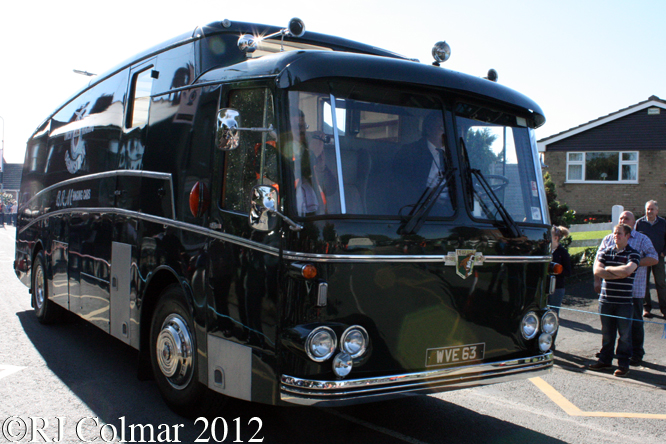
Leyland Royal Tiger, BRM Day, Bourne, Lincolnshire

For 1960 BRM got a new transporter based on a Leyland Royal Tiger Worldwide bus chassis, notice the vehicle is left hand drive in anticipation of it mostly being used to transport racing cars across Europe rather than around the United Kingdom which was, still is and probably always will remain a country that drives on the left hand side of the road.
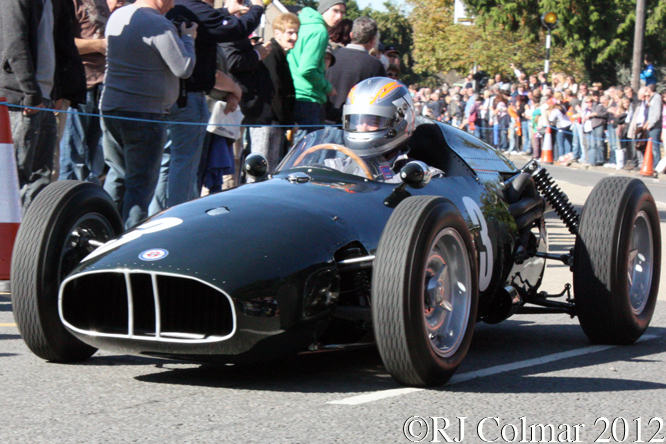
BRM P48, BRM Day, Bourne, Lincolnshire

Rick Hall was instrumental in the organisation of last Sunday’s BRM Day his son Rob is seen above driving the P48 Mk I which belongs to Bruce McCaw of Seattle. This car was originally driven by Graham Hill and Dan Gurney in 1960/61, it started life as a front engined Type 25 chassis 27/2 ALSO known as 257 and was converted to P48/2, the second rear engined BRM, for the 1960 season When Graham Hill and Dan Gurney drive it.
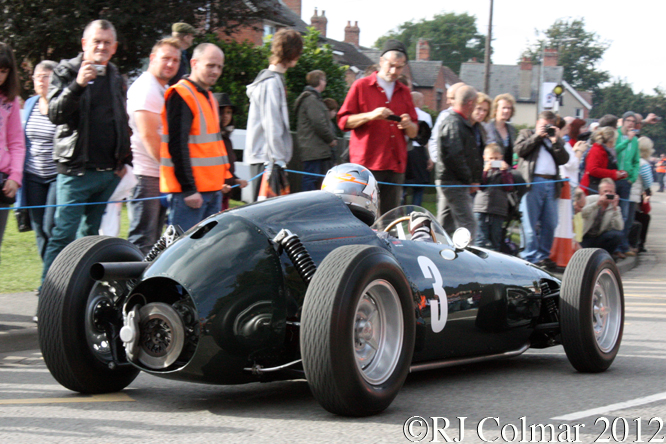
BRM P48, BRM Day, Bourne, Lincolnshire

As on the Type 25 the P48’s rear brake was a single disc attached to the back of the rear transaxle which acted on both rear wheels while saving on all up and unsprung weight of the car to the benefit of the handling. The P48’s were not particularly successful in 1960 recording many retirements and a best 3 rd place for Graham Hill. In the winter of 1960/61 two P48’s were sent to Australia for Hill and Gurney to drive and Gurney won his last race in a BRM at Ballarat, but only after his car had been crashed the night before the race by some hooligans !
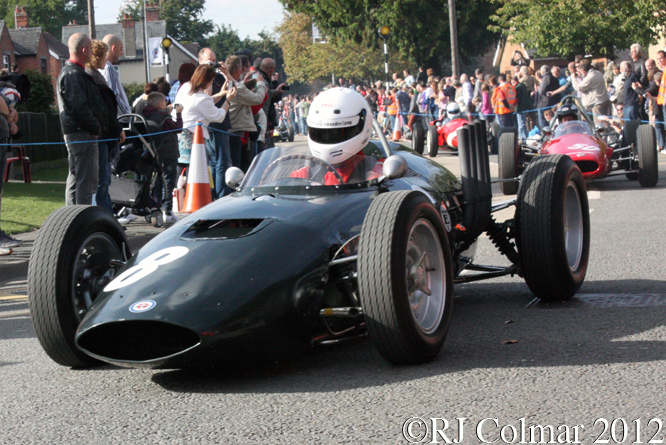
BRM P57, BRM Day, Bourne, Lincolnshire

New Formula One regulations were introduced for 1961 requiring 1.5 litre / 91.5 cui motors. BRM started the season with proprietary Coventry Climax four cylinders before switching to their own V8’s which proved to be real gems. Initially the V8’s were fitted with stacked exhausts, but despite making a great howling noise they had a propensity to fall of and were replaced with conventional horizontal exhausts in 1962. Above the stacked exhausts on BRM P57 #57/3 are clearly visible. This car was driven by Graham Hill and Tony Brooks for the works while multiple British Hill Climb Champion Tony Marsh privately entered it into four non championship events before returning it to Bourne.
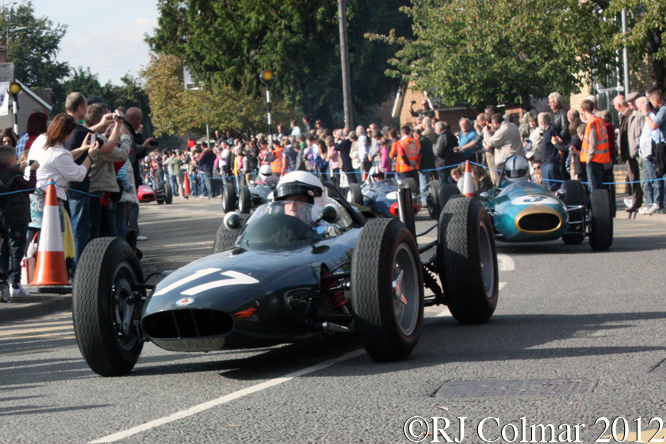
BRM P578, BRM Day, Bourne, Lincolnshire

For 1962 the BRM teams new P57’s were numbered P578’s built to accept only the BRM V8 having the digit 8 added to the P57 project number. Graham Hill drove these cars to championship race victories in the Dutch, German, Italian and South African Grand Prix and clinched his first and BRM’s only World Championship’s. Above is P578 #578/2 in early 1962 spec with stacked exhaust pipes.
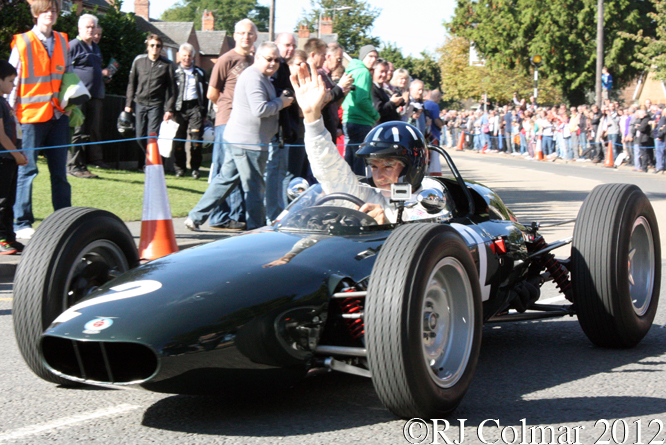
BRM P578, BRM Day, Bourne, Lincolnshire

P578 #578/1 also known as ‘Old Faithful’ with the late ’62 horizontal exhausts was kindly sent over from the Collier Collection in Florida for Grahams son Damon Hill who can be seen at the wheel above.
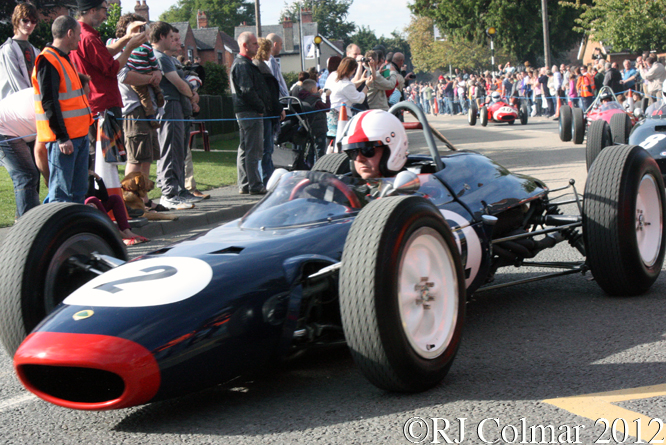
Lotus BRM 24, BRM Day, Bourne, Lincolnshire

Such was the demand for 1.5 litre / 91.5 cui Formula One motors BRM had no trouble selling copies of their motor for privateers to use from 1962 onwards. Above Nigel Williams is at the wheel of the Parnell Team 1963 Lotus BRM 24, chassis #P1, fitted with Lola Mk 4A bodywork as raced by Peter Revson in the 1964 British Grand Prix from which he retired.
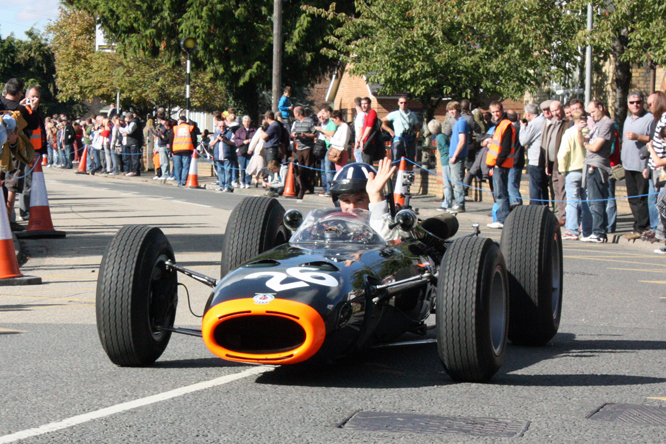
BRM P261, BRM Day, Bourne, Lincolnshire

Graham Hill went into the last race of the 1964 season as leader of the World Championship 5 points ahead of Surtees in his Ferrari and 9 points ahead of reigning champion Jim Clark in his Lotus. During the Mexican Grand Prix the final race Hill was knocked out of contention by Surtees team mate Lorenzo Bandini, Clark led the race comfortably, a win would have handed Clark the championship on a more race wins tie breaker, until the last lap when an oil leak caused his Climax V8 to seize. Going into the last lap Surtees was lying third behind Bandini and eventual winner Dan Guerney. Fortunately Surtees team mate, Bandini, let Big John pass and claim six points for his second place finish enough to claim the championship from Hill by a single point. Above Damon Hill is seen at the wheel of a 1964 BRM P261 #P2615. The 2 stems from Mark 2 of the 1961 P61 chassis to give P261 !
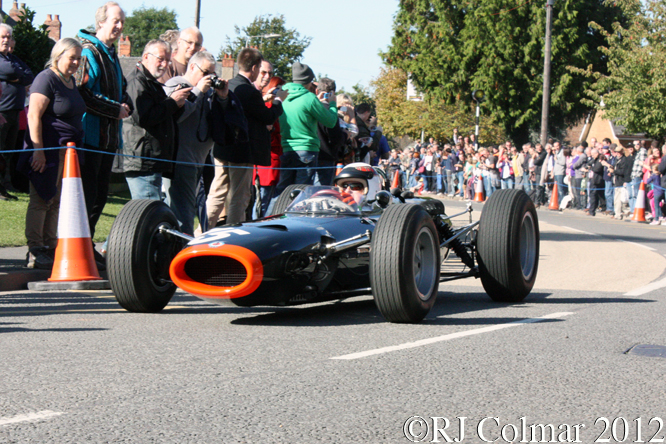
BRM P261, BRM Day, Bourne, Lincolnshire

In 1965 rookie Jackie Stewart was signed up to partner Graham Hill at BRM and he did not disappoint, scoring three seconds and a win at the 1965 Italian Grand Prix to finish third in the championship behind Jim Clark and Graham Hill who finished second in the championship for the second year in a row. Sir Jackie is seen above driving #P2617 one of the cars he raced in the 1965 season.
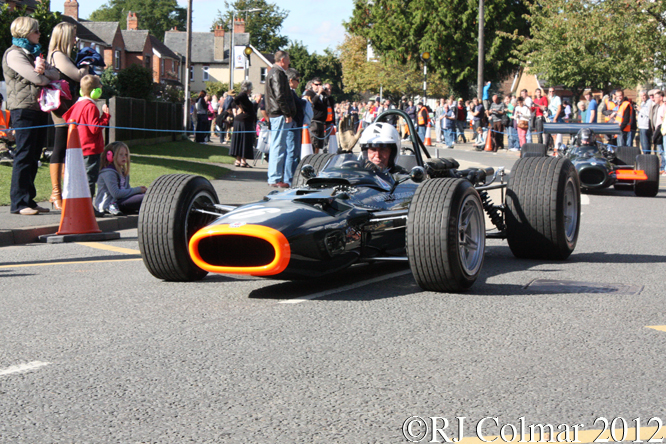
BRM P126, BRM Day, Bourne, Lincolnshire

For 1966 the Formula One regulations changed mandating 3 litre / 183 cui motors, BRM initially ran 2 litre / 122 cui versions of the P261 cars before introducing a hideously complex 3 litre H16 which produced plenty of power and probably the best noise ever heard at any race track but was predictably unreliable. Unfortunately none of the BRM H16’s are running at the moment and a Lotus 43 fitted with one is also presently hors d’combat. So the BRM Parade skipped to 1968 when a parallel 3 litre V12 engine programme came on stream to power the one off BRM P126 seen above with Richard Attward at the wheel. Richard scored the cars best result a second place finish at Monaco in 1968.
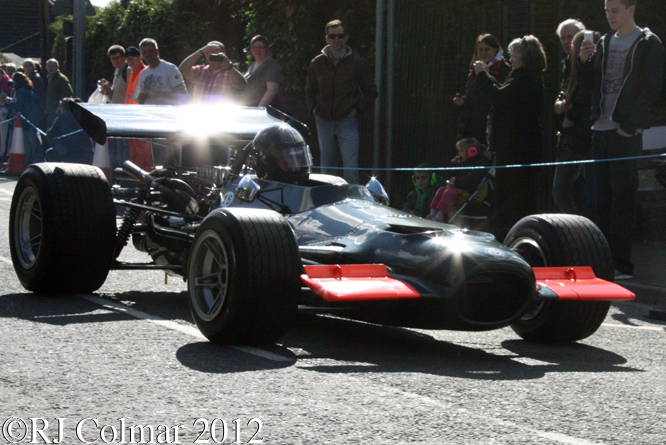
BRM P139, BRM Day, Bourne, Lincolnshire

For 1969 John Surtees and Jackie Oliver were employed to drive for the BRM team which introduced the V12 powered P139 half way through the season. John scored the cars best result a 3rd place finish at the 1969 US Grand Prix.
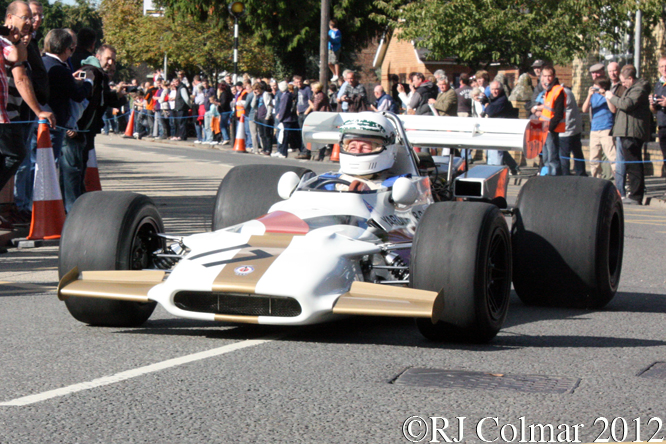
BRM P153, BRM Day, Bourne, Lincolnshire

For 1970 Jackie Oliver was joined by Pedro Rodriguez at the now Yardley sponsored BRM and it was Pedro who scored the teams only win of the season with the BRM P153. For 1971 Howden Ganley, who is seen at the wheel of #153/4 here, joined the team which included a roster of a total of eight drivers.
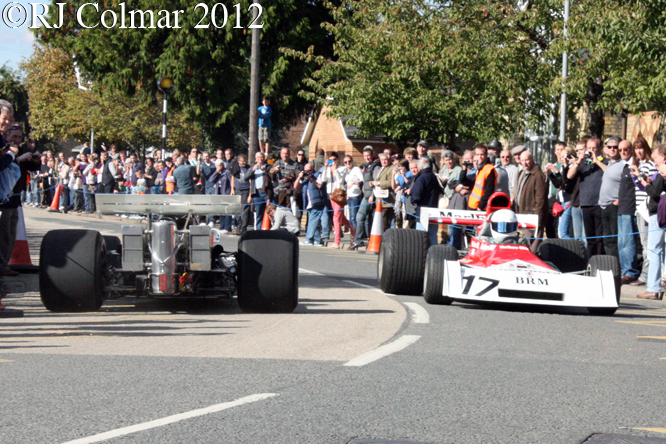
BRM P153 & P160, BRM Day, Bourne, Lincolnshire

The P160 replaced the P153 part way through 1971 and Peter Gethin used one to win the close fought 1971 Italian Grand Prix. In 1972 Marlboro replaced Yardley as the teams sponsor and Jean Pierre Beltoise scored the BRM teams final championship victory at Monaco in 1972. Above the 1973 spec P160 chassis P160/7 of J Burt has an interesting moment as he passes S Burt in the older P153, luckily neither driver was on the racing line at the time.

Another little aside, in 1973 I attended the non championship Race of Champions at Brands Hatch, the first time I ever saw Formula One cars in action, the BRM P160’s of Beltoise, Niki Lauda and Vern Schuppan qualified 1st to 3rd on the grid. Amazingly Beltoise, Lauda and Ronnie Peterson driving a Lotus 72, were credited with fastest lap of the race at 1.23 secs dead. Of the three only Beltoise finished in a distant 6th place.
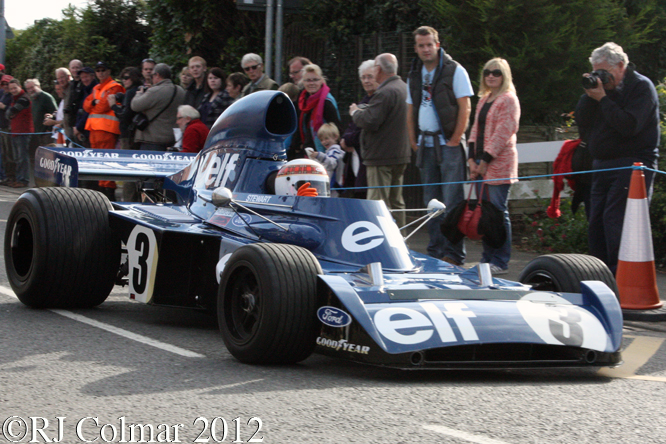
Tyrrell Ford 006, BRM Day, Bourne, Lincolnshire

In 1973 BRM old boy Jackie Stewart won his third and final World Championship driving for the Tyrrell team, it was a real treat to see Sir Jackie driving a 1973 006 model through the streets of Bourne, not quite the Monaco Grand Prix, but without the crash barriers and safety fences of the Principalities street circuit, no less exciting.
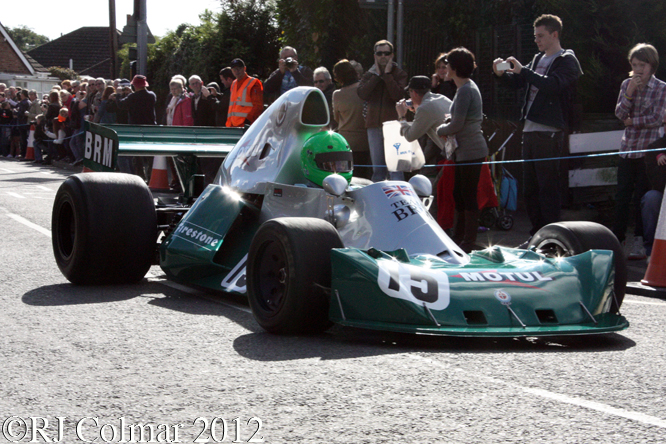
BRM 201, BRM Day, Bourne, Lincolnshire

Probably my favorite BRM of all time is the P201 designed by Mike Pilbeam, featuring the 48 valve version of the V12 launched in 1968 the car appeared with sponsorship from Motul in 1974 when the team employed Beltoise, Le Mans Winner Henri Pescarolo and former Connew refugee Francois Migault at the wheel with Chris Amon drafted in to replace Pescarolo at the last two races of the year. The P201’s best result was a second place finish on its debut in South Africa with Beltoise at the wheel. Sir Alfred Owen passed away in 1974 and former team manager and Owen’s son in law Louis Stanley took over the team renaming it Stanley BRM in 1975. With no sponsorship to speak of, an out of date car and uncompetitive motor the team spiraled into a terminal decline the P207 was introduced in 1977 but started only one race in the hands of Larry Perkins. Perkins made BRM’s last Grand Prix start in South Africa this time with a much modified and hopelessly out dated P201. He finished 15th and there after Teddy Pilette, Conny Anderson and Guy Edwards all tried their hand at qualifying the P207 with out any success. J Fenning wearing a helmet just like the won worn by Henri Pescarolo is seen at the wheel of #P201/5 here, a car that was driven in the 1975 season under the Stanley-BRM banner by Bob Evans who’s best result was a 6th place finish in the non championship Race of Champions at Brands Hatch.
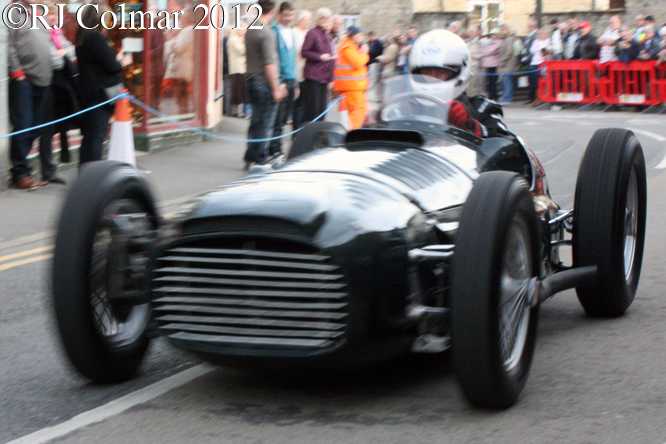
BRM V12 P15 Mark I, BRM Day, Bourne, Lincolnshire

As the parade came to a conclusion the V16’s were given a second run, the sound of the very first V16 P15 driven by the National Motor Museums Doug Hill still reverberates round my head as I bring this “Pride In Bourne” edition of “Gettin’ a li’l psycho on tyres” to a close.

My thanks to everyone involved in organising and putting on this magnificent event which is without doubt the highlight of my motoring year.

On this link you will find a short film of the days activity that I have made.

Thanks for help with identifying the cars to The Nostalgia Forum in particular Tim Murray an Doug Nye. If you spot any errors please accept my apologies and chime in below with any corrections.

Thanks for joining me, I hope you will join me again tomorrow. Don’t forget to come back now !
Share

Multi Formula Open Wheeler – Lotus 69

For the 1970 season Lotus used the catch all Lotus 69 type number for cars designed, by Dave Baldwin, to compete in four different open wheel Formula.

Namely Formula Ford which used prescribed narrow tyres and 95 hp single carburetor Ford Kent 4 cylinder engines, Formula 3 which used heavily modified 1 litre / 61 cui production block 4 cylinder motors in 1970 and modified 1600 cc / 97.6 cui production block motors in 1971, Formula B with 1600cc / 97.6 cui motors tuned somewhere between Formula Ford and Formula 3, and finally Formula 2 which ran with the most powerful 200 plus hp 1600 cc / 97.6 cui motors with production blocks of which at least 5000 copies had been made.

Lotus 69, Spirit of the 60′s, Dyrham Park

Today’s featured car, seen at Dyrham Park and belonging to Tony Wallens, is a 1971 Formula 3 spec Lotus 69 with a modified 1600 cc / 97.6 cui production block motor, the space frame chassis is derived from the Lotus 59 open wheelers and it shares many components with it’s Lotus 69 siblings, although the Formula 2 Lotus 69 was built around a monocoque to meet the requirements for a bag fuel tank.

In 1971 Dave Walker flew and swept the board in his Gold Leaf Team Lotus 69 winning 25 races Formula 3 races from 32 starts.

Despite these successes, Emerson Fittipaldi also won three races in his Formula 2 Lotus 69, while in Formula Ford Stan Matthews placed forth in the 1971 British Oxygen Formula Ford championship with his 69, Lotus took the decision to withdraw from the customer racing car market and focus on works Formula 3, and Formula 1 efforts in 1972, Formula 2 and Formula 1 campaigns in 1973 and solely Formula One campaigns from 1974 on.

Thanks for joining me on this “Multi Formula Open Wheeler” edition of “Gettin’ a li’l psycho on tyres”, I hope you will join me again tomorrow for a day at the races. Don’t forget to come back now !
Share

Autumn Classic – Castle Combe

Last Saturday morning I made my way to Castle Combe for the Autumn Classic meeting, regrettably the last but one racing meeting of the season, as you shall see I couldn’t make Sunday’s final Castle Combe meeting due to a commitment elsewhere.

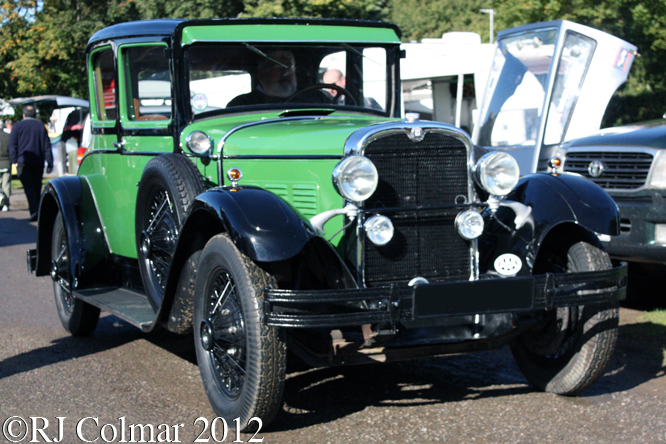
Dodge Brothers Senior, Autumn Classic Castle Combe

This event marked the first visit by the Vintage Sports Car Club for thirty years. I followed the 1929 Dodge Brothers Senior above in through the gate.

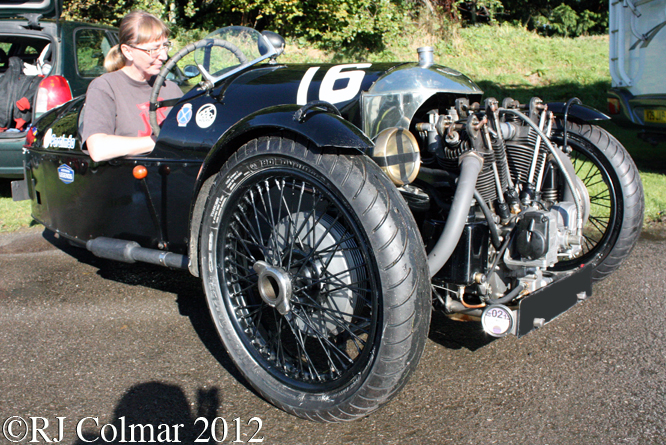
Morgan Super Aero, Autumn Classic Castle Combe

In the paddock Sue Darbyshire was warming up her Morgan Super Sports for morning practice which qualified 6th for the VSCC Pre War Sports Cars race and in which she crossed the finish line of the race in 4th.

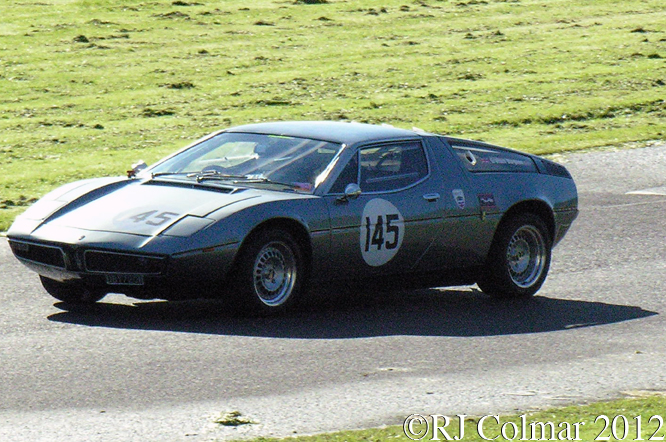
Maserati Bora, Autumn Classic Castle Combe

Out on the track practice for the Bernie’s V8 Historic V8 Racers Association race was well underway, the series caters for V8 powered cars racing on road legal treaded tyres. I was most pleasantly surprised to find one of less than 600 Maserati Bora’s built among the entries, Graham Burgess is seen above qualifying for 15th on the grid, he finished the race in 11th.

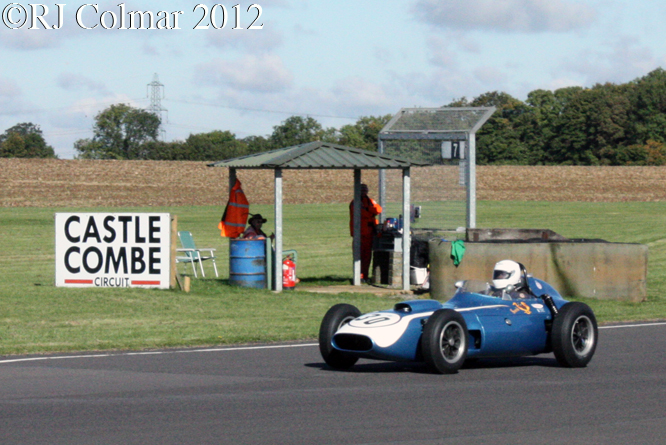
Scarab, Autumn Classic Castle Combe

During the lunch break Julian Bronson demonstrated his 1960 Scarab Grand Prix car that was built, maintained and on occasion driven by Chuck Daigh for Woolworth heir Lance Reventlow. This is the third of the three open wheelers built and was raced by Chuck with a regular Offenhauser during 1961 in a couple of non championship Formula One races, with out the ill feted Desmodromic cylinder heads fitted to the first two cars.

Stranguellini FJ, Autumn Classic Castle Combe

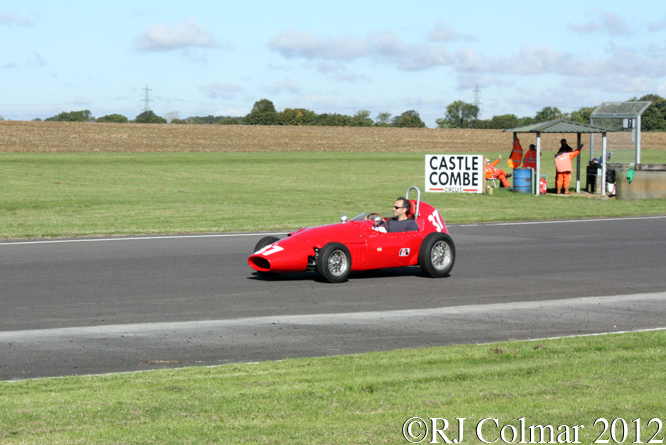
After the success of the Spirit of the Sixties event held at Dyrham Park last year the Bristol Motor Club were invited to organise an Essence of Dyrham demonstration at Castle Combe last weekend, Martin Sheppard’s 1958 Stanguellini Formula Junior, was the only open wheeler to take part.

Historic Aston Martin's, Autumn Classic Castle Combe

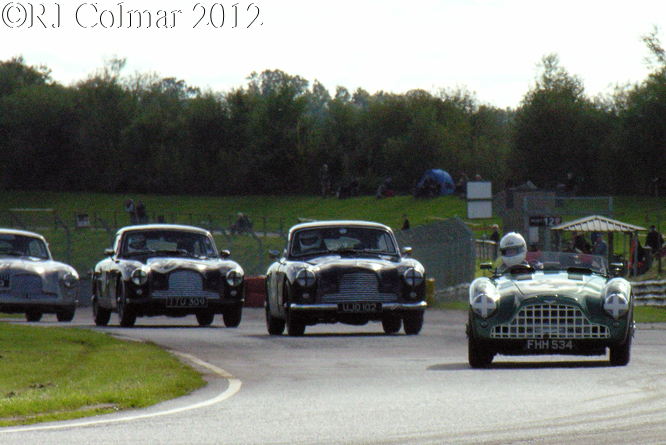
After the lunch break racing got under way in earnest with Chris Woodgate making the most of his pole position in his Aston Martin DB 3 to come home over thirty seconds to the good from Nicholas Ruddell in his #25 Aston Martin DB2/4, Nigel Batchellor seen in second place in the #36 DB 2/4 above dropped out, while Timothy Stamper lost 3rd place for several laps to Anne Reed before claiming back third spot on the podium in his #39 Aston Martin 2/4.

JEC, Pre 1966 Jaguars, Autumn Classic Castle Combe

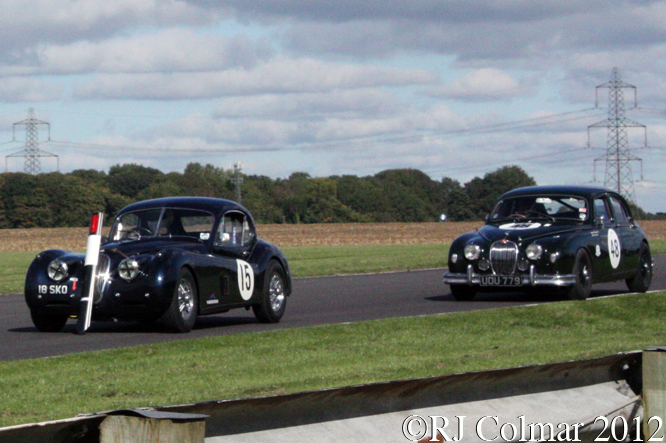
Anthony Reid stamped his authority on the Jaguar Enthusiasts Club Pre 1966 Jaguars race right from the word go, but there was plenty of action going on behind. Above John Burton in the #15 XK 120 carries evidence of cutting a chicane, John managed to hang on to 5th place eventually finishing 10 seconds ahead of Peter Dorlin’s #48 Mark 1 Saloon, after an entertaining battle Peter finished 1 place ahead of his brother Richard, in a Mk 2 Saloon.

John Gott Memorial Trophy, Autumn Classic Castle Combe

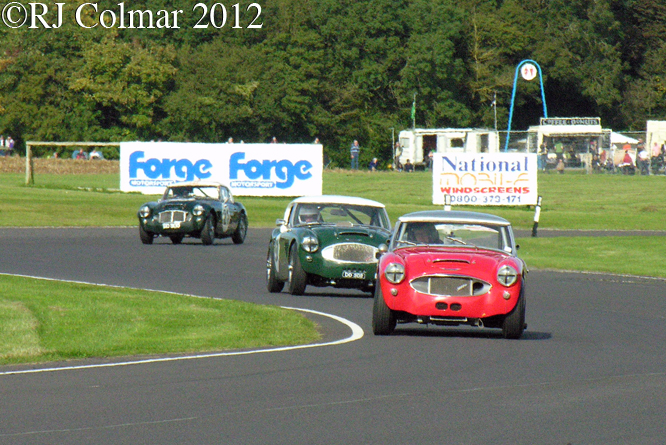
The Big Healey Challenge race was interrupted by a pace car incident which virtually handed a one lap lead to forth place starter Anders Schildt from Sweden, but these classics still proved highly entertaining to watch as they grappled with Castle Combes notoriously undulating surface. Above Anders leads eventual third place finisher David Smithie who appeared to be closing Anders down for the lead until the pace car intervened effectively handing Schildt the John Gott Trophy on a plate.

Bernie's V8s HVRA, Autumn Classic, Castle Combe

If the Healey’s were struggling with Castle Combes undulations the Bernie’s V8’s fared little better as evidenced when a rear shock absorber failed on the #78 Dodge Challenger of Belgian Bert Smeets. The rare South African #6 Ford Capri Piranha of Andrew Haddon managed to lap the entire field in less than 40 minuets on his way to victory in a race which was also interrupted by a Safety Car period after an incident involving the series organisers Bernie Choodosh’s Chevrolet Corvette.

FisCar "50's Inter Marque, Autumn Classic, Castle Combe

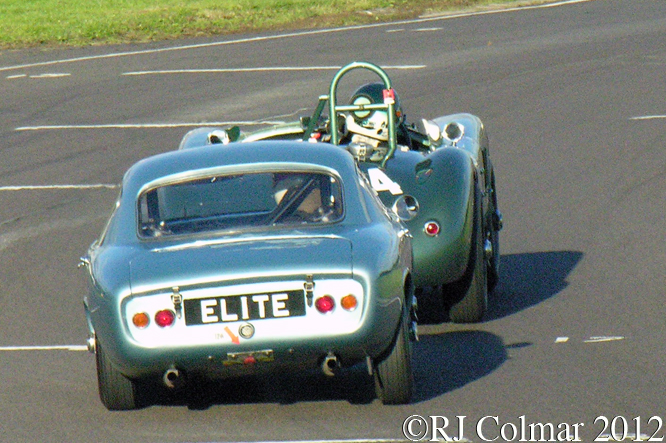
After lengthy repairs to the Castle Combe crash barrier the 50’s Inter Marque race provided plenty of thrills and spills. Nigel Webb just managed to keep his C-type Jaguar ahead of Nigel Bancrofts indecently quick Lotus Elite which was giving away over two litres / 122 cui in swept volume to the Jaguar. Webb came into hand over to Anthony Reid who regained the lead after the Elite’s mandatory pit stop and headed for his second trip to victory lane of the day. Bancroft who elected to drive solo finished second.

VSCC Pre War Sports Cars, Autumn Classic, Castle Combe

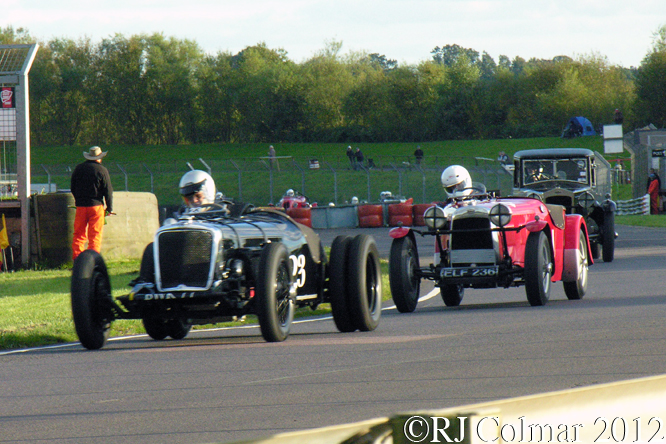
Tom McWhirter driving the unusual 6 wheel #23 Jaguar SS 100 is seen leading the opening lap of the the VSCC Pre War Sports Car race from the #21 HRG Andrew Mitchell and #29 Patrick Blakeney-Edwards Frazer Nash Owlette. Tom won the race by nearly 3 seconds from Andrew who in turn finished just over 16 and a half seconds ahead of Patrick.

Twilight Challenge, Autumn Classic, Castle Combe

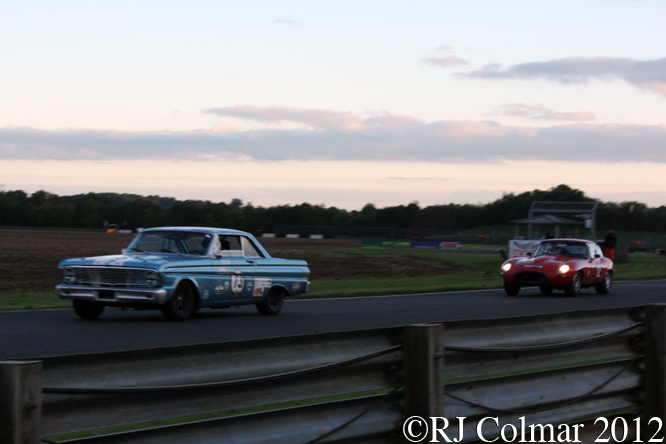
The Twilight Challenge featured just seven starters but there were still battles aplenty thanks to the mandatory pit stop requirement. Tim Pearce claimed the victory in his Morgan Plus 8, the #73 Ford Falcon of Chris Clarkson above is hounded by the Jaguar E-Type of Alan Bull. Alan retired the Jaguar, while Chris and co driver Williams came home second 26 seconds adrift of the Morgan.

I hope it is not another 30 years before the VSCC returns to Castle Combe and that Bernies V8’s and twilight racing return early in the new year with bigger grids.

Full results for all last weekends races at Castle Combe can be found on this link.

Thanks for joining me on this ‘Autumn Classic’ edition of “Gettin a li’l psycho on tyres” I hope you will join me again tomorrow for a look at a 1954 Blue Flame powered sports car. Don’t forget to come back now !
Share