Tag Archives: Lotus

The Adjustacar – Lotus Ford 77 #R2

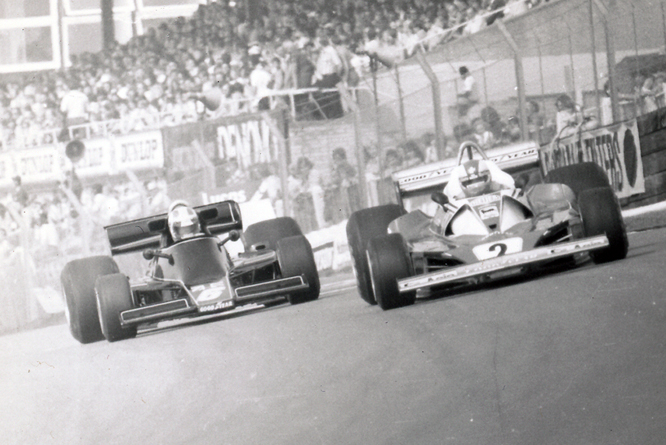
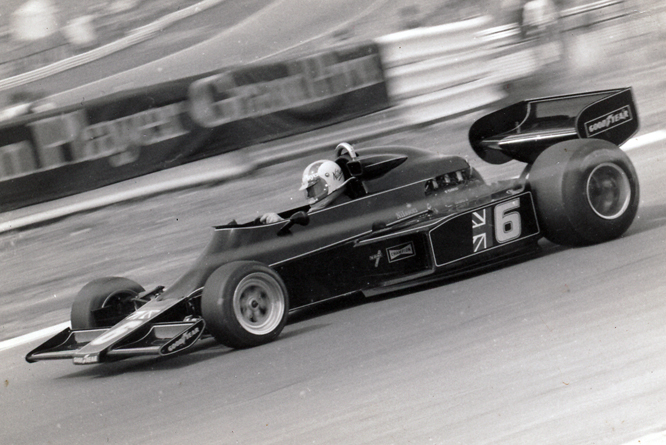
Like the photo’s featured in the Ferrari T2 post a couple of months ago today’s photo’s come courtesy of my school friend Sven Platt and were taken at the 1976 British Grand Prix.

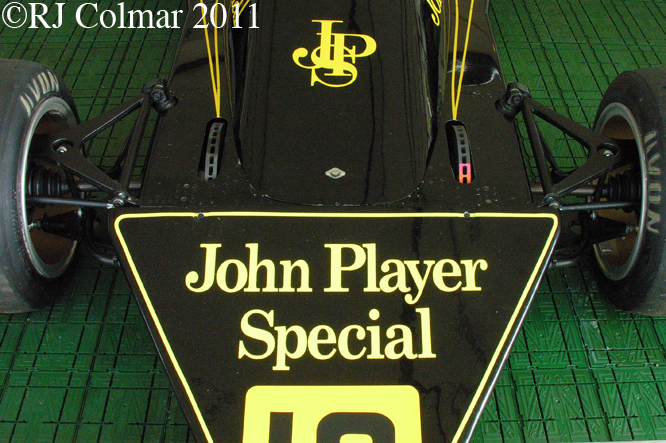
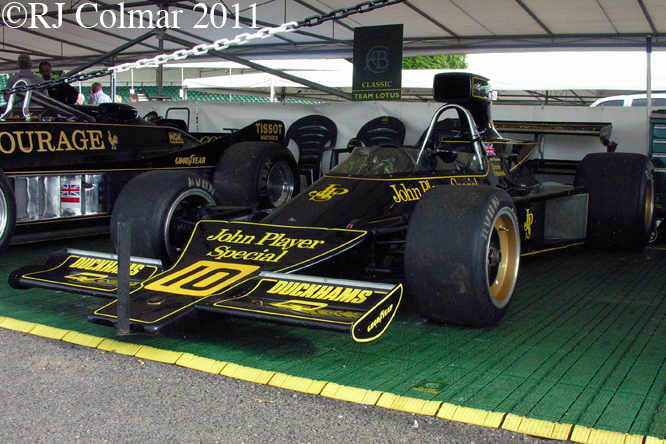
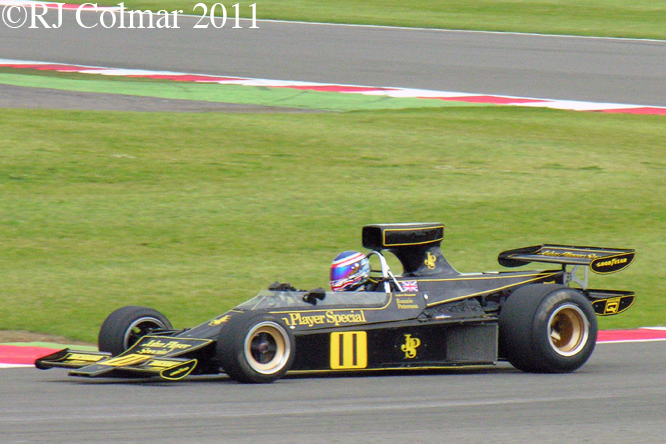
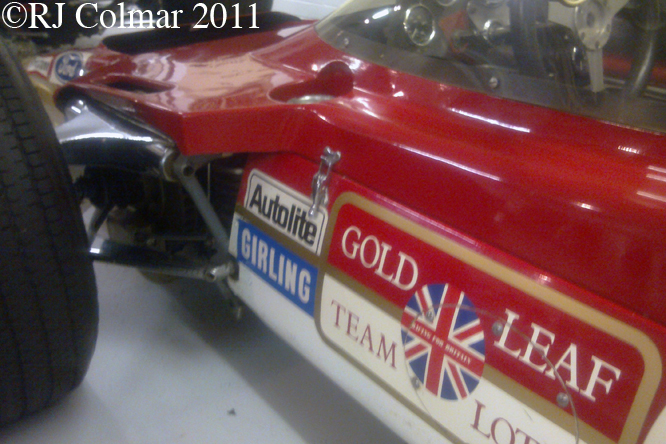
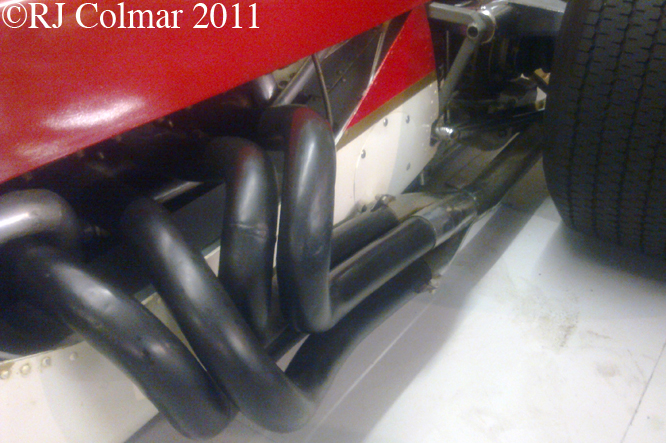
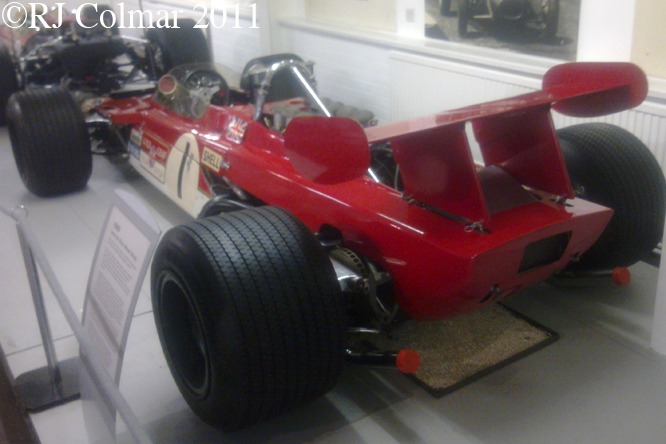
The 1976 Lotus 77 was a second attempt at replacing the Lotus 72 after the underwhelming Lotus 76 was abandoned in 1974. Like the 76 the 77 featured an extremely narrow chassis, but with Lotus 72 style side pods which extended back to the leading edge of the rear wheels for the radiators.

British Grand Prix, Brands Hatch

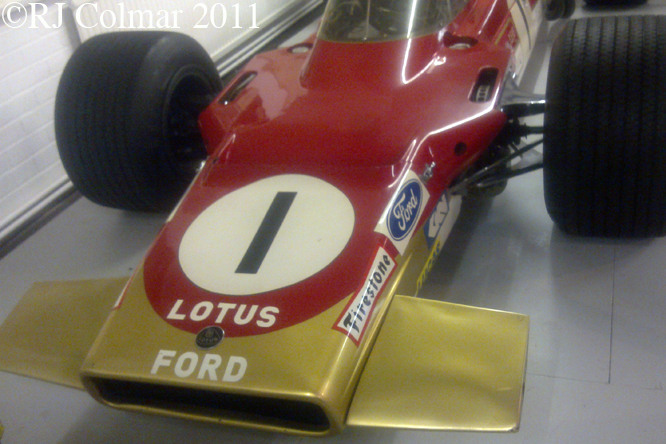
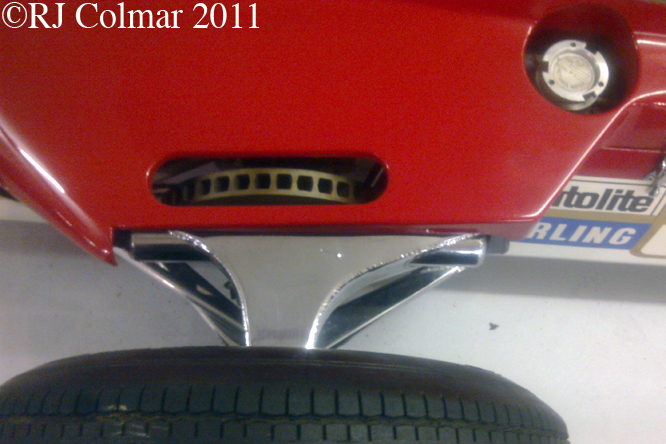
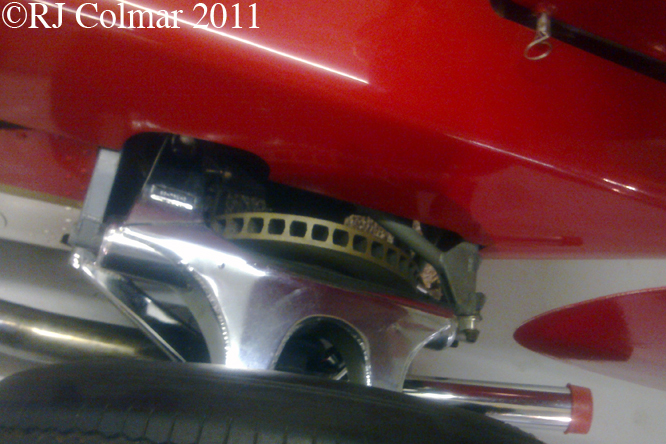
Novel features for the Lotus 77 when it was first seen included air intakes that ran the length of the cockpit, in board brakes, that were mounted between a pencil thin chisel nose and the front wheels, and rocker arm suspension that was fully adjustable to meet the requirements of any track.

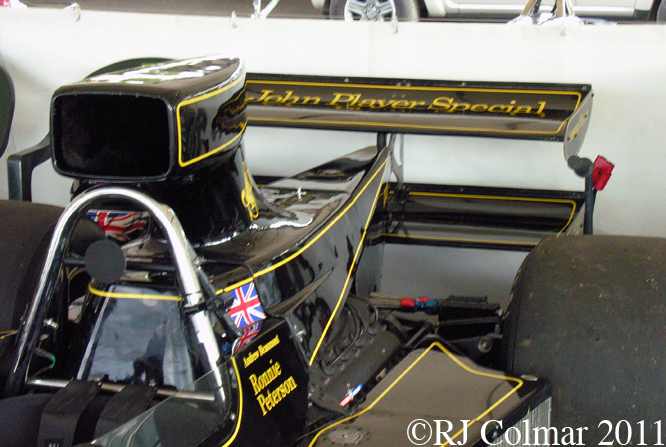
By the start of the European season non championship races the cockpit side air intakes for the motor were blanked off and replaced with a conventional airbox. The ‘adjustacar’ suspension proved difficult to set up but was retained, while by the Belgian GP the inboard front brakes were abandoned. At the Dutch Grand Prix an oil cooler was mounted in the nose to move some weight forward of the front axle line.

Lotus 77, Brands Hatch

At the start of the 1976 season drivers came and went like a game of musical chairs, Ronnie Peterson was the incumbent #1 driver and Mario Andretti returned for a one off guest drive, after a six year break in the second car. After qualifying 16th and retiring with accident damage Ronnie swapped places with new boy & countryman Gunnar Nilsson who had been scheduled to drive for the March team. Andretti returned to Vels Parnelli team just in time for it to fold after the 1976 US Grand Prix West. British Formula 5000 champion Bob Evans was given two Grand Prix races at Team Lotus while Nilsson made his Grand Prix debut in South Africa. After failing to qualify for the US GP West Evans was dropped from the team and after trying out the Wolf Williams FWO5 in a non championship race freshly out of work Mario Andretti signed on as the Lotus #1 driver !

After Andretti rejoined the team Nilsson scored a couple of thirds during his rookie year while Andretti went a little better scoring two thirds and winning the thrilling final race of the season run in a monsoon that decided the championship between Niki Lauda and James Hunt that should make a thrilling climax to Ron Howard’s current film project ‘Rush‘.

The three Lotus 77’s, never known as John Player Special II’s as the sponsors might have hoped, were retired from top line competition at the end of 1977, however that was not quite the end of the story as once again David Render, swapping his Lotus 76, and getting hold of Andretti’s Japanese GP chassis, #R1, and using it as an effective hillclimb and sprint machine.

Thanks for joining me on this “The Adjustacar’ edition of “Gettin’ a li’l psycho on tyres” I hope you will join me again tomorrow when I’ll be reviewing last weekends Simply Italian event at the National Motor Museum in which a GALPOT regular won a prize ! Don’t forget to come back now !

Share

Electronic Clutch & Four Pedals – Lotus Ford 76 #76/1 (JPS 9)

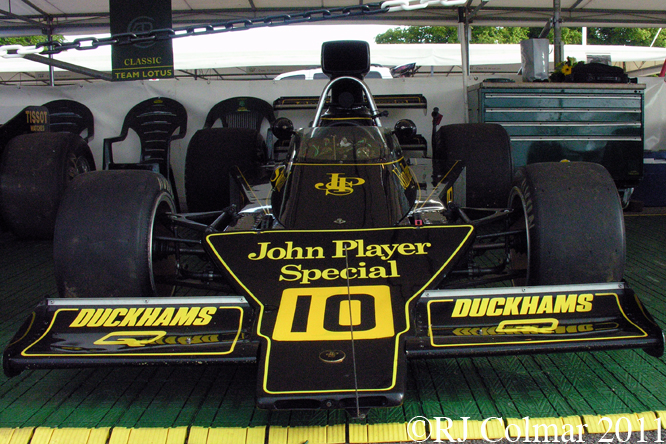
I remember when I first set eyes on the publicity photo’s of the Lotus 76, my reaction was an instant WOW ! The two team cars which had been completed a little late were to replace the venerable Lotus 72 and be driven by Ronnie Peterson and Jacky Ickx in the 1974 season starting at the South African Grand Prix.

The new car was intended to be slimmer and lighter than the Lotus 72 which had helped Jochen Rindt and Emerson Fittipaldi to win World Drivers Championships in 1970 and 1972 and helped Lotus secure the World Constructors Championship in 1970, ’72 and ’73.

Lotus 76, Goodwood FoS

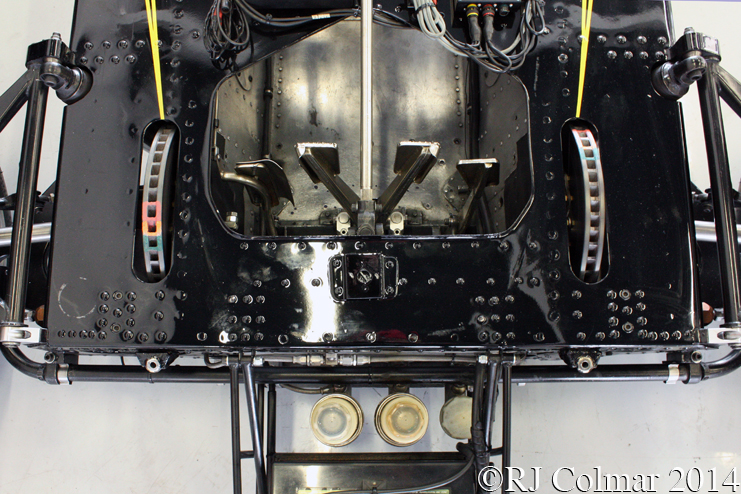
Innovations on the car included an electronic clutch operated by a button on the gear stick, except when starting from rest for smoother gear changes. Two brake pedals were fitted either side of the steering column operating a single split leaver to encourage left foot breaking to minimise the upset of the balance of the car when approaching corners and two thin, for the period, rear wings mounted one above the other.

Much to the consternation of the press and Lotus fans Colin Chapman sold the naming rights to the Lotus 76 which for the 1974 season was to be known as a John Player Special the chassis number of the car seen here at Goodwood was referred to as JPS 9 though the chassis was unofficially referred to in the press and by enthusiasts as 76/1.

Lotus 76, Silverstone Classic

A pattern of retirements set in at the South African GP which was to repeat itself until by the Monaco Grand Prix Lotus Team had decided to revive the Lotus 72 which Ronnie Peterson promptly drove to the first of 3 against the odds victories during the season.

Development of Lotus 76 was split between the ageing Lotus 72 during 1974, to generate more down force larger front wings and the larger rear wing of the Lotus 72 were fitted to the Lotus 76 which appeared in Belgium.

Lotus 76, Goodwood FoS

With the 76 having been observed to be popping wheelies after additional down force had been added the front nose cone was then replaced with a cut down version from the Lotus 72, the radiators moved from ahead of the rear wheels to behind the front wheels and horizontal boards were added along the top of chassis between the front and rear wheels as seen in this linked photo of 76/2 (JPS 10) at the 1974 British GP.

By now the 76 was being taken to races purely in case of an emergency and during practice of the 1974 German Grand Prix such such an emergency arose after Ronnie Peterson crashed Lotus 72/8. The team had no option but to press the by now overweight and unloved 76 back into service and did so by grafting the rear suspension engine and gearbox from the wrecked 72 onto the back of 76/2 (JPS 10). With the car now looking more like it’s predecessor Lotus 72 than a Lotus 76 Ronnie Peterson recorded the 76’s only finish with a forth place on the toughest circuit on the calender !

Lotus 76, Goodwood FoS

After confusion about Mario Andretti starting from 3rd place in the 1974 US Grand Prix, in his Parnelli, third Lotus driver Tim Schenken took the flag of the 1974 US Grand Prix only to be disqualified for being outside the top 26 qualifiers as Andretti had managed to get his car onto the grid, ironically only to be also disqualified for a push start away from the line ! This was Schenken’s and the Lotus 76 last Grand Prix start.

However this was not quite the end of the Lotus 76 story, Colin Chapman was a long time member of a motor club in North London and after a little badgering for ‘something a bit quick’ from fellow long time member, David Render, who participated in Sprints and Hillclimbs, Colin relented and told his friend to turn up at the Lotus factory at Hethel with a trailer.

Lotus 76, Goodwood FoS

When David turned up at Hethel early in 1976 he saw this huge black car with twin wings and asked who is this for ? He was quite surprised to learn that it was intended for him !

David drove what is believed to be 76/2 (JPS 10), in original lightweight form, for 2 years and among many victories won the 1976 Brighton Speed Trials when the event was run over a standing kilometer 0.6 miles and clocked a time of 18.77 seconds reaching a 118 mph as he crossed the line.

Lotus 76, Goodwood FoS

At a recent talk, David gave to the Bristol Pegasus Motor Club, he related how on finding the car suffered from terrible understeer / push he added a lump of lead, taken from his old Allard trials car, beneath the nose cone of the 76 and that solved the problem, though he never told Colin ‘Added Lightness’ Chapman what he had done.

The car featured in today’s post 76/1 (JPS 9) seen at Goodwood Festival of Speed and at the 2011 Silverstone Classic belongs to Andrew Beaumont. According to Classic Team Lotus during the first of two races at the 2011 Silverstone Classic meeting Andrew’s double rear wing got savaged, but it did not have much detriment to the performance of the car and he finished 22nd.

John Barnard eventually perfected a semi automatic electronic clutch and gearshift mechanism with a steering wheel mounted paddle shift for the 1989 Ferrari 640 which won first time out at the Brazilian GP in the hands of Nigel Mansell. This system is now de riguer in almost all top line racing cars.

My thanks to MCS, Gregor Marshall, and Tim Murray on the Lotus 76 thread at The Nostlgia Thread who helped identify a Lotus 76 at the Abbaye de Stavelot Museum as the possible home of the second Lotus 76 chassis #76/2 (JPS10).

Thanks for joining me on this ‘Electronic Clutch & Four Pedals’ edition of ‘Gettin’ a li’l psycho on tyres’ I hope you will join me again tomorrow when I’ll be looking at last weekend’s Auto Italia Day at Brooklands. Don’t forget to come back now !

Share

Big Valve Special – Lotus 74 Europa Special

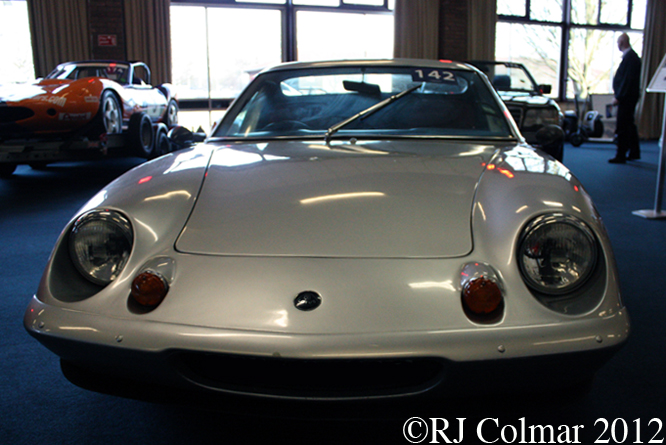
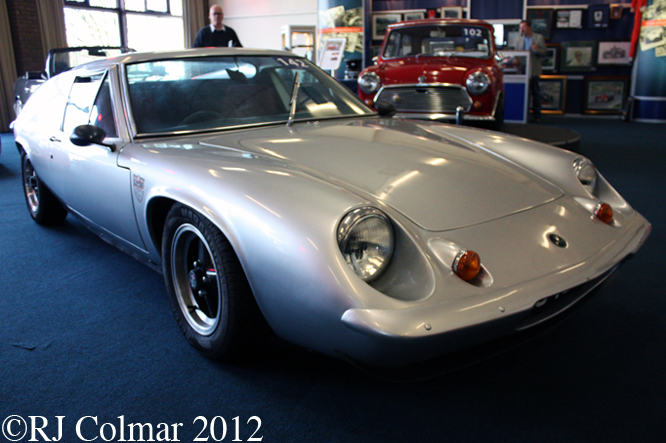
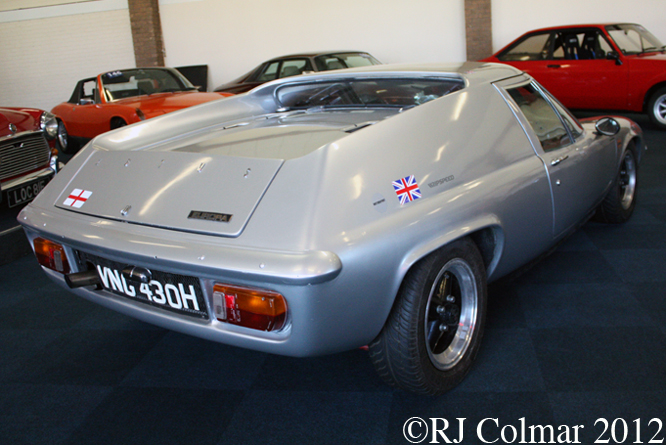
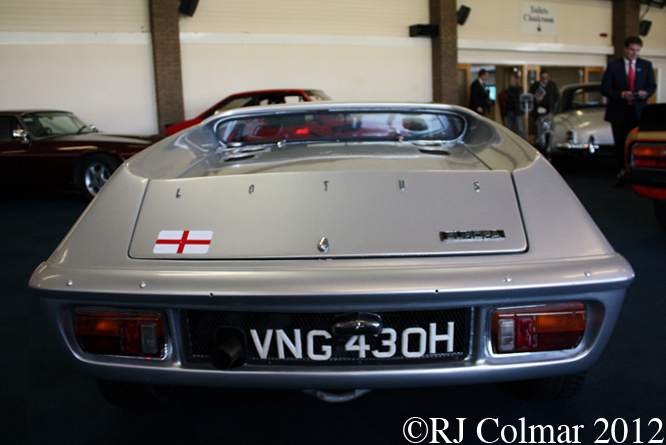
In 1971 Chief Engineer Mike Kimberley oversaw the development of the upgraded Lotus Europa Twin Cam Type 74. featuring a 105 hp Twin Cam motor coupled with a stronger Renault 4 speed gearbox.

Lotus Europa Special, Goodwood FoS

The upgraded Europa featured a 105 hp Twin Cam motor coupled with a stronger Renault 4 speed gearbox.

Lotus Europa Special, Goodwood FoS

After the first 1580 Europa Twin Cams has been built the Europa model was again upgraded with a 126 hp ‘big valve variant of the twin cam motor.

Lotus Europa Special, Goodwood FoS

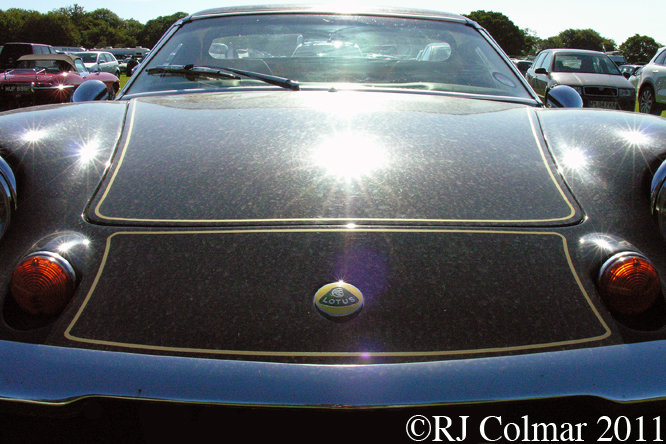
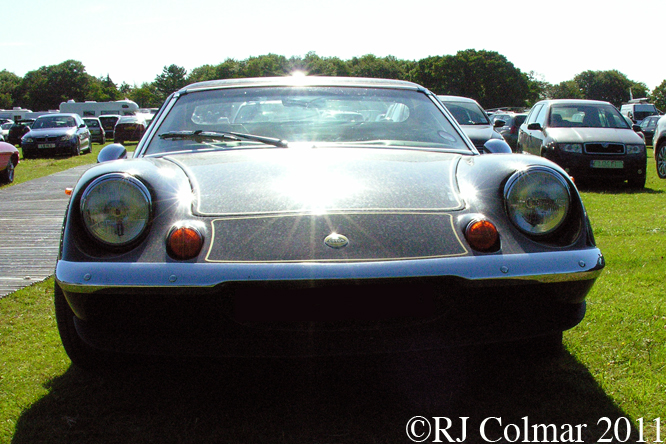
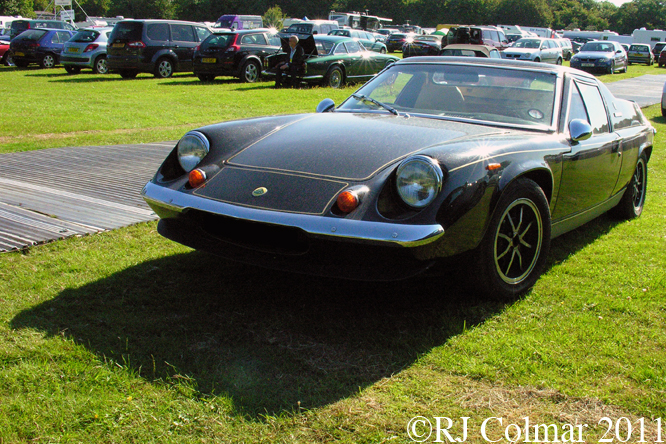
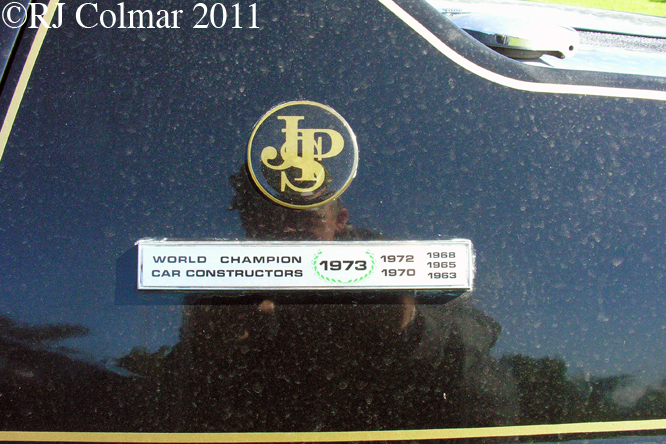
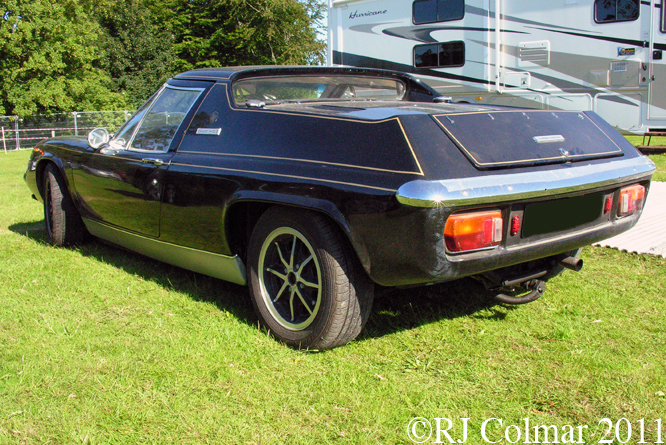
The first 200 ‘Big Valve’ Europa’s were planned as a limited ‘Europa Special’ edition of 200 featuring the black and gold “John Player Special”, tobacco brand, paint work of the works Lotus Racing cars which won the 1972 World Constructors Championship and World Drivers Championship with Emerson Fittipaldi at the wheel.

Lotus Europa Special, Goodwood FoS

The 200 ‘Europa Special’ limited edition vehicles, all featuring a 5 speed gearbox, launched in September 1972 are distinguishable by a numbered badge on the dash panel.

Lotus Europa Special, Goodwood FoS

Such was the popularity of the Europa Special that the model was continued after the initial planned batch of 200 had been built sans numbered dashboard badges and in a variety of colours including black and gold until 1975.

Lotus Europa Special, Goodwood FoS

I was unable to discern if the 1972 Europa Special seen here is one of the first 200 numbered cars, or one of post limited edition models, when I saw it at last years Goodwood Festival of Speed. Note how the rear bodywork has been tidied up to give better rear visibility when compared to the Type 54 Europa I looked at last week.

Lotus Europa Special, Goodwood FoS

A Europa with the big valve motor was tested in period carrying a passenger from rest to 60 mph in 6.6 seconds and with a maximum speed of 122 mph. In all 3130 big valve Europa Specials were built from September 1972 to 1975.

Thanks for joining me on this ‘Big Valve Special’ edition of ‘Gettin’ a li’l psycho’ on tyres’ I hope you will join me again tomorrow when I’ll be reviewing last weeks Bristol Italian Auto Moto Festival. Don’t forget to come back now !

12 05 09 Lotus Type 74 disambiguation, it has come to light that at least one internet source lists two Lotus Type 74’s one the Europa Twin Cam / Europa Special and the other an open wheel Formula 2 car, former Lotus employee Rob, Kayemod on The Nostalgia Forum, has kindly informed me that the Formula 2 cars were only ever referred to at the Lotus factory as “Texaco Stars” in deference to their sponsor and that the Type 74 designation seems to have been applied to the racing car retrospectively.

Share

Black Badge Myth – Lotus Europa #54/2108

In 1966 Lotus introduced the Lotus Europa known as Type 46 which was apparently born out of Colin Chapman’s attempt to win the Ford contract to build Ford’s Le Mans challenger which went to Lola and eventually became known as the GT40.

Lotus Europa S2, Race Retro

The Europa came with a mid mounted Renault engine and gearbox, of the type usually found in the Renault 16, albeit boosted from 52 hp to 82 hp mounted on a steel back bone chassis with a fiberglass body bonded to the chassis.

Lotus Europa S2, Race Retro

A racing version of the Europa, Type 47 was also built which was intended to replace the Lotus 7, which it never did. In April 1968 Lotus introduced the Europa S2 which used the same running gear and chassis as the original but featured electric window’s, fully adjustable seats, polished wood facia and the body was now secured to the chassis by bolts in place of the resin bonding, this package of refinements were sufficient for Lotus to give the Europa S2 a new internal Type number 54.

Lotus Europa S2, Race Retro

The 1969 Europa S2 seen here fetched over £16,000 at the recent Silverstone Auction held at Race Retro. Interestingly this car was advertised as a Black Badge Car, which romantics would have you believe was something to do with a myth allegedly marking the death of Jim Clark in 1968 when in fact the truth is considerably more mundane.

Lotus Europa S2, Race Retro

According to the late Graham Arnold Lotus Marketing Director in 1968 the Black Badge Elan’s and Europa’s came about because Graham arranged for the production of a batch of black ‘Lotus’ badges because he ‘thought’ they would look classier and would not clash like the yellow and green ‘Lotus’ badges did with the red white and gold ‘Gold Leaf‘ colours carried by many road going Lotus models at the time. Colin Chapman did not approve of the new badges and vetoed their use. Subsequently some of these badges however did find their way on to various cars not least the press fleet for which Mr Arnold was responsible, causing him to attract the ire from Mr Chapman who thought Mr Arnold had fitted the black badges in contradiction to Mr Chapman’s wishes.

Subsequently replica black badges have found their way on to owners cars often as a mark of respect to Jim Clark but these badges were never sanctioned officially and should not attract any kind of premium if fitted.

Thanks for joining me on this “Black Badge Myth” edition of ‘Gettin’ a li’l psycho on tyres’, I hope you will join me again tomorrow. Don’t forget to come back now !

Share

White Elephant – Lotus 63

The thinking behind the Lotus 63 intended to capitalise on the lessons learned from the all wheel drive Lotus 56 Champ Car, which nearly won the Indy 500 in 1968, and replace the Lotus 49 for the 1969 Grand Prix season.

Lotus 63, Donington Park Museum

Colin Chapman recognised that the 3 litre / 183 cui Ford Cosworth DFV V8 which he had been responsible for commissioning with Ford finance had more power than the Lotus 49 could properly utilise even with the aid of wings which generated downforce on the wheels when in motion.

Lotus 63, Donington Park Museum

Having learned about the benefits of all wheel drive from the Lotus 56 Indianapolis programme Colin Directed Maurice Phillipe to design an all wheel drive car for Grand Prix racing, this was by no means the first such Grand Prix vehicle the 1961 Ferguson P99 featured such a transmission and won the non championship 1961 Oulton Park Gold Cup with Stirling Moss at the wheel.

Lotus 63, Donington Park Museum

The fuel cells for the 63 were built into the sides of the car and under the drivers seat !

Lotus 63, Donington Park Museum

The mounting of the Cosworth DFV broke with tradition having the clutch at the front driving the four wheels through shafts mounted in tunnels on the left hand side of the car. The second pipe from the left in this photo is connected to the radiator at the front.

Lotus 63, Donington Park Museum

To reduce unsprung weight and improve handling the ventilated disc brakes were mounted in board front and rear.

Lotus 63, Donington Park Museum

Graham Hill tested the Lotus 63 once and refused to race it feeling the car was unsafe, Jochen Rindt managed a best second place in the non championship 1969 Oulton Park but like Hill was not keen on driving a car with his feet ahead of the front axles and his legs beneath them !

Grand Prix novice John Miles who did the bulk of the testing for the model, because Chapman thought he would lack any preconceptions to hinder development, managed one non points finish from four starts and Mario Andretti crashed in both races he started with the Lotus 63. By the end of 1969 the car was running with a heavy drive bias to the rear thus negating the advantages of four wheel drive and so the car was abandoned as a white elephant in favour of the new Lotus 72 design which would set the Grand Prix world alight in 1970.

The Lotus 63 featured today is regularly on view at the Donington Park Museum.

Owner driver Roger Dawson – Damer lost his life in an accident while driving his Lotus 63 at the 2000 Goodwood Festival of Speed.

Thanks for joining me on this ‘White Elephant’ edition of ‘Gettin’ a li’l psycho on tyres’, I hope you’ll join me again tomorrow when I’ll be celebrating the 40th Anniversary of the Maserati Merak. Don’t forget to come back now !

PS I hope you will join me in wishing GALPOT contributor Ralf Pickel a speedy recovery from a nasty accident at Hockenheim in which he broke both legs last week.

Share

Son of Silent Sam – Lotus 56

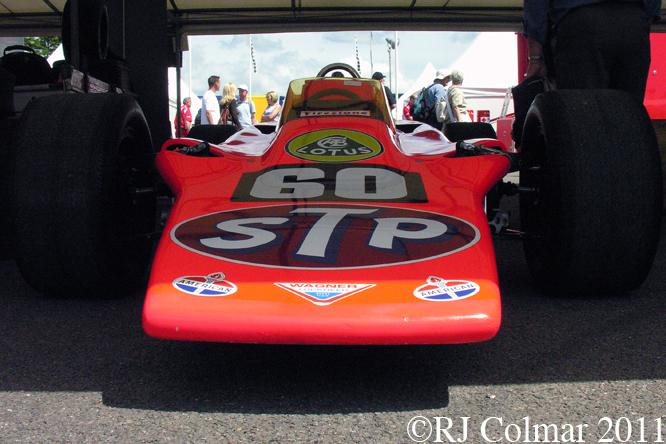
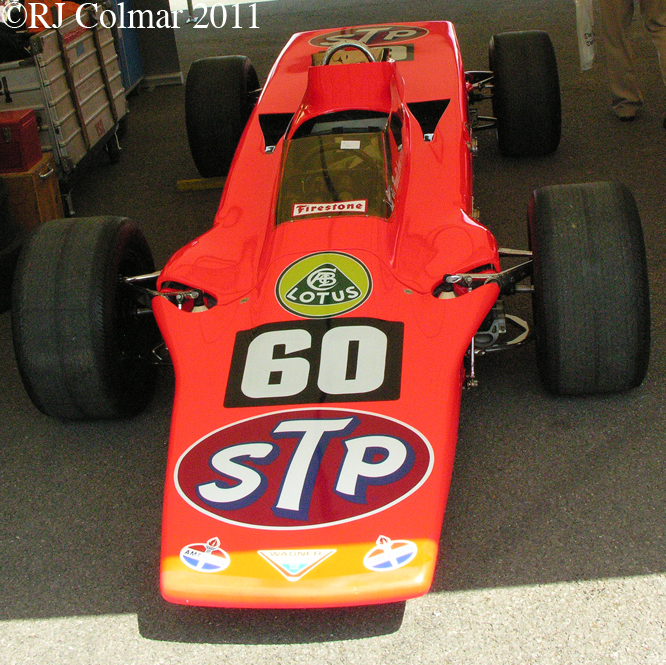
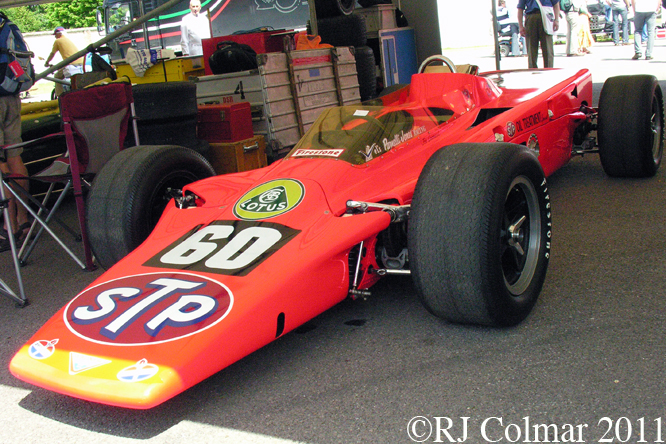
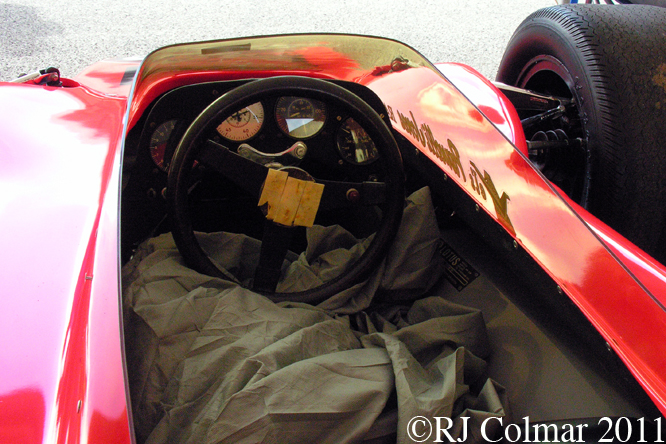
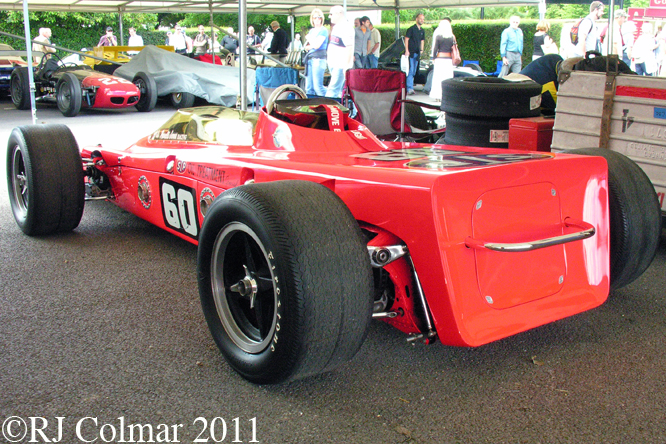
The 1968 Lotus 56 picked up on the technology used by the STP-Paxton Turbocar “Silent Sam designed by Ken Wallis for the 1967 Indy 500 with which Parnelli Jones came within 8 miles of winning before a transmission bearing failure intervened.

Lotus 56, Goodwood, FoS

Like the STP Paxton Turbocar the Lotus 56, was also bankrolled by STP’s Andy Granatelli, used four wheel drive transmission.

The Lotus 56Lotus 56, Goodwood, FoS

However the Lotus 56 rather than mounting the engine alongside the driver on a backbone chassis as had been the case with the STP Paxton Turbocar, Maurice Phillipe’s design had the motor conventionally mounted behind the driver in what was to become an influential wedge shaped vehicle.

Lotus 56, Goodwood, FoS

Jim Clark was originally penciled in to drive the Lotus 56 but his death during a race in Germany in April ’68 meant British driver Mike Spence was called in to do the early testing of the Lotus 56, unfortunately Mike was killed during practice three weeks before the start of the Indy 500 after hitting the wall in turn one.

Lotus 56, Goodwood, FoS

After an accident with in older STP Paxton Turbo car Joe Leonard joined Graham Hill and Art Pollard in the remaining Lotus 56’s.

Lotus 56, Goodwood, FoS

Despite running with an air restrictor plate mandated for 1968 Joe managed to qualify on pole for the ‘500’ thanks in part to the efficient aerodynamics and superior 4wd handling.

Lotus 56, Goodwood, FoS

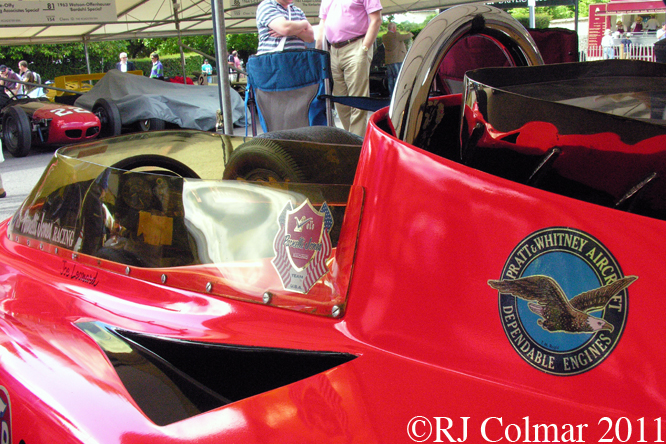
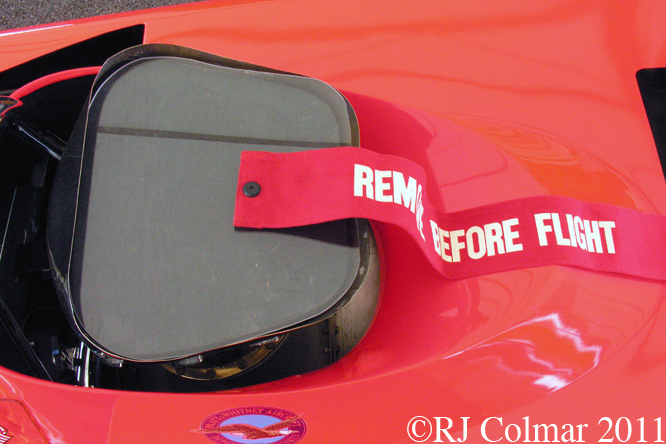
The big advantage of using a Pratt & Whitney Canada PT6 turbo shaft motor, more familiarly seen in a variety of fixed wing and rotary wing aircraft, was reliability these motors are known to have a mean time between outages (MTBO) of 9000 hours !

Lotus 56, Goodwood, FoS

The disadvantage of turbo shaft motor was eye watering fuel consumption which means turbine powered cars carry more weight and have to re fuel more often than cars powered by conventional piston motor’s.

Lotus 56, Goodwood, FoS

In the 1968 500 Graham Hill had an accident Art Pollard broke down while Joe Leonard was leading with a few laps to go when a fuel pump shaft failed meaning Granatelli came close but failed to win a cigar for the second year running.

Turbo shaft motors and four wheel drive were outlawed from the Champ Car circuit from 1969. The Lotus 56 design, in 56B specification, was subsequently sporadically used in Grand Prix races during 1971, but apart from phenomenal performance in the wet no overall advantage was found by using the combination of four wheel drive and turbine shaft propelled vehicles.

Thanks for joining me on this ‘Son of Silent Sam’ edition of ‘Gettin’ a lil psycho on tyres’, I hope you will join me again tomorrow. Don’t forget to come back now !

Share

Choice Of Champions – Lotus 49B #R10 & #R12

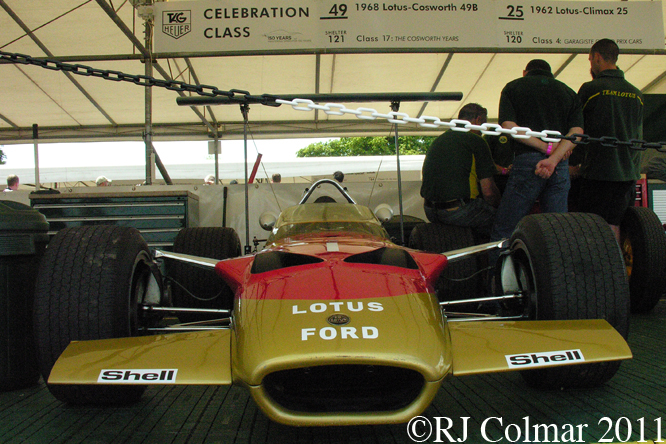
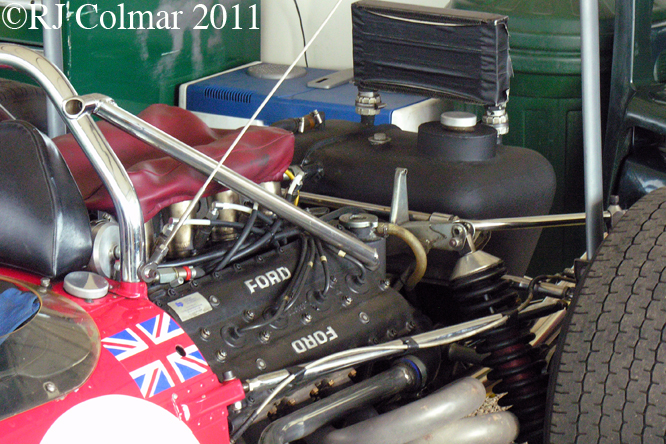
The story of the Lotus 49 in all of it’s guises is inextricably linked to the one component that was a decade ahead of it’s time the Ford DFV motor, which did not win it’s last race until 1983 and was still being used in 1985 running against turbocharged powered cars.
Lotus 49B, Goodwood, FoS

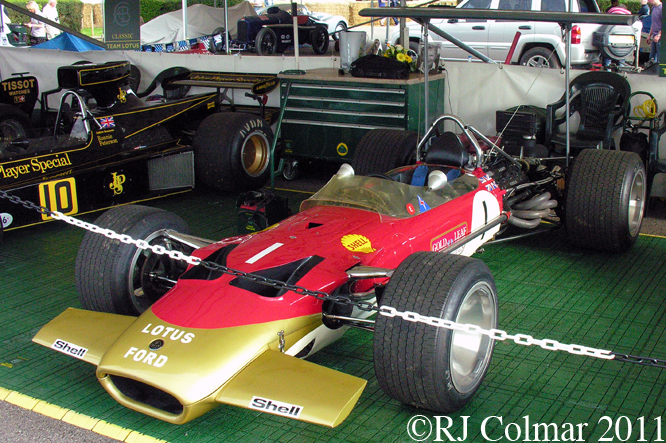
The Lotus 49 was originally built to compete in the 1967 Formula One season for drivers Jim Clark and Graham Hill. Colin Chapman had arranged for Ford to finance the building of the 3 litre / 183 cui Ford Cosworth V8 engine which like the BRM H16 Colin had used in 1966 was to be used as an integral component of the chassis, ie, if you take the motor out of the car the rear wheels would no longer be connected to the rest of the car sufficiently to be able to even push it.
Lotus 49B, Goodwood, FoS

The Lotus 49 design, credited to Maurice Phillipe, was based on the 1965 Indy winning Lotus 38 which Len Terry is credited with being responsible for. Jim Clark drove the Lotus 49 to a debut win in the 1967 Dutch Grand Prix. The Type 49 in all it’s guises won 12 Grand Prix in total the last a lucky last lap win at the 1970 Monaco Grand Prix with Jochen Rindt at the wheel.
Lotus 49B, Donington Park Museum

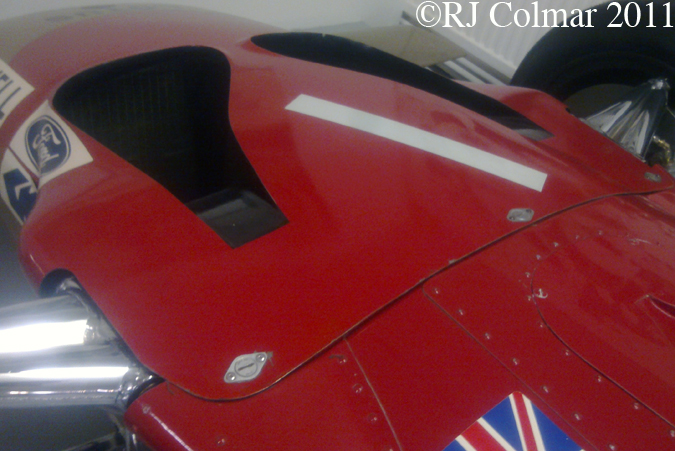
These air ducts, introduced on the 49B in 1969, allowed air to pass through the radiator and escape over the top of the car, where as on the original car the air had passed through the nose cone and out the sides of the car ahead of the front suspension units.
Lotus 49B, Goodwood, FoS

Producing around 400 hp when it first became available, Colin Chapman had an advantage over every other car in the field with the light and reliable Cosworth DFV which had years of development ahead of it that would see it’s output reach just short of 500 hp in 1985. Unfortunately, for Colin Chapman, realising that they needed to be seen running against other competitive teams Ford renegade on it’s exclusive deal with Lotus at the end of 1967 and allowed Ken Tyrrells Matra team to use Ford engines as well in 1968. By the mid 1970’s only Ferrari and BRM were the only regular runners not using Cosworth DFV’s.
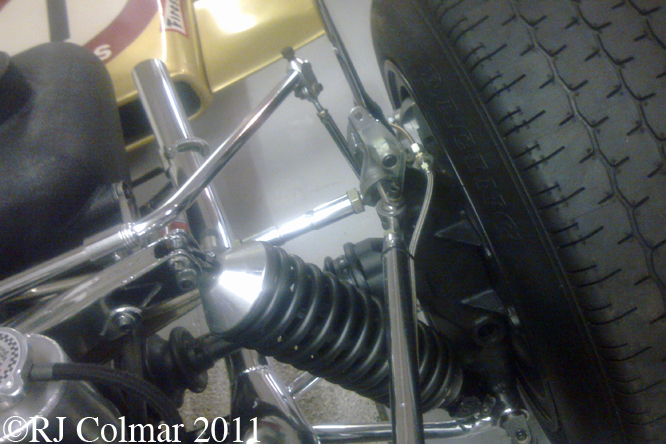
Lotus 49B, Donington Park Museum

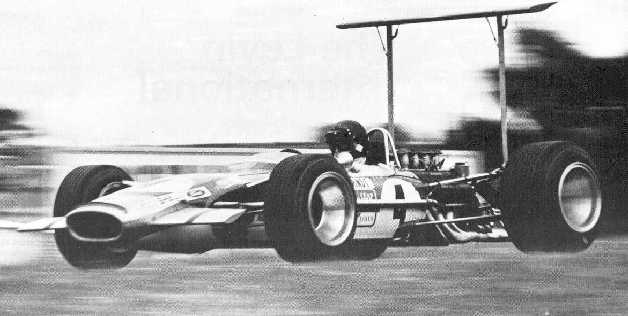
In 1968 Brabham and Ferrari copied the high aerofoil concept first seen on the Chaparral 2E Can Am car in 1966 and on the 1967 Chaparral 2F in the World Prototype championship, a month later the Lotus 49B with new rear hubs to carry the 400 lbs of downforce generated by the rear wing appeared at the French Grand Prix.
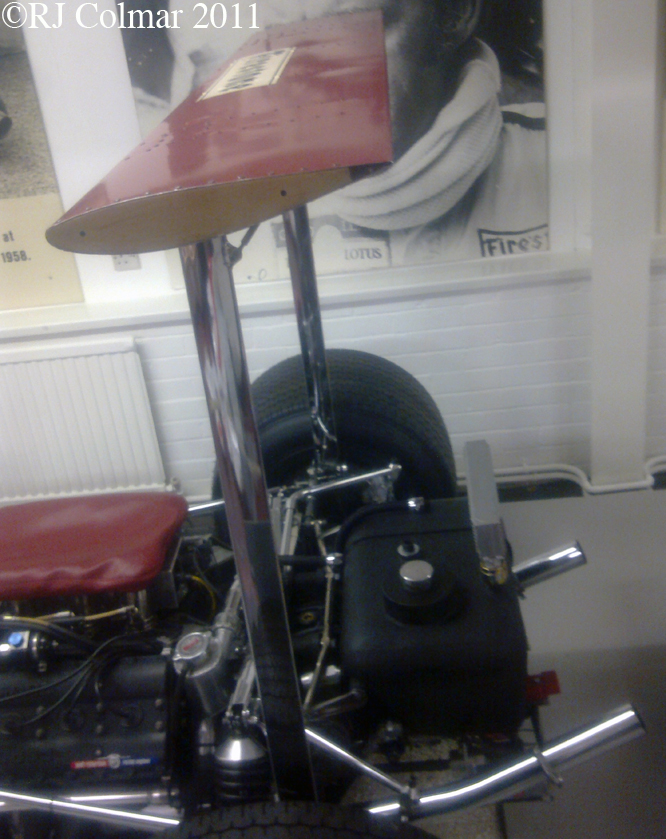
Lotus 49B, Donington Park Museum

This photo shows clearly how big an issue rear grip was back in 1968 not only is their a rear wing but the Hewland gearbox is surrounded by a large oil tank in an effort to distribute as much weight to the rear of the car as possible to improve road holding.
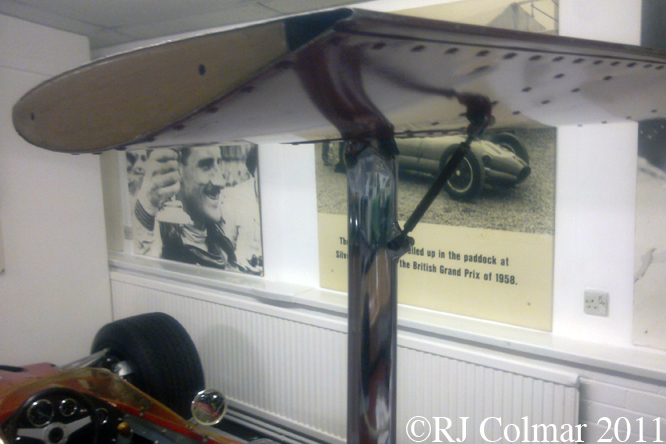
Lotus 49B, Donington Park Museum

The inverted aeroplane wing shape and light construction of the rear wing can be seen here, in 1969 similar wings were attached to the front hubs as well, but two bad accidents caused by collapsing wings for Lotus Team mates Graham Hill and Jochen Rindt led to these devices being strictly controlled from the 1969 Monaco Grand Prix on.
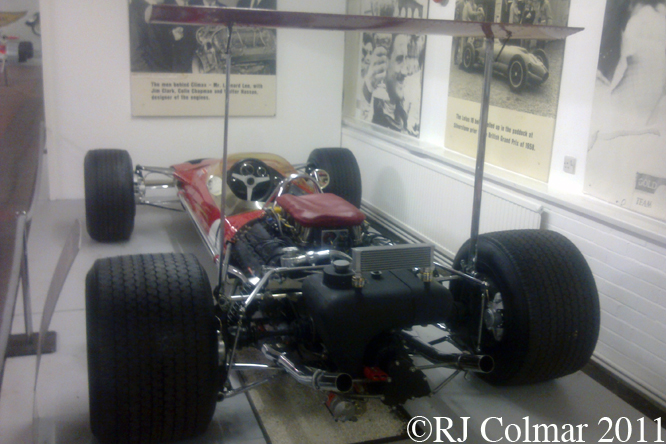
Lotus 49B, Donington Park Museum

So far as I can tell the chassis seen here, in the first, second and forth photo’s, at Goodwood is #R10. Chassis R10 was probably the original 49 #R5 which for reasons that are not clear was renumbered.

While carrying the #R5 chassis plate the car was raced in his second world championship winning year by Graham Hill to win the 1968 Monaco Grand Prix, #R10 was subsequently used by 1978 World Champion Mario Andretti to win pole for his first Grand Prix start in the 1968 US Grand Prix at Watkins Glen.

Future 1970 champion Jochen Rindt was the first to use running with a 2.5 litre / 152.6 cui version of the Ford Cosworth DFV. Jochen won two Tasman Championship races in #R10.

Reigning 1968 World Champion Graham next used #R10 to win the 1969 Monaco Grand Prix. The following season Graham was driving the Lotus 49 #R7 for the privateer Rob Walker team which he crashed beyond immediate repair during practice at Monaco. Fortunately Lotus number 2 driver John Miles had failed to qualify for the race in #R10 and so it was hastily repainted in Rob Walkers colours the night before the race for Graham to drive. He finished 5th despite having broken his legs in the 1969 season ending US Grand Prix driving the same chassis just 7 months earlier !

1972 & 1974 double world champion Emerson Fittipaldi made his Grand Prix debut in Lotus Ford 49 #R10, at the British Grand Prix in 1970.

Finally the first race I ever recall seeing on TV was the 1968 British Grand Prix which was led by first Graham Hill, then his team mate Jackie Oliver before being won by Jo Siffert all three were driving Lotus 49 B’s Jo’s being the odd one out being entered by Rob Walker, who GALPOT regulars may recall had a lot of success running Stirling Moss in his Lotus 18 during the early 1960’s. Jo’s victory was the last to be recorded by a private entrant in a ‘customer’ non works customer car.

Thanks for joining me on this ‘Choice Of Champions’ edition of ‘Gettin’ a li’l psycho on tyres. I hope you will join me again tomorrow. Don’t forget to come back now !

24 04 12 PS Tim Murray has kindly pointed out that I originally incorrectly attributed the design of the Lotus 49 to Len Terry when it should have been Maurice Phillipe, apologies for any confusion. If you see an error of fact anywhere in GALPOT blogs please do not hesitate to inform me in the comments box. Thanks to Tim for the correction.

03 08 12 Serious Errata further reading of Micheal Olivers “Lotus 49 the story of a Legend” has shown that the car which is seen in the 3rd, 5th, 6th and 7th photo’s above at the Donington Collection is actually chassis #R12 and not chassis #R10 as seen in the 1st, 2nd 4th photo’s above, there are several distinguishing features which should have made this obvious at the time I originally posted this blog including the black ‘Lotus Ford’ lettering on the nose various decals and the chrome exhaust at the rear !

Chassis R12 was built up as a show car, for the Ford Motor Company, using the floor from the Lotus 49B R6/1 which was crashed by Jackie Oliver at the 1968 French Grand Prix. Built as a non runner chassis #R12 is consequently the only Lotus 49 which has never been raced, it was donated to Tom Wheatcroft’s Donington Collection when Ford no longer had a use for it.

Sincerest apologies for this error.

Share