Tag Archives: Lotus

Imperial Green – Lotus T104 Vauxhall Lotus Carlton

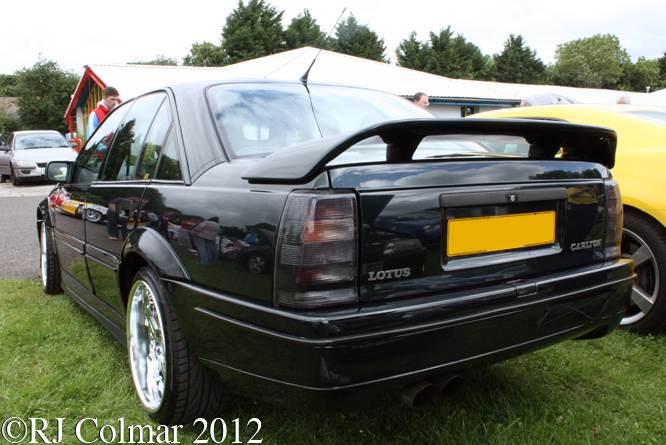
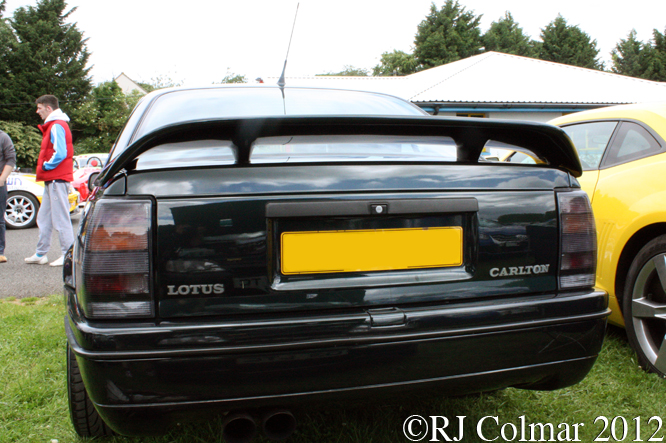
In 1990 Britain and Germany’s GM divisions launched a new Q car that could blow the contemporary Ford Sierra RS Cosworth 4×4 performance model into the weeds. The new vehicle was known as the Vauxhall Lotus Carlton in the UK and Lotus Omega in the rest of Europe.

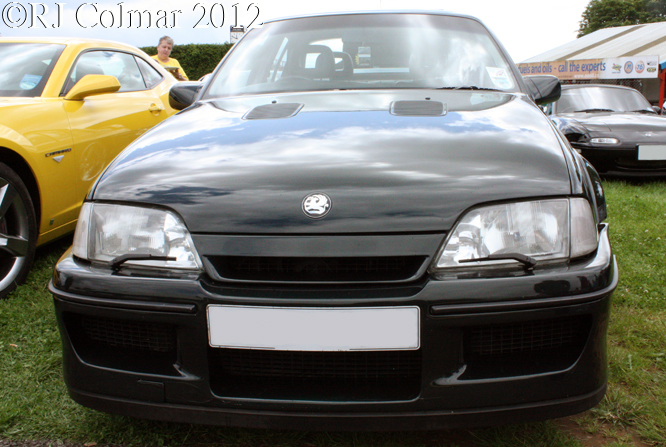
Vauxhall Lotus Carlton, Classic and Sports Car Action Day, Castle Combe

Lotus project Type 104 was responsible for turning the 3 litre / 183 cui executive saloon, into a barnstormer which included a body kit that fed more air into the engine and two small louvered out lets on the bonnet hood.

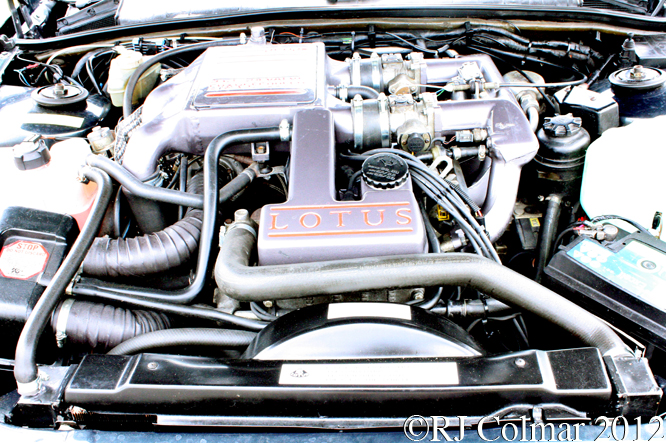
Vauxhall Lotus Carlton, Classic and Sports Car Action Day, Castle Combe

The six cylinder motor was comprehensively revised; the swept volume was increased to 3.6 litres / 219 cui and twin Garret T25 turbochargers with a Behr water to air inter cooler were fitted to take the power up to 377 hp at 5200 rpm. Transmission came courtesy of the contemporary Chevrolet Corvette ZR1 and the limited slip differential from the Australian Holden Commodore.

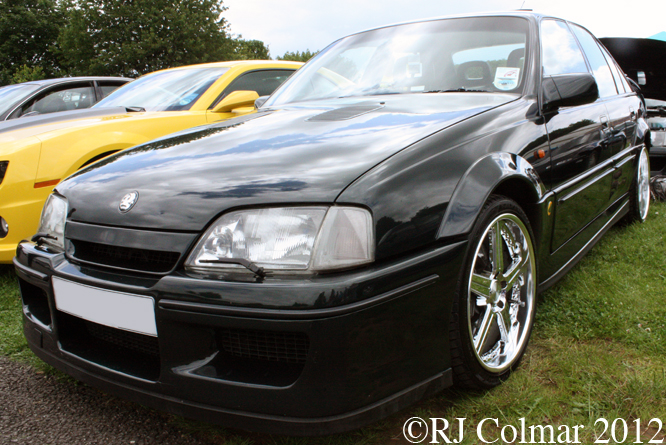
Vauxhall Lotus Carlton, Classic and Sports Car Action Day, Castle Combe

The performance figures included rest to 60 mph in 5.1 seconds with 100 mph being reached in 11.1 seconds and a controversial top speed of 176 mph, which made the car the worlds fastest four door saloon. There had been, unheeded, calls for GM to follow the lead of BMW and others to restrict the top speed to 155 mph.

Vauxhall Lotus Carlton, Classic and Sports Car Action Day, Castle Combe

The suspension was also suitably modified for improved stability and handling to match the straight line performance of the car, standard Carlton / Omega Servotronic power assistance for the worm and roller steering was used as space and budgets precluded the development of rack and pinion steering.

Vauxhall Lotus Carlton, Classic and Sports Car Action Day, Castle Combe

You could have your £48,000 Vauxhall Lotus Carlton or Lotus Omega any colour you liked so long as it was imperial green, which as can be seen looks black in any light other than direct sun light. Just 320 Vauxhall Lotus Carlton’s were built and 630 Lotus Omega’s.

Thanks for joining me on this “Imperial Green” edition of “Gettin’ a li’l psycho on tyres” I hope you will join me again tomorrow. Don’t forget to come back now !

Share

Satoru’s Fastest Lap – Lotus Judd 101

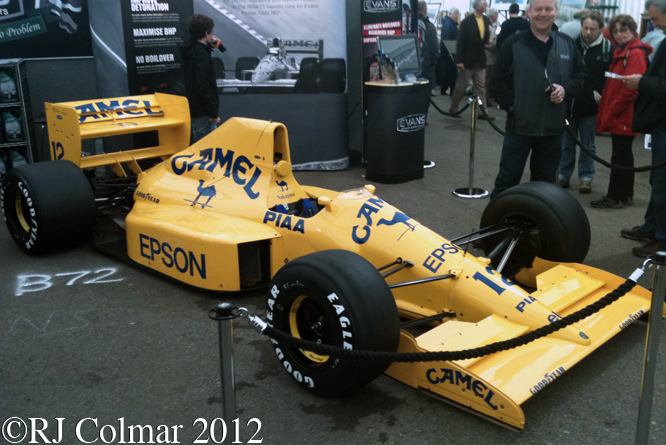
1989 saw the phenomenally expensive 1200 – 1500 hp 1.5 litres / 91.5 cui turbo charged engines that had first been seen in Formula One racing in 1977 and that had come to dominate the sport by 1983 finally outlawed in 1989. New regulations mandating 3.5 litre / 213 cui motors were introduced for the 1989 season but Honda who had come to dominate the last years of the turbo era were about to dominate the opening years of the new normally aspirated era with a V10 motor that was simply more reliable and more powerful than the opposition.

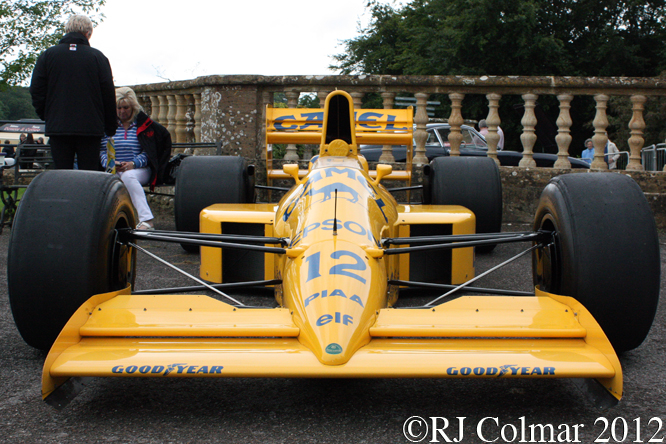
Lotus Judd 101, Classics at the Castle, Sherborne

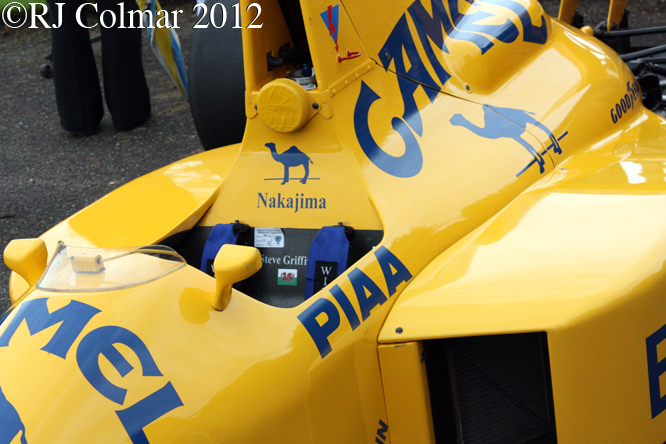
Team Lotus were on the upper slopes of steep decline in 1989 neither Nelson Piquet or Satoru Nakajima had offered the dominant McLaren’s with whom they shared an engine supplier in 1988 much by way of competition, and Lotus finished a poor 4th behind Ferrari and Benetton when their motors should have been good enough to finish second behind McLaren.

Lotus Judd 101, Race Retro, Stonleigh

For 1989 Lotus lost their Honda deal and ended up with Judd V8 CV spec motors while Judd’s preferred customer March was on EV spec motors.

Lotus Judd 101, Bristol Classic Car Show, Shepton Mallet

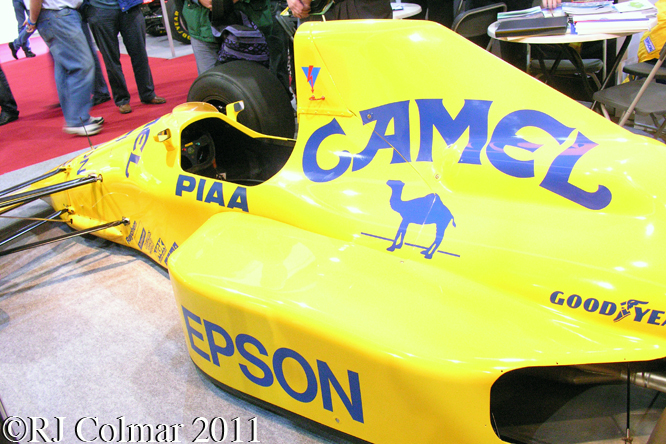
The 1989 Lotus 101 cars were designed by Frank Dernie a former Williams aerodynamicist Frank Dernie whom Nelson Piquet had persuaded to defect, though by the time Frank arrived much of the design had been completed by future short lived MWR, Micheal Waltrip Racing, design consultant Mike Coughlan.

Lotus Judd 101, Classics at the Castle, Sherborne

In order to save weight and seek aerodynamic advantage on their competitors the Lotus 101 cockpit was so narrow that Momo were commissioned to build ultra narrow steering wheels so that Nelson and Satoru did not scrape their knuckles on the cockpit sides.

Lotus Judd 101, Race Retro, Stonleigh

Lotus entered an agreement with Tickford to develop 5 valve per cylinder heads for their 2nd string Judd V8’s to make up some of the 125 hp the CV motors had on the most powerful Honda V10’s but the idea was eventually scrapped mid season.

Lotus Judd 101, Classics at the Castle, Sherborne

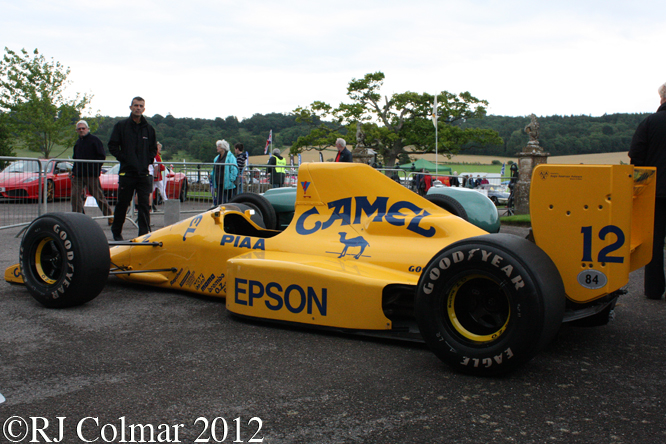
Team Lotus scored four seasons high 4th places 3 for Nelson and one for Satoru enough with two more points finishes for Nelson to secure 6th place for Team Lotus in the 1989 Championship.

Lotus Judd 101, Bristol Classic Car Show, Shepton Mallet

Possibly the most remarkable result for the team came at the season ends Australian Grand Prix in Adelaide where the race was run in monsoon conditions, only 8 of the 26 qualifiers were running at the races end and of them Satoru Nakajima came through from 23rd of the grid to finish 4th and final runner on the lead lap. In the process Satoru recorded the races fastest lap a feat he would never repeat.

Lotus Judd 101, Bristol Classic Car Show, Shepton Mallet

Although Lotus were running second string Judd CV engines they finished ahead, in championship points, of the other Judd users Brabham; March, and Euro Brun the latter who like Yamaha powered Zakspeed failed to even pre qualify for a single on of the seasons 16 races.

Thanks for joining me on this “Saturo’s Fastest Lap” edition of “Gettin’ a li’l psycho on tyres” I hope you will join me again tomorrow. Don’t forget to come back now !

Share

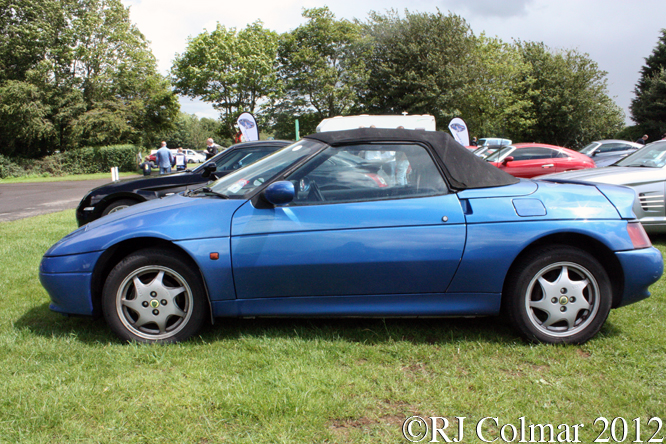
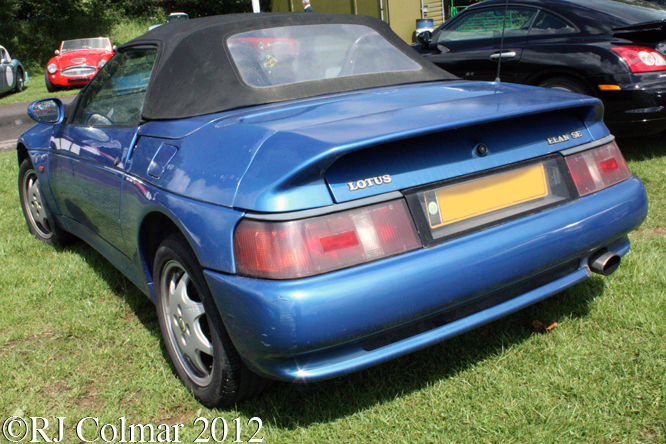
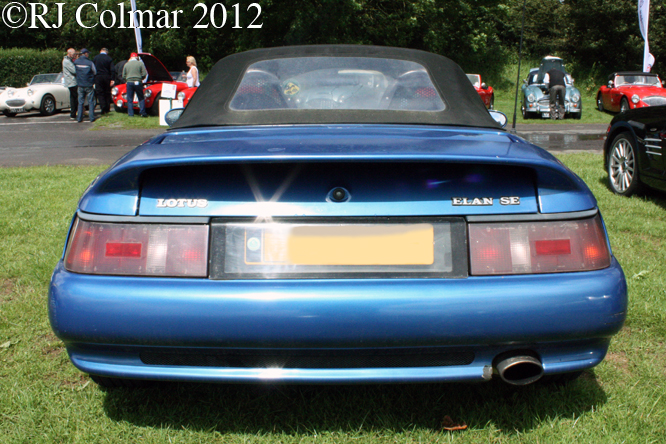
Worlds Best Handling FWD – Lotus M100 Elan SE Turbo

When General Motors acquired Lotus Cars in 1986 it committed to investing £35m / US$55m in to a new affordable car that was to be built on the reputation of the Lotus Elan which was discontinued in 1973.

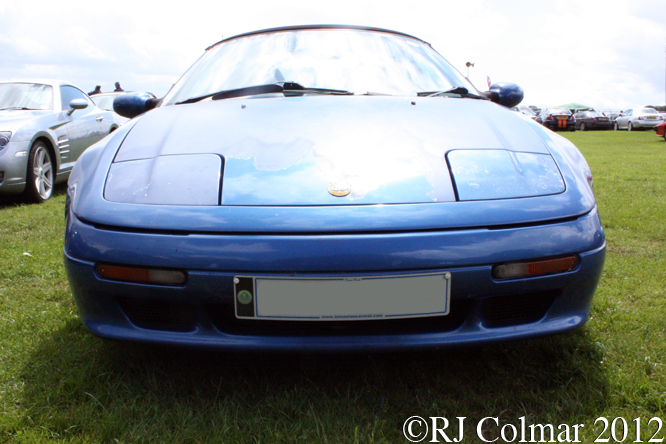
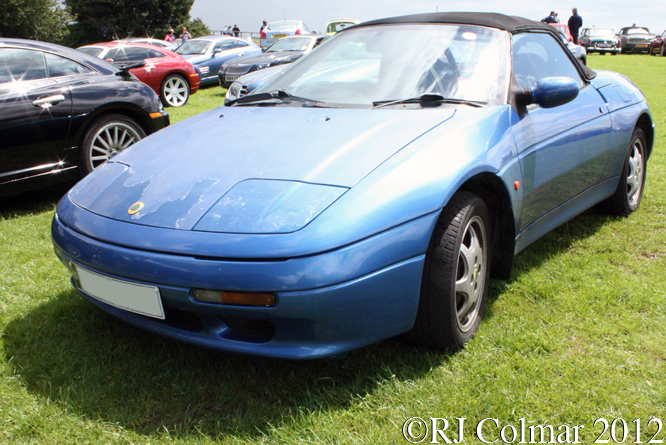
Lotus M100 Elan SE Turbo, Classic Sports Car and Action Day, Castle Combe

Unlike the original rear wheel drive Elan the new Peter Stevens designed M100 Elan featured front wheel drive, and was powered by a development of an Isuzu motor that produced 130 horsepower in normally aspirated form and 162 hp in SE Turbo form.

Lotus M100 Elan SE Turbo, Classic Sports Car and Action Day, Castle Combe

The rest to 60 mph time of 6.5 seconds and top speed of 137 mph was matched by the handling described by some sources as ‘the finest front wheel drive car bar none’.

Lotus M100 Elan SE Turbo, Classic Sports Car and Action Day, Castle Combe

Unfortunately as the Lotus M100 Elan came to market in 1989 Europe and the USA were entering a recession and Mazda had already flooded the market with it’s retro ‘Elan’ the MX5/Eunos/Mita series and so Lotus ended up selling just 3,855 M100 Elan’s between Nov 1989 and July 1992.

Lotus M100 Elan SE Turbo, Classic Sports Car and Action Day, Castle Combe

Second series of 800 155 hp Elan’s were built between June 1994 and and July 1995 featuring mandatory catalytic converters and slightly longer and heavier body work to accommodate the latest US spec safety features including airbags.

Lotus M100 Elan SE Turbo, Classic Sports Car and Action Day, Castle Combe

General Motors had sold it’s interest in Lotus to Bugatti by this stage and the new Lotus owners did a deal with Kia Motors to license the manufacture of an updated Kia Elan complete with a Kia sourced power unit. Kia wound up production of it’s M100 Elan in 1999.

Today’s featured M100 Elan SE Turbo seen at last years Classic Sports Car Action Day at Castle Combe was built in 1991.

Thanks for joining me for this “Worlds Best Handling FWD” edition of “Gettin’ a li’l psycho on tyres” I hope you will join me again tomorrow. Don’t forget to come back now.

Share

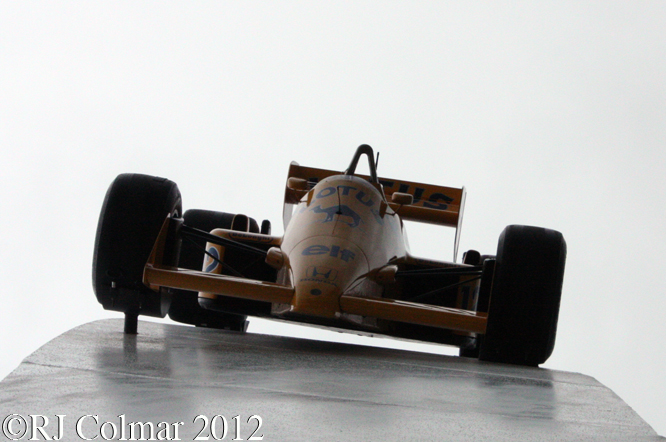
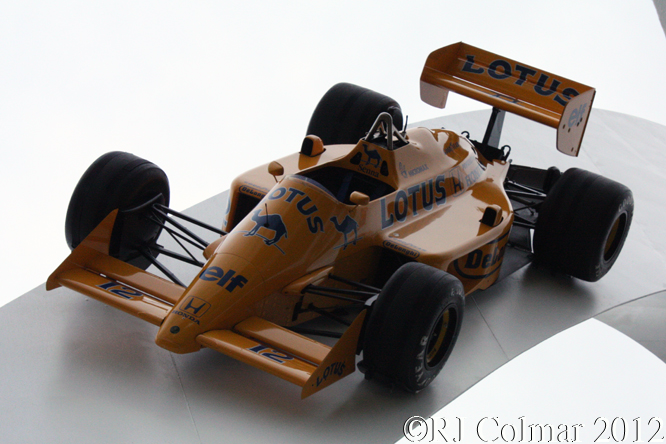
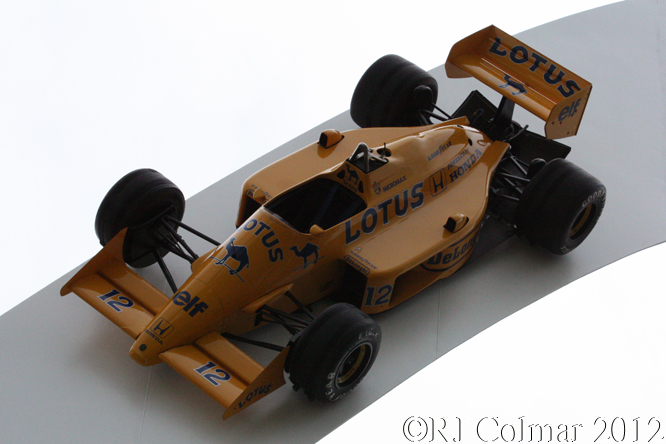
F687/S – Lotus Honda 99T

1987 brought about several changes for the Lotus team firstly their hitherto sponsor John Player Special withdrew from the sport and secondly their hitherto engine supplier Renault followed suit.

Fortunately for Lotus Williams, who had an exclusive contract with Honda for the supply of motors in 1986, let the 1986 World Drivers Championship slip away by allowing their drivers Nelson Piquet and Nigel Mansell to take points off one another by refusing to issue team orders or nominate one over the other as preferred winner. This did not go down well with Honda or their preferred driver Nelson Piquet.

Lotus Honda 99T, Goodwood Festival of Speed

As a consequence Honda came to an arrangement with Lotus to supply year old 1986 motors to Lotus for 1987 and at the same time did a deal with McLaren to supply top spec motors for the 1988 season with Ayrton Senna as their preferred driver. Meanwhile Senna was partnered by Saturo Nakajima in the Lotus team at the behest of Honda whom Honda had tried unsuccessfully to place at Williams in place of Mansell in 1986.

Furthermore Lotus managed to secure sponsorship from the new big spenders on the Formula One block Camel.

Lotus Honda 99T, Goodwood Festival of Speed

Despite being already down on power on the Williams team thanks to the year old motors being used, Gerard Ducarouge took the brave decision to use active suspension on the 99T which although offering advantages to consistent ride height, pitch and roll added 25kgs/55lbs in weight an required 5% of the motors power to keep it working.

Lotus Honda 99T, Goodwood Festival of Speed

By the end of 1987 Senna had won two races, just as he had in ’85 and ’86, both on street circuits at Monaco and Detroit. The Detroit race would prove to be the last victory for a car built by the Lotus team founded by Colin Chapman. With 57 points, two more than in ’86 Senna finished 3rd in the World Championship in 1987 while Nakajima’s additional 7 points helped Lotus secure third in the Constructors championship.

The 1987 season marked a high point for Team Lotus since the death of Colin Champman in 1982 and from there until 1994 when the team founded by Chapman made it’s final appearance in the sport.

Players in Japan and the United States of the Gran Turismo 3 game will be familiar with the Lotus Honda 99T which was given the alias “F687/S”.

Thanks for joining me on this “F687/S” edition of “Gettin’ a li’l psycho on tyres” I hope you will join me again tomorrow. Don’t forget to came back now !

Share

Jimmy Jimmy – Race Retro 2013

Despite the absence of any signs of a thaw to this winter and record fuel prices last weekends Race Retro held at Stoneleigh showed that there are plenty of people looking to have fun on four veteran, vintage and classic wheels powered by internal combustion motors during the season ahead here are some of the highlights.
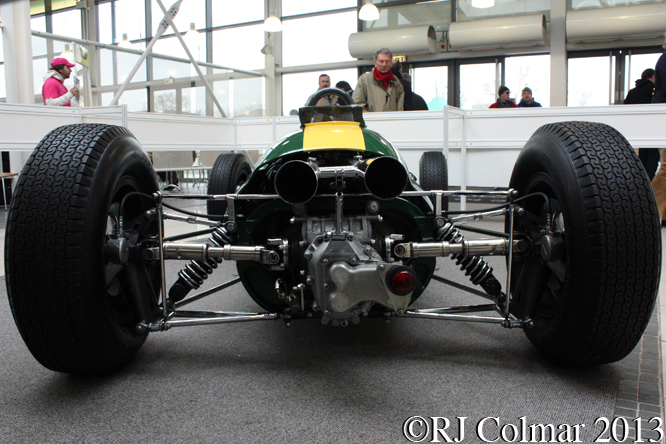
Lotus Climax 25, Race Retro, Stoneleigh

The central theme for this years Race Retro was the 1963 World Drivers Championship and World Constructors Championship wins for Jim Clark and Lotus. Above is the Lotus Climax 25 chassis R5 with which Jim narrowly failed to win the 1962 Championship thanks to a loose oil plug just twenty laps from home.
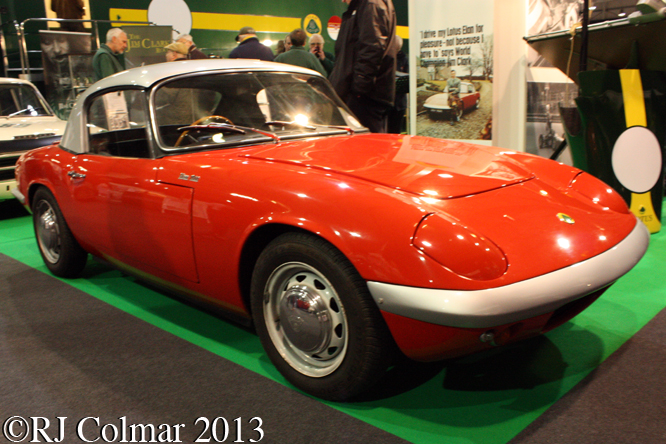
Lotus Elan 1500, Race Retro, Stoneleigh

Among several other cars that Jim Clark drove, on the Classic Team Lotus stand, was this Lotus Elan 1500 road car which featured with a kilted Jim Clark in a Lotus ad campaign that can be seen in the back ground.
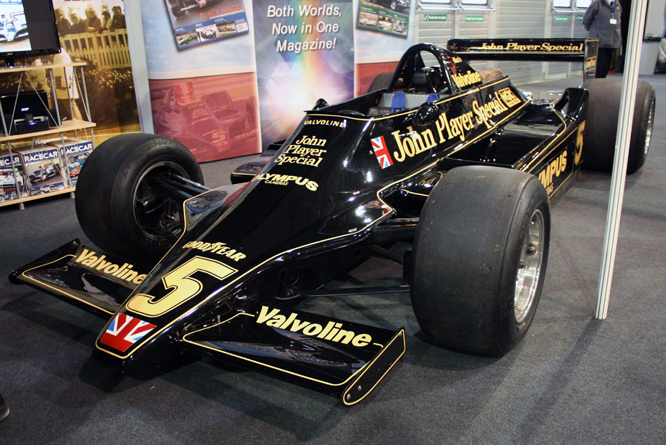
Lotus Ford 79, Race Retro, Stoneleigh

Fifteen years after Lotus scored their first world constructors championship Mario Andretti won the 1978 World Drivers Championship and with the help of Ronnie Peterson secured Team Lotus their seventh and final World Constructors Championship with the aid of the Lotus Ford 79. Seen on the Vintage Race Car (Europe) stand above is the Lotus 79 chassis R3 which Mario drove to victory in the 1978 Spanish, French and German Grand Prix and that Jean Pierre Jarrier qualified on pole for the 1978 Canadian Grand Prix.
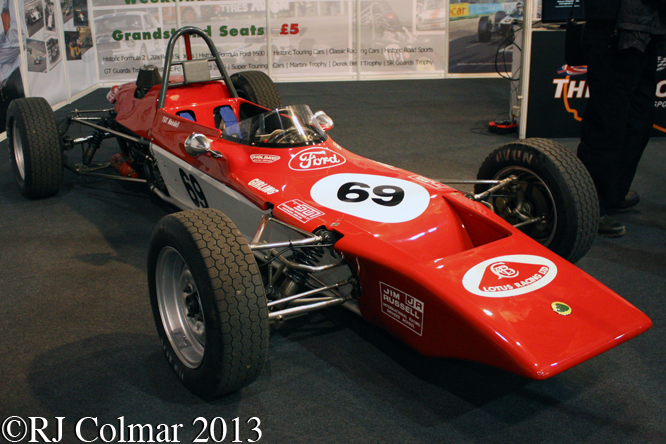
Lotus Ford 69, Race Retro, Stoneleigh

Another interesting Lotus on display was the Lotus 69 Formula Ford car that Tiff Needel won in a competition run by Autosport in 1970. Tiff Needel went on to become a one time Grand Prix Starter in 1980 and sports car racer through until the 1990’s. Tiff will be racing his Lotus 69 with which he started his career at Thruxton’s Easter Revival meeting at the end of March.
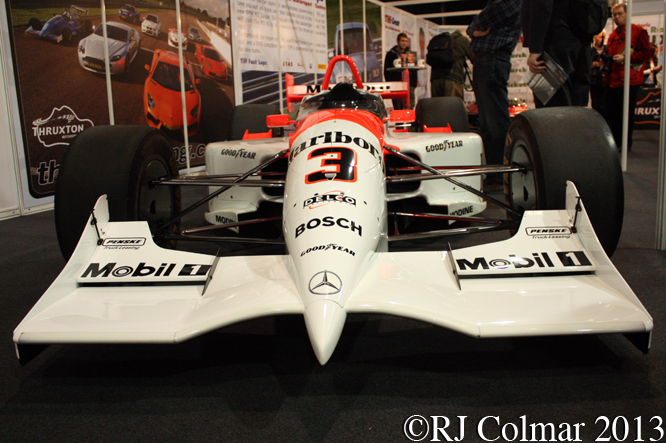
Penske Mercedes Benz PC26, Race Retro, Stoneleigh

Also on the Thruxton stand was one of the five 1997 Mercedes Benz powered Penske PC26s of the type which Paul Tracey drove to the Penske team’s 99th CART victory at Gateway. That victory would prove to be the last for a car designed and constructed by the Penske Cars workshop in Poole, Dorset, Engand and it would be three years before the Penske Racing would score their 100th victory in the CART Series.
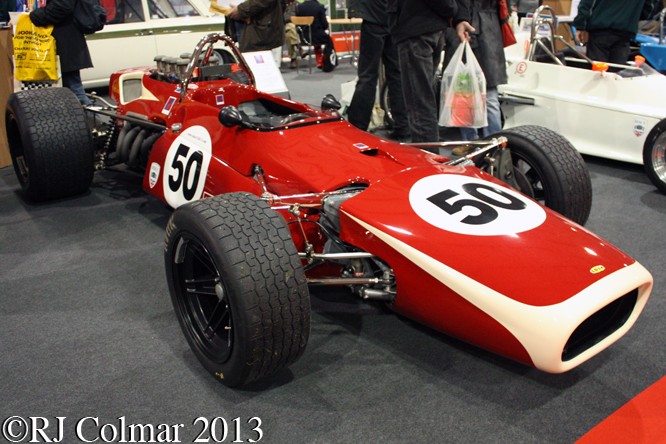
Lola Chevrolet T140, Race Retro, Stoneleigh

On the Historic Sports Car Club (HSCC) stand was another car that was built in the UK at Lola Cars but raced exclusively in the United States Formula A open wheel series in period. This Lola T140 chassis SL140-7 appears to have been purchased from Lola’s US agent Carl Haas by a Honda dealer Jerry Rosbach in 1968 and raced very little before being crashed. It returned to the UK via e-bay and was restored by Hardy Hall restorations to near factory condition for it’s new owner Richard Summers.
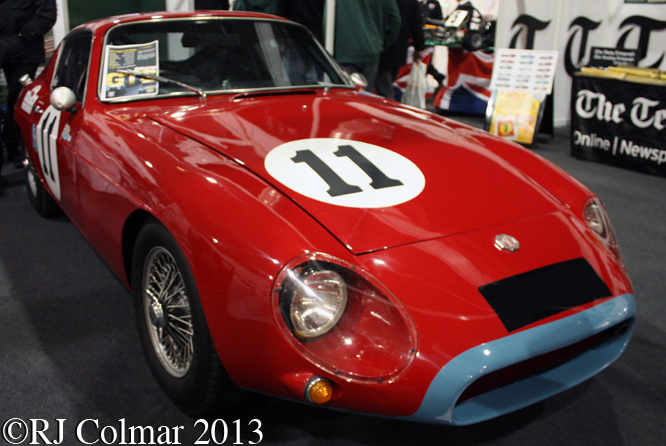
WSM MGB, Race Retro, Stoneleigh

When I visited Race Retro for the first time in 2011 I came across a WSM Sprite for the first time. This year the MG Car Club stand featured the unique WSM MGB which like the Sprites features an aluminium body designed by Douglas Wilson Spratt and built by Peels Coachworks.
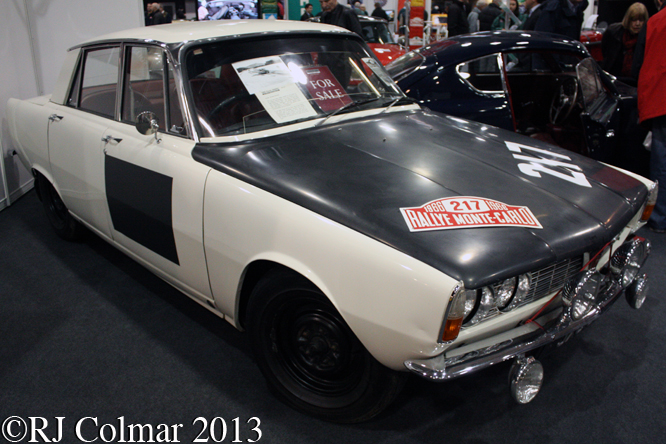
Rover 2000SC P6, Race Retro, Stoneleigh

Polands reigning 1965 European Rally Champion Sobislaw Zasada entered the 1966 Monte Carlo Rally in this Rover 2000SC. Starting from Warsaw his rally came to an end against a rock face just outside Monte Carlo. Subsequently the car was driven by works driver Ann Hall who used it eventually as her daily driver. The car was used to develop the 2000 TC motor and for development of the second generation Rover 2200. It’s for sale if anybody is interested please do not hesitate to get in touch, usual disclaimers apply.
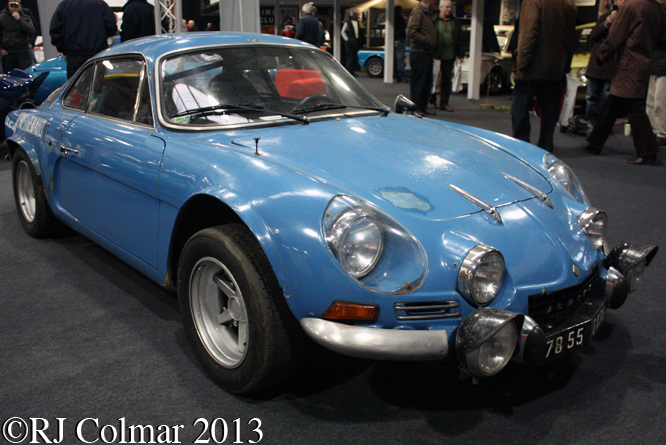
Ratty, Alpine Renault A110 Berlinette, Race Retro, Stoneleigh

In 1973 Alpine Renault claimed the World Rally Championship with the A110 Berlinette models, this particular originally works prepared competition car was acquired by Roger Clark for Pat Moss to drive in the 1973 British RAC Rally Championship. Pat named the car “Ratty” and after the 1973 chamionship it served as a show car before hibernating for 20 years.’Ratty’ was restored to running order by current owner Chris Rabbets of Roadspeed in 2003.
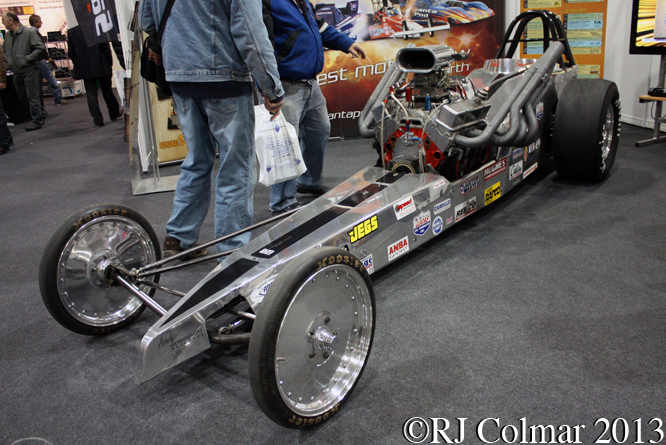
WB91, Time Traveller, Race Retro, Stoneleigh

I’ve been promising myself a trip to Santa Pod for some years now, Bob Hawkins 167 mph small block Chevy sling shot dragster WB 91 Time Traveller was a welcome reminder that I do not have the luxury of travelling back in time and so this year there will be no excuses.
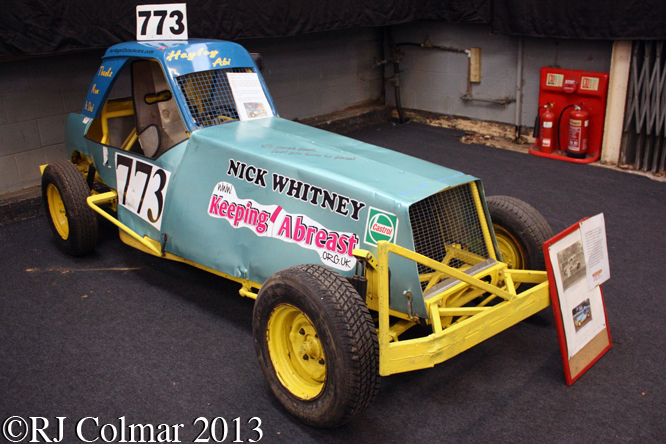
BMC Ford, Race Retro, Stoneleigh

On Jubilee Day last year I managed to find my way to Aldershot Raceway where the #773 BMC Ford Heritage F2 stock car seen above was driven by Nick Whitby, turns out this is a replica of the car his built drove in 1968 with a BMC 1100/ADO16 look alike body and Ford chassis and motor of varying vintages. If you have never been to a stock car race I’d definitely recommend it as a fun day out with the kids the Heritage F2 calender can be seen on this link.
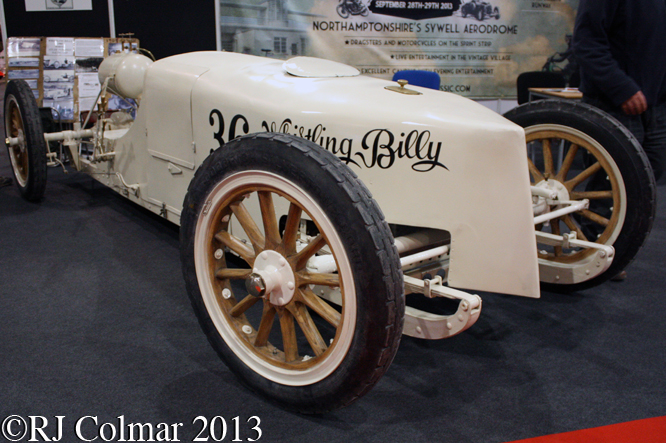
White Whistling Billy, Race Retro, Stoneleigh

Finally had a great time talking to steam car enthusiast Dr Robert R. Dyke who has recreated a 120 mph White Sprint Car that used to rip up the dirt tracks in 1905. Nicknamed Whistling Billy the original set a closed track record of 74 mph on the 4th July 1905 of nearly 74 mph with Webb Jay aboard. The car is scheduled to appear at the Sywell Classic Pistons and Props event at the end of September.

My thanks to everyone who enthusiastically contributed to today’s blog at Race Retro 2013.

Thanks for joining me on this “Jimmy Jimmy” edition of “Gettin’ a li’l psycho on tyres” I hope you will join me again tomorrow. Don’t forget to come back now !
Share

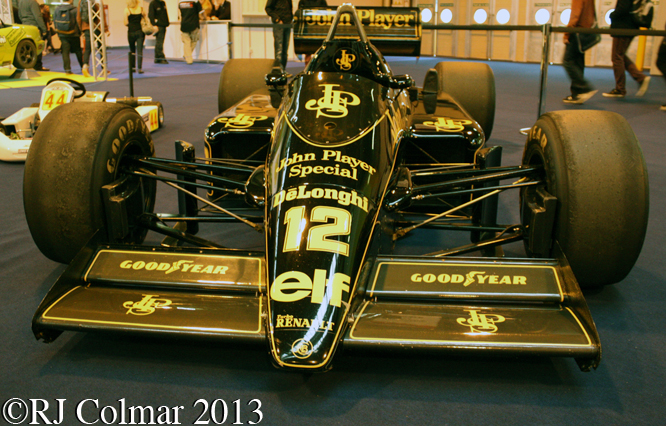
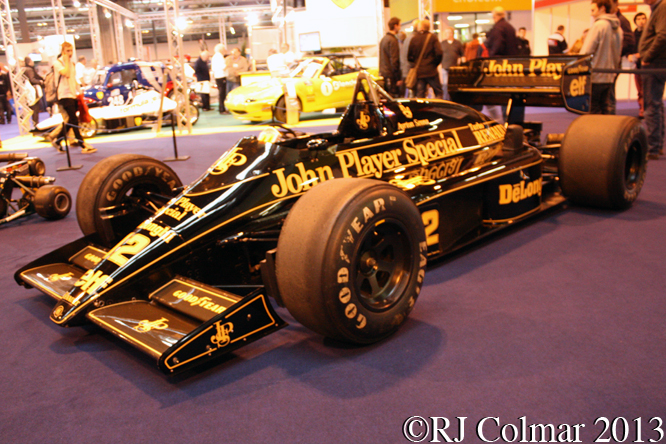
Limited Fuel Unlimited Boost – Lotus Renault 98T #004

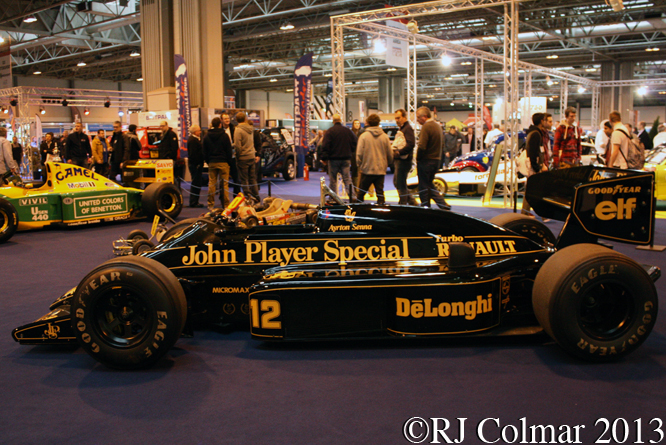
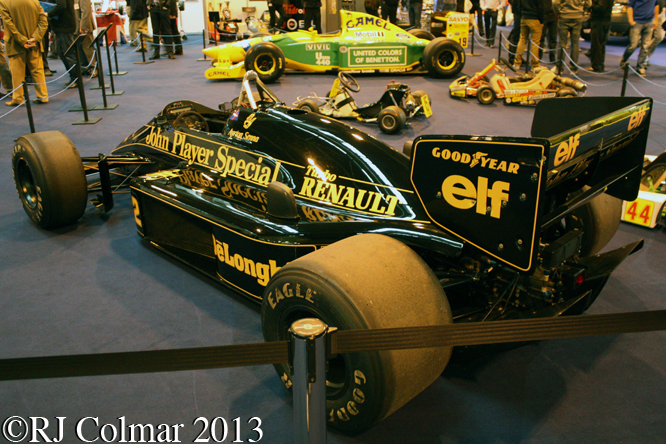
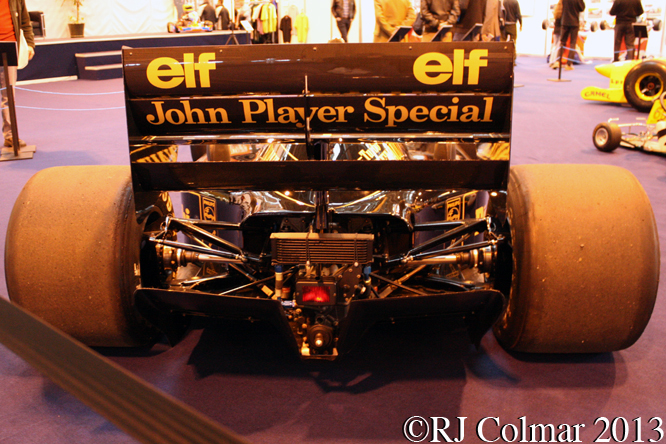
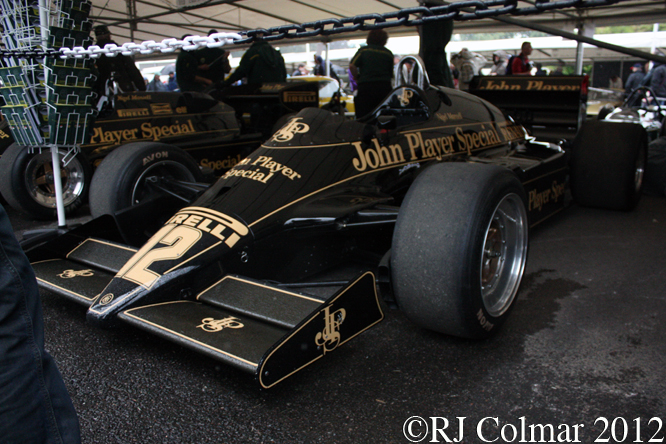
The Lotus Renault 98T was a development of the 1985 Lotus Renault 97T Grand Prix Car designed by Gerard Ducarouge and Martin Ogilvie for Ayrton Senna and Johnny Dumfries to drive in the 1986 Grand Prix season.

Lotus Renault 98T, Autsport International, NEC, Birmingham

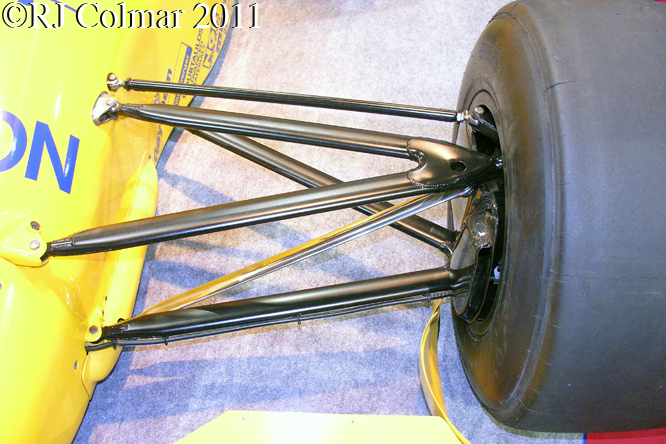
Note the small vertical “barge boards” mounted on the front suspension, a feature carried over from the Lotus Renault 97T that are still in evidence on today’s contemporary Grand Prix cars albeit mounted much closer to the side pod intakes.

Lotus Renault 98T, Autsport International, NEC, Birmingham

The main difference between the 1984 and 1985 Lotus Formula One challengers was that the FIA had mandated a 195 litre maximum fuel capacity which meant the new car could be built with a smaller and lower fuel tank.

Lotus Renault 98T, Autsport International, NEC, Birmingham

Elio de Angelis who had won one race in 1985 for Lotus and had been eclipsed by new team mate Ayrton Senna who won two races, moved to the Brabham team for 1986. Elio was replaced at Senna’s discretion by Johnny Dumfries a rookie who had dominated the British Formula Three Championship a Grand Prix feeder series in 1985.

Lotus Renault 98T, Autsport International, NEC, Birmingham

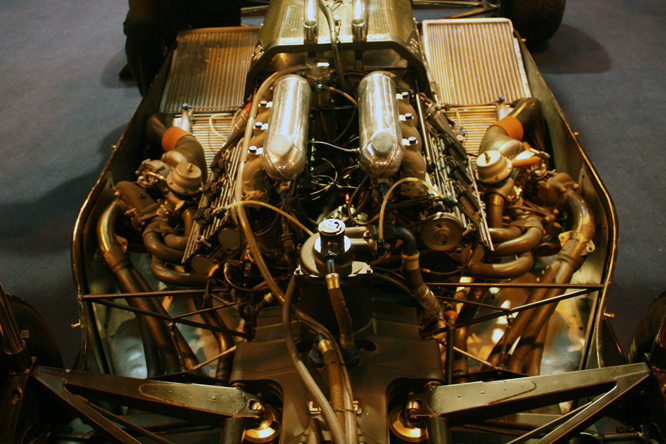
Despite running with a limited fuel allowance there were no limit’s on the amount of boost the turbo’s could run and after the introduction of pneumatic valve springs in the cylinder heads and a common rail injection system with water cooled intercoolers it was estimated that the Renault EF15 motors could produce upto 1300 hp at 5.5 bar boost for a qualifying run, though it transpires these figures could never be verified because there were no testing rigs that were calibrated for that kind of output.

Lotus Renault 98T, Autsport International, NEC, Birmingham

Other novel features of the Lotus 98T included two stage ride height adjustment and a six speed gearbox which was used exclusively by Dumfries.

Ayton Senna scored two more victories in Spain and Detroit along with 4 seconds and 2 thirds but although he scored 55 points 17 more than in 1985 he still finished 4th in the final championship as he had done the previous year. Johnny Dumfries meanwhile scored only 3 points and that heralded the end of his career as a Grand Prix Driver. He was replaced in by Satoru Nakajima backed by Honda who were to supply motor’s to Lotus for 1987. Despite scoring 13 points less in 1986 than they had in 1985 Lotus also finished 4th in the Constructors championship just as they had in 1985.

Thanks for joining me for this “Limited Fuel Unlimited” boost edition of “Gettin’ a li’l psycho on tyres” I hope you will join me again tomorrow. Don’t forget to come back now !
Share

42 Day Wonder – Lotus Renault 94T #94/2

As the 1983 Grand Prix season approached the halfway mark Team Lotus who were running a Renault Turbo powered Lotus 93T for Elio De Angelis and a Ford Cosworth powered Lotus 92 for Nigel Mansell had scored but one point and many retirements.

Lotus Renault 94T, Goodwood Festival of Speed

Without there erstwhile genius Colin Chapman who had died in December 1982 Peter Warr who found himself in charge of Lotus Formula One team took a gamble and hired Gerard Ducarouge who had been fired from the Alfa Romeo team earlier in the season.

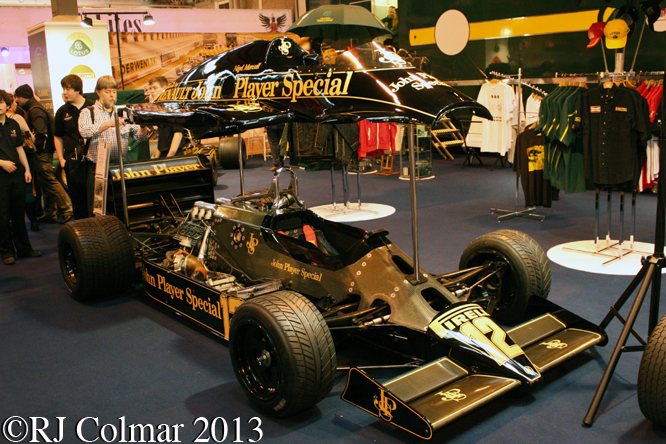
Lotus Renault 94T, Autosport International, NEC, Birmingham

Ducarouge who had penned winning designs for Ligier came up with the new Lotus 94T in just 42 days and Team Lotus turned up with two of the Renault powered cars at the British Grand Prix held at Silverstone.

Lotus Renault 94T, Autosport International, NEC, Birmingham

De Angelis qualified 4th and Mansell 18th but in the race it was Mansell who finished 4th while de Andelis retired on the 2nd lap with turbo failure. At the next race in Germany neither car qualified in the top 10, only de Angelis’s 94T made it to the start and he retired after 10 laps with engine failure.

At the Austrian Grand Prix Mansell qualified 3rd with de Angelis 12th, Mansell finished 5th while de Angelis retired after a collision on the opening lap. In Holland de Angelis qualified 3rd and Mansell 5th but both cars retired de Angelis with electrical problems and Mansell after a spin.

At de Angelis’s home track Monza he qualified 8th with Mansell back in 11th both cars finsihed for the the first time with de Angelis 5th and Mansell in 8th.

04 12 05 17 #12 EUGP 83sc

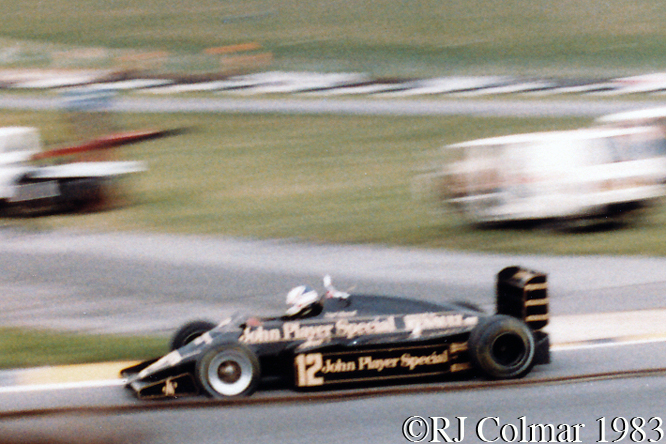
The 1983 European Grand Prix was held at Brands Hatch and de Angelis scored Lotus first post Chapman pole position with Mansell seen here on his way to 3rd on the grid. In the race de Angelis oil pump failed but Mansell came home third, recording the races fastest lap in the process.

Lotus Renault 94T, Autosport International, NEC, Birmingham

At the last race of the season in South Africa Mansell qualified 7th with de Angelis in 11, Elio retired with engine failure while Nigel was running but unclassified 9 laps behind at the end of the race.

Lotus Renault 94T, Autosport International, NEC, Birmingham

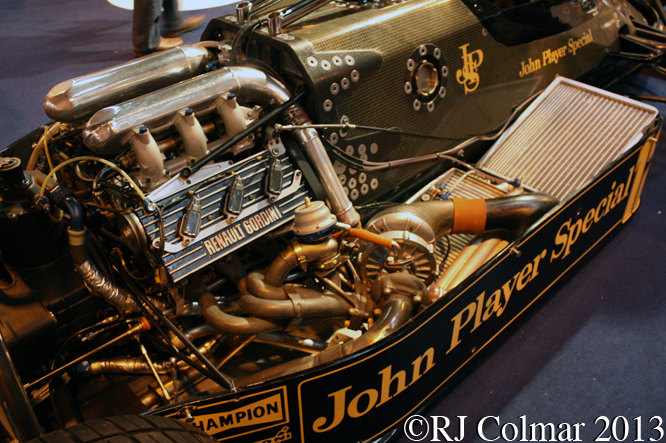
The Renault Gordini EF1 V6 Turbo was considered a bit of a joke when first seen at the British Grand Prix in 1977 but steady development had seen a rise in horsepower and reliability that forced first Ferrari and then BMW to take the turbo charged route to competitiveness at motor racing’s top table.

Lotus Renault 94T, Autosport International, NEC, Birmingham

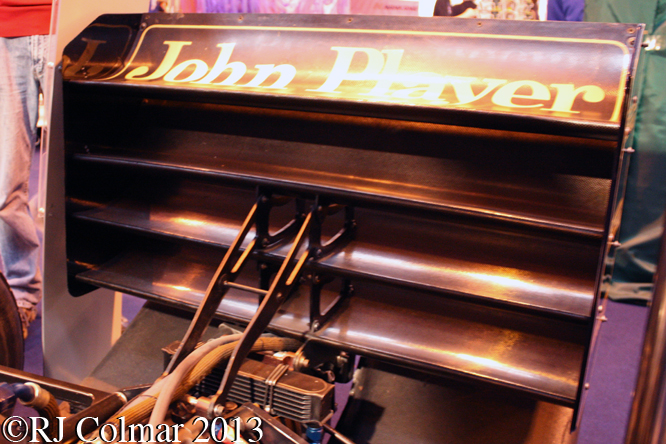
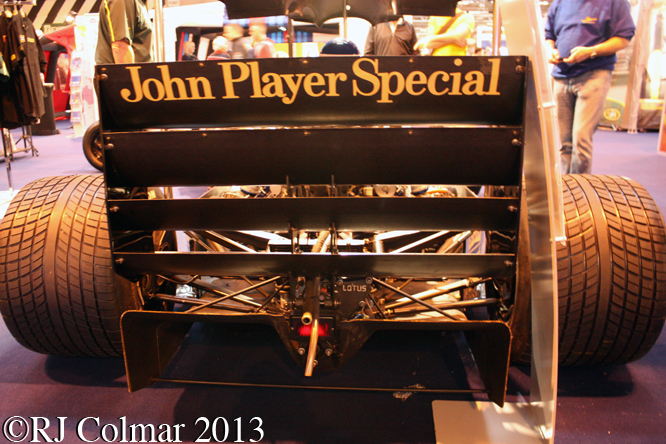
Lotus had first dabbled with a multi plane rear wing in 1974 with the type 76, Gerard Ducarouge was on his own in the Grand Prix paddock with the four plane rear wing seen here, it was not a feature that carried over into the following season.

Lotus Renault 94T, Autosport International, NEC, Birmingham

In 42 days Gerard Ducarouge had turned the fortunes of Lotus around they finished the season with 12 points 11 of which were claimed with the new car. Due to the immediate improvement in results John Player Special renewed their sponsorship of the team for the 1984 season.

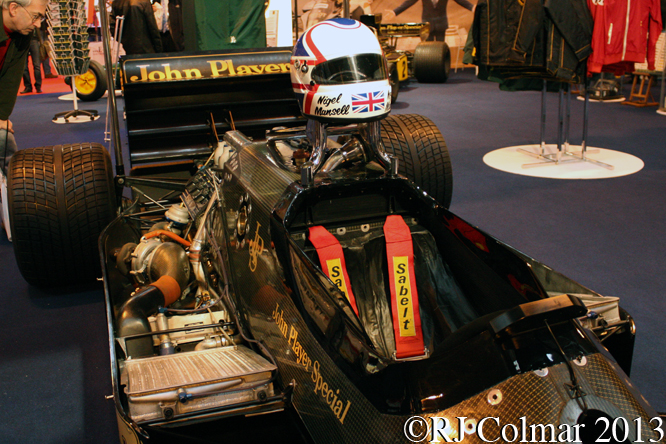
The chassis seen in all of the photographs here is #94/2 driven exclusively by Nigel Mansell in the British, Austrian, Dutch, Italian, European and South African Grand Prix.

Thanks for joining me on this “42 Day Wonder” edition of “Gettin’ a li’l psycho on tyres” I hope you will join me again tomorrow. Don’t forget to come back now !
Share