Tag Archives: Martin

Poetry and Motion – Aston Martin Razor Blade

During the course of the coming month “Gettin’ a li’l psycho on tyres” will be celebrating the centenary of Aston Martin with posts featuring the marque on Saturdays, Sundays and Mondays and on Thursdays I’ll be celebrating the 60th Anniversary of the Corvette, Friday’s will be devoted to Ferrari’s and Tuesdays to Automobilia.
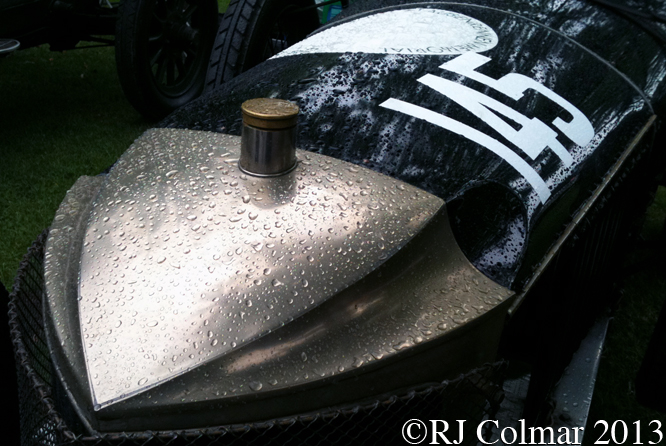
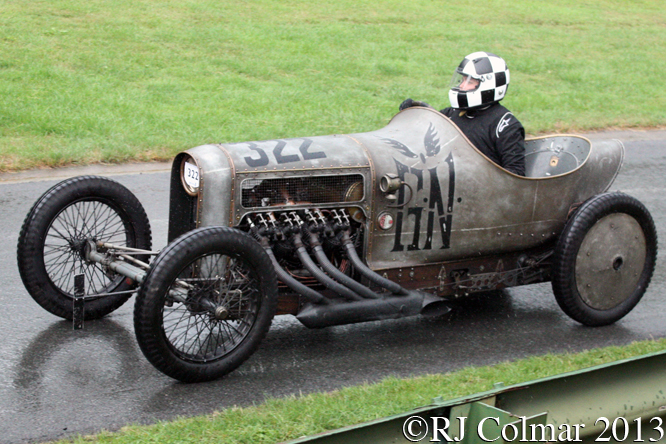
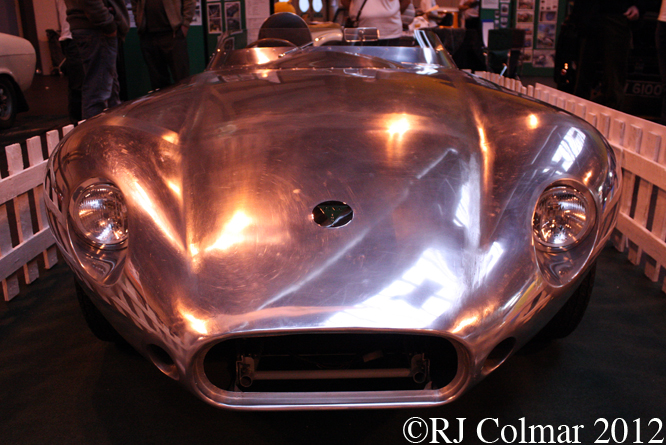
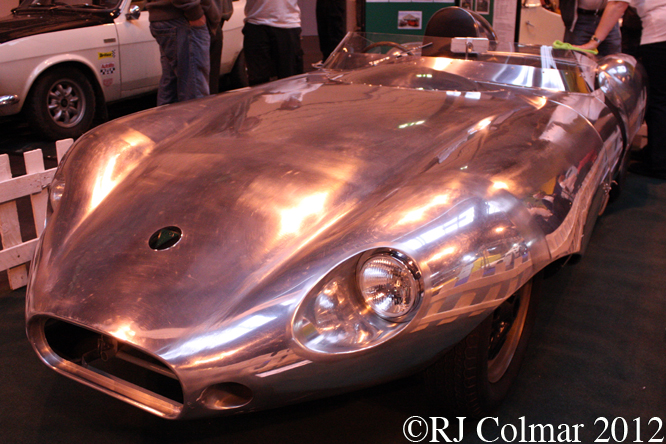
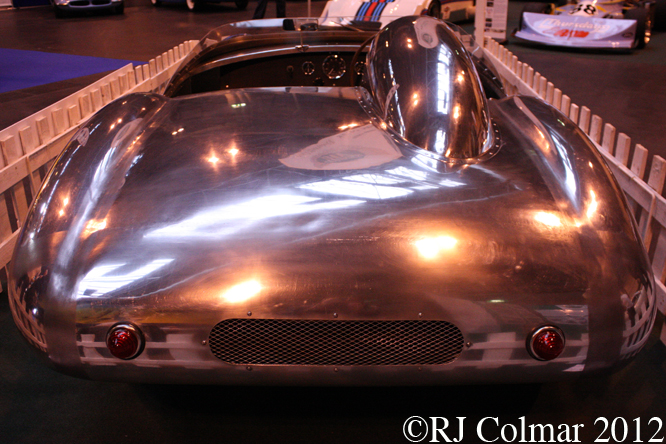
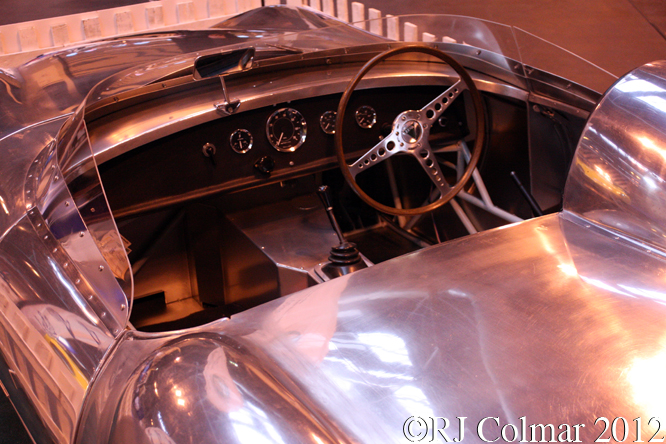
Aston Martin, Razor Blade, Prescott

Lionel Martin and Robert Bamford founded Bamford & Martin in 1913 to sell Singer cars. The first car built by Bamford and Martin was given the marque name Aston Martin in 1915, but because of the Great War of 1914 – 1918 it did not go into production. The Aston name was adopted from the Aston Hill near Aston Compton where Robert Bamford and Lionel Martin were regular successful competitors.
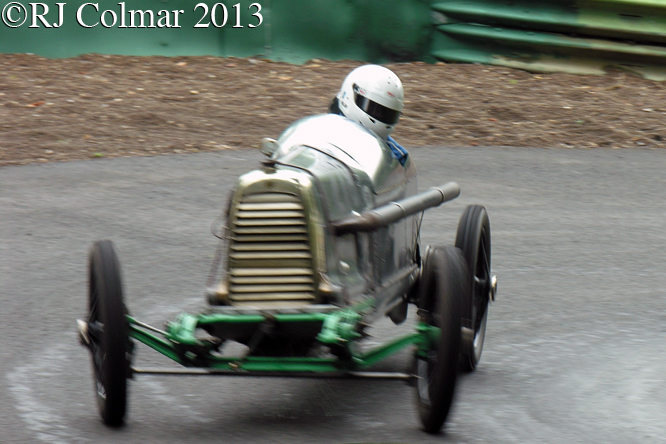
Shaw, Aston Martin, Razor Blade, Prescott

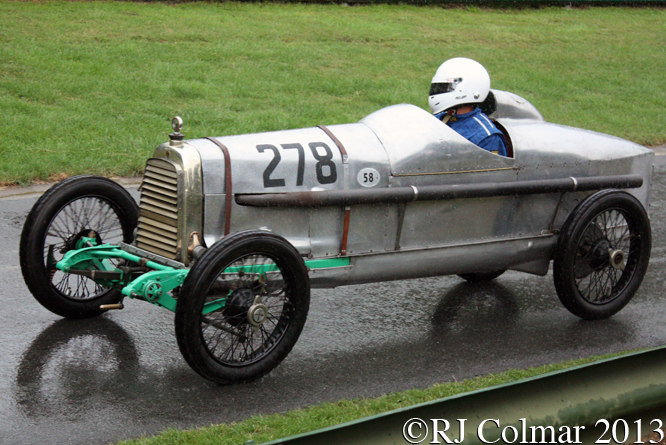
During a period of post war financial turmoil and several bankruptcies up until 1926 Bamford & Martin built 55 cars for sale along with ‘Razor Blade’ which was built for in an attempt to become the first car to record an average speed of 100mph over one hour in a light car at Brooklands, however AC Cars pipped Martin & Bamford to the post recording 101.39 mph (163.17 km/h).
Shaw, Aston Martin, Razor Blade, Prescott

The chassis was specially made, but many of the remaining parts were standard Aston Martin items. The 55 hp 1.5 litre / 91 cui four cylinder motor, based on half a 1921 Ballot 3 litre / 183 cui 8 cylinder motor, was a spare Aston Martin had built for their 1922 French Grand Prix car.
Shaw, Aston Martin, Razor Blade, Prescott

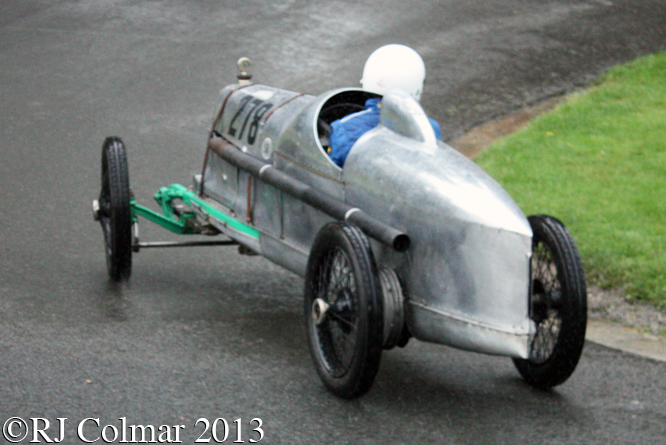
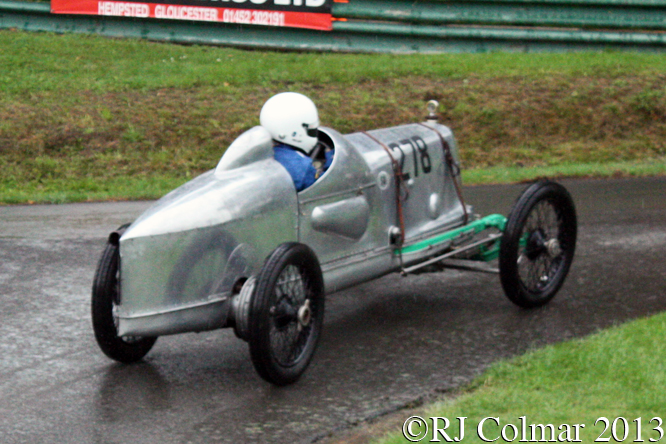
The body work, built by the De Havilland Aircraft Company, is just 18 1/2″ wide at it’s widest point making it one of the, if not the, narrowest racing cars ever built. Originally an aerodynamic bubble was fitted on top of the cockpit and the car was temporarily known as “The Oyster”, but Lionel Martin could not find drivers diminutive enough to fit inside. SCH Davis managed to lap Brooklands consistently between 103 mph and 104 mph, faster than the one hour record set by AC Cars, but had to give up their record attempt because the front offside tyres repeatedly came off.
Shaw, Aston Martin, Razor Blade, Prescott

Major F.B. Halford was the first driver to race Razor Blade, crossing the line first in a handicap race, 5th on handicap, during the B.A.R.C. August Meeting at Brooklands and the following month the following poem appeared in the The Light Car and Cyclecar magazine :-

Major F. B. Halford
(The intrepid driver of the “razor blade” Aston-Martin racer)
With razor blades we’re all acquainted;
Some are good, others painted.
Halford Smiles; he’s found a winner;
Diet follows – make him thinner.

Later in 1923 the Major set a standing kilometer class record of 66.54 mph, while Herbert Kensington-Moir drove Razor Blade to a standing mile class record of 74.12 mph.
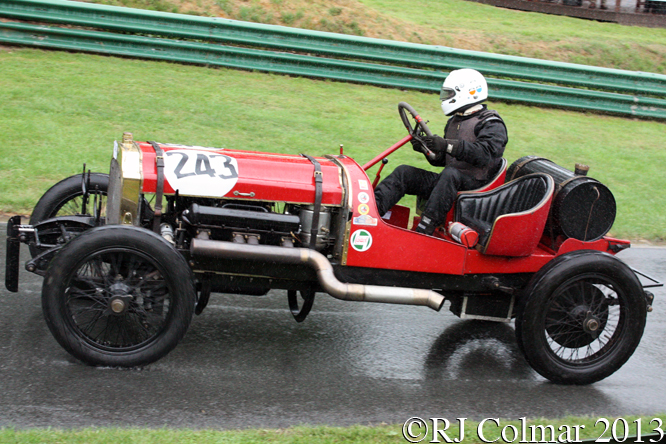
Halford Special, Aston Martin, Razor Blade, Prescott

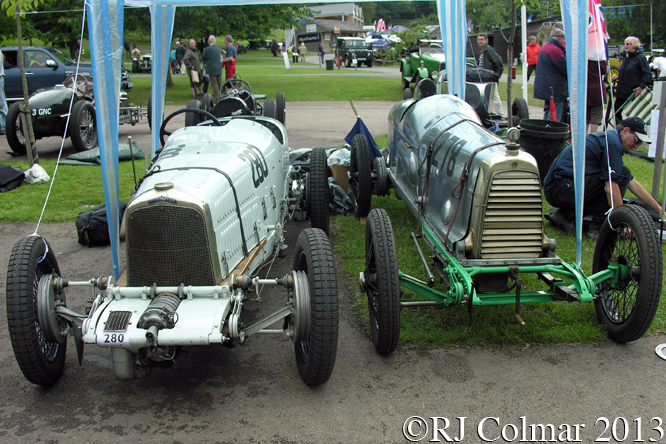
Razor Blade is seen in these photographs at Prescott Hill Climb with Colin Shaw at the wheel, above Razor Blade is seen next to the Halford Special built by Major F. B. Halford on an Aston Martin chassis which I’ll be looking at in greater detail tomorrow.

Thanks for joining me on this “Poetry and Motion” edition of “Gettin’ a li’l psycho on tyres”. I hope you will join me again tomorrow. Don’t forget to come back now.

Share

VSCC University – VSCC Prescott Speed Hillclimb

Apologies to all for the absence of any blogs over the last week, unfortunately this was unavoidable after a moment of absent mindedness. Over the weekend I popped over to Prescott with regular GALPOT contributer Tim for the VSCC Speed Hillclimb.

Ceirano S, VSCC Prescott

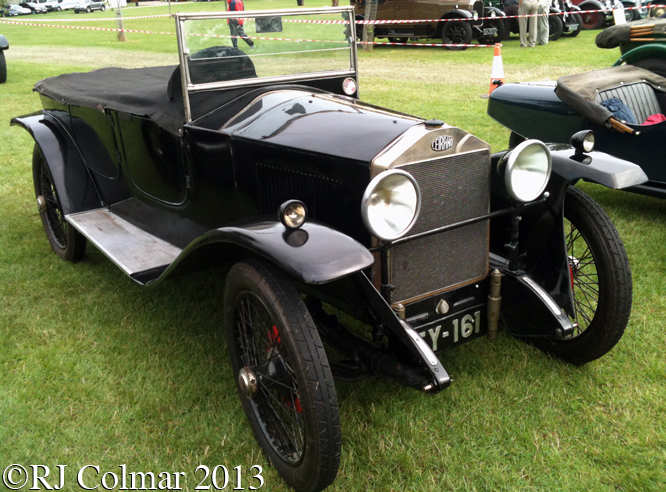
As ever the days education started in the car park where among several manufacturers, brands and models I’d not heard of before was this 1925 Ceirano built in Turin by SCAT (Societa Ceirano Automobili Torino) some years after founder Giovanni Ceirano, a prime mover behind the formation of FIAT in 1903, had died. Ceirano cars are best known for winning back to back victories in the Mille Miglia in 1911 and 1912.

Vauxhall Prince Henry, VSCC Prescott

The paddock was of course equally full of unusual delights above the nose of a Roland Duce’s 1913 Vauxhall Prince Henry.

Lees, Vauxhall Viper Special, VSCC Prescott

Another 1913 Vauxhall was Tony Lees Vauxhall Viper Special powered by a 200hp, 12 litre/732 cui Wolseley Viper aircraft motor of the type more usually found in late versions of the Royal Aircraft Factory SE5a and Avro 522.

Scaldwell, GN/JAP Grand Prix, VSCC Prescott

Among the fastest ladies present was Anne Scaldwell driving the GN JAP Grand Prix which was featured on this blog a couple of years ago.

Collings, Mercedes Simplex 60 HP, VSCC Prescott

Another familiar car was Ben Collings 1903 Mercedes Simplex 60hp.

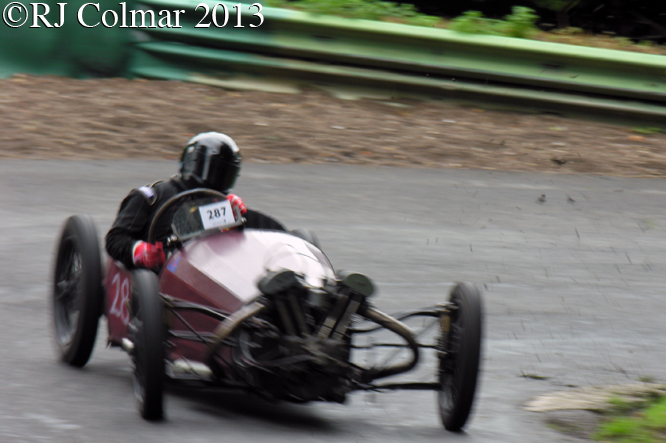
Martin, Morgan Special, VSCC Prescott

Displaying maximum attack skills on the hill, what ever the conditions, was Charlie Martin in the fabric bodied Morgan Special entered by CJ Maeers.

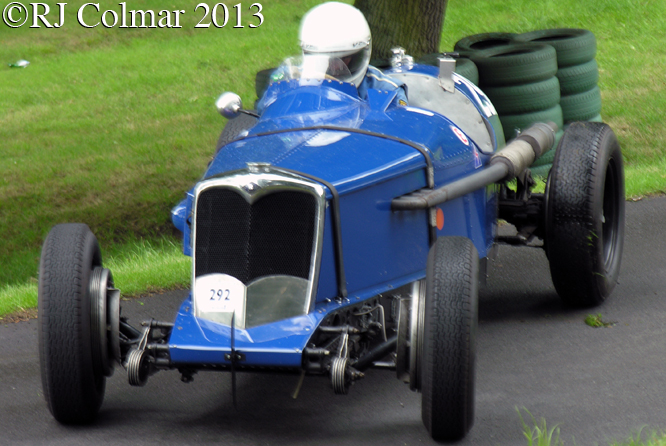
Cobden, Riley Falcon Special, VSCC Prescott

Robert Cobden seen above driving the Riley Falcon Special did well to keep his car on the road after executing an unintentional 180° spin coming out of the Pardon hairpin.

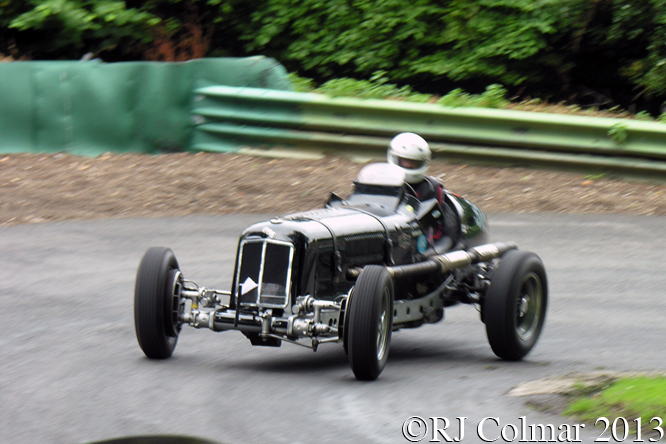
Hulbert, ERA 4D, VSCC Prescott

Fastest time of the day was keenly contested with Mac Hulbert taking the honours and The Mays-Berthon Trophy 0.36 seconds from James Baxter, both driving ERA’s. Mac is seen in the 1938 ERA R4D which appropriately enough way not only conceived by Raymond Mays and Peter Peter Berthon but also driven to many post war hill climb victories by Mays.

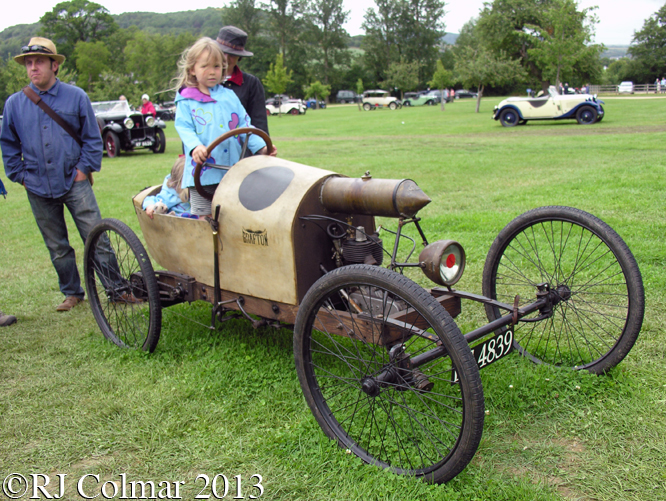
Grafton, VSCC Prescott

On the way back through the car park we stumbled across the JAP powered Grafton cycle car, the vehicle was built by Tim Gunn, seen on the left, of the Gunn Cyclecar Co in 2001 using a timber frame and an assortment of vintage parts.

Thanks for joining me on this “VSCC University” edition of “Gettin’ a li’l psycho on tyres” I hope you will join me again tomorrow for Americana Thursday. Don’t forget to come back now !

Share

Elle va à Bexhill On Sea – Elva Climax Mk III

Bexhill on Sea second hand car dealer and engine tuning specialist Frank G Nichols decided to enter the racing car manufacturing business as a response to enquiries arising from a CSM Frank bought from Mike Chapman, no relation to Colin and raced successfully in 1954.

Elva Mk III, The Classic Motor Show, NEC, Birmingham

The Elva name is a mash up of the French “Ella va” which means ‘she goes’. By the time production ceased the Elva name had appeared on over 1000 vehicles.

Elva Mk III, The Classic Motor Show, NEC, Birmingham

By 1958 Elva was manufacturing the Coventry Climax powered Mk III, known drivers of the cars back then included Charlie Kolb, Burdette Martin and William Jordan in the USA with Eugine Hall and Ian Raby representing the Marque in the United Kingdom.

Elva Mk III, The Classic Motor Show, NEC, Birmingham

Of the 92 starts known for the model at Racing Sports Cars.com three were outright victories Kolb at Miami, William Bradley at Green Acres both in 1958 and the last recorded by George Ranney at Grayling in 1960, many additional class wins were also recorded.

Elva Mk III, The Classic Motor Show, NEC, Birmingham

The history of the car seen here at last years Classic Motor Show is unknown, it is owned by Bexhill Museum who had the original aluminium body that had at various times been painted red, blue and white, replaced by a new one manufactured by the original suppliers Hastings Motor Sheet Metal now known as Moore & Tye in 2009.

Elva Mk III, The Classic Motor Show, NEC, Birmingham

The Nostalgia Forum member Bloggsworth has kindly informed that the team that made the new body included Alan Jenner who worked on the original car. A small reunion of ex Elva employees took place when the restoration was complete. The Mk III can now usually be seen in the Technology Collection at Bexhill Museum.

Thanks for joining me on this “Elle va à Bexhill On Sea” edition of “Gettin’ a li’l psycho on tyres” I hope you will join me again tomorrow. Don’t forget to come back now !
PS Congratulations to Johnny Martinez who was awarded a trophy for his ’29 Ford Model A at the Grand National Roadster Show yesterday, John would also like to thank every one who has voted for him in the Cool Rides Online ® pole at goldeagle.com. The vote is still incredibly close, YOU CAN VOTE “John’s 1929 Ford Model A” ONCE A DAY ON THIS LINK until poling closes 31st January, please keep your daily votes coming in, thank you.

Share

Torrey Canyon – Lotus Ford T86

On March 18th 1967 Shipmaster Pastrengo Rugiati elected to take his charge the 974 ft Torrey Canyon carrying 120,000 tons of crude oil on a disastrous short cut between the Scilly Isles and the Cornish mainland on his way to Milford Haven and ended up causing the worlds largest ship wreck when the boat grounded on the Seven Stones Reef. As the consequent environmental disaster unfolded the ship was bombed sending it 98ft below and the oil spill was repeatedly bombed in a vain effort to keep the oil off the beached of England, France and surrounding islands.

In 1969 Peter Wright was working on the ground breaking BRM P142 which would have introduced aerodynamically induced ground effects to racing car design when John Surtees joined BRM and insisted on opting for a conservative approach and developing the existing BRM P138 and P139 chassis with which Big John scored a season best 3rd place driving the P 139 at the 1969 US Grand Prix before quitting BRM to start his own team.

Peter left BRM and some years later started work for Technocraft to develop a vacuum assisted resin injection composite process which was to be used for the manufacture of body shells for the Lotus Elite, Eclat and Esprit road cars and Colin Chapman’s boat companies.

After the failure of the Lotus 76 in 1975 Colin Chapman asked another ex BRM employee Tony Rudd, now group engineering director at Lotus, to re-think how a Formula One car might be made to make proper use of the front tyres.

Rudd drafted his former colleague Peter Wright in to run the wind tunnel “in his spare time” after his commitments at Technocraft. The fruit of this collaboration was the successful Lotus 78 and world championship winning Lotus 79.

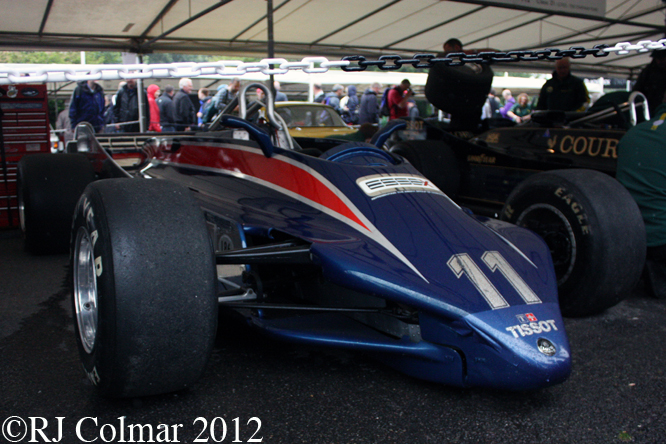
Lotus Ford 86, Goodwood Festival of Speed

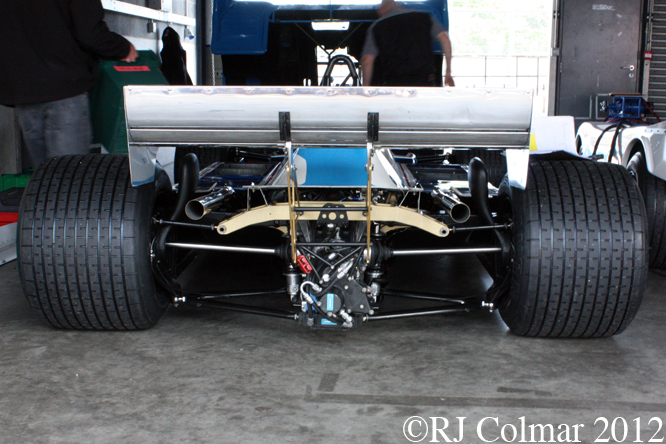
The team were not so lucky with the Lotus 80, from which they took a step back with the Lotus 81 before regrouping with their next innovation the twin chassis Lotus 86 seen here.

What Peter had found out was that the Lotus 80 and to a lesser extent the Lotus 81 were suffering from aero flutter causing the cars to porpoise as a result of having springs that were too soft for the aerodynamic loads being put through the wheels and suspension.

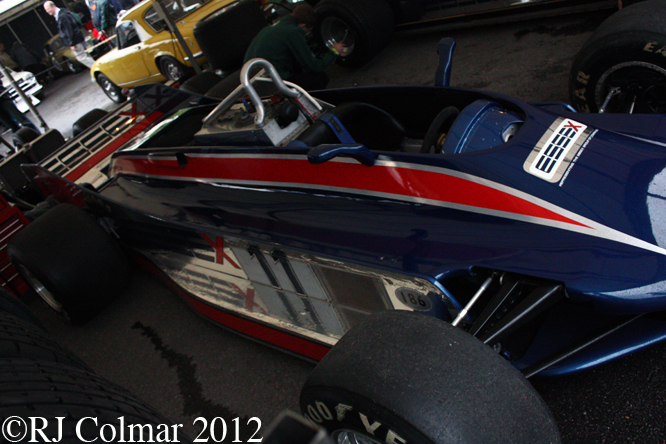
By having a twin chassis Peter hoped to use a conventional monocoque chassis in which the driver sat and a separate independently sprung ground effect chassis attached to the first at the outboard ends of the lower suspension. The suspension for the outer ground effect chassis was much stiffer than for the inner monocoque chassis and as a result in theory should not be quite so sensitive to flutter or likely to porpoise.

In order for the car to work not only would the science have to be proven but the rule book scrutinised to ensure the car remained legal. By having the outer ground effect chassis suspended from the bottom suspension links using very stiff rubber bump stops the criteria for having all parts of the car with an aerodynamic influence entirely sprung, was met.

To check the science the team took a 1980 Lotus 81 added a spacer between the engine and the fuel tank through which the central cross member of the outer chassis would pass, made provision for the front cross member of the outer chassis to pass under the driver legs and had had the third rear cross member of the outer chassis pass over the gearbox.

The weight of the outer chassis was kept low using the in house developed carbon fibre process that Peter had been developing for the Lotus road cars and Champman’s boats.

Lotus Ford 86, Goodwood Festival of Speed

Amid much secrecy the Lotus 86 was built and then taken to Jarama for a private test, thanks to the motors heavily revised oil pumps, that were required by the second chassis, a lot of oil was spilled, hence the Torrey Canyon nick name for the car.

Once the leaks had been fixed the Lotus 86 proved that the aerodynamic outer chassis worked providing plenty of down force while the inner monocoque chassis, in which the driver sat, remained free of the porpoising effect that made the car difficult to control.

Upon completion of the test the Lotus 86 which was never subsequently raced was put aside and work started on the Lotus 88 using the same principles.

Thanks for joining me on this “Torry Canyon” edition of “Gettin’ a li’l psycho on tyres” I hope you will join me again tomorrow for a look at an old Rolls Royce. Don’t forget to come back now !

Share

Goodwood Revival 2012 – #1 Track Action

I planned to get up at 4am on Friday and head to Goodwood at 5 prompt, the first part of the plan worked well but by the time I’d corrected a false start and gone back home to collect my ticket it was 5:30 am before I hit the road in earnest.

Daimler LQ20, Goodwood Revival

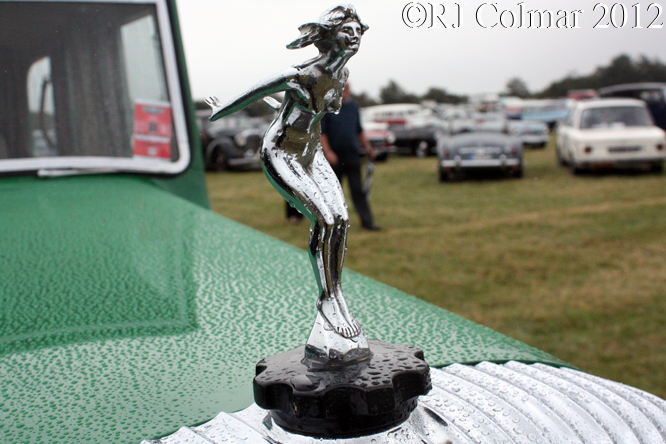
As I arrived at Goodwood the 8 O’clock news headline on the radio was about a controversy surrounding pictures of naked Royalty that had been published in France. I switched the radio off before the whole story had been told and headed off into a car park full of classic and cars where I found this mascot on a Daimler LQ20.

Make Up, Goodwood Revival

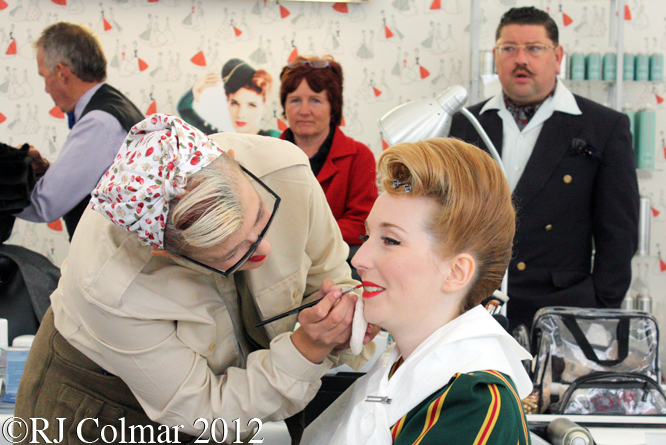
As I approached the bridge that acted as an entrance into the circuit I observed a tent full of people being transformed from 21st Century to mid 20th Century citizens for what is one of the worlds biggest, if not the biggest, three day Fancy Dress Nostalgia events.

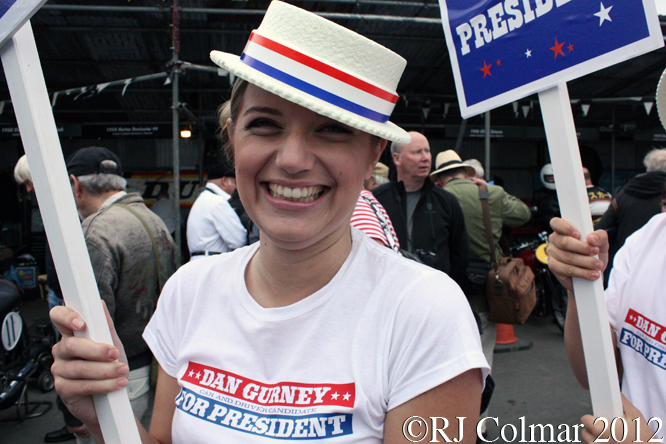
Gurney For President, Goodwood Revival

Once inside evidence of the Dan Gurney for President campaign was hard to ignore, I bet the guy I would vote for is faster than any other presidential candidate that ever lived.

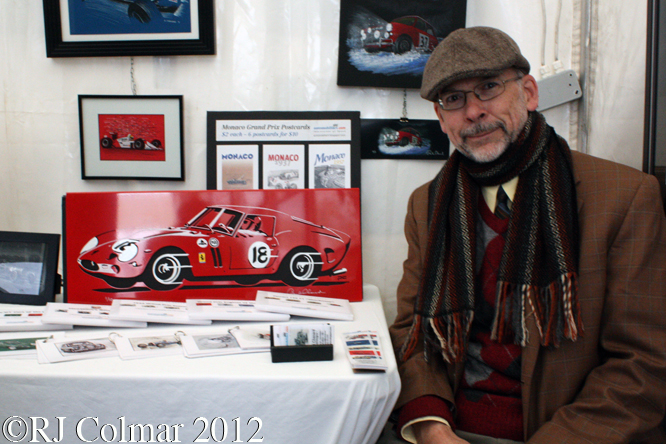
Paul Chenard, Goodwood Revival

On my way to the pits I popped by to say hi to Paul Chenard from Nova Scotia in Canada, Paul is seen above with one of the ten limited edition laser cut in steel Ferrari GTO’s he has recently been working on. Given that there were 15 250 GTO’s present to celebrate the 50th Anniversary of the model which these day’s are conservatively valued at $20 million dependent on provenance I imagine Paul did not have to take too many of these cool pieces home with him.

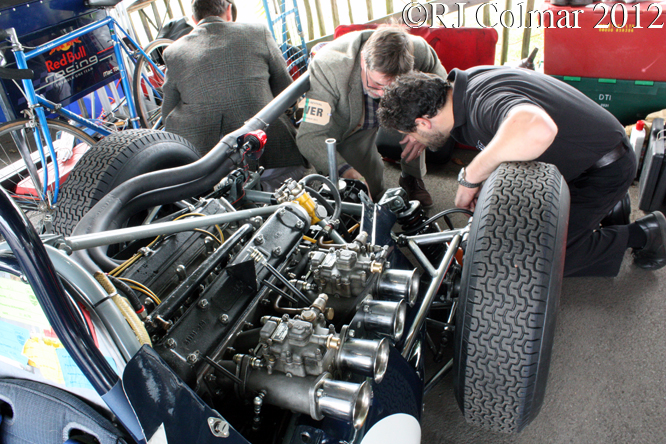
Walker Climax Tec Mec 10, Goodwood Revival

Thanks to an armband kindly lent to me by the owner of the Porsche in this linked photo, I was able to get into the pits to see and hear some of the cars as they were being fettled ready for qualifying for the Goodwood Revival invitation races. Above the Walker Climax Tec Mec Tipo 10 apparently was commissioned by Rob Walker for Stirling Moss in 1960 but was never raced in period.

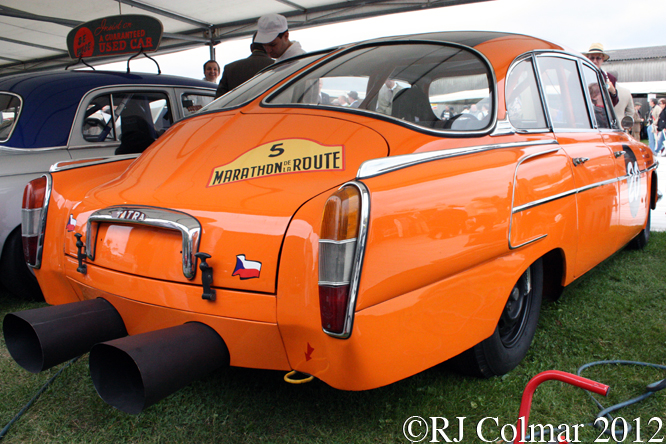
Tatra T603, Goodwood Revival

The Tartra T603 from the former Czechoslovakia easily won the unofficial biggest exhaust pipes in the pits competition, they are attached to an air cooled V8. The car qualified a respectable 8th for both rounds of the St Mary’s Trophy with John Haugland and Arne Berg driving in the first and second races respectively.

Siver Arrows, Goodwood Revival

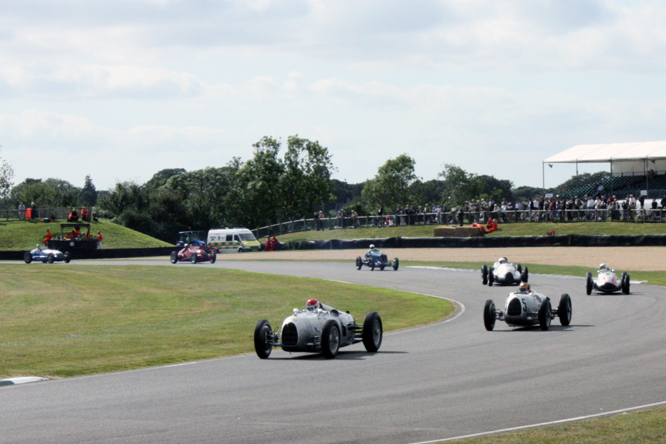
After a short break for lunch, during which I caught up with acquaintances from The Nostalgia Forum, I started an anticlockwise walk of the circuit as Kenny Brack was securing pole for the Shelby Cup in a Shelby Daytona Coupé. I got to the Lavant Corners in time to see a demonstration of pre 1939 Grand Prix Cars which included V12 and V16 Auto Unions, Mercedes Benz silver arrows models running together for what is thought to be the first time since 1939. Unfortunately the poor commentators had no idea who was driving what and the programme notes are no help either. Above two V16 Auto Unions lead a Mercedes Benz, the V12 Auto Union an ERA and a pair of 8 cylinder Maserati’s.

Maserati 151/3, Goodwood Revival

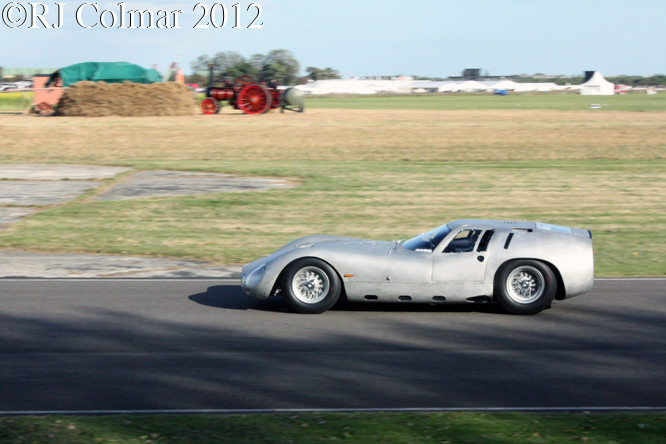
As the autumnal afternoon unfolded a seemingly endless stream of storied automobiles passed by including this recreation of a 39 inch tall prototype Maserati 151/3 driven by Jochen Mass and owner Barrie Baxter, which was invited to join the GT cars in the TT Celebration race.

BRM P57, Goodwood Revival

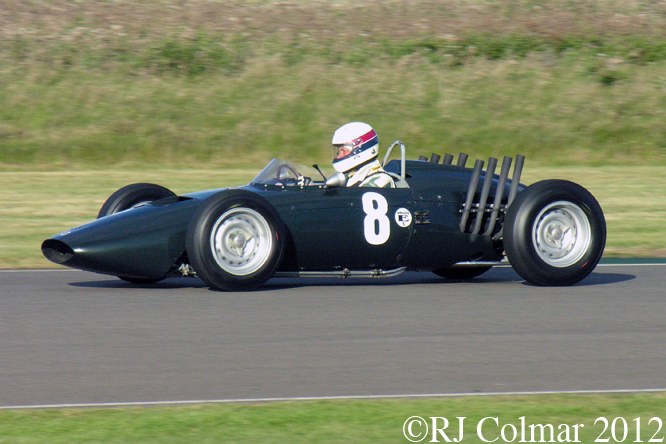
After the many trials and all to few tribulations of BRM with it’s V16 P15 built in 1950 the team eventually evolved into Grand Prix and World Championship contenders winning the 1962 World Manufacturers and Drivers Championships with Graham Hill at the wheel of a V8 powered BRM P57, with 8 neat exhaust stacks, similar to the one above driven by David Clark in the Glover Trophy.

Aston Martin DBR 1, Goodwood Revival

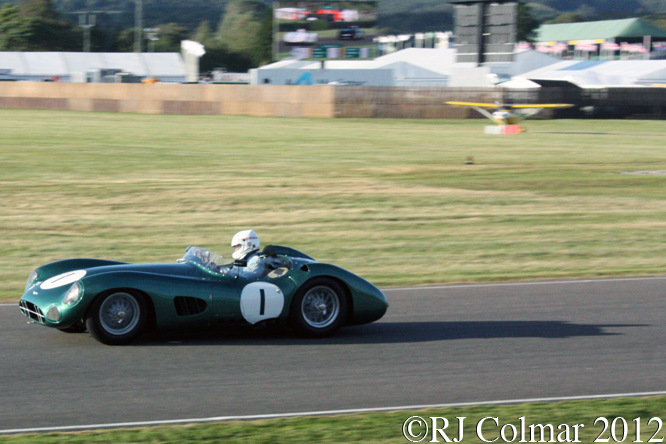
The last time I remember seeing Brian Redman at the wheel of an Aston Martin was at Donington Park in 1989 when he was driving the brutal Aston Martin AMR 1 Group C car. Here Brian is driving a 1957 DBR 1 of the type which, unlike the AMR 1, won at Le Mans in 1959 with Carol Shelby and Roy Salvadori at the wheel. Brian is seen above on his way to 18th on the grid for the Sussex Trophy race.

Avro Lancaster PA474, Goodwood Revival

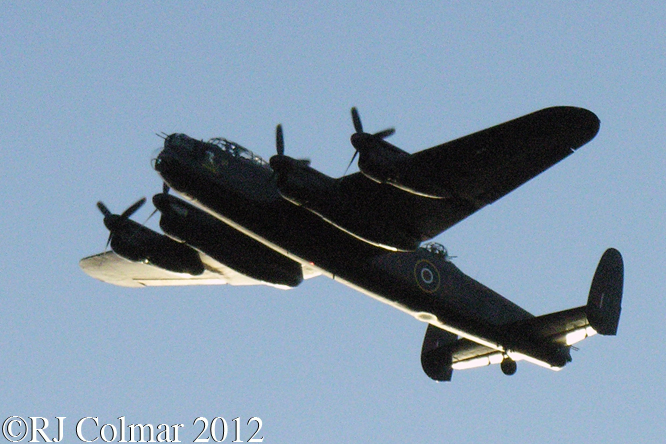
Having started the morning in the fog bound Channel Islands one of only two remaining Avro Lancaster PA474 bombers, powered by four Rolls Royce Merlin V12’s made a flyover of the track just before the day’s only scheduled race started.

Jaguar C-type, Goodwood Revival

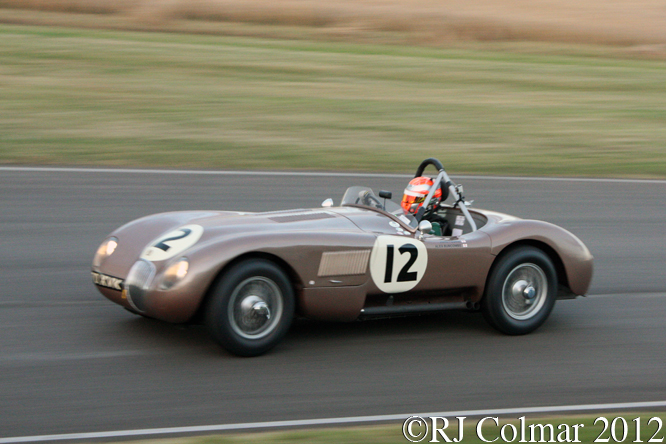
Anthony Reid stormed off into what looked like an invincible lead for the 90 minuet Freddie March Memorial Trophy race as the evening drew to dusk. However a gear box fault meant that when owner Nigel Webb took over there was only one gear available, 4th and so the #24 C-type fell back to an eventual twelfth place. This meant that all Alex Buncombe had to do was keep his #12 Jaguar Heritage Racing C-Type,which had started with John Young at the wheel, on the road to keep the lead. Alex did take the win but only after a lawn mowing incident at St Mary’s corner which resulted in Alex loosing his head lights for a good half an our before remembering where the switch was.

Thanks for joining me on this Goodwood Revival 2012 – #1 Track Action edition of “Gettin’ a li’l psycho on tyres” I hope you will join me again tomorrow when I’ll be taking a look at some of the MG’s at Goodwood. Don’t forget to come back now !

Share

Loud Engine Test Bed – Lotus 62

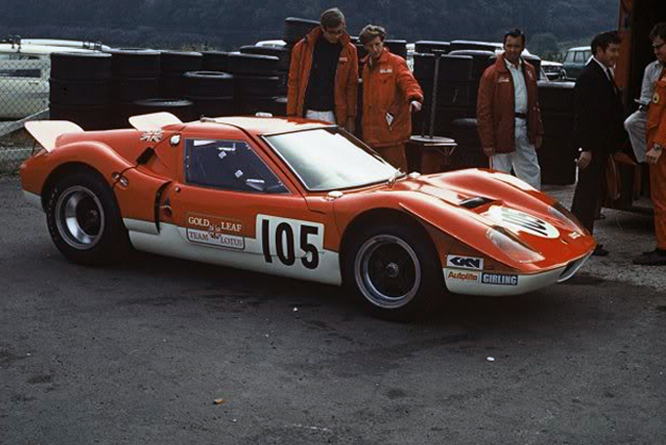
Today’s post comes courtesy of Jon Bawden and his Dad RJ Bawden who took this photograph of the Lotus 62 at the Bank Holiday Monday Guards International run at Brands Hatch in September 1969 when Jon was only 3 !

Lotus 62, BOAC 500, Brands Hatch

For 1969 Lotus produced two prototype racing cars, designed by Martin Waide, that were to replace the Lotus 47 and act as test beds for the 4 cylinder Vauxhall LV220 motors Lotus would develop into the Type 904 motors that would be used in the Lotus Elite, Eclat and Esprit road cars that Lotus introduced between 1974 and 1976.

While the outside shape of the 62 bears a passing resemblance to the Lotus 47 racing cars underneath the fiber glass body a space frame chassis replaced the back bone chassis of the Type 47.

The 220 hp 1992 cc / 121.5 cui Vauxhall LV 220 based motor was modified by Lotus and featured an alloy cylinder block and cylinder head, twin overhead camshafts and Tecalemit – Jackson fuel injection. By all accounts the Lotus 62 was amongst the noisiest motors in prototype racing despite it’s modest size.

John Miles and Brian Muir were the drivers of the car at the BOAC 500, during practice the handling problems became apparent but the car qualified 16th and came in 13th overall, 1st in class. The car was run with a an additional aerodynamic aid above the nose as a temporary remedy to the handling issues as can be seen in this linked photograph.

During the remainder of the season John Miles managed another class win with a fourth place finish in the Trophy of the Dunes held at Zandvoort in The Netherlands and an overall win in the Guards International for cars up to 2 litres / 122 cui.

American Roy Pyke deputising for an other wise indisposed Brian Muir drove the #105, as seen above, to third place behind his team mate in the Guards Trophy. Peter Darley at The Nostalgia Forum has identified those standing behind the Lotus 62 as, left to right, Nigel Bennett (Firestone), Gordon Huckle (Lotus), Mike Brett (Firestone), Bruce Hare (Firestone).

Roy deputising for John Miles won a minor Motoring News GT Championship race at Thruxton in October 1969.

The second of the Lotus 62’s ended up in Portugal where Enesto Neves drove it to at least three victories between 1971 and 1973, while the first one ended up with jazz trombonist Chris Barber’s team who had David Brodie drive it.

My thanks again to RJ and Jon Bawden for their kind permission to use their photograph.

Thanks for joining me on this “Loud Engine Test Bed” edition of “Gettin’ a li’ psycho on tyres” I hope you will join me again tomorrow. Don’t forget to come back now !
Share

Cum On Feel The Noize – Donington Park Test Day

When Ted Walker told me about the possibility of a 1939 Mercedes Benz 154 Grand Prix racer appearing for a test day at Donington Park a couple of weeks ago my ears just knew I had to be there to hear it.
Ligier Matra JS17, Donington Park Test Day

At 6 am (ish) I picked up GALPOT contributer Tim and headed up to Donington Park and headed for the Hall & Hall pit where a mouth watering selection of cars was on display including this 1982 Matra V12 powered Ligier JS17 Grand Prix car.

Matra MS 630 C, Donington Park Test Day

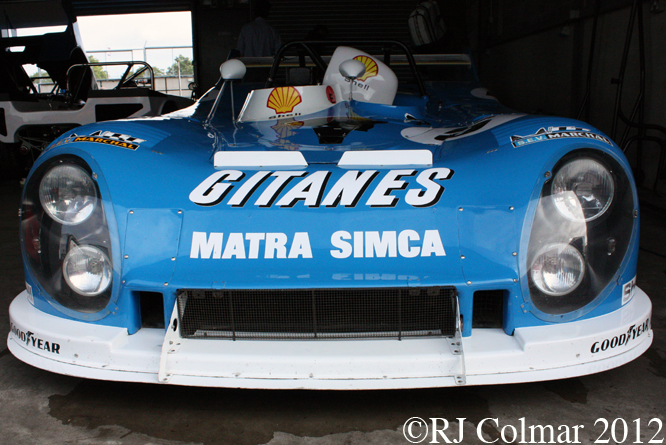
Next to and in front of the JS17 were not one but two 1973 World Sports Car Championship winning Matra 670 C’s powered by similarly awesome sounding V12’s !

Lola T70, Donington Park Test Day

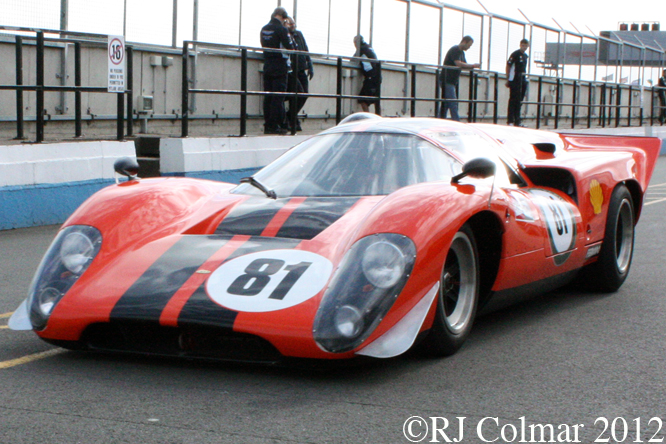
As we waited in the pits for the Gentleman from Crosthwaite and Gardiner to prepare the W154 for an engine warm up this Lola T70 Mk 3 Coupe rumbled down pit road to wet our appetites.

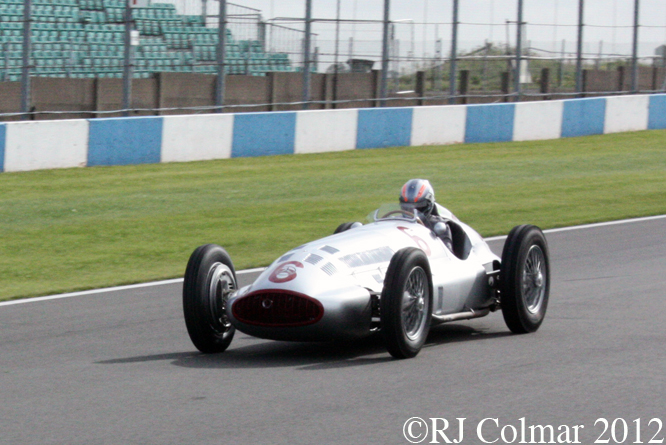
Mercedes Benz W154, Donington Park Test Day

After a five minute warm up the plugs on the W154 were changed and one lucky Rob Hall jumped out of his Matra and into the Benz. The car sounded great although it was anything but a smooth test as first a recalcitrant motor had to be cured and then a water leak from the radiator brought and end to proceedings. While it was running cleanly the ear splitting sound of the 476hp 3 litre / 183 cui two stage super charged V12 was music to the ears !

Donington Park Test Day

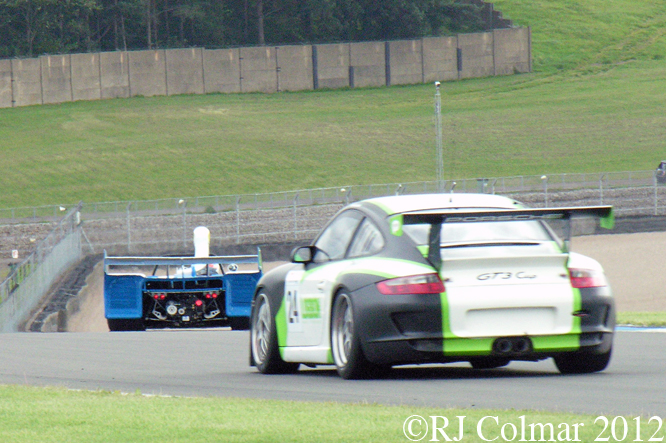
As the test day progressed Tim and I took a wolk around the track which I had not seen, despite several trips to the Donington Museum, since the early 1990’s. Since my last visit the gravel traps have substantially increased in size and safety fences have increased in height. Above Rob Hall charges down the Craner Curves pursued by a Porsche GT3.

Donington Park Test Day

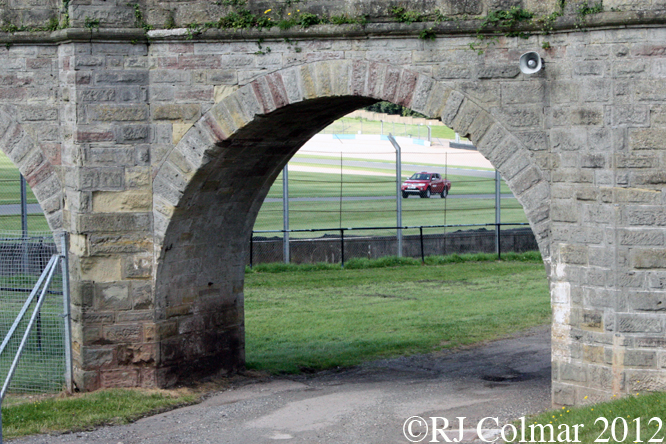
One of the many advantages of traveling with Tim is that he has breath taking memory for motor racing details, he has won several prestigious motor racing knowledge awards, during the Test day he pointed out that the arch in the Folly above was part of the pre war Grand Prix circuit through which the likes of the Mercedes Benz W154 along with Alfa Romeo’s, Auto Unions and ERA’s once raced in anger !

Aston Martin V8 Vantage, Donington Park Test Day

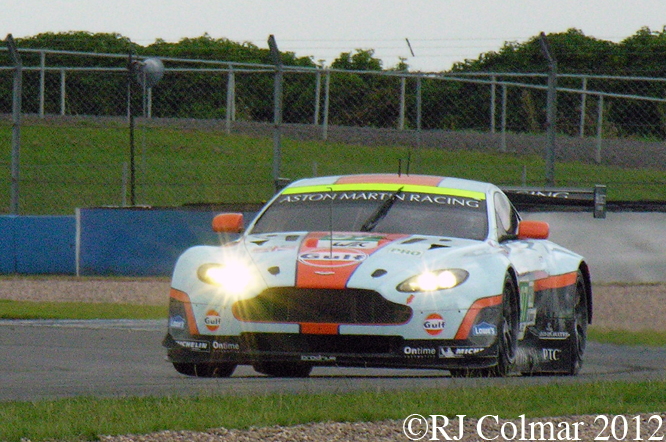
The works Gulf Prodrive Aston Martin team had three V8 Vantages present the #97 above, seen exiting Coppice, appeared to be the 2012 Le Mans entry driven by Adrian Fernandez, Stefan Mücke and Darren Turner which finished 19th overall and 3rd in class behind to Ferrari 458 Italia’s. The distinctive deep thump of these V8’s made it easy to tell where they were on the track even when they were not in view.

Crossle 25A, Donington Park Test Day

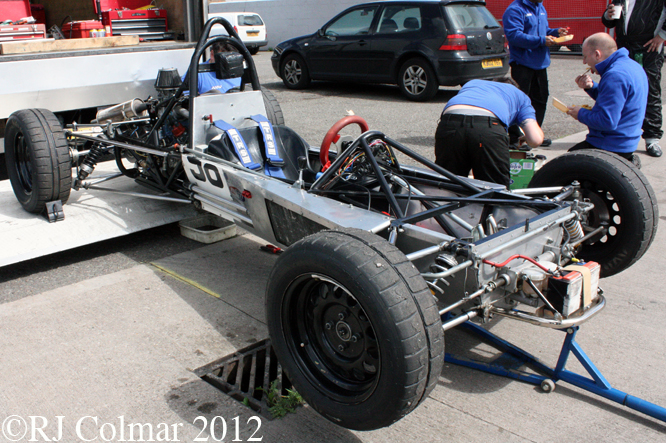
When we got back to the pits we found Terry Durdin’s 1972 Formula Ford Crosslé 25F being prepared for an afternoon’s run.

Sunbeam Tiger (Lister), Donington Park Test Day

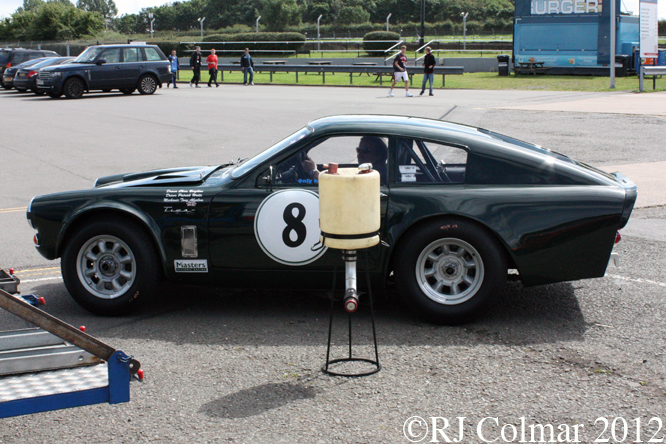
Another rumbling monster with a Le Mans history was this Sunbeam Tiger Coupé, one of two built by Lister for the Rootes Groups 1964 Le Mans challenge. Keith Ballisat and Claude Dubois qualified 34th for the endurance classic but both cars, powered by Ford 4,2 litre / 260 cui motors failed to finish due to engine failure.

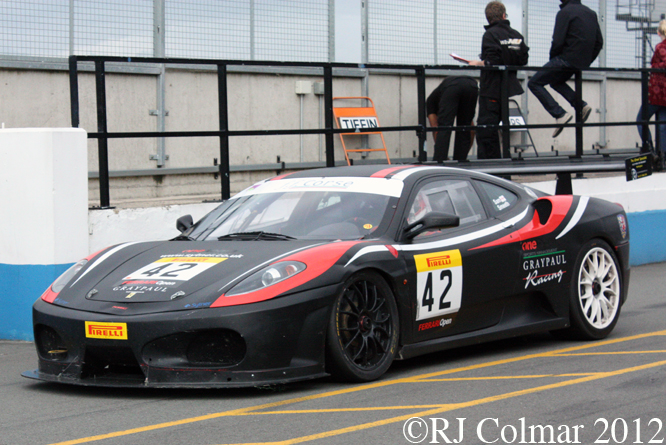
Ferrari F430, Donington Park Test Day

There were two Ferrari’s present a 360 and this F430 driven by Sam Smeeth.

Tatuus FR2000, Donington Park Test Day

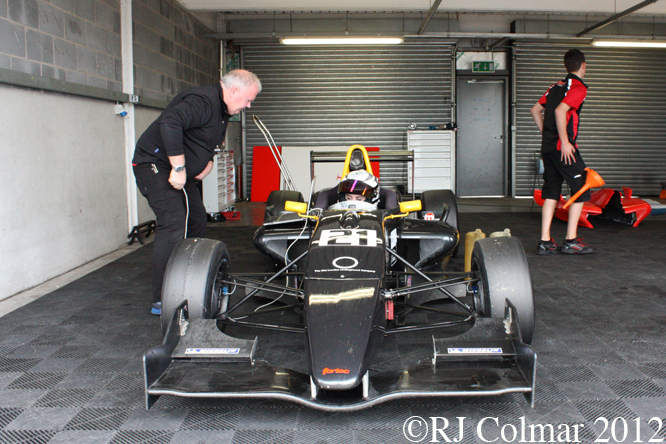
Following in the footsteps of Danica Patrick is the ambitious Laura Tillet who has stepped up to Formula Renault this year. Here her Fortec run Tatuus FR2000 is being prepared for a last minute run before the track closed at 5pm.

Ralt RT1 BMW, Donington Park Test Day

We did not time all the cars but thought the 2 litre / 122 cui BMW powered Ralt RT1 Formula 2 car of Philip Harper was amongst the quickest on the track. Ted Walker told us that Philip was running laps in the 1 min 02 second bracket. Tim and I reckoned Philips time would have seen him challenging James Hunt and Mario Andretti for second or third place at the very first meeting held at Donington Park the Gunnar Nilsson Memorial Trophy in 1979. To be fair the 3 litre / 183 cui cars of Hunt and Andretti had a much slower chicane to negotiate than Philip did.

Thanks for joining me on this “Cum On Feel The Noize” edition of “Gettin’ a li’l psycho on tyres, I hope you will join me again tomorrow. Don’t forget to come back now !

Share