Tag Archives: maserati

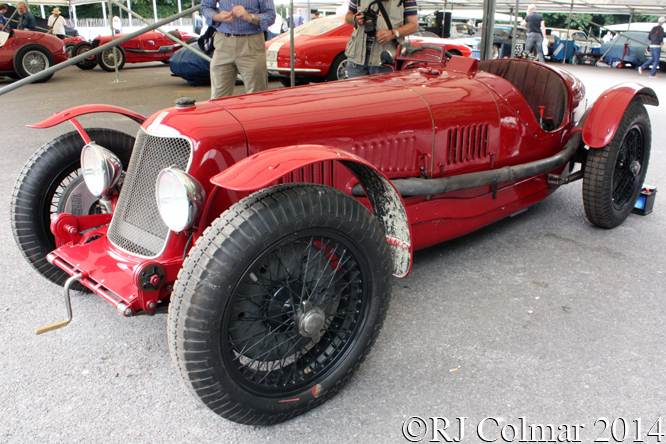
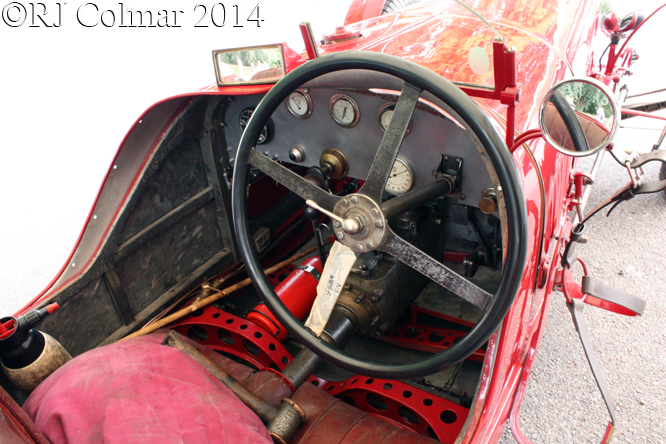
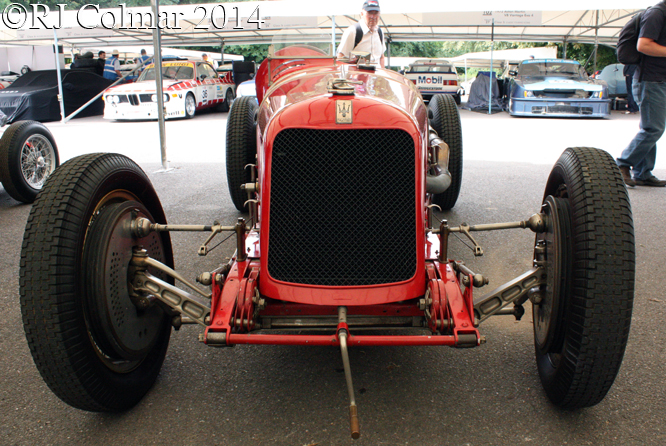
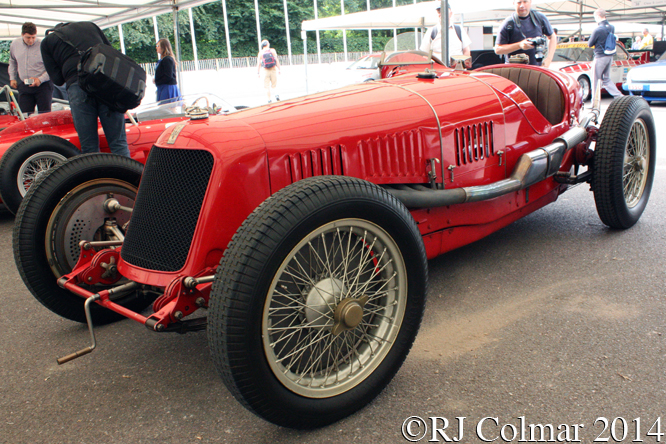
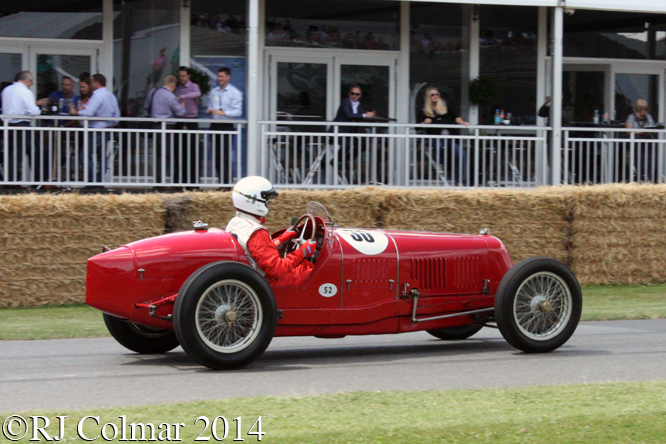
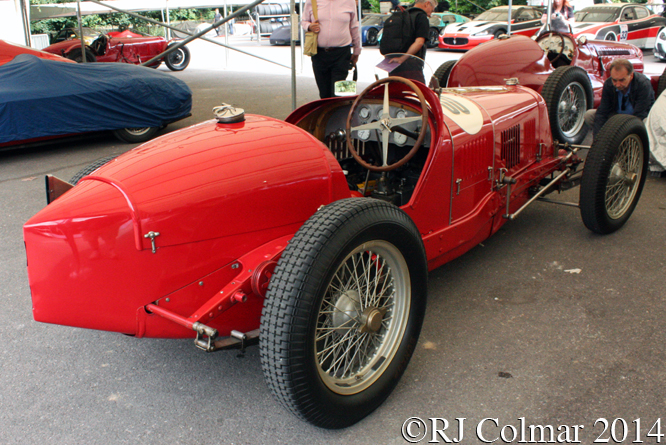
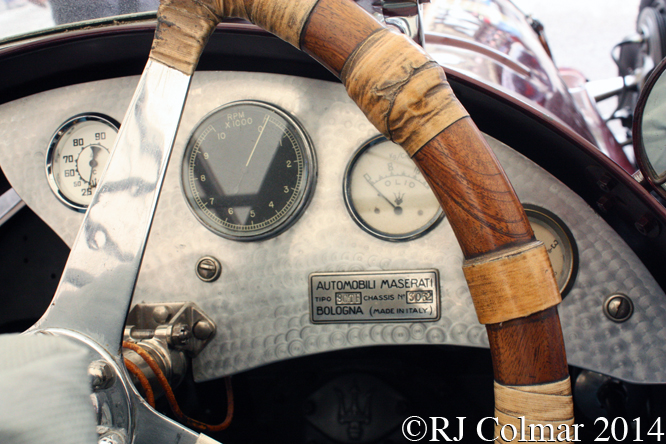
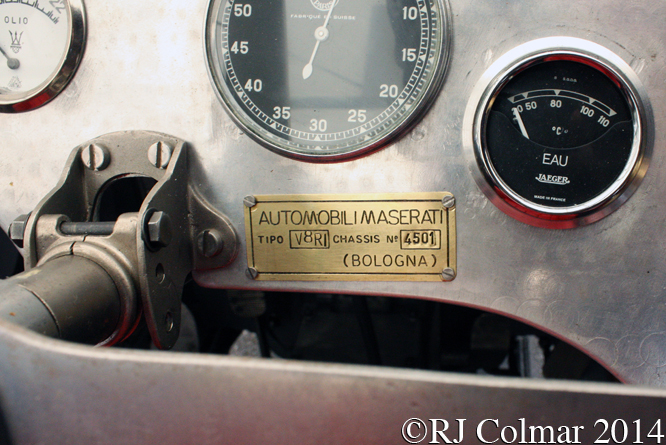
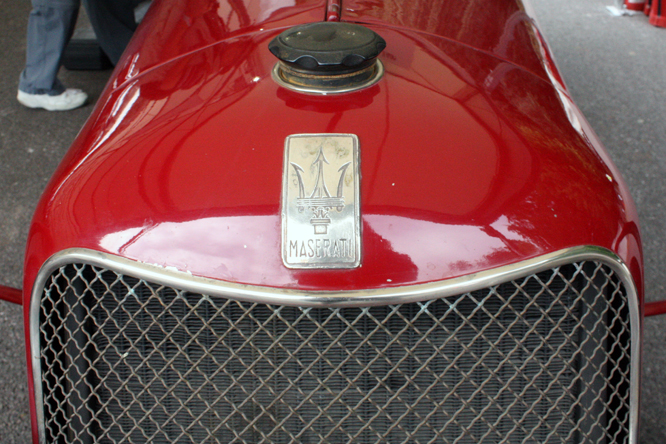
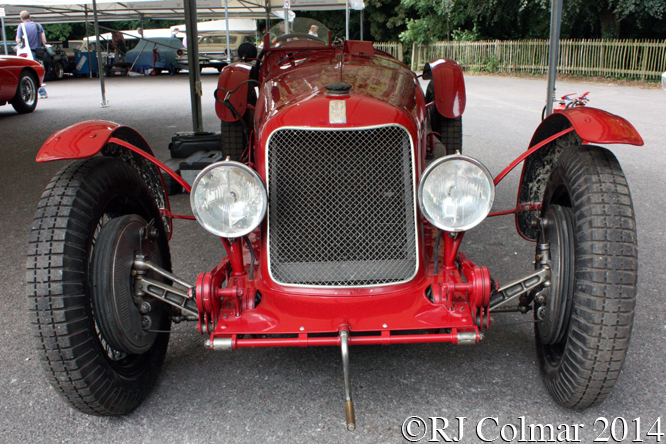
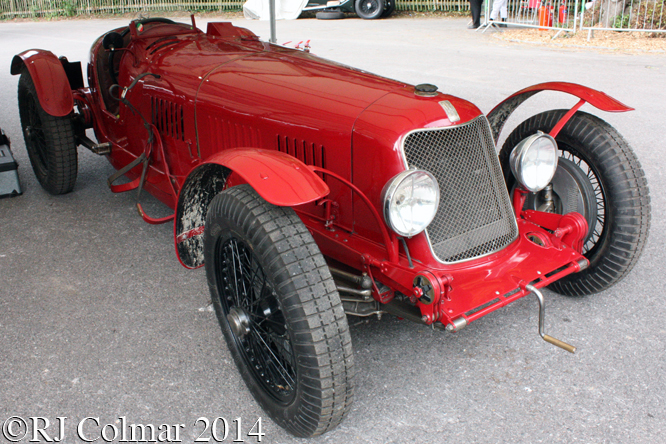
Ruote Indipendenti – Maserati V8RI #4501

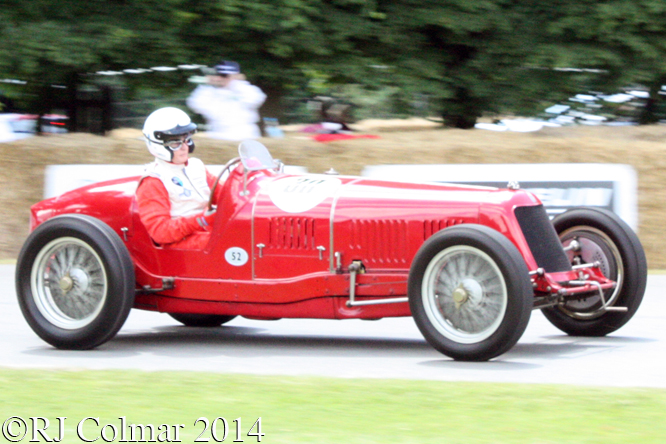
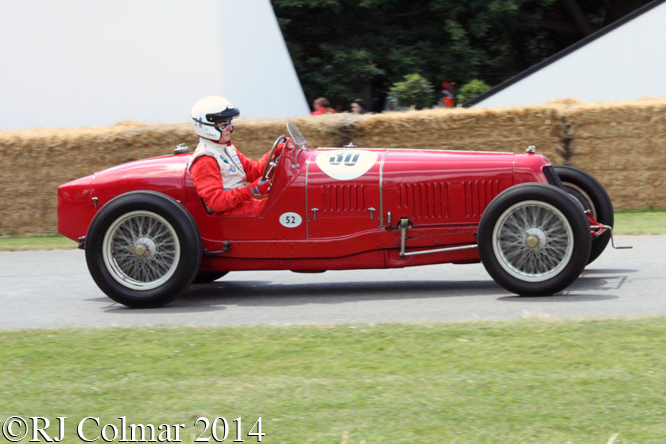
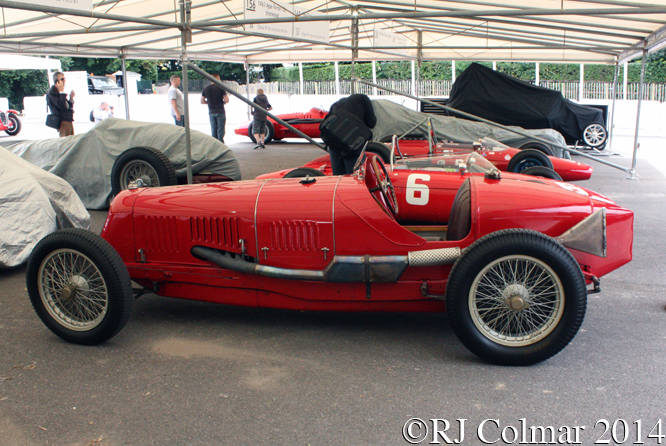
For 1935 Ernesto Maserati devised the V8RI challenger for the 750kg / 1653.47 lbs formula to take on Mercedes Benz, Auto Union and Alfa Romeo, the latter entries managed by Enzo Ferrari, for honours in the top echelon of motor sport known as the European Championship which comprised just five events.

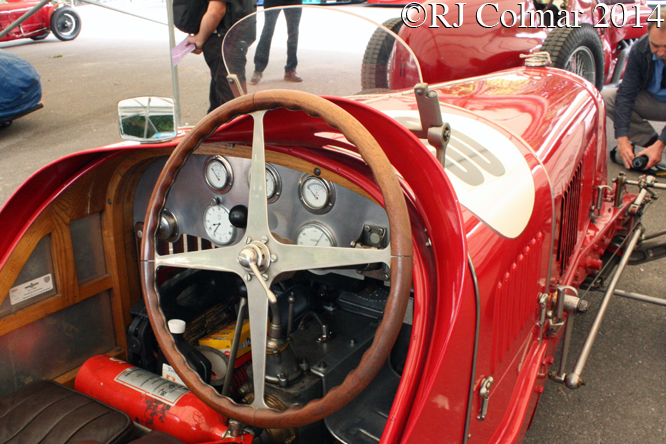
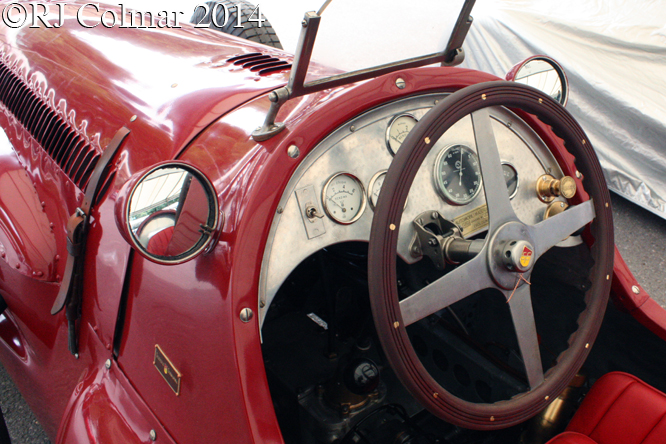
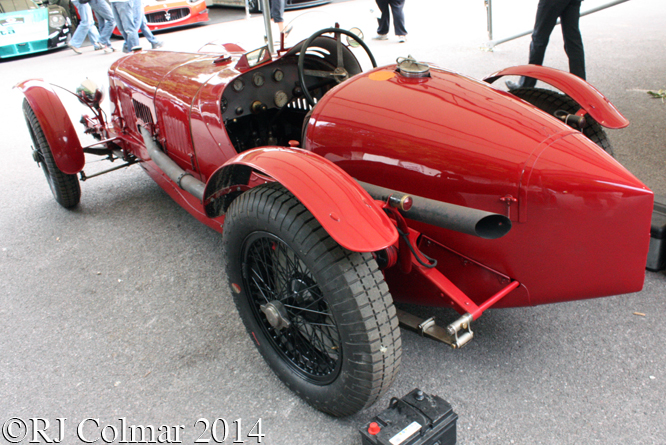
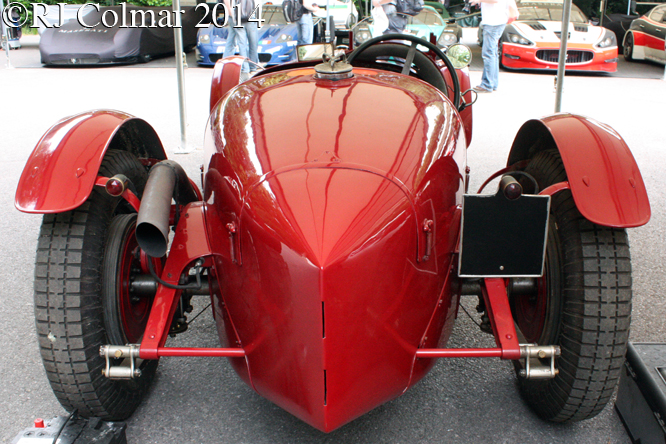
The V8RI broke with Maserati tradition being the first car to run a motor in anything other than an inline configuration and further more it was the first Maserati motor not to feature twin overhead camshafts, Ernesto opting for a single overhead camshaft per bank of the 300 hp 4.78 litre / 292 cui supercharged V8.
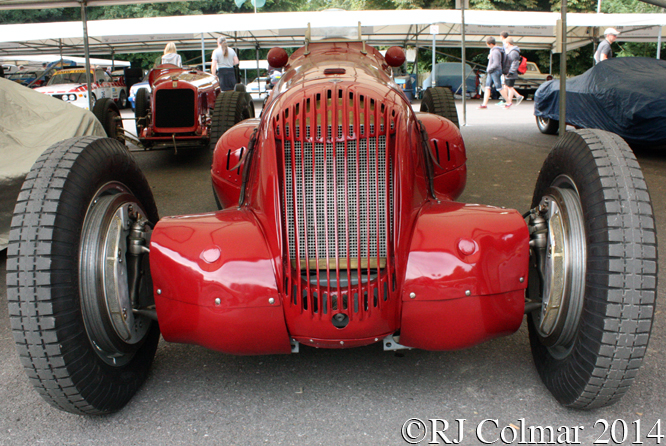
Maserati V8RI, Goodwood Festival Of Speed

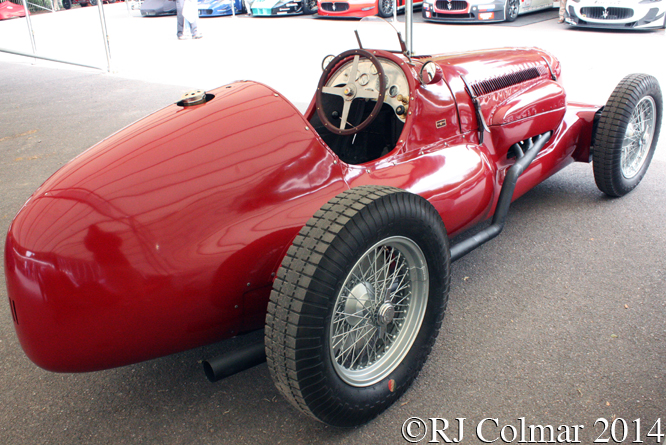
The V8RI was also the first Maserati to feature, ruote indipendenti, independent suspension for all four wheels. The transmission and differential were designed as a single transaxle unit.

Being essentially funded by private entrants in particular Scuderia Subalpina it is perhaps not surprising that the first V8RI to appear, today’s featured chassis #4501 did not show up until midway through 1935 and then only at the non championship XI Grand Prix de la Marne where Phi Phi Etancelin placed second in Heat 1 and retired with a blown motor from the final.
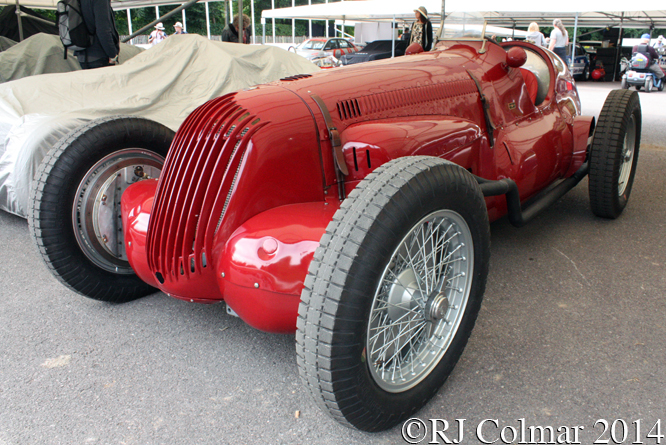
Maserati V8RI, Goodwood Festival Of Speed

The VR8I’s first European Championship appearance was at the penultimate round at Monza where Giuseppe Farina ‘won’ pole position which was drawn by lot, only to non start VR8I #4502 because of a recalcitrant motor. Phi phi completed 14 laps of the Italian Grand Prix in #4501 before crashing out and sustaining injuries which would keep him out of the cockpit for at least one race.

Farina made one further non championship start in a VR8I in 1935 at Circuito di Modena, but he retired after 7 laps with a fuel tank issue. Over the winter on 1935/36 Scuderia Subalpina became Scuderia Torino and Gino Rovere the teams patron took a controlling interest in Maserati.
Maserati V8RI, Goodwood Festival Of Speed

For 1936 both Phi phi Etancelin and “Raph” bought V8RI’s to run privately and Phi phi scored the V8RI’s most important European result by winning the 1936 Grand Prix de Pau against a field of Alfa Romeo’s and Bugatti’s which were not considered serious challengers to the absent front line contenders from Auto Union and Mercedes Benz.

From 6th further starts in his private V8RI Phi phi finished just once in the Vanderbuilt Cup race at Roosevelt Raceway where he finished 9th. Coincidentally from the results available to me this was the first and only time in 1936 where ‘Raph’ raced his private V8RI being disqualified for a push start on lap 9.
Maserati V8RI, Goodwood Festival Of Speed

The works / Torino V8RI’s are known to have appeared on five occasions in 1936 with an only finish of 7th place for Count Felice Trossi and Ernesto Bianco at the Italian Grand Prix. This result helped Trossi finish 7th equal in the 1936 European Championship with Alfa Romeo’s Antonio Brivio and Auto Union’s Ernst von Delius, Trossi’s other finish in a 4C Maserati came at the German Grand Prix where he shared 8th with Richard Seaman after the Englishman’s Torino V8RI retired with brake issues early in the race.

#4501 was modified in 1936 with attention given to the independent suspension and transaxle but from the results available to me it never appeared at any races with these modifications.
Maserati V8RI, Goodwood Festival Of Speed

In 1937 Maserati withdrew from the European Championship, which was dominated by German machines producing over 500 hp. Alfordo Mandirola drove his privately entered V8RI in at least two non championship events in Europe in 1937 scoring a best 7th place in the Grand Prix Valentino run in Turin.

Later in 1937 all four V8RI’s were entered in the Vanderbuilt cup race, #4501 to be driven by Deacon Litz however was the only V8RI not to show. Wilbur Shaw finished 9th in the race driving a V8RI while the other two V8RI’s retired.
Maserati V8RI, Goodwood Festival Of Speed

With a reduced engine capacity and the supercharger removed #4501 appeared at the 1939 Indianapolis 500 where both Deacon and rookie George Robson failed to qualify the car. Deacon however qualified another V8RI, which also featured a modified body, 31st and finished 33rd after a couple of dropped valves brought his race to a halt on lap 7.

Jim Brubaker, from Pennsylvania bought #4501 and between 1946 and 1949 it failed to qualify for the Indy 500 four more times.
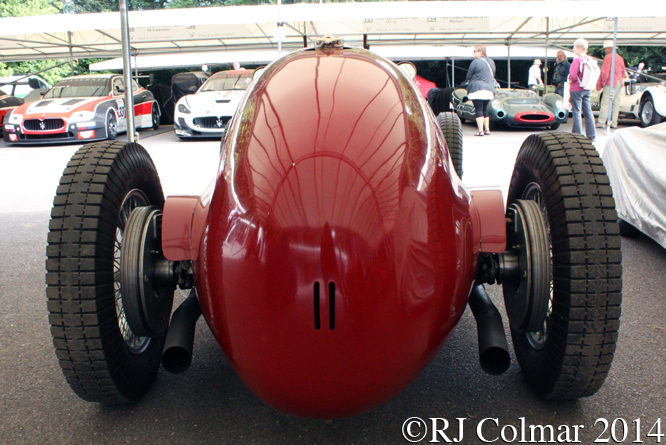
Maserati V8RI, Goodwood Festival Of Speed

In October 1950 Phil Cade became the owner of #4501 and he competed with it on the East Coast in circuit races and hillclimbs from 1951. Somewhere between 1952 and ’53 Phil fitted a Chrysler Hemi V8 and continued competing with the car in this form until 1960, among Phil’s successes was winning the Watkins Glen Seneca Cup in 1958.

In 2003 Bob Valpey bought #4501 from Phil and reunited it with it’s Maserati V8 motor. #4501 currently belongs to Michael Gans who completed an eight year restoration of the car prior to the Goodwood Festival of Speed where it is seen in these photographs.

My thanks to historian Adam Ferrington, #4501’s owner Micheal Gans and the numerous Nostalgia Forum contributors who unwittingly contributed to this post on various threads of the forum.

Thanks for joining me on this “Ruote Indipendenti” edition of “Gettin’ a li’l psycho on tyres” I hope you will join me again tomorrow. Don’t forget to come back now !

Share

Widengren’s Double Twelve – Maserati 26M

While looking for information about last weeks featured Maserati 8C 3000 I stumbled across some information about the Maserati 26M I featured early on in this run of Maserati Monday posts.

This cars known history starts with an almost unknown Swedish department store heir Henken Widengren, who bought the two seat bodied car with a 100hp Tipo 26C spec supercharged 1078 cc / 65.7 cui 8 cylinder motor.

Maserati 26M, Goodwood Festival of Speed.

Henkens best result from three races was a 19th place finish with Richard Oats in the 1931 Double Twelve at Brooklands. After a brief spell during which this car was raced by Lindsey Eccles in 1932 the car found it’s way into the hands of RJW ‘John’ Appleton who embarked on a programme of development that would last until nearly the turn of the millennium.

Appelton almost immediately disposed of the motor and gearbox replacing them with a Riley Nine 4 cylinder motor and ENV pre selector gearbox taken from an MG Magnette.

Maserati 26M, Goodwood Festival of Speed.

The shorter motor allowed Appleton to reduce the wheel base and chassis length by a foot which was also reflected in the shortened Maserati bonnet. After fitting a super charger the Maserati Riley with Applton at the wheel immediately won it’s class in the Shelsley Walsh hillclimb and shortly after it’s 2 bearing crankshaft broke.

During the winter of 1935 the Maserati Riley morphed into the Appleton Riley as RJW set about dismantling the frame lightening it and fitting new narrower cross members and a completely new single seat body.

Maserati 26M, Goodwood Festival of Speed.

Engine modifications including fitting a 3 bearing crankshaft to the Riley Nine motor brought the power up to 120hp which facilitated two successful seasons competition that included further class victories at Shelsley Walsh, a victory in a short handicap race at Brooklands, new class lap record of the Brooklands ‘Mountain’ circuit and standing start class records over 1 km and 1 mile.

In 1937 a bronze head with special valve gear was fitted and fetlled by AF Ashby while the Zoller supercharger was replaced with an Arnott item running at 27 psi taking the power output up to 160 hp. To help the car stop more effectively larger steel lined Elektron drum were fitted and to improve the handling a new rear suspension with transverse friction dampers was devised.

Maserati 26M, Goodwood Festival of Speed.

With a lighter and slimmer body, increasingly resembling the Mercedes 125 Grand Prix cars, the 130 mph Appleton Special was driven to further success at Brooklands, Chrystal Palace and the Poole Speed Trials up until 1939.

After 1945 Appleton detuned his special, using a Roots supercharger and reduced boost pressure the power output fell to a modest 135hp, enough to win it’s class at Shelsley in 1946.
In 1948 the supercharger drive split and plans were made for the 1931 Maserati beam axles to be replaced with fully independent suspension but the car was sold before the drive was repaired or the suspension fabricated in the early 1950’s.

Maserati 26M, Goodwood Festival of Speed.

From 1963 to 1964 F Baker with help from RJW drove the Appleton Special now fitted with a normally aspirated 1500 cc / 91.5 cui Riley 12/4 motor that had 4 Amal carburetors to facilitate fuel flow.

Ownership then passed to Alan Wragg in the early 1970’s and thence by 1974 to Colin Warrington who fitted a supercharger to the 12/4 motor.

Maserati 26M, Goodwood Festival of Speed.

Since 1978 the Appleton Special has belonged to the Majzub family and up until the turn of the millennium Julian Majzub competed with it in VSCC events.

Sometime after the millennium the Appleton Special was taken apart and the shortened 1931 Maserati chassis rails and 1931 axles were combined with other Maserati parts to build the 26M featured today seen at Goodwood Festival Of Speed.

Maserati 26M, Goodwood Festival of Speed.

Widengren’s original Maserati body was of course chopped about by Appleton and is thought to have long since ceased to exist. However the discarded modified Maserati 2 seat body, which T.A.S.O. Mathieson and Mike Oliver had converted for road use by 1947, from the Louwman Museum’s ex Birkin 8C 3000 chassis was acquired from Cameron Miller and is believed to have been fitted to this car.

It should be noted that the Tipo 26C, 26M and 8C 3000 all shared the same basic chassis design with the major differences being the size of the 8 cylinders motors fitted.

Today’s featured car is fitted with a just under 2.8 litre / 170 cui 8 cylinder Maserati motor, over twice the size of the Tipo 26C 1078 cc / 65.7 cui 8 cylinder motor that Henken Widengren was supplied with.

My thanks to all those on various The Nostalgia Forum threads mentioning the Appleton Special who have unwittingly contributed to my understanding of the story behind today’s featured car.

Thanks for joining me on this “Widengren & Appleton” edition of “Gettin’ A Li’l Psycho On Tyres”, I hope you will join me again tomorrow when I’ll be looking at some French cars that took part in the recent Chipping Sodbury Classic Run. Don’t forget to come back now !

Share

Fatal Exhaust – Maserati 8C 3000 #3002

After Alfieri Maserati’s death in March 1932 the remaining Maserati brothers continued to develop his new 3 litre / 183 cui supercharged straight eight motor. Before the end of 1932 Maserati had fitted a 220hp version of the new motor to an 8C chassis #3001 for Luigi Fagioli to drive in the Czechoslovak Grand Prix at Brno where he finished second to Louis Chiron in his Bugatti T51.

Maserati 8C 3000, Goodwood Festival of Speed

With the financial collapse of Bentley in 1931 the Bentley Boys were struggling to find British built vehicles in which to race. A second Maserati 8C chassis #3002, seen here at Goodwood, was bought by former Bentley Boy and 1928 Le Mans winner Bernard Rubin for fellow Bentley Boy and 1929 Le Mans winner Sir Henry Ralph Stanley ‘Tim’ Birkin to drive in the 1933 season.

Maserati 8C 3000, Goodwood Festival of Speed

Unfortunately ‘Tim’ only got to drive #3002 once in the infamous 1933 Tripoli Grand Prix, a race which is best remembered for a story surrounding a legal syndicate which comprised three lottery ticket holders and three drivers who agreed to divide up various prize monies on offer equally in the event that one or more of the syndicate drivers won, came second, third or any conceivable combination thereof.

Maserati 8C 3000, Berend, Goodwood Festival of Speed

Of course being described by W.O. Bentley to be “the greatest Briton of his time” ‘Tim’ would have nothing to do with the syndicate and intended to do his best to ensure they did not get their result and led the opening four laps of the race. On lap 16 ‘Tim’ pitted which, due to his inexperienced pit team, is said to have cost him more time than his rivals and in particular syndicate members Archi Varzi, who did not need to stop and Tazio Nuvolari who did.

Maserati 8C 3000, Berend, Goodwood Festival of Speed

Some sources say it was during this pit stop that ‘Tim’ accidentally burnt his arm on the exhaust of his car, others say it was during practice earlier in the event, but either way ‘Tim’ continued to finish third, 1 and half minuets, behind Archi and Tazio in that order, the same order to which both are alleged to have agreed on the flip of a coin on the morning of the race.

Maserati 8C 3000, Goodwood Festival of Speed

Tragically the burn ‘Tim’ had suffered from the exhaust turned septic and that in combination with his malarial condition put him in hospital six days after the race and five weeks later Britain lost one of it’s most popular and able drivers.

Maserati 8C 3000, Goodwood Festival of Speed

#3002 was driven in 1934 by Hon. Brian Lewis for Noel Rees at Brooklands where it came second in the International trophy to another Maserati driven by Whitney Straight with both cars sharing the lap record.

Maserati 8C 3000, Berend, Goodwood Festival of Speed

By 1937, following a string of ever less competitive performances with a variety of drivers #3002 was retired only for it have a post ’39-’45 war career, starting in 1946 when first Dudley Froy drove the car in the Easter ’46 VSCC Elstree speed trials.

Maserati 8C 3000, Goodwood Festival of Speed

Next future legendary Aston Martin, Ford GT40 and Gulf Racing manager John Wyer prepared #3002 for T.A.S.O. Mathieson drive in some of the earliest post war French races at Bois du Boulogne, St Cloud, where finished a best 5th and GP du Rousillon, where TASO recorded a 6th place finish.

TASO then started converting the 220hp car for road use and registered her for use on the kings highway, but sold her on in 1947 to Mike Oliver before the job was complete.

Once Mike had finished the conversion to road spec he drove #3002 to a seventh place finish in the ’48 Luton Hoo sprint.
Later in 1948 new owner Squadron Leader John Crampton DFC continued competing with the car at the Prescott and Shelsey hillclimbs along with the Brighton Speed trials and at Goodwood up until 1949.

The car was subsequently rebuilt, still in road going trim, by Alan Southon of the Phoenix Green Garage at Hartley Wintney before spending time in the United States.

Cameron Miller then undertook a restoration of #3002 for Peter Kaus of the Bianco Collection which included replacing the body, the remains of the old one subsequently found their way on to another Maserati which I shall be revisiting next Monday.

The Louwman Museum in the Netherlands now owns #3002 which is seen at Goodwood with Hulsoff Berend at the wheel.

My thanks to FailedJourno at The Nostalgia Forum for pointing out that I confused today’s featured #3002 with the car I shall be revisiting next week.

Thanks for joining me on this “Fatal Exhaust” edition of “Gettin’ a li’l psycho on tyres” I hope you will join me again tomorrow. Don’t forget to come back now !
Share

Goodwood Festival Details – Maserati Centenary

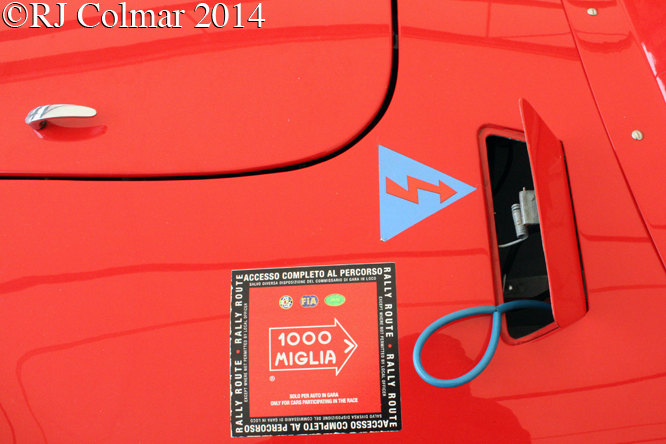
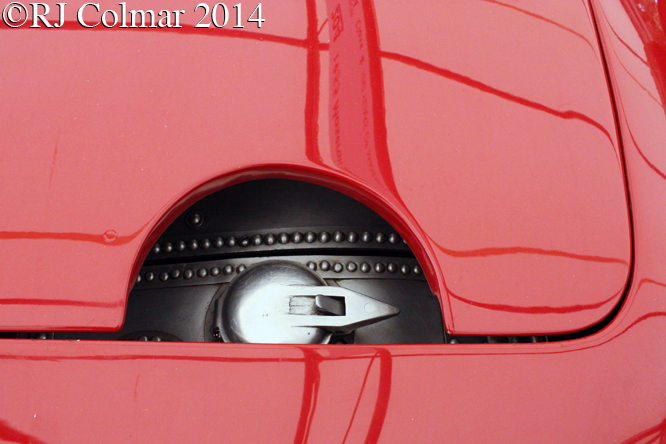
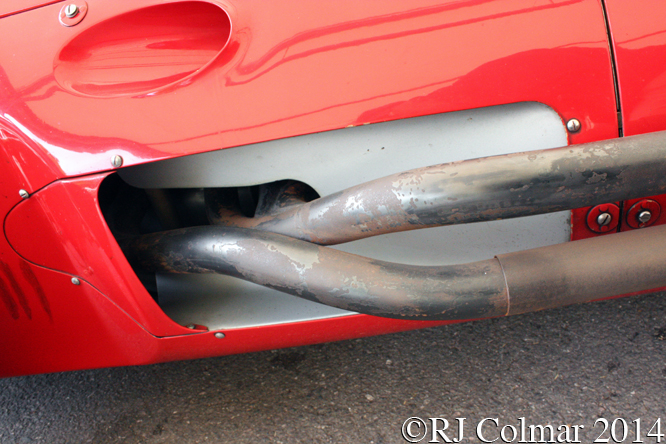
For this weeks Maserati Monday, I am taking a look at details of some of the Maserati’s present at the weekends Festival of Speed that will feature in forth coming editions of “Gettin’ a li’l psycho on tyres”.

Maserati V8RI, Goodwood Festival of Speed

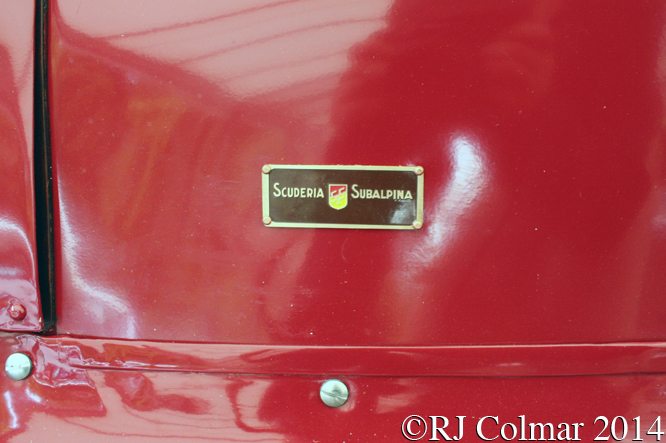
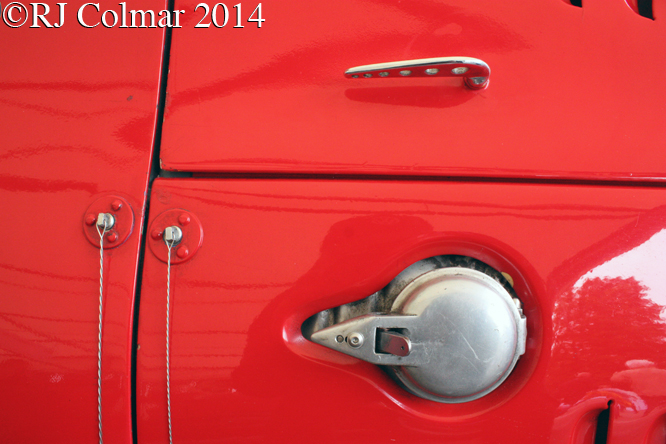
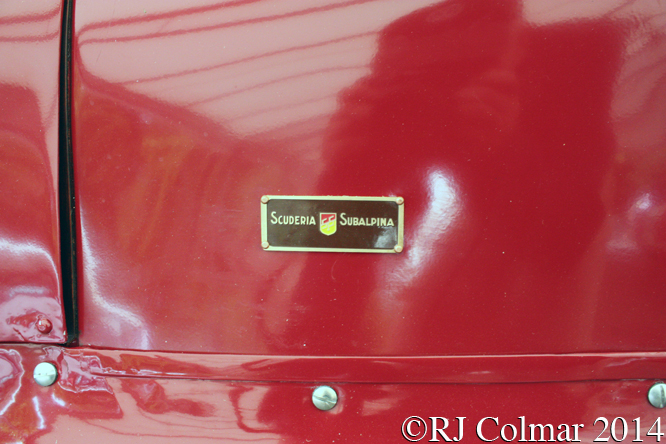
Scuderia Subalpina was founded by Count Luigi del la Chiesa, in December 1934, with backing from industrialists Giorgio Ambrosini (owner of Siata) and Giorgio Giusti, and the wealthy racing driver Gino Rovere who became Maserati president. The Scuderia’s badge is seen here on the side of the first 1935 Maserati V8RI to be built.

Maserati 8CTF, Goodwood Festival of Speed

The Maserati 8CTF was built for challenging the mighty German Silver Arrows of Mercedes Benz and Auto Union, but it’s most notable success came at Indianapolis where chassis #3032 seen here was driven by Wilbur Shaw in 1939, ’40 and ’41 in the Indy 500 and was en route to a trifecta of back to back victories when a tyre damaged in an accident let him down.

Maserati 4CLT, Goodwood Festival of Speed

For some reason this Maserati 4 CLT does not appear to be listed in the programme and I look forward to identifying it and finding out it’s story.

Maserati A6 GCS, Goodwood Festival of Speed

Likewise I look forward to teasing out the identity and details behind this 1955 Maserati A6 GCS.

Maserati 300S, Goodwood Festival of Speed

The Festival of Speed programme notes give a useful to tip in to help determine the identity of this 1957 Maserati 300S, it was once driven by 1959 Le Mans winner and later Ford USA competition guru Carroll Shelby.

Maserati 250 F V12, Goodwood Festival of Speed

Tracing the ID of this particular Maserati 250F V12 should not prove too tricky as their is at least one good book on the complicatd story of the Maserati 250F model.

Thanks for joining me on this “Goodwood Festival Details – Maserati Centenary” edition of “Gettin’ a li’l psycho on tyres” I hope you will join me again when I’ll be looking at some of the French cars at Goodwood. Don’t forget to come back now !

Share

Racing Van – Maserati 151/3 Recreation

Parts of today’s featured car started life as the Maserati France entered Maserati 151 chassis #151.002 which raced at Le Mans in 1962 alongside Briggs Cunningham’s chassis #151.004 and #151.006, the latter which I looked at last Monday.

Maserati 151/4, Goodwood Festival of Speed

#151.002 was driven by Maurice Trintignant and Lucien Bianchi in the 1962 Le Mans 24 Hours qualifying 7th, slowest of the three Maserati 151 models and retiring after completing 152 laps with suspension issues.

Maserati 151/4, Goodwood Festival of Speed

In April 1963 #151.002 reappeared at the Le Mans Test with a 5 litre / 302 cui V8 motor replacing the original 4 litre / 244 cui unit. André Simon and Lloyd Casner drove the car to the 4th fastest time and returned in June to qualify 5th for the 24 Hour race but retired after 40 laps with gearbox issues.

Maserati 151/4, Baxter / Mass, Goodwood Revival

#151.002, also known at the time as 151/2, appeared in three more events in 1963 scoring a best 8th place finish in the Trophée d’Auvergne at Clermond Ferrant (F) with Lucien Bianchi at the wheel.

Maserati 151/4, Baxter / Mass, Goodwood Revival

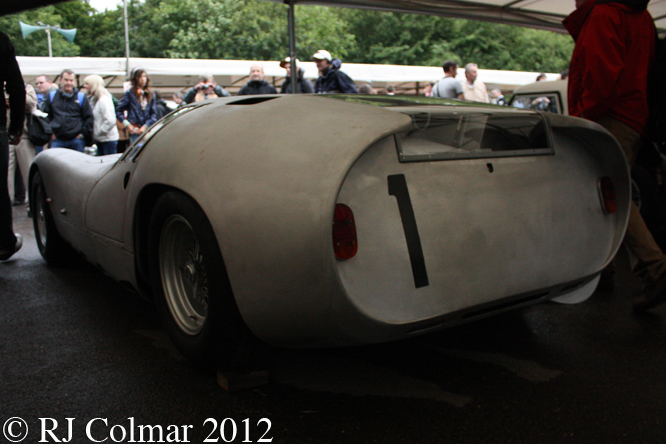
For 1964 #151.002 was further upgraded with a dry sump motor mounted lower in the chassis which was also altered to accommodate wire tires and wheels. Finally the car also had a new Piero Drogo penned unpainted aluminium body fitted just in time for the 1964 Le Mans test, the new body quickly earned the “Racing Van” sorbriquet.

Maserati 151/4, Goodwood Festival of Speed

Maurice Trintignant and France’s Maserati importer André Simon set 4th fastest time in the reworked Maserati and found it capable of 196 mph on the Mulsane straight. For the ’64 Le Mans race the Maurice and André qualified #151.002 15th, but retired after 99 laps with electrical issues. The same drivers were entered to drive #151.002 in two more events but retired with ignition issues from the Reims 12 Hours and after an accident from the Paris 1000 kms at Circuit de Linas-Montlhéry.

For 1965 the final incarnation of #151.002 also known as 151/4 included fitting a slightly larger 5055cc / 308 cui V8 which produced 450 hp. The car was again taken to the Le Mans Test weekend where Lloyd “Lucky” Casner of Camoradi Racing Team fame met his untimely demise in #151.002 at the kink on the Mulsanne Straight being fatally thrown from the car which was effectively destroyed in the accident.

During the 1980’s Herr Kaus of the Bianco Museum owned one of the 151/3 spec motors from the crashed #151.002, as he did the uncrashed #151.006 car, and was supplied by Maserati with drawings to build a new 151/3 spec chassis and the original 151/3 body buck so that Sig Allegretti, who built the original body, could build another !

Herr Kaus never got the project finished, but more recently Barrie Baxter, seen sharing the car with Jochen Mass at Goodwood Revival, has.

My thanks to Doug Nye and driverider at The Nostalgia Forum for their comments.

Thanks for joining me on this “Racing Van” edition of “Gettin’ a li’l psycho on tyres” I hope you will join me again tomorrow. Don’t forget to come back now !
Share

ALFA Screen – Maserati Tipo 151 #151.006

In order to compete in the top 4.0 litre / 244 cui GT Prototype Class in the 1962 Le Mans 24 hours Briggs Cunningham and Frances Maserati agent John Simone funded the production of 3 Tipo 151’s.

Ing. Giulio Alfieri abandoned the Birdcage construction of his Tipo 60/61 models and returned to using large tube chassis construction as had been used on the one off Maserati 450S, the 151’s body featured a proprietary windscreen sourced from the ALFA Romeo Giuleitta Sprint Speciale parts bin.

Maserati Tipo 151, Colasacco / Hill, Goodwood Revival

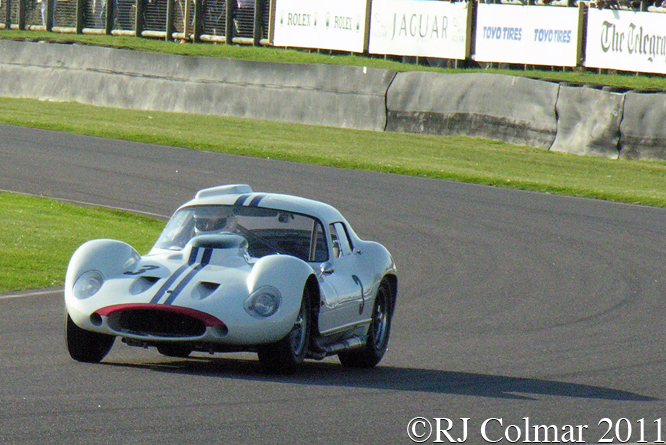
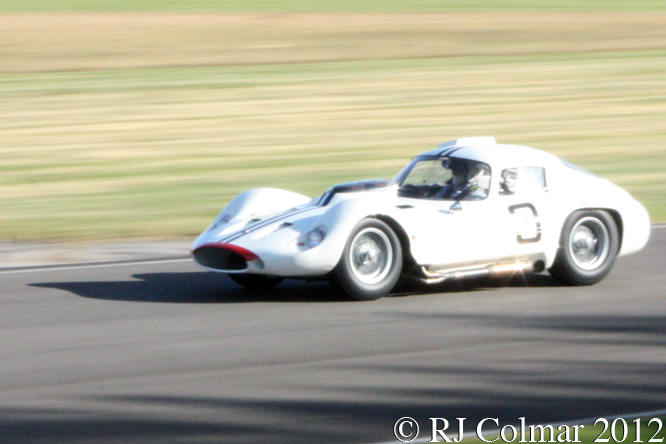
Briggs Cunningham entered two of the Tipo 151’s, chassis 151.004 and 151.006 seen here, and Maserati France chassis 151.002 for the ’62 Le Mans 24 hours.

William Kimberly and Dick Thompson driving #151.006 qualified 3rd behind the Ferrari 330 TRI driven by eventual winners Olivier Gendebien and Phil Hill and the 330 GTO driven by Mike Parkes and Lorenzo Bandini.

Maserati Tipo 151, Colasacco / Hill, Goodwood Revival

During the race William and Dick completed 62 laps before a brake issue caused Dick to crash and retire, the Maserati France car driven by Maurice Trintignant and Lucien Bianchi was withdrawn after 152 laps because the suspension was causing the rear tyres to wear out every 10 laps. The second Cunningham 151 driven by Walt Hangsen and Bruce McLaren retired after completing 177 laps with a blown motor.

#151.006 was then driven in two US events by Augie Pabst whose best result was a 7th place in the LA Times Grand Prix at Riverside. Bev Spencer then bought the car for Stan Peterson to drive in the ’62 SCCA meeting at Vacaville, however Stan crashed in the qualifying race and after it was repaired Bev sold the car to Skip Hudson whose best result, from three known starts, was a 3rd place in an SCCA race at Cotati in May 1963.

Joe Colasacco and Derek Hill were drove #151.006, now owned by Lawrence Auriana when it was photographed during practice for the RAC TT Celebration races at Goodwood in 2011 and 2012.

Thanks for joining me on this “ALFA Screen” edition of “Gettin’ a li’l psycho on tyres” I hope you will join me again tomorrow when I’ll be looking at a French WM Le Mans entry. Don’t forget to come back now !
Share

Birdcage Streamliner – Maserati Tipo 60 #2451

Despite winning the 1957 World Championship Drivers Title, there was no constructors title until 1958, with Juan Manuel Fangio, Maserati was in dire financial trouble at the end of the year and after four sports car were written off in South America the Italian Government had to step in as receiver to save the company.

Immediately all motor racing programmes run by the factory were cancelled, but just one year later the case was made for Maserati to resume building racing cars so long as they were paid for and raced by customers.

Engineer Gulio Alfieri was given a brief was to build a low cost, competitive, two seater racer, using existing parts stock where possible.

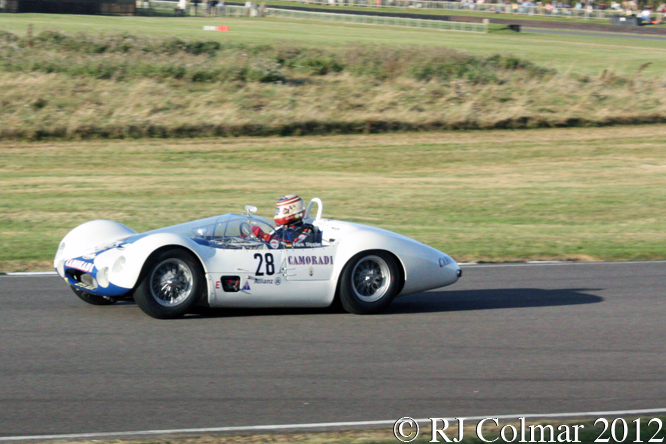
Maserati Tipo 60, Goodwood, Revival

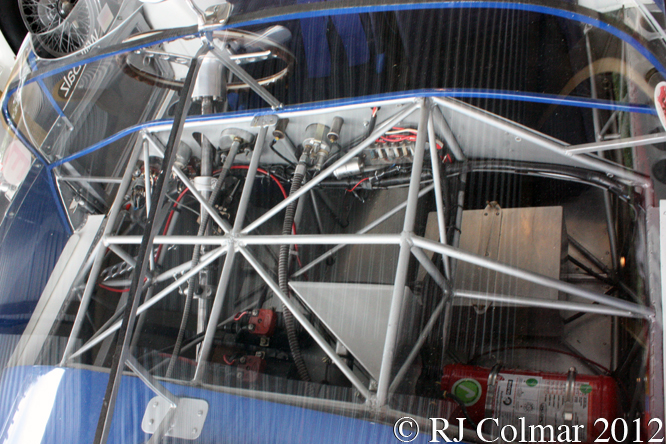
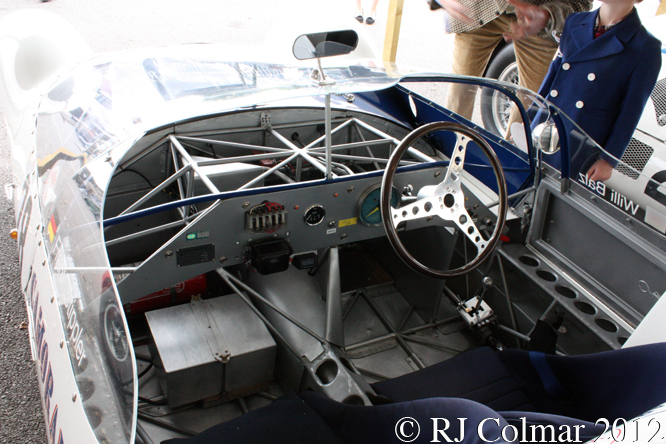
In the absence of sufficient contacts to help him build a monocoque chassis Alfiei devised a space frame Tipo 60 chassis built up from thin tubes with a 2 litre / 122cui 4 cylinder motor that became known as the ‘Birdcage’.

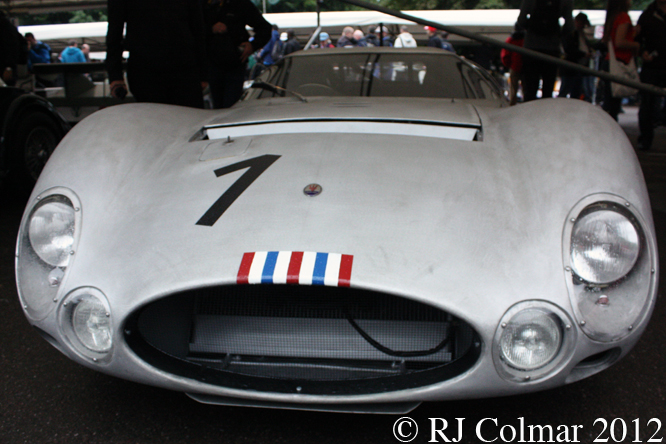
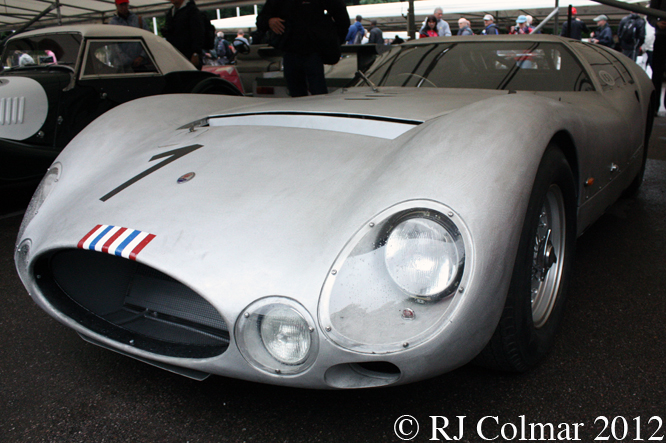
Today’s featured chassis #2451 started life as the prototype Tipo 60 and on the 12th of July 1959 it was driven to a win in the Rouen Grand Prix by Stirling Moss.

Stirling Moss is said to have been impressed with the ‘rightness’ of the design, the light but precise steering, the totally neutral handling characteristics with the superb brakes also being singled out for praise.

Maserati Tipo 60, Willi Balz, Goodwood, Revival

Italian hillclimb specialist Odoardo Govoni then drove #2451 to a win on the ‘Pontedecimo-Giovi’ hillclimb on the 20th September 1959, soundly beating the favourite Giorgio Scarlatti’s Ferrari Dino 196S.

Maserati chairman Omer Orsi authorised the production of six Tipo 60 chassis and it was not long before requests from the US came in for cars fitted with 3 litre / 183 cui motors.

Subsequently Alferi was asked to work on a 3 litre motor and he managed to squeeze one into a Tipo 60 which which then became the Tipo 61 to distinguish the larger engine size.

Maserati Tipo 60, Goodwood, Revival

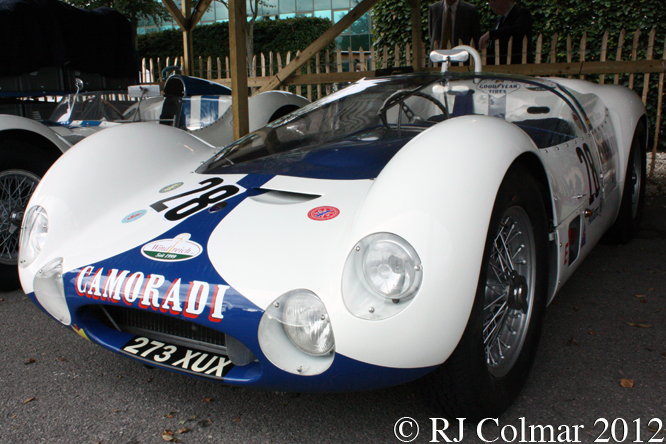
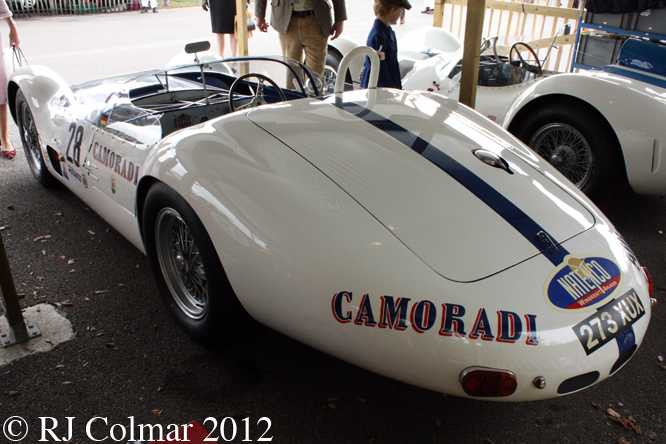
In September 1959 Lloyd Perry ‘Lucky’ Crasner tested a Tipo 60 and immediately ordered two 3 litre cars for his CA-sner MO-tor RA-cinq DI-vision, better known as the Camoradi Racing Team.

A shortfall in manufacturing capacity left Maserati no alternative but to fit a 4 cylinder 3 litre / 193 cui motor to the prototype chassis #2451 which was then shipped out to Nassau in December 1959 for Dan Gurney, Carroll Shelby and Jo Bonnier to test in preparation for the Nassau Speedweek.

Dan claimed a class victory in the Preliminary Governor’s Trophy while Carrol retired from the Nassau Trophy Race after a puncture and then an accident.

Maserati Tipo 60, Goodwood, Revival

Dan and Marsten Gregory qualified #2451 2nd for the 1960 1000kms at Buenos Aires but retired with a broken shock absorber mounting bolt after leading comfortably.

Carroll Shelby teamed up with Masten to drive #2451 in the Sebring 12 hours but retired with an engine issue.

At the Targa Florio #2451 was entered for Umberto Maglioli and Nino Vaccarella who led the race at 3/4 distance only to crash after a rock punctured the fuel tank.

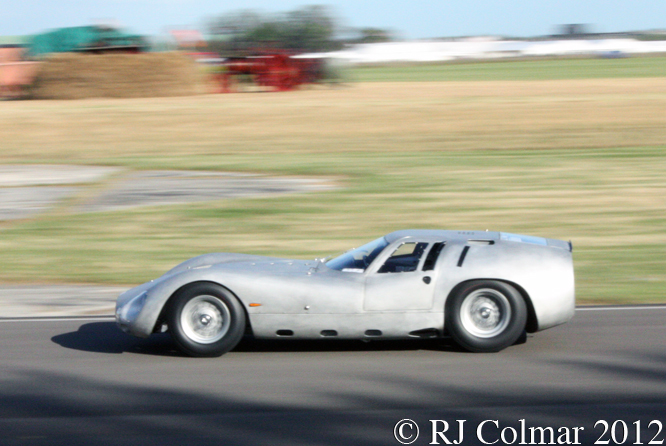
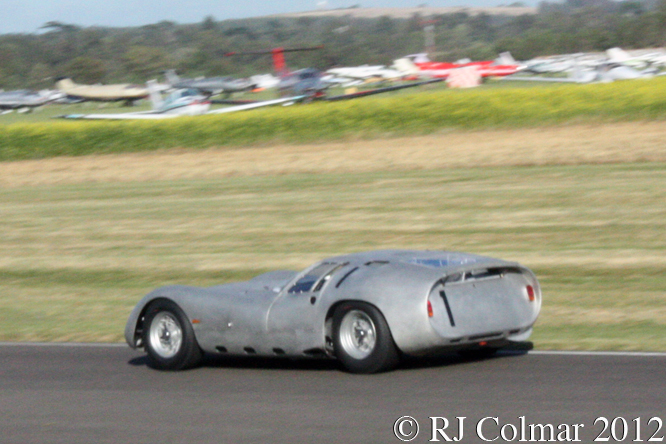
During the subsequent repairs #2451 had a new streamline tail added along with the extreme screen which was designed to meet the Le Mans minimum height screen regulations and minimise the frontal area of the car. The other 2 Camoradi T61’s had the modified tail fitted for Le Mans, but not the low frontal area screen.

Maserati Tipo 60, Goodwood, Revival

#2451 was the fastest car at Le Mans in 1960, after a starting problem saw Marsten cross the start line in 24th place he had recovered the lead by the Mulsanne Corner on the opening lap overtaking 18 vehicles on the Mulsanne Straight.

After a couple of hours Marsten handed #2451 over to Chuck Daigh but the car lost an hour with another starter problem. Between the forth and eighth hours Marsten and Chuck had recovered two of their lost laps, but at midnight the car was retired either with a blown motor or an electrical issue depending on which sources one reads.

The Le Mans race was the last race of the 1960 World Sportscar Championship season and #2451 was chosen by Camoradi backer Frank Harrison as the car he was promised and wanted to run in the USA.

06 Maserati Tipo 60_1663sc

Harrison entered the car for Jim Jeffords who won with it at Road America on July 31st, 1960. In April 1961 Fred Gamble drove #2451 to a class victory at Marlboro .

Sources are not conclusive on #2451 being the car that William Kimberly drove to victory for Frank Harrison at Courtland in July 1961.

Frank sold #2451 to Don Skogmo, a regular winner aboard a Maserati Tipo 61, who is thought never to have raced #2451.

In 1971 #2451 found a new lease of life in the British ‘JCB’ historic championship where it was driven to a championship victory by Brian Joscelyne.

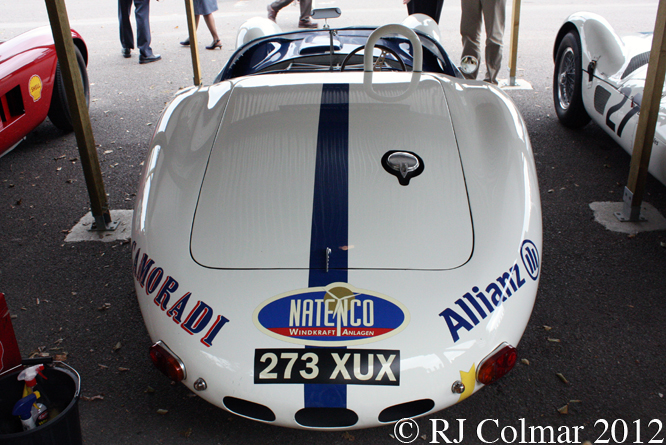
By 1980 #2451 was to be found in the Rosso Bianco collection belonging to Peter Kaus. Today the car, which was first registered for UK road use in 2010, is owned by Windpower magnate and Maserati Collector Willi Balz who is seen at the wheel at Goodwood a couple of years ago.

Thanks for joining me on this “Birdcage Streamliner” edition of “Gettin’ a li’l psycho on tyres”, I hope you will join me again tomorrow when I’ll be looking at a versatile Talbot that raced at Le Mans in 1939. Don’t forget to come back now !
Share