Tag Archives: McLaren

ALFA Screen – Maserati Tipo 151 #151.006

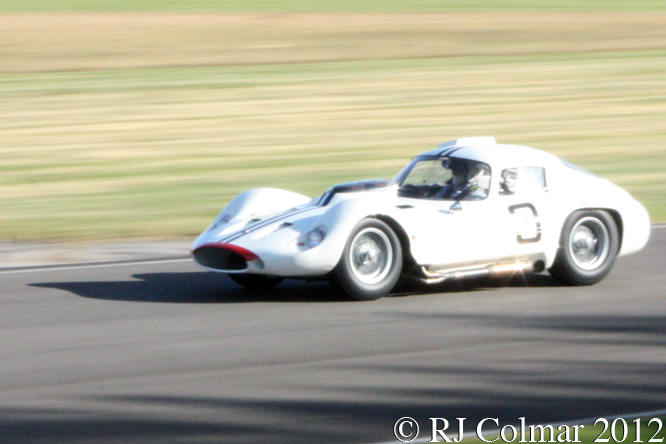
In order to compete in the top 4.0 litre / 244 cui GT Prototype Class in the 1962 Le Mans 24 hours Briggs Cunningham and Frances Maserati agent John Simone funded the production of 3 Tipo 151’s.

Ing. Giulio Alfieri abandoned the Birdcage construction of his Tipo 60/61 models and returned to using large tube chassis construction as had been used on the one off Maserati 450S, the 151’s body featured a proprietary windscreen sourced from the ALFA Romeo Giuleitta Sprint Speciale parts bin.

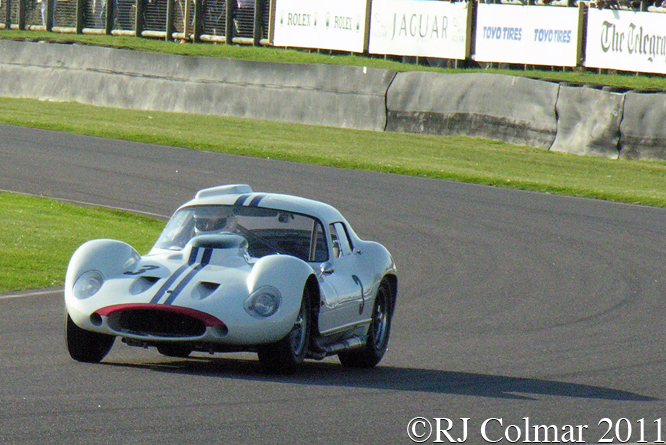
Maserati Tipo 151, Colasacco / Hill, Goodwood Revival

Briggs Cunningham entered two of the Tipo 151’s, chassis 151.004 and 151.006 seen here, and Maserati France chassis 151.002 for the ’62 Le Mans 24 hours.

William Kimberly and Dick Thompson driving #151.006 qualified 3rd behind the Ferrari 330 TRI driven by eventual winners Olivier Gendebien and Phil Hill and the 330 GTO driven by Mike Parkes and Lorenzo Bandini.

Maserati Tipo 151, Colasacco / Hill, Goodwood Revival

During the race William and Dick completed 62 laps before a brake issue caused Dick to crash and retire, the Maserati France car driven by Maurice Trintignant and Lucien Bianchi was withdrawn after 152 laps because the suspension was causing the rear tyres to wear out every 10 laps. The second Cunningham 151 driven by Walt Hangsen and Bruce McLaren retired after completing 177 laps with a blown motor.

#151.006 was then driven in two US events by Augie Pabst whose best result was a 7th place in the LA Times Grand Prix at Riverside. Bev Spencer then bought the car for Stan Peterson to drive in the ’62 SCCA meeting at Vacaville, however Stan crashed in the qualifying race and after it was repaired Bev sold the car to Skip Hudson whose best result, from three known starts, was a 3rd place in an SCCA race at Cotati in May 1963.

Joe Colasacco and Derek Hill were drove #151.006, now owned by Lawrence Auriana when it was photographed during practice for the RAC TT Celebration races at Goodwood in 2011 and 2012.

Thanks for joining me on this “ALFA Screen” edition of “Gettin’ a li’l psycho on tyres” I hope you will join me again tomorrow when I’ll be looking at a French WM Le Mans entry. Don’t forget to come back now !

Share

Prototype, Racer, Decoy – Jaguar #E2A

After Jaguars bitter sweet success at Le Mans in 1955, when the works D-Type driven by Mike Hawthorn and Ivor Bueb won the ill feted race following Mercedes Benz mid race withdrawal, Sir William Lyons concluded, as did the board of Mercedes Benz, that Jaguar’s resources would be better spent turning it’s racing success into commercial production success.

The Jaguar racing department became the Jaguar prototype department as all Jaguar works racing programmes were left to customer teams like Ecurie Eccose who promptly won Le Mans in 1956 and 1957 with their D-Types and Briggs Cunningham, who realised he did not have the resources to build and compete with an American sports car with the best Europe had to offer, but still had the resources to buy top line European cars to race.
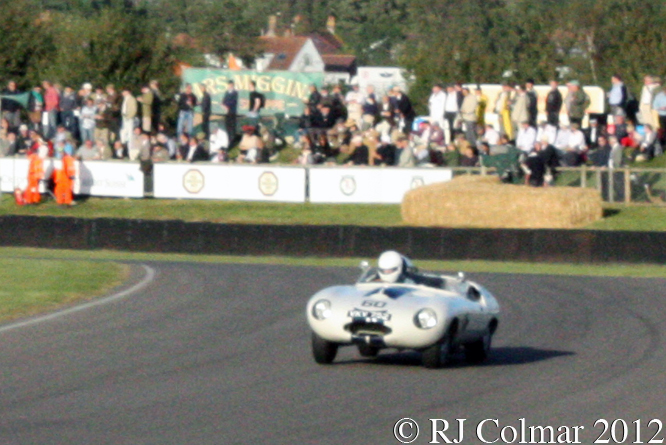
Jaguar E2A, Ziegler, Goodwood Revival

The Jaguar prototype team’s first job was to build a production version of the D-Type using monocoque construction and replacing the D-type’s live rear axle with independent rear suspension.

This prototype, known as #E(Type)1A(Aluminium), was a 130 mph 2/3rds scale drivable vehicle built in 1957 which after much testing was broken up and scrapped somewhere between 1959 and 1960 without ever having been shown to the press or public.
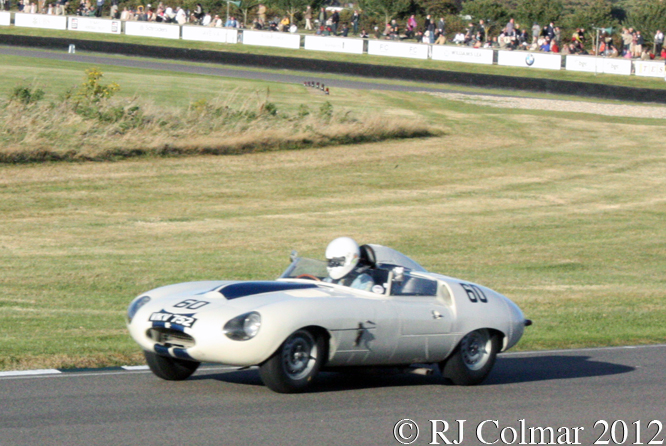
Jaguar E2A, Ziegler, Goodwood Revival

Today’s featured car #E2A was a full scale second prototype with a monocoque and aluminium body styled by Malcolm Sayer. The car was fitted with a 3 litre / 183 cui fuel injected aluminium straight 6 motor in order to meet the Le Mans prototype regulations. E2A was entrusted to Briggs Cunninghams team and painted in his teams white with two blue stripes colours.

Before going to Le Mans in 1960 E2A was tested at the oval MIRA test facility and the suspension was set up for this purpose when it arrived at Le Mans unknown to Dan Gurney and Walt Hangsen who were employed to drive it.
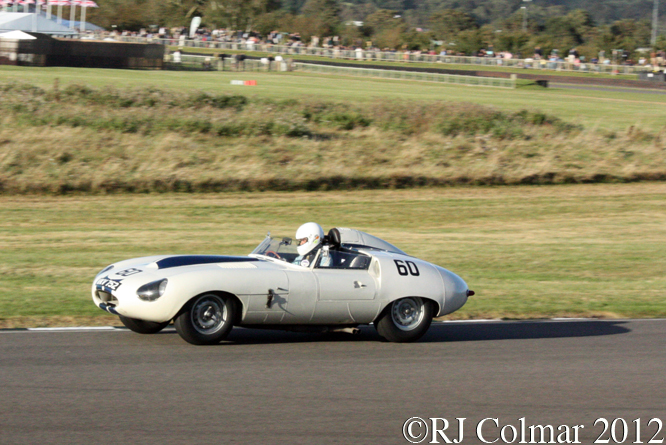
Jaguar E2A, Ziegler, Goodwood Revival

Dan and Walt found the car extremely twitchy and it was late before the race that the suspension settings were changed to something more suitable to a public road used as a race track rather than a steeply banked oval at MIRA.

#E2A completed the opening lap of the 1960 Le Mans 24 hours in third place, but after just 3 laps the car was in the pits with a broken injector pipe. This was replaced but a train of damage had been set in motion which resulted in E2A retiring after six hours with a failed head gasket and burned piston.
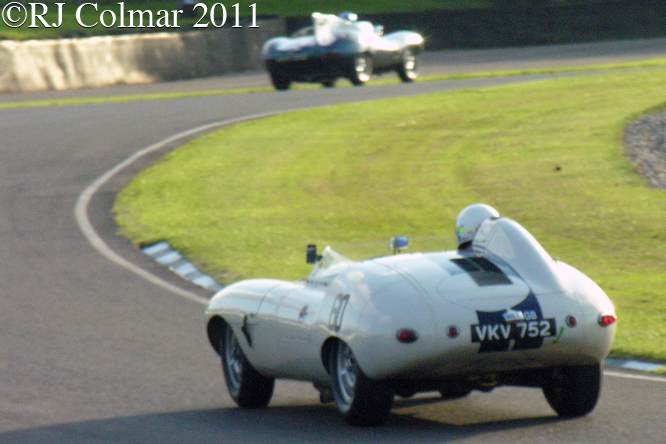
Jaguar E2A, Dron, Goodwood Revival

Back at the Jaguar factory the 3 litre #E2A engine was swapped for a 3.8 litre / 231 cui unit and the car was shipped to the USA Walt Hangsen drove it to a win in the 2nd Annual Inter-club Championship Bridgehampton and class win in the 500 mile Road America race.

Reigning double world champion “Black” Jack Brabham drove #E2A 10th place finish in the 200 mile Grand Prix Riverside, a twisty track to which E2A was as poorly suited as Laguna Seca where Bruce McLaren drove #E2A in two heats of the First Pacific Grand Prix to 12th and 17th place finishes.
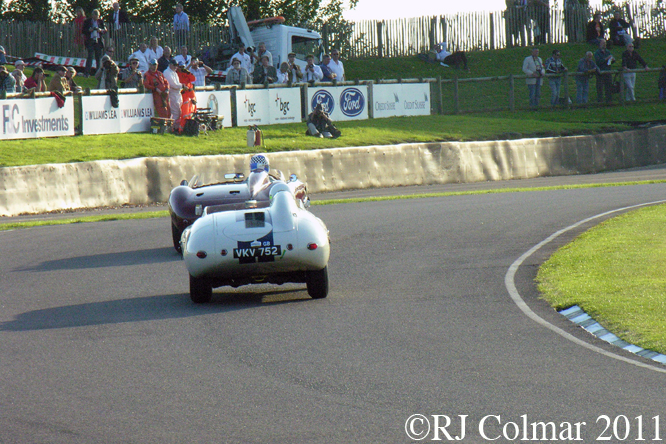
Jaguar E2A, Dron, Goodwood Revival

Thereafter #E2A was returned to Jaguar for further testing which included an early anti lock braking system called ‘Wheel Slide Protector’ as used by the Ferguson P99.

#E2A was eventually put into storage, only to be pulled out and painted green in 1965 so that it could be used as a decoy while testing of the top secret XJ13 was carried out at MIRA.

In 1967 Jaguar customer car competition manager Roger Woodley managed to save E2A from the usual destruction for scrap prototype fate by mediating a deal for his father in law Guy Griffiths Camden Car Collection in the Cotswolds to take it with Jaguars insistence that #E2A should never be used in competition.

Jaguar kindly repainted #E2A in Briggs Cunninghams original racing colours and some time after handing it over manged to supply Guy with a 3 litre fuel injected motor.

In 2008 Roger’s wife sold the car for just short of US$5 million at Bonham’s, owner Stefan Ziegler has since had the car prepared to ‘weapons grade racer’ standard much to the chagrin of some old curmudgeons, myself included.

Stefan is seen at the wheel of the car at Goodwood in the photo’s dated 2012, while Tony Dron is seen driving the car in the older images.

Thanks for joining me on this “Prototype, Racer, Decoy” edition of “Gettin’ a li’l psycho on tyres” I hope you will join me again for Ferrari Friday tomorrow. Don’t forget to come back now !
Share

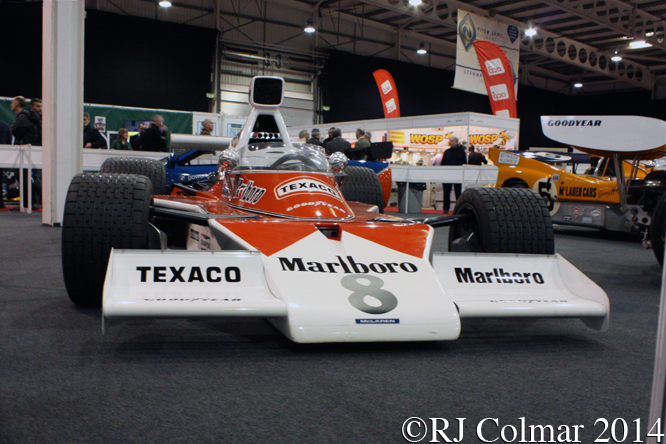
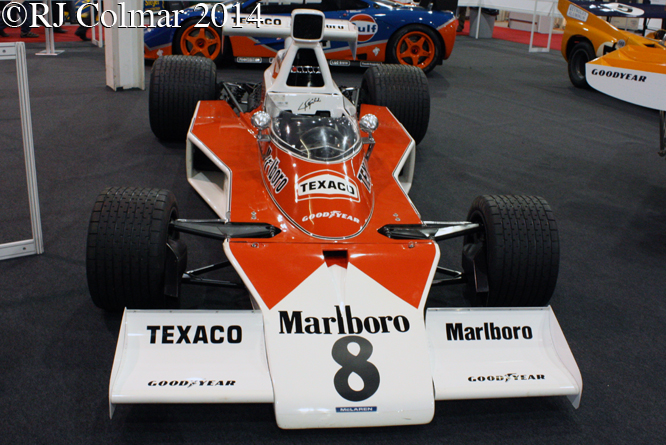
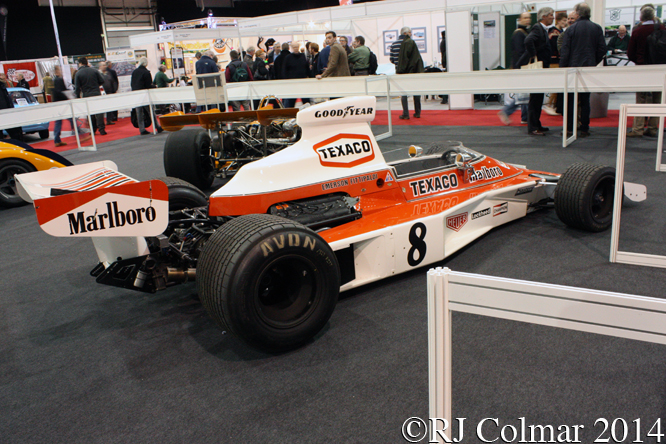
World Champions At Last – McLaren Cosworth M23 #M23/4

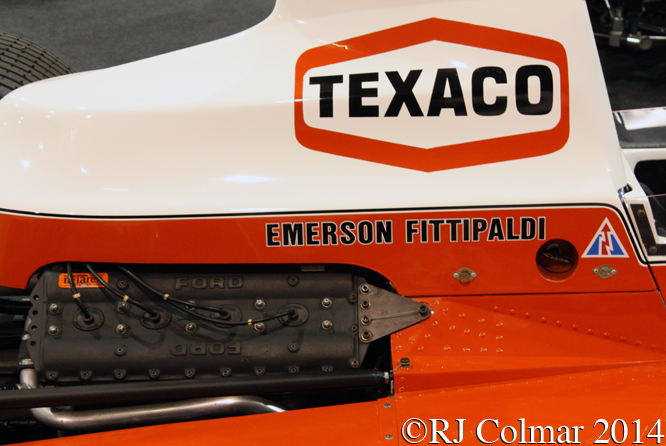
The final destination of the 1974 World Drivers Championship was in doubt until the lastof the season with Jody Scheckter driving for Tyrrell, Clay Regazzoni driving for Ferrari and Emerson Fittipaldi driving for McLaren all in with a shout.

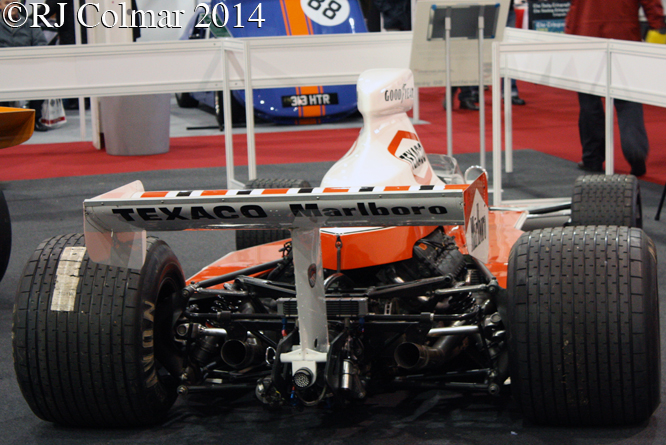
McLaren Cosworth M23, Race Retro, Stoneleigh

Emerson Fittipaldi sealed the deal with a fourth place finish at the US Grand Prix which along with wins in Brazil, Belgium, Canada and six further points scoring finishes gave him a 3 point advantage over Clay Regazzoni who failed to add to his points tally at Watkins Glen.

McLaren Cosworth M23, Race Retro, Stoneleigh

For 1974 McLaren had lengthened the wheel base and widened the track of Gordon Coppucks M23 design which was first seen in South Africa in 1973.

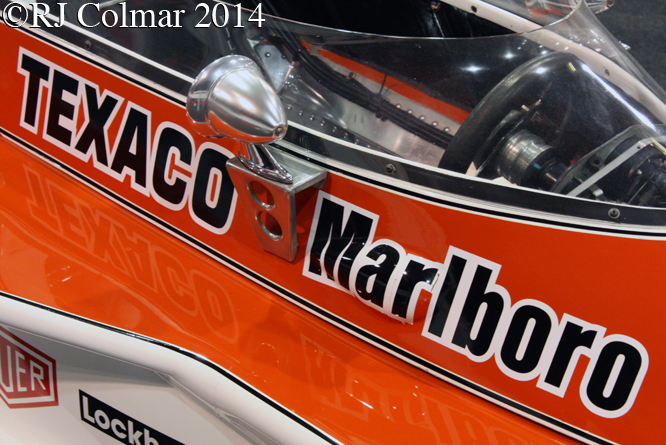
McLaren Cosworth M23, Race Retro, Stoneleigh

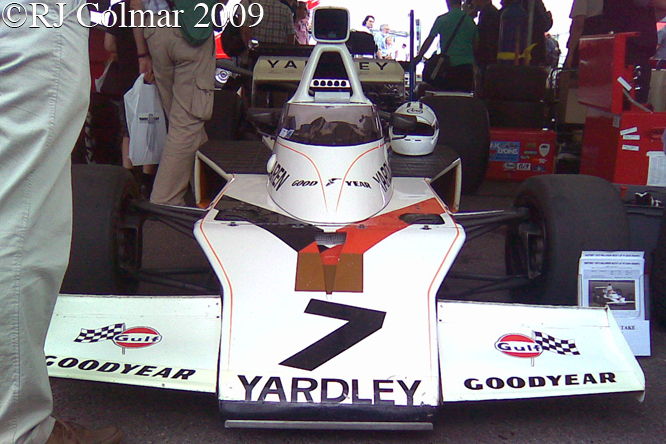
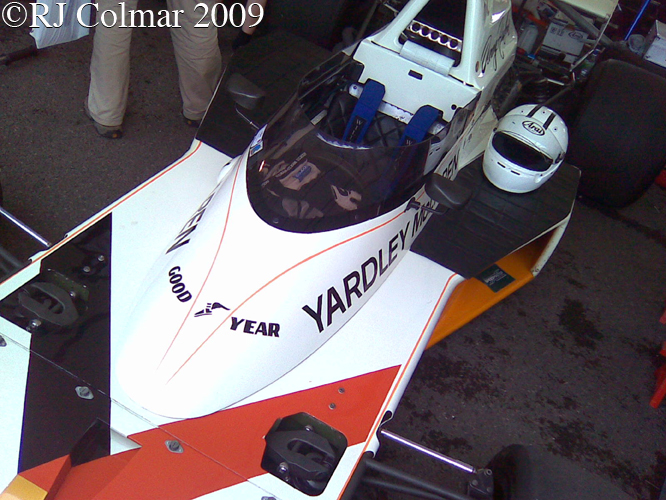
McLaren had also attracted Philip Morris sponsorship that had previously gone to BRM and managed to leverage Texaco sponsorship along with 1972 World Champion Emerson Fittipaldi from Lotus.

McLaren Cosworth M23, Race Retro, Stoneleigh

Denny Hulme was Emerson’s team mate and he contributed to McLaren winning their first World Constructors Championship, at their 9th attempt, by winning the opening race of the 1974 Championship season in Argentina.

McLaren Cosworth M23, Race Retro, Stoneleigh

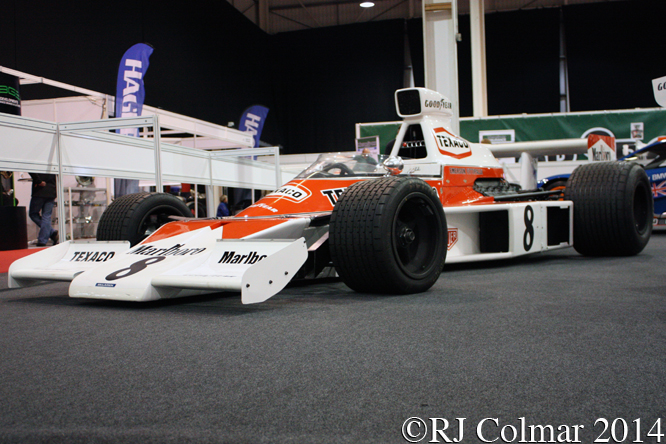
So far as I have been able to ascertain today’s featured car is the forth M23 chassis, which was first raced in the 1973 German Grand Prix when Jacky Ickx made a one off appearance for the team and drove it to a third place finish behind the Tyrrell’s of Jackie Stewart and Francoise Cevert.

McLaren Cosworth M23, Race Retro, Stoneleigh

Peter Revson then drove #M23/4 to a third place finish in the Italian Grand Prix a win in the Canadian Grand Prix, which would prove to his last Grand Prix win, and a 5th place on his final drive for McLaren in the 1973 US Grand Prix.

McLaren Cosworth M23, Race Retro, Stoneleigh

Emerson Fittipaldi best results with #M23/4 in 1974 were a 3rd place in the 1974 Race of Champions and a 4th place finish in Sweden, after Mike the Bike Hailwood’s crash at the 1974 German Grand Prix #M23/4 reverted to Yardley colours for the remainder of 1974 to be driven by David Hobbs in Austria and Italy and Jochen Mass in Canada and the United States. With Mass scoring a 7th place at Watkins Glen that matched the older Hobbs 7th place finish in Austria the young German secured himself a ride as Fittipaldi’s team mate to replace the retiring Denny Hulme for the 1975 season.

McLaren Cosworth M23, Race Retro, Stoneleigh

#M23/4 only made two appearances in the 1975 season in the non championship International Trophy at Silverstone where Emerson finished 2nd and in the 1975 German Grand Prix where Jochen retired after an accident on the opening, which is said to have reduced #M23/4 to “vitual scrap”.

At Stonleigh #M23/4 appears in these photographs with the correct 1974 colour scheme and early season airbox, extended side pods as fitted to Jochen’s car in the 1975 German Grand Prix but curiously the extended side pods have orifices which did not appear until the Spanish Grand Prix in 1976.

Note: Jochen took the start of the 1975 German Grand Prix in #23/4, distinguished at this meeting by it’s white front wings and hastily applied black #2 race number on the side pod, according to contemporary reports by Dennis ‘DSJ’ Jenkinson and not #M23/6 as indicated by RacingSportsCars.com

My thanks to BSC at The Nostalgia Forum and Allen Brown at OldRacingCars.com for their help identifying the chassis number of today’s car.

Thanks for joining me on this “World Champions At Last” edition of “Gettin’ a li’l psycho on tyres” I hope you will join me again tomorrow. Don’t forget to come back now !
Share

There Will Be Changes – McLaren Mercedes MP4-28

Going into their 48th consecutive season of the Formula One World Championship McLaren had a record of winning 8 Constructors Championships and 30 top 3 finishes in the World Constructors Championship, so coming off a 2012 season which included 7 race victories and a 3rd place finish in final championship standings behind the old foe Ferrari and young upstarts Red Bull it would have been a brave man who would bet that McLaren would not at least finish in the top 3 for the 31st time and at least score a race win or two.

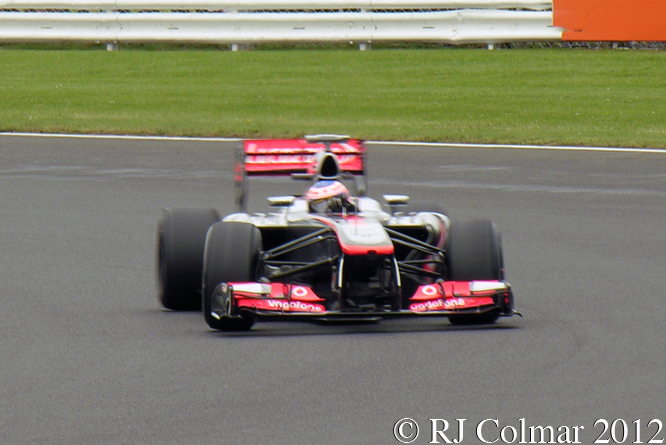
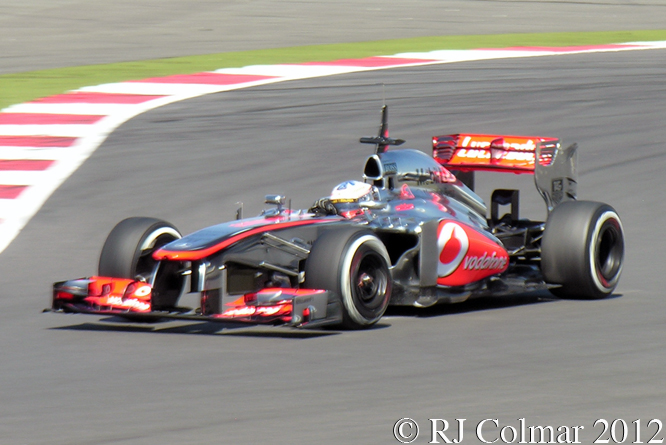
McLaren Mercedes MP4-28, Button, British GP P2, Silverstone

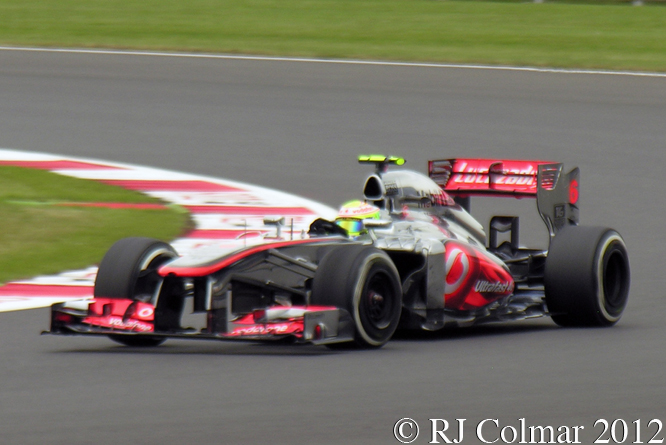
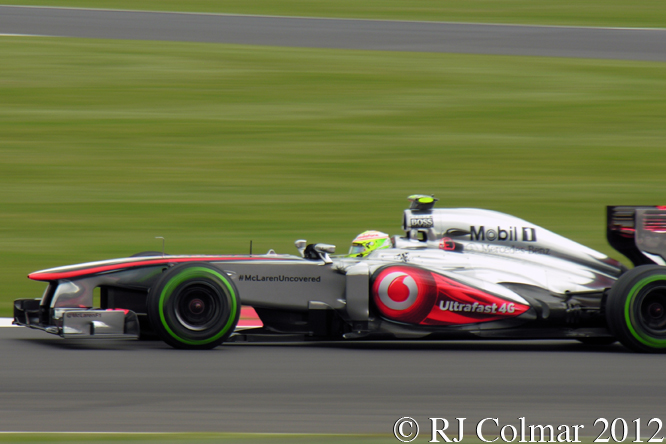
Jenson Button, above, who had won the opening and closing races of the 2012 season was joined by young Mexican charger Sergio Perez, below, after Lewis Hamilton left the team, which had nutured him from a talented teenager to the 2008 World Drivers championship, for bigger bucks and the fresh waters at Mercedes Benz.

McLaren Mercedes MP4-28, Perez, British GP P2, Silverstone

The all new Mercedes powered MP4-28 was the work of a team led by Paddy Lowe incorporating new suspension with rear wishbones designed to manage rear tyre wear by adding camber to the rear wheels as the vehicles speed increased. The car flattered in pre season testing due to an incorrectly fitted suspension part that saw the cars ride height lowered to a level that proved unsustainable by the time the championship season started.

McLaren Mercedes MP4-28, Paffett, British GP P2, Silverstone

As a consequence for the first half of the season McLaren were struggling to maintain 5th place in the championship ahead of the similarly powered Force Indias, a team to which McLaren were supplying gearboxes. The low point of the season came when both cars failed to score any points at either the Canadian or British Grand Prix, breaking a run of 64 races in which McLaren had at least one car in the points going back to the 2009 Abu Dhabi Grand Prix. Test driver Gary Paffett is seen in the MP4-28 above during the Young Driver Test at Silverstone.

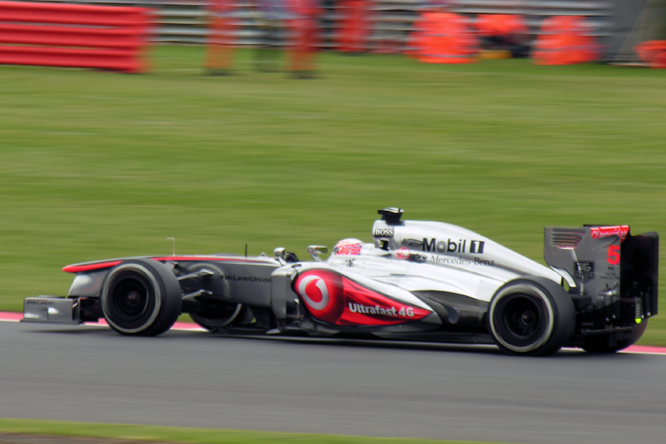
McLaren Mercedes MP4-28, Perez, British GP P2, Silverstone

By the season’s end the team’s best result was a single 4th place scored by Jenson Button in the final race of the season in Brazil, Sergio Perez manged a season high 5th place in India and for the first time since 1980 no McLaren driver had finished a season with at least one podium finish.

McLaren Mercedes MP4-28, Button, British GP P2, Silverstone

Unsurprisingly before the season had ended changes in the team were being announced, towards the end of the season it was announced the McLaren will use Honda motors form 2015 reforming an alliance that brought McLaren four World Constructors Championships and one drivers championship for Alain Prost and three for Ayrton Senna.

Technical director Paddy Lowe had already moved to Mercedes Benz where he has replaced Ross Brawn and was himself replaced at McLaren by Tim Goss, Sergio Perez was more or less fired and announced he would be joining Force India with McLaren’s test driver Kevin Magnussen replacing Sergio at McLaren.

Further changes are anticipated in the wake of the announcement that Ron Dennis has returned to the role of CEO at McLaren, having left that post in 2012 to focus on the role of Chairman. On his reappointment Ron was quoted as saying “There will be changes” and these are expected to include a newly defined role for incumbent CEO and Team Principle Martin Whitmarsh. Since Ron’s reappointment former Lotus F1 Team Principle Eric Boullier has been recruited to the role of Race Director.

To stay abreast of developments at McLaren visit their website linked here, official facebook page linked here and twitter feed linked here.

Thanks for joining me on this “There will be changes” edition of “Gettin’ a li’l psycho on tyres” I hope you will join me for a look at an Edwardian vehicle designed as a law enforcement vehicle that turned out to be a race winner. Don’t forget to come back now !

Share

Going It Alone Again – Trojan Chevrolet T101 #T101-102

This month’s Saturday posts will feature 4 Formula 5000 cars built for the 1973 season. Formula 5000 was an open wheel Formula for vehicles fitted with stock block motor up to 5 litres / 302 cui which ran from 1967 in the USA 1969 in Europe and 1970 in the Antipodes coming to a stop in 1975 in the Antipodes and 1976 in the US and Europe.

With the fall in competitiveness of the McLaren Can Am and Formula 5000 programmes, in 1972, McLaren Cars focused it’s attention on it’s Formula One and USAC Champ car programmes with the McLaren M23 and McLaren M16 respectively.

 Trojan Chevrolet T101, Race Retro, Stoneleigh

This left Trojan in a difficult spot since their business had been increasingly built on manufacturing McLaren Can Am and Formula 5000 open wheel cars under licence since the demise of their own Elva branded operations in 1964.

 Trojan Chevrolet T101, Race Retro, Stoneleigh

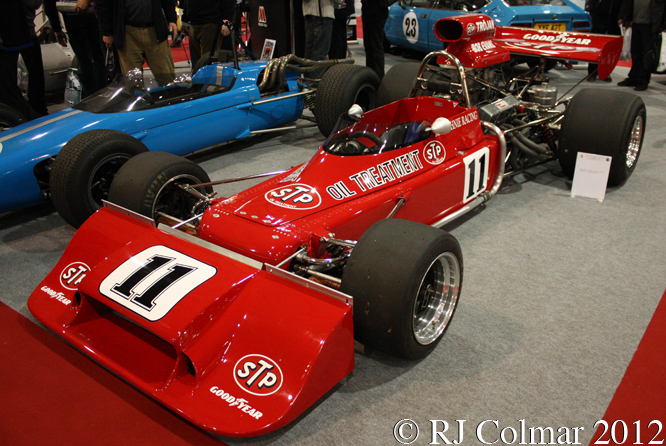
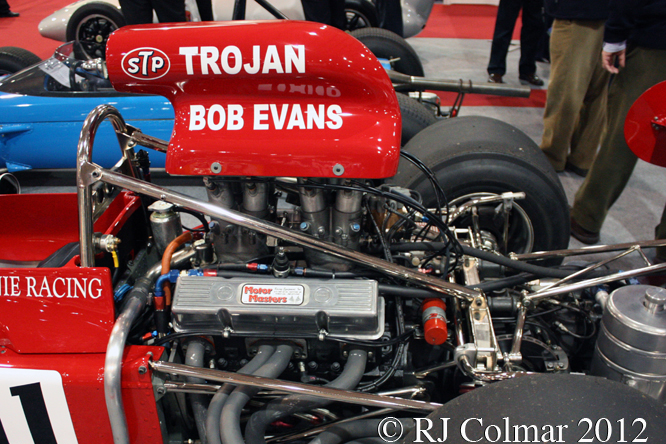
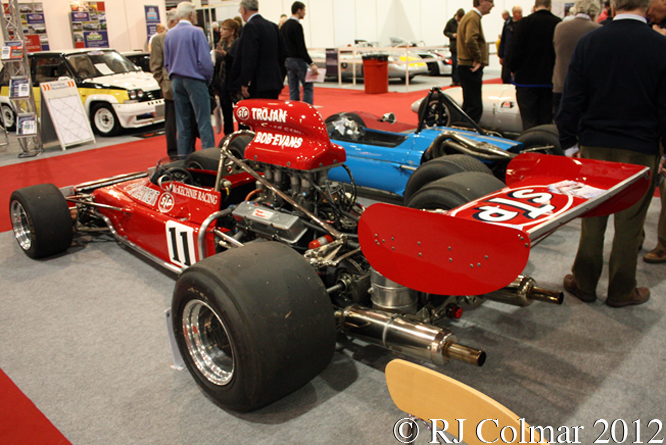
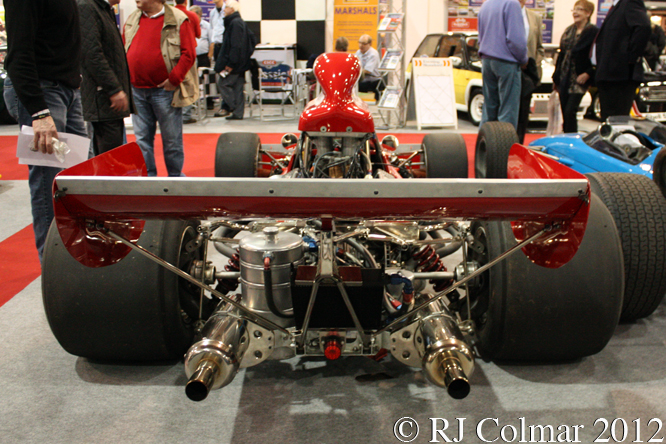
A compromise to keep Trojan going was reached which saw Trojan fuse an open wheel Formula 2 McLaren M21 chassis with a strengthened rear bulkhead to the rear end from the 1972 McLaren M18/M22 Formula 5000 car with a ubiquitous Chevrolet small block for power. McLaren Cars would not countenance the use of their name with the new car so it was called the Trojan T101. Former Brabham designer Ron Tauranac was brought in to help develop the model once it was built.

 Trojan Chevrolet T101, Race Retro, Stoneleigh

In all six T101’s were built and of the first five built for the 1973 season, the first four were driven to race victories in the UK and USA by the likes of Keith Holland, Brett Lunger, Jody Scheckter and Bob Evans. Scheckter won four races in the USA on his way to becoming L&M Champion in the SCCA Series.

 Trojan Chevrolet T101, Race Retro, Stoneleigh

Today’s featured car #T101-102 was sold new to Sid Taylor, for Brett Lunger, Brett won on his debut in the car at Snetterton and set an all time 124 mph outright lap record, on the old long circuit in the 4th round of the Rothmans European Formula 5000 championship. Brett also won the 10th round at Mallory Park. Vern Schuppan raced #T101-102 in the opening four races of 1974 and thereafter it was driven by a variety of drivers of increasing obscurity in events of equally increasing obscurity in to the 1980’s which included, Leen Verhoeven, Damien Magee, Jim Kelly, Robin Hamilton, Jon Bradburn and Anthony Taylor in 1982.

 Trojan Chevrolet T101, Race Retro, Stoneleigh

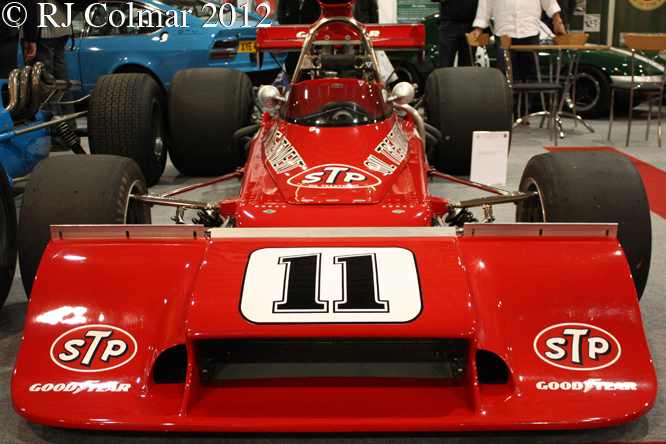
Simon Hadfield acquired the remains of #T101-102 in 2006 and has restored it, as seen here at last years Race Retro, with the livery and #11 originally seen on Alan McKechnie’s T101-104 raced by Bob Evans to victory at the second Snetterton round of the 1973 Rothmans European Formula 5000 championship.

Thanks for joining me on this “Going It Alone Again” edition of “Gettin’ a li’l psycho on tyres” I hope you will join me again tomorrow. Don’t forget to come back now.

18/12/13 My original post inadvertently incorrectly implied that Trojan #T101-102 was jointly entered by Sid Taylor and Jerry Entin for Brett Lunger, in fact Brett’s car was solely entered by Sid Taylor, however Sid and Jerry did jointly enter the Trojan #T101-103 driven by Jody Scheckter in the 1973 L&M Series. Apologies for any confusion.

Share

Fragrant Debut Pole – McLaren Cosworth M23 #M23/1

At the 1973 South African Grand Prix 1967 World Champion New Zealander Denny Hulme qualified on pole for the first and only time in his entire formula one career which lasted from 1965 until 1974. Remarkably he was driving a brand new Ford Cosworth powered McLaren M23, #M23/1 featured today, that was designed by Gordon Coppuck and which was to replace the Ralph Bellamy designed McLaren M19C.

McLaren Cosworth M23, Goodwood Festival Of Speed

The design of the M23 was broadly similar to the design of the 1972 turbo Offy powered McLaren M16 which Mark Donohue drive to victory in the 1972 Indy 500, except in the DFV motor of the M23 was bolted into the chassis rather to a sub frame and the side radiators of the M23 were surrounded by a deformable structure to protect the fuel tanks in the side of the chassis.

Denny Hulme came fifth in the 1973 South African Grand Prix which was won by Jackie Stewart driving a Tyrrell 006. At the 1973 Swedish Grand Prix Denny Hulme took the first of the M23’s 16 World Championship race victories, two races later Peter Revson scored the models 2nd victory at the British Grand Prix a feat Peter would repeat at the Canadian Grand Prix towards the end of the season. Despite scoring two more wins than in the previous season McLaren again finished third in the 1973 World Constructors championship as they had in 1972.

McLaren Cosworth M23, Goodwood Festival Of Speed

For 1974 McLaren again attracted BRM’s sponsor Philip Morris and the Marlboro brand, Yardley having sponsored BRM in 1970 and 1971 prior to joining McLaren for 1972. Peter Revson moved to join the UOP Shadow outfit and was replaced at McLaren by 1972 World Champion Emerson Fittipaldi from Lotus.

Emerson won three world championship races in 1974 on his way to his second World Drivers Championship and McLaren’s first World Constructors Championship, backed up by Denny Hulme who won the first race of the 1974 World Championship season in Aregetina which would be his last prior to retiring from the sport at the end of the season. Chassis #M23/1 was used in the early 1974 season by a third Yardley backed factory entry for Mike Hailwood who joined McLaren from Surtees. Mike ‘the Bikes’ best result was third in the South African Grand Prix which would become his career high world championship result. An accident in Germany at the wheel of another M23 prematurely terminated Mikes driving career, though he would return to motor cycling at which he was a seven time world champion and add two Isle of Man TT trophies in 1978 and 1979 to bring his total to fourteen.

In 1975 Emerson claimed two more championship victories on his way to second in the title behind Niki Lauda in the superior Ferrari 312T which had a more powerful motor and superior handling thanks to a transversely mounted gearbox and the testing skills of it’s driver. Another Surtees refugee Jochen Mass who had teken over Mike Hailwoods Yardley McLaren drive in 1974 replaced Denny Hulme and scored his only Grand Prix victory at the ill feted 1975 Spanish Grand Prix.

James Hunt replaced Emerson Fittipaldi for 1976 and McLaren ended up using the M23 for a forth straight season as they were locked in an epic battle with Niki Lauda for the 1976 title that has been immortalised by Ron Howard in the film “Rush” released earlier this year. On his way to the 1976 World Drivers Championship James won 6 races to become the M23 model’s most successful driver.

By 1977 the M23 was pressed into a fifth season of competition as a works racer before a much modified McLaren M26 was finally brought up to speed mid way through the season, non works McLaren’s were used sporadically in World Championship events until 1978 when rising star Nelson Piquet recorded a 9th place finish in the Canadian Grand Prix on what was to be the M23’s final World Championship appearance.

Tony Trimmer won the British Formula One Championship driving a Melchester Racing McLaren M23 in 1978.

Thanks for joining me on this “Fragrant Debut Pole” edition of “Gettin’ a li’l psycho on tyres” I hope you will join me again tomorrow. Don’t forget to come back now !

Share

1975 Marlboro Promotions Dossier – GALPOT Automobillia

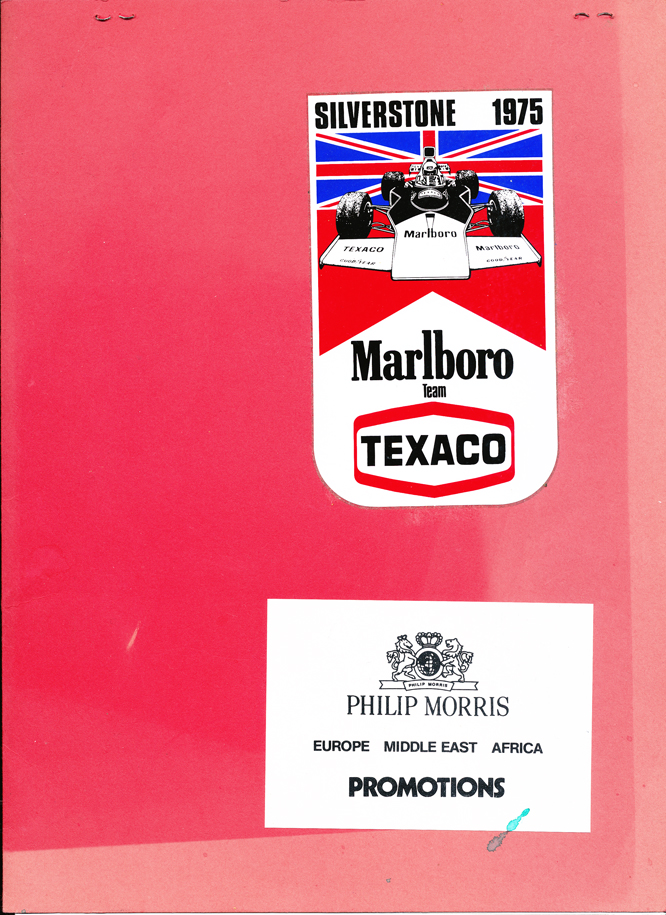
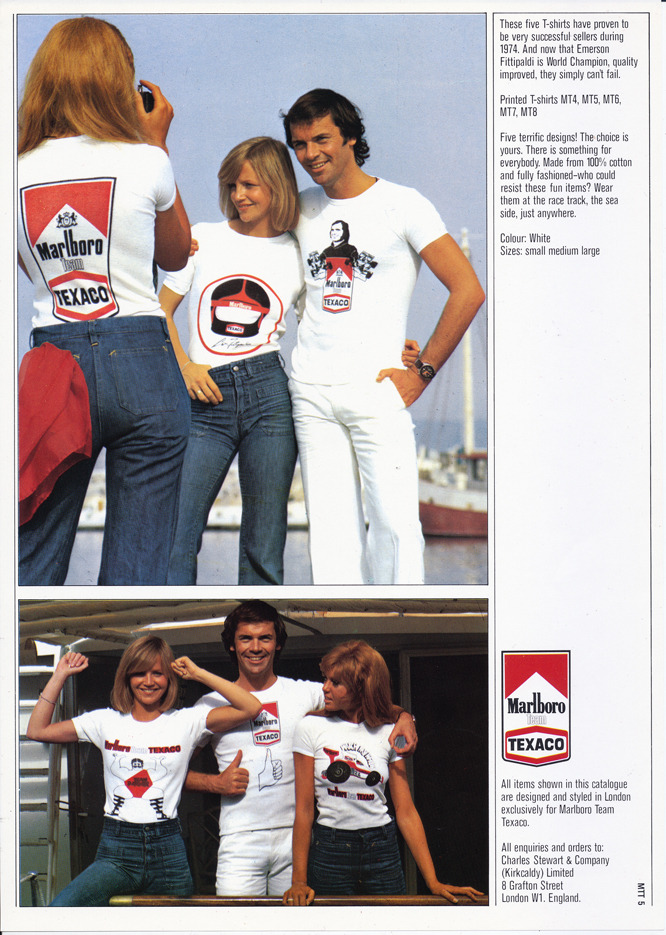
Thanks to the modest success of Automobillia sales on my ‘lightpress’ e-bay page a friend recently told me about today’s featured 1975 Marlboro Promotions Dossier which he acquired with a ‘boot load’ of books some years ago.

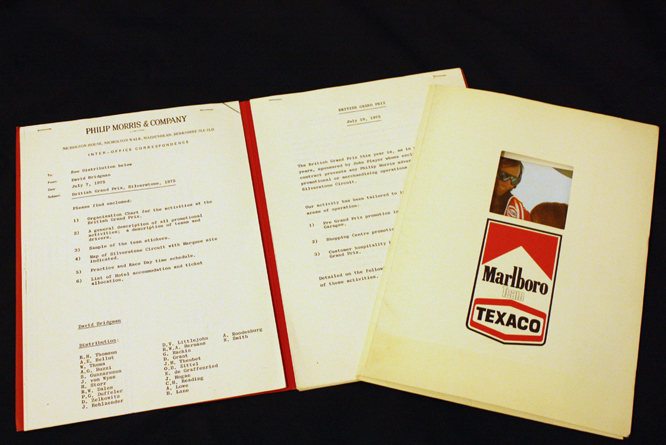
Marlboro Promotions Dossier, GALPOT Automobillia

This dossier issued on July 7th by David Bridgman of Phillip Morris & Company Ltd in Maidenhead details the companies plans for promotion of the Marlboro brand and associated hospitality in the run up to and including the 1975 British Grand Prix, an event sponsored by rival brand John Player Special, at Silverstone on the 19th of July.

Marlboro Promotions Dossier, GALPOT Automobillia

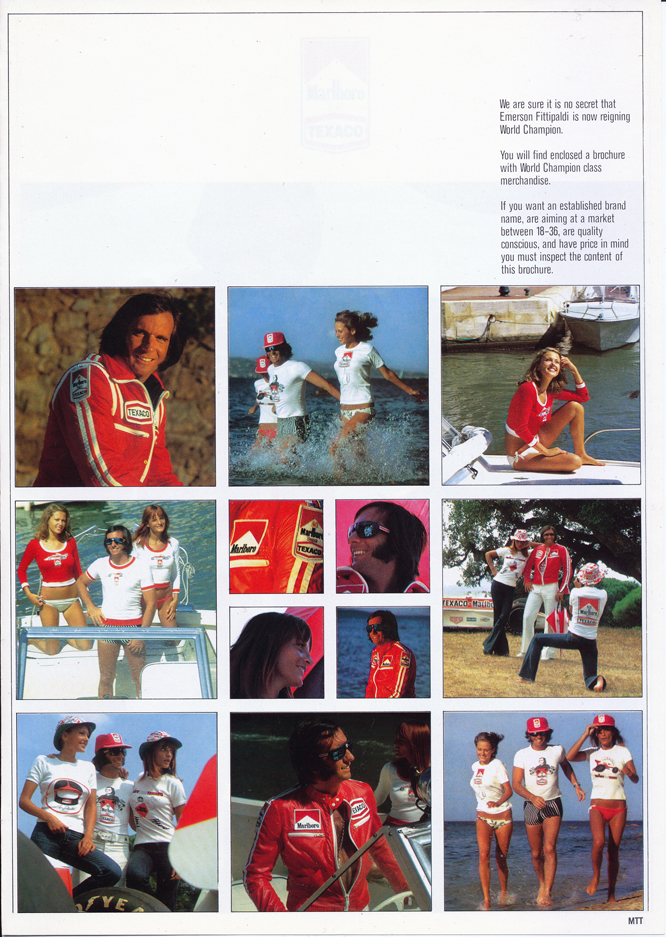
Marlboro became involved in Formula One with BRM in 1972, the partnership lasted two years and resulted in just one Grand Prix victory. After an uncompetitive season in 1973 Marlboro hooked up with former Lotus sponsor Texaco and Emerson Fittipaldi, who won the 1972 World Championship with Lotus, to join forces with McLaren for the 1974 season.

Marlboro Promotions Dossier, GALPOT Automobillia

Emerson won 3 Grand Prix and the World Drivers Championship while team mate Denny Hulme won the first race of the Marlboro McLaren alliance to help McLaren secure the World Constructors Championship in 1974.

Marlboro Promotions Dossier, GALPOT Automobillia

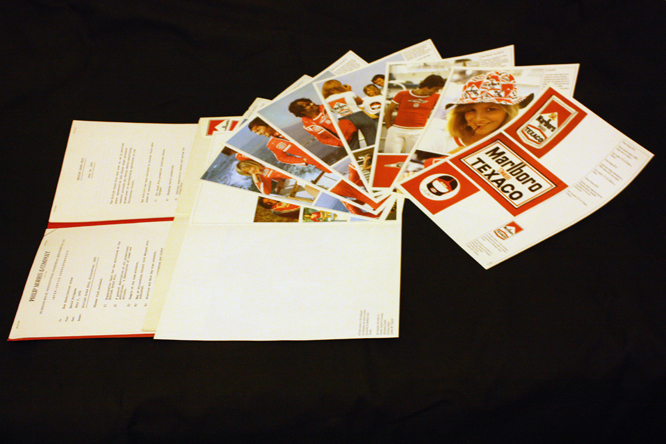
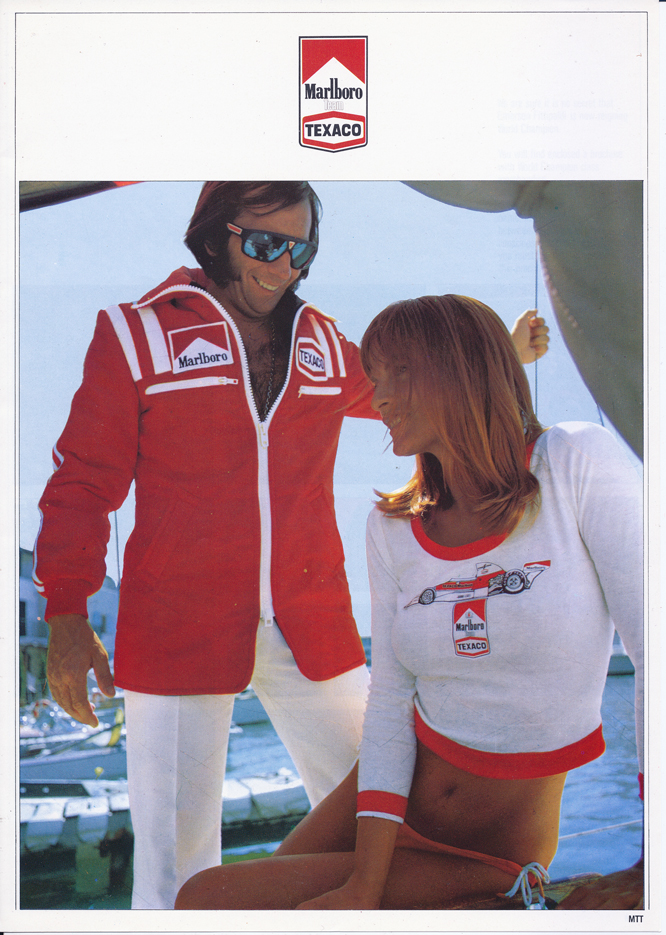
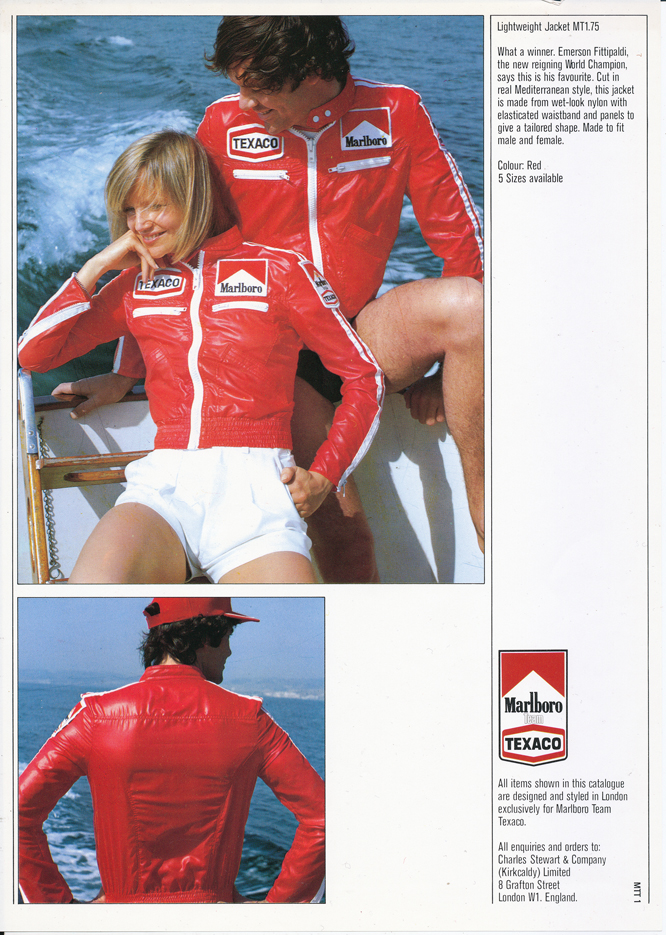
For 1975 Emerson, seen modelling Marboro apparel above, was joined by Jochen Mass after Denny Hulme retired from the top echelon of the sport and as detailed in the Promotions dossier Emerson was third in the championship with Jochen 8th going into the 1975 British Grand Prix.

Marlboro Promotions Dossier, GALPOT Automobillia

John Player had exclusive rights to advertising, promotional and merchandising at Silverstone, so according to the dossier Phillip Morris focused their attentions to promotions at partner Texaco garages and shopping centres particularly at the Bull Ring Shopping Centre where a ‘real’ McLaren racing car was to be put on display.

Marlboro Promotions Dossier, GALPOT Automobillia

A third strand of Phillip Morris activities was customer hospitality before and during the race weekend which included a party for 94 guests and their partners, staying at two hotels along with 4 McLaren personnel with their partners on the Friday evening before the race, held on a Saturday. On race day Phillip Morris guests were to be bussed from their hotels, the dossier includes room numbers for the guests, to the circuit. Morning Coffee, Lunch and Afternoon Tea were to be served at the Marlboro Marquee, after the event guests were returned to their hotel by bus in time for an evening meal.

Marlboro Promotions Dossier, GALPOT Automobillia

On lap 55 a hail storm caused four of the top six runners to crash out of the British Grand Prix and the race was declared one lap later with Emerson Fittipaldi, who took the lead on lap 44, was declared the winner.

The win would prove to be Emerson’s last Grand Prix victory, he came second in the 1975 World Drovers Championship behind Ferrari’s Niki Lauda, another Marlboro sponsored driver, and then made the surprise move to his brothers Copersucar team which proved to be a disaster for his career. James Hunt replaced Fittipaldi and went on to become 1976 World Champion as detailed in Ron Howards latest film ‘Rush’.

If you would like to bid for this dossier you can find the e-bay details on this link.

Thanks for joining me on this “1975 Marlboro Promotions Dossier” edition of “Gettin’ a li’l psycho on tyres” I hope you will join me again for look at some of the cars that appeared at the recent Danville Concours d’Elegance. Don’t forget to come back now !
Share