Tag Archives: Motor

Floride – Renault Caravelle

After the run away success of the Volkswagen, Beetle based, Typ 14 Karmann Ghia launched in 1955, particularly in the United States, Renault thought they might be able pull off a similar feat by building Coupé and Convertible versions of the humble rear engined Renault Dauphine that succeeded the 4CV.

Allegedly the idea for the new Coupé and Cabriolet Dauphine variants was suggested at a convention of North American distributors that took place in Florida where Renault Chairman Pierre Dreyfus picked up the ball for the idea which instantly became known as the “Renault Floride”.
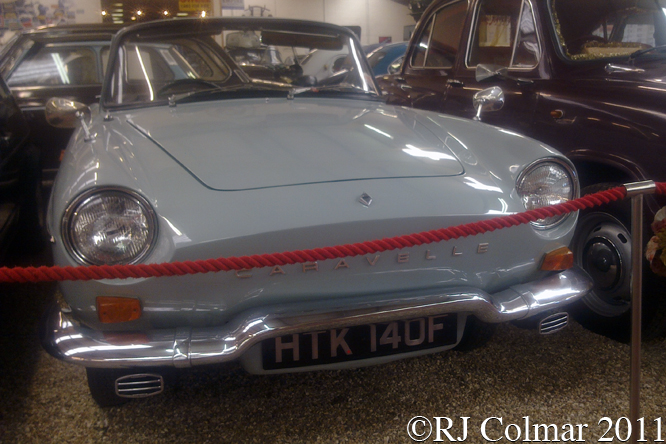
Renault Caravelle, Haynes International Motor Museum

The design was the work of Pietro Frua working for Ghia in Italy and the production of the bodies for the Dauphine chassis was by Société des usines Chausson in Paris while final assembly was completed by Brissonneau and Lotz at Creil in Picardy.

Not wishing to offend the other 49 states in the US of A Renault called the new model the Caravelle in all English speaking markets a year after the Floride was launched at the Paris Motor Show in 1958.

Initially powered by a standard 37 hp motor or Gordini tuned 40hp version the Floride / Caravelle remained in production until 1968 by which time only 117,000 units had been built compared to the 445,000 Karmann Ghia’s Volkswagen built between 1955 and 1974.

The example seen above at the Haynes International Motor Museum was registered in the UK on the 25th of January 1968.

Thanks for joining me on this “Floride” edition of “Gettin’ a li’l psycho on tyres” I hope you will join me again tomorrow when I’ll be competing in my first Auto Solo. Don’t forget to come back now !

Share

Thundertang – Mercury Cougar

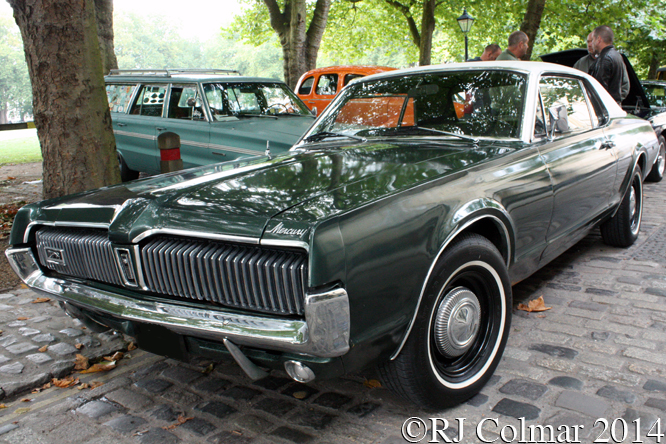
Ever ones to spot a niche market by 1967 Ford Motor Company saw a gap between their face lifted Mustang and Thunderbird models and planted the Mercury Cougar right between the two, in much the same way as General Motors the same year planted the Pontiac Firebird above the Chevrolet Camaro in it’s line up.

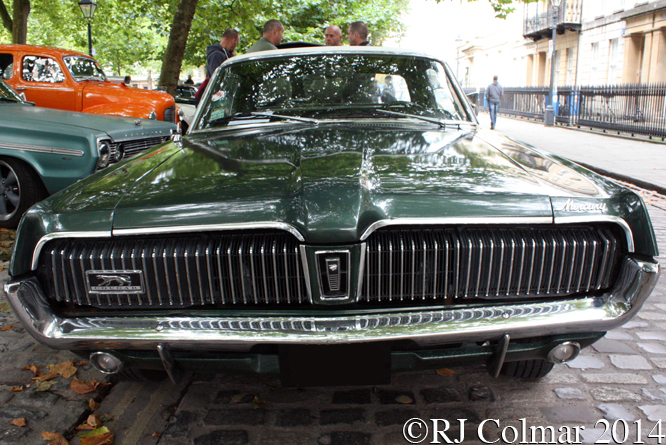
Mercury Cougar, Avenue Drivers Club, Queen Square, Bristol

Mercury’s first generation “pony car” was only available as a two door hard top in either base as seen here or XR7 variations.

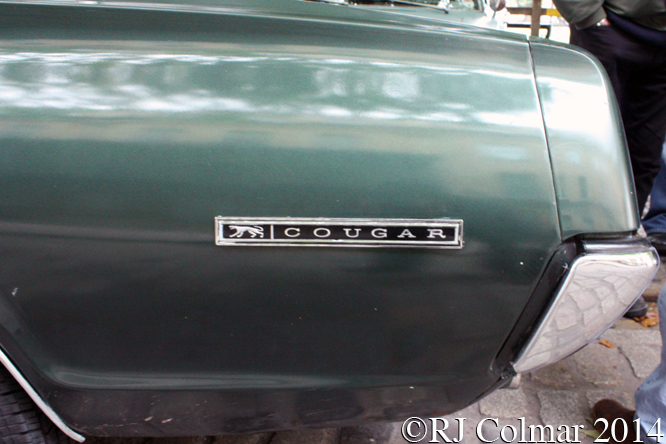
Mercury Cougar, Avenue Drivers Club, Queen Square, Bristol

The Cougars platform was derived from the some one as the ’67 Mustang, but with a 3″ longer wheel base covered in an all new body.

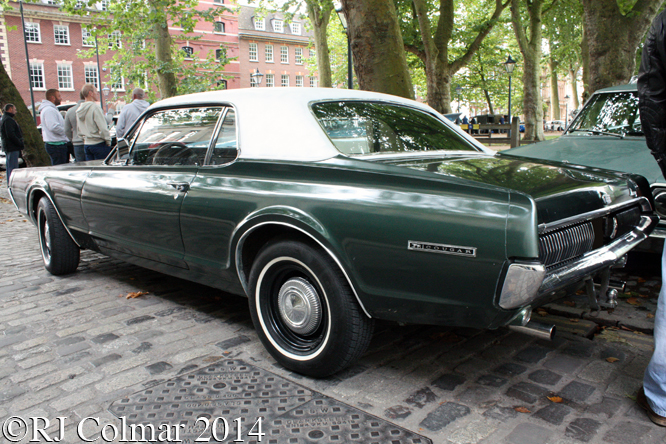
Mercury Cougar, Avenue Drivers Club, Queen Square, Bristol

A 200hp 4.7 litre / 289 cui Windsor V8 powered the base version of the Cougar, though a GT option offered a 335hp 6.4 litre / 390 cui FE motor.

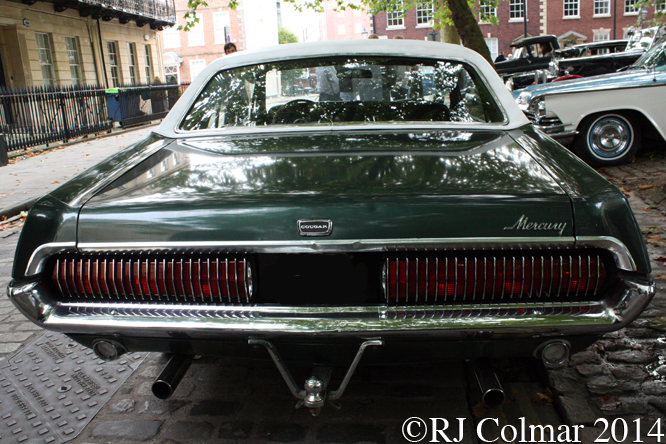
Mercury Cougar, Avenue Drivers Club, Queen Square, Bristol

With it’s headlights hidden behind the front grill and tail lights, sequential as per contemporary Thunderbird the electric shaver styling front and rear of the Cougar completely disguises it’s Mustang underpinnings.

Mercury Cougar, Avenue Drivers Club, Queen Square, Bristol

Among the cars accolades Motor Trend named the Mercury Cougar as Car of the Year 1967, and the sale of 150,893 units in 1967 contributed substantially to the Lincoln Mercury divisions place in the market.

Gwinny seen here was purchased new from a dealer Chicago Il in January 1967 and shipped to the UK by the original owners nephew in March 2011 making her a one family car with 50,000 miles on the clock, both the 289 motor and exhaust have been replaced.

Thanks for joining me on this “Thundertang” edition of “Gettin’ a li’l psycho on tyres” I hope you will join me again for Ferrari Friday tomorrow. Don’t forget to come back now !
Share

Dealers Special – Peugeot 302DS Darl’Mat Cabriolet #705538

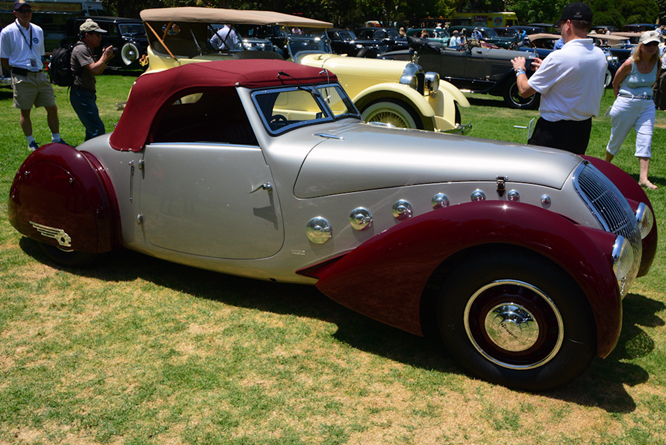
Emile Darl’mat was a Peugeot dealer with a body shop who started offering special bodied Peugeot 302 and 402 based coupes and cabriolets in the 1930’s and went so far as to enter a team of cars for the Le Mans 24 Hour race in 1937 and 1938.

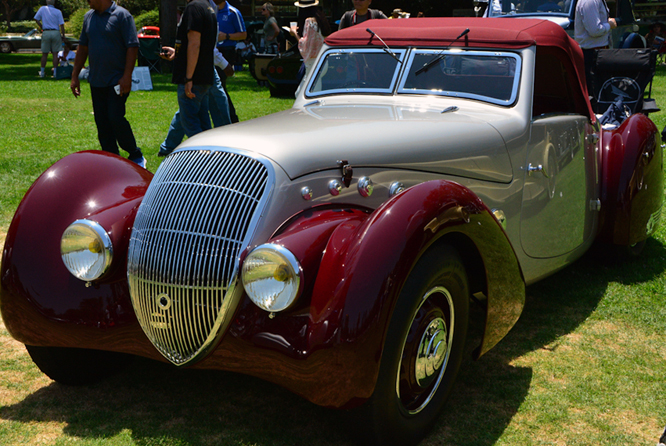
Peugeot 302DS Darl'Mat Cabriolet, San Marino Motor Classic

Today’s featured car is based on the Peugeot 302 but fitted with an 1991 cc / 121 cui four cylinder engine from the larger 402 which could be tuned by Darl’Mat to give up to 15hp more power than the standard 55hp. The deco body work was designed by Georges Paulin and built by Carrosserie Pourtout.

Peugeot 302DS Darl'Mat Cabriolet, San Marino Motor Classic

Chassis #705538 resided for many years with the Schlumpf Collection in Alsace and was brought up to it’s present condition by the Mullin Automotive Museum after being purchased by Peter W. Mullin.

My thanks to Goeffrey Horton for sharing these photographs taken at the San Marino Motor Classic last year.

Thanks for joining me on this “Dealers Special” edition of “Gettin’ a li’l psycho on tyres” I hope you will join me again tomorrow for the first of several visits to this years Silver Jubilee Silverstone Classic. Don’t forget to come back now !
Share

Blue Bird & Pandora – Pendine Sands

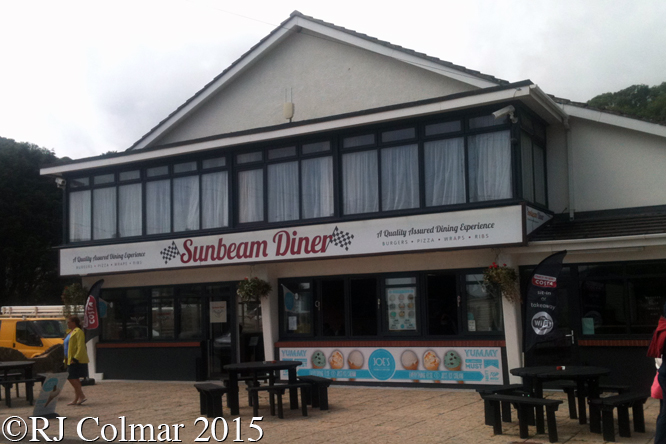
Anyone passing through Pendine in Camarthenshire might miss the relevance to the checkered flags on the head board of Sunbeam Dinner.

Sunbeam Diner, Pendine Sands

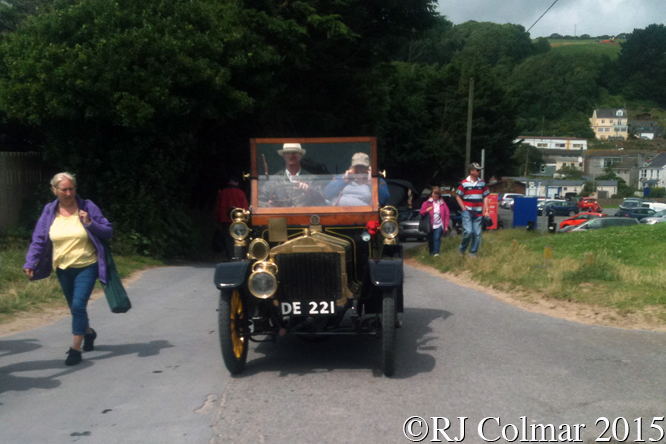
However if they were to turn left before the Dinner and go through to the small beach car park like the couple in the 1909 Alldays below …

Alldays, Pendine Sands

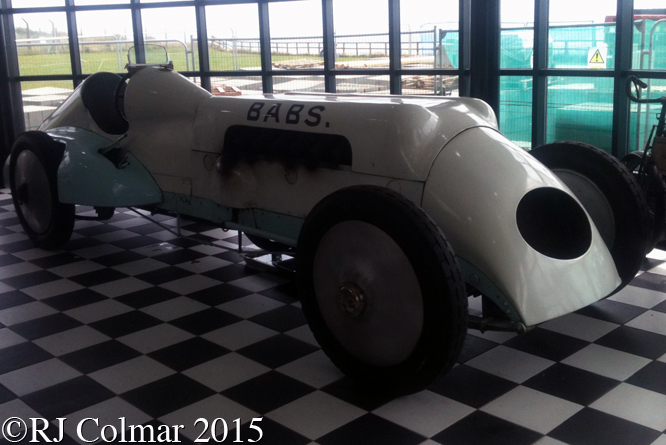
… they might notice the Museum of Speed, entry just £2.00 when BABS below is resident and free when she is not.

BABS, Museum of Speed, Pendine, Carmarthenshire

Regular readers may remember JG Parry-Thomas became the first man of land to travel at over 170mph when he set a new land speed record aboard BABS on the 7 mile beach at Pendine in April 1926.

Darracq 1.9 Twin, Pendine Sands

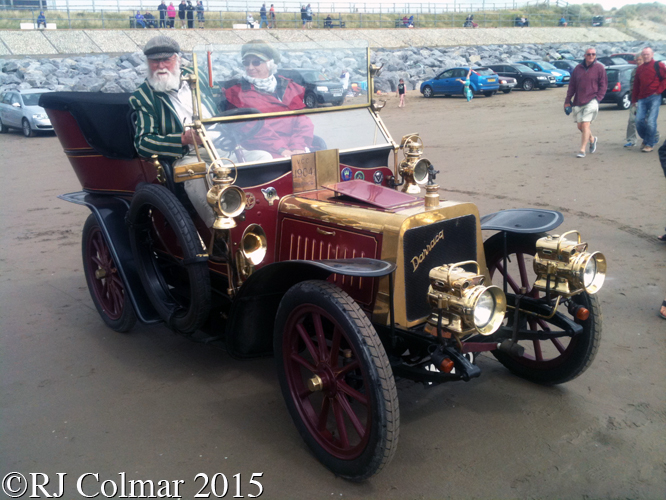
On July 21st this 1904 Darracq, builders of the first car to travel two miles in less than a minute, 1.9 Twin and all the other vehicles featured in today’s post gathered to celebrate the 90th Anniversary of the previous land speed record of 150.87 mph by Malcolm Campbell.

Sunbeam 3 litre, Pendine Sands

Like the 350hp Blue Bird Campbell drove in 1925 the 1930 3 litre heavy sports car above was made by Sunbeam.

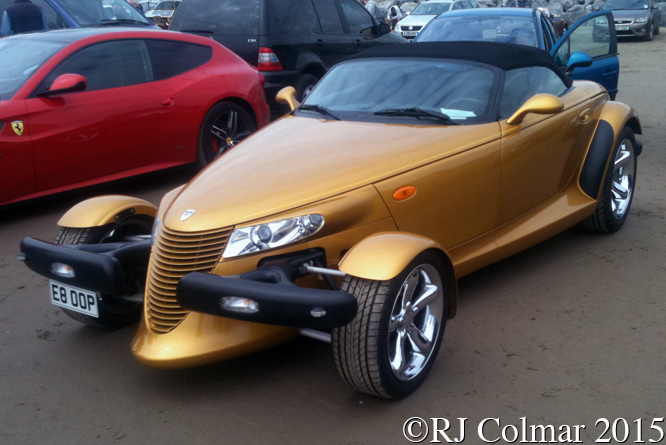
Chrysler Prowler, Pendine Sands

Sunbeam merged with Automobiles Darracq S.A. in 1920 to become Sunbeam Talbot Darracq shortly after Automobiles Darracq S.A. had themselves bought Clément-Talbot to sell Talbot Darracqs. In 1935 the triumvirate went into receivership only to be rescued by the Rootes Group owners of Hillman and Humber who created the new Sunbeam Talbot brand in 1938. Rootes sold a 30% stake to Chrysler who were attempting to establish a presence in Europe in 1964 which gives us a tenuous link to the 2002 Chrylser Prowler seen above.

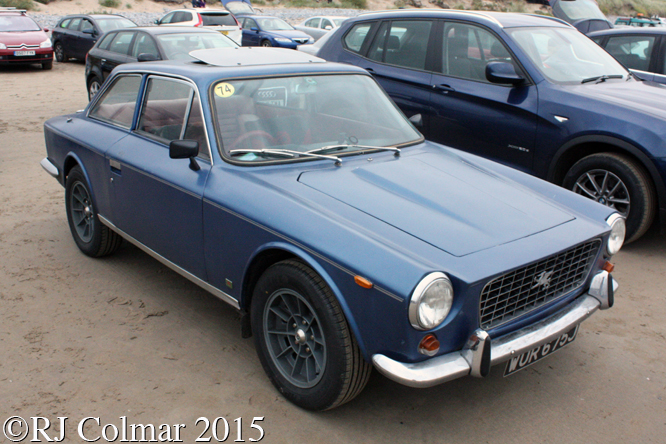
Gilbern Invader Mk II, Pendine Sands

Adding another touch of local flavor in the car park was the 1971 Gilbern Invader built in nearby Pontypridd.

Blue Bird Sunbeam 350hp, Don Wales, Pendine Sands

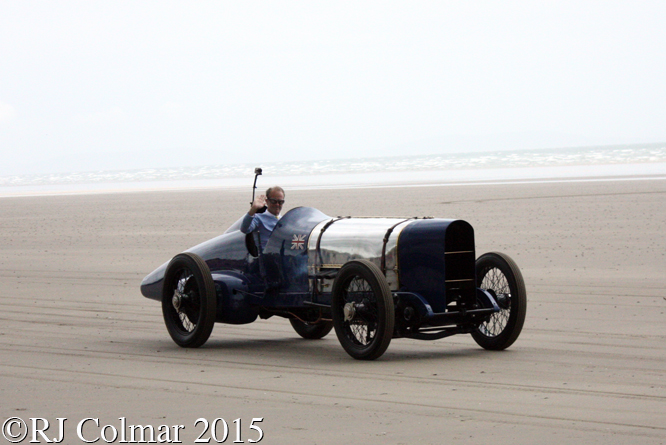
Above Sir Malcom Campbells Grandson Don Wales, a World Land Speed Record holder for steam powered vehicles, drives his Grandfathers Blue Bird which was built in 1920 when the car was known as the Sunbeam V12. After several unsuccessful attempts at claiming the Land Speed Record Malcolm Campbell bought the car, which now belongs to the National Motor Museum, in 1924 and turned it into a record breaker.

Napier Railton, Alan Winn, Pendine Sands

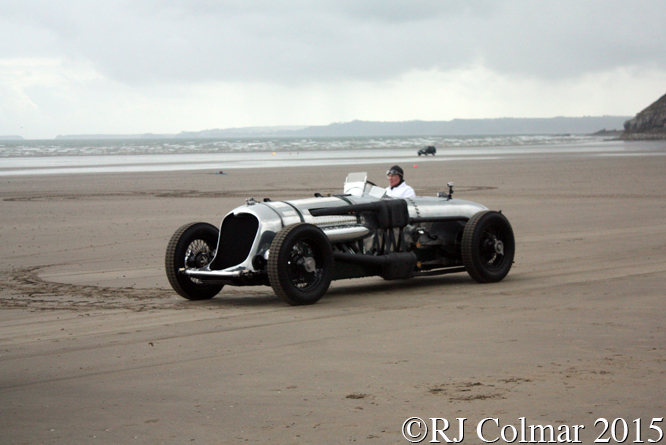
Also being demonstrated at Pendine was John Cobb’s Napier Railton seen above driven by the Brooklands Museum’s Director & CEO, Allan Winn. In 1950 the Napier Railton was given a new nose and windscreen and called Pandora for an appearance in the film Pandora and the Flying Dutchman staring Eva Gardener as Pandora, James Mason as the Flying Dutchman and Nigel Patrick as a would be land speed record breaker Stephen Cameron. It’s a lovely period flash back movie the trailer for which can be seen on this link, after Stephen pushed the Napier Railton off a cliff to prove his love to Pandora he rescues the car from the sea and restores it and sets an improbably high 200 mph plus record before the car catches fire and has to be driven into the sea to quench the flames. The scenes of the fictional record breaking were filmed at Pendine apparently with Dylan Thomas among the extra’s.

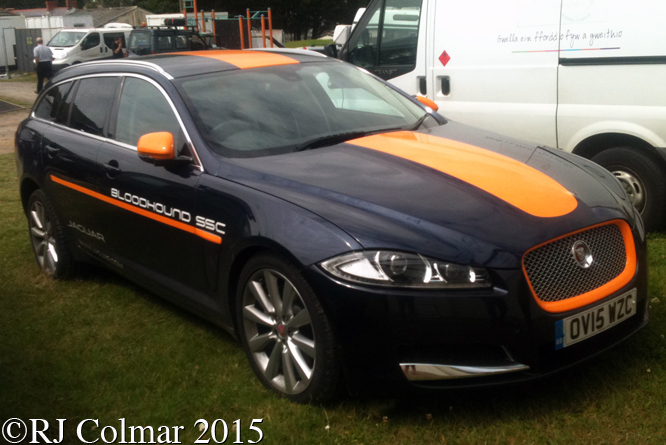
 Jaguar XF Portfolio Sportbrake D, Pendine Sands

Finally this Jaguar XF Portfolio Sportbrake D in the car park was a reminder that Bristol’s own SSC Bloodhound team are making preparations on their own Supersonic World Land Speed Record attempt in South Africa in the not too distant future.

Thanks for joining me on this “Blue Bird & Pandora” edition of “Gettin’ a li’l psycho on tyres” I hope you will join me again tomorrow when I’ll be making the first of three visits to Hillsborough Concours d’Elegance. Don’t forget to come back now !
Share

Almost Factory Catalogued Convertible – Citroën DS20 Cabriolet d’Usine

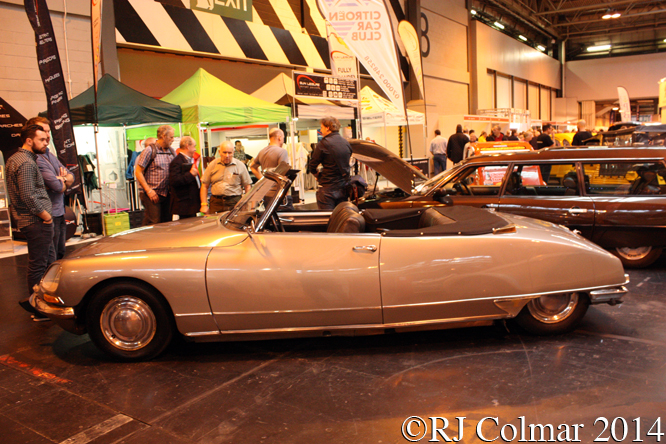
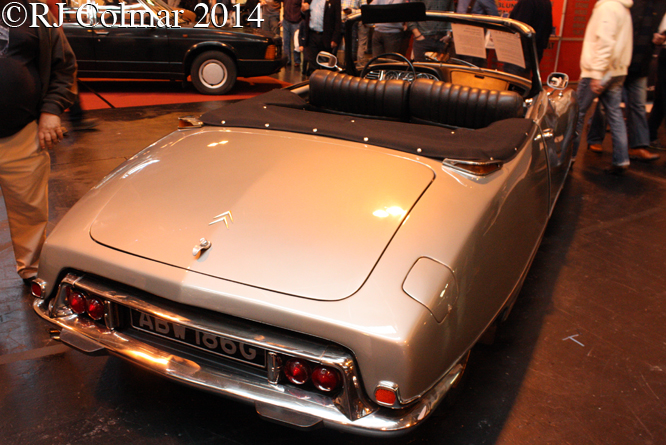
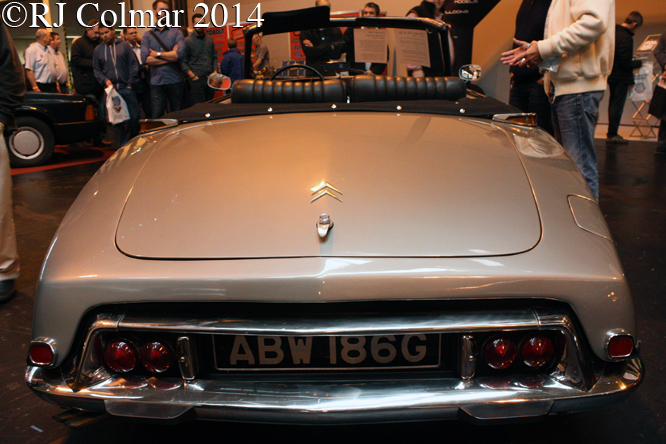
From 1961 Citroën commissioned Henri Chapron to build the DS19 Usine (factory) Convertible’s to order for distribution through the Citroën dealer network.

Citroën DS20 Cabriolet d'Usine, Classic Motor Show, NEC, Birmingham

The Usine unlike the earlier Chapron devised La Croisette Decapotable was based on Flaminio Bertoni’s drawings for a DS Cabriolet.

Citroën DS20 Cabriolet d'Usine, Classic Motor Show, NEC, Birmingham

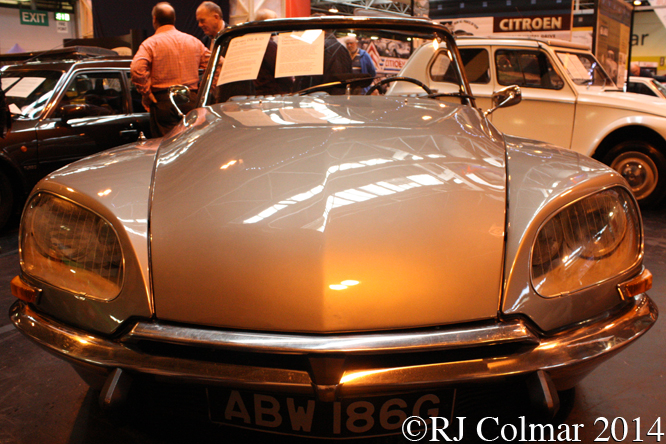
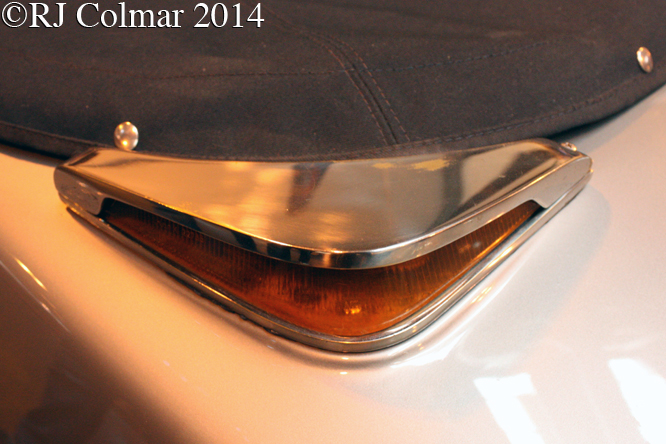
As might be expected from the most expensive model in the DS range the Cabriolet d’Usine was kept up to date with all the latest DS face lifts which in 1968 included a reworked nose by Robert Opron who would go on to style on the Citorën SM and CX models.

Citroën DS20 Cabriolet d'Usine, Classic Motor Show, NEC, Birmingham

The DS third face lift by Opron included a pair of headlights in the front wing/fender cluster that swiveled up to 80° with the steering to improve the drivers vision when cornering.

Citroën DS20 Cabriolet d'Usine, Classic Motor Show, NEC, Birmingham

The swiveling headlight feature was pioneered on the 1935 Tatra T77a and copied by the 1948 MY Tucker 48, which never went into full scale production, both of which had a third central headlight that swiveled with the steering.

Citroën DS20 Cabriolet d'Usine, Classic Motor Show, NEC, Birmingham

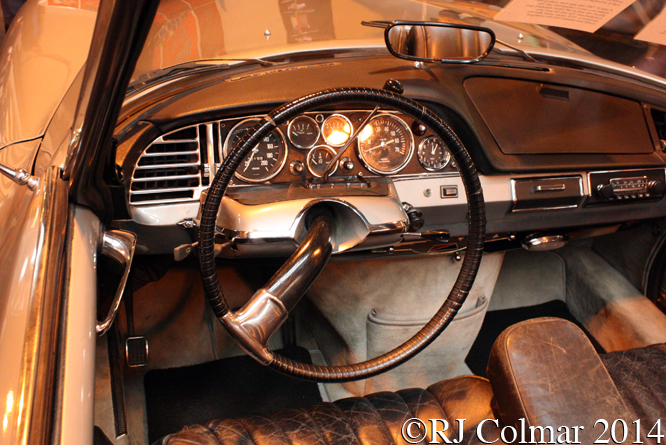
This car is officially registered as having been built in 1969 when just 47 DS21 variants, with the original DS type hydraulically operated transmission and DS21 M with conventional manual clutch operated transmission were built.

Citroën DS20 Cabriolet d'Usine, Classic Motor Show, NEC, Birmingham

With a motor officially registered as 1985cc / 121 cui this model would be a DS20 Cabriolet d’Usine meaning either a clerical error as by 1969 only DS21 Cabriolet d’Usine’s with 2,175cc / 132 cui motors were built or this vehicle is no longer powered by it’s original motor, there never having been a factory catalogued DS20 Cabriolet d’Usine so far as I know.

Thanks for joining me on this “Almost Factory Catalogued Convertible” edition of “Gettin’ a li’l psycho on tyres”, I hope you will join me again tomorrow when I’ll be visiting the revival of the Chateau Impney Hill Climb. Don’t forget to come back now !
Share

The Day We Went To Beaulieu – The National Motor Museum

A couple of weeks ago I was at a local Institute of Advanced Motorists (IAM) meeting when a fellow member mentioned that the South West Mensa group he belonged to was going on an organised trip around The National Motor Museum at Beaulieu and invited his fellow IAM members to join him, I of course needed little prompting and ended up taking regular GALPOT contributor Tim and a last minuet guest Alberto from Madrid too.

Grenville Steam Carriage, National Motor Museum Beaulieu

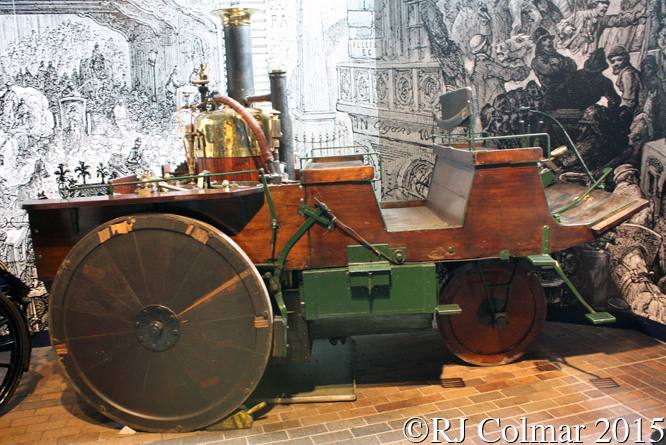
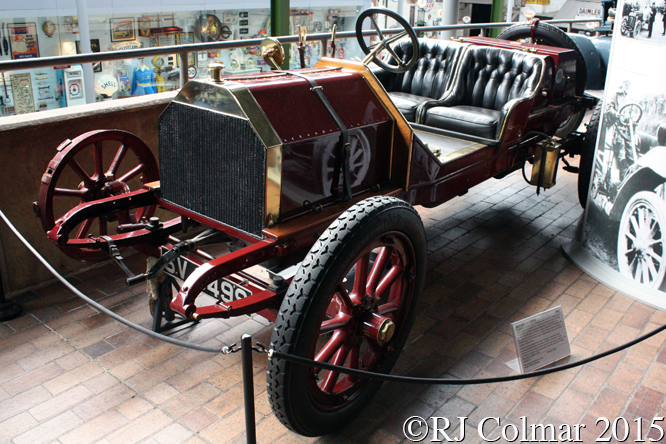
Among the delights of the museum I did not cover on my previous visit was the oldest working self propelled vehicle in the country, an 1875 Grenville Steam Carriage capable of 18 mph, that was built by Robert Neville Grenville in nearby Butleigh Court, Glastonbury, Somerset.

Lancia Corsa, National Motor Museum, Beaulieu

When it comes to varied careers few vehicles can beat this 1910 Lancia Corsa that Billy Knipper drove to win the Tiedeman Trophy in Savannah on November 11th 1910, before it was used as a service vehicle by the Fire Chief of Lenox Massachusetts, it subsequently also served as a garage recovery vehicle !

Austin A90 Atlantic, National Motor Museum Beaulieu

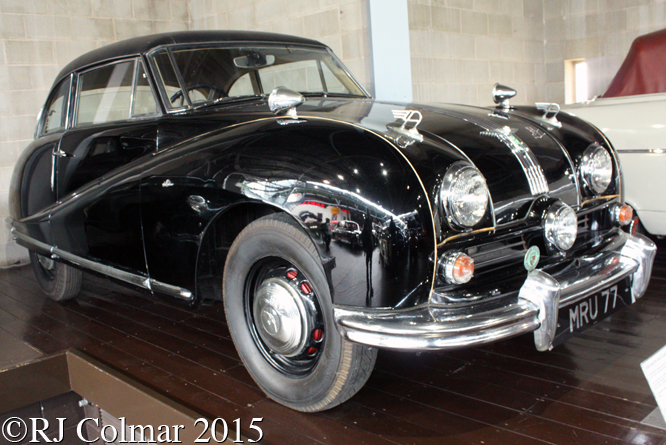
Desperate for foreign earnings to revive the war ravaged economy and repay Britain’s huge war debts Austin came up with the wonderful Austin A90 Atlantic which was aimed squarely at the US market with power windows and hood on the convertible, unfortunately it was completely usurped by the more powerful and rakishly styled Jaguar XK120, but the six cylinder engine ended up powering several larger Austin Saloon / Sedan models and the much admired Austin Healey 100-Six.

Cadillac Seville, National Motor Museum Beaulieu

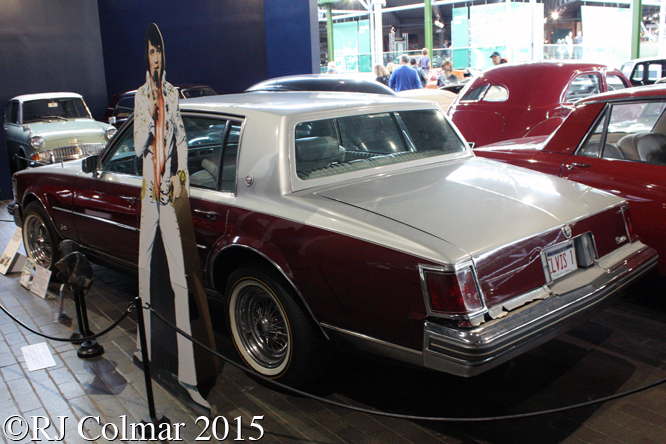
A real surprise was finding the last Cadillac bought by Elvis Presley in the National Motor Museum, this 1977 Cadillac Seville MY series 6K is said to have also been driven by “The King” the day before his death on August 16th 1977.

BRM P301, National Motor Museum Beaulieu

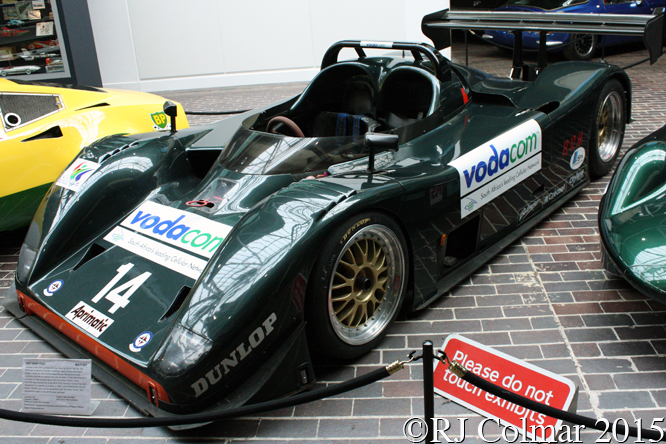
In the learn something new department was that the last time I saw the chassis above was at Le Mans in 1992 when it was fitted with a closed cockpit coupé body and a 3.5 litre / 213 cui V12 BRM motor.

The car caught fire during the race which it started despite the fact that only Wayne Taylor had qualified in it. The fire damage was repaired but the car was not allowed to restart on the Sunday because it had covered insufficient distance.

I knew the car had been subsequently raced in open cockpit form but had not realised the BRM motor was replaced by a turbocharged 3 litre / 183 cui Nissan V6 motor.

In the latter form the renamed P301 was prequalified for the 1997 Le Mans 24 hours with 38th best time by Harri Toivonen and Johnny O’Connell, completed just 6 laps of the 1997 Le Mans 24 Hours, from 34th on the grid, after the engine failed, qualified 6th on the grid for the International Sports Racing Series at Donington, but failed to start because of an electrical problem, started 5th on the grid at Misano in 1998, but retired with drive shaft failure and finally failed to start at Donington in 1998 after it crashed during qualifying.

My thanks to Bill and all the Mensa members who made my guests and I feel so welcome.

Thanks for joining me on this “The Day We Went To Beaulieu” edition of “Gettin’ a li’l psycho on tyres” I hope you will join me again tomorrow when I’ll be looking at a Corvette that raced at Le Mans. Don’t forget to come back now !
Share

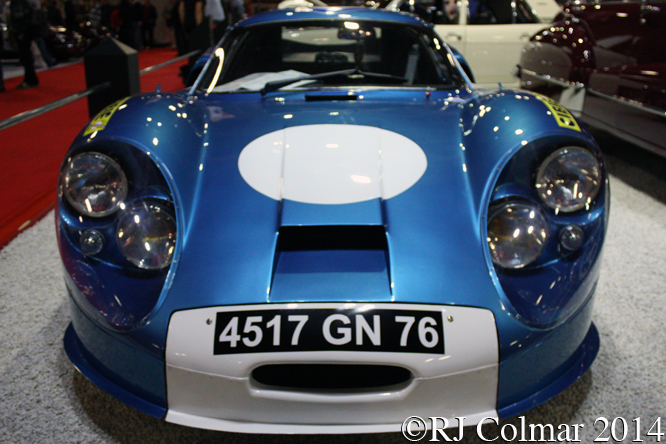
The Short One – Alpine A220 #1731

Following the mixed fortunes of the M series and A210 prototypes Alpine built from 1963 to 1966 the Dieppe based concern decided that the future lay in the new top level Championnat Internationale des Marques for prototype sports cars restricted to using 3 litre / 183 cui motors.

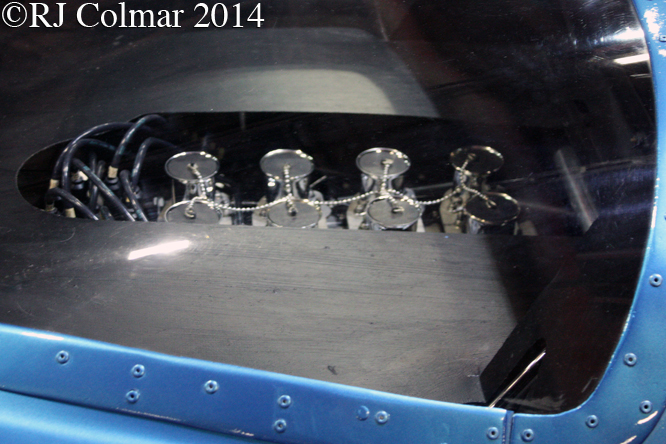
Accordingly in 1967 Alpine built a 3 litre V8 motor with twin overhead chain driven cams and two 1500 cc / 91.5 cui Renault sourced cylinder blocks sharing a common crank.

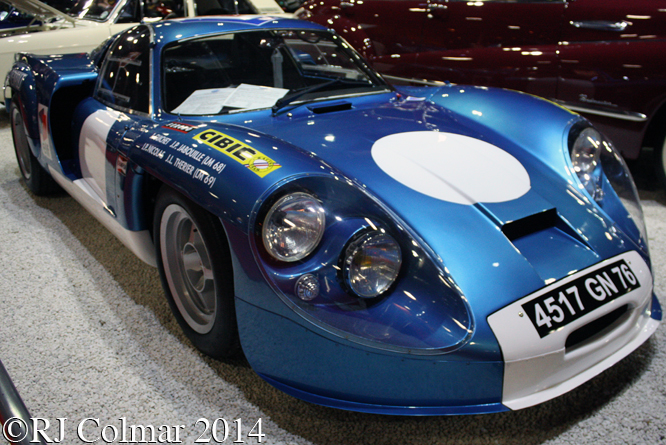
Alpine A220, Classic Motor Show, NEC, Birmingham,

The A211 chassis for the new engine was a beefed up version of the A210 Len Terry design using larger diameter tubes and similar suspension.

Two A211’s were entered for the 1967 Le Mans 24 hours, but neither arrived and subsequently only one, chassis #1727, appears to have been raced scoring a best third place, three laps in arrears, with Patrick Depailler and André de Cortanze sharing the wheel at Monza in 1968.

Alpine A220, Classic Motor Show, NEC, Birmingham,

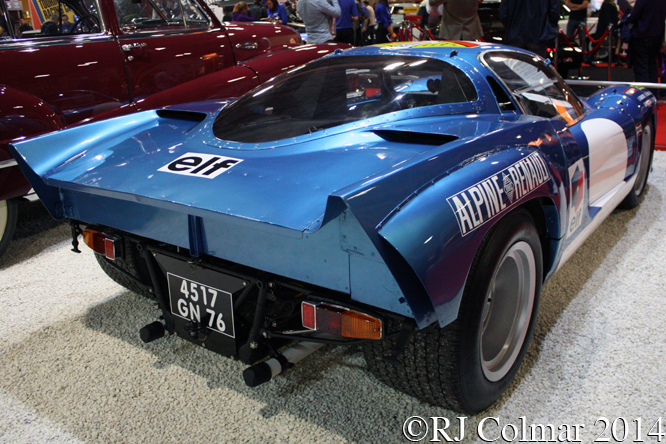
Undeterred Alpine revised the A211 in 1968 to become the A220, distinguished by mid mounted radiators ahead of the rear wheels, stronger suspension and larger ventilated disc brakes.

Today’s featured A220 was the second to be built and completed in April 1968 and was taken to the Le Mans Test weekend in April where Mauro Bianchi and Roger Delageneste recorded the 4th best time.

Alpine A220, Classic Motor Show, NEC, Birmingham,

#1731 retired from it’s first two races, at Zeltweg Mauro Bianchi and André de Cortanze retired with an oil leak and Le Mans where Jean Guichet and Jean-Pierre Jabouille retired with alternator failure after 16 hours.

Jean Guichet and Henri Grandsire are believed to have driven this car to a 4th place finish in the 1968 Paris 1000kms.

Alpine A220, Classic Motor Show, NEC, Birmingham,

At the 1968 Moroccan Grand Prix André Guelfi retired #1731 with engine failure and in 1969 1000km race at Spa Jean-Pierre Jabouille and Henri Grandsire are believed to have retired the car with either gearbox or damper failure.

Jean-Luc Thérier and Jean-Pierre Nicolas qualified #1731 19th on the grid with a time of 3m 45s at Le Mans but retired, as did the other three A220’s, after 12 hours with head gasket failure.

Jean Vinatier then competed with #1731 twice recording a 3rd best time on the Chamrousse Hillclimb and 2nd place finish at Nogaro.

Finally Jean-Pierre Jabouille and Jean-Claude Guénard retired today’s featured car, seen at last years Classic Motor Show at the NEC in Birmingham, from the Critérium Des Cévennes with alternator failure.

#1731 is unique among A220’s because the aerodynamic tail was shortend in July 1969 and road registered in anticipation of taking part in events like the Tour d’France, plans for which never came to fruition as Alpine withdrew from prototype sports car racing until 1974 when it’s return culminated in winning the 1978 Le Mans 24 Hour race with a the A442 B.

Thanks for joining me on this “The Short One” edition of “Gettin’ a li’l psycho on tyres” I hope you will join me again tomorrow when I’ll be paying a visit to Bournemouth. Don’t forget to come back now !
Share