Tag Archives: Motor

Securing The Boondocks – Hullavington Wessex Sprint

On Bank Holiday Monday the Bristol Pegasus Motor Club ran it’s Wessex Sprint at the Hullavington airfield, normally a site open to the public, today’s random selection of photographs were taken in between keeping the perimeter road free of dangerous mowing tractors, cyclists, joggers and dog walkers.
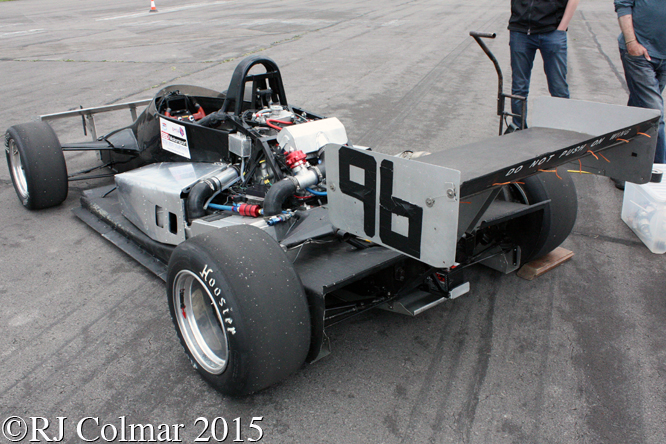
Van Diemen DC 93 M, Hullavington Wessex Sprint

It was a thrill to finally catch sight of Dave Cutcliffe’s much modified Formula Ford Van Diemen DC 93 M which is powered by a turbocharged motor cycle engine, Dave was disappointed to be a second off fastest time of the day, but given he had an ECU fault in the morning had to settle for fastest in the top racing car class.
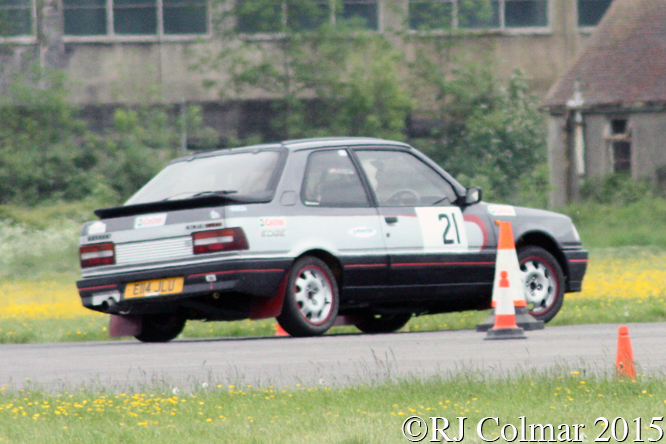
Peugeot 309 GTi, Ray Sissins, Hullavington Wessex Sprint

Ray Sissins from nearby Devizes is seen above negotiating the second chicane in his 1987 #21 Peugeot 309 GTi.
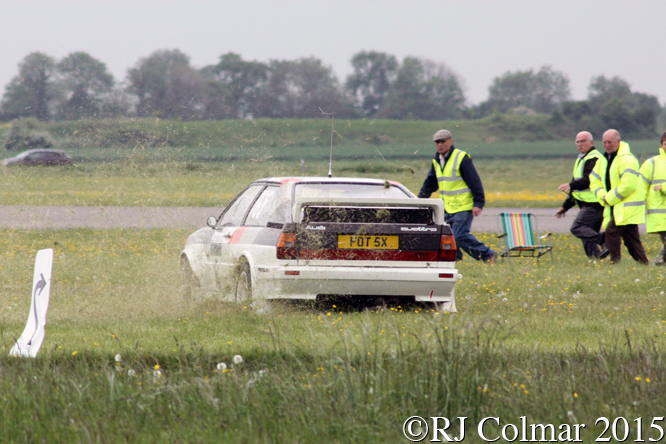
Audi Quattro, Andy Trayner, Hullavington Wessex Sprint

Andy Traynor celebrated what would turn out to be the fastest time in his class with 11 seconds of lawn mowing before the second chicane on his final run of the day in the Audi Quattro he shares with Tim Clarke.
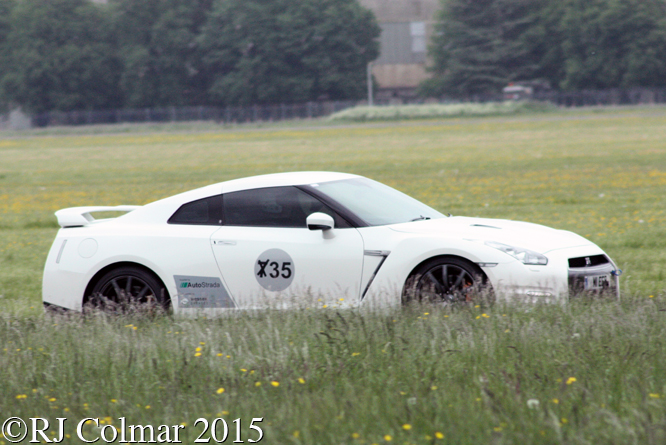
Andrew James, Nissan GTR, Hullavington Wessex Sprint

Andrew and Robert James brought their Nissan GTR all the way over from Bridgend and secured the top two spots in the top Road Going Production Class with Robert pipping Andrew seen above running the #35.
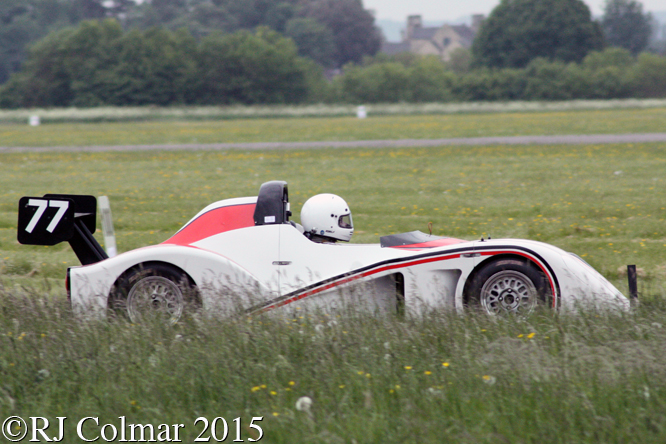
Radical SR4, Stewart Lillington, Hullavington Wessex Sprint

2nd in the Sports Libre Class was Stewart Lillington seen above driving the #77 Radical SR4.
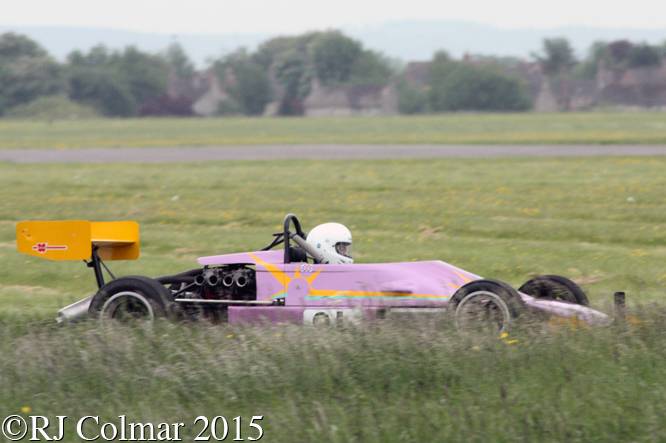
Hawke DL16, Jeremy Hawke, Hullavington Wessex Sprint

Regular readers might remember blogs about Jeremy Hawkes MG J2 and MG K3, he also runs this #91 Hawke DL16 thanks to his Dad who helped him out with the costs towards the engine and gearbox.

Jeremy is particularly keen to hear from any one who has a photo or photo’s of Jan Lammers driving a #36 Hawke to a 19th place finish in the B.R.D.C. Vandervell British F3 Championship at Donington Park on the 27th of August 1977, chime in below if you can help.

Thanks for joining me on this “Securing The Boondocks” edition of “Gettin’ a li’l psycho on tyres” I hope you will join me again tomorrow when I’ll be returning to this month’s Le Mans series. Don’t forget to come back now !

Share

100 Grannies Knitting – FIAT 2300S Coupé

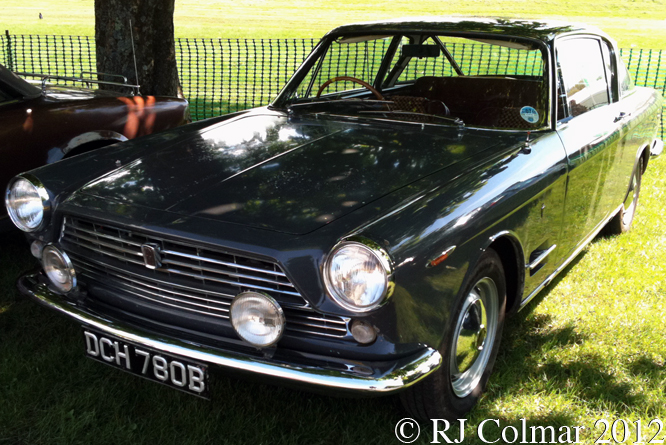
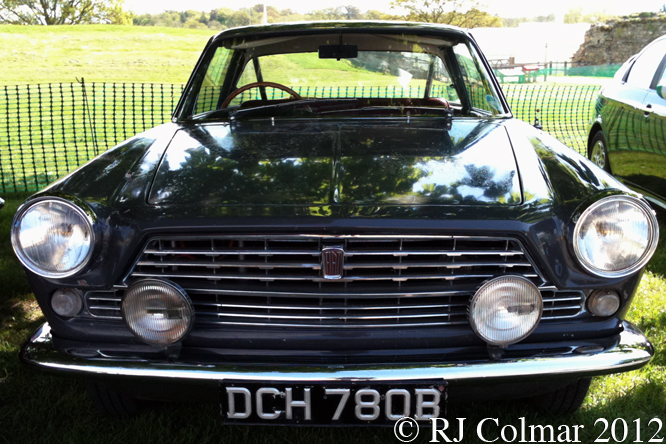
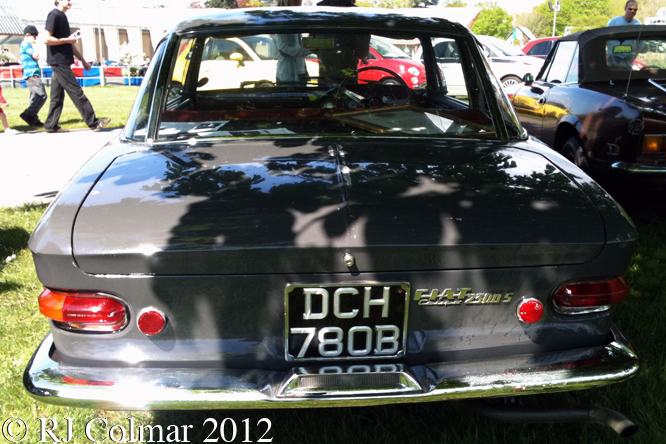
At the 1960 Turin Motor Show FIAT showed off a new Coupé based on the soon to be manufactured FIAT 2300 saloon chassis and running gear and with a body styled by Sergio Sartorelli at Ghia, who with hind site produced a 4 seat vehicle not unlike the contemporary Sergio Pininfarina styled Ferrari 250 GT/E.

FIAT 2300S Coupé, Simply Italian,

The 2300 Coupé was offered with either a 105hp twin carburetor straight six or the S version, as seen in these photo’s taken at Simply Italian, Beaulieu National Motor Museum a couple of years ago, with 136 hp.

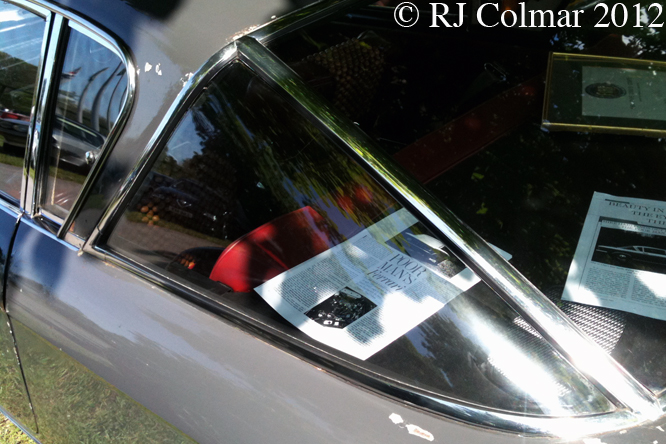
FIAT 2300S Coupé, Simply Italian,

Since Ghia did not have the capacity to build the Coupé bodies the job was contracted out to Officine Stampaggi Industriali known as OSI which was founded in 1960 as a coachbuilding company based in Turin by former Ghia president Luigi Segre and Arrigo Olivetti.

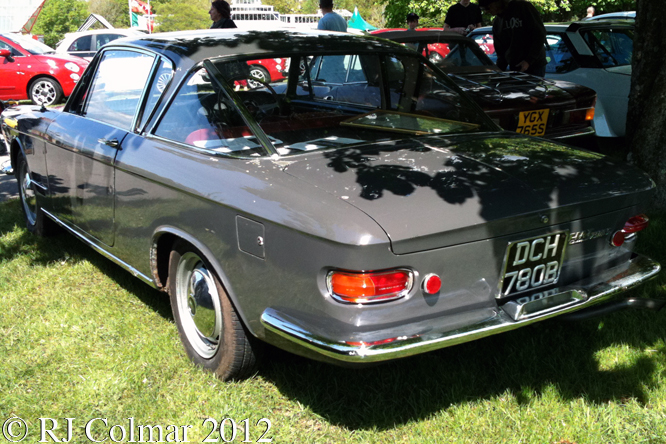
FIAT 2300S Coupé, Simply Italian,

Luxury fittings including power windows pushed the price of a 2300S Coupé up to nearly double the cost of an E-Type Jaguar so it is hardly surprising that only 220 of the 7,194 2300S Coupés built between 1961 and 1967 were Right Hand Drive examples imported into the UK.

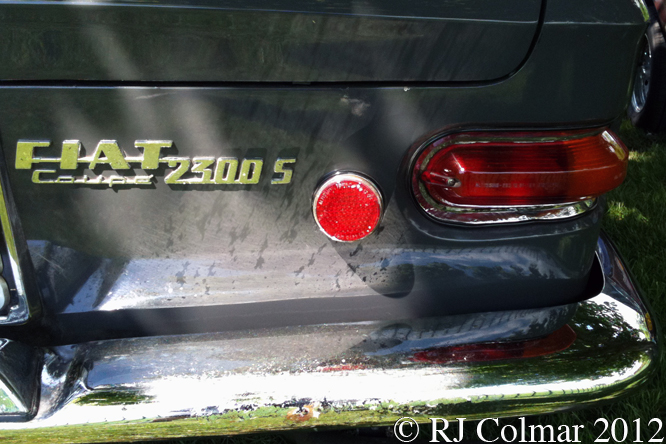
FIAT 2300S Coupé, Simply Italian,

This particular car was dry stored from 1971 to 2000 with just over 37,000 miles on the clock, it was subsequently recommissioned with a minimum of work required to pass it’s Ministry Of Transport (MOT) test, required to make it roadworthy.

FIAT 2300S Coupé, Simply Italian,

The owner of this 1964 car, which appears in these photographs with it’s original paint, chrome and interior, and his son own six 2300S Coupe’s in various states of repair between them.

FIAT 2300S Coupé, Simply Italian,

The motor on this vehicle has been Abarth tuned to produce 150 hp which is good for pushing this car up to a maximum 118 mph, a contemporary report in Autocar noted that the valve tappets “sound like 100 grannies knitting”.

Thanks for joining me on this “100 Grannies Knitting” edition of “Gettin’ a li’l psychoontyres” I hope you will join me again tomorrow when I’ll be looking at an open wheeler raced by an American called Irish. Don’t forget to come back now !
Share

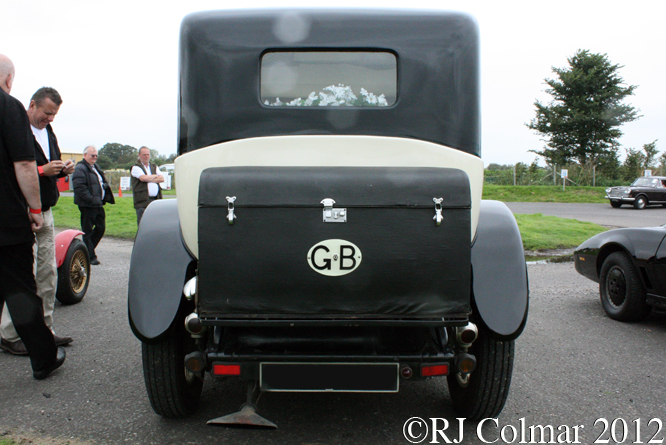
Perfect Car For A Wedding #8 – Rolls Royce Phantom I Gurney Nutting #44KR

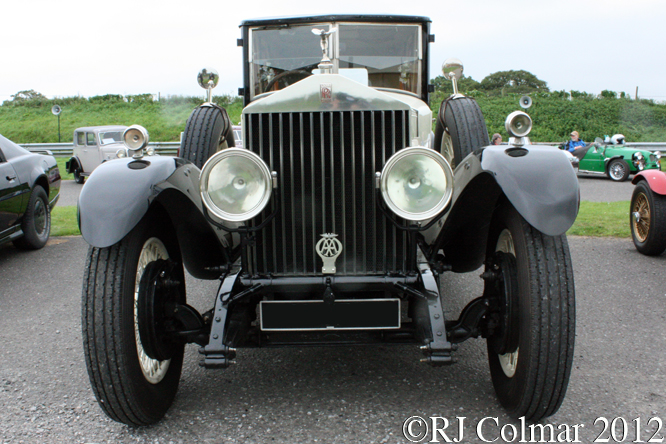
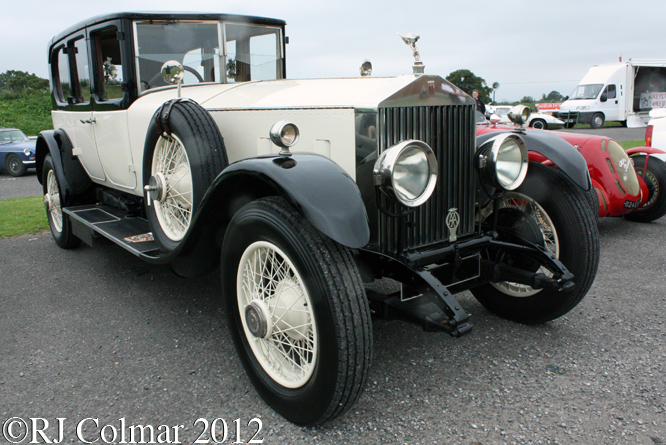
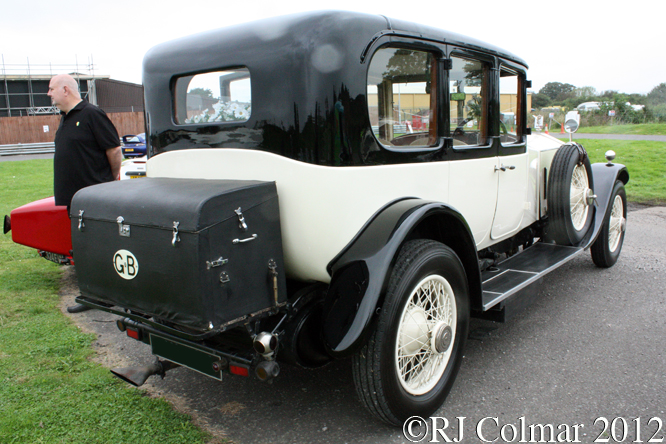
In 1925 Rolls Royce replaced the 40/50, retrospectively named as the Silver Ghost model that had been in production since 1906, with a model billed as the ‘New Phantom’.

Rolls Royce Phantom I Gurney Nutting Light Saloon, Rare Breeds, Haynes International Motor Museum

1926 saw production of the New Phantom commence at the Rolls Royce’s Springfield, Massachusetts works though the specification of the vehicles differed, the cars built in Derby all featured 4 wheel brakes with a servo assistance system built under license from Hispano Suiza.

Rolls Royce Phantom I Gurney Nutting Light Saloon, Rare Breeds, Haynes International Motor Museum

The New Phantom was powered by a 7668 cc / 467 cui straight six motor with a seven bearing crank shaft and with overhead valves that produced 100hp. Later models like this 1929 model were fitted with aluminium cylinder heads.

Rolls Royce Phantom I Gurney Nutting Light Saloon, Rare Breeds, Haynes International Motor Museum

The chassis of the New Phantom was similar to that of the 40/50 the UK models having up to 50 Enots Nipples requiring regular laborious lubrication from an Enots oil pressure gun, while US built New Phantoms had a Bijur centralized oiling system requiring a stroke from a single pump.

Rolls Royce Phantom I Gurney Nutting Light Saloon, Rare Breeds, Haynes International Motor Museum

Like all Rolls Royces of the time it was supplied as a rolling chassis sans body. The original owner of this car had the Gurney Nutting body from his existing Daimler moved to his New Phantom, apparently not an unusual practice at the time.

Rolls Royce Phantom I Gurney Nutting Light Saloon, Rare Breeds, Haynes International Motor Museum

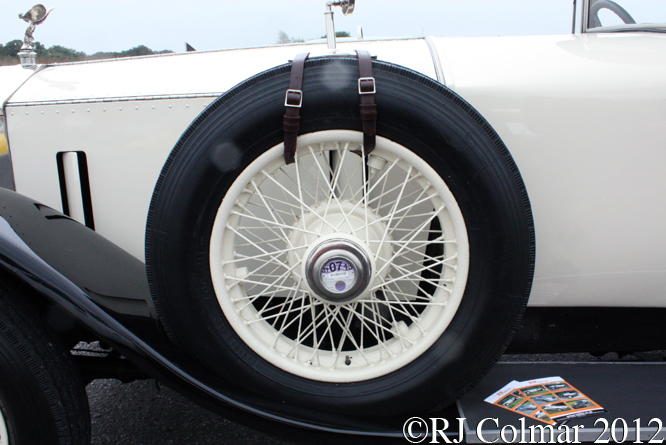
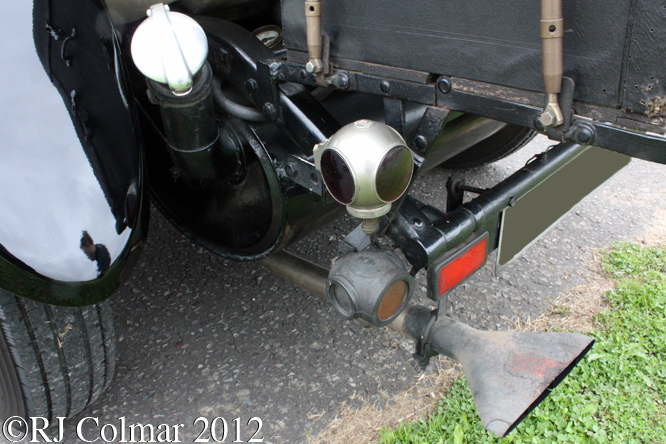
Most UK built New Phantom chassis would have come with an exterior petrol gauge as can be seen inside the chassis rail here, US models mostly had their petrol gauges on the dash.

Rolls Royce Phantom I Gurney Nutting Light Saloon, Rare Breeds, Haynes International Motor Museum

The New Phantom was replaced in by the Phantom II in 1929, with the New Phantom being retrospectively renamed Phantom I. Chassis #44KR seen here at the Rare Breeds Show at Haynes International Motor Museum last year will have been one of the last Phanom I’s to be built, it belongs to special occasions hire specialists RRElite Ltd.

Thanks for joining me on this “Perfect Car For A Wedding #8” edition of “Gettin a li’l psycho on tyres”, I hope you will join me again tomorrow. Don’t forget to come back now !
Share

An Ocean Of Crown Vics – Ford LTD Crown Victoria

The saying in the li’l ol’ England was that everything in the USA and indeed North America was bigger than anything ever seen in Europe and to a greater or lesser extent that was verified on my first trip to North America in 1988, the buildings the cars and even the average height and build of the people seemed to dwarf anything I was exposed to on a regular basis in London or anywhere else in Europe.

Ford LTD Crown Victoria, Indiana State Police, Indianapolis Motor Speedway

What I was not expecting on my 24 hour trip from Toronto to Indianapolis for the Indy 500 was the overwhelming number of race fans camped out in every suburban nook and cranny surrounding Indianapolis Motor Speedway. In Europe most race tracks don’t attract even half of the 250,000 fans IMS can hold and even then the fans are usually spread out over several miles of country side and so never approach the kind of concentration seen at Indy.

I had expected a pretty wild, read friendly if a little drunk, crowd and was not disappointed, though I am glad I did not take my girl friend with me, I think she may have felt just a little intimidated by the rowdy vibe. Soon after getting into the IMS infield just after dawn on race day I found an apparent ocean of Indiana State Police pre’88 face lift Ford LTD Crown Victoria’s and was so impressed with the scale of the law enforcement presence I took the photo above.

The pre ’88 face lift Ford LTD Crown Victoria, also known as the Crown Vic was launched in 1983, from what I have been able to discern police package Crown Vic’s were available either 160 hp 5 litre / 302 cui EFI V8’s or 180 hp 5.7 litre / 351 cui HO V8’s driving through four speed AOD (Automatic Overdrive) transmissions around 1987, never enough to beat the Chevrolet Caprice in the Michigan State Police tests run at Michigan International Speedway, but close enough to keep the order books open until the introduction of the Ford Crown Victoria Police Interceptor in 1992.

These cars were particularly popular with law enforcement agencies because they were rear wheel drive, RWD, having a perceived more predictable handling and because they featured a separate chassis onto which the body was attached offering the advantage of lower repair costs because the chassis was less likely to get damaged in inevitable collisions which law enforcement work would expose these vehicles to.

Thanks for joining me on this “A Field Full Of Crown Vics” edition of “Gettin’ a li’l psycho on tyres” I hope you will join me again tomorrow for Ferrari Friday. Don’t forget to come back now !
Share

Cardinals Classic – Volkswagen Golf SE IV

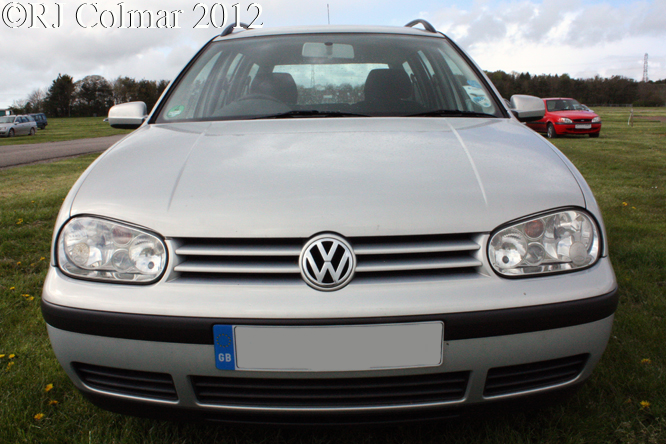
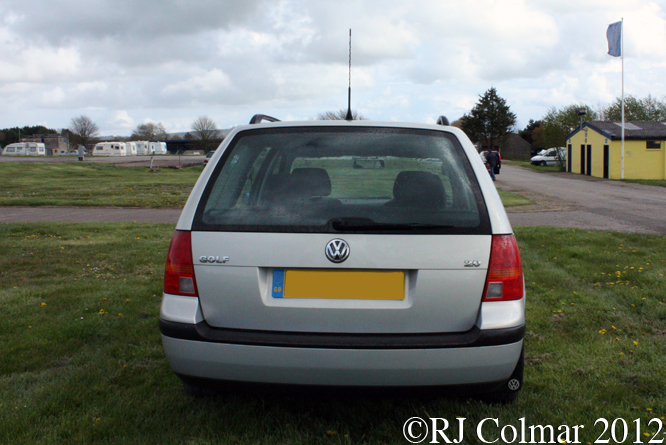
The last of this months Sunday Volkswagen Golf posts is about a Golf IV.

Volkswagen Golf SE IV, Shepton Mallet,

Last year I took on a low mileage VW Golf SE Estate IV, that my folks bought new in 1999. Over the 10,000 miles I have driven it, apart from several light bulbs a set of new tyres and a service it has proved to be a pleasantly reliable mode of transport carrying up to 4 at up to 70 mph to numerous events in England and Wales. The most awkward work I have had to do on it was to replace the front headlight bulb that is tucked away in front of the passenger side mounted battery but thanks to to this linked video I got the job done in a supermarket car park with a minimum of fuss.

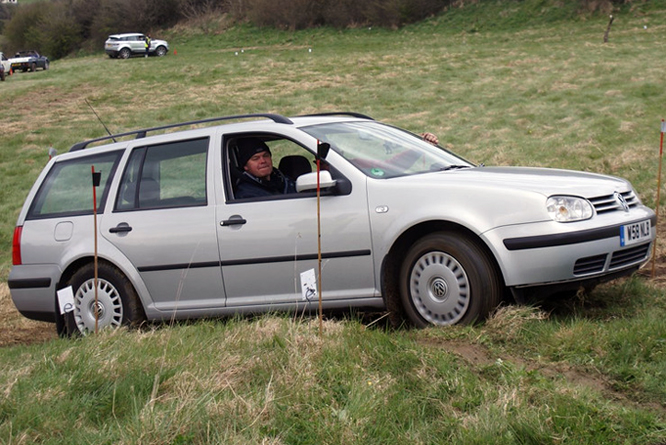
Volkswagen Golf SE IV, Dundry

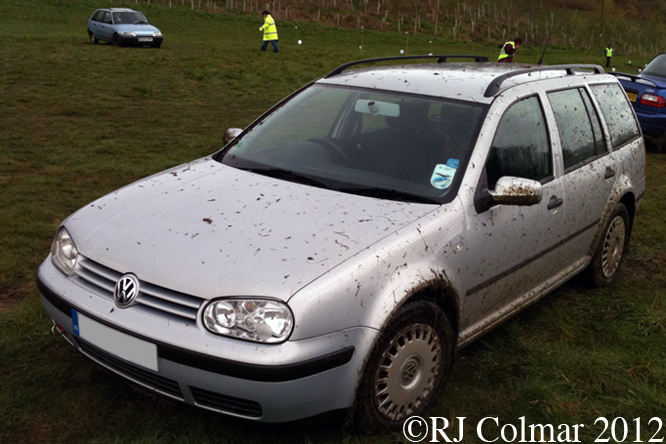
Three days after I acquired the Golf I had a great time with it on a field in Dundry just South of Bristol trying, unsuccessfully, to defend my Cross Trohpy.

Volkswagen Golf SE IV,

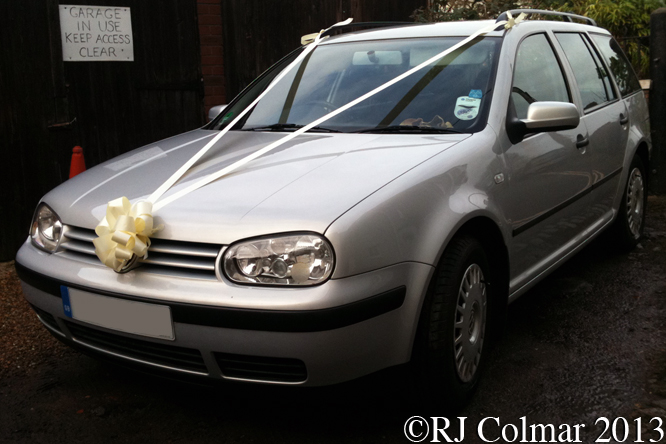
A couple of weeks ago I was reminded that my car insurance was about to expire and after a little shopping around which included looking at the Aviva site I found I was able to halve my car insurance bill with my no claims bonus. With the Golf freshly serviced and insured I polished her up for wedding duties as the brides maids car for a friend who was getting married during a visit from Australia.

Volkswagen Golf SE IV, Shepton Mallet,

While I was looking up the approximate value of my car I was surprised to learn that the highest price ever paid for a second hand Golf IV was US $243,000 @ £160,000 in English. It turns out that the car was sold by its original owner prefect of the Catholic Church’s Congregation of the Doctrine of the Faith under Pope John Paul II better known as Cardinal Joseph Aloisius Ratzinger when he expected to retire to Germany after Pope John Paul II died in 2005.

Volkswagen Golf SE IV, Shepton Mallet,

After he had sold his Golf to his surprise Joseph Ratzinger was elected Pope Benedict XVI and the new owner of the Cardinals Golf put it up for auction on e-bay where it was purchased by a casino.

Volkswagen Golf SE IV, Dundry

A couple of weeks ago I made an attempt at reclaiming the Cross Trophy with fellow Bristol Pegasus Motor Club member Chris Clarke and came home a respectable third in class. A couple of days ago I was out again this time on a treasure hunt with GALPOT regular Tim Murray and again we came home a respectable third and won a box of Maltesers to share.

Touch wood the Golf will remain reliable and help me attend a few more meetings which I can report on here for your delectation.

Thanks for joining me on this “Cardinal Classic” edition of “Gettin’ a li’l psycho on tyres” I hope you will join me again tomorrow. Don’t forget to come back now !
Share

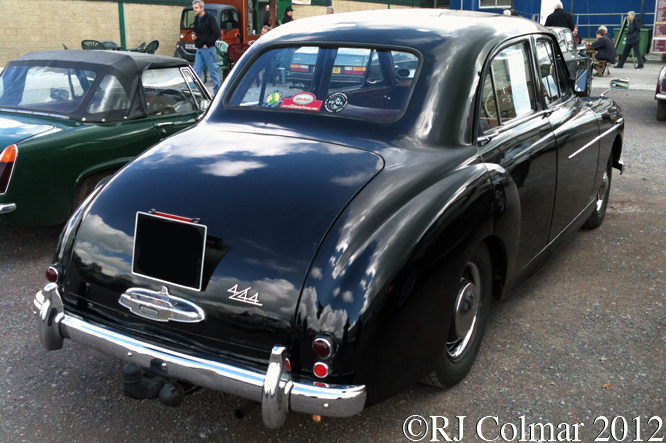
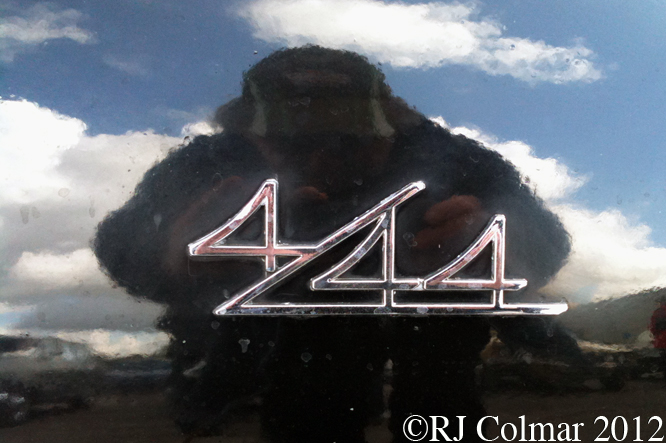
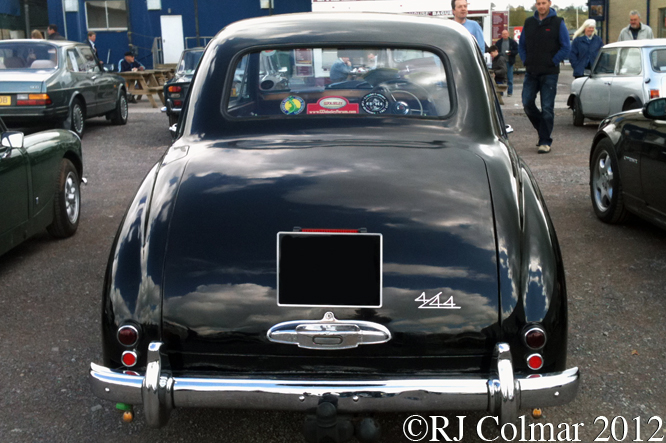
Palmers Parts Bin – Wolseley 4/44

After designing the MG Y Type the 1939 – 1945 hostilities saw Gerald Palmer engaged in war work that included designing medical equipment for the front line the development of a two stroke motor and the production of de Havilland Tiger Moth flying training aircraft.

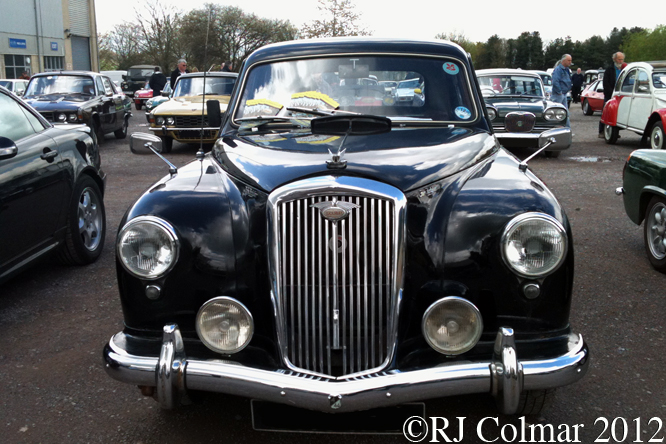
Wolseley 4/44, Bristol Classic Car Show, Shepton Mallet,

After the war Palmer was employed by Jowett to design what became the Jowett Javelin and in 1949 Palmer rejoined the Nuffield Organisation to design the Wolseley 4/44, MG ZA, the replacement for the MG Y type, and the Riley Pathfinder all three of which shared unique combinations of parts from the Nuffield Organisations parts bins.

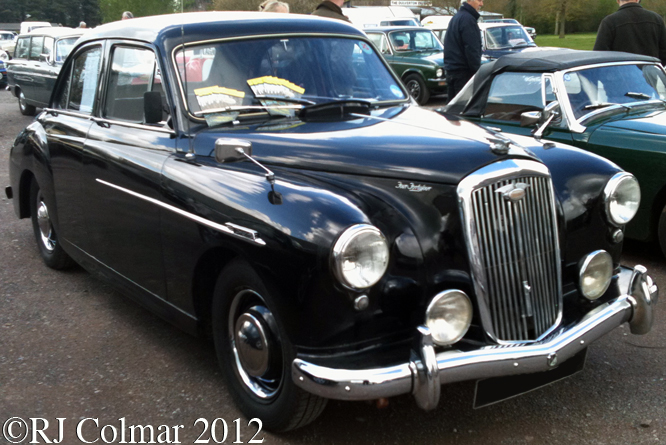
Wolseley 4/44, Bristol Classic Car Show, Shepton Mallet,

Of the three new models launched in 1953, now under the merged with Austin British Motor Corporation (BMC) banner the Wolseley 4/44 was the least powerful being fitted with a detuned 46 hp single carburettor 4 cylinder XPAG motor first seen seen on the MG TB Type Midget dating back to 1939 and on the TC, TD, and least powerful of the TF models.

Wolseley 4/44, Bristol Classic Car Show, Shepton Mallet,

Fitted with modern rack and pinion steering, snuggle friendly 4 speed column change gearboxes the up market pretensions of the car were reaffirmed by leather seats and walnut veneer trim.

Wolseley 4/44, Bristol Classic Car Show, Shepton Mallet,

With the absence of a motorway network the 4/44’s top speed of 73 mph was matched by a rest to 60 mph time of 29.9 seconds which might be described as adequate.

Wolseley 4/44, Bristol Classic Car Show, Shepton Mallet,

Note that indicators were by door post mounted semaphore with only left hand drive models having indicators built into the rear light clusters.

29,845 Wolseley 4/44’s were built between 1953 and 1956 when the model was replaced by the similar 15/50.

Thanks for joining me on this “Palmers Parts Bin” edition of “Gettin a li’l psycho on tyres” I hope you will join me again tomorrow. Don’t forget to come back now !
Share

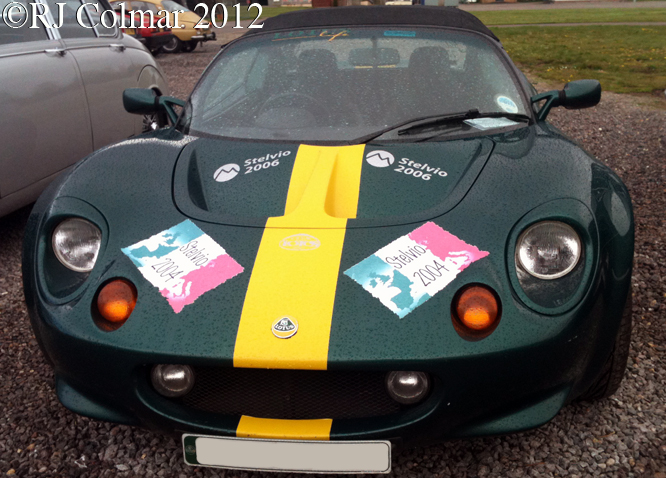
Romano’s Granddaughter – Lotus Elise Series I

In 1993 Lotus was purchased from GM by Romano Artioli chairman of the revived Bugatti manufacturer, and the following year the Type 111 was conceived by Julian Thompson with Richard Rackman and given the Elise name after Romano’s Granddaughter Elisa.

Lotus Elise Series 1, Bristol Classic Car Show, Shepton Mallet

The Series 1 Elise was launched in 1996 powered by a mid mounted 4 cylinder Rover K Series motor that produced just 118 hp, however thanks to the fiberglass body and bonded aluminium chassis the Elise only weighed 725 kg / 1,600 lbs so the car could accelerate from rest to 60 mph in just 5.8 seconds with a top speed of 124 mph.

Lotus Elise Series 1, Bristol Pegasus Motor Club, BAWA

Getting in and out of a Lotus Elise are probably the most difficult features of the car, the ergonomics are secondary to track day performance, but apart from that the Elise is said to be great fun to drive and economical to run thanks to the light weight and virtually non existent load capacity beside the passengers.

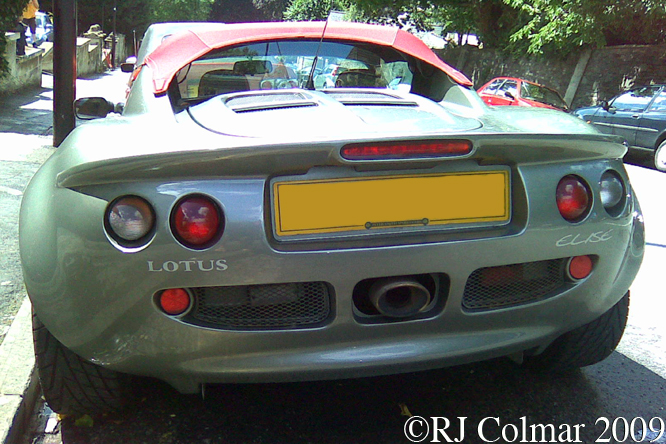
Lotus Elise Series 1, Bristol

In 1996 Romano had sold Lotus on to current owners Proton in order to fund the losses that had accumulated due to the insolvency of Bugatti.

Thanks to changes in crash sustainability regulations the Series 1 Elise was replaced in 2000 after more than 8600 had been built by the more sustainable and consequently slightly heavier Elise Series 2.

The top and bottom cars featured today are standard ’98 and ’97 1.8i models while the middle one is a later ’99 111S which came with variable valve timing 143 hp and a 130 mph top speed.

Thanks for joining me on this “Romano’s Granddaughter” edition of “Gettin’ a li’l psycho on tyres”, I hope you will join me again tomorrow. Don’t forget to come back now !
Share