Tag Archives: Museum

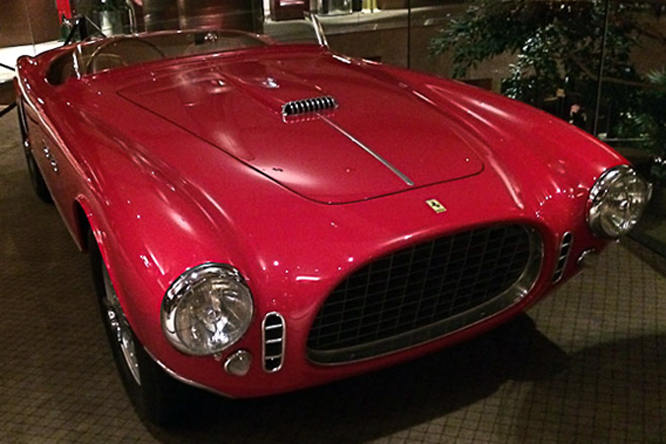
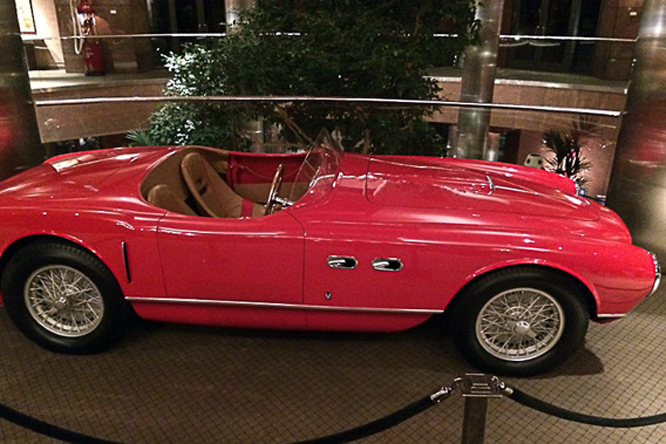
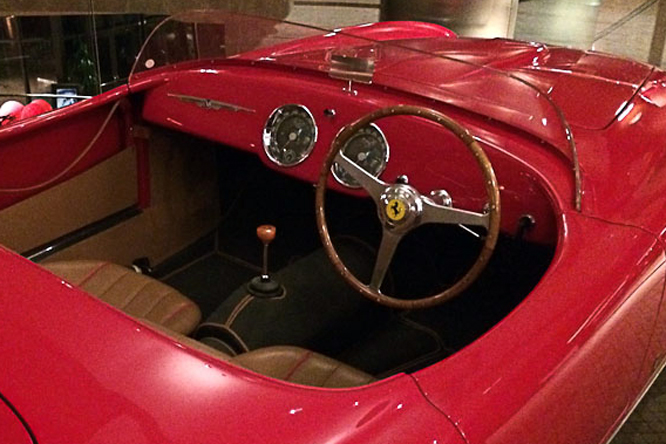
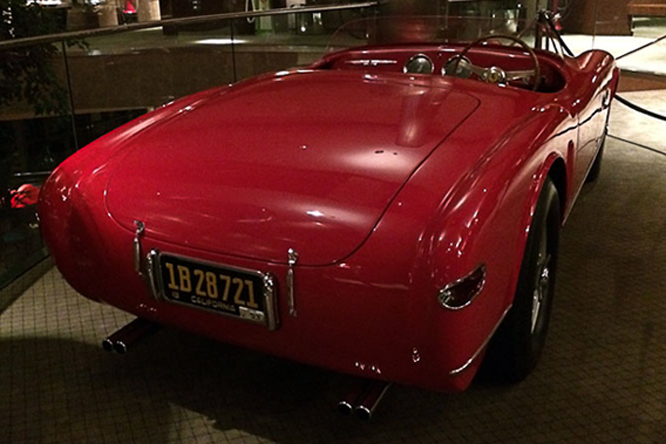
What Goes Around (Slight Reprise) – Ferrari 250 MM Vignale #0260MM

I first looked at today’s featured Vignale bodied Ferrari 250 MM #0260MM in June 2011, but since Geoffrey Horton was kind enough to send me some more recent photo’s of it I can indulge you with a few snippets of additional information that have come to light.

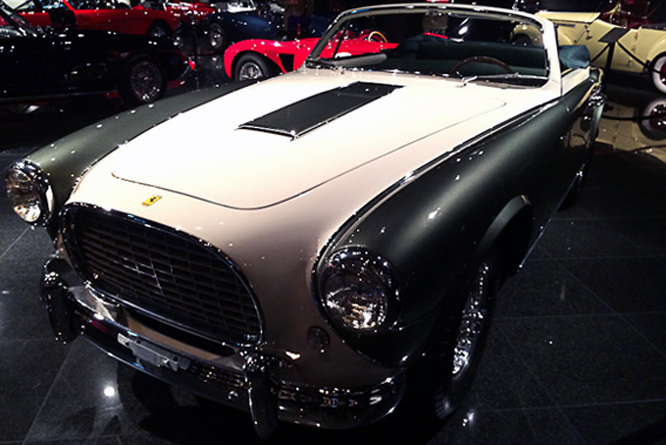
Ferrari 250 MM Vignale, Blackhawk Museum

Phil Hill sold the car after he had raced it 5 times from new to Charles Brown of Monroe Los Angeles. While the car was in Charlies care he entered it for William Jarnigan to drive in a couple of races run at Bergstrom Air Force Base (AFB) in March 1954, William repaid his owners faith with 2 class wins coming 4th overall on both occasions.

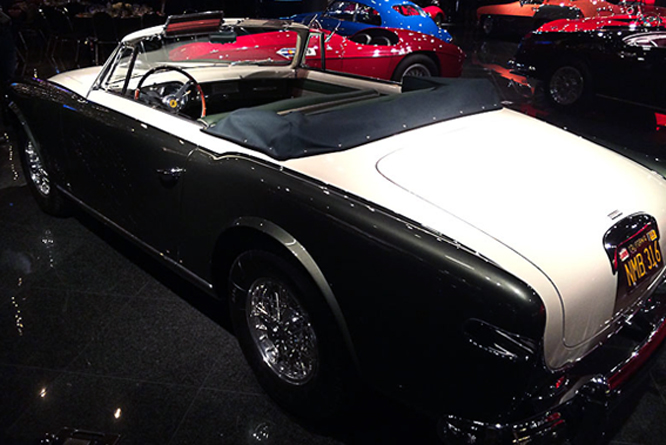
Ferrari 250 MM Vignale, Blackhawk Museum

In July 1954 Charles finished 3rd in class at Offutt AFB coming home 8th overall. In October 1954 the motor was recorded as having been rebuilt at the Ferrari factory.

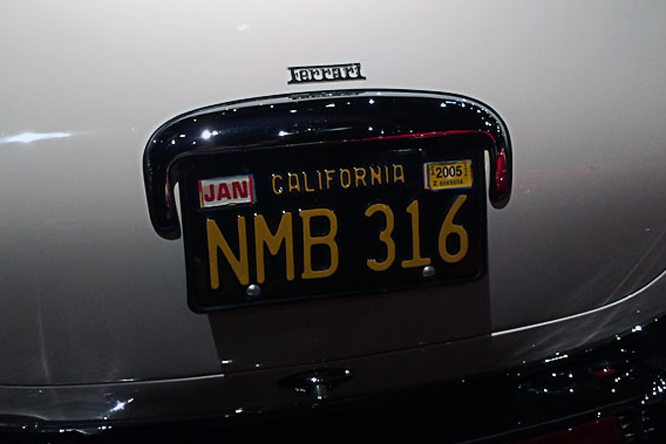
Ferrari 250 MM Vignale, Blackhawk Museum

The next recorded owner is Ernie Miller of New Orleans, Los Angeles who is known to have raced the car on at least one occasion in the Hammond Grand Prix where Ernie is recorded as having finished 3rd overall in what is thought to be #0260MM’s last in period competitive appearance.

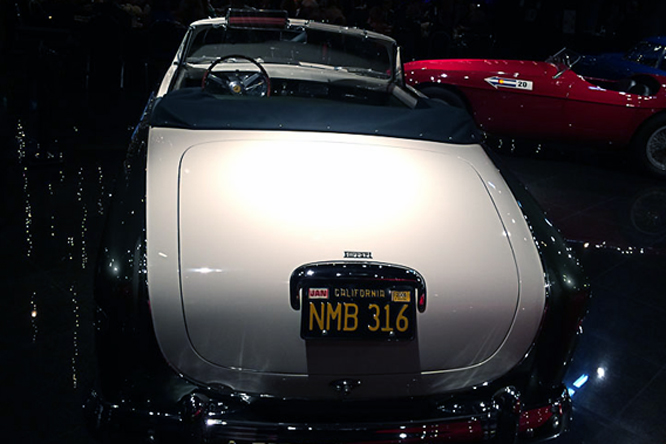
Ferrari 250 MM Vignale, Blackhawk Museum

Allen S Bishop is credited with restoring #0260MM between 1972 and 1975, after which original owner Phil Hill was reunited with the car for a classic race at Monterey in 1984 from which he car was retired.

Ferrari 250 MM Vignale, Blackhawk Museum

It is believed that #0260MM fetched US$ 1.2 million from an anonymous purchaser in 1995. Phil Hill was reunited again with the car at Monterey in August 2001, though no race results for that particular reunion appear to have been recorded.

My thanks to Geoffrey Horton for sharing these photographs taken at the Blackhawk Museum late last year.

Thanks for joining me on this “What Goes Around (Slight Reprise)” edition of “Gettin’ a li’l psycho on tyres”, I hope you will join me again tomorrow for a look at a Crusader built in Washington…. Co Durham. Don’t forget to come back now !

Share

Formula One Cabriolet – Ferrari 342 America, Vignale Cabriolet, #0232AL

Between late 1952 and early 1953 Ferrari built six 342 America chassis powered by a 200hp 4.1 litre / 341 cui version of Ferrari’s latest atmospheric induction V12 designed by Aurelio Lampredi and raced with success in the Ferrari 375 Formula One cars.

Ferrari 342 America Vignale, Blackhawk Museum

Five of the 342 chassis went to Pininfarina where 3 were fitted with coupé bodies and two with cabriolet bodies, the first chassis #0232AL, featured in today’s photographs by Geoffrey Horton taken at the Blackhawk Museum, was sent to Vignale where it was fitted with a cabriolet body.

Ferrari 342 America Vignale, Blackhawk Museum

Upon completion Herr Otto Wild of Muri in Switzerland. Before the end of the 1950’s were out the car is thought to have made it’s way to the USA, from 1971 until at least 2000 the car was kept in single ownership.

Ferrari 342 America Vignale, Blackhawk Museum

The 342 America was said to be capable of 115 mph, not quite on a par with the contemporary Jaguar XK120 in it’s original aluminium bodied form.

Ferrari 342 America Vignale, Blackhawk Museum

The Lampredi V12 motor would continue in production until the 1960’s powering Ferrari’s large engine America series cars up to and including the 500 Superfast of which the last was built in 1966.

Thanks for joining me on this “Formula One Cabriolet” edition of “Gettin’ a li’l psycho on tyres” I hope you will join me again tomorrow when I’ll be loocking at the first of this months big banger Formula 5000/A open wheel racing cars.. Don’t forget to come back now.

Share

Magnesium DFV – Cosworth

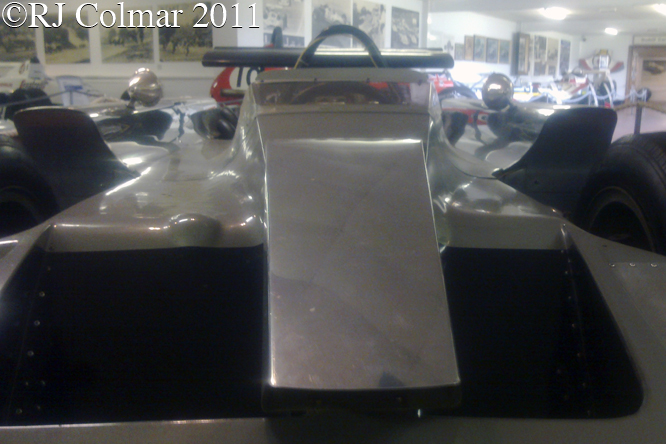
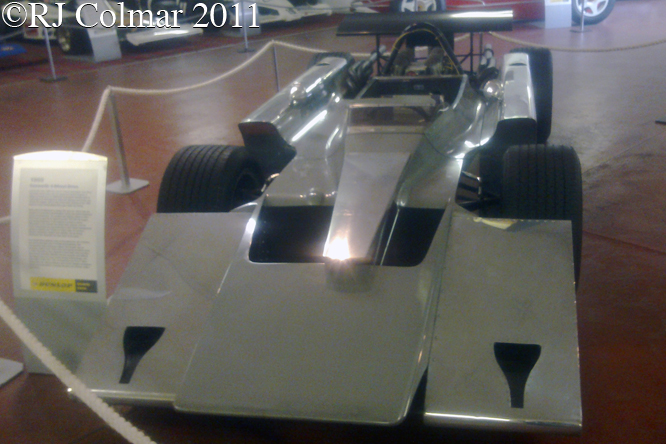
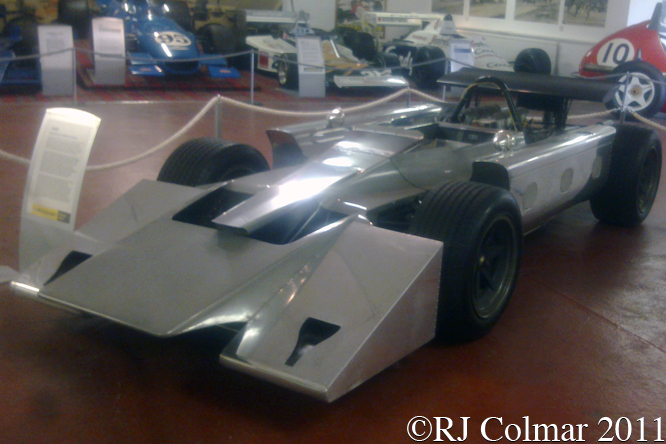
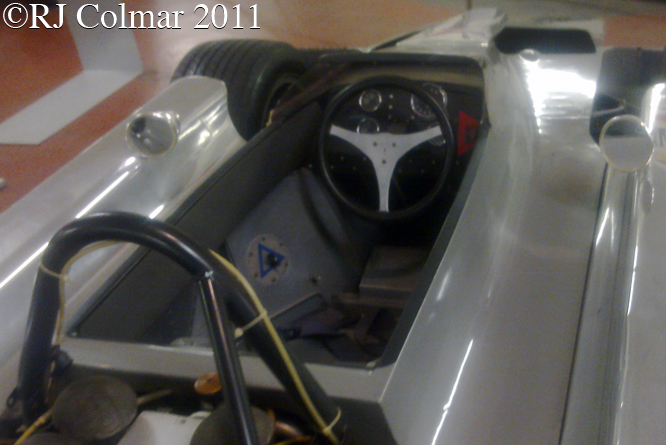
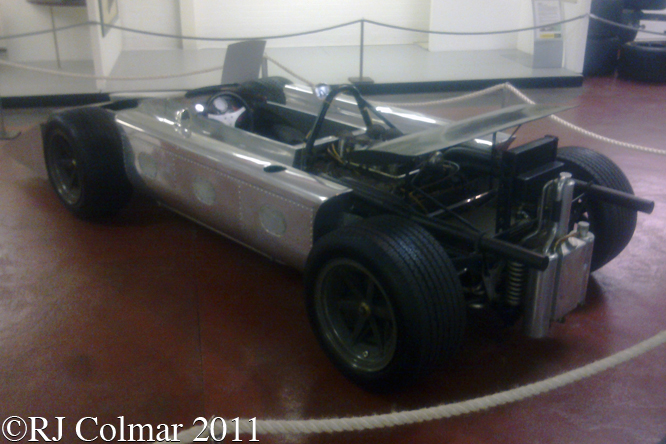
Looking like a cross between a 1923 Grand Prix Voisin Labatoire and a 1954 Lancia D50 the Cosworth Formula Car designed by Robin Herd.

Cosworth, Donington, Park Museum

Mike Costin and Keith Duckworth, the geniuses behind the Ford Cosworth DFV Formula One engine that dominated Formula One from 1968 to 1982, decided to engage former McLaren designer Robin Herd build a car which would maximise the advantages of their powerful DFV V8 in 1968.

Cosworth, Donington, Park Museum

Herd took a more radical approach to the application of all wheel drive to Formula One than either Colin Chapman’s Lotus 63 or Jo Marquart’s McLaren M9A, although no where near as radical as the V12 powered MATRA MS 11 all wheel drive with hydraulic drive to all four wheels.

Cosworth, Donington, Park Museum

In order to keep the driver’s seat low and accommodate the drive shaft running from the motor and gearbox in the rear to the wheels at the front the driver was slightly offset from a central seating position.

Cosworth, Donington, Park Museum

The Cosworth was tested by Mike Costin, the ‘Cos’ in ‘Cosworth’, Brian Redman, Trevor Taylor and Jackie Stewart.

Cosworth, Donington, Park Museum

Trevor Taylor was penciled in to debut the Cosworth at the 1969 British Grand Prix, however as the testing had shown the car worked best with little or no drive to the front wheels the entry was withdrawn.

Cosworth, Donington, Park Museum

While the Cosworth shared the same 3 lite / 183 cui DFV motor design there was one essential difference between the Cosworth works unit and those supplied to Lotus and McLaren, the block was cast in magnesium to save weight over the aluminium cast DFVs supplied to Cosworth’s customers.

Cosworth, Donington, Park Museum

The Cosworth never did race, as BRM’s Tony Rudd had predicted after BRM’s experience with the all wheel drive BRM P67 all wheel drive would never work in Formula One, and after being demonstrated at the British Grand Prix at Brands Hatch in 1970 it found it’s way to the Donington Park Museum where it is seen in these photographs.

Thanks for joining me on this “Magnesium DFV” edition of “Gettin’ a li’l psycho on tyres”, I hope you will join me again tomorrow. Don’t forget to come back now !

Share

Dinger’s All Wheel Drive – McLaren Ford M9A

After the limited success of the Ferguson P99 in circuit racing from 1961 to 1963 Peter Westbury drove the P99 in 1964 and won the British Hillclimb Championship.

McLaren Ford M9A, Donington Park Museum

Meanwhile Andy Granatelli working with Ferguson had entered Bobby Unser in the Studebaker STP Special for the 1964 Indy 500 where he qualified 22nd but retired after an accident on the opening lap. BRM also became interested in all wheel drive in 1964 building the BRM P67 to test the system in anticipation of the forthcoming 3 litre / 183 cui motors that were to be mandated for Formula One in 1966. The P67 was driven in practice for the 1964 British Grand Prix by Grand Prix debutant Richard Attwood where the car was the slowest to take part. BRM concluded remarkably quickly that all wheel drive held no benefits for them and with drew the car from the race.

McLaren Ford M9A, Donington Park Museum

In 1968 Peter Westbury resurrected the P67 to win the British Hill Climb Championship again. By this time the Granatelli entered ’67 Paxton Special and ’68 Lotus 56 had both come with in 25 miles of winning the Indy 500 in successive years with gas turbine cars both featuring all wheel drive.

McLaren Ford M9A, Donington Park Museum

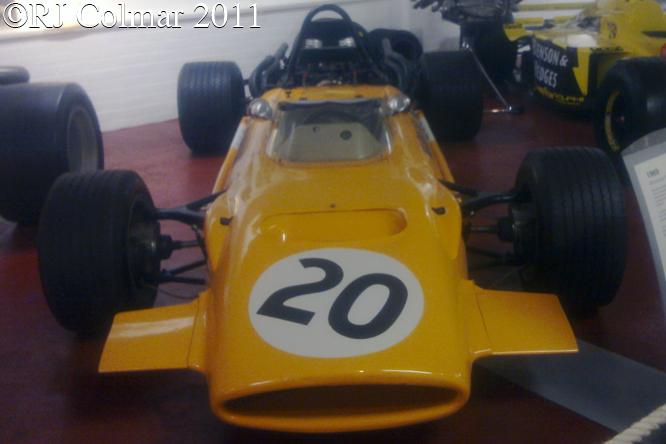
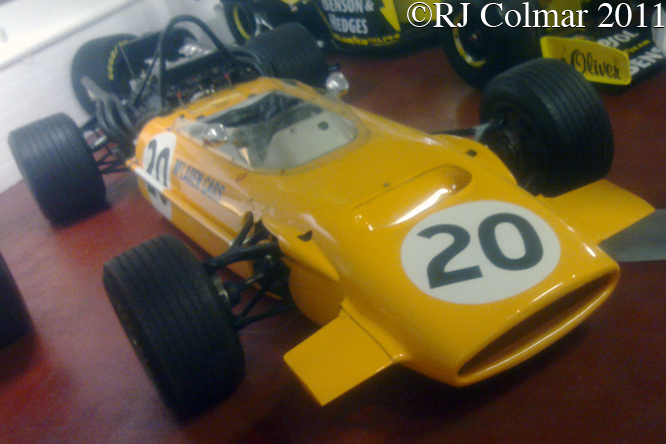
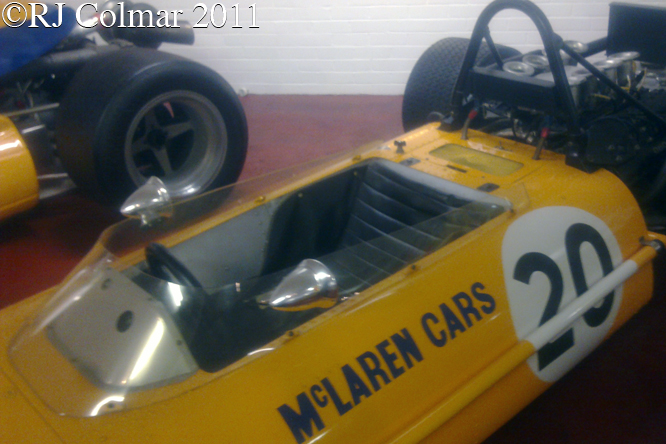
By 1969 four teams were ready to try all wheel drive again despite BRM’s Tony Rudd telling anyone who would listen that the system would not work in Formula One. One of those teams was led by Bruce McLaren who helped Swiss designer Jo Marquart with the Ford Cosworth powered M9A.

McLaren Ford M9A, Donington Park Museum

The car was tested and entered into the 1969 British Grand Prix for Derek ‘Dinger’ Bell to drive. Derek qualified 15th, of seventeen, and retired having completed just 5 laps when the rear suspension failed.

McLaren Ford M9A, Donington Park Museum

For McLaren this was enough to confirm what BRM had realised, that all wheel drive was not for Formula One, by 1969 improvements in aerodynamics and tyres which by now were much wider than when the Ferguson P99 first appeared had reduced the necessity for drive to the front wheels.

Thanks for joining me on this “Dinger’s All Wheel Drive” edition of “Gettin’ a li’l psycho on tyres” I hope you will join me again tomorrow. Don’t forget to come back now !

Share

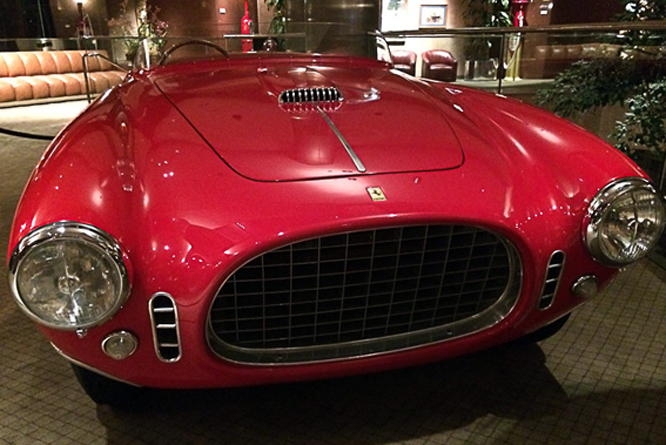
Like No Lighter You’ve Known Before – Eagle Mk 1 #AAR104

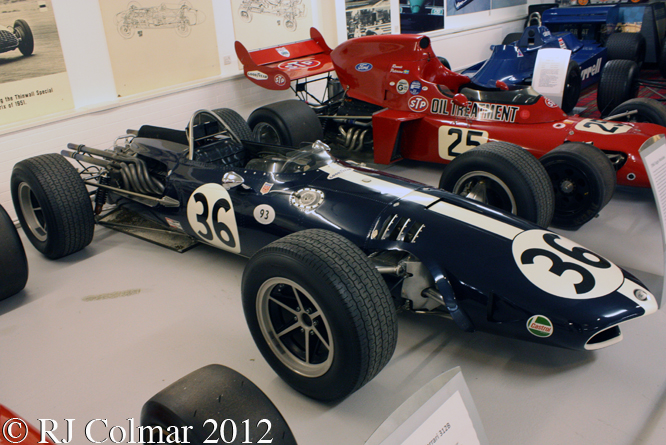
The story of the Eagle Formula One car began when the Goodyear Tyre and Rubber Company asked Carol Shelby and Dan Gurney founders of All American Racers Inc to build an Indy 500 challenger with which to compete against Firestone shod Indy cars. Part of the deal included the go ahead to build a Formula One car “to represent the U.S.A.”
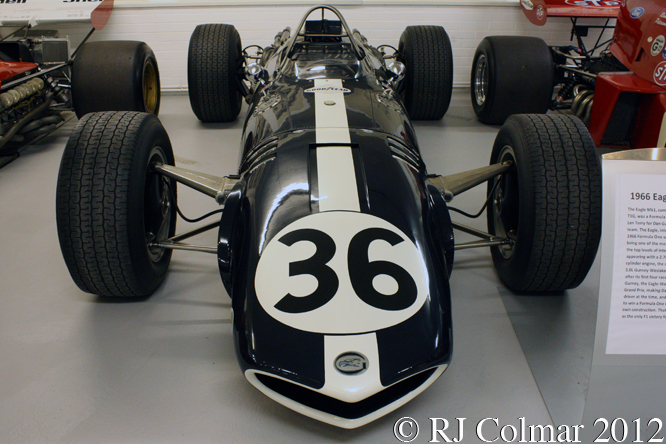
Eagle Westlake Mk 1, Donington Museum

Shelby and Gurney turned to Len Terry to produce a design for a chassis that met both tasks. Terry had been responsible for the design of the Lotus 38 which Clark and Gurney drove in the 1965 Indy 500 which had been convincingly won by Clark who led 190 laps from pole. The Mk 2 was a Ford V8 powered Indy car, while Mk 1 was the Formula One variation featured today which was to be powered by an Aubery Woods designed V12 that was to be built at Harry Westlake’s premisses in Rye, Kent, England.
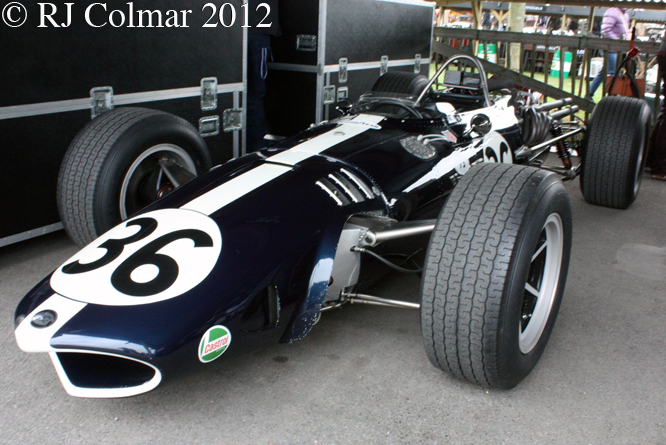
Eagle Westlake Mk 1, Goodwood Revival

The chassis for both program’s were manufactured at All American Racers premises in Santa Ana, California with the complete Formula One chassis being sent on to a new shop Gurney had set up close to Harry Westlake’s premisses in ‘the ancient pirate town’ of Rye and operated by Anglo American Racers. The Westlake V12’s were only ready midway through the season and to get there project underway Gurney drove his Eagle with a slightly undersized Coventry Climax four cylinder motor.
Eagle Westlake Mk 1, Donington Museum

The origins of the 3 litres / 183 cui Westlake V12 lay in a 500cc /46.25 cui 2 cylinder motor that Aubery Woods had built for Shell Oils funded research project. Gurney heard about the motor from his former BRM colleague Woods and had the motor built with a budget of US$600,000 by Westlake. Westlake’s facilities were a little on the primitive side using military surplus tooling that dated back to the 1914/18 Great War. However despite poor interchangeability of parts from one motor to the other they were more reliable than some of the ancillaries including the electrics and fuel pumps. There was a design flaw in the oil scavenging system which was discovered too late in the development of process that sees the sump fill up with oil during the course of a race which causes a steady loss of horsepower.
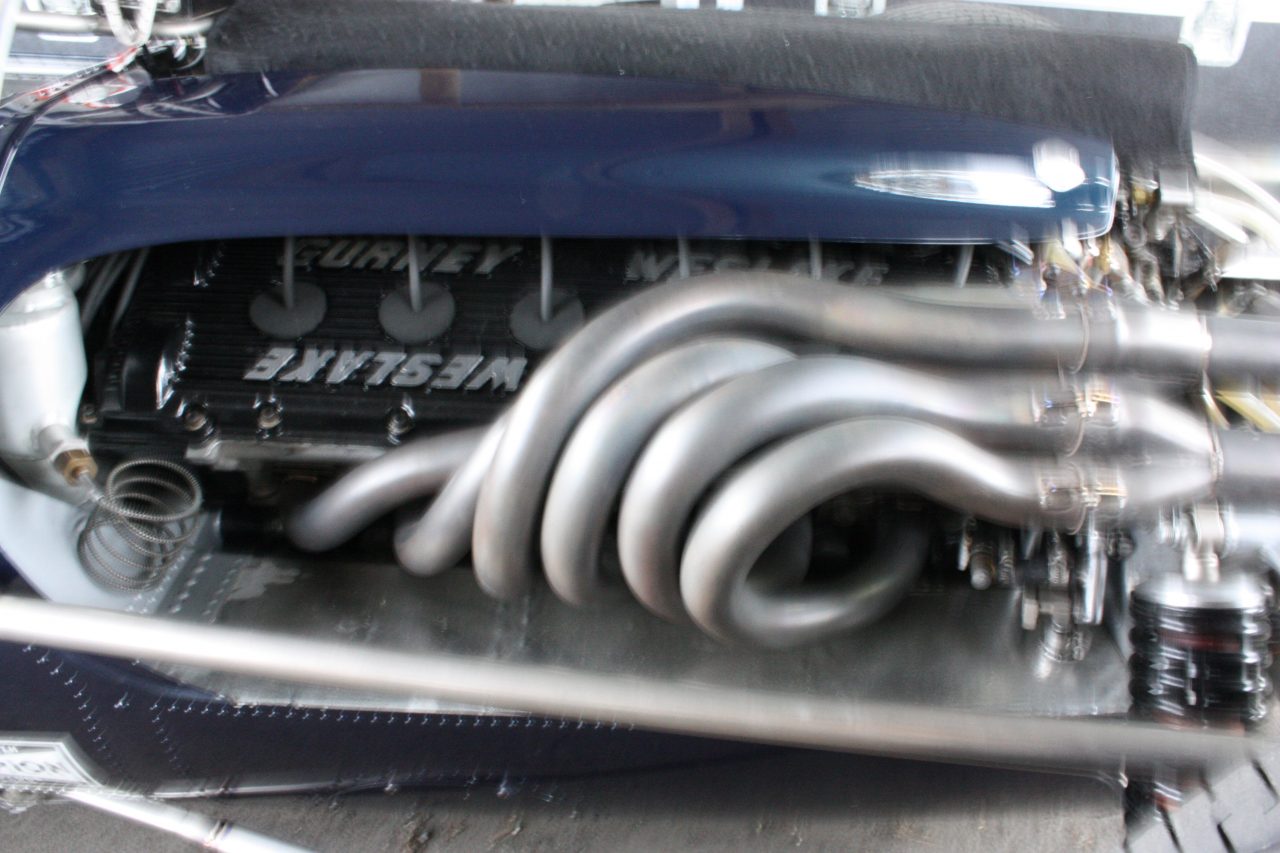
Eagle Westlake Mk 1, Goodwood Revival

The first three Mk 1 chassis built from aluminium, but the forth car seen here was built with the extensive use of titanium and magnesium alloy in an effort to reduce weight. Gurney commented that driving the 104 was like “driving a Ronson cigarette lighter” as magnesium alloy is exceptionally flamable.
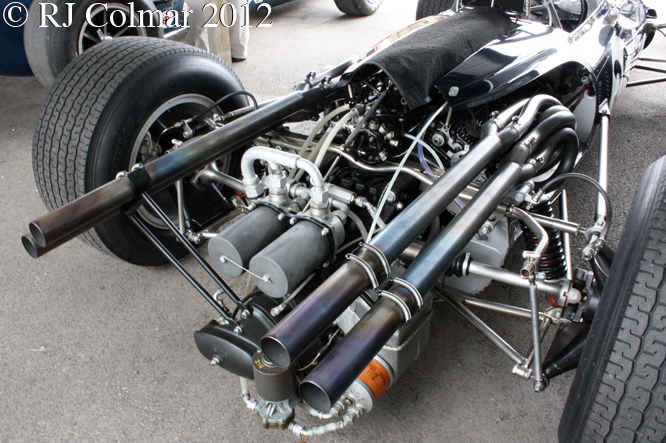
Eagle Westlake Mk 1, Goodwood Revival

Just one week after his victory in the Le Mans 24 hours with AJ Foyt with whom he shared a Ford Mk IV, at the 1967 Belgian Grand Prix Gurney qualified AAR104 on the front row next to Jim Clark in his Lotus 49. Clark led the race until he needed an unscheduled stop to change his spark plugs. Jackie Stewart starting from sixth took over the lead while Gurney also had an unscheduled stop to cure a fuel pressure problem. Gurney resumed in second place when Stewart’s car developed a gear box problem. With 8 laps to go and breaking the 8 year old Spa Francochamps lap record Gurney swept into the lead and the first Grand Prix victory by an American driving and American car since Jimmy Murphy won the French Grand Prix driving a Dusenberg in 1921. He also started the habit of spraying champagne during Grand Prix victory race celebrations, having done so for the first time at Le Mans a week earlier.
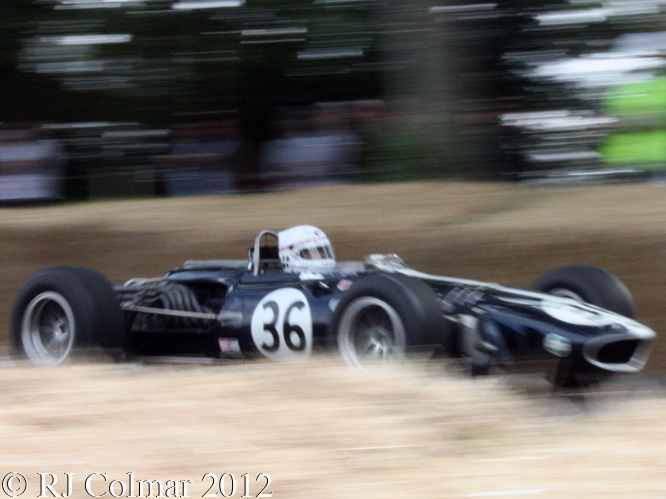
Eagle Westlake Mk 1, Goodwood, Festival of Spee

At the German Grand Prix Gurney led and set the fastest lap again when his car retired with half shaft failure with 3 laps to go. That fastest lap on Europe’s most challenging circuit was particularly satisfying. Dan’s only other finish in ’67 was 3rd in the Canadian Grand Prix.

Running out of money the AAR team continued into 1968 at the Nurburgring again, but this time in the fog and rain Gurney had another satisfying if unrewarding drive having recovered from last place after a puncture to a season best, indded only, ninth finish for the Eagle. During that race Gurney became the first man to wear a, Bell, full face helmet in a championship Formula One race.

The Eagle Mk 1 appeared for the last time at the Italian Grand Prix where Dan qualified 12th, but retired with an overheating motor. AAR acquired a Ford Cosworth powered McLaren M7A with which to compete in the last three races of the 1968 season, scoring a best 4th place finish in the US Grand Prix.

Note: The Eagle Mk 1 is often referred to as the Eagle T 1 G which was Len Terry’s designation for the design.

Thanks for joining me on this “Like No Lighter You’ve Known Before” edition of “Gettin’ a li’l psycho on tyres” I hope you will join me again tomorrow for Ferrari Friday. Don’t for get to come back now !
Share

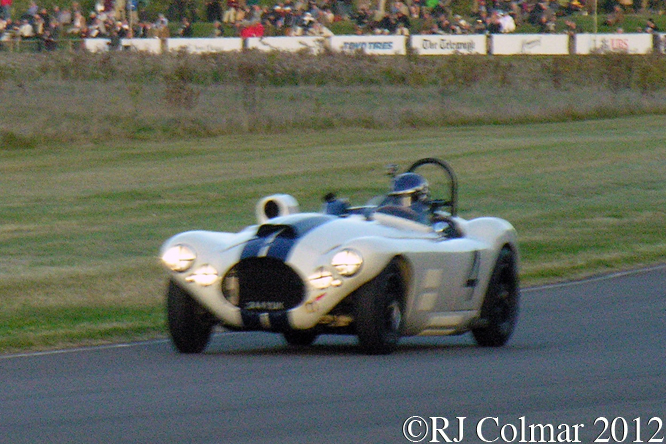
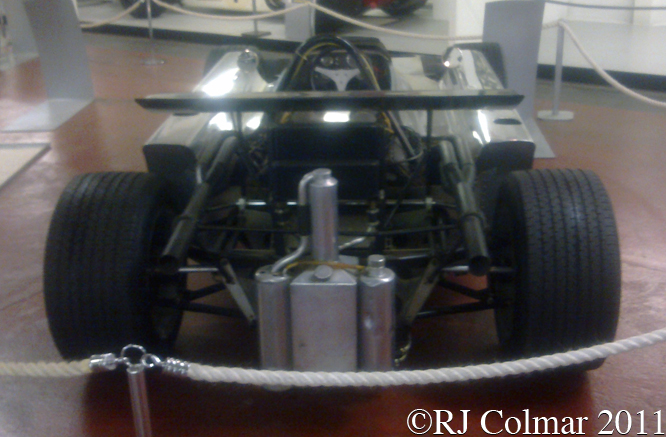
Once Round The Clock – Cunningham C4-R C3 #5238 Continuatuation

Legendary American Sportsman Briggs Swift Cunningham II was introduced to motor racing by his uncle as a teenager just after the 1914/18 war and in 1930 he started racing cars founding the Automobile Racing Club of America in 1933 which was renamed Sports Car Club Of America (SCCA) in 1944 with his college friends Miles and Samuel Collier.

By 1940 he was building specials including the Bu-Merc which featured a Buick chassis and Mercedes SSK chassis. In 1950 Cunningham took to Cadillacs one Le Petit Pataud a Series 61 Coupé the other Il Montre fitted with a special body to Le Mans where the cars finished 10th and 11th.

Cunningham C4-R, Goodwood Revival

Such was the success and popularity of the Cunningham Cadillacs that Brigg announced he would build an American car to challenge for over all victory at Le Mans in 1951. The first challenger the Cunningham C2R of which two were built managed an 18th place finish and retirement between them in 1951.

The Cunningham Continental C3 was a road car using a chassis derived from the racer with a Chrysler Hemi motor and an Italian body built by Vignale. 25 C3’s were built.

Cunningham C4-R, Goodwood Revival

In 1952 Cunningham entered 3 Chrysler Hemi powered C4R cars into the Le Mans 24 hour race one of which had a Coupé body fitted. Like Pierre Levegh driving a Talbot Lago Briggs Cunningham spent over 12 hours racing at the wheel of his #1 entry unlike Levegh at that point he handed the #1 over to his co driver William Spear and between them they a 4th place finish behind the two winning Mercedes Benz team cars and a Nash Healey.

The C4-R’s would continue to be raced until at least 1956 clocking up at least 12 overall wins the best known of which was at the 1953 Sebring 12 hours where John Fitch and Phil Walters were at the wheel of the winning car. In 1954 Bill Spear and Sherwood Johnston finished 3rd to record the models best finish at Le Mans. Surprisingly Jaguar D-type designer Malcom Slayer observed that the C4-R chassis had “no effective diagonal bracing. It therefore twists so much that the door cannot work if one rear wheel is jacked up”.

Cunningham C4-R, Goodwood Revival

Cunningham entered vehicles including Jaguars, Listers and and an OSCA among many more dominated SCCA racing for a period but never did win Le Mans. Briggs went of to win the 1958 America’s cup on his 12 metre yacht Colombia.

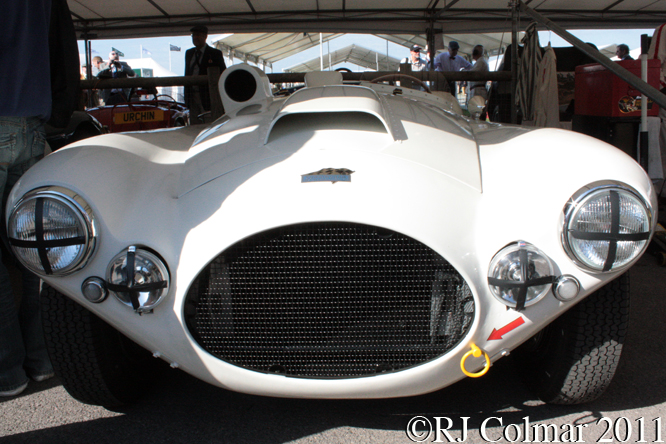
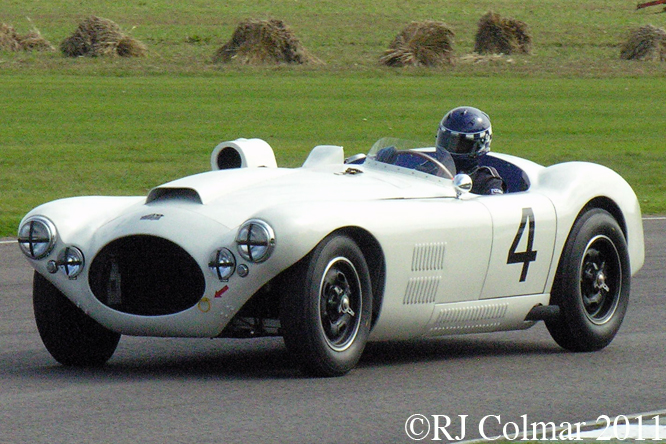
The car seen in these photo’s is a Continuation model, built with the co operation of the Collier Museum around the last Cunningham C3 chassis #5238 which never received it’s intended Vignale bodywork after Briggs shutdown the C3 manufacturing operation.

Cunningham C4-R, Goodwood Revival

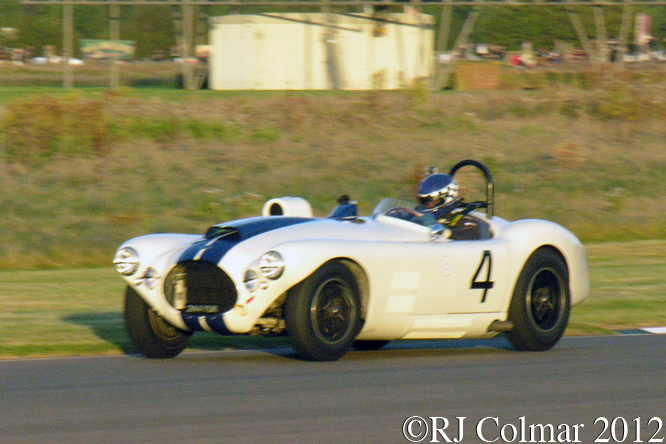
#5238 has been built as an exact recreation of a C4-R by Jim Stokes Workshops, Waterlooville, Hampshire, UK using a many parts donated by the Collier Museum and a body built by Roach Manufacturing who used a digital scan of one of the original C4_R’s as a template. Even the wheels have been cast in magnesium using the original Cunningham wheel moulds.

Ben Shuckburgh is seen driving the car at the Goodwood revival in 2011 and 2012, it is the fifth C4-R continuation to be built four examples were built in the 1990’s by Cunningham Historic Motor Cars, owned by Larry Black & Briggs S. Cunningham III that were authorized by the Cunningham family.

Cunningham C4-R, Goodwood Revival

My thanks to Cunningham Motorsport Historian Lawrence W. Berman for the information on the build of today’s featured car.

Thanks for joining me on this “Once Around The Clock” edition of “Gettin’ a li’l psycho on tyres” I hope you will join me again tomorrow. Don’t forget to come back now !
Share

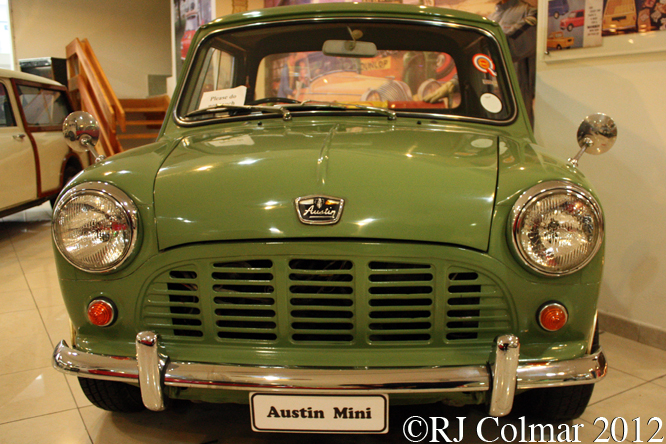
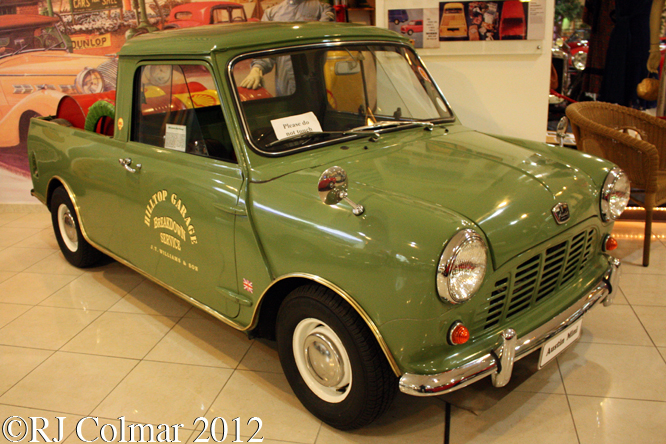
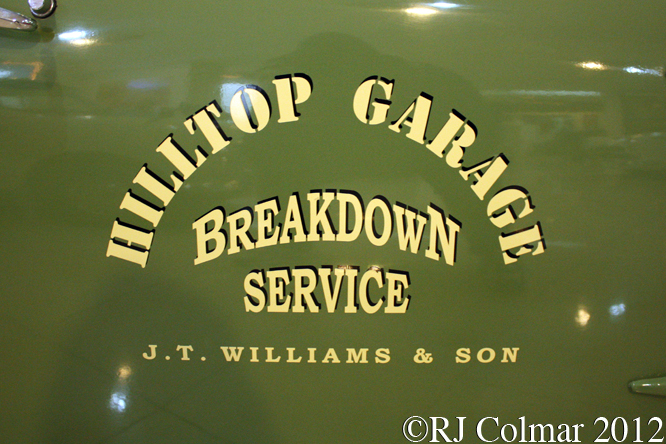
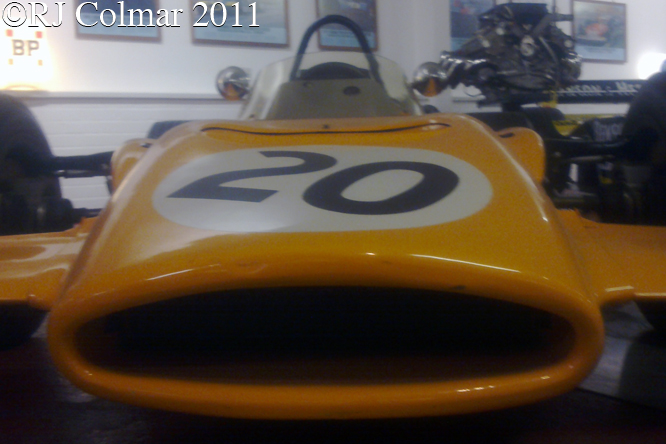
Slick & Economical – Austin Mini Pick Up

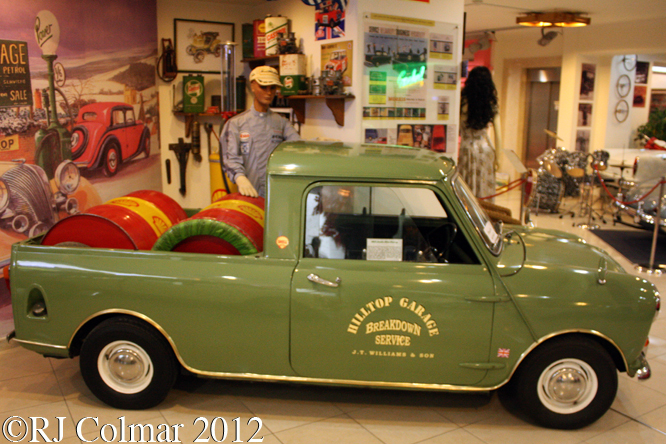
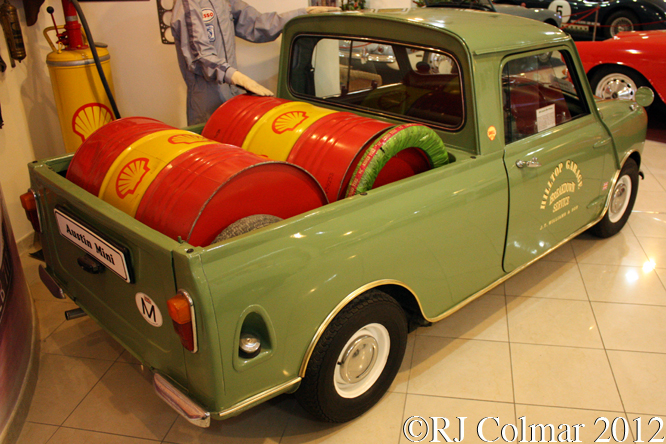
Between 1961 and 1982 there were very few changes to the Austin Mini Pick-Up except in 1978 when the model was marketed as the Mini 95.

Austin Mini - Pick-up, Malta Classic Car Museum, Qwara

The 1961 Sales brochure reads “The slickest and most economical means ever of transporting a 5-cwt.(254-kg.) load!

Austin Mini - Pick-up, Malta Classic Car Museum, Qwara

Ingenious design and practical body styling have been successfully co-ordinated to produce this revolutionary runabout, ideally suited to the needs of the smaller business.

Austin Mini - Pick-up, Malta Classic Car Museum, Qwara

Such tradesman as plumbers, builders, painters or nurserymen will find that within the compact proportions of the Austin Mini 1/4-ton Pick-up are approximately 19 3/4 sq. ft, (1.83m.²) of floor space and a totally enclosed cab with saloon car comfort for two people.”

Austin Mini - Pick-up, Malta Classic Car Museum, Qwara

The portion of the brochure devoted to the van went on “Similar to the world-beating, incredible Austin Mini Saloon, both of these new light commercials have all the identical features for ultra-safe, speedy and dependable delivery service.

Austin Mini - Pick-up, Malta Classic Car Museum, Qwara

Over the 21 years of it’s production life an estimated 58,179 Mini Pick-ups were built with the Austin, Morris and after 1976 Leyland badges.

Today’s featured example is on display at the Malta Classic Car Museum in Qwara.

Thanks for joining me on this “Slick and Economical edition of “Gettin’ a li’l psycho on tyres” I hope you will join me agian tomorrow for a look at the last of this month’s Tuesday featured Wolseley cars. Don’t forget to come back now !
Share