Tag Archives: Museum

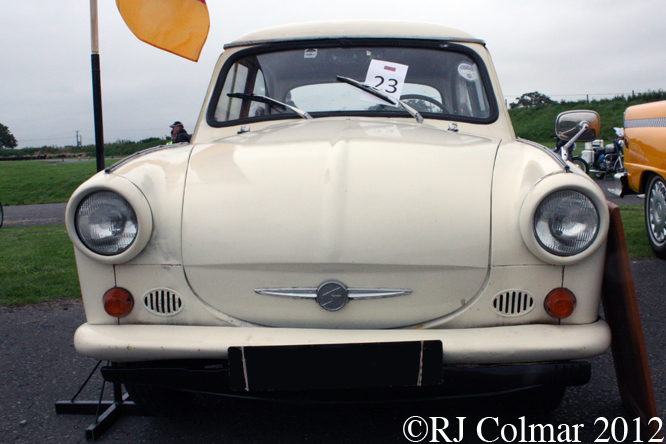
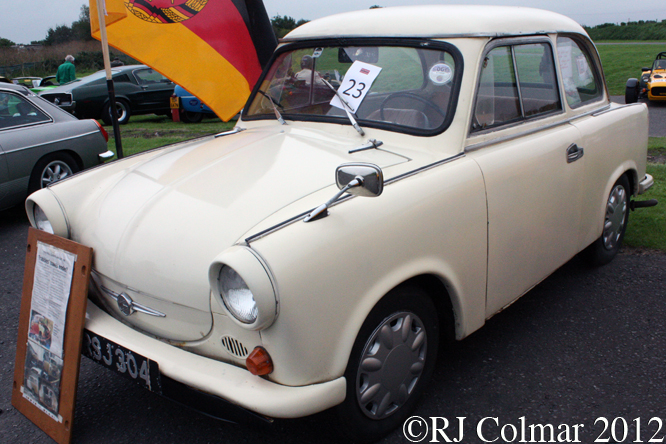
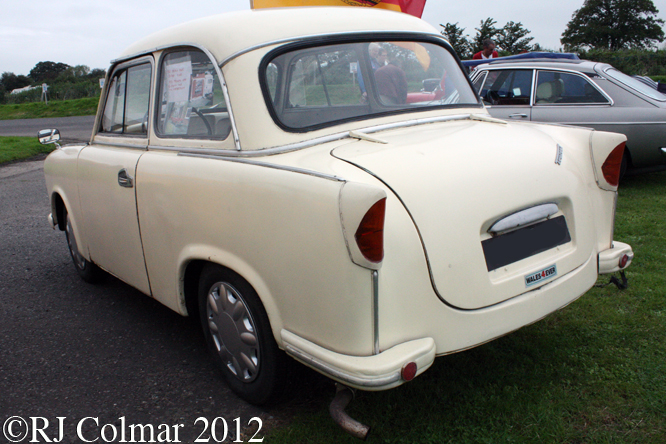
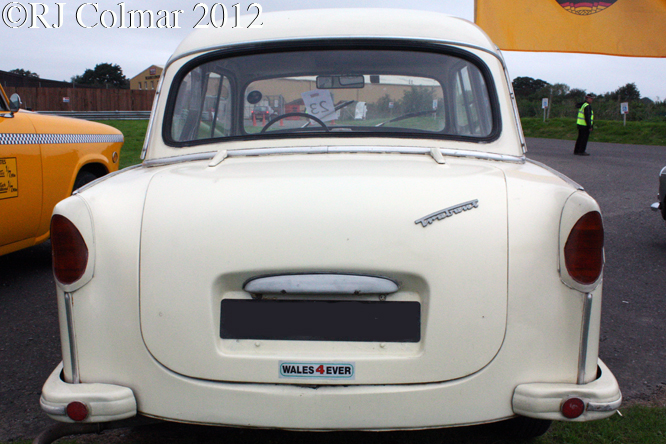
Scavenged and Salvaged – Trabant P60

VEB Sachsenring Automobilwerke in Zwickau, Sachsen, East Germany was named after the Sachsenring race track and made use of manufacturing plants that had once belonged to Horsch and Audi before the 1939/45 war.

Trabant P60, Rare Breeds, Haynes International Motor Museum

East Germany’s need for agricultural equipment led VEB Sachsenring to making tractors before moving into the automobile market with a variety of water cooled 2 stroke and 4 stroke vehicles.

Trabant P60, Rare Breeds, Haynes International Motor Museum

The P60 was the second Trabant to be powered by an aircooled 594 cc / 36 cui 2 stroke motor which produced no more than 20hp.

Trabant P60, Rare Breeds, Haynes International Motor Museum

Like all Trabants the petrol tank was mounted above the motor and used only gravity to feed the two stroke mixture to the engine. The fuel gauge was a piece of graduated wood which acted as a dip stick.

Trabant P60, Rare Breeds, Haynes International Motor Museum

This particular 1962 P60, seen at the Rare Breeds show held at Haynes International Motor Museum, was rescued in 1996 from atop a pile of cars in Gatebeck, Cumbria, after it had been scavenged for parts for another P60 that resided in the Isle of Man.

Trabant P60, Rare Breeds, Haynes International Motor Museum

P60’s were in production from 1962 to 1964 when they were replaced by the Trabant 601 that remained in production until 1991.

Thanks for joining me on this “Scavenged and Salvaged” edition of ‘Gettin a li’l psycho on tyres” I hope you’ll join me again tomorrow when I’ll be honoring the first man to record a 200 mph lap in an Indy Car. Don’t forget to come back now !

Share

5th Rare Breeds Show – Haynes International Motor Museum

Last Sunday I managed to pop out for a couple of hours to catch the 5th Rare Breeds Show at the Haynes International Motor Museum.

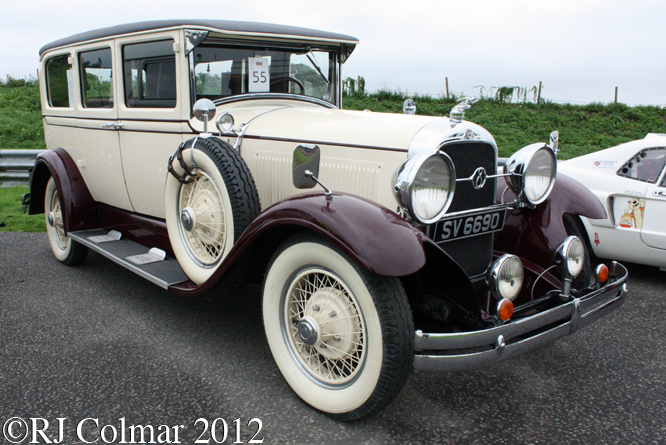
Studebaker President 8 Limousine (FA), Rare Breeds, Haynes International Motor Museum

Back in 1928 $2,450 could get you this Studebaker President 8 Limousine powered by a 100 hp 5121 cc / 313 cui straight 8 motor. This car which competed on price with Chrysler and Buick but in interior finish with Packard and Duesenburg, was built in Walkerville Canada and is believed to be the only one of 2450 built still on the road. It is operated as a wedding car by vintage-wheels.co.uk.

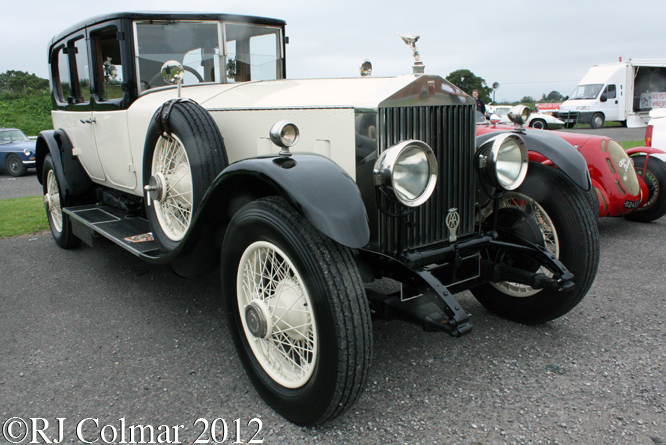
Rolls Royce Phantom I, Rare Breeds, Haynes International Motor Museum

Rolls Royce New Phantoms, built from 1925 to 1929 replaced the Rolls Royce Silver Ghost series, with a new overhead valve six cylinder motor replacing the side valve motors of the earlier models. These cars were built in Derby England and Springfield Massachusetts. This 1929 model would be one of the last New Phantoms built, they were replaced in 1929 by the Phantom II at which point New Phantoms became retrospectively known as Phantom I’s. I hope you are paying attention in the back there, this car was one of several at the rare breeds show operated by rrelite.co.uk.

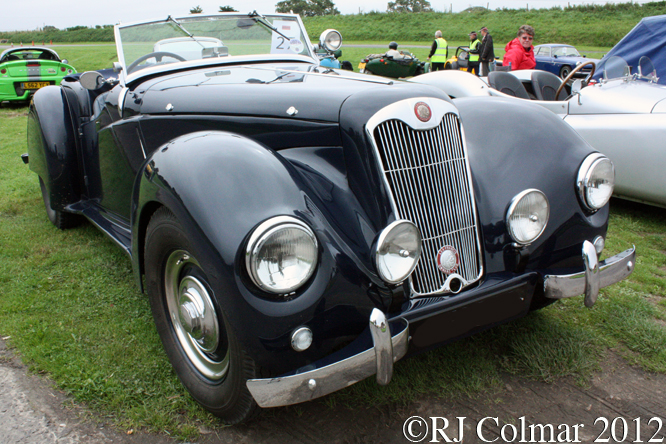
Lea Francis 14HP Sports, Rare Breeds, Haynes International Motor Museum

Weighing a ton but armed with a 87 hp motor a Lea Francis 14(taxable)hp Sports could reach 87 mph with steering and, rod operated, brakes to match. Unfortunately it’s price meant just 111 of these car were built between 1947 and 1949. This 1948 example is one of over 40 known survivor’s.

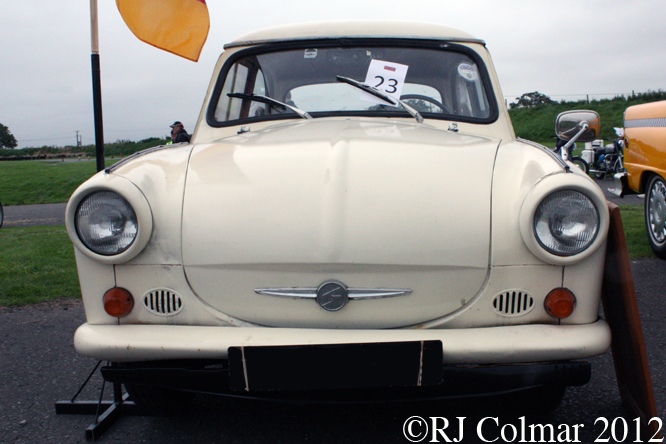
Trabant P60, Rare Breeds, Haynes International Motor Museum

With a name that translates from German to Russian into Sputnik the East German Trabant P50 was launched in 1958 with two cylinder 18 hp 500 cc / 30.5 cui aircooled two stroke motor derived from a pre war DKW. The body made extensive use of Duroplast made from recycled cotton waste from the Soviet Union and local phenol resigns from the dye industry. This 1962 P60 is fitted with the more power powerful 23 hp 600cc / 36.6 cui motor that would remain in production, from 1964 in the ‘updated’ 601 series bodies, until the collapse of the Berlin wall 1989.

Volkswagen Type 2, Rare Breeds, Haynes International Motor Museum

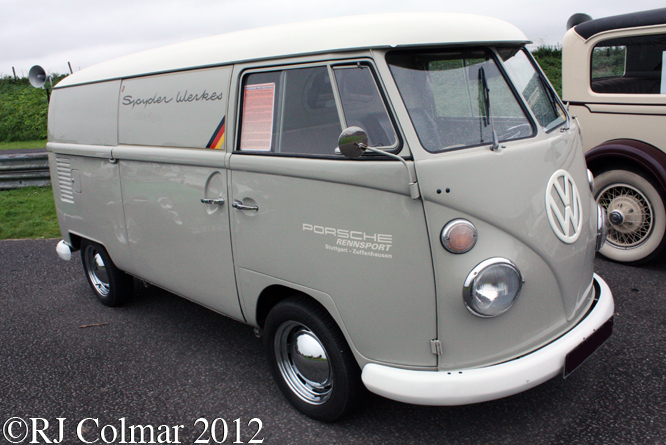
Despite having only 27,000 miles on the clock this 1966 Volkswagen Type 2 has many stories to tell, it started out like as a fire truck at Zurich Airport, it has rare for the period sliding doors on both sides to facilitate access to the fire pump that used to be inside. It then served as a fire truck in a Swiss Village, with 15,000 miles on the clock it came to the UK in 2003 and was bought and returned to it’s original factory supplied colours by Ross Gammie who discovered that it’s 53 hp was not really enough to pull his Porsche 908 race car. Since it’s redesignation as a race support vehicle the van with it’s period correct Porsche 356 wheels has since changed hands again.

FT Bonito Special, Rare Breeds, Haynes International Motor Museum

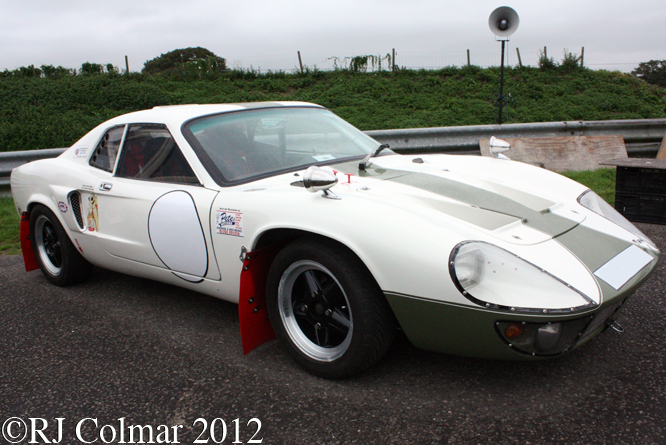
Amazingly the FT Bonito Special above also started life as a Volkswagen, a 1967 Beetle, before a conversion was started in 1986 to turn the bug into an FT Bonito, a kit car from a company called Fibrefab. The current owner found it unfinished in a garden in 1999 and has since brought it too life with a VW Golf motor. This is thought to be the only competition version of an FT Bonito ever to have been built.

Lenham ALFA Romeo, Rare Breeds, Haynes International Motor Museum

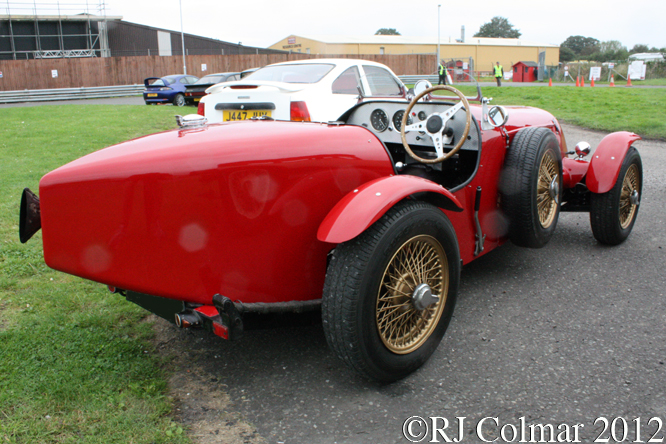
David Roots Lenham ALFA Romeo special was looking resplendent, even on a dull day, as usual.

Checker Marathon, Rare Breeds, Haynes International Motor Museum

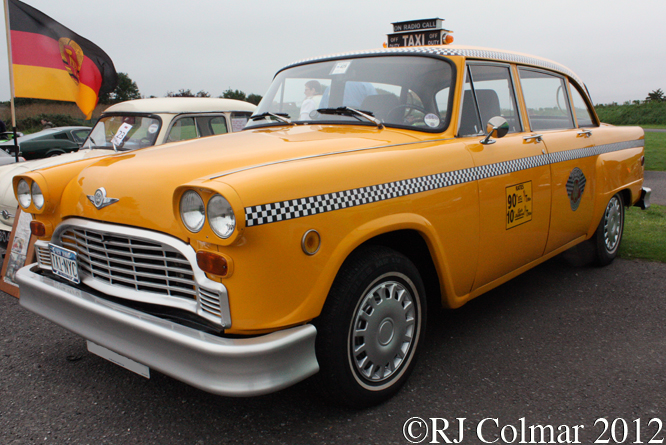
The New York ‘cab’ above is a 1978 Checker Marathon with a 160 hp 5735 cc / 350 cui V8 motor. The car is also operated for weddings and filming by rrelite.co.uk . Among it’s credits is an appearance in the 2008 Boyzone number Love You Anyway.

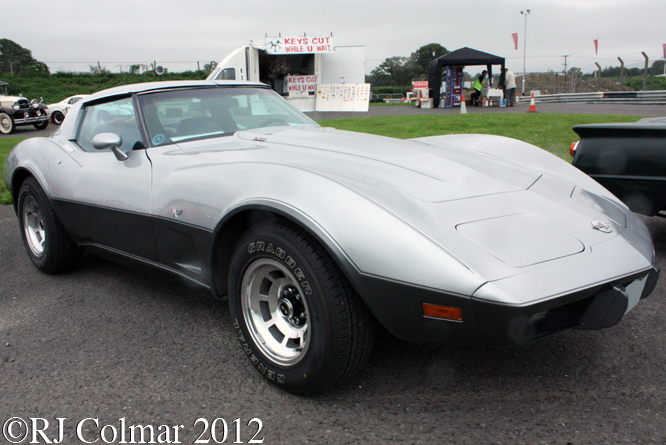
Chevrolet Corvette, C3 B2Z, Rare Breeds, Haynes International Motor Museum

I looked in detail at a Chevrolet Corvette C3 some weeks ago the 1978 model seen here has the $399 B2Z 25th Anniversary option two tone paintwork along with the 25th Anniversary mandatory $380 option aluminium wheels and sport door mirrors.

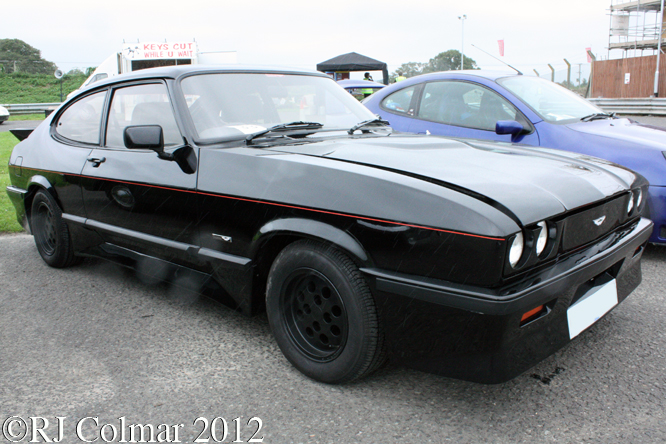
Tickford Turbo, Rare Breeds, Haynes International Motor Museum

The Tickford Capri is a Ford sanctioned hand built Ford Capri with a 205 hp turbocharged motor that cost double the price of a standard 170 hp Ford Capri 2.8i. This 1984 example #002 was the first type approved version, ordered by someone desperately keen to have one built as close to the prototype show car before Tickfords had even moved into the planned production facility for the series.

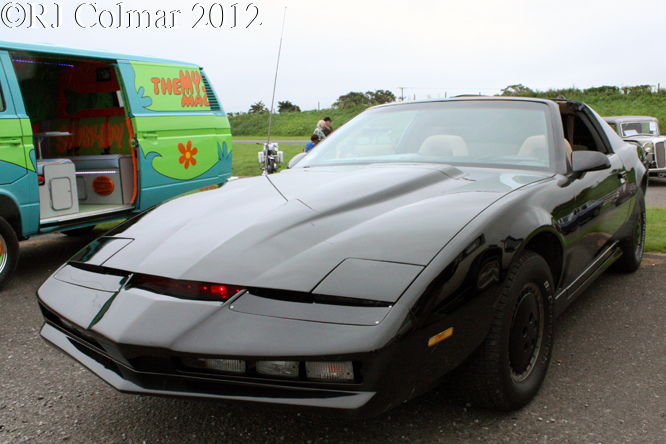
Knight Industries Two Thousand, Rare Breeds, Haynes International Motor Museum

The 1984 Pontiac Trans Am based Knight Industries Two Thousand (K.I.T.T) was developed for the Foundation for Law and Government (FLAG) by Wilton Knight and was essentially an artificially intelligent electronic computer module installed in an advanced, mobile, robotic automobile.

The original 1982 K.I.T.T was a hard top, but no doubt in danger of getting a hot head due to his crime fighting success, it was deemed that Micheal Knight be given a Targa Top for the 1985 crime wave. This particular K.I.T.T thought to be one of thirty built is operated by rrelite.co.uk.

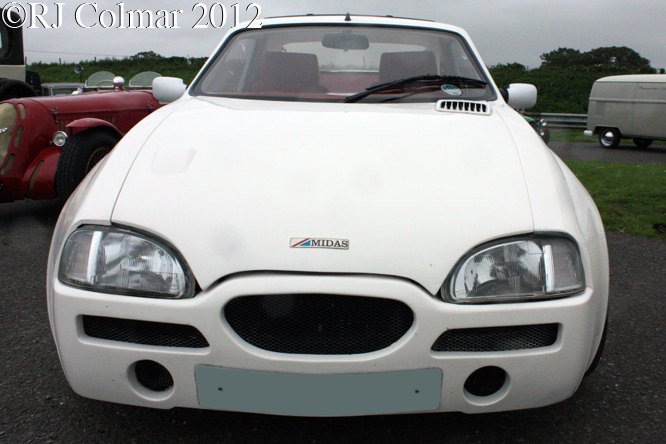
Midas Cortez, Rare Breeds, Haynes International Motor Museum

This 1991 Midas Cortez is the spiritual ancestor of the Mini Marcos with Rover Metro running gear.

Thanks for joining me on this “5th Rare Breeds Show” edition of “Gettin’ a li’l psycho on tyres” I hope you will join me again tomorrow. Don’t forget to come back now !

Share

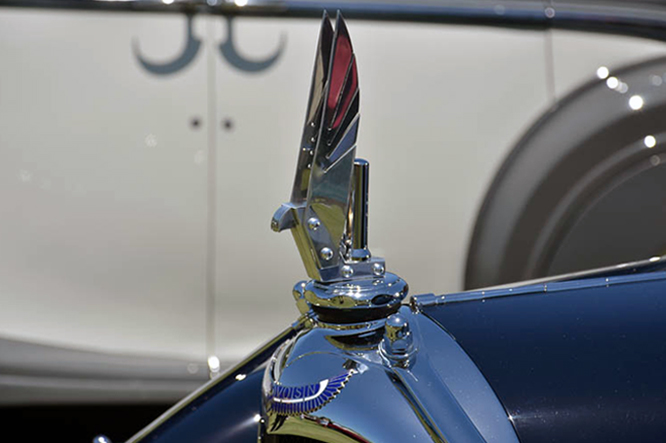
Pneumatic Sunroof – Avions Voisin C-25 Aerodyne

Successful pioneer aviator and aircraft manufacturer Gabriel Voisin turned his back on aviation after the Great War of 1914-1918 to focus on the manufacture of automobiles some of which, including his 1923 C6 Labortoire monocoque Grand Prix car count as some of the most innovative, exotic, distinctive if not plain idiosyncratic and outlandish ever seen.

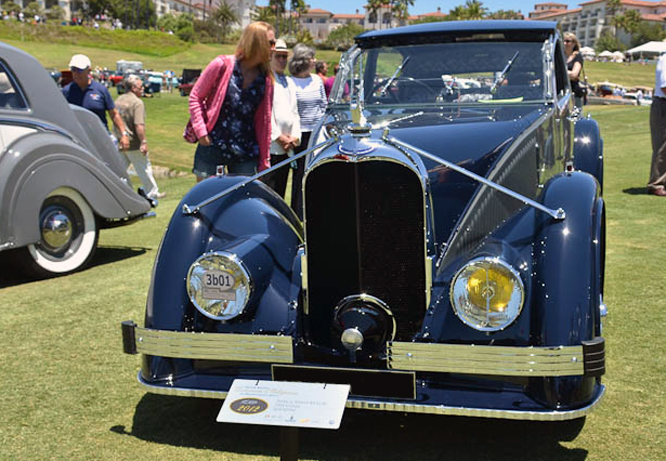
Avions Voisin C-25 Aerodyne, Dana Point Cd'E

The prototype C-25 first seen in 1934 included a radial 7 cylinder motor that was dropped in favour of a 2994 cc / 182.7 cui straight 6 cylinder motor for the production models such as the one seen in Geoffrey Horton’s photographs taken at this years Dana Point Concours d’Elegance.

Avions Voisin C-25 Aerodyne, Dana Point Cd'E

The aluminium panels of the wings / fenders of the C-25 Aerodyne are not the only ones supported by struts in the Avions Voisin range.

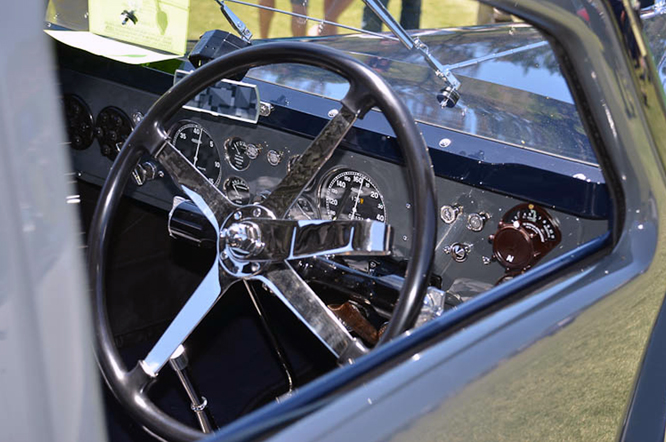
Avions Voisin C-25 Aerodyne, Dana Point Cd'E

No expense was spared in the interior appointments, the bespoke cloth to a Voisin design is just as distinctive as the rest of the car as are the René Lalique designed ashtrays.

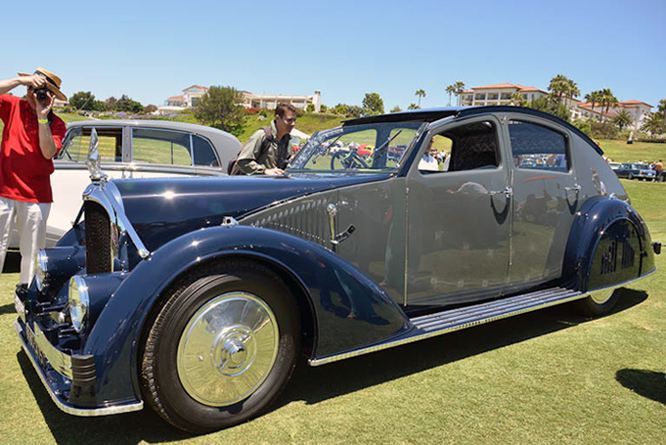
Avions Voisin C-25 Aerodyne, Dana Point Cd'E

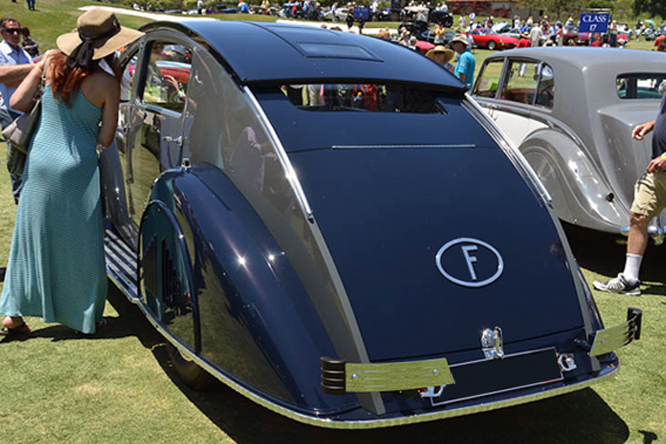
The C-25 was also fitted with a pneumatically operated sunroof,

Avions Voisin C-25 Aerodyne, Dana Point Cd'E

the carrier rails for which can be clearly seen in this photograph.

This particular car is one of 3 or 4 known to exist from a total production believed to have been no more than seven. After a six year restoration by the Californian Mullin Automotive Museum the car won Best in show at the 2011 Pebble Beach and 2012 Dana Point Concours d’Elegance, events.

My thanks to Geoffrey Horton for sharing his fabulous photographs.

Thanks for joining me on this ‘Pneumatic Sunroof’ edition of “Gettin’ a li’l psycho on tyres”, I hope you will join me again tomorrow. Don’t forget to come back now !

Share

What’s In A Tooth ? – Lotus Ford 49 #R2 & #R3

The Lotus 49 consolidated the principle of using the motor that as an integral structural component of the design that was first seen on the BRM P83 and Lotus 43 which were both powered by the novel BRM H16 motor in 1966. The 49, designed by Maurice Phillipe however was powered by the then brand new, and much simpler Ford sponsored 3 litre / 183 cui 8 cylinder Cosworth DFV that was the brainchild of Keith Duckworth and Mike Costin.

Lotus 49, Goodwood Festival of Speed

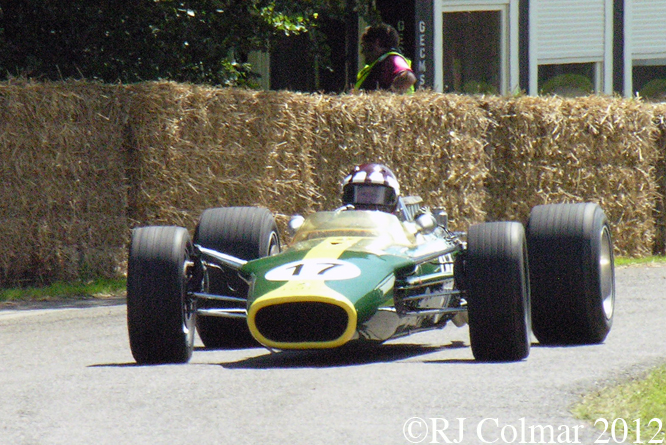
Despite many faults that would surface and be ironed out over the ensuing seasons the Lotus 49’s made a dream debut at Zandvoort for the 1967 Dutch Grand Prix with Graham Hill qualifying on pole and Jim Clark who had never so much as sat in the car before the first practice qualifying 8th. During the race Clark driving chassis #R2, seen above with Jackie Oliver at the wheel at Goodwood, used his legendary speed and mechanical sympathy to well judged victory while Hill experienced timing gear failure with two teeth next to each other on the timing gear breaking. After the race it was discovered Clark’s car had experienced a similar failure however a single tooth remained between the two broken teeth on Clarks timing gear ensuring just enough drive to make it to the finish.

Clark used Chassis #R2 to win both the 1967 British and US Grand Prix before being converted to 49T spec for the Tasman Series of races in Australasia which required an engine capacity of 2.5 litres / 152.5 cui which was achieved by fitting a different crankshaft with a shorter stroke to the DFV motors making them DFW spec. Jim won 4 races in the 8 race Series with the 49T spec chassis #R2 which combined with a couple of points paying places was enough to win the Championship from Chris Amon in his Ferrari 246 Dino.

Chassis #R2 was then loaned to Rob Walker racing during 1968 to replace chassis #R4 which driver Jo Siffert had crashed on his debut in a non championship race at Brands Hatch. Although #R4 was not damaged beyond repair by that accident it was subsequently destroyed in a workshop fire at Rob Walkers premises necessitating the loan of #R2. Once Walkers team had built up a new car, chassis #R7 now in B spec with the tall rear wing, which Siffert used to win the 1968 British GP.

Once chassis #R2 was returned by Rob Walker to Lotus it was immediately pressed into service again after Jackie Oliver had a comprehensive accident in #R6 at the 1968 French GP. For the British Grand Prix #R2 was repainted in Gold Leaf Team Lotus colours and fitted with the winged 49B spec nose cone and high rear wing. The car received further B spec upgrades for the German Grand Prix. Oliver would use chassis #R2 for the remainder of the 1968 season scoring a best 3rd place finish at the season finale in Mexico.

Lotus 49, National Motor Museum Beaulieu

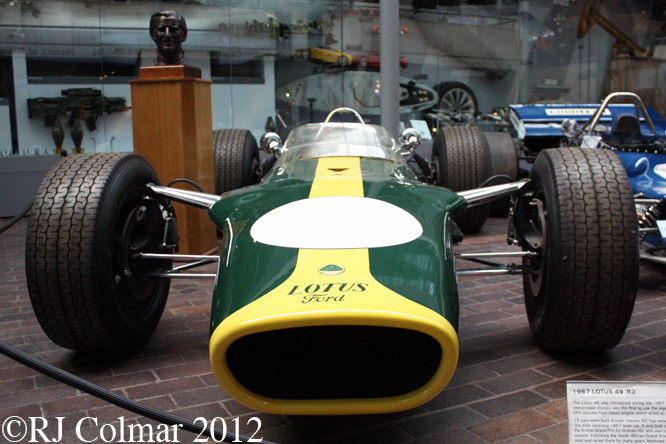
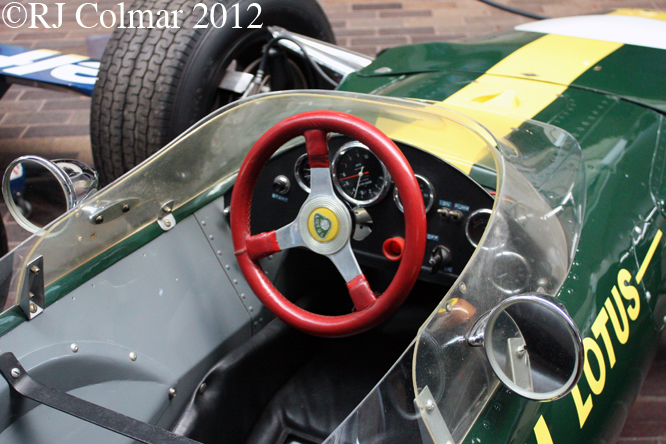
The car seen above at Beaulieu National Motor Museum is chassis #R3 which featured subtle differences to chassis #R1 and #R2 to aid the distribution of loads under braking at the front and to aid access to the brake balance adjuster which had previously only been possible by two mechanics picking up a third smaller mechanic and lowering him into the cockpit upside down ! Note the sculpture of Graham Hill on the plinth to the left of the car in this photo.

Lotus 49, National Motor Museum Beaulieu

Chassis #R3 first appeared at the 1967 British Grand Prix with Graham Hill at the wheel, he qualified 2nd behind Clark but while leading the race first an allen screw dropped off the rear suspension and after it was replaced the engine failed while he was making up good time. Chassis #R3 has the second longest track record of the 12 Lotus 49’s built.

After Hill scored a season best 2nd place in the 1967 US Grand Prix, behind Clark, and opened his championship winning 1968 season with another second place, again behind Clark at Kyalami chassis #R3 was sold to Rhodesian John Love who used the car to win the last two of six consecutive South African Formula One titles in 1968 and 1969, his successor Dave Carlton won the 1970 South African Championship driving the Lotus 49 chassis #R8 which was built to the final C spec.

Lotus 49, National Motor Museum Beaulieu

The 400 hp Ford Cosworth DFV was to become the mainstay of Formula One right through the 1970’s, it was far in advance of the Lotus 49 chassis and would only be toppled by the hugely more expensive turbocharged motors in the early 1980’s after 155 Grand Prix Victories. One of the triangular aluminium top engine mountings can be seen bolted with three bolts on the leading edge of the cam cover tapering into the back of the monocoque to which it was attached by a single bolt. Three further such mountings were all that were required to integrate the motor into the structure of the car.

Lotus 49, National Motor Museum Beaulieu

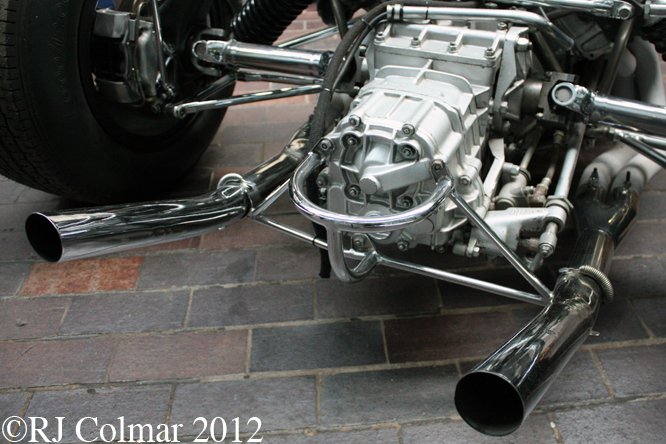
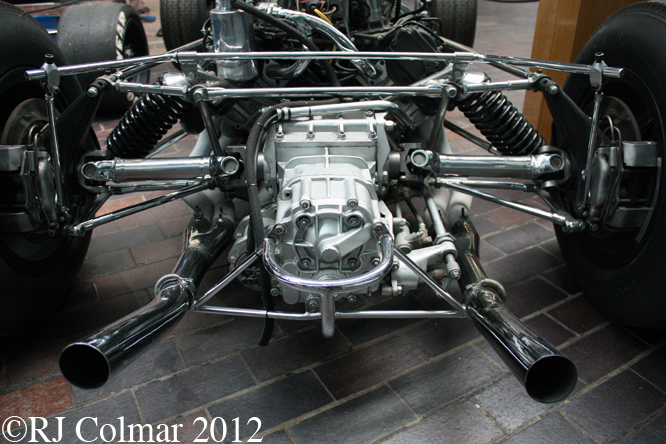
The rear suspension and drive shafts and gearbox would repeatedly prove trouble some for team Lotus as they got to grips with having such a powerful motor. The ZF gearbox in it’s original form was not strong enough and required additional strengthening which can be seen in the form of the thick vertical plate into which the drive shaft disappears. The ZF gearboxes were replaced on the 1968 B spec cars with Hewland units which were much easier to maintain trackside.

Lotus 49, National Motor Museum Beaulieu

The vestigal nudge bar was added to the back of the ZF gearboxes after the 1967 Dutch Grand Prix win in order to comply with a regulation about the dimensions between the end of the exhaust pipe and the back of the car. In other words when Jim Clark won the 1967 Dutch Grand Prix his Lotus 49 did not comply fully to the letter of the existing regulations.

Chassis #R3 is the only one of the Lotus 49’s never to run in B or C spec. Since it has been in the care of the National Motor Museum it has been involved in two serious accidents. The first, on a demonstration run, involved a tree in the Beaulieu grounds where it is kept in 1999 further details of the accident damage can be seen on this link. The second accident with the same driver occurred at a Silverstone Press Day in 2009 fortunately the damage was restricted ‘only’ to the left side suspension as can be seen in these linked photo’s.

Thanks for joining me on this “What Is In A Tooth ?” edition of “Gettin’ a li’l psycho on tyres”, I hope you will join me again tomorrow when I will be looking at a GSM Delta. Don’t forget to come back now !

Share

Diamond Jubilee – Austin A40 Somerset Coupé

Welcome to the Diamond Jubilee edition of “Gettin’ a li’l psycho on tyres”.

Austin A40 Somerset, Malta Classic Car Museum

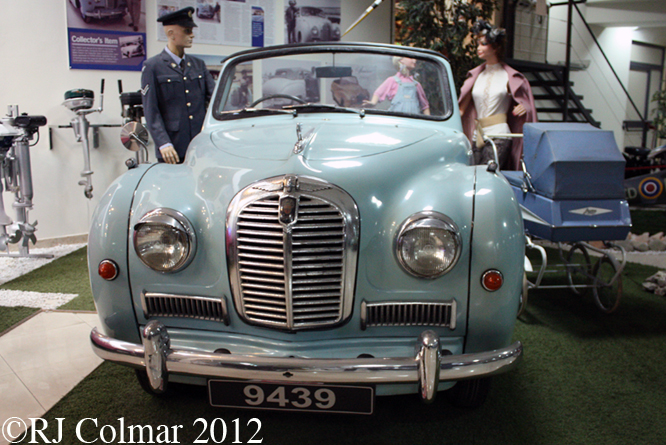
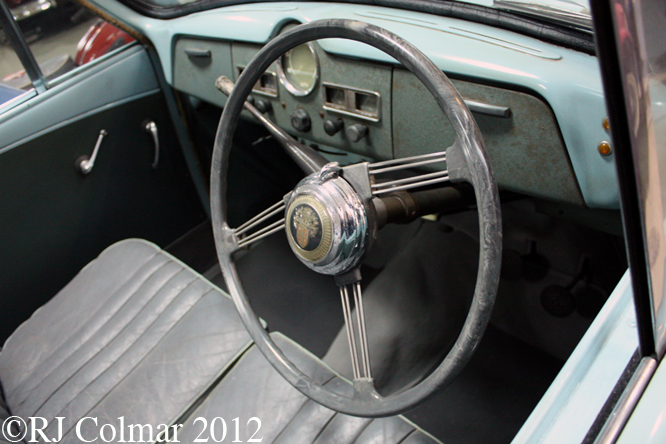
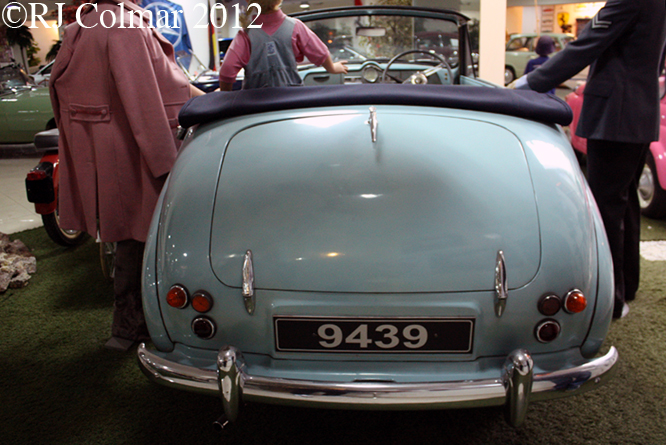
Today’s featured car is an Austin A40 Somerset was launched in 1952 built on a chassis with separate body.

Austin A40 Somerset, Malta Classic Car Museum

The 42 hp motor was described as providing “a virile performance to excite the young enthusiast and a smooth flexibility that enables it to be handled with confidence” in the sales brochure.

Austin A40 Somerset, Malta Classic Car Museum

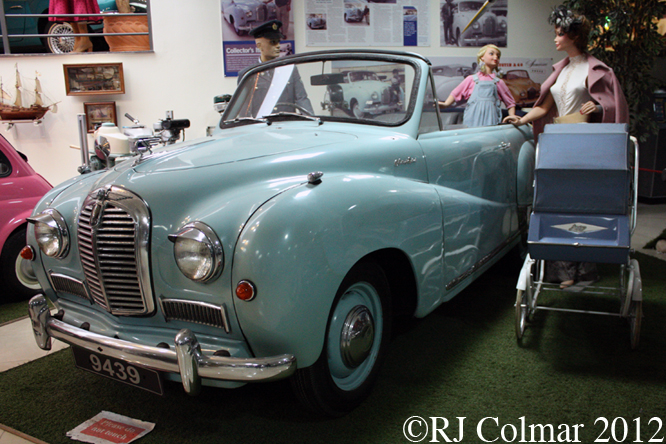
Running on the low octane fuel of post war austerity Britain the claimed top speed for the A40 Somerset was 69 mph though a convertible was independently tested in 1953 with a top speed of 74 mph and rest to 60 mph time of 28.6 secs.

Austin A40 Somerset, Malta Classic Car Museum

This particular vehicle, seen at the Malta Classic Car Collection, was delivered to a customer in Malta and legend has it that in 1952 Queen Elizabeth II drove it, though it is unclear if this was during a state tour or a private visit to Prince Phillip and or his friends who had been stationed on the British Protectorate.

Austin A40 Somerset, Malta Classic Car Museum

Since finding out that this model was marketed as a ‘Coupé’ I have been unable to find out why. Somethings are obviously set to remain a mystery.

Thanks for joining me on this “Diamond Jubilee” edition of “Gettin’ a li’l psycho on tyres”, I hope you will join me again tomorrow when I will be looking at one of my favourate models a Citroen 2CV. Don’t forget to come back now !

Share

Original Wing Car – Lotus Ford 78 #78/R2

After the mixed fortunes of the Lotus 76 with it’s twin wings and electric clutch and the Lotus 77 with it’s fully adjustable suspension Colin Chapman introduced an aerodynamic innovation for the Lotus 78 featured today.

Lotus Ford 78, National Motor Museum, Beaulieu

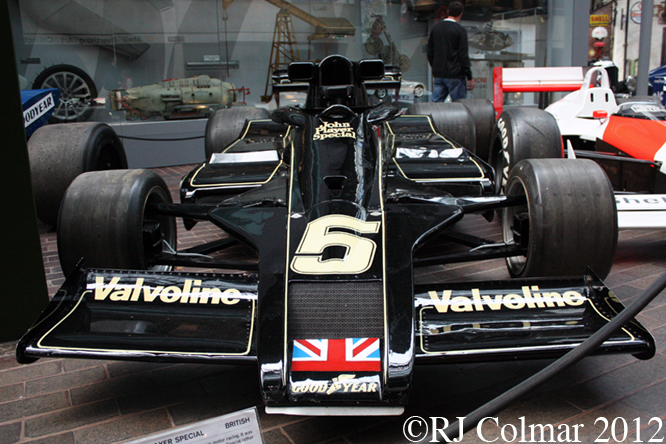
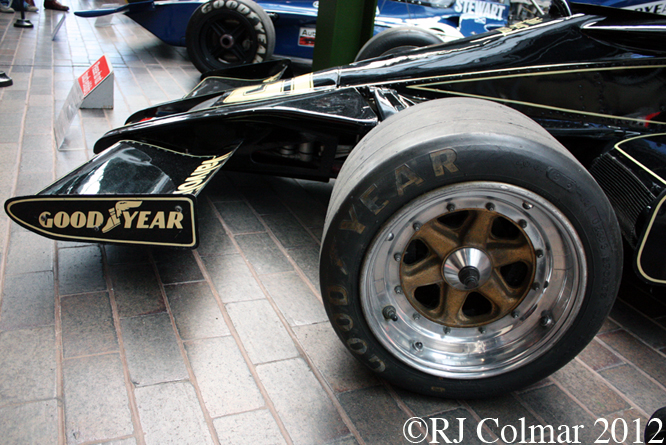
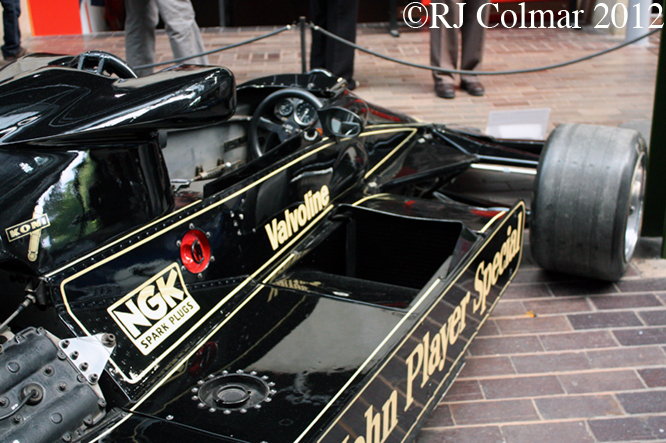
Like the ’77 the Lotus 78 was built around a narrow monocoque with an oil radiator in the nose,

Lotus Ford 78, National Motor Museum, Beaulieu

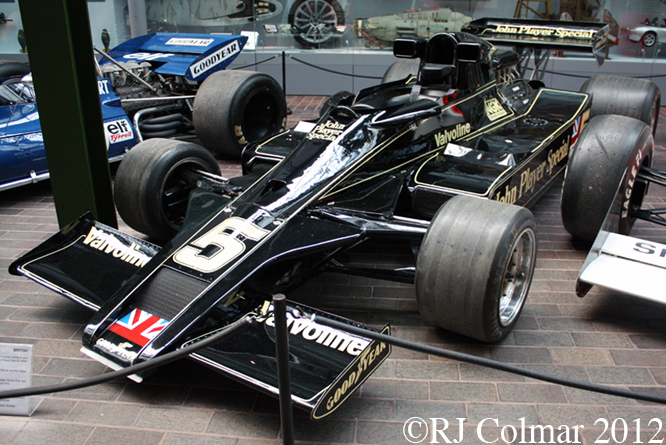
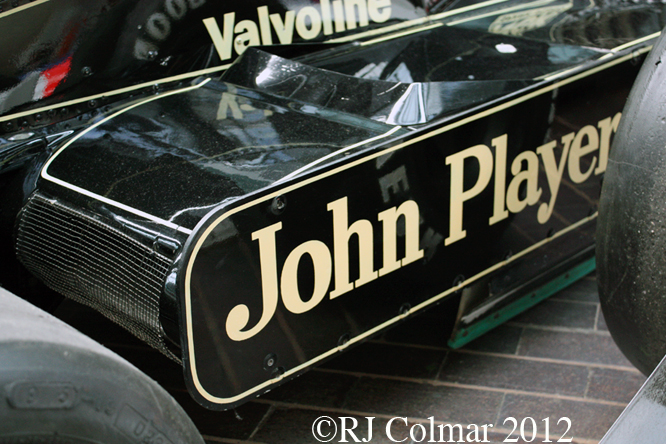
but with much larger sidepods than any Grand Prix car seen before.

Lotus Ford 78, National Motor Museum, Beaulieu

The front wings were used, in conjunction with the rear wing, to trim the aerodynamic balance of the car.

Lotus Ford 78, National Motor Museum, Beaulieu

Using an idea first modeled at BRM by Tony Rudd and Peter Wright the side pods closely resembled the upturned inner wing of a de Havilland Mosquito which Chapman had studied and written a detailed account of.

Lotus Ford 78, National Motor Museum, Beaulieu

Tony Rudd and Peter Wright joined Ralph Bellamy and Martin Ogilvie at Lotus to design the car and its side pods which produced prodigious down force to increase the speed at which it could go around corners without loosing grip.

While conducting wind tunnel tests for the Lotus 78 design at Imperial College London Peter Wright found that as predicted by Bernoulli’s principle of fluid dynamics which states that the flow speed of an ideal fluid with no friction will increase simultaneously with a decrease in pressure. Meaning in the case of the Lotus 78 the faster it went the more down force was generated by the side pods and so the better the car stuck to the road.

Lotus Ford 78, National Motor Museum, Beaulieu

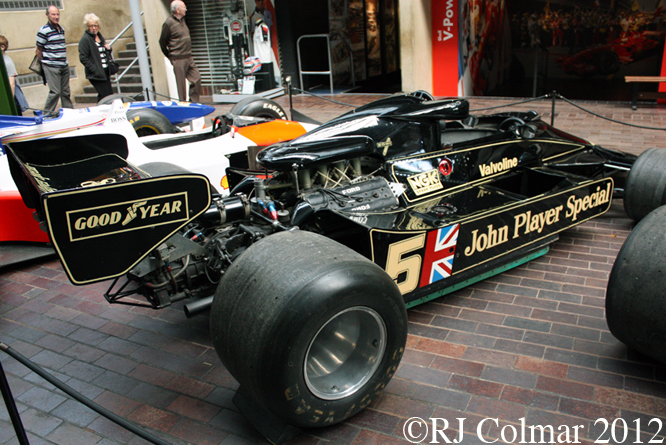
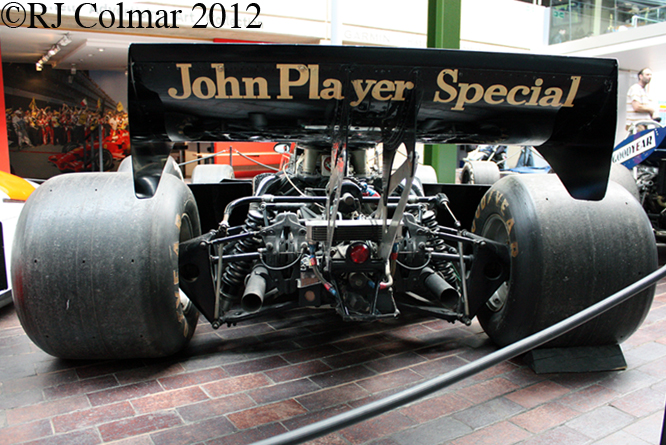
The Lotus 78’s, known as John Player Special III’s by Lotus and their sponsors, were ready to race midway through 1976, but Chapman wisely vetoed their use until 1977 so as not to give rival teams the chance to figure out what Chapman and his team had come up with and copy during the off season.

Lotus Ford 78, National Motor Museum, Beaulieu

Starting the 1977 season Lotus had a huge advantage with the 78’s affording Mario Andretti 5 victories and his team mate Gunnar Nilsson with one more. However the unreliability of the Nicholson McLaren built motors played into the hands of Niki Lauda who, having more or less fully recovered from his near fatal accident in 1976, took only three victories and a string of podium places to claim the championship.

The car seen here at the National Motor Museum, Beaulieu is chassis #78/R2 which Mario Andretti used to start the 1977 season before it was entrusted to Gunnar Nilsson who won the Belgian Grand Prix driving it. In 1978 before the even more radical Lotus 79 was introduced, Lotus returnee, Ronnie Peterson drove the car and snatched a thrilling victory with one lap to go in South Africa.

Mexican Hector Rebaque acquired the car at the end of 1978 season and used it along Lotus 78/R1 which he had been using since the beginning of the 1978 season.

Sadly Ronnie Peterson lost his life after an accident at the start of the 1978 Italian GP where he was driving the back up Lotus #78/R3.

Thanks for joining me on this “Original Wing Car” edition of “Gettin’ a li’l psycho on tyres”, I hope you will join me again tomorrow when, thanks to some photographs from Geoffrey Horton, I’ll be looking at some of the vehicles in attendance at the Marin Samoma Concour’s d’Elegance. Don’t forget to come back now !

Share

Automobilists Cave – National Motor Museum Beaulieu

Beaulieu Abbey was built on land bequeathed by King John to a group of Cistercian monks, more strict in their vows of Poverty, Chastity and Obedience than Benedict monks, in 1204. The newly self appointed defender of the faith and head of the Church of England, King Henry the VIII, dissolved the abbey and had it destroyed in the 1530’s and the Beaulieu estate passed into the hands of secularist Thomas Wriothesley in 1538 who converted the monastry Great Gatehouse into a dwelling now known as the Palace House. His ancestor the present Lord Montagu created a Motor Museum in 1956 as a tribute to his father the Motoring pioneer John, Second Baron Montagu of Beaulieu.
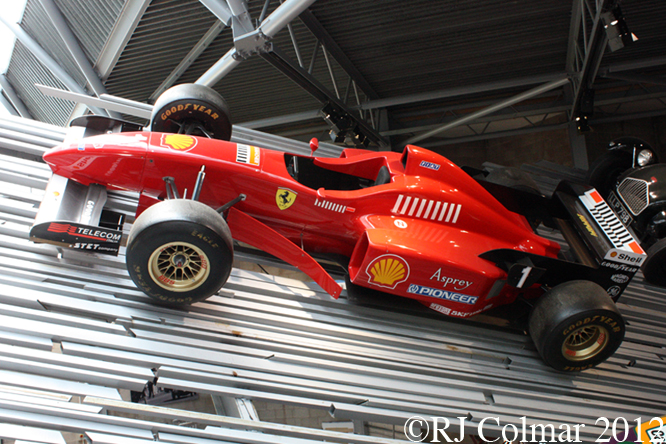
Ferrari F310, NMM Bealieu

The last, only, time I visited Beaulieu was on a rainy day in June 1974, I remember reading about Niki Lauda’s first victory driving a Ferrari 312 B3, at the Spanish Grand Prix, in Motor Sport Magazine in the back of the car on the way down. This time my trip was fueled by the Simply Italian parade featured on GALPOT yesterday and a need to replenish my stock of Ferrari images which are getting low. The only Ferrari in the National Motor Museum last Sunday was this replica 1996 F310, interestingly the nose is of the earlier type than the replica F310 that sits in the Haynes International Museum. This low nose replica matches the form of the nose that was fitted to Micheal Schumachers F310 when he won the 1996 Spanish Grand Prix, his first victory in a Ferrari.
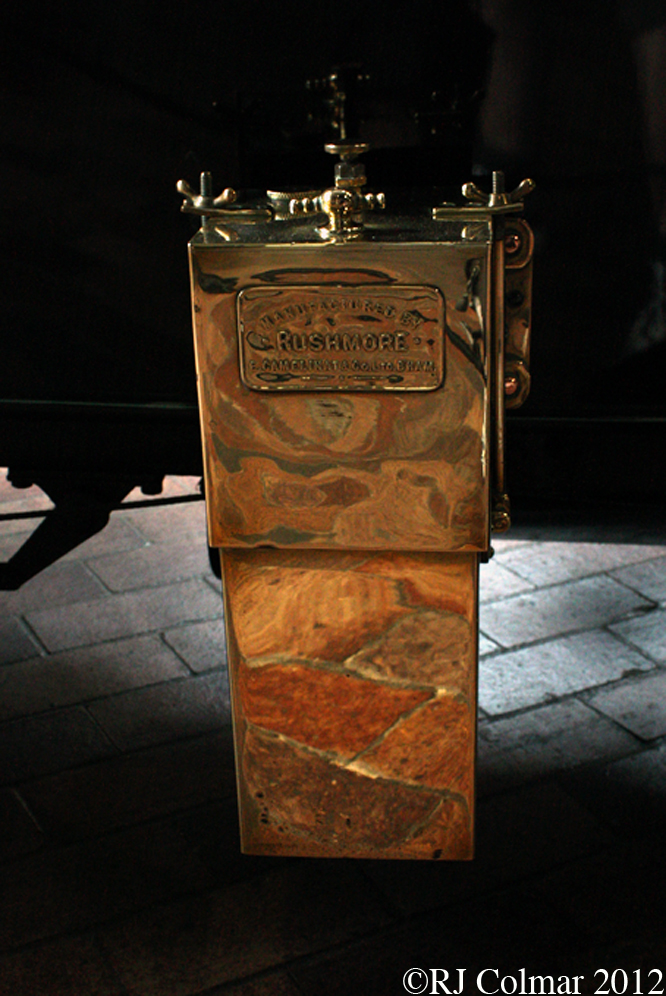
Bugatti T15, NMM Bealieu

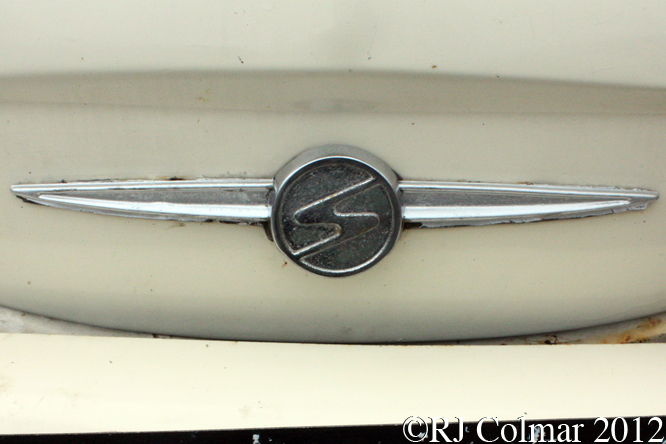
Seems like every time I leave the house on some motor related expedition I come back with far more questions than answers. This cool piece of brass work, I presume it’s brass, was attached to the side of a 1910 Bugatti T15. The top looks a tad sophisticated for this to be a simple motor oil or motor spirit receptacle, if you have any idea’s what it is please chime in below.
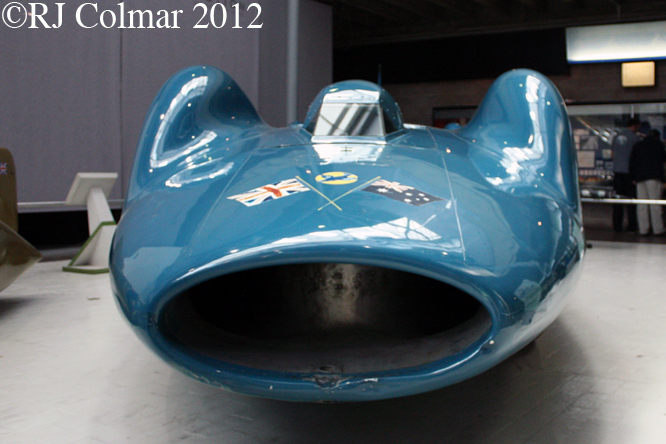
Bluebird Norris Proteus CN7, NMM Bealieu

My earliest flights of imagination into unadulterated raw speed were undoubtedly inspired by the exploits of Donald Campbell to reach 500 mph in the 4,450hp Bluebird Norris Proteus CN7 in the early 1960’s, being a terrible tease I’ll save the outcome of his attempt for a future blog.
Bloody Mary, NMM Bealieu

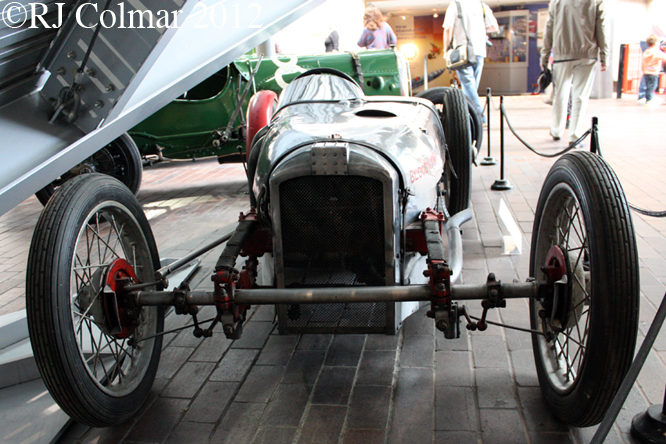
Thanks to GALPOT reader Tim Murray I have been enjoying a book called Special by John Bolster, John built ‘various devices’ himself including Bloody Mary seen here, a successful JAP powered ‘device’ built in the early 1930’s. I’ll save full details for another occasion save to say John was the only one who had the confidence in his own work and was brave enough to take this device to victory lane in sprint and hillclimb event’s !
Austin A40 Countryman, NMM Bealieu

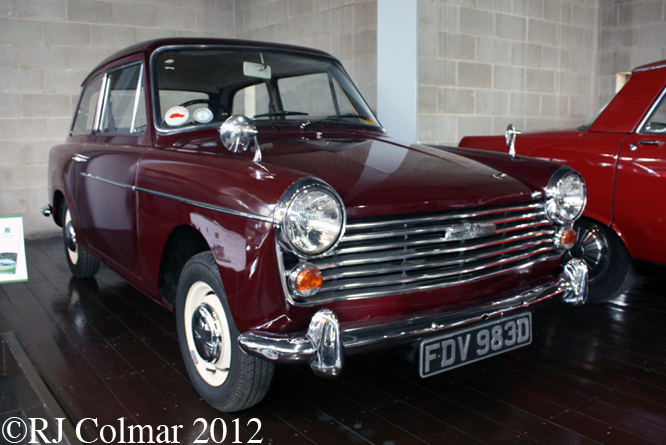
Like all worthwhile publicly supported institutions the National Motor Museum consumes cash by the case load in order to keep it’s exhibits in good order, and runs a sponsorship scheme for individual vehicles,you can find out more about sponsoring a vehicle at the National Motor Museum on this link. I’d like to thank those who sponsored this 1966 Austin A40 Farina Countryman, known as Tubby, on behalf of Maurice Wycliff Timmins. One just like it called Daisy played a huge role in my own formative years.
AC Shelby Cobra, NMM Bealieu

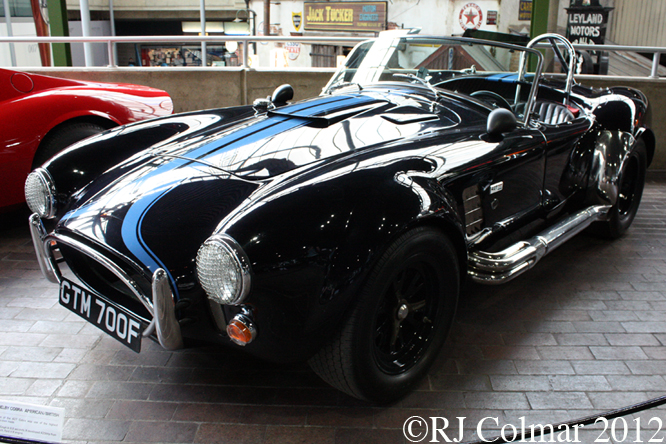
It was sad to learn of the passing of Carroll Shelby last week, among his many achievements was the bringing together of a little AC roadster and a huge 7 litre / 427 Ford V8 which became known as the AC Shelby Cobra. Today original versions of these much copied vehicles can fetch over a US$ 1,000,000. The restored 1965 vehicle seen here was fitted with the cheaper 7.01 litre 428 cui Ford V8 was once the property of part time circuit and drag racer John Woolfe who had two such cars, the left hand drive above also seen in this link and a right hand drive registered GTM777F which can be seen about to get whipped by a much smaller engined dragster “Hustler” driven by ‘Tex’ Blake in the photo linked here. Any one interested in learning about the UK drag scene will find this link to the John Woolfe Racing site quite fascinating.
Chitty Chitty Bang Bang, NMM Bealieu

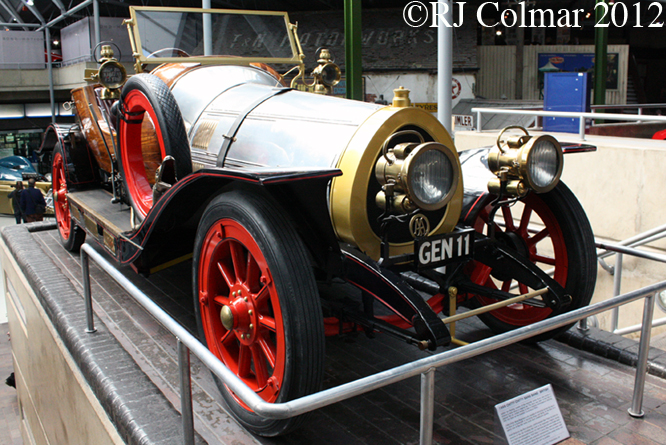
In one of my more romantic moments I once proposed to some one after seeing the most fantasmagorical Chitty Chitty Bang Bang on television, we are no longer together but we remain friends. This is one of several film stars at Beaulieu I’ll be covering some of them in more detail next Sunday. Apparently the “GEN 11” registration is now to be found on a 2011 Honda Jazz.
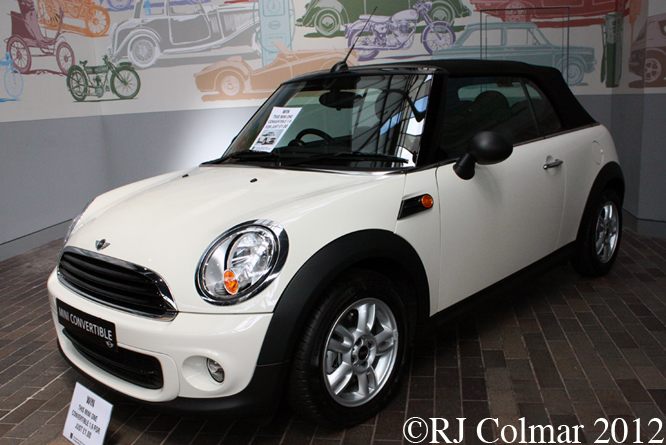
Mini Convertible, NMM Bealieu

I’m not a big time gambler but I am now the proud owner of a raffle ticket to win this Mini Convertible, I also hold tickets to win a Morgan, and Triumph SE one day my number is bound to come up 🙂
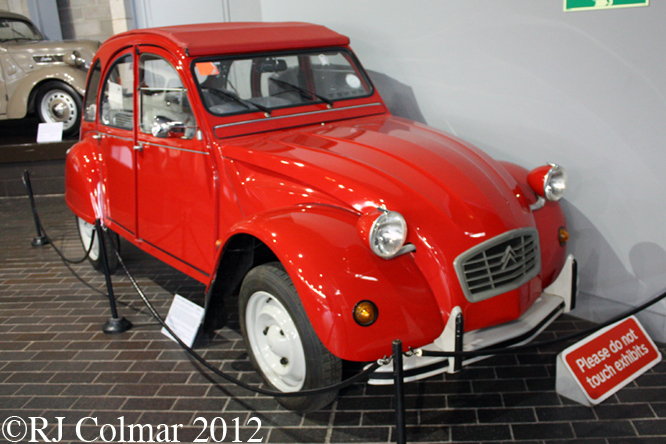
Citroën 2CV6 Special, NMM Bealieu

I’ll end today’s over view of the National Motor Museum with this Citroën 2CV6 Speciale, I have probably had more fun and adventures in this type of vehicle than any other. This 1986 2CV6 Speciale, just 24 miles on the clock, is barely out of it’s wrapping with delivery stickers and protective wax still on the windows, was put straight into storage after it was purchased.

The Second Baron of Beaulieu John Montagu in 1906 predicted ‘Europe in a few years time will become for the motorist one vast Holiday area’. How right he was and how lucky we automobilists are that his son Edward The 3rd Baron Montagu of Beaulieu founded the National Motor Museum, a fascinating part of that tapestry.

Thanks for joining me on this ‘Automobilists Cave edition of “Gettin’ a li’l psycho on tyres”. I hope you will join me tomorrow when I’ll be featuring a vintage MG. Don’t forget to come back now !

PS Many thanks to Allan Lupton at The Nostalgia Forum for informing me the receptacle I asked about above is a Rushmore acetylene generator for the acetylene lamps that proved more reliable than electric lamps of the period.
Share