Tag Archives: Packard

Awesome Copper – Hillsborough Concours d’Elegance

Geoffrey Horton attended the Hillsborough Concours d’Elegance two weeks ago and kindly sent me another excellent selection of photographs to share.
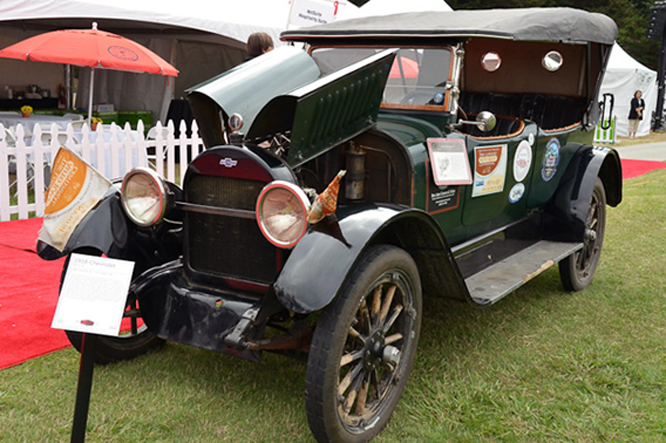
Chevrolet Series D, Hillsborough Concours d'Elegance

Chevrolet’s first V8 was built for the Series D from 1917/18, it produced a modest, even by contemporary standards, 36 hp from it’s 4.7 litre 288 cui motor. Poor sales discouraged Chevrolet from returning to the V8 concept until 1955.
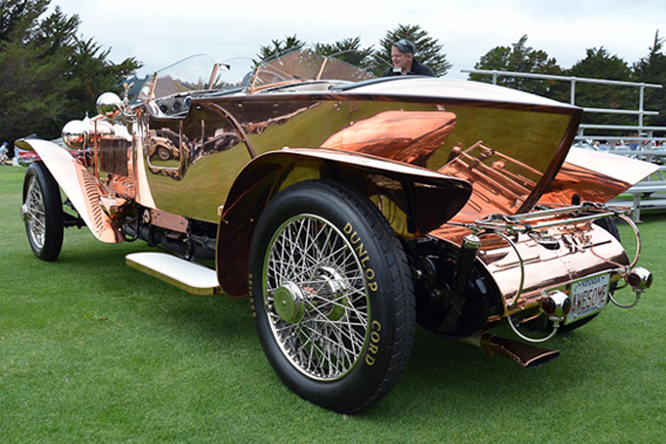
Rolls Royce Silver Ghost by Brockman, Hillsborough Concours d'Elegance

The National Automobile Museum in Reno NV is home to this 1921 Rolls Royce Silver Ghost with a unique copper sheet body by Brockman. Other features include wood trim from a single ebony tree trunk along with nickle and silver fittings.
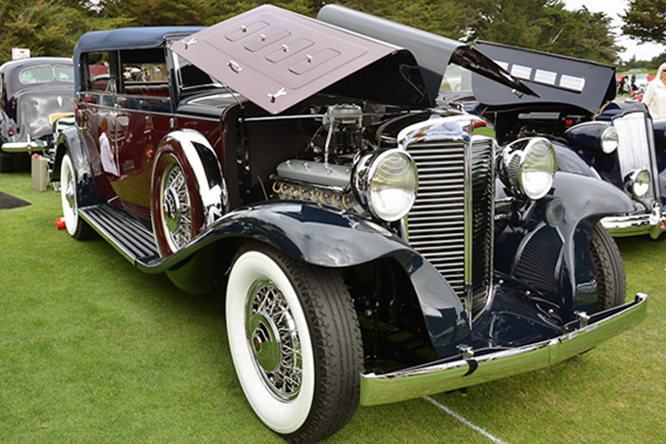
Marmon Sixteen, Hillsborough Concours d'Elegance

The Marmon Sixteen was the first of the three automotive V16’s to be developed in 1927, unfortunately Marmon was in such desperate financial straights that two of it’s engineers went to Peerless and Cadillac to develop to more V16 designs and the Marmon was the last of the three to reach production in 1931. Only 400 of these 8 litre / 491 cui 45 degree V16 powered cars were built before the Great Depression brought an end to automobile production for the company.
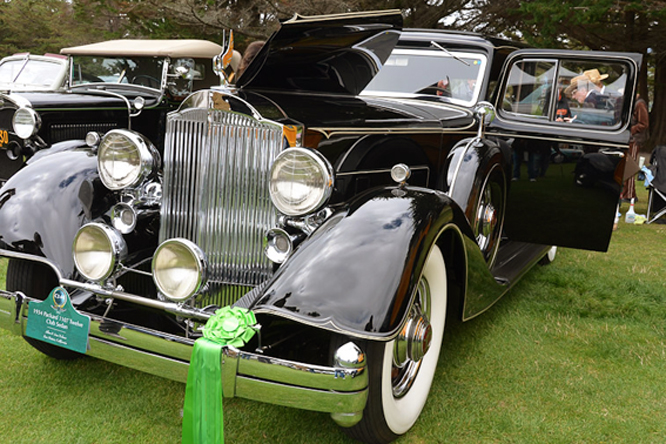
Packard 12 1107 Club Sedan, Hillsborough Concours d'Elegance

This Concours winning 1934 Packard 12-1107 Club Sedan is even rarer than the Marmon 16 with just 51 built. Powered by a 160 hp side valve V12 the car is fitted with a radio that cost an additional $79.50 on top of the original $4,060 list price. In today’s money the radio would work out at around $800 !
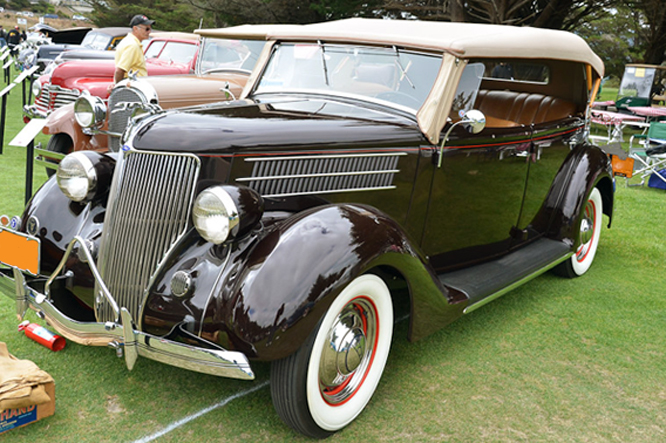
Ford Phaeton, Hillsborough Concours d'Elegance

Ford Phaeton’s powered by 85hp flathead V8’s were manufactured in 1935 and 1936 and featured hydraulically actuated brakes on all four wheels. The example seen here was built in 1936.
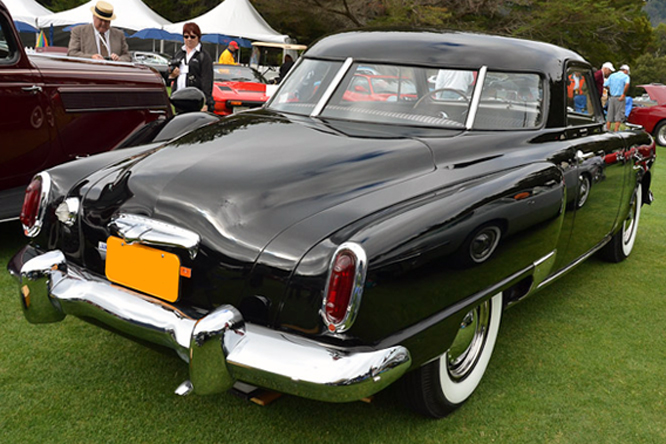
Studebaker Comander Starlight Coupé, Hillsborough Concours d'Elegance

“First by far with a postwar car” was Studebaker with it’s Commander Starlight Coupé with aeroplane styling designed by Raymond Loewy. 4,383 of these cars were built in 1950 this one has a six tube radio.
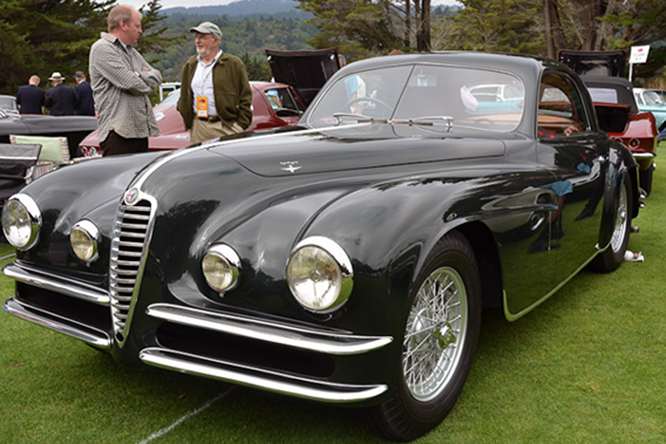
Alfa Romeo 6C 2500SS Coupé, Hillsborough Concours d'Elegance

ALFA Romeo did not start post war production until 1947, the 6C 2500 Super Sport Coupé was top of the range in 1950. Developed by Vittorio Jano and Wilfredo Ricart the 6C 2500 was the last Alfa Romeo to be built with a separate body and chassis. The bodywork on this model is by Touring of Turin. Note this particular car unusually features the driver sitting on the right.
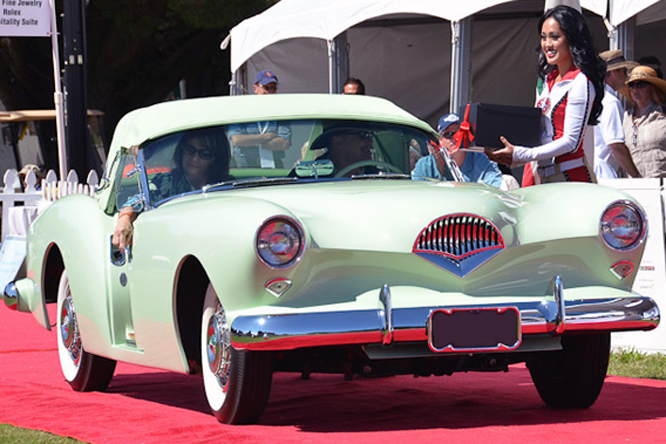
Kaiser Darin, Hillsborough Concours d'Elegance

Henry Kaiser used a fortune made producing ships for the Navy during the 1939/45 war to begin production of Kaiser cars. The chassis of the second Henry J model was used as the basis of this fibre glass bodied roadster by Howard ‘Dutch’ Darrin. 435 Kaiser Darrin’s, featuring doors that slide forward into the front wing / fender were manufactured in 1954.
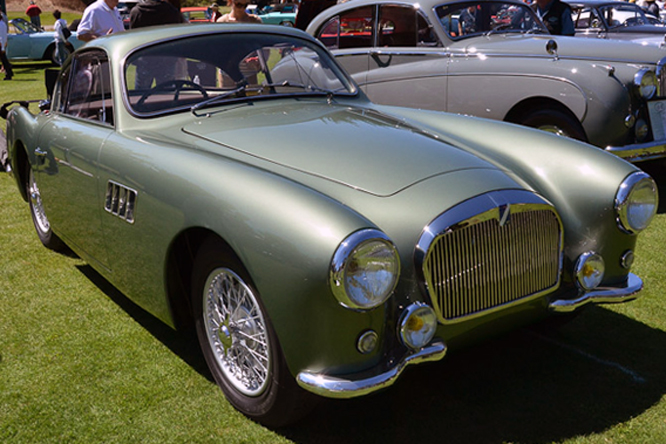
Talbot Lago 14TS, Hillsborough Concours d'Elegance

I’m not sure of exactly which year this Talbot Lago was built, 54 T14 LS models were built with 4 cylinder Talbot motors in 1955 and subsequentley similar Talbot Laga America models were supplied with more reliable BMW V8 motors.
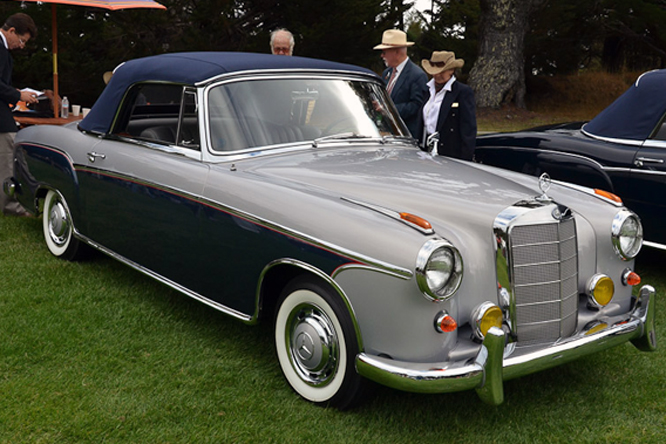
Mercedes Benz 220 SE Cabriolet, Hillsborough Concours d'Elegance

Priced to compete with the Caddilac Biaritz this 134 hp 1960 Mercedes Benz 220 SE Cabriolet has an interior covered almost entirely in leather. 1,112 of these Cabriolet’s were manufactured between 1958 and 1960.

AC Cobra Dragonsnake, Hillsborough Concours d'Elegance

Just six Shelby American Cobra Dragonsnakes were manufactured for drag racing. The second, chassis CSX 2357, seen here was driven by Jere Kirkpatrick to set NHRA A/Stock Sports records at Fremont, Riverside and Arlington. Jere also drove CSX 2357 to win the 1965 Winter Nationals in Phoenix.

Lancia Flavia, Hillsborough Concours d'Elegance

Featuring a flat four boxer engine and front wheel drive the Lancia Flavia was maufactured from 1961 to 1970. The bodywork for the 1965 Coupé seen here was designed by Pininfarina.

Thanks for joining me on this “Awesome Copper” edition of “Gettin’ a li’l psycho on tyres” I hope you will join me again tomorrow when I’ll be revisiting the Haynes International Motor Museum. Don’t forget to come back now !

Share

The Fast, The Curious and The Elegant – 6th Annual Carmel by-the-sea Concours

Today’s post is the first of four this that come courtesy of Geoffrey Horton who attended the 6th Annual Carmel by-the-sea Concours on August 14th and subsequently sent me nearly two hundred photographs.

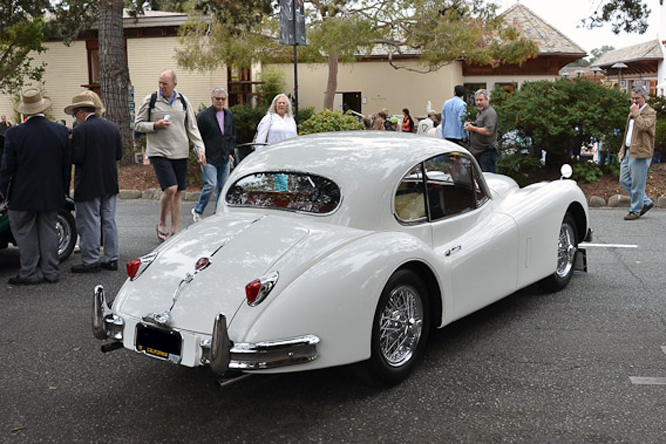
Jaguar XK 140 FHC SE, 6th Annual Carmel by-the-sea Concours

As ever Geoffrey took his faithful Jaguar XK 140 FHC SE/MC to the show a car which looks a little more pristine with every show.

Allard LLC, 6th Annual Carmel by-the-sea Concours

Bracketed in the fast vehicles present was this 1947 Allard LLC, which could serve as a serious competition vehicle on or off road or as a roaring roadster.

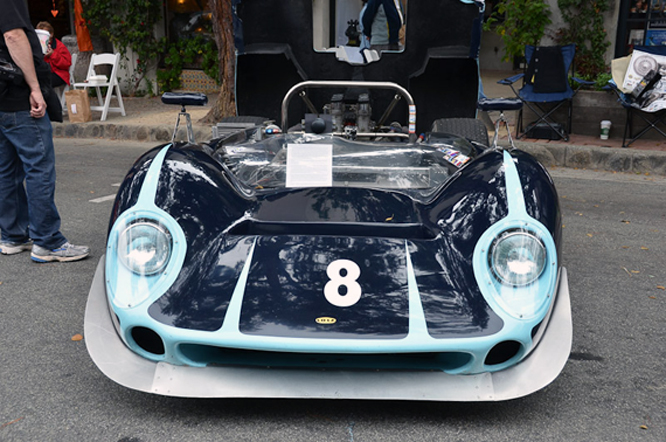
Lola T70 Mk 1 Spyder, 6th Annual Carmel by-the-sea Concours

This 1965 Lola Ford T70 Mk 1 Spyder chassis #SL/10 was driven to a win the at the 1965 Bridgehampton 200 part the USRRC series, a precursor to the first Can Am Challenge in 1966, by Jerry Grant. Jerry is best known for being the first man to lap a closed circuit at over 200 mph, a feat he achieved on the September 3rd 1972 driving one of Dan Gurney’s Eagle Offy’s. Sadly Jerry passed away two days before the Carmel Concours d’Elegance took place.

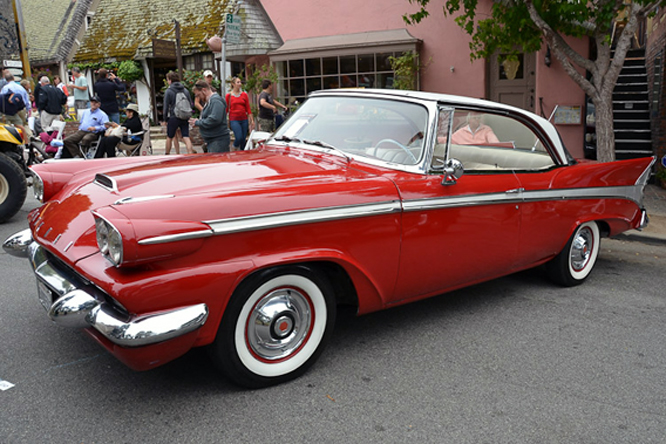
Packard Starlight, 6th Annual Carmel by-the-sea Concours

Former luxury automobile manufacturer Packard made a chain of bad decisions after the 1939-45 War that saw it make a disastrous entry into the volume market, in which it was too small to compete with the “Big Three” and abandon the luxury market in which the only real profits were to be made. As a consequence Packard merged with Studebaker in 1955 and within three years the Packard name, along with those of de Soto, Edsel, Hudson Nash and Kaiser was to disappear from the market forever. This 1958 Packard Coupé is essentially an up market Studebaker President with some glass fibre body editions to make the headlight clusters and tail fins. These Coupés were sometimes referred to as “Starlights” while the ’58 Packard range was disparagingly referred to as Packardbakers.

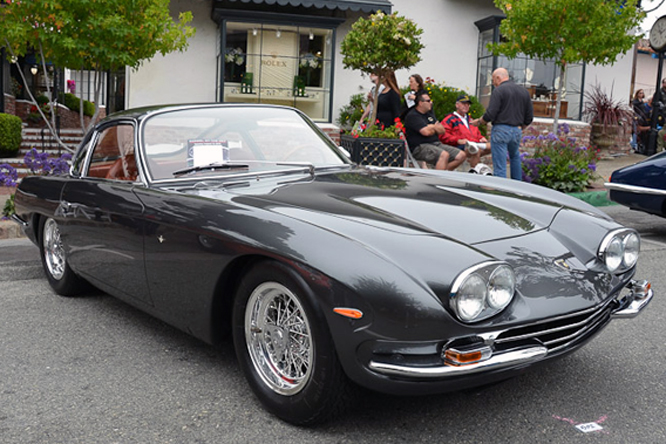
Lamborghini 400GT, 6th Annual Carmel by-the-sea Concours

Early Lamborghini models can be a bit of a night mare to distinguish the 350 GT is easy it had oval front light’s but it shared its rear end with the early 400GT, often referred to as 400GT Interim, which had four round head lights as did the later more common 400GT 2+2 which can only be distinguished by it’s smaller rear window. The back of this car has the larger rear window indicating it is one of just 23 400GT Interims built around 1966 packing a 320 hp 3929 cc / 240 cui V12 motor.

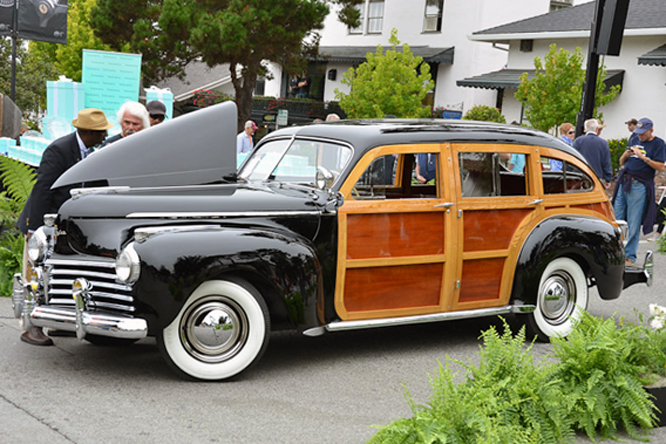
Chrysler Town & Country, 6th Annual Carmel by-the-sea Concours

From 1939 to the cessation of manufacture in 1942 Chrysler built around 1000 Woodie Town & Country Barrel Backs. Using a traditional ash frame, as still used by the likes of Morgan, that is contrasted by Honduran mahogany panels. These cars can fetch up to $250,000 at auction with the correct provenance.

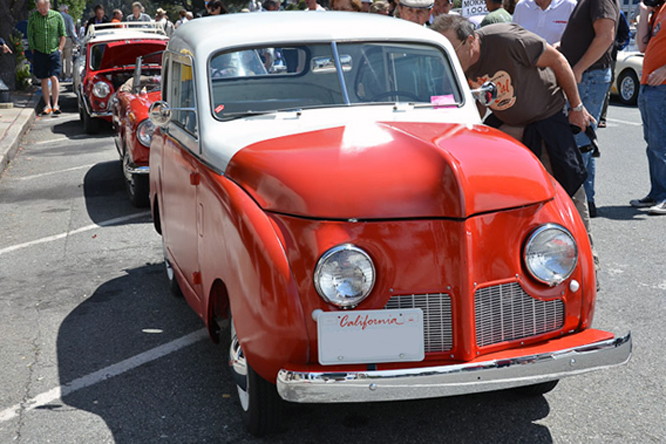
Crosley Sedan, 6th Annual Carmel by-the-sea Concours

Crosley built a huge variety of small vehicles this 1948 CC Sedan was built in the companies most successful year when over 29,000 vehicles left the factory.

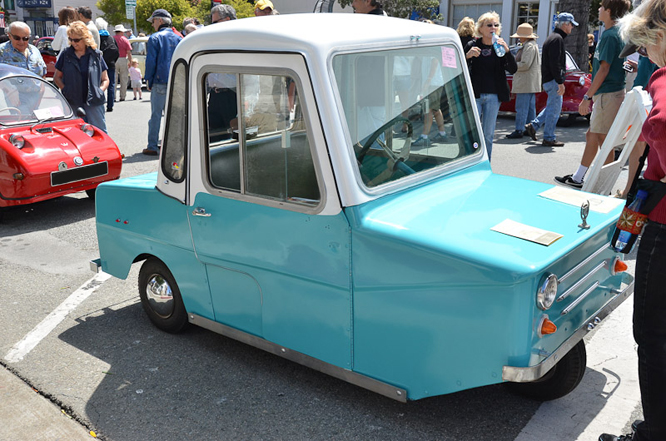
Electra King, 6th Annual Carmel by-the-sea Concours

This 1973 Electra King, not to be confused with the other Elektra King, James Bond’s nemesis, was manufactured by the B & Z Electric Car Company in Long Beach California. Classed as a Neighborhood Electric Vehicle (NEV) it was designed as a short range runabout. The cars were in production from 1961 to 1974 when a combination of nuisance law suits from the big automobile manufacturers and California States desire to license and regulate NEV’s made the cost of production prohibitive.

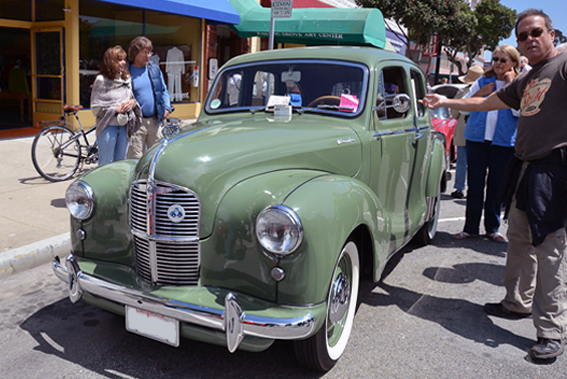
Austin A40 Devon, 6th Annual Carmel by-the-sea Concours

The Austin A40 Devon was the first post war design from Britains largest car manufacturer, this car built in 1951 was shipped straight to the USA earnig valuable export dollars as Britain struggled to shake of rationing of all sorts in the wake of the 1939-45 war. Earlier this year regular readers may remember reading about the convertible version known as the Austin A40 Somerset Coupé with which the Devon shares some body panels.

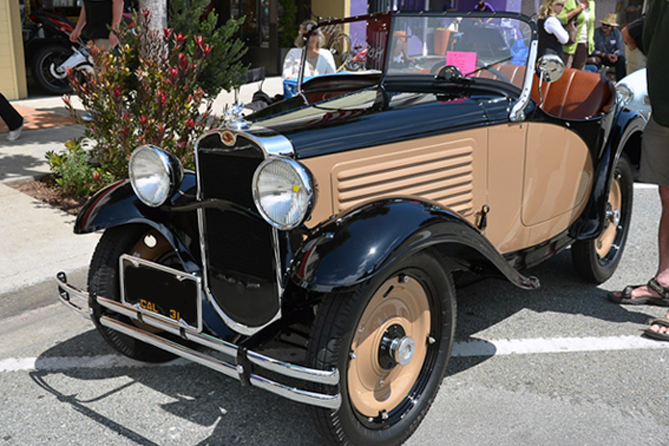
American Austin Roadster, 6th Annual Carmel by-the-sea Concours

In 1929 the American Austin Car Company was founded to produce a version of the Austin Seven under license. Unfortunately the Great Depression made hitherto much larger cars much easier to afford and so the car rapidly lost any competitive edge it had. Around 20,000 cars were manufactured before the company filed for bankruptcy in 1934. Approximately 1,500 American Austin Roadsters like the 1931 example above are thought to have been built.

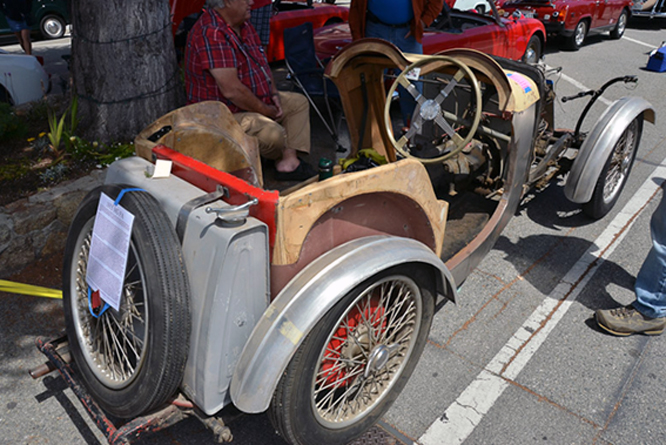
MG PA, 6th Annual Carmel by-the-sea Concours

Finally in the Awaiting TLC category is this 1935 MG PA which has been undergoing restoration since 1999.

My thanks to Geoffrey Horton for sharing his photo’s of which more will be forthcoming on Wednesday, Thursday, Friday and next Monday.

Thanks for joining me on this “The Fast, The Curious and The Elegant” edition of “Gettin’ a li’l psycho on tyres”, I hope you will join me again tomorrow. Don’t forget to come back now !
Share

Phil Hill Tribute – Peterson Museum

It’s a great pleasure to blog about the recent tribute to Phil Hill, celebrating the 50th anniversary of his World Championship win, at the Peterson Automotive Museum thanks to GALPOT’s roving correspondent Geoffrey Horton.

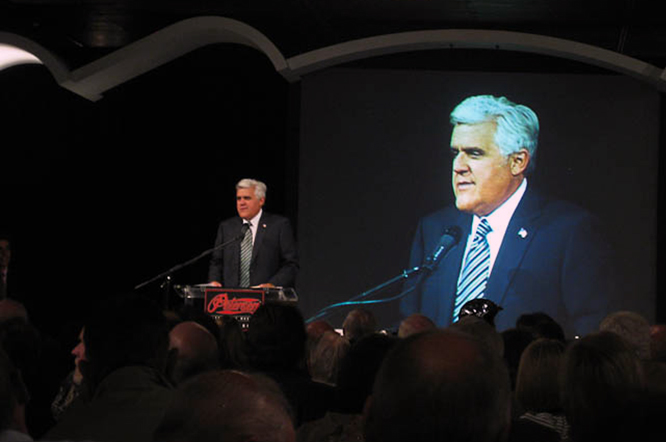
Jay Leno, Phil Hill Tribute, PAM

Ueber car enthusiast Jay Leno was amongst the guests to lend humour to the occasion.

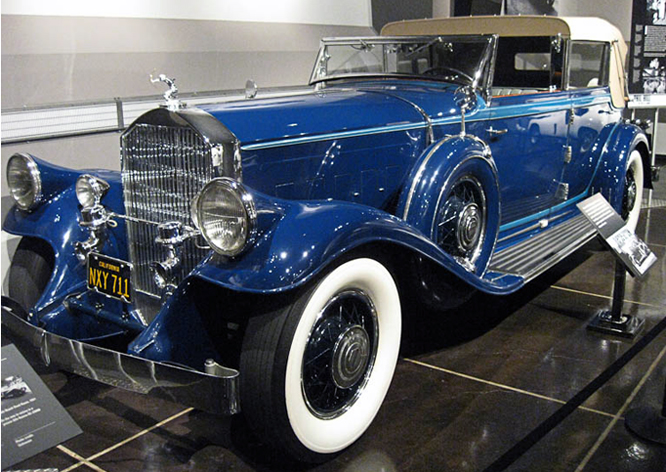
Pierce Arrow, PAM

Amongst the exhibits was this 1931 Pierce Arrow convertible sedan by Lebaron that was ordered new by Phil’s Aunt and in which Phil leaned to drive. He also used the car to attend USC and in 1955 he restored the car with his brother Jerry and promptly unexpectedly won the Best in Show award at Pebble Beach.

Peterson Automotive Museum

Some of Phil’s competitors from his early days at this event shared with the appreciative audience stories of Phil’s early exploits with an MG TC in Cal Club events which were not always entirely legal events held on circuits.

Ferrari 375MM Vignale, Peterson Automotive Museum

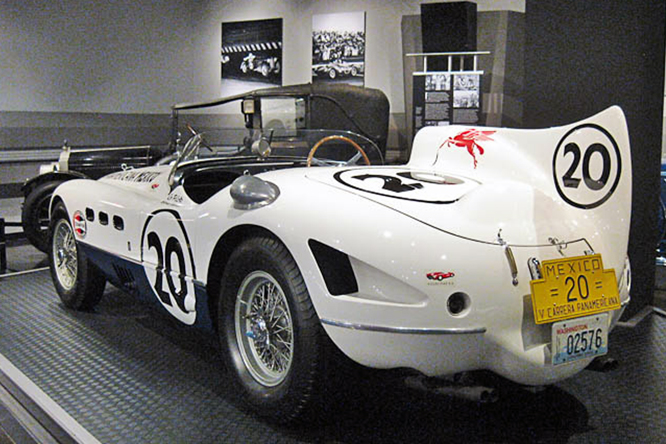
Of the delectable Ferrari’s present that Phil has driven was this unique 1953 375MM with Vignale bodywork and non stock tailfin that was added after the car was built in 1954. Phil drove this car to a second place finish in the 1954 Carrera Panamericana. It was also later driven by Carol Shelby.

Peterson Automotive Museum

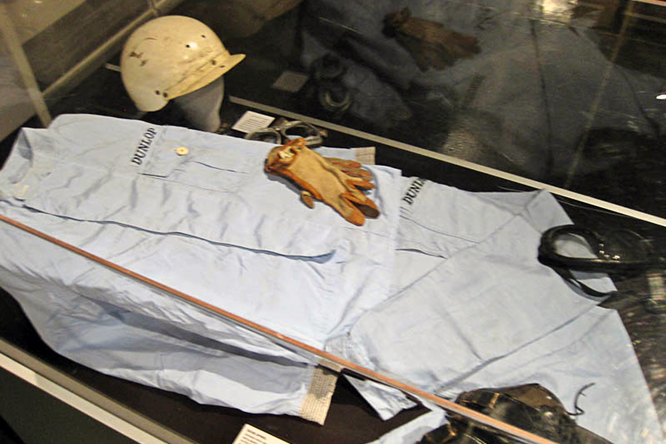
Nothing remains of the original Shark Nose Ferrari 156 which he used to win the 1961 World Drivers Championship, they were all destroyed on the instruction of Enzo Ferrari, but the helmet seen here was used by Phil in his Championship winning season.

Packard Model 30, Peterson Automotive Museum

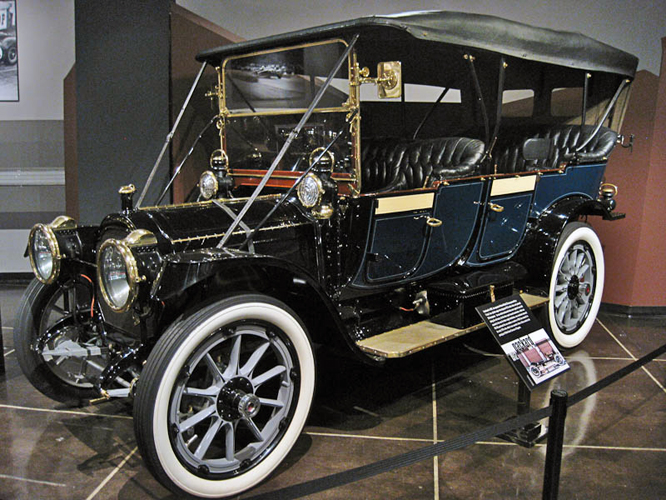
This 1912 Packard Model 30 with a gearbox mounted ahead of the rear axle and rear cable operated brakes only was purchased by Phil in 1966 and won it’s class at Pebble Beach Concours d’Elegance in the 1970’s

Peterson Automotive Museum

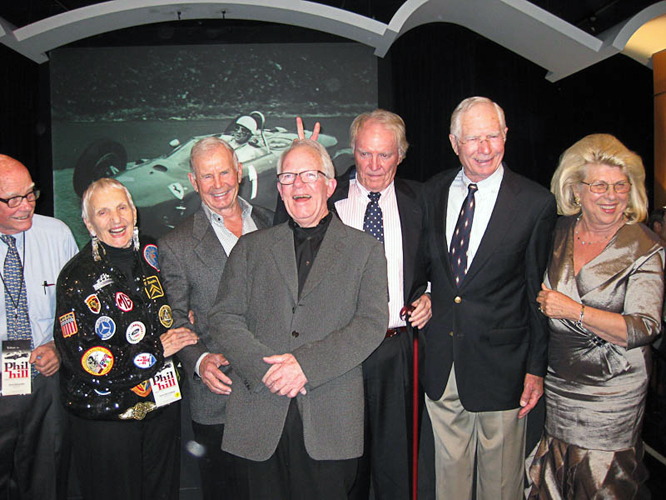
Guests who discussed the life and times of Phil were left to right, John Lamm, Editor at Large “Road and Track, Denise McLuggage racing driver and journalist, Parnelli Jones, Jesse Alexander photographer, Dan Gurney, Jim Hall and Phil’s wife Alma.

My thanks to Geoffrey Horton for sending me the photo’s and the details of the Phil Hill Tribute evening at Peterson Automotive Museum.

Thanks for joining me on this Phil Hill edition of ‘Gettin’ a li’l psycho on tyres’ I hope you will join me again tomorrow. Don’t forget to come back now !
Share

US Convertibles – Niello Serrano Concours 2011

Thanks to the generosity of Geoffrey Horton today’s images come from the 2011 Niello Serrano Concours held the weekend before last in the El Dorado hills of sunny California. Today I’ll be focusing on a fabulous array of American made convertibles seen at the show.

Cord L29 Phaeton, Niello Serrano Concours

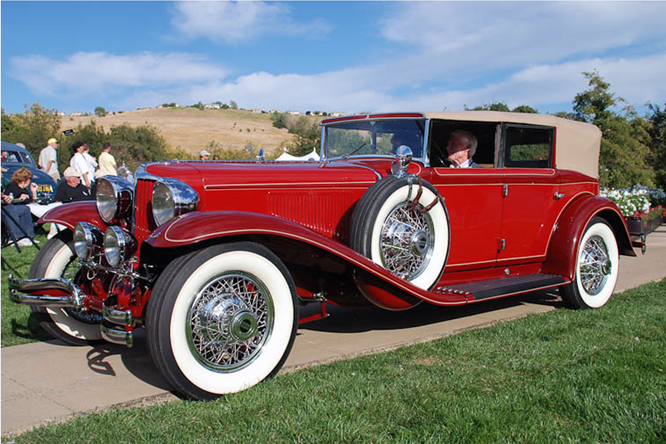
Vehicles manufactured by Cord Corporation were the feature Marque of the event so it was most fitting that grandson of the Cord Corporations founding father E.L. Cord should be seen here in one of the companies original models the 1929 Cord L29 Phaeton, which was the first US built front wheel drive car offered to the American public.

Cord L29 Coupé, Niello Serrano Concours

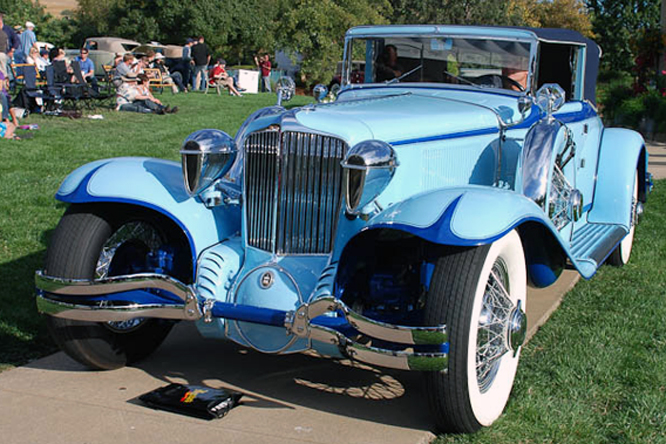
Of all the photo’s that Geoffrey sent to me this one of a 1930 Cord L29 Coupé with it’s bizarre, even by todays standards headlights and racy two tone paintwork, gets my nomination for car of the show. The front wheel drive L29 was the brainchild of Carl Van Ranst who had previously worked on the successful front wheel drive Miller open wheel racing cars that won that won the Indianapolis 500 on four occasions between 1926 and 1932.

Cord L29 Coupé, Niello Serrano Concours

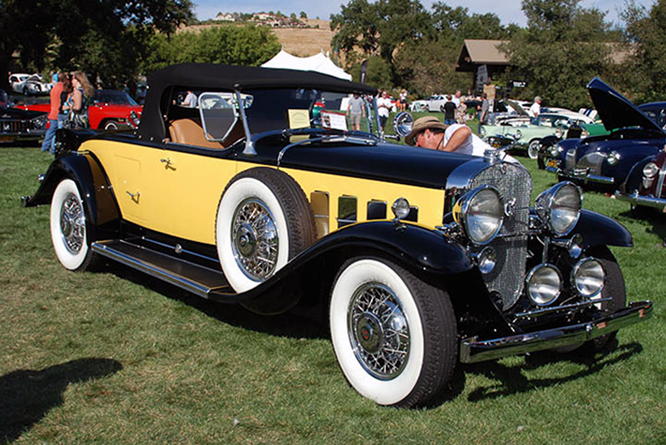
Continuing on a vaguely Indianapolis related theme Geoffrey tells me this 1931 12 cylinder Cadillac 370A Roadster, was an Indy pace car in 1931. It was pulled out of a barn and restored by the owner 18 months ago.

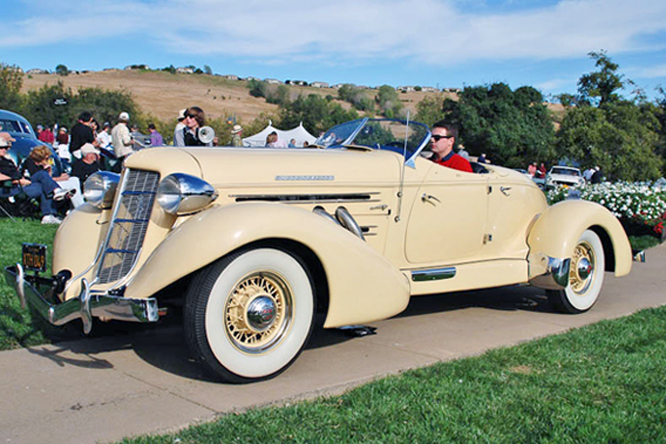
Auburn Boat Tail Speedster, Niello Serrano Concours

One, of many, things I have learned thanks to these photo’s is that Cord was a brand name of cars manufactured by Auburn a company that ueber salesman E.L. Cord turned around during a leveraged buyout, above is a 1935 Auburn 851 Boat Tail Speedster manufactured just two years before both names went bust in the wake of the Great Depression.

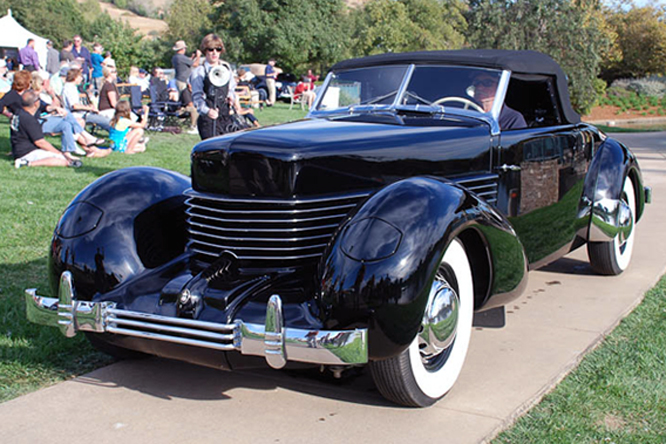
Cord 812 Convertible Coupé,  Niello Serrano

The last model developed by Cord was the headlight popping 810 which had onlookers standing on the running boards of rival manufacturers cars when it was launched in New York in 1936. Rushed development and production schedules meant it gained a bad reliability reputation. For 1937 front wheel drive Cord 810’s were rebadged 812’s and although they had ironed out all of the reliability issues of the previous year the 812 series could not save Cord from financially tanking. This 1937 Cord 812 Convertible Coupe is particularly rare, if I have understood Card lore correctly, it is one of only six that were ordered without the exterior chrome exhausts sticking out of the sides of the bonnet.

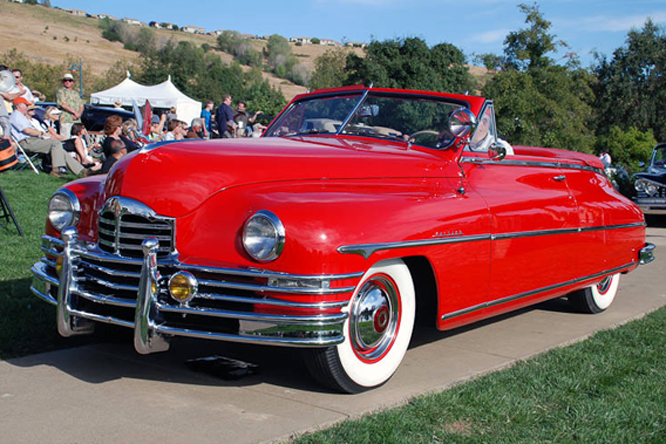
Packard Super 8 Convertible, Niello Serrano

Despite the now give away giant bonnet ornament it took me a good half hour to work out that the car above is a 1949 Packard Super 8 Convertible with a pre WW2 bathtub body style.

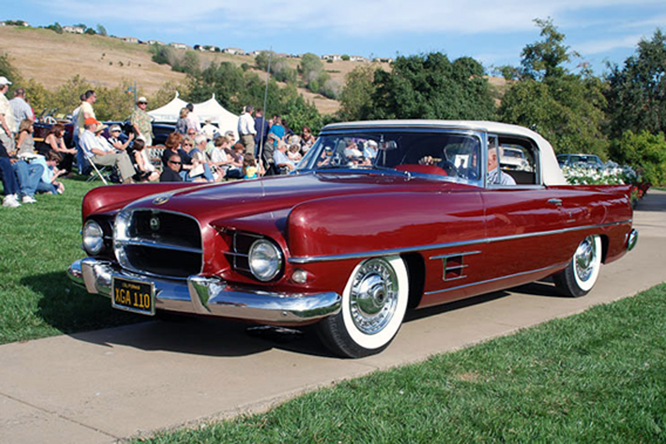
Dual Ghia, Niello Serrano

I’ll let you see if you can guess what this mystery car is before you reach the end of this blog, this car was highly rated by Time and Life magazines, Good Houskeeping described this model as a ‘social phenomenon’. Designed in Italy but not built by one of the ‘big three’ the car is said to have had 50/50 weight distribution about the axles and counted amongst it’s star owners Frank Sinatra, Dean Martin drove one in the film Kiss Me Stupid and Ronald Reagan allegedly lost his to President Lyndon Johnson in a poker game. This is one of the 99 cars built from 1956 to 1957 from a planned production run of 300.

Buick Le Sabre Convertible, Niello Serrano

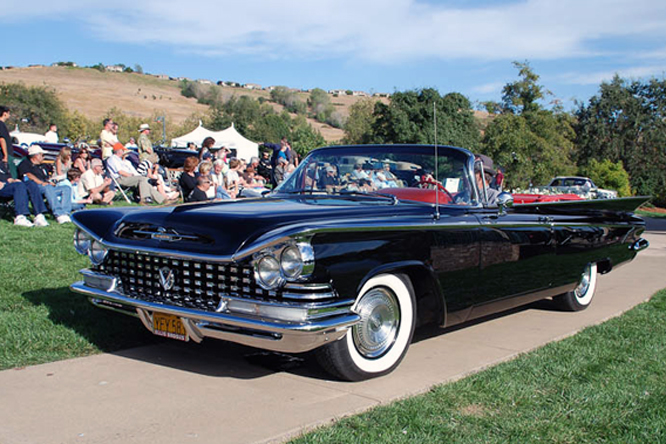
I know the designer of my all time favourite Formula One car is a fan of the 1959 Buick Le Saber Convertible all though he would probably prefer the Invicta version in bright red.

Lincoln Continental Convertible, Niello Serrano

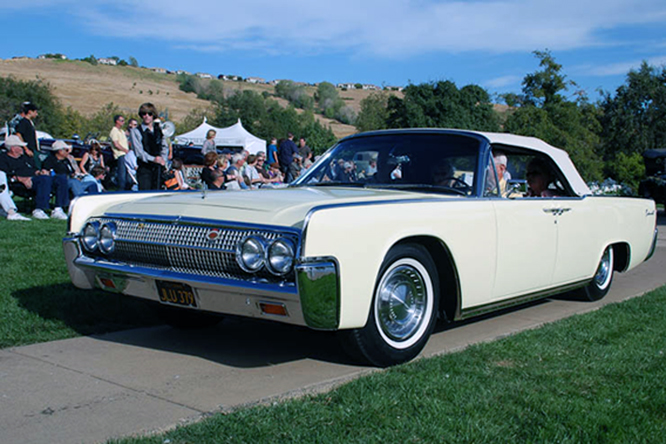
Representing the swinging, in the UK anyway, sixties at Niello Serrano were the slab sided 1963 Lincoln Continental Convertible with it’s rear suicide doors, which are all the rage at Rolls Royce these days,

Dodge Dart Convertible, Niello Serrano

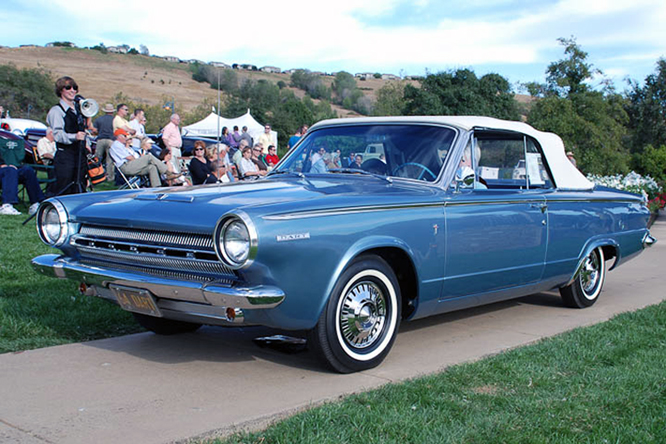
and the infinitely more modest 1964 Dodge Dart Convertible, which in optional automatic form had push buttons to select the gears.

The mystery car is the Dual Ghia, designed by Ghia in Italy and built by Dual motors in Detroit with Chrysler running gear.

My thanks to Geoffrey Horton for his excellent photographs without which todays post would not have been possible.

Thanks for joining me on this US convertible edition of ‘Gettin’ a lil psycho on tyres’ I hope you will join me again tomorrow when I’ll be looking at some of the Ferrari’s at Niello Serrano Concours. Don’t forget to come back now !
Share

Booby Prize from Wide Track Country – Pontiac Firebird

In 1954 vice president of engineering at General Motors Oliver K Kelly called Packards head of Research and Development John DeLorean to offer him a choice of jobs across the five divisions on General Motors. DeLorean who at the time also had the choice of moving to Studebaker with whom Packard had just merged settled on becoming assistant to chief engineer Elliot ‘Pete’ Estes at Pontiac.

Pontiac Firebird, Silverstone Classic

By 1963 John had become chief engineer at Pontiac, and Estes had become general Manager when they together with engine specialist Russell Gee and chassis engineer Bill Collins convinced the GM management to let them offer a $296 performance package on the Pontiac LeMans Coupé and Convertible body stiles that included a 325 hp 6.4 litre / 389 cui V8 motor normally found in the full size Pontiac Catalina and Bonneville models, from whence the ‘Wide Track’ strap line was born and named it GTO a name John picked up from the Ferrari 250 GTO.

Pontiac Firebird, Silverstone Classic

The Pontiac GTO with initial production limited to 5,000, by a disbelieving Pontiac Sales Manager Frank Bridge, was an instant hit with Ronnie and the Daytonas, the youth market at which it was aimed and GM Management. The GTO was responsible for transforming the image of the brand from an ‘aunties car’ to a youth orientated performance brand with over 32, 000 units built in 1964.

Pontiac Firebird, Silverstone Classic

As the GTO was launched John DeLorean moved on to the development of the Pontiac Banshee a concept car to compete with the Chevrolet Corvette which was killed by GM’s top management. DeLorean seen as Pontiacs golden boy was promoted to head of the entire Pontiac division and given the consolation task of turning the Chevrolet Camaro into a Pontiac Pony Car with the proviso that there could be no alterations to the sheet metal except to the front and rear panels.

Pontiac Firebird, Silverstone Classic

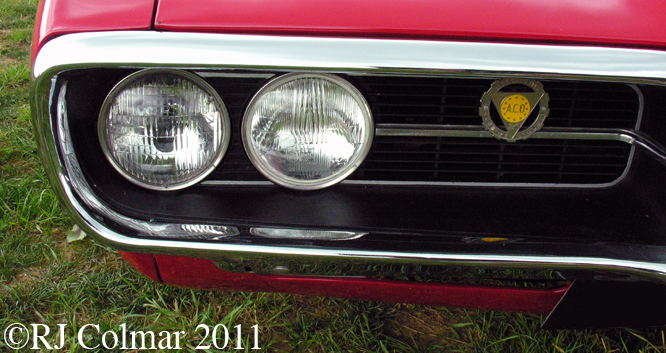
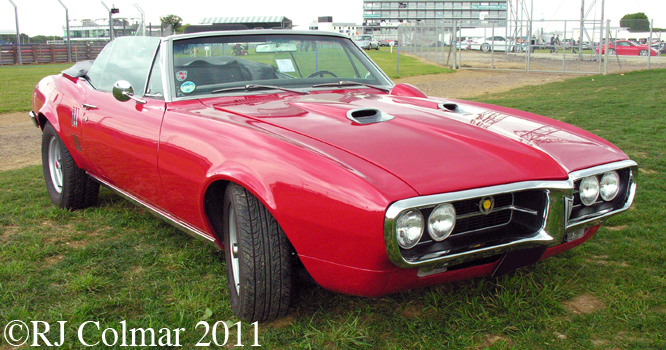
By incorporating a signature Pontiac split grill with built in bumper at the front and a version of the rear strip lights seen on the two Banshee concept cars the Pontiac Pony car was easily distinguishable from it’s Chevrolet sibling, Having failed to acquire the Banshee naming rights from rocket scientist Eugene F. Lally, who had successfully raced a Corvette powered special of the same name, for less than ¢50 per car, the name Firebird which had been previously used by GM on three seriously out landish gas turbine concept cars, was eventually adopted for the Pontiac pony car.

Pontiac Firebird, Silverstone Classic

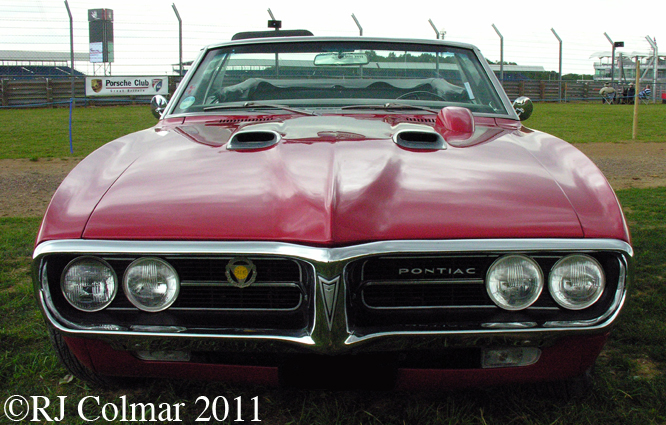
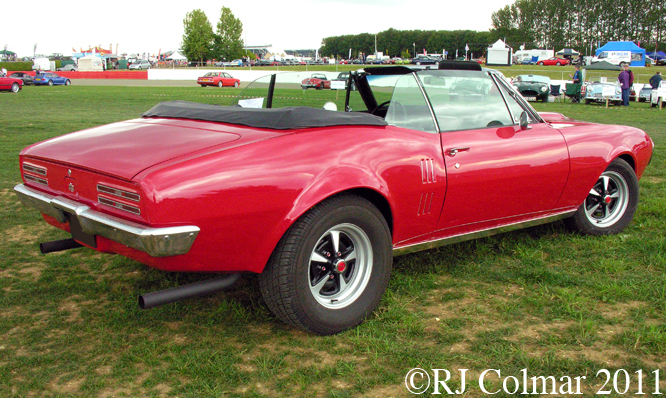
The absence of marker lights, Federally mandated in 1968, and the E suffix on the registration plate confirm this as most likely one of the five variations of the 1967 model line up.

Pontiac Firebird, Silverstone Classic

The Ram Air bonnet / hood suggests this car had the top of the range 6.6 litre / 400 cui motor installed when it left the factory.

Pontiac Firebird, Silverstone Classic

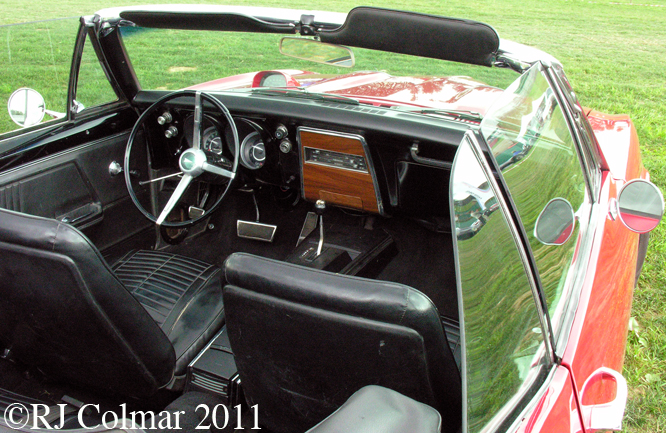
Just over 100,132 1967 Firebirds are thought to have been manufactured of which 9,980 were convertible.

Thanks for joining me on this Wide Track Country edition of ‘Gettin’ a lil’ psycho on tyres’, I hope you will join me again tomorrow. Don’t forget to come back now !
Share