Tag Archives: Park

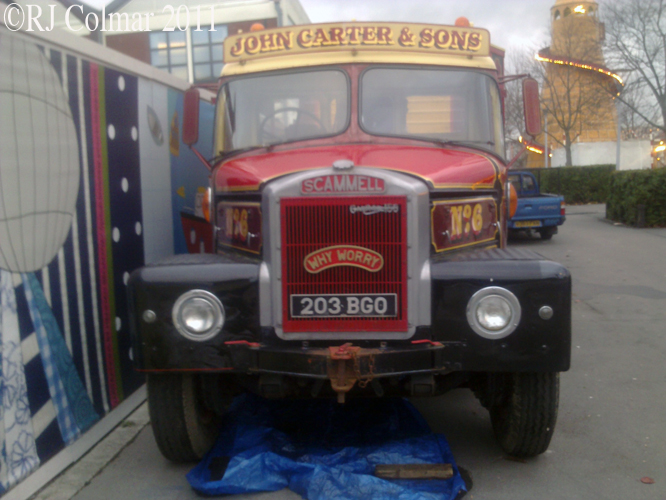
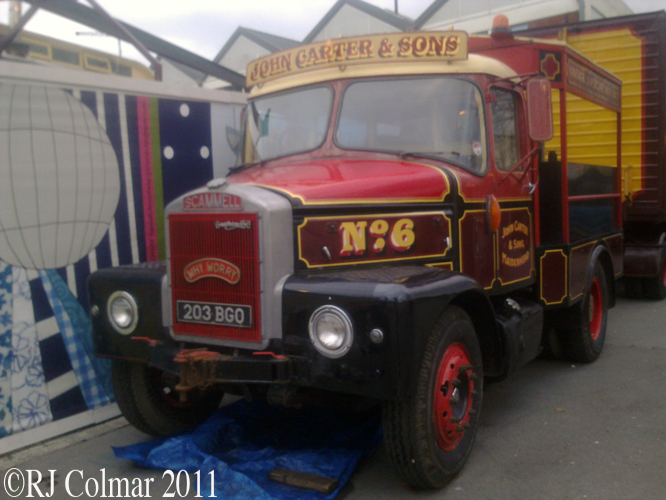
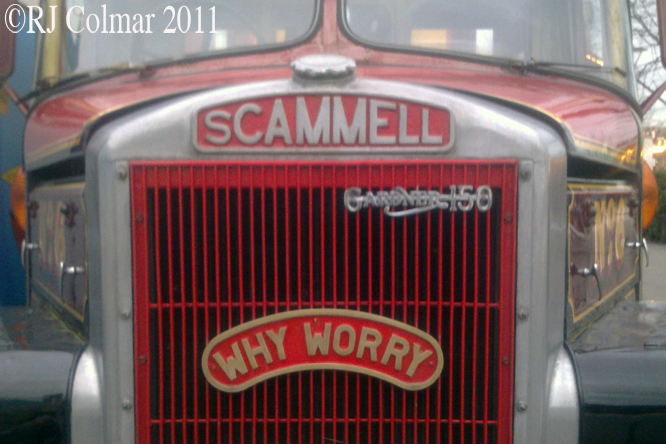
Why Worry No: 6 ? – Scammell Highwayman

I hope you’ll forgive me taking a break from my usual Thursday Americana blog so that we can to start celebrating regular GALPOT reader and contributor Steve Arnaudin’s Birthday a day early with a look at a 1961 Scammell Highwayman.

Scammell Highwayman, 1961

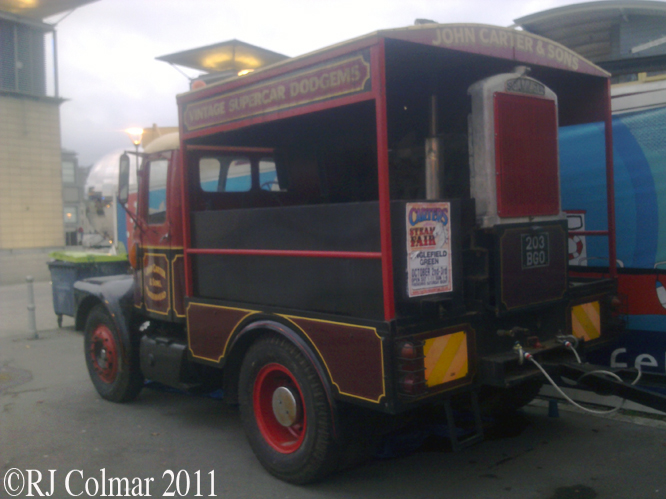
This particular vehicle is part of a fleet of vehicles used by John Carter and Sons to transport their steam fair around Britain.

Scammell Highwayman, 1961,

So far as I can discern Carter & Sons operate 7 Scammells in their fleet of 15 vintage trucks.

Scammell Highwayman, 1961,

“Why Not” is regularly tasked with pulling 40 tons of Steam Fair paraphernalia and with that weight can reach 40 mph, too slow to be seen on Britain’s motorway network which normally requires vehicles to be able to maintain a minimum speed of 50 mph.

Scammell Highwayman, 1961

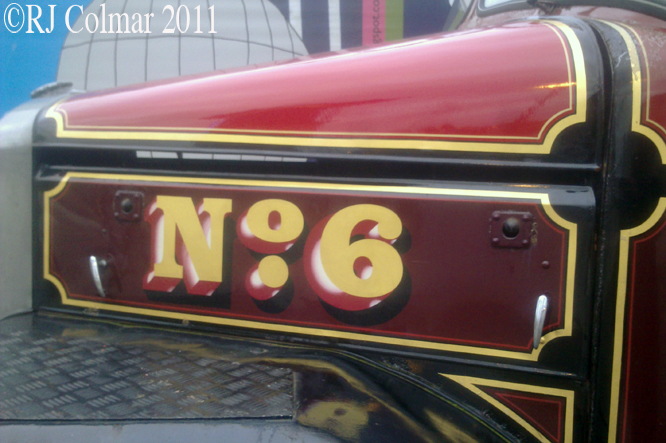
A big clue as to why Steve might remember this type of vehicle is the number 6.

Scammell Highwayman, 1961

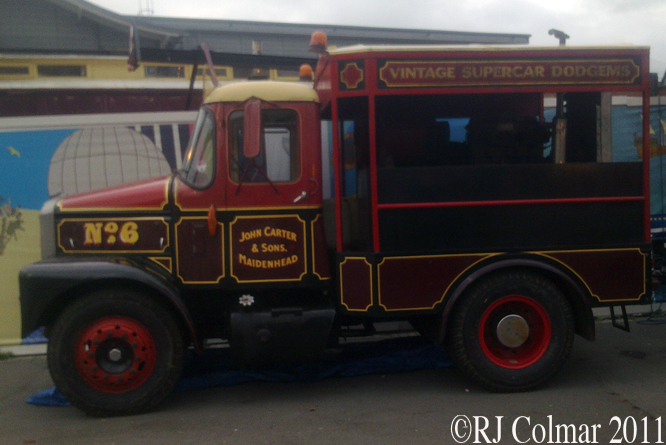
Highwayman were commonly used to pull Scammell low loading trailers which were built at the Scammell works at Moor Park just outside North London.

Scammell Highwayman, 1961

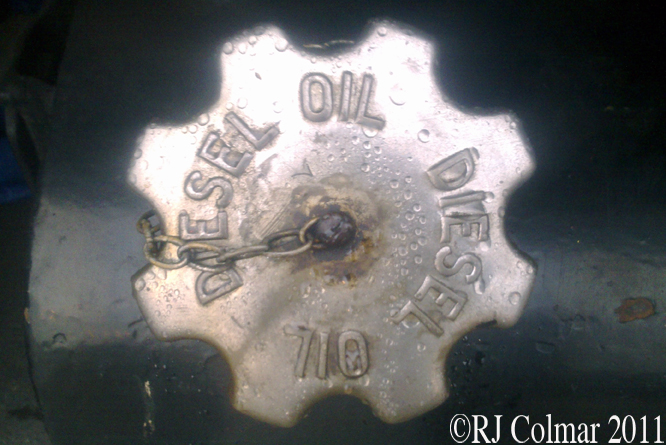
Joby Carter reckons that each of his trucks covers around 1000 miles per year some of them only need to be filled with diesel once a year !

Scammell Highwayman, 1961

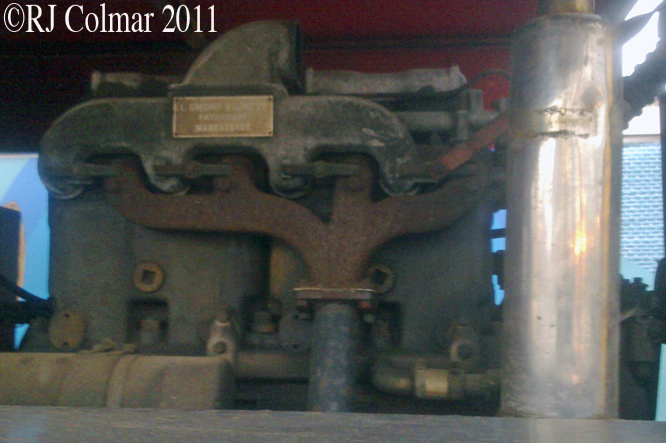
One of the problems of running a fleet of vintage trucks is keeping the Gardiner diesel engines maintained this truck is 50 years old and the mechanic who has been looking after them should have retired some time ago.

Scammell Highwayman, 1961

In case your wondering why this truck might be of interest to our GALPOT birthday boy may I heartily recommend to you 42 mins 10 seconds of this linked surreal youtube clip for all to be revealed.

Happy Birthday and best wishes tomorrow Steve !

Be Seeing You !

Share

E-Type – Vauxhall 30-98 Velox Tourer

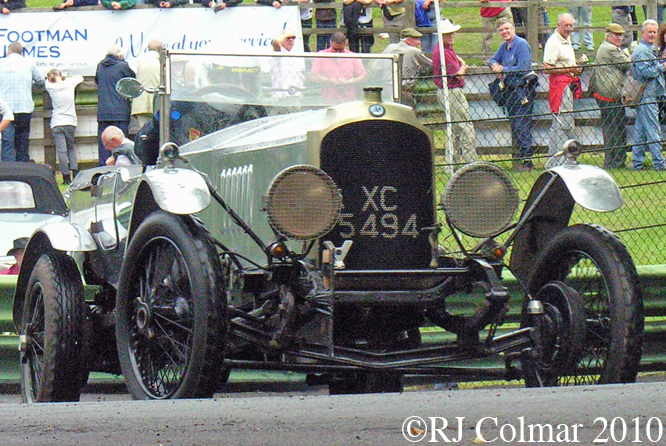
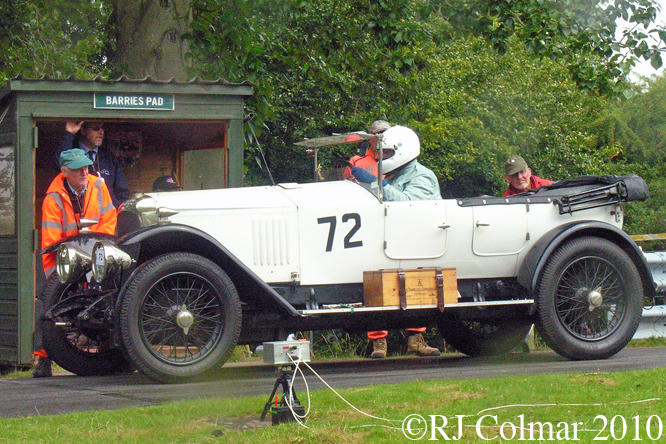
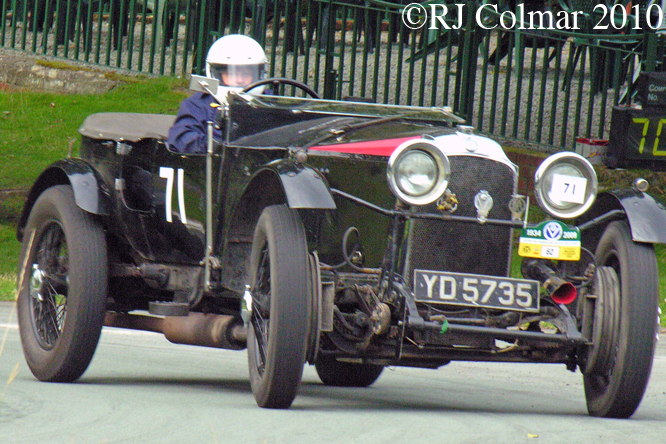
In 1913 Vauxhall announced their replacement for the Vauxhall D-Type known officially as the 30-98 or E-Type. 13 chassis were built before the Great War of 1914 – 1918, during which period Vauxhall fulfilled orders from the War Department to build the older D-type models for the use of nobility and Generals alike.

Mark Butterworth, Vauxhall 30/98, Prescott

Between the cessation of hostilities and 1922 it is thought around 270 further 30-98 E-types were built with 90 hp 4,525 cc / 276 cui four cylinder side valve engines which gave the car when striped down a 100 mph capability. Above Mark Butterworth negotiates the Pardon Hainpin at Prescott in his 1921 model. Unlike the equally fast contemporary Bentleys, Vauxhall 30-98 models only acquired front brakes during the production span of the model.

Phil Dobbin, Vauxhall 30/98 OE, Loton Park

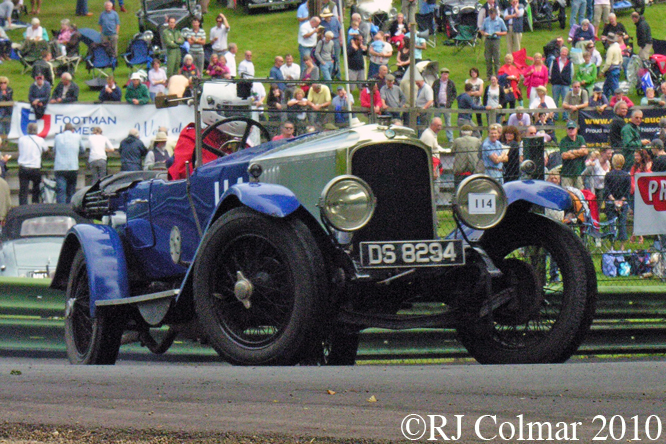
The 30-98 E type was fitted with an improved 115 hp overhead valve engine in 1922, known as the OE to distinguish it from its older side valve engined siblings. Above Phil Dobbin can be seen lining up his 1924 30-98 OE for the start of a run up the hill at Loton Park.

Nicola Quartermaine , Vauxhall 30/98, Loton Park

1924 was the most successful year for the 30/98 E-type when 111 examples were built. Nicola Quartermaine’s 30-98 seen above negotiating the Triangle at Loton Park above comprises an older 1921 pre OE chassis and a 1924 4224 cc / 258 cui OE motor.

Roger Thorpe , Vauxhall 30/98, Prescott

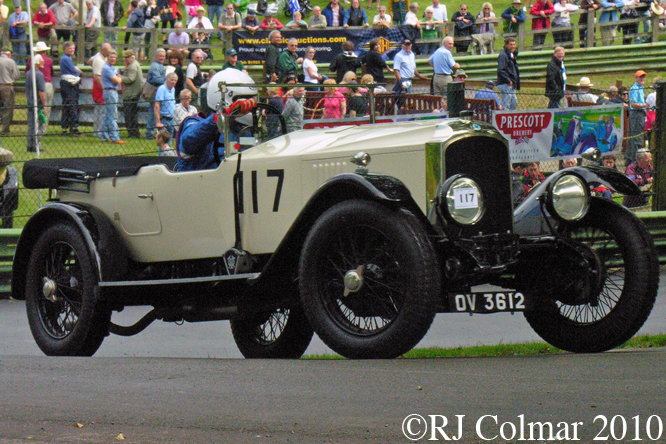
Around 60% of all 30-98 E-types, like the 1924 chassis OE 102 driven by Roger Thorpe at Prescott above were exported to Australia, some have since made their way back to the mother land.

Adam Jones , Vauxhall 30/98, Prescott

Vauxhall 30-98 E-types were available with either 4 seater tourer or 2 seater ‘Wesum’ boat tail body work with a ‘dicky’ (fold out) seat in the boat tail from the factory, alternatively a chassis could be ordered and sent to a coachworks for a bespoke body. Grosvenor Carriage Company for example, part of the Vauxhall dealer Shaw & Kilburn empire, built bodies for Vauxhalls exclusively during the production life of the 30-98. Above Adam Jones drives a 1925 4 seater with a tourer body, similar to all the vehicle bodies featured in today’s post. Note the absence of a drivers door on all of the vehicles featured in today’s post !

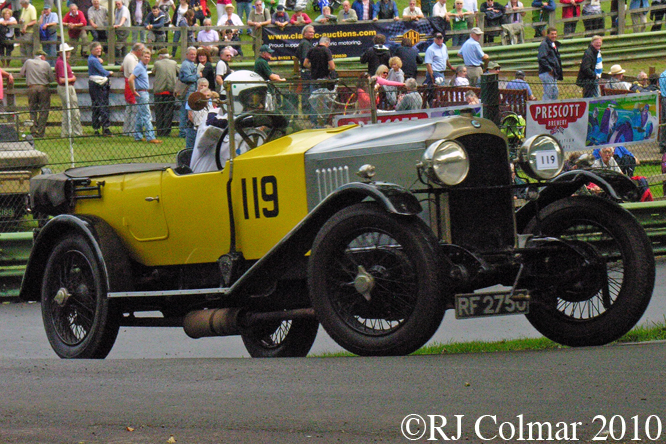
Dr Nick Bell, Vauxhall 30/98, Prescott

The class leading speed and later 4 wheel braking of the 30-98 was not enough to deliver consistent earnings for Vauxhall and in 1925 the company was sold for US$ 2.5 million to General Motors who set about challenging Ford at a lower end of the UK market than Vauxhall had hitherto catered for. Above Dr Nick Bell above drives a 1927 30-98 OE tourer, chassis OE 304, one of the last of the in total 312 OE’s built since 1922.

Thanks for joining me on this E-Type edition of ‘Gettin’ a li’l psycho on tyres’ I hope you will join me again tomorrow. Don’t forget to come back now !

Share

English T – Ford Model T

Ford Motor Company started manufacturing vehicles in 1903 and that same year three Model A’s were exported to Great Britian, by 1909 the Ford Motor Company (England) was established and began working from an Office in London on March 8th 1911.

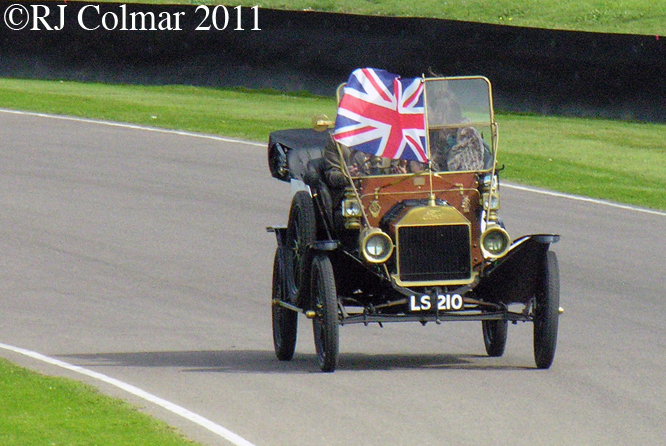
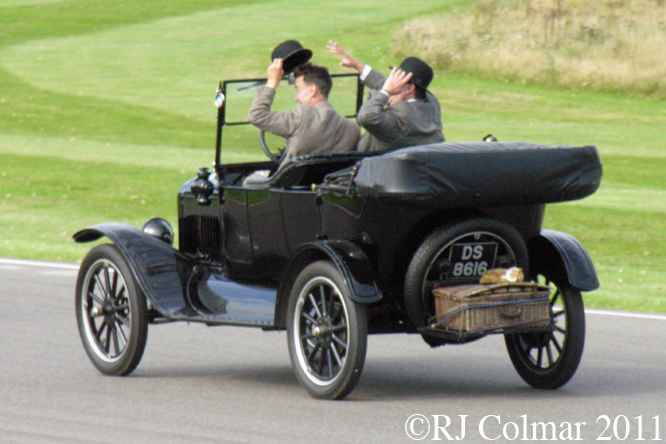
Ford Model T, 1911, Goodwood Revival

Ford’s first overseas assembly plant was opened in 1911 at Trafford Park in Manchester where Ford Model T’s were assembled with imported chassis, mechanical parts and locally manufactured bodies. The 1911 Model T above has the distinction of being the first car to be driven up Ben Nevis.

22 year old Henry Alexander, on the instruction of his father the first Ford dealer in Scotland, spent six weeks preparing a route to the top Britains highest peak 4,409 ft / 1,344 m above sea level. It then took Mr Alexander 5 days to reach the summit along the precarious route he had prepared. Mr Alexander repeated the feat in 1928 and to mark Centenary of the Model T reaching the top of Ben Nevis, earlier this year a team of 71 volunteers carried a replica model T to the summit assembled it and then disassembled it and brought it back down again !

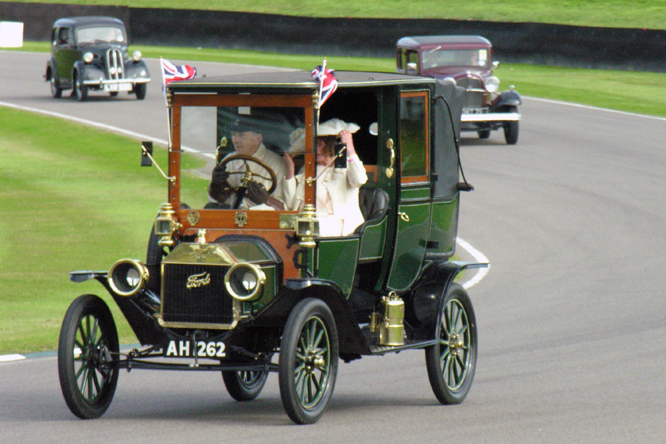
Ford Model T, Landaulet, 1912, Goodwood Revival

Although the three pedal system for operating motor cars as used in most cars to this day was familiar when the first Model T’s were built in 1908 the Model T relied on a hand throttle operated on the steering wheel a left pedal that when fully depressed engaged a low gear, when part depressed disengaged the gear box and when not depressed engaged a high gear. The centre pedal when depressed engaged reverse and the right pedal operated the brakes which were attached to the rear wheel only.

Above is a 1912 Landaulet offering minimal weather protection to the front seat occupants while giving the rear seat occupants a choice of protection thanks to a folding roof. The Landaulet body style was a hangover from the age of the horse drawn carriage and has largely disappeared only Maybach are known to offer a Landaulet option at the time of writing.

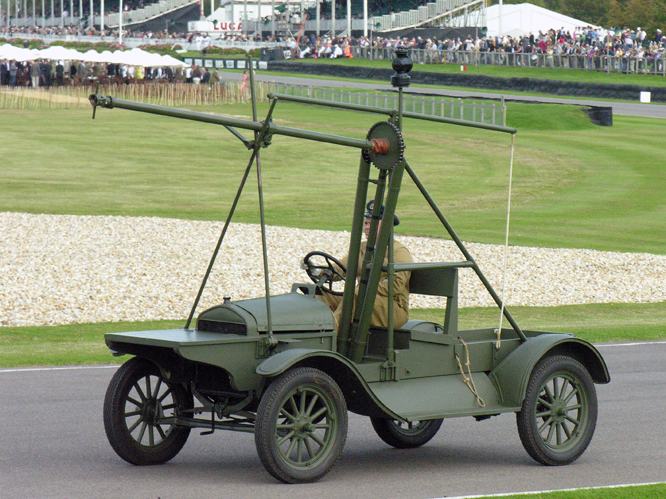
Ford Model T, Huck Starter, 1915, Goodwood Revival

When designing the Model T Henry Ford new that as well as a motor car he wanted his vehicle to be adaptable to the requirements of a great variety of users in agriculture and industry. Amongst the stranger applications of the Model T was the mobile aircraft starter version.

The long pole that extends beyond the front of this 1915 ‘Huck Starter’ Model T can be aligned with the propellor shaft of an aeroplane and then engaged with it. The chain to the left of the operator connects the aeroplane starter shaft to the drive of the Model T which when engaged will rotate the aircraft engine until it fires under its own power.

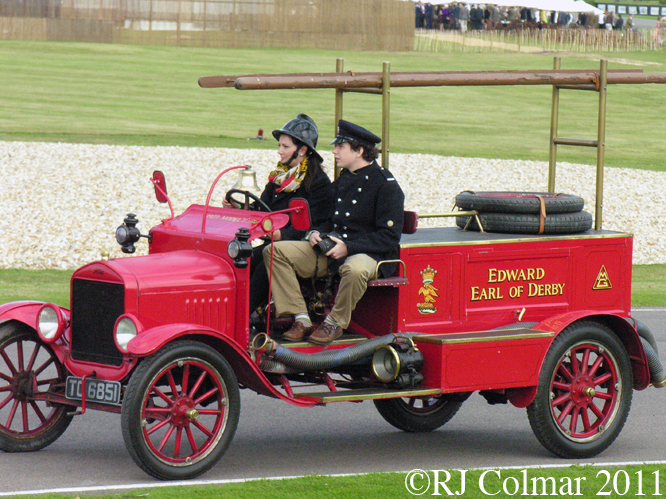
Ford Model T, Fire Engine, 1923, Goodwood Revival

When production of the Model T started it took around 12 and half hours to assemble one. By the outbreak of the Great War in 1914 production time had been slashed to just 93 minutes , at one time nearly half of all the worlds motor vehicles were thought to be Fords, in the UK in 1919 41% of all new cars registered for the road were Fords.

The Model T was easily adapted into trucks and buses above is a 1923 fire engine that served on the estate of the Earl of Derbyshire from 1924 to 1948.

Ford Model T, 1924, Goodwood Revival

One of the great myths about the Model T was that one could have a Model T any colour one wanted so long as it was black. In fact this was only true after 1914, up until then Model’s T’s were not available in black at all, from 1912 to 1914 Model T’s were only available in Midnight Blue with black wings / fenders. After 1914 over 30 different black paints were developed to satisfy the various means of applying the paint to different parts of the cars.

The 1924 Model T above is little changed from the 1911 example seen at the top of the post.

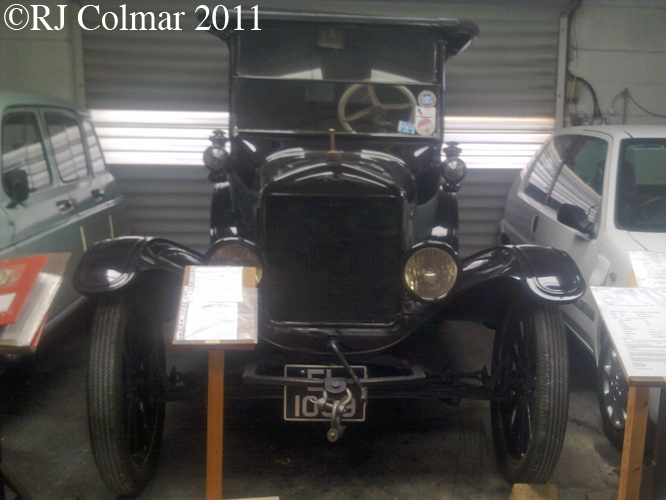
Ford Model T, 1924, Atwell Wilson Motor Museum

With over 15 million examples produced when production of the Model T ceased in 1927, the Model T held the title of the worlds most popular vehicle until 1972 when it was eclipsed by the VW Beetle, though it should be noted the Beetle had undergone many more changes in it’s life time than the Model T.

The 1924 example above can be seen at the Attwell Wilson Museum.

Thanks for joining me on this English T edition of ‘Getting a li’l pysycho on tyres’, I hope you will join me again tomorrow. Don’t forget to come back now !

Share

Spirit of the 60’s – Dyrham Park

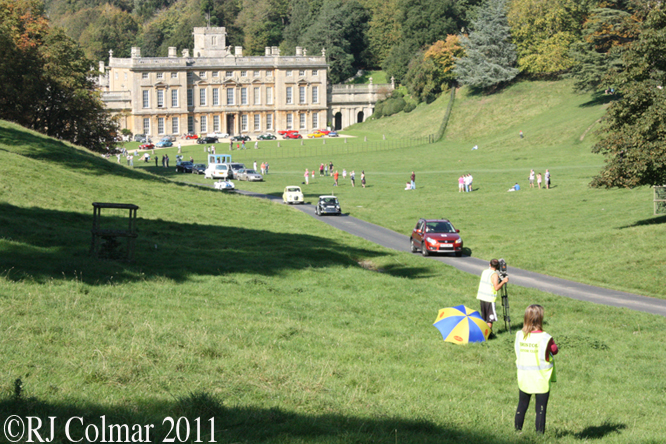
On Sunday I ambled through the back lanes of Gloucestershire with a couple of friends to visit Dyrham Park a Neo Classic country mansion, that was built for William III’s Secretary at War William Blathwayt, set in a 274 acre deer park.

Dyrham Park

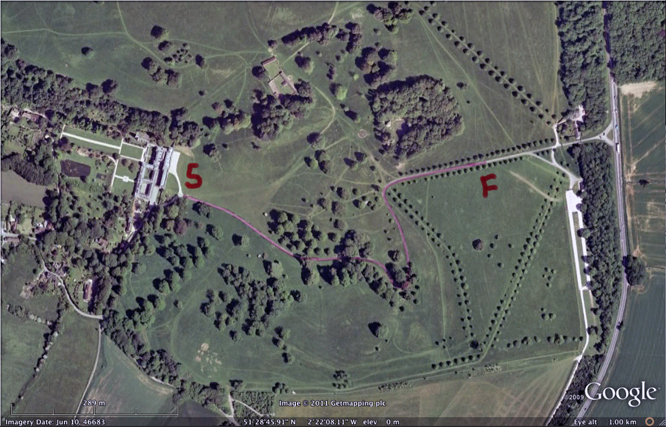
The house was made over to the state in the late 1950’s and the National Trust subsequently took over the running of the estate in 1961. That same year the Bristol Motor Cycle & Light Car Club organised a hillclimb on an 800 yard course that started at the Mansion house and went up the winding front drive towards the main gates of the estate.

Lotus 69, Dyrham Park

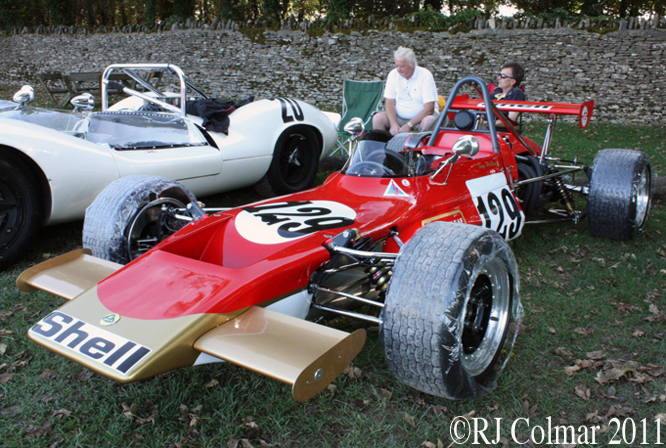
To celebrate the centenary of what is now known as the Bristol Motor Club a Spirit of the 60’s demonstration was organised at Dyrham Park to mark the six events that were organised from 1961 – 1966. Not all the vehicles present on Sunday, like Tony Wallens 1971 Lotus 69 were strictly of the correct period but they all added to flavour on another Indian Summers day.

Brabham BT18 Buick V8, Chris Merrick, Dyrham Park

Making his way through the hairpin to the start line is Chris Merrick in a Brabham BT18 / Buick V8 that once belonged to Bryan Eccles who set, probably for all time, the course record of 30.05 secs in 1966.

Berkley B105, Neil Barber, Dyrham Park

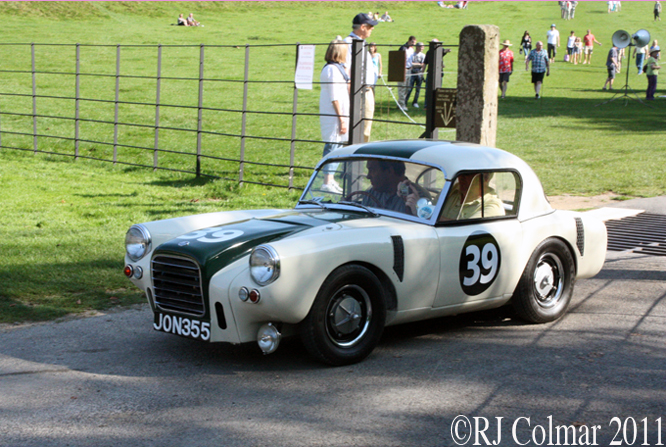
Some of you may remember I stumbled across a Berkeley B105 earlier this year at the Silverstone Classic, this 1959 example heading for the assembly area belongs to Neil Barber.

Ford Mustang, 302, Steve Hillcox, Dyrham Park

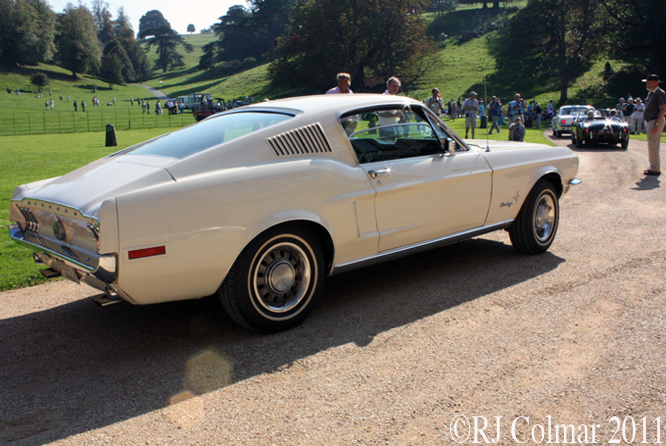
Steve Hillcox in the 302 cui Mustang Fastback can is seen above preparing to leave the assembly area for his run up the narrow 800 yard course.

Dyrham Park

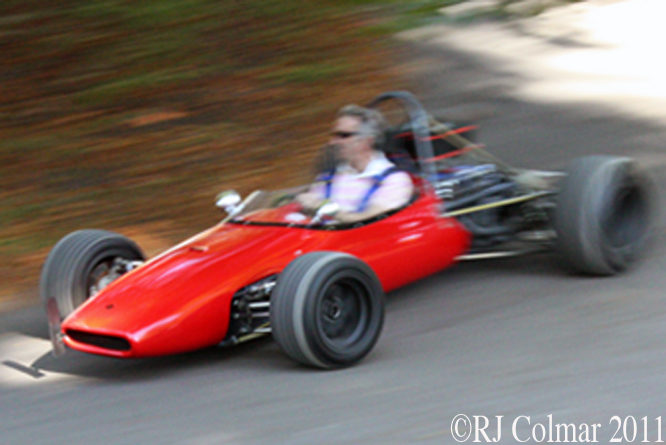
Following the Suzuki Pace Car heading for the sweeps on one of the demonstration runs are Jeffrey Allen in his 1967 Mini Cooper, Steve Dowling in his 1959 Austin A35 and David Valsler in his Turner which he found in Ohio.

Volkswagen, Notchback, John Robbins, Dyrham Park

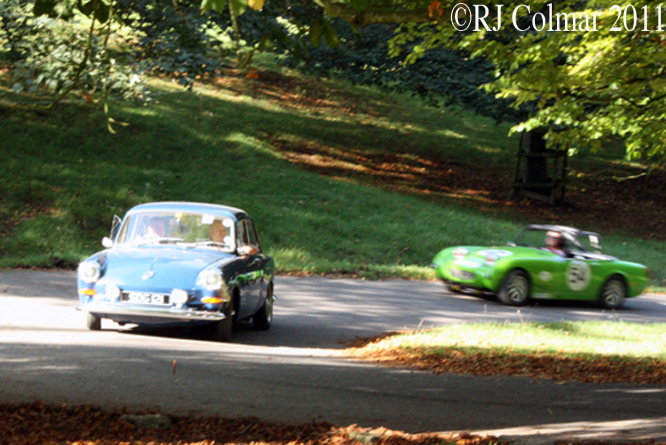
John Robbins above negotiates the hairpin in his 1967 VW Notchback ahead of Colin Gale in his 1966 Austin Healey Sprite.

Morgan Super Sport, Ron Clements, Dyrham Park

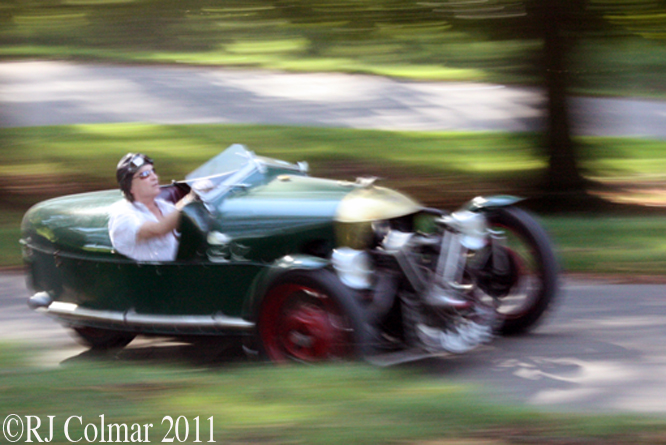
I believe this is Ron Clements in his 1933 Morgan Super Sport which bears a quote from two time Le Mans winner Sir Tim Birkin on the side “Better to die at full throttle than to live behind a desk.” Sir Tim died from as a result of burns sustained while racing a Maserati in the 1933 Tripoli Grand Prix.

Monkey Bike, Vince Woodman, Dyrham Park

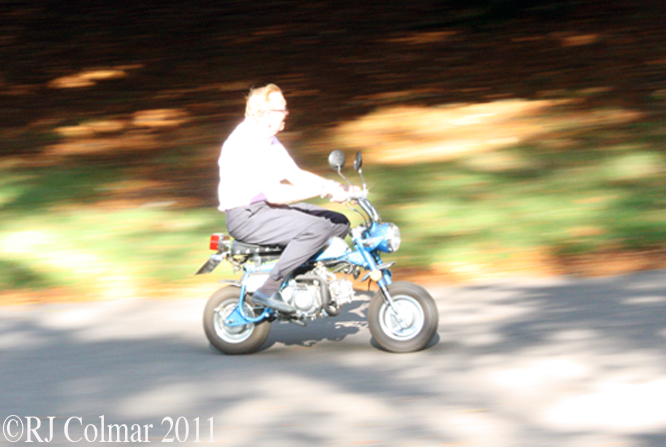
One of the slower passes up the hill had they been timed would possibly have gone to former British Saloon car stalwart Vince Woodman on this Honda monkey bike,

Ford Cologne Capri, Vince Woodman, Dyrham Park

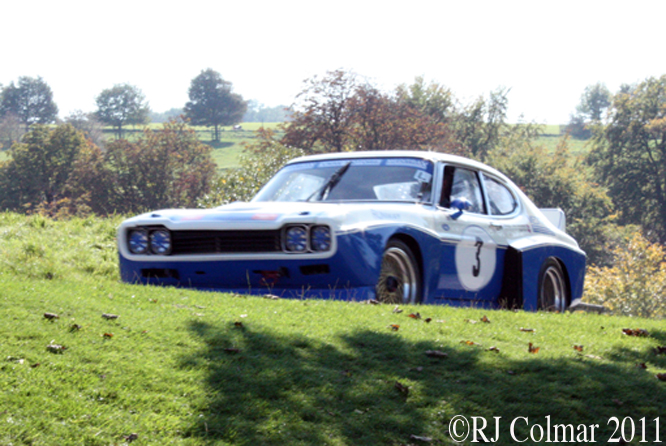
though without doubt had the event been timed he would have been in the running for top tin top with his 3.4 litre 1973 Cologne Capri seen here rounding Neptune before the finish straight.

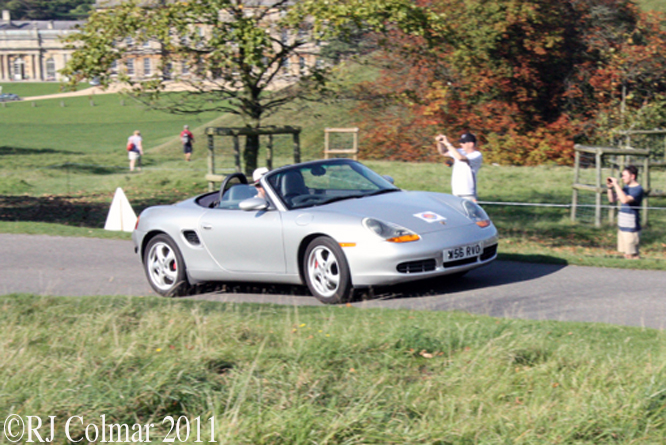
Porsche Boxter, Dyrham Park

Somewhere between 4-5000 spectators are thought to have been entertained by over one hundred cars that each made several runs up the hill, apparently at one point the gates had to be closed because the A46 Bath Road had become blocked. At 4 pm the course car passed for the last time bringing an entertaining day to an end.

Thanks for joining me on this Dyrham Park edition of ‘Gettin’ a li’l psycho on tyres’ I hope you will join me again tomorrow. Don’t forget to come back now !

Share

Perfect Car For A Wedding #6 – Rolls Royce Corniche

I am off to a wedding today, the first one I have attended where my friends children are the ones getting married, so it seems appropriate to feature another Perfect Car for a wedding on today’s blog.

Rolls Royce Corniche, Haynes IMM

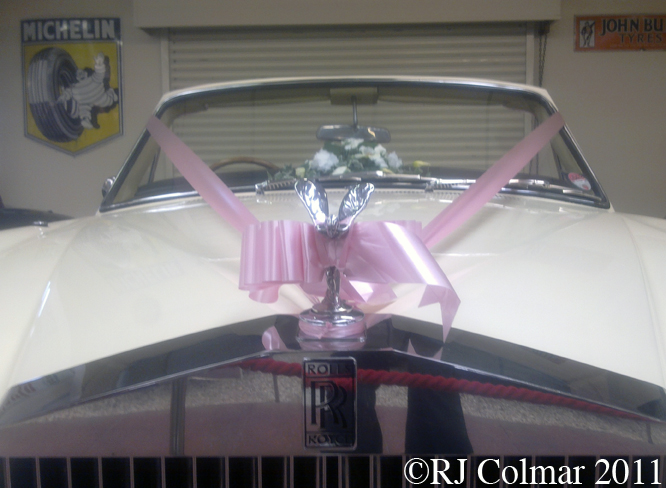
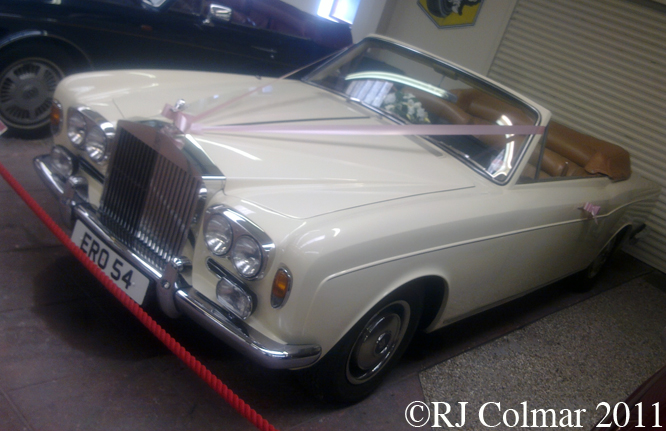
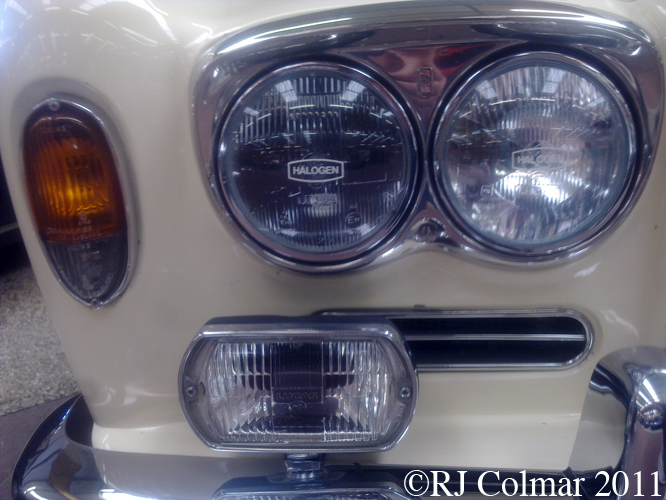
Today’s Rolls Royce is known as the Silver Shadow Mulliner Park Ward Drop Head Coupé which first appeared in 1967 was renamed Corniche in 1971 when this model scene at the Haynes International Motor Museum was built.

Rolls Royce Corniche, Haynes IMM

The Corniche assembled and finished in London by Mulliner Park Ward is based on the Rolls Royce Silver Shadow / Bentley T floor plan with the same ‘adequate’ aluminium 6230 cc / 380 cui Rolls Royce motor.

Rolls Royce Corniche, Haynes IMM

The Corniche name was first used by Rolls Royce in the 1930’s for a Mark V prototype with Parisian coach work by van Vooren, legend has it that after 15,000 miles of Continental testing in Europe was awaiting repatriation to England when it was hit by a bomb at Dieppe docks.

In the UK it would probably take a particularly brave couple to opt for a convertible on their wedding day but then as they used to say in Rome ‘Fortes fortuna adiuvat’. For the brave this Corniche can be hired from the Haynes International Motor Museum.

Wishing Lotti & Ronnie and all those getting married today all the best and many happy years together.

Thanks for joining me on this Corniche edition of ‘Gettin a lil’ psycho on tyres’, I hope you’ll join me again tomorrow. Don’t forget to come back now !

Share

Gold Cup Classic – Oulton Park

Oulton Park circuit is one of Britain’s more difficult tracks, while attending racing school there I spun off on two separate occasions, located near Little Budworth in Cheshire.
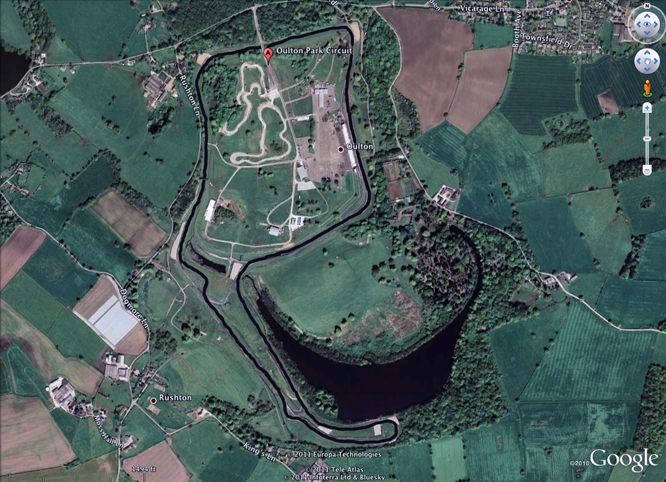
Oulton Park

The last time I was spectating at Oulton Park in Cheshire then future world champion Damon Hill was given a one off drive in the British Formula 3000 Championship race by Colin Bennett and future Oulton Park circuit owner Dr Jonathan Palmer had a one off drive in the Celebrity car that featured in the Honda CRX championship in 1989.
Aston Martin DBR1, Gold Cup, Oulton Park

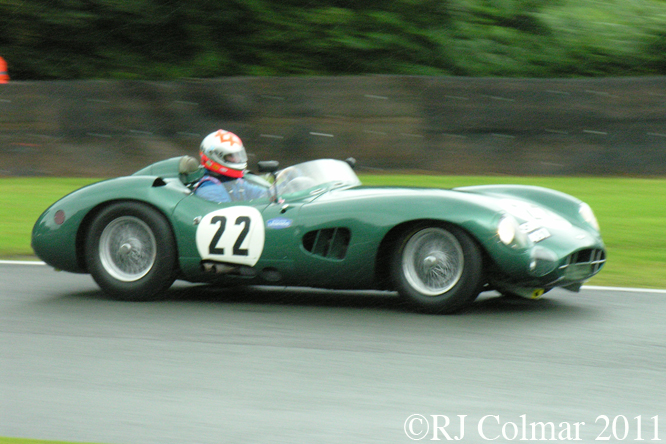
On Bank Holiday Monday I got to the track for the second day of the Gold Cup Classic meeting, just as qualifying got under way for the Sir Stirling Moss trophy race. Former FIA Historic Formula One Champion Bobby Verdon Roe, seen here driving a 1957 Aston Martin DBR1, going through a much altered Druids Corner on his way to qualifying on pole.
Skoda Estelle, Gold Cup, Oulton Park

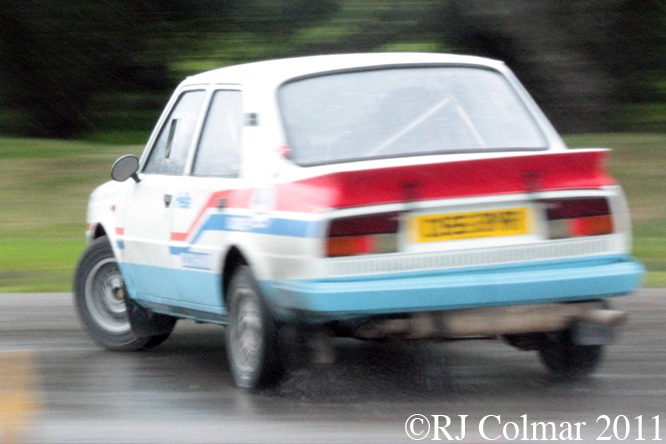
Oulton Park now has a tarmac Rally Stage and an interesting variety of vehicles were to be found trying to navigate the slippery conditions, including this Surprising Skoda Estelle, keeping spectators entertained with numerous 360 degree spins.
Lola T200, Merlyn Mk11A, Gold Cup, Oulton Park

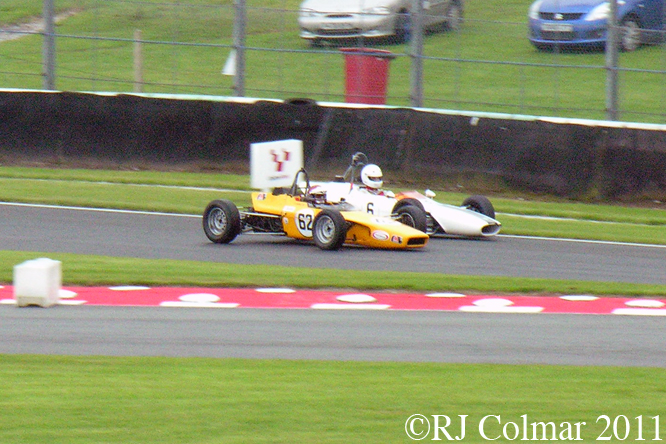
The Historic Formula Ford race for Ford Kent powered single seaters built from 1969 – 1972 was highly entertaining with Rob Wainright piping Ben Mitchell and Benn Simms in a three way last lap shoot out. Former Grand Prix driver Ian Ashley driving the #62 Lola T200 is seen here passing Stuart Baird in the #6 Merlyn MK11A for fifth prior to Ian’s early retirement.
Lotus Martin, Gold Cup, Oulton Park

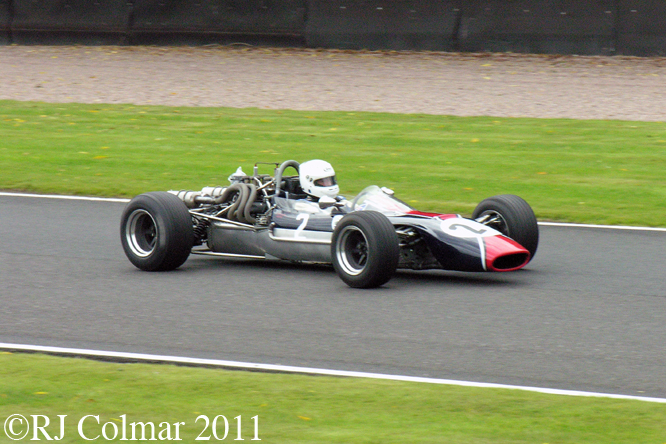
I missed the Historic Touring Car race won by Mark Jones in favour of having lunch with friends from The Nostalgia Forum, afterwards the Derek Bell Trophy race for a mixture of open wheel cars was run. Richard Evans in a Formula Atlantic March 79B snatched a last lap victory from Michael Lyons Formula 5000 Lola T400. I did not realise it at the time I took the photograph above but this is a recreation of the Lotus Martin built to Formula One regulations in 1966.
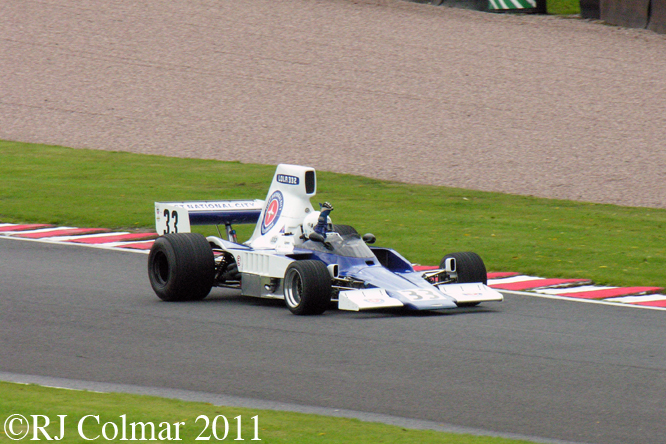
Judy Lyons, Lola T332, Gold Cup, Oulton Park

Judy Lyons, Michael’s mother, driving the #33 Lola T332 above, gambled on rain returning during the race and opted for intermediate tyres, at the end of the race she showed no sign of disappointment that her strategy had failed or that she was not classified in the final results.
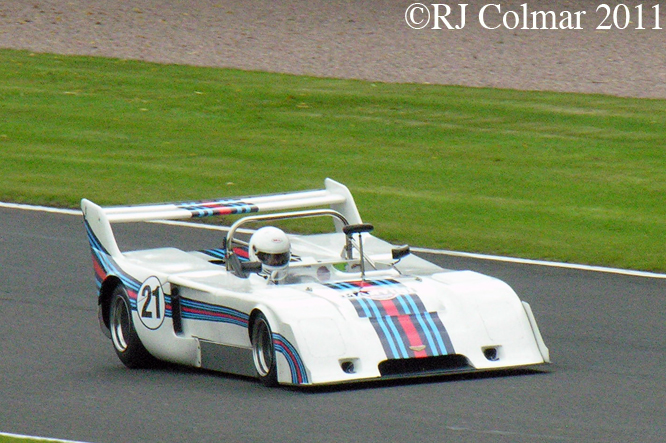
Chevron B31, Gold Cup, Oulton Park

The small grid of Group 6 2 litre / 122 cui cars for the Martini Trophy race included this Martini liveried Chevron B31 belonging to Graeme and James Dodd which failed to finish.
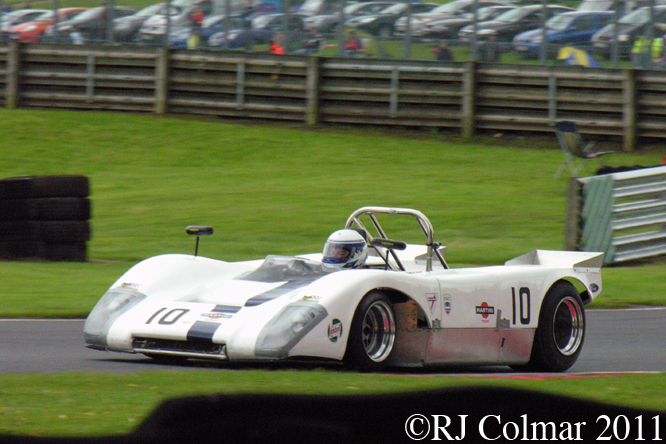
Lola T210, Gold Cup, Oulton Park

Charlie Kemp did his best to make a race of it driving the 1970 vintage #10 Lola T210 but was eventually unable to keep up with John Burton who took the Martini spoils driving a Chevron B26.
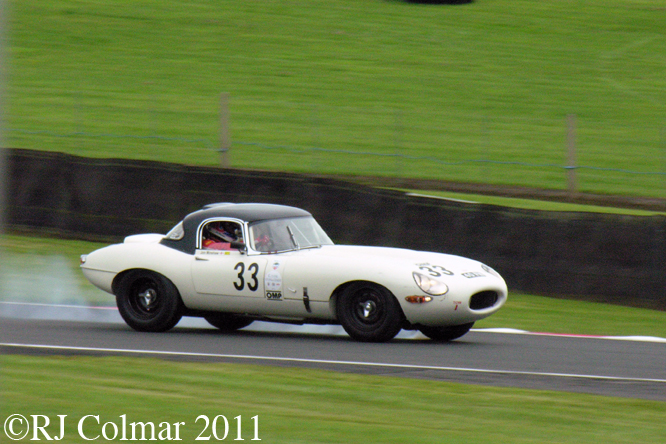
Jon Minshaw, E-Type, Jaguar, Gold Cup, Oulton Park

The E Type challenge was probably the race of the day helped by tricky weather conditions, earning my personal vote for driver of the day was Jon Minshaw who worked through the field from the back of the grid to second place behind Martin O’Connell in a race filled with lurid ‘moments’.
Allard J2, Gold Cup, Oulton Park

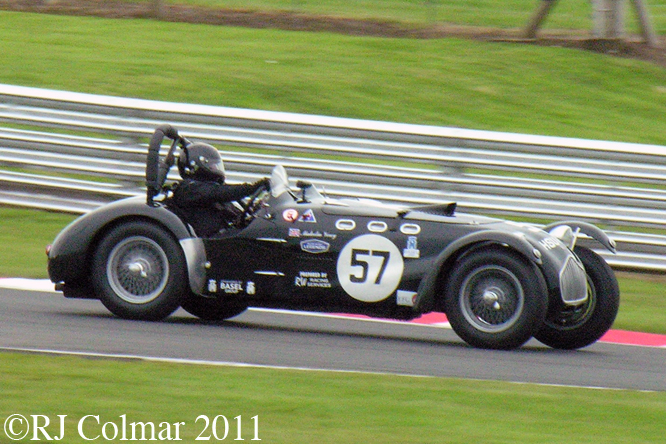
John Ure and Patrick Blakeney-Edwards won the Woodcote Trophy driving a Cooper Bristol finishing ahead of the #57 Allard J2 seen here of Malcolm Verey and Dennis Welsh after Stephen Bond, who had rarely been more than a few car lengths behind the Cooper, lost up to a minute making his mandatory pit stop.
Ralt RT1, March 803B, Gold Cup, Oulton Park

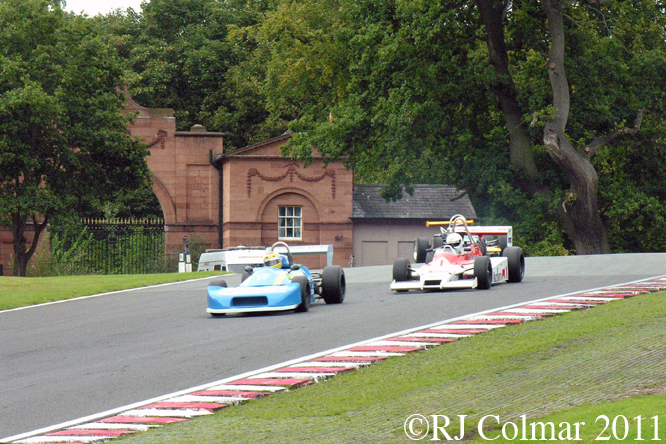
Benn Simms made up for his disappointment in the Formula Ford race by winning from the back of the grid in the Classic Formula 3 race driving the #1 March 803B seen here lining up
to pass the Keith White in the blue Ralt RT1.
Brian White, Triumph TR2, Gold Cup, Oulton Park

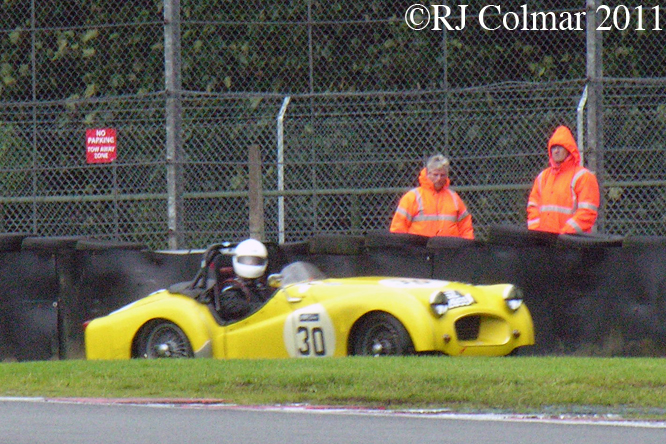
Brian White and Keith Stantton drove their Triumph TR2 in both the Stirling Moss and Woodcote Trophy races, Brian is seen here exploring the outer limits of the track at Old Hall during Woodcote Trophy on his way to a 19th place finish.
D-Type Jaguar, Knobbly, Lister Jaguar, Gold Cup, Oulton Park

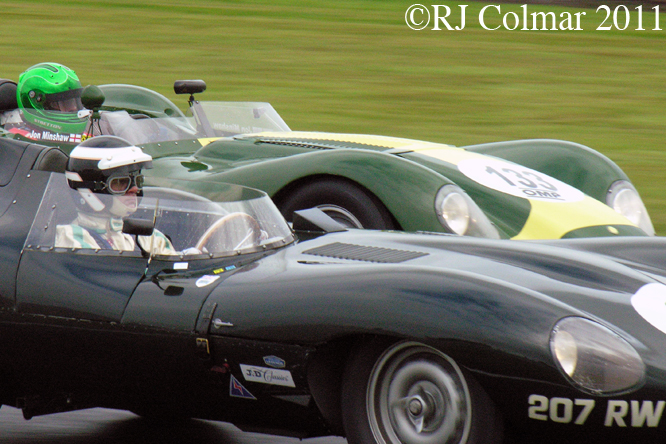
Jon Minshaw teamed up with John Stretton to win the Woodcote Trophy in the #133 ‘Knobly’ Lister Jaguar above lapping the D-Type of Ben Eastick which finished 7th.
Reynard SF79, Delta T79, Gold Cup, Oulton Park

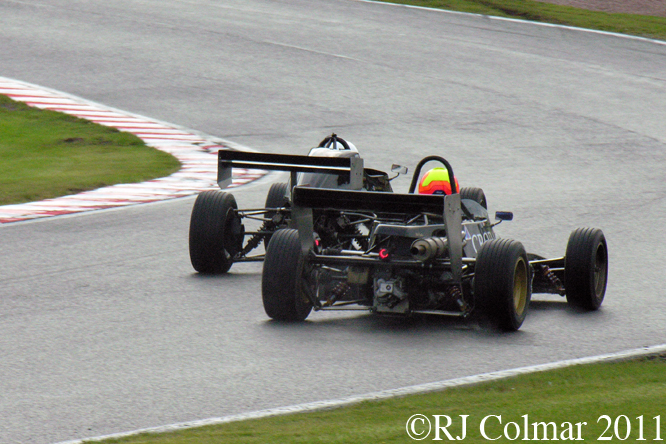
Final race of the day was the ‘Amitsead Barnet Financial Services’ Historic Formula Ford 2000 championship race for Pinto powered cars circa 1978 – 1981 which was won by Nelson Rowe. Nelson Duke, in the yellow helmet above driving a Reynard SF79 about to pass the Delta T79 of Robert Trusting, impressed the event race sponsor ‘Mallory Dan’ sufficiently with his drive from the back of the grid to 13th place to win the FF2000 driver of the day award.
Piper GT, Gold Cup, Oulton Park

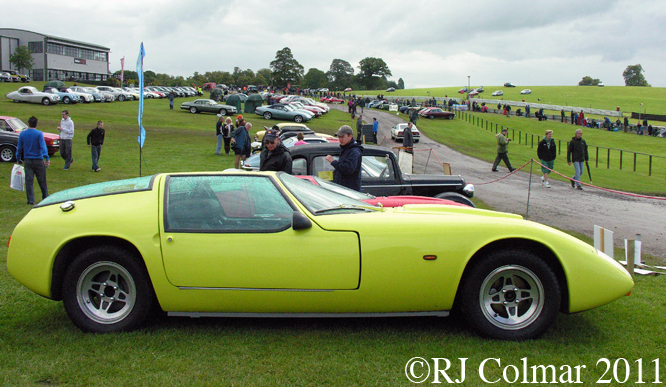
In between races and watching the rally car demonstration there was a feast of classic cars on display including my personal nomination for car of the day this Piper GT
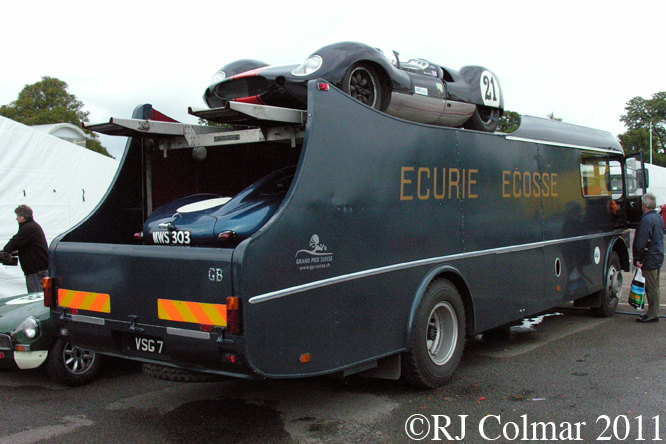
Commer Transporter, Gold Cup, Oulton Park

After a great day out all too soon it was time to say ‘until next time’ to Barry, Roger, David, Mallory Dan, Alan, Phil and Simon from the Nostalgia forum and head for home.

Thanks for joining me on this Gold Cup edition of ‘Gettin’ a lil’ psycho on tyres’, I hope you will join me again tomorrow. Don’t forget to come back now !
Share

Swiss Style British Built – Alvis TD21 Drop Head

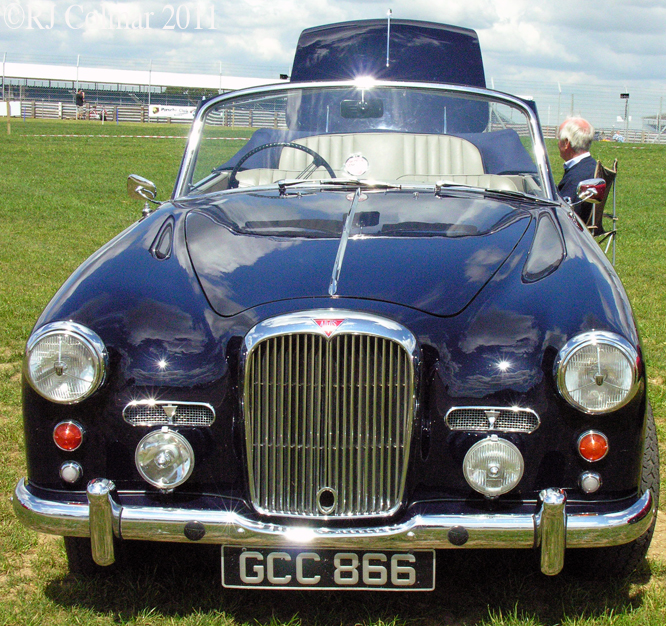
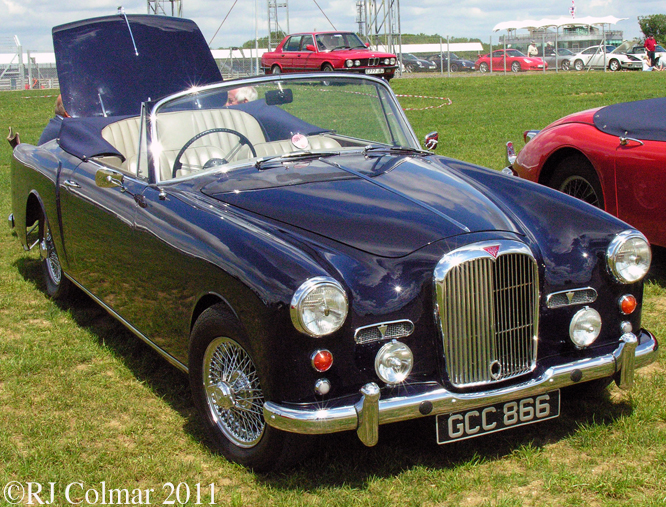
Among the more handsome vehicles to be built in Britain in the late 1950’s was the Alvis TD21, like the 1959 example seen here at the recent Silverstone Classic.

Alvis TD 21, Silverstone Classic

The TD range, available in 2 door saloon or drop head form came with an Alvis 3 litre / 183 cui 6 cylinder motor with 7 bearing crankshaft which produced 115 hp.

Alvis TD 21, Silverstone Classic

The bodywork was designed by Swiss company Hermann Garber working with the Park Ward coach works who took on the production of the beautifully proportioned panels which were mounted on a separate chassis.

Alvis TD 21, Silverstone Classic

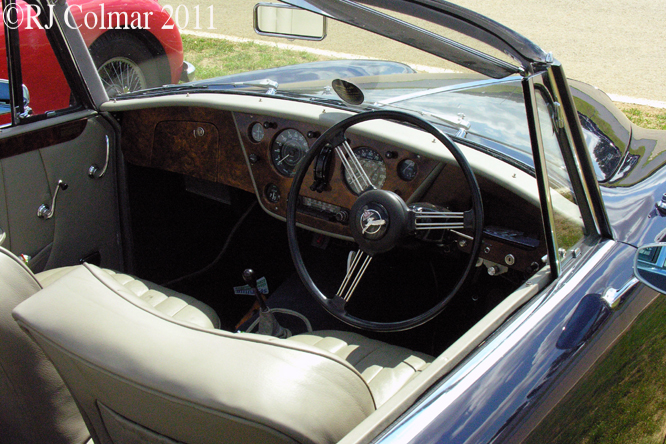
With either 4 speed manual, sourced from the Austin Healey parts bin, or 3 speed Borg Warner automatic transmission the TD had a top speed of 103 mph.

Alvis TD 21, Silverstone Classic

The TD21 was upgraded to Series II spec in 1961 with external changes including integrated front fog lights and internal changes including all round disc brakes and ZF 5 speed manual gearbox. From 1958 to 1964 1070 TD21’s of both types were built.

Thanks for joining me on this Swiss style edition of ‘Gettin’ a lil’ psycho on tyres’, .I hope you’ll join me again tomorrow when I’ll be visiting Oulton Park for some classic and historic races. Don’t forget to come back now !
Share