Tag Archives: Peter

Fibreglass Transformer – Austin Healey Sprite #ANJ/6378

Lenahm Sprite, Race Retro, Stoneleigh,

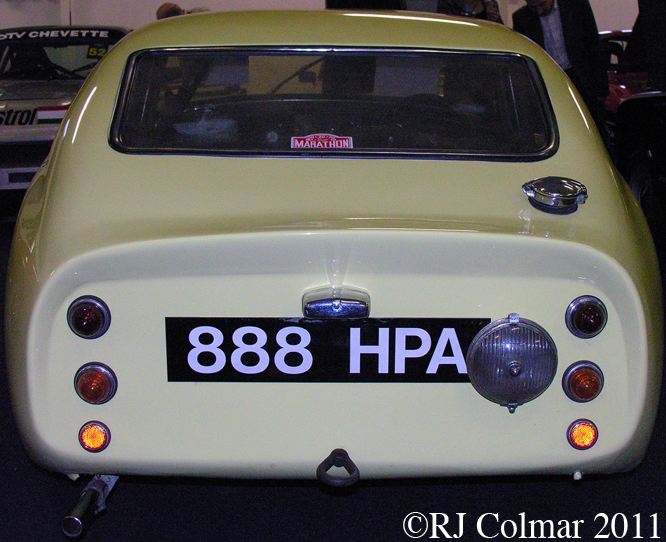
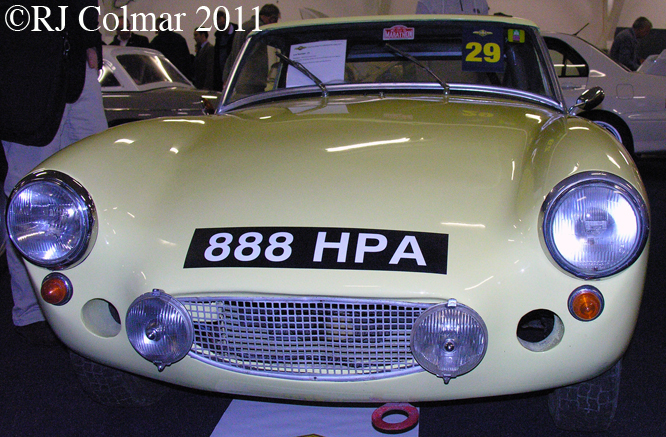
Today I am looking at this Austin Healey Sprite fitted with an Ashley nose and a Lenham Fastback, a body style also apparently known as a Lenham GT which found a new owner at last weekends Race Retro exhibition for £10,450 / $ 17,000 thanks to auctioneers H&H;.

Lenahm Sprite, Race Retro, Stoneleigh,

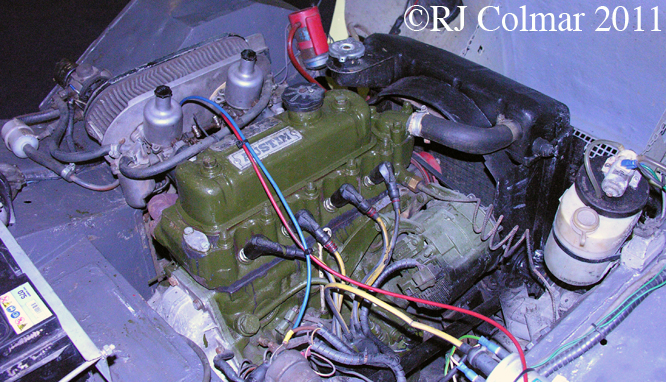
Sporting a twin carb 1,100cc / 67 cui A series motor up from the original 948 cc / 57 cui fitted to a four speed gearbox which all points to a competition history.

Ausitn Healey Sprite

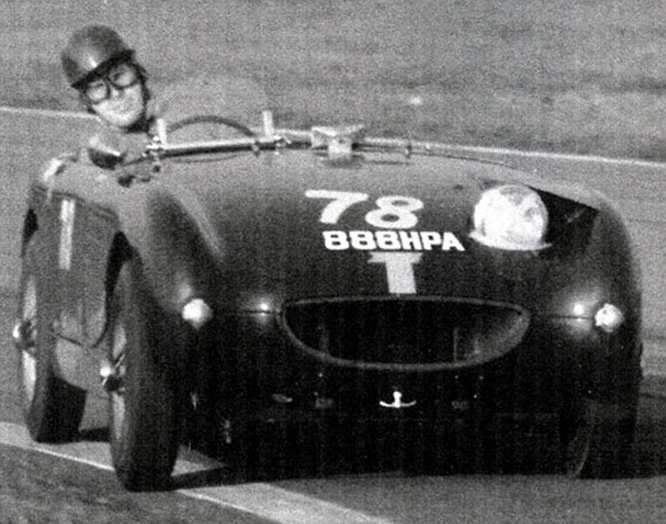
This undated and uncaptioned photo taken from the H&H; website of a vehicle bearing the same registration number (888 HPA) gives a tantalizing insight into an interesting race history that is said to have included preparation by the ‘Naylor Brothers’ and modification to Sebring Spec prior to the Lenham Fastback bodywork being fitted.

Lenahm Sprite, Race Retro, Stoneleigh,

More recently this vehicle was driven to 5th in class in the 20th Classic Marathon by Peter & Betty Banham along a route from Belgium to the Dolomite mountains of Italy.

I’d like to thank David Birchall over at The Nostalgia Forum who came up with additional information on the identity of the nose type. If you have any interesting info on this vehicle in either of the photographs please add your comments below.

Hope you have enjoyed today’s transformer edition of ‘Gettin’ a lil’ psycho on tyres and that you’ll join me again tomorrow for a look at another Great British sports car. Don’t forget to come back now !

Share

Sweet dreams are made of this – Connew PC1 02

Imagine a recently graduated 24 year old industrial designer, who knows nothing about motor sport, but with a passing interest in large American chromed land yachts sitting in an office designing record players in East London, i pods if your not sure of what a record player is, and the phone rings. His friends are calling to see if he would like to join them on holiday with the intention of taking in the 1969 Italian Grand Prix.

When his boss tells our hero that it is not okay to take the time of work to go on holiday our hero offers his resignation, and joins his friends anyway.
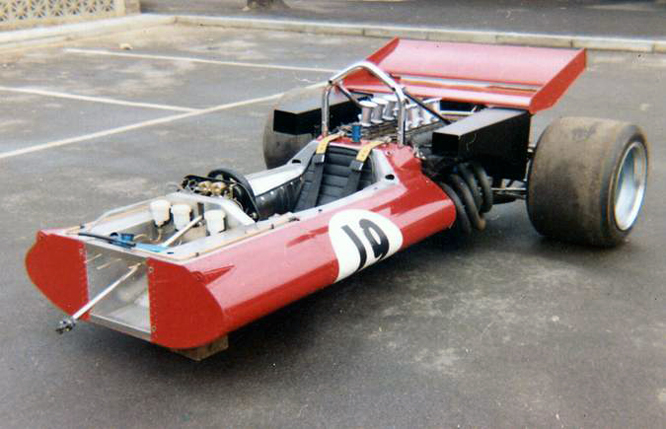
At the Italian GP our hero falls in love with the sound of V12 engines as they accelerate between the corners of the Monza track.
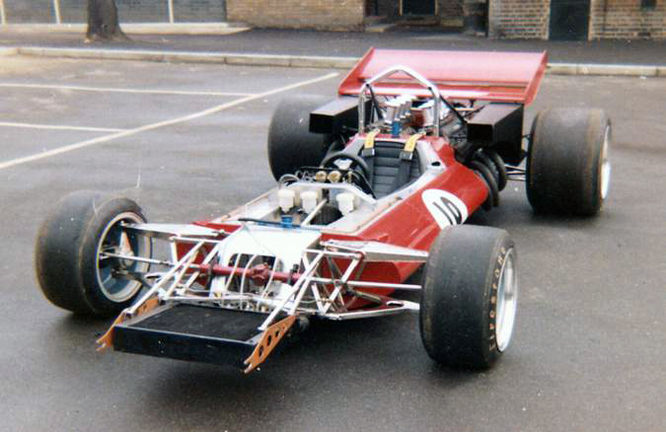
Upon returning to England he finds out about a vacancy in the drawing office of a newly established Grand Prix team owned by a former multiple World Motor Cycle champion and one time World Grand Prix champion.
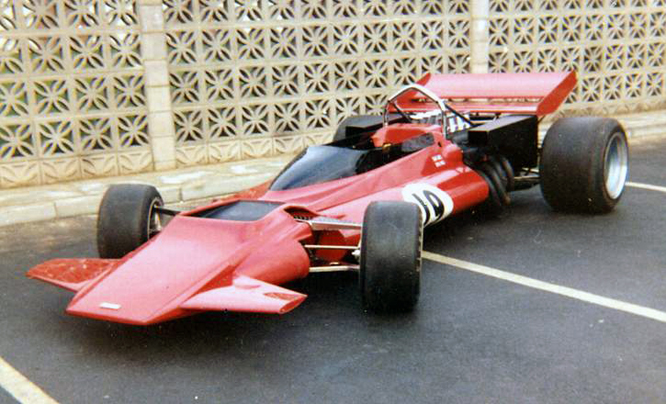
Our hero’s attitude ‘that there was no problem in this world that common sense and application with half an ounce of intelligence can not overcome’ wins him the job, starting out knowing absolutely zero about the design of racing cars within months he is working on the design of a Grand Prix car.
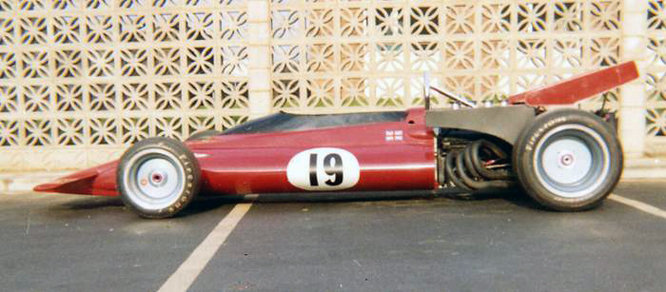
When our hero sees the red car his new design is going to replace wheeled out into the sunshine for the first time, in that very instant he decides he is going to build a Grand Prix vehicle of his very own.
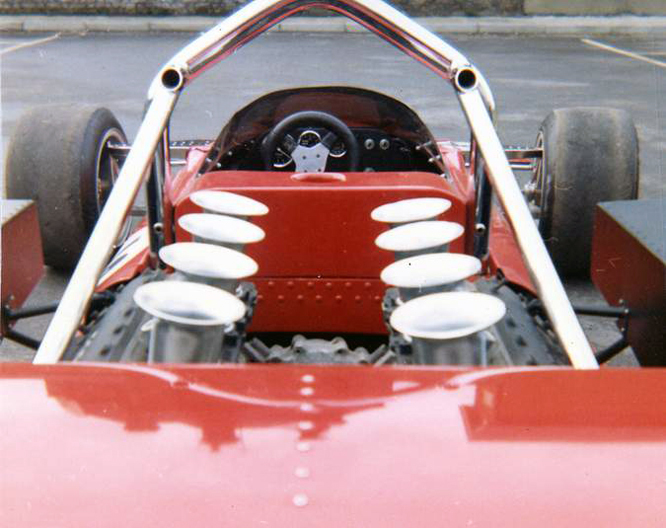
Our hero starts working from home, his parents home that is, on his own Grand Prix challenger, a friend tells our hero he may use a spare bedroom and lock up to start building his car, other friends chip in with time, suppliers ‘lend’ him various bits and pieces to be getting on with. As the design our hero is paid for near completion he then takes a job with an engineering company where he uses his and colleagues lunch hours to fabricate parts he cannot otherwise afford for his own Grand Prix challenger.
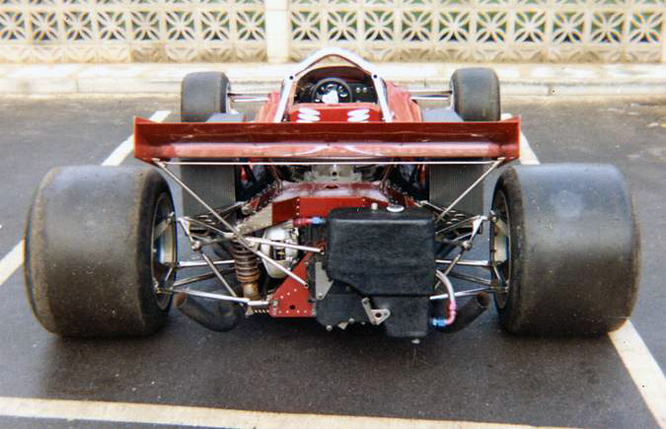
12 months after deciding to build his very own Grand Prix car our hero completes his chassis and he shows it to his cousin, a wood work teacher, who agrees to to join the team to make the bodywork using materials he has never used before.
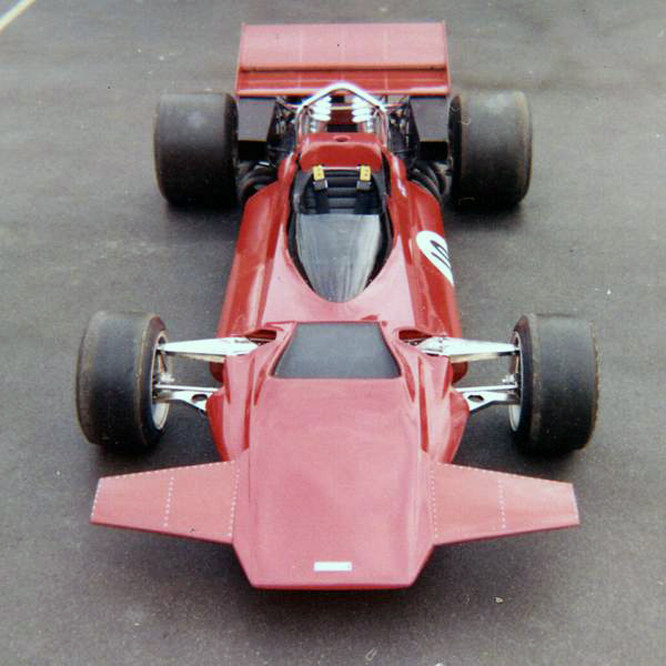
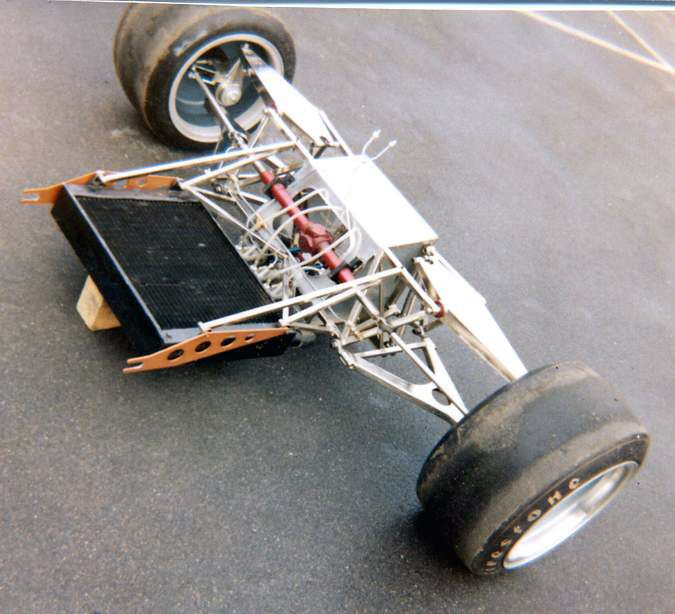
Using only our heros own wages, friends time, goodwill and what can be scrounged including a dummy engine, once used by Jochen Rindt to win the 1969 US Grand Prix, gearbox and wheels our heros team push their improbably completed Grand Prix car one Sunday night out of it’s lock up, down the London Rd in Chadwell Heath to the only place with enough light to take a photo of their pride and joy, the forecourt of their local petrol station.
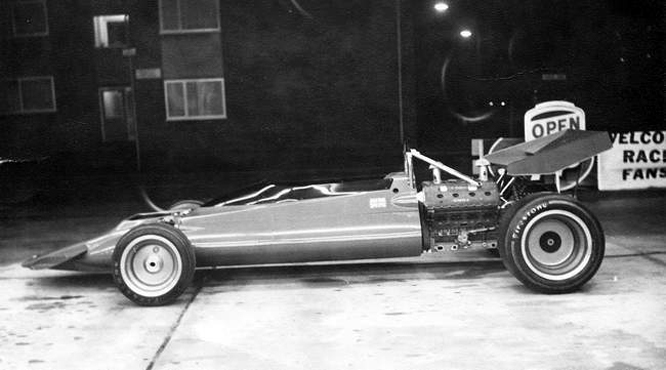
If this story sounds incredible then I’d like to welcome you to the incredible story of Peter Connew who in 36 months made the transition from record player designer to Formula One designer and constructor of the Connew PC1 02 Grand Prix car seen here in late 1971. To be continued….

With thanks to Peters cousin Barry Boor for the photographs if you’d like to read the whole story of how the Connew team came together over a period of two years and it’s trials and tribulations the year after please read Barry’s account of his part in this ‘Boys Own‘ adventure here.

Hope you enjoyed part one of my all time favourate Formula One story which will be continued at some future date, and that you’ll join me tomorrow for a look at some teutonic efficiency at ‘Gettin’ a lil’ psycho on tyres’. Don’t forget to come back now !

Share

The Boss’s Car – Morgan AeroMax

A couple of weeks ago I was fortunate enough to go on a guided tour of the Morgan Motor Company. To arrange the tour I visited the Morgan website two weeks in advance and made a booking. As I hope you shall see over the next couple of days I had a fabulous time.

The Morgan Motor Company was founded in 1909 by HFS Morgan in Malvern Worcestershire and is the oldest British motor manufacturer in continuous private ownership. Today the company is run by the Grandson of HFS, Charles Morgan and as luck would have it this is his personal one of a limited edition of just one hundred AeroMax models.

The Aeromax is capable of 0 – 60 mph in 4.5 seconds and will take you on to a 170mph.

Every detail of a Morgan is a testament to the genius of craftsmen, as we shall see there are power tools in the factory but there is no mechanised assembly line or machines stamping out parts.

Power for the AeroMax comes courtesy of a BMW V8, so far as I know Morgan has always used proprietary motors.

From the trunk of the Aeromax allegedly is large enough for a couple of Golf bags.

In 1991 the Britain’s first reality TV businessman Sir John Harvey Jones was horrified to find Morgan with a seven year backlog of orders were still crafting their vehicles by hand in the Troubleshooter TV series, he advised Peter Morgan to modernise, increase production and prices. Bravely Morgan ignored this advice and the TV coverage led to the waiting list for new Morgans to extend from 7 years to 10 years. Sir John says he is pleased that Peter Morgan stuck to his guns and ignored his advice.

Hope you enjoyed my introduction to the Morgan Car Company, tomorrow I’ll take you inside the factory to see how these cars are made, wishing everyone a sunny day, don’t forget to come back now !

Share

Born out of an Austin Maxi – AC 3000 ME

Born out of an Austin Maxi – AC 3000 ME

Stumbled across this lovely little AC 3000 ME at Silverstone many, many moons ago.

Auto Carriers (AC) can trace it’s roots back 1903, but is probably best known to my generation for two cars that it did not design, namely the AC Ace a design which started life as a Weller engined Tojero and was purchased by AC before eventually morphing into the brutal AC Cobra.

Similarly the AC 3000 ME started out as an Austin Maxi, I’ll repeat that for the more incredulous reader Austin Maxi (!) powered special built by Peter Bohanna and Robin Stables which after AC took it over became a Ford, top of the UK range, 3 litre / 183cui Essex V6 powered vehicle.

AC made just 71 of these vehicles starting in 1979 until production was halted at the Thames Ditton works in 1984. A further 30 3000 ME’s were produced under license by AC (Scotland) including a unique Alfa Romeo V6 prototype. One for collectors to look out for one would imagine.

No AC’s of any kind were built between 1985 and 1996.

Wishing you all a relaxing Sunday and hoping Kevin Harvick can put one over the #48 and #11 at Matinsville tonight. Hope springs eternal for this ‘Happy’ fan 🙂

Don’t forget to come back now !

Share

A Lesson From Lotus – Elan plus 2

The elegant Lotus Elan plus 2 was introduced in 1967 .

It was capable of 120 mph powered by a 126 hp 1558 cc / 95 cu inch 4 cylinder engine.

5200 plus 2’s were made between 1967 and 1975. The registration of this model suggests it was made in between 1971 and 1972.

This non standard badge, celebrating all of the Lotus world constructors championships is at least 6 years younger than the rest of the vehicle to which it is affixed. Lotus Team Manager Peter Warr who played a role in the 1970, ’72 and ’73 championship victories passed away yesterday.

Peter should be best remembered for taking Ayrton Senna to Lotus on Ayrton’s own terms and extending the life of the Lotus F1 team by several years after the death of founder Colin Chapman. However he is most well known for saying of Nigel Mansell (above Lotus 87 in 1981) “he’ll never win a Grand Prix as long as I have a hole in my arse”, which was probably all the encouragement Nigel needed to leave the Lotus team and become the winner of the 4th most Grand Prix of all time a World and Indycar champ. The lesson from Lotus must be ‘never speak ill’. RIP Peter Warr.

Thanks for dropping by, don’t forget to come back now.

Share