Tag Archives: Pininfarina

Bangles Pick Up – FIAT Coupé (Type 175) 20v Turbo

After working on the Opel Junior Concept vehicle Chris Bangle moved to Centro Stile FIAT where he designed the body for, today’s featured, FIAT Coupé which was launched in 1993 after which Chris moved on to become one of the most talked about designers, in the last twenty years, at BMW.
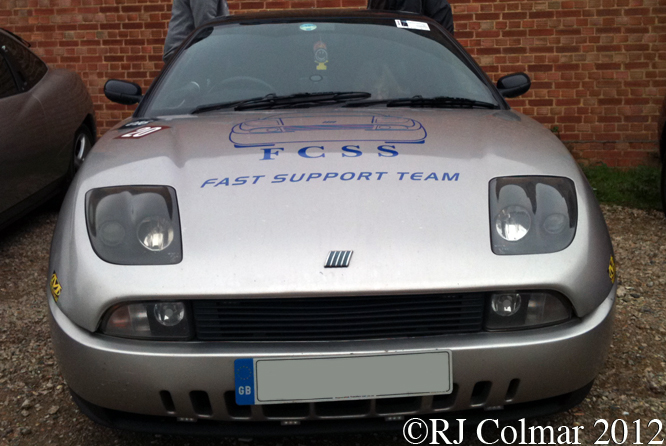
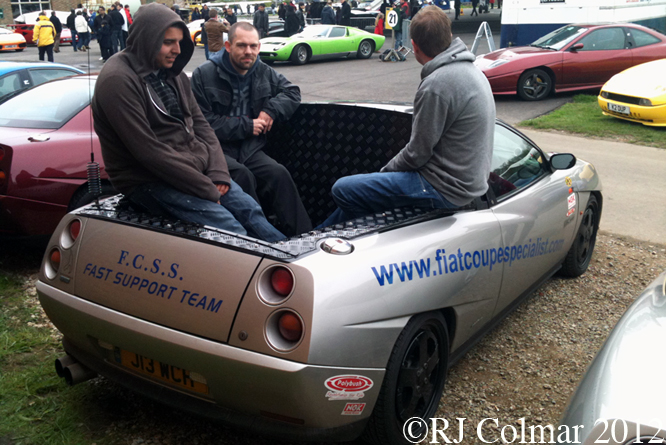
FIAT Coupé 20v Turbo Pick Up, Auto Italia, Brooklands

The FIAT Coupé was originally powered by a turbo charged and normally aspirated variations of the 4 cylinder Twin Cam motor used in the Lancia Delta Integrale. By 1998 when todays featured car was built 5 cylinder turbocharged 20 valve engines had been introduced, the turbocharged variant on this car would have given over 200 hp a top speed of 155 mph and a rest to 62 mph time of 6.5 seconds.
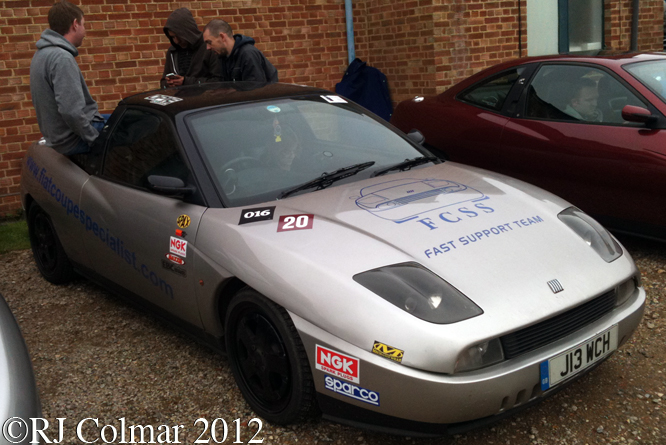
FIAT Coupé 20v Turbo Pick Up, Auto Italia, Brooklands

Pininfarina was responsible for the design of the for the original Coupé interior which like the motors would receive numerous upgrades between 1993 and 2000 when production was terminated.
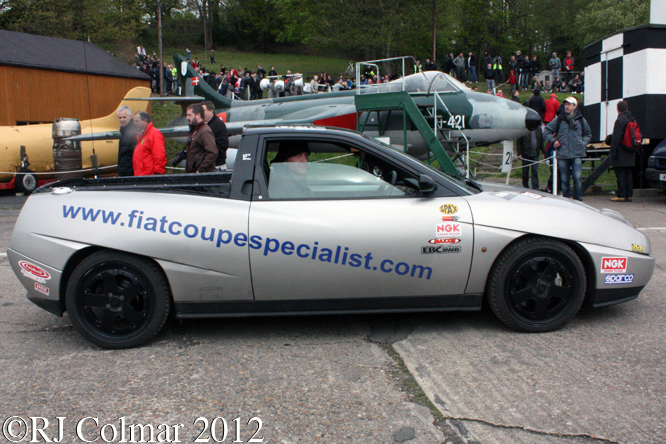
FIAT Coupé 20v Turbo Pick Up, Auto Italia, Brooklands

This appears to be an early 1998 car characterised by the non colour coordinated sill panels below the doors, the absence of red Brembo brake calipers indicates that it is unlikely to be one of the limited edition LE models.
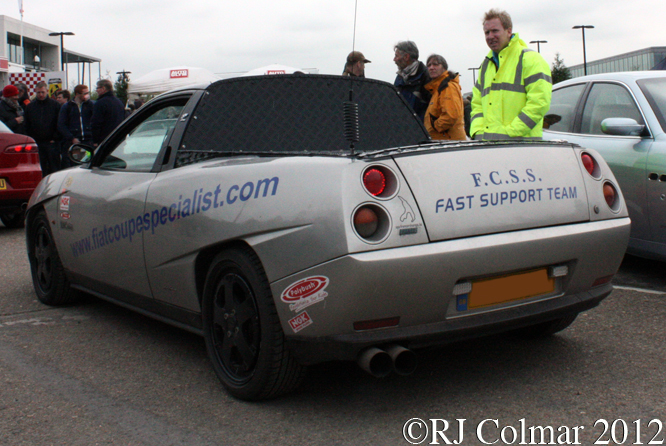
FIAT Coupé 20v Turbo Pick Up, Auto Italia, Brooklands

While FCSS (Fiat Coupe Service Specialist) were responsible for converting this car which had a damaged roof, in the space of a week, this is by no means the only Chris Bangle design to become a pick up.
FIAT Coupé 20v Turbo Pick Up, Auto Italia, Brooklands

On April 1st last year BMW revealed a one off Bangle originated E93 BMW M3 Pick Up, complete with removable roof, towing hitch and a claimed 186 mph capability making it faster than even the legendary Australian HSV Maloo !

Thanks for joining me on this “Bangles Pick Up” edition of “Gettin’ a li’l psycho on tyres” I hope you will join me again tomorrow when I’ll be looking at a MG badge engineered variation of what was Britain’s top selling car much of the 1960’s. Don’t forget to come back now !

Share

When Is A FIAT A Ferrari ? – FIAT Dino 2.4 Spider

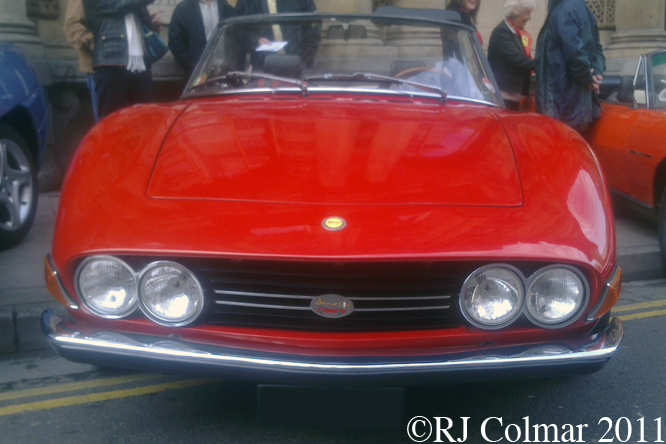
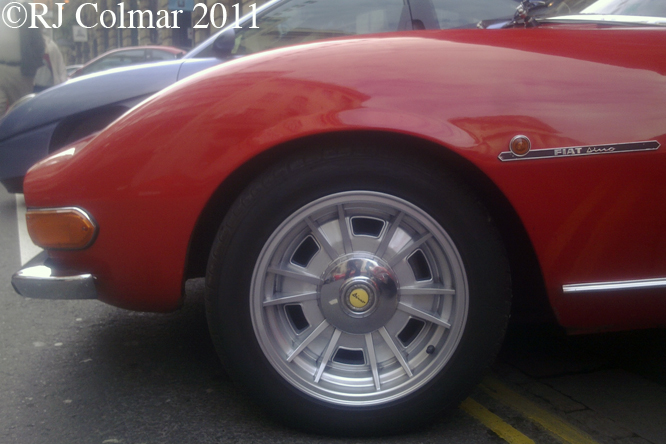
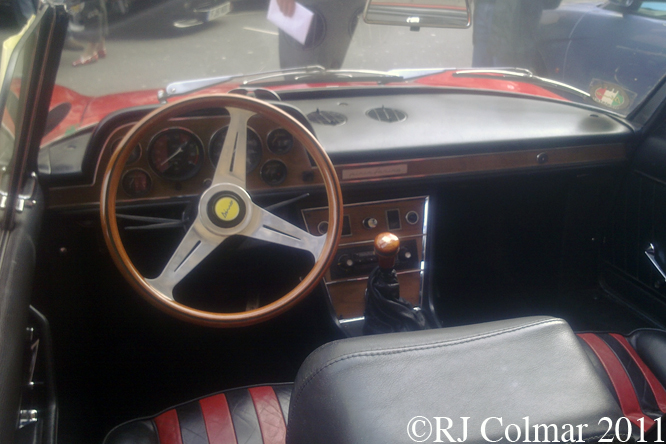
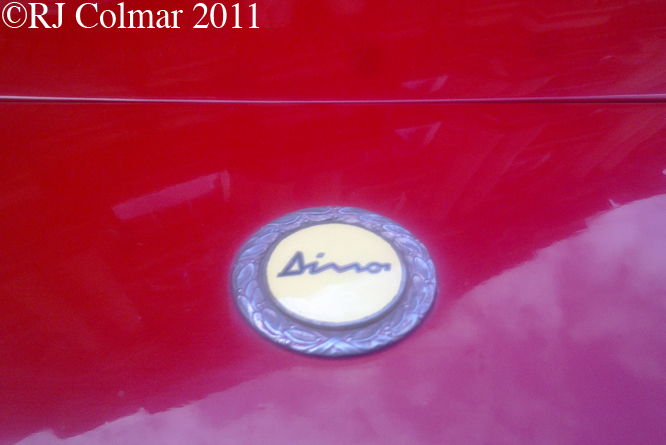
With sales volumes falling production of the FIAT Dino Coupé and Spider was moved from FIAT’s production facilities in Turin to Ferrari’s at Maranello in 1969.

FIAT Dino 2.4 Spider, Bristol Italian Auto Moto Festival

Amongst the changes to the specifications of the Maranello built FIAT Dino’s was an engine upgrade to the larger 178 hp 2.4 litre / 146 cui version of the Dino V6.

FIAT Dino 2.4 Spider, Bristol Italian Auto Moto Festival

An iron block replaced the aluminium block of the smaller motor but aluminium heads were retained. Curiously although the FIAT and Ferrari, as used in the mid engined Dino 206 & 246 GT’s, motors all came from the same production line in Turin Ferrari always liked to quote higher hp figures for ‘his’ motors than FIAT.

FIAT Dino 2.4 Spider, Bristol Italian Auto Moto Festival

The FIAT Dino’s Girling disc brakes are said to be interchangeable with those fitted to the de Tomaso Pantera and Lamboughini Miura.

FIAT Dino 2.4 Spider, Bristol Italian Auto Moto Festival

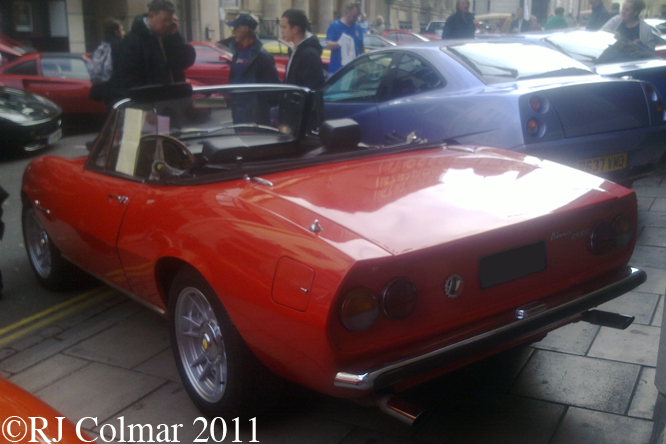
With the Pininfarina bodied FIAT Spider being built along side the Pininfarina bodied 246 GTS there was not much to tell the two vehicles apart for anyone except the FIAT marketing department. Of the two models the FIAT Dino Spider with only 424 examples built is the rarer against 1,274 Ferrari Dino GT Spiders.

FIAT Dino 2.4 Spider, Bristol Italian Auto Moto Festival

When production of the FIAT Dino Spider moved to Maranello the original live axle and leaf spring rear suspension was replaced with a coil sprung independent rear suspension which shares much in common with the FIAT 130.

Today’s featured 1970 model, seen at last years Bristol Italian Auto Moto Festival was acquired as a non runner in 1987 and has been gradually restored ever since.

Thanks for joining me on this “When Is A FIAT A Ferrari” edition of “Gettin’ a li’l psycho on tyres, I hope you will join me again tomorrow. Don’t forget to come back now !

Share

Naturally Aspirated Production Engine World Record – Ferrari 458 Italia

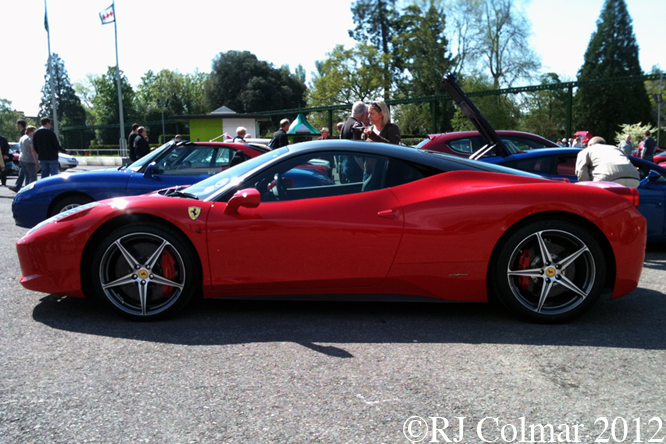
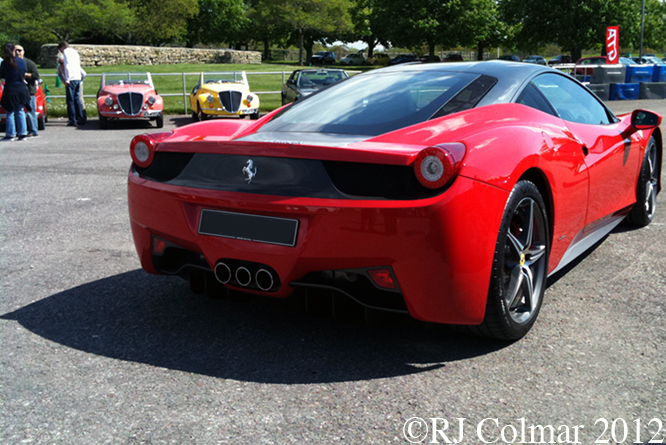
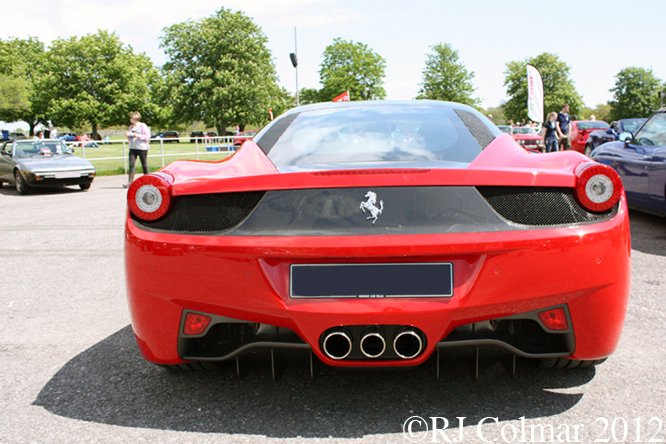
The Ferrari 458 Italia is an entirely new design that replaced the F430 in all of it’s guises, sports car track car and race car.

Ferrari 458 Italia, Simply Italian Beaulieu

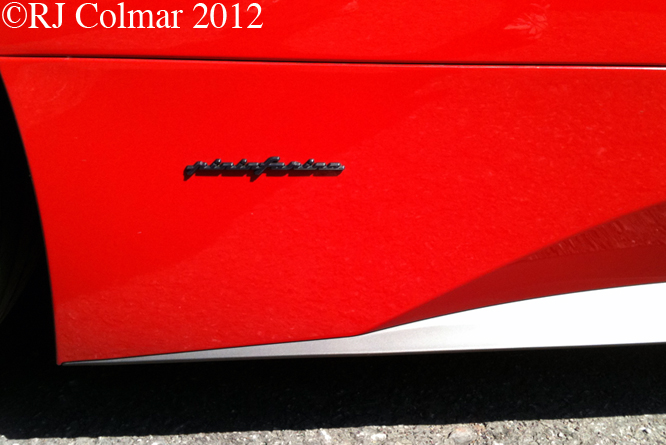
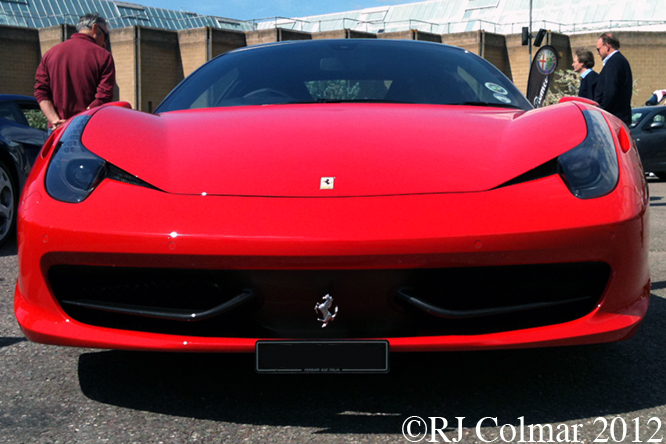
The body, one of the most graceful Ferrari’s ever in my opinion, was designed by Pininfarina, it generates 140 kgs / 308 lbs of down force when traveling at 124 mph.

Ferrari 458 Italia, Simply Italian Beaulieu

Launched in 2009 the 458 Italia features many technologies carried over from recent Ferrari Formula One programmes.

Ferrari 458 Italia, Simply Italian Beaulieu

These include the steering wheel which incorporates a number of controls that are familiar to Formula One drivers.

Ferrari 458 Italia, Simply Italian Beaulieu

The brake calipers are designed to return the pads into close proximity with the brake discs after lifting off in order to reduce the delay the next time they are used, this has helped reduce breaking distances to 32.5 meters / 35.6 meters when decelerating to rest from 62 mph.

Ferrari 458 Italia, Simply Italian Beaulieu

With 562 hp from its 4.5 litre / 274.6 cui V8 the 458 Italia holds the current world record for power per litre / cui from a naturally aspirated production engine.

Ferrari 458 Italia, Simply Italian Beaulieu

Traditional manual transmission is not an option on the 458 Italia relies on a paddle shift on the steering wheel to operate the dual-clutch and seven speed gearbox, again technology which is derived from current Formula One practice.

Ferrari 458 Italia, Simply Italian Beaulieu

The roll out of the 458 Italia has been interrupted by a poor choice of adhesive used in the rear wheel arch assemblies which proved lacking in heat resistance which caused several wheel arch assemblies to distort and catch fire when coming too close to the exhaust. Ferrari recalled 1,248 458 Italia’s to have the rear wheel arch assemblies replaced with new ones using conventional fasteners. Several owners will also have cars damaged by fire replaced.

Ferrari 458 Italia, Simply Italian Beaulieu

It is claimed, by Ferrari, that from rest a 458 Italia will reach 62mph in 3.4 mph and a top speed of over 202 mph and that it will return 21.2 mpg (imperial) and 17.7 mpg (us).

Thanks for joining me on this “Naturally Aspirated Production Engine World Record” edition of “Gettin’ a li’l psycho on tyres” I hope you will join me again tomorrow when I be looking at an unreliable but still championship contending Lotus. Don’t forget to come back now !
Share

Lovin’ Spoonful – Ferrari 250 GT Lusso Pininfarina Berlinetta #5953

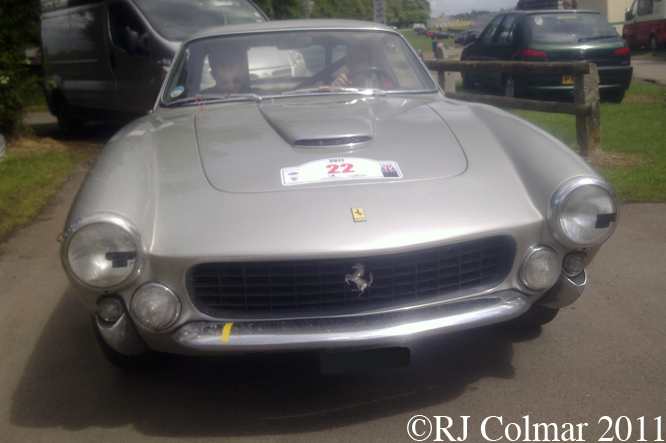
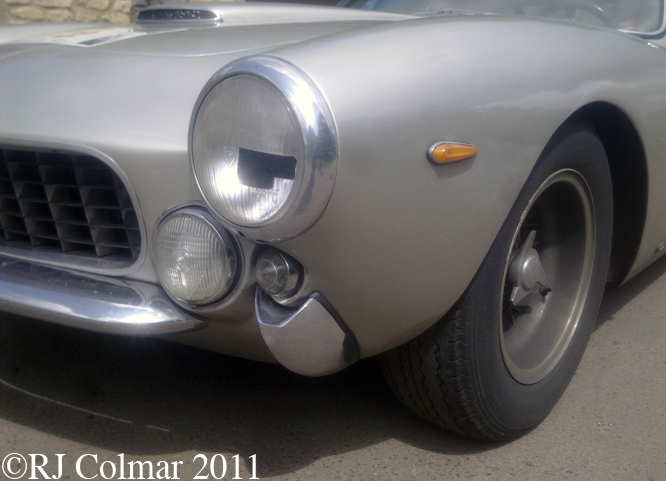
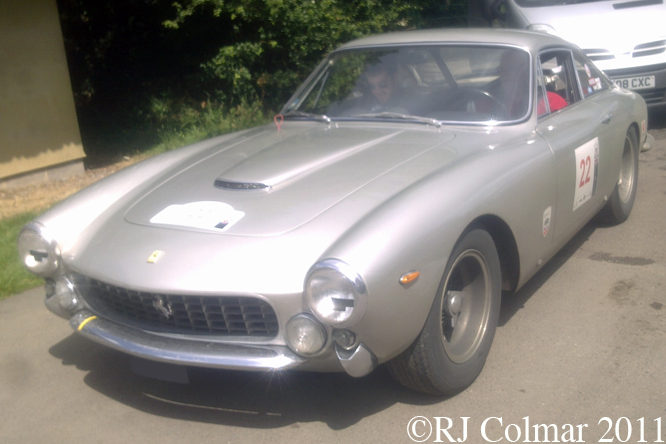
The first of a final total of 350, 250 GT Lusso Pininfarina Berlinetta’s, known more commonly as the 250 Lusso, was shown to the public at the 1962 Paris Motor show.

250 GT Lusso Pininfarina Berlinetta, Castle Combe, Tour Britannia

The Lusso is immediately recognisable by it’s graceful lines and unusual three piece front bumper.

250 GT Lusso Pininfarina Berlinetta, Castle Combe, Tour Britannia

Hiding under the bonnet / hood are 250 of Maranello’s finest horses from an all aluminium 3 litre / 183 cui Colombo V12, the sound of which goes something like this.

250 GT Lusso Pininfarina Berlinetta, Castle Combe, Tour Britannia

The 250 Lusso, which translates as luxury, came with a Pininfarina designed steel body manufactured by Scaglietti.

250 GT Lusso Pininfarina Berlinetta, Castle Combe, Tour Britannia

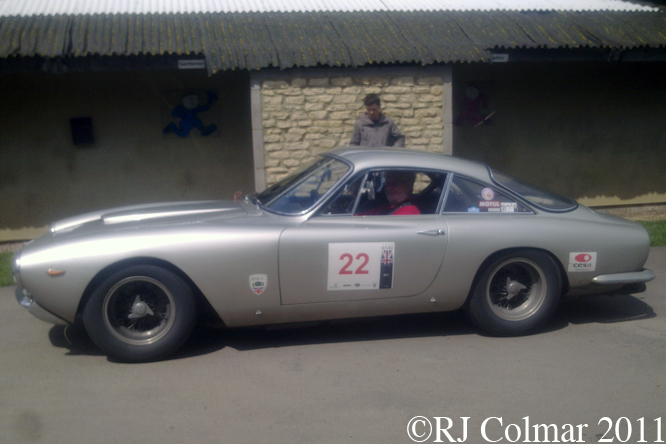
Steel being far heavier than aluminium used in the production of the racing versions of the 250, like the 250 GTO, would normally not make a 250 GT Lusso a competition car of choice, however some customers and later owners like Tim Lewis, seen in this car at Castle Combe with his son Daniel co driving, did not hesitate to strap themselves in and head for the nearest competition.

250 GT Lusso Pininfarina Berlinetta, Castle Combe, Tour Britannia

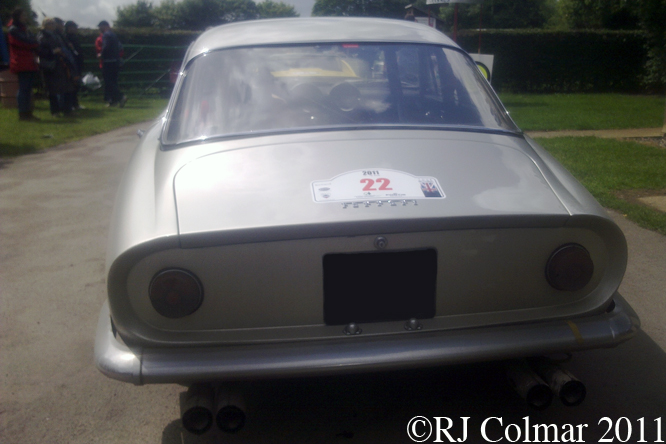
Today’s featured car chassis #5953GT was one of the last 250 Lusso’s produced in 1964, it was originally sold to Austrian Wolfgang Denzel, note this is a left hand drive car (LHD) not RHD as stated by barchetta cc, among it’s former owners somewhere between the late 80’s and early 90’s was former Aston Martin chairman Victor Gauntlett.

Anyone who likes a mystery might be interested to know that according to Wiki Steve Boone, of the band Lovin’ Spoonful’ owned one of these cars chassis #4237, said to be the the very first production Lusso, that was subsequently stolen from a repair shop in Queens New York. The stolen vehicle is probably not worth quite as much as the $2.3 million that Steve McQueens 250 GT Lusso fetched at auction in 2007 but tracking it down might make an interesting tale. At the time of writing I am still checking the veracity of the Wiki claim.

Thanks for joining me on this ‘Lovin’ Spoonful’ edition of ‘Gettin’ a li’l psycho on tyres’, I hope you will join me again tomorrow. Don’t forget to come back now !
 

Share

Escape The Option Trap – MG B GT

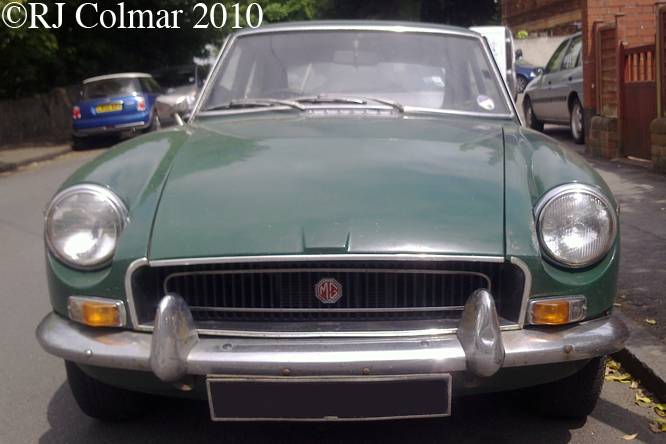
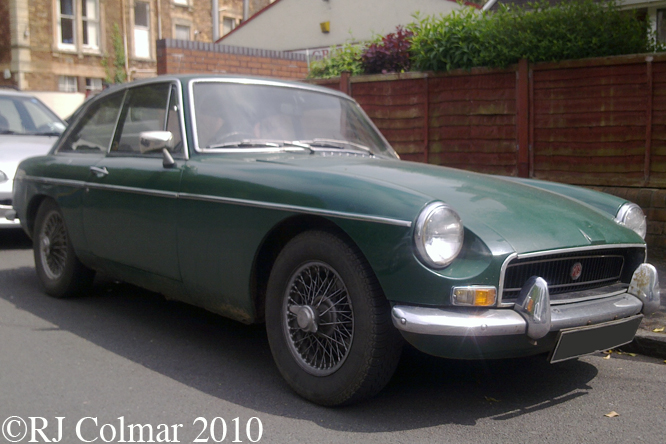
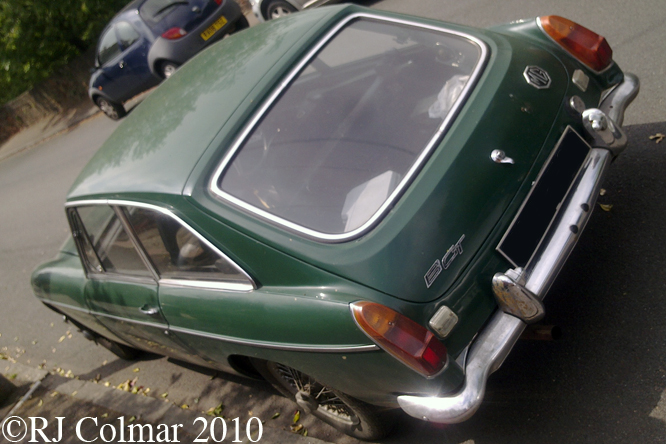
The MGB GT was launched in 1965 with a ground breaking Pininfarina inspired hatchback and the latest 5 bearing 95hp 1798 cc / 109.7 cui 4 cylinder motor as used in the the MGB Roadster.

MGB GT

In 1970 a version of the GT was launched complete with a black grill as seen above replacing the previous chrome item, reclining seats added to the 4 speed synchromesh gearbox which became available in 1967.

MGB GT

The MGB GT was recognised as an aspirational car by the likes of Playboy which featured an MGB GT in one of it’s advertisements linked here, notice how in the ad the MG owner attracts the females rather more than the Mercury Cougar standing next to it !

MGB GT

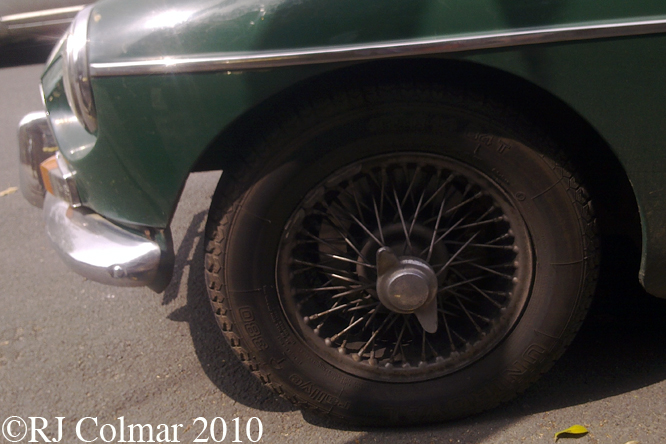
MG’s own advertising for the B GT focused on the fact that it’s fully loaded specs allowed owners to escape the option trap as seen in the link here. The 50 spoke wire wheels were standard in some markets though they would eventually be replaced with Rostyle steels wheels.

MGB GT

The extra weight of the roof over the MGB Roadster hindered the B GT’s acceleration though it increased the top speed from 100 to 105 mph. The last MG B GT’s to imported into the USA officially were 1974 though production of the GT continued for other markets until 1980.

Thanks for joining me on this “Escape The Option Trap” edition of ‘Gettin’ a li’l psycho on tyres.
I hope you will join me again tomorrow. Don’t forget to come back now !
Share

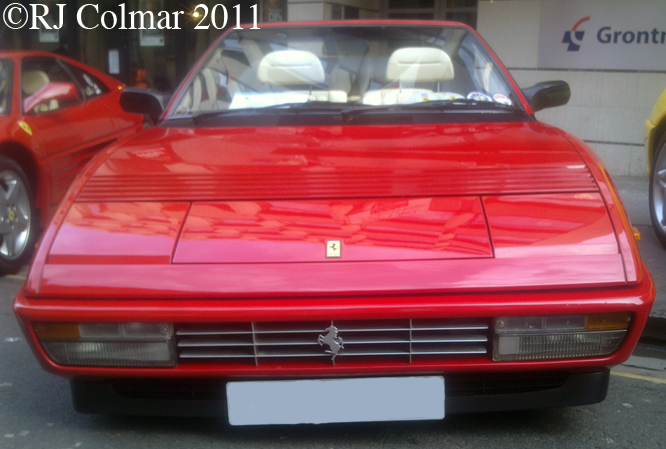
Ferrari Mondial Cabriolet

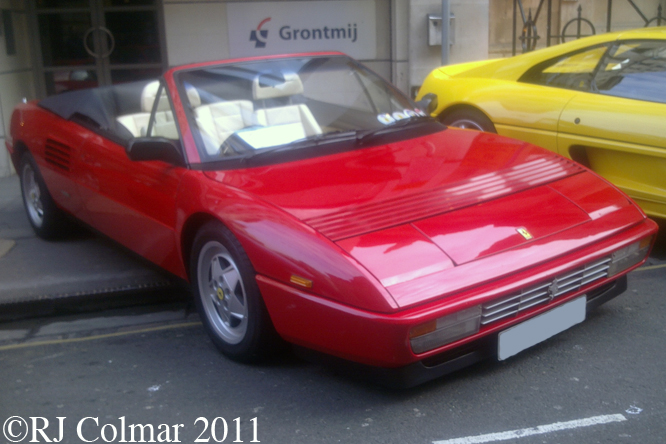
Ferari replaced the 308 GT4 2 + 2 I looked at last week with the Mondial model, like the one seen here at Bristol Italian Auto Moto Festibal, in 1980. The Cabriolet was not introduced until 1983.

Ferrari Mondial T Cabriolet

Pininfarina was chosen to design the replacement for the Bertone designed 308GT4, the Mondial featured a steel body built by Carrozzeria Scaglietti to sit over a steel box section space frame.

Ferrari Mondial T Cabriolet

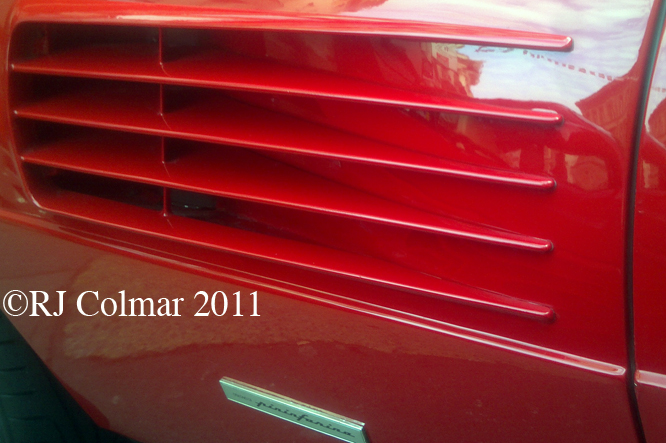
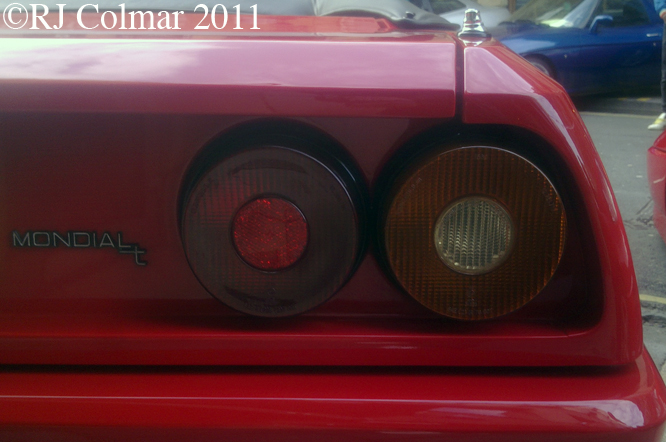
The second generation Mondial t was introduced in 1989 with smaller tidier side intakes and bumpers in matching body colours.

Ferrari Mondial T Cabriolet

The engine and gearbox of the Mondial is mounted, for ease of maintenance, on a subframe which makes taking the engine out to change the spark plugs a much easier process, this innovation has transferred to all subsequent V8 Ferrari’s.

Ferrari Mondial T Cabriolet

Originally the Mondial 8 was powered by a 4 cam 2 valve per cylinder 3 litre 183 cui V8, in 1982 QV Quattrovalvole, four valve per cylinder heads were fitted to the 3 litre / 183 cui motors. In 1985 these motors were increased in bore and stroke to give 3185 cc / 194 cui for the 3.2 Mondial models with 280 hp up from 240 hp on the original Mondial motor. 1989 saw the introduction of 3.4 litre / 207 cui motors which produced 300 hp.

The T designation introduced in 1989, seen on today’s featured 1990 car, denotes a change in the power train layout from transversely mounted engine and gearbox of all models up to 1989 to a longitudinally mounted engine and transverse gearbox that allowed the engine to be mounted lower in the chassis which consequently improved the handling. This engine gearbox layout was also carried over to future Ferrari V8 models.

Thanks for joining me on this drop top edition of ‘Gettin’ a li’l psycho on tyres’ I hope you will join me again tomorrow. Don’t forget to come back now !
Share

Awful In Everyway ? – Ferrari 400i

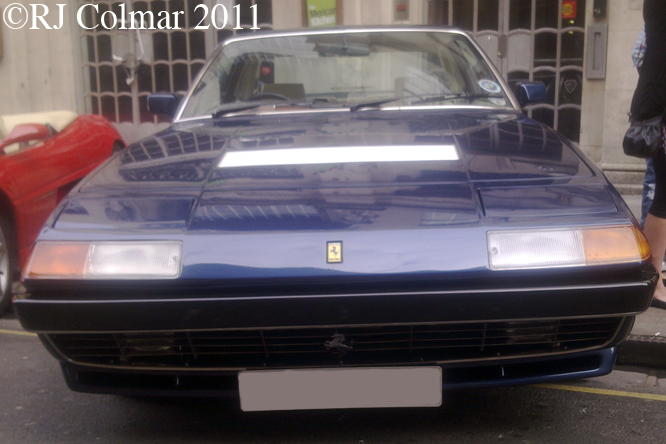
Allegedly an oafish TV presenter of a well known pseudo comedy motoring program who probably couldn’t tell you the difference between a gear knob and a knob of butter once described the Ferrari 400 as ‘awful in everyway’.

Ferrari 400i, Bristol IAMF

Personally I don’t see how any car with a chassis that owes it’s heritage to the Ferrari Daytona and with a Ferrari V12 engine, no matter how strangled to meet emissions regulations, can be awful in any way.

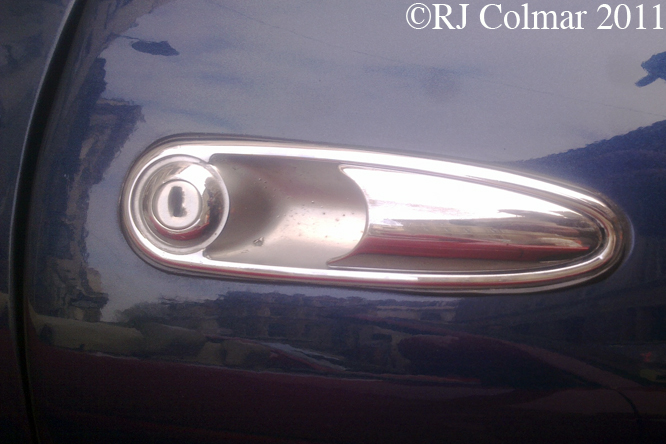
Ferrari 400i, Bristol IAMF

Certainly the 400i body, designed by Pininfarina, is not as appealing as the GTC and Daytona models that preceeded it but IMHO it’s seventies boxiness is a good deal less retro and a good deal more appealing than the mindset of the oaf described in the opening paragraph.

Ferrari 400i, Bristol IAMF

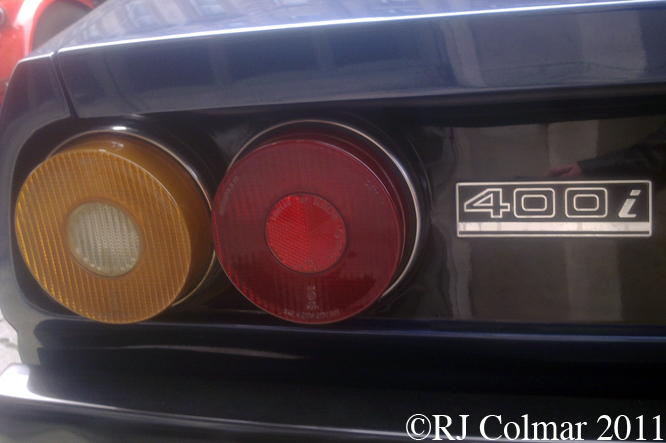
The coupé was first launched as the 365 GT 2+2 in 1972, by 1976 that model was re badged the 400 which became the 400i in 1979, when this particular car seen at Bristols Italian Auto Moto Festival was built. The ‘i’ denotes fuel injection which was fitted in place of the previous carburetors.

Ferrari 400i, Bristol IAMF

Although compliant with US regulations, unlike the 365 GT4 Berlinetta Boxer, none of the 422 manual GT or 883 Automatic 400i variations, or indeed any Ferrari 400 models were officially imported into the United States, doubly surprising since the 400 was the first Ferrari to be offered with automatic transmission.

Thanks for joining me on this fuel injected edition of ‘Gettin’ a li’l psycho on tyres’, I hope you’ll join me again tomorrow. Don’t forget to come back now !
Share