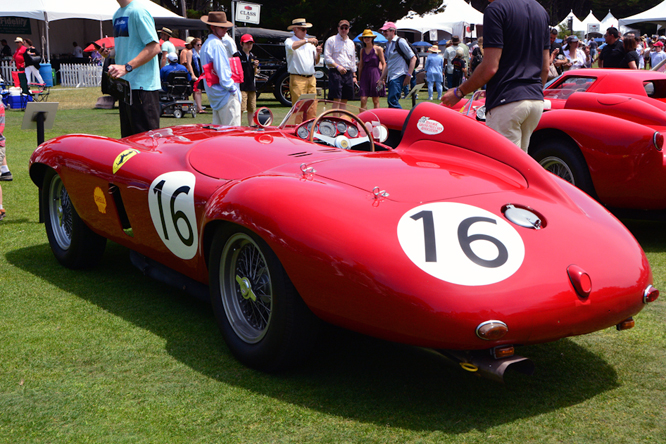
Tag Archives: Psychoontyres

Reflecting Good Taste – Lincoln Capri

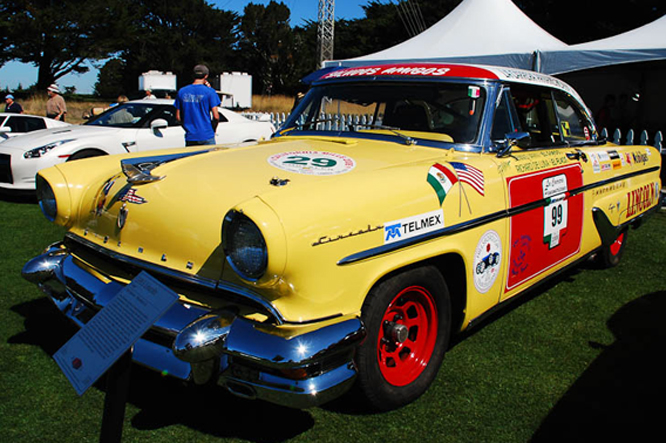
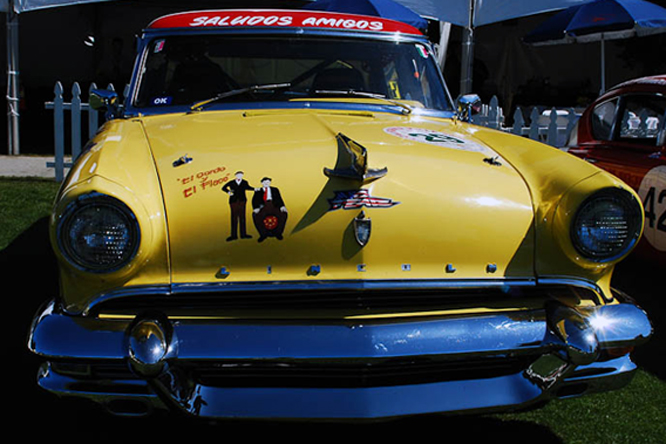
From 1952 to 1959 Lincoln manufactured the Capri with 4 door sedan, 2 door coupé and 2 door convertible bodies only the first generation was manufactured from 1952 to 1955 the second from 1956 to 1957 and the third and final generation from 1958 to 1959.

Lincoln Capri, Hillsborough Concours d'Elegance

Powered by the all new 160hp 5.2 litre / 317 cui Lincoln Y-block that replaced the flat heads in all Lincoln’s in 1952 the Capri when tested by Popular Mechanics reached 60mph from rest in 14.8 seconds, covered the 1/4 mile in 21.3 seconds and recorded fuel consumption of 21 mpg at an average speed of 40mph.

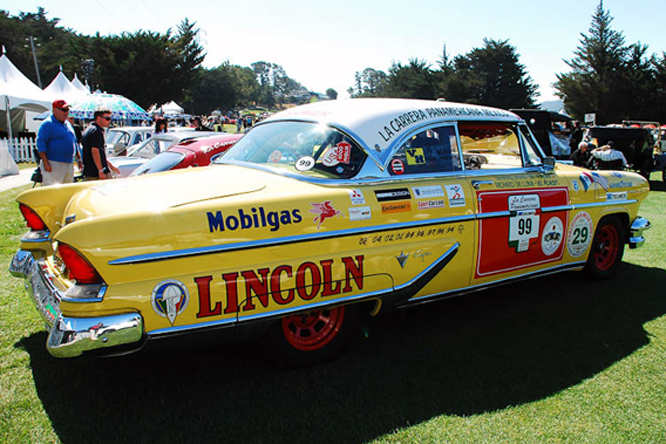
Lincoln Capri, Hillsborough Concours d'Elegance

To mark the Capri out from it’s competitors like the Cadillac 62 series, Chrysler New Yorker and Packard 400 teams of Lincolns were entered in the last three Carrera Panamericana races that saw them win the Tourismo Internacional class on each occasion with Chuck Stevenson and Clay Smith finishing 7th overall in 1952 and 1953 while Ray Crawford and Enrique Iglesias finished 9th overall to claim class honours in 1954.

Lincoln Capri, Hillsborough Concours d'Elegance

With the strap line “Everything about Lincoln reflects good taste” the 1955 Capri was offered with a 225hp 5.6 litre / 341 cui Y-block atop which sat a 4 barrel carburetor.

Lincoln Capri, Hillsborough Concours d'Elegance

There was no Carrera Panamericana for the more powerful Lincoln Capri to prove itself as a result of the 1955 disaster at Le Mans and so far as I know the model was never seen in contemporary competition again.

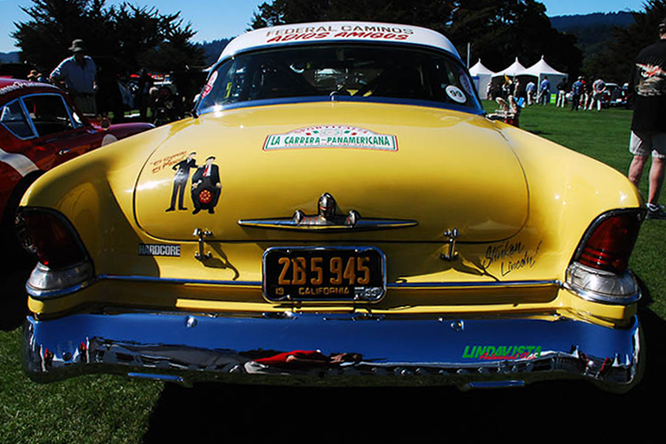
Lincoln Capri, Hillsborough Concours d'Elegance

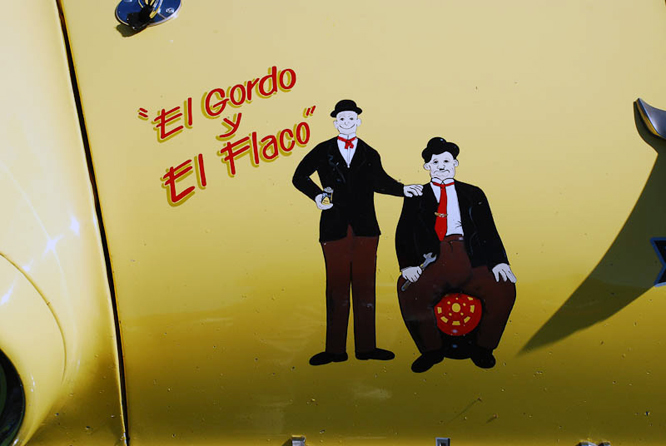
Today’s featured 1955 Lincoln Capri owned by Dick “El Flaco” de Luna was competition prepared by Dennis “El Gordo” Varni who fitted a modern 425hp 5 litre / 302 cui Ford V8 and all modern safety and handling equipment to the car which is now said to handle like a 4000 lb Porsche. The duo have competed on numerous resurrections of the Carrera Panamericana winning outright in 1999 alongside numerous class awards.

My thanks to Geoffrey Horton for sharing these photograph’s taken at Hillsborough Concours d’Elegance in 2011.

Thanks for joining me on this “Reflecting Good Taste” edition of “Gettin’ a li’l psycho on tyres” I hope you will join me again tomorrow when I’ll be looking at a Ferrari that competed on the Carerra Panamericana in 1952 and 1953. Don’t forget to come back now !

Share

Classic Competition Cars – Classic Motor Show NEC Birmingham

Today’s blog is all about some of the classic competition vehicles at last weekends Classic Motor Show at the NEC in Birmingham.

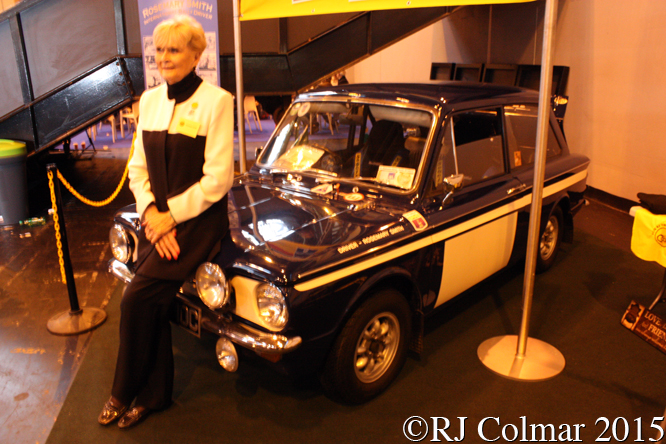
Rosemary Smith,  Classic Motorshow, NEC, Birmingham

A couple of weeks ago I went to a talk at which Rosemary Smith, winner of the 1965 Tulip Rally driving the Hillamn Imp above, was to be the guest of honour, unfortunatley she had a fall and so could not make it so it was great to see her on her feet again at the Classic Motor Show despite the fact that some of her bones were still on the mend.

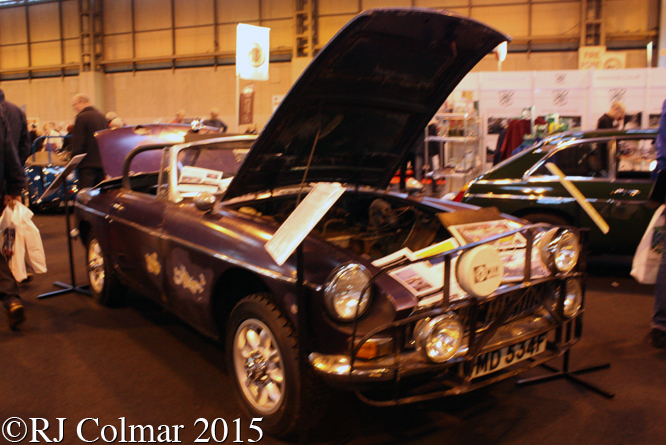
MG B Roadster,  Classic Motorshow, NEC, Birmingham

Rosemary drove a Ford Cortina Lotus on the 1968 London to Sydney Rally and finished 48th six places behind Jean Denton who drove the MGB GT Roadster seen above in need of some tlc, who finished 42nd.

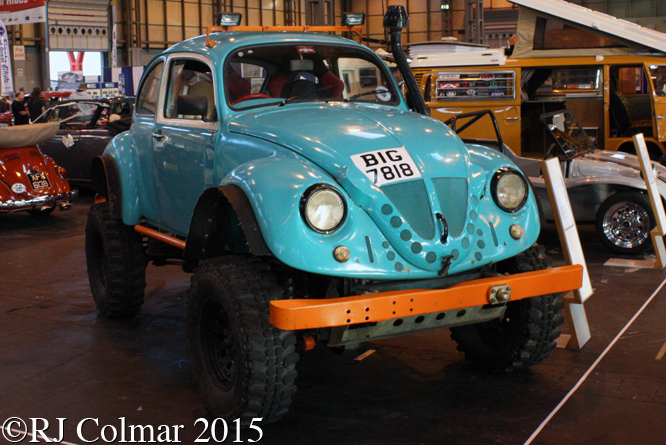
Discovery Beetle,  Classic Motorshow, NEC, Birmingham

Among the taller vehicles at the show was the road legal Gulf liveried Discovery Beetle, above, built on a shortened 1996 Land Rover Discovery chassis and fitted with a 300 TDi which being lighter and more aerodynamic than a standard Discovey goes well on the road and is perfect for off road trials.

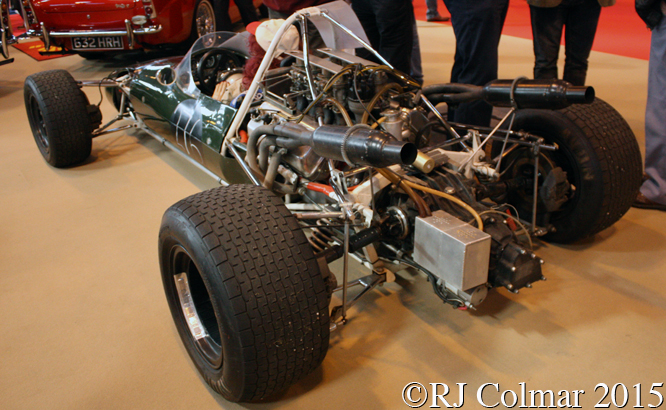
Cooper Daimler T87,  Classic Motorshow, NEC, Birmingham

Having acquired a 1966 Cooper T81 formula one car and fitted it with a 7.2 litre / 440 cui wedge engine for hill climbing Martin Brain acquired a 1967 Cooper T87 Formula 2 chassis and had it fitted with a 2.5 litre / 152 cui Daimler hemi V8, more commonly found in the SP250 and V8 250 Daimler models, for hill climbing on tracks with tighter corners. The car was rescued from a Swedish Museum in 2011 by Gillian Goldsmith better known as a successful equestrian and car racer Gillian Fortescue-Thomas who has since competed with the Cooper Daimler as has her daughter Samantha.

Gould NME GR61X,  Classic Motorshow, NEC, Birmingham

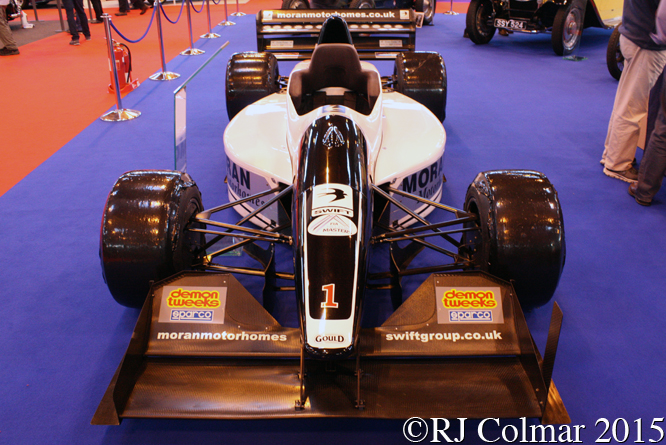
Powered by a 650 hp Nicholson McLaren Engines (NME) 3.5 litre / 213 cui development of the Cosworth HB Indy car engine the Gould NME GR61X is the most successful car ever to compete in British Hill Climbing with Scott Moran claiming 133 wins and Roger Moran claiming a further 16 and Alex Summers 8 since the cars first appearance in April 2005.

Empire Wraith,  Classic Motorshow, NEC, Birmingham

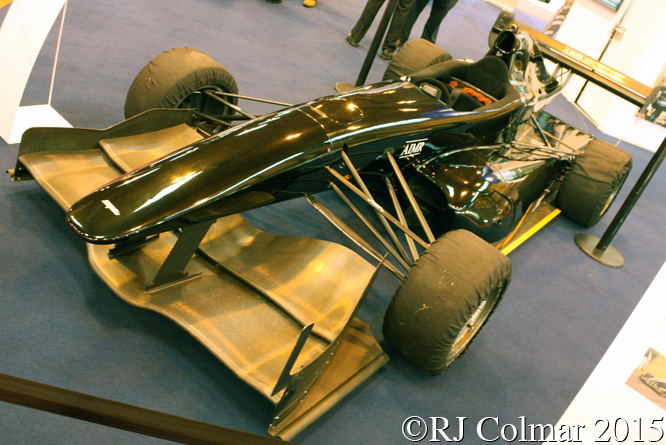
Successful Trike hill climber and Empire Racing Cars founder Bill Chaplin called Dutch born Formula One aerodynamicist Willem Toet, most recently at Sauber, to work on the Empire Wraith hill climb challenger which is powered by a 180hp Suzuki GSR K8 motor. This example built at the Empire factory in Stathe Somerset in 2013 is the first of three built to date and is driven by Clive Austin and Chris Aspinall.

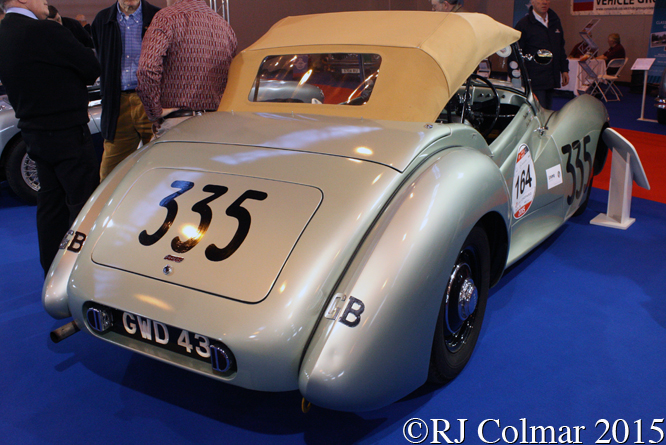
Healey Westland,  Classic Motorshow, NEC, Birmingham

In 1948 Donald Healey and Geoffrey Healey drove the Healey Westland above to a ninth place finish on the Mille Miglia, the following year Tommy Wisdom and Geoffrey finished 10th in the same event in the same car.

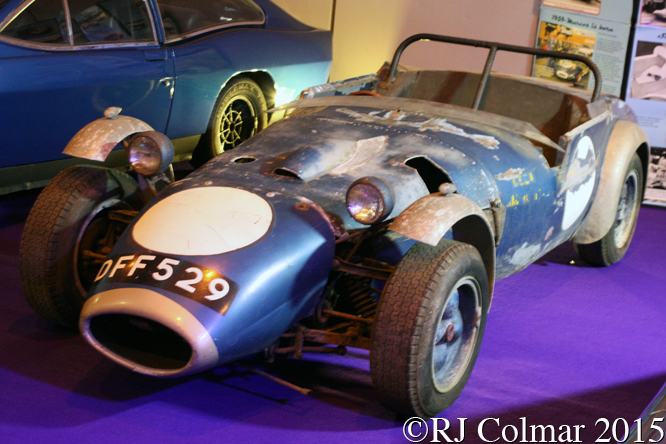
Marcos Prototype,  Classic Motorshow, NEC, Birmingham

By 1959 former de Haviland aircraft engineer Frank Costin had a CV that included designing the Vanwall Grand Prix challenger that won the inaugural World Constructors Championship in 1958 and subsequent demand for his attention included that of Jem Marsh with whom he founded Marcos Engineering in Dolgellau, North Wales. The prototype Marcos, using the same plywood construction techniques de Haviland used to build the Mosquito fighter bomber the Vampire jet fighter, built in 1959 powered by a Ford 100E engine is seen above awaiting some well earned tlc having disappeared in Lincoln for many years.

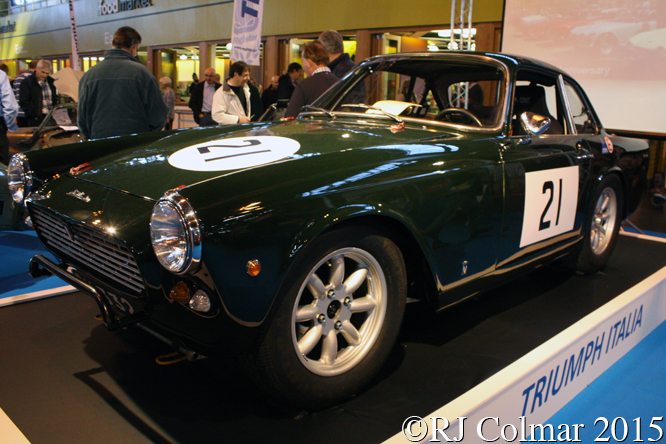
Italia 2000GT,  Classic Motorshow, NEC, Birmingham

Only 329 Italia 2000 GT’s were built by Vignale and in 1996 Jorg Von Appen had #210, one of five Italia’s he owned converted to race spec to take part in the TR Race series, it survived four races and was recently purchased by the proprietor of Patterson’s Original Pickles.

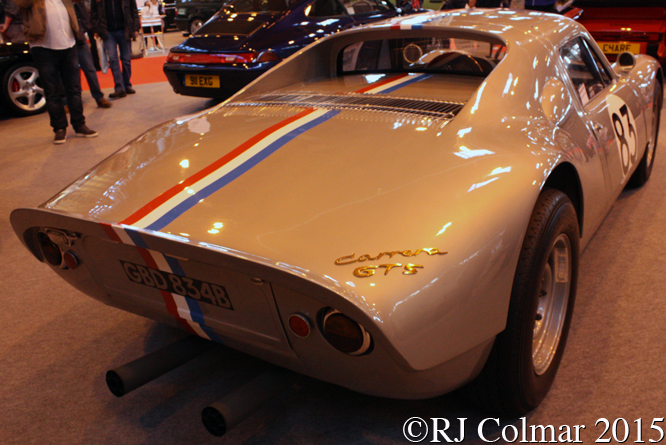
Porsche 904 Carrera GTS,  Classic Motorshow, NEC, Birmingham

After withdrawing from Formula One at the end of 1962 Porsche built their first tube framed fiberglass bodied sports car which would culminate in the development of the 917 and later 936 models, originally known as the 904 Porsche badged the car Carrera GTS in deference to Peugeot’s ‘digit “0” digit’ numbering system. The GTS seen here was I believe used in competition by Claude Barbier and possibly later by Cyr Febbrairo.

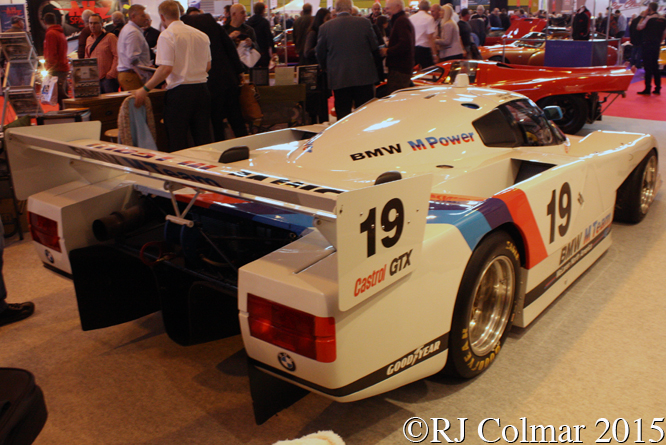
BMW GTP,  Classic Motorshow, NEC, Birmingham

No doubt much to the annoyance of Formula Ring Meister Bernie Ecclestone the manufacturer who supplied the engines for his Formula One Brabham team split it’s efforts in 1986 between Formula One and the IMSA GTP series and invested in four March 86G chassis and fitted them with a 2 litre / 122 cui version of the BMW engine that had powered Nelson Piquet to the World Championship in 1983. A BMW GTP was driven to it’s only victory by Davy Jones and John Andretti in the Watkins Glen 500, while the Brabham BMW team scored on 2 championship points in the worst season for the team up to that time.

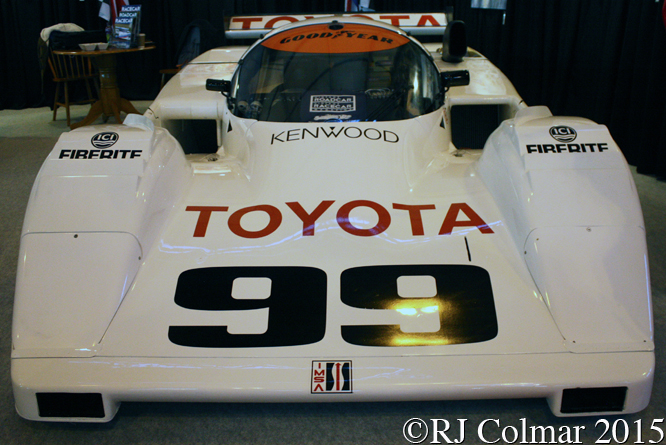
Eagle HF89,  Classic Motorshow, NEC, Birmingham

Dan Gurney’s All American Racers graduated to the IMSA GTP class in 1989, after claiming the driver’s and constructors’ championships in the GTO division Chris Cord in 1987, the teams all new HF89 was designed by Ron Hopkins and Hiro Fujimori and the following year Argentina’s Juan Manuel Fangio II drove HF89’s to three victories in the Topeka 300, Sears Point 300 with Rocky Moran and Del Mar Fairgrounds Road Circuit in November 1990.

Thanks for joining me on this “Classic Competition Cars” edition of Gettin’ a li’l psycho on tyres” I hope you will join me again tomorrow when I’ll be looking at a Carrera Panamericana challenger. Don’t forget to come back now !

Share

Baby Urraco – Matra Simca Bagheera

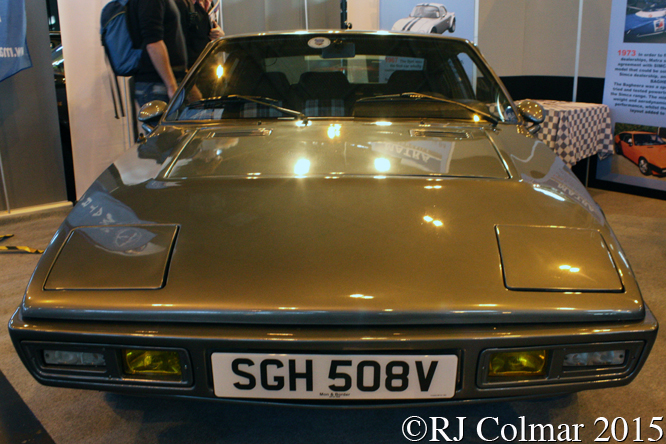
After Matra entered an agreement with Chrysler Europe to distribute it’s Ford V4 powered 530 through the Simca dealer network in 1969 the two companies agreed to work on a new Chrysler Simca powered replacement which became the Matra Simca Bagheera which was launched in 1973.

Matra Simca Bagheera,  Classic Motorshow, NEC, Birmingham

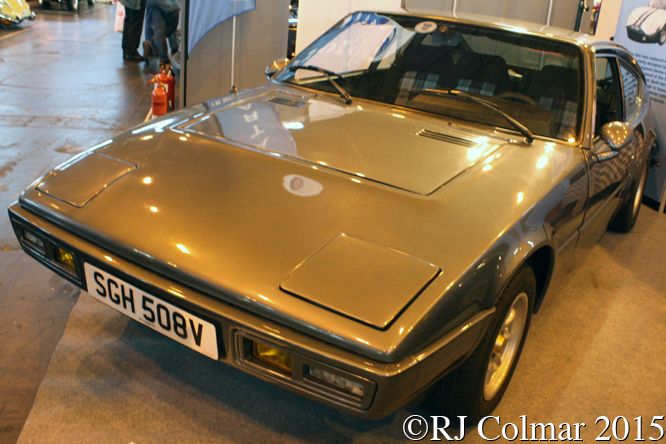
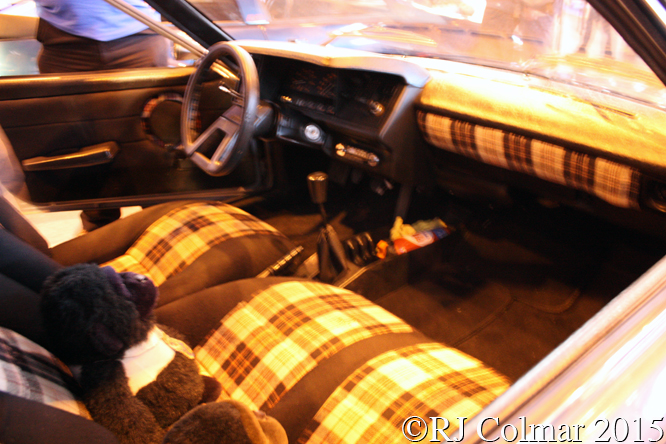
Designed by Antonis Volanis the Bagheera, named after Rudyard Kiplings panther character in The Jungle Book, retained the mid engine layout of it’s 530 and Djet antecedents, but unusually featured three seats abreast in the cockpit.

Matra Simca Bagheera,  Classic Motorshow, NEC, Birmingham

Originally the Bagheera was powered by an 84 hp 1294 cc / 78.9 cui 4 cylinder engine, sourced from the Simca 1100 TI 5 door hatchback, which gave the car a top speed of 101 mph, in 1975 a Bagheera S with a 90 bhp version of the Simca 1308 1442cc / 87.9 cui engine raised the top speed up to 109 mph. Three prototype Bagheera’s were built with two transverse engines driving a common prop shaft to make a U configuration, as seen on the Bugatti T45, but never got beyond the evaluation stage

Matra Simca Bagheera,  Classic Motorshow, NEC, Birmingham

British motoring LJK Streight was so impressed with the Bagheera when he tested it that he likened it to a “baby Lamborghini Urraco”, the only downside to the model was that the steel chassis beneath the fibre glass body had no rust protection and was prone to rot.

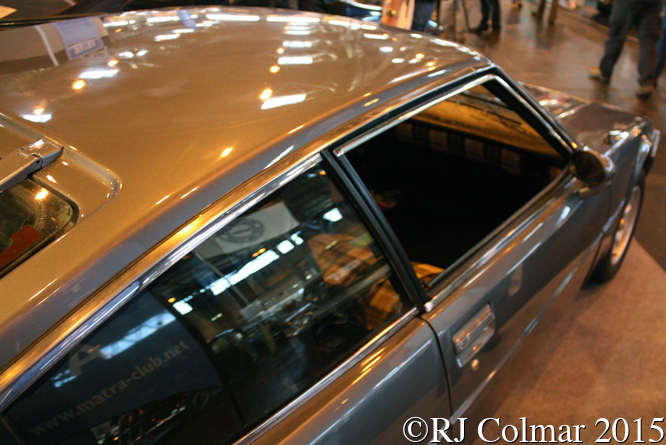
Matra Simca Bagheera,  Classic Motorshow, NEC, Birmingham

The Bagheera’s body was updated in 1976 and the interior in 1978, the model seen here at the Classic Motor Show was built in 1979, in July 1979 the model was rebranded as a Talbot Matra Bagheera, and was first registered in the UK in April 1984.

In all 47,802 Bagheeras were built between 1973 and 1980 when the model was replaced by the Talbot Matra Murena a model I shall be looking at next Tuesday.

Thanks for joining me on this “Baby Urraco” edition of “Gettin’ a li’l psycho on tyres” I hope you will join me again tomorrow when I’ll be visiting the Classic Motor Show at the NEC in Birmingham. Don’t forget to come back now !

Share

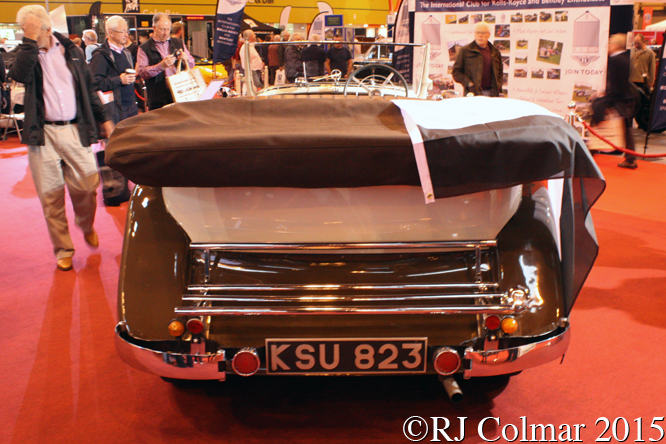
Left In Dar es Salaam – Mercedes Benz W18 Typ 290 Cabriolet

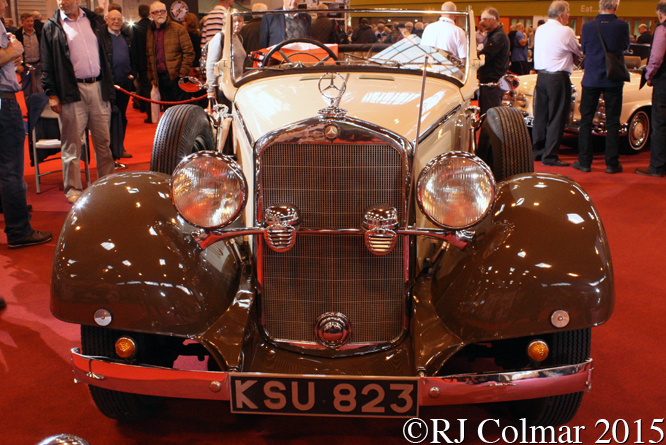
The Mercedes Benz W18 Typ 290 series cars were powered by a 60 hp 2,867 cc / 174 cui straight six side valve engine and first seen in 1933 was capable of 67mph.

Mercedes Benz W18 290 Tourer, Classic Motorshow, NEC, Birmingham

The W18 was initially offered only with a 113″ chassis which was supplemented from 1934 with a 130″ chassis option, the front suspension was by transverse leaf and coil springs while the rear wheels were attached to swing axles, hydraulic breaks were fitted all round.

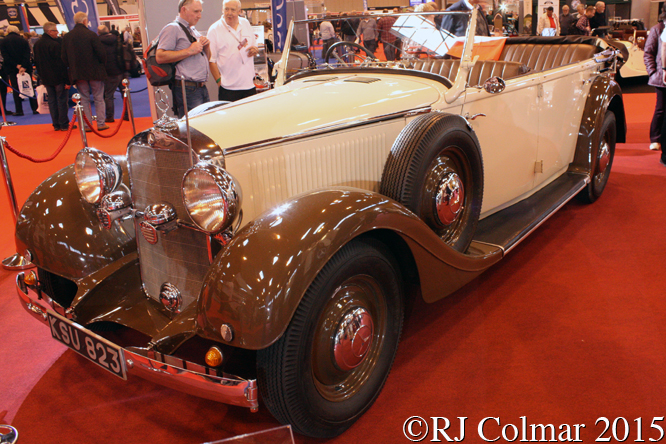
Mercedes Benz W18 290 Tourer, Classic Motorshow, NEC, Birmingham

Among the body options offered on the original short wheel base chassis were three cabriolets, 4 door 4 seat as seen here, 2 door 4 seat and 2 door 2 seat which was supplemented by a fourth 2 door 2 seat cabriolet with a lower body in 1936.

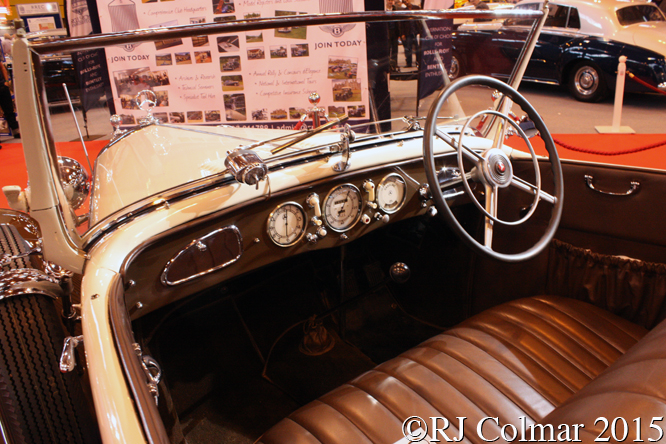
Mercedes Benz W18 290 Tourer, Classic Motorshow, NEC, Birmingham

This particular right hand drive Cabriolet was built for the German Consul in Dar es Salaam, Tanganyika Territory which had been handed over to British Colonial rule, where driving on the left was the norm, from German Colonial Rule, where driving on the right was the norm, by a League of Nations Mandate in 1922.

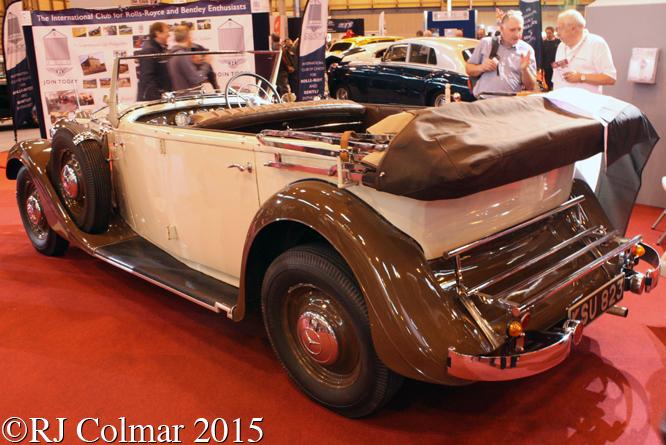
Mercedes Benz W18 290 Tourer, Classic Motorshow, NEC, Birmingham

The Consul did not have long to enjoy the car before Adolph Hitler, who had no interest in the British colony, became the Chancellor and recalled the Consul and his staff back to Germany in 1934.

Mercedes Benz W18 290 Tourer, Classic Motorshow, NEC, Birmingham

The car appears to have remained warehoused in Africa until 1987 when it was shipped from Durban in South Africa to the UK with just 3,678 documented miles on the clock.

In all 3,566 short wheel base models, 3,929 long wheel base models and 719 military variants of the W18 were built between 1933 and 1937 when the 290 was replaced by the W142 Typ 320.

Thanks for joining me on this “Left In Dar es Salaam” edition of “Gettin’ a li’l psycho on tyres” I hope you will join me again tomorrow when I’ll be looking at a three seat sports car. Don’t forget to come back now !

Share

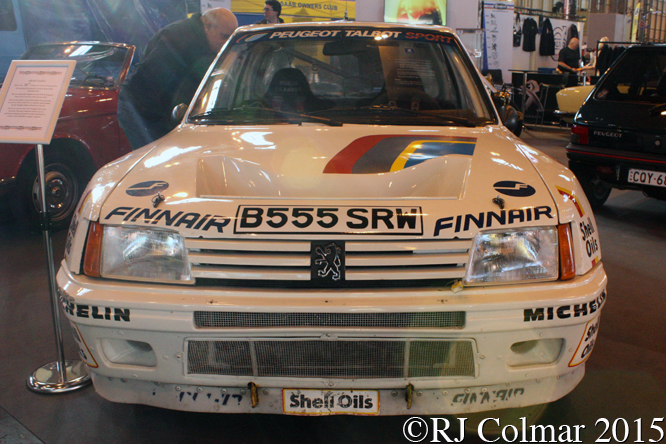
Coventry Dealer Car – Peugeot 205 T16 EVO 1

In 1983 Peugeot launched the Gerard Welter styled 205 front engined front wheel drive hatchback that would be declared Car of the Decade by CAR magazine in 1990.

Peugeot 205 T16 EVO 1, Classic Motor Show, NEC, Birmingham,

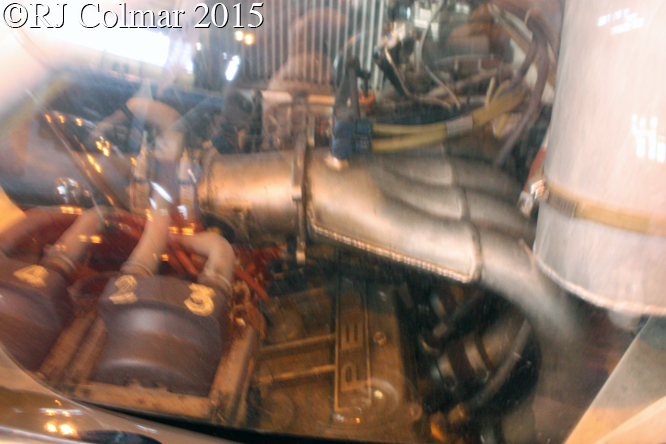
In 1984 Peugeot built two hundred 205 Turbo 16’s with a turbocharged transverse petrol engine, using the the cast iron block of the Diesel version of the XU engine with a 16 valve cylinder head, mounted behind the passenger seat that powered all four wheels through a Citroen SM sourced gearbox.

Peugeot 205 T16 EVO 1, Classic Motor Show, NEC, Birmingham,

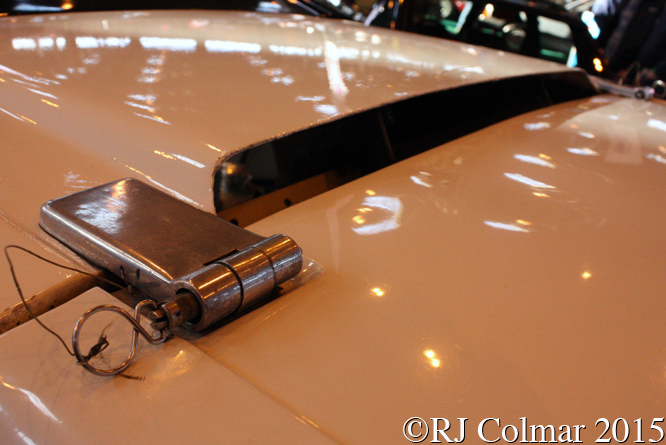
Having built the 200 Turbo 16’s Peugeot had a vehicle with which they could compete in the top Group B Rally class with an evolution of the car known as the 205 Turbo EVO 1, or T16 EVO 1 in the UK.

Peugeot 205 T16 EVO 1, Classic Motor Show, NEC, Birmingham,

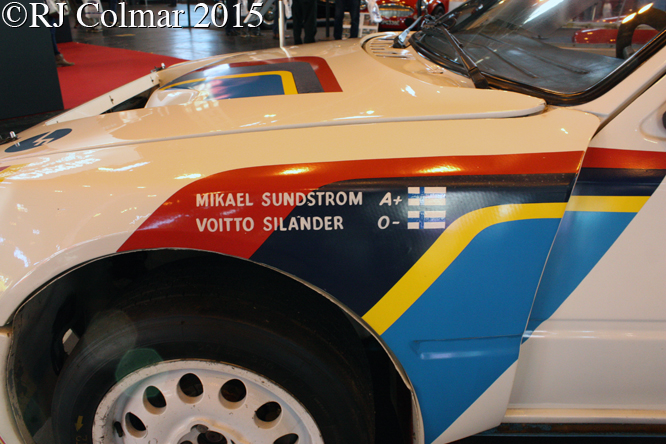
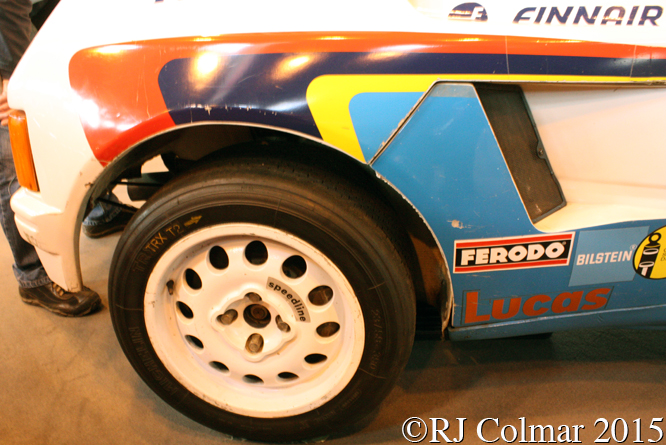
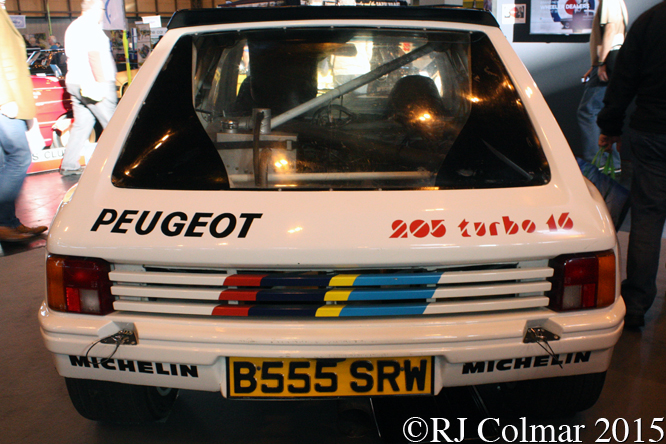
Today’s featured 205 T16 EVO was built from factory supplied parts by the Peugeot UK dealer funded Peugeot Sport UK at their base in Coventry for Finns Mikael Sundström and co driver Voito Silander to drive in the British Rally Championship in 1985 and 1986, it was registered on the 1st of June 1985.

Peugeot 205 T16 EVO 1, Classic Motor Show, NEC, Birmingham,

Mikael’s best result in this car came in the 1986 Scottish Rally which he won from the Ford RS200 driven by Mark Lovell with co driver Roger Freeman, Mikael finished 4th in the World Championship RAC Rally at the end of the season.

Peugeot 205 T16 EVO 1, Classic Motor Show, NEC, Birmingham,

Mikael went on to win the 1986, ’87 and ’88 Finnish Rally Championships driving a Group A Mazda 323, he retired from driving Rally cars in 1992. While running his own Rally team in Finland in 2001 Mikael died unexpectedly of a heart attack aged just 43.

Peugeot 205 T16 EVO 1, Classic Motor Show, NEC, Birmingham,

206 Turbo 16’s in EVO 1 and EVO2 form would become the most successful of the Group B cars that entered Rally events from 1984 to 1986 when the class was abruptly abandoned in the interests of safety.

Peugeot 205 T16 EVO 1, Classic Motor Show, NEC, Birmingham,

The model claimed 16 World Rally Championship wins, seven for Timo Salonen partnered with Seppo Harjanne, five for Ari Vatanen and Terry Harryman, three for Juha Kankkunen and Juha Piironen and one for Frenchman Bruno Saby and Jean-François Fauchille, Peugeot also finished the 1985 and 1986 seasons as World Rally Manufacturers Champions.

Share

Scottish Hillclimb Champion – Chevron Holbay B17 #F3.70.08

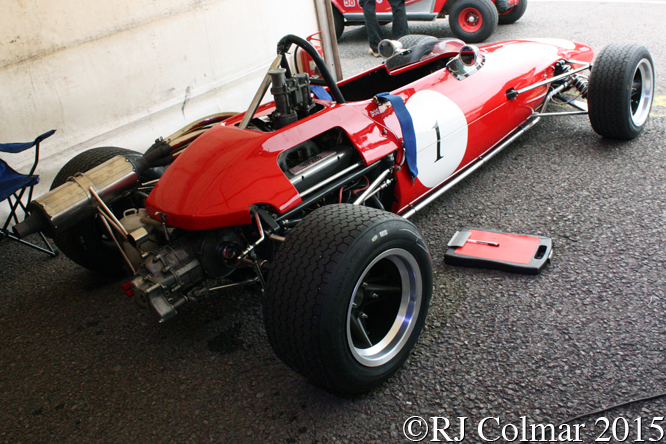
1967 Chevron started building cars with 1 litre / 61. cui “Screamer” motors to comply with the tertiary international Formula 3 regulations.

The manufacturers first Formula 3 model was the one off B7 driven by Peter Gethin towards the end of 1967, this was followed by a batch of 8 production versions of the B7 built in 1968 known as B9’s
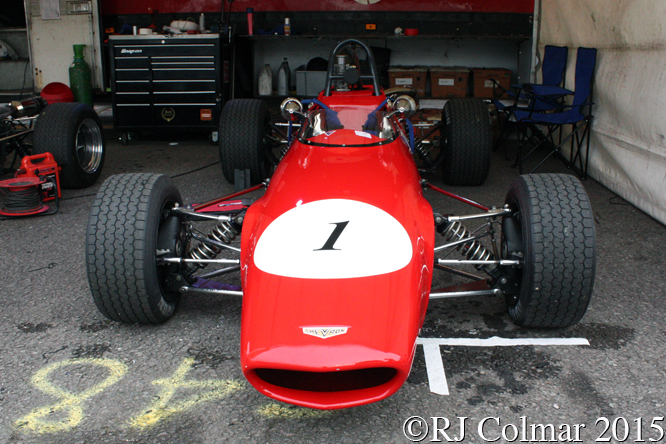
Chevron Novamotor B17, Grand Finals, Castle Combe,

A one off B9B with stressed panels incorporated into the frame was built at the end of 1968 and again raced by Peter Gethin who drove the car to a debut win.

The following year Chevron built 14 production versions of the B9B known as the B15 and in 1970 9 upgraded Formula 3 cars followed known as B17’s.
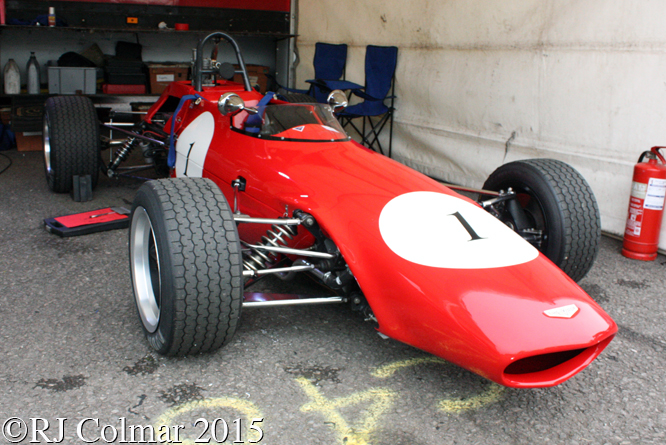
Chevron Novamotor B17, Grand Finals, Castle Combe,

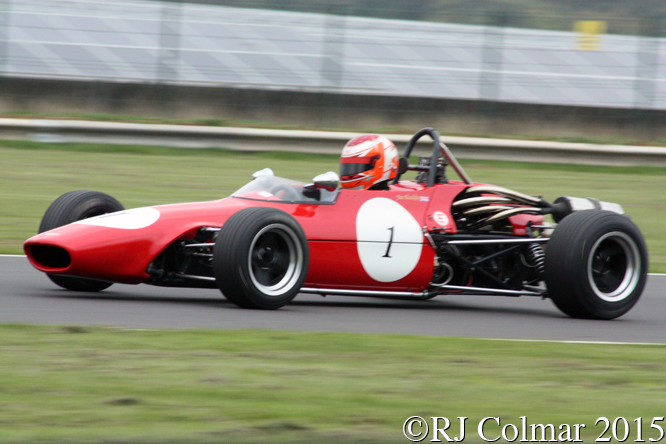
I believe today’s featured car seen in these photographs at the recent Grand Finals Castle Combe meeting where it was driven by Jim Blockley is the same car as that advertised by David Pullen in October 2013.

Distinguishing features include the one piece top body work from the back of the cockpit to the nose, the exhaust, and the universal joint with sliding spline driveshafts in place of the more common for the period Rotoflex driveshaft couplings.
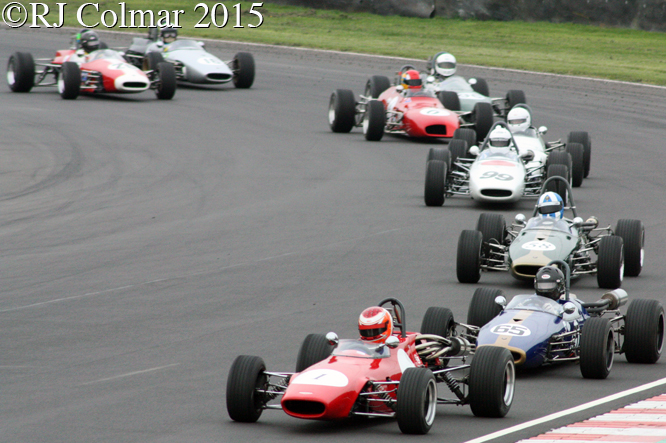
Chevron Novamotor B17, Jim Blockley, Grand Finals, Castle Combe,

According to former Derek Bennett Engineering employee Kevin ‘Ossy’ Hodge, who was involved in building nearly all the B17’s, the car formerly belonging to David Pullen is the eighth Formula 3 B17 to be built and was originally supplied to Ken Sedgley.

Kevin also established recently that unlike Chevron’s GT’s chassis frames for the B8, B16 and later B19 models which were built by sub contractor Arch Motors the frames for the open wheelers were subcontracted out to Racing Frames in Ware, Hertfordshire.
Chevron Novamotor B17, Jim Blockley, Grand Finals, Castle Combe,

In his notes on Ken Sedgley’s B17, see note 13 on this link, Allen Brown records that #F3.70.08 was raced by Ken in Formula 3 and Libre events with Holbay motors and upgraded the following year with a 1600 cc / 97 cui Holbay motor compliant with the new for 1971 spec Formula 3.

John Finch of Chesterfield bought and raced the car midway through 1971 and shared it with Graham Lynch in 1972, the following year a Formula Atlantic Spec production based twin cam was fitted and the car was raced in both Formula Atlantic and Formula Libre events.
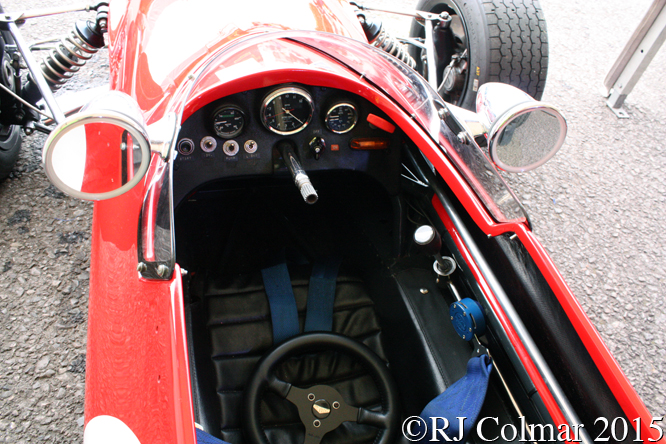
Chevron Novamotor B17, Grand Finals, Castle Combe,

Alan Thompson bought the car for hillclimbing campaigning it in 1975 and 1976 which culminated in him securing the 1976 Scottish Hillclimb Championship.

Russell Paterson acquired the car in 1977 but crashed it before it passed through the hands of Bobby Howlings and M Wakefield-Brand in 1978.
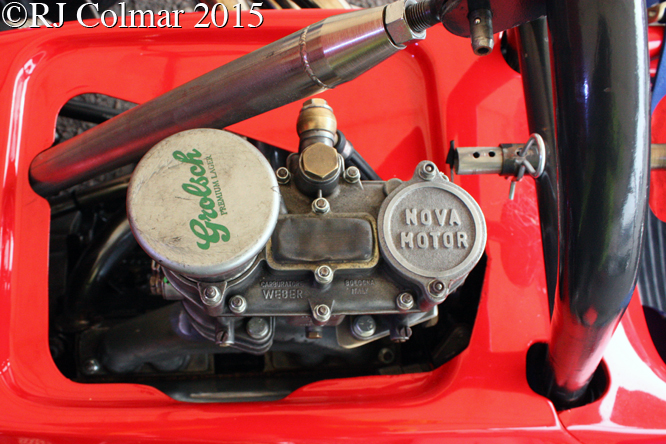
Chevron Novamotor B17, Grand Finals, Castle Combe,

David Pullen bought the car in 1991 and in the spring of 2009 the car was significantly rebuilt with a 1964 to 1970 F3 spec 1 litre / 61 cui Holbay R70 MAE engine rebuilt by Stuart Rolt and Mk8 Hewland 4 speed gearbox by Cavan Riley.

John Pearson raced this car in 2014 prior to selling it to Jim Blockley who raced a Brabham in Historic Formula 3 events up until appearing in the Chevron at Castle Combe.
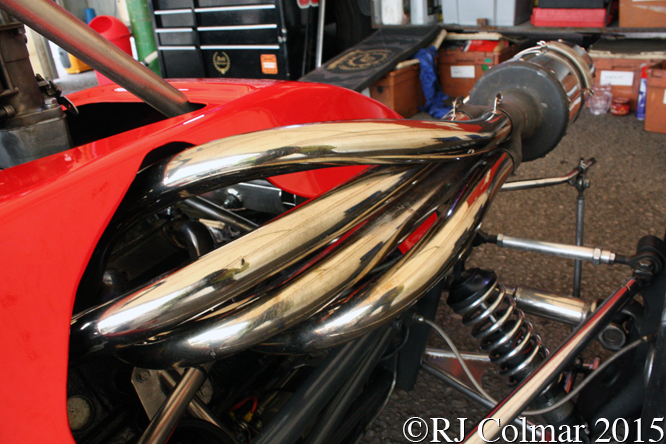
Chevron Novamotor B17, Grand Finals, Castle Combe,

The 1964 to 1970 Formula 3 engine specs required the use of a production engine block and a single choke carburetor fitted with a 36mm restrictor twixt the carburetor and inlet manifold.

The cylinder heads were free to be modified with gear driven cams replacing cam chains and dry sump lubrication for the crankshaft, the 1 litre / 61 cui Formula 3 motor’s were known as “screamers” because they could occasionally be buzzed up to 13,000 rpm with little or no damage.
Chevron Novamotor B17, Grand Finals, Castle Combe,

By far the most popular blocks used in the “Screamer” formula were the three crank bearing 105E and 109E blocks from Ford, Cosworth built a Modified Anglia Engine known as the “MAE” based on 105E but the term “MAE” appears to have carried over onto products for the same market from both Holbay and Novamotor who also used Ford 3 bearing engine blocks.

It was soon realised that the least resistance to flow was offered by a twin choke Weber IDA down draught carburetor with a blanked off choke, for which special inlet manifolds were built to fit engines that were tilted over at 30 degrees along the crankshaft axis in the chassis.

My thanks to all who contributed to the B17 thread at TenTenths and to the Ford 105E thread at The Nostalgia Forum especially Snakedriver, Ray Bell, John Saunders and David Birchall who kindly answered my question regarding the use of the blanked off twin choke carburetors.

Thanks for joining me on this “Scottish Hillclimb Champion” edition of “Gettin’ a li’l psycho on tyres” I hope you will join me again tomorrow. Don’t forget to come back now !
Share

Giving Up Secrets – Ferrari 750 Monza #0462M

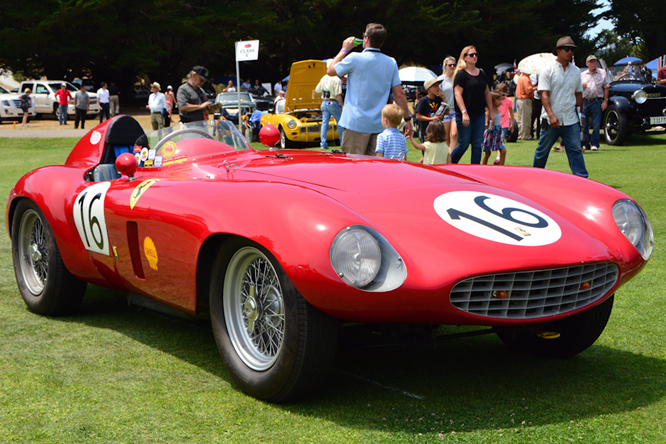
On September 4th 1954 Joe Kelly to took delivery of today’s featured 3 litre / 183 cui 4 cylinder Ferrari 750 Monza chassis #0462M in Dublin, Ireland.

This car was the second of the total 31 750 Monza’s built by the factory and a week after delivery Joe entered the car for himself and Desmond Titterington in Tourist Trophy at Dundrod in Northern Ireland where they retired with gearbox issues.

Ferrari, 750, Monza, Hillsborough, Concours, d'Elegance,

Joe entered the car for Desmond to drive in the Leinster Trophy a week later celebrated his second week of ownership with a win, Mike Hawthorn drove the car for Joe in the Goodwood Trophy and retired with a broken rear axle.

The cars next owner was the Jaguar Car Company who disassembled the car and repaired the damaged rear axle and then put it back together after closely inspecting it to see why it was so much better than the Jaguar C and D types which had been comprehensively thrashed by Ferrari in the 1954 World Sports Car Championship.

Ferrari, 750, Monza, Hillsborough, Concours, d'Elegance,

After giving up it’s secrets to the engineers at Browns Lane in Coventry Peter Whitehead acquired the car and it then went via Jack Brabham to Australia where it was raced by Stan Coffey in 1956 without any success and Norm Crowfoot in April 1959 who recorded a third place finish in a race at Bathurst.

Oliver Steel also raced #0462M in 1959 but retired from his race, in 1963 Geoffrey Davis bought the car and kept it until 1980, by the mid 1980’s it had found it’s way to the USA where it remained until 1998 when it returned to Italy where it stayed until 2012.

My thanks to Geoffrey Horton for sharing these photograph’s of #0462M taken at Hillsborough Concours d’Elegance earlier this year. Don’t forget to come back now !

Share