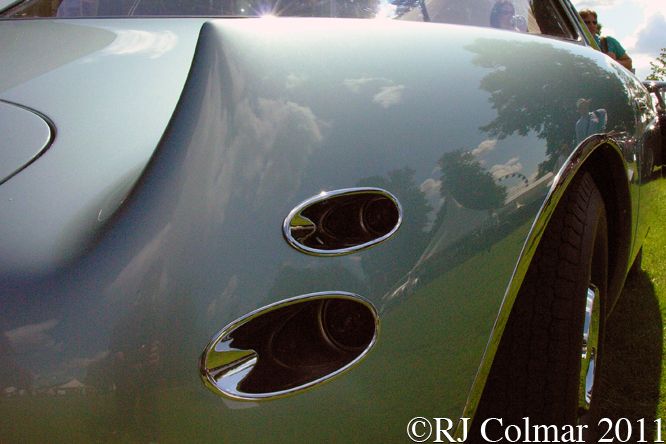
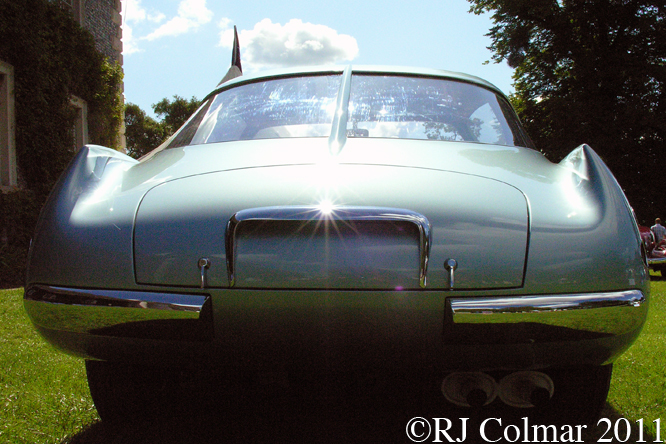
Tag Archives: Psychoontyres

Sixth Series – Packard 640 Custom Eight Roadster #168397

In 1924 Packard replaced it’s V12 powered top of the range Twin Six models with more powerful and economical straight eights.

Four years later Packard production peaked at 55,000 units in 1928 and in August of that year the company introduced it’s Sixth Series with either 140 inch wheel base 640 chassis as seen here or 145 inch wheel base 645 chassis.
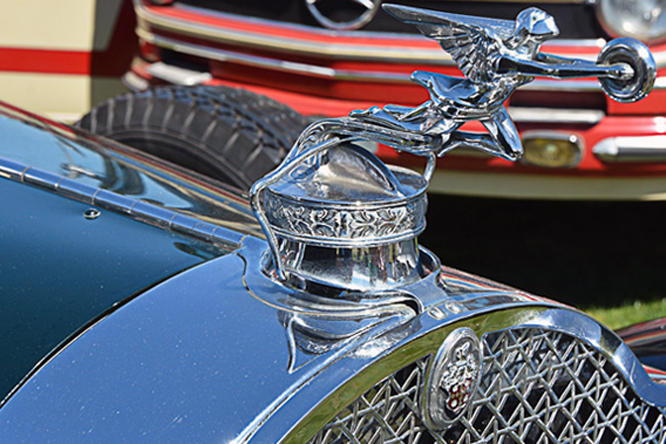
Packard 640 Custom Eight Roadster, Bonhams, Quail Lodge, California

Power for the sixth series came from a single block straight eight with side valves and a seven bearing crank with a capacity of 384.8 cui / 6.3 litres that produced 106hp at 3,200 rpm.

Today’s featured car is equipped with a three speed manual gearbox, semi eliptic springs and drum brakes for all four wheels.
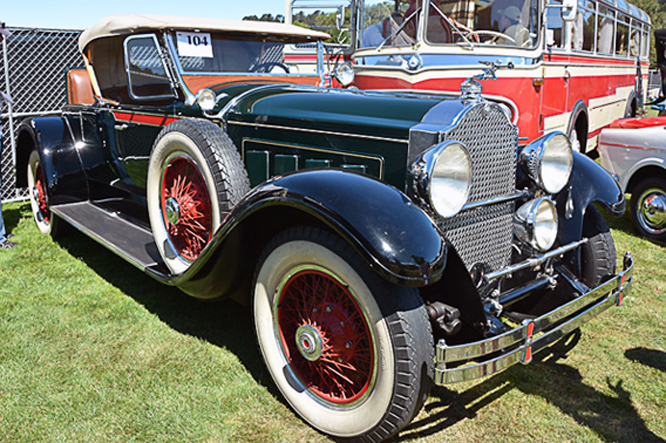
Packard 640 Custom Eight Roadster, Bonhams, Quail Lodge, California

A contemporary report in The Autocar noted “… the big car has the power for traveling right up to a high speed without fuss, without suggestion that the engine is doing much work, without harshness, yet with plenty still in reserve.”

Known history of this car starts with collector Richard C. Paine, Jr who owned from at least 1990.
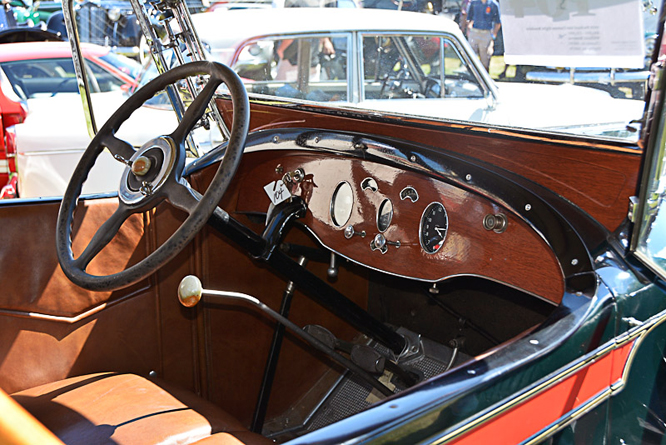
Packard 640 Custom Eight Roadster, Bonhams, Quail Lodge, California

Mr Paine left instructions for this car an several others from his collection to be sold upon his passing to secure the future of the Seal Cove Auto Museum near Bar Harbor, Maine.

After being bought by a European Museum in 2008 the car is seen in these photographs by Geoffrey Horton waiting to be put under the Bonhams hammer for a second time at the 2013 Quail Lodge Auction where it sold for $126,500 including buyers premium despite requiring “mechanical re-commissioning”.

My thanks to Geoffrey Horton for sharing today’s photographs.

Thanks for joining me on this “Sixth Series” edition of “Gettin’ a li’l psycho on tyres” I hope you will join me again for FIAT Friday tomorrow. Don’t forget to come back now !

Share

All Wheel De Dion Suspension – Bucher Guyer Duro

In the early 1990’s the Swiss Army put out a tender to supply a fleet of 2000 4×4 and 6×6 vehicles to replace it’s fleet of Austrian Steyr Daimler Puch Pinzgauer’s that went out of production in 1976.

Swiss Company Bucher, which traces it’s origins back to 1807, won the contract through it’s Geyer sometimes known as Guyer division with it’s Duro model supplying the initial order between 1994 and 1999.

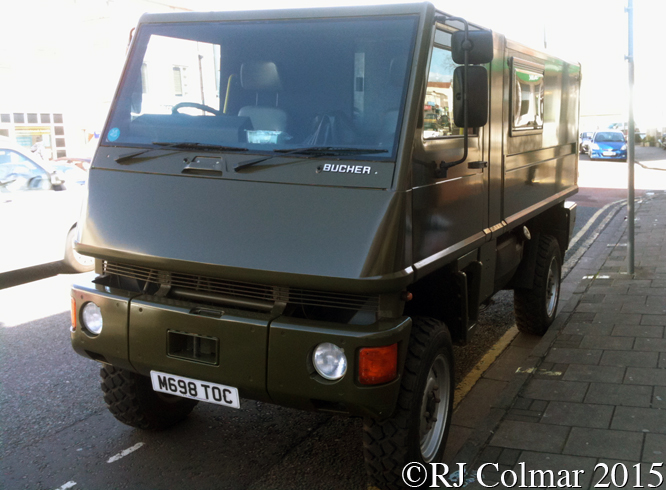
Bucher Guyer Duro, Horfield, Bristol,

The Duro was originally powered by a 150hp VM EP638LI, 3749cc / 228 cui straight six turbo charged diesel engine that drives all four wheels through a four speed automatic gearbox with one central and two axle differentials.

To keep the wheels parallel and improve ground clearance the Duro employs a novel, for 4×4 and 6×6 applications, all wheel De Dion suspension with the dead axle De Dion tubes curved upwards.

The disc brakes are mounted in board to reduce unsprung weight and as in Unimog’s the hubs incorporate reduction gears.

Top speed of the aluminium bodied Duro on the road is 62.5 mph, in 2003 General Dynamics MOWAG division acquired the rights to build the Duro and has developed it from it’s original specifications out lined here.

Today’s featured right hand drive Duro was built in 1994 and first registered for civilian use in the UK on the September 1st, 2001.

Thanks for joining me on this “All Wheel De Dion Suspension” edition of “Gettin’ a li’l psycho on tyres” I hope you will join me again tomorrow when I will be looking at a 1929 Packard. Don’t forget to come back now !

Share

GP Winning Record Breaker – Delage 15 S8

In 1925 the Association Internationale des Automobile Clubs Reconnus (AIACR), an international association of motor clubs founded in 1904, organised the first World Manufacturers’ Championship with four qualifying events, the Indianapolis 500, Belgian Grand Prix at Spa, French Grand Prix at Montlhéry and Italian Grand Prix run at Monza.

For the 1925 season Delage were running 2LCV V12 2 litre / 122 cui powered cars designed by Charles Planchon who after the cars initial failure in 1923 was replaced by Albert Lory who added twin superchargers and developed sufficiently for Robert Benoist and Louis Wagner to finish first and second in the 1925 French Grand Prix.

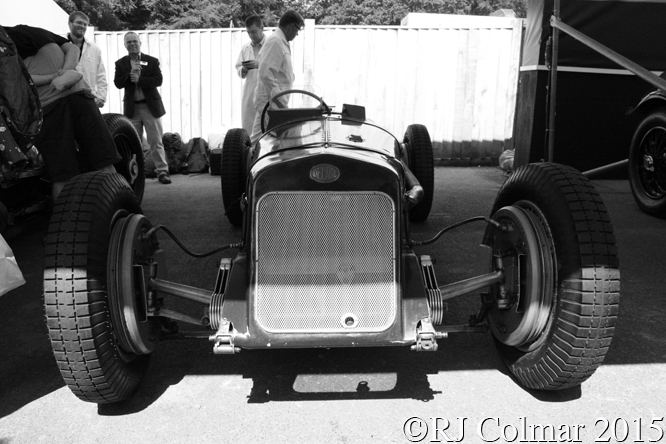
Delage 15 S8, Goodwood Festival of Speed,

The inaugural World Manufacturers’ Championship was claimed by Alfa Romeo with wins for Antonio Ascari and Gastone Brilli-Peri in Belgium and Italy respectively, both driving Alfa Romeo P2’s.

For 1926 the rules for the second World Manufacturers’ Championship mandated a down size to 1500 cc / 91.5 cui engine’s for which Albert Lory designed the 170hp twin supercharged 15 S8 with a straight 8 engine and five speed gearbox.

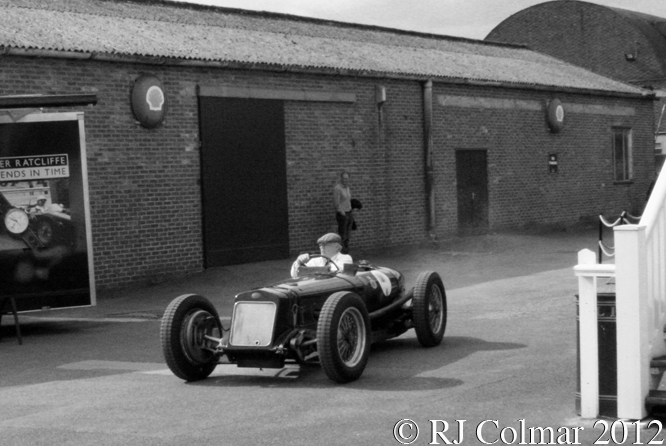
Delage 15 S8, Brooklands Double Twelve

Bugatti won the 1926 championship, Jules Goux winning the French Grand Prix and Spanish Grand Prix with Louis Charavel also driving a Type 39A to victory in Italy.

A Delage 15 S8 driven by Robert Sénéchal shared with Louis Chiron won the first Royal Automobile Club Grand Prix run at Brooklands in 1926.

Delage 15 S8, Goodwood Festival of Speed,

For 1927 Delage entered their 15 S8 models modified to run with a single super charger in all four European rounds of the World Manufacturers’ Championship.

Delage won all four races to secure what turned out to be the last World Manufacturers’ Championship to be awarded by the AIACR.

Delage 15 S8, Goodwood Festival of Speed,

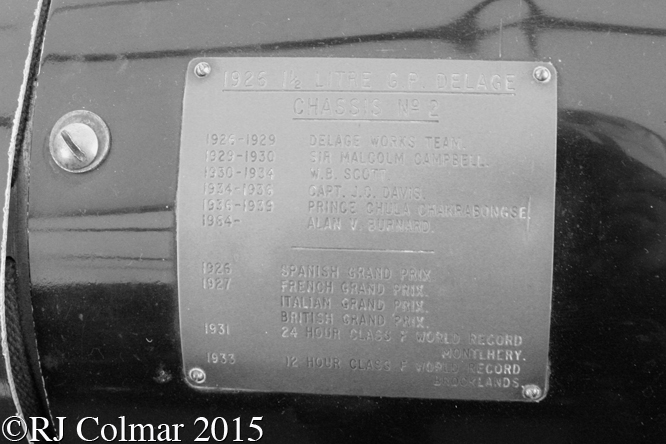
Remarkably Robert Benoist was at the wheel of the winning car in France, Spain, Italy and finally at Brooklands, where he drove today’s featured chassis No.2 to victory lane.

By the end of 1927 Delage was virtually bankrupt and the company had to re focus it’s attention on building road cars and abandon racing in a works capacity.

Delage 15 S8, Brooklands Double Twelve

In 1936 a young Richard Seaman made a name for himslef driving a carefully rebuilt 10 year old 15 D8 to numerous victories over new models from ERA and Maserati.

Chassis No.2 seen here was bought by Malcolm Campbell in 1929 who sold it on to W B ‘Bummer’ Scott who set Class F 24 Hour World Record and 200 Mile World Records respectively at Montlhéry in 1931 and Brooklands in 1933.

Delage 15 S8, Goodwood Festival of Speed,

Prince Chula of Siam, cousin and entrant of “B Bira” was the next owner of the car from 1936 to 1939, hoping to emulate the fortunes of Richard Seaman the White Mouse Racing attempted an ultimately unsuccessful modernisation.

Alan V Burnard acquired No.2 in 1964 and was responsible for restoring it to it’s current condition having temporarily fitted an ERA engine and ENV pre selector gearbox.

After sourcing and rebuilding a correct type 15 S8 the ERA engine was replaced but the ENV gearbox remained, Alan Burnard generously bequeathed No.2 to the Brooklands Museum, where the car is seen in the 2nd and 5th photographs, upon his death in 2012.

Thanks for joining me on this “GP Winning Record Breaking” edition of “Gettin’ a li’l psycho on tyres” I hope you will join me again tomorrow. Don’t forget to come back now !
Share

Creating Agile Brands – Mercedes Benz W128 220SE

Unlike last weeks featured 220SE today’s example, seen at Hillsborough Concours d’Elegance by Geoffrey Horton, is one of the more numerous LHD examples.

Mercedes Benz 220SE, Hillsborough Concours d'Elegance

When new it’s Bosch fuel injected engine would have produced 134hp at 5000rpm, sufficient to give the 220SE a top speed of 100 mph.

Mercedes Benz 220SE, Hillsborough Concours d'Elegance

San Franciscan Walter Landor took delivery of this 220SE while in Italy and toured Europe in it commencing July 1960.

Mercedes Benz 220SE, Hillsborough Concours d'Elegance

Walter Landor born in Germany became the youngest fellow of the Royal Society of the Arts at 23 after completing his studies at Goldsmiths College in London.

Mercedes Benz 220SE, Hillsborough Concours d'Elegance

He settled in San Francisco after traveling to the US as part of the design team for the British Pavillion at the New York Worlds Fair.

Mercedes Benz 220SE, Hillsborough Concours d'Elegance

Walter launched Landor Associates with his wife from his living room table, the company with the strap line “Creating Agile Brands” now has offices in 33 cities around the world.

The current and only second owner of this 220SE Colour Consultant Bob Buckter bought it in 1980 15 years before Walters death, after a “mishap” in 1999 Bob had the car fully restored to it’s current Concours Class winning condition.

My thanks to Geoffrey Horton for sharing today’s photographs.

Thanks for joining me on this “Creating Agile Brands” edition of “Gettin’ a li’l psycho on tyres” I hope you will join me again tomorrow. Don’t forget to come back now !
Share

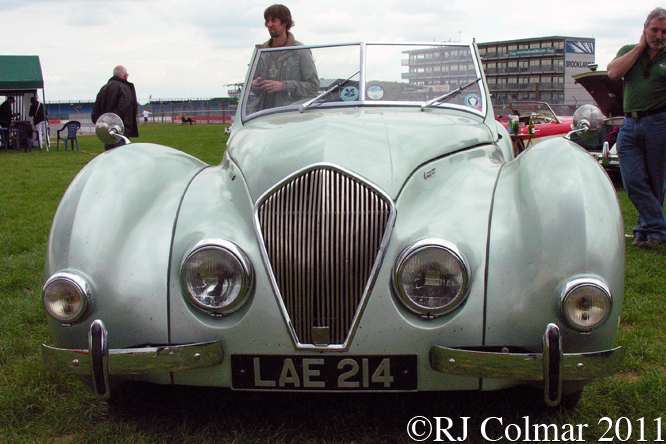
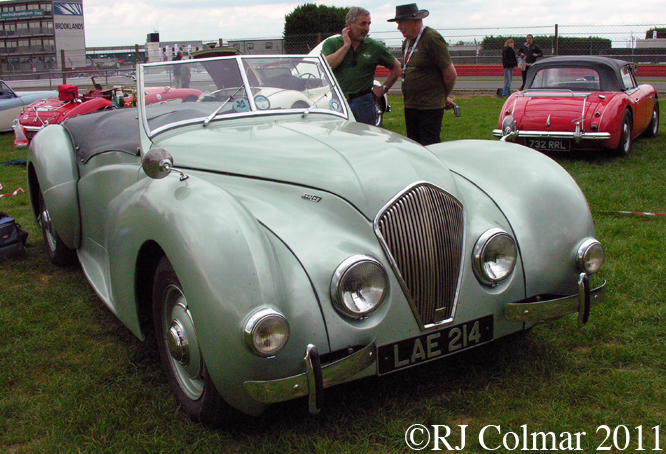
Riley Inside – Healey Westland

Having spent a number of difficult years engineering Triumph’s around the companies struggling finances Donald Healey joined Humber and spent his spare time working on a sports car which Triumph had declined to back.

Healey Westland, Silverstone Classic

He then found backers of his own to the tune of £50,000 and set up shop in Warwick after securing a supply of Riley engines and transmissions.

Healey Westland, Silverstone Classic

The chassis of his sports car, which would be shared with a saloons and other body styles featured, expensive, front independent suspension of the type made popular by the pre war Auto Union Grand Prix cars with a Riley rear axle that combined gave a wheelbase of 102 inches.

Healey Westland, Silverstone Classic

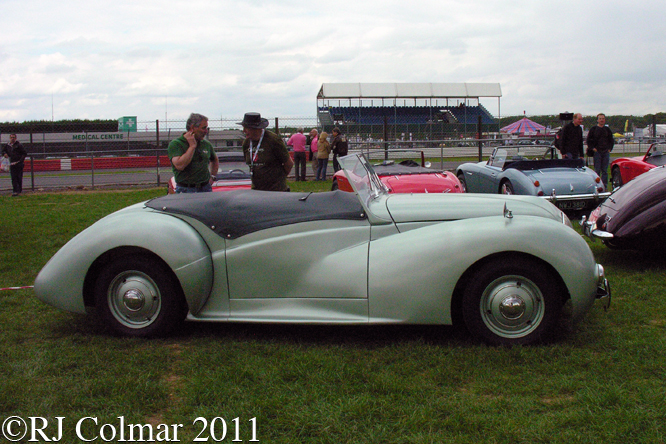
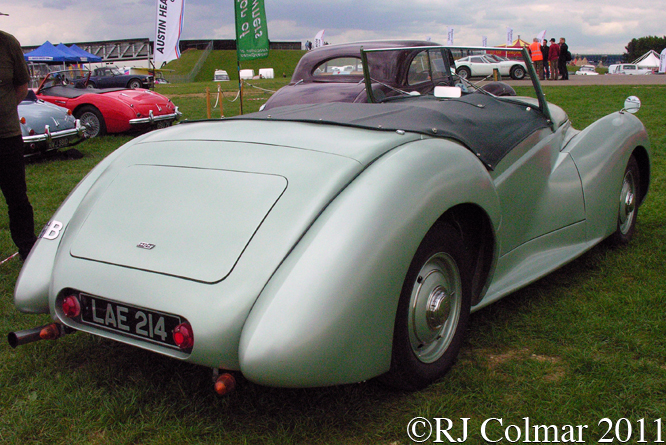
The four seat roadster bodies like the one seen here at Silverstone Classic, were manufactured by Westland bodies in Hereford, the four seat Elliot saloon body was manufactured by a shop front manufacturer in Reading.

Healey Westland, Silverstone Classic

Donald Healey specified various modifications to the Riley 2443cc / 149 cui four cylinder twin cam engine, of similar design to those which ERA had also modified for their 1930’s Voiturette Grand Prix cars, to bring the power up to 104hp.

Healey Westland, Silverstone Classic

With a top speed of 100 mph and rest to 60 mph time of 12.8 seconds the Westland was one of the fastest cars of it’s time suffering, like contemporary Bristol’s, only from their relative expense.

Healey Westland, Silverstone Classic

64 Westlands were produced between 1946 and 1950 and it is believed only 13 survive, today’s featured car was built in 1949.

Thanks for joining me on this “Riley Inside” edition of “Gettin’ a li’l psycho on tyres” I hope you will join me again tomorrow for Mercedes Monday. Don’t forget to come back now !

Share

Clever Canadian – Sadler BMC Formula Junior

When Clever Canadian Bill Sadlers Dad was ready to junk the family business Sadler Auto Electric 1939 Austin panel van Bill asked to take on the vehicle he had been delivering parts with and turned it into a convertible.

Later he converted his Hillman Minx to take a 150hp flathead Ford V8, the cars original brakes proved too small on his competitive debut at Watkins Glen.

Sadler BMC Formula Junior, Stephen Bulling, Autimn Classic, Castle Combe,

This led Bill to building a number of sports cars to race, he was an early adopter of both the small block Chevy V8 and the engine behind the driver layout which would become part of the formula for any half way decent Can Am car many years later.

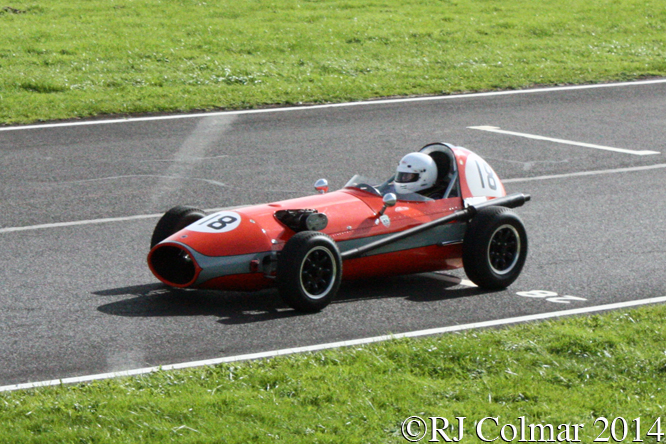
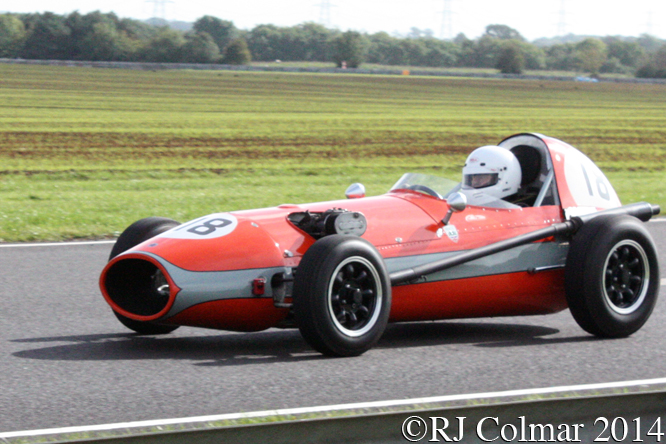
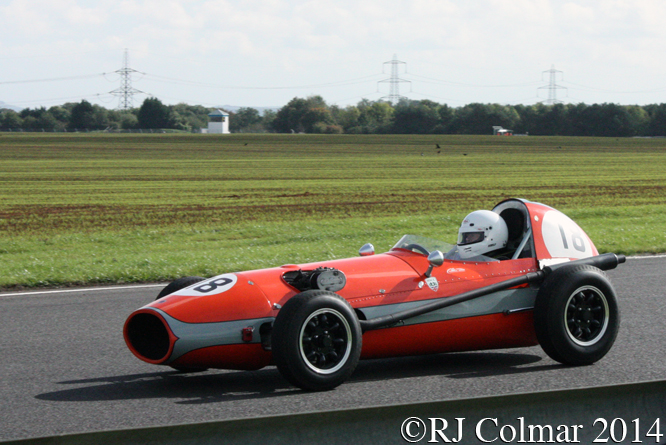
By 1959 MENSA International member Bill was producing sports cars in small numbers when he decided to build a batch of 12 open wheel cars to the international Formula Junior specifications that were announced in 1958.

Sadler BMC Formula Junior, Stephen Bulling, Autimn Classic, Castle Combe,

The Sadler Formula Junior’s were built to a tuned version of the 1098 cc / 67 cui 46hp BMC A series engine more commonly found in Austin A35 van’s, Austin A40 Pininfarina Countryman’s, Morris Minors, Austin Healey Sprite’s, BMC’s various badge engineered 1100’s, later Mini Clubmans, Australian built Mini Mokes and Austin Allegro’s.

The engine and similarly sourced 4 speed gearbox sits in a tubular frame and is covered by an aluminium body.

Sadler BMC Formula Junior, Stephen Bulling, Autimn Classic, Castle Combe,

Details of 1959 Formula Junior races in which Sadlers took part are extremely hard to find, but by 1960 G Hag, Vic Yachuk, Ernest Donnan, James Walter and George Roberts, had all recorded starts in Sadler Formula Juniors in North America.

According to Dutchy and Steven W at The Nostalgia Forum, today’s Sadler seen in these photographs with Stephen Bulling driving at Castle Combe, was at one time driven by Canadian Dave Rodgman.

Thanks for joining me on this “Clever Canadian” edition of “Gettin’ a li’l psycho on tyres” I hope you will join me again tomorrow when I’ll be looking at the first in a new Sunday Healey series. Don’t forget to come back now !

Share

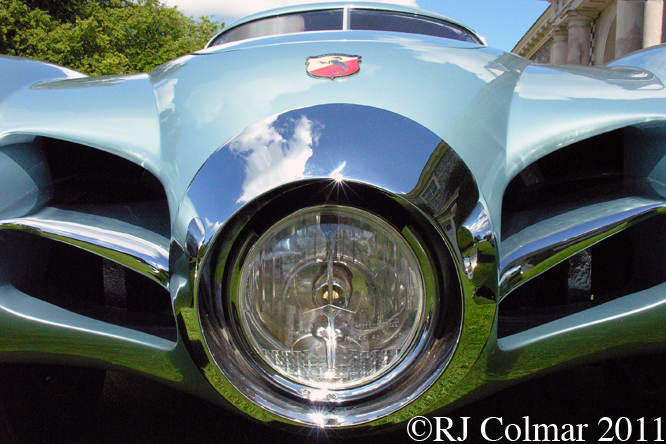
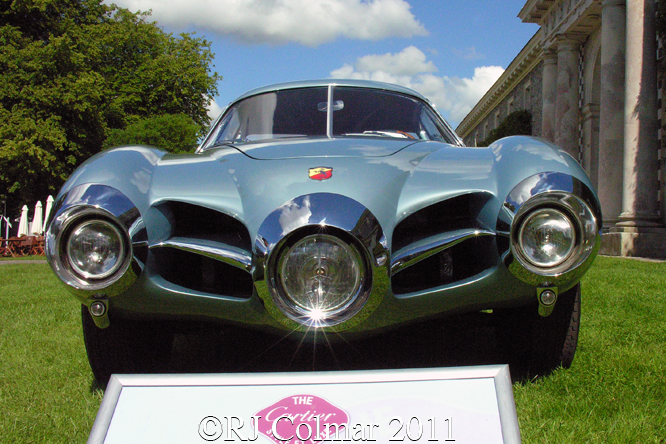
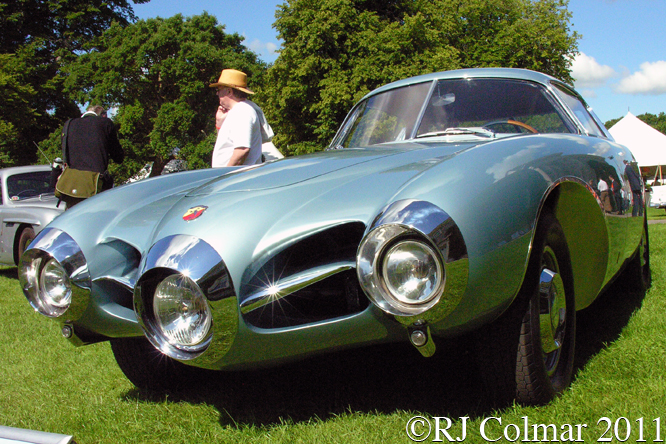
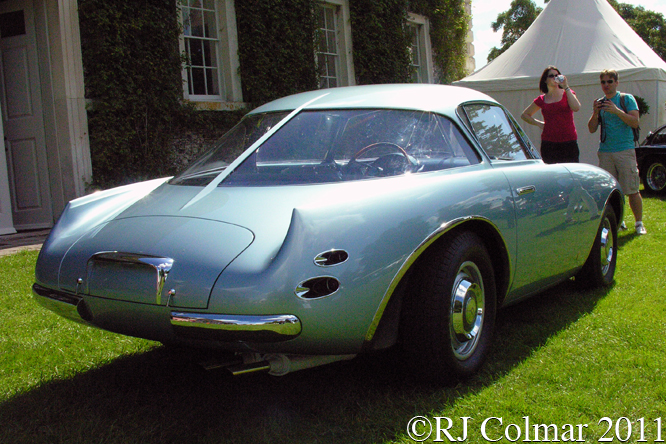
Lunar Asparagus – Abarth 1500 Biposto

In 1951 Nuccio Bertone gave former student in aeronautical engineering and ex sapper, combat engineer, returned from Tobruck via internment in India, Franco Scaglione his big break by hiring him as an automotive stylist.

Abarth 1500 Biposto, Goodwood, Festival of Speed

Franco’s first job was to design a headline grabbing body on an Abarth chassis #214-01 for Carlo Abarth to promote his business.

Abarth 1500 Biposto, Goodwood, Festival of Speed

Chassis #214-01 is powered by a FIAT 1400 four cylinder engine, apparently inherited from the failed Cistilia organisation in lieu of severance pay, bored out to 1500 cc / 91.5 cui and fitted with an Abarth intake manifold that accommodates a pair of Weber carburetors to produce 75 hp.

Abarth 1500 Biposto, Goodwood, Festival of Speed

The experimental Abarth 1500 Biposto was taken to the 1952 Turin Shown where it’s public debut was a sensation on the FIAT stand, the car also caught the eye of Packard’s Engineering Vice President Bill Graves and Chief Designer Edward Macauley who bought the Abarth which they saw as worthy of study in an effort to revitalise sales of their own flagging brand.

Abarth 1500 Biposto, Goodwood, Festival of Speed

Later in 1952 Fortune magazine sent it’s associate editor Richard Austin Smith to visit Packard for a profile on it’s new President James C. Nance who had been head hunted from GE Hotpoint, Smith’s visit coincided with the Abarth’s arrival and display to senior Packard management under a photo in the November 1952 issue of Fortune Smith wrote the caption “Its value is now largely ornamental; under Nance, Packard styling will stick to lines that are ‘architecturally correct,’ forgo the lunar asparagus.”

Abarth 1500 Biposto, Goodwood, Festival of Speed

To be fair the lunar asparagus was not that different in several aspects to the contemporary Starlight coupé built by Studebaker a company Packard would acquire in 1954, during his visit Smith suggested various strap lines for Packard products which were taken up by the company and the following July Packard President Nance, who had no further use for it, gave the Abarth to Smith as payment in kind.

Abarth 1500 Biposto, Goodwood, Festival of Speed

Smith drove the car sparingly and retired to Groton, Connecticut where the car sat unused in a garage from 1977 until his death in 2003.

Thanks for joining me on this “Lunar Asparagus” edition of “Gettin’ a li’l psycho on tyres” I hope you will join me again tomorrow. Don’t forget to come back now !
Share