Tag Archives: Racing

Jim’s Favourite – Chaparral Chevrolet 2E

To celebrate the 40th anniversary of my introduction to the wonders of The Canadian American Challenge Cup in something approximating real time mediated through the pages of ‘Motor Sport’ magazine, for the remainder of the month I’ll be featuring a selection of Group 7 race cars; on Saturday’s, Sunday’s, Mondays and the last two Thursdays of the types used in the Can Am Championships run from 1966 to 1973 or European “Intersiere” races run from 1970.
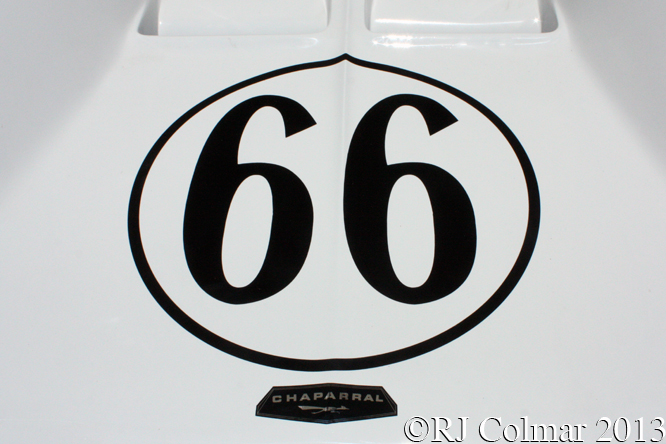
Chaparral 2E, Goodwood Festival Of Speed

The inaugural 1966 “Can Am” Challenge race was run at St.Jovite on 11th September 1966 and won by 1965 World Drivers Champion John Surtees driving a Team Surtees Lola T 70 Spyder.
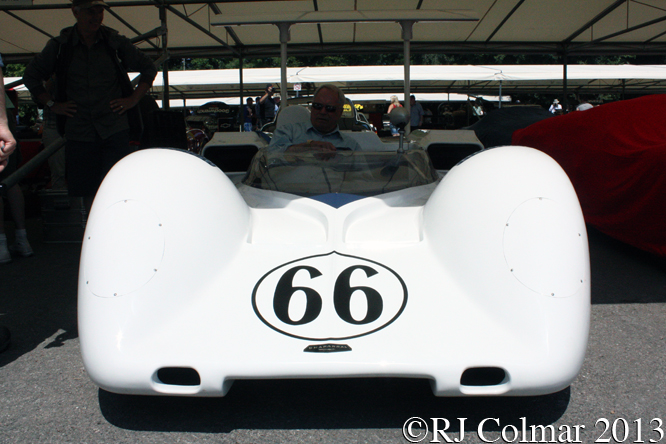
Chaparral 2E, Goodwood Festival Of Speed

Texas Oilman and innovative engineer Jim Hall and his Chaparral team made their debut in the Series at Bridgehampton the following week where Hall was to drive the #66 Chaparral 2E chassis #2E001 with 1961 World Champion Phil Hill in the identical sister #65 chassis #2E002.
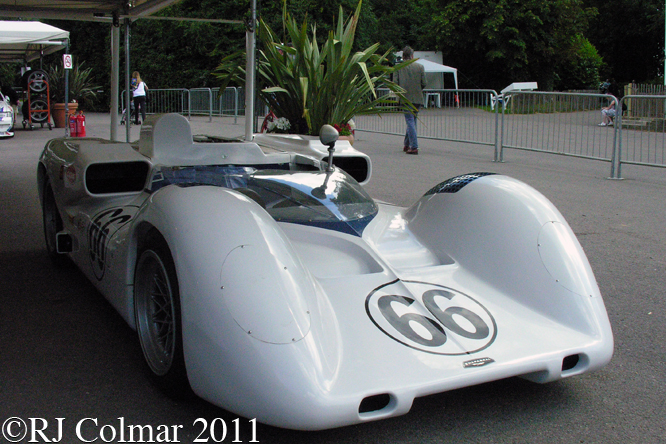
Chaparral 2E, Goodwood Festival Of Speed

Come the start of the event it was Phil Hill who found himself at the seat of chassis #2E001 starting fourth, after Hill’s intended car developed chassis problems during practice and Jim handed the world champion Phil his own car.
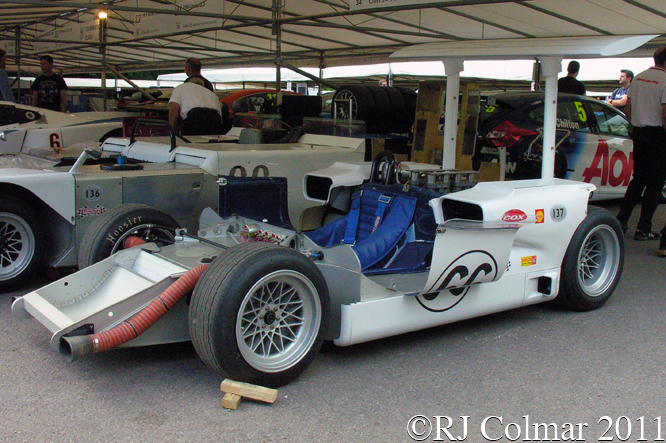
Chaparral 2E, Goodwood Festival Of Speed

Phil finished the race in 4th place behind the Lola Ford T70 of Dan Gurney, the McLaren Elva Mark II Chevrolet driven by Chris Amon and the Mark IIb McLaren Elva Chevrolet driven by Bruce McLaren.
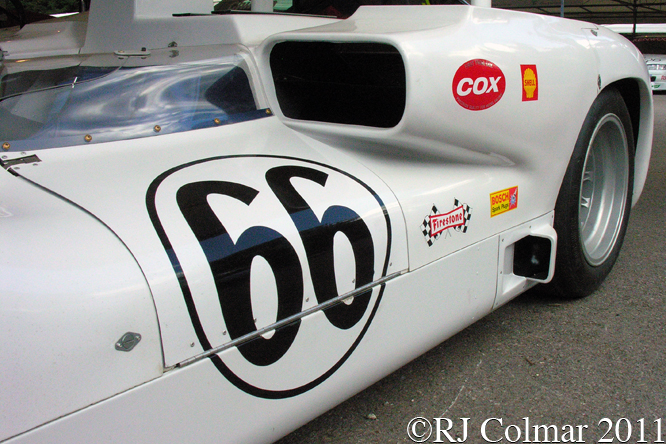
Chaparral 2E, Goodwood Festival Of Speed

Like most vehicles of the time the Chaparral 2E featured three pedals, unlike most, the pedals operated the accelerator and brakes while the third operated a front spoiler beneath the nose and rear wing to adjust the amount of drag created to maximise the vehicles performance around the corners and along the straights of a circuit.
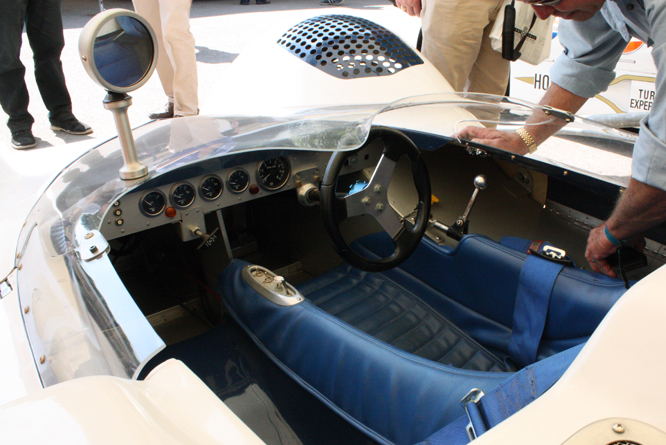
Chaparral 2E, Goodwood Festival Of Speed

Two unusual features of the drive train were, first the 450 hp aluminium alloy block 5.4 litre / 327 cui Chevrolet V8 chosen in favour of the more powerful and heavier 5.9 litre iron block Chevrolet Motor used by John Surtees in the Lola, and second the Chaparrals were uniquely equipped automatic transmissions.
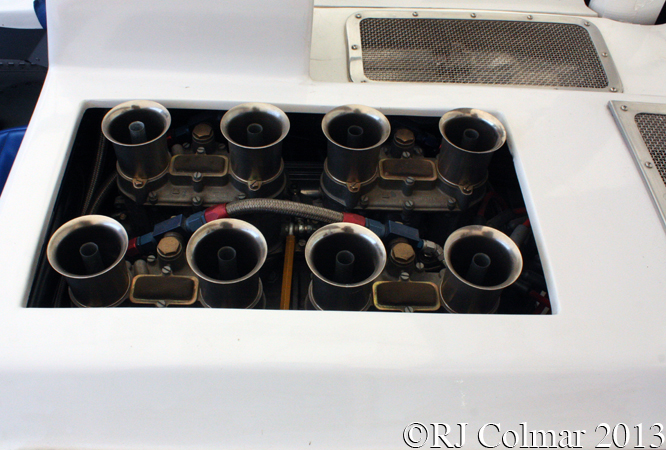
Chaparral 2E, Goodwood Festival Of Speed

Although similar aerodynamic devices had been attached to competition vehicles before, notably by Mercedes Benz who attached a wing to the roof of their 300 SL during practice for Le Mans in 1952 and by Fritz von Opel who attached wings to the sides of his 1928 solid rocket fueled Opel RAK 2, when activated to give down force at the expense of increased drag and decreased forward speed the Chaparral 2E’s aerofoil shaped wing transmitted down force directly through the rear suspension, while a spoiler under the nose acted similarly to increase down force on the front suspension, which together improved the handling in the corners.
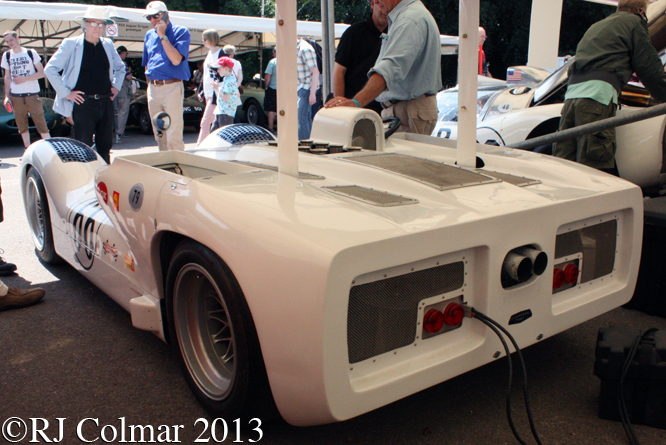
Chaparral 2E, Goodwood Festival Of Speed

The Challenge returned to Canada one week later again on September 24th 1966 for the ‘6th Canadian Grand Prix for the Pepsi-Cola Trophy’ run Mosport Park. Hall qualified 9th and Hill 11th with Hill finishing second to Mark Donohue in a Penske run Lola Chevrolet T70. Jim retired at 1/3 rd distance with an engine problem.
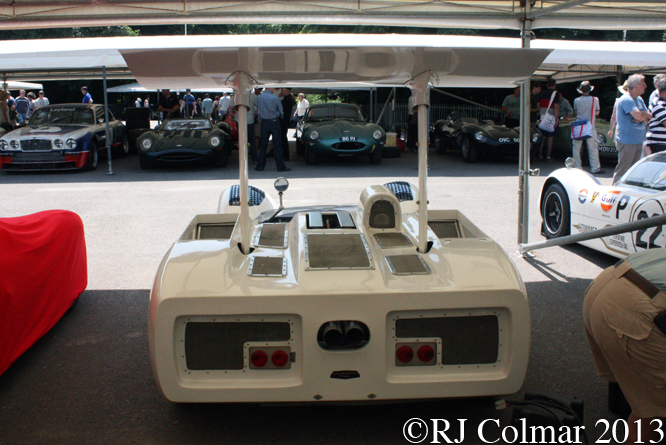
Chaparral 2E, Goodwood Festival Of Speed

Nearly a month later on October 16th 1968 Jim Hall started the Monterey Grand Prix run at Laguna Seca from pole position in his #66 2E and alongside him on the grid was Phil Hill in the #65. After 2 hours at the wheel during which he covered 106 laps Phil Hill crossed the line first ahead of team owner Jim Hall to score a remakable team 1-2 finish.
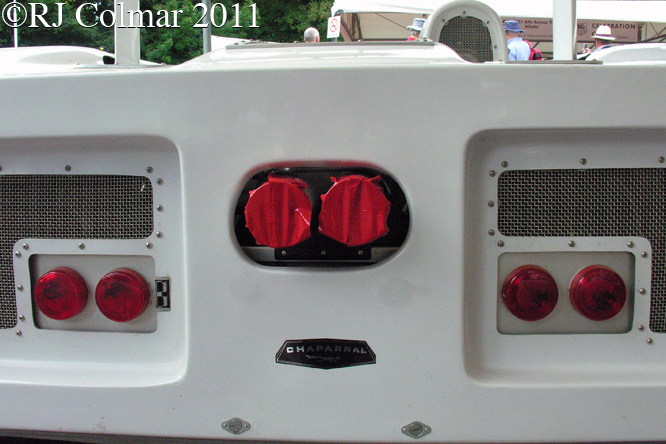
Chaparral 2E, Goodwood Festival Of Speed

Jim qualified 3rd behind, John Surtees in the Lola, at Riverside in California. John and Jim both moved up a place after pole sitter Bruce McLaren retired with an ignition problem. Phil Hill could only qualify 8th and retired after seven laps with fuel pressure issues.

Going into the final round of the Challenge Phil Hill was tied on points with John Surtees with 5 other drivers including Jim Hall capable of winning the championship depending on a variety of finishing scenarios. Jim qualified on pole for the final round at Las Vegas but after a few laps his wing started flapping uncontrollably due to fatigue failure in the control mechanism causing his retirement from second after Surtees took a dominant lead from the start. Hill damaged his car and ran much of the race scraping over 4th place until his wing also failed. Surtees easily won the race and the Inaugural Can Am title ahead of Mark Donohue with Hill finishing out of the points his championnship chances were shot.

A Chaparral 2E chassis 2E002 was entered in three events at the 13th Bahamas National Speed Weeks for Jim Halls Chaparral Cars Inc partner Hap Sharp. Hap won the Governor’s Trophy & Nassau Tourist Trophy from pole, finished 5th in the Nassau Classic Race and a non running 4th, again from pole in the Nassau Trophy Race in which Hap had an accident.

In 2005 Jim Hall teamed up with Jim Musser, who had contributed to the design of the 2E, known to be Hall’s favourite, to build a ‘limited number’ of continuation Chaparral 2E’s for use by classic racers. More on the continuation cars can be seen on this link to the Chaparral Official Website.

My thanks to Kayemod Rob, Tony 2F-001 Pashley, Supersox and Allen Brown Duc-man and mariner at The Nostalgia Forum for helping me to conclude that the car featured today maybe the surviving original 2E but is most likely one of two continuation models.

Thanks for joining me on this Jim’s Favourite edition of “Gettin a li’l psycho on tyres”, I hope you will join me again tomorrow when I’ll be looking at a Can Am Lola T70 Spyder. Don’t forget to come back now !

Share

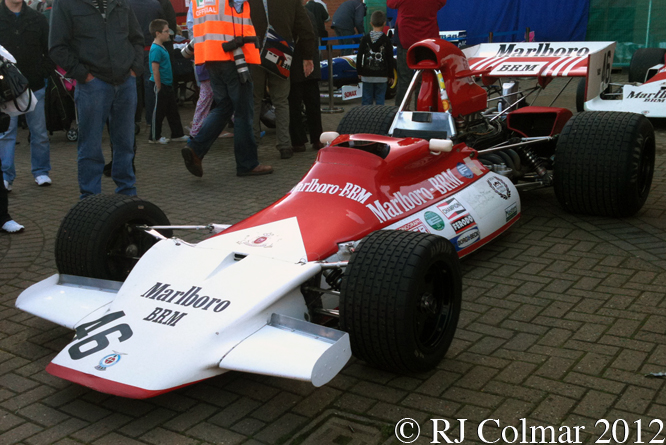
Right Tyre, Right Time – BRM P180 #P180/2

Despite winning the 1971 Austrian and Italian Grand Prix BRM lost their Yardley sponsor to McLaren at the end of 1971, but started 1972 with a plan for a five car assault on the 1972 World Drivers and Constructors championships using three different models the P153 from 1970, the P160 from 1971 and a new design the P180. All three models were designed by Tony Southgate and there was some interchangeability of suspension that was used to update the older models.

BRM P180, BRM Day, Bourne, Lincs

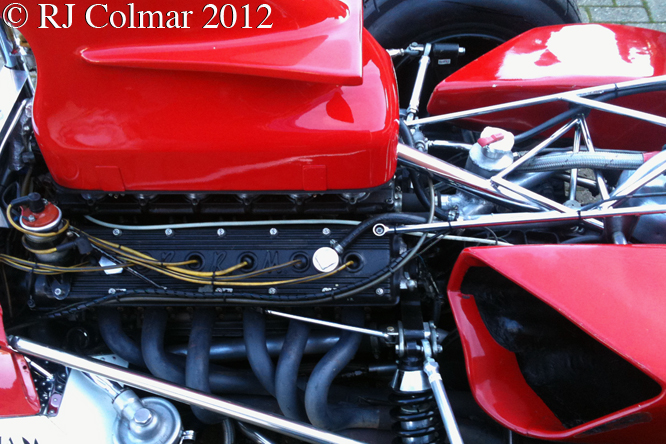
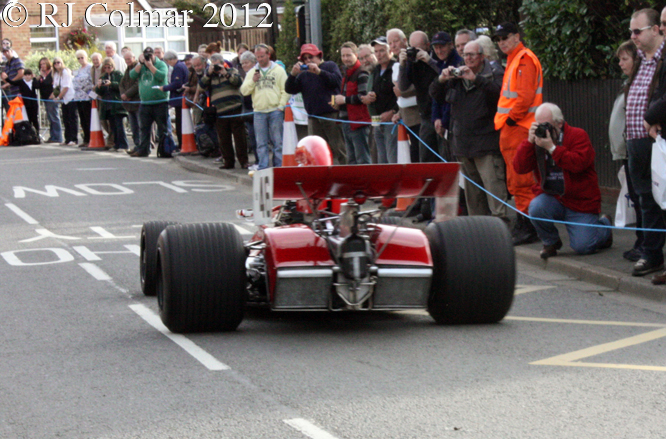
The P180 differed from the earlier models by having the radiator at the front moved to the rear in a bid to get a 33/67 balance in the weight distribution from front to rear in a bid to improve traction.

BRM P180, BRM Day, Bourne, Lincs

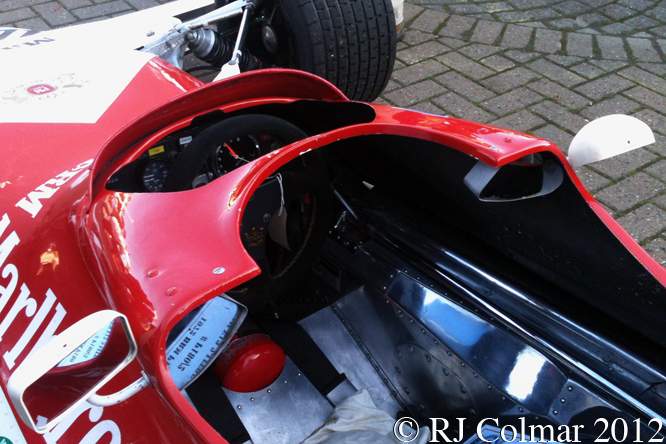
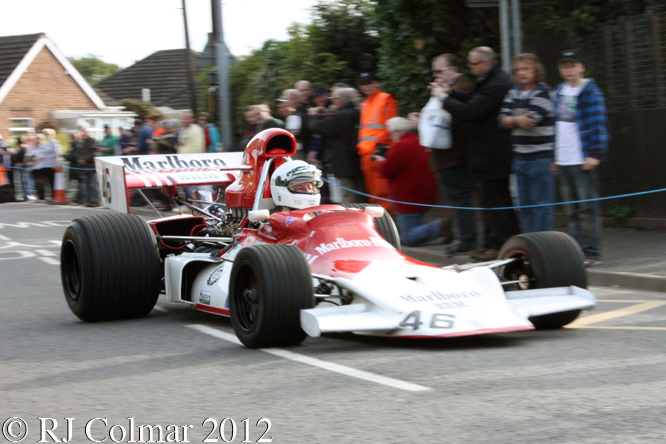
One of the novel features of the P180 was the steering wheel popping up through the cockpit fairing.

BRM P180, BRM Day, Bourne, Lincs

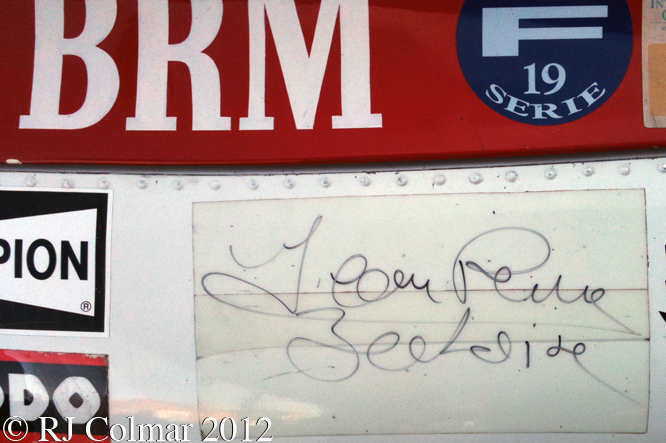
The P180 made it’s debut at the Spanish Grand Prix with Peter Gethin at the wheel, Jean Pierre Beltoise also had today’s featured chassis #P180/2 available to him but found the older P160 more to his liking. Gethin started 21st and Beltoise started 7th, both retired.

BRM P180, BRM Day, Bourne, Lincs

Howden Ganley drove #P180/2 in the ’72 Monaco Grand Prix where he qualified 20th but crashed on lap 47. Beltoise won the race from 4th on the grid in the older P160, this would prove to be BRM’s final championship Grand Prix victory. With the weight balance of the P180 being more like 30/70 the P180’s were modified.

BRM P180, BRM Day, Bourne, Lincs

While the work was carried out the P180’s appeared at two non championship meetings, Reine Wisell qulified 7th for the Gold Cup at Oulton Park but was rear ended by his compatriot Ronnie Peterson on the start line which broke Reine’s finger and caused his retirement. At Brands Hatch for the Rothman’s 50,000 both Beltoise and Ganley preferred to race the older P160’s.

BRM P180, BRM Day, Bourne, Lincs

The P180’s appeared again at the Italian Grand Prix where Beltoise qualified #P180/2 16th and finished 8th to score the models only Championship race finish. Both P180’s were taken to the Canadian and US Grand Prix’s Bill Brack joined Beltoise in Canada and Brian Redman replaced the Canadian in the States. No finishes were recorded and the cars failed to qualify in the top 15 for either race.

BRM P180, BRM Day, Bourne, Lincs

The P180’s final appearance was in the non championship John Player Challenge at Brands Hatch, where Beltoise qualified #P180/2 7th. The track was wet at the start but Beltoise elected to go to the start line on intermediate tyres where as almost everybody else was on wet tyres. At the start of the race Beltoise was left behind but as the track started to dry out he was perfectly placed to pick off those ahead of him to score the BRM team’s final race victory.

Tony Southgate, who say’s of the car what it really lacked was a budget to develop the engine, left BRM to join Shadow for 1973 and BRM decided to retire the P180 in favour of using yet another update of the P160 for 1973.

Howden Ganley is seen driving the car above at last years BRM Day.

My thanks to Ray Bell, RCH, kayemod Rob and MCS at The Nostalgia Forum for their help in finding out the cause of Reine Wisell’s broken finger.

Thanks for joining me on this “Right Tyre, Right Time” edition of “Gettin’ a li’l psycho on tyres”, I hope you will join me again tomorrow. Don’t forget to come back now !
Share

Another Fine Mess – BRM P139 #P139/2

With the benefit of hindsight it could be said that the introduction of the 3 litre era Formula One regulations was the perfect excuse for unprecedented levels of chaos to reign at BRM. When the new regulations were announced BRM forgot its past troublesome experience with the supercharged BRM V16 and elected to built an even more complicated motor a 3 litre / 183 cui H16, effectively two flat 8 motors on top of one another sharing a common crankshaft. This heavy motor required four men to lift it and although powerful was also predictably unreliable though it did power Jim Clark to victory in the 1966 US Grand Prix, sitting in the back of a Lotus 43.

Alongside the H16 program BRM also developed a 24 valve V12 which Bruce McLaren used to power his one off McLaren M5A. When it lasted the V12 was capable of finishing in the points as Denny Hulme’s 5th in the 1968 South African Grand Prix had proved, however by then Bruce had already decided that the future of his Grand Prix team lay with the Ford Cosworth DFV which was used to power the 1968 McLaren M7A.

BRM P139, BRM Day, Bourne, Lincs

For 1968 BRM decided that the simpler and lighter V12 might be the better bet and abandoned it’s H16 and free lance designer Len Terry was drafted in to design a new V12 powered BRM P126 of which second evolution P133 and third evolution P138 variants were built in the same season. The teams best results were a second place in Monaco for Attwood in the P126 and 2nd place in the following Belgian Grand Prix for Pedro Rodriguez driving the P133.

1965 World Champion John Surtees was teamed up with Jackie Oliver in the BRM team for 1969 by which time BRM had developed a 48 valve version of the V12. The first half of the 1969 season went so badly with a best 5th place finish for John Surtees in Spain and 6 retirements from the opening 8 starts in 4 races that the team missed the 1969 French Grand Prix to regroup. During the break Tony Rudd, who had been working on a ground effect design with Peter Wright, was forced to resign and the team prepared a new challenger, the P139, for John Surtees to drive at the British Grand Prix.

 BRM P139, BRM Day, Bourne, Lincs

John retired on the second lap of the 1969 British Grand Prix when the suspension of the new P139 collapsed in the remaining five races of the 1969 season John managed two finishes the best of which was third in the Italian Grand Prix. At the end of the season John left BRM to start his own Formula One team.

Today’s featured car is #P139/2 which was ready for Jackie Oliver to drive in the 1969 Italian Grand Prix. Jackie Oliver ended his rookie season with Team Lotus in 1968, in which he replaced the much missed Jim Clark, with a season high third place finish in the season finale Mexican Grand Prix where team mate Graham Hill over came the odds to win the race and his second world drivers championship.

BRM P139, BRM Day, Bourne, Lincs

After the 1968 Mexican Grand Prix Jackie was replaced at Team Lotus by Jochen Rindt and Jackie found himself with the second seat at BRM for the 1969 season which started with a seventh place finish driving the BRM P133 at the South African Grand Prix. Jackie then had a run of four retirements in the P133 up to the British Grand Prix a fifth straight retirement driving the P138 at the German Grand Prix followed by three more in Italy Canada and the USA driving #P139/2. In Mexico Jackie’s fortunes changed and he finished 6th two laps down on Denny Hulme who drove his McLaren M7A to the models final final victory.

Jackie remained with BRM in 1970, but again he retired from all but two races with the P139’s replacement the Tony Southgate designed P153 scoring a best fifth in Austria. In 1973 Jackie teamed up with Don Nichols and designer Tony Southgate, who was part of the team that replaced Tony Rudd and Peter Wright at John Surtees insistence, to form the Shadow and later Arrows teams.

BRM P139, BRM Day, Bourne, Lincs

Tony Rudd joined Lotus production car operation when he left BRM and was still there when Peter Wright joined Lotus some years later. After joining Lotus Wright became involved in the development of the Lotus 78 ground effect and Lotus 79 moving on the work Wright and Rudd had started on the never completed BRM P142 in 1969.

Last time I looked today’s featured car seen in these photographs at last years BRM Day in it’s home town of Bourne was being offered for sale by Hall & Hall.

Thanks for joining me on this “Another Fine Mess” edition of “Gettin’ a li’l psycho on tyres” I hope you will join me again tomorrow. Don’t forget to come back now !
Share

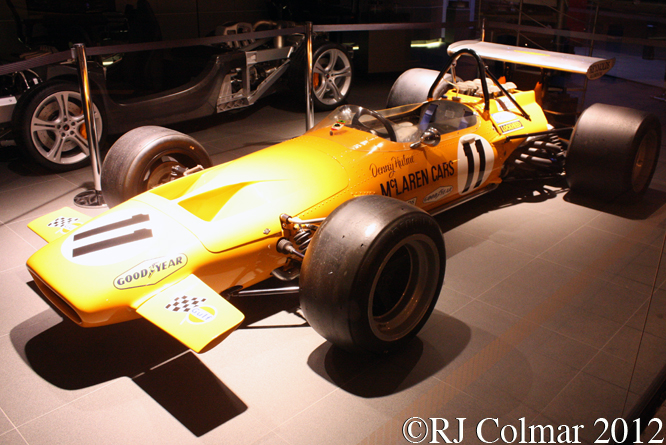
More Fuel – McLaren Ford M14A #M14/2

Going into 1970 things were looking up as McLaren Cars entered their seventh year. The team had won three consecutive Can Am Championships, 2 for Bruce McLaren and one for Denny Hulme, the inaugural European Formula F5000 championship with Peter Gethin and four championship Formula One races one for Bruce McLaren and three, including the last race of 1969, for Denny Hulme.

In addition to these racing programs for 1970 McLaren were to embark on an Indy program with the new turbocharged McLaren Offy M15 and were contracted to run an Alfa Romeo V8 powered car alongside their new Ford powered M14A Formula One car.

McLaren Ford M14A, Goodwood Revival

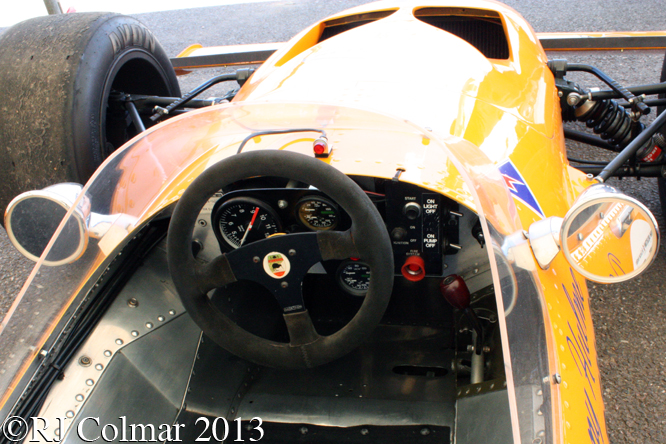
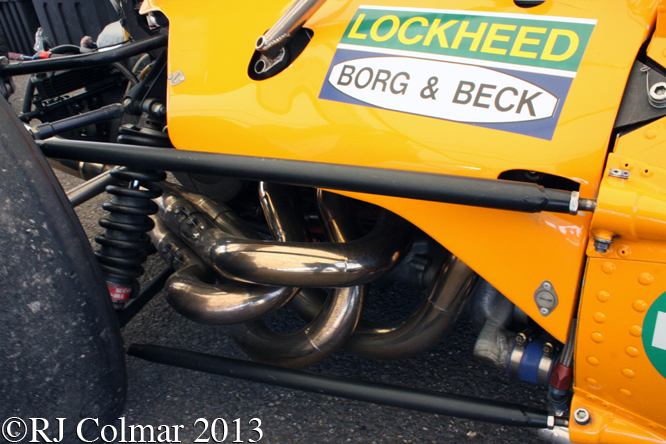
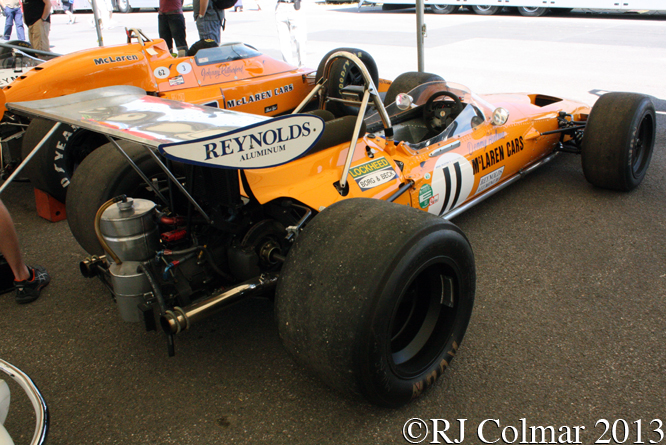
The new M14A was an improvement of the 1969 McLaren M7C, itself based on a Formula F5000 M10A chassis with McLaren M7A Grand Prix winning suspension.

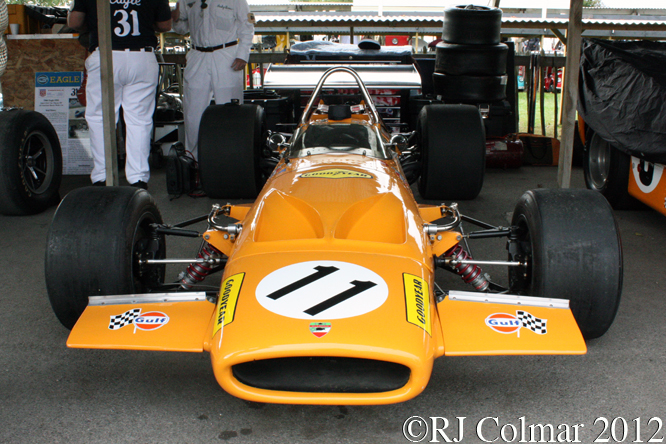
The main feature of the new car was the narrower internal dimensions of the monocoque which were necessary to accommodate larger fuel tanks required by the ever more powerful and thirsty Ford Cosworth DFV V8’s.

McLaren Ford M14A, McLaren Manchester, Knutsford

The McLaren M14A was used in all but one race in the 1970 Formula One championship season. It’s best result was on it’s debut in South Africa where Denny Hulme finished second, driving I believe today’s featured car. Bruce McLaren matched that in Spain where he also finished second. After the Monaco Grand Prix where Denny finished forth disaster struck as first Denny was badly burned after his car caught fire in testing at Indianapolis and then a couple of weeks later Bruce was killed while testing the M8D Can Am car at Goodwood.

The team consequently missed the Belgian GP and reappeared at the Dutch Grand Prix with Dan Gurney driving the lead car #M14/1 and 1969 European Formula 5000 champion Peter Gethin making his Formula One championship debut driving today’s featured chassis, both cars retired. Denny Hulme still suffering from burned hands was back in time for the French Grand Prix alongside Dan Gurney and the pair came in 4th and 6th respectively.

#M14/2 is seen at the McLaren Manchester show room in Knutsford above.

McLaren Ford M14A, Goodwood Festival Of Speed

Dan Gurney retired from Formula One after retiring from the British Grand Prix where Hulme finished a remarkable 3rd. Peter Gethin was back in the team for the German Grand Prix where Denny again finished 3rd. Denny retired from the Austrian GP but at Monza for the Italian Grand Prix he came home 4th. Peter Gethin scored his first World Championship point at the Canadian Grand Prix where he finished 6th and Denny rounded out a painful year with a third in the Mexican Grand Prix finishing 4th in the Formula One Championship points table.

Incredibly despite his injuries Denny had also won 6 of the 10 Can Am Championship rounds enough to win the 1970 Chamionship his second Can Am Crown and McLaren Cars 4th consecutive championship aided by a further win from Peter Gethin who also won a second consecutive European Formula 5000 title driving a McLaren. The US, New Zealand and South African Formula 5000 thousand championships were won by John Cannon, Graham McRae and Bob Olthof respectively all also driving McLarens.

McLaren Ford M14A, Goodwood Festival Of Speed

For 1971 #M14/2 was driven by Peter Gethin to two second place finishes in non championship races at Oulton Park and Brands Hatch, the best championship result Peter had from 3 championship start in the car was 8th in the 1971 Spanish Grand Prix.

Jackie Oliver joined McLaren for the British Grand Prix where he qualified #M14/2 22nd but a bungled flag drop saw Jackie crash into Graham Hill at the start causing instant retirement for both and a £50 fine for Jackie. The cars final works appearance was at the 1971 Italian Grand Prix where Jackie qualified 13th and finished 7th in a close fought race won by Peter Gethin now driving a BRM.

McLaren Ford M14A, Goodwood Festival Of Speed

#M14/2 next appeared with a Formula 5000 Chevy stock block V8 motor in the hands of Tony Dean who’s best result was a 10th place finish in his first start in the car at Mondello Park. On his seventh and final attempt, which included retirements from races at Elkhart Lake and Brainerd, to race the car Tony failed to qualify for the non championship 1972 John Player Challenge Trophy at Brands Hatch.

In 1973 at the same venue Willie Wood failed to qualify #M14/2 for the Formula F5000 race or non championship Race of Champions and was not classified in a further appearance at Oulton Park. Allan Kayes then bought #M14/2 was also unclassified at Brands Hatch, finished 11th at Oulton Park and then retired, failed to qualify or failed to start in 12 further races most of which were rounds of the 1974 European Formula 5000 championship.

Thanks for joining me on this “More Fuel” edition of “Gettin’ a li’l psycho on tyres” I hope you will join me again tomorrow. Don’t forget to come back now !
Share

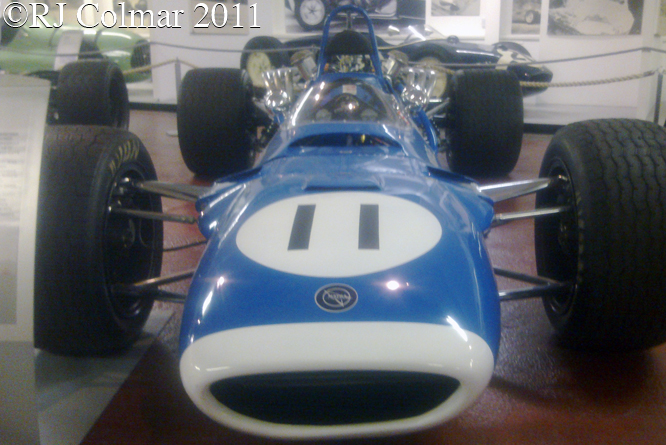
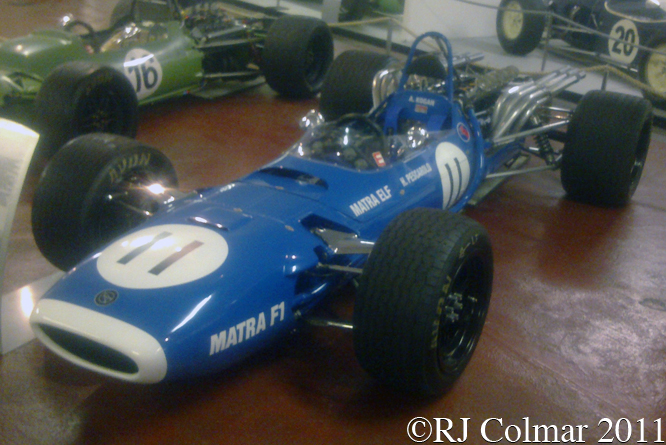
Abundant Noise – MATRA MS11

Last Tuesday I looked at the prototype Ford Cosworth powered MATRA MS9 Primer Car driven by Jackie Stewart for the Ken Tyrrell run Matra International team in the 1968 South African Grand Prix.

MATRA MS11, Donington Park Museum

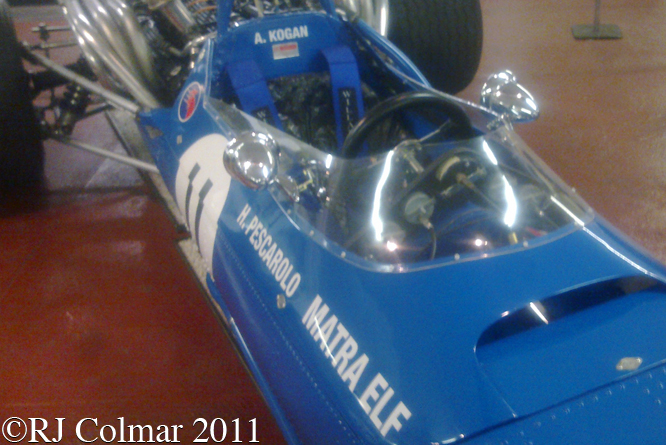
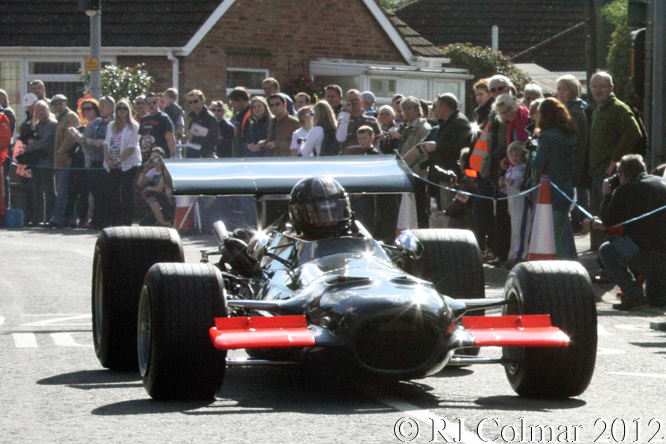
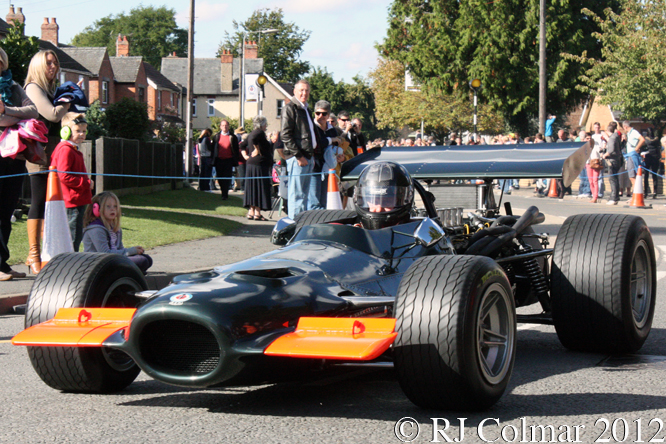
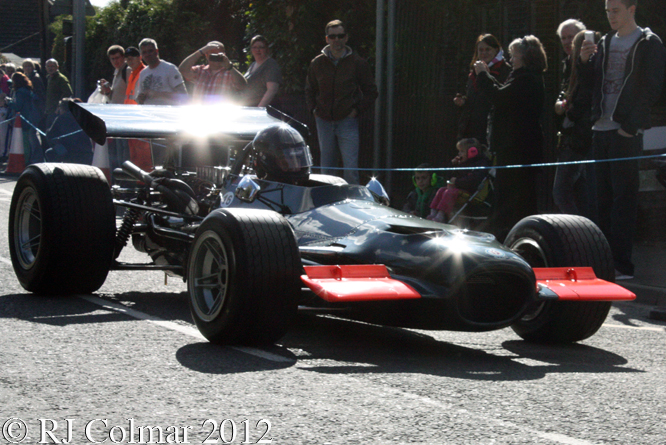
This weeks car is the MATRA V12 powered MATRA MS 11 run by the works MATRA Sport team, what turned out to be the second prong of MATRA’s bid to win the World Constructors Championship in 1968.

MATRA MS11, Donington Park Museum

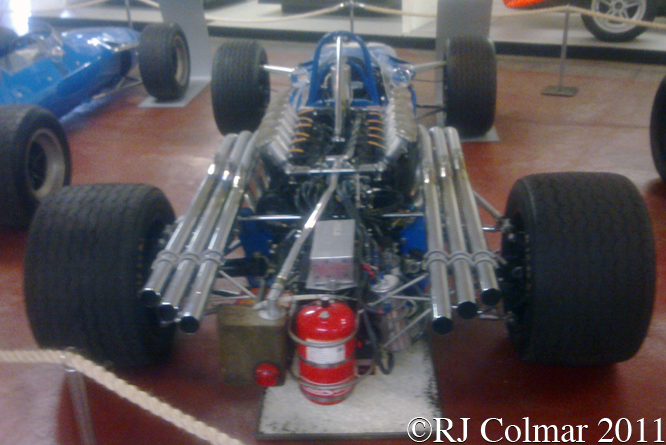
The Ford powered MS 10 and MS 11 had similar chassis however unlike the Ford DFV V8 the MATRA V12 was not a stressed member of the chassis meaning that the V12 was carried on a separate subframe for which two pontoons were built behind the rear chassis bulkhead as had been used on the 1967 MS7 Formula 2 car.

MATRA MS11, Donington Park Museum

Jean Pierre Beltoise was chosen to drive the car initially and he was joined later in the season by Henri Pescarolo in a second MS11 for the last three races of the season.

MATRA MS11, Donington Park Museum

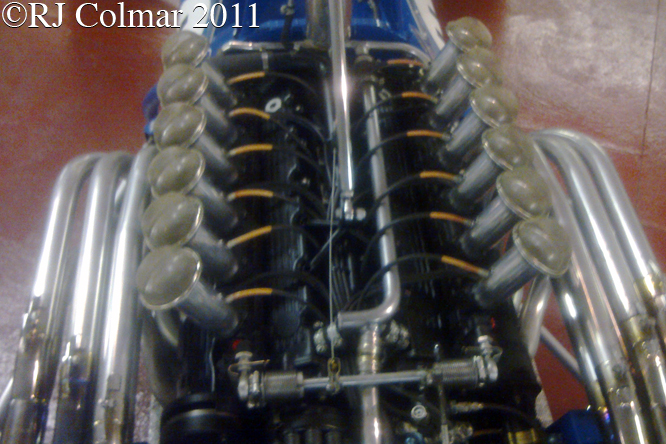
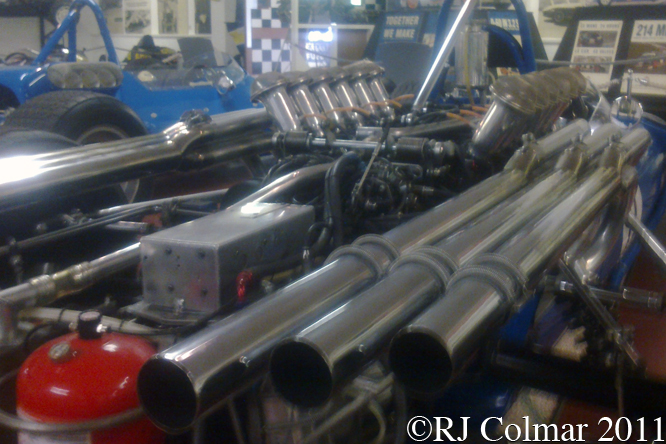
The 390hp 60° V12 features 4 valves per cylinder and double over head camshafts per bank that are driven by a train of straight cut gears from the front. Disappointingly the V12 could not match the horsepower of the Ford Cosworth DFV first seen in 1967.

MATRA MS11, Donington Park Museum

The elaborate exhausts are said to make “abundant noise” described as either music or a shriek depending on your tastes when mechanical mayhem is unleashed.

MATRA MS11, Donington Park Museum

Beltoise tried the MS11 at the ’68 Spanish Grand but ended up driving Jackie Stewarts Cosworth V8 powered Matra MS10, in which he finished 5th, after the Scot had damaged his wrist ligaments in an earlier Formula 2 race.

Beltoise gave the MS11 it’s debut race at the following Monaco Grand Prix where he retired with bent suspension having qualified 8th 6 places behind the Ford powered MS10 which was now driven by Johnny Servoz Gavin, who also retired with accident damage.

The MS11’s best result came in the 1968 Dutch Grand Prix where Beltoise qualified 16th 11 places behind Jackie Stewart’s MS 10 and ended up finishing 2nd over 30 seconds behind the Scotsman on the occasion of MATRA’s first Formula One Championship win.

The MS11 never did beat the Cosworth powered MS10 in qualifying and in the races only beat the Ford powered car when it lasted longer. Henri Pescarolo’s best result in his MS11 was 9th in Mexico.

At the end of the 1968 season MATRA CEO Jean-Luc Lagardère made the wise choice to drop the V12, pending future development, and the works team and put all of it’s efforts behind Jackie Stewart and the Ford Powered MATRA run by Ken Tyrrell’s MATRA International that I’ll be looking at next Tuesday.

Thanks for joining me on this “Abundant Noise” edition of “Gettin’ a li’l psycho on tyres” I hope you will join me again tomorrow for a look at the weekends Goodwood Festival Of Speed. Don’t forget to come back now !
Share

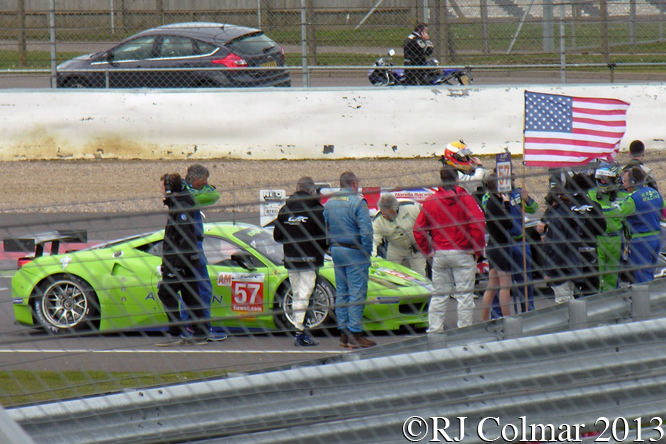
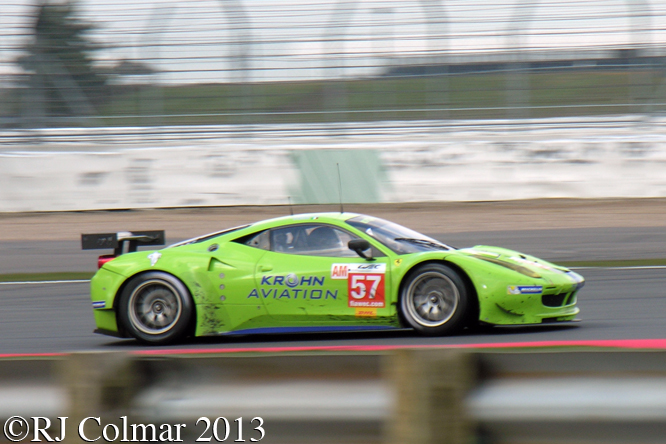
90 Hours and 500 Zip Ties – Ferrari 458 Italia GT2 #2844

3 years after starting race car driving, in which the highlight was winning the 2005 Six Hours of the Glen with Niclas Jönsson in the Grand Am series, Tracey W Krohn founded his own Grand Am team in late 2005 and started competing in the at the 2006 Daytona 24 hours.

Ferrari 458 Italia GT2, 6 Hours of Silverstone

Success was immediate as Krohn team driver Jörg Bergmeister won the drivers championship and Krohn Racing finished second in the top DP division of the championship. Right from the start Krohn Racing also ran a parallel GT program mostly at Le Mans with Risi Competizione running Ferrari’s.

Krohn, Jönsson, Mediani, 6 Hours of Silverstone

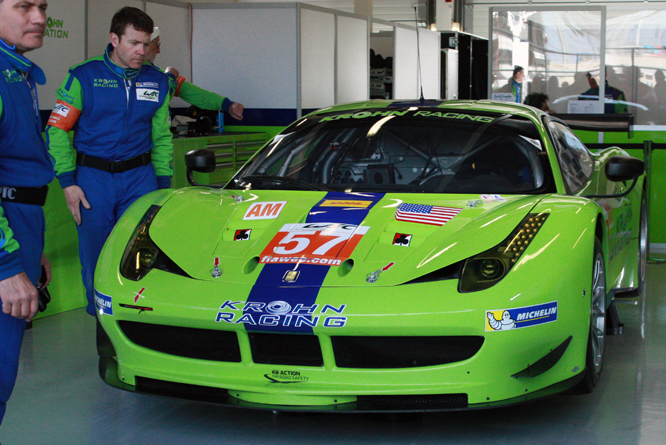
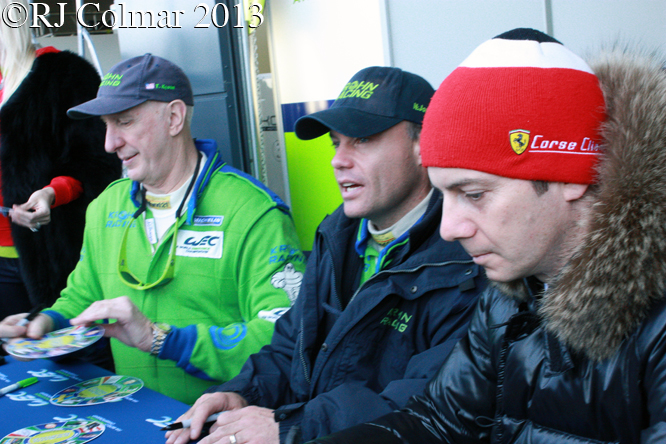
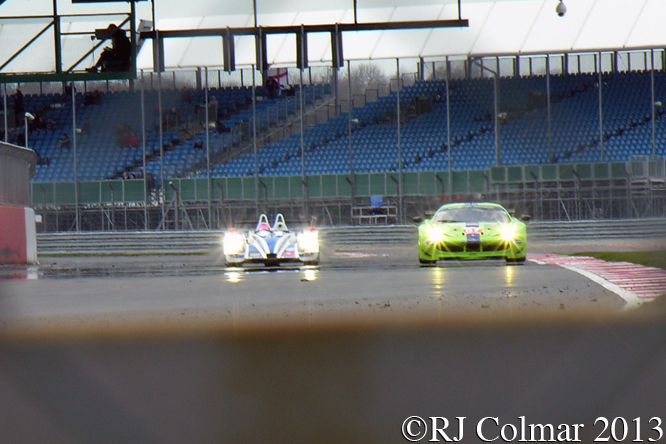
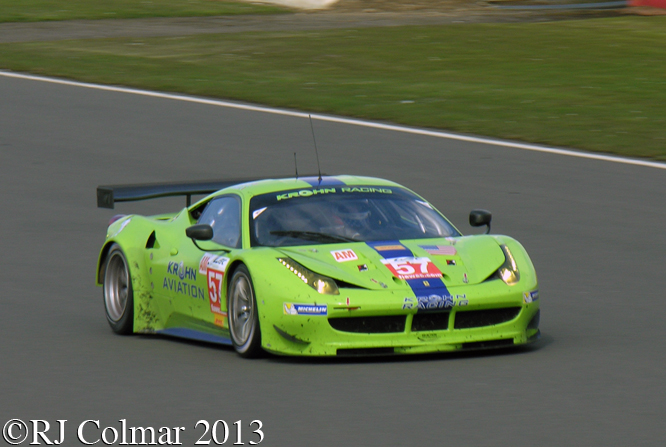
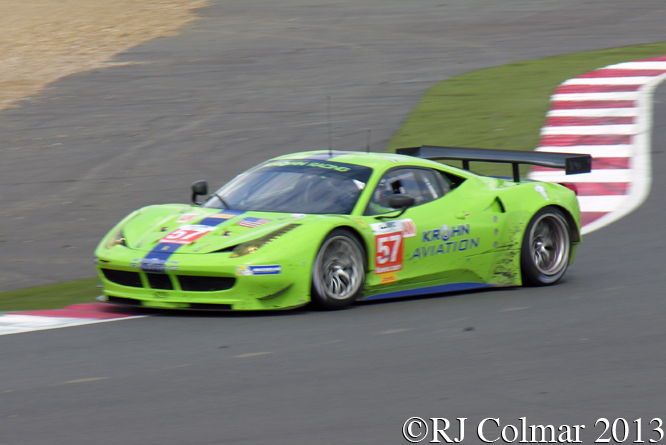
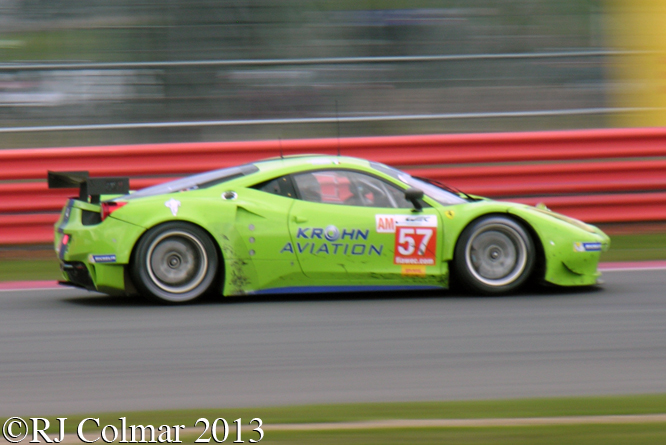
Since 2011 Krohn Racing has run it’s own GT programme to compete in the US and European Le Mans series, which in Europe last year became the FIA World Endurance Championship (WEC). Krohn Racing started competing in the GTE Am class of the WEC last year with today’s featured car the Ferrari 458 Italia GT2 chassis #2844 that this year has been driven by Tracey, Swede Niclas Jönsson with whom he won the Watkins Glen six hours and former Russian Formula 3 Open Wheel champion Maurizio Mediani.

Ferrari 458 Italia GT2, 6 Hours of Silverstone

There seems to be some confusion about the name of this model with various sources quoting it as a GTC others including Krohn Racing’s own website calling it an F458 GTE however the Ferrari website calls the model a GT2 which is good enough for me. If you know different chime in below.

Ferrari 458 Italia GT2, 6 Hours of Silverstone

Based on the stunning Ferrari 458 Italia road car the GT2 differs with it’s more aggressive aerodynamic aids, however like the road car it has power steering, air conditioning to keep the cockpit temperatures tolerable and perhaps most surprisingly electric mirrors.

Ferrari 458 Italia GT2, 6 Hours of Silverstone

Power from the 4.5 litre / 274.6 cui V8 is restricted by air intake restrictor plates that means the motor produces a maximum 465hp at 6,250 rpm down from 562hp at 9,000 rpm in the road car.

Ferrari 458 Italia GT2, 6 Hours of Silverstone

#2844 is seen here at the recent 6 Hours of Silverstone where the team came home 25th overall and 6th in class. Since then the car has competed at the Spa 6 Hours where the team came home 28th overall and 8th in class and at the Le Mans test where Will and Maurizio recorded 61st fastest time.

Ferrari 458 Italia GT2, 6 Hours of Silverstone

The chassis final appearance was at the Le Mans 24 hours where during the opening day of practice Will, as Tracey is known, skidded off the track in the Dunlop Curves and wrecked the €480,000 / US$ 628,000 car fortunately with out any injury to himself.

Ferrari 458 Italia GT2, 6 Hours of Silverstone

By 11pm that night Krohn Racing had concluded a deal with Edelcriss Racing in Northern Italy to lease a their racing 458 chassis. Only problem was it was a more powerful GT3 spec car and it was 1,100 miles away. The Edelcriss Racing transporter set off with the car for a 15 hour sprint to Le Mans.

Ferrari 458 Italia GT2, 6 Hours of Silverstone

When it arrived it was promptly stripped and refettled to GT2 spec using all of the salvageable parts from #2844 a task which took a team of ten technicians 9 hours and some 500 Zip (cable) ties.

The new car was ready to roll for the Thursday qualification session in which Le Mans rookie Maurizio had yet to complete 5 laps in order to qualify.

The car made it to the grid but had to retire at 1am after another accident at the Porsche Curves left the new car stranded out on the track.

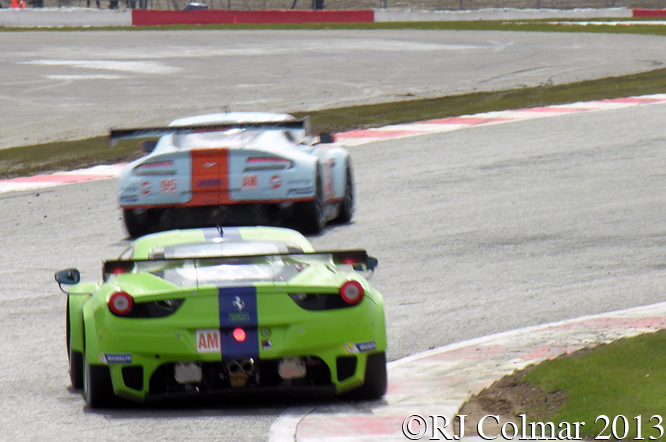
All of Krohn Racing troubles were put into perspective when they learned that fellow GTE Am competitor Allan Simonsen, seen above leading the Krohn Ferrari in the #95 Aston Martin, was killed in after a crash during the opening laps of the Le Mans 24 hours after he left the circuit at Tetre Rouge.

An appreciation of Allan’s life will be appearing in tomorrow’s blog.

Thanks for joining me on this ’90 Hours and 500 Zip Ties’ edition of “Gettin’ a li’l psycho on tyres”. I hope you will join me again tomorrow. Don’t forget to come back now !
Share

Musical Spares – Porsche 962C #006

The Porsche 962 was built in two specs, the original was the 1984 IMSA GTP spec which was a variation of the dominant Group C Porsche 956 sports car first seen in 1982. The 962 differed in two important aspects from it’s Group C cousin. First the 962 had a longer wheel base so that the drivers feet were behind the center line of the front axle and second IMSA mandated a single turbo while the Group C 956 ran more powerful twin turbo’s.

Porsche 962C, Le Mans, France

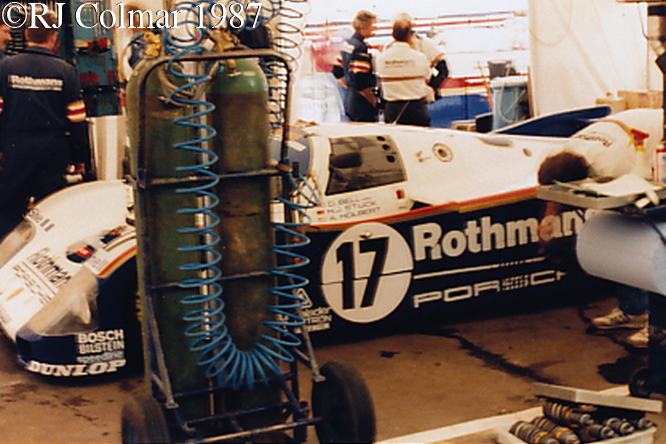
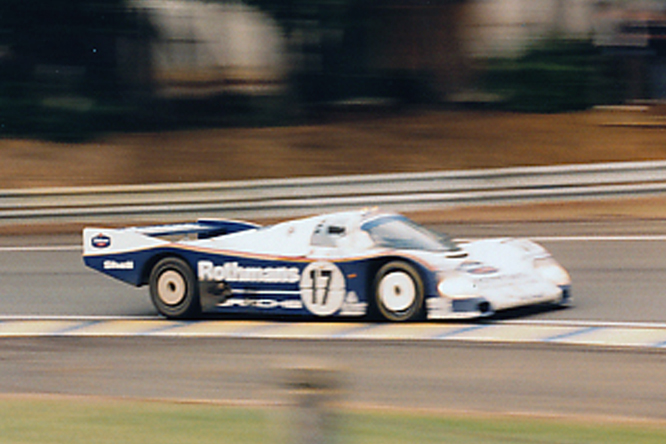
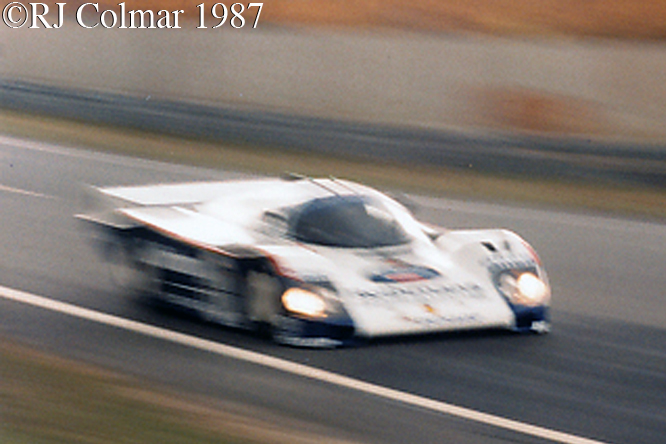
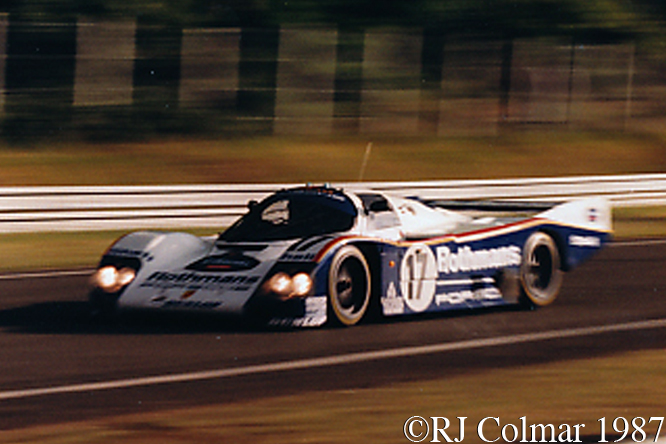
For 1986 the FIA mandated that Group C cars should follow the lead set by IMSA and have the drivers feet behind the the center line of the front axle line while making no changes to the engine regulations so the more powerful Porsche 962C came into being sweeping all before it much as the 956 and 956B had done. Derek Bell became the first driver to successfully defend his World Sports Car Drivers Championship won driving a 956B in ’85 and 962C in ’86. In 1986 Derek also won the Le Mans 24 hours for the forth time sharing his 962C with Hans Joachim Stuck and Al Holbert, Derek was also awarded the MBE for services to motorsport, a Royal honour which even Porsche AG noted on the door of Dereks #17 car as seen above at Le Mans in 1987.

Porsche 962C, Le Mans, France

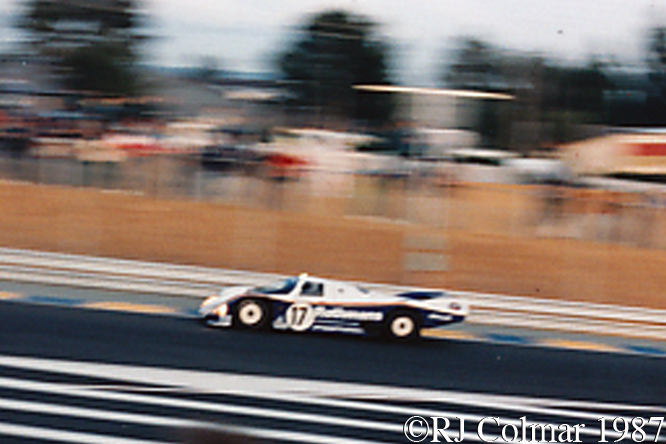
Going into Le Mans 1987 Derek Bell and Al Holbert were on a roll of three consecutive 24 hour race wins going back to Daytona ’86 where they shared an IMSA GTP 962 with Al Unser Jr. As mentioned above Bell and Holbert followed that up at Le Mans winning with Hans Stuck and made it a three peat of 24 hour victories at Daytona sharing Holberts Löwenbrau Porsche 962 with Unser Jr and Chip Robinson. Only a complete idiot would have bet against Bell, Stuck and Holbert claiming victory at Le Mans in 1987. The #17 chassis #006 seen in the rain above qualified 2nd on the grid by Hans Stuck next to the #18 chassis #008 which Bob Wollek qualified on pole.

Derek Bell, Hans Joachim Stuck, Le Mans, France

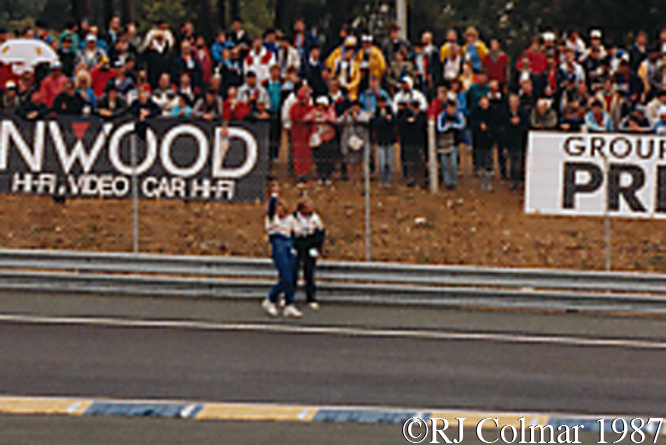
But the fourpeat of consecutive 24 hour victories very nearly did not happen, things started to go wrong for the works Porsche team a week before the race when Hans Stuck tested all the Le Mans cars at Porsche’s Weisach test facility. Stuck experienced a puncture while driving the car designated for his team mates Jochen Mass and Brilliant Bob Wollek. As a consequence Mass and Wollek were given the car designated as the race car for Stuck, Bell and Holbert chassis #008 while the ’86 winning trio took over the car designated for Vern Schuppan, Kees Nierop and Price Cobb chassis #006, today’s featured car, and the Schuppan, Nierop, Cobb combination were given the older chassis #002 which had been designated as a spare. Bell and Stuck are seen above returning from the new chicane an hour before the start of the race.

Porsche 962C, Le Mans, France

The next problem for the Porsche team occurred in practice when Price Cobb had an accident which wrote chassis #002 off during the first day of practice so that there were now only two works entered cars to challenge for the win, but as designer Norbert Singer observed ‘only one of them can win’. Schuppan, Nierop and Cobb all found rides in other cars.

Porsche 962C, Le Mans, France

An hour into the 1987 race it looked as if Jaguar who were at least 3 seconds slower than the lead Porsche in practice might pull off a remarkable win as they held first third and fifth. The Porsche cars were falling like a chain of domino’s with engine failures, something in the fuel was causing the latest in Bosch (ECU) electronic management systems to run the Porsche engines much too lean which resulted in engine failures for the pole sitting works car; 2 Joest Porsche 962C’s and a Kremer 962C.

Porsche 962C, Le Mans, France

Fortunately the #17 had managed to get into the pits to change to an older ECU before any permanent damage was done and 2nd placed Bell, Stuck and Holbert proceeded to pursue the lead Jaguar at break neck speed until midnight when it took the lead for the final time as the four 7 litre / 427 cui V12 Jaguar XJR 8LM’s started to fall by the wayside with a puncture, an accident, a cracked cylinder head and a missed gear change respectively.

Porsche 962C, Le Mans, France

The punctured #5 Jaguar driven by Win Percy had required an 80 minuet safety car period to clear up the debris in the dead of night as the Jaguar had been pitched at 200 mph into the barriers of the Mulasanne straight ripping off the gearbox and engine, Win Percy unlike his helmet was completely unscratched. The relentless pace at which the #17 Porsche had been chasing the Jaguars meant that Bell, Stuck and Holbert were way over their fuel allowance as the safety car period started but right back on schedule once the mess created by the Jaguar had been cleaned up.

By the end of the race Bell, Stuck and Holbert were 20 laps to the good; from the private Primagaz Competition 962C of Juergen Lässig, Pierre Yver and Bernard de Dryver; as they recorded their fifth, second and third Le Mans wins respectively, their second consecutively as a winning Le Mans trio and Bell and Holberts 4th consecutive 24 Hour race win. Porsche also recorded their seventh consecutive Le Mans win in 1987.

The following year things would not be so easy as Jaguar, who won the 1987 World Sports Car Championship and who’s driver Raul Bosel won the 1987 World Sports Car Drivers Championship took the fight even more convincingly to Porsche at Le Mans.

Chassis #006 was driven at Spa in 1986 by Jochen Mass and Bob Wollek on it’s debut where it was qualified third and finished 7th it’s only other race start was at Fuji where Holbert and Pescarolo started from 12th and retired with transmission problems. Prior to the Le Mans 24 hours #006 had primarily been used as a spare car at Jarama, Jerez, Monza and Silverstone in 1987. #006 was driven by Bob Wollek and Canadian Kees Nierop for the ’87 Le Mans test weekend where carrying the #17 it recorded the 2nd fastest time. After the 24 hour win in ’87 #006 returned to Le Mans in 1988 as a spare that was briefly used by Micheal Andretti in practice before it was retired for good.

Thanks for joining me on this “Musical Spares” edition of “Gettin’ a li’l psycho on tyres” I hope you will join me again tomorrow. Don’t forget to come back now !

Share