Tag Archives: Ralph

Cobra Caravan Itinerant – Ford GT40 Mk 1 #GT40 P/1084

So far as I have been able to discern the chassis numbers for the production Ford GT40 Mk1 ran from P/1000 to P/1086, suggesting at least 87 production GT40 Mk1’s were built at Ford Advanced Vehicle facility in Slough, though as we shall see things are not always quite so simple.
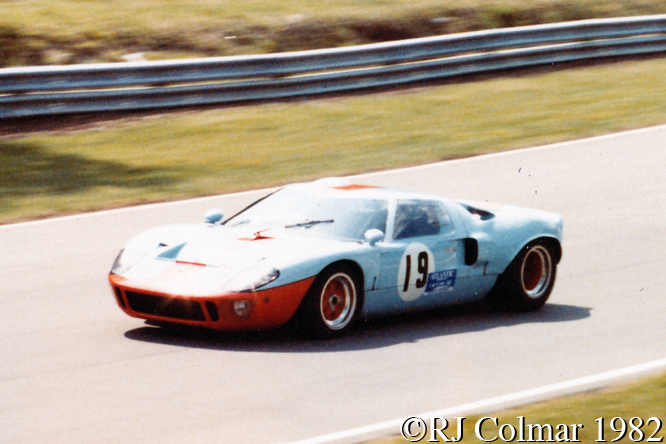
Colvill, Ford GT40, Brands Hatch

Today’s featured car is a case in point, known as #P/1084 it has the highest chassis number of those known to have raced in period, though chassis P/1071 did not make it’s race debut until 14 month’s after #P/1084 appeared at Spa in May 1968 with Paul Hawkins and David Hobbs at the wheel.

However it turns out that #P/1084 started life as #P/1004 in 1965, a car that was entered into the 1965 Le Mans 24 hours by RRC Walker Racing and Shelby American for Bob Bondurant and Umberto Maglioli, this car running the #7 qualified third but retired with a leaking head gasket on lap 29, coincidentally the same lap as it’s sister #P/1005 driven by Ronnie Buckum and Herbert Müller retired with the same problem. #GT40 P/1004 then appears to have gone on Carrol Shelby’s promotional tour of America known as the Cobra Caravan.

When the JW Automotive Gulf team, operating from the same factory as Ford Advanced Vehicles had in Slough, needed a car for the 1968 Spa 1000kms they found they were a car short and so they rebuilt #P/1004 to 1968 specification and gave it a ‘new’ GT40 P/1084 identification although the factory records refer to the chassis entered at Spa where Hawkins and Hobbs finished 4th by it’s old number.

Some sources believe that #P/1084 was then shipped, by JW Automotive, to Watkins Glen two month’s later where Hawkins and Hobbs finished 2nd however I believe this is a typo, GT40 über authority Ronnie Spain identifies the car that Hawkins and Hobbs drove at Watkins Glen as GT40 P/1074.

During the 1970’s P/1084 was raced by Paul Wheldon for owner Connaught Engineering founder Rodney Clarke. Martin Colville seen in the #P/1084 here at Brands Hatch in July 1982 where Martin was taking part in a support race on the British Grand Prix weekend bought the car in 1981 and had a bubble fitted to the upper part of the drivers door to accommodated his frame.

Subject to revisions in Ronnie Spain’s much anticipated second edition bible on the subject “GT40: An Individual History and Race Record” this is my best understanding of the car known as #GT40 P/1084. If you know different please do not hesitate to chip in below.

My thanks to David McKinney, Pete Taylor and Ron54 at The Nostalgia Forum for their help in yet another carceology adventure.

Thanks for joining me on this “Cobra Caravan Itinerant” edition of “Gettin’ a li’l psycho on tyres” I hope you will join me again for Ferrari Friday tomorrow. Don’t forget to come back now !

Share

Short Sword – Lamborghini Jarama S

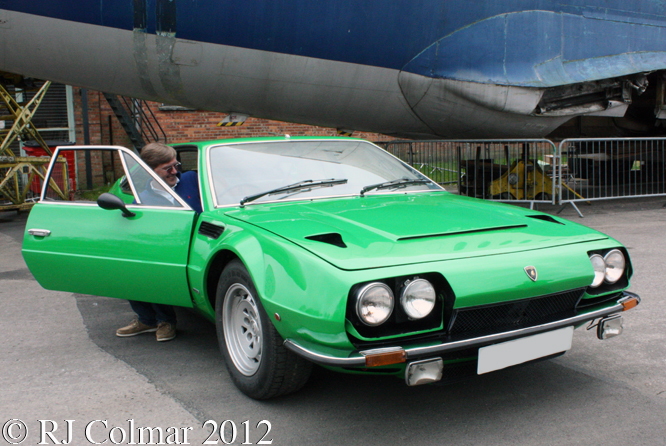
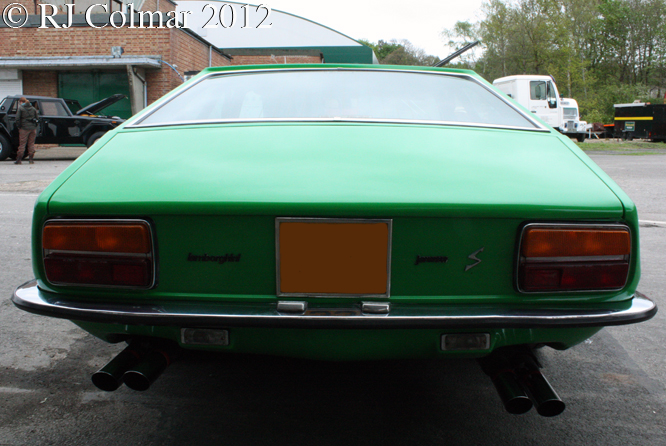
When Lamborghini found their Islero model would no longer meet US safety and emissions regulations mandated from 1970 they used the opportunity to develop today’s featured model the Jarama.

Lamborghini Jarama S. Auto Italia, Brooklands

The Jarama sports Coupé was designed around a shortened Lamborghini Espada platform.

02 Lamborghini Jarama S 6208sc

The bodywork was designed by Marcello Gandini working for Bertone.

Lamborghini Jarama S. Auto Italia, Brooklands

Interestingly the headlight covers do not pop up but instead fold down into a recess below the light units.

Lamborghini Jarama S. Auto Italia, Brooklands

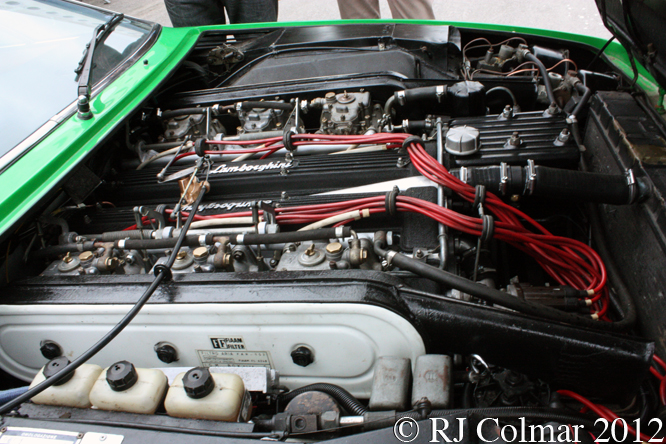
Like the Espada the original incarnation of the Jarama was powered by the same 350 hp version of the 4 litre / 244 cui Lamborghini V12 motor.

Lamborghini Jarama S. Auto Italia, Brooklands

From some angles the Jarama looks similar to another Gandini design, the slightly less aggressive ISO Lele which was launched the year before the Jarama in 1969.

Lamborghini Jarama S. Auto Italia, Brooklands

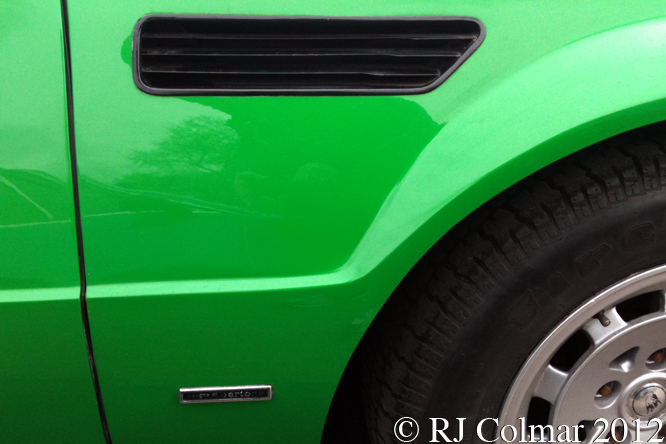
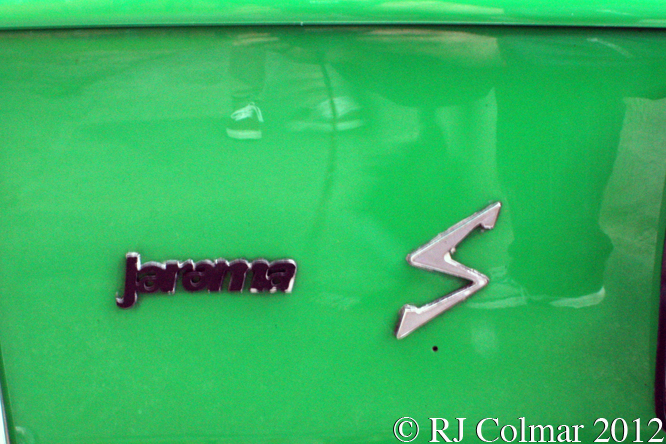
In 1973 revisions were introduced which included a 365 hp version of the V12 and options including removable roof panels, power steering, automatic transmission were available with the model now known as the Jarama S.

Lamborghini Jarama S. Auto Italia, Brooklands

The Jarama name was not taken from the race track outside Madrid, rather the Jarama Bull fighting region.

Lamborghini Jarama S. Auto Italia, Brooklands

From 1970 to 1973 Lamborghini built 176 original variants of the Jarama and from 1973 to 1976 152 Jarama S models as seen in these photograph’s taken at last years Auto Italia held at Brooklands.

Thanks for joining me on this Short Sword edition of “Gettin’ a li’l psycho on tyres” I hope you will join me again tomorrow when I’ll be looking at a Pikes Peak Special. Don’t forget to come back now !

Share

Badge Transformation – Morris 1/2 Ton Pickup

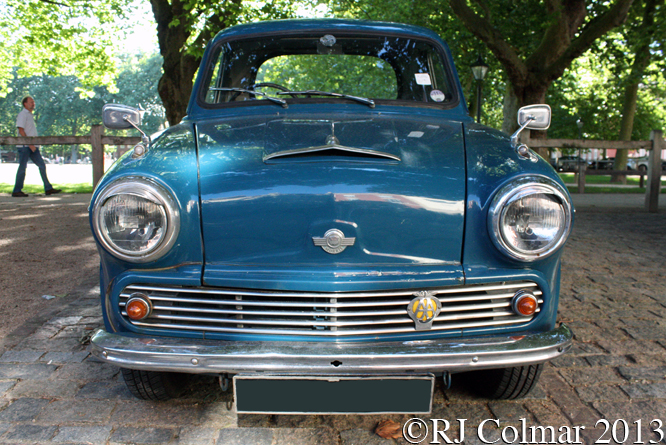
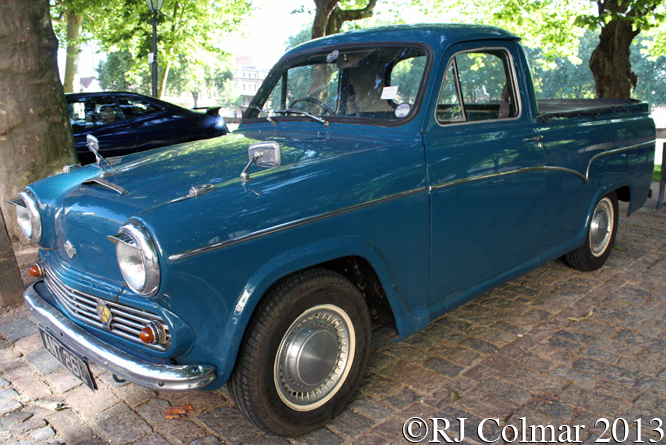
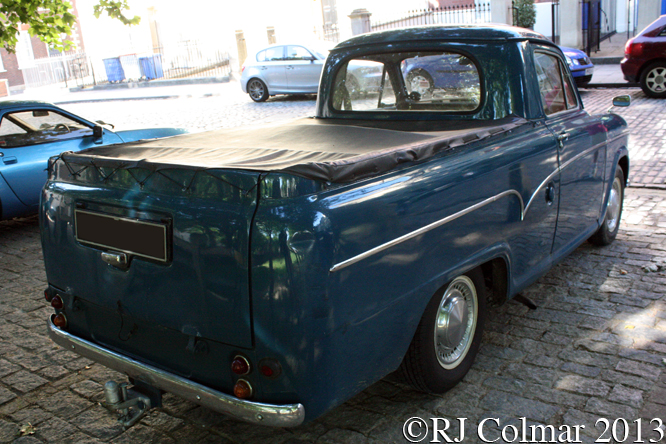
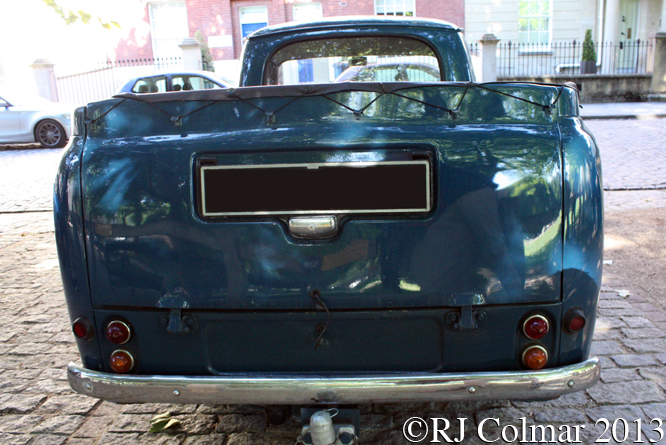
The design for today’s 1972 (Nineteen seventy two) Morris 1/2 ton pick up, seen at a recent Avenue Driver Club meeting, dates back to the original incarnation of the Austin Cambridge which in A40 guise first saw the light of day in 1954.

Morris 1/2 ton Pickup, Avenue Drivers Club, Queen Square, Bristol

The Cambridge was updated in 1954 when it became the Austin A50 Cambridge and again in 1957 to become the Austin A55 Cambridge which stayed in production until the arrival of the Austin A55 Cambridge Mark II fitted with an all new Farina (as in Pinin) body.

Morris 1/2 ton Pickup, Avenue Drivers Club, Queen Square, Bristol

The Austin Cambridge 1/2 ton pickup was first marketed in 1957 with the latest A55 panels incorporated into the cab with a 4 cylinder 51 hp B Series motor.

Morris 1/2 ton Pickup, Avenue Drivers Club, Queen Square, Bristol

From 1962 the Pickup was fitted with a unique to type grill and the 61 hp B Series motor from the Farina A60 Cambridge launched in 1961, and Australian spec A55 Cambridge Mk II which was launched in 1959. 1962 also saw the first of these vehicles marketed with the Morris name.

Morris 1/2 ton Pickup, Avenue Drivers Club, Queen Square, Bristol

The Austin variant of the 1/2 ton pickup was dropped after Austin and Morris part of the British Motor Corporation was further merged with Leyland to become British Leyland in 1968. While the Morris variant continued in production until 1973. Despite having no further significant upgrades since 1962 the Morris 1/2 ton was still marketed with a “New, Tough and Versatile” strap line as late as 1968 !

Thanks for joining me on this “Badge Transformation” edition of “Gettin’ a li’l psycho on tyres” I hope you will join me tomorrow for a look at a Lamborghini Jarama. Don’t forget to come back now !

Share

Lower Cleaner – Lola Chevrolet T330 #HU4

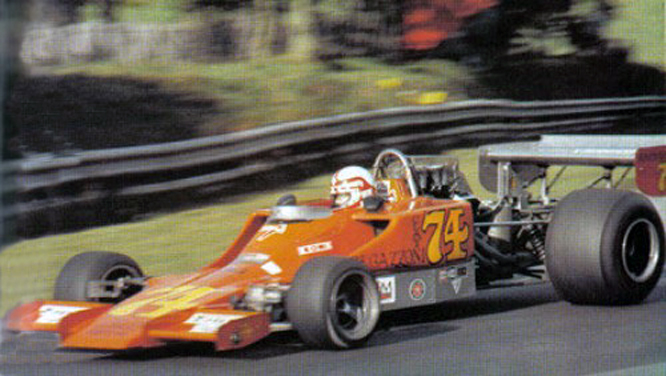
The 1973 Formula 5000 season which played out in three championships across three continents saw winning cars produced by four different manufacturers namely Chevron, McRae, Trojan and Lola. It was the last named that won most of the races in all three series with their T330 model, a lower and cleaner version of the 1972 T300, like chassis #HU4 featured today which took part in all three series.

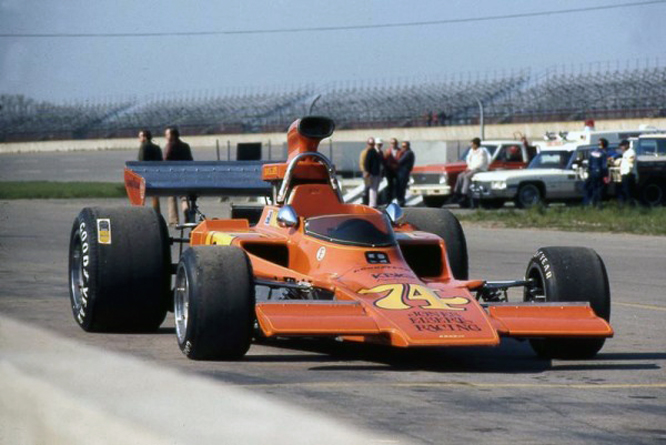
Lola T330, Michigan International Speedway

(Photo Copyright Mark Windecker 1973)

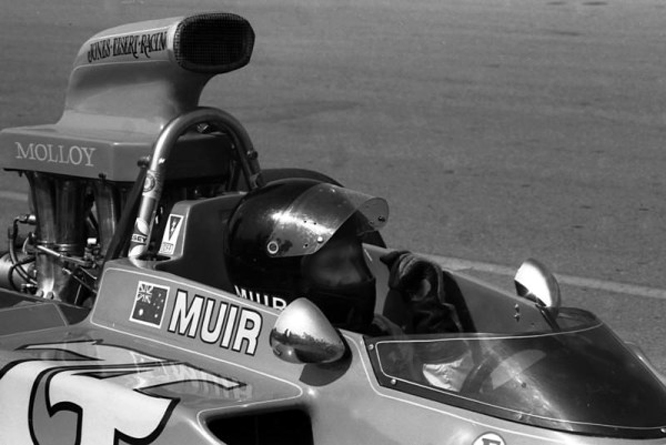
According to Old Racing Cars.com chassis #HU4 was first raced at Surfers Paradise in the fourth round of the Tasman Series by Gary Campbell where he retired with an overheating motor. Gary crashed during practice for the next race at Warwick Farm and the car was then bought by Australian Bobby Muir who repaired it and took it to Riverside, where Chuck Jones and Jerry Eisert became co entrants with Bobby for the first round of the US L&M Formula 5000 championship.

Bobby’s best result was a 10th at Riverside after which followed a string of five retirements until Road Atlanta where Bobby crashed in practice and failed to take the start. The photo’s by Mark Windecker show #HU4 and Bobby sitting in it at Michigan International Speedway.

Bob Muir, Lola T330, Michigan International Speedway

(Photo Copyright Mark Windecker 1973)

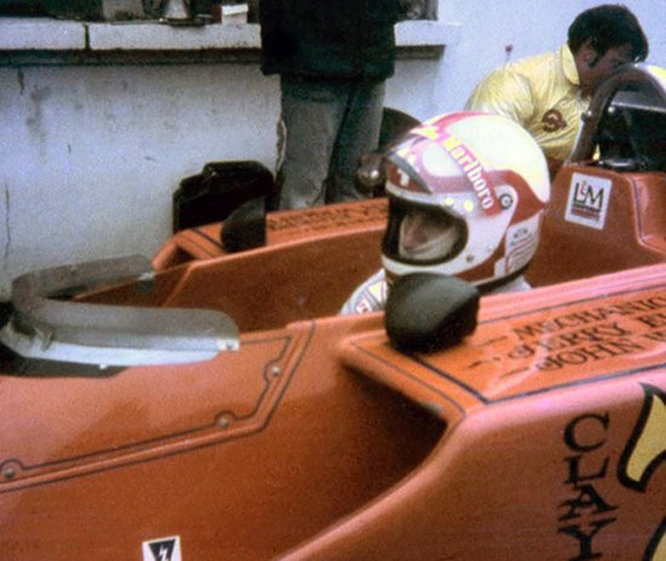
After missing Pocono #HU4 was entered into the final US race of the season at Seattle by Chuck and Jerry for Clay Regazzoni who was about to transition from BRM to back to the Ferrari formula one Team. As this linked picture show’s the #74 had a new nose with a single full width wing mounted above it, an idea Ferrari had first used at the 1973 Italian Grand Prix three weeks earlier. #HU4 was also fitted with larger radiators requiring deeper ducts at the request of engine builder Ron Armstrong.

Clay Regazzoni, Lola T330, Brands Hatch

(Photo Chuck Jones Collection)

Clay retired in Seattle, but that did not prevent the Jones Eisert team from sending the #HU4 to Brands Hatch for the final race of the Rothmans European Formula 5000 championship where these two photograph’s from Chuck Jones Collection show Clay, who finished 12th, at the wheel.

Clay Regazzoni, Lola T330, Brands Hatch

(Photo Chuck Jones Collection)

In December 1973 AW Brown acquired #HU4 and ran if four Damien Magee in the 1974 European Formula 5000 Championship until the engine blew at Zandvoort and the team was disbanded. Damien scored #HU4’s all time best result a 4th place finish in the series second visit to Brands Hatch. Damien finished the season driving a 1973 Trojan #T101 chassis #T101-105.

#HU4 does not appear to have raced again until it started appearing in Historic Events in 2001. When I finally get around to looking for cars for the GALPOT Museum high on my list of cars to purchase will be #HU4 in it’s funky #74 orange Jones, Eisert and Regazzoni livery which hit the spot when this 14 year old first laid eyes on it in a magazine.

Chuck Jones and Clay Regazzoni would team up again in 1977 when Chuck was involved with the Ensign Formula One team and Clay was chosen as the driver.

My thanks to Jerry Entin for kindly securing permission for me to use Mark Windecker’s photos from Michigan International Speedway and the photo’s from Chuck Jones Collection taken at Brands Hatch.

Thanks for joining me on this “Lower Cleaner” edition of “Gettin’ a li’l psycho on tyres”. I hope you will join me again tomorrow when I’ll be looking at another stylish ISO Rivolta. Don’t forget to come back now !

Share

Salmon Over Metallic Grey – Ferrari 375 MM Ghia Coupé #0476AM

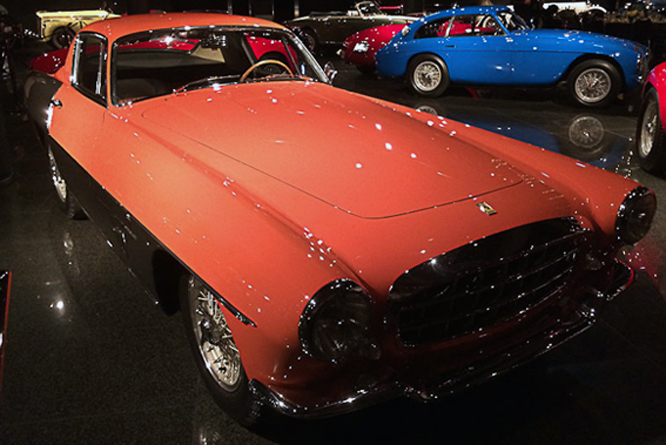
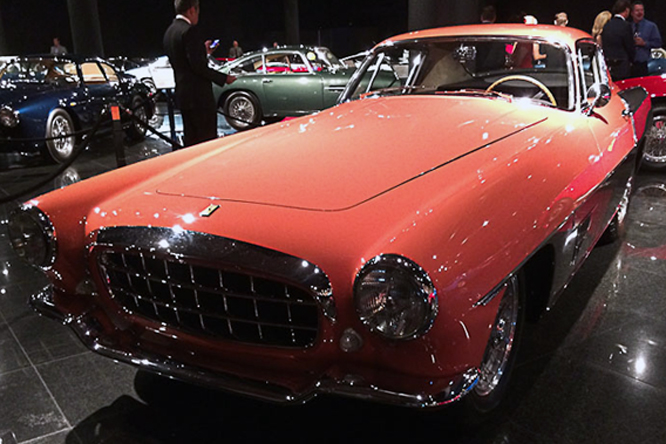
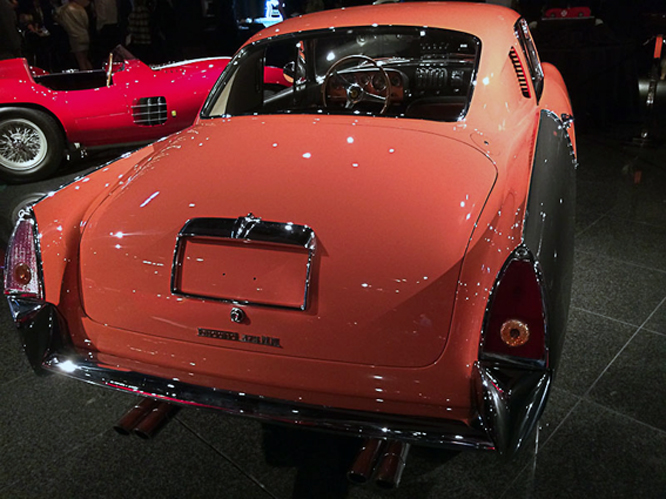
In 1955 Ghia built the body work for a new Ferrari for the last time, and one might well wonder if this had anything to do with the salmon over metallic grey paint job.

Ferrari 375 MM Ghia Coupé, Blackhawk Museum

Today’s featured Ferrari 375 MM Ghia Coupé chassis #0476AM, photographed by Greoffrey Horton at the Blackhawk Museum earlier this year, is not only the last Ghia bodied Ferrari it is also the only Ghia bodied 375 MM chassis making it unique among the 23 street and racing versions of 375 MM.

Ferrari 375 MM Ghia Coupé, Blackhawk Museum

This particular car was shown at the 1955 Turin Motor and New York Auto shows before it found a home with a family in Milwaukee, WI. By 1970 #0476AM had recorded just 12,000 miles, four years later it was sold to a Milwaukee doctor who kept the car for 10 years.

Ferrari 375 MM Ghia Coupé, Blackhawk Museum

In 1984 #0426AM appeared in the Blackhawk Museum for a couple of years before going on a sojourn to Switzerland which lasted at least until December 2002 when the car failed to sell at auction. I am not entirely sure when #0426AM returned to the Blackhawk Museum, if you happen to know please do not hesitate to chip in below.

My thanks to Geoffrey Horton once again for saving Ferrari Friday.

Thanks for joining me on this “Salmon Over Metallic Grey” edition of “Gettin’ a li’l psycho on tyres”, I hope you will join me again tomorrow when I’ll be looking at an open wheel Formula 5000 car. Don’t forget to come back now !

Share

Hold The Rocker Panel Stripes – Ford GT40 Mk 1 #GT40 P/1034

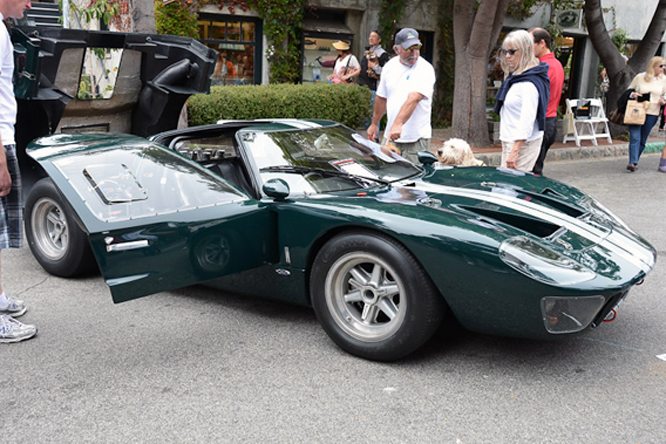
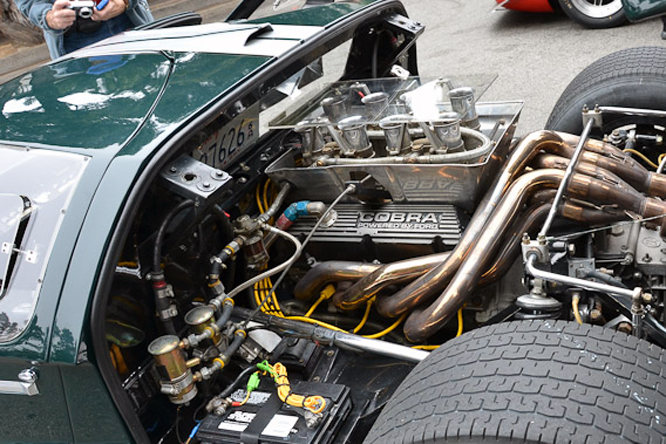
In order for Ford to meet the mandatory minimum 50 production number for it to be able to race, Ford sold at least four of it’s Mk1 GT40’s for road use with a minimum of primarily luxury modifications which included, interior carpeting, non-perforated leather seats, and leather door pouches, additionally today’s featured car #GT40 P/1034 was also fitted with wing mirrors, a heated rear screen and reversing light’s. Beyond that the car was equipped with a race tuned 380 hp, 289 cu. in. V-8 engine with four Weber 48IDA carburetors, five-speed ZF manual transmission, four-wheel independent suspension, and four-wheel disc brakes just like the racers alongside which it was built at Ford Advanced Vehicles in Slough, England.

Ford GT40, Carmel by the Sea, Concours on the Avenue

This particular car, seen in these photographs by Geoffrey Horton at Carmel by the Sea Concours on the Avenue last year, was ordered by James Fielding, of Gloucester, England painted Pine Green with no stripes on the rocker panels. Fielding was Chairman of Heenan & Froude, the company that manufactured the dynamometers on which the GT40s were tested and P/1034 was the first GT40 to be delivered to a UK customer in March 1966. Fielding used it exclusively as a road car.

Ford GT40, Carmel by the Sea, Concours on the Avenue

Subsequent owners including Paul Weldon and Australian George Parlby raced the car in classic events, Parlby even had the car painted in the colours of the Gulf Oil Company during a rebuild.GT40 specialist and enthusiast Harley E. Cluxton III, of Scottsdale, Arizona acquired #P/1034 at one point and later it went to Germany where Peter Roessler drove it to victory in the Grand Prix of Stuttgart held at the Hockenheimring.

David Bowden, of Queensland, Australia acquired P/1034 in 1999 where it was again frequently successfully raced by the likes of Kevin Bartlett. In 2001 David had the car repainted it’s original Pine Green with a pair of non original silver stripes.

The current owner returned P/1034 to the USA and earlier this year turned down a high bid of $2,150,000 at RM Auctions for this sublime vehicle.

My thanks to Geoffrey Horton for sharing his photograph’s of today’s featured Ford GT40.

Thanks for joining me on this “Hold The Rocker Panel Stripes” edition of “Gettin’ a li’l psycho on tyres” I hope you will join me again tomorrow. Don’t forget to come back now !
Share

After Hours Bull – Lamborghini Muira S

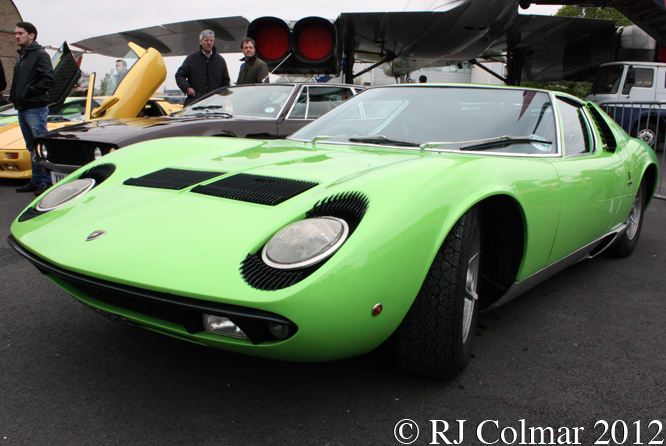
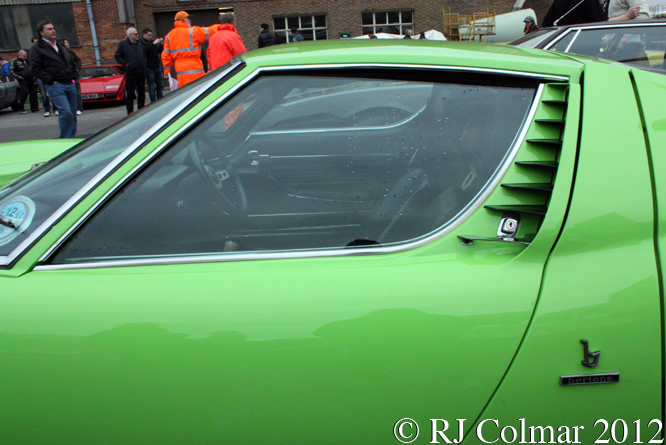
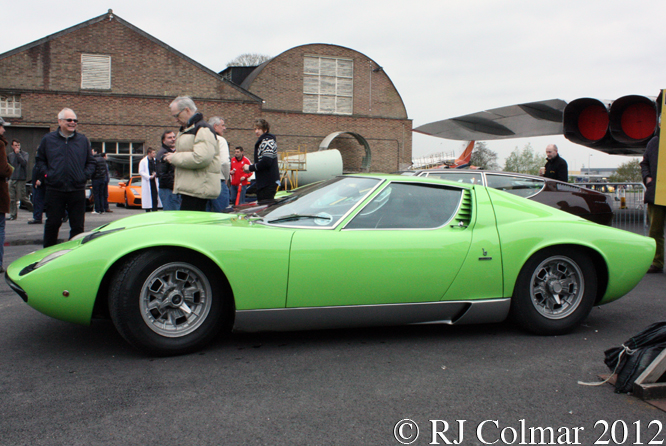
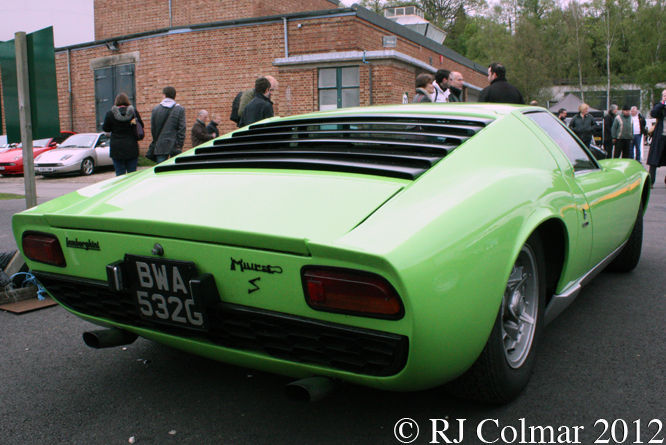
Gian Paolo Dallara, Paolo Stanzani, and Bob Wallace put in the hours to develop the mid engined P400 chassis that would form the basis of the Lamborghini Muira on after hours because Ferruccio Lamborghini had expressed his preference for considerably more sedate front engined GT cars his company had started manufacturing in 1963.

01 Lamborghini Miura S 6267sc

The bare prototype P400 chassis with it’s transverse V12 engine and gearbox mounted ahead of the rear wheels received a stellar reception at the 1965 Turin Motor Show and Ferruccio Lamborghini saw the value of allowing the vehicle to be developed as nothing more than a potential marketing tool.

02 Lamborghini Miura S 1415sc

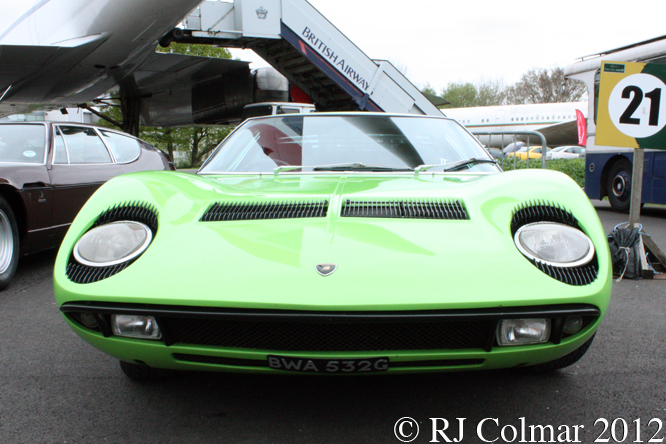
By the 1966 Geneva Motor Show Marcello Gandini at Bertone had just completed the sleek lined body that marked the P400 out as an icon of it’s time, to my eye’s it is the kind of shape the Ford GT and later GT40 might have become, had it been built in Italy rather than Slough under the influence of Dearborn. Notably the P400’s body had been finalised so late that it appeared in Geneva with ballast in place of the engine, as no one was sure the engine would fit under the super slim body.

03 Lamborghini Miura S 6268sc

The P400 was ready for sale later in 1966 and 275 of the original 375 hp versions were made up until 1969.

04 Lamborghini Miura S 6269sc

In November 1968 a second type P400S also known as the Miura S was launched featuring 20 hp more and a variety of external and internal trim differences including chrome trim, electric windows, new rocker control switches and small improvements to the luggage capacity.

05 Lamborghini Miura S 6270sc

Muira S owners included Frank Sinatra and Miles Davis, the jazz legend crashed his under the influence of cocaine which resulted in him breaking both his ankles in 1972, coincidentally the year the last of the 762 Muira’s of all types was built.

06 Lamborghini Miura S 6265sc

The 1969 film The Italian Job depicts a Muira being driven at high speed into a dark tunnel inside which a Mafioso operated front end loader was waiting to catch the car and occupant which was then unceremoniously dumped down a ravine.

07 Lamborghini Miura S 6266sc

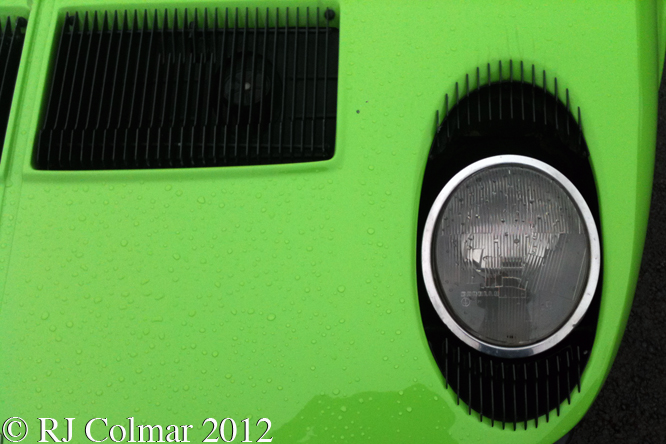
Today’s featured car, seen at Auto Italia Brooklands last year, was built as a white P400, seen in this link with singer Sandie Shaw, but converted to an Apple Green Muira S spec for the owner Justin de Villenueve who turns out to be model Twiggy’s manager Nigel Davis.

08 Lamborghini Miura S 6264sc

Later on the car is said to have belonged to one Bernard Charles Ecclestone of Formula One fame. In 1990 the center of the car was badly damaged by fire while the car was disassembled. The whole lot was returned to Saint Agata and returned to factory specifications. The current owners family bought the car in 2000 and he says that while it is not the easiest vehicle in the world to drive for someone of his stature the “vista ahead is to die for.”

Thanks for joining me on this “After Hours Bull” edition of “Gettin’ a li’l psycho on tyres” I hope you will join me again tomorrow for a trip to Gordano Services on the M5 for a little competitive classic motorsport. Don’t forget to come back now !
Share