Tag Archives: Ralph

Coffee, Croissant & Cars #06/13 – Avenue Drivers Club

As the height of summer approaches flooded in rays of real sunshine it was a pleasure to amble down to Queen Square on Sunday not dressed up like Scott of the Antarctic prepared for sub zero temperatures and floods.

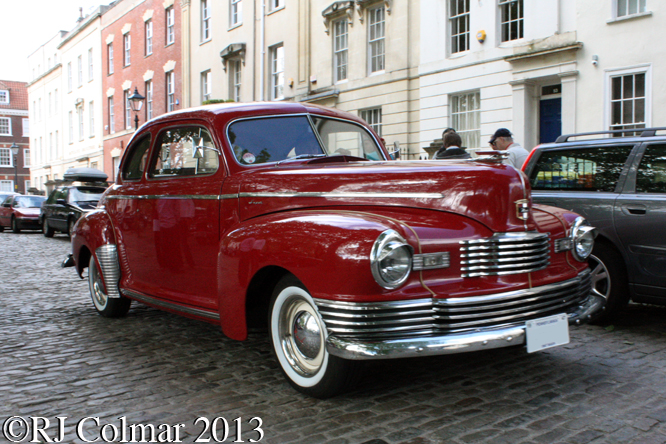
Nash Ambassador, Avenue Drivers Club, Queen Square, Bristol

Sunday’s Avenue Drivers Club meeting was easily the busiest I have ever seen with at least a couple of hundred cars passing through for at least a cruise or like me a piece of cake and cup of tea with fellow petrol heads. Above first time I ever recall seeing a 1947 Nash Ambassador in the flesh.

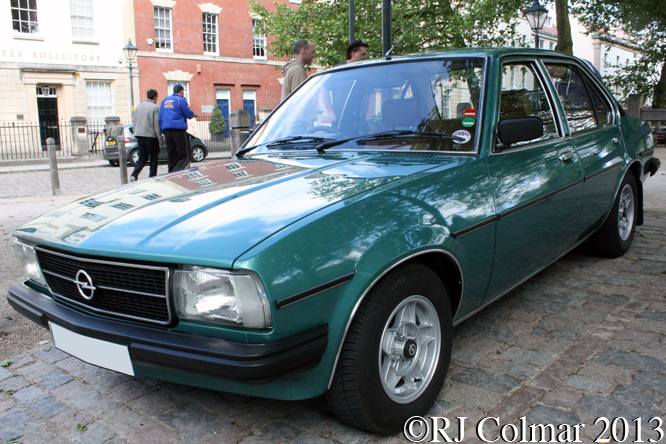
Opel Ascona DL, Avenue Drivers Club, Queen Square, Bristol

The late 1970’s early 1980’s Opel Ascona DL like the 1980 example seen above shared many parts with the Vauxhall Cavalier except the Vauxhall had a droop snoot nose. The ATS alloy wheels are correct for the period.

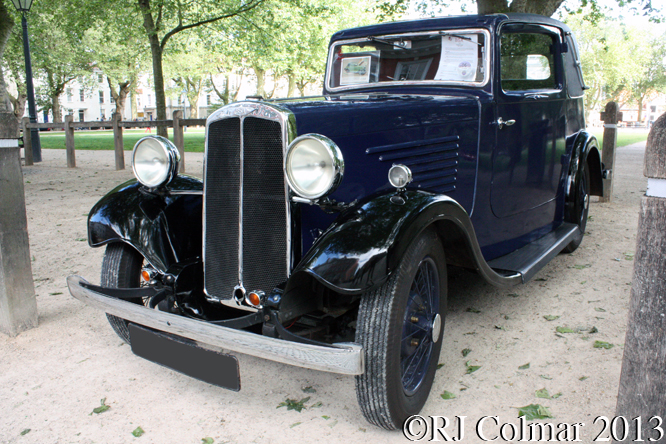
BSA Ten Peerless Coupé, Avenue Drivers Club, Queen Square, Bristol

Sharing a common chassis with a Lanchester 10 is this 1933 BSA Ten Peerless Coupé, the fluid fly wheel combined with the 1175 cc / 71 cui 4 cylinder is not likely to set the world on fire in terms of performance. The owner has found that fitting a modern electric fan helps keep the water temperature at a reasonable level on the hills interestingly the motor has no water pump and is dependent on hot water rising in the radiator for water flow.

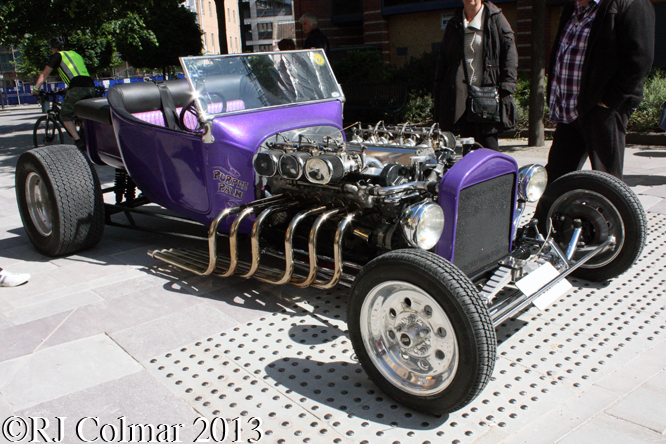
Ford, Avenue Drivers Club, Queen Square, Bristol

Hot rods were present in large numbers, this one appears to have started life as a 1970 Ford, according to the official records, it now carries a 5.3 litre / 323 cui motor with six twin choke carburetors.

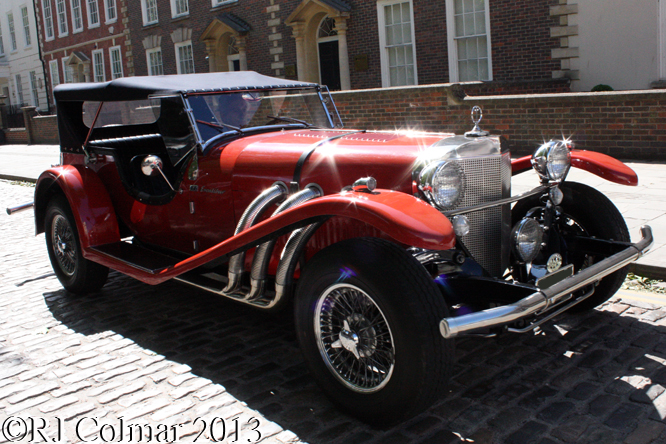
Excalibur, Avenue Drivers Club, Queen Square, Bristol

There were two Excaliburs present, built in Milwaukee I beleive they used to be powered by Chevlorlet Corvette motors but I am not sure if that is still the case. This is the first 2+2 Excalibur I have ever seen.

Triumph Spitfire Mk II, Avenue Drivers Club, Queen Square, Bristol

Of the many Triumphs present this 1967 Spitfire Mk II caught my eye, perfect for a summers day.

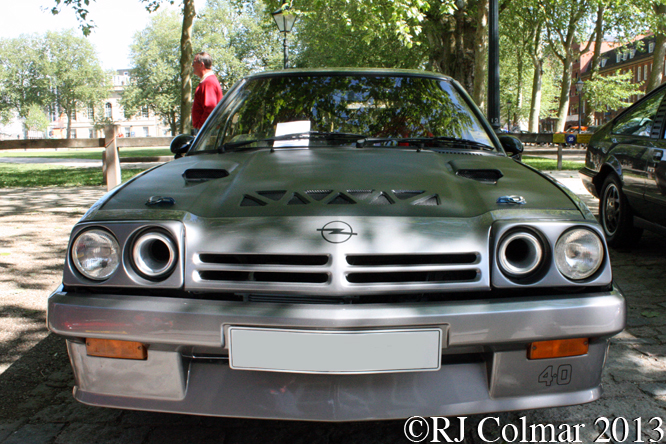
Opel Manta 4.0, Avenue Drivers Club, Queen Square, Bristol

My friend Ted told me this Opel Manta is powered by a 4 litre / 244 cui V8, unfortunately he is not to sure of the origins of the motor but those air intakes which replace the inner front lights look like a hot item.

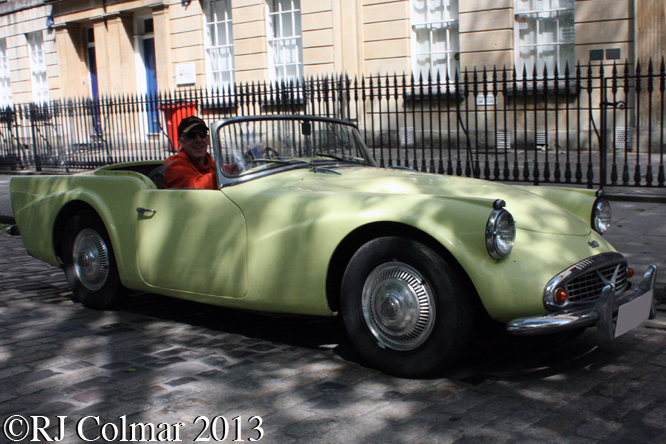
Daimler SP 250, Avenue Drivers Club, Queen Square, Bristol

Another perfect summer car was this 1962 Daimler SP250, the owner certainly seems to be enjoying it.

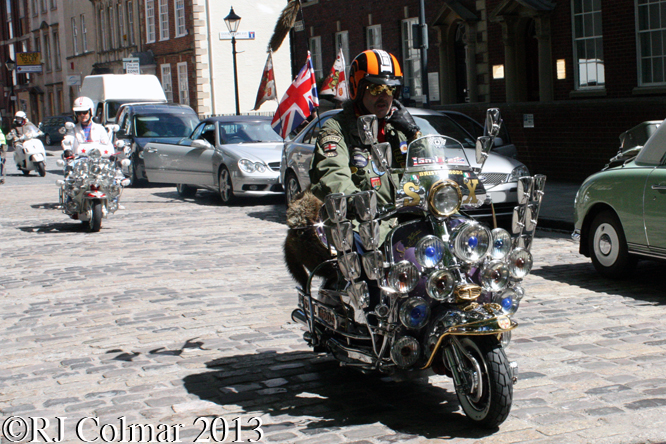
Lambretta, Avenue Drivers Club, Queen Square, Bristol

Just as I was leaving a load of Scooters from the Bristol Mods turned up, somewhere under all those lights I believe is a Lambretta judging by the logo on the helmet.

Looking forward to seeing who turns up at the next Avenue Drivers Club meeting on July 14th.

Thanks for joining me on this “Coffee, Croissant & Cars #06/13” edition of “Gettin’ a li’l psycho on tyres” I hope you will join me again tomorrow. Don’t forget to come back now !

Share

La Gloire de Legardére – Matra Simca MS 670

Aerospace company Matra became involved in the motor industry when it started manufacturing fiber glass bodies for René Bonnet’s mid engined Djet sports cars in 1962. In 1965 after Bonnet ran into financial difficulties, as a consequence of it’s racing activities, Matra took over Bonnets manufacturing operations putting Jean-Luc Legardére in charge.

Like Bonnet Legardére saw the sense in promoting the company through motor racing and over a period of several years the company produced winning designs for various open wheel and sportscar series including the 1969 Ford Cosworth powered Matra MS80 which won the World Drivers and Constructors Championships with Jackie Stewart at the wheel of the Matra International team cars run by Ken Tyrrell.

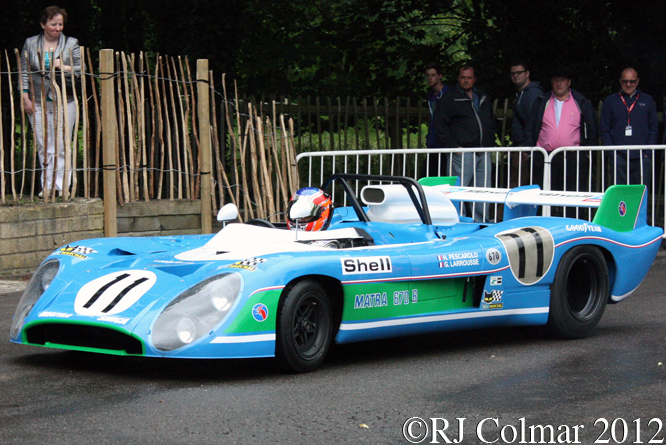
Matra Simca MS670, Goodwood Festival of Speed

Tyrrell and Stewart went their own way in 1970 with sponsors Ford and Elf while Matra’s car division was acquired by Chrysler France in December 1969 and the Matra racing cars became known as Matra Simca’s powered by 3 litre /183 cui V12 Matra motors that had been first seen in Formula One and Sports cars in 1968.

The Matra V12 powered Matra Simca MS670 cars won the Le Mans 24 hours in 1972, driven by Henri Pescarolo and Graham Hill, ’73 and ’74 with Gérard Larrousse joining Pescarolo at the wheel. For 1972 Le Mans was the sole focus of the sportscar teams activities while Ferrari missed the Le Mans 24 hours to focus on winning the 1972 World Championship for Makes. In 1973 Matra Simca withdrew from Formula One and contested and won the World Championship for Makes with the upgraded MS670B beating strong competition from the Ferrari 312 P, a car that had also unsuccessfully appeared at Le Mans.

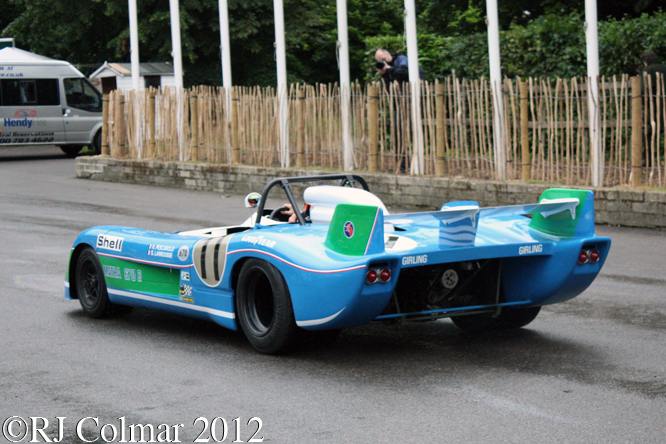
Matra Simca MS670, Goodwood Festival of Speed

Thanks in part to Niki Lauda persuading Enzo Ferrari to focus on winning the Formula One championships for the 1974 season Matra Simca easily won both the Le Mans 24 hours and the World Championship for makes in 1974 with it’s further upgraded MS670C, after which the team was disbanded although Matra V12 motors were supplied to Shadow for a limited program in 1975 and to Ligier for full programmes from 1976 to 1978 and again from 1981 to 1982 .

I’m not sure of the exact identity of today’s featured car it carries the MS670B body work of the 1973 Le Mans winning entry driven by Pescarolo/Larrouse, that car chassis #MS670B-02 belonged to Matra driver Jean-Pierre Beltoise until it was sold at auction for over a million dollars in 2005 carrying 1974 MS670C bodywork. It has been documented that the 1972 Le Mans winning chassis MS670 – 01 driven by Pescarolo/Hill was fitted with the 1973 Le Mans wining MS670B body work when it was seen at the Lohéac Museum halfway between Brest and Le Mans.

If you know the identity of this car seen at Goodwood last year with Omni Ventures listed as the owners please do not hesitate to chime in below.

Thanks for joining me on this “La Gloire de Legardére” edition of “Gettin’ a li’l psycho on tyres”, I hope you will join me again tomorrow. Don’t forget to come back now !

Share

Forced Induction Push – Bentley 4 1/2 litre #DS3573

Following the disappointments of it’s Le Mans appearances from 1925 to 1926, after the success with the 3 litre / 183 cui cars in 1924 Bentley employed his maxim ‘there is no substitute for cubic inches’ to his new prototype Le Mans challenger, known as “Old Mother Gun”, for 1927 by fitting it with a 4 1/2 litre / 319.5 cui motor.
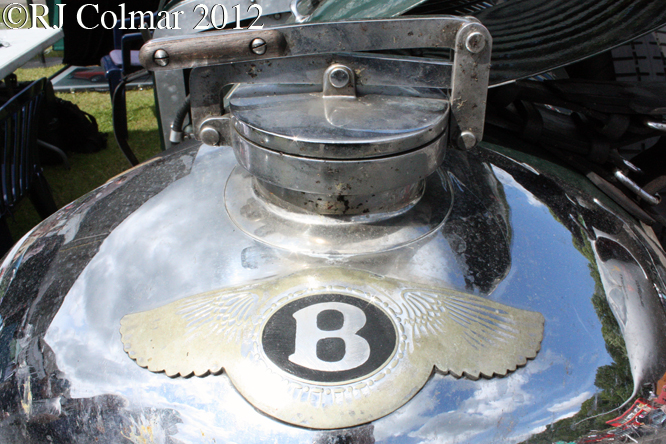
Bentley 4 1/2 litre, Brooklands Double 12

During the 1927 running of the endurance classic there was a six car pileup involving five of the leading cars; two Théophile Schneiders, an Ariés two three litre Bentleys and the 4 1/2 litre Old Mother Gun which Leslie Callingham rolled into a ditch having chosen to avoid a head on collision.
Bentley 4 1/2 litre, Brooklands Double 12

With the 4 1/2 litre car out of the running the race was won by the 3 litre Bentley of Dr. Dudley Benjafield and Sammy Davis, the last car to arrive at the scene of the accident, after repairs had been effected that included the judicious use of string to hold one of the front wings and the team used a pocket torch to replace the damaged head light !
Bentley 4 1/2 litre, Brooklands Double 12

“Old Mother Gun” was subsequently repaired and Woolf Barnato driving with Bernard Rubin came out winners of the 1928 Le Mans 24 hours after a race long duel with the more powerful 8 cylinder Stutz DV16 Blackhawk driven by F Éduoard Brisson and Robert Bloch.
Bentley 4 1/2 litre, Brooklands Double 12

By this time Sir Henry “Tim” Birkin” who shared the forth placed 4 1/2 litre Bentley with Jean Chassagne at Le Mans in 1928 was convinced the way forward was to build light cars with super chargers. With the tacit agreement of Bentley’s chairman Woolf Barnato and independent finance from Dorothy Paget. Birkin set about building 55 supercharged four cylinder 4 1/2 litre Bentley’s, commonly referred to as Blower Bentleys, against the wishes of designer W.O. Bentley who simultaneously built a new Speed Six model for 1929 complete with straight six cylinder 6 1/2 litre 396.5 cui motor.

Bentley 4 1/2 litre, Brooklands Double 12

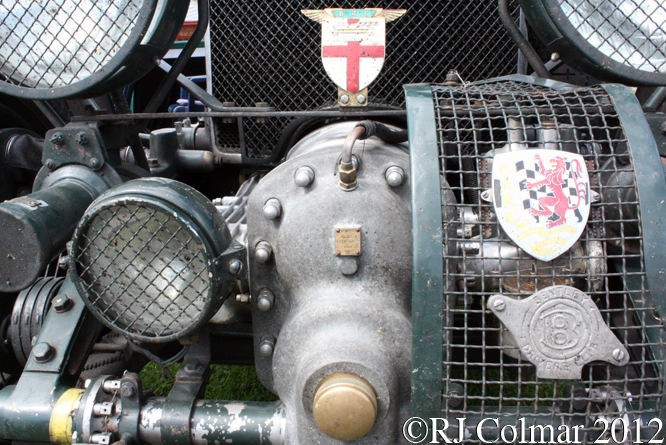
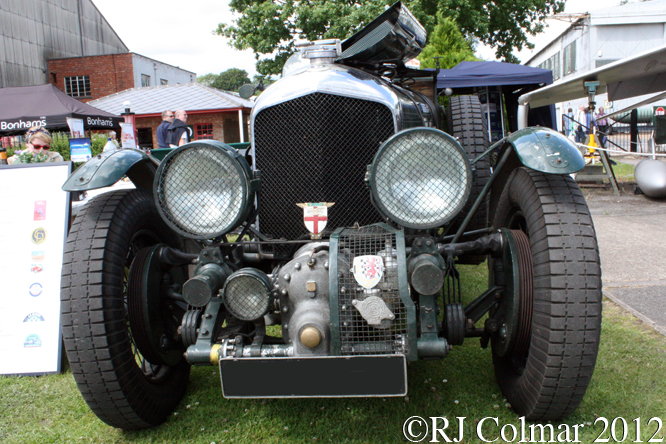
Such was W.O. Bentley’s opposition to the idea of supercharging, which had been tried on a 3 litre Bentley built 1926/7, that he refused to countenance the modification of the Bentley 4 1/2 litre motor in any way that would allow Birkin to mount the supercharger along side the 4 cylinder block with the result that the only place the superchager could be fitted was ahead of the front axle line so that it could be driven from the front of the crankshaft.
Bentley 4 1/2 litre, Brooklands Double 12

This mounting position and it’s attendant weight adversely affect the cars propensity to understeer / push where as the new Speed Six had all the weight of it’s motive power mounted between the axles.
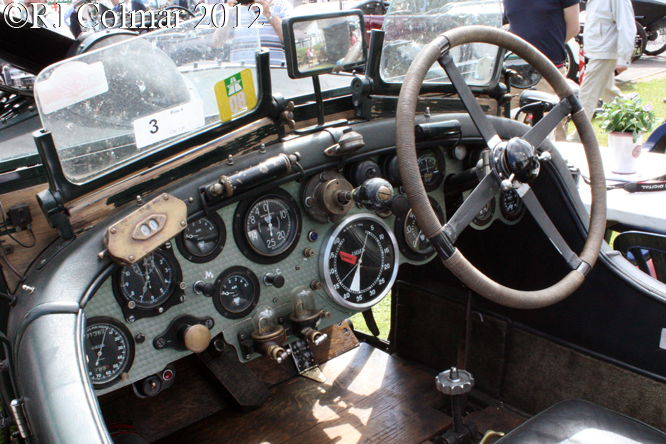
Bentley 4 1/2 litre, Brooklands Double 12

Ironically the Speed Six model was ready before the Blower Bentley and Tim Birkin shared a Speed Six, known as Old Number One, with Woolf Barnato to easily win the 1929 Le Mans 24 hours ahead of three unsupercharged 4 1/2 litre Bentley’s.
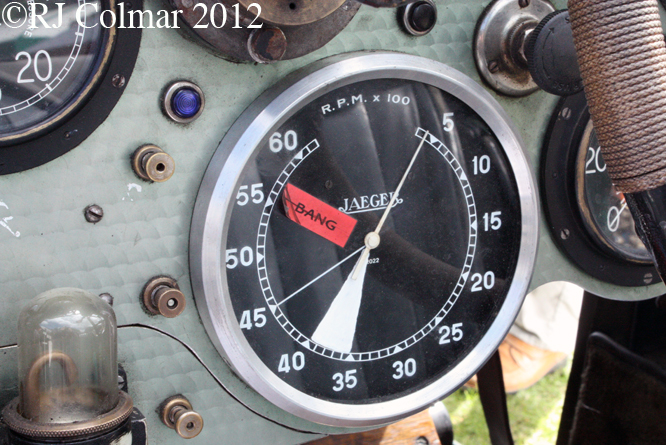
Bentley 4 1/2 litre, Brooklands Double 12

The Bentley Blowers were ready for 1930 and three cars were entered by the Hon. Miss Dorothy Paget, including one for Sir Tim co driving with Jean Chassagne in the 1930 Le Mans 24 hours, but none were running at the finish. Woolf Barnato now sharing the Speed Six Old Number One with Glen Kidston meanwhile led home a Speed Six one two finish. Strategically playing the hare for the highly fancied supercharged 7.1 litre / 433 cui Mercedes Benz of Rudolf Caracciola and Christian Werner to catch and forcing the German car to run at a faster pace than would have been ideal, Birkins Bentley Blower contribute to the Mercedes Benz premature retirement and indirectly to Barnato and Kidston’s victory.
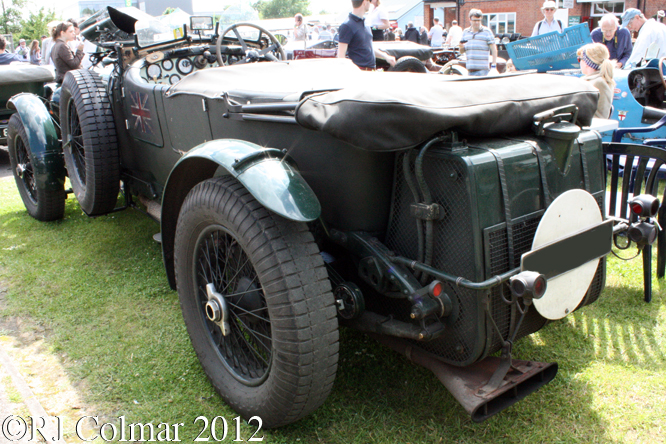
Bentley 4 1/2 litre, Brooklands Double 12

At the end of 1930 Dorothy Paget withdrew her support for Birkin’s Blowers and in 1931 despite 4 consecutive Le Mans Wins and 5 wins since 1923 Bentley was forced to sell out to Rolls Royce. This however was not quite the end of the Bentley Blower story as a special single seater Blower Bentley that Birkin has built in 1929, chassis HB3402 was just hitting it’s stride at Brooklands leaving the lap record at 137.96 mph in 1932.
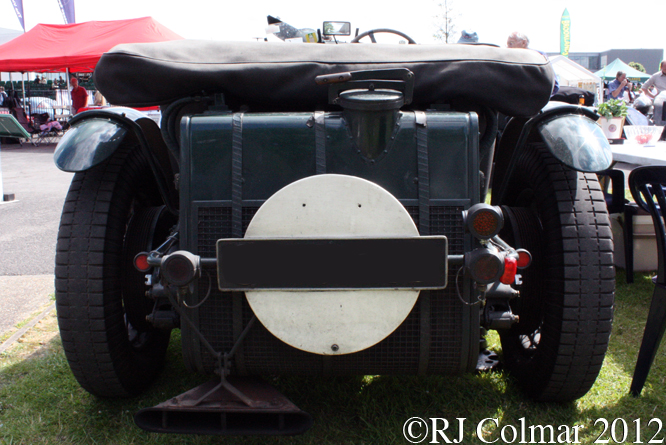
Bentley 4 1/2 litre, Brooklands Double 12

In 1931 Sir Tim returned to Le Mans to co drive Lord Howe’s Alfa Romeo 8C 2300 LM and together they became the first drivers to win the 24 hour race with a supercharged car comfortably beating the much larger supercharged 7.1 litre Mercedes Benz SSK driven by Boris Ivanowski and Henri Stoffel by seven laps.

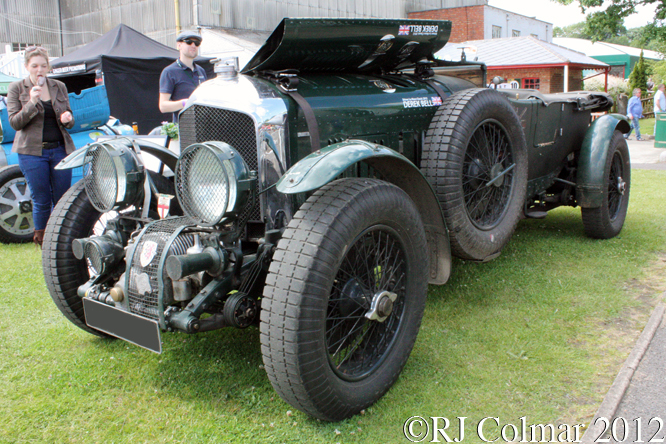
Today’s featured car looks and sounds like a Bentley Blower, but was supplied new in 1929 to Sir L.Lyle with a saloon / sedan body by HJ Mulliner with an unsupercharged 4 1/2 litre motor. The car was rebuilt with an open tourer body as seen today in 1973 when #DS3573 competed in the Scottish Weekend Whit Rally with flying colours.

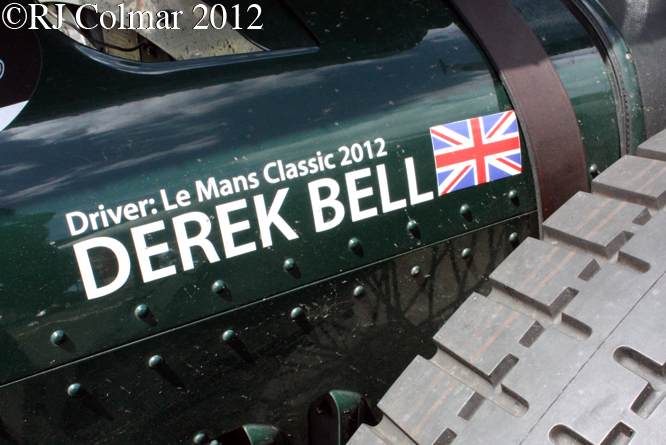
The supercharger appears to have been first seen on chassis #DS3573 in 2005. Just after these photo’s were taken at Brooklands last year, five time Le Mans winner, Derek Bell drove the car at the Le Mans Classic with owner Martin Overington supported by a three man pit crew, comprising three ex service men injured in combat, on behalf of the Misson Motorsport charity.

Thanks for joining me on this “Forced Induction Push” edition of “Gettin’ a li’l psycho on tyres” which happens to be the 1000th GALPOT posting. My thanks to all those who have contributed and stayed with me on this journey, especially those who have liked and spread the word on their social media pages. I hope you will join me for the first of the next 1000 GALPOT posts again tomorrow. Don’t forget to come back now !
Share

Comeback Kid – Porsche 936 #001

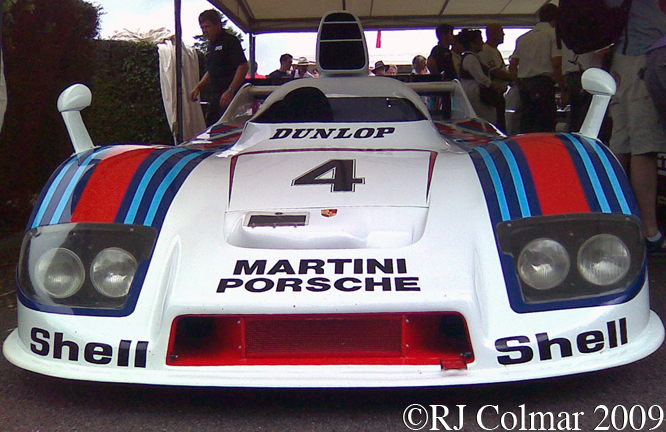
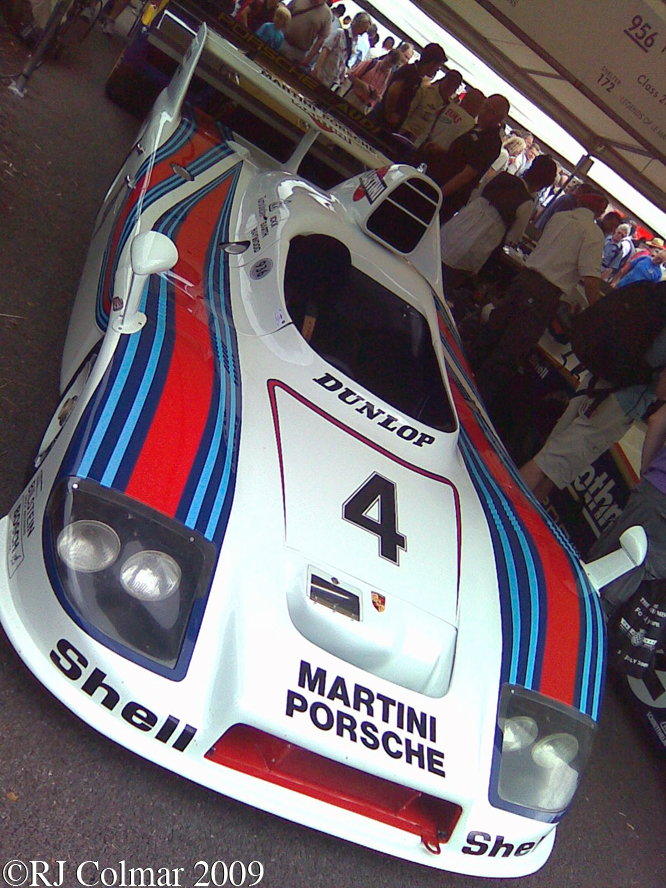
The Porsche 936 was the successor to the 908 and 917 models, it was used to win the World Sports Car Championsip in 1976. Three chassis based on many parts from the Porsche 917 parts bin were made.

All three chassis won the Le Mans 24 hour race; chassis #002 in 1976, #001 in 1977, both with a 540 hp 2140 cc / 130 cui turbocharged flat 6 motors and #003 in 1981 with a 600 hp 2649 cc / 161 cui turbocharged flat 6, a design that had started out as the alcohol burning engine used by Danny Ongias in the unraced Interscope Parnelli Indy Car. Remarkably Jacky Ickx co drove each of these 936’s to Victory Lane at Le Mans.

Porsche 936, Goodwood Festival Of Speed,

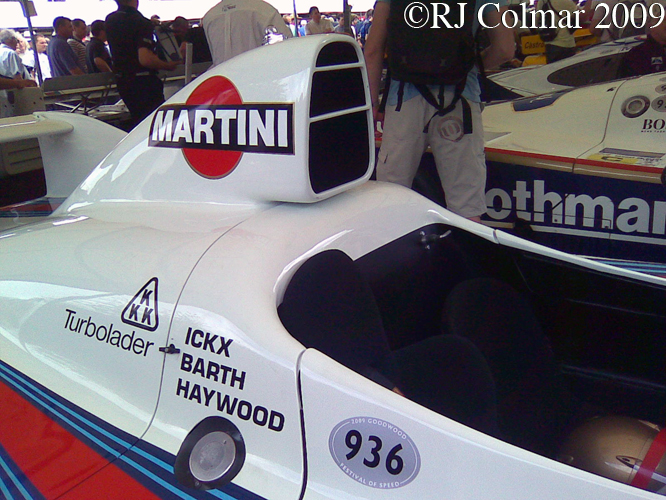
This car represents chassis #001 which was slated to be driven by Juergen Barth and Le Mans rookie Hurley Haywood in the 1977 Le Mans 24 hours, a fuel pump replacement in the 3rd hour dropped #001 down to 42nd place. Around this time Henri Pescarolo’s engine had expired in the sister #002 chassis and Pescarolo’s team mate, Jacky Ickx, was drafted in to join Barth and Haywood.

By his own admission Jacky drove the race of his life through the night and after 19 hours the #001 was in the lead of the race, the three works Renault Alpines dropped out while dominating the race in the Porsche’s absence with engine failures. With 45 mins to go the engine in #001 developed a second misfire, the mechanics shut down the problematic cylinder by taking out the spark plug and blanking the fuel injector.

Porsche 936, Goodwood Festival Of Speed,

Ten mins before the end of the race Juergen Barth was then sent out with a stop watch taped to the steering wheel and instructed to complete the last two laps, within the necessary percentage of each other, to seal an unlikely victory by 11 laps over the Renault powered Mirage GR8 of Vern Schuppan and Jean Pierre Jarrier.

During the race a wheel balance weight tore off the right front wheel ripped through the wheel arch, and both stalk mounted mirrors were lost. The large air box was primarily used to cool the turbocharged air running through the intercoolers.

Porsche 936, Goodwood Festival Of Speed,

The following year Bob Wollek joined Juergen Barth in #001 and when the sister #003 car retired after an accident Jacky Ickx joined Bob and Juergen too however this time they could only finish 2nd to the Alpine Renault of Didier Pironi and Jean-Pierre Jaussaud.

#001’s next two appearances were at the Silverstone 6 hours and Le Mans 24 hours in 1979 it qualified on pole for both of these events, but was classified 10th at Silverstone after an accident which caused Jochen Mass and Brian Redmans retirement from the lead at Silverstone. Bob Wollek and Hurley Haywood retired with engine failure at Le Mans in 1981 as has Jurgen Barth and Reinhold Joest driving #001 at Le Mans in 1976. The cars final appearance as a works car was at the 1981 Le Mans 24 hours where despite starting from 2nd on the grid Jochen Mass, Vern Schuppan and Hurley Haywood could only finish 12th.

Porsche 936, Goodwood Festival Of Speed,

The following linked films document the 1977 Le Mans race; the first shows fabulous in car footage of a lap of Le Mans the second show’s the start and continues into the evening and the third the finish, I afraid most of the commentary is in German except a couple of interviews with Jacky Ickx and Hurley Haywood.

Thanks for joining me on this “Comeback Kid” edition of “Gettin’ a li’l psycho on tyres” I hope you will join me again tomorrow for the 1000th edition of “Gettin’ a li’l psycho on tyres”. Don’t forget to come back now !

Share

Dealer Pressure – Aston Martin DP 212

Following the success of the Aston Martin DBR1 at Le Mans and the 1959 World Sports Car championship the Aston Martin team refocused it’s attentions on an ill timed Grand Prix effort that folded by the end of 1960, by which time the front engined Aston Martin DBR4 and DBR5 were completely out classed by rear engined cars.

Aston Martin DP212, Goodwood Revival

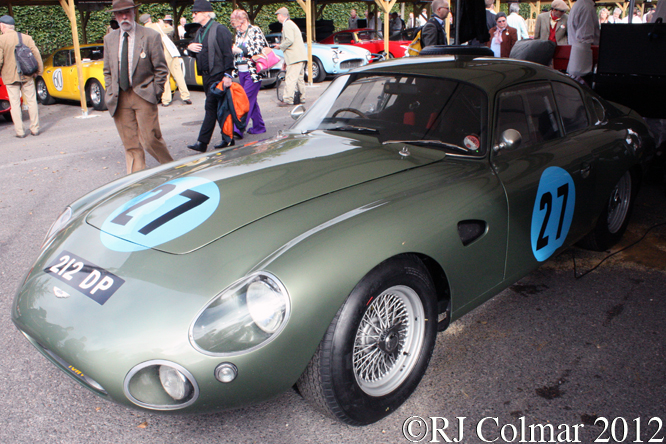
Under pressure from dealers to come up with a new racing program David Brown sanctioned the development of the DP 212 for the 1962 Le Mans 24 hours.

The cars was built using an Aston Martin DB4GT frame with a 345hp 4 litre / 244 cui six cylinder motor and a sensuous slippery long body to suit the potential of 4 mile Mulsanne straight at Le Mans.

Graham Hill and Richie Ginther were engaged to drive the car at Le Mans where it had a brief moment of glory leading the opening lap of the 24 hour endurance race with Graham Hill at the wheel, however from there on the car dropped down the field over the next six hours until it retired from 9th place with piston failure following an oil pipe fracture.

The original bodywork was found to experience stability problems at speed and after aerodynamic tests was replaced with a Kamm tail of the sort that was later used on the back of the Aston Martin DB6.

Subsequently DP212’s only other appearance was at the 1963 Le Mans test weekend where Jo Schlesser, Bruce McLaren, Lucien Bianchi and William Kimberly drove the car which recorded 5th fastest time. By the 1963 Le Mans 24 hour race the DP212 had been replaced by the DP 214 and DP215 models.

DP212 was later converted to a road car with even larger 349 hp motor and driven in a variety of events by Hon.John Dawnay, later Viscount Downe, and Mike Salmon the later winning the 1974 Classic Car Championship with it.

Thanks for joining me on this “Dealer Pressure” edition of “Gettin’ a li’l psycho on tyres” I hope you will join me again tomorrow for a look at a Le Mans winner from Germany. Don’t forget to come back now !

Share

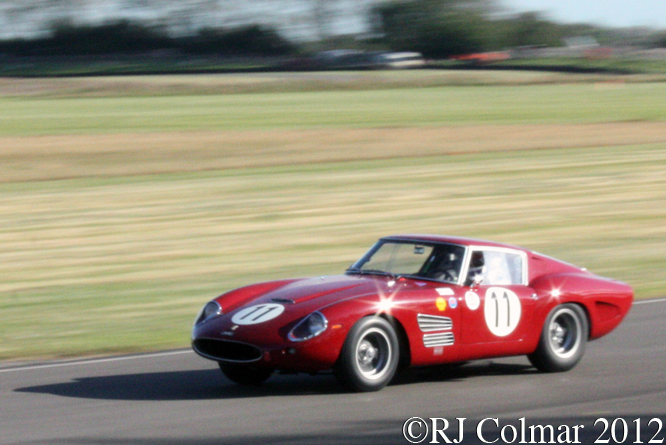
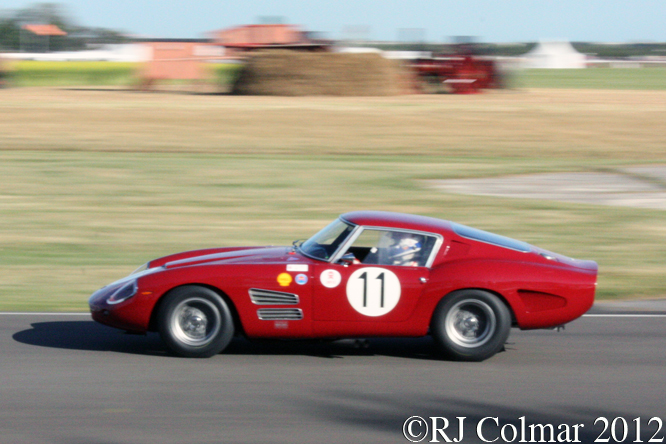
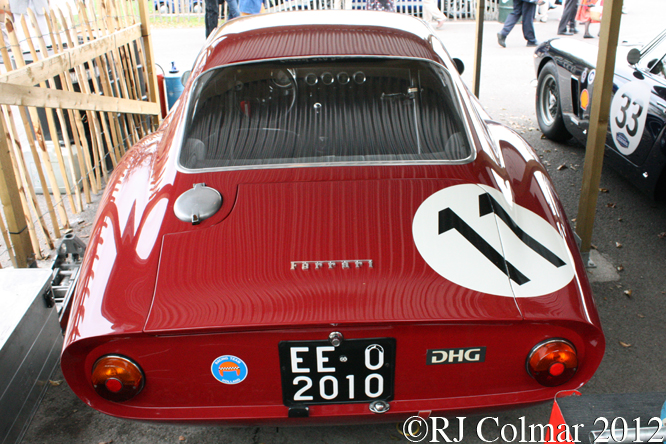
Le Mans to Hollywood – Ferrari 250 GT SWB Competizione Drogo #2445GT

Today’s Ferrari started life as a 250 GT SWB (Short Wheel Base) Competizione chassis #2445GT in 1961, it was supplied to Garages Francorchamps in Belgium.

Ferrari 250 GT Drogo, Goodwood Revival

Jacques van den Haute drove the car competitively at least three times between May and June 1961 with two 3rds in hillclimbs being his best results.

Ferrari 250 GT Drogo, Goodwood Revival

From July 1961 to May 1962 Robert Crevits drove the car competitively in at least 14 events mostly hillclimbs and is known to have won eight of them.

Ferrari 250 GT Drogo, Goodwood Revival

Gustave Gosselin shared the car with Robert in the 1962 1000km Paris, Montlhery where they finished 11th and drove the car alone to a second place finish in an event run at Zandvoort in the Netherlands.

Ferrari 250 GT Drogo, Goodwood Revival

Georges Berger and Robert Darville shared the driving of 2445GT in its last in period race the 1962 Le Mans 24 hours where the car was heavily damaged at the sharp right hand corner Arnage and retired.

Ferrari 250 GT Drogo, Goodwood Revival

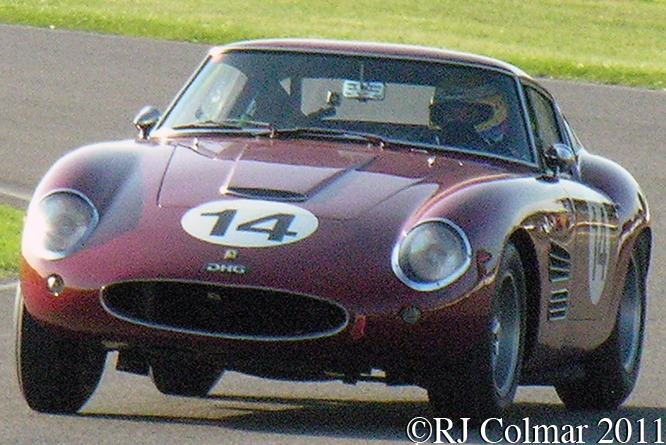
The #2445GT was subsequently repaired by Piero Drogo who fitted the body that is seen on the car in these photo’s, the car was renumbered 1965GT for ‘customs reasons’ during the early 1960’s and for a while in 1964 it was one of several Ferrari’s owned by Nebraskan garage owners son James Coburn.

In the late ’70’s #2445GT returned to Europe and is currently owned by Dutchman Hans Hugenholtz who entered the #14 in the 2011 Goodwood Revival meeting for David Hart and Maserati GT racer Micheal Bartels. Last year Hugenholtz shared the driving at Goodwood with one of former New York taxi driver and Indy champion Danny Sullivan.

Thanks for joining me on this “Le Mans to Hollywood edition of “Gettin’ a li’l psycho on tyres” I hope you will join me again tomorrow. Don’t forget to come back now !
Share

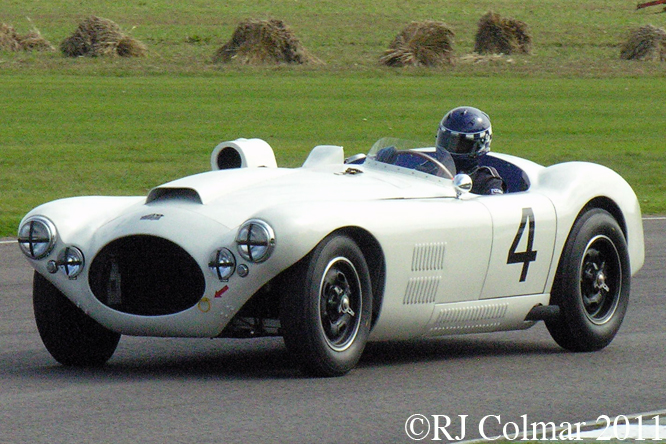
Once Round The Clock – Cunningham C4-R C3 #5238 Continuatuation

Legendary American Sportsman Briggs Swift Cunningham II was introduced to motor racing by his uncle as a teenager just after the 1914/18 war and in 1930 he started racing cars founding the Automobile Racing Club of America in 1933 which was renamed Sports Car Club Of America (SCCA) in 1944 with his college friends Miles and Samuel Collier.

By 1940 he was building specials including the Bu-Merc which featured a Buick chassis and Mercedes SSK chassis. In 1950 Cunningham took to Cadillacs one Le Petit Pataud a Series 61 Coupé the other Il Montre fitted with a special body to Le Mans where the cars finished 10th and 11th.

Cunningham C4-R, Goodwood Revival

Such was the success and popularity of the Cunningham Cadillacs that Brigg announced he would build an American car to challenge for over all victory at Le Mans in 1951. The first challenger the Cunningham C2R of which two were built managed an 18th place finish and retirement between them in 1951.

The Cunningham Continental C3 was a road car using a chassis derived from the racer with a Chrysler Hemi motor and an Italian body built by Vignale. 25 C3’s were built.

Cunningham C4-R, Goodwood Revival

In 1952 Cunningham entered 3 Chrysler Hemi powered C4R cars into the Le Mans 24 hour race one of which had a Coupé body fitted. Like Pierre Levegh driving a Talbot Lago Briggs Cunningham spent over 12 hours racing at the wheel of his #1 entry unlike Levegh at that point he handed the #1 over to his co driver William Spear and between them they a 4th place finish behind the two winning Mercedes Benz team cars and a Nash Healey.

The C4-R’s would continue to be raced until at least 1956 clocking up at least 12 overall wins the best known of which was at the 1953 Sebring 12 hours where John Fitch and Phil Walters were at the wheel of the winning car. In 1954 Bill Spear and Sherwood Johnston finished 3rd to record the models best finish at Le Mans. Surprisingly Jaguar D-type designer Malcom Slayer observed that the C4-R chassis had “no effective diagonal bracing. It therefore twists so much that the door cannot work if one rear wheel is jacked up”.

Cunningham C4-R, Goodwood Revival

Cunningham entered vehicles including Jaguars, Listers and and an OSCA among many more dominated SCCA racing for a period but never did win Le Mans. Briggs went of to win the 1958 America’s cup on his 12 metre yacht Colombia.

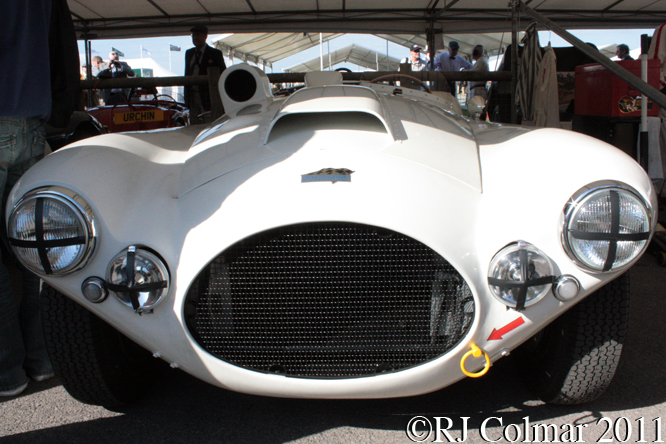
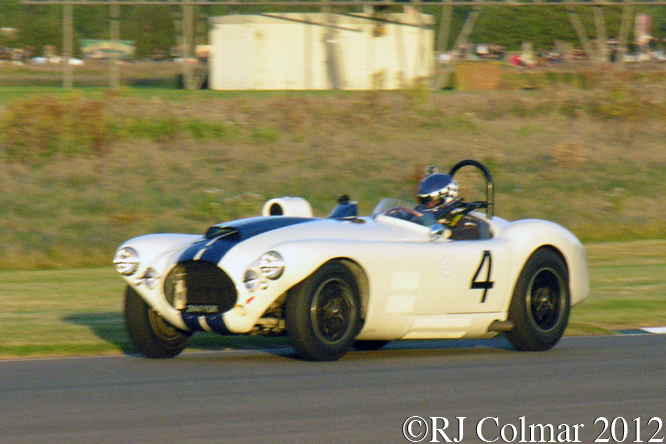
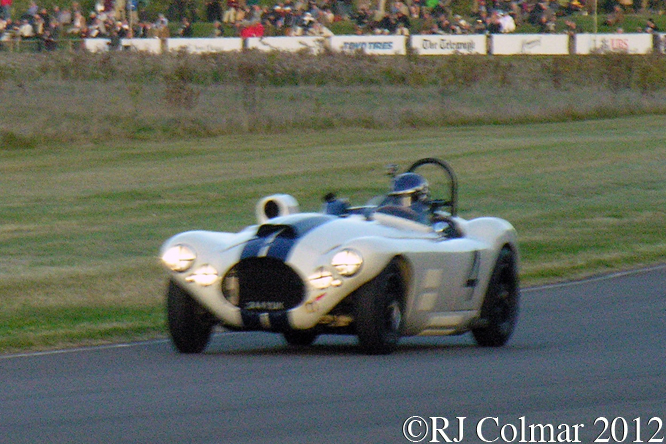
The car seen in these photo’s is a Continuation model, built with the co operation of the Collier Museum around the last Cunningham C3 chassis #5238 which never received it’s intended Vignale bodywork after Briggs shutdown the C3 manufacturing operation.

Cunningham C4-R, Goodwood Revival

#5238 has been built as an exact recreation of a C4-R by Jim Stokes Workshops, Waterlooville, Hampshire, UK using a many parts donated by the Collier Museum and a body built by Roach Manufacturing who used a digital scan of one of the original C4_R’s as a template. Even the wheels have been cast in magnesium using the original Cunningham wheel moulds.

Ben Shuckburgh is seen driving the car at the Goodwood revival in 2011 and 2012, it is the fifth C4-R continuation to be built four examples were built in the 1990’s by Cunningham Historic Motor Cars, owned by Larry Black & Briggs S. Cunningham III that were authorized by the Cunningham family.

Cunningham C4-R, Goodwood Revival

My thanks to Cunningham Motorsport Historian Lawrence W. Berman for the information on the build of today’s featured car.

Thanks for joining me on this “Once Around The Clock” edition of “Gettin’ a li’l psycho on tyres” I hope you will join me again tomorrow. Don’t forget to come back now !
Share