Tag Archives: Ralph

Five Group C Classics – Silverstone Classic

Third in a series of five blogs celebrating Silverstone Classic’s Silver Jubilee today’s blog looks at five stunning Group C cars, which round out the meetings Super Saturday’s by racing into the evening, that have competed in the event over the years.
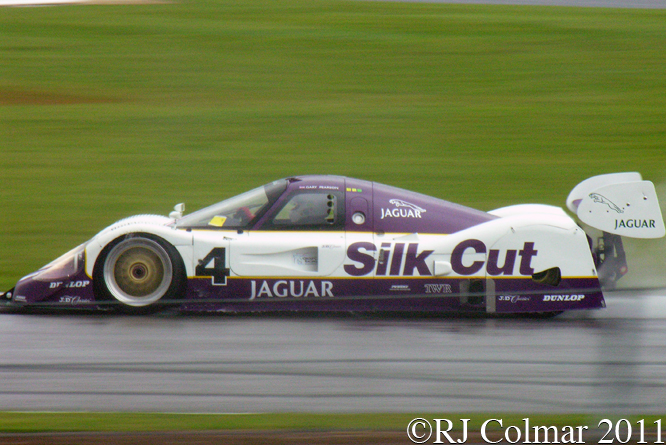
Jaguar XJR-11, Gary Pearson, Silverstone Classic,

Gary Pearson’s 1989 Jaguar XJR-11 above marks a significant ramping up of Jaguar’s efforts to remain at the top of the Group C tree by switching from a stock block derived 7 litre / 432 cui V12 to a MG Metro 6R4 derived twin turbo 3.5 litre / 216 cui V6 that produced around 750hp.
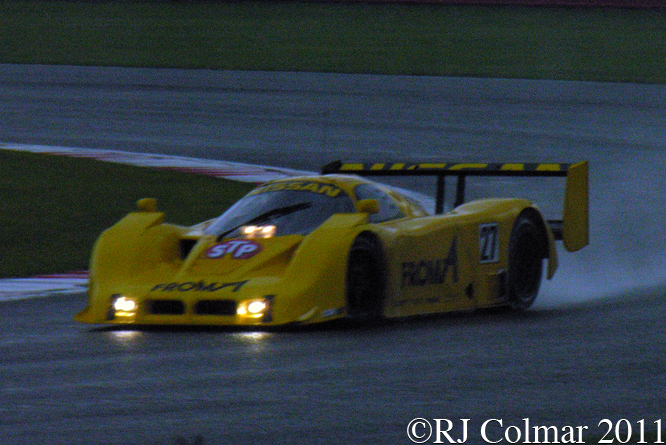
Nissan RC90, Steve Tandy, Silverstone Classic,

For the 1991 season Nissan sold one of there Lola built R90C chassis, #07, to Nova Engineering for use in the 1991 All Japan Sports Prototype Championship, Nova fitted a body developed in the Yatabe (Japan Automobile Research Institute—JARI) wind tunnel and called the car seen above with Steve Tandy at wheel, the R91CK.
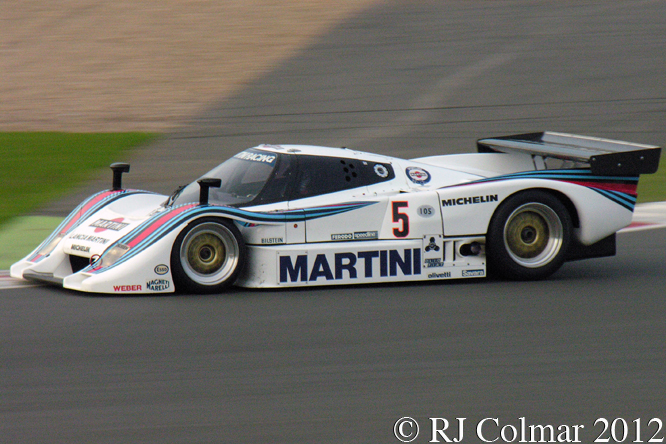
Lancia LC2, Roger Wills, Silverstone, Classic,

Going back to 1985 is Roger Wills Ferrari powered Lancia LC2/85 with it’s distinctive wider body than the original LC2’s raced in 1983 and ’84.
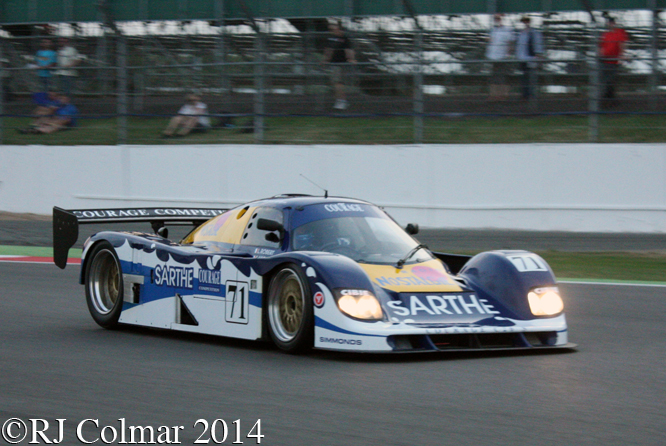
Courage C26S, Georg Kjallgren, Silverstone Classic

I believe the Courage C26S, seen above with Georg Kjallgren at the wheel, started life as the second chassis built in Le Mans by Courage Competition in 1984 originally powered by a Cosworth DFL V8, in 1989 it was fitted with a Twin Turbo Porsche flat 6 and brought up to C26S specification for the 1991 Le Mans 24 Hours where it failed to qualify on speed and was further disqualified for running under weight.
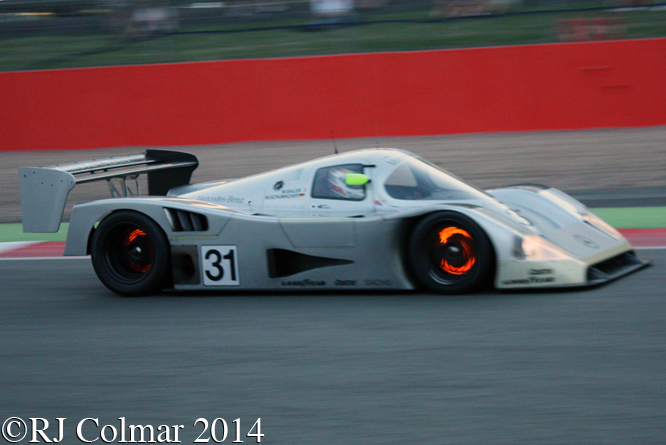
Mercedes Benz C11, Bob Berridge, Silverstone Classic,

Coolest of the Group C cars in my eyes is the Mercedes Benz C11 built for the 199O World Sports Car Championship which season during which it took seven wins from the eight races started securing the constructors championship for Mercedes Benz and Drivers Championship for Jean-Louis Schlesser and Mauro Baldi, I believe the car seen above with Bob Berridge at the wheel was the prototype which was never raced in period, but has a very successful career as a historic racer.

More, including tickets, on this years Silver Jubilee Silverstone Classic can be found on this link.

Thanks for joining me on this “Five Group C Classics” edition of “Gettin’ a li’l psycho on tyres” I hope you will join me again tomorrow for a trip to the recent Sonoma Historic meeting. Don’t forget to come back now !

Share

More Than A Bleu Rebellion – Oreca Nissan 05 #1

French Racing Team Organisation Exploitation Compétition Automobiles better known as ORECA was founded by Hugues de Chaunac in 1973 and running Martini open wheelers the teams drivers Jacques Laffite and Rene Arnoux won the European Formula 2 Championship in 1975 and ’77 respectively, from ’79 to ’89 the teams drivers also won 8 French Formula 3 championships with Alain Prost ’79 and Jean Alesi ’87 being two graduates who progressed to find success in Formula One.

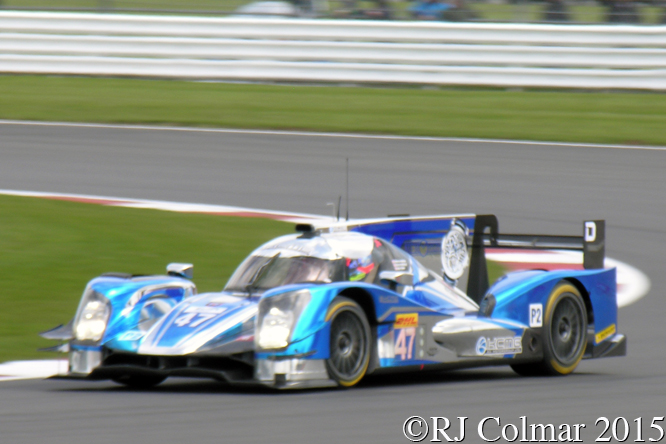
Oreca 05, Matthew Howson, Richard Bradley, Nick Tandy, 6 Hours Of Silverstone,

In the late 80’s ORECA turned it attention to developing, preparing and entering Touring, GT and Sports Cars which produced a win at Le Mans in 1991 when the team running the Mazda 787B’s under the works Mazdaspeed banner.

Oreca 05, Matthew Howson, Richard Bradley, Nick Tandy, 6 Hours Of Silverstone,

After developing, building and running the Dodge Vipers and Saleen SR-7’s in the GT classes and in 2007 ORECA took over Courage Competiton a manufacturer building LMP1 and LMP2 cars, the first Oreca branded FLM 09 sports cars appeared in the Formula Le Mans Cup and later LMPC classes in 2009, with a Courage based LMP1 car appearing a few weeks later.

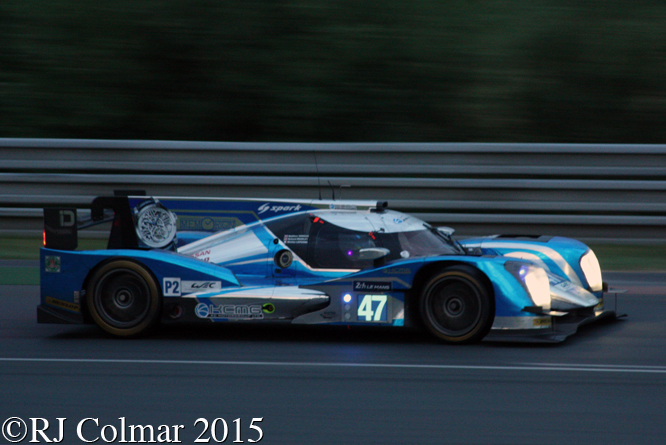
Oreca 05, Matthew Howson, Richard Bradley, Nicolas Lapierre, Le Mans

By 2010 the team was running a works supported Peugeot 908 HDi LMP1 car as well as building the Oreca 03 for the LMP2 series, more recently ORECA have run the Toyota Hybrid LMP1 cars since 2012 and built the Rebellion R-One LMP1 car in 2014.

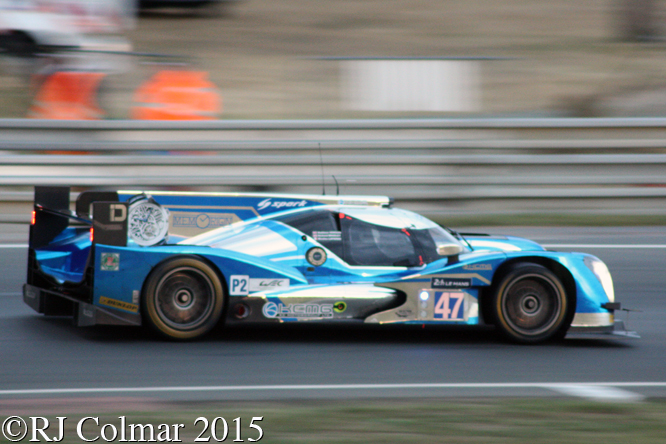
Oreca 05, Matthew Howson, Richard Bradley, Nicolas Lapierre, Le Mans

The Oreca 05 is built to meet the 2017 LMP2 regulations and uses the same chassis design as that of the originally Toyota powered Rebellion R-One but the body features many detail differences in the dive plains, turning vains and louvres which have benefited from further development in CFD (Computer Fluid Dynamics) aided design of the body, the car also uses electric power steering.

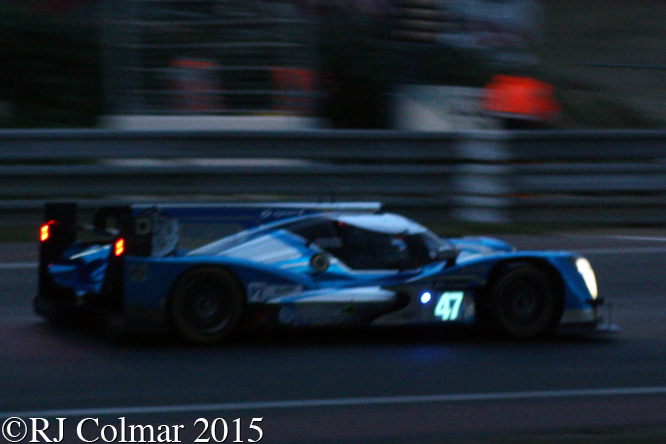
Oreca 05, Matthew Howson, Richard Bradley, Nicolas Lapierre, Le Mans

To date three 4.5 litre / 274 cui Nissan V8 powered ORECA 05’s have been built chassis #2 is entered by Thiriet By Tds Racing in the European Le Mans Series and the same team ran chassis #3 at Le Mans in the LMP2 class. While today’s featured #1 chassis is entered by the Hong Kong based KCMG team in the LMP2 class of the World Endurance Championship for Matthew Howson, Richard Bradley and Nick Tandy when the latter is not called on to join the works Porsche 919 Hybrid LMP1 team.

Oreca 05, Matthew Howson, Richard Bradley, Nick Tandy, 6 Hours Of Silverstone,

Matthew, Richard and Nick seen in the first, second and sixth images finished 19th overall and 4th in class on the cars debut in the 6 Hours of Silverstone Race, Nicolas Lapierre took over Nick Tandy’s seat at Spa where the car finished 12th overall and 4th in class.

At Le Mans Matthew, Richard and Nicholas qualified 14th overall and 1st in class and led the LMP2 class for all but 9 laps of the race despite leaving the circuit twice in the closing hours of the race to finish 9th overall and first in LMP1 by just 48 seconds.

Thanks for joining me on this “More Than A Bleu Rebellion” edition of “Gettin’ a li’l psycho on tyres”, I hope you will join me again tomorrow when I’ll be looking at some recent Group C highlights from Silverstone Classic. Don’t forget to come back now !
Share

The Jaguar Judd – Mazda MX-R01

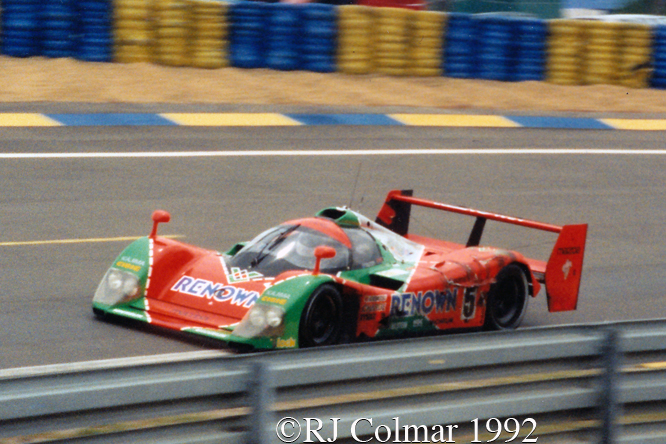
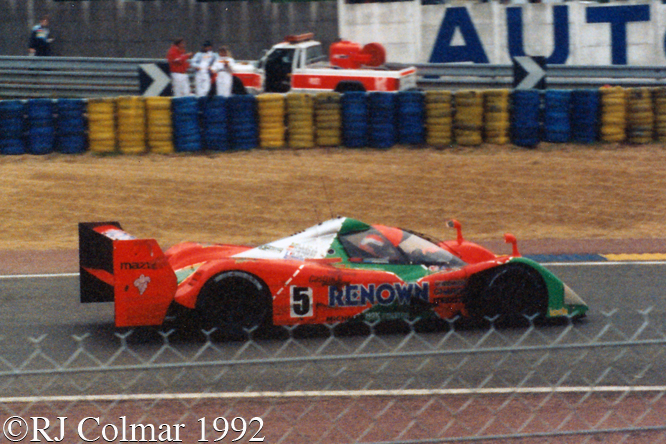
With the mandating of 3.5 litre / 213.5 cui piston engines for the 1992 World Sports Car Championship Mazda were left with no choice but to abandon their rotary powered 787B which won the 1991 Le Mans 24 Hours.

Mazda MX-R01, Le Mans

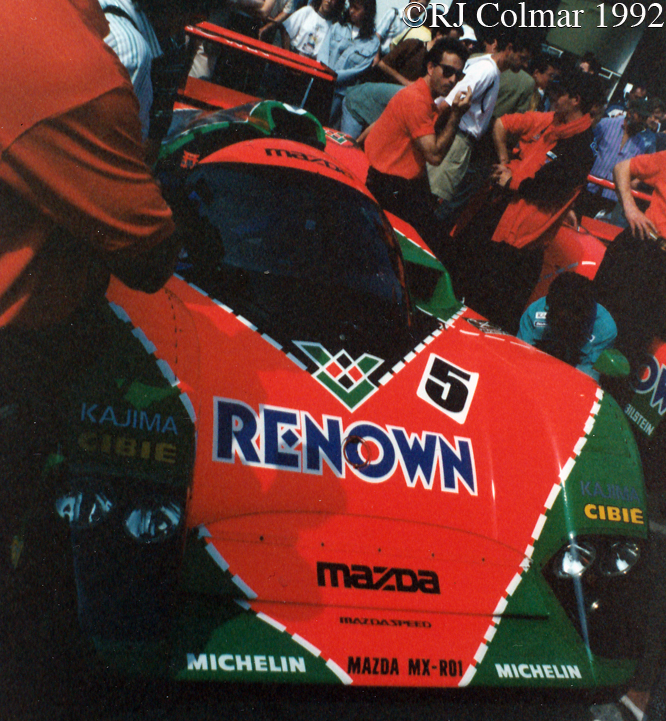
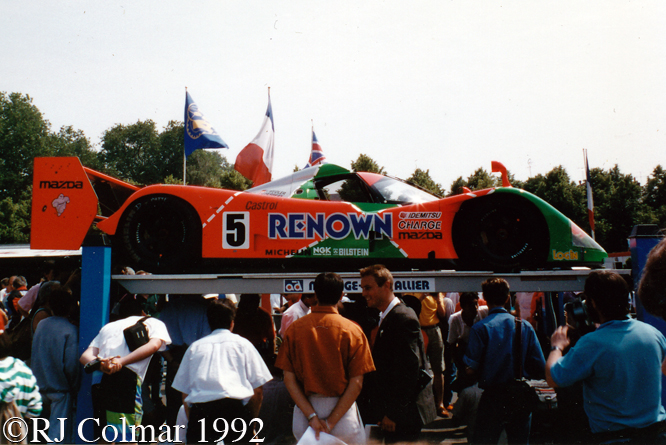
With insufficient funds to develop a new motor and or chassis they bravely decided not to abandon sports car racing altogether and elected instead to buy a suitable V10 from Judd Engine Developments and modify chassis bought from Tom Walkinshaw Racing that had been designed by Ross Brawn and run the previous year as the 1991 Championship wining Jaguar XJR14 with a Jaguar badged Ford HB V8.

Mazda MX-R01, Le Mans

Five Mazda MV10 powered Mazda MX-R01’s were built; chassis #001 was used exclusively in the Japanese Sports Car Series, #002 was a spare test car taken to Le Mans, #003 was another spare test car taken to Le Mans, today’s featured #004 raced in the whole 1992 World Sports Car Championship and #005 was only raced at Le Mans.

Mazda MX-R01, Le Mans

The MX-R01 made it’s debut in the 1992 Japanese Sports Car series at Suzuka where Youjirou Terada and Takashi Yorino drove chassis #001 to finish 7th from 8th on the grid in the 500 km race. Volker Weidler and Brazilian Maurizio Sandro Sala then drove #004 on it’s European debut at Monza where they retired with engine failure after starting from 7th on the grid.

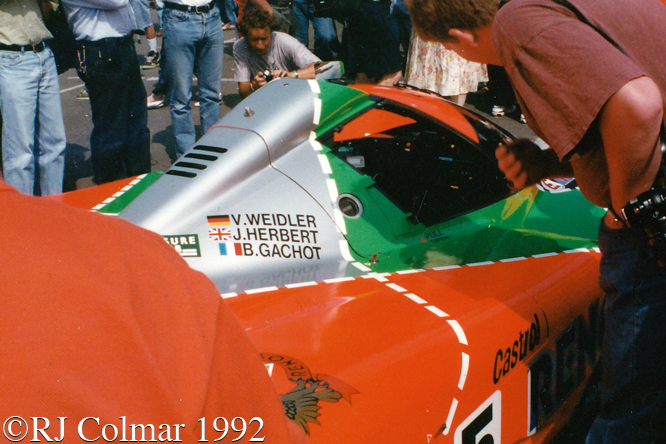
Mazda MX-R01, Volker Weidler (D)/Johnny Herbert (GB)/Bertrand Gachot (B)/Maurizio Sandro Sala, Le Mans

For the Fuji 1000 kms Youjirou Terada, Takashi Yorino and Maurizio Sandro Sala qualified #001 8th but also retired with engine failure, before #004 scored the teams best result of the season in the BRDC Empire Trophy at Silverstone where Maurizio Sandro Sala and Johnny Herbert finished second from 7th on the grid.

Mazda MX-R01, Volker Weidler (D)/Johnny Herbert (GB)/Bertrand Gachot (B)/Maurizio Sandro Sala, Le Mans

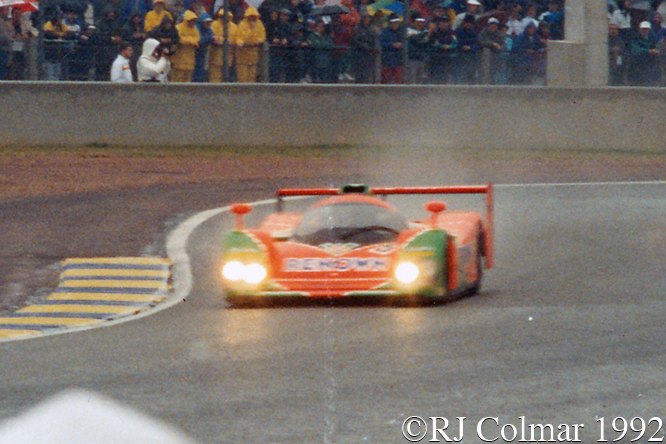
Chassis #005 driven by Maurizio Sandro Sala, Takashi Yorino and Yojiro Terada qualified 10th at Le Mans, but retired with accident damage after 124 laps which allowed Sala to join Volker Weidler, Johnny Herbert and Bertrand Gachot in chassis #004 that started 7th on the grid and finished 4th, 16 laps down on the winning Peugeot, having lead itself briefly led during the opening hours of the race.

Mazda MX-R01, Volker Weidler (D)/Johnny Herbert (GB)/Bertrand Gachot (B)/Maurizio Sandro Sala, Le Mans

Over the remaining World Sports Car Championship season #004 finished 5th at Donington and 6th at Magny Cours with Sala and Alex Caffi at the wheel, posting a retirement with gearbox failure at Suzuka when Takashi joined Maurizio and Alex in the cockpit.

In the Japanese series Takashi Yorino and Youjirou Terada finished a season high 7th in the Fuji 1000kms, Mazda finished 3rd in the final 1992 World Sportscar Championship standings and 2nd in the final 1992 All Japan Sports Prototype Championship standings.

Mazda withdrew from sportscar racing at the end of the 1992 season and the World Sportscar Championship was cancelled in 1993 with only Peugeot willing to compete in the series.

Thanks for joining me on this “The Jaguar Judd” edition of “Gettin’ a li’l psycho on tyres” I hope you will join me again tomorrow when I’ll be looking at this years Le Mans LMP2 winner. Don’t forget to come back now.

Share

Four Cylinders Between Friends – Mercedes Benz CLK-GTR

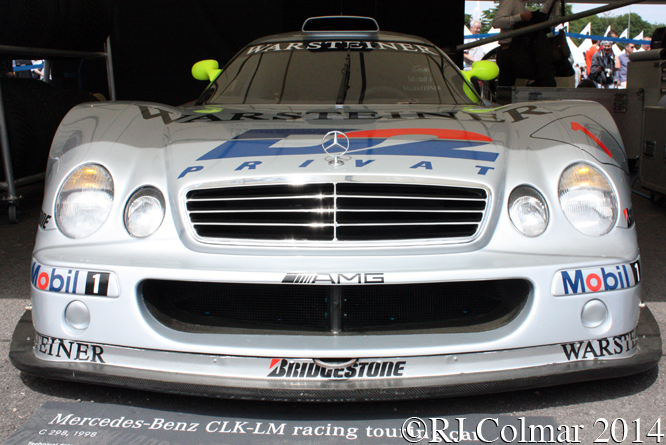
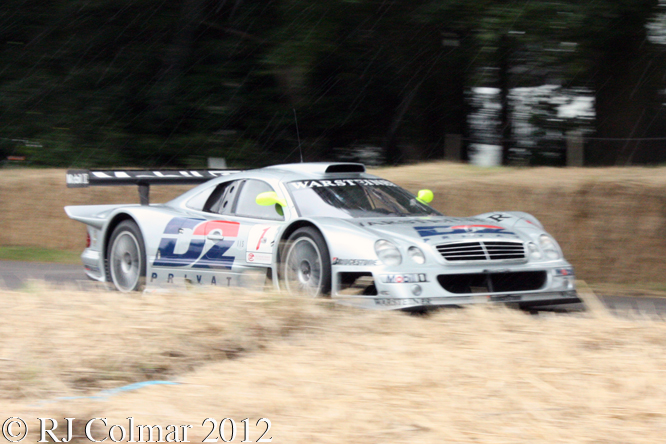
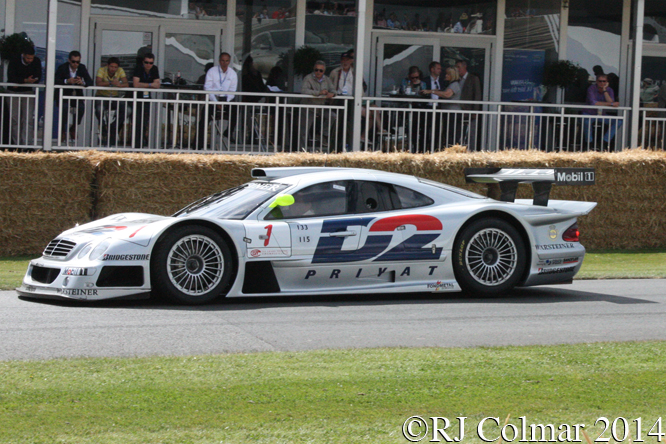
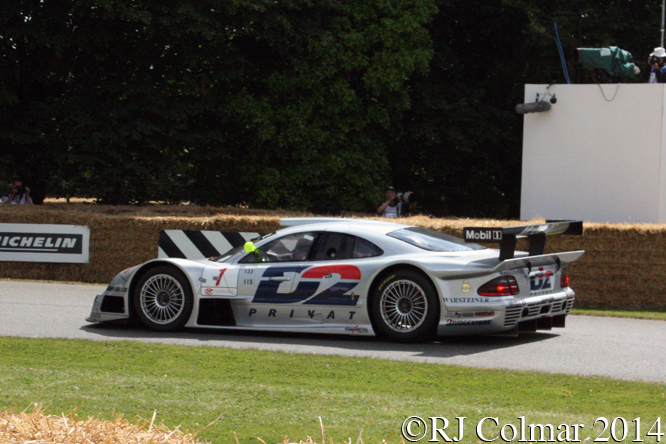
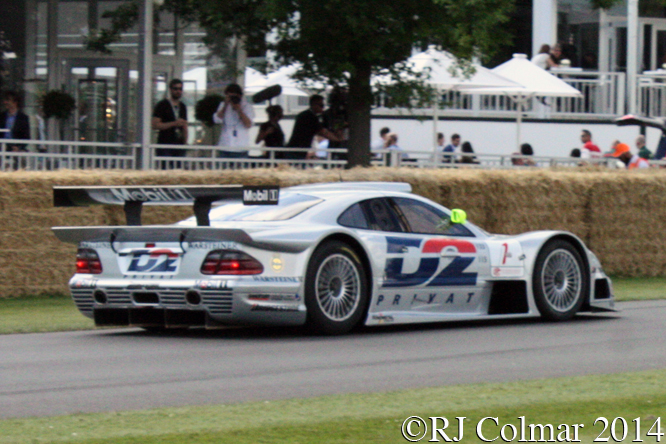
Look closely at the photo below and one can clearly see today’s featured car is labeled by Mercedes Benz as a 1998 type CLK-LM, however the Goodwood Programmes for the 2012 and 2014 events when these photo’s were taken clearly describe the car as a 1997 CLK GTR, aside from some minor body work differences the older GTR is powered by a 6 litre / 366 cui M120 60º V12 while the LM is powered by a 5 litre / 305 cui M119 90º V8 variant built especially for reliability in the Le Mans 24 hour race.

Mercedes Benz CLK-GTR, Goodwood Festival of Speed,

It turns out that as the body work suggests this is a 1997 CLK-GTR but painted up with the 1998 colours worn by the CLK-GTR Bernd Schneider and Mark Webber drove to victory in the 1998 FIA GT Championship at Silverstone which was the last works outing for the V12 CLK GTR’s before the AMG Mercedes team switched to the V8 CLK-LM’s.

Mercedes Benz CLK-GTR, Klaus Ludwig, Goodwood Festival of Speed,

The CLK-GTR was developed for the 1997 FIA GT championship season with the aid of an ex Labre Competition McLaren F1 GTR that was fitted with the M120 V12 and CLK-GTR bodywork that Mercedes intended to use on the chassis of their own design.

Mercedes Benz CLK-GTR, Klaus Ludwig, Goodwood Festival of Speed,

Despite qualifying on pole twice in their opening 3 races a CLK-GTR did not appear in victory lane until Bernd Schneider and Klaus Ludwig, seen driving the car in these photographs, won forth time out at the Nurburgring from the teams third pole position, five further wins followed during the season with Bernd and Klaus sharing victories at Zeltweg where Bernd Mayländer temporarily joined the duo, Sebring and Laguna Seca.

Mercedes Benz CLK-GTR, Klaus Ludwig, Goodwood Festival of Speed,

Bernd Schneider also recorded two more victories, with Alessandro Nannini and Marcel Tiemann at Suzuka and Alexander Wurz at Donington which was enough to secure the 1997 FIA GT Championships for Mercedes Benz and Bernd Schneider.

Mercedes Benz CLK-GTR, Klaus Ludwig, Goodwood Festival of Speed,

Prior to the CLK GTR’s final Bitish Empire Trophy win at Silverstone Klaus Ludwig and Brazilian Ricardo Zonta drove a GTR to victory in the Oschersleben 500 to ease the way for Mercedes Benz to complete a second FIA GT1 championship with the M119 V8 powered CLK-LM in 1998 which won all eight remaining rounds of the FIA GT Championship with six 1-2 finishes and with which Klaus and Ricardo became joint FIA GT Drivers champions.

Despite the V8 being chosen for it’s supposed durability at Le Mans in 1998 both of the CLK-LM’s retired with engine failure after less than 1/10 of the winning distance completed.

The CLK GTR’s competition career continued through the rest of 1998 with Team Persson Motorsport who’s best result was a 2nd place with Marcel Tiemann and Jean-Marc Gounon sharing a car at Ochlersleben.

Thanks for joining me on this “Four Cylinders Between Friends” edition of “Gettin’ a li’l psychoontyres” I hope you will join me again tomorrow for the last in the current series of Mazda Monday’s. Don’t forget to come back now !
Share

9 Mins Of Fame – EMKA C84/1

Trained accountant Steve O’Rourke and EMKA productions became the management team for Pink Floyd post Syd Barrat and both Steve and drummer Nick Mason shared an interest in racing cars.

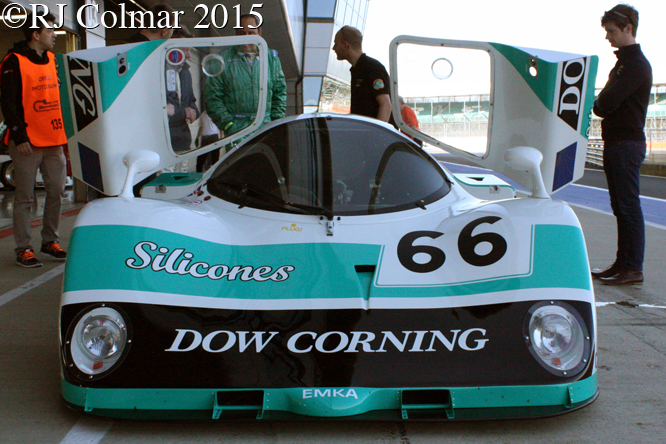
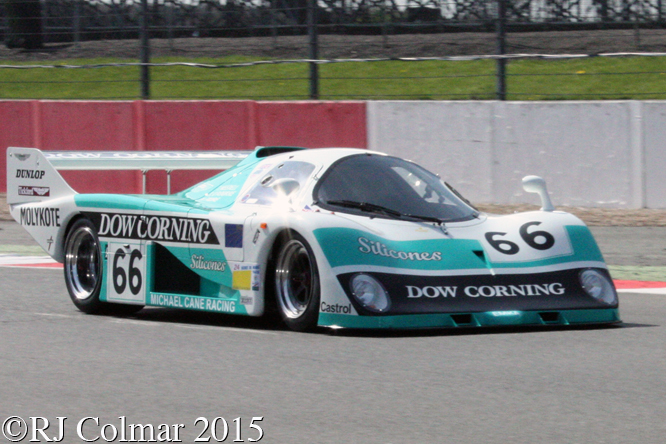
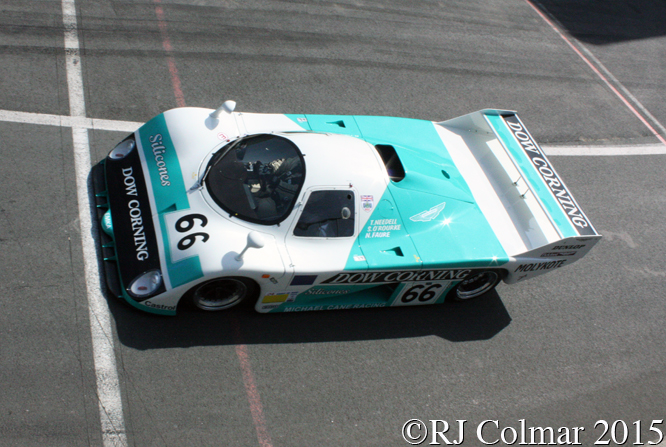
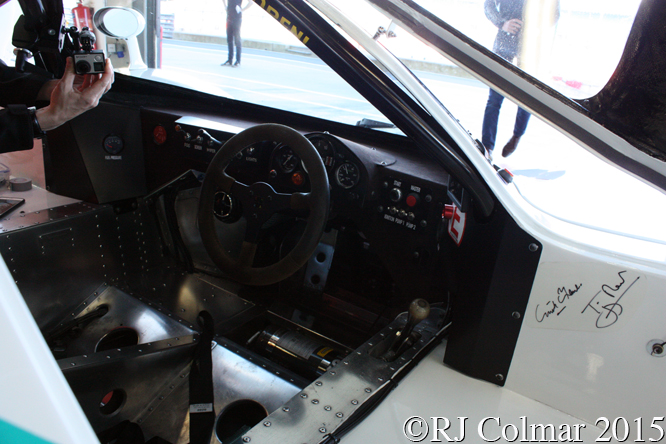
EMKA C84/1, Silverstone Classic Test Day,

Steve’s international racing career got of the ground with a Ferrari 512BB which he entered and drove from 1979 to 1980 scoring a best 7th place finish in the 1980 Silverstone 6 hours with Chris Craft and Vic Norman.

EMKA C84/1, Rudolf Ernst,  Silverstone Classic Test Day,

In 1981 Steve had Michael Cane Racing convert Niki Lauda’s 1979 Project Four Motorsports BMW M1 Procar to a more liberal Group 5 spec and raced that for two season’s scoring a best 2nd place in the 1981 Silverstone 6 Hours whith Derek Bell and David Hobbs sharing the cockpit, Nick Mason also co drove Steve’s BMW M1 on it’s two outings in 1982.

EMKA C84/1, Rudolf Ernst,  Silverstone Classic Test Day,

For 1983 Steve made the bold decision to follow in the footsteps of Robin Hamilton and Nimrod to build his own Aston Martin powered Le Mans challenger the EMKA C83/1.

EMKA C84/1, Silverstone Classic Test Day,

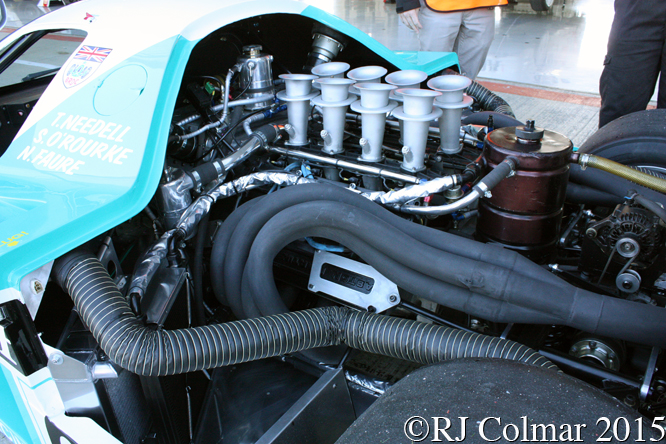
Len Bailey who was based at Gomm Metal Developments in Woking did the design work, Gomm did the metal work, the fibre glass body was constructed by Protoco, Aston Martin Tickford supplied 5,340 cc / 325.8 cui V8 engine and the whole car was prepared for competition by Micheal Cane Racing.

EMKA C84/1, Silverstone Classic Test Day,

On it’s debut at Silverstone the C83/1 was driven by Tiff Needell, Jeff Allam and Steve, they qualified 17th but retired on the last lap due to a failed wheel bearing. Nick Faure replaced Jeff at Le Mans for the 24 hour race where the car qualified 25th and finished 17th despite spending 2 hours in the pits with a suspension problem.

EMKA C84/1, Rudolf Ernst,  Silverstone Classic Test Day,

Due to uncertainty over the 1984 fuel regulations the C83/1 did not race again until 1985, by which time the ground effect venturi had been replaced with a flat floor, the rear suspension had been revised and the car had been renumbered as C84/1.

EMKA C84/1, Tiff Needell, Mark Galvin, Steve O'Rourke, Brands Hatch, 1000 kms

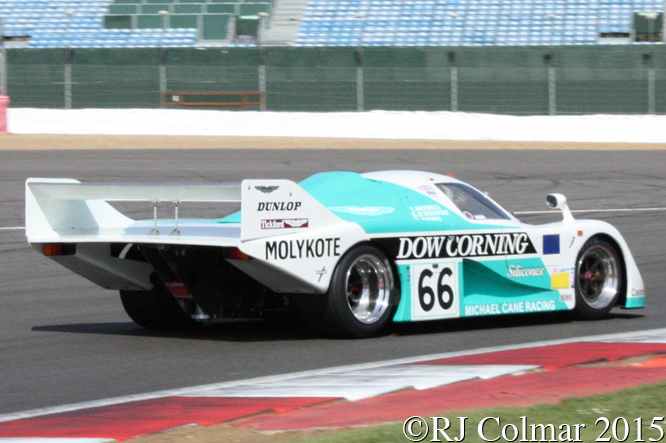
At Silverstone the C84/1 driven by Steve, Tiff and Bob Evans was nearly four seconds a lap in qualifying than two years earlier and qualified 15th for the six hour race but it retired again this time due to an engine issue.

Nick Faure again drove the car at Le Mans in 1985, in place of Bob, and the trio were now nine seconds a lap faster in qualifying and started from 13th on the grid. By employing an out of sequence fuel strategy Tiff Needell was able to lead the 24 Hour classic for 9 mins during the opening hours before finishing a respectable 11th.

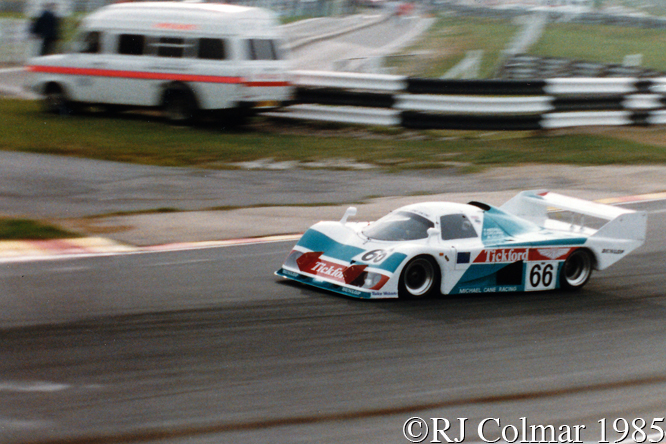
C84/1 appeared at Spa where James Weaver took over the guest seat from Nick Faure and at Brands Hatch, as seen in the last photo where Mark Galvin took over from James. The car qualified 17th and 10th respectively, retiring from both races fuel pressure and drive belt issues respectively.

Steve retired from competition until 1991 when he returned racing GT’s winning the British GT GT2 and GT1 class drivers championships with co-driver Tim Sugden in 1997 and 1998 respectively, his highest Le Mans finish was 4th also in 1998 when he shared his McLaren with Tim and Bill Auberlen.

A second EMKA was built in 1989 using the discarded ground effect floor from the C83/1 and spare parts from C84/1 including the revised type of suspension, with the original red C83/1 bodywork.

Owner Rudolf Ernst is seen at the wheel of C84/1 in the photo’s above taken at the Silverstone Classic Test Day earlier this year.

Thanks for joining me on this “9 Mins Of Fame” edition of “Gettin’ a li’l psycho on tyres” I hope you will join me again tomorrow when I’ll be looking at another Le Mans Challenger from Mercedes Benz. Don’t forget to come back now !
Share

No Cigars – Le Mans Ferrari 458 Italia GT2’s

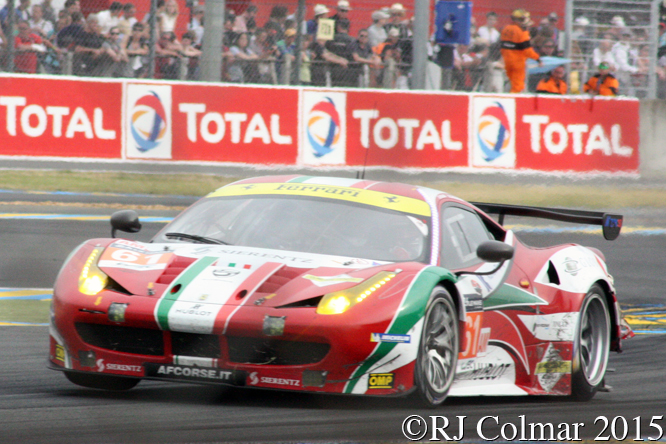
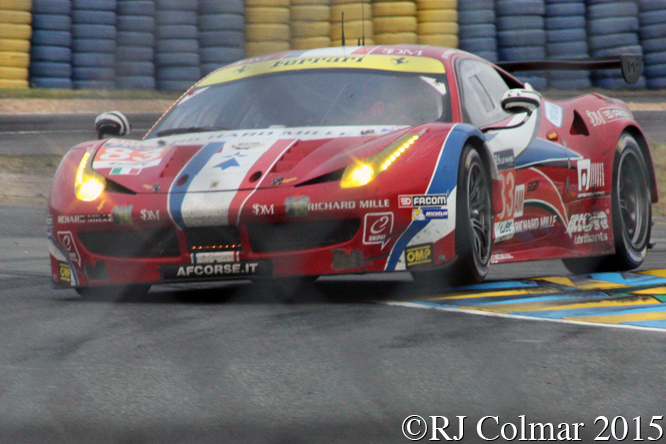
As we saw on Wednesday four of the eight Ferrari 458 Italia GT2’s entered in this years 24 Hours of Le Mans raced finished on the GTE Pro and GTE Am podiums, for the last of this month’s Ferrari Friday’s I thought it might be interesting to look at the four remaining Italia’s, all GTE Am entries, that did not get a cigar at this years race.

Ferrari 458 Italia GT2, Duncan Cameron, Alex Mortimer, Matt Griffin, Le Mans

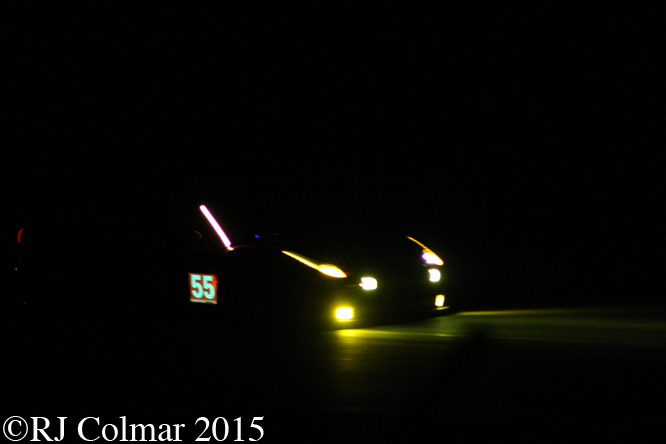
The only Italia to retire was the AF Corse #55 entry crewed by Duncan Cameron, Alex Mortimer and Matt Griffin which ran out of fuel out on the circuit in the early morning after completing 241 laps from 47th on the grid.

Ferrari 458 Italia GT2, Kuba Giermaziak, Michael Avenatti, Abdulaziz al Faisal, Le Mans

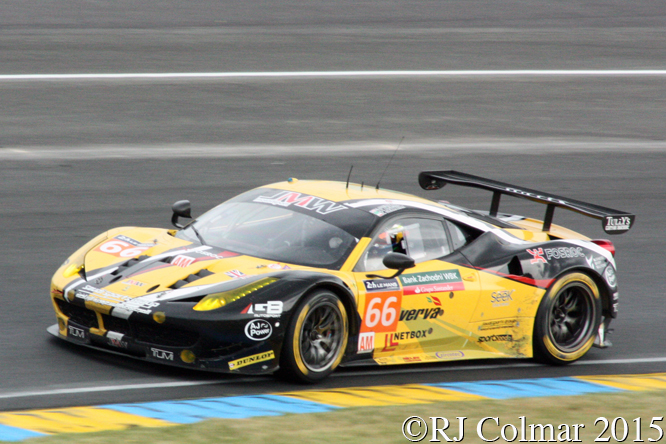
Last classified Italia was the JMW Motorsport #66 entry shared by Polands Kuba Giermaziak, American Michael Avenatti, and Saudi Abdulaziz al Faisal which completed 320 laps, 12 short of the GTE Am winner, and finished 36th overall from 51st on the grid.

Ferrari 458 Italia GT2, Peter Ashley Mann, Raffaele Giammaria, Matteo Cressoni, Le Mans

Starting from 48th on the grid was the AF Corse entered #61 driven by Peter Ashley Mann, Raffaele Giammaria and Matteo Cressoni which came home 31st overall after completing 326 laps.

Ferrari 458 Italia GT2, François Perrodo, Emmanuel Collard, Rui Águas, Le Mans

AF Corse also entered the #83 driven by François Perrodo, Emmanuel Collard and Rui Águas that started 40th on the grid thanks to the efforts of Emmanuel Collard and was classified 26th overall with 330 laps completed.

Thanks for joining me on this “No Cigars” edition of “Gettin’ a li’l psycho on tyres” I hope you will join me again tomorrow when I’ll be looking at an Aston Martin powered Le Mans challenger. Don’t forget to come back now !
Share

Out Of Hours Melissa – Saleen S7-R #610

Launched in 2000 the carbon fibre Saleen S7 was the brainchild of Steve Saleen designed by Phil Frank with a chassis engineered by Ray Mallock Limited and financed by Hidden Creek Industries.

The car was powered by a 427cui / 7 litre all aluminium derivative of Ford’s 351 Windsor block that produced 550hp in normally aspirated form or 750hp post 2005 twin turbocharged form.

Alongside the production cars 21 S7-R race chassis were manufactured between 2000 and 2009 and initially completed by Ray Mallock Limited in the UK and later by ORECA in France, seven of these chassis were given vehicle identification numbers (VIN), but never completed as race cars.

Saleen S7-R, Sébastien Dumez, Roland Bervillé, Laurent Groppi, Silverstone 1000 Kms,

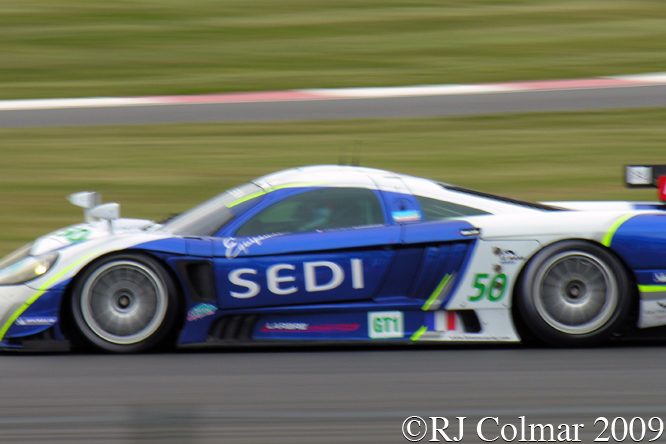
S7-Rs were raced by teams including; Ray Mallock Limited (RML) 2001 European Le Mans Champions (ELMS), Saleen-Allen Speedlab 18th Le Mans 2006, Fordahl Motorsports, Konrad Motorsport, Park Place Racing, Graham Nash Motorsport 2002 British and Spanish GT Champions, Dominique Dupuy’s DDO team, Vitaphone Racing, ACEMCO Motorsports 11th Le Mans in 2006, ORECA 2006 FFSA GT Champions, Zakspeed, Balfe Racing, Racing Box, and Larbre Compétition who won the GT1 class at Le Mans in 2010 with today’s featured chassis #610.

Due to a funding shortage fabrication of chassis #610 was carried out by Saleens engineering team at Irvine, CA as an out of hours project and named Melissa after one of the girl friend of one of the Saleen engineers working on the project in 2006/7.

Chassis #610 was then built up into a complete race car by ORECA at their base in Magny-Cours, France and delivered to Labre Competition for the 2009 season.

Saleen S7-R, Sébastien Dumez, Roland Bervillé, Laurent Groppi, Silverstone 1000 Kms,

Sébastien Dumez, Roland Bervillé and Steve Zacchia debuted the car in the 2009 Catalunya 1000 Kilometres where it finished 22nd from 26th on the grid, for the Algarve 1000 Kilometres Sébastian and Roland were joined by Stéphane Lémeret and they finished 23rd from 22nd on the grid.

For the ADAC 1000KM-Rennen at the Nürburgring Roland and Sébastian were joined by Laurent Groppi where they finished 1st in GT1, 23rd overall from 21st on the grid, at the Silverstone where today’s photographs were taken, the same trio finished 21st from 20th on the grid.

At the 2009 season ending Okayama 1000 Kilometres Roland was rejoined by Stéphane Lémeret and with Dutchman Carlo van Dam they retired from Heat One and finished 10th in heat two.

Saleen S7-R, Sébastien Dumez, Roland Bervillé, Laurent Groppi, Silverstone 1000 Kms,

Gabriele Gardel, Patrice Goueslard and Julien Canal drove #610 at the 2010 season opening Le Mans Series Test at Paul Ricard finishing with 32nd fastest time a month later the same trio finished the 8 Heures du Castellet at the same venue 24th from 26th on the grid.

At the 1000 Km de Spa Francorchamps Gabriele and Patrice were joined by Brazilian Fernando Rees and together they finished 31st from 46th on the grid before the car was sent to Le Mans.

For the French classic Julien Canal was back in the third seat and from 46th on the grid they finished 1st in GT1 and 13th overall, Fernando then replaced Julian for the 2010 Algarve, Hungaroring and Silverstone 1000 km races and the car was driven to 3 more straight GT1 class victories.

Laurent Groppi was then joined in #610 for it’s final known appearance by Pedro Lamy and Patrick Bornhauser for the 1000kms race run at Zuhai in the Peoples Republic of China and Melissa rounded out her career with a 5th straight GT1 class victory from 12th on the grid she finished 18th overall.

Thanks for joining me on this “Out Of Hours Melissa” edition of “Gettin’ a li’l psycho on tyres” I hope you will join me again tomorrow for Ferrari Friday. Don’t forget to come back now !
Share