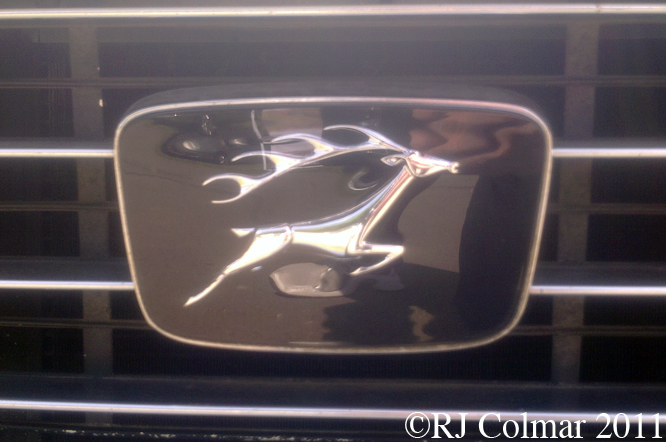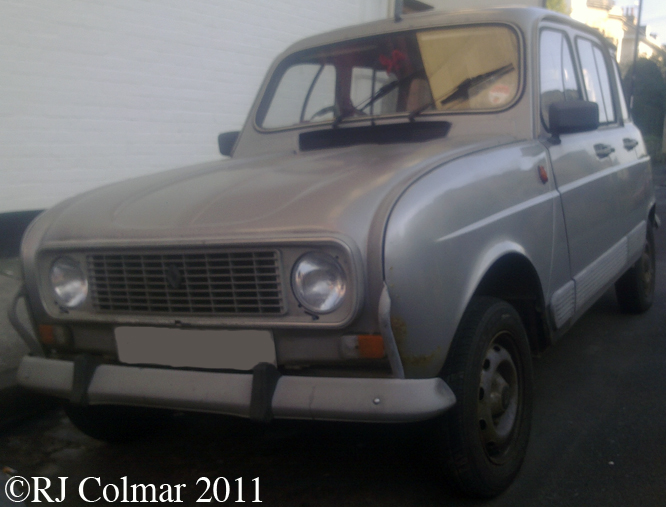
Tag Archives: Renault

Active Suspension – Lotus Ford T92 92/5

For 1983 the Formula One regulations changed mandating flat bottoms between the front and rear axles, the intention was to outlaw ground effects which Lotus had successfully pioneered with it’s Lotus 79 and less successfully with it’s Lotus 80, 86 and 88 models, all the other teams on the Grand Prix grid had followed the Lotus teams lead with the result that cars were driving around corners so fast they were making the tracks they were driven on obsolete in terms of safety.
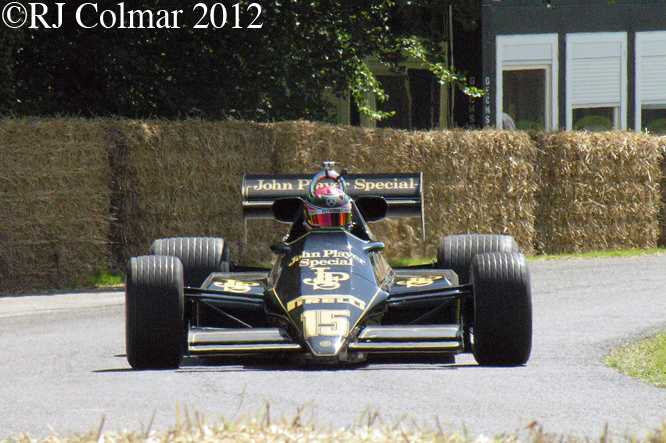
Lotus Ford 92, Goodwood FoS

Lotus managed to secure a supply of Renault Tubocharged V6 engines, for 1983, to replace the Ford Cosworth V8’s that the team had been using since the 1967 Dutch Grand Prix. These Renault motors were more powerful but also more fragile than the Cosworth’s, they were also in extremely short supply with Renault being able to supply only enough to keep Elio de Angelis on the grid for the first half of the 1983 season in a Lotus Renault Type 93T. Team mate Nigel Mansell had to make do with an interim the Ford Cosworth powered Lotus 92 featured today for the first half of 1983.
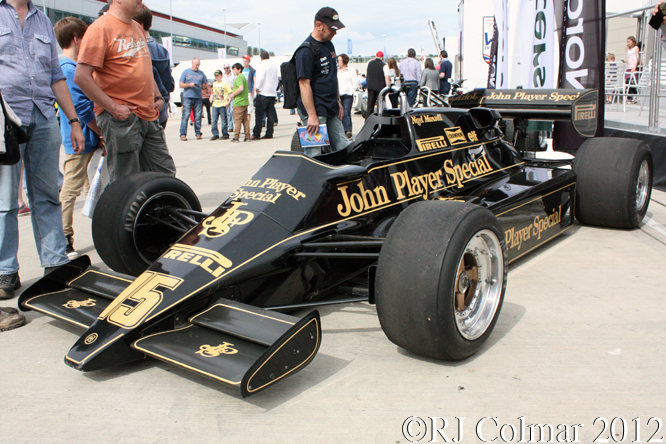
Lotus Ford 92, Silverstone Classic

The Lotus Renault 92 was devised by Colin Chapman and Martin Ogilvie, however Colin Chapman died in December 1982 and so never saw the car completed, 2 Type 92’s were built using the chassis tubs of the previous Lotus Type 91 featured last week. As well as being the last Ford Cosworth DFV powered Lotus design the Lotus 92 was also the first Formula One car to be fitted with computer managed hydraulic ‘active’ suspension. Nigel Mansell tested the system but did not like it so the idea was shelved pending further development. In 1992 Nigel won his only world championship with Williams in an actively suspended car.
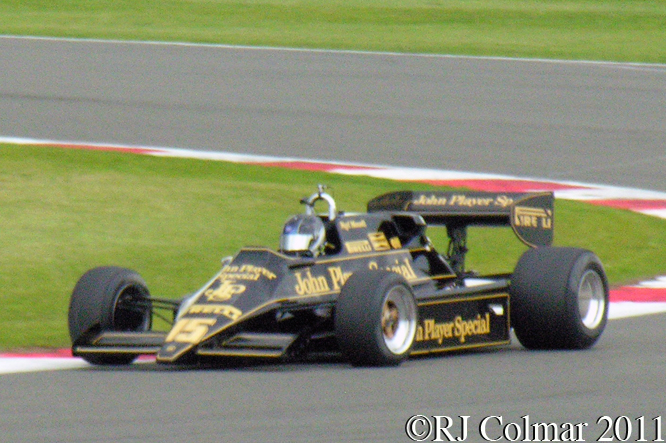
Lotus Ford 92, Silverstone Classic

Perhaps unsurprisingly without their energetic leader Lotus floundered in 1983 the Renault powered Lotus 93T recorded a best 9th place with Elio at the wheel and Nigel managed a best 6th place finish at the 1983 Detroit Grand Prix in the Cosworth powered Lotus 92. A decision was taken in June 1983 to employ the recently sacked ALFA Romeo designer Gerard Ducarouge to design a third all new car for 1983.
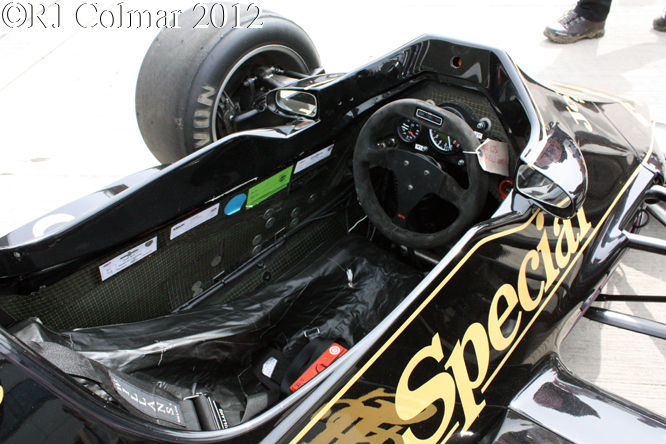
Lotus Ford 92, Silverstone Classic

In six weeks Ducarouge managed to design and deliver two new Lotus Renault T94’s and set in motion a return to winning ways for Team Lotus. The Lotus T92 recorded just 9 starts one for de Angelis in Brazil at the beginning of the season where he was disqualified for starting the race in the Cosworth powered car in which he had not set a qualifying time, after his Renault powered 93T broke down on the warm up lap and 8 starts for Mansell who along side his 6th place finish in Detroit recorded three 12th place finishes and four retirements, which was three more finishes than the Lotus Renault 93 T managed.
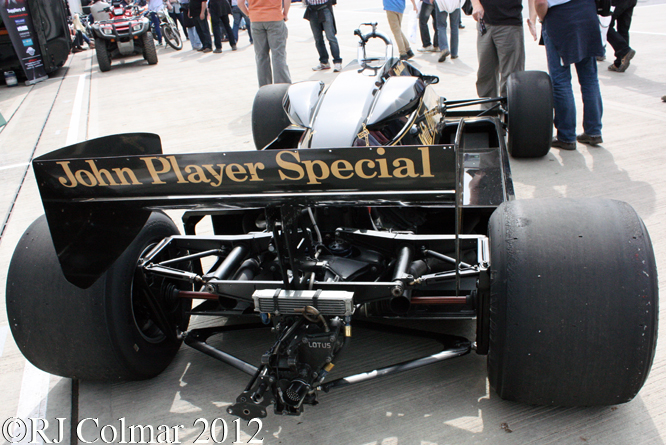
Lotus Ford 92, Silverstone Classic

The first photo show’s Mercedes Benz GP reserve driver Brendon Hartley at last years Goodwood Festival of Speed and the third show’s 92/5’s previous owner Kiwi Roger Wills at the wheel during the 2011 Silverstone Classic meeting.

My thanks to Roger for clarifying Brendon Hartley’s identity.

Thanks for joining me on this “Active Suspension” edition of “Gettin’ a li’l psycho on tyres”, I hope you will join me again tomorrow. Don’t forget to come back now !

Share

Big Valve Special – Lotus 74 Europa Special

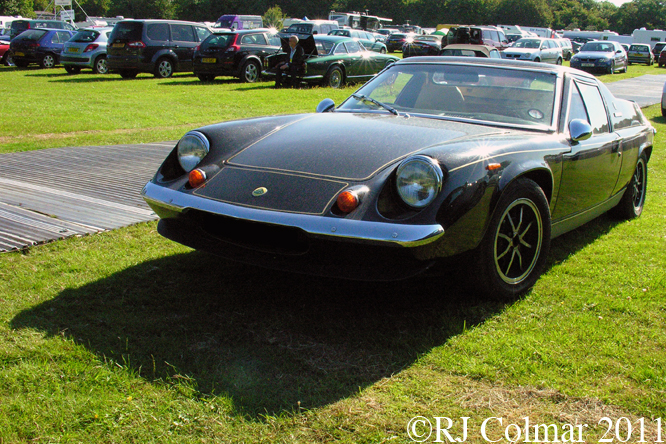
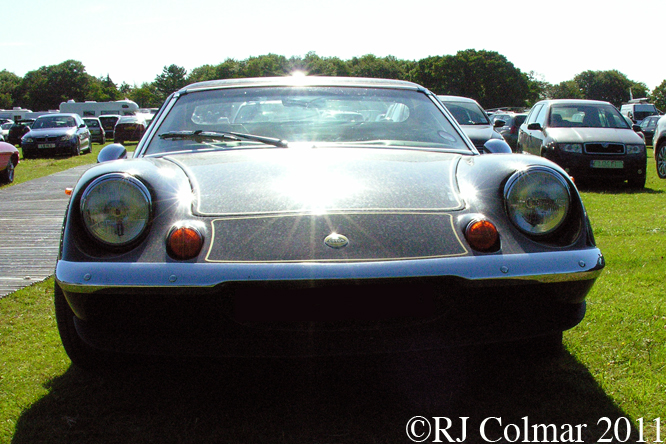
In 1971 Chief Engineer Mike Kimberley oversaw the development of the upgraded Lotus Europa Twin Cam Type 74. featuring a 105 hp Twin Cam motor coupled with a stronger Renault 4 speed gearbox.

Lotus Europa Special, Goodwood FoS

The upgraded Europa featured a 105 hp Twin Cam motor coupled with a stronger Renault 4 speed gearbox.

Lotus Europa Special, Goodwood FoS

After the first 1580 Europa Twin Cams has been built the Europa model was again upgraded with a 126 hp ‘big valve variant of the twin cam motor.

Lotus Europa Special, Goodwood FoS

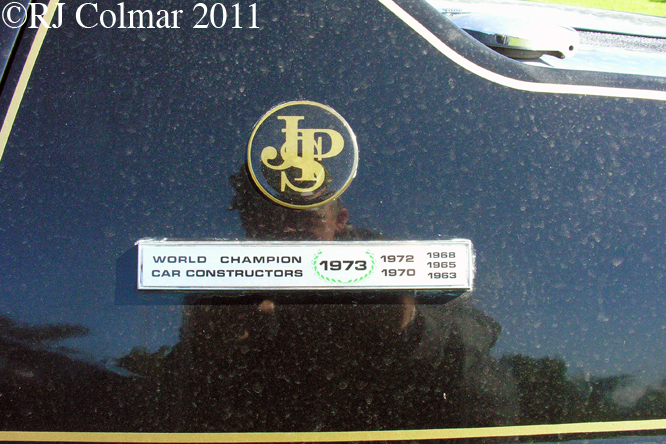
The first 200 ‘Big Valve’ Europa’s were planned as a limited ‘Europa Special’ edition of 200 featuring the black and gold “John Player Special”, tobacco brand, paint work of the works Lotus Racing cars which won the 1972 World Constructors Championship and World Drivers Championship with Emerson Fittipaldi at the wheel.

Lotus Europa Special, Goodwood FoS

The 200 ‘Europa Special’ limited edition vehicles, all featuring a 5 speed gearbox, launched in September 1972 are distinguishable by a numbered badge on the dash panel.

Lotus Europa Special, Goodwood FoS

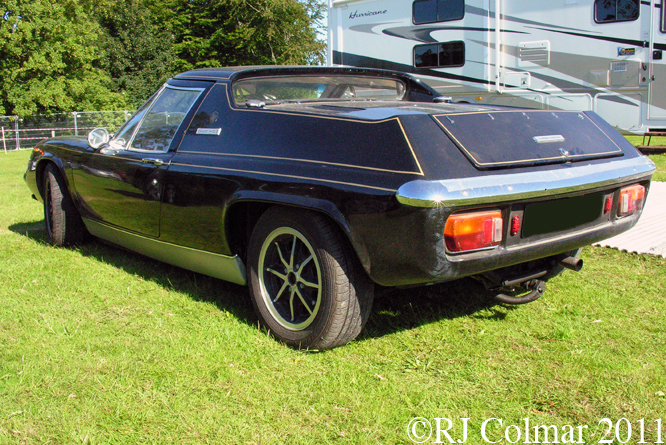
Such was the popularity of the Europa Special that the model was continued after the initial planned batch of 200 had been built sans numbered dashboard badges and in a variety of colours including black and gold until 1975.

Lotus Europa Special, Goodwood FoS

I was unable to discern if the 1972 Europa Special seen here is one of the first 200 numbered cars, or one of post limited edition models, when I saw it at last years Goodwood Festival of Speed. Note how the rear bodywork has been tidied up to give better rear visibility when compared to the Type 54 Europa I looked at last week.

Lotus Europa Special, Goodwood FoS

A Europa with the big valve motor was tested in period carrying a passenger from rest to 60 mph in 6.6 seconds and with a maximum speed of 122 mph. In all 3130 big valve Europa Specials were built from September 1972 to 1975.

Thanks for joining me on this ‘Big Valve Special’ edition of ‘Gettin’ a li’l psycho’ on tyres’ I hope you will join me again tomorrow when I’ll be reviewing last weeks Bristol Italian Auto Moto Festival. Don’t forget to come back now !

12 05 09 Lotus Type 74 disambiguation, it has come to light that at least one internet source lists two Lotus Type 74’s one the Europa Twin Cam / Europa Special and the other an open wheel Formula 2 car, former Lotus employee Rob, Kayemod on The Nostalgia Forum, has kindly informed me that the Formula 2 cars were only ever referred to at the Lotus factory as “Texaco Stars” in deference to their sponsor and that the Type 74 designation seems to have been applied to the racing car retrospectively.

Share

Dominating Réunion – Alpine A110 1600S

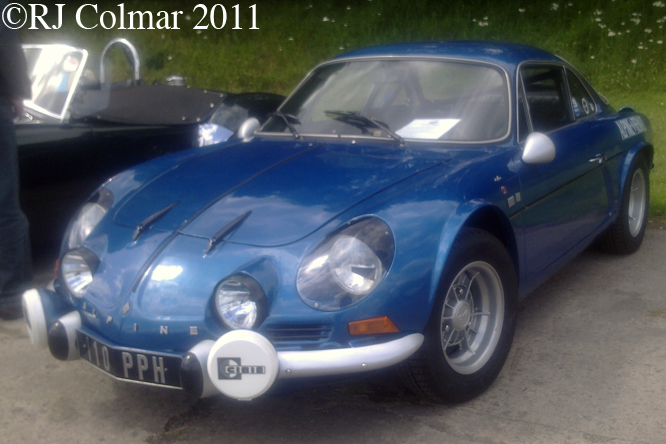
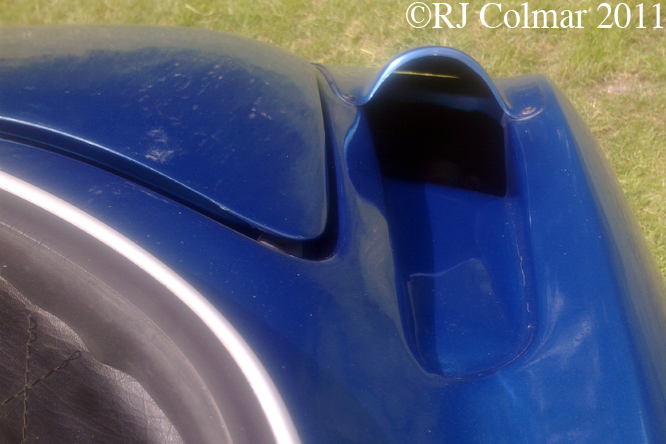
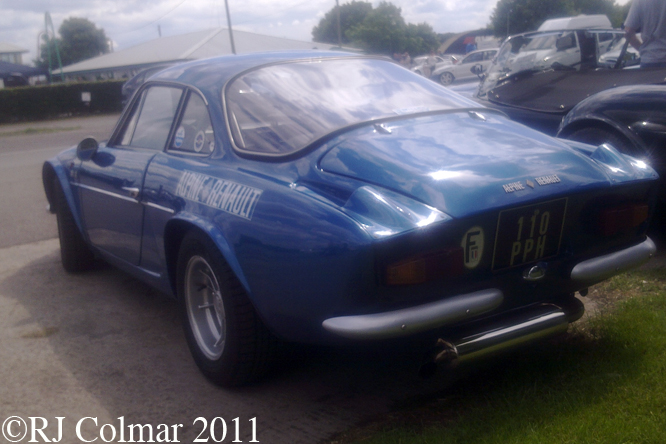
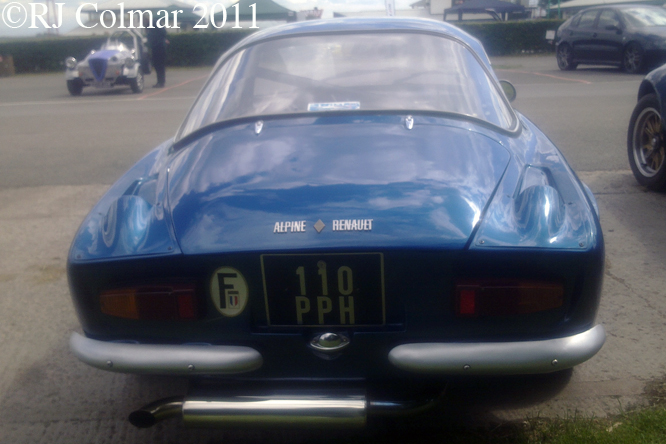
Jean Rédélé’s rear engined Alpine A110 “Berlinette” launched in 1961 was an evolution of the A108. Distinguishing features include proprietary Renault R8 running gear in place of the Renault Dauphin running gear of the A108 and a larger tail for the fiberglass body to accommodate the larger R8 derived motors.

Alpine Renault, A110, 1600S, Castle Combe C&SCAD

The cars were manufactured at the Dieppe factory, which today operates under the the Renault Sport banner, with further cars being assembled in Mexico under the name Dinalpin and perhaps most unlikely of all from 1967 to 1969 in Bulgaria under the name ‘Bulgaralpine‘.

Alpine Renault, A110, 1600S, Castle Combe C&SCAD

Over the years of production up to 1977 the choice of straight 4 cylinder engine sizes ranged from 95 hp 1.1 liters / 67 cui through to 125 hp 1.6 liters / 97 cui, the latter giving the a top speed of 130 mph and zero to 60 mph in 7 seconds.

Alpine Renault, A110, 1600S, Castle Combe C&SCAD

With these sorts of performance figures the vehicle was a shoe in for a successful competition career in particular on tarmac rallies, Jean Vinatier won the French National Rally title in 1969 in an A110 and both Ove Anderson (1971) and Jean-Claude Andruet (1973) won the Monte Carlo Rally in A110’s the latter victory contributing to Alpine Renault, rebranded after Renault’s 1970 buy out, winning the first World Rally Championship in 1973.

Alpine Renault, A110, 1600S, Castle Combe C&SCAD

The A110 cars also have a successful track racing history in Europe and the United State still winning its class in races as late as 1980.

During the course of finding out about the A110 I have found several inaccuracies one that the A110 was inspired by Colin Chapmans Lotus Elan, this is not true the A110 preceded the announcement of the Elan by 1 year. Also I have seen the A110 mentioned in connection with the Brazilian assembled Willys Interlagos, the Interlagos built from 1962 to 1966 and most successfully raced by Wilson Fittipaldi, brother of twice world champion and Indy 500 winner Emerson, was based on the A110’s predecessor the A108.

Alpine Renault, A110, 1600S, Castle Combe C&SCAD

This particular vehicle seen at Castle Combe Classic and Sport Car Action Day was originally exported to Renault St Denis, Il de La Réunion out in the Indian Ocean between islands of Madagascar and Mauritius, in 1973. It immediately made an impact sweeping Réunion’s two biggest events the ‘Mille Kilometers‘ and ‘Tour de la Réunion‘ from 1973 to 1975. The car was acquired by it’s current owner in 1991.

Thanks for joining me on this ‘Dominating Réunion’ edition of ‘Gettin’ a li’l psycho on tyres’ I hope you’ll join me again. Don’t forget to come back now !

Share

Stepping Stone – Dallara Renault F304

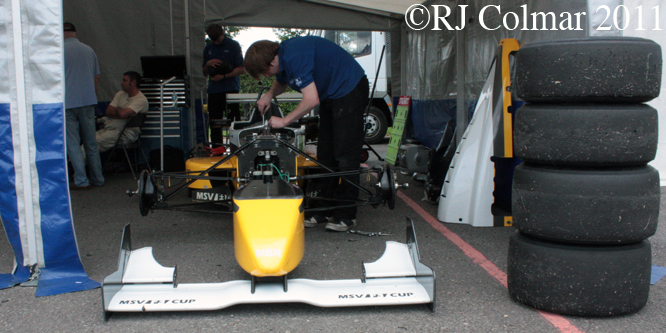
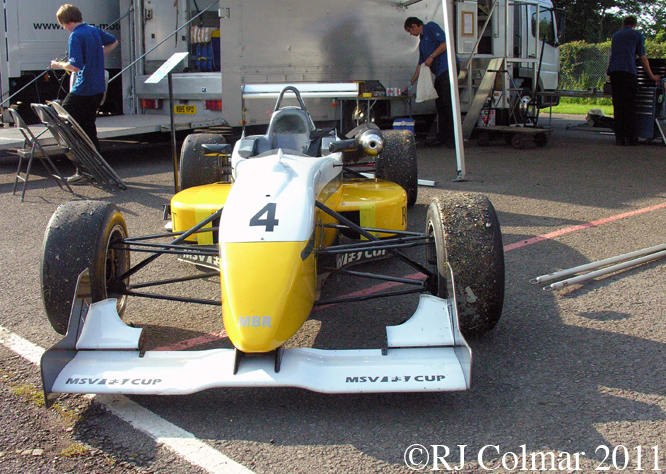
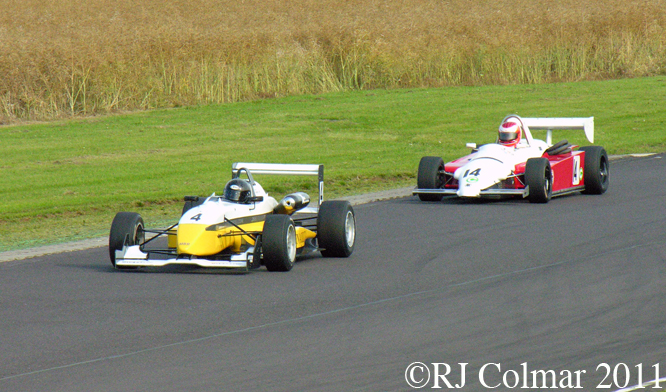
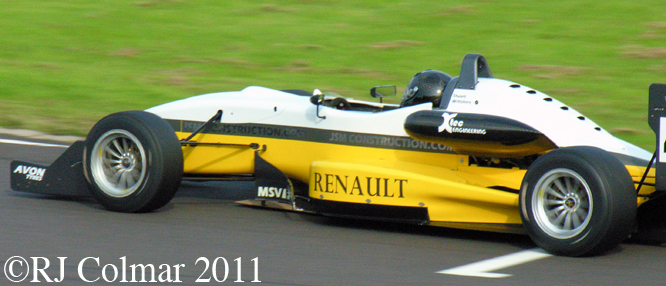
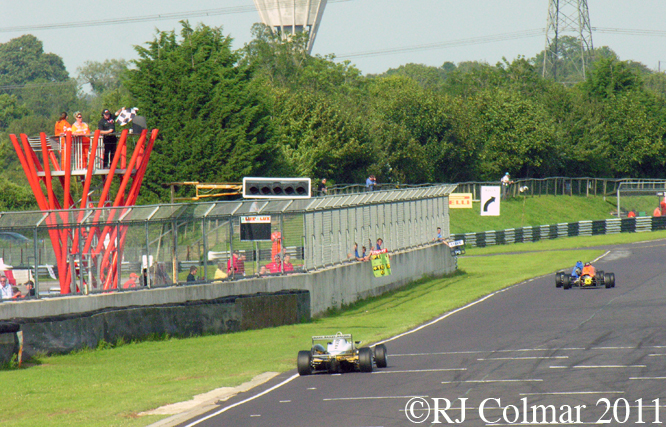
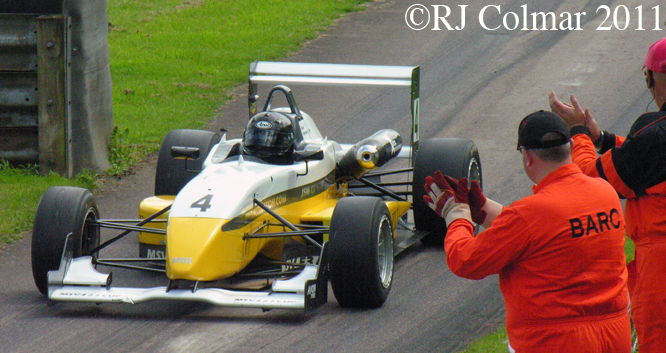
The winner of the last two rounds of the Free Single Seater Series at Castle Combe was the aptly named Stuart Wiltshire in his Dallara Renault Xtec F304, though it turns out that Stuart is actually an Essex Boy born and bred.

Dallara F304, Castle Combe

Dallara was founded by Gian Paolo Dallara near Parma Italy in 1972 specialising in building sports racing and hillclimbing cars . After penning one of the wilder body work configurations for Walter Wolf‘s Can Am team in 1977, Dallara was commissioned by Wolf to build a third tier open wheel Formula 3 car. Built to similar regulations as the F304 seen here, the Wolf F3 car was driven by Bobby Rahal at Monaco.

Dallara F304, Castle Combe

During the 1980’s Dallara Formula 3 cars started winning championships in Italy then France and Germany before going on to dominate the most competitive series of all in Britain during the 1990’s.

Dallara F304, Castle Combe

Today Dallara is known world wide having briefly competed in Formula One and built a variety of sports cars for teams including Lancia, Ferrari, and Audi. More recently Dallara were one of the original suppliers of chassis to the Indy Racing League and now have an exclusive deal to supply IRL chassis and they have built a near monopoly in every series used as an entry by drivers trying to reach Formula One.

Dallara F304, Castle Combe

In 2004 the British Formula 3 Series was dominated Dallara F304 chassis like the one in these photo’s most were powered by Mugen Honda motors but Renault and Opel, the German GM division were represented with multiple entries.

Dallara F304, Castle Combe

Among those driving Dallara F304’s when they first appeared were British 2004 Champion Nelson Piquet Jr who after a brief tormenting career in Formula One today drives in the NASCAR Trucks division, Lucas di Grassi the Pirelli F1 tyre tester who last year drove for the Virgin Grand Prix Team and in 2004 drove a Renault powered F304 identical to the car featured today, Australian Supercar V8 contender Will Davison, fellow Aussie Will Power who today is part of the Penske IRL team, Venezuelan IRL driver EJ Viso and Karun Chandock who became the first driver to record a finish for the HRT Grand Prix team last year and is an occasional driver for the Team Lotus Grand Prix team this year.

Dallara F304, Castle Combe

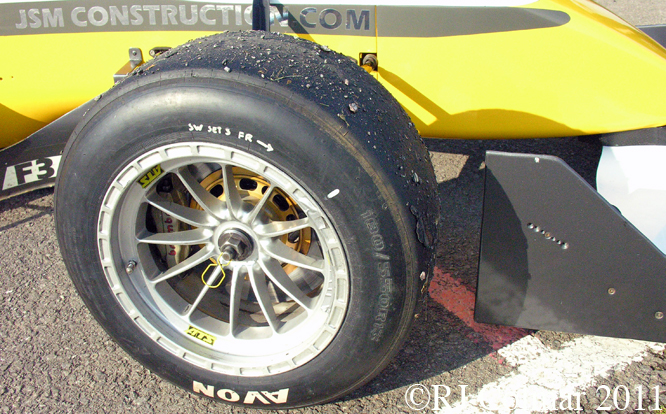
Seven years on from it’s first appearance Stuart Wiltshire is competing in the MSV F3 Cup with his JSM Construction sponsored car being prepared by Mark Bailey Racing who started off in the Toyota Formula 3 Championship in 1989, with Mark Bailey taking the championship spoils and have participated in World Sports Car Championships with their own design the MBR 972.

Dallara F304, Castle Combe

Stuart a director of a construction company has competed in Formula 3 championships for older vehicles on and off since 2003 the highlight of his career was leading into the first bend at Donington Park earlier this year.

Dallara F304, Castle Combe

With a couple of wins behind him at Castle Combe, I wish Stuart all the best as he returns to the MSV F3 series and look forward to future appearances of Stuart and the immaculate Mark Bailey Racing Dallara Renault F304 at Castle Combe for the Free Single Seater Series.

Thanks for joining me on this stepping stone edition of ‘Gettin’ a lil’ psycho on tyres’, I hope you’ll join me again tomorrow for Ferrari Friday. Don’t forget to come back now !

10 11 11 Post Script – Since posting this blog it has been brought to my attention that Stuart Wiltshire has a Dallara F302 with 04 updates for sale. I can’t say for sure this is the same car as featured in this blog. The car in the blog was definitely described as an F304 in the MBR team blurb at Castle Combe when I saw it.

Share

Feeding the Need – Goodwood Festival of Speed

On Thursday I managed to pop in to the Goodwood Festival in the early morning and afternoon.

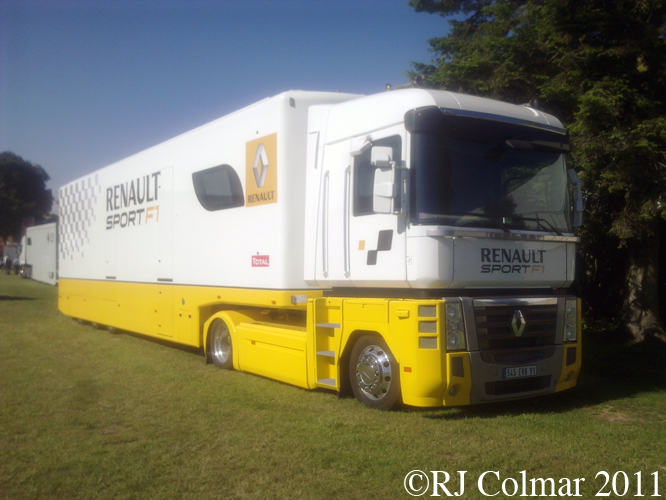
Renault Magnum, Goodwood FoS

It was one of those mornings when even a the Renault Magnum transporter held a good deal of visual allure.

Gerry Judah, Goodwood FoS

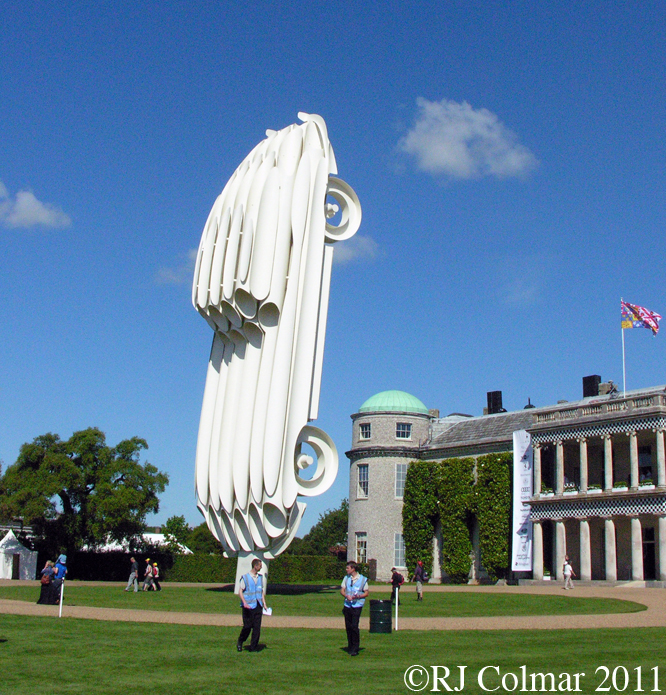
The truck certainly held more allure to my eyes than this 28 m 175 tonne steel macaroni E-Type Jaguar by Gerry Judah but I am no judge of ‘art’. (08 12 11 Update turns out this sculture was illuminated at night, whih I have say in the photo’s I have seen did give it a far more interesting appeal.)

Jaguar XK 140, Goodwood FoS

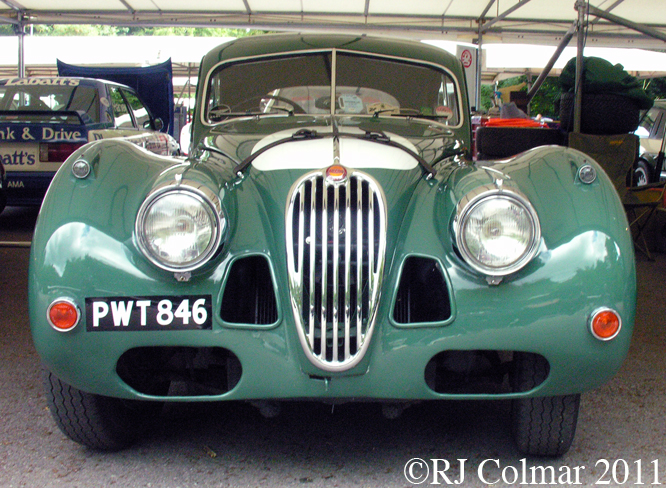
Jaguar was very much the manufacturer under the spotlight of this years Festival, with not only the 50th Anniversary of the E- Type but also the 60th anniversary of Jaguars first victory at Le Mans being celebrated. Above the private XK 140 entered at Le Mans in 1956 for Roger Walshaw and Peter Bolton did not finish despite recording 1 lap less than 14th and last classified finisher.

Goodwood FoS

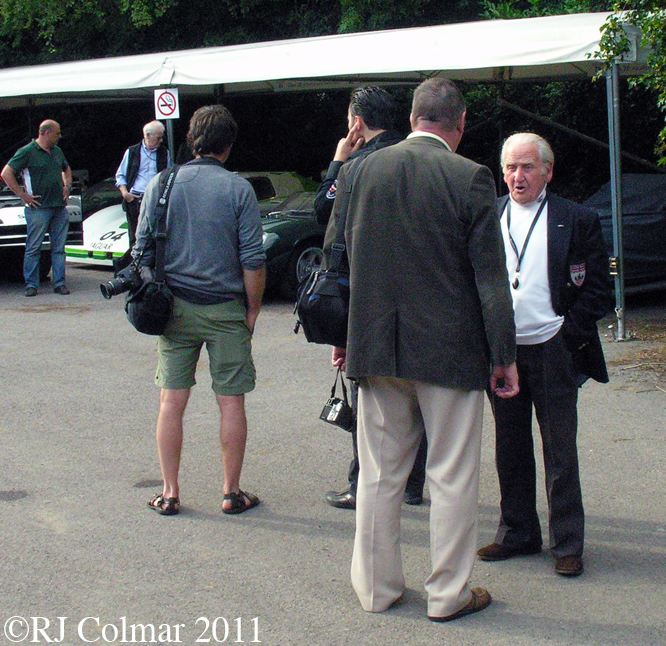
Jaguars senior ambassador and former test driver Norman Dewis, extreme right facing camera above, was in evidence amongst the Jaguar exhibits, Norman competed in numerous races for Jaguar and most amazingly IMHO in 1953 he was bolted into an XK 120 and then proceeded to set a production car speed record of 176 mph in it !

SEAT IBE, Goodwood FoS

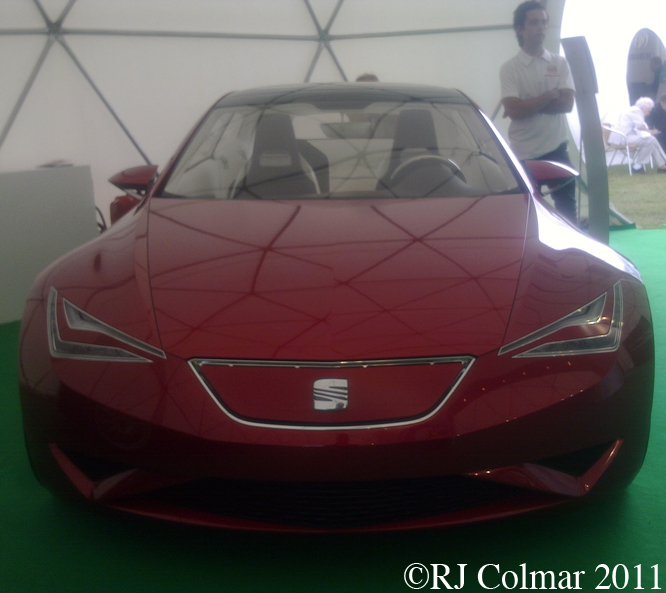
There appeared to be a lot of emphasis on manufacturers efforts to go electric, among the more feasibly stylish concepts was the SEAT IBE, while I am all in favour of zero emissions travel I seriously believe we would be doing our great great grand children a great favour if we talked about these vehicles being ‘DISPLACED EMISSION VEHICLES’ since the power to recharge batteries has to come from somewhere.

Lohner - Porsche Semprus Vivus, Goodwood FoS

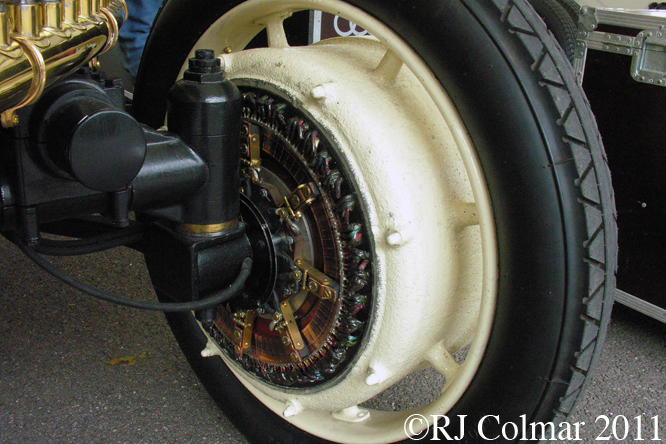
I wonder if it was a coincidence that in the week when Porsche announced that they were planning to return to Le Mans with a hybrid car in 2014 what must rank as one of the original hybrid vehicles a, Porsche AG built, replica of a 1900 Lohner – Porsche Semprus Vivus powered by two de Dion petrol motors which charge the batteries that drive the front electric hub motors, one of which can be seen above, should appear at the Goodwood Festival of Speed ?

BRM P261, Goodwood FoS

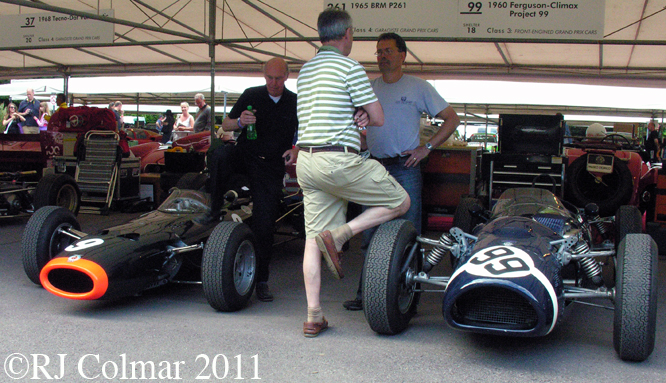
Former Jaguar apprentice Richard Attwood, left with green bottle above, who won the Le Mans 24 hours in 1970 with Hans Hermman driving a Porsche 917 was down to drive the 1965 #9 BRM P261 this weekend, seen also on the left, similar apart from it’s engine size to the BRM he drove to a win at Levin in the 1966 Tasman Series.

Red Arrows, Goodwood FoS

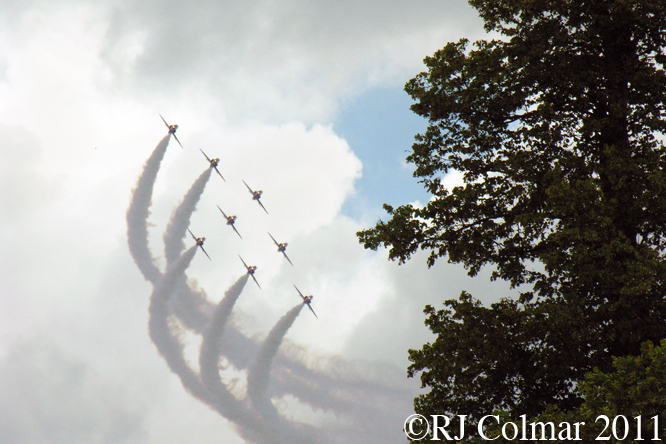
The action on the hillclimb track at Goodwood on Thursday was restricted to a huge range of road cars being tested by prospective clients in an event known as the moving Moving Motor Show. Returning after a lunchtime meeting the tempo of the day was picked up by the Red Arrows who’s display of airpersonship is nothing short of staggering.

Bloodhound SSC, Goodwood FoS

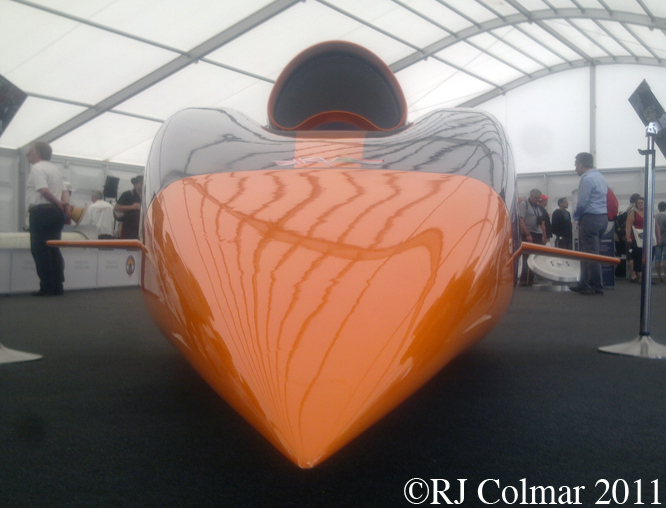
While the Red Arrow’s Hawk trainer aircraft usually fly around 350 mph during displays and have a top speed of 630 mph they will be left standing by the Bloodhound SSC if all goes to plan when it is completed. Project founder Richard Noble hopes to have the 14,000 lb 42 foot long car powered by a Eurofighter Jet engine to 350 mph and a rocket, fed oxidiser by a pump connected to Cosworth Formula One motor ready to attempt to take the LAND SPEED RECORD up to 1,000 mph in 2013.

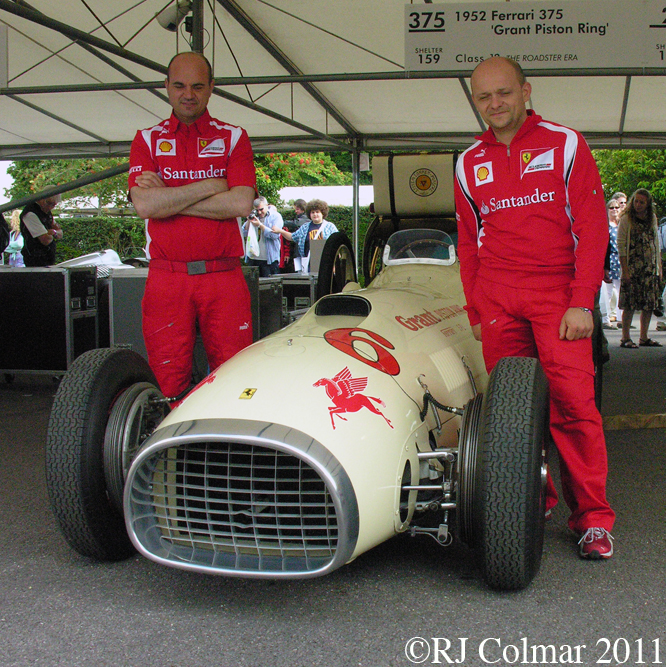
Grant King Piston Ring Special Ferrari 375, Goodwood FoS

The Centenary of the first running of the Indianapolis 500 was celebrated by a large selection of vehicles from the past 100 years including the Grant King Piston Ring Special Ferrari 375 from the Louwman Museum seen being given the once over by two latter day Ferrari technicians with over 23 years experience working at Marranello between them.

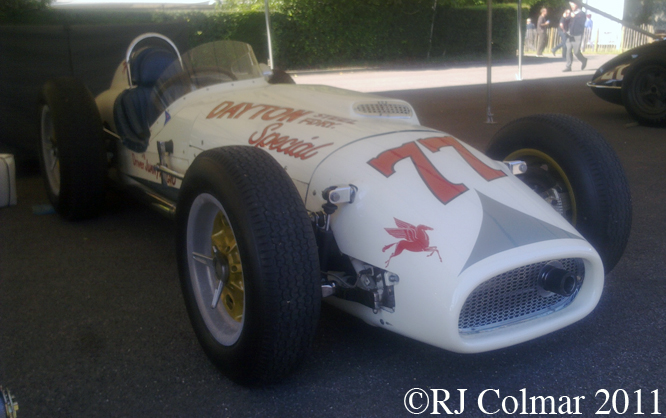
Dayton Steel Foundry Special, Kurtis Kraft, Goodwood FoS

I was advised to look out for the Dayton Steel Foundry Special a Kurtis Kraft – Offenhausser by GALPOT regular and soon to be contributor Dave Wolin, this car was unsuccessful in the hands of Juan Fangio at Indy who withdrew from qualification after trying this car in 1958. Indy Winner Scott Dixon was down to drive the car during the Festival of Speed.

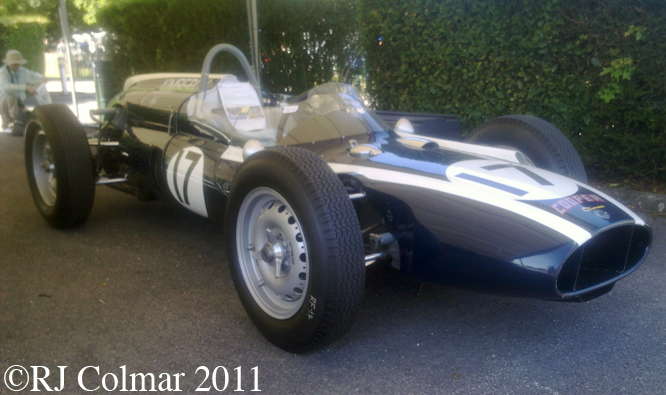
Kimberely Special, Cooper Climax T54, Goodwood FoS

Some of you may remember my blog on The Kimberely Cooper Special a Cooper T54 driven by Jack Brabham at Indy in 1961. Today the car is owned by Philippe de Lespinay, it was a treat to see this car in the flesh and to meet Philippe and his wife Kathryn.

Spyker Silvestris V8 Prototype, Goodwood FoS

There were a handful of vehicles representing manufacturers that have or at least attempted to have been revived including this 1996 Audi V8 Turbo powered Spyker Silvestris V8 Prototype, which looks like it has been kept in a barn for 15 years while still retaining many of the hall marks although with a tad less testosterone of the current Spyler models.

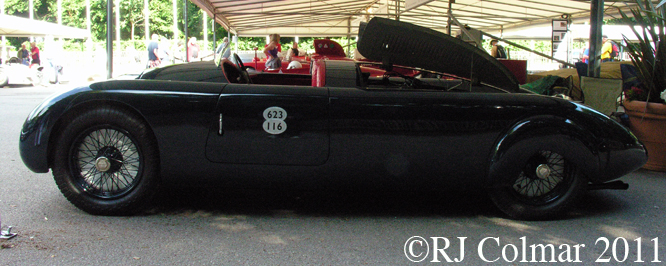
Jankowits, Goodwood FoS

Seeing the Jankowitz Special was a wonderful surprise, though it was very disappointing to see the owner Georg Gebhard embarrass himself by still repeating the myth that discredits the ingenious Jankowits brothers by incorrectly claiming this special was an Alfa Romeo project.

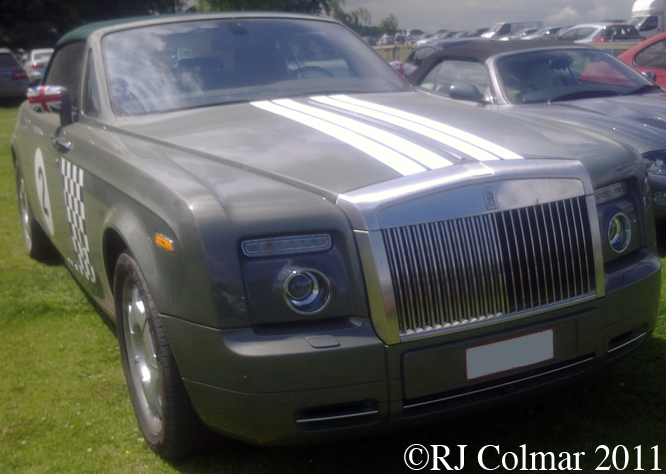
Rolls Royce Phantom Convertible, Goodwood FoS

I soon lightened up when I saw this Rolls Royce Phantom Convertible in the car park on the way out. My need for speed satiated by a near perfect day at Goodwood I enjoyed a slow amble home taking the back roads into the sunset through West Sussex, Hampshire and Wiltshire.

Thanks for joining me on this Festival Speed edition of ‘Gettin’ a lil’ psycho on tyres’, I hope you will join me again tomorrow when I’ll be looking at a European bodied one off special owned and driven by a life long competitor. Don’t forget to come back now !

Share

Classic and Sports Car Action Day – Castle Combe

Austin A55, Castle Combe, C&SCAD

On my way back from a couple of interviews at Sheffield Documentary Festival at the weekend I found time to accept a kind invitation from David Roots to pay a flying visit to Castle Combe for the Classic and Sports Car Action Day.

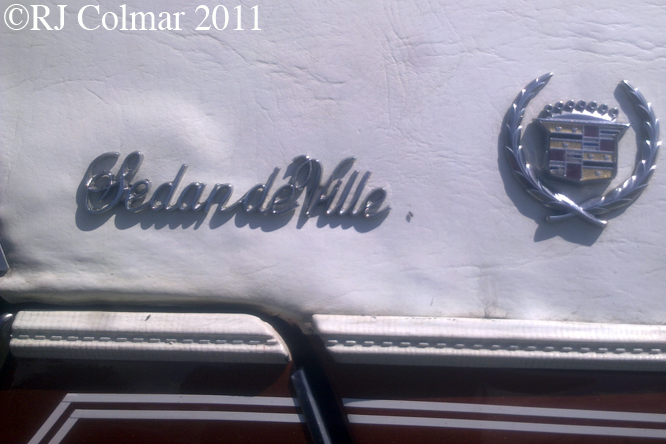
Cadillac Sedan de Ville, Castle Combe, C&SCAD

As I arrived out on the track caught a glimpse of a huge variety of vehicles ranging from a Wolsely Hornet to a gargantuan, by comparison, Ford Zodiac.

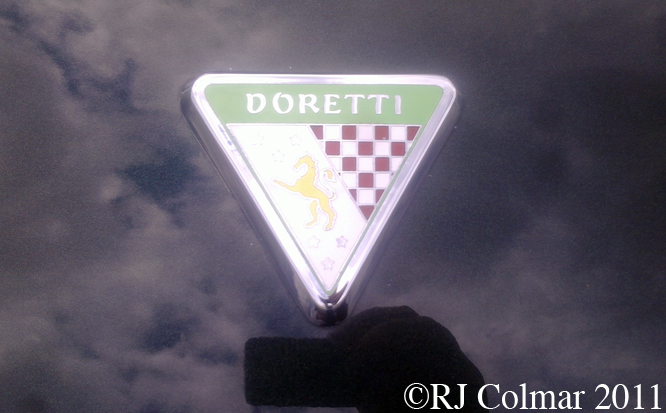
Doretti, Castle Combe, C&SCAD

Since I was on a tight schedule I directed my attention to the even larger variety of vehicles in the car parks and paddock.

Ford Capri, Castle Combe, C&SCAD

Many owners clubs were in attendance including the Ford Capri owners club who’s members brought a fine variety of examples of ‘The car you have always promised yourself‘, along to the show.

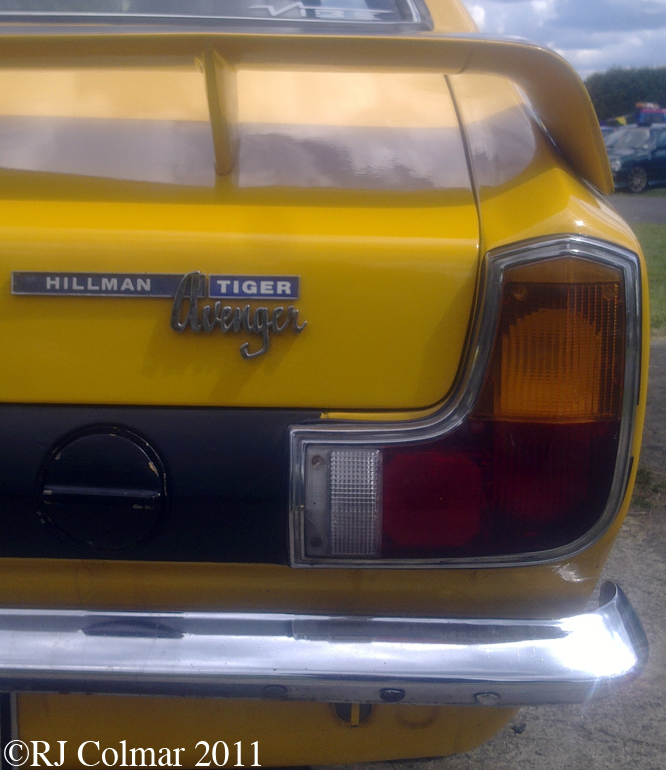
Hillman Avenger, Tiger Replica, Castle Combe, C&SCAD

I do not remember the last time I saw a Hillman Avenger Tiger, let alone half a dozen of them !

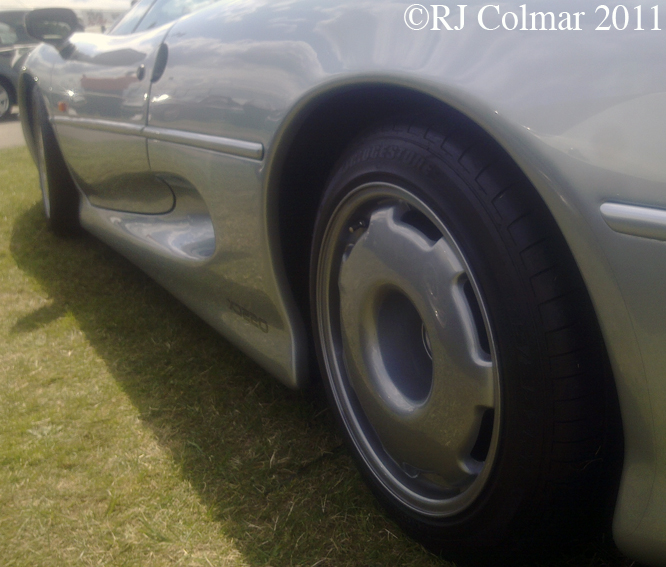
Jaguar XJ220, Castle Combe, C&SCAD

In the running for most exotic cat at the track was this Jaguar XJ 220, first time I have seen one in the flesh.

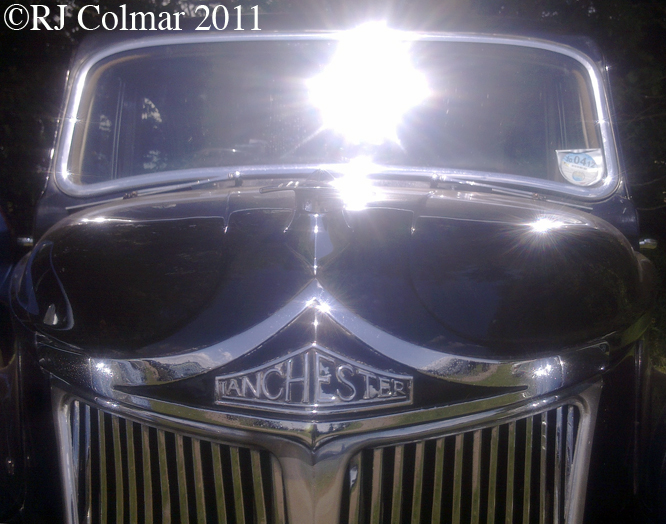
Lanchester LD10, Castle Combe, C&SCAD

Another model I do not recall seeing before is the Lanchester Ten.

Morris, Castle Combe, C&SCAD

Richard Edmonds were auctioning a selection of classic cars and commercial vehicles, including the Morris Van above, during the event, their tent was packed out with bargain hunters as I went past.

Pontiac, Le Mans, Castle Combe, C&SCAD

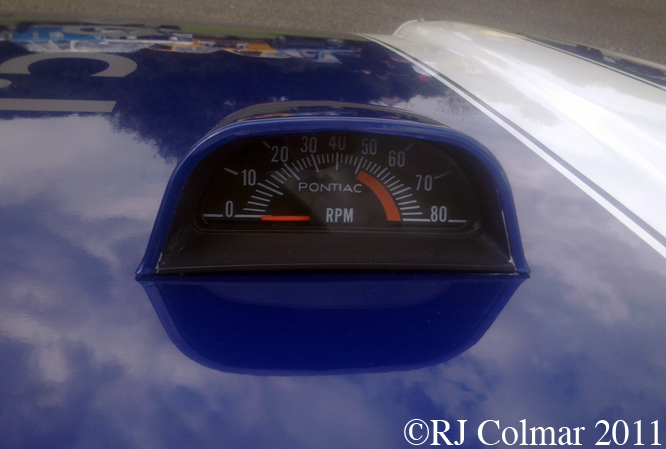
Unfortunately I did not get to hear or see this 350 CUI GTO in action complete with this cool bonnet mounted rev counter. 18 03 12, this car actually turned out to be a Pontiac LeMans Sport.

Reliant Scimitar GTE V8, Castle Combe, C&SCAD

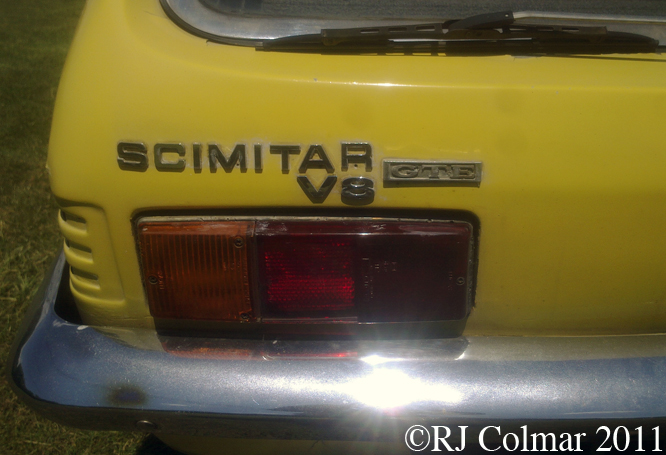
Among the interesting vehicles in the car park was this Rover V8 powered Reliant Scimitar, manufactured originally with a Ford V6.

Alpine Renault A110, Castle Combe, C&SCAD

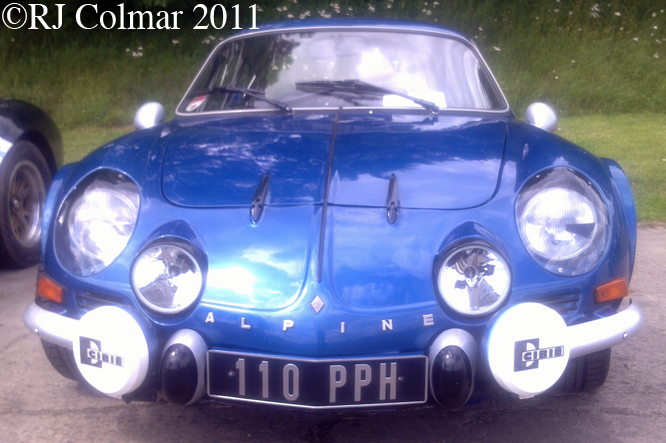
This Alpine A110 1600 S built for competition was one of several vehicles present with an interesting history in rallying.

Triumph Stag, Castle Combe, C&SCAD

There was also an impressive collection of Triumphs on display almost every type of TR and a couple of Stags.

Looking forward to blogging about some of the 40 vehicles I saw in the coming weeks, my thanks to David Roots, who’s Alfa powered Lenham I blogged several months ago, of the Bath & West Car Club for the invitation to attend.

Thanks for dropping in on today’s Classic and Sports Car edition of ‘Gettin’ a lil’ psycho on tyres’, I hope you will join me again tomorrow. Don’t forget to come back now !
Share

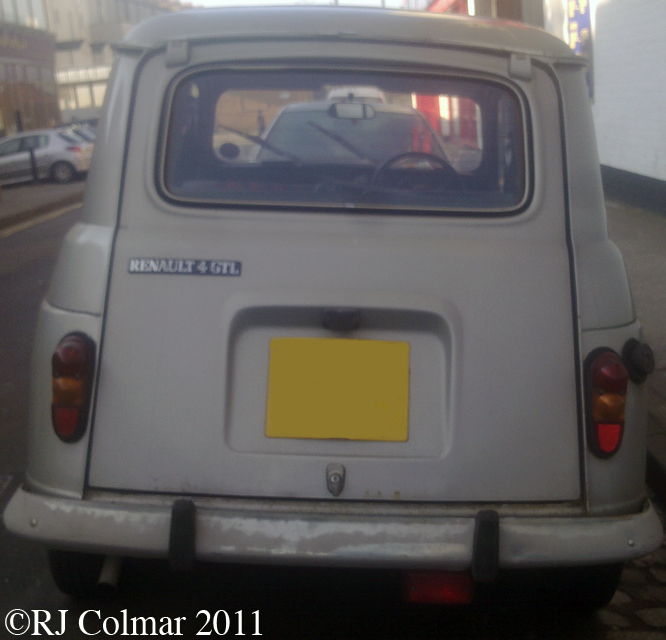
Asymmetrical Anniversary – Renault 4 GTL

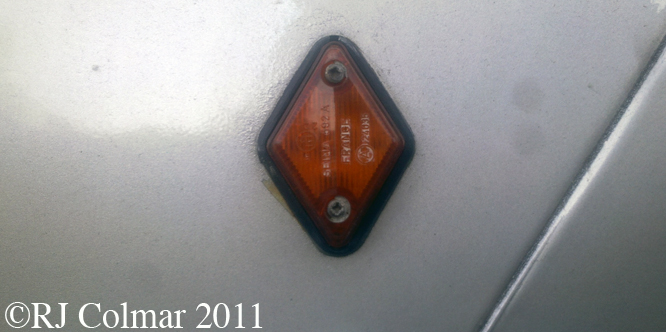
00 Image2720sc

With the demise of the Renault 4CV in 1961, Renault needed a new utility vehicle to compete with the ubiquitous if agricultural Citroen 2CV which had been in production since 1948.

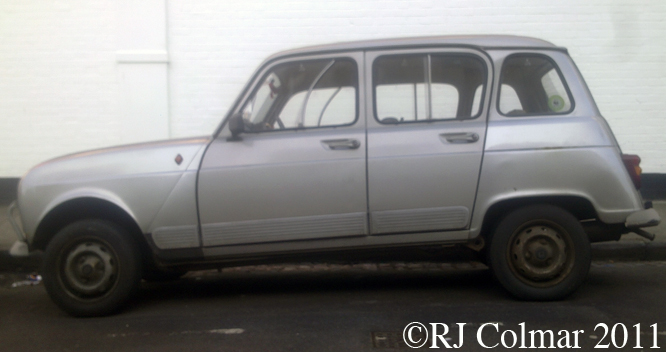
01 Image2721sc

Renault Chairman Pierre Dreyfus came up with an urban vehicle that was superior to the 2CV in almost every aspect in the form of the front wheel drive Renault 4.

02 Image2714sc

Built from 1961 to 1994 the Renault 4 was powered by a variety of motors from 747 cc 45.6 cui to 1300 cc 78.7 cui all water cooled in line 4 cylinder engines. In the first year there was a baby R4 with a 603 cc 36.7 cui engine marketed in France only as the R3.

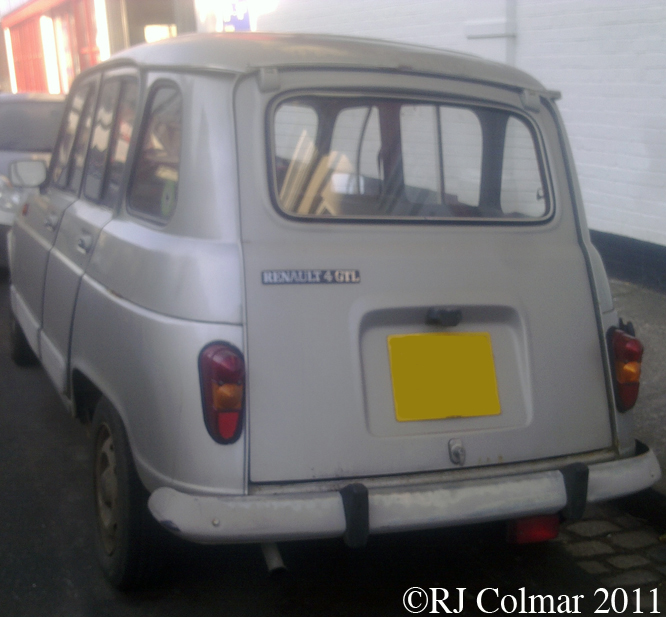
03 Image2719sc

Over 8,300,000 Renault 4’s were built, the 1st million had been built by 1966 in just over four years. Renault 4 was built / assembled at Billancourt, France in Australia, Spain, Belgium, Colombia, Slovenia, Portugal, Mexico, Chile, Argentina, Ireland, Morocco, Algeria and from 1965 to 1964 41, 809 R4’s were built under licence by Alfa Romeo in Italy.

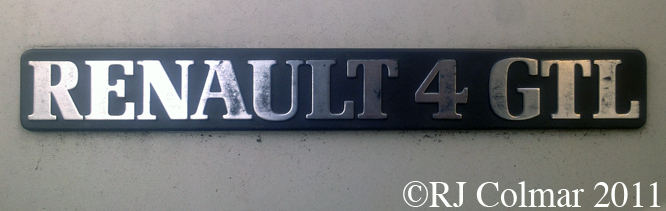
04 Image2715sc

Few people outside Renault and the motor industry realise that the Renault 4 has an asymmetrical wheel base with the left hand rear wheel being mounted just ahead of the right rear because each wheel is sprung by its own torsion bar mounted across the width of the chassis.

05 Image2716sc

Like the 2CV the Renault 4 has a box chassis unlike the 2CV the R4’s chassis stiffness is dependant on all the body panels being attached.

06 Image2718sc

A 20hp Renault 4 was entered in the 1962 Monre Carlo Rally in which it was classified last, an all wheel drive Sinpar version came 3rd in the 1980 Paris Dakar Rally and to celebrate it’s 50th Birthday a team of three Renault 4’s were entered in the 2011 Monte Carlo Rally.

07 Image2717sc

Renault 4’s are great fun to drive with dash mounted umbrella gear sticks and hand brake levers,
happy Golden Anniversary Renault 4 !

My thanks to Steve Arnaudin for reminding me of this anniversary.

Hope you have enjoyed today’s asymmetrical edition of ‘Gettin’ a lil’ psycho on tyres’ and that you’ll join me again tomorrow for another 50th Anniversary. Don’t forget to come back now !
Share