Tag Archives: Show

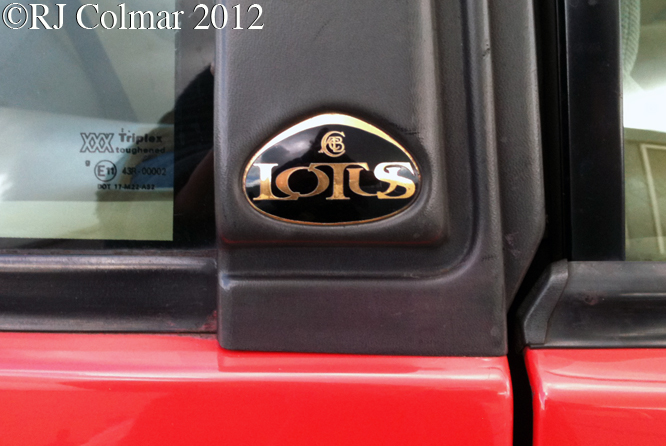
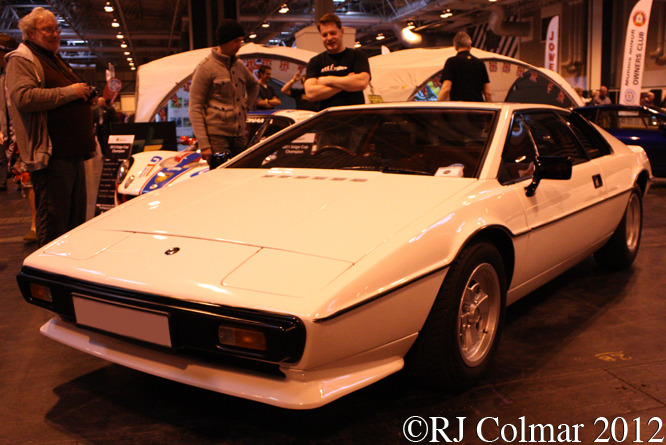
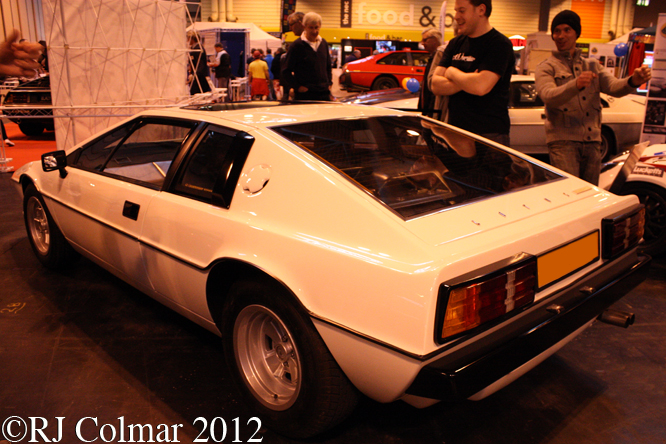
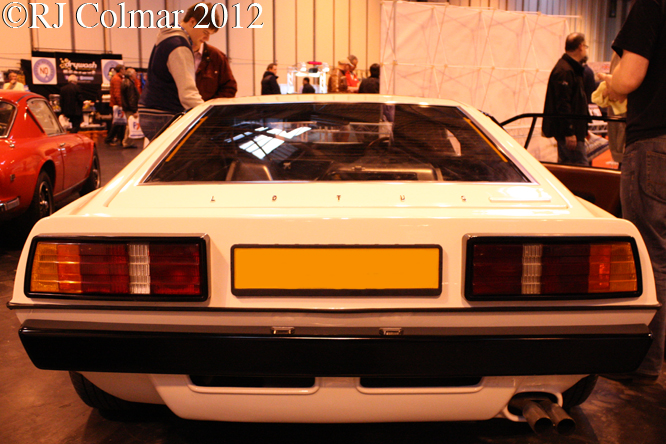
Cruise Control & Central Locking – Lotus Type 89 Excel s.e.

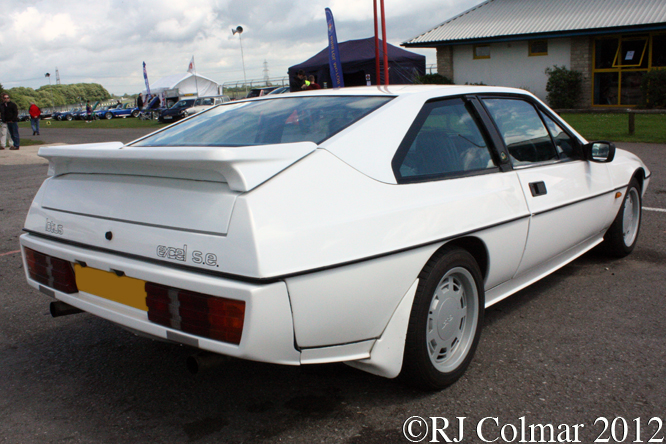
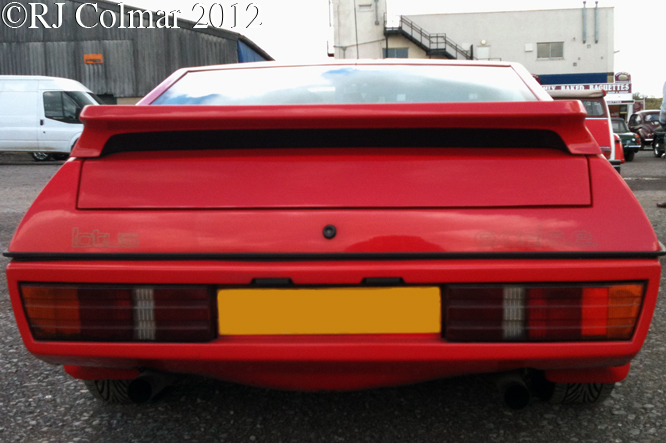
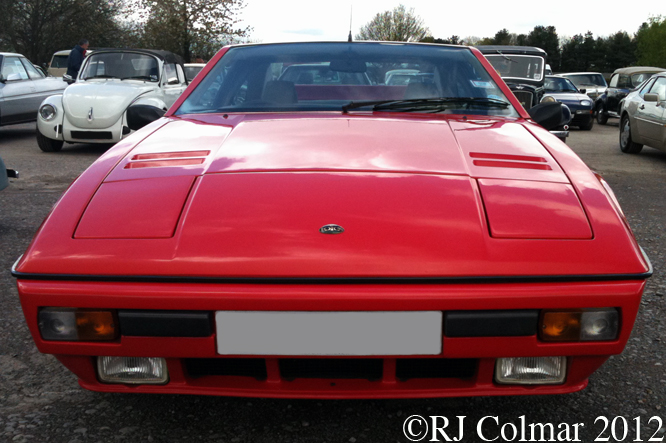
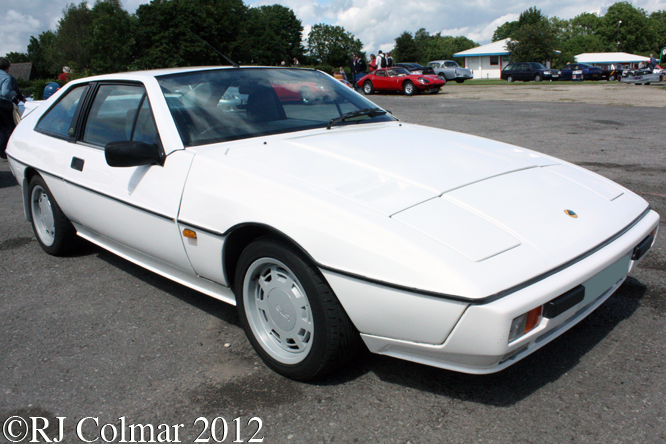
Last Saturday I looked at the prototype 1982 Lotus Excel today I’m looking at a couple of Lotus Excel s.e. models built with in months of each other.

Lotus Excel s. e., Bristol Classic Car Show, Shepton Mallet

Between 1982 and 1987 numerous modifications were carried out which included the introduction of a louvred bonnet with body shell coloured bumpers and rear spoiler in 1984.

Lotus Excel s. e., Family Clubs Day, Castle Combe

In 1985 the wider wheel arch profiles, larger boot aperture, VDO intrumentation, front fog lights were introduced with a 15 inch road wheel option were introduced.

Lotus Excel s. e., Bristol Classic Car Show, Shepton Mallet

For 1986 the s.e. option with raised engine compression and an adjustable steering column was announced.

Lotus Excel s. e., Family Clubs Day, Castle Combe

The S A Automatic option was launched for the 1987 model year with cruise control, central locking.

Lotus Excel s. e., Bristol Classic Car Show, Shepton Mallet

Of the 400 plus Excels known to be in the UK, only one was ever built to US specification, more than half are no longer on the road.

Thanks for joining me on this “Cruise Control & Central Locking” edition of “Gettin’ a li’l psycho on tyres”, I hope you will join me again tomorrow. Don’t forget to come back now !

Share

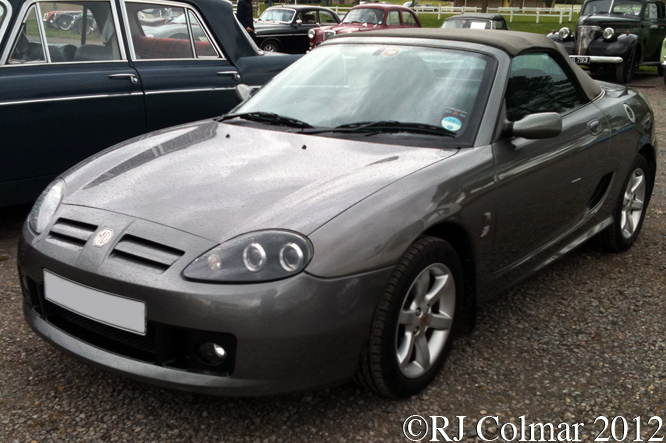
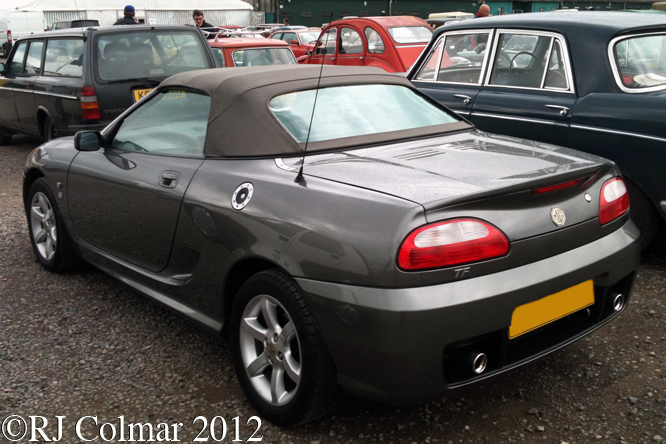
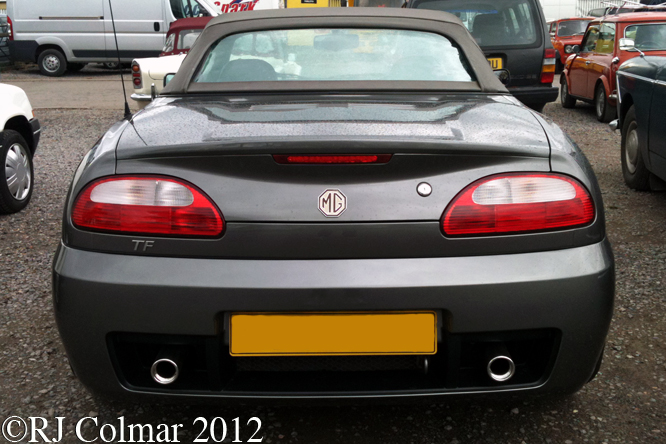
Last British 2 Seat MG – MG TF

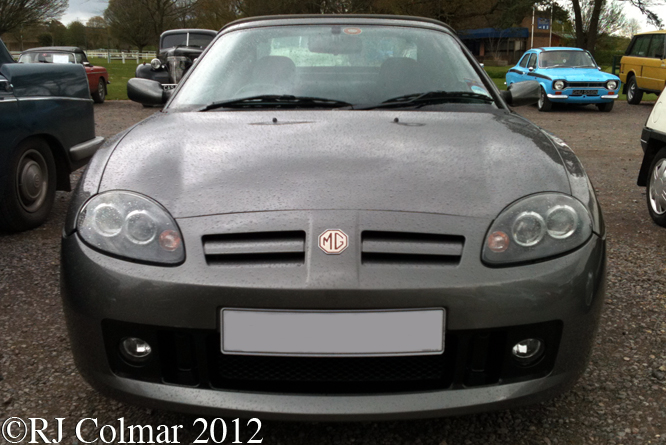
When MG Rover face lifted the mid engined MG F sports car in 2002 they gave it the same TF name as last seen on the 1955 MG TF Midget. Little did they know at the time that this would become the last new British 2 seat MG to reach market.

MG TF, Bristol Classic Car Show, Shepton Mallet

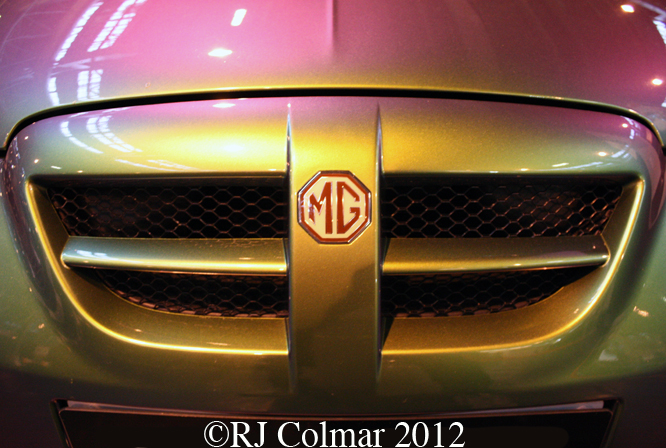
Many of the face lift details were carried over from the MG TF XPower 500 Concept Car first seen at Le Mans in 2001.

MG TF, Bristol Classic Car Show, Shepton Mallet

Despite it’s overall styling which dated back to 1995 the MG TF matched it’s rivals from Mazda (MX5) and Toyota (MR2) in handling, performance and held it’s own in the domestic sales league.

MG TF, Bristol Classic Car Show, Shepton Mallet

However the TF’s mid mounted Rover K series motor was subject to numerous head gasket failures until a new multi layered item was designed which cured this particular issue.

MG TF, Bristol Classic Car Show, Shepton Mallet

Production of MG TF’s ceased when Rover MG went bankrupt in 2005 but restarted in the UK from Chinese supplied Complete Kockdown Kits (CKD) in 2008 after new owners Nanjing had transferred all the TF production assets to China. 906 CKD TF’s were built before production ceased for good in 2011.

Thanks for this “Last British 2 Seat MG” edition of “Gettin’ a li’l psycho on tyres” I hope you will join me again tomorrow. Don’t forget to come back now !

Share

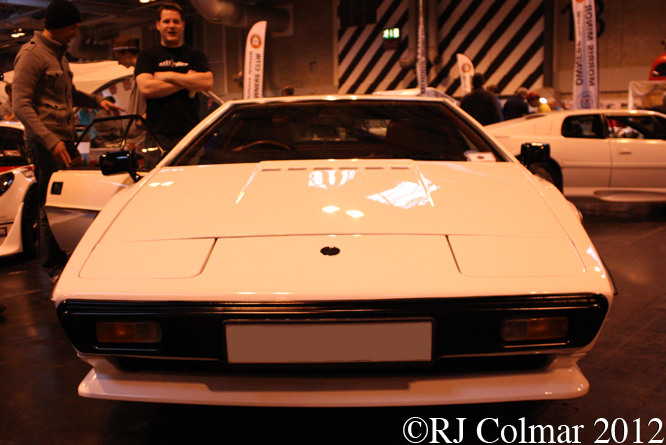
Wheels & Ears – Lotus Esprit S2 Type 79

The pace of innovation and development at Lotus was far too high for organised record keeping to be a strong point and some how the Lotus Type 79 number ended up being given to both the 1978 World Championship winning Formula One car and the otherwise unrelated Lotus Esprit S1 & S2 variations.

Lotus Esprit S2, The Classic Motor Show, NEC, Birmingham

The second iteration of the Giugiaro designed Esprit, launched in 1978, featured a wrap around bumper which brought down the aerodynamic measure to Cd 0.355 and improved the handling in cross winds.

Lotus Esprit S2, The Classic Motor Show, NEC, Birmingham

The Gotti alloy wheels of the original Elite were replaced by Lotus designed alloy wheels manufactured by Speedline. Inside wider seats were fitted along side new instrumentation and switch gear illuminated by fibre optics, the external rear view mirrors became remotely operated too.

Lotus Esprit S2, The Classic Motor Show, NEC, Birmingham

Ears behind the rear 3/4 window were used to feed air into the carburetor on the left and into the engine bay on the right.

Lotus Esprit S2, The Classic Motor Show, NEC, Birmingham

The Rover SD1 sourced rear lights now incorporated high intensity fog lamps. 1061 Esprit S2’s were built with the original Type 907 2 litre / 122 cui motor that gave the car a top speed of 124 mph. A further 88 S2.2’s were built with the an identical body, galvanised chassis and Type 912 motors of 2.2 litre / 134 cui with the same 160 hp but much improved torque which made the Esprit much easier to drive around town.

Thanks for joining me on this “Wheels & Ears” edition of “Gettin’ a li’l psycho on tyres” I hope you will join me again tomorrow. Don’t forget to come back now !

Share

Hot Rover #3 – MG ZT-T

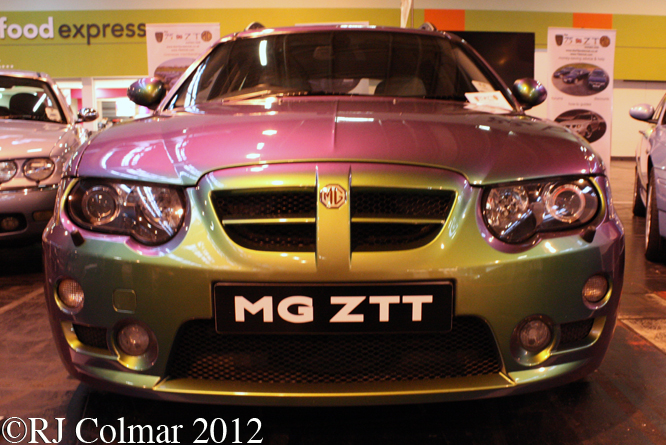
Like the MG ZR and MG ZS models the MG ZT was based on a Rover model in this case the Rover 75 and like the smaller ZR and ZS it was launched in 2001 and face lifted in 2004.

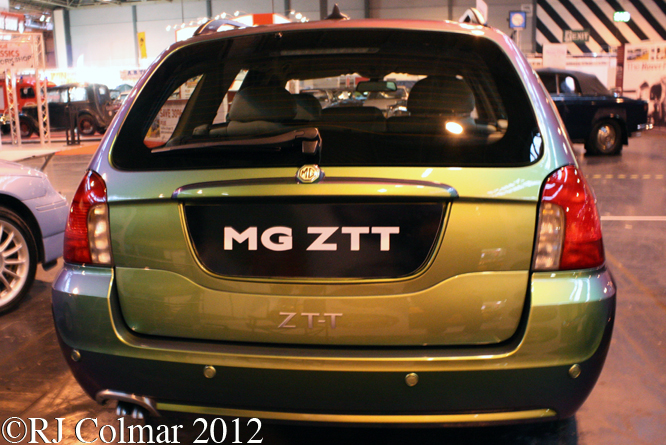
MG ZT-T, The Classic Motor Show, NEC, Birmingham

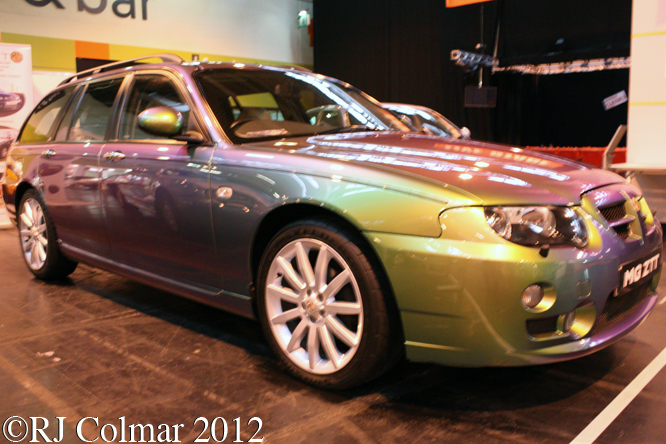
The ZT-T is the estate / station wagon version of the ZT and today’s face lifted car is said to have been completed on the 20th of January at 13:19 making it the 11th ZT to be built in 2004.

MG ZT-T, The Classic Motor Show, NEC, Birmingham

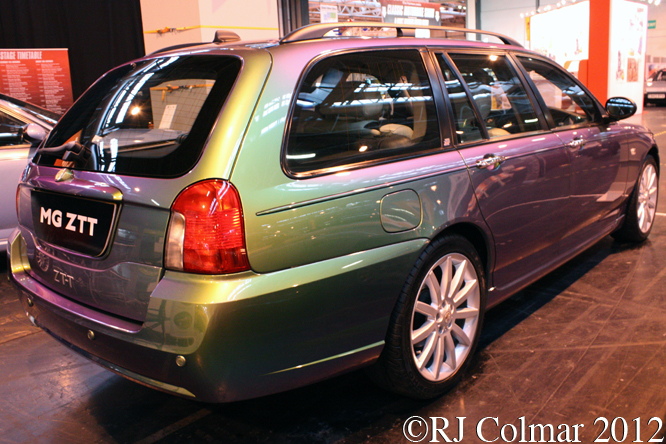
The cars chassis plate shows this car to have been intended to be biomorphic green however it was finished in shot silk chromescent, like only two other ZT-T models, one of which also has a chassis plate showing the intended colour was biomorphic green.

MG ZT-T, The Classic Motor Show, NEC, Birmingham

On 5th April 2004 the car was registered to MG Rovers Press Fleet and was subsequently used by MG Director Dr Chris Millard who had many updates and extras retro fitted to keep the car up to date with all the latest developments barring an electric sunroof.

MG ZT-T, The Classic Motor Show, NEC, Birmingham

Shot Silk Chromescent paintwork was part of MG Rovers Monogram Personalisation Programme which offered customers an exclusive opportunity for MG and Rover customers to realise their personality through automotive style.

MG ZT-T, The Classic Motor Show, NEC, Birmingham

Power for this car comes from a 129hp Turbo Diesel motor which is connected to a 5 speed automatic transmission which gives a rest to 60 mph time of 11.4 seconds and a maximum speed of 117 mph.

MG ZT-T, The Classic Motor Show, NEC, Birmingham

Just over a month after MG Rover called in the receivers in April 2005 ownership of this ZT-T transferred to the Royal Bank of Scotland before being sold on to a salesman.

My thanks to The Rover 75 and MG ZT Owners Club for the details about today’s car which is seen at the The Classic Motor Show held at the NEC, Birmingham a couple of weeks ago.

Thanks for joining me on this Hot Rover #3 edition of “Gettin’ a li’l psycho on tyres” I hope you will join me again tomorrow. Don’t forget to come back now !

Share

Royal Enfield Transporter – Volvo 740 GL Pick Up

The Volvo 740 as introduced in 1984, it featured the same body as the V6 and 4 cylinder Turbo Intercooler 760 models but was fitted, initially, only with normally aspirated versions of the 4 cylinder motor which had hither too been found in the Volvo 240 models.

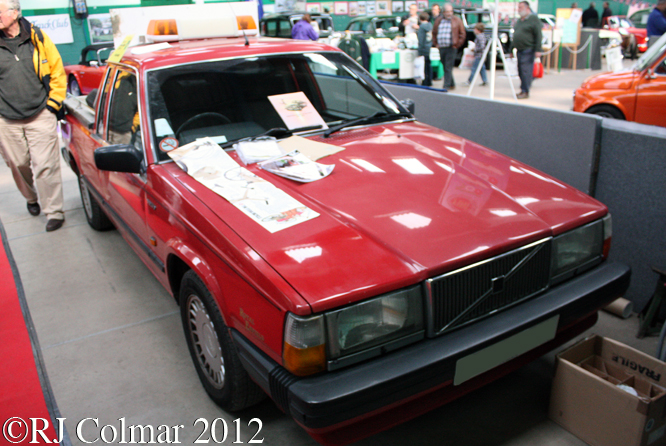
Volvo 740 GL Pick Up, Bristol Classic Car Show, Shepton Mallet

Today’s featured model was built in 1989 with a fuel injected pushrod overhead valve 1986 cc / 121 cui 4 cylinder B20F motor that was known in the trade as a log burner because it’s 120 hp worked hard to move the older 240 models at a respectable pace. This car is fitted with a standard 5 speed manual transmission.

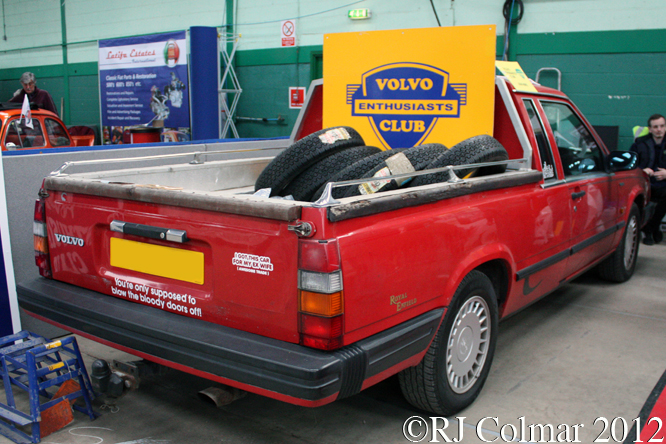
Volvo 740 GL Pick Up, Bristol Classic Car Show, Shepton Mallet

In 2000 the previous owner of today’s featured car converted his estate / station wagon into a pick up so that he could carry his Royal Enfield motor cycle to rallies and shows.

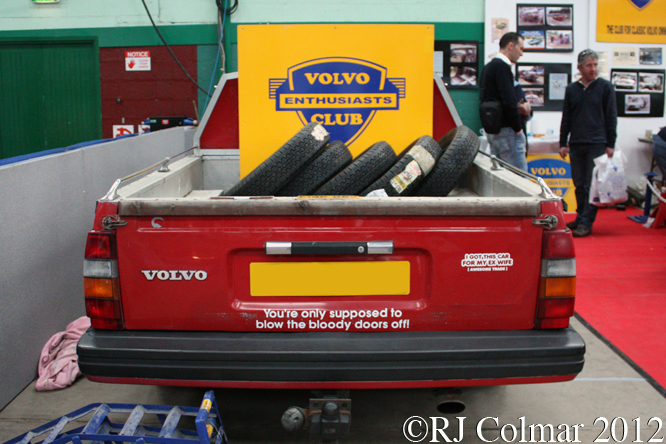
Volvo 740 GL Pick Up, Bristol Classic Car Show, Shepton Mallet

With over 265,OOO miles and a full service history Volvo Enthusiasts Club member Colin Hughes expects to keep this vehicle for a good while yet, when I was selling these cars new back in the day we used to boast that such cars could easily be made to last over 20 years this one looks like it could easily last twice as long. Colin has another Volvo 740, a hearse.

Thanks for joining me on this “Royal Enfield Transporter” edition of “Gettin’ a li’l psycho on tyres” I hope you will join me again tomorrow for a look at a vehicle billed as “Born To Perform Miracles”. Don’t forget to come back now !

Share

Wolly Bulli – Volkswagen Type 2 (T2)

In the Autumn turn of 1982 twenty odd college class mates and I made our way from the Untied Kingdom to Paderborn University for the first half of the third year of our European Business Studies course. I overslept on the train and ended up a hundred kilometers further east than intended in Kassel having missed my stop, but I digress.
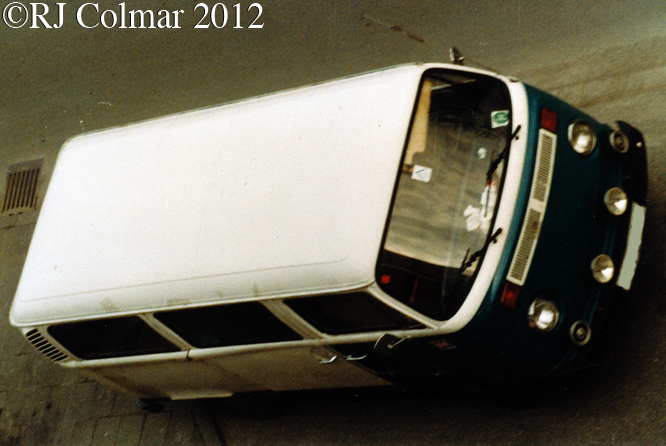
VW Type 2 (T2) Kombi, Paderborn, Germany

Once in Paderborn we soon made friends with our fellow German students some of whom had banded funds together to buy a late bay VW Type 2 (T2b) Kombi seen above, in Germany these vehicles are known locally as “Bulli”. The Type T2 (T2) was first seen in 1967, it was wider and longer than it predecessor the Type 2 (T1) which I looked at last week. The motor was slightly larger starting at 47 hp wich increased to 70 hp by the mid 1970’s, but the real improvements were in low end torque which helped this heavy vehicle keep pace with the rest of the traffic.
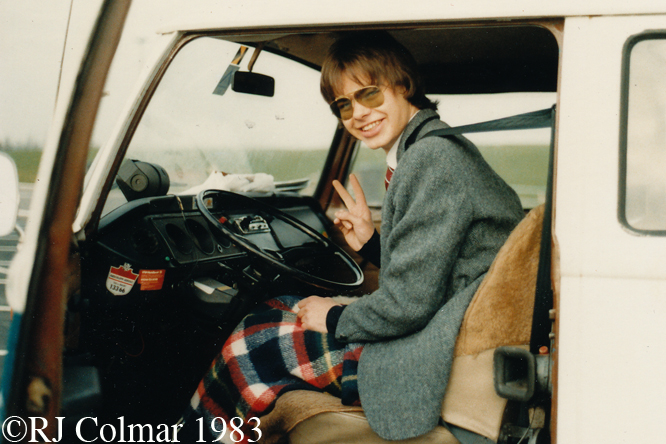
VW Type 2 (T2) Kombi, Paderborn, Germany

Above I can be seen sitting at the wheel of my friends Type 2 wrapped in a blanket in the middle of February as I was about to return from Wolsburg where I had a placement at Volkswagen to Paderborn. To reduce the intake of exhaust fumes, because the heat exchangers were breaking up, the heating pipes were blocked up and the windows were kept open hence the blanket was necessary to keep warm in the well ventilated unheated bus.

Type 2s went through three distinctive body developments from ’67 to ’71 the early bay T2a was characterised by low front indicators and rear light clusters inherited from the Type 2 (T1), from ’71 to the early 1990’s the late bay Type 2 (T2b) is characterised by high front indicators and larger vertical oblong rear light clusters. By the early 1990’s production in Mexico and Brazil moved to the Type 2 (T2c) which has a raised roof and the latest models now built only in Brazil have duel fuel water cooled engines which run on petrol or ethanol.
Type 2 (T2) Camper, Shakespeare County Raceway

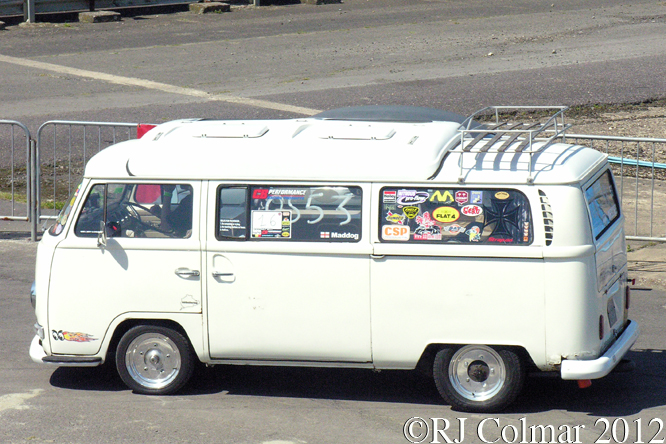
Chris Maddog Antell’s VW Type 2 camper van seen above at Shalespeare County Raceway is an early bay Type 2 (T2a) with low front indicators and small rounded rear light clusters he runs it with a 2276 cc / 138 cui motor of yet to be determined origin, if you know please do not hesitate to chime in below.
Volkswagen Type 2 (T2c), The Classic Motor Show, NEC, Birmingham

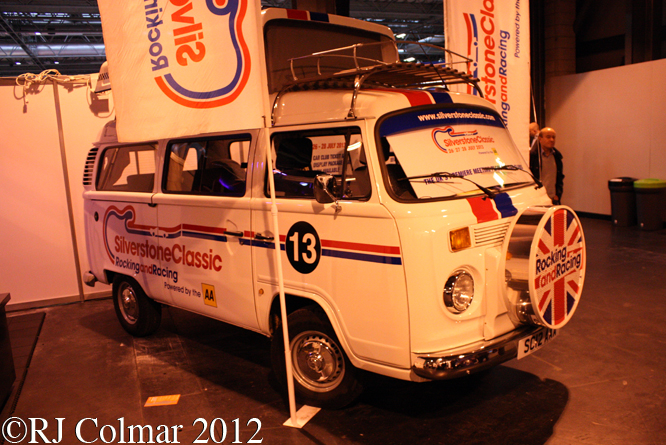
The Type 2 (T2c) as seen above at The Classic Motor Show is still in production in Brazil a couple of years ago they were being manufactured at a rate of 100 a day, some of these vehicles can be seen in Europe where they are often used as camper vans. The latest news courtesy of mariner at The Nostalgia Forum is that Type 2 (T2c) production is planned to come to a halt in Brazil next year.

Thanks for joining me on this “Wolly Bulli” edition of “Gettin’ a li’l psycho on tyres”. I hope you will join me again tomorrow. Don’t forget to come back now !

Share

Power & Roadholding – Bond Equipe 2 Litre Convertible

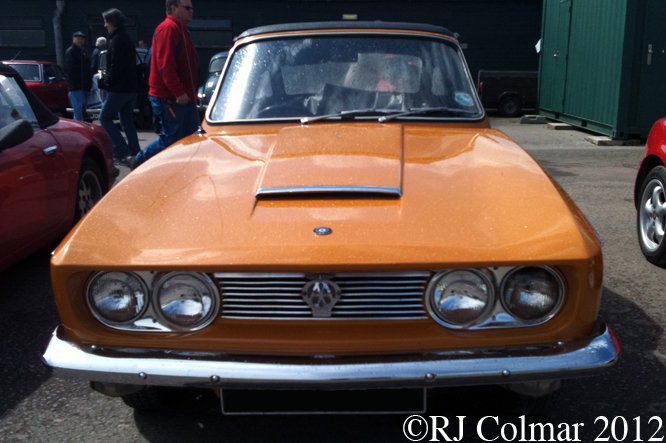
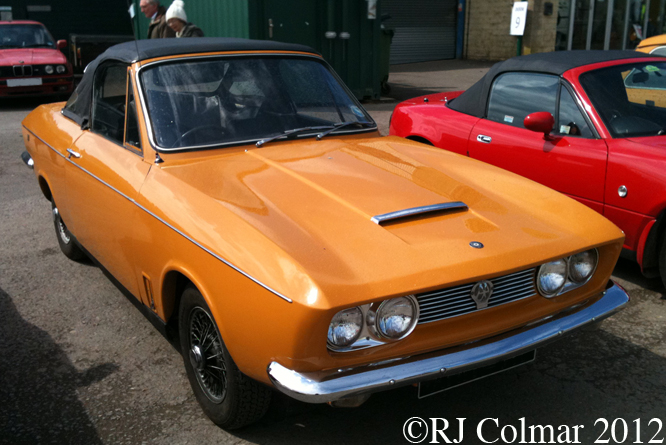
In 1967 Bond expanded it’s range of four wheel vehicles from the hitherto single Triumph Herald based Equipe 4S to include a Triumph Vitesse based Equipe 2 Litre GT.

Bond Equipe Convertible, Bristol Classic Car Show

The following year the chassis was upgraded to the new Mk II Vitesse type which featured improved power and rear suspension leading to the marketing strap line “The New Bond is great on power, great on road holding.

Bond Equipe Convertible, Bristol Classic Car Show

1968 also saw the launch of the Convertible version of the six cylinder Equipe 2 litre which was marketed like all Equipe’s through Standard Triumph dealerships.

Bond Equipe Convertible, Bristol Classic Car Show

With an envious eye on Bond’s distribution agreement with Standard Triumph, Reliant, manufacturers of Scimitar cars, purchased Bond in 1969 with a view to expanding the distribution of it’s own vehicles. However these plans came to nought in the wake of Triumphs merger into the British Leyland conglomerate which rationalised that the sales of Bond’s alongside Triumphs own products was superfluous.

Bond Equipe Convertible, Bristol Classic Car Show

The 1969 model seen here is one of just 841 convertibles built between 1968 and 1970 when production of all Bond’s in Preston was wound down and the manufacturing facilities closed by their new owners Reliant.

Thanks for joining me on this “Power & Roadholding” edition of “Gettin’ a li’l psycho on tyres” I hope you will join me again tomorrow. Don’t forget to come back now !
Share