Tag Archives: Silverstone

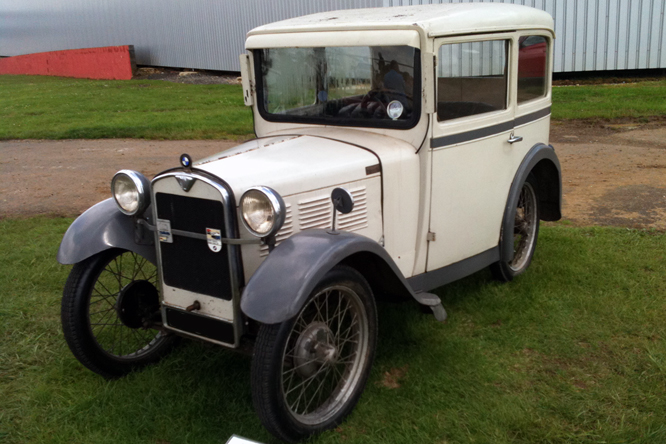
Metricated Austin 7 – BMW “Dixi” DA2 3/15 #14187

Fahrzeugfabrik Eisenach was founded in in 1896 to manufacture motorcycles and motorcars under the Wartburg brand. The Wartburg brand was discontinued in 1904 and replaced with the Dixi brand.

BMW Dixi DA2 3/15, Silverstone Classic

In 1927 Fabrik Eisenach bought a license to manufacture a Left Hand Drive version of the Austin 7.

The following year BMW wishing to enter the motor manufacture bought Fahrzeugfabrik Eisenach which was experiencing financial difficulties.

Over the ensuing years the car was metricated and the engine was updated and upgraded by BMW, the Austin 7 motor’s ancestry can be traced through a range of BMW and later still Bristol six cylinder motor’s.

The 1929 model, seen here at Silverstone Classic, has an all steel body built by Ambi-Budd of Berlin.

This car spent most of it’s life in East Germany near the Polish border and had been off the road for 15 years before a restoration was started with the replacement of the kingpins, starter ring gear, wiring, fan pulleys, belt and blades, brake shoes, propshaft coupling, battery, windscreen and tyres.

Thanks for joining me on this “Metricated Austin 7” edition of “Gettin’ a li’l psycho on tyres”, I hope you will join me again tomorrow. Don’t forget to come back now !

Share

Hard Day’s Night – Silverstone Classic

On Saturday I got up at 5am in order to get to the start of proceedings for at the Silverstone Classic meeting. After a scenic drive through Gloucestershire with a little early morning fog along the A40 I arrived in good time.

Cooper T59, Silverstone Classic

Jon Milicevic, driving a Cooper T59 comfortably won the days opening Formula Junior race, for cars built between 1959 and 1963, from another Cooper T59 driven by Sam Wilson.

Trojan T101, Silverstone Classic

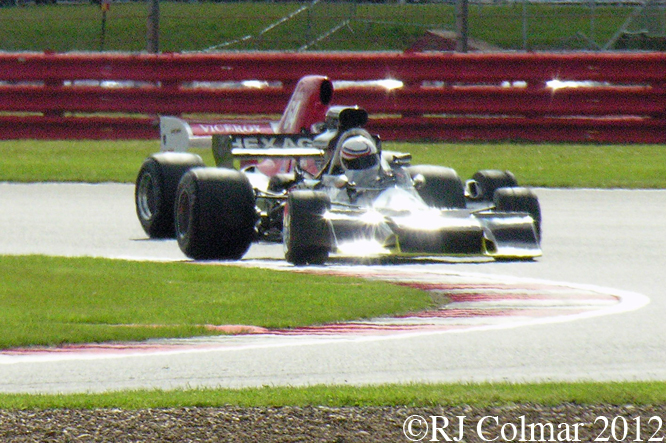
Simon Hadfield and Micheal Lyons provided the early entertainment in the Peter Gethin Trophy race for stock block open wheelers, Simon’s F5000 Trojan T101 set up for good performance through the corners can be seen being hounded by Micheal Lyons F5000 Lola T400 which was set up for better straight line performance. Unfortunately Simon who started from third lost it after 6 laps handing pole man Micheal a narrow victory over Mark Stretton driving a much smaller capacity Formula 2 March. Simon recovered to take third.

F5000 Thunder, Silverstone Classic

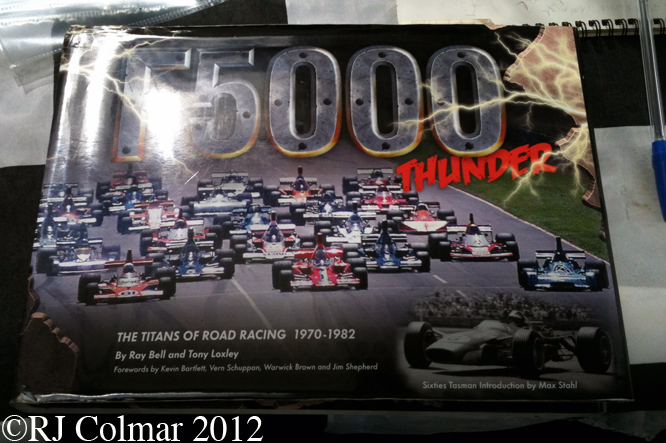
During the lunch break I caught up with several members of the TNF Forum including John who makes the annual pilgrimage from Australia, on this occasion he brought a pre production copy of F5000 Thunder the Titans of Australian Road Racing 1970 – 1982 co authored by Ray Bell and Tony Loxley, if your a fan of Formula 5000 I guarantee you will enjoy the many stories in this 406 page book with over 800 photographs which ever part of the world you happen to live in.

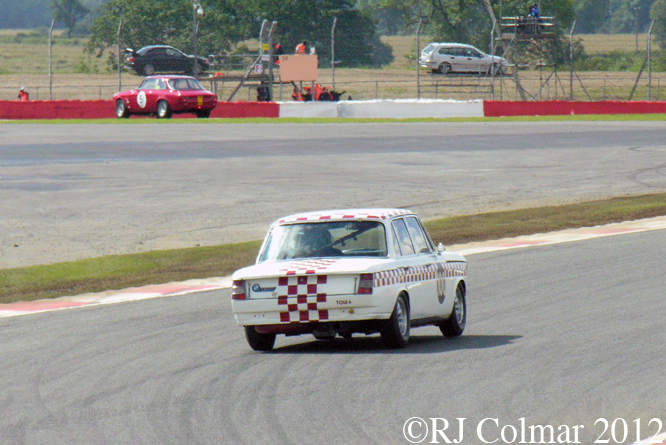
BMW 1800 TiSA, Silverstone Classic

The Alan Mann Trophy for under 2 litre / 122 cui touring cars looked to be a walk over for the #51 ALFA Romeo driven by Alex Furiani despite the best efforts of Jackie Oliver, who will be celebrating his seventieth birthday in a couple of weeks, driving the #100 BMW 1800 TiSA seen here sliding through Maggotts in third place. An incident requiring the safety car disrupted the event which was won by Sean McInerney driving the #67 Lotus Cortina who started from 38th on the grid ! Simon Hadfield did well to recover from a stop go penalty to bag second place on the last lap to finish less than two seconds behind McIerney in the #1 Lotus Cortina co driven by Leo Voyazides which had started on pole.

Pre '61 Sportscars, Silverstone Classic

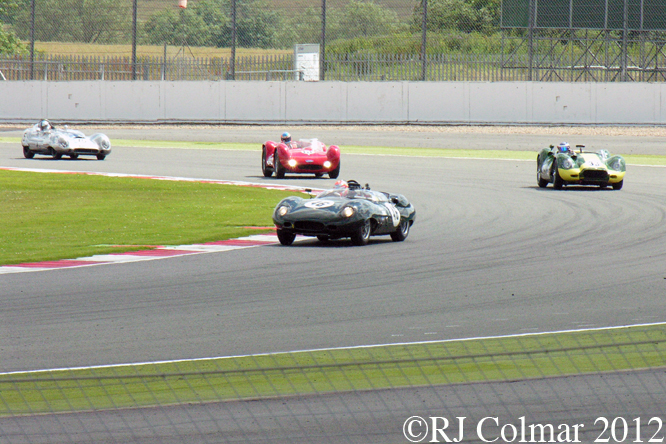
Alex Buncombe made the most of pole position in the Stirling Moss Trophy driving the #46 Costin bodied Lister Jaguar he was sharing with Andrew Smith which was never lost it’s lead on it’s way to victory. Second place was initially disputed by the #33 Knobbly Lister Jaguar, of Jon Minshaw and Martin Stretton which made a great start from 6th on the grid, the #61 Birdcage Maserati of Jason Minshaw and the McIntyres #15 Lotus seen above. The #33 Lister failed to finish while the McIntyre Lotus 15 and Jason’s Birdcage finished 3rd and 4th respectively behind the Dodds Cooper Monaco T49.

Grand Prix Masters, Silverstone Classic

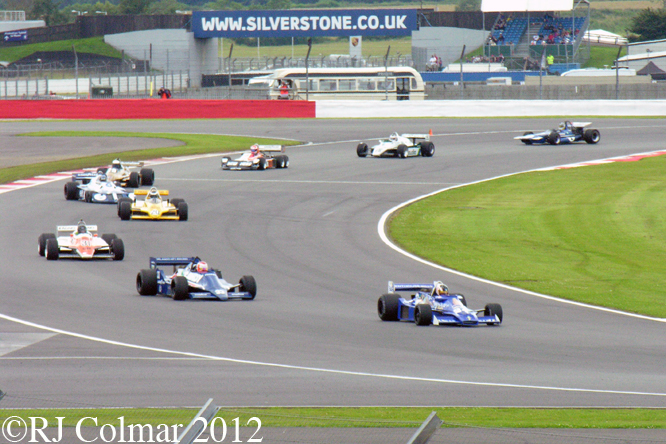
Two races for Formula One cars were next up after lunch, The Daily Express Trophy for 1970 to 1983 cars was led by Micheal Lyons in the #24 Hesketh 308E who unfortunately could not get his car to complete lap nine after slowing for an incident between two cars which were stopped on the track. A lucky victory therefore
handed to Bill Coombs in the #33 Tyrrell 009 when the race was called early to clear up the mess. Steve Hartley in the #31 Arrows A4 was classified 2nd with Micheal Fitzgerald seen above in 8th place came through to claim 3rd in his #28 Williams FW08.

The pre ’66 rear engined Grand Prix cars race was won by Jason Minshaw from John Harper both driving Brabham BT4’s above 8th place Roger Willis, driving his #48 Cooper T51, is seen leading a pack through the ‘Arena’.

GUY Arab Mk 5, Silverstone Classic

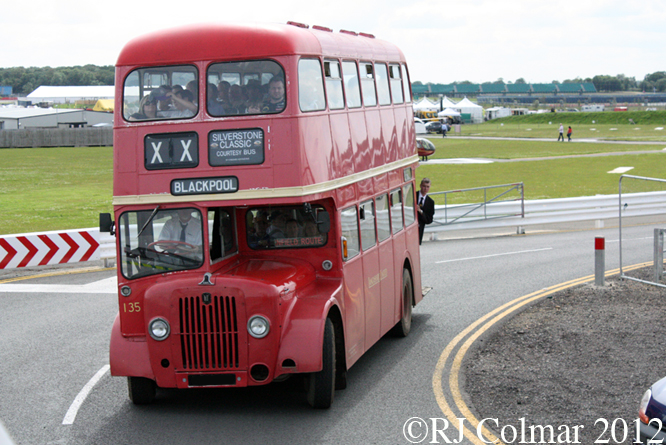
As the Gentleman Drivers Pre ’66 bus got underway I made my way over to the “Wing” pits complex on an open top Leyland Bus, coming the other way we encountered this 1963 GUY Arab Mk 5. Soon after the Mk 5 was built GUY was taken over by Jaguar.

TVR Griffith, Silverstone Classic

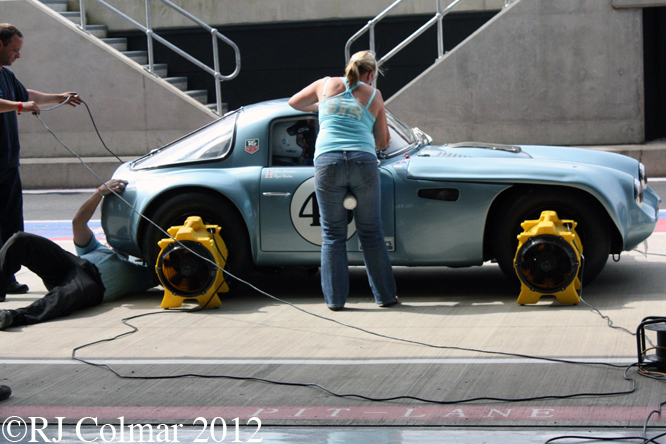
During the Silverstone Classic meeting pits access is unrestricted as evidenced by this photo of Mike Whitaker Snr’s pit stop. I am sure back in the day brake coolers were not ‘de rigueur’ when his 1965 4.7 litre / 286 cui V8 powered TVR Griffith was built. Mike retired shortly after this photo was taken, the race was won by Jon Minshaw and Mike Stretton driving an E-Type Jaguar.

Renault Williams Laguna, Silverstone Classic

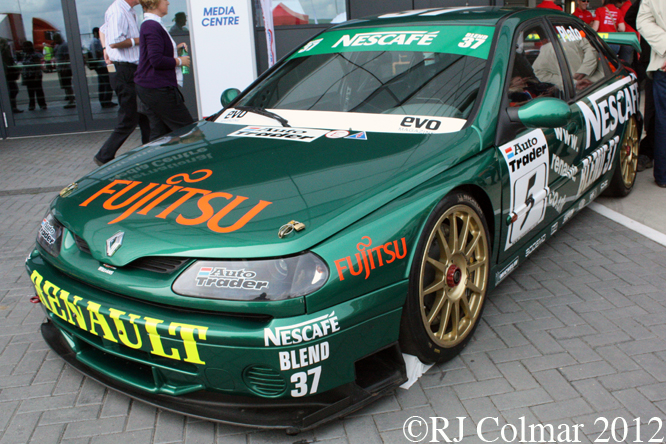
This mid 1990’s Renault Williams Laguna Touring Car is probably legible, for but was not entered in the Fujifilm Touring Car Trophy, it reminded me of the time in late 1998 when I seriously under estimated the power of Play Station and found myself engrossed in a game called TOCA 2 featuring a similar Laguna and seven other vehicles from the same era.

Brian Johnson, Silverstone Classic

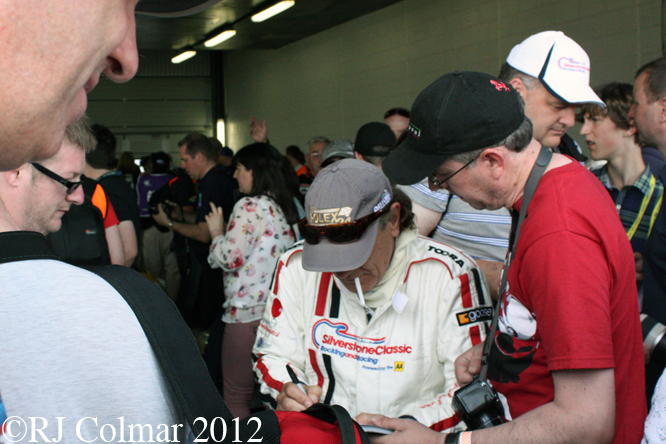
As I got to the end of my pits walkabout, which included a spell on the pit wall during the Gentleman’s race, I stumbled across a hive of activity as the Morgan ‘celebrity” drivers prepared to qualify for their race. Above well known racer and AC/DC vocalist Brian Johnson signs an autograph before qualifying third ahead of fellow musician Jay Kaye. Qualifying and the race was won by TV star Kelvin Fletcher who regular readers may remember I saw a couple of months ago driving a #17 Mini at Castle Combe. Brian and Jay came second and third respectively in the race.

Jaguar XJR 5, Silverstone Classic

I returned to the car after my pit visit for a cat nap which lasted a little longer than intended so I unintentionally missed a couple of races however fortunately I woke up in time to catch the finale of the day for Group C Endurance cars, Gareth Evans won the race despite a late spin relatively easily from Roger Willis in his Lancia LC2. Above the race was not the most entertaining but for my money seeing the Group C cars race in the early evening was worth the price of entry on it’s own. Above one car I did not get to see race in period was the 6 litre / 366 cui IMSA GTP Jaguar XJR 5 seen here with Don Miles at the wheel, after qualifying last from 21 Don finished 12th from 16 finishers. Absolutely cream crackered after a Hard Day’s Night I got home just after midnight and slept like a log.

Thanks for joining on this “Hard Day’s Night” edition of “Gettin’ a li’l psycho on tyres”, I hope you will join me again tomorrow. Don’t forget to come back now !

Share

Jumping Coffee Cups ! – Lotus Esprit S1 Group 5

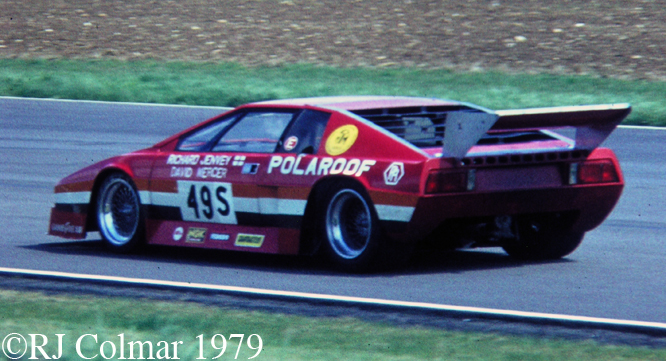
When Richard Jenvey announced that he would be competing in the 2 litre / 122 cui division of the Group 5 World Manufacturers championship with a Lotus Esprit in 1978, such was my naivety that my heart leapt with joy at the prospect of the domination that BMW had enjoyed in this class with the brick like BMW 320i would at last be broken by a proper sports car.

Richard made a name for himself driving modified sports cars including a supercharged MG Midget in ’73 and a Lotus Elan from ’74 to ’75 winning the 1975 Modsports Championship. In 1975 Richard also started racing in the European Sports Car Championship with the unique Vogue 2 litre / 122 cui sports car a car he eventually bought, modified and sold to team mate David Mercer.

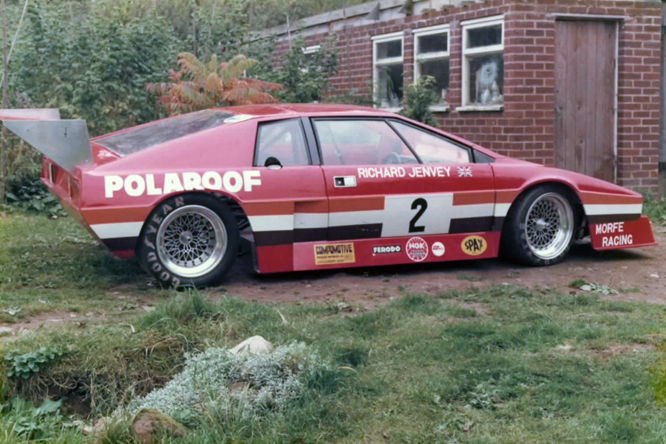
Lotus Esprit Roll Out

Photo Courtesy Richard Jenvey Copyright 1979

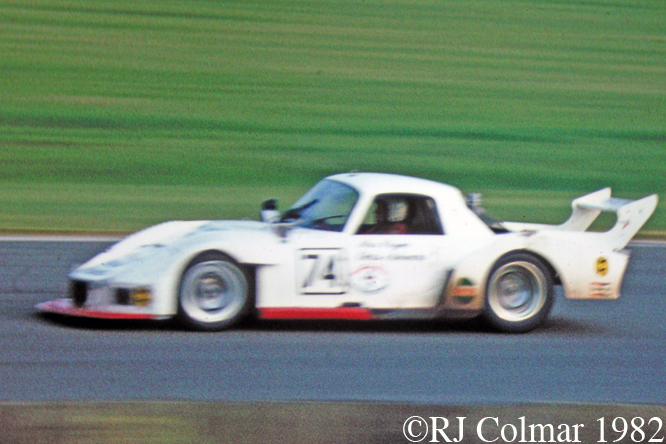
With a group of enthusiastic amateurs Richard set about building his Group 5 Lotus Esprit in 1978. The team retained most of the original Lotus backbone chassis and built a monocoque around it effectively turning the Lotus backbone chassis into a passenger.

Richard tells me that when the Lotus Sales Director approached Colin Chapman to support another team about building a similar car Colin Chapman hit the table so hard to emphasise a negative response that his coffee cup jumped off the desk. When the Sales Director made a second approach, on behalf of Richard, Colin appears to have learned a valuable lesson and relented agreeing to supply enough parts for Vegatune to build a 270 hp 2 litre / 122cui engine on favorable terms. Lotus also supplied an Esprit body shell with which to make the mould for the racers body. The original body shell was then sold on which helped cover ‘a fair fraction’ of the costs of building the car which ended up right on the minimum weight limit.

Lotus Esprit, Silverstone

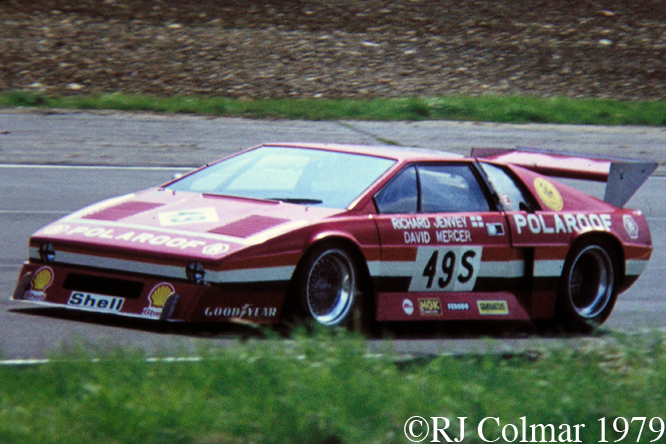
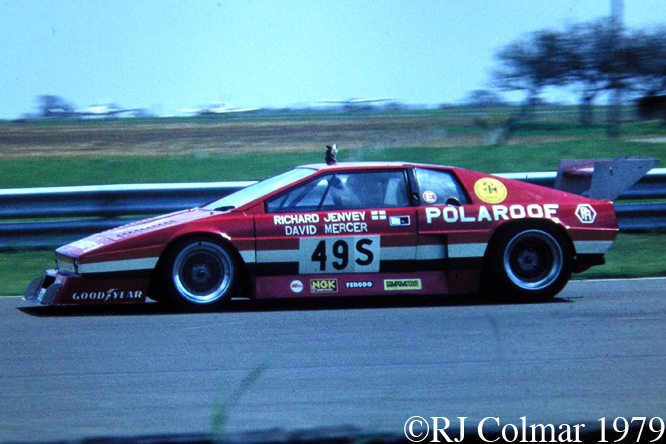
The Polaroof Morfe Racing Lotus Esprit first appeared at the Dijon 6 hours in April 1979 qualifying first in class ahead of a Fiat X1/9 and BMW 320i, but was the first of the three to retire from the race with engine maladies. At Silverstone, where the car is seen above, the Esprit qualified 3rd in class behind the debuting Lancia Beta Montecarlo turbo and an older BMW 320i. During the race Richard and David Mercer only had to finish to win the class but distributor problems saw the car retire.

Over the following two years Richards Lotus made at least seven further starts in World Championship and German Championship events recording a best 7th place finish in the 1981 German Championship round at Zolder. Once the engine was reliable little problems continued to beset the Esprit including seat padding slipping which caused Lawrie Hickman to inadvertently break the gear linkage in his efforts to avoid an accident at Dijon. On another occasion with in a couple of miles of the finish flag and a class victory at the Nurburgring, where the start money was always very generous, a loose alternator wire, combined with running with the headlights on, flattened the battery and officials prevented Richard from connecting the spare which the car carried.

Lotus Esprit, Silverstone

Richard and Lawrie Hickman, who co drove Richards Lotus in 1981 agree that the Esprit was fabulous to drive but was underpowered against the factory turbocharged Group 5 cars running in the same class from Lancia, BMW and Ford which had over 600 hp available ! Interestingly as the Group 5 series was coming to an end Richard started building a turbocharged Group C car, which was never completed due to a late change in the regulations and Richard had plans to run the Lotus with the turbocharged motor from the Group C project before it was retired.

Unfortunately these plans also came to nought when a batch of faulty con rod bolts failed while the normally aspirated motor was being ‘run in’ during practice for the 1981 Silverstone 6 Hours, causing the team to miss the race and starting money. Even more importantly the engine failure also caused the team to miss collecting the ‘very generous’ start money at the Nurburgring two weeks later and so the Esprit retired without ever running with the more powerful motor.

Lotus Esprit, Silverstone

Richard still owns the Esprit which he describes as being “spread around Shropshire”, he is currently engaged in re-accumulating all the parts in one place with a view to either selling it or building it for his son, Mike Jenvey, to race in classic events.

Regrettably, although the Esprit added welcome variety to the events in which it competed, the privateer Morfe Racing with Polaroof team, like the contemporary Janspeed Triumph Twin Turbo TR8 team did not have the level of backing to compete reliably let alone competitively against the works supported outfits of Lancia in the World Championship events which were joined by Ford in the German Championship events.

The photo’s show the Esprit’s official “roll out” to the raspberry patch in Richards garden and the remainder the Esprit’s British debut at Silverstone in 1979.

My thanks to Richard Jenvey who kindly answered my questions about the project, also to The Nostalgia Forum regulars Alan Raine, who suggested I get in touch with Richard, Tony “Giraffe” Gallagher who kindly passed on Lawrie Hickman’s observations, Norman Jones, fausto, Simon Hadfield, fatbaldbloke, Jesper O Hansen, Edward Fitzgerald, La Sarthe, Simon Lewis and Tony Kingston for their comments.

Thanks for joining me on this ‘Jumping Coffee Cups !’ edition of ‘Gettin’ a li’l psycho on tyres’, I hope you will join me again tomorrow. Don’t forget to come back now !

Share

Dino Evolution – Ferrari 166/206 #0834

Enzo Ferrari was a man who believed that to remain competitive he needed to start with a good car and then continually seek to improve it’s performance with modifications.

The Ferrari 166/206, following the footsteps of the Ferrari Dino 196S and it’s similarly Dino V6 powered Formula siblings the front engined ‘246’ and rear engined Shark Nose ‘Dino 156‘, perfectly exemplifies his Enzo’s continual modification philosophy.

Ferrari 166/206, Silverstone Classic

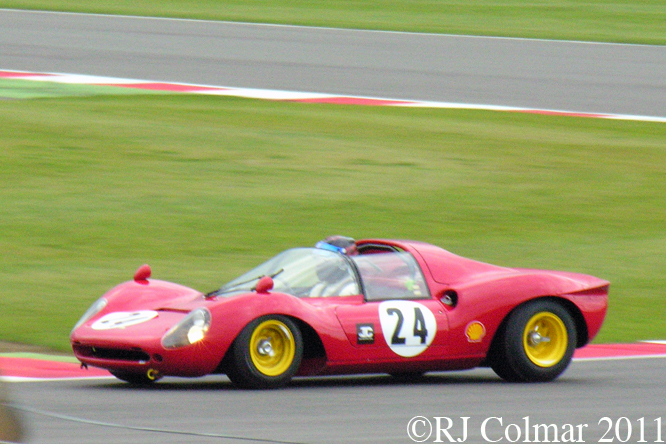
The original Dino 166/P specification of chassis #0834 seen, in these photo’s at Silverstone Classic last year, was built around a new 185hp variant of the Dino V6 with twin overhead cam shafts per bank, quad cam, and twin plug ignition and a capacity of 1592 cc / 97.2 cui.

The original body was a closed coupé style, similar to that of a bigger V12 powered Ferrari P2 and can be seen on this link.

Despite it’s good handling, in this form the car driven by Giancarlo Baghetti and Giampiero Biscaldi retired from the 1965 1000 kms at Monza after one lap with engine failure, then Lorenzo Bandini drove it to victory at the Vallelunga GP.

However the 166/P’s biggest success against much stronger opposition was at the 1965 Nürburgring 1000 kms where Bandini and Nino Vaccarella came home 4th behind two Ferrari P/2’s and a Porsche 904/8 all with larger motors. This performance was thought so unlikely the events scruitineers had the motor stripped to confirm it’s capacity.

At the 1965 Le Mans 24 hours Baghetti and Mario Casoni only lasted 21 minutes before it retired with a broken valve.

Ferrari 166/206, Silverstone Classic

Two months after Le Mans chassis #0834 was upgraded to 206 S/P specification with a 218hp 1986 cc / 121.2 cui Dino V6 motor and a low cut open top Spyder body, which can be seen on this link.

Ludovico Scarfiotti used the car in this form to win the European Hillclimb championship setting new course records in all of the remaining 1965 championship rounds.

In 1967 the car appeared in the Targa Florio with a third, 206 S, body configuration, similar to the one seen in today’s photographs, where it finished 4th with Jonathan Williams and Vittorio Venturi at the wheel.

Two years later Leandro Terra and Turillo Barbuscia drove #0834 still in 2 litre / 122 cui spec to a 25th place finish in the 1969 Targa Florio.

#0834 is currently owned by Harry Leventis who shares the driving with Gregor Fisken on a regular basis in the The Italian Historic Car Cup.

There is an interesting observation about the “Dino 206” cars by the highly esteemed journalist Doug Nye on this link, makes one wonder what Ing. Forghieri may have come up with on a good day !

Thanks for joining me on this “Dino Evolution” edition of “Gettin’ a li’l psycho on tyres”. I hope you will join me again tomorrow. Don’t forget to come back now !

Share

Out Of The Ark – Lotus Elan (Ark Racing)

In 1976 one year after production of the Lotus Elan had ceased the 4th generation Group 5 regulations came into effect for “Special Production Cars” for cars that met the criteria for groups 1 to 4 but were allowed almost unlimited bodywork modifications excluding the bonnet, roofline and railpanel combined with unlimited lightening of the chassis.

Porsche dominated the series overall from 1976 to the series demise in 1981 with numerous variations of the 935 model, though it’s ultimate development ‘Moby Dick’ 935/78 ironically only one one race. Lancia was most successful in the smaller under 2 litre / 122 cui division with it’s Lancia Beta Montecarlo winning two championships with BMW and Ford taking the smaller category once each.

Three different Lotus models were entered into selected Group 5 (Silhouette) races three Elan’s like the one featured today, a Europa and a couple of Lotus Esprit’s. Over the next couple of weeks I will be looking at how three of those teams faired.

Lotus Elan, Ark Racing, Silverstone

In 1968 Derek Mathews built the first of several well known and successful racing cars a Sprite for John Banks, which by 1970 became the Ark Sprite powered by Ford Twin Cam engine. After building and running a Group 6 2 seat open sports car with F Lester Ray originally called the (Derek Matthews) DM6 (sixth car) which became the Vogue Derek built a Lotus Elan for John Evans to race in the 1974 in British Modsports races a combination which recorded many class wins in 1974 and 1975 being crowned BRSCC (British Racing Sports Car Club) Modsports Champions in 1975.

For 1979 Ark Racing built an Elan for Max Payne and John Evans to run in selected World Manufacturers Championship, German DRM, and Belgian events, becoming the third Elan to be used in Group 5. According to ‘The Oracle” and Richard Jenvey the Ark Racing Group 5 Elan, seen above making it’s debut at Silverstone, was built on a Lotus chassis.

At Silverstone the Elan qualified 23rd overall, 3rd last in class and retired with gearbox issues. The car was raced four times in 1979, Max Payne beating a de Tomaso Pantera to win a Benelux race at Zandvoort in The Netherlands.

Lotus Elan, Ark Racing, Silverstone

The last time I saw the Ark Racing Elan was in 1982, again at Silverstone above, when Max Payne was sharing the car with Chris Ashmore they qualified 32nd and were disqualified for a push start. The Ark Racing Elan is thought to have been the last one to have raced taken part in an international ‘in period’ race qualifying 25th and finishing 18th at the 1982 Brands Hatch 1000 kms race with Payne and Ashmore at the wheel.

My thanks to The Oracle, his spokesman Pete Taylor and Edward Fitzgerald for their comments at The Nostalgia Forum and to Richard Jenvey for his private comments.
Thanks for joining me on this “Out Of The Ark” edition of “Gettin’ a li’l psycho on tyres”, I hope you will join me again tomorrow. Don’t forget to come back now !

Share

Thirty Years Ago #2 – Group C

On May the 16th 1982 I awoke excitied to catch my first glimpse of a new endurance sports car series at Silverstone. The Group C series was born out of the GT Prototype class which had hitherto run only at Le Mans for closed cockpit 2 seat cars with just safety features, some overall limits on dimensions and a limited amount of fuel for rules. Here is a summary of a few Group C cars I saw that day.
Porsche 956, Silverstone

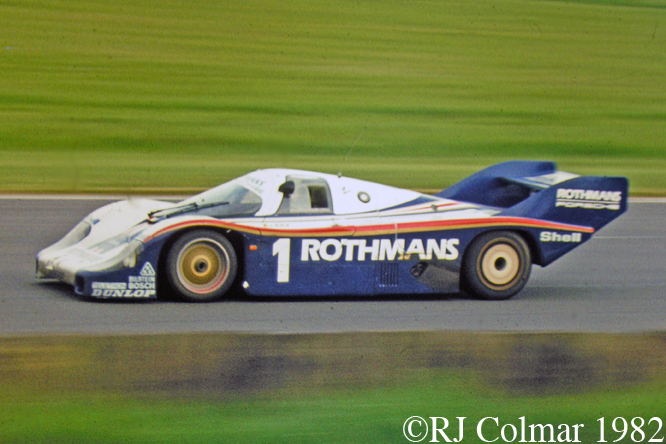
It took three years for the series to really take off with support from three manufacturers but for that first year in 1982 Porsche were prepared in particularly overkill fashion with the Porsche 956 which used a 650 hp twin turbo charged 2.65 litre / 156 cui flat 6 motor that had originally been conceived for the banned 1980 Interscope Porsche Indy Car.

The motor was successfully tested in preparation for Group C in the back of two Porsche 936’s at Le Mans in 1981, Ickx and Bell scoring an emphatic win by 14 laps. Featuring an aluminium monocoque the 956 was designed to take full advantage of ‘ground effect’ aerodynamic technology that had been developing in Formula One since 1976.

Uniquely among the first generation of Group C cars the 956 had been tested in exactly the same way as all Porsche road car designs meaning it alone among it’s competitors could negotiate potted and cobbled streets with out any noticeable detriment to the integrity of the chassis or performance of the motor. Like the Porsche 935 and 936 models it replaced the 956 was utterly dominant in the first 3 years of Group C, sweeping aside a puny effort from Lancia who competed with the Ferrari powered Lancia LC 2 from 1983 to 1985, not having any real competition until the arrival of Jaguar in 1985. Quite simply the 956 nearly killed the series as in 1983 the first of 28 customer 956’s started to fill out the grid.

However Porsche did not have it quite their own way, in 1982, as Lancia sort to wrest the World Sports Car Drivers Championship from Porsche drivers by entering a couple of cars built to the old open top regulations, which had one year left to run, these open Group 6 cars did not need to adhere to the fuel consumption regulations of Group C. Lancia won three races outright including the Porsche 956’s debut race at Silverstone. However Lancia driver Ricardo Patrese was eight points short of winning the title which went to Jacky Ickx who shared the #1 956 seen at Silverstone above with Derek Bell. At Le Mans in 1982 the works Porsche team led by Ickx and Bell took 1,2,3 victory.

Chassis #001 driven here by Icks and Bell easily qualified on pole but constrained by the fuel allowance in the race meant they finished 3 laps behind the race winning Group 6 Lancia LC1. #001 was used on two further occasions, as a test car at Le Mans and in the 200 mile Norisring German Racing Championship (DRM) race which it won with Jochen Mass at the wheel, before it was retired.

In 1983 Ickx retained his World Endurance Drivers title, before handing it over to team mate Stefan Bellof in in 1984. Ickx retired from racing in 1986 after a fatal accident involving Bellof now driving for the private Brun Team at Spa in 1986.

Derek Bell shared the World Endurance Drivers title in 1986 and 1987 driving Porsche 962’s with team mate Hans-Joachim Stuck on both occasions.
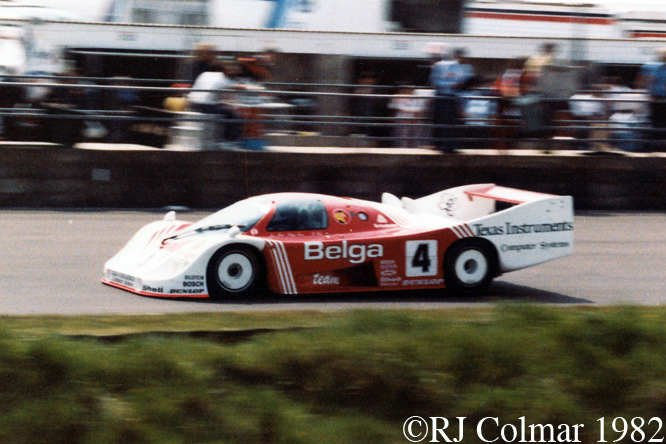
Porsche 936C, Silverstone

While Porsche customer teams like Joest and Kremer had to wait until 1983 before being able to purchase customer Porsche 956’s with which to compete in the new series, neither sat idle in 1982 both teams building Group C cars of their own devising using Porsche engines.

Of the two the Joest team car was the first to compete, built around a Joest built Porsche 936 chassis #JR005 with a smaller 2.1 litre / 128 cui twin turbo flat 6 motor. The 936C driven by Frenchman Bob Wollek, and the Belgian Martin brothers, Jean-Michell and Philippe, finished third on it’s debut at Silverstone and continued to be a top ten finisher in Group C events until the end of 1986 when it was effectively outlawed by new footwell regulations.

Joest would become the Porsche factories team of choice whenever the works team was not present at the track. Joest cars won Le Mans in the absence of the factory team in 1984 and 1985 with the same 956B chassis #117, one of the few chassis to win the 24 hour marathon twice. Joest repeated the feat in 1996/1997 winning with Le Mans with the same TWR/Porsche. Joest Racing then became with the über successful Audi and Bentley campaigns that have dominated Le Mans since the turn of the century.

Bob Wollek never won the Le Mans 24 hour race but he did win the Daytona 24 hour race four times. Three of them driving the 956 successor Porsche 962’s.
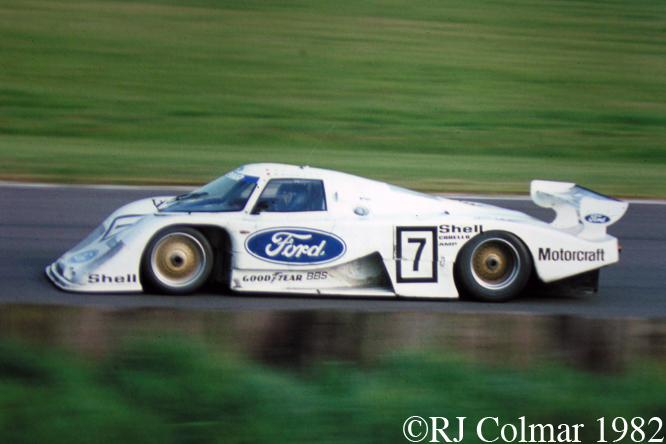
Ford C100, Silverstone

Fords involvement in the series proved a little half hearted despite the involvement of Len Terry in the design and a Cosworth V8 DFL motor based on the 3 litre / 183 cui DFV but now stretched to 4 litres / 244 cui. The larger motors sounded frankly awful and suffered from excessive vibrations that hindered reliability.

Manfred Winklehock and Klaus Ludwig, who is seen at the wheel here, qualified 4th but could only finish eighth in the race. The C100’s only wins were recorded by Klaus Ludwig in the German DRM championship and by the end of 1982 Ford called a halt to it’s Group C programme.

Peer Motorsport acquired the two time DRM winning C100 chassis #04 for 1983, it was mostly raced in the British Thundersport Series where it recorded one further victory in the hands of Irishman David Kennedy and Scotsman Jim Crawford at Donington Park.

Klaus Ludwig would go on to join the Joest Team and won the 1984 and 1985 Le Mans driving the 956B chassis 117 sharing the driving with Henri Pescarolo in 1984 and Paolo Barilla and ‘John Winter’ in 1985.

WM P82, Silverstone

WM was founded by two Peugeot design studio employees in 1969 Gerard Welter and Michel Meunier in 1969 who in their spare time built two cool coupe’s the first WM P69 was based on a Peugeot 204 Cabriolet platform and the second WM P70 was a mid engined design.

Their next effort the WM P76 was built to the Le Mans GTP regulations first announced in 1976 was powered by a Peugeot/Renault/Volvo (PRV) V6 stock block. Over the next 13 years they built 7 distinct models adding twin turbo’s the PRV motors in 1977. In 1980 they scored a best 4th place and first in GTP at Le Mans.

The WM P82 took part in 5 Group C races, Roger Dorchy, Jean Daniel Raulet and Michel Pignard driven car is seen above on the WM teams second ever outing abroad, it qualified 39th and finished 11th. The WM teams best 1982 result was on it’s first trip abroad to Monza where it qualified 11th and came in 6th. The teams natural reliance on the PRV block was probably it’s down fall for all though eventually tuned to give over 900 hp in 1988 it was actually designed to initially produce 150 to 200 hp.

Sensing that a win at Le Mans was not in their grasp by 1987 WM focused on becoming the first team to reach 400 km/h on the legendary 3.1 mile Mulsanne straight during the 24 hour race. With the engine producing 950 hp and all the cooling blanked off and special Michelin tyres the WM P88 of Roger Dorchy was timed at 405 km/h / 253 mph at 9pm in the evening of the 1988 race. This record will probably stand for all time given that in 1990 2 chicanes were added to the straight to slow the cars down. Rogers car unsurprisingly retired from the race with overheating issues.

WM made way for for an official Peugeot Works team in 1990, in 199O Gerard Welter took over the team completelu renaming it WR (Welter Racing), which scored a class win at Le Mans in 1993 and sensationally locked out the front row of the grid at Le Mans in 1995.
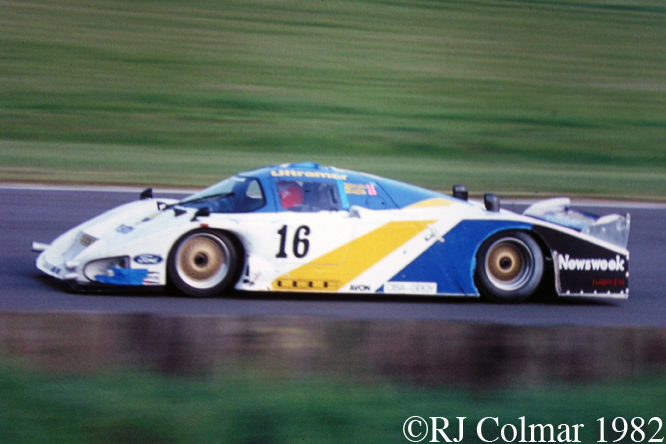
Lola T610, Silverstone

Lola’s involvement with Le Mans dates back to a contract with Ford to develop the fabled GT40, racing under it’s own name it has never won Le Mans. The T610 was powered by the same 4 litre / 244 cui Ford Cosworth DFL as the Ford C100, but proved even more unreliable, despite qualifying 8th at Silverstone, Guy Edwards and Rupert Keegan who is seen in the car here could manage only a 16th place finish.

The T610’s best result of the season was a 7th place finish at Brands Hatch. Lola would hook up with Nissan to produce several Group C Le Mans challengers at the end of the 1980’s including the outright qualifying lap record holding Nissan R90CK which held the record at 3m 27 secs from 1990 until 2008.

Guy Edwards would become a mover and shaker in Group C when he lent his considerable sponsorship finding talents towards the Jaguar Group C project run by Tom Walkinshaw Racing.
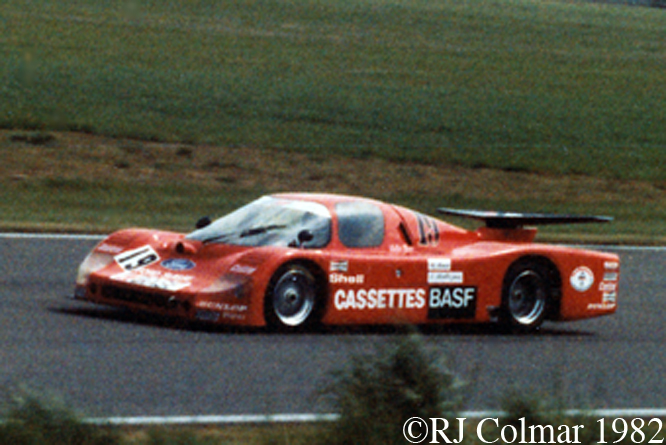
Sauber SHS C6, Silverstone

The Sauber SHS C6 was another Ford powered Group C contender and predictably unreliable Walter Brun and Seigfried Muller Jr qualified 12th and finished 13th after loosing the rear wing. The teams best result, a 4th place finish came during a DRM race at Hockenheim. The an SHS6 running in the privateer C2 class appeared in the Group series until 1986.

Peter Sauber hooked up with Mercedes Benz unofficially in 1986 and by 1987 started getting works support leading to a victory at Le Mans and the World Sportscar Championship in 1989. Sauber went on to become a Mercedes Powered Formula One constructor returning the famous manufacturer to the top tier of the sport in 1993 after a 38 year break.

In 1983 Walter Brun ended up taking over the GS Sport Company that had been operating in partnership with Sauber in 1982. His operation eventually became a Porsche customer team running 956’s and then the replacement 962’s with which Brun Motorsport won the 1986 World Sports Prototype Championship. By 1992 the team folded after a dabbling in the disastrous EuroBrun Formula One project and attempting to build his own Judd powered Le Mans challenger.
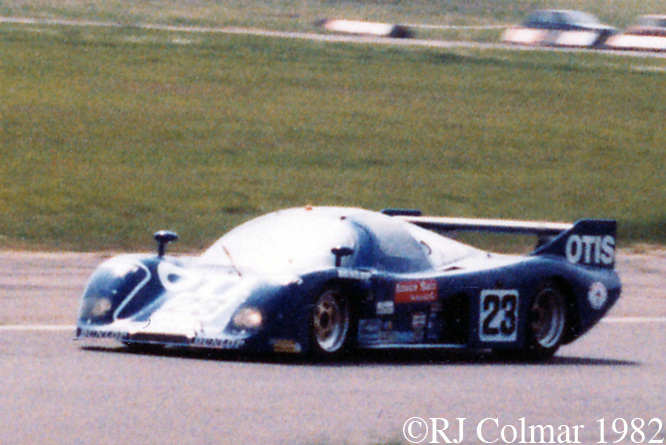
Rondeau M382, Silverstone

Le Mans based Group C team Rondeau like WM started out competing at the 24 hour classic in the GTP class in 1976 winning the GTP class in both 1976 and 1977 under the Inaltera name.

In 1978 the team which always used 3 litre 183 cui Ford Cosworth V8 motors now raced under the founder, Jean, Rondeau’s own name. Jean Rondeau with Bernard Darniche and Jacky Haran scored his second Le Mans GTP class victory with an M378 and in 1979 the team won the unlimited sports prototype class at Le Mans going one better in 1980 with and overall Le Mans victory for Jean Rondeau and Jean-Pierre Jaussaud.

Another Le Mans GTP class victory, 2nd overall, followed in 1981 for Haran, Phillipe Streif and Jean Louis Schlesser

Like Ford, Lola and Sauber, Rondeau plumped for the Cosworth DFL but somehow found some reliability where others had failed Pescarolo and Gorgio Francia indeed won the first ever Group C race, at Monza, with a Rondeau M382. Pescarolo and Gordon Spice seen above at Silverstone qualified 9th and finished 5th.

This same car won it’s class, 2nd overall, at the Nurburgring with Pescarolo and Rolf Stommelen at the wheel.
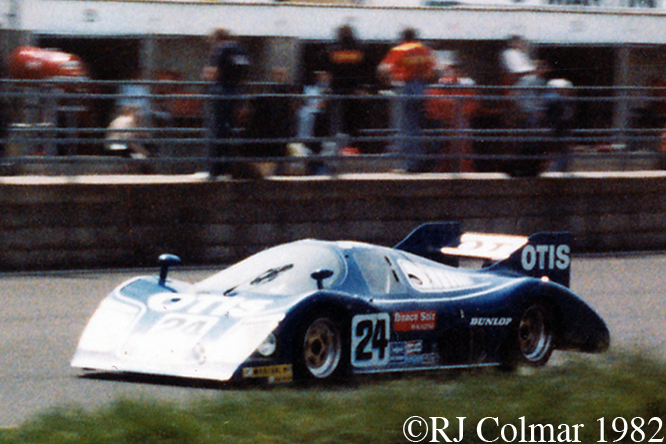
Rondeau M482, Silverstone

While the #23 M382 Rondeau was based on a design that could trace it’s origins back to the 1976 Inaltera the Rondeau team fielded a second design which should have taken advantage of the prevailing ground effect technology of the period unfortunately on it’s debut at Silverstone Jean Rondeau and Francois Migault could only qualify 27th and failded to finish after bodywork and suspension breakages. The car failed to appear at Le Mans and when it appeared in 1983 it was with heavily revised bodywork.

The Rondeau scored more points in Group C than any other team in 1982 but Porsche were allowed to have points accumulated by a car running in a lower GT class added to their points tally and were declared 1982 World Endurance Champions, Rondeau’s sponsor OTIS announced it’s immediate withdrawal from the team in disgust.

With no significant sponsorship Rondeau concentrated all of it’s efforts on Le Mans for 1983 all three DFL powered revised M482’s retired with motor related issues an only the Christian Bussi teams car recorded a finish, a lack luster 19th.

Rondeau’s team folded at the end of 1983 and Jean was killed by a train in a bizarre accident while following police car over a level crossing in 1985. Rondeau cars continued to appear in Group C races at Le Mans and elsewhere until 1987.
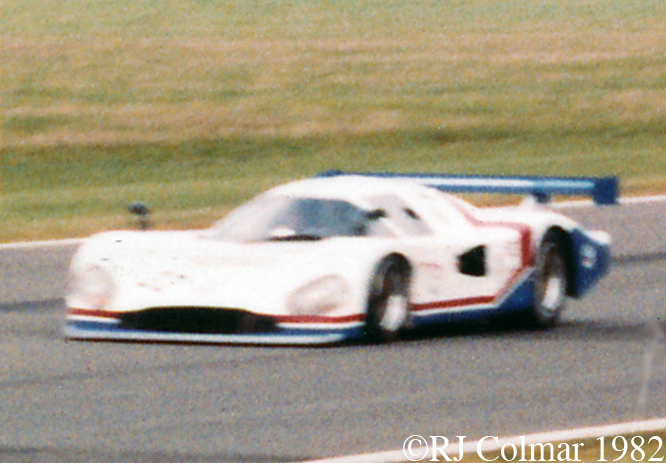
Nimrod NRA/C2, Silverstone

Finally while certainly not the last of the Group C cars that appeared at Silverstone in May 1982 the Nimrod NRA/C2 is notable because it featured an Aston Martin Tickford V8 motor, from the Vantage V8 model, which sounded fantastic in comparison with the Cosworth DFL V8 and the flat 6 Porsche. The private #32 Viscount Downe entry seen here driven by Ray Mallock and Mike Salamon qualified three places better than the works entry in 11th and finished 6th while the works car retired.

Through out 1982 the Viscount Downe entry out qualified the works entry usually by three places and manged a finish which the works entry never did. The Aston Martin Owners Club president Viscount Downe Team finishes secured a third place finish for Nimrod Aston Martin in the 1982 World Endurance Championship behind Porsche and Rondeau, with the more successful Lancia running in the old Group 6 class it was ineligible to score points in the manufacturers championship.

Both Nimrod teams continued into 1984 with the works team running AJ Foyt, Darrel Waltrip and Guillermo Maldonado in a Pepsi Challenger liveried example in the Daytona 24 Hours. However with ever more Porsche 956’s filling the grid and a distinct lack of reliability the works team folded in 1983 and the Viscount Downe team in 1984.

Ray Mallock would eventually run the Ecurie Ecosse team in the lower Group C2 class taking the class title in 1986 before overseeing the return, to Group C, of a fully works backed Aston Martin project in 1989. For 1990 Ray was involved with the Nissan R90CK project. His team has won numerous touring car titles with Vauxhall, Nissan and Chevrolet for whom he currently runs the successful works World Touring Car Championships cars.

Due to a concerted attempt to become an adult and various unavoidable associated commitments, weddings, graduation and such like it would be three years before I attended another Group C race, when I came back Group C was really taking off with Jaguar entering the fray and efforts from other teams like Toyota and Mercedes (Sauber) beginning to gather momentum. By the end of 1992 I had attended more than a dozen Group C races and seen some fantastic battles all of which will have to wait for future editions of GALPOT.

Thanks for joining me on this “Thirty Years Ago #2” edition of ‘Gettin’ a li’l psycho on tyres’ I hope you will join me again tomorrow when I’ll be looking at the Simply Italian parade at the National Museum as originally promised yesterday. Don’t forget to come back now !
Share

Electronic Clutch & Four Pedals – Lotus Ford 76 #76/1 (JPS 9)

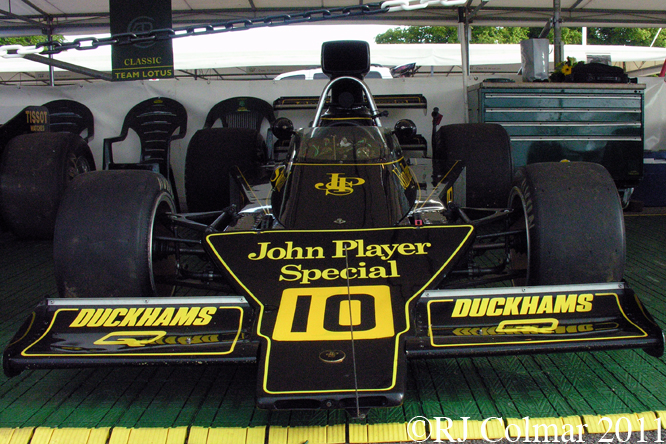
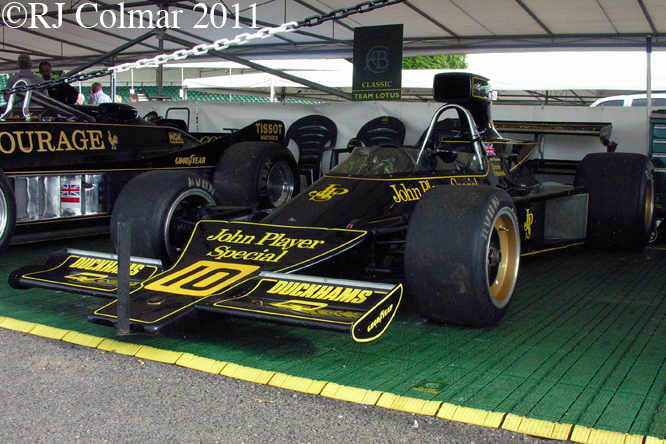
I remember when I first set eyes on the publicity photo’s of the Lotus 76, my reaction was an instant WOW ! The two team cars which had been completed a little late were to replace the venerable Lotus 72 and be driven by Ronnie Peterson and Jacky Ickx in the 1974 season starting at the South African Grand Prix.

The new car was intended to be slimmer and lighter than the Lotus 72 which had helped Jochen Rindt and Emerson Fittipaldi to win World Drivers Championships in 1970 and 1972 and helped Lotus secure the World Constructors Championship in 1970, ’72 and ’73.

Lotus 76, Goodwood FoS

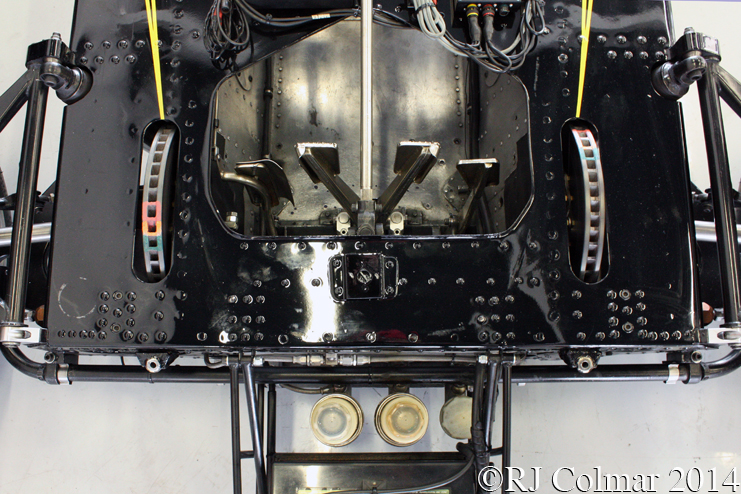
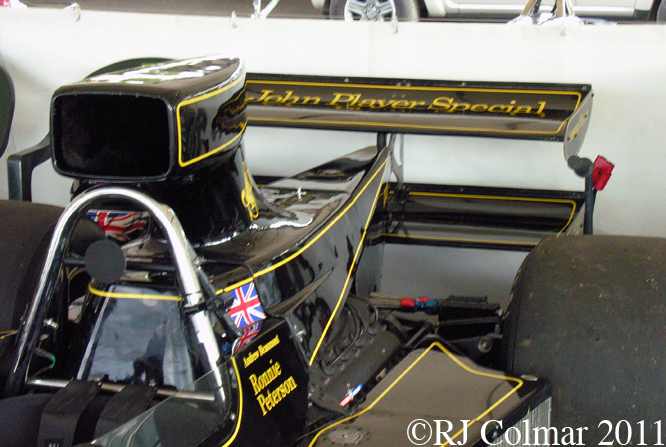
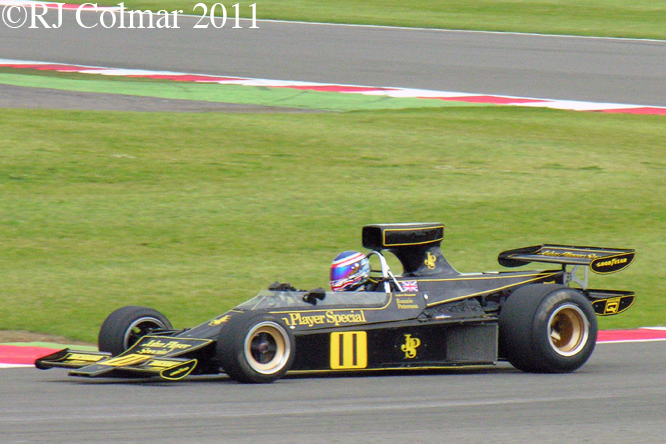
Innovations on the car included an electronic clutch operated by a button on the gear stick, except when starting from rest for smoother gear changes. Two brake pedals were fitted either side of the steering column operating a single split leaver to encourage left foot breaking to minimise the upset of the balance of the car when approaching corners and two thin, for the period, rear wings mounted one above the other.

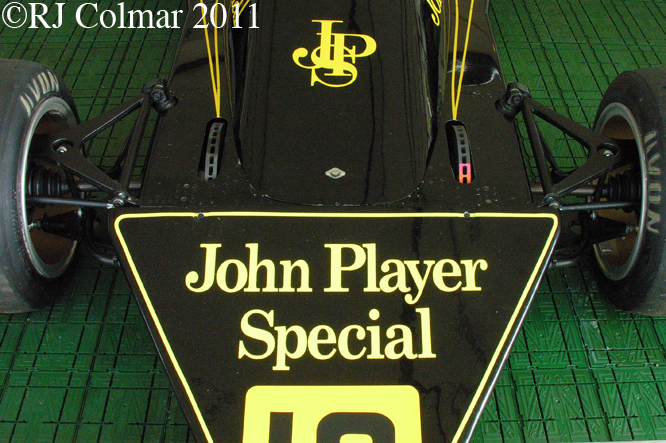
Much to the consternation of the press and Lotus fans Colin Chapman sold the naming rights to the Lotus 76 which for the 1974 season was to be known as a John Player Special the chassis number of the car seen here at Goodwood was referred to as JPS 9 though the chassis was unofficially referred to in the press and by enthusiasts as 76/1.

Lotus 76, Silverstone Classic

A pattern of retirements set in at the South African GP which was to repeat itself until by the Monaco Grand Prix Lotus Team had decided to revive the Lotus 72 which Ronnie Peterson promptly drove to the first of 3 against the odds victories during the season.

Development of Lotus 76 was split between the ageing Lotus 72 during 1974, to generate more down force larger front wings and the larger rear wing of the Lotus 72 were fitted to the Lotus 76 which appeared in Belgium.

Lotus 76, Goodwood FoS

With the 76 having been observed to be popping wheelies after additional down force had been added the front nose cone was then replaced with a cut down version from the Lotus 72, the radiators moved from ahead of the rear wheels to behind the front wheels and horizontal boards were added along the top of chassis between the front and rear wheels as seen in this linked photo of 76/2 (JPS 10) at the 1974 British GP.

By now the 76 was being taken to races purely in case of an emergency and during practice of the 1974 German Grand Prix such such an emergency arose after Ronnie Peterson crashed Lotus 72/8. The team had no option but to press the by now overweight and unloved 76 back into service and did so by grafting the rear suspension engine and gearbox from the wrecked 72 onto the back of 76/2 (JPS 10). With the car now looking more like it’s predecessor Lotus 72 than a Lotus 76 Ronnie Peterson recorded the 76’s only finish with a forth place on the toughest circuit on the calender !

Lotus 76, Goodwood FoS

After confusion about Mario Andretti starting from 3rd place in the 1974 US Grand Prix, in his Parnelli, third Lotus driver Tim Schenken took the flag of the 1974 US Grand Prix only to be disqualified for being outside the top 26 qualifiers as Andretti had managed to get his car onto the grid, ironically only to be also disqualified for a push start away from the line ! This was Schenken’s and the Lotus 76 last Grand Prix start.

However this was not quite the end of the Lotus 76 story, Colin Chapman was a long time member of a motor club in North London and after a little badgering for ‘something a bit quick’ from fellow long time member, David Render, who participated in Sprints and Hillclimbs, Colin relented and told his friend to turn up at the Lotus factory at Hethel with a trailer.

Lotus 76, Goodwood FoS

When David turned up at Hethel early in 1976 he saw this huge black car with twin wings and asked who is this for ? He was quite surprised to learn that it was intended for him !

David drove what is believed to be 76/2 (JPS 10), in original lightweight form, for 2 years and among many victories won the 1976 Brighton Speed Trials when the event was run over a standing kilometer 0.6 miles and clocked a time of 18.77 seconds reaching a 118 mph as he crossed the line.

Lotus 76, Goodwood FoS

At a recent talk, David gave to the Bristol Pegasus Motor Club, he related how on finding the car suffered from terrible understeer / push he added a lump of lead, taken from his old Allard trials car, beneath the nose cone of the 76 and that solved the problem, though he never told Colin ‘Added Lightness’ Chapman what he had done.

The car featured in today’s post 76/1 (JPS 9) seen at Goodwood Festival of Speed and at the 2011 Silverstone Classic belongs to Andrew Beaumont. According to Classic Team Lotus during the first of two races at the 2011 Silverstone Classic meeting Andrew’s double rear wing got savaged, but it did not have much detriment to the performance of the car and he finished 22nd.

John Barnard eventually perfected a semi automatic electronic clutch and gearshift mechanism with a steering wheel mounted paddle shift for the 1989 Ferrari 640 which won first time out at the Brazilian GP in the hands of Nigel Mansell. This system is now de riguer in almost all top line racing cars.

My thanks to MCS, Gregor Marshall, and Tim Murray on the Lotus 76 thread at The Nostlgia Thread who helped identify a Lotus 76 at the Abbaye de Stavelot Museum as the possible home of the second Lotus 76 chassis #76/2 (JPS10).

Thanks for joining me on this ‘Electronic Clutch & Four Pedals’ edition of ‘Gettin’ a li’l psycho on tyres’ I hope you will join me again tomorrow when I’ll be looking at last weekend’s Auto Italia Day at Brooklands. Don’t forget to come back now !
Share