Tag Archives: Silverstone

Turbo Erika – Ford Escort RS Turbo

Launched with the strap line “Simple is Efficient” the third generation Ford Escort was code named “Erika” while in development taking the name from Fords Product Planning Dept leader Erick A. Reikert.
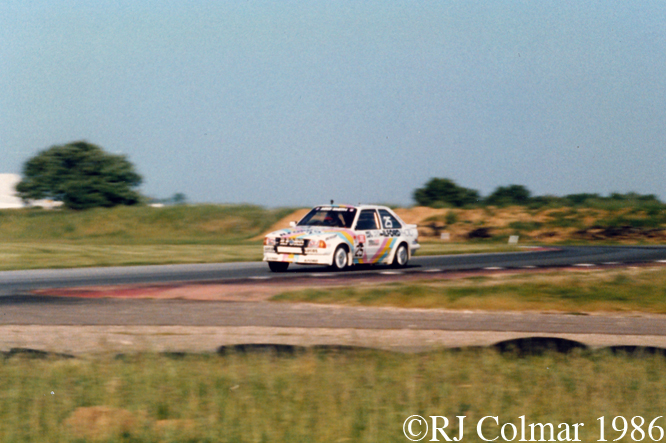
Ford Escort RS Turbo, Snetterton

The Escort MKIII went head to head in the market place with the popular Volkswagen Golf which had turned VW fortunes around after the demise of the ‘Beetle’.

Ford Escort RS Turbo, Snetterton

Like the Golf the 3rd iteration of the Escort employed front wheel drive, unlike the Golf the Escort was a conservative hatchback retaining some vestige of a three box shape bodywork at the rear, although the tailgate included the rear sloping window.
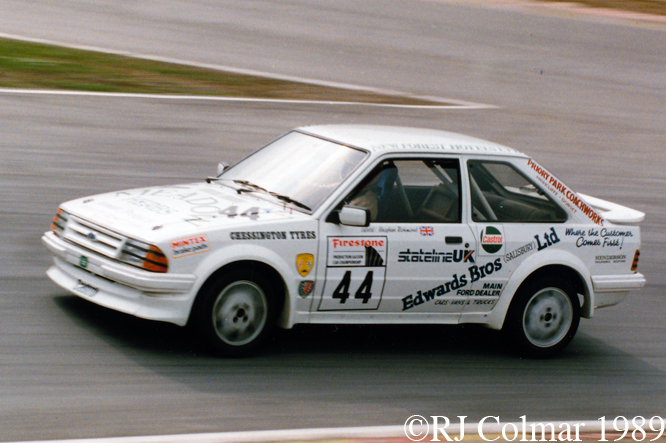
Ford Escort RS Turbo, Brands Hatch

The 132hp RS Turbo version of the Escort was launched in 1984 with the 5 speed transmission driving the front wheels through a viscous coupling differential that was a world first for a front wheel drive car. The RS Turbo proved a strong competitor in production saloon racing where it rendered the hitherto dominant Ford Capri 2.8i obsolete in the space of 12 months.
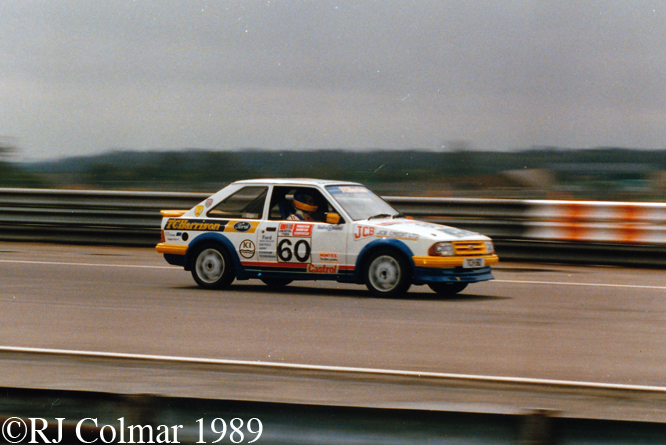
Ford Escort RS Turbo, Silverstone

In the top photo national radio DJ Mike Smith and Lionel Abbot shared the #25 to win the 1986 Willhire 24 hour race at Snetterton at their second attempt becoming the first two driver team to win the race since it’s inception in 1980. The #32 was driven by Karl Jones, Patrick Watts and Chris Creswell in the 1987 Willhire 24 hours qualifying 2nd, to a Ford Sierra RS Cosworth, and finishing sixth, third in class after a late driveshaft failure. By 1989 the Escort RS Turbo’s driven by Vaughan Richmond, #44 seen at Brands Hatch and Jonathon Harrison, #60 seen at Silverstone, were overwhelmed in class B by half a dozen faster BMW M3’s.

My thanks to Tim Murray on The Nostalgia Forum for the race details on the #32 at Snetterton.

Thanks for joining me on this ‘Turbo Erika’ edition of ‘Gettin’ a li’l psycho on tyres’ I hope you will join me again tomorrow for Americana Thursday. Don’t forget to come back now !

Share

Personal Luxury – Ford Thunderbird Continental

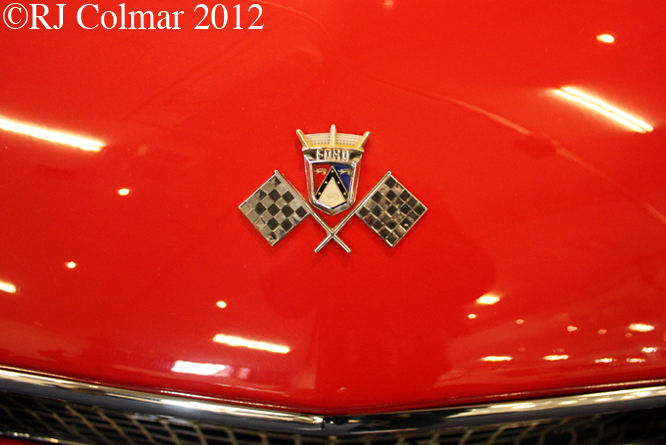
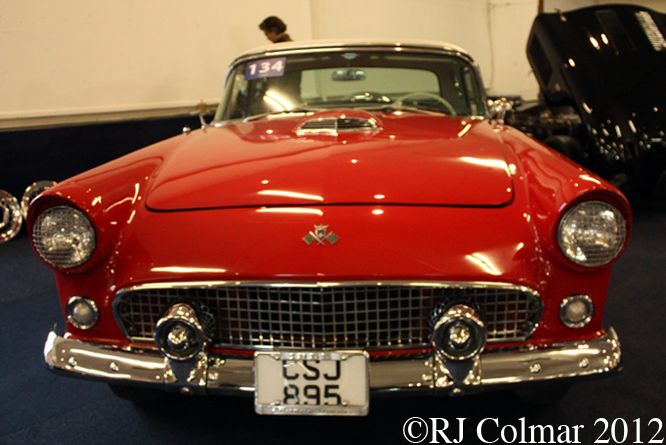
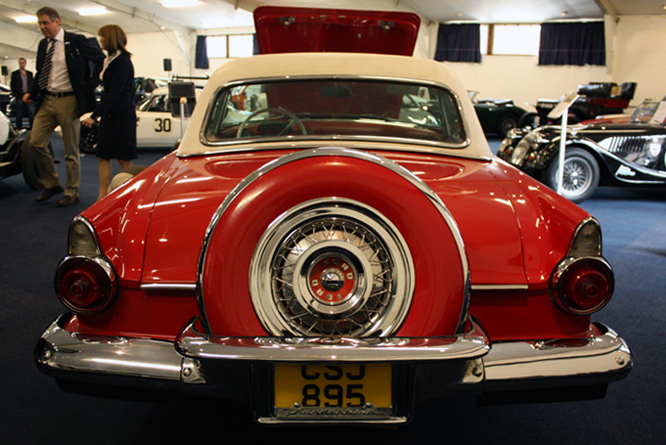
Following the announcement of the Chevrolet Corvette sports car in 1953, Ford responded by developing the Ford Thunderbird which was differentiated from the Corvette by it’s emphasis on luxury and comfort over performance.

Ford Thunderbird, Race Retro

Former GM Executive Lewis D. Crusoe and Ford Stylist George Walker found inspiration for the Thunderbird design from a sports car they saw in Paris. They worked with Ford Designer Frank Hershey on the two seater.

Ford Thunderbird, Race Retro

Ford Stylist Alden Gibberson was given a Saks suit complete with 2nd pair of trousers as his reward for coming up with the Thunderbird name which was first seen in public at the Detroit Motor Show in early 1954 and went in to production for the 1955 model year.

Ford Thunderbird, Race Retro

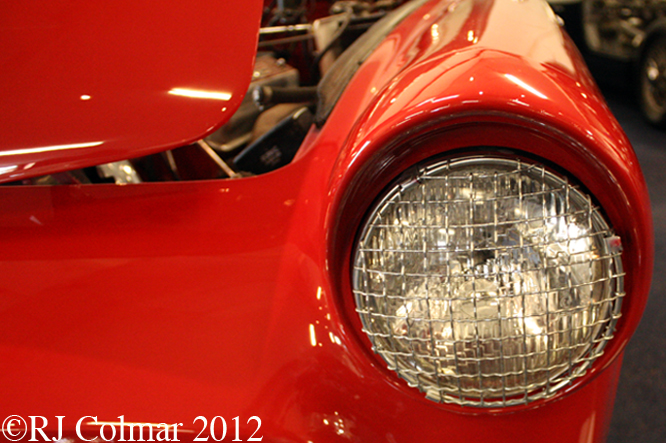
Despite many competition features like the stone guard grill over covering the front head lights the original Thunderbird was not intended for competition use.

Ford Thunderbird, Race Retro

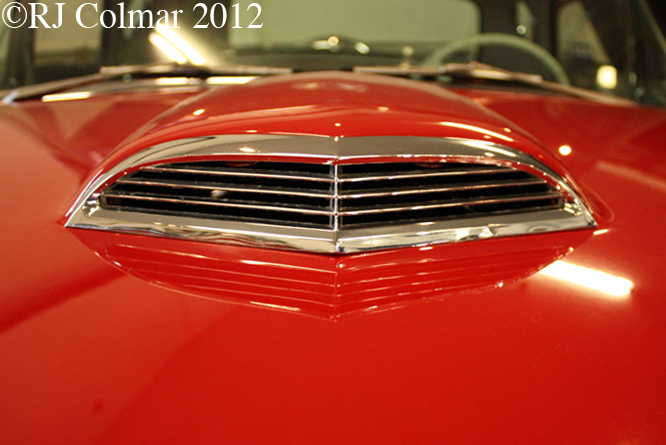
The intake on the bonnet / hood is just for show, as was the 150 mph speedometer fitted to the first series Thunderbirds which had a top speed of around 100mph.

Ford Thunderbird, Race Retro

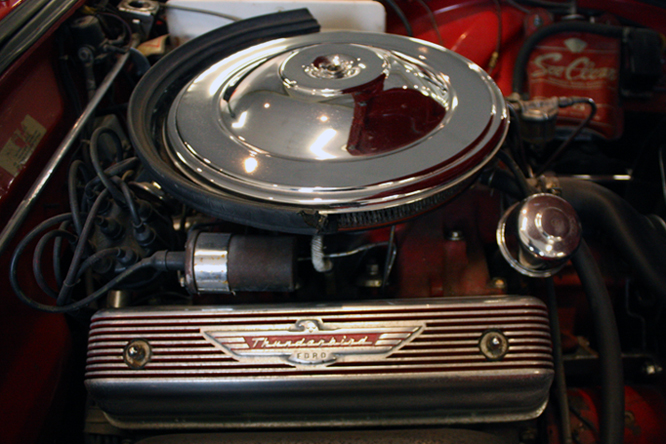
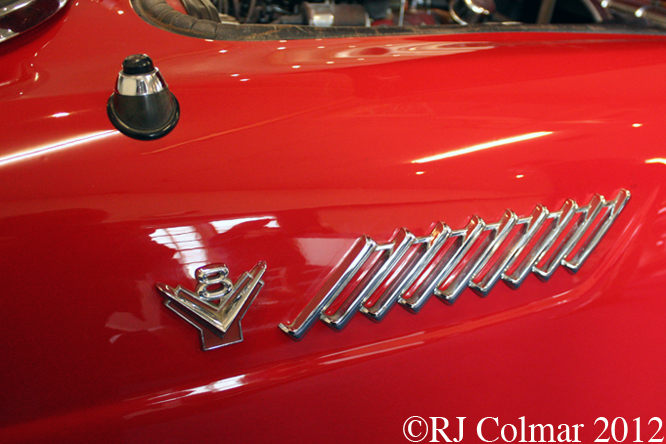
The distinctive Thunderbird rocker covers belie the fact that the 190 hp 4.8 litre / 292 cui Y block V8 was sourced from Fords Mercury division.

Ford Thunderbird, Race Retro

The detailing is typical of 1950’s dream cars note the V8 badge incorporates the Y which denotes the engine type.

Ford Thunderbird, Race Retro

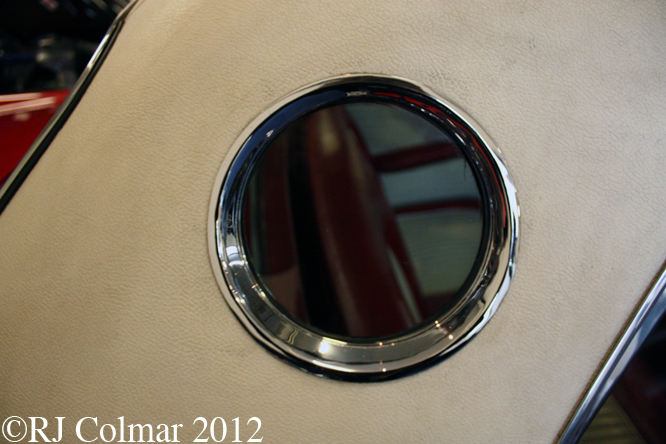
As I understand it the removable glass fiber hard top was part of the Continental option package …

Ford Thunderbird, Race Retro

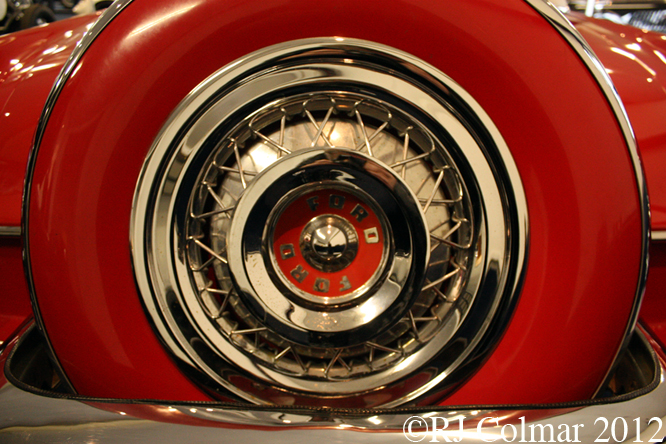
as was the bumper mounted spare wheel.

Ford Thunderbird, Race Retro

The first series Thunderbird out sold it’s Corvette competitor 20 fold with over 16,000 unit’s produced in the first year of production.

Thanks for joining me on this ‘Personal Luxury’ Edition of Gettin’ a li’l psycho on tyres’, I hope you will join me again tomorrow. Don’t forget to come back now !
Share

Colonists Return – Ford Capri RS3100

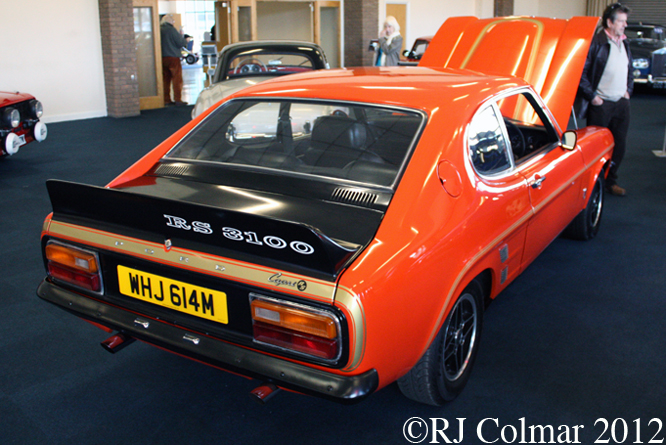
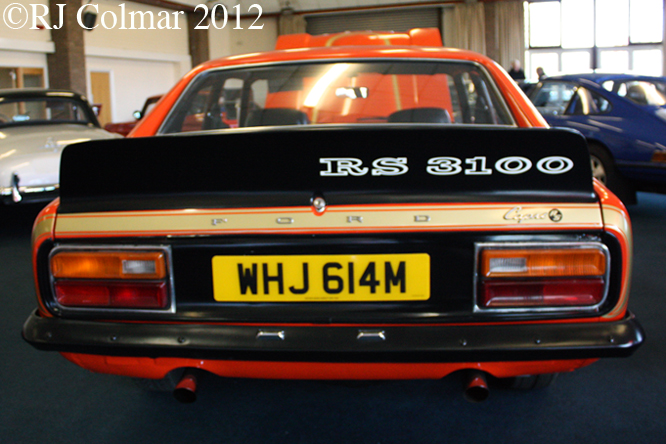
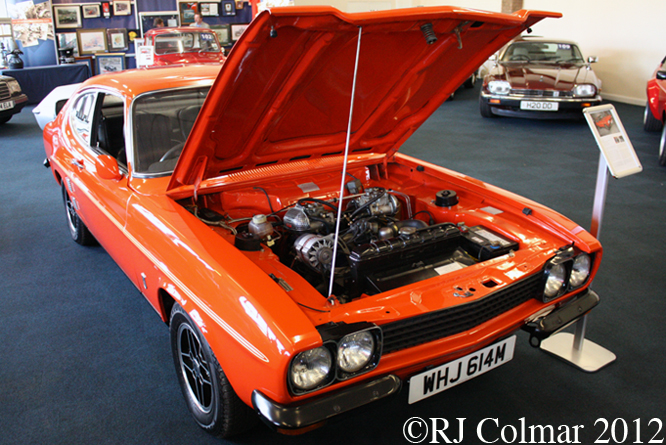
The Ford Capri RS3100 was a road going performance limited edition of the the MK I (facelift) Ford Capri launched in December 1973 just two months before the new MK II Capri.

Ford Capri RS3100, Race, Retro

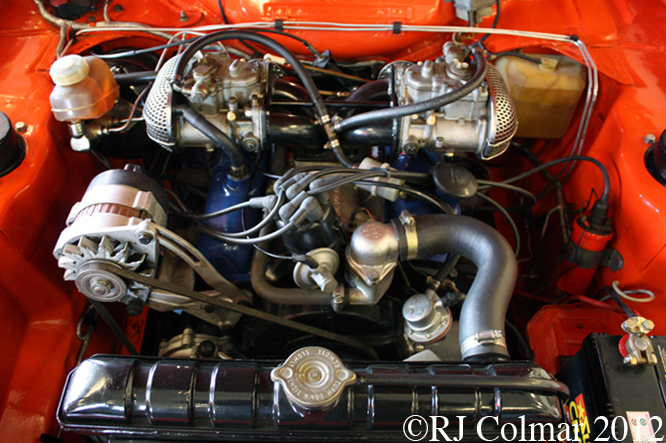
125mph performance was facilitated by a 148 hp 3090 cc / 186 cui overbored Essex V6 motor distinguished on 249 of 250 RS3100’s built with blue painted rocker covers.

Ford Capri RS3100, Race, Retro

This particular motor is described as having been rebuilt by Australian Bo Seaton with an upgraded steel crank shaft and balanced pistons, high lift cams, ported heads and twin side draft carburettors to take the power up to 190 hp.

Ford Capri RS3100, Race, Retro

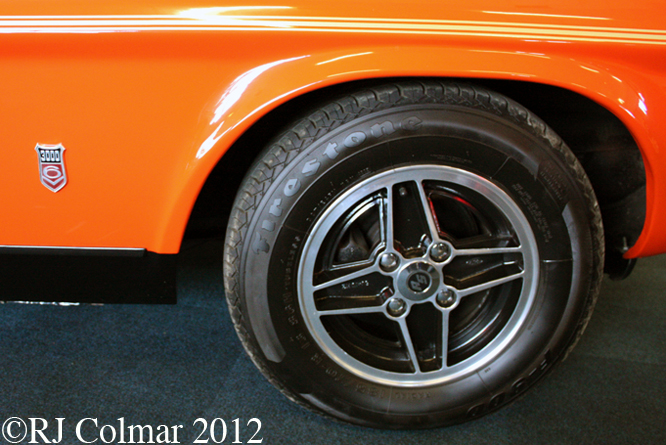
The RS3100 was available in seven colours all came fitted with triple gold go faster strips and the four spoke 6 x 13 RS road wheels.

Ford Capri RS3100, Race, Retro

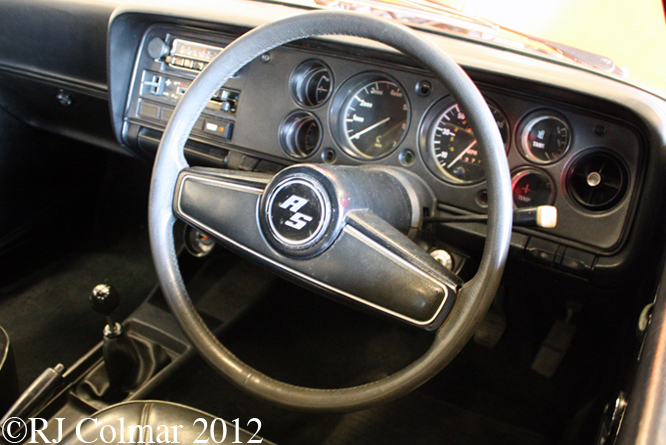
The interiors were not uniform with differences in seat belts, instrumentation and gear knobs, the black PVC seats and headlining were however common to all 250 RS3100’s.

Ford Capri RS3100, Race, Retro

This Sebring Red example, seen at Silverstone Auctions at last weekends Race Retro, is one of 50 that were exported to Australia between June and July in 1974, when it became apparent that a combination of fuel crises and the introduction of the new body MKII Capri was adversely affecting predicted UK sales.

Ford Capri RS3100, Race, Retro

This particular car is said to have clocked up 100,000 miles before returning to the UK in 2010. It is believed that just 46 of the 250 Ford Capri RS3100’s built have survived.

Thanks for joining me on this Colonists Return edition of ‘Gettin’ a li’l psycho on tyres’, I hope you will join me again tomorrow. Don’t forget to come back now !
Share

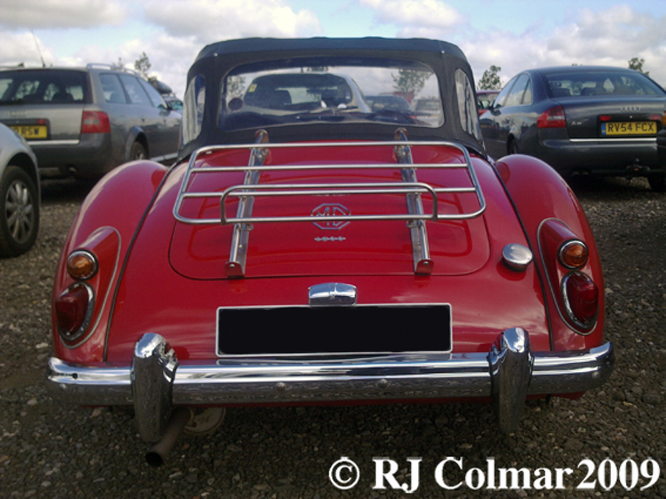
Almost Always True – MG MGA 1600

The story of the MGA sarts with an MG TD special chassis #EX172 registration UMG400 which despite it’s works experimental chassis number was built for privateer George Philips to race at Le Mans in 1951, the car featured a low slung body desgined by Syd Evener, the body was so low that a special wide chassis had to be built to accommodate the driver between the chassis rails rather than above them as had been the case with all of the MG T series cars.

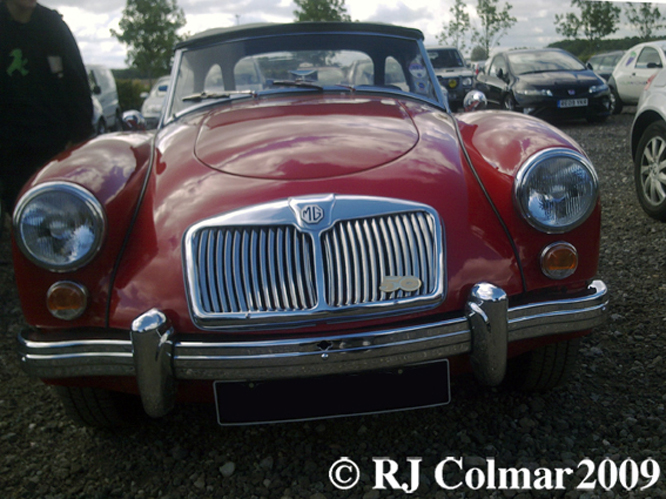
MG MGA, Silverstone

#EX172 was a public relations success, though it only lasted three hours of the 24 hour race for which it was designed. Due to the rationalisation going on in the British Motor Corporation, a conglomerate which MG became a part of in 1952, MGA production was stalled for two years while resources were put into launching the Austin Healey 100/4.

MG MGA, Silverstone

The MGA finally came to market in 1955 fitted with a 58 hp motor, in 1958 a 108 hp twin cam version became available which had to be detuned to 100hp after problems manifested themselves with the high compression motor.

MG MGA, Silverstone

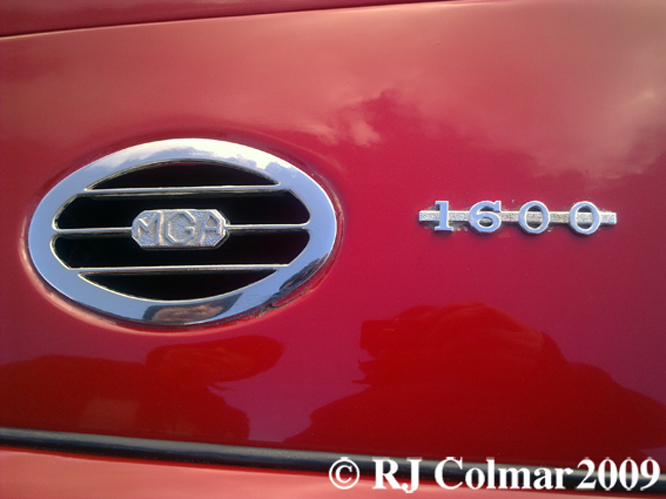
The 1600 MGA was launched in 1959 with a 78 hp version of the BMC ‘B’ motor, disc brakes on the front. One of these £940 models was tested with a rest to 60 mph time of 13.3 seconds, top speed of 96 mph and 29.7 mpg (imperial).

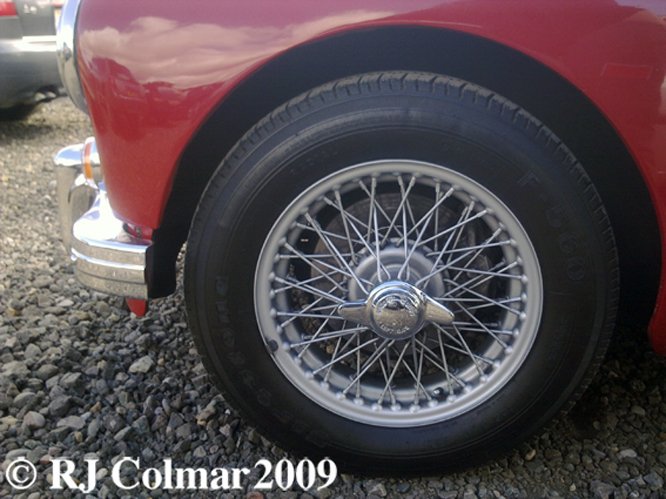
MG MGA, Silverstone

This 1960 model is one of 31,501 manufactured between 1959 and 1960. Elvis Presley fans may recognise this car as similar to the one used in the film Blue Hawaii in which he sings the Weisman and Wise number ‘Almost Always True‘.

Thanks for joining me on this ‘Almost Always True’ edition of ‘Gettin’ a li’l psycho on tyres’, I hope you will join me again, tomorrow. Don’t forget to come back now !
Share

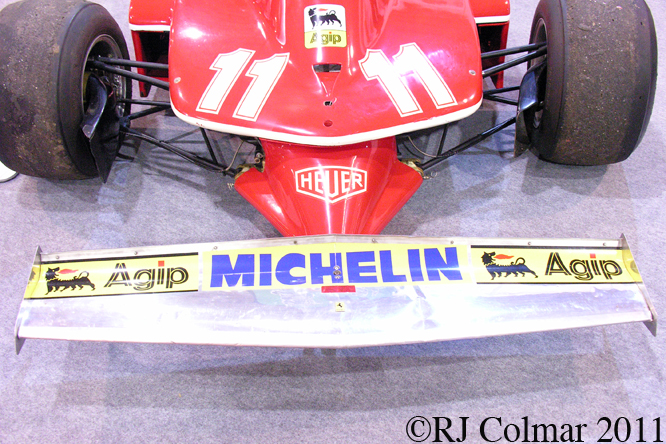
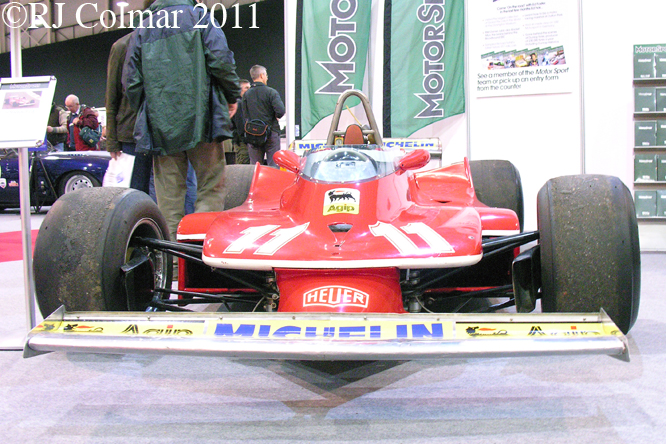
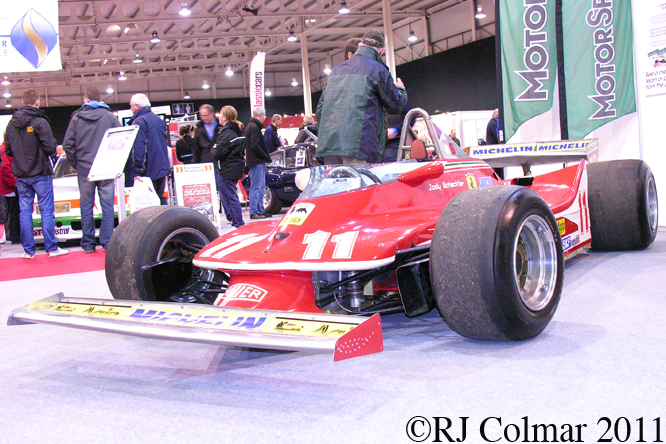
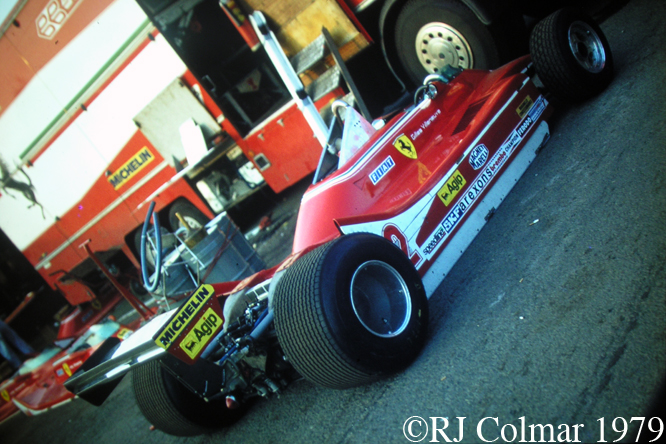
Driving For Italy – Ferrari 312 T4 #040 & #038

The 1979 season was one of two halves in the first half the french Ligier team came out of nowhere with a fast car that took three wins from the first five races, Ferrari then muscled in with four race wins from five races and Renault scored what would turn out to be a one off win at the half way mark and the second half of the season was dominated by the Williams team who scored 5 wins in the last seven races with the Ferrari drivers Jody Scheckter and Gilles Villeneuve picking up the pieces and each scoring a win. Jody through his better consistency beat Gilles to the 1979 World Championship.

Ferrari T4, Race Retro

The car that Jody and Gilles used in 1979 was the Ferrari 312 T4 an improvised ground effect design by Mauro Forghieri that was compromised by the powerful 180 degree 3 litre / 183 cui V12 motor that got in the way of the under body aerodynamics that were an essential element for giving the car improved aerodynamic grip and cornering adhesion.

Ferrari T4, Race Retro

By their own admission early season runaway leaders Ligier had no idea why their car was working so well in Argentina and Brazil, and when a slight change was made to the material specifications of their ground effects design they had no idea why it continued to work so badly. Meantime Ferrari had just the right balance of mechanical power and reliability coupled with just enough aerodynamic grip to capitalize on Ligiers misfortune and first Gilles, in South Africa then Long Beach and then Jody, in Belgium then Monaco, took two wins a peace interrupted by third and final win for the Ligier driven by Patrick Depailler in Spain.

Ferrari T4, Race Retro

During the second half of the season Frank Williams team after many seasons operating out of a GPO telephone box on a shoe string budget finally juggled all the balls in the right order and came up trumps with a clean design that once it had become reliable was the class of the field for the second half of 1979 with five wins from seven races in Britain, Germany, Austria, Holland & Canada . Only Jody and Gilles spoiled the Williams party Scheckter securing the drivers championship with a win in Italy to become the first, and so far only South African Drivers World Champion. Jody, who once observed that when he was racing for Ferrari he was driving for Italy, took all three of his championship wins driving chassis #040 seen above at last years Race Retro.

Ferrari T4, Silverstone

Gilles Villeneuve came second in the 1979 championship his season being primarily remembered for one of the all time great dices in the history of Grand Prix when he pulled off an amazing second place finish racing wheel to wheel over several laps with third place Rene Arnoux in the French GP at Dijon.

Gilles chassis #038 seen above in the pits at Silverstone, where the Ferrari’s were uncharacteristically completely out classed, is known to have been driven to second place finishes by Scheckter in South Africa and Long Beach and a third second pace finish with Villeneuve at the wheel in the 1979 Italian GP.

It would be 21 long years before another Ferrari driver would win a World Championship though as we shall see in the coming weeks Ferrari did manage to win a couple of constructors championships in the 1980’s.

If your into organic food Jody Scheckter today runs an organic farm produce from which can be ordered from www.laverstokepark.co.uk

Thanks for joining me on this ‘Driving for Italy’ edition of ‘Gettin’ a li’l psycho on tyres’

Share

Armless Fun – Ford P100

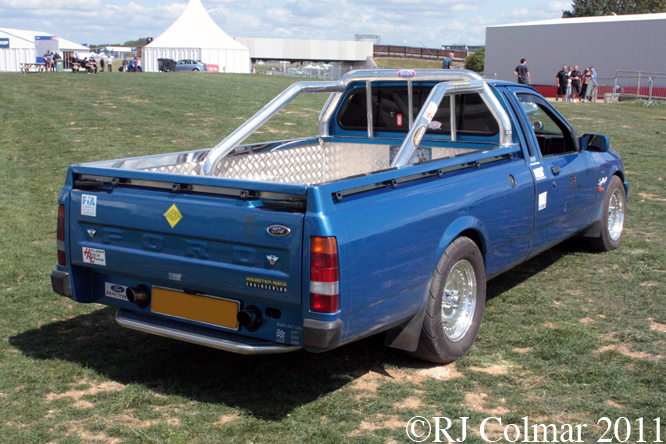
The origins of the car based Ford P100 pick up lie in South Africa where the first P100’s were built using the front half of a 2 door Ford Cortina Mk 3 and a ladder chassis for the rear in 1971.

Armless Fun, Ford P100, Silverstone Classic

Similar vehicles followed with the front half of 4 door Ford Cortina Mk’s 4 and 5 from 1977 and 1980 respectively, with export of the model to Europe beginning in 1982.

Armless Fun, Ford P100, Silverstone Classic

In 1988 with the withdrawal of Ford from South Africa a new P100, designed by Ford of N
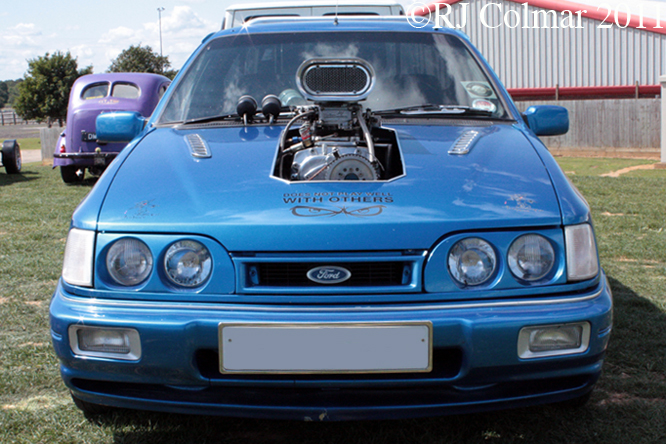
Britain such as the one featured today, with the front half of the 4 door Ford Sierra shell was built in Portugal and offered with either a heavy duty 205 block 2 liter / 122 cui Pinto or 1,8 liter / 109 cui turbo diesel motors.

Armless Fun, Ford P100, Silverstone Classic

The running gear for the P100 came from the parts pins of the Ford Granada saloon sedan and Ford Transit Van models and the pick up was given a 1000 kg / 2200 lbs load capacity.

Armless Fun, Ford P100, Silverstone Classic

With so much of the P100 being based on a car it does not cost an arm and a leg to run a modified one with lots of competition parts, Armless Fun has front panels below the bonnet hood that come from the Ford performance ‘RS’ catalog including the aggressive twin head light units.

Armless Fun, Ford P100, Silverstone Classic

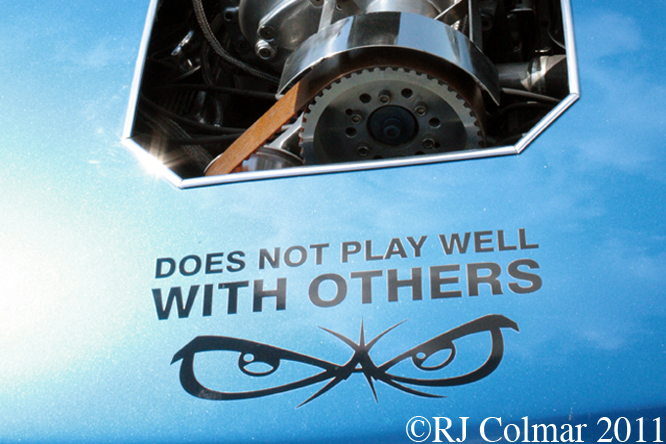
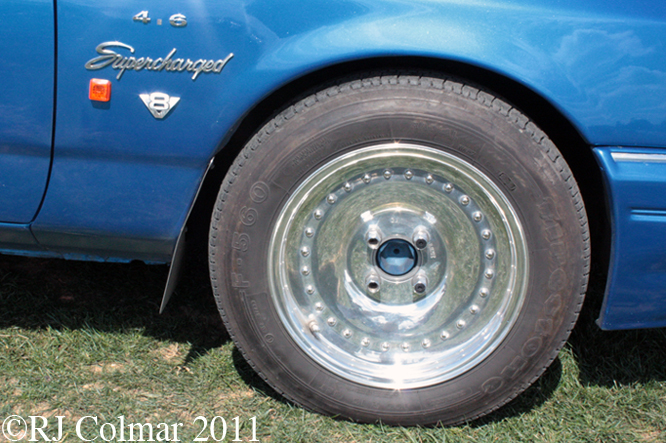
Armless Fun seen here at last years Silverstone Classic goes further than most in the modification stakes having a supercharged 4.6 liter / 280 cui Rover V8 derived motor under the bonnet / hood providing just enough power to make Armless Fun UK Burnout Champion from 2007 – 2010.

Thanks for joining me on this ‘Armless Fun’ edition of ‘Gettin’ a li’l psycho on tyres’ I hope you will join me again tomorrow when I’ll be looking at a vintage MG. Don’t forget to come back now !
Share

Indy Winning Roadster Heritage – Kurtis 500 S

Frank Kuretich was born in the Crested Butte a Colorado mining village to Croation immigrants in 1908. At six Frank started helping in his Dads blacksmith shop, in Sunnyside Utah, fixing horse shoes and wagons and automobiles as they began to populate the neighbourhood.

The economic instability of the times saw Franks family move to California where his Dad took a job with Don Lee Coach & Body Works in 1922. Standing over 6 feet tall at 14 years old Frank claimed to be 18 years old and landed a job as a helper to his father customising cars for Hollywood stars where his and his fathers names were anglicised to Kurtis by the personnel dept.

Kurtis 500S, Silverstone Classic

While at Don Lee’s Frank started an apprenticeship at seventeen and such was his skill that he swiftly rose to become manager working in the shop for a short time with designer Harley Earl before the latter left for General Motors in 1927. After work hours Frank engaged in building numerous hot rods and special and eventually started working on midget racers with Don Lee’s son Tommy building the bodies.

In 1937 Frank went to work for the Hollywood Trailer company where he learned to how the work tubing to build vehicle frames and by 1938 Frank had set up his own shop to build “virtually unbeatable” midgets of which he would build over 1000 supplied either complete or as kits.

Kurtis 500S, Silverstone Classic

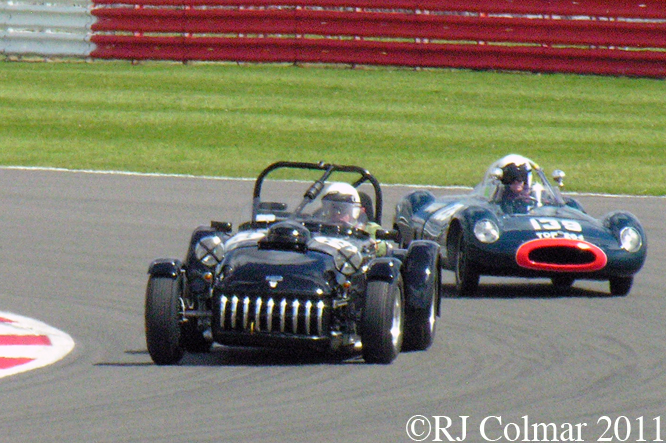
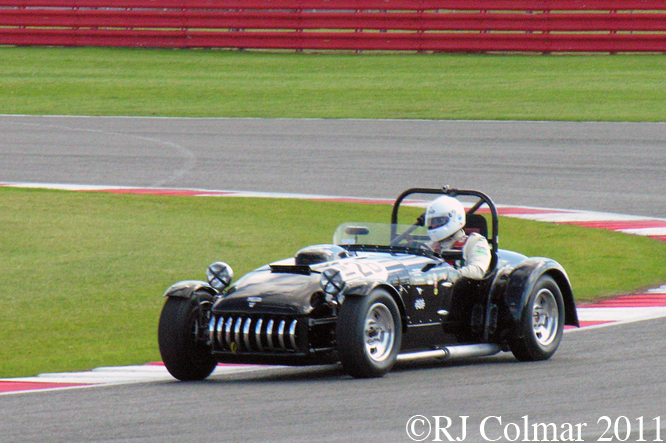
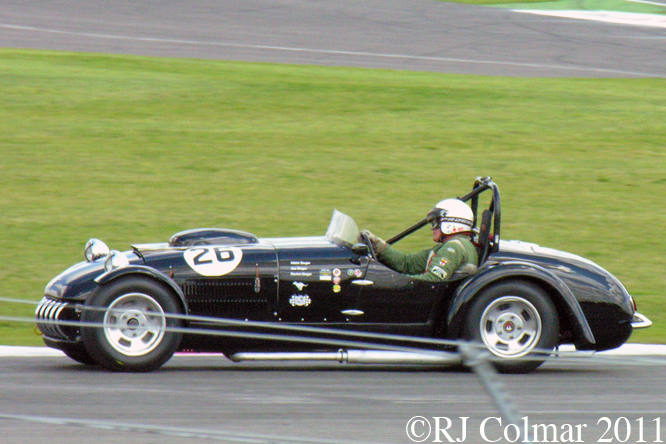
During the 1950’s Frank also built 120 champ cars for the Indy 500, building 5 winners. During this time Frank also built several road cars selling the design for on which became the Muntz Jet. The 500S, as seen in todays photographs at last years Silverstone Classic, along with the fully enclosed body 500KK and 500M models are all based on the 1953 Roadster Frame and suspension as used by Bill Vukovich to win the Indianapolis 500 that year.

Kurtis 500S, Silverstone Classic

The 500S could accommodate any motor and transmission available between 1953 and 1955 when it was manufactured. Bill Strope appears to have been one of the more successful exponents on the track with his Mercury powered 500S. Of the 20 – 20 500S known to have been built 14 are known to exist during the 1980’s a further 24 continuation models were built with the approval of Frank Kurtis son Ahren.

Thanks for joining me on this ‘indy Winning Roadster Heritage’ edition of ‘Gettin’ a li’l psych on tyres’ I hope you will join me again tomorrow. Don’t forget to come back now !
Share