Tag Archives: Silverstone

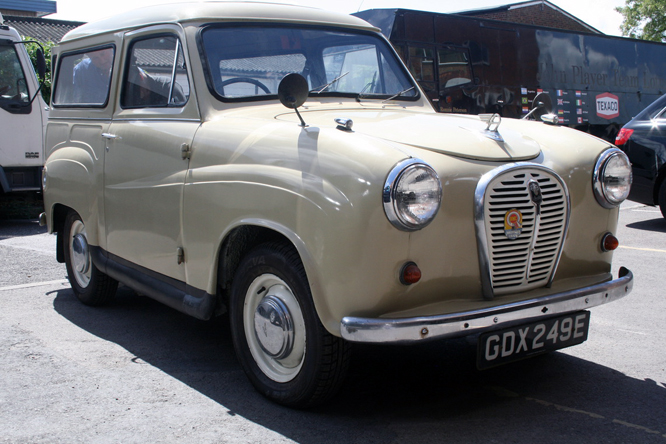
Bird Breeding Champions Choice – Austin A35 Van #AAVB65216

Launched in 1956 the Austin A35 was an upgrade of the successful Austin A30 featuring a larger rear window and a painted grill in place of the A30’s chrome item.

Austin A35 Van

Two commercial vehicles based on the A35 were manufactured the extremely rare 1956 pick up, of which just 475 were built and the more successful van, seen here, which out lived all other variants being manufactured until 1968. An A35 van came to fame in 2005 after a model of a 1964 version carrying a 1953 tax disc appeared in Wallace & Gromit The Curse of the Were-Rabbit.

Austin A35 Van

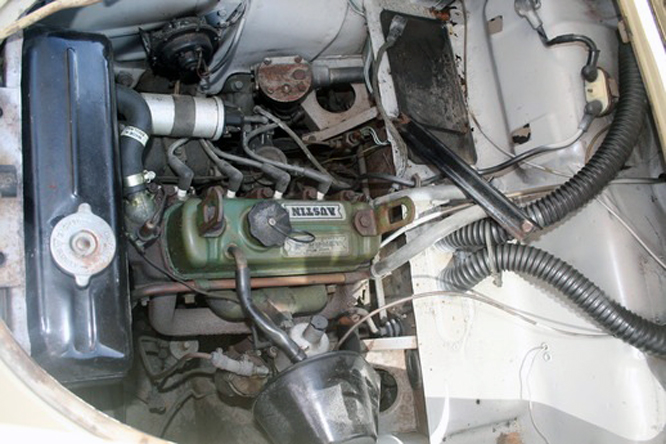
The name change to A35 reflected a more powerful 34 hp A series straight 4 motor which could power the compact car up to 60 mph in 3rd (top) gear, a whole 15 mph fast than the previous A30.

Austin A35 Van

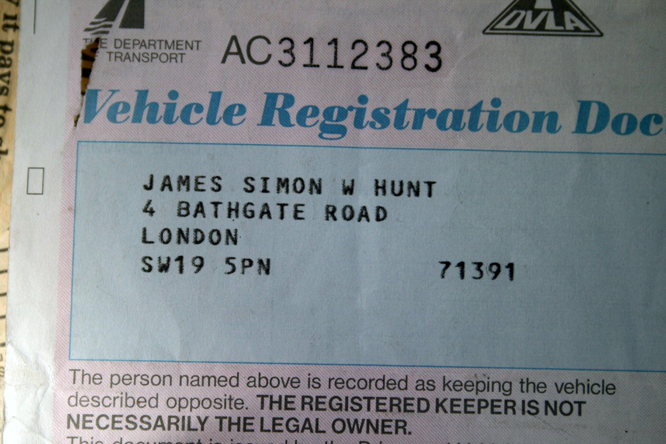
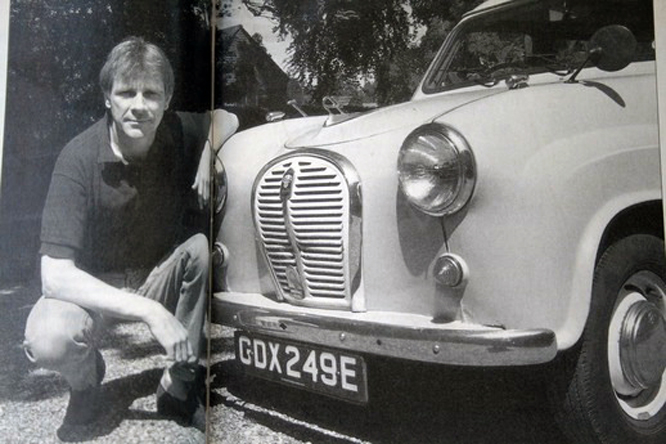
It is possible that champion budgerigar breeder James Simon W Hunt chose this particular vehicle as his daily driver, precisely because it’s leisurely performance would not upset his birds in transit between show’s.

Austin A35 Van

After James, also a well known forthright commentator on Grand Prix motor racing, died in 1993 this van was sold at auction allegedly complete with a sprinkling of Trill in the boot and cigarette stubs in the ashtray. James old van has been in storage ever since.

James 1967 van, described as a runner in need of attention for road use, has come up for auction again at the Silverstone Classic on Saturday and is expected to fetch between £10,000 and £14,000 a price which reflects James better known career as 1976 World Grand Prix Drivers Champion.

Hope you have enjoyed today’s champion bird breeders edition of ‘Gettin’ a lil’ psycho on tyres’ and that you’ll join me again tomorrow for a Miami Mice edition of Ferrari Friday. Don’t forget to come back now !

Share

Pole Sister – Nissan R90CK

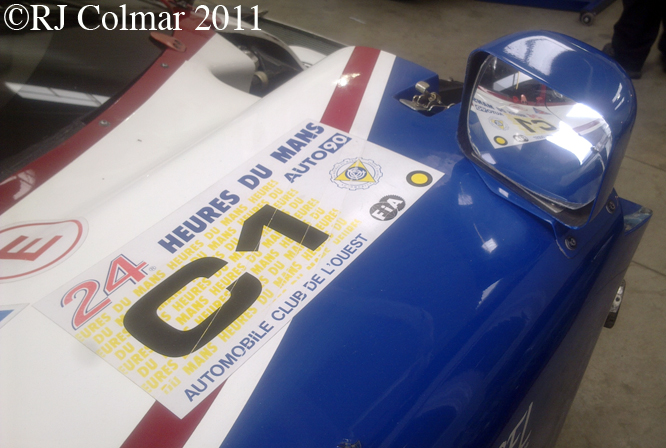
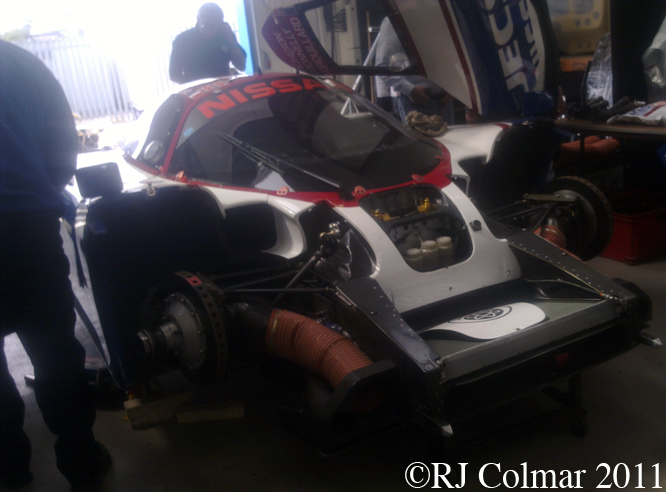
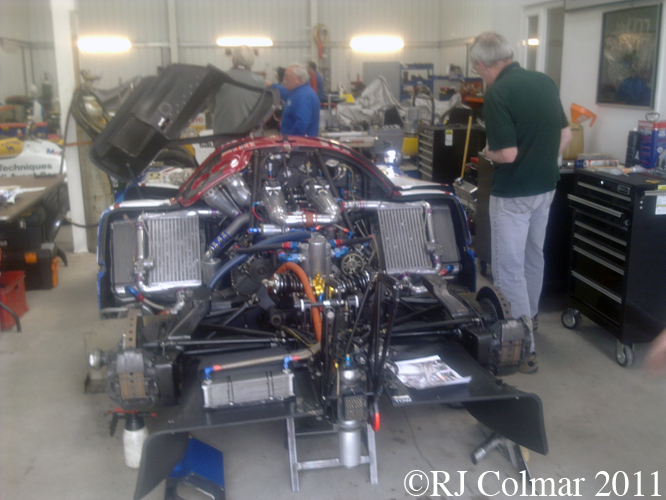
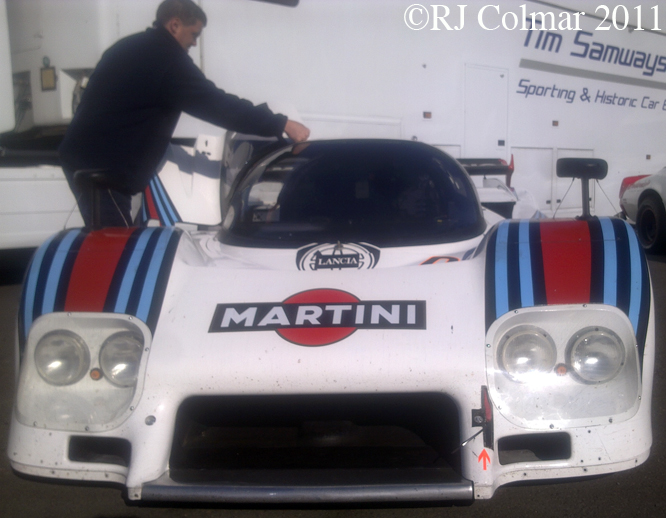
Like the Lancia LC2 seen in Monday’s post the Nissan R90CK seen here at Colin Bennett’s CGA Engineering Workshop is scheduled to appear at the Silverstone Classic for the Group C race next weekend.

Nissan R90CK, CGA Engineering

Three serious works teams gathered to contend the 24 hours of Le Mans in 1990, Jaguar with three cars were the eventual winners, Toyota with three cars did not really figure, but Nissan with 5 front line R90CK cars became the first Japanese manufacturer to sit on pole position at this endurance classic.

Nissan R90CK, CGA Engineering

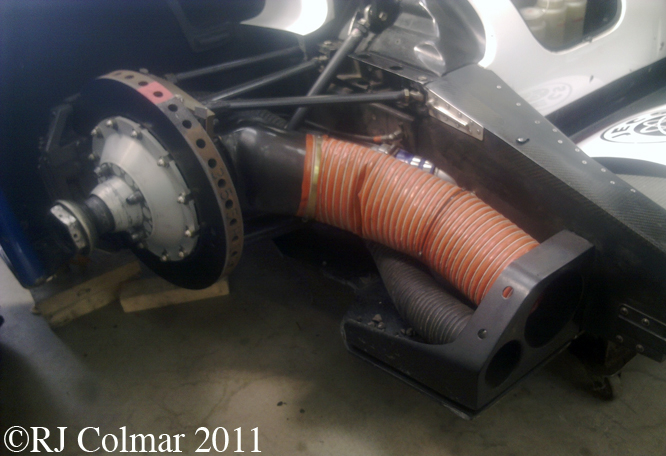
The Nissan R90CK’s were built around Lola T90/10 chassis

Nissan R90CK, CGA Engineering

and prepared for the World Endurance Championship by Nissan Motorsports Europe.

Nissan R90CK, CGA Engineering

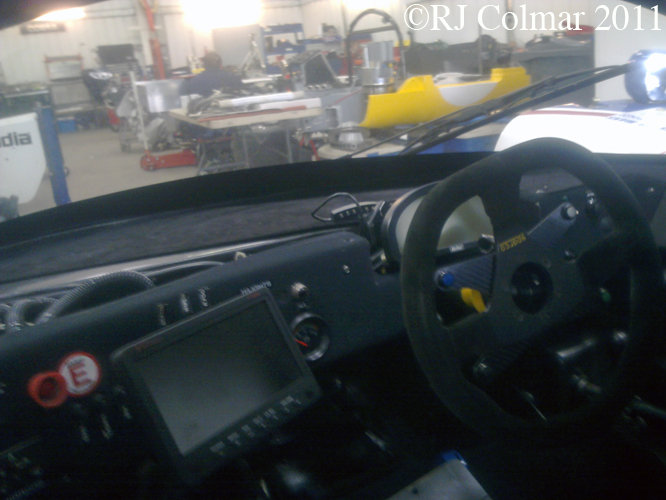
This particular vehicle has a rear facing camera connected to the screen seen here to aid reversing. Mark Blundell’s pole winning 3m 27s Le Mans qualifying lap immortalised with cockpit cam can be seen on this mind boggling youtube clip.

Nissan R90CK, CGA Engineering

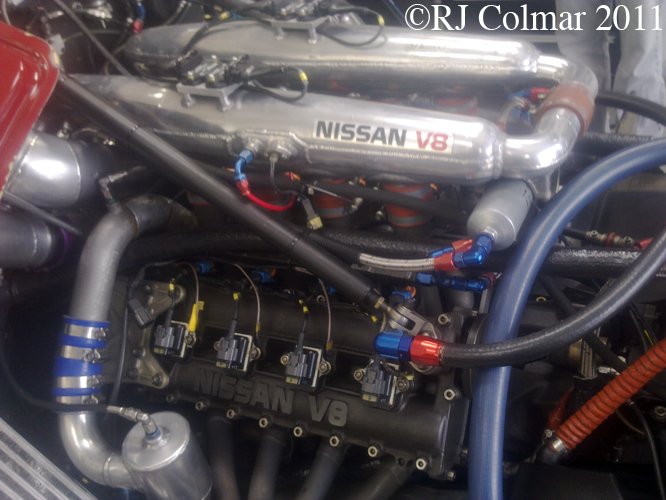
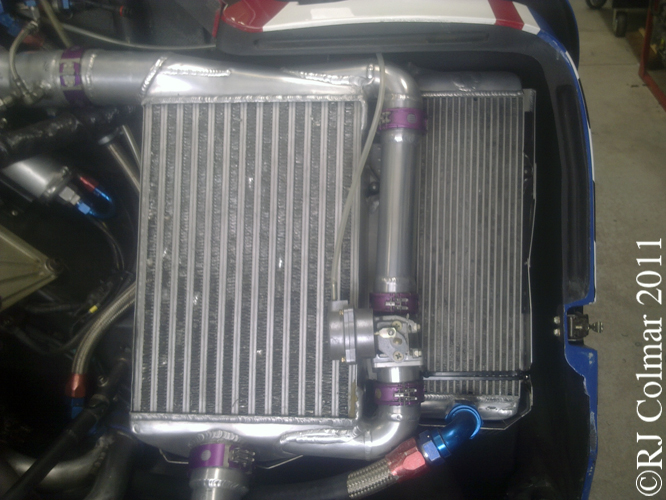
It is said that Mark had over 1000 hp available during his qualification lap from his 3.5 litre / 213 cui Nissan VRH35 V8 motor,

Nissan R90CK, CGA Engineering

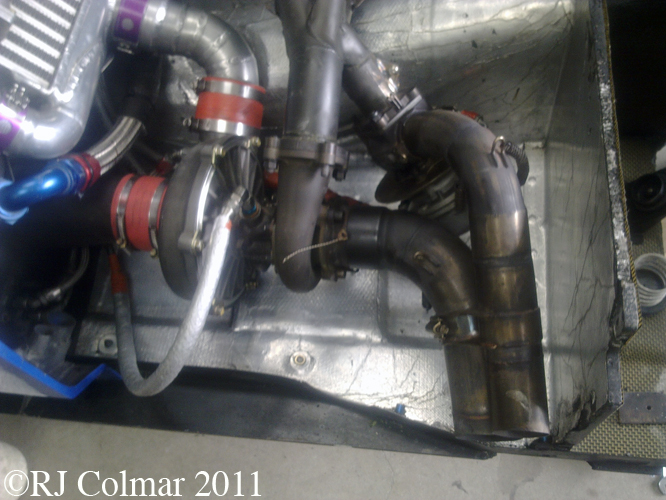
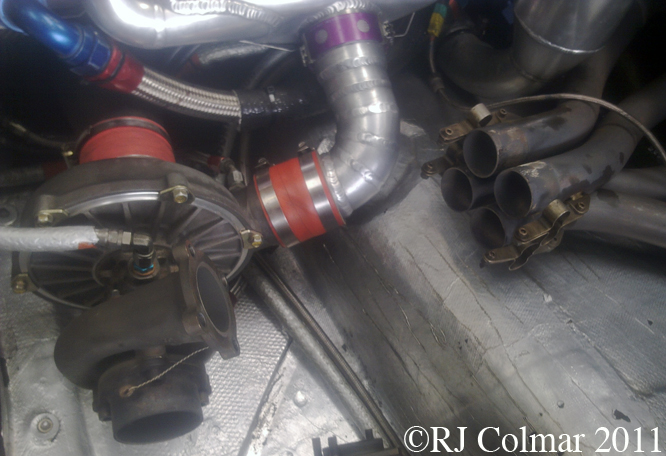
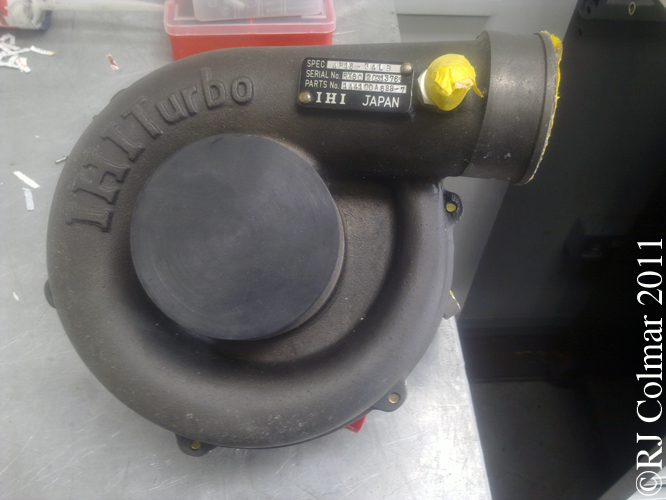
thanks to a ceased turbo waste gate.

Nissan R90CK, CGA Engineering

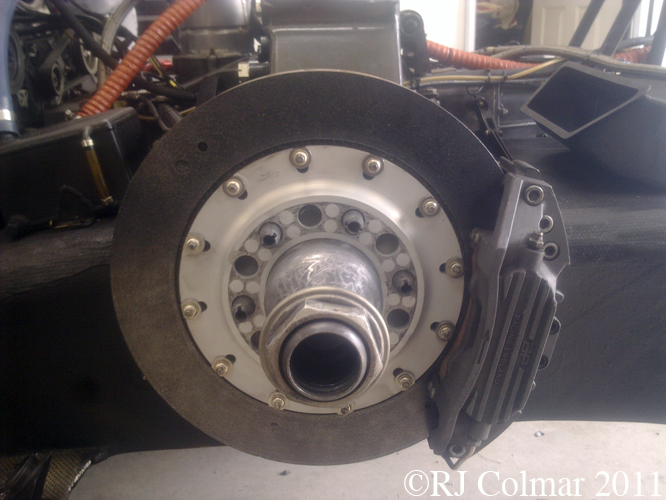
Mark recorded a top speed of 226.9 mph on the Mulsanne Straight speed strap between the two newly installed chicanes a record that apparently still stands.

Nissan R90CK, CGA Engineering

Six months after the unlikely Mazda victory at Le Mans in 1991, a NISMO version of the Lola T90/10 the Nissan R91CP won the 1992 Daytona 24 hour race in the hands of Masahiro Hasemi, Kazuyoshi Hoshino and Toshio Suzuki.

Nissan R90CK, CGA Engineering

At the end of the 1990 season Nissan withdrew from the World Prototype Sportscar Championship but continued to develop the RC90CK cars for the All Japan Sports Prototype Championship which the manufacturer won in 1990,’91 and ’92.

Nissan R90CK, CGA Engineering

This particular car is now owned by Katsu Kubota.

Nissan R90CK, CGA Engineering

While there is still a good supply of parts for these vehicles

Nissan R90CK, CGA Engineering

the cost of running one is expensive.

Nissan R90CK, CGA Engineering

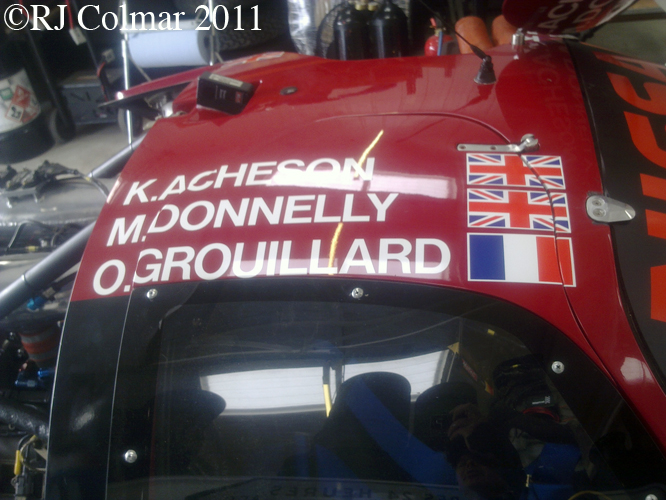
In 1990 the car driven by Kenny Acheson, Olivier Grouillard and Martin Donnelly

Nissan R90CK, CGA Engineering

qualified in 5th place at Le Mans but was eliminated on the opening lap with a gearbox problem.

Nissan R90CK, CGA Engineering

I shall look forward to seeing this car in action, 21 years after I first saw one, at the Silverstone Classic next weekend.

That concludes a series of three Group C blogs, my thanks to Colin Bennett for his hospitality and Tony Gallagher for organising the trip to Colin’s workshop.

Hope you have enjoyed today’s ceased wastegate edition of ‘Gettin’ a lil’ psycho on tyres’ and that you will join me again tomorrow. Don’t forget to come back now !

Share

Not Quite ‘The Right One’ – Lancia LC2/85

Today I am starting a series of three consecutive blogs on cars that competed in the Group C World Endurance Championship, during the 1980’s I had the good fortune to follow the Group C World Endurance Championship for sports cars from it’s inception through some high’s to it’s eventual death.

Lancia LC2 - Silverstone Classic PD

The series was for closed 2 seater racing vehicles weighing a minimum 800 kgs / 1760 lbs with the only restriction on the engine being fuel consumption. The cars were expected to race for 1000 kms / 621 miles on 600 litres / 131.87 of fuel. It was soon realised by participants that they needed to run vehicles with around 600 hp to go the distance with the available fuel.

Lancia LC2 - Silverstone Classic PD

This endurance fuel mileage racing series did not always produce the most riveting races though it was certainly had a few outstanding ones, but something about the endurance and fuel consumption formula appealed to me and the cars looked absolutely fabulous.

Lancia LC2 - Silverstone Classic PD

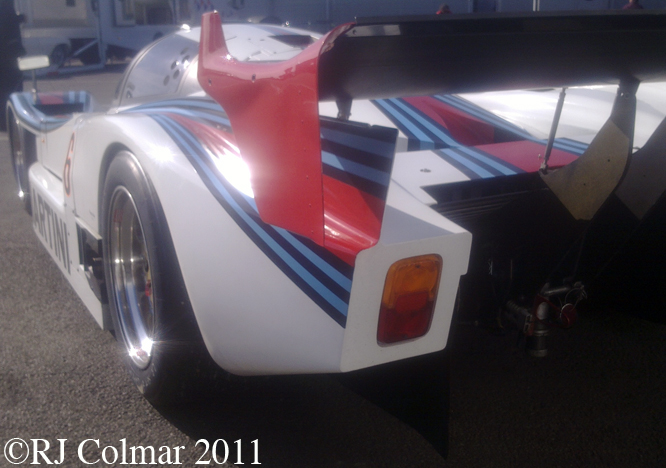
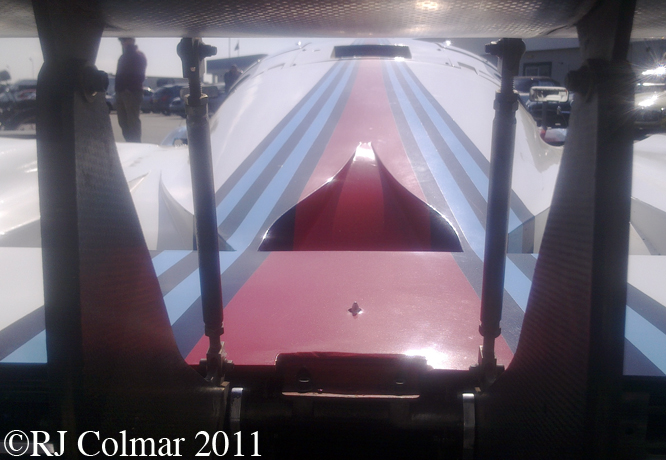
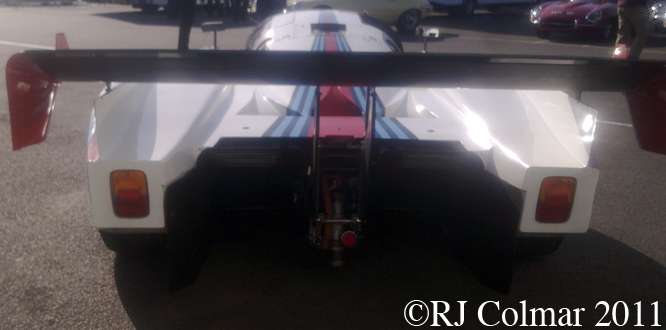
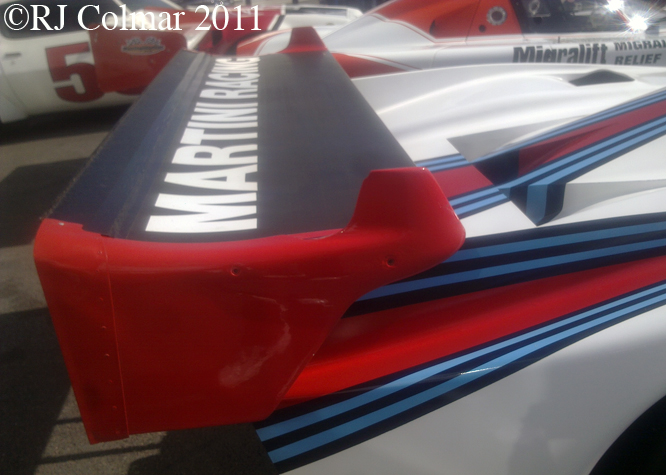
History will recall the early years 1982 – 1987 were dominated by Porsche with only token resistance from today’s car the Martini Lancia LC2 which was first raced in 1983. Lancia had tried to steal the 1982 World Endurance Championship for Drivers by building the LC1 to older group 6 regulations that only had one year of eligibility.

Lancia LC2 - Silverstone Classic PD

Not only did Lancia driver Riccardo Patrese come up short by 8 points to Porsches Jacky Ickx, but Lancia also in the process lost a whole years development on their Group C challenger to the all conquering Porsche 956 that Jacky Ickx had been driving.

Lancia LC2 - Silverstone Classic PD

The first problem the Lancia LC2 faced in 1983 was inferior Pirelli radial tyres which could not take the strain of the ground effect downforce generated by the aerodynamic venturi at the back of the car. The cars proved quick in qualifying but to add to the problems at Lancia the twin turbo Ferrari V8 motors could not back the speed up with reliability.

Lancia LC2 - Silverstone Classic PD

To cure the tyre issues the LC2’s ran with Dunlop cross ply tyres in 1984, this necessitated a change in suspension geometry. The cars were fast in qualifying as they had been in 1983 but the Speedline wheels were now not up to the job. Again the cars were fast in qualifying but rarely reliable over a race distance.

Lancia LC2 - Silverstone Classic PD

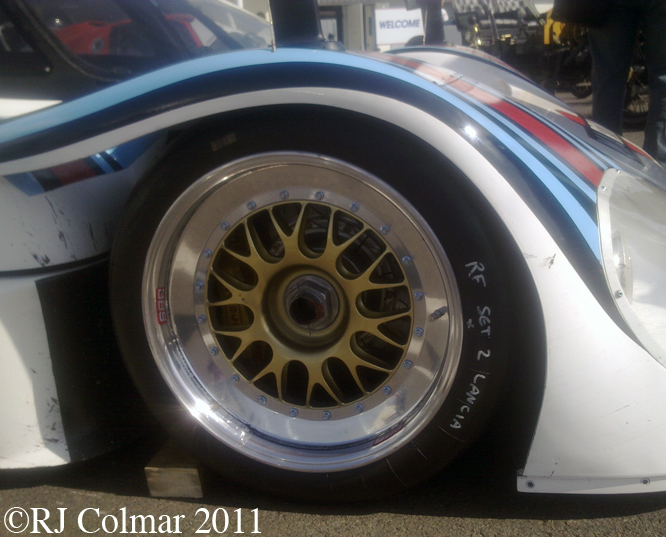
For 1985 Lancia switched back to radial construction tyres now supplied by Michelin, the Dallara built aluminium chassis were widened with a pronounced step in the side bodywork.

Lancia LC2 - Silverstone Classic PD

Again the cars were quick in qualifying but the Ferrari engines were unreliable. Though the team did score it’s one and only victory over the works Porsche team at Spa in a race that was called early out of respect foe Stefan Bellof who had been killed in the event. At the following race at Brands Hatch it looked like the Lancia team might score another victory over the works Porsche team when the two leading Lancia’s inexplicably hit it each other causing sufficient delays for the works Porsche to win again.

Lancia LC2 - Silverstone Classic PD

The Martini Lancia LC2’s only appeared in a couple of races in 1986 before they withdrew from road racing completely. With just one win against the main opposition and a couple of win’s when the works Porsche team were not present the works Martini Lancia effort was justly reflected in three 2nd place finishes from 1983 – 1985 in the World Endurance Championship behind the mighty Porsche team.

Lancia LC2 - Silverstone Classic PD

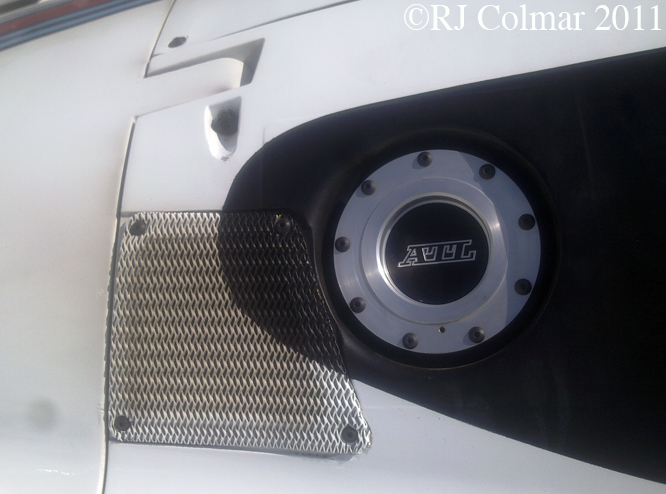
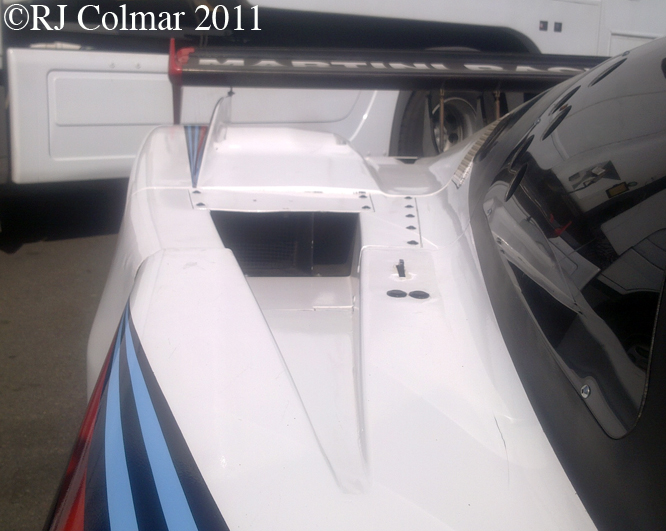
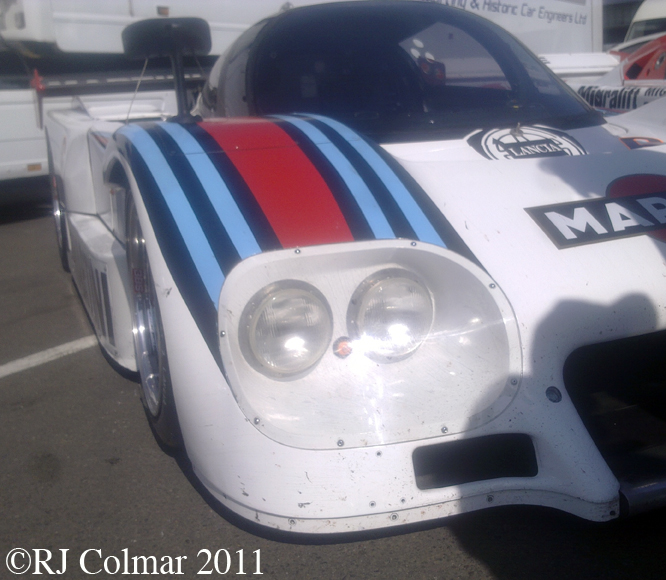
This 1985 car features a slippery nose that was only ever seen at Le Mans.

Next weekend there will be a race for Group C cars at the Silverstone Classic in which this Lancia is scheduled to take part, I hope to be there it should be a magnificent event.

Hope you have enjoyed today’s Martini edition of ‘Gettin’ a lil’ psycho on tyres’ and that you will join me again tomorrow when I’ll be taking a look at a Group C challenger from Germany. Don’t forget to come back now !

Share

From Metal Bashing to Autoclave – McLaren MP4/1 #MP4/1-02

Thirty years ago I was extremely lucky to find my self working for six months in an accounts department of a double glazing manufacturer during the first of two industrial experience segments of my degree course. This meant I had the time and funds not only to spend a week at Le Mans but I also had the time and funds to spend a weekend at the British Grand Prix at Silverstone.
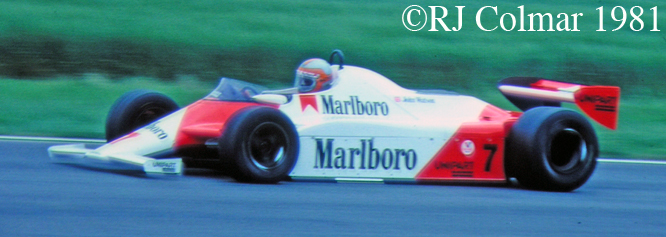
McLaren MP4/1, Silverstone BGP

During the 1980 / 1981 off season McLaren’s long time sponsor Philip Morris, disappointed with three years of under achievement coerced team principle Teddy Meyer into a merger with Project Four a lower tier Formula 2 team run by Ron Dennis which coincidentally was also sponsored by Philip Morris.

Ron Dennis had hired the designer, of the Chaparral 2K Indy Car, John Barnard to design a new car for McLaren which became known as the MP4/1. Outwardly the car was a conventional ‘kit car’ using a Cosworth DFV engine that had been the motor of choice since 1966.

However beneath the paint work John Barnhard’s chassis was the first to be wholly manufactured with carbon composite materials, which until 1981 had been primarily used in the aerospace industry. Carbon composite materials when pressure and heat treated in an autoclave, a process developed by the Royal Aircraft Establishment in 1963, can be used produce objects that have high flexibility, tensile strength and temperature tolerance while at the same time have low thermal expansion and low weight compared to similar metal objects.

By the end of the 1980’s all Formula One chassis were being manufactured from carbon composites along with brake discs and suspension components.

John Watson, seen during practice for the British Grand Prix here, qualified fifth for the 1981 British Grand Prix. At the start of the race the two turbo charged Renaults and Ferraris made the best get away but on lap 3 Gilles Villeneuve clipped a curb and spun,see clip 1m 20secs, an incident which took out Alan Jones on the spot.

Somehow John Watson who was right behind Jones managed to avoid the melee almost coming to a stop as he did so, which in turn caused his team mate Andrea de Cesaris behind him to take evasive action and spin off into the catch fencing.

After loosing a lot of time Watson set off in sixth place behind Piquet, Reutemann, Pironi, Arnoux and Prost. Piquet crashed out with a puncture, Watson then over took first Reutemann and then Pironi who’s engine exploded on the next lap. Prost retired with distributor trouble which put John in 2nd place behind Arnoux who had a comfortable lead.

On lap 53 Arnoux started experiencing the same problems as Prost and 8 laps later a huge roar went round the circuit as Belfast born John took the lead of his home Grand Prix which he held until the end of the race.

This was John’s second Grand Prix victory his first was in the Penske PC4 in 1976 and the first victory for McLaren under the guidance of Ron Dennis. McLaren’s last victory had been with James Hunt in 1977.

John drove this same chassis #MP4/1-02 to victory in the 1982 Belgian Grand Prix.

Hope you have enjoyed today’s British GP edition of ‘Gettin’ a lil’ psycho on tyres’ and that you will join me again tomorrow. Don’t forget to come back now !

PS It is with great sorrow that I learned of the passing of William ‘Bill’ Boddy MBE known to many as ‘WB’ who edited Motor Sport magazine from 1936 to 1991, an organ which played no small part in my addiction to motoring and motor sport in the 1970’s and ultimately to this blog.

He famously ran Motor Sport magazine through the war years during his spare time while working on important Air Publications.

Bill was a vociferous opponent to the 70 mph speed limits introduced to Britain as a temporary measure by Tom Fraser in 1965 after a spate of accidents in fog and the alleged testing of an AC Cobra at speeds up to 180 mph on the M1 motorway.

WB was aged 98, sincerest condolences to his family and many friends. RIP ‘WB’.

Share

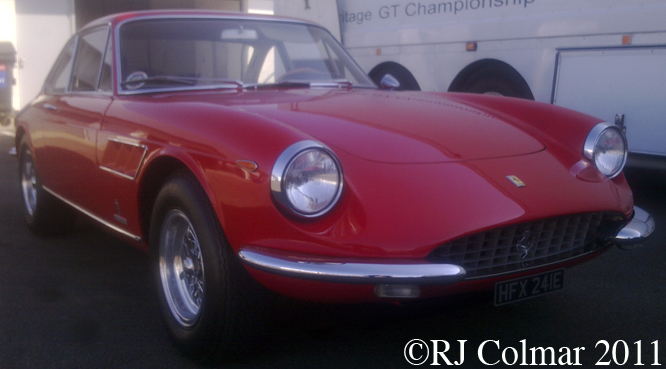
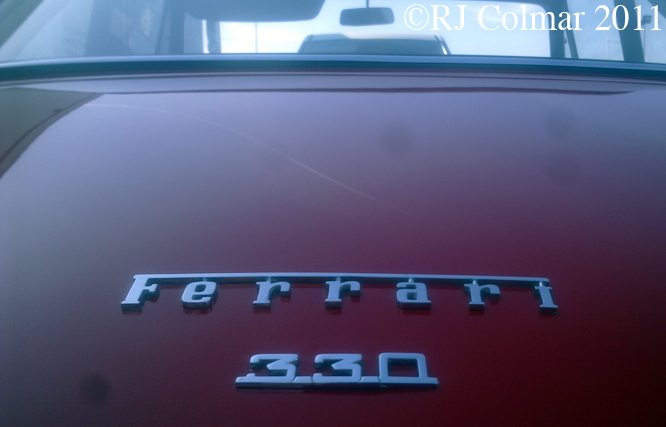
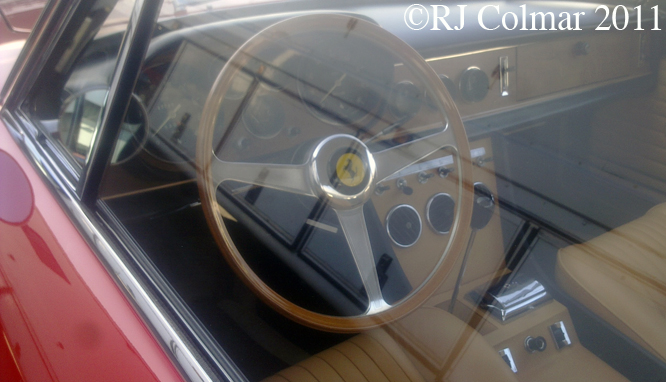
Wanting For Nothing Except A New Owner – Ferrari 330 GTC # 10653

Ferrari 330 GTC, Silverstone

Basking in the cool shade on a hot day at a Silverstone Press Event a couple of weeks a was this elegant Ferrari 330 GTC, though as we shall see less kind mortals than myself might have construed it’s presence as a spoiler for a rival auction coming up at Goodwood Festival of Speed organised by Bonham’s on the 1st of July.
Ferrari 330 GTC, Silverstone

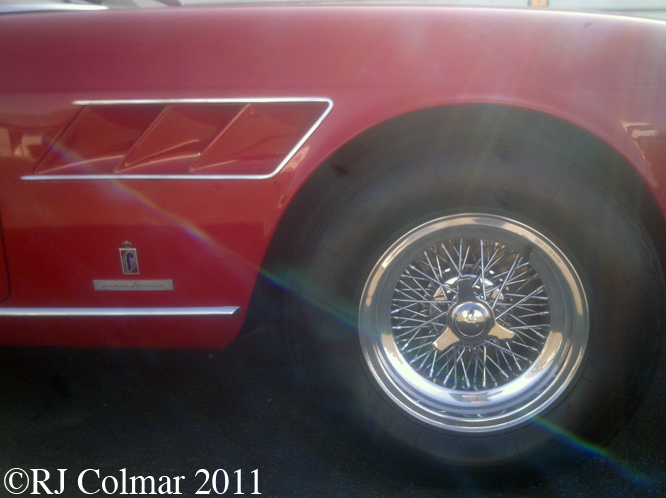
Should one of the tyres on the four, originally optional, fetching Borrani wheels deflate this vehicle comes with a jacking bag to facilitate wheel changes.

Ferrari 330 GTC, Silverstone

Introduced in 1966 the Ferrari 330 was in production while it’s predecessor the 275 GTB/4, with which it shared a common chassis features including wheelbase dimensions, oval tube construction and rear mounted gearbox attached to a transaxle, was still in production, both models went out of production in 1968, around 600 of the larger engine 330 models were manufactured.

Ferrari 330 GTC, Silverstone

The Pininfarina bodywork is a master class in simple, sexy, sixties elegance from just about any angle.

Ferrari 330 GTC, Silverstone

Not at all sure how the fuel cap works but it’s hard to imagine it operation will be any less elegant than it’s design.

Ferrari 330 GTC, Silverstone

This particular vehicle was originally imported to the United States in June 1968 and sold through US importer Chinetti after spending 20 years in New York it moved to sunnier climes with a new owner resident in Florida and thence back to Italy. This car was bare metal restored in Switzerland in 2001 and sold to a Dutch Collector with whom it remained until it’s present owner acquired the car in 2009.

Ferrari 330 GTC, Silverstone

The car has been fitted with a 300 hp 4 litre / 244 cui Colombo V12 motor #07433 of the correct type, though originally installed in a 330 2+2.

As the man from Bonham’s says this car want’s for nothing except a new owner.

My thanks to Jonathan Gill of mpacreative, who facilitated my visit to Silverstone, don’t forget Silverstone Auctions sponsors of the forthcoming Silverstone Classic Weekend will be holding their own Silverstone Classic Sale on July 23rd.

Thanks for joining me on today’s elegant Pininfarina edition of ‘Gettin’ a lil’ psycho on tyres’, I hope you will join me again tomorrow. Don’t forget to come back now !

Share

Coming up Short – Triumph TR8 Twin Turbo

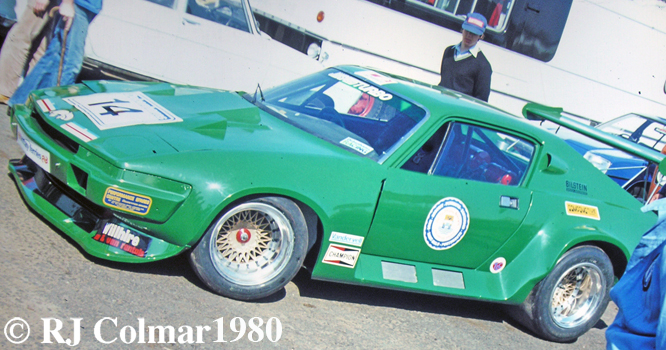
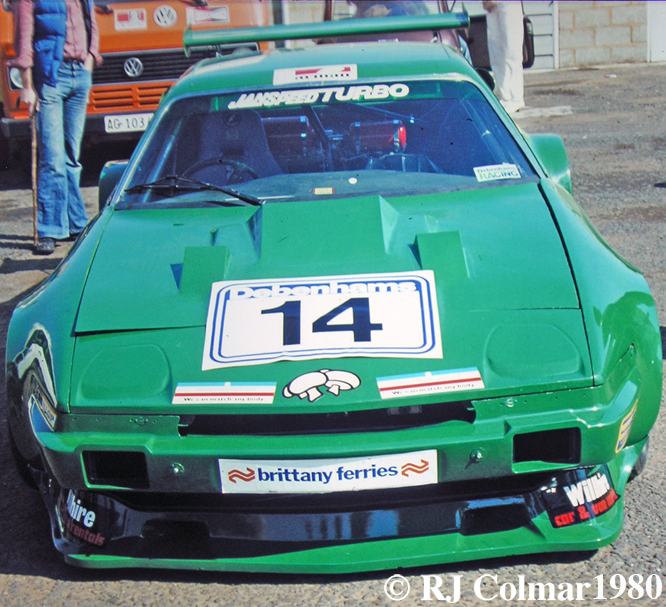
All of motor sport is littered with heroic failure and there is possibly none less understandable than the Janspeed Engineering Triumph TR8 twin turbo, when one considers John Buffum’s success with the TR8 on the US Rally Stages in North America and Bob Tuliis equally outstanding success with his TR8 on the race tracks, so much in fact Bob was forced into a successful switch from SCCA to IMSA series.

80 05 11 #14 TR8 00 Bsc

Like the Buffum and Tullis programmes Janspeed’s Le Mans programme had absolutely zero factory backing but unlike Buffum and Tullis, Janspeed did not even have a budget to run the car let alone test it.

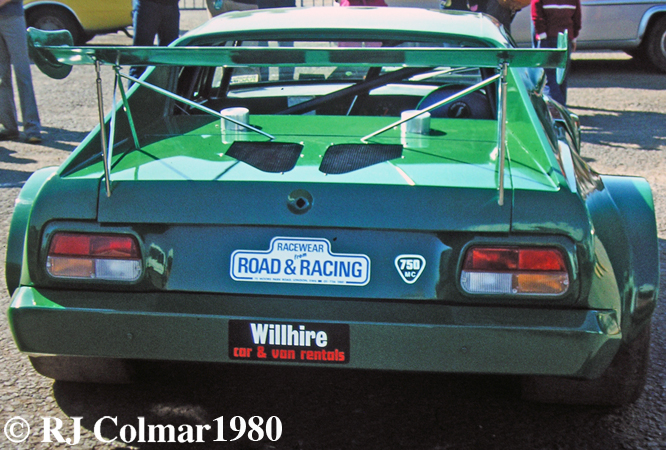
80 05 11 #14 TR8 01 Bsc

Legend has it that this vehicle started life as a left hand drive test hack used by Janspeed on behalf of British Leyand, when the tests had been completed Jan Odour acquired the vehicle with the intention of preparing it for a British modified series, however a change of rules in that series, around 1977, led Jan Odour to attempt something far more ambitious namely to take on the onslaught of Group 5 Porsche 935‘s in the World Sports Car series.

80 05 11 #14 TR8 02 Bsc

The Janspeed TR8 ran with a dry sumped twin turbo version of the all alloy Olds/Buick V8 design purchased by Rover and was said to produce over 500 hp, but it failed to set a qualifying time on it’s debut at Silverstone in 1980, where the car was loaned out to ADA Engineering in a vane effort to get the car onto the track.

Later at Le Mans despite being recorded travelling in excess of 200 mph on the Mulsanne the car failed to qualify.

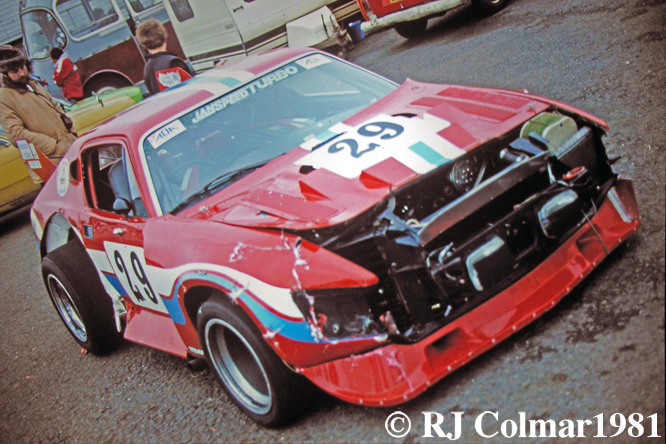
81 05 09 #29 TR8 01 Bsc

I remember looking forward to seeing what the TR8 could do when I returned to Silverstone in 1981, despite arriving in time to catch qualifying I was already too late, the car had been crashed and withdrawn from the race much to my disappointment.

Later in 1981 the car ran again at Brands Hatch where it qualified but failed to finish after a spin and a stall, unfortunately I was in Germany at the time so I never did get to see possibly my all time favourite Triumph run.

Hope you have enjoyed today’s twin turbo edition of ‘Gettin’ a lil’ psycho on tyres’, and that you’ll join me again tomorrow for a look at a truly unique vehicle that was perhaps just an on board sick bag short of reaching production. Don’t forget to come back now !

Share

Moby Dick – Porsche 935/78 #006

DSCN9920sc

The Porsche 935/78 was a one off vehicle built to win the 1978 Le Mans 24 hours and was the ultimate works development of the, then 15 year old, 911 which would not be topped until the advent of the 911 GT1 built in the late 1990’s. Notice that in preparation for Le Mans the drivers seat was placed on the right hand side optimising weight distribution for a race run on a clockwise track.

Thanks to a rule made at the request of arch enemy BMW the body was lowered 10cm 3.9 inches over the standard 911 by cutting out the standard floor plan with the engine like wise now lowered the gearbox was inverted to raise the drive shafts closer to their original height. Apart of from the front windscreen almost every body panel was optimised to maximise the top speed on the 4 mile Mulsanne straight where 235 mph was eventually achieved.

The 935/78 was equipped with a 750 hp 3.2 litre 195 cui flat 6 with 4 valves per cylinder in water cooled cylinder heads, a first for Porsche who had always raced air/oil cooled motors up until this time.

The car seen here driven Jacky Ickx and Jochen Mass at the 1978 Silverstone 6 hour race, a warm up for the Le Mans 24 hours, romped away from the opposition, mostly private Porsche’s with a single works BMW driven by Ronnie Peterson and Hans Joachim Stuck, finished a ridiculous 7 laps ahead of the rest of the field.

Stommelen/Schurti qualified ‘Moby Dick’, as the 935/78 was known, third on the grid at Le Mans however a silly stunt in which the car was driven on the road from Porsches garage outside the circuit to the circuit on race day went horribly wrong when predictably the car got caught in race day traffic causing the engine to over heat which created an oil leak. The subsequent loss of performance meant the car could only finish 8th.

935/78 #006 appeared twice more in 1978 but disgraced itself with two retirements and has since been consigned to the Porsche Museum. Joest Racing built two further 935/78’s from factory drawings in 1981.

Hope you have enjoyed today’s 235 mph edition of ‘Gettin’ a lil’ psycho on tyres’ and that you will join me again for another turbo charged blog tomorrow. Don’t forget to come back now !

Share