Tag Archives: Speed

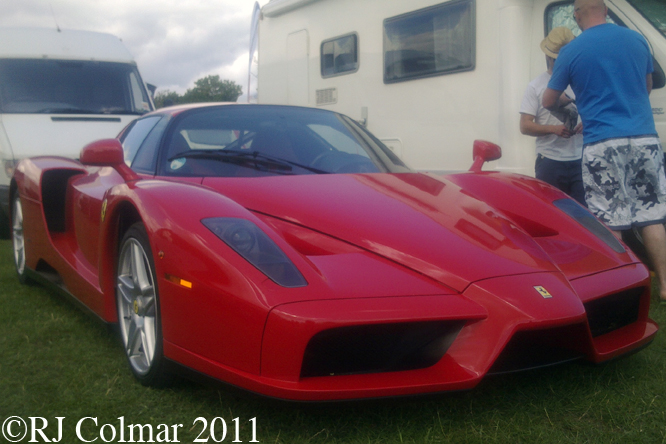
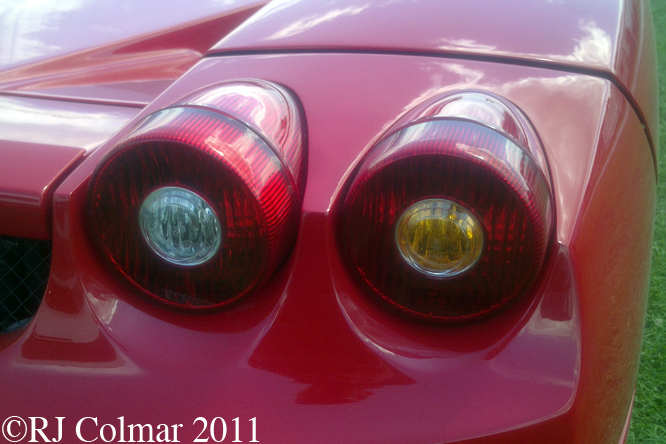
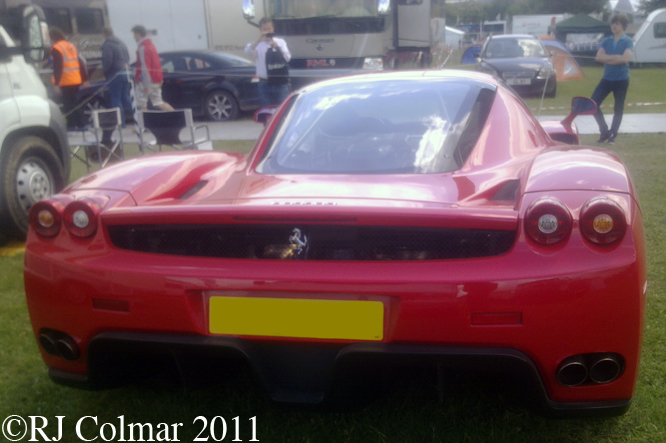
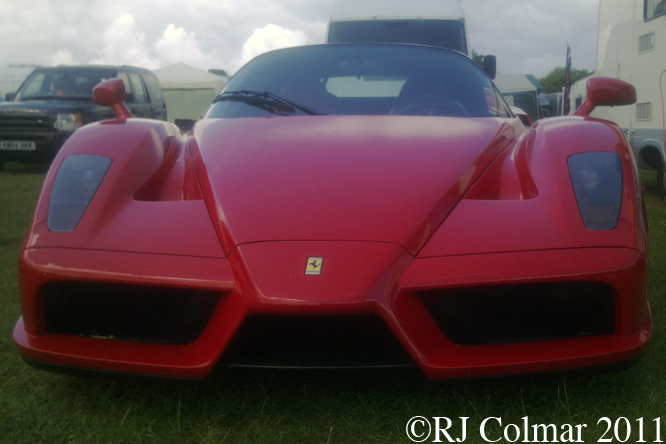
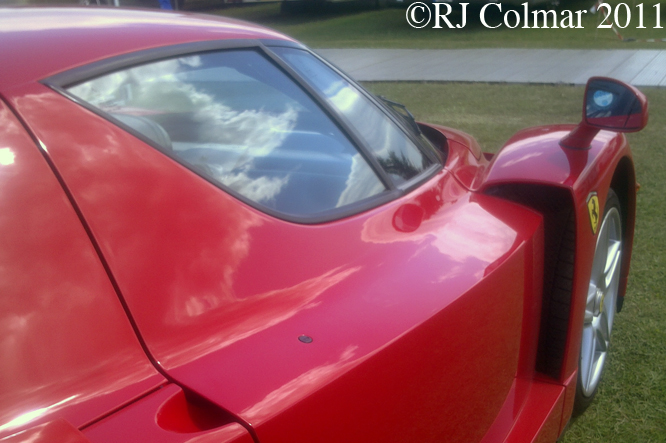
Full Throttle – Enzo Ferrari

Before commencing production of the Enzo in 2003, Ferrari contacted a select list of previous F40 and F50 owners inviting them to purchase one of the 349 limited production run vehicles. All of the cars costing US $659,330 were thus sold in advance.

Ferrari Enzo, Goodwood Festival of Speed

Designed by former lead designer at Pininfarina Ken Okuyama the Enzo can generate 775 kgs / 1709 lbs of downforce at 186 mph to aid handling. The design seems to have split opinion as to it’s attractiveness between those who believe form should follow function and those who believe in higher aesthetic values.

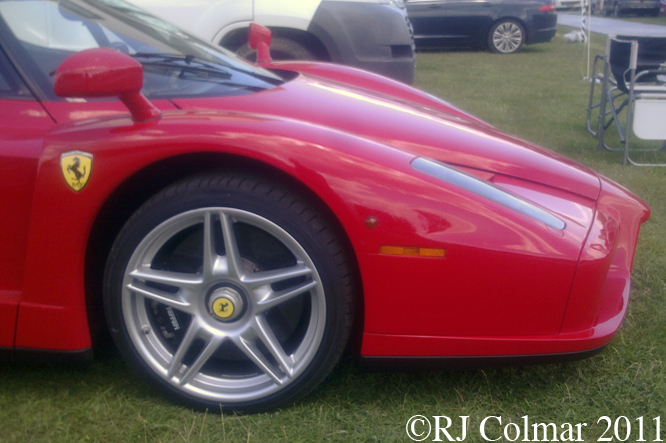
Ferrari Enzo, Goodwood Festival of Speed

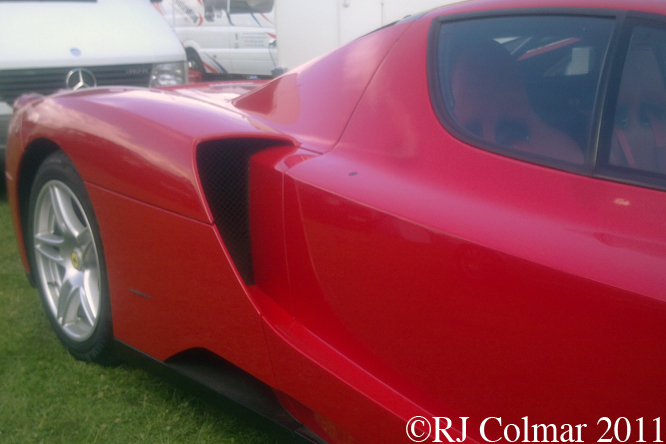
Dripping with technology from it’s Formula One programme the Enzo carries a carbon fiber body and technologies banned from Formula One like active aerodynamics, which have recently been reinstated to the top echelon of the sport, and traction control.

Ferrari Enzo, Goodwood Festival of Speed

Before it’s launch at the Paris Motor Show a bikini clad Demi Moore stepped into the show car on a California beech for a scene in “Charlie’s Angels Full Throttle“.

Ferrari Enzo, Goodwood Festival of Speed

The brakes all round are manufactured from a Carbon fiber reinforced Silicon Carbide (C/SiC) ceramic composite, another carry over from the Ferrari racing programme.

Ferrari Enzo, Goodwood Festival of Speed

Such was the demand from customers not originally invited to own an Enzo that a further 50 were made for sale and a 400th was donated to the Vatican for a charity auction at Sotherby’s where it fetched a cool US$1.1 million, which is the kind of price one would expect to pay for one today if one became available.

Ferrari Enzo, Goodwood Festival of Speed

Inside the cockpit gears are shifted using an electrohydraulic shift transmission operated by paddles on the steering wheel with LED lights advising drivers when to shift, another transfer of technology from Ferrari’s racing programme.

Ferrari Enzo, Goodwood Festival of Speed

The Enzo’s front to rear weight distribution was designed to be 43.9 / 56.1 % again to optimise the handling at speed.

Ferrari Enzo, Goodwood Festival of Speed

Capable of reaching 60 mph in a lightening 3.14 secs and 100 mph in 6.6 secs and covering the quartermile in 11 seconds the Enzo highest speed ever recorded in an Enzo is 221 mph and has been timed around the Nurburgring Nordschliefe at 7m 25.21 secs with a broken electronic damper. Interestingly the F430 Scuderia has since equalled the Enzo’s lap times at Fiorano, Ferrari’s in house test circuit.

Ferrari Enzo, Goodwood Festival of Speed

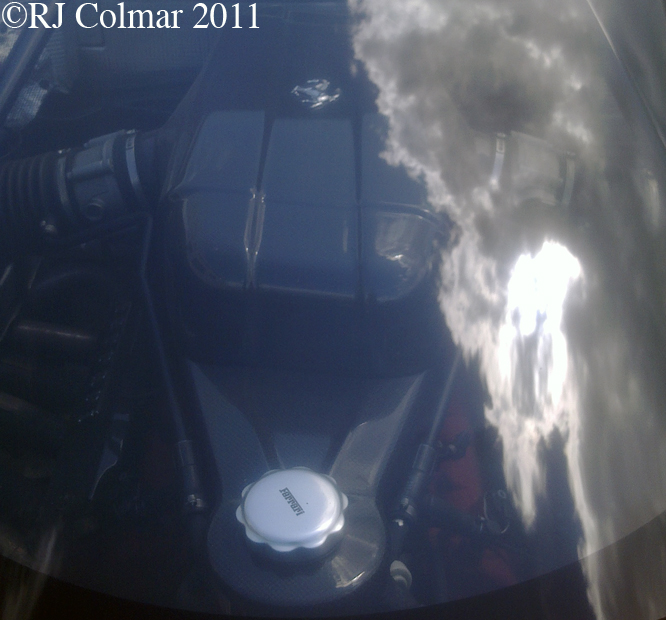
The jewel in the crown of the Enzo is the 651 hp 65 degree V12 which shares the same basic architecture as the contemporary V8’s used by both Ferrari and Maserati.

Ferrari Enzo, Goodwood Festival of Speed

Three pre production Enzo’s were disguised as to look like Ferrari 348’s, the third of which raised $195,500 in the same auction as the 400th Enzo. The Enzo was used as the basis for a number of other models including the FXX, FXX Evoluzione and one off P4/5 by Pinninfarina carrying Ferrari badges, along with the Maserati MC 12, MC 12 Corsa and one off Maserati Birdcage 75th concept car.

Thanks for joining me on this “Full Throttle” edition of “Gettin’ a li’l psycho on tyres” I hope you will join me again tomorrow when I will be looking at a Lotus 47. Don’t forget to come back now !

Share

Full Size Wheels – Shadow Mk III

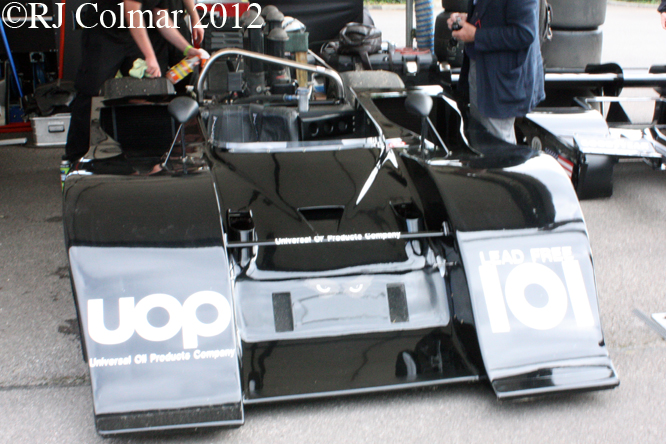
As we saw last week Shadow owner Don Nichols had a thing about keeping the frontal area of his Can Am challengers to a minimum by using under sized wheels. For the 1972 season Shadow Mk II designer Peter Bryant convinced Don it would be better to build a car with bigger wheels in order to gain an increase in cornering performance that would be the result of the improved suspension geometry bigger wheels would afford.

Shadow Mk III, Goodwood Festival of Speed

Two Shadow Mark III’s were built two using the Shadow Mk II chassis tubs raced in 1971 and a third Mk II chassis tub was built and appears to have remained unraced in either 1971 or 1972. Confusingly that third unraced chassis tub, has been built into the only car now in the 1971 Shadow Mk II spec which I looked at last week.

Shadow Mk III, Goodwood Festival of Speed

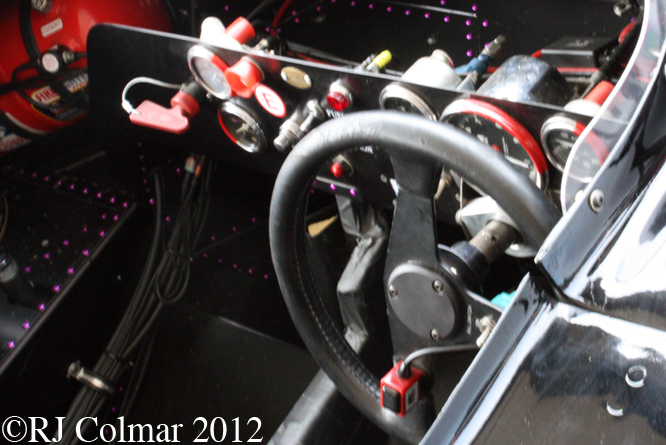
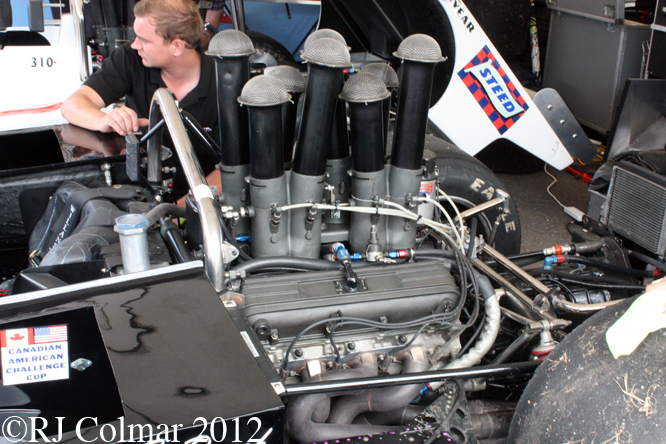
Aside from the larger wheels and improved suspension geometry which required new suspension pickup points, the Mk III had mid mounted radiators which replaced the single front mounted radiator of the Mk II. A variety of different front aerodynamic appendages were tried on the front of the Mk III as the season progressed suggesting that moving the weight of the radiators back may not have done any favours to the front end handling of the car.

Shadow Mk III, Goodwood Festival of Speed

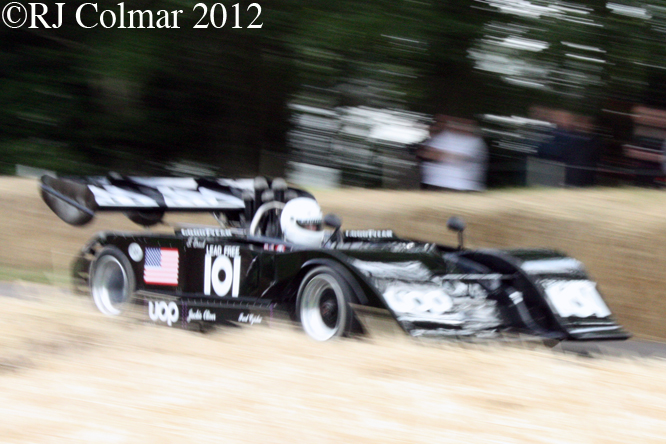
Jackie Oliver was again retained as the teams primary driver and he proved capable of competing with the other Chevrolet powered Can Am challengers in qualifying, only failing to qualify inside the top 10 on one occasion, however by 1972 Porsche has significantly raised the bar with a pair of Penske entered RC Cola Porsche 917’s. Reliability was still not Shadow’s strong suit and Jackie managed only a single second and third place finish during the season. Joining Jackie as team mates during the year were Brazilian Carlos Pacé, who managed a 4th place at his third and final run in the car at Edmonton, and NASCAR winner Donnie Allison.

Shadow Mk III, Goodwood Festival of Speed

In fact Donnie only ended up doing some qualifying laps in the final race of the season at Riverside, seen on this link wearing the red helmet, before having to hand his car over to Jackie Oliver who had attempted to qualify his own car, that had been fitted with a turbocharged Chevrolet big block, before it blew a piston.

Shadow Mk III, Goodwood Festival of Speed

Today’s featured car, which I believe is built around the first Shadow Mk II chassis tub, is owned by Fred Cziska and seen here at Goodwood Festival of Speed with Scott Dmek at the wheel.

Thanks for joining me on this “Full Size Wheels” edition of “Gettin’ a li’l psycho on tyres”, I hope you will join me again for Ferrari Friday tomorrow. Don’t forget to come back now !

Share

The Love Boat – Citroén Ami 8 Estate

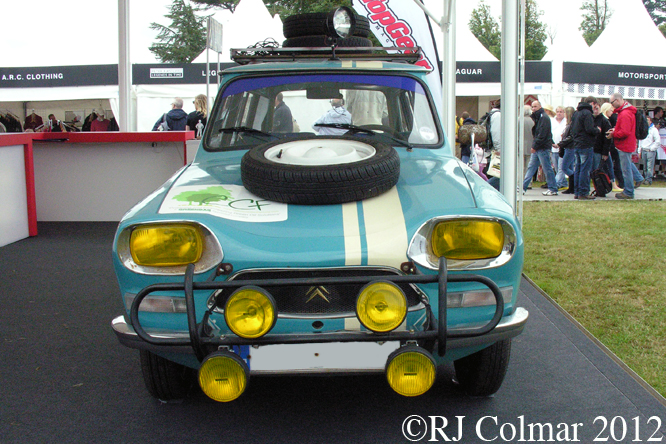
Today’s Continental Curiosity is yet another 2 cylinder from France. Based on the chassis and upgraded mechanical running gear of the utilitarian Citroén 2CV the slightly less utilitarian and rustic Ami was launched in the Spring of 1961 with the more powerful 22 hp flat 2 motor that was an option only on the 2CV which it was eventually intended to replace.

Citroén Ami 8, Goodwood Festival of Speed

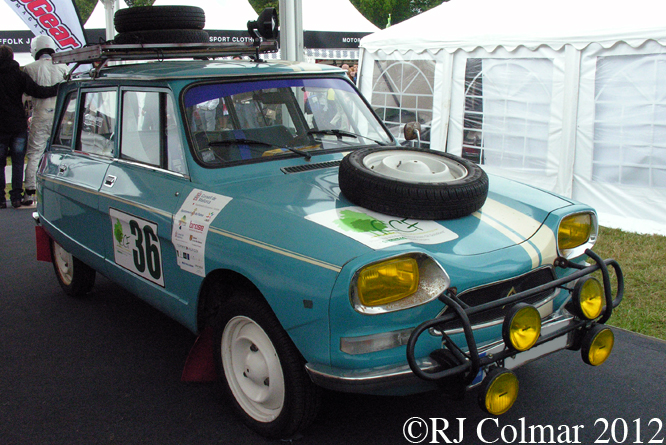
Despite poor initial sales due to it’s lack of refinements after a series of upgrades which included rear sliding windows and an increase to 32 hp for the two cylinder models sales eventually overtook those of the 2CV and the Ami topped the sales charts in France for several years.

Citroén Ami 8, Goodwood Festival of Speed

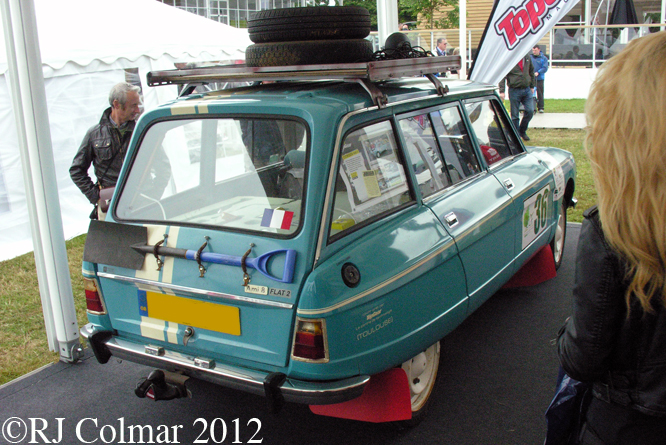
There was a more powerful 4 cylinder Ami Super which was described as a ‘Q car par excellence’ by one British Magazine, however French Tax regulations combined with it’s utilitarian underpinnings did not result in significant additional sales of the Ami Super. A further prototype Ami M35 Coupé series was also built in limited numbers for preferential customers powered by a single rotary Comotor Wankel engine.

Citroén Ami 8, Goodwood Festival of Speed

This particular 1976 Ami seen at Goodwood Festival of Speed nick named “The Love Boat” was acquired by present owner and Top Gear presenter James May, who allegedly ‘competed’ in a Majorcan Classic Rally with glamour model Madison Welch in the co drivers seat.

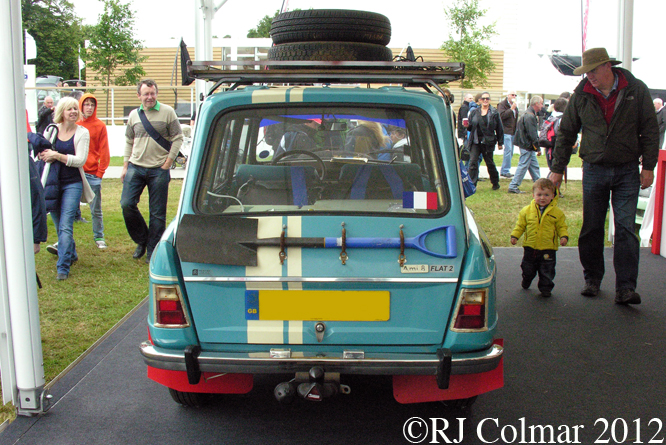
Citroén Ami 8, Goodwood Festival of Speed

Production of the Ami spread from France to Spain and Argentina, with Complete Knock Down kits also assembled in Africa and Chile with world wide sales topping 1.8 million when production came to an end in 1978. The Citroén 2CV, on which the Ami was based and which the Ami was intended to replace, continued in production until 1990.

Thanks for joining me on this “The Love Boat” edition of “Gettin’ a li’l psycho on tyres”, I hope you will join me again tomorrow. Don’t forget to come back now !

Share

Theme Lotus – Goodwood Festival Of Speed

On Friday I headed off under grey skies with friends, Tim, Pete and Dave to Goodwood House just outside Chichester for the Festival Of Speed.
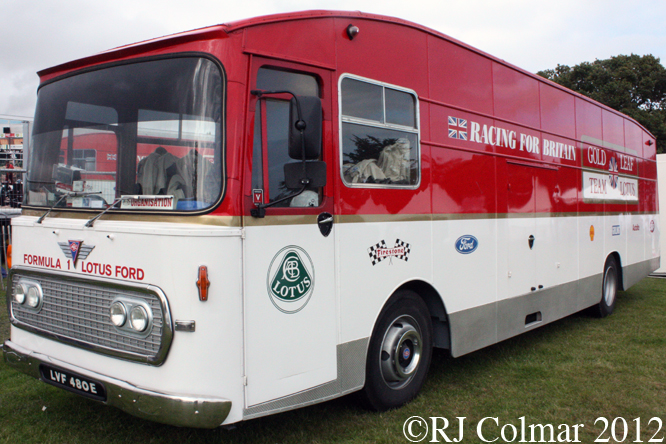
AEC Swift, Goodwood Festival Of Speed

The featured manufacturer this year was Lotus which was founded 60 years ago by Colin Chapman who’s cars not entirely uncoincidentally are currently also featured every Saturday here at GALPOT. Welcoming us on the way into Goodwood House was this 1967 AEC Swift based transporter used by Gold Leaf Team Lotus from 1967 to 1970 during which period team won two world drivers championships with Graham Hill(’68) and Jochen Rindt (’70) and two world constructors in the same years.
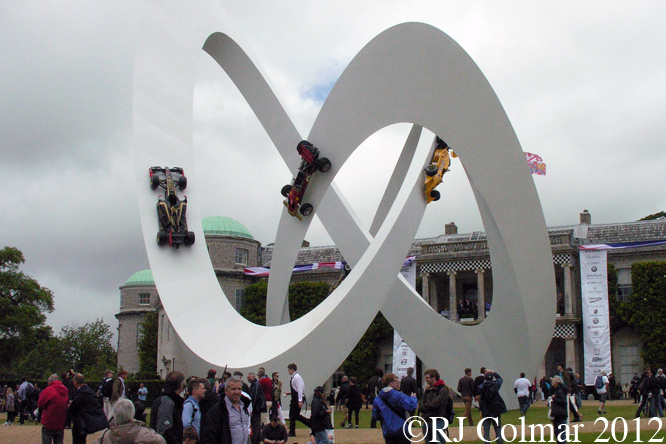
Race Track, Gerry Judah, Goodwood Festival of Speed

Gerry Judah’s art work on the lawn in front of Goodwood House featured no less than six cars five of them winners and a contemporary F1 car built in Enstone which I find as difficult to call a Lotus in the same way as I had trouble calling the Lotus 76 a John Player Special back in 1974.
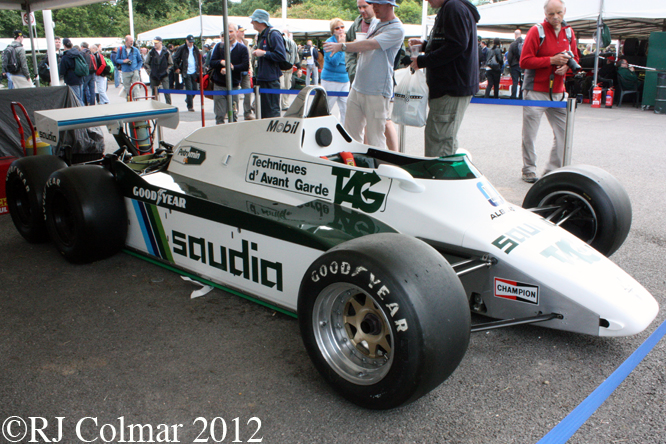
Williams FW08B, Goodwood Festival of Speed

In the paddock there were several cars I had heard of but never seen in the flesh including the six wheel, 4WD, 1982 Williams FW08B which was never raced thanks to a late call to ban more than four wheels from Formula Once cars with only two to be driven from the start of the 1983 season.
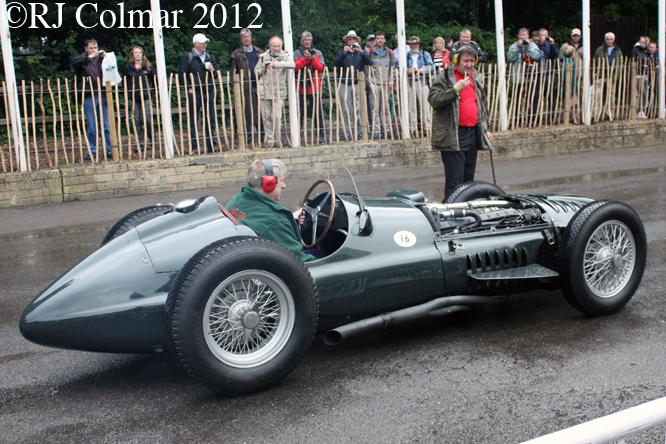
BRM P15 Mk 1, Goodwood Festival of Speed

Of all the many stories of British grit in Grand Prix Racing perhaps none exemplifies how not to organise a team better than BRM which managed to organise the support in cash, kind and facilities from the British Motor Industry to make two of the most complex racing motors ever built. The first was a 1.5 litre / 91 cui supercharged V16 which comprised to 750 cc / 45.5 cui V8’s mounted back to back. The 500 hp motor, which could be taken up to 12,000 rpm, was more powerful than any of it’s contemporaries but the combination of organisational and design complexity did not result in a particularly reliable motor car. It did not win any championship Grand Prix, it was only entered in two but it did score championship points, and won a non championship 12 lap race at Goodwood. The most memorable thing about this vehicle is the sound it makes, utterly unmusical in comparison to a V8, and as harsh as granite, note two people in this photo are wearing ear defenders ! The smell of oil coming off it’s engine after the warming up session seen here was quite unforgetable too !
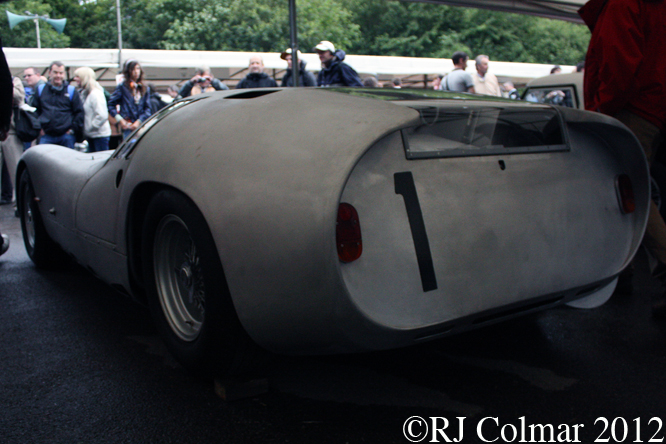
Maserati Tipo 151/3, Goodwood Festival of Speed

Amongst the sports cars this Maserati Tipo 151/3 is a 1980’s replica of one of three 151’s that were prepared for Le Mans in 1962 and then continually modified. The 151/3 seen here made of from orginal parts and fitted with the low Pierre Drogo body made from the same buck as the body made specially for the 1964 24 Hours at Le Mans where 151/3 was timed at 196 mph on the Mulsanne Straight, like the BRM P15 it suffered poor reliability and retired as it has had in ’62 and ’63.
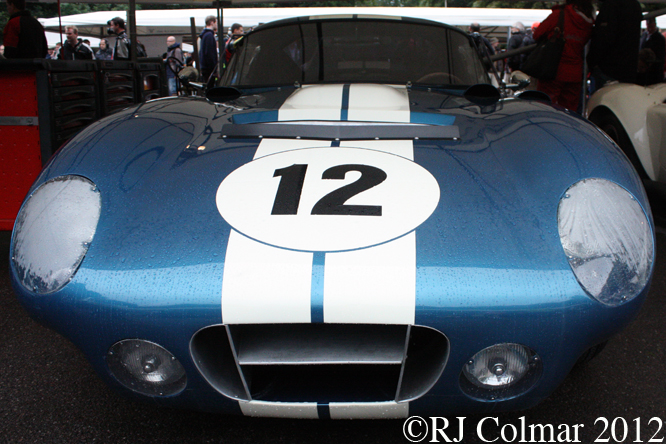
Shelby American Cobra 'Daytona' Coupé, Goodwood Festival of Speed

Racing successfully against the original 151/3 were the Shelby American Cobra Coupé’s also known as the ‘Daytona’ Coupé. So far as I can tell this #12 car is chassis CSX2300 which scored a best 6th place finish at Daytona in 1965 with Ed Leslie and Allen Grant at the wheel, the cars next appearance was at Sebring where it carried the #12 with Leslie and Grant again driving finishing 13th.
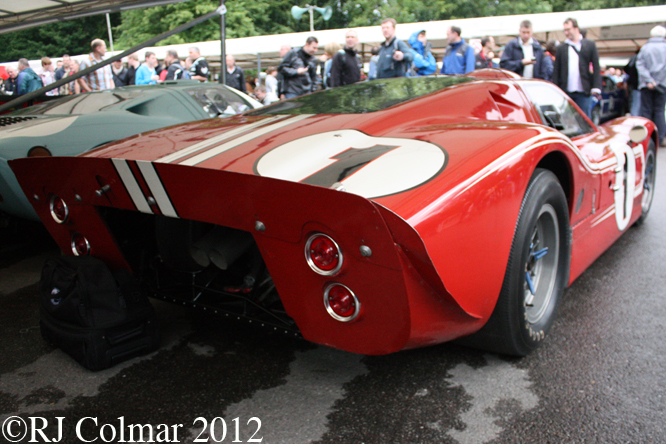
Ford Mk IV, Goodwood Festival of Speed

Dan Gurney and AJ Foyt won the 1967 Le Mans 24 Hours driving this Ford Mk IV, beating two Ferrari P4’s in the process thus avenging Enzo Ferrari’s last minuet refusal to sell out to Ford earlier in the decade.
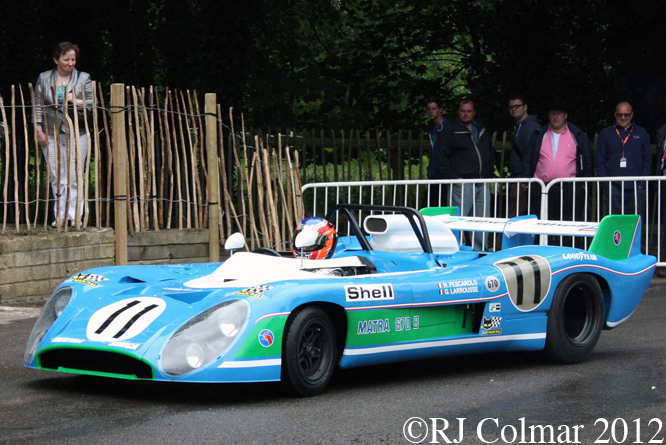
Matra MS670 B, Goodwood Festival of Speed

The Matra 670 B with a long tail, by Matra standards, won Le Mans in 1973 with Henri Pescarolo and Gerrard Larrousse at the wheel, also beating a Ferrari this time a 312PB driven by Art Mezario and Carlos Pacé.
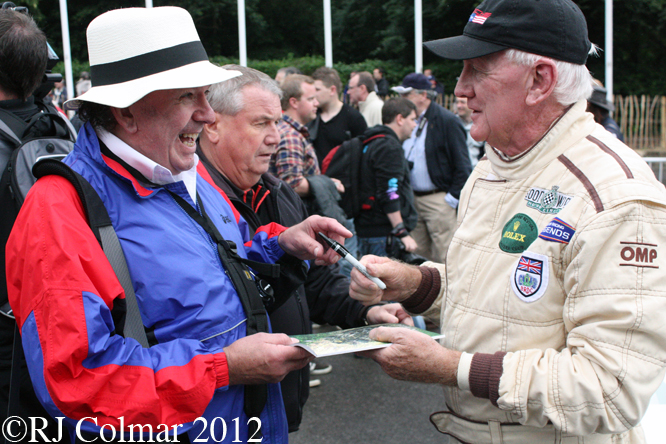
Tony 'Giraffe' Gallagher, Goodwood Festival of Speed

Above regular GALPOT contributor, through The Nostalgia Forum, Tony ‘Giraffe’ Gallagher happily accepts an invitation to sign 1980 IMSA Champion John Fitzpatrick’s programe.
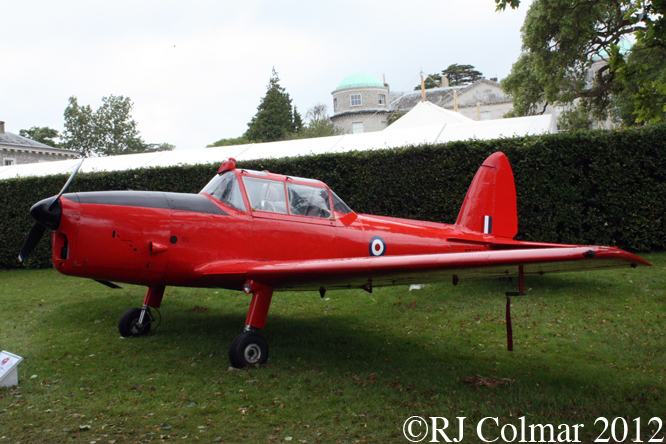
De Havilland DHC-1 Chipmunk, Goodwood Festival of Speed

Continuing the Diamond Jubilee celebrations this years Concours d’Elegance centered on numerous vehicles the Queen and other state dignitary’s have used, this De Haviland of Canada DHG – 1 Chipmunk was used by both HRH Prince Phillip and HRH Prince Charles for training purposes in the 1950’s and 60’s. Back in the day when I was a schoolboy and an RAF Cadet I went up in one of these on a couple of occasions, being handed the controls mid flight on one of them !
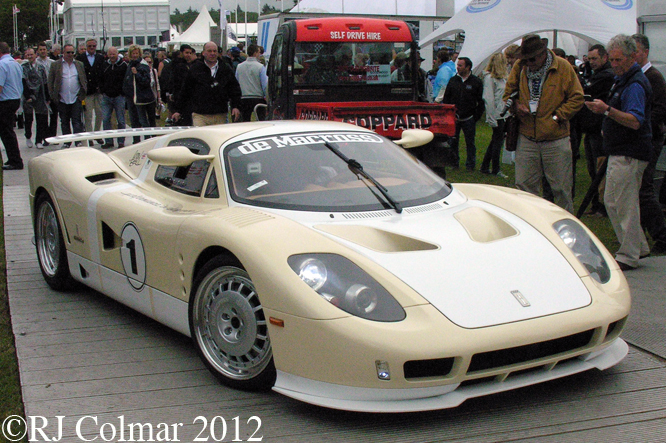
de Macross GT1, Goodwood Festival of Speed

The De Macross GT1 appears to be constructed from a mix of Korean Finance, Canadian Manufacturing and US Roush Yates power and any number of styling queues taken from an equally diverse range of vehicles. The drivers name on the side of the car was none other than that of motorsports TV presenter Justin Bell.
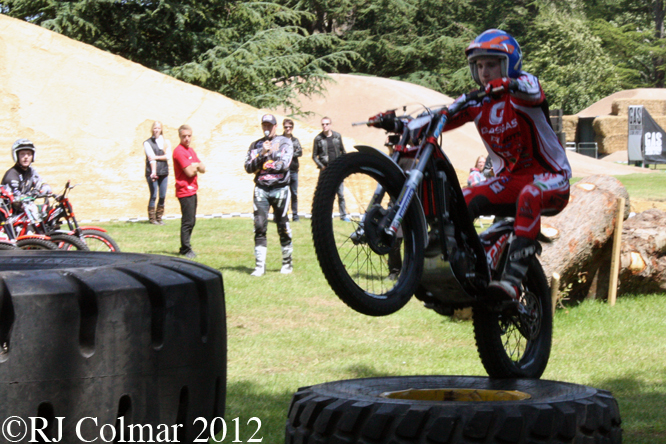
Goodwood Action Sports, Goodwood Festival of Speed

Keeping folks entertained on two wheels were a number of youngsters who were doing things on motor bikes that I have only been able to aspire to dreaming of.
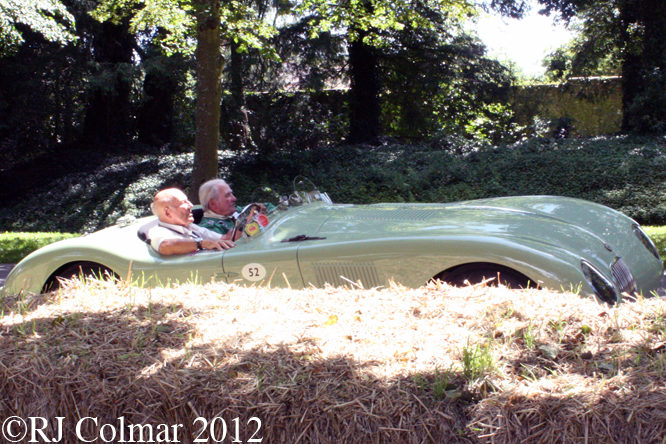
Jaguar C Type, Goodwood Festival of Speed

Sir Stirling Moss shares a little joke with former Jaguar works test driver and team mate Norman Dewis as they prepare for a quick blast up Goodwood’s hill climb.
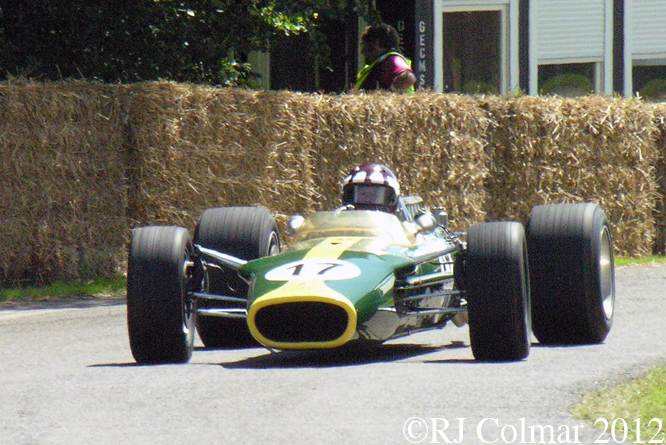
Lotus 49, Goodwood Festival of Speed

Jackie Oliver drove a Gold Leaf Team Lotus 49B in 1968 here he is seen driving the 1967 Lotus 49 chassis R2, later renamed R11, that Jim Clark used to win the 1967 Dutch Grand Prix the first of 155 Grand Prix victories for the Ford Corworth DFV engine that powered it and the first of 12 for the Lotus 49 type.
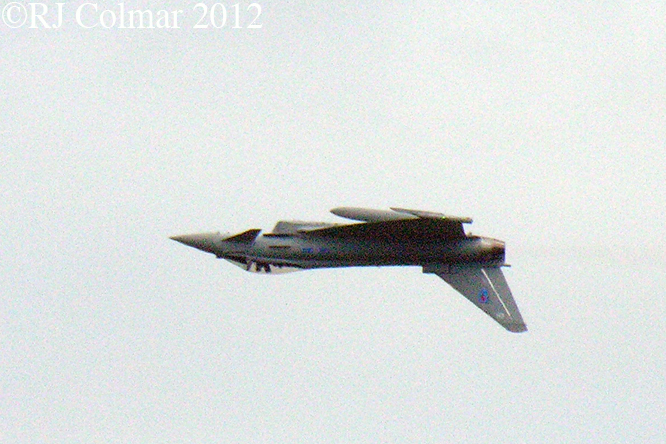
Eurofighter Typhoon, Goodwood Festival of Speed

Delivered nearly five years late and horrendously over budget the Eurofighter Typhoon made up for it with a simply stunning display of power, speed and maneuverability. With 40,000 lbs of thrust this plane can be flown like one of the better short nosed paper aeroplanes I used to make when I was a kid with the added bonus it does not crash when landing.
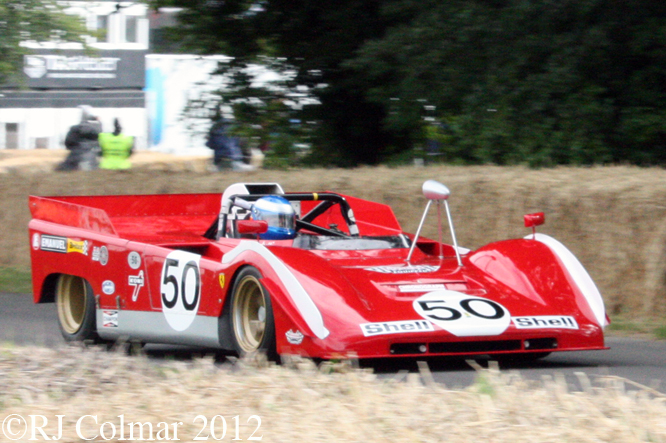
Ferrari 712, Goodwood Festival of Speed

Paul Knapfield’s Ferrari 712 chassis #1010 haa a long story to tell suffice to say here that in period it has underwent two body upgrades from it’s original 512S spec and an engine upgrade to make it the Ferrari with the largest Ferrari motor ever raced. This car will be the subject of a blog in the fulness of time.
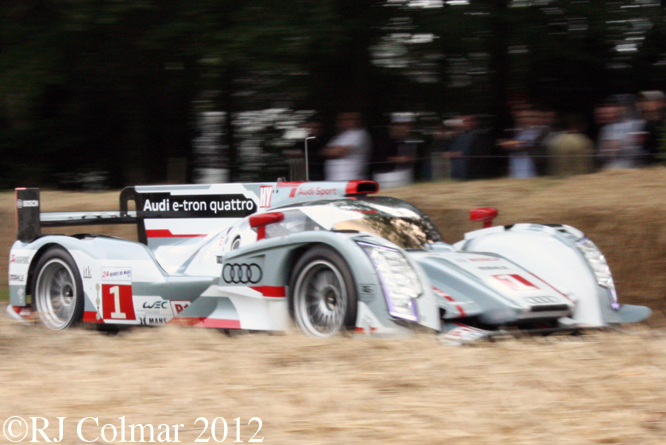
Audi R18 e-tron quattro, Goodwood Festival of Speed

Le Mans 24 hours will be remembered this year as the first ever to be won by a hybrid diesel, the #1 Audi R18 e-tron quattro of André Lotterer, Marcel Fässer and Benoit Tréluyer beat the the sister car of Allan McNish, Rinaldo Capello and Tom Kristensen, with a regular diesel coming in third. McNish is seen driving the e-tron quattro above which despite the stickers is not necessarily the car that crossed the line first at Le Mans.
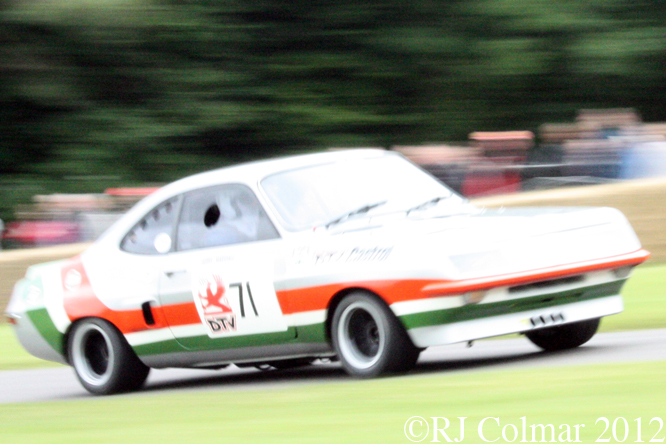
Vauxhall Firenza 'Old Nail', Goodwood Festival of Speed

The ‘Droop Snoot’ Vauxhall Firenza “Old Nail” belonging to Paul Chase-Gardener scored over 60 victories with Gerry Marshall at the wheel back in the 1970’s Gerry’s son Gregor, another contributor to GALPOT through The Nostalgia Forum, was scheduled to drive this car later in the weekend.
Citroen DS3 WRC, Goodwood Festival of Speed

There were several Citroen DS3’s entered on the Goodwood Rally stage I believe this may have been the DS3 WRC example of Thierry Neuville, but I’ll happily take a second better informed opinion if you have one to add below.
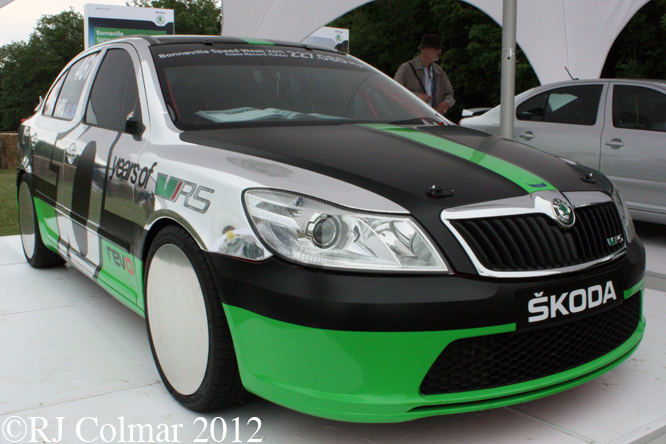
Skoda Octavia vRS, Goodwood Festival of Speed

One of the pleasant rewards for taking the time to walk to the top of the hill was finding this Skoda Octavia vRS, a car that might not ordinarily bring the phrase ‘psycho on tyres’ to mind however this one had it’s turbo 2 litre / 122cui engine uprated from 200 hp to 500 hp and along with a few other safety mods achieved 227.080 mph at Bonneville to claim the 2 litre production car class record with Richard Meaden at the wheel last year.
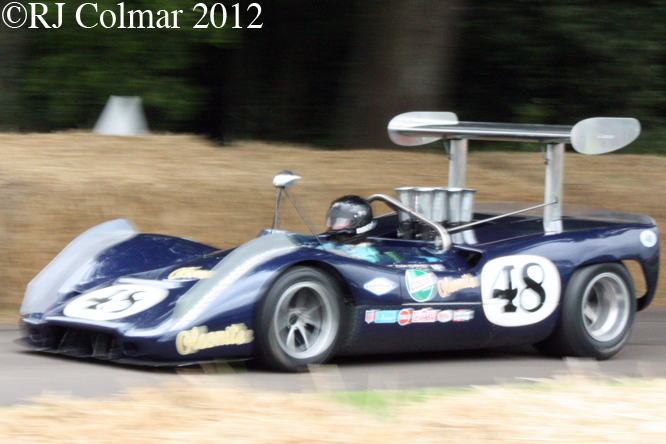
McLaren M6B 'McLeagle', Goodwood Festival of Speed

Four time World Drivers Champion Alain Prost was the honoured driver at Goodwood this year, though there were probably more vehicles present that were associated with Dan Gurney including the McLaren M6B, driven on this occasion by owner Andy Boone, which Dan modified so much it gained the ‘McLeagle’ sobriquet. Dan’s efforts were not enough to beat the Bruce and Denny show, Denny won the championship. Gurney’s best result with the car was a 4th place in the 1968 Can Am race at Riverside.
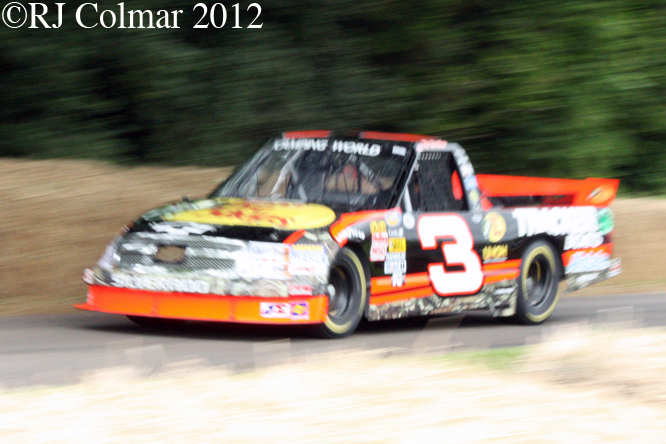
Chevrolet Silverado, NCWT, Goodwood Festival of Speed

It’s always great to see and hear a little NASCAR action, Goodwood marked the first occasion on which I have seen a Camping World Truck Series (CWTS) truck in action, the #3 Chevrolet Silverado was driven by Austin Dillon to the Championship last season his brother Ty was scheduled to drive over weekend.
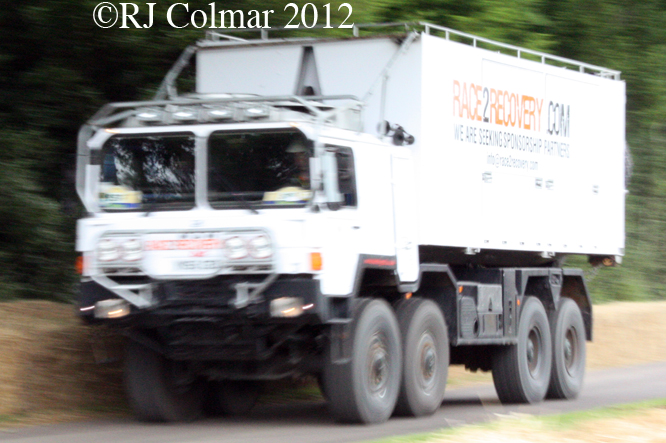
MAN 8x8, Goodwood Festival of Speed

Largest vehicle on the track was the Race 2 Recovery MAN 8×8 Dakar support truck driven by Ben Gott. Race 2 Recovery plans to enter a team of Land Rovers in next years Dakar Rally all driven by injured soldiers. If you would like to help their cause you can find details on this Race2Recovery link.
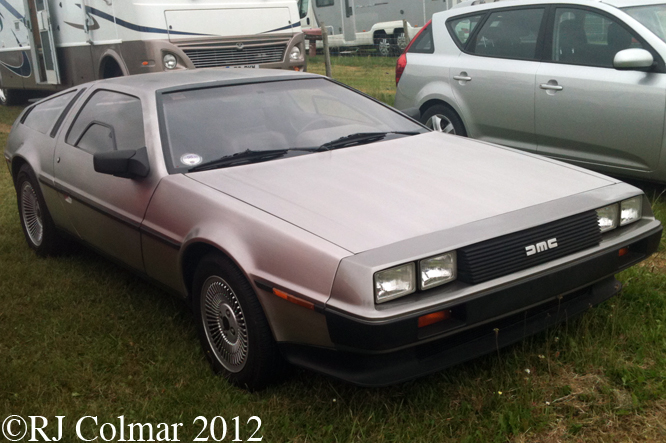
DeLorean DMC-12, Goodwood Festival of Speed

All too soon after a pleasurably exhausting day wondering around the grounds of Goodwood House without having seen everything it was time to say a quick hello to a couple of friends and then rejoin my passengers for the two hour back to the future drive home, my nomination for top car in the car park award went to the DeLorean DMC-12 which was substantially re-engineered by Lotus founder Colin Chapman, prior to the commencement of production in 1981.

Thanks for joining me on this ‘Theme Lotus’ edition of “Gettin’ a li’l psycho on tyres” I hope you will join me again tomorrow. Don’t forget to come back now !

Share

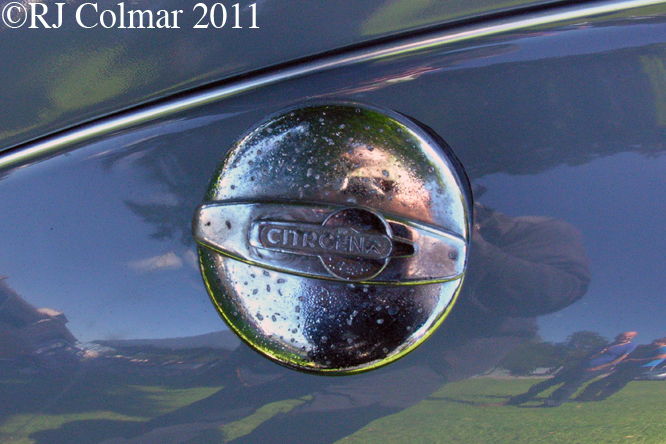
Minimalist, Cheap & Rugged – Citroën 2CV

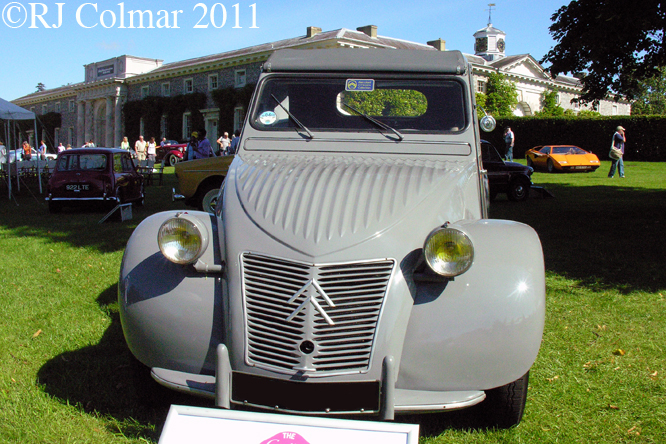
My friend Candice, who just became a member of the National Motorsports Press Association, writes a regular Tuesday blog called “Simple Joys”. I know her Simple Joy on wheels would probably be a Morgan three wheeler, mine would definitely be a Citroën 2CV.

Citroën 2CV, Goodwood Festival of Speed

The Citroën 2CV was designed as an uncompromisingly utilitarian vehicle designed to move agricultural France on from dependence on the horse and cart.

Citroën 2CV, Goodwood Festival of Speed

A market survey of Frances largely agricultural population in the 1930’s revealed that there was a demand for an umbrella on four wheels, that could carry 50 kgs / 110 lbs of farm produce to market at 30 mph and be driven across a ploughed field carrying a basket of eggs without breaking them, all while wearing a pair of clogs.

Citroën 2CV, Goodwood Festival of Speed

Pierre-Jules Boulanger set about guiding the same design team that had devised the Citroën Traction Avant to come up with a radical solution to the design criteria for a “Toute Petite Voiture” – very small car.

Citroën 2CV, Goodwood Festival of Speed

The original 2CV (2hp) made largely of aluminium was to have had a water cooled 2 cylinder engine and was scheduled for launch in 1939 but these plans were abandoned with the onset of the 1939/45 war. During the war it was realised the the price of aluminium would become prohibitive for post was production so the car was redesigned to make use of steel and the engine redesigned to be air cooled with a four speed gearbox.

Citroën 2CV, Goodwood Festival of Speed

A 2CV was finally launched in 1948 with a pull chord starter that was soon replaced with an electric starter. Despite much humour and scorn in the press Citroën were flooded with orders and the Deux Cheveau became a huge success with a three year waiting list built up in just three months !

Citroën 2CV, Goodwood Festival of Speed

Amazingly Citroën 2CV’s were used in competition events like the Mille Miglia in the early to late 1950’s, though they did not experience any overwhelming success.

Citroën 2CV, Goodwood Festival of Speed

2CV’s were developed into a large number of variants the Fourgonette van pioneered the use of a large rear box section that has seen many passenger vehicles reconfigured to commercial use, there was a pickup and a Sahara off road road version with two engines to provide four wheel drive.

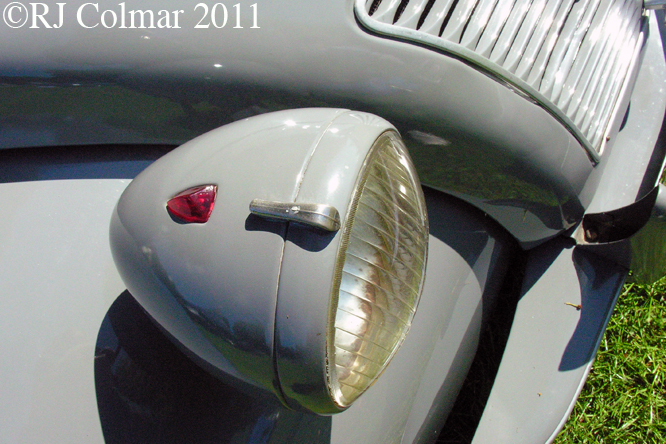
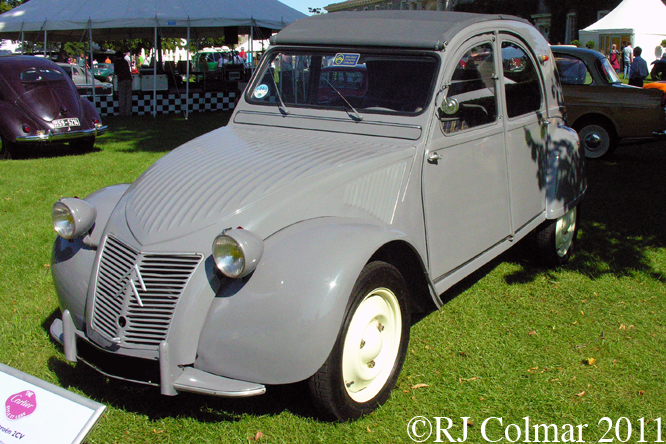
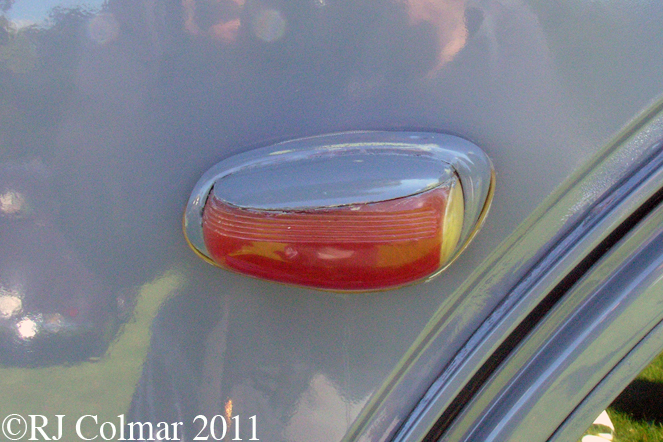
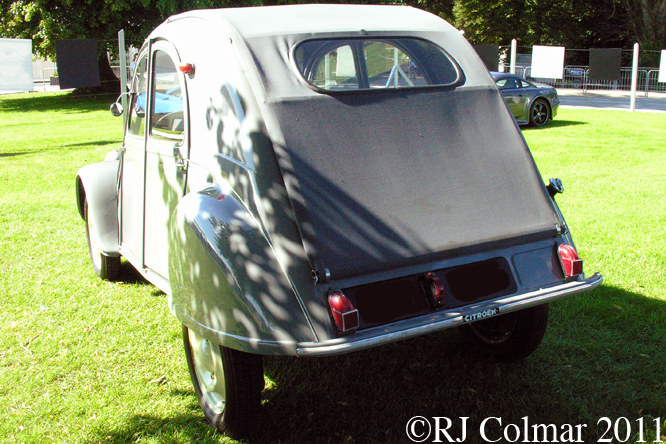
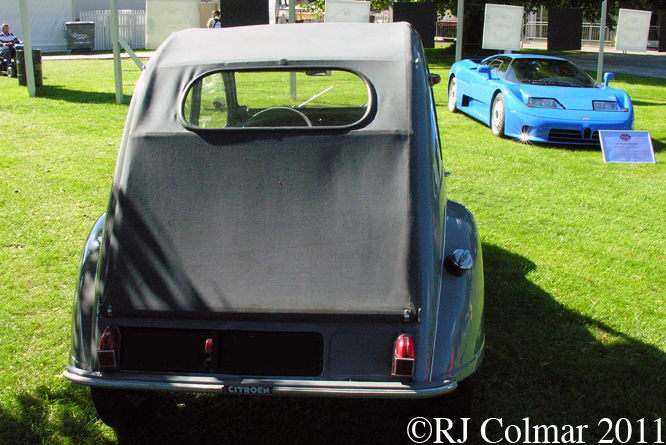
The 2CV remained in production, much modified from this 1954 iteration, seen at the Goodwood Festival of Speed, until 1990. Of all the cars I have owned the half a dozen minimalist cheap and rugged 2CV’s easily gave me the most smiles per mile.

Thanks for joining me on this “Minimalist, Cheap and Rugged” edition of “Gettin’ a li’l psycho on tyres”, I hope you will join me again tomorrow for Americana Thursday. Don’t forget to come back now !

Share

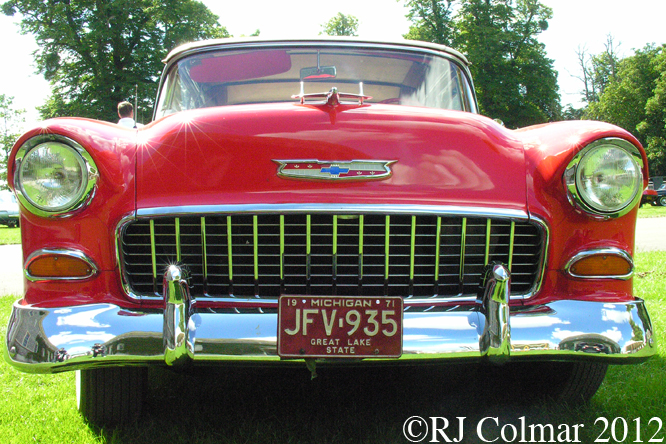
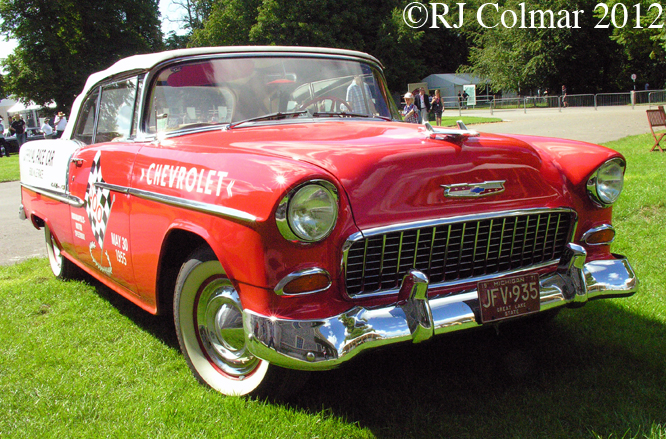
Hot One Of Fifteen – 1955 Chevrolet Bel Air Indy Pace Car

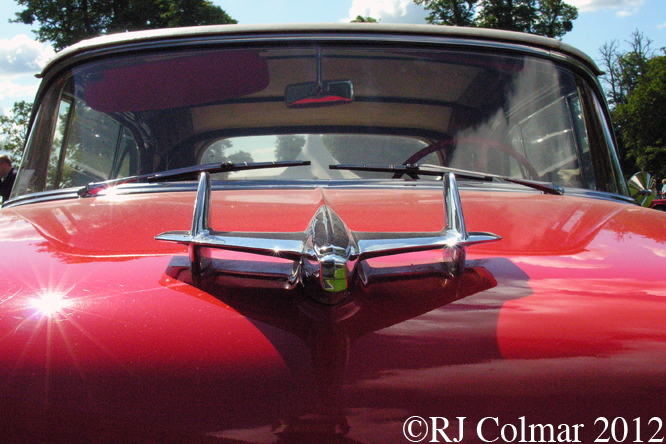
For 1955 Chevrolet launched it’s second generation full size Bel Air range, to replace the almost entirely new 1954 Bel Air. with two tone paintwork and for the first time a new 4.3 litre 265 cui V8 ‘small block’ engine option that would remain part of General Motors product mix with many improvements over several decades.

Chevrolet Bel Air, Goodwood FoS

The crisp clean styling of the 1955 Bel Air was set off by a Ferrari inspired chrome square potato chip grill as seen on the car below photographed at last years Goodwood Festival of Speed.

Chevrolet Bel Air, Goodwood FoS

Alongside two straight six motor options the new ‘small block’ came tuned with either a 162 hp Turbo-Fire with twin barrel carburetor, 180 hp Power Pack Super Turbo – Fire with four barrel carburetor or towards the end of the model year a 195 hp competition option with a high compression motor.

Chevrolet Bel Air, Goodwood FoS

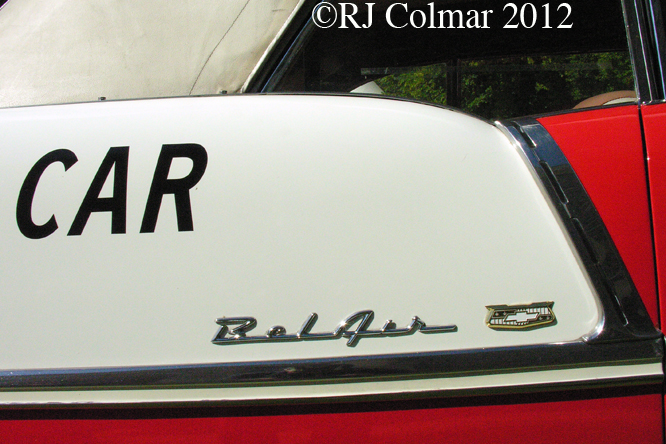
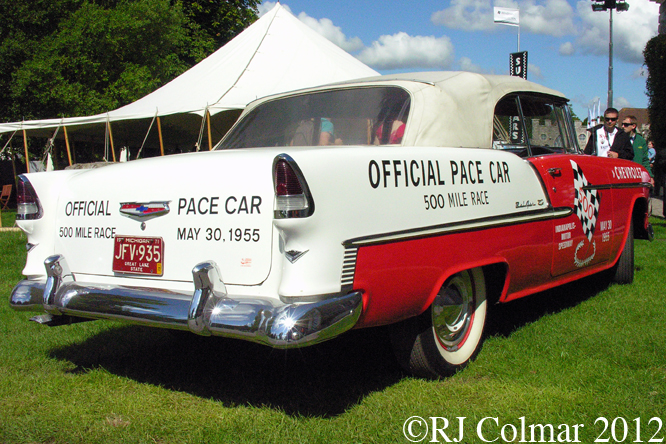
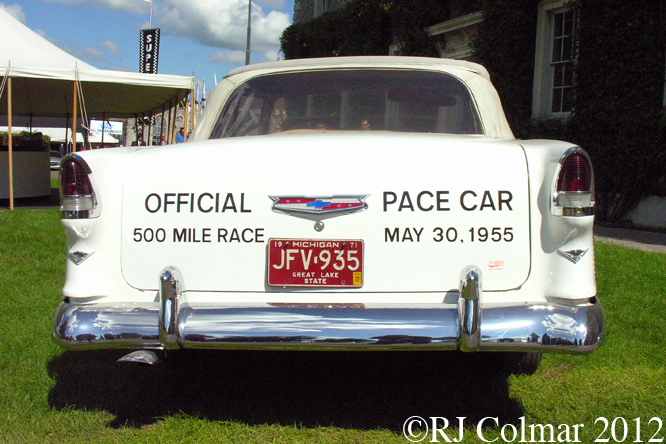
Being selected to perform pace car duties for the 1955 Indy 500 is reckoned to have given Chevrolet’s Bel Air marketing campaign a terrific boost, it is said that a fleet of 15 two tone Red & White Bel Airs were in attendance at what proved to be an unforgettable race.

Chevrolet Bel Air, Goodwood FoS

Chevrolet Sales Manager Thomas H Keating was given the honour of pacing the field for the Indy 500 on May 30th 1955 and he can be seen at the wheel of what Keating claimed to be a 180 hp vehicle, on this linked photo, sitting beside him is thought to be Indianapolis Motor Speedway owner Tony Hulman. The linked photo is telling for what it does not show, namely it is quite clearly not about to pace the Indy 500 and as we shall see it might not even be the actual vehicle used to pace the event.

Chevrolet Bel Air, Goodwood FoS

The give away as to which vehicle paced the event can be seen at 13m 37 secs into this linked clip when the pace car that actually led the field away can be clearly seen to be carrying a movie camera in the boot / trunk necessitating a rather large slit to afford the camera rearward vision and to accommodate the upper film reel. No one knows for sure what happened to that particular car after the event.

Chevrolet Bel Air, Goodwood FoS

Bill Vukovich looked to be on course for a third straight Indy victory in 1955 with a 17 second lead on the 57th lap, of 200, when he ran into someone else’s accident and ended flying over the back stretch perimeter fence and coming to rest up turned and on fire giving the two time defending champion no chance of survival. Bob Sweikert who had worked his way up from 14th on the grid, and was second in the John Zink Special at the time of the accident crossed the line 3 hours 53 mins and 59 secinds after the Bel Air pace car had entered pit road to start the race.

Bob took home one of the fifteen Bel Air pace cars with his wife and their kids, he went on to win the 1955 AAA big car championship and Midwest Sprint Car Championship, becoming the only winner of what is known cumulatively as the American Motor Sports Triple Crown. The following year Sweikert was killed in a sprint car accident at Salem Speedway racing Ed Elisan whom he had raced as a teenager in his home town of East Bay California.

Thanks for joining me on this ‘Hot One Of Fifteen’ edition of ‘Gettin’ a li’l psycho on tyres’ I hope you will join me again tomorrow. Don’t forget to come back now !
Share

Big Valve Special – Lotus 74 Europa Special

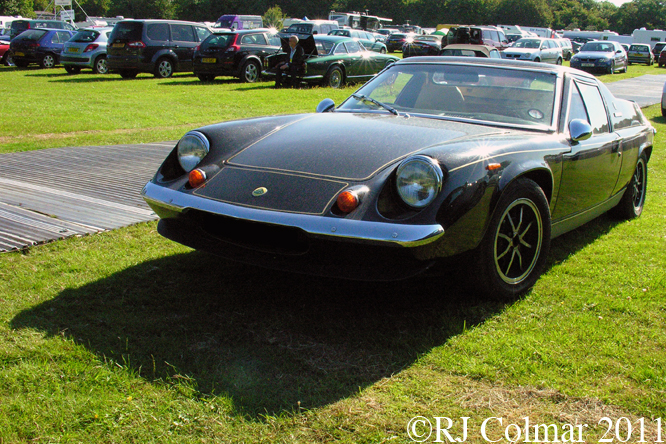
In 1971 Chief Engineer Mike Kimberley oversaw the development of the upgraded Lotus Europa Twin Cam Type 74. featuring a 105 hp Twin Cam motor coupled with a stronger Renault 4 speed gearbox.

Lotus Europa Special, Goodwood FoS

The upgraded Europa featured a 105 hp Twin Cam motor coupled with a stronger Renault 4 speed gearbox.

Lotus Europa Special, Goodwood FoS

After the first 1580 Europa Twin Cams has been built the Europa model was again upgraded with a 126 hp ‘big valve variant of the twin cam motor.

Lotus Europa Special, Goodwood FoS

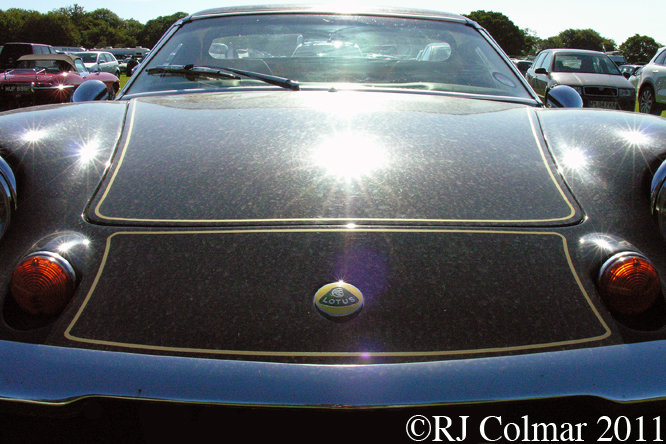
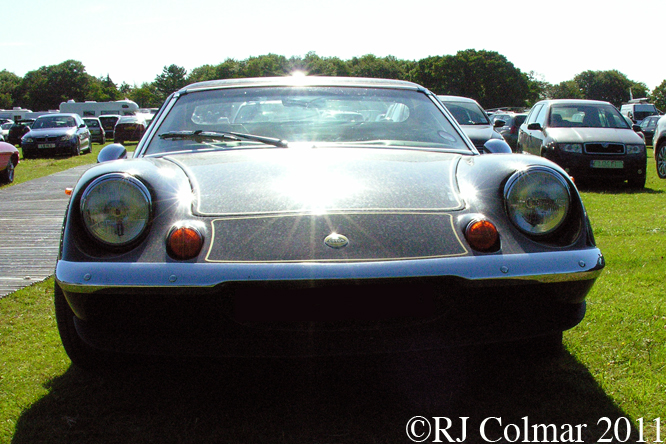
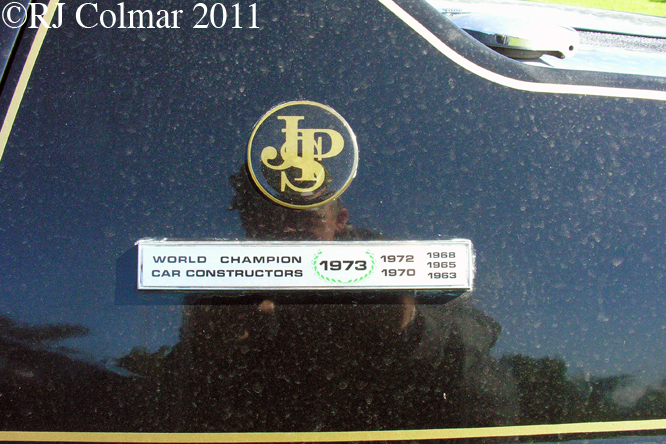
The first 200 ‘Big Valve’ Europa’s were planned as a limited ‘Europa Special’ edition of 200 featuring the black and gold “John Player Special”, tobacco brand, paint work of the works Lotus Racing cars which won the 1972 World Constructors Championship and World Drivers Championship with Emerson Fittipaldi at the wheel.

Lotus Europa Special, Goodwood FoS

The 200 ‘Europa Special’ limited edition vehicles, all featuring a 5 speed gearbox, launched in September 1972 are distinguishable by a numbered badge on the dash panel.

Lotus Europa Special, Goodwood FoS

Such was the popularity of the Europa Special that the model was continued after the initial planned batch of 200 had been built sans numbered dashboard badges and in a variety of colours including black and gold until 1975.

Lotus Europa Special, Goodwood FoS

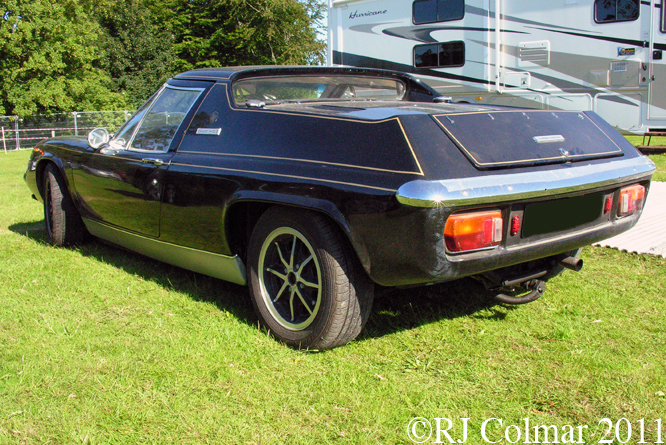
I was unable to discern if the 1972 Europa Special seen here is one of the first 200 numbered cars, or one of post limited edition models, when I saw it at last years Goodwood Festival of Speed. Note how the rear bodywork has been tidied up to give better rear visibility when compared to the Type 54 Europa I looked at last week.

Lotus Europa Special, Goodwood FoS

A Europa with the big valve motor was tested in period carrying a passenger from rest to 60 mph in 6.6 seconds and with a maximum speed of 122 mph. In all 3130 big valve Europa Specials were built from September 1972 to 1975.

Thanks for joining me on this ‘Big Valve Special’ edition of ‘Gettin’ a li’l psycho’ on tyres’ I hope you will join me again tomorrow when I’ll be reviewing last weeks Bristol Italian Auto Moto Festival. Don’t forget to come back now !
12 05 09 Lotus Type 74 disambiguation, it has come to light that at least one internet source lists two Lotus Type 74’s one the Europa Twin Cam / Europa Special and the other an open wheel Formula 2 car, former Lotus employee Rob, Kayemod on The Nostalgia Forum, has kindly informed me that the Formula 2 cars were only ever referred to at the Lotus factory as “Texaco Stars” in deference to their sponsor and that the Type 74 designation seems to have been applied to the racing car retrospectively.

Share