Tag Archives: Tidesco

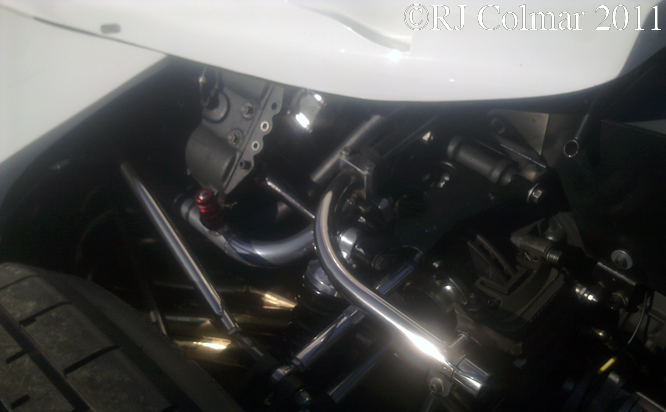
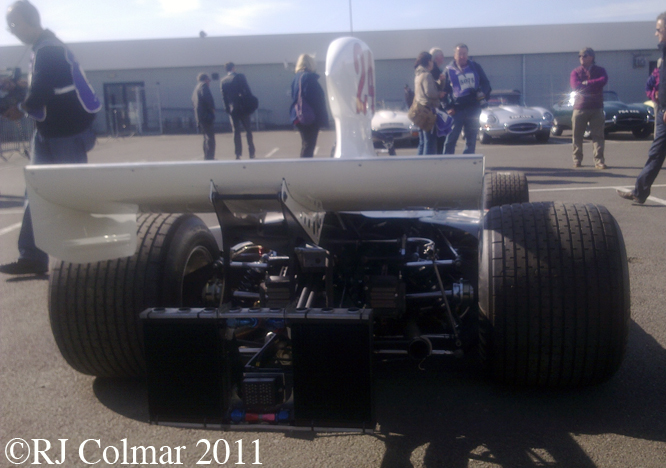
Caution Wide Vehicle – McLaren M23 M23/6

McLaren M23, Donington

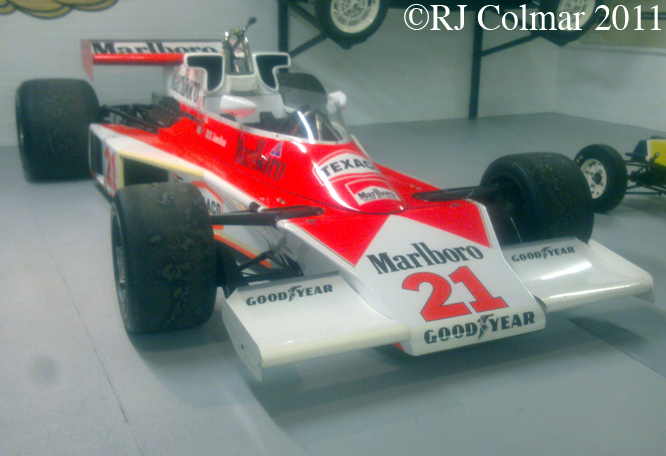
The Ford Cosworth DFV powered McLaren M23 was designed by Gordon Cuppock, based on the lessons learned from the successful McLaren M16 Indy car. The M23 driven by Denny Hulme burst onto the Grand Prix scene in 1973 with a pole position on its debut in South Africa. Denny scored the first win for the model in Sweden and Peter Revson followed that with wins in Great Britain and Canada in 1973.

For 1974 Denny who won his last race in an M23 in the season opening Argentinian GP was joined in the McLaren team by 1972 World Champion Emerson Fittipaldi who won in Brazil, Belgium, and Canada on his way to becoming the 1974 World Champion. McLaren also won the World Constructors title in 1974.

Jochen Mass joined Emerson in the McLaren team in 1975 winning the shortened Spanish GP while Emerson won in Argentina and Great Britain to finish 2nd in the World Drivers Championship.

1976 would prove to be the chassis most successful year in terms of wins with James Hunt, who replaced Emerson in the team crossing the line first in Spain, France, Great Britain, Germany, The Netherlands, Canada and the United States.

However 1976 was a year of high drama and comedy in Formula One first James was disqualified from the Spanish Grand Prix because his car was 1.8cm less than an inch too wide. In 1975 the McLaren had been used as a base model too set the dimensions for the 1976 Formula regulations.

McLaren successfully argued that when the tyres on the car were moving they were taller as a result of the centrifugal force taking up the slack on the side walls of the tyres and that this accounted for the discrepancy. The governing F.I.A. accepted this argument and the win was reinstated with a $3,000 fine, when the M23’s next appeared they had a slightly narrower rear track.

On the first corner, Paddock Bend, of the opening lap of the British Grand Prix James Hunt was the innocent victim in a crash with Ferrari’s Clay Reggazoni. The race was stopped and James who’s car was severely damaged took a short cut to get back to the pits when the race was stopped.

Come the restart the organisers initially refused to allow James to line up on the grid because the team had worked to repair his car while the mess was being cleared up. However people power intervened and fearing a riot from the partisan crowd the organisers relented, James took the win, he and the partisan crowd partied long and hard into the night and later the F.I.A. disqualified both Hunt and Clay Regazzoni from the event for having failed to complete the opening lap.

Up until this point reigning Champion Niki Lauda had dominated the 1976 Championship with four wins three seconds, the last of which became 1st after Hunt’s disqualification from the British GP and a third. The next race was the ill feted German Grand Prix in which Niki was eliminated in an accident that triggered an inferno from which he was lucky to escape with his life.

James won the German Grand Prix and the Dutch GP while Niki recuperated and 39 days after the inferno at the Nurburgring Niki and James met again at the Italian GP. At the end of practice for the Italian GP James and Mclaren team mate Jochen Mass and John Watson at Penske were found to be running with a fuel octane rating that was too high and had their Saturday times disallowed.

Since it had been raining during the first practice sessions on the Friday Hunt, Mass and Watson had effectively failed to qualify, however the 13 second plus off pace Otto Stuppacher was already on his way home to Austria when the announcement and the Marlboro sponsored Art Mezario withdrew as did Englishman Guy Edwards allowing Hunt, Mass and Watson to start.

Hunt crashed trying to make time and was applauded for doing so by the Tifosi and Lauda came home a remarkable 4th in his first race back.

James won both the Canadian and US Grand Prix while the brave Niki could only amass a further three championship points. Going into he last race of the season the Japanese GP Niki had a 3 point lead over James.

For the race James qualified 2nd behind Andretti with Niki just one place further back. I remember getting up at some unholy hour to watch this race live on TV in the UK and remember the disappointment when I saw the monsoon that unfolded on the track.

After much debate amongst the driver the race started and Niki who had lost his eyelids in the German inferno and yet to have them replaced through plastic surgery had little choice but to retire in the near zero visibility conditions. James took an early lead in the race but as the rain stopped and the track started to dry Hunt started losing ground dropping to 5th after a pit stop to replace a punctured tyre with just a few laps to go.

James charged back into the race managing to regain two positions which left him in third position when the flag came out for Mario Andretti to win by just over a lap from Patrick Depailler, with James Hunt, who had no idea what his position was in the race, right on his tail.

Hunt only learned that he had become champion after he got out of the car and stopped shouting at team manager Teddy Meyer for a less than perfect pit stop.

Hunt won the 1976 World Drivers title by just one point and Great Britain had it’s first World Champion since Jackie Stewart had won his last crown in 1973.

The McLaren M23 was pressed into service again in 1977 but its competitiveness was on the wane James winning a non championship race before committing fully to the M26 successor which had gone through a troublesome one year gestation period before coming on song.

The works M23 had a final swan song when it introduced Gilles Villeneuve to the world of Grand Prix racing in Great Britain and Bruno Jack’O’Malley in Italy towards the end of the 1977.

I have done my best to find out exactly which of the 13 M23 chassis this is, The Donington Museum blurb identified this car as McLaren M23/8 and said it was used to win the ’76 Spanish and US GP’s however M23/8 was destroyed in 1975. The car was then given a new tub with the chassis number M23/8-2 and the old tub was apparently eventually repaired to 1975 tall airbox spec and now resides in the United States.

M23/8-2 went on to become one of the stars of the 1976 season being used to win the controversial Spanish GP along with those in Canada and the US GP. M23/8-2 is said to belong to BCE the man responsible for running the the whole Formula Show since 1981.

It is said that the vehicle in my photograph appeared at the 60th Anniversary celebrations of the World Grand Prix Drivers Championship in Bahrain last year, it is also suggested that the M23 which appeared at Bahrain belongs to the brave octogenarian who started a modelling career with Hublot earlier this year however I have no firm evidence of the ownership of the vehicle in the photograph at the top of this post
at this time.

Most likely the vehicle above seen at the Donington Park Museum is M23/6 which seems to meet many of the criteria hinted at on various threads of The Nostalgia Forum and who’s whereabouts is listed as unknown by the respected Old Racing Car site.

M23/6 was used by Denny Hulme to win the Agentine Grand Prix in 1974 then in 1976 James Hunt drove it to win the French Grand Prix, cross the line first in Great Britain only to be disqualified .

At the next race the German Grand Prix I saw James win in this chassis which became one of a rare set of vehicles that crossed the line first in three consecutive races, though it was disqualified from one of them.

In 1977 Emilio de Villota drove M23/6 with little success in Grand Prix events, 2 starts three DNQ’s, but did win two rounds of a British series open to all single seat racing cars.

My thanks to Michael Ferner, Wouter Melissen, Steve Holter, Simon Hadfield, Slurp1955, at The Nostalgia Forum for their valuable contributions to todays blog.

Hope you have enjoyed today’s 1976 edition of ‘Gettin’ a lil psycho on tyres’ and that you will join me again tomorrow. Don’t forget to come back now !

Share

A Noble Effort – Hesketh Ford 308B # 308-2

Mid way through 1972 James ‘Hunt The Shunt’ got fired by the STP March Formula 3 team for taking over a vacant seat with a rival team at Monaco after his own car had broken down and been hit by another car.

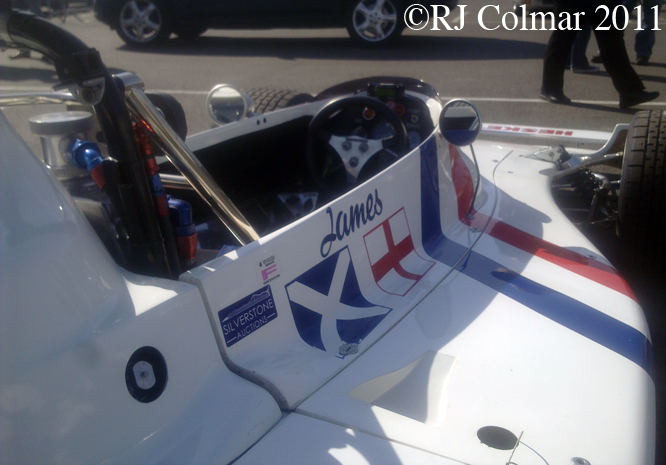
Hesketh Ford 308B, Silverstone

James found himself another ride with the ambitious Hesketh Team founded by Thomas ‘Alexander’ Fermor-Hesketh, 3rd Baron Hesketh, who inherited his title aged just four.

The Hesketh team were not experiencing much joy in the 2nd tier European Formula 2 championship and in a double or quits move Lord Hesketh decided that he may as well be loosing his fortune in the top tier Grand Prix Championship for the 1973 Season.

Hesketh Ford 308B, Silverstone

Things picked up rapidly as James quicky found his feet in Grand Prix racing, notably finishing second in the season ending US Grand Prix running Hesketh’s March 731 engineered through the season by Dr Harvey Postlethwaite. The Hesketh team also brought a legendary ‘ joie de vivre’ to the Grand Prix paddock.

Hesketh Ford 308B, Silverstone

In 1974 Dr. Postlethwaite designed a new car based heavily on the March 731 from the year before. James in the new Hesketh 308 scored a debut pole position at the non championship 1974 Race of Champions ahead of the Ferrari’s of Clay Regazzoni and Niki Lauda, and then came home first from pole in the non championship International Trophy at Silverstone.

For the rest of the 1974 season the teams effort suffered from poor reliability mixed with a couple of podium finishes enough for Hesketh to finish a credible 6th in the manufacturers championship and James 8th in the drivers championship.

Hesketh Ford 308B, Silverstone

Lord Hesketh was adamant about not accepting sponsorship for his team and the cars were upgraded to ‘B’ spec for 1975, the front radiator was replaced by radiators mounted beneath the rear wing. The cars reliability was still less than stellar but when he could get across the finish line James always scored points and often podiums.

On the 22nd of June 1975 the team finally came good at the Dutch Grand Prix held on the drying Zandvoort circuit, after making an early pit stop for dry tyres James was able to leap frog leader Niki Lauda when he made his pit stop and held on to take the Hesketh teams only victory, the last ever by an unsponsored team.

Hesketh Ford 308B, Silverston

James finished an impressive 4th in the 1975 drivers championship and Hesketh 4th in the constructors championship. Alas the good Lord had to call time on his Grand Prix party for lack of funds and sold up at the end of the season Dr. Postlethwaite and his last Hesketh design 308C joined a partnership between Walter Wolf and Frank Williams, while James Hunt went and drove for McLaren and the remains of the Hesketh team using revised 308B chassis upgraded to ‘D’ spec continued to participate in the 1976 season under the direction of Bubbles Horsely the team manager.

US readers might remember the Hesketh team going out with a front page bang, in qualifying for the the 1975 James team mate Brett Lunger was launched into flight by a chicane kerbstone and a photo of the Hesketh crashing back to earth made the front pages around the world. Brett and the car recovered to make the start of the race but retired soon after.

Hesketh Ford 308B, Silverstone

The car featured in today’s blog is the #308-2 chassis which James drove to victory in the Dutch GP. It was owned by Lord Hesketh until 2007 and was to be auctioned at the Silverstone Classic Auction next week however it has already been snapped up and sold by private treaty.

Hope you have enjoyed today’s Nobel edition of ‘Gettin’ a lil’ psycho on tyres’ and that you will join me again tomorrow when I’ll be taking a look at James Hunt’s world championship winning car. Don’t forget to come back now !

Share

The Super Hugger – AJ Rivers Simoniz Chevrolet Camaro Z28 Replica

Chevrolet Camaro Z28, Castle Combe TB

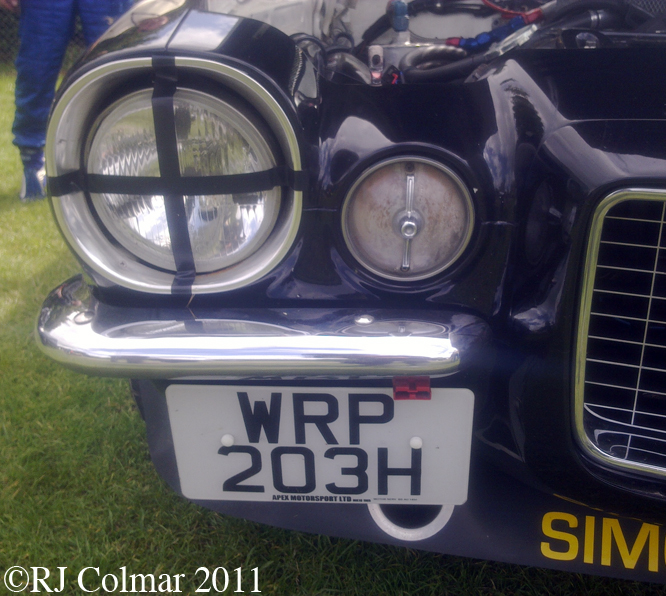
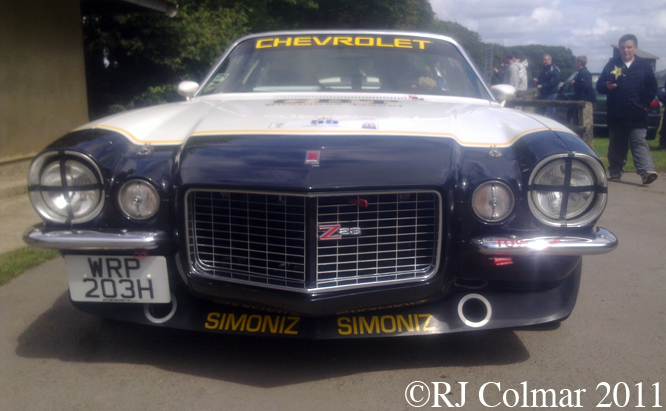
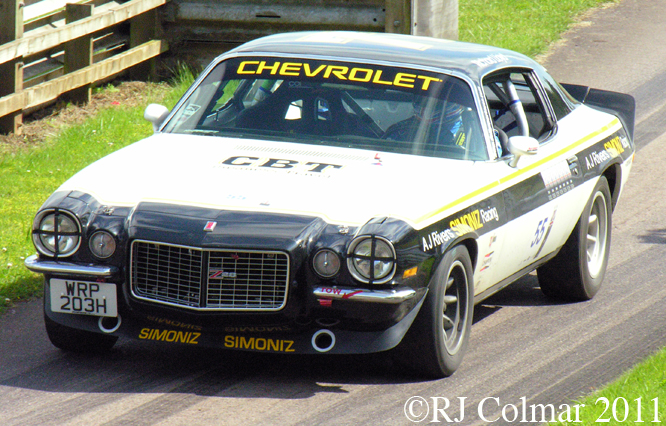
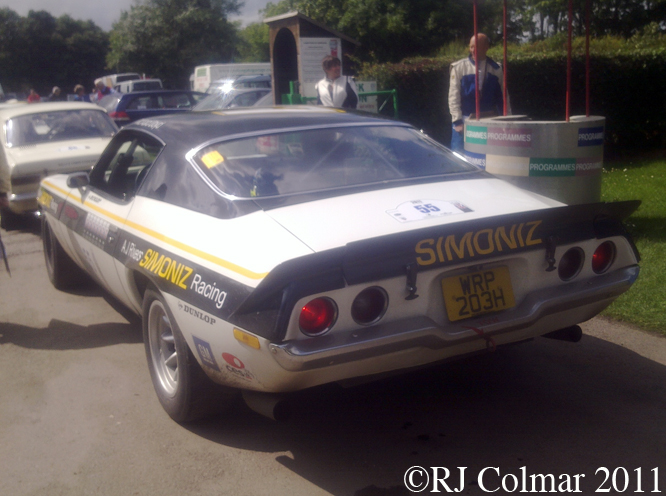
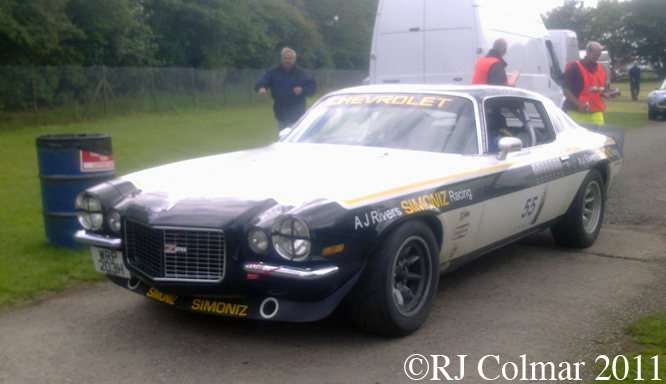
While I was whizzing up to Castle Combe in the teaming rain a couple of weeks ago, I went flying past a rumbling cloud of spray that turned out to be this Chevrolet Camaro like the one once owned by former saloon car driver and race team owner Richard Lloyd.

Chevrolet Camaro Z28, Castle Combe TB

It turns out the wide tyres were having trouble cutting through the water lying on the motorway and the Chevy was aquaplaning at speeds far lower than those I was travelling at in my borrowed Kia Picante with skinny tyres.

Chevrolet Camaro Z28, Castle Combe TB

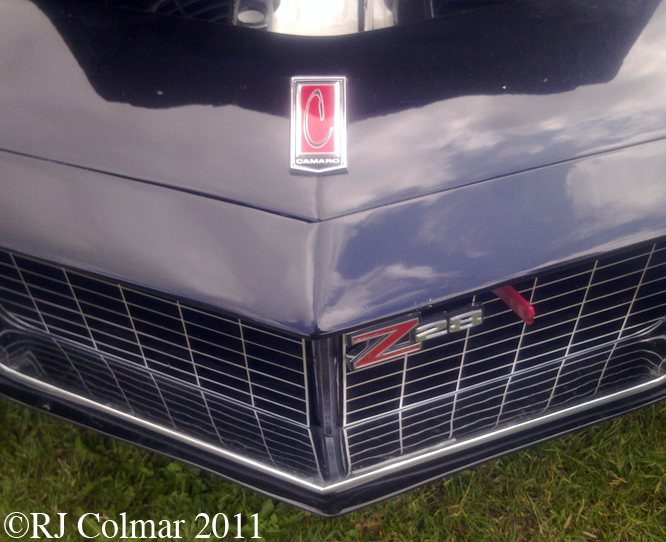
This is an early second generation 1970 Camaro,

Chevrolet Camaro Z28, Castle Combe TB

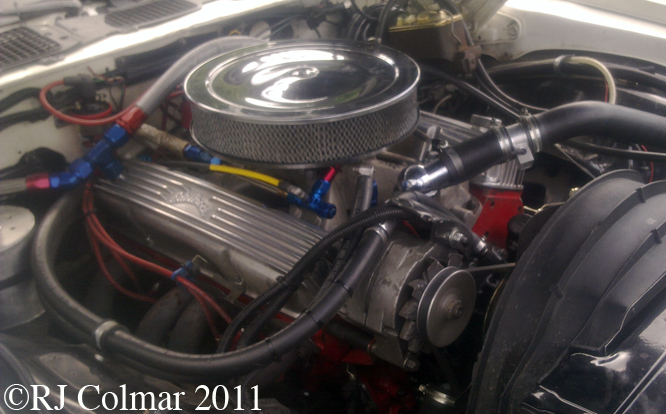
fitted with a 5700cc / 350 cui V8 rated at 360 hp as part of the

Chevrolet Camaro Z28, Castle Combe TB

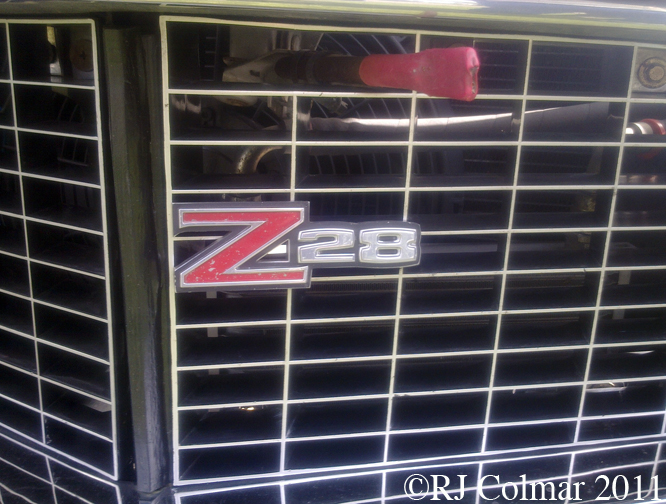
Z28 performance package, a peak in the story of muscle car performance which with the onset of the 1973 fuel crisis would never be matched in the remainder of the 20th century.

Chevrolet Camaro Z28, Castle Combe TB

The Chevrolet Camaro Z28 had a successful career in British Saloon Car racing, Frank Gardner used one to win the 1973 British Saloon car championship outright.

Chevrolet Camaro Z28, Castle Combe TB

For 1974 the British Saloon Car Championship was open to vehicles in a much lower state of tune known as Group 1 regulations and several Camaro’s and one Plymouth Barracuda fought for top class honours, some of the Chevy’s including one run by Richard Lloyd, if I remember correctly, ran with either a 7 litre / 427 cui or a 7.4 litre 451 cui motor.

Chevrolet Camaro Z28, Castle Combe TB

Back in 1973 while Richard was still running his car with a 5.7 litre / 350 cui motor he was scheduled to run in an event called the Avon Tour of Britain, that went round the entire country taking in races at many of the best circuits, rally stages and even a drag strip.

Chevrolet Camaro Z28, Castle Combe TB

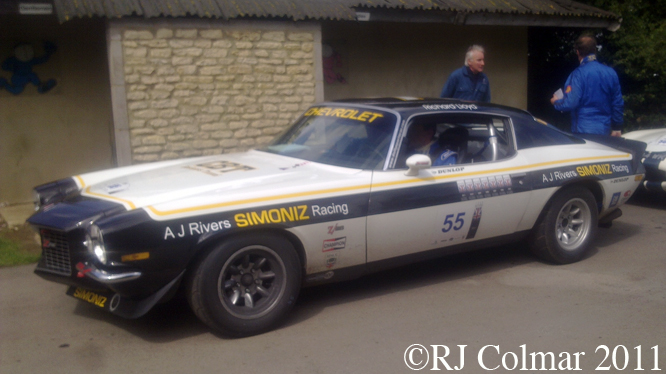
Richard fell ill prior to the event so he drafted in his team mate from the Spa 24 hours, up and coming British Grand Prix driver, James Hunt into the Simoniz Camaro at the last minute, James promptly ended up walking away with the victors trophy.

Chevrolet Camaro Z28, Castle Combe TB

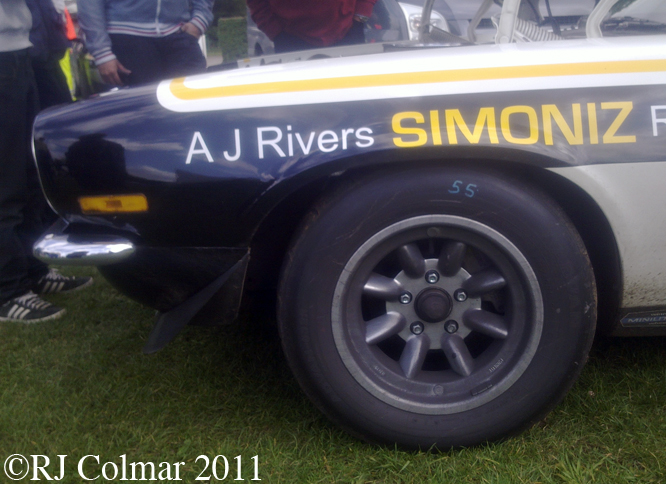
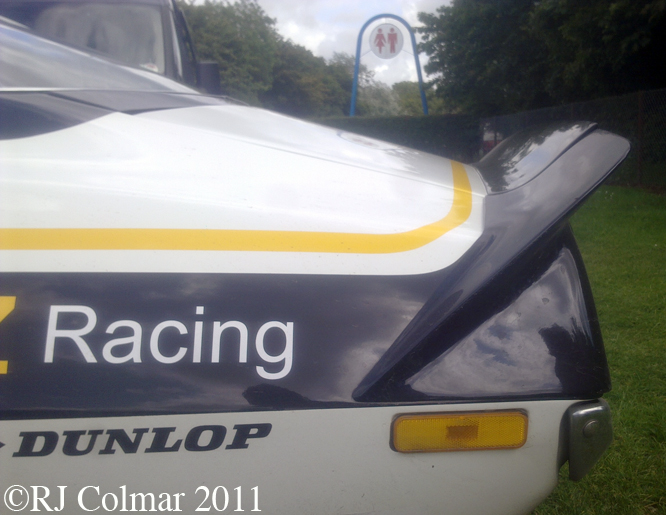
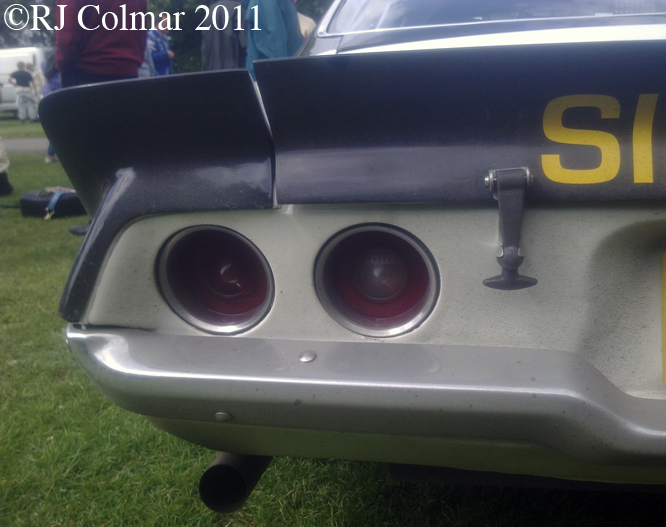
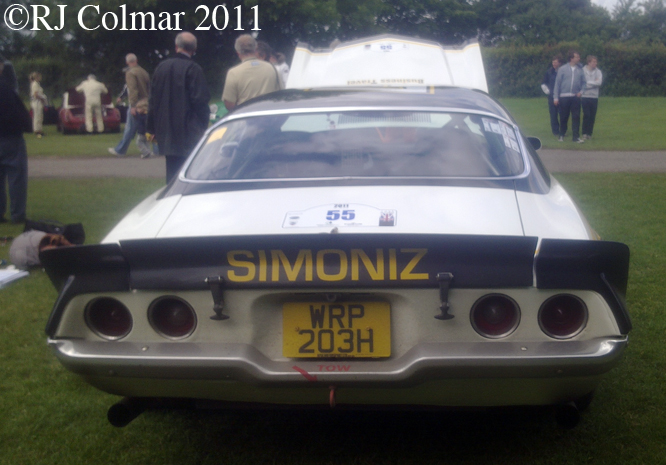
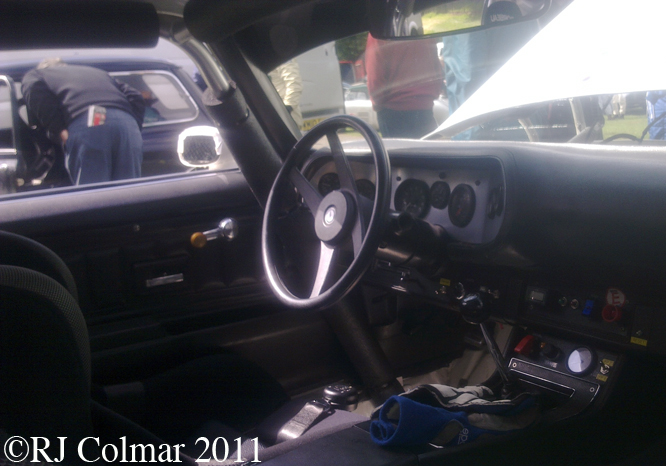
The car seen here is a replica of Richard’s AJ Rivers entered car that was built up for the 2005 Tour Britannia a mini Avon Tour of Britain for mostly historic vehicles.

Chevrolet Camaro Z28, Castle Combe TB

Richard and his former entrant Alan Rivers competed in the Tour Britania from 2005 – 2007, but in 2008 Richard lost his life in a tragic plane crash that claimed the lives of several other well known figures from British Motorsport.

Chevrolet Camaro Z28, Castle Combe TB

In memory of his friend Alan Rivers used the car one last time in the 2008 Tour Britania, before it was acquired by Stuart Scott and Steve Wood.

Chevrolet Camaro Z28, Castle Combe TB

Stuart and Steve have entered this vehicle in every Tour Britannia since,

Chevrolet Camaro Z28, Castle Combe TB

clocking class wins in 2010 and 2011.

Chevrolet Camaro Z28, Castle Combe TB

Stuart hopes to take the Camaro to the Historic Festival at Lime Rock CT in September.

Thanks for joining me onto day’s Z28 edition of ‘Gettin’ a lil psycho on tyres’, I hope you’ll join me again tomorrow when I’ll be going Dutch. Don’t forget to come back now !

Share

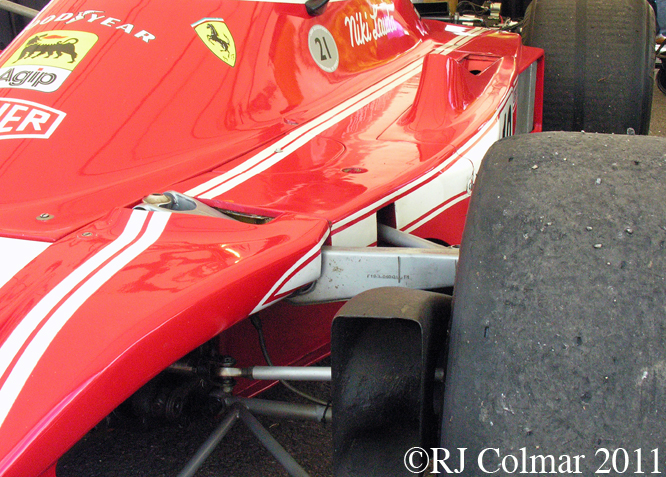
‘Fury’ Returns – Ferrari 312 B3 #010

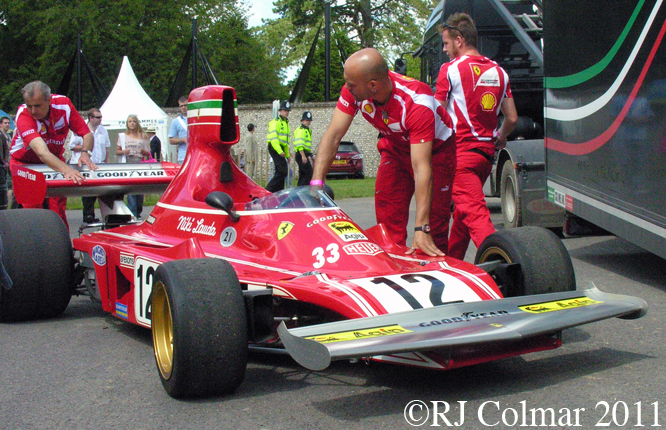
The first time I saw and heard a Ferrari racing in anger was on March 17th, 1974, in the Race of Champions at Brands Hatch. The day started out extremely wet and grey by the time a school friend, his parents and I had made it from the car park to the spectator enclosure we were all soaked through to the skin, with in minuets the cars filtered out of the pit lane opposite and there they were, two bright red Ferrari’s almost luminescent in the rain drenched gloom with a delightful throaty musical noise emanating from their 3 litre / 183 cui 312 flat 12 motors.

Ferrari 312 B3, Goodwood, FoS

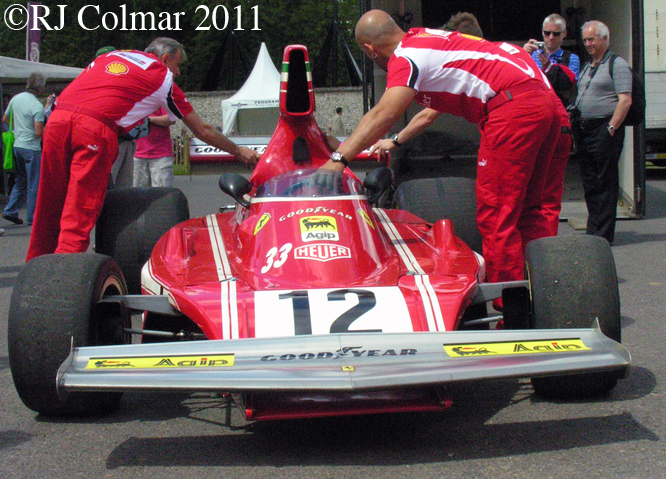
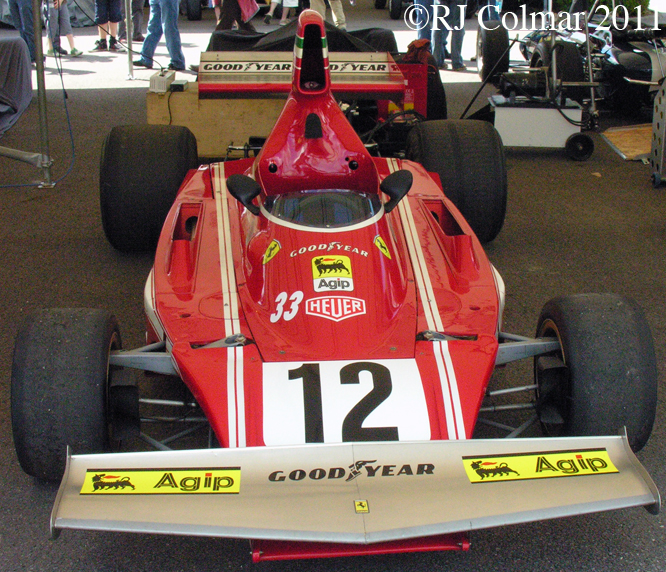
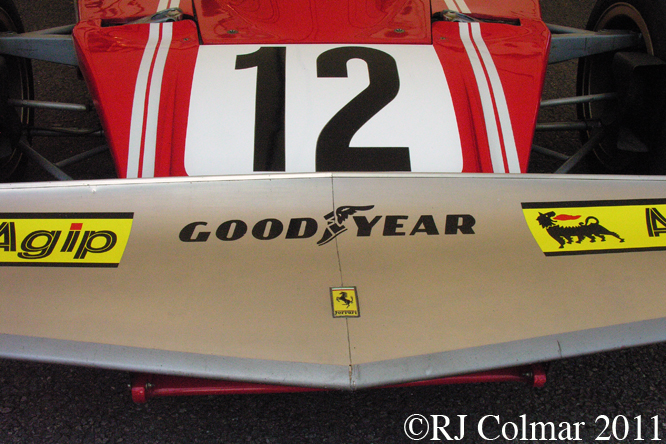
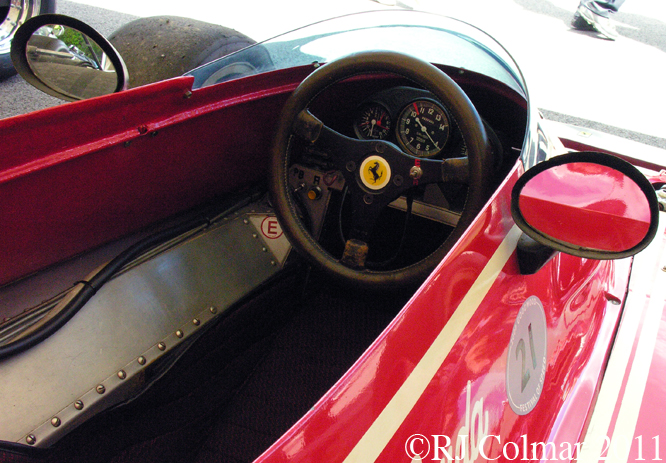
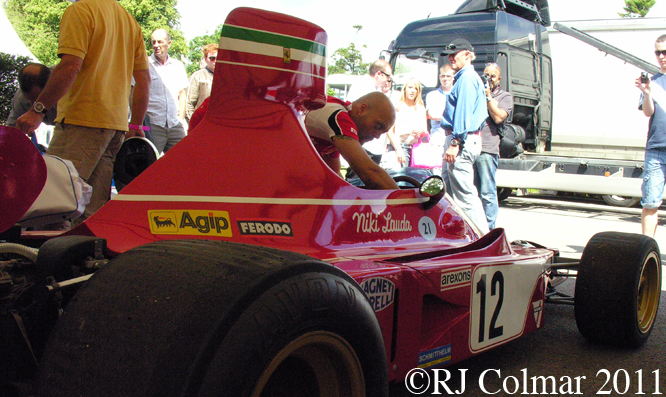
A couple of weeks ago when I found myself in front of one of those very same Ferrari 312 B3’s, at Goodwood, the contrast in the weather could not have been greater, but my absolute joy at the sight of it was not in the least diminished, even though this time the car made no sound as it was pushed into it’s allotted spot in the Goodwood paddock.

Ferrari 312 B3, Goodwood, FoS

The Ferrari 312 B3 was never going to win any awards for beauty if it looks like it was designed by committee, that is because it was.

Ferrari 312 B3, Goodwood, FoS

In 1972 designer Mauro ‘Fury’ Forghieri built an experimental Grand Prix car in which he had tried to arrange all the cars ancillary components, oil tanks and coolers, as close to the centre of gravity of his new design as possible. The vehicle known as the ‘Snow Plough‘ was extensively tested but the handling proved to be too nervous to ever be entered in a race.

Ferrari 312 B3, Goodwood, FoS

Mid way through 1972 Mr Ferrari was not well and took some time off from the day to day running of his company and Mauro Forghieri, under pressure from FIAT executives in Turin found himself dropped from the team designing the 1973 Ferrari Grand Prix challenger which was eventually designed by Franco Rocchi Giacomo Caliri under the direction of FIAT’s Stefano Colombo.

Ferrari 312 B3, Goodwood, FoS

The 1973 Ferrari 312 B3 featured Ferrari’s first ever aluminium monocoque chassis which, in another Ferrari first, was manufactured by Thompson in England. The engine was used as a stressed member of the chassis following a lead set by Colin Chapman in 1967 with the Lotus 49 which used the Ford Cosworth DFV as a stressed member of the chassis, thus saving the considerable weight otherwise necessitated by an engine subframe.

Ferrari 312 B3, Goodwood, FoS

The long wide and low 1973 312 B3 including chassis #010 seen here were not a great success and upon his return to work in the summer of 1973 Mr Ferrari withdrew his cars from Grand Prix racing for several races and recalled Mauro Forghieri from his duties at the Fiorano test track and tasked him with making the 1973 car more competitive.

Ferrari 312 B3, Goodwood, FoS

‘Fury’ as Forghieri was allegedly nick named applied all of the lessons learned from the ‘snow plough’ project to the large 1973 B3 chassis mounting long thin inclined radiators behind the front wheels and oil tank ahead of the rear wheel to reduce the polar moment of inertia in an effort to improve the cars handling.

Ferrari 312 B3, Goodwood, FoS

Upon their return to the track the reconfigured cars were not any more competitive but over the winter of 1973/74 with the arrival of Niki Lauda the cars were extensively tested and refined into a much more competitive proposition for the 1974 season.

Ferrari 312 B3, Goodwood, FoS

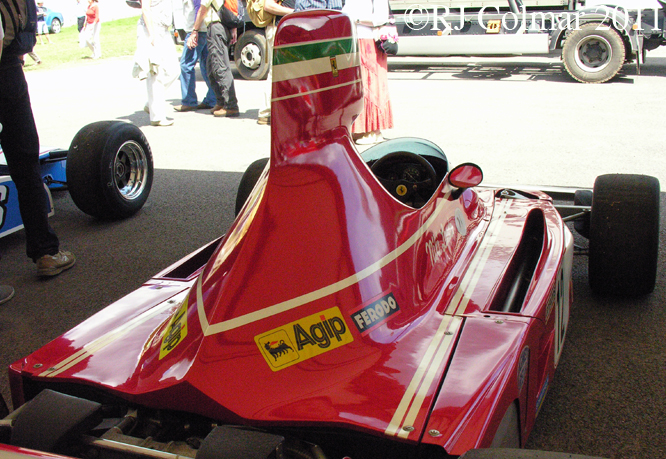
For 1974 the 312 B3’s appeared with completely reworked interim bodies that featured tall air boxes as pioneered by future Ferrari designer Dr Harvey Postlethwaite on James Hunt’s #27 Hesketh March 731.

Ferrari 312 B3, Goodwood, FoS

With future Ferrari President Luca di Montezemolo now heading the racing team management the revamped cars showed an immediate and consistent improvement in qualifying and in the races.

Ferrari 312 B3, Goodwood, FoS

Chassis #010 shown here was qualified 3rd in the hands of Niki Lauda at Brands Hatch for the non championship Race of Champions. Niki led during the early stages of the race but in a twist of irony he was over taken in a breath taking move on the outside of Paddock Bend by this chassis former incumbent Jacky Ickx who drove a Lotus 72 during the 1974 season.

Ferrari 312 B3, Goodwood, FoS

A couple of races later in Spain Niki Lauda won his first Grand Prix in a newer 312 B3 chassis with the definitive bodywork of the type worn by chassis #010 at Goodwood.

Lauda finished 4th in the 1974 season World Drivers Championship while more experienced team mate Clay Regazzoni was in contention for the championship right until the last race of the season when he was piped to the post by Emerson Fittipaldi in a McLaren.

My thanks to Aardy at Ferrari Chat for confirming the chassis number.

Thanks for joining me on this Fury edition of ‘Gettin’ a lil psycho on tyres’, I hope you’ll join me again tomorrow when I’ll be looking at a Super Hugger. Don’t forget to come back now !

Share

Driver to Sponsor – Simon Lewis

During the early 1980’s Simon Lewis was a regular spectator at Castle Combe where the biggest attraction used to be Formula Libre events run for any car built to known regulations.

McLaren M30, Castle Combe

At the top end of the entry would be vehicles that had run in Grand Prix like Alo Lawlers McLaren Cosworth DFV M30 resplendent in it’s original colours and bearing the name of it’s original driver Alain Prost,

Lola T330, Castle Combe

or Formula 5000 vehicles like Tony Trimmers Lola Chevrolet T330,

Lola T530, Castle Combe

and once in a while something extremely exotic like a Can Am 2 Lola Chevrolet T530 would appear.

March BMW 822, Castle Combe

A car with a large engine was not a pre requisite to be a contender to win as Eddie McLurg found out when he beat the big boys driving a 2 litre Formula 2 March BMW 822 Formula 2 car to victory in May 1989.

Simon Lewis

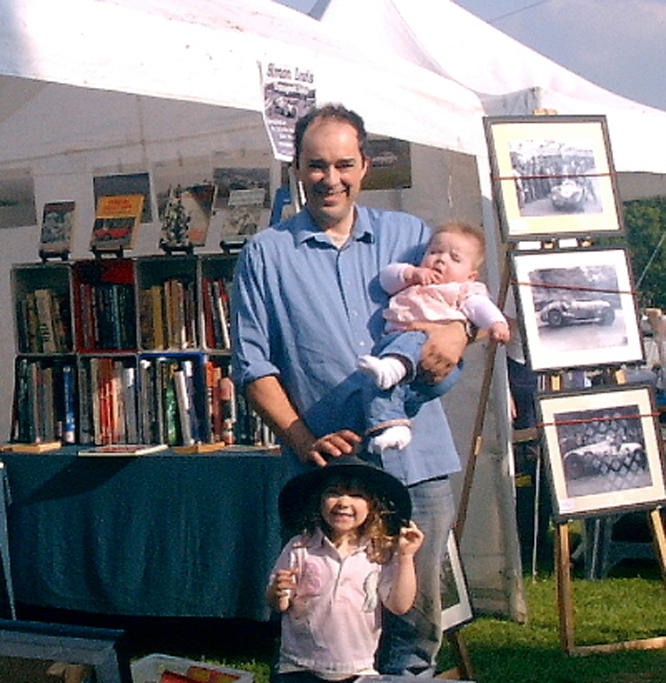
When he turned 18 Simon started on the long path to becoming a book mogul, surprisingly he specialised in automotive books with a business called Simon Lewis Transport Book Shop.

Simon Lewis, Rover SD1

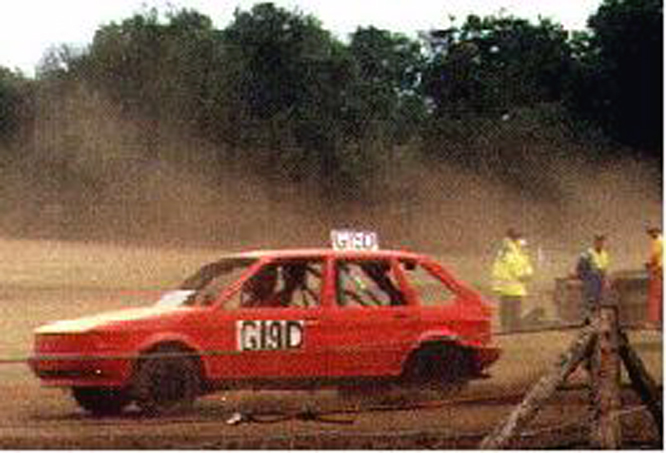
As and when resources allowed Simon turned to competing in rally events running against £50,000 Subaru’s in an comparatively archaic gargantuan Rover SDI after three seasons the enlarged to 4.5 litre / 274 cui Rover V8 was put into a Ford Escort shell for a season.

Simon Lewis, Rover 220, Castle Combe

When that project proved fruitless Simon moved to circuit racing at Castle Combe with a Rover Montego Turbo and then with some success he ran the Rover 220 Turbo seen above.

Simon Lewis, MG Maestro

Simon has also tried his hand at Grass Track racing with an MG Maestro, that vibrated so bad in top gear that the bits of roll cage in Simon’s eye line ‘became almost invisible’,

Simon Lewis, Morrish Kawasaki

and at hill climbing with a Kawasaki powered Morrish built in Cornwall.

Van Diemen RF00, Swift SC92, Castle Combe

(# 6 Roger Orgee Van Diemen RF00 & #17 Alex Drabble Swift SC92)

Inspired by the reaction to a thread on The Nostalgia Forum Simon has taken a leap of faith and decided to sponsor a new Mono Libre series at Castle Combe in 2011.

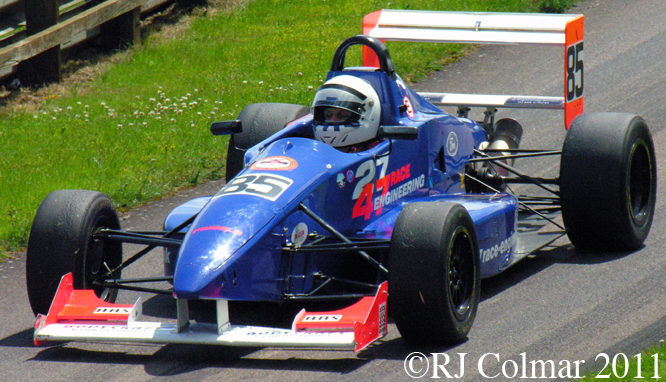
Nemesis Mygale, Castle Combe

(Winner of the first race #85 Peter Bragg Nemesis Mygale)

With a snappy title THE SIMON LEWIS TRANSPORT BOOKS FREE SINGLE-SEATER SERIES is open to any open wheeler that can pass the 108 db noise test.

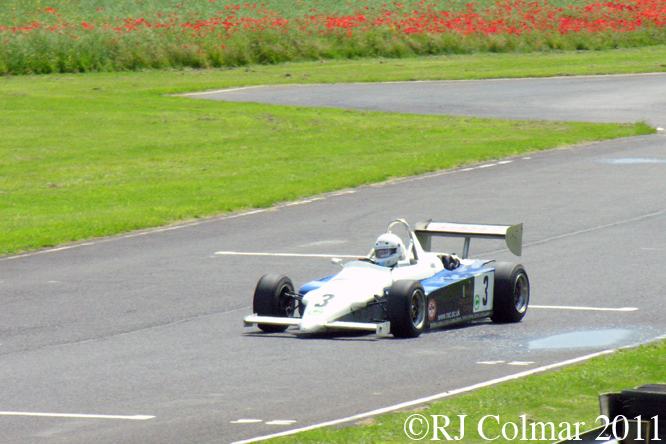
Ralt RT 3, Castle Combe

(# 3 David Cox Ralt RT3)

An interesting array of single seaters took part in the first race was on July the 18th, I caught practice the day before and look forward to seeing the next races on July 24th.

If you have a single seater that can pass the 108 db noise test and is in need of exercise you could do worse than make enquiries at the Castle Combe website.

Hope you will join me in wishing Simon and his series all the best.

Thanks for joining me on this Simon Lewis Transports Books Free Single Seater edition of ‘Gettin’ a lil psycho on tyres’, join me again tomorrow for a Grand Prix edition of Ferrari Friday. Don’t forget to come back now !

Share

Pole Sister – Nissan R90CK

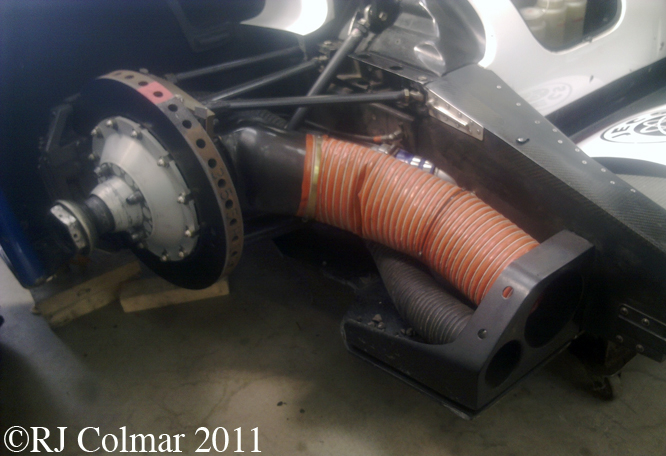
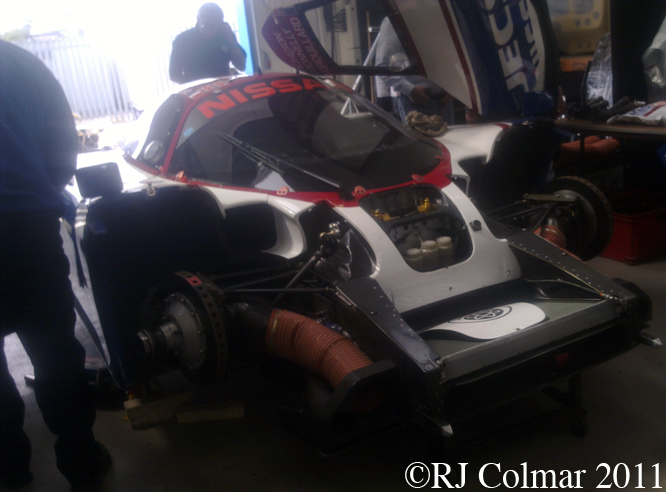
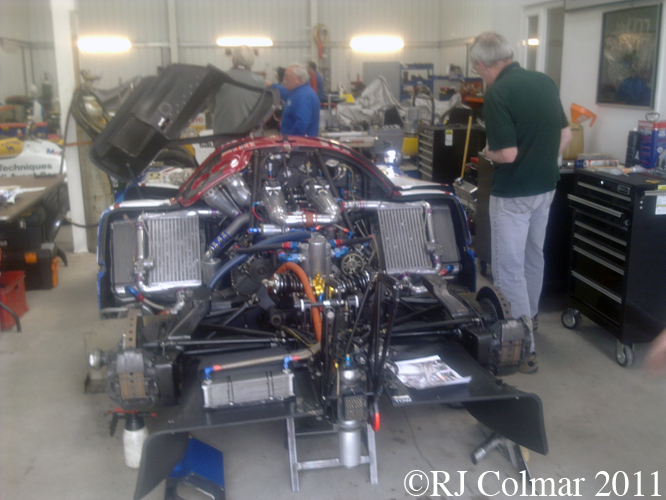
Like the Lancia LC2 seen in Monday’s post the Nissan R90CK seen here at Colin Bennett’s CGA Engineering Workshop is scheduled to appear at the Silverstone Classic for the Group C race next weekend.

Nissan R90CK, CGA Engineering

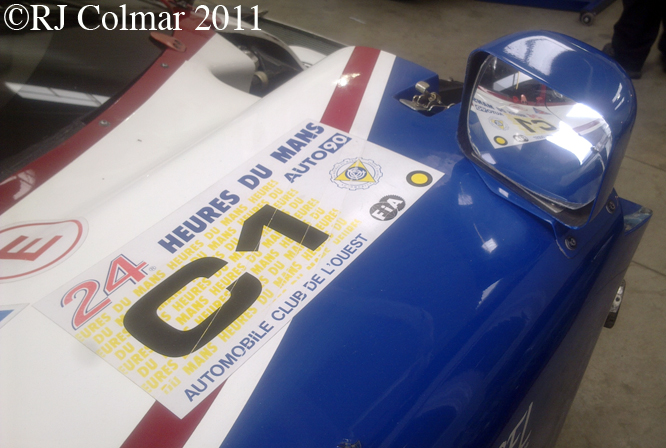
Three serious works teams gathered to contend the 24 hours of Le Mans in 1990, Jaguar with three cars were the eventual winners, Toyota with three cars did not really figure, but Nissan with 5 front line R90CK cars became the first Japanese manufacturer to sit on pole position at this endurance classic.

Nissan R90CK, CGA Engineering

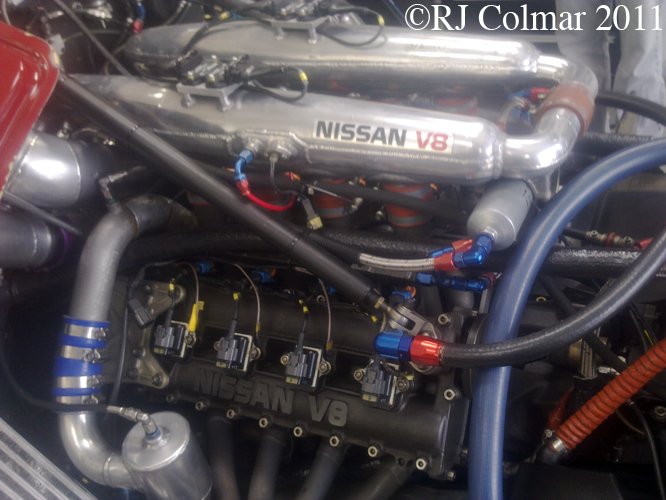
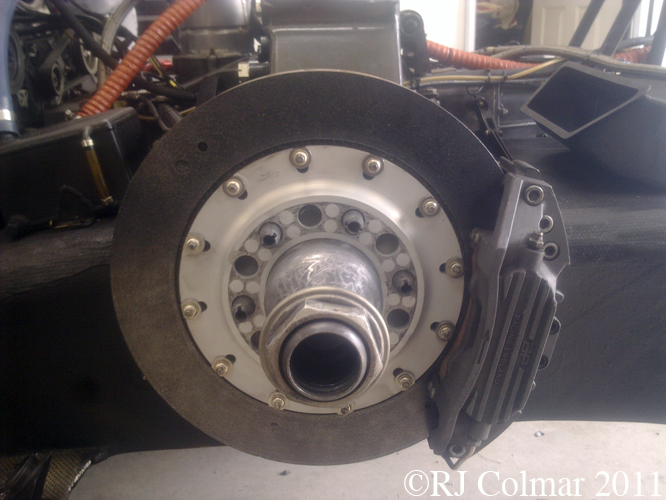
The Nissan R90CK’s were built around Lola T90/10 chassis

Nissan R90CK, CGA Engineering

and prepared for the World Endurance Championship by Nissan Motorsports Europe.

Nissan R90CK, CGA Engineering

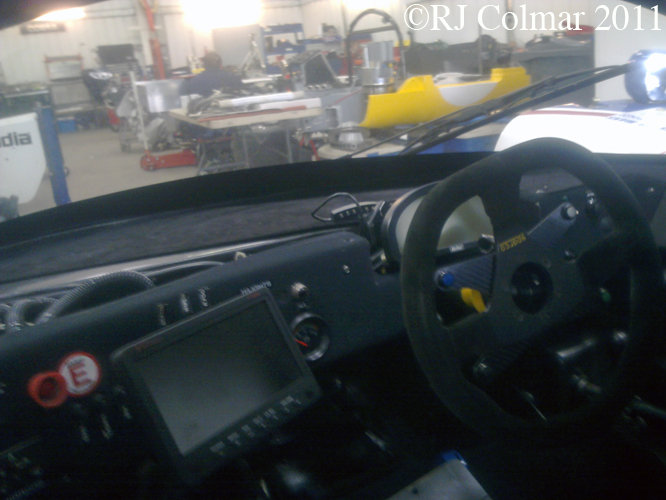
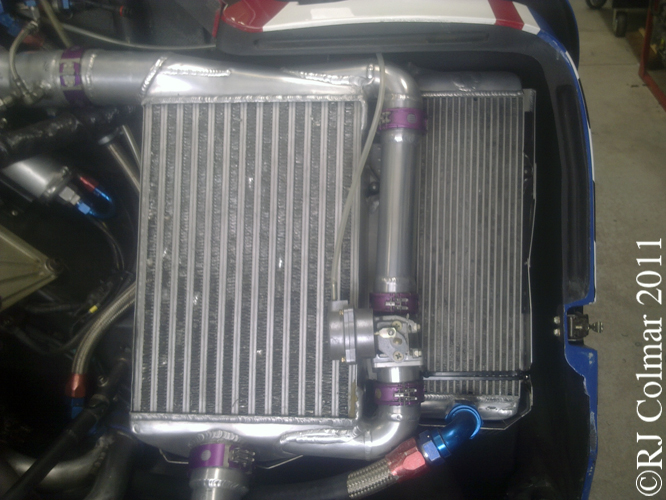
This particular vehicle has a rear facing camera connected to the screen seen here to aid reversing. Mark Blundell’s pole winning 3m 27s Le Mans qualifying lap immortalised with cockpit cam can be seen on this mind boggling youtube clip.

Nissan R90CK, CGA Engineering

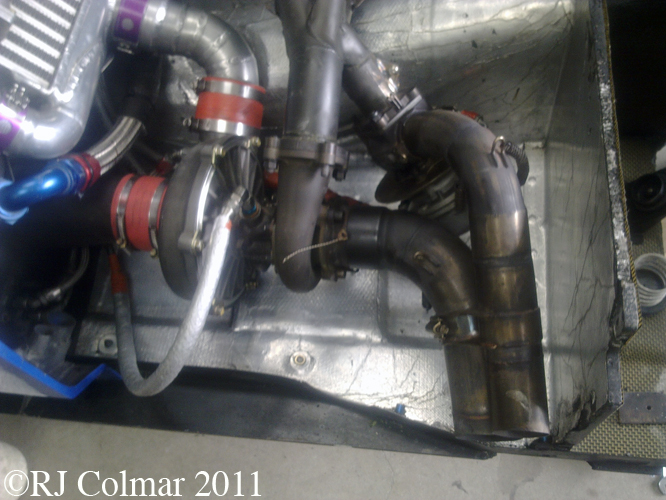
It is said that Mark had over 1000 hp available during his qualification lap from his 3.5 litre / 213 cui Nissan VRH35 V8 motor,

Nissan R90CK, CGA Engineering

thanks to a ceased turbo waste gate.

Nissan R90CK, CGA Engineering

Mark recorded a top speed of 226.9 mph on the Mulsanne Straight speed strap between the two newly installed chicanes a record that apparently still stands.

Nissan R90CK, CGA Engineering

Six months after the unlikely Mazda victory at Le Mans in 1991, a NISMO version of the Lola T90/10 the Nissan R91CP won the 1992 Daytona 24 hour race in the hands of Masahiro Hasemi, Kazuyoshi Hoshino and Toshio Suzuki.

Nissan R90CK, CGA Engineering

At the end of the 1990 season Nissan withdrew from the World Prototype Sportscar Championship but continued to develop the RC90CK cars for the All Japan Sports Prototype Championship which the manufacturer won in 1990,’91 and ’92.

Nissan R90CK, CGA Engineering

This particular car is now owned by Katsu Kubota.

Nissan R90CK, CGA Engineering

While there is still a good supply of parts for these vehicles

Nissan R90CK, CGA Engineering

the cost of running one is expensive.

Nissan R90CK, CGA Engineering

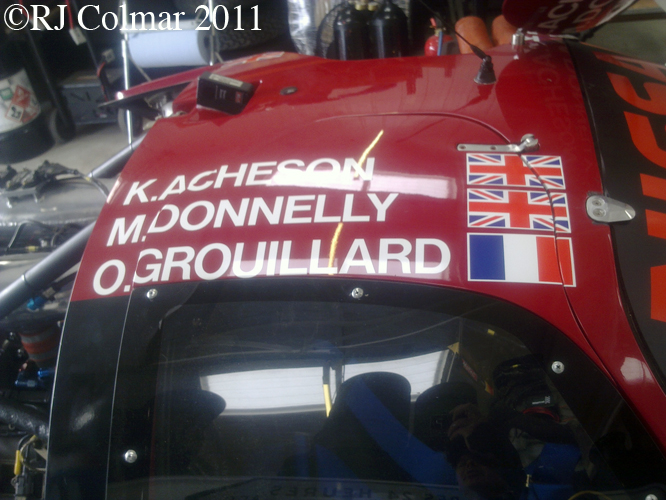
In 1990 the car driven by Kenny Acheson, Olivier Grouillard and Martin Donnelly

Nissan R90CK, CGA Engineering

qualified in 5th place at Le Mans but was eliminated on the opening lap with a gearbox problem.

Nissan R90CK, CGA Engineering

I shall look forward to seeing this car in action, 21 years after I first saw one, at the Silverstone Classic next weekend.

That concludes a series of three Group C blogs, my thanks to Colin Bennett for his hospitality and Tony Gallagher for organising the trip to Colin’s workshop.

Hope you have enjoyed today’s ceased wastegate edition of ‘Gettin’ a lil’ psycho on tyres’ and that you will join me again tomorrow. Don’t forget to come back now !
Share

F.A.Turbo Express – Joest Porsche 962 C #962-011

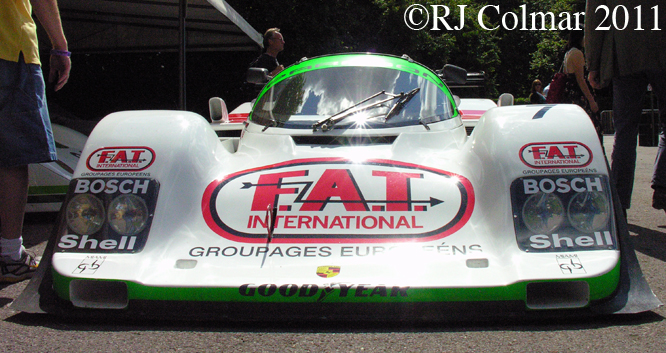
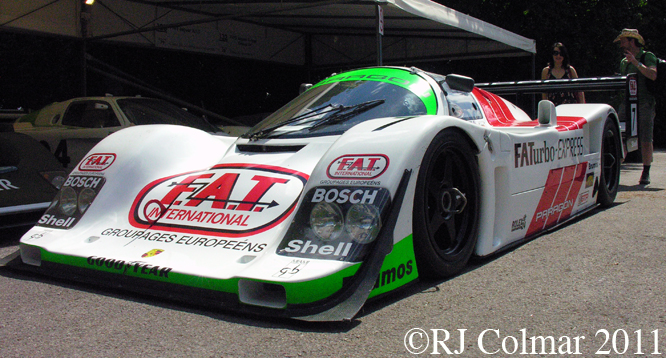
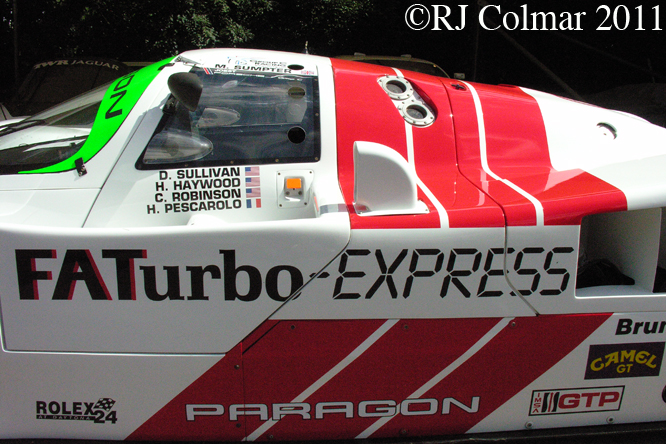
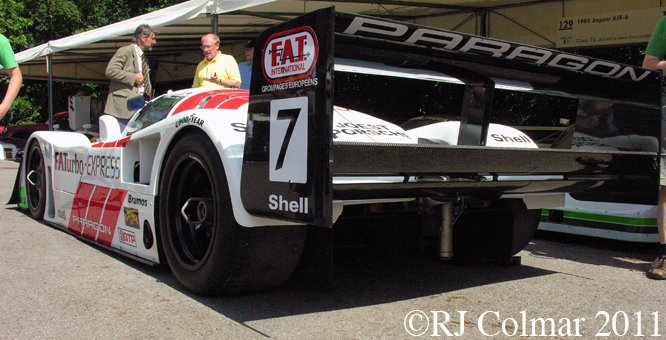
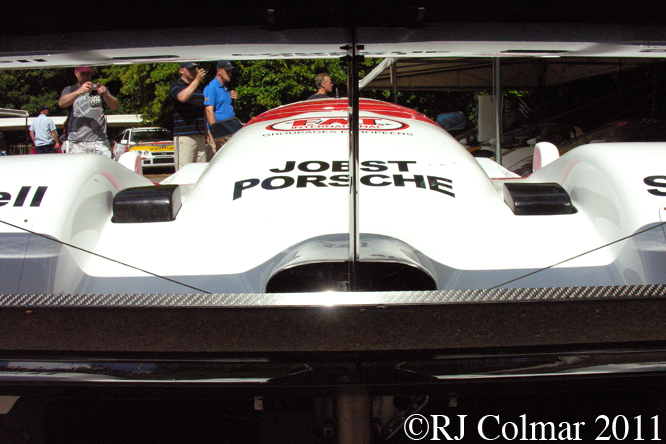
Following on from yesterdays Lancia LC2 blog today I am looking at a FATurbo Express sponsored Porsche 962 C that used to be run in Group C races by the Joest Team in the second of a series of three blogs on Group C cars.

Joest Porsche 962 C - Goodwood FoS

The Porsche 962 was born out of the Porsche 956 programme in 1985, the principle difference between the two models is that the drivers feet are behind the front axle line in the 962 which affords the driver better protection in the event of a frontal accident.

Joest Porsche 962 C - Goodwood FoS

The 962 was built to compete with twin turbo motors in the World Prototype Sportscar Championship and with single turbo motors in the IMSA GTP series. 962’s are known to have won 82 races of at least 250 races that they competed in. Although the Porsche factory raced the 962 it increasingly left it’s customers to represent the marque from 1987 on, apart from the riveting 1988 Le Mans 24 hour race.

Joest Porsche 962 C - Goodwood FoS

Former Porsche driver Reinhold Joest’s team continued to receive support from the Porsche factory at Le Mans in 1989 and 1990. Indeed to emphasise the level of backing Joest received from Porsche the last 6, of 16, works built Porsche 962 chassis all went to the Joest Team.

Joest Porsche 962 C - Goodwood FoS

This chassis is thought to be #962-011 the last of the 956/962 series to win a World Prototype Sports Car championship event at Dijon, France driven by Bob Wollek and Frank Jelinski in May 1989. Chassis #962-011 is thought to have won at least 8 other races the last of which was an open formula Interserie event at Zeltweg, Austria in the hands of Manuel Reuter in October 1993.

Joest Porsche 962 C - Goodwood FoS

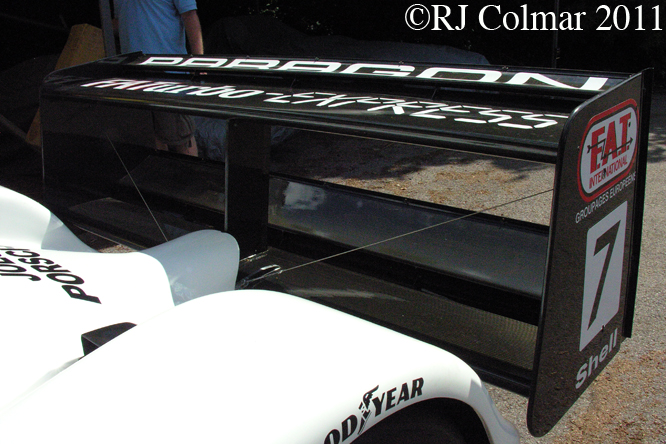
The #962-011 chassis raced with FAT International colours, thought to be a european logisitics company, in the 1993 Daytona 24 hours with Chip Robinson (USA)/Hurley Haywood (USA)/Henri Pescarolo (F)/Danny Sullivan (USA) listed as drivers but running with the #6. At it’s next race the Sebring 12 Hours the car appeared as a back up car for ‘John Winter’ and Manuel Reuter carrying the #7 T.

Joest Porsche 962 C - Goodwood FoS

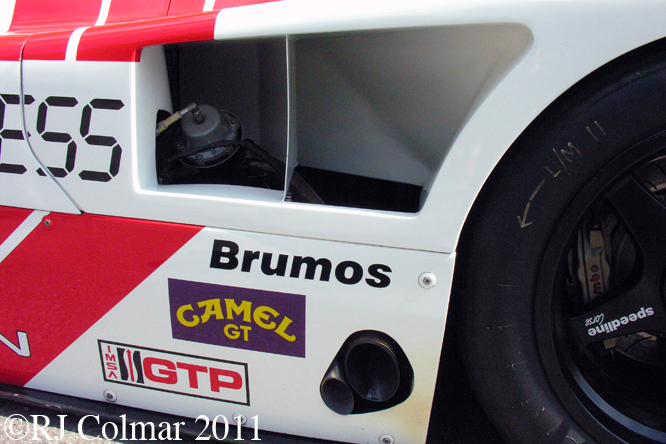
This car is not carrying standard Porsche 962 bodywork, as Jaguar and later Mercedes became increasingly competitive in Group C events Porsche customers undertook their own aerodynamic development programme’s to stay competitive.

Joest Porsche 962 C - Goodwood FoS

Joest Racing won the Le Mans 24 hours twice with private Porsche 956 entries in 1984 and 1985 and then twice again with Porsche powered TWR chassis in 1996 and 1997. Today Joest is known as a crack Audi team having clocked up 5 wins at Le Mans running the Audi R8 (3 wins), R10TDI, and this year the R18TDI.

This car has taken part in the Group C race at the Silverstone Classic before, I have not seen an entry list for this years event, but I am hoping Paragon who run the car will be able to bring it along again this year.

My thanks to Thundersport and Porsche expert Mike at The Nostalgia Forum who confirmed the chassis number.

Hope you have enjoyed today’s FAT Turbo Express edition of ‘Gettin’ a little psycho on tyres’ and that you will join me again tomorrow for a look under the skin of a Japanese Group C car built in England. Don’t forget to come back now !
Share