Tag Archives: VSCC

2 Lathes and 3 Employees -Delage Type – R

Louis Delage founded the company bearing his name in 1905 by giving up his 600 Fr monthly income and borrowing 35,000 Fr, his company had two lathes and three employees on if whom was a former Chief Designer at Peugeot.

Delage began manufacturing bodies for Helbé before building cars to it’s own design powered by a one cylinder de Dion motor.

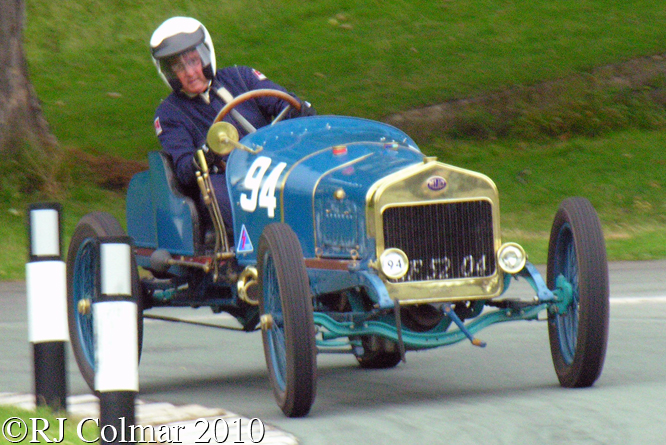
Delage Type R, David Barker, VSCC Loton Park,

By 1910 Delage had experienced competition success and steady growth such that it had moved into it’s third premises to keep abreast of the required production capacity.

The move coincided with the launch of the Type R powered, I believe by a Delage built side valve 4 cylinder motor that produced 15 hp.

Delage Type R, David Barker, VSCC Loton Park,

The Type-R had a top speed of 40 mph with a full body equipped to deal with adverse weather.

Production of the Type R lasted until 1913 by which time the factory was manufacturing 1,000 4 and 6 cylinder vehicles a year built by 350 employees.

The Type R seen with Dave Barker at wheel at a VSCC Loton Park meeting was built in 1910.

Thanks for joining me on this “2 Lathes and 3 Employees” edition of “Gettin’ a li’l psycho on tyres” I hope you will join me again tomorrow. Don’t forget to come back now !

Share

Balls Of Steel – Delahaye 135 CS

Today’s featured car is a Delahaye 135 was first registered in the UK on the 24th of March 1938. It appears to be a short wheel base CS version fitted with similar body work to the Competition Special which Eugène Chaboud and Jean Trémoulet drove to victory over the sister 135 CS driven by Gaston Serraud and Yves Giraud-Cabantous in the 1938 Le Mans 24 Hour race.

This car is fitted with a 3557 cc / 217 cui straight six motor that in it’s highest state of tune, with three carburetors, produces around 160 hp.

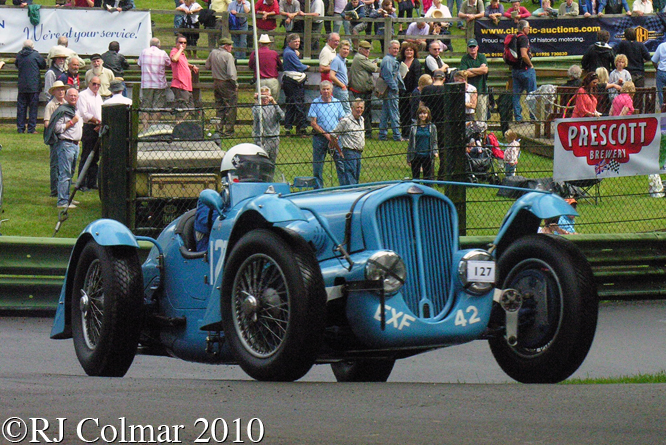
Delahaye 135, Sir Ralph Robbins, VSCC, Prescott,

The man seen driving this car at the VSCC Prescott meeting a couple of years ago is Sir Ralph Robin, an unsung hero of British Industry who joined Rolls Royce as an Engineer from Imperial College as a graduate apprentice in 1955.

When he retired from Rolls Royce in 2003 he was the companies longest serving employee and had risen all the way to the Chairpersonship 11 years earlier.

He helped turn the company around from a troubled nationalised enterprise in 1971 to a privatised world leader in it’s field by 1987, his deals with Cathy Pacific in 1979 and billion dollar deal with American Airlines in 1988 helped secure a future for British manufacturing for decades to come.

His CEO Sir John Rose once pithily described Sir Ralph as having “balls of steel”.

Thanks for joining me on this “Balls Of Steel” edition of ‘Gettin a li’l psycho on tyres” I hope you will join me again tomorrow for a closer look at the car in front. Don’t forget to come back now !

Share

All Sizes Including Chevy – ERA R4A

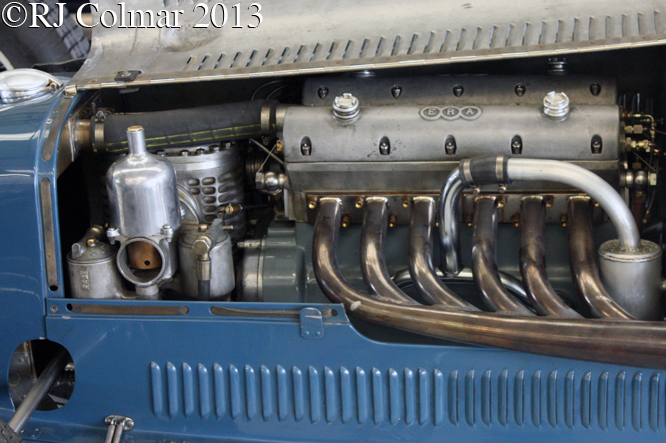
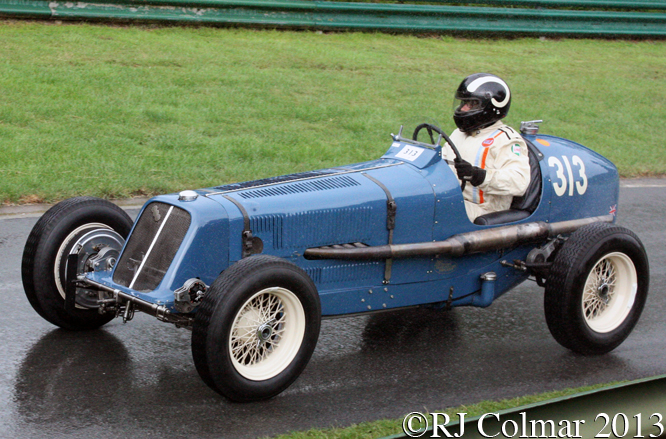
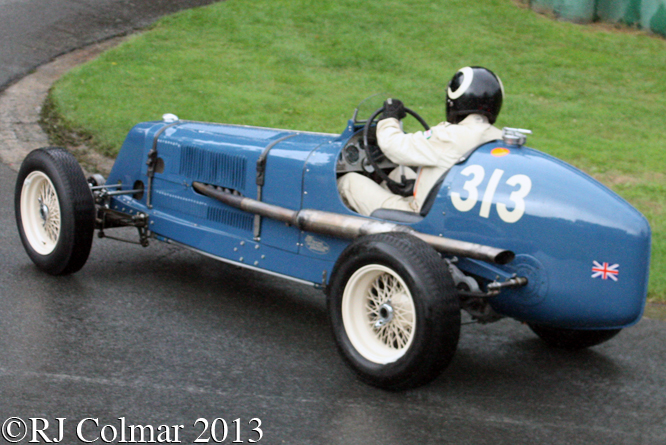
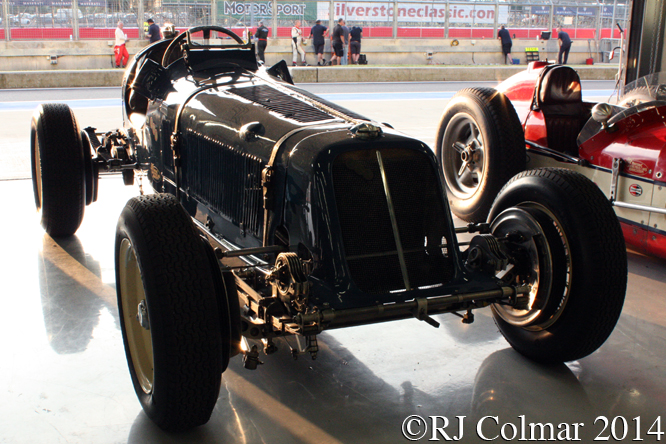
Continuing the 80th Anniversary Celebration of English Racing Automobiles, ERA, today’s featured vehicle ERA R4A was the first to be built for a customer, South African P G Fairfield and it was the first to be built in 1935.

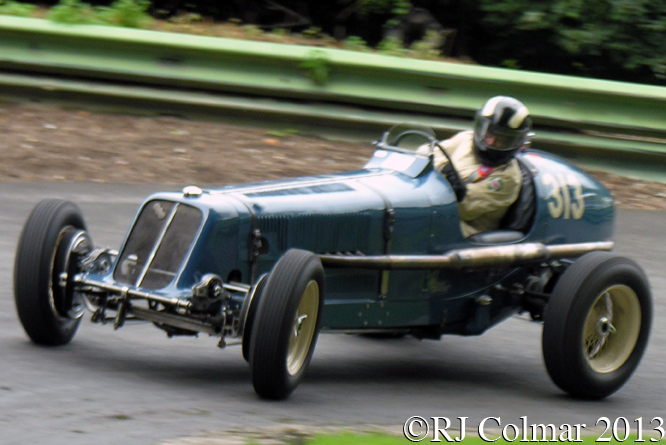
ERA R4A, James Baxter, VSCC Prescott

ERA R4A was originally painted white and fitted with a 1.1 litre 67 cui supercharged motor and in this form Patrick Fairfield won the Mannin Beg street race on the Isle of Man, the Nuffield Trophy at Donington Park and the Dieppe Grand Prix support race for Voiturettes.

ERA R4A, VSCC Spring Start, Silverstone

After running the car in South African events in early 1936 Patrick returned R4A to the UK where it was fitted with a 1,500 cc / 91.5 cui motor. In this form Patrick and R4A recorded second place finishes in the British Empire Trophy at Donington Park and in the Picardy Grand Prix.

ERA R4A, HGPCA Test Day, Silverstone

Patrick recorded three wins in South African events in 1937 before he was killed during the 1937 Le Mans 24 hours race. R4A was acquired by Norman Wilson with the smaller 1,100 cc / 67 cui motor fitted. Norman raced R4A mostly in South Africa up until the outbreak of the ’39 – ’45 war in which he would loose his life while serving in the South African Air Force.

ERA R4A, James Baxter, VSCC Prescott

Reg Parnell looked after R4A from 1942 to 1945 before selling her to Bob Gerard. When Bob Gerard appeared with R4A at Cockfosters, one of Britains earliest post war motoring events, in July 1945 it had several modifications to the radiator surround which would eventually enclose a smaller radiator.

ERA R4A, James Baxter, VSCC Prescott

In 1948 Bob fitted the 2 litre / 122 cui which is seen in these photographs, at some point he also had radius rods to the rear suspension of R4A, R6B and R14B though these have since been removed from all three cars.

ERA R4A, James Baxter, VSCC Prescott

After ten years of ownership Bob sold R4A to John McAfee in Northern Rhodesia, now Zambia, and the following year it went to Jimmy de Villiers in Southern Rhodesia, now Zimbabwe. During this period in Southern Africa up to the mid 1960’s R4A is said to have been fitted with a unspecified Chevrolet motor for a short time.

ERA R4A, Silverstone Classic,

I believe R4A is currently owned by NJ Topliss and is seen in these photo’s with James Baxter at the wheel during last years VSCC Prescott meeting.

Thanks for joining me on this “All Sizes Including Chevy” edition of “Gettin’ a li’l psycho on tyres”, I hope you will join me again for Maserati Monday tomorrow. Don’t forget to come back now !

Share

Conquering Europe :- ERA R3A

In 1933 Raymond Mays the leading founder of ERA (English Racing Automobiles), set out to manufacture racing cars capable of upholding British prestige in Continental European races.

ERA R3A, Mark Giles, VSCC Spring Start, Silverstone.

In 1934 ERA completed three vehicles and ERA R3A seen here was the third and first ERA to be built with a 2 litre / 122 cui motor.

ERA R3A, Mark Giles, Spring Start, Silverstone.

Raymond Mays drove R3A until it was sold at the end of 1935 and counted among his successes in the car an outright standing start world 1km record and more importantly the marques first victory in Europe.

ERA R3A, Goodwood Revival.

For the 1935 Eifelrennen meeting at the Nurburgring a 1.5 litre / 91.5 cui six cylinder voiturette class motor and Raymond drove the car to victory in the Voiturette Race beating the Maserati of Hans Reusch.

ERA R3A, VSCC Spring Start, Silverstone.

R3A remained a voiturette when it was sold in 1936. In 1937 Charlie Martin recorded another win in the Voiturette event supporting the German Grand Prix at Avus .

ERA R3A, VSCC Spring Start, Silverstone.

In 1938 Roy Hesketh bought R3A and took it home to South Africa where it remained until at least 1957. Current owner RT Skipworth is a second time custodian of R3A having first owned it 1998 to 2003 and then again since the start of 2014.

ERA R3A, VSCC Spring Start, Silverstone.

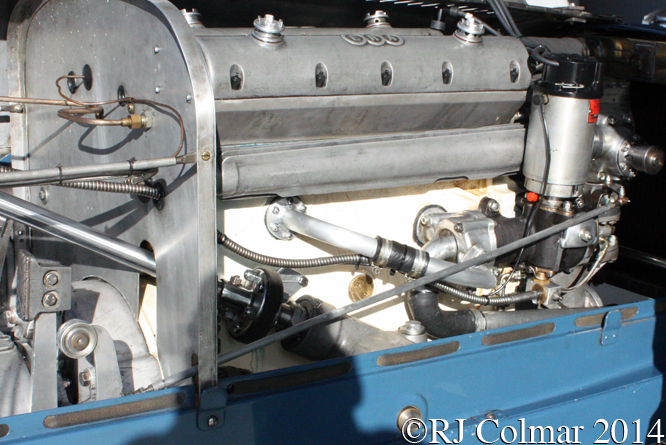
R3A was fitted with an original spec 2 litre motor in 1976 and it is in this form that Mark Gillies can be seen driving the to victory in the 80th ERA Anniversary race during the VSCC Spring Start meeting at Silverstone earlier this year.

Thanks for joining me on this “Conquering Europe” edition of “Gettin’ a li’l psycho on tyres” I hope you will join me again for Maserati Monday tomorrow. Don’t forget to come back now !

Share

Definitely Not A Lambretta – Bugatti Type 51R #BC 132

The first of of an eventual forty Bugatti Type 51’s appeared in 1931 with a twin cam straight eight replacing the single cam straight eight of it’s Type 35 predecessor. Externally the two types are almost identical with the newer model being equipped with a larger radiator, single piece alloy wheels, and as a consequence of the twin cam head, a lower pop off valve blow whole for the supercharger in the bonnet / hood.

Bugatti T51A R, Howard-Orchard, VSCC Prescott

There were three European Championship Grand Prix in 1931 and Bugatti won the second and third. Louis Chiron and Achille Varzi sharing the win in a T51 on the 12 km track at Autodrome de Linas-Montlhéry in France and William Grover-Williams & Caberto Conelli the win at Spa, these races were over distance of around 800 miles taking a minimum of ten hours to complete, unlike the modern maximum 2 hour Grand Prix requiring only one driver.

Bugatti T51A R, Howard-Orchard, VSCC Prescott

The following season Bugatti were outclassed by ALFA Romeo in the three European Championship races which were run over ‘just’ five hours, but their cars still won twelve of the thirty less well supported non championship races.

Bugatti T51A R, Howard-Orchard, VSCC Prescott

For 1933 the European Championship was suspended, eventually for two years, but there were five Grandes Épreuves run over distances of 200 miles, Monaco, to just over 400 miles or Spain, requiring just the one driver. Archilli Varzi won the opening race at Monaco aboard a T51 with the remainder going to Maserati and Alfa Romeo equally.

Bugatti T51A R, Howard-Orchard, VSCC Prescott

According to a Bugatti Owners site, today’s T51 recreation was assembled from many original parts and a “Hoskins” frame by Christopher F. Warman in Wales with help from Tim and Ivan Dutton in the late 1980’s. The car was registered for road use by 2006 when it competed at a variety of events, but in 2007 the registration number was transferred to a Lambretta Motor Scooter which according to the DVLA website is not currently on the road.

Bugatti T51A R, Howard-Orchard, VSCC Prescott

More recently the car was said to have been offered for sale at around £500,000 and it is seen driven in these photographs, taken at last years VSCC Prescott meeting, by Derek Howard – Orchard, who has been the owner since at least 2010.

Thanks for joining me on this “It’s Not A Lambretta” edition of “Gettin’ a li’l psycho on tyres”, I hope you will join me again tomorrow when I’ll be looking at some European cars that took the start of the Classic Run in Chipping Sodbury. Don’t forget to come back now !

23/07/14 Thanks to Tim Murray for clarifying that the Type 51 ran twin cam motors and the minimum times for the European Championship Grand Prix in 1931 and 1932.

Share

Polska Kronika Filmowa ? – Talbot T150 / T26 #82935 / 90202

Today’s blog tells the story of how I came to wonder if today’s Talbot T26C 90202 seen a couple of months ago at the VSCC Spring Start meeting featured in a 1948 edition of Polska Kronika Filmowa a Polish weekly newsreel.

Talbot T26, VSCC Spring Start, Silverstone

So far as I have been able to discern this vehicle was originally built in 1937 as a T150 chassis number #82935 and fitted with a 4 litre / 244 cui 6 cylinder motor and registered for road use with the French licence plate 439W1.

Talbot T26, VSCC Spring Start, Silverstone

Albert Divo raced the car on at least 3 occasions with a best finish of 2nd in the 1937 Marne Grand Prix. In September 1937 Raymond Sommer driving #82935 now bearing the French licence plate 4397RL2 retired from the Tourist Trophy with engine problems. #82935 is shown by one source to have been intended to be part of a two car Talbot-Lago team at the 1937 Le Mans 24 hours that did not show up.

Talbot T26, VSCC Spring Start, Silverstone

In 1938 René Carrière and Anthony Hannoyer drove the works entered #82935 to a fifth place finish on the Mille Miglia, two months later René shared the now Luigi Chinetti entered car with René Le Bègue at Le Mans, but retired after completing 101 laps.

Talbot T26, VSCC Spring Start, Silverstone

Two weeks later the mudguards came off and René Carrière drove #82935, entered once again by the Talbot factory and carrying the #4, seen at 1:03 in this linked clip, to a gallant 4th place finish, first non Mercedes and only 10 laps down, on the French Grand Prix winning Mercedes Benz W154 of winner Manfred von Brauchitsch.

Talbot T26, VSCC Spring Start, Silverstone

For it’s final two known appearances in 1938 #82935 was fitted with a 4.5 litre / 274 cui straight six and given a T26 identity with the chassis number #90202, it was not the only T150 to become a T26. René Carrière won pole position driving the car, with it mudguards refitted for the Tourist Trophy, but could only finish 4th. Philippe Etancelin joined René Carrière to drive the upgraded car in the 1938 Paris 12 Hours from which it was retired after an accident.

Talbot T26, VSCC Spring Start, Silverstone

The renumbered chassis #90202 made only two known appearances in 1939 the first at Le Mans where entered by Chinetti and driven by Luigi Chinetti and T.A.S O. Mathieson the car suffered another accident and retired on lap 154. T.A.S.O. Mathieson is credited with entering #90202 in the Grand Prix du Comminges run at St. Gaudens for Luigi Chinetti to drive, but once again the car retired. Chinetti entered himself to drive #90202 in the Liege Grand Prix on the 26th August 1939 a week before WW2 hostilities broke out on 1st September, but the race was cancelled.

Talbot T26, VSCC Spring Start, Silverstone

After the war Lord Selsdon, who coincidentally raced against #90202 in a Lagonda V12 at Le Mans in 1939, became the owner of #90202 by 1946, a time when almost anything that could move was thrown in to race at almost every available opportunity. Louis Chiron drove #90202 entered by Lord Selsdon at an event run at Bois de la Cambre in June 1946 but retired with a fuel pump ‘issue’.

Talbot T26, VSCC Spring Start, Silverstone

Chiron then appears to have played a part in ensuring that French patron of the Ecurie France team Paul Vallée rented or at least borrowed #90202 from Lord Selsdon for part of the 1947 season when the car was to be driven by Chiron, so far as I know he never did, but Yves Giraud-Cabantous may have driven the car referred to a ‘26SS‘ in 1947, though in which events I have not been able to ascertain.

Lord Selsdon had the car back by the 1948 British Grand Prix which was featured on the Polska Kronika Filmowa newsreel I mentioned on the top of this thread, but #90202 took no part in that event as Lord Selsdon had only been given a reserve entry.

The last mention I have found for #90202 in Lord Selsdon’s ownership is in 1949 the Jersey Road Race where Frank Le Gallais retired with a gearbox problem.

Peter Waring is known to have finished at least three races driving #90202 in 1953 recording a best 3rd at Silverstone. It was left to Dick Fitzwilliam to record the chassis last known in period win in a National Handicap event at Goodwood in 1954 nearly twenty years after the versatile chassis which had raced Mercedes Benz as an open wheeler, completed a Mille Miglia and competed in two Le Mans 24 hour races.

The Talbot #90202 seen here at the VSCC Spring Start at Silverstone earlier this year is raced by Richard Pilkington with and without mud guards and road lights.

Thanks for joining me on this “Polska Kronika Filmowa ?” edition of “Gettin’ a li’l psycho on tyres, I hope you’ll join me again tomorrow for a car that is often incorrectly given the wrap for the blanket 70 mph restriction on Britain’s motorway network. Don’t forget to come back now !

Share

Raph’s ’38 Voiturette – Maserati 6CM #1556

With the State funded Mercedes Benz and Auto Union teams battling for major open wheel Grand Prix honours from the mid to late 1930’s with the occasional interruption only offered by Alfa Romeo many wealthy drivers were left with little alternative but to contest Grand Prix run for 1.5 litre / 91.5 cui voiturette open wheel single seater, monopost, racing cars.

Among the successful manufacturers of such Voiturettes were Bugatti with their 8 cylinder Type 39, ERA, English Racing Automobiles, which was founded to manufacture vehicles soley for Voiturette racing using a derivative of a Riley 6 cylinder motor, and today’s featured manufacturer Maserati who first fitted a 6 cylinder 1.5 liter motor to Tazio Nuvolari’s Maserati 8CM.
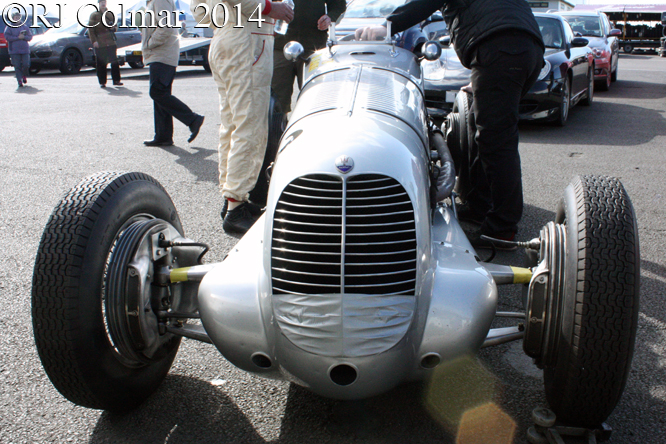
Maserati 6CM, VSCC Spring Start, Silverstone

Between 1936 and 1939 Maserati built a run of 27 6CM Voiturettes of which chassis #1556, fitted with motor #1555, seen here was the one that appears to have been delivered in April 1938 to driver known as “Raph”.

Otherwise known as Count George Raphaël Béthenod de Montbressieux, “Raph” was born in 1910 in Buenos Aires to a wealthy silk manufacturing family from Lyon with an Argentinian mother who was daughter of an Argentine Minister of Justice, he started racing in 1932.
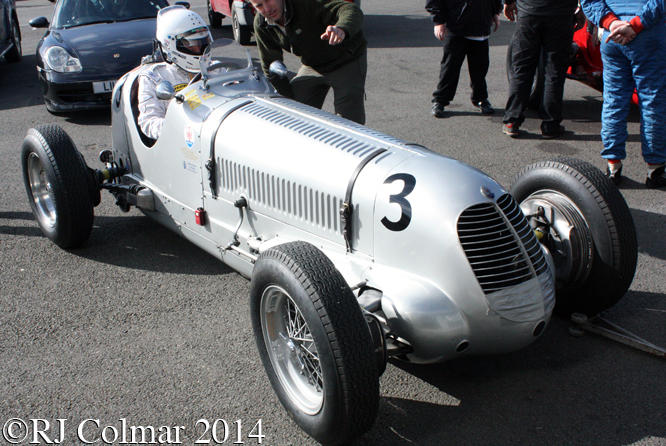
Maserati 6CM, Lockie, VSCC Spring Start, Silverstone

Prior to purchasing #1556 “Raph” had recovered from six months of paralysis to his legs after crashing his #7 Talbot-Lago on the 10th lap of the 1937 Le Mans 24 hours.

“Raph” is known to have raced for several teams during 1938, a few day’s after apparently taking delivery of his 6CM he was entered in the Grand Prix de Pau in a 6CM by Scuderia Torino where he finished, I have been unable to establish if the car “Raph” used in this race was today’s featured car.
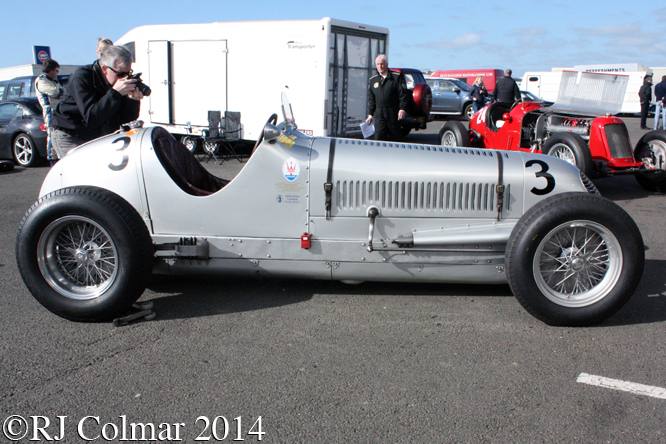
Maserati 6CM, VSCC Spring Start, Silverstone

After his drive at Pau “Raph” is known to have entered at least six further events in a 6CM under either his mothers name B de Las Casas or his own.

It would not appear unreasonable to assume #1556 was the vehicle “Raph” drove in these events recording one failure to start at Picardie, three non finishes at Albegois, Livorno and La Baul, an 11th at Piemonte and a seasons best 2nd at Targa Florio.
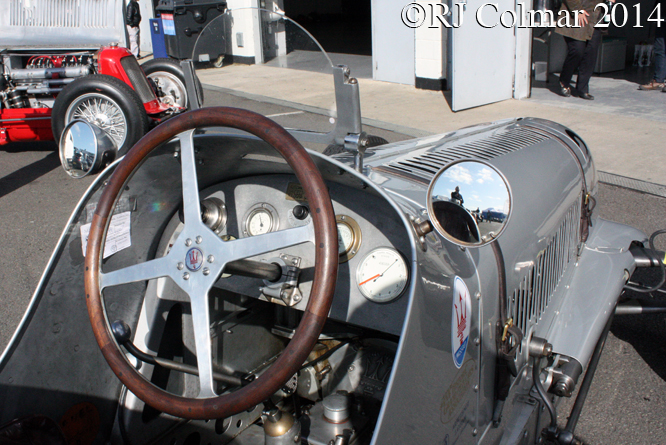
Maserati 6CM, VSCC Spring Start, Silverstone

Towards the end of 1938 “Raph” had two outings in top class open wheel races with Ecurie Bleu driving a Delahaye at Bermgarten and Donington where he finished 11th and retirement respectively.

In 1939 “Raph” drove a Delahaye twice for Ecurie Lucy O’Reilly finishing 9th at Reims Geuex and 5th at the Nurburgring. He then is recorded has having been entered at Bermgarten in an O’Reilly Maserati 8CTF (#3031) but does not appear to have taken part.
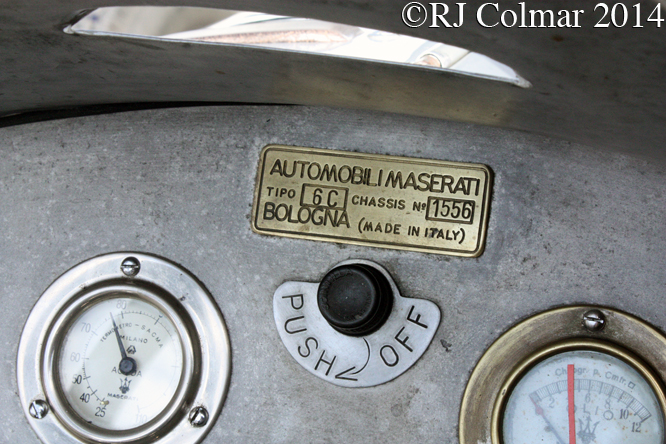
Maserati 6CM, VSCC Spring Start, Silverstone

In 1946 he resumed racing by 1946 recording a win in an indoor Midget race in Los Angeles the same year. Back in Europe Raph co founded Ecurie Naphtra Course managed by M.me Denise Depoix said to be the wife of an imprisoned collaborator.

It is unclear if “Raph” raced today’s featured car for the team or not, some sources suggest he may have done, while others suggest he raced a later Maserati 4CL.
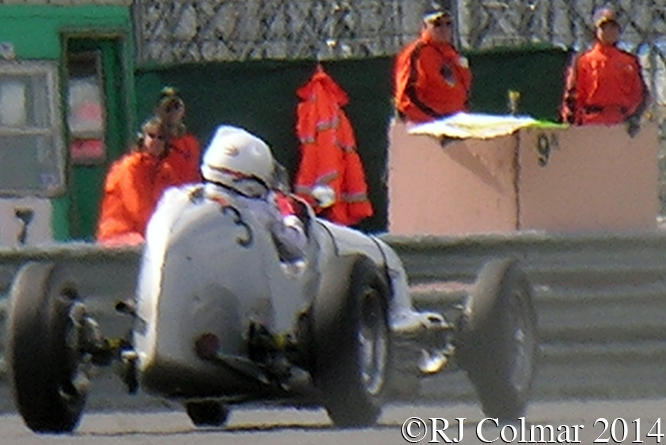
Maserati 6CM, Lockie, VSCC Spring Start, Silverstone

The highlight of “Raph”‘s career came when he won the 1946 Nantes Grand Prix aboard a Maserati which all at least appear to agree was a “voiturette”.

“Raph” continued racing until 1950 by which time was still recovering from a fractured skull after an accident driving a Talbot Lago T26C at Albi in 1948.
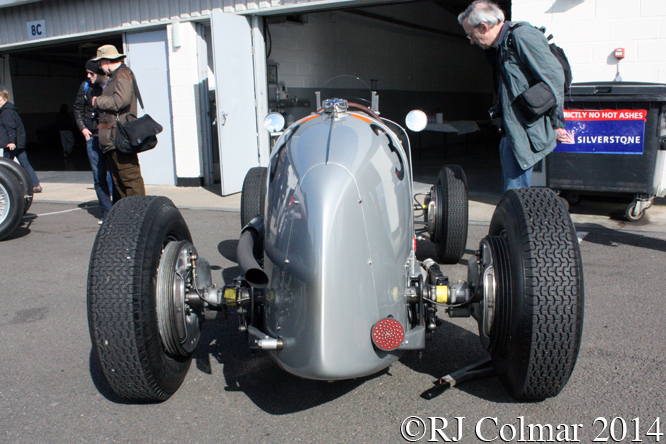
Maserati 6CM, VSCC Spring Start, Silverstone

With no financial security “Raph” took a job as a handyman and chauffeur with his friend, actor and entertainer, Maurice Chevalier.

Today #1556 is owned by Sean Danaher and is seen in these photographs being driven by Calum Lockie in the Pre ’41 race at the VSCC’s Spring Start meeting at Silverstone.

Thanks for joining me on this “Raph’s ’38 Voiturette” edition of “Gettin’ a li’l psycho on tyres” I hope you will join me for a look at a Bugatti tomorrow. Don’t forget to come back now !
Share