Tag Archives: Williams

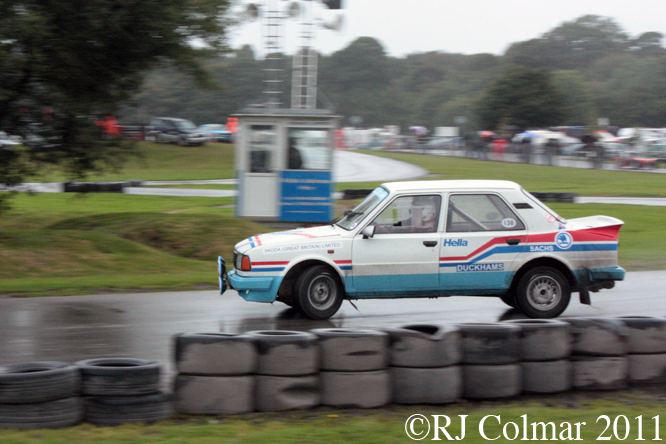
Surprising Sunday Spin – Škoda Estelle 130 L

The Skoda name can be traced back to an Austro – Hungarian, based in what is now the Czech Republic, arms manufacturer established in 1859, the story of their involvement in the automotive dates back to 1924.

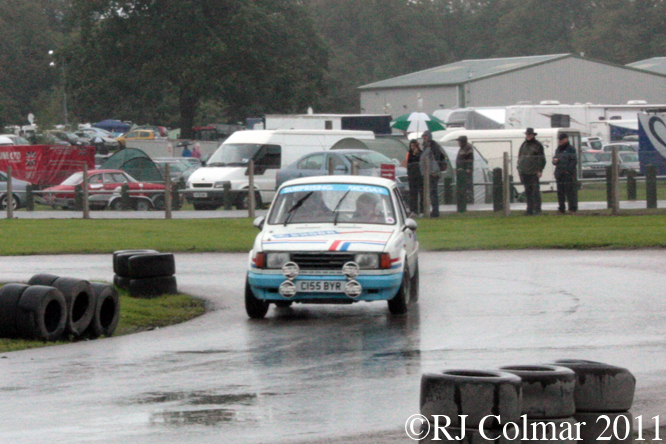
Skoda Estelle 130 L, Oulton Park,

In 1895 after a disappointingly arrogant correspondence with German cycle manufacturer Seidel and Naumann, regarding the repair of his bicycle, the Czech bookseller Václav Klement opened a cycle repair shop in Mladá Boleslav now in the Czech Republic in partnership with apprenticed locksmith Václav Laurin who had established a bicycle manufacturing business in Turnov a year earlier.

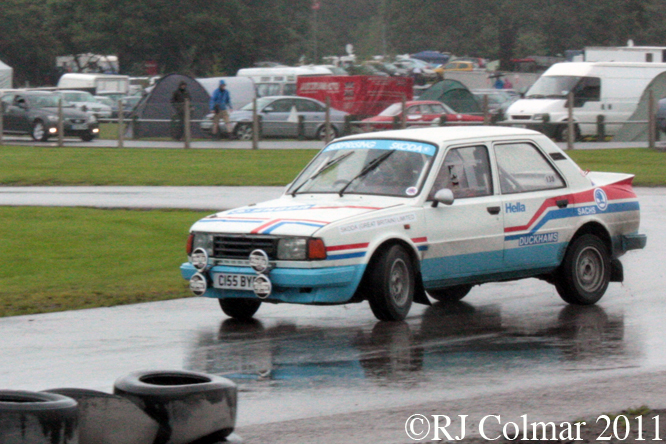
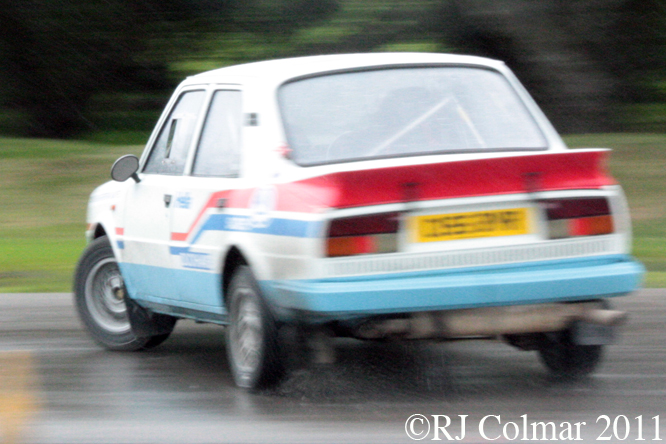
Skoda Estelle 130 L, Oulton Park,

By 1899 the Klement – Laurin had developed the Slavia motorcycle which they started exporting the following year, by 1905 they had started manufacturing 4 wheeled motor vehicles. In 1924 Klement – Laurin which by now had further diversified into trucks was taken over by Skoda.

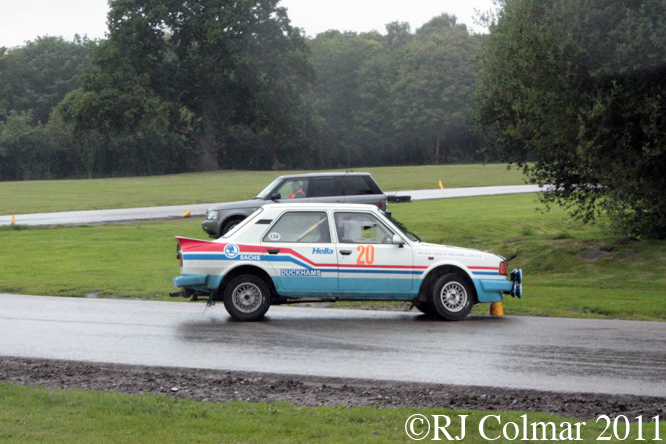
Skoda Estelle 130 L, Oulton Park,

The Skoda Estelle 130 was introduced in 1984 as a replacement to the 120 and earlier 105 models which dated back to the 1970’s and 1960’s respectively.

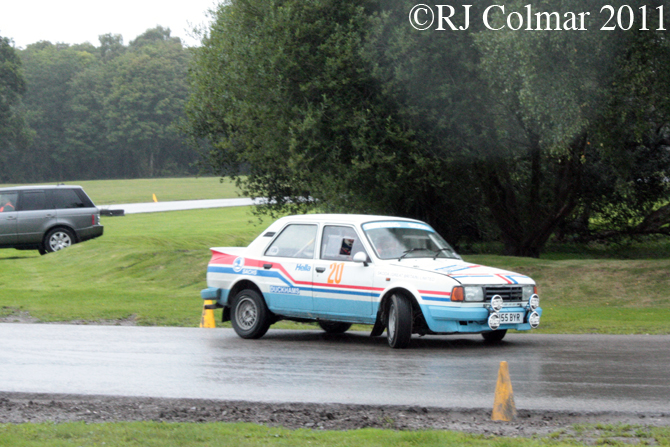
Skoda Estelle 130 L, Oulton Park,

Three 130 models were originally available in the UK when the 130 series was launched here in March 1985. The 130 L and LSE 4 door models and a 2 door Rapid Coupé for which there was also an aftermarket Cabriolet conversion.

Skoda Estelle 130 L, Oulton Park,

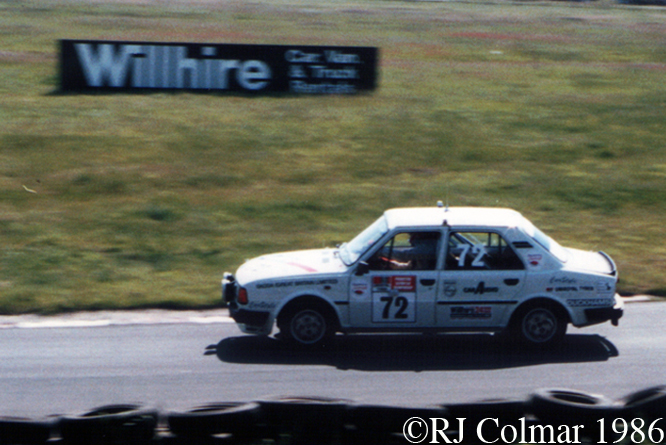
The dated engineering led to the handling of the rear engined 58 hp 130 L being variously described as wayward, fun and even ‘like a Porsche’ meaning tail happy as ably demonstrated here at Oulton Park last year.

Skoda Estelle 130 L, Oulton Park,

Despite disparaging jokes like ‘Why does a Skoda have a heated rear screen ? To keep your hands warm when you push’ the Skoda team managed 17 class wins on the RAC Rally from the 1970’s into the 1970’s. I was not able to find out who the driver of the 1985 replica Group A model above is, one wag suggested that he had so much trouble keeping in on the road he might not want to be identified.

Skoda Estelle 130L, Snetterton

In 1986 Skoda (GB) Ltd entered the Estelle 130 L above for Bill Taylor, Andrew Woolley, Jeff Williams, Bill Hunt in the Willhire 24 hour production car race it ran absolutely faultlessly, from memory stopping only for routine driver changes and fuel, to finish fourth in class D, many laps behind the highly fancied and more powerful and Vauxhall Nova’s.

My thanks to Tony Gallagher for their his help trying to identify the driver of the first car and to Tim Murray for his help with the results for the second.

Thanks for joining me in this ‘Surprising Sunday Spin’ edition of ‘Gettin’ a li’l psycho on tyres’ I hope you will join me again tomorrow. Don’t forget to come back now !

Share

Gas Turbine Highboy – ’32 Ford Boeing Roadster

One of the earliest motoring books I was given was called Cars Cars Cars Cars by SCH Davis, published by Hamlyn in 1969, from memory the concluding chapter dealt with the future of motoring with a look at some of the gas turbine passenger concept vehicles that had been unveiled over the previous 10 or 20 years.
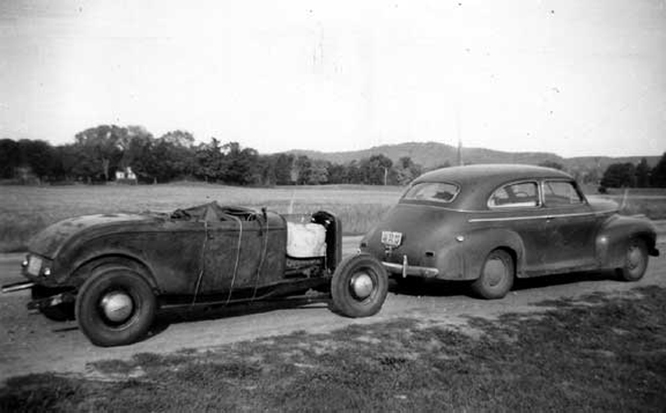
'32 Roadster, 41 Chevrolet

Unfortunately the promise of the so called ‘Jet Car’ has yet to become reality and this had troubled Boeing Engineer Leonard Williams, a full ten years before I read about them, so that when he heard of the opportunity to buy a government surplus Boeing gas turbine for $500 he took the opportunity to build the very first privately owned gas turbine motor vehicle.
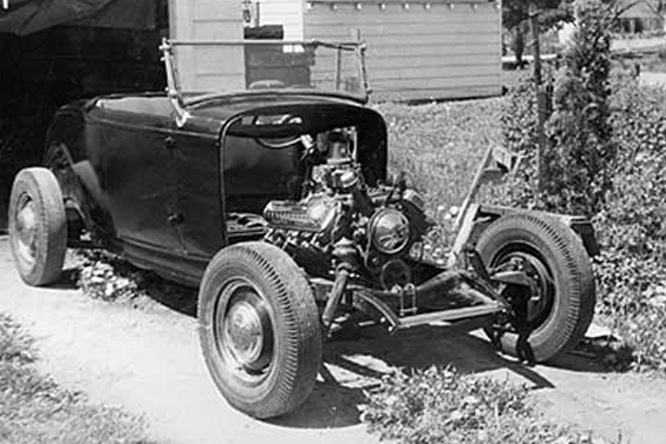
'32 Ford Roadster

The story of Len’s gas turbine car began after a trip to the road races and Concours d’Elegance at Watkins Glen in 1949 where he was deeply impressed by a 1932 Highboy Roadster from Massachusetts fitted with an immaculate flat head Mercury motor, hydraulic brakes and a black lacquer paint job which stood out among the Duesenbergs, Jaguars, Ferraris, and sundry European exotica.
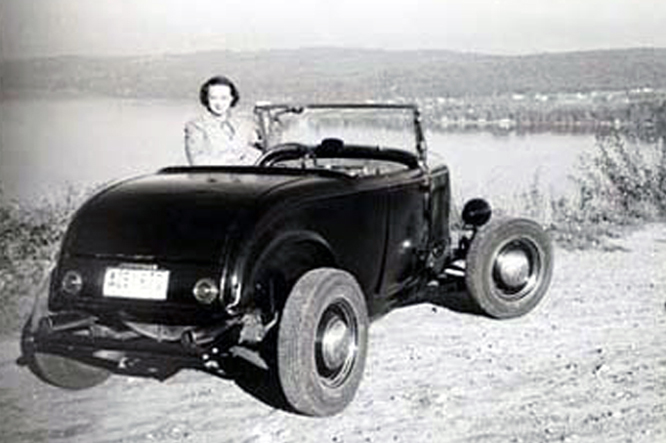
'32 Ford Roadster

After returning to Willow Run Michigan where he was studying Leonard purchased a a rusty ’32 Roadster from the son of Preston Tucker, of Tucker cars, who was living with his Grandmother in Ypsilanti for $50. Len bought a ’41 Ford for a $100 and swapped over the motor, transmission, brakes and wheels over to his Roadster making a few improvement’s to the motor along with a set of Pontiac tail lights.
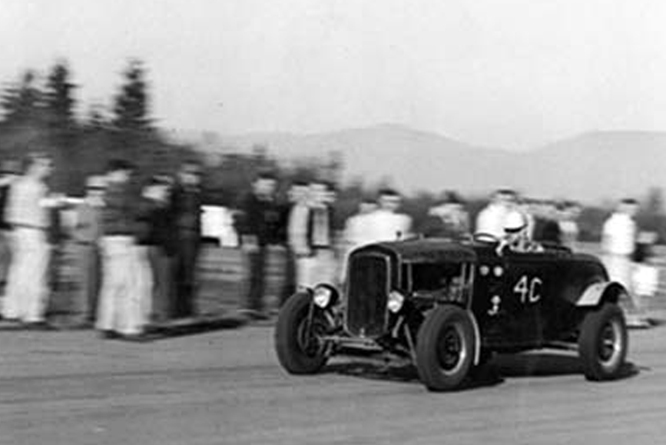
'32 Ford Roadster

Upon graduating from the University of Michigan in 1950 Len moved with his wife Gladys to Seattle where he was employed Boeing and towed his not quite complete Roadster west behind his ’41 Chevrolet. Once Len had finished transforming the Roadster into a Hot Rod he used it as his daily transportation and joined the Dragons Hot Rod Club who used to run a 1250 ft drag strip at Arlington Airport for fun. Above Lens Roadster can be seen at Arlington fitted with token mud guards / fenders as required by the State of Washington.
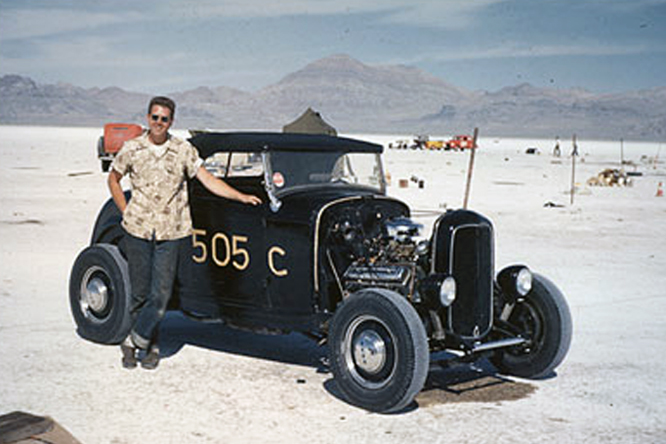
'32 Ford / Oldsmodile Roadster

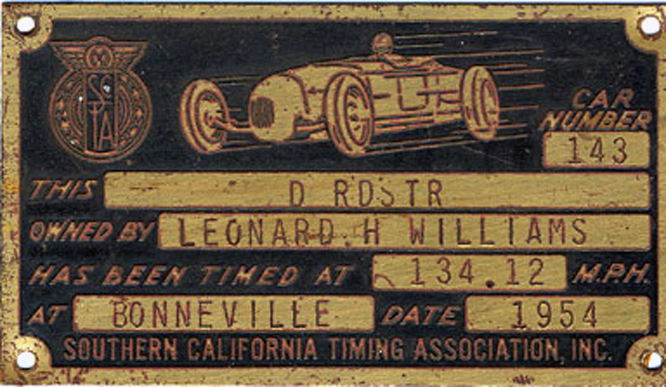
While running at Arlington the ’41 Ford Motor in the Roadster was eventually replaced with a ’49/’50 303 inch / 4965 cc Oldsmobile motor that was machined out to 331 cui / 5425 cc and fitted with a four barrel carburetor. Len drove his Roadster to Bonneville for the Southern California Timing Association Speed trials in ’51, ’52 and ’54s and was timed at 134.12 mph. This was before the establishment of a street legal class and was no match for the trailered cars.
'32 Ford / Oldsmodile Roadster

Len put the Roadster aside after Bonneville in ’54 while he fixed up a ’33 five window Coupé with a 283 cui / 4637 cc Chevrolet motor and Corvette cams and manifolds that was capable of 95 mph in 2nd gear. By the time he got back to the Roadster it was suffering from salt corrosion so he decided to strip the car for sand blasting and resprayed the chassis red and body white.
Army L19

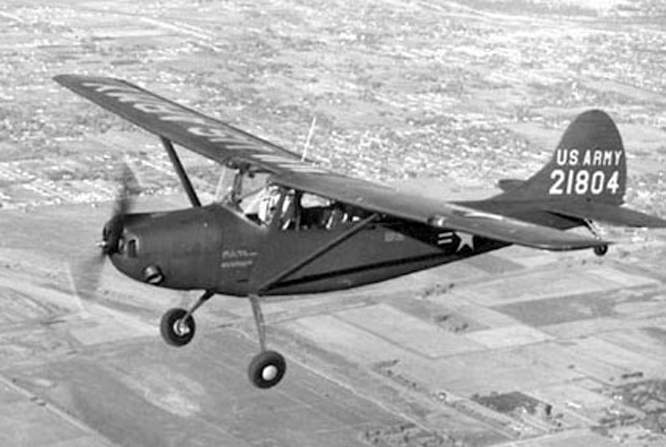
It was after he completed rebuilding the Olds motor for the Roadster and before he had reinstalled it that Len found out about a surplus Boeing 502-8 gas turbine, as used in the military version of a Cessna 170 the L19 reconnaissance aircraft, which he acquired from a New York government surplus lot.
'32 Ford / Boeing Roadster

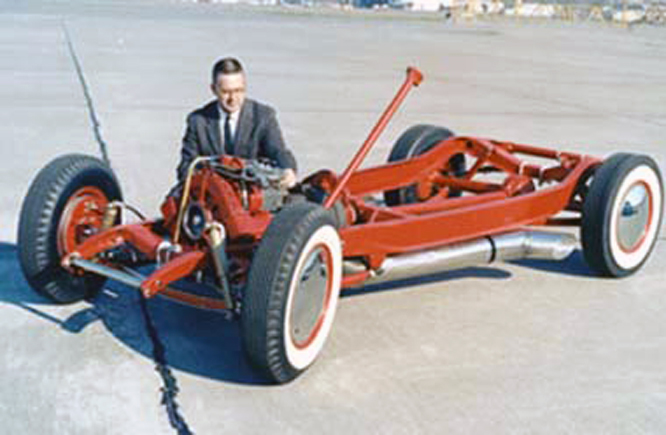
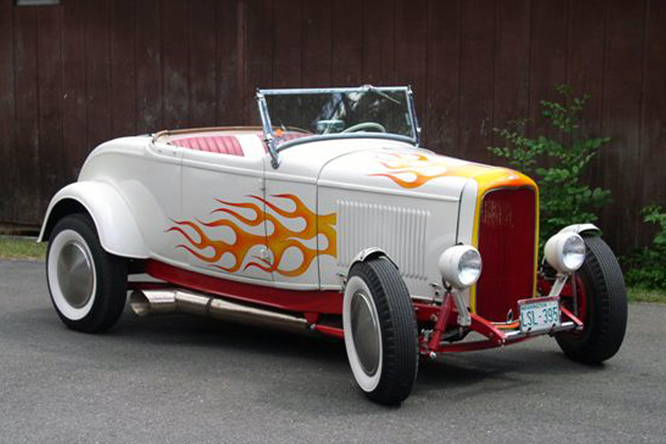
Detailed records indicated that the motor Len purchased had been used to set the Class C small plane altitude record at 37,062 feet it was then put into storage until it became surplus. More surprisingly the motor fitted into the engine bay like a glove, apart manufacturing a couple of steel straps to bolt the motor to the chassis frame, splitting the radius rods, manufacturing an adaptor to connect the turbine output shaft to the Roadsters propshaft, a pair of five inch diameter tailpipes and fitting a 35 gallon fuel tank not much else had to be done, as Len said at the time “it was almost as though Henry (Ford) had the turbine in mind when he built the car (in 1932)”.
'32 Ford / Boeing Roadster

The Boeing 502 gas turbine features a combustion chamber which creates hot air that is forced by a fan through an enclosed space at the end of which a second fan attached to an output shaft gets spun before entering the exhaust pipe. Because the two fans are not directly connected there is no need for a gearbox effectively providing the motor with a built in infinitely variable transmission. In theory one could stand on the brakes and run the gas turbine at maximum 37,000 rpm without stalling the motor, though one might burn out the fan blades if one tried this.
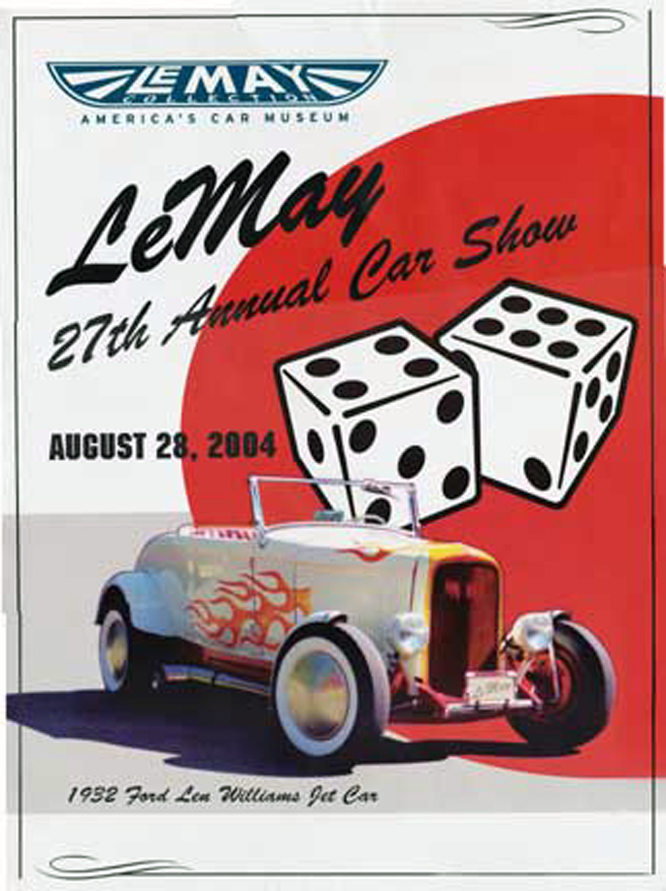
'32 Ford / Boeing Roadster

In the rush to complete the car Len, like Rover who manufactured the T4 concept gas turbine car around the same time, dispensed with fitting a reverse gear, however despite the absence of reverse Len resumed driving his ’32 Roadster to work at Boeing’s Plant One.

The Roadster was now capable of 0 – 60 in 5 seconds but was conservatively geared at the rear axle for a top speed of just 75 mph, though Len later fitted a higher gear rear axle and saw an indicated top speed of between 110 mph and 115 mph, but he never ran his turbine powered roadster in competition.

Despite being able to run on a variety of fuels diesel to Jet A one of the drawbacks of the efficient producer of power compared to weight is the inefficient use of fuel, a tear jerking 5-6 mpg was the best Len got from his roadster which was prohibitive even when fuel was available at 16¢ a gallon back in the day.

Len’s gas turbine Roadster project was entirely self funded, Len estimates that by 1962 he had spent around $1500 on the car and a lot of spare time. Eagle eyed GALPOT readers may remember it was around this time that Len’s work took him to Indianapolis with the John Zink Trackburner.

Today Lens ’32 Roadster can be seen at the Le May Museum, unfortunately one of the turbine wheels was burnt out during a demonstration in 2006 and has yet to be repaired.

My thanks to Mr Leonard Williams for today’s remarkable story of private innovation, more details of which can be found on Lens website linked here.

Thanks for joining me on this Gas Turbine edition of ‘Getting’ a li’l psycho on tyres’, I hope you will join me again tomorrow.

Wishing everyone a merry festive season, I’ll be back tomorrow with a short seasonal blog to celebrate a GALPOT contributors birthday. Don’t forget to come back now !

PS Don’t forget …

Automobiliart GALPOT Seasonal Quiz
Automobiliart, Paul Chenard

December 26th – January 2nd

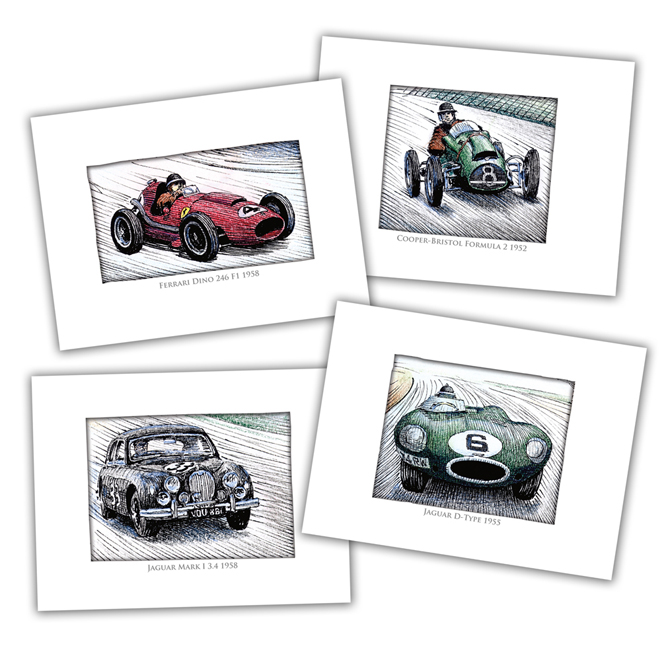
Win a set of Paul Chenard Greetings Cards
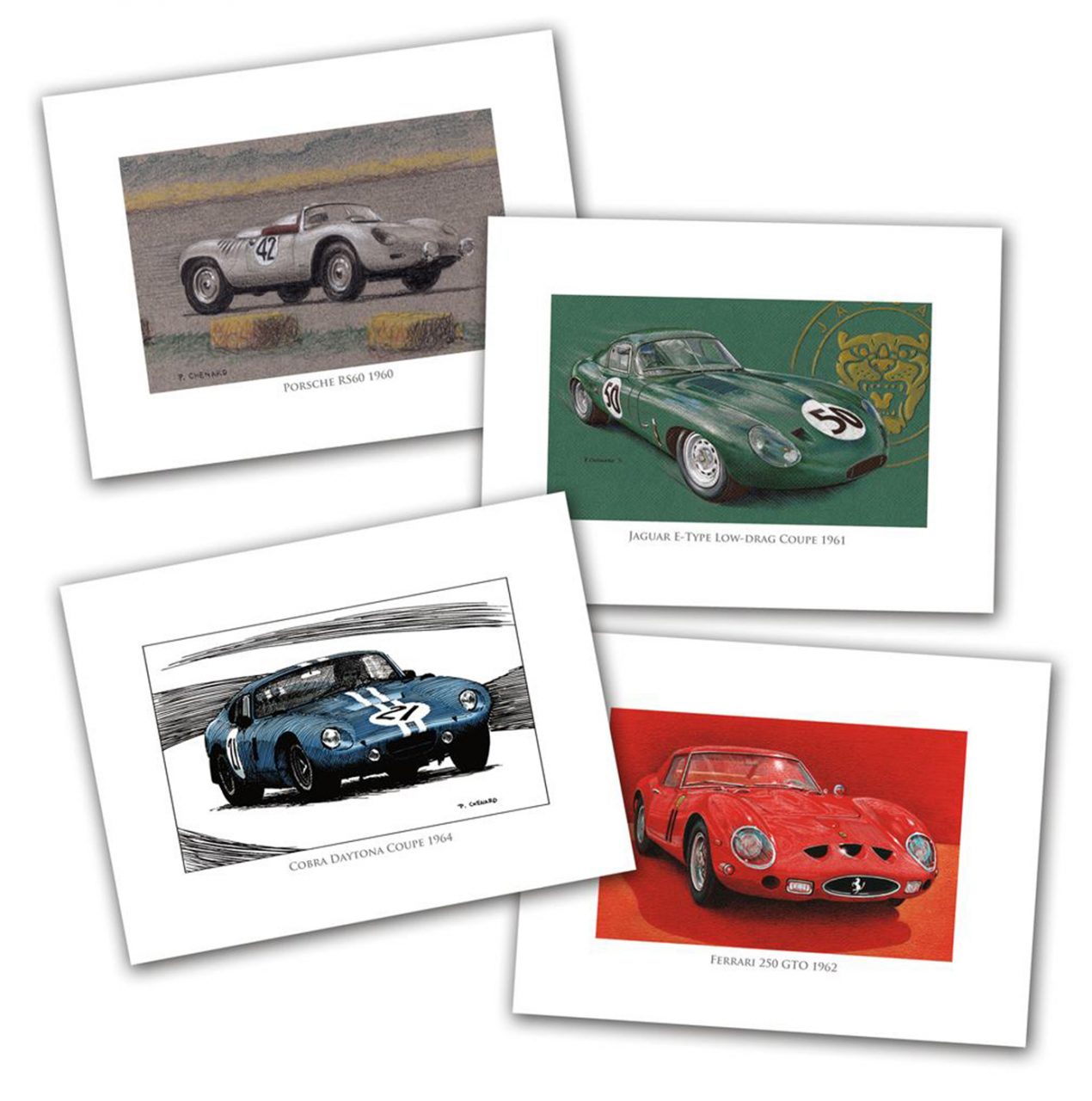
Sports-GT cars set, Paul Chenard

Set 1 Sports & GT Cars

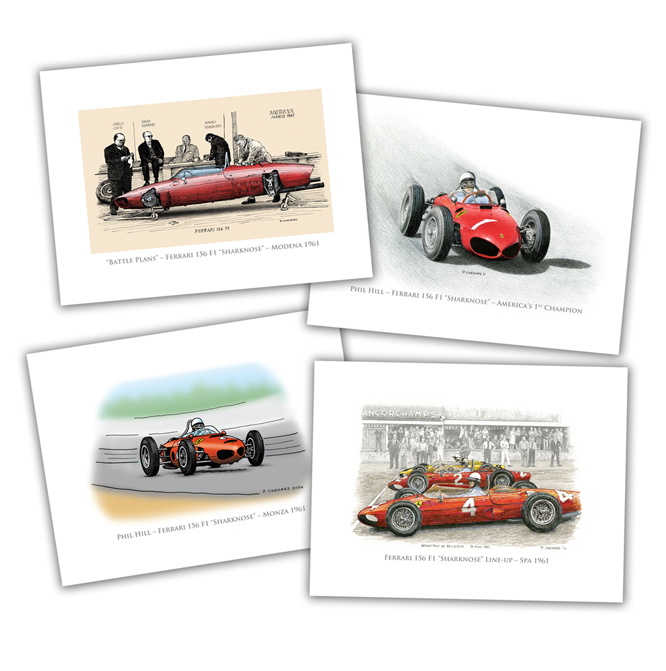
Phil Hill, Sharknose Ferrari Set, Paul Chenard

Set 2 Phil Hill World Drivers Championship 50th Anniversary Edition
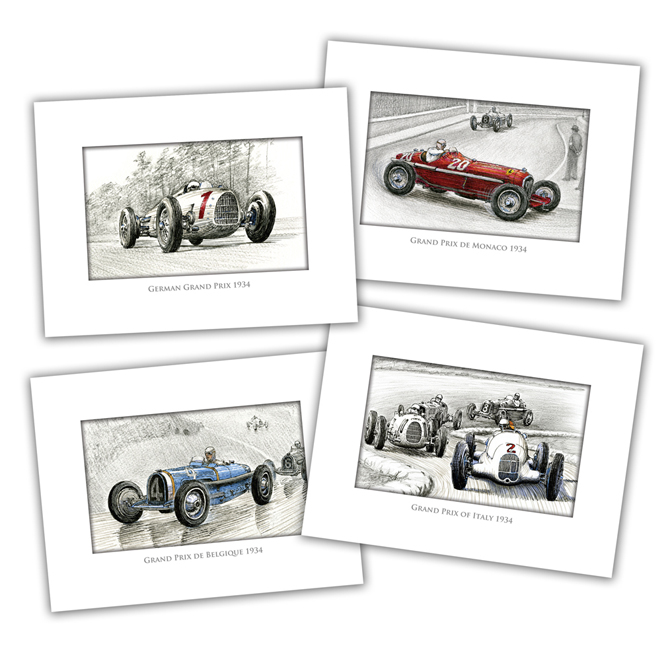
1934 GP Season Card set, Paul Chenard

Set 3 1934 Season

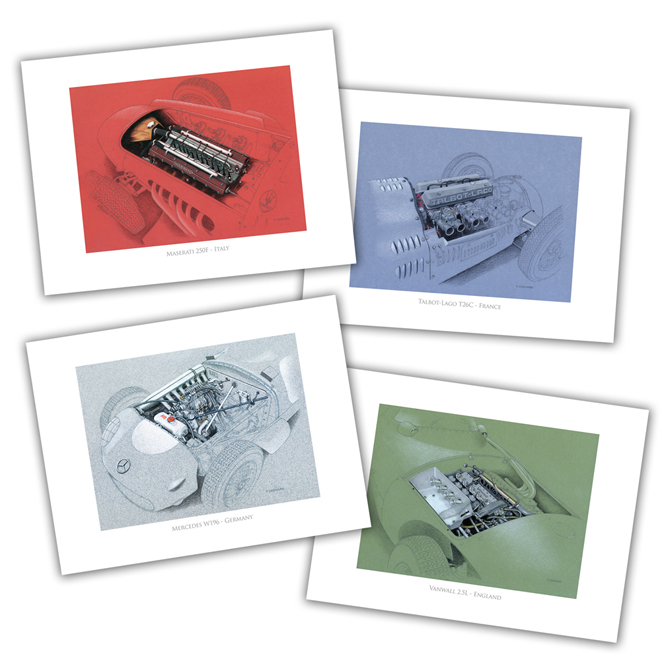
1950s Grand Prix Engines

Set 4 Grand Prix Engines of the 1950’s

or
Mike Hawtorns racecars Card set, Paul Chenard

Set 5 Mike Hawthorn’s Race Cars

The Automobiliart GALPOT Seasonal Quiz will comprise 8 categories.

Overall winner chooses one set of Paul Chenard Greetings Cards from the five sets shown above.

The cards measure 15.24cm x 11.43cm, come in packs of 12 with 3 copies of 4 designs in each set, plus A6 envelopes.

Which set will you choose ?

The free to enter Automobiliart GALPOT Seasonal Quiz will run from December 26th – January 2nd Entries close January 8th 2012, Winner announced January 16th 2012.

Full details on December 26th at GALPOT.

Looking for Automotive Seasonal Gift Idea’s? Visit Automobiliart Now !
Share

Low Rider – Lotus 15

The Lotus 15 was built to accept larger motors than had been possible with the hitherto very successful Lotus XI.

Lotus 15

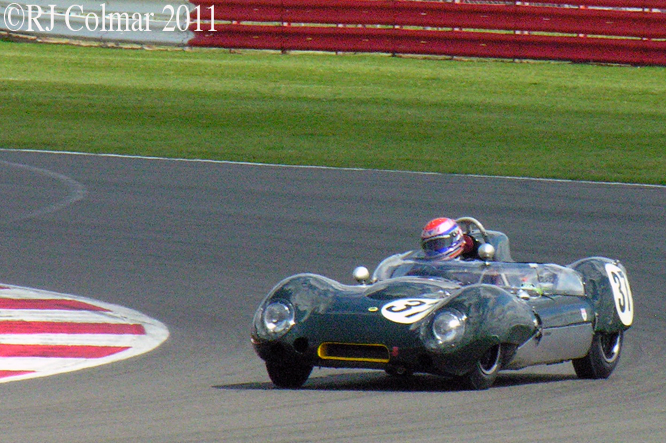
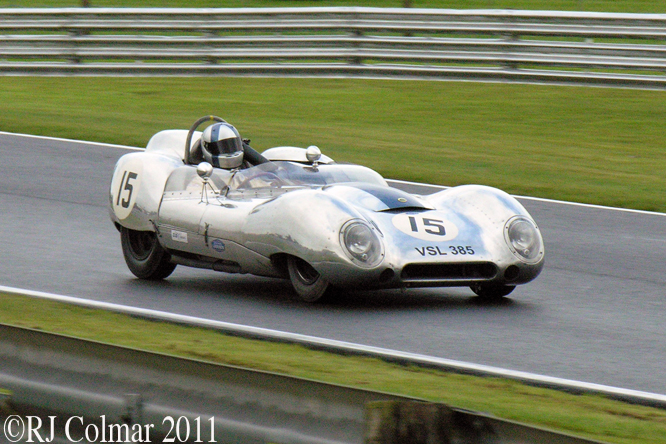
Built to take 4 cylinder Coventry Climax motors of between 1.5 litres / 92 cui and 2.5 litres / 153 cui the Lotus 15 stood just 24″ tall. The #37 built in 1958 seen at Silverstone above of Philip Walker and Danny Wright is powered by a 2 litre / 122 cui motor.

Ewan McIntyre, Lotus 15, Oulton Park, 2011

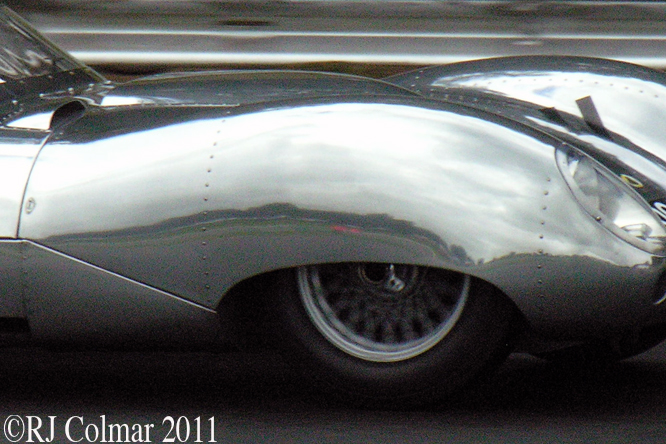
In order to lower the centre of gravity and improve the aerodynamics and handling the Coventry Climax 4 cylinder motors were 17 degrees off horizontal, one degree more than the 1958 Epperly Belond Exhaust Special that won the Indy 500 in 1958 and 1959, under the Williams and Pritchard designed and created aluminium skin.

Ewan McIntyre, Lotus 15, Oulton Park, 2011

The combination of slippery shape and good handling allowed Graham Hill to record 5th best time in practice at Le Mans in 1958 with a 2 litre Lotus 15 ahead of numerous 3 litre cars entered in the race.

Ewan McIntyre, Lotus 15, Oulton Park, 2011

However the Lotus 15 was hampered by unreliability Hill managed only three laps at Le Mans in 1958 before he had to retire with head gasket failure. It has been suggested that the Lotus 15 suffered a lack of development and attention to detail due to Colin Chapmans efforts to get his open wheel programme under way, along with development of the Lotus Elite road car. However the fact that three distinct variations of the 15 were built between 1958 and 1960 suggests this might not have been the case.

Ewan, McIntyre, Lotus 15, Oulton Park, 2011

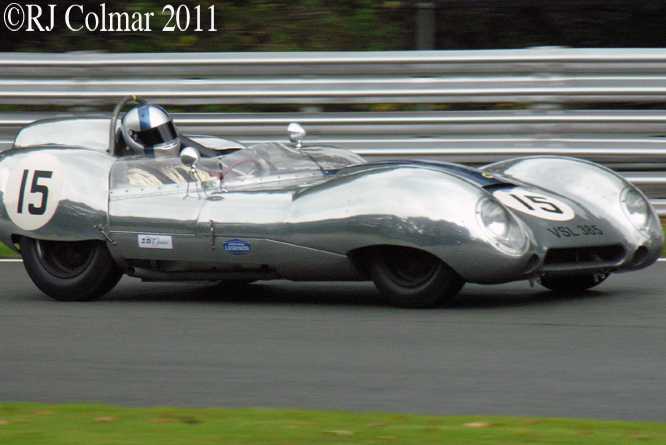
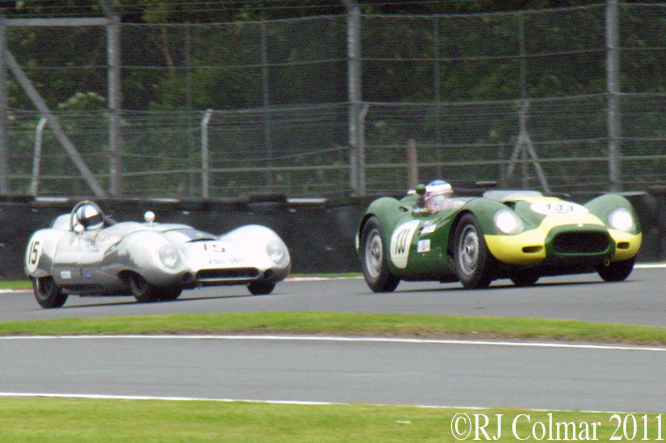
The Lotus 15 was not as successful as the Lotus XI and only 27 were built. Despite the lack of success today examples of the Lotus 15 like the the #15 of Ewan McIntyre seen chasing the #133 3.8 litre / 231 cui Lister Jaguar of Jon Minshaw and Martin Stretton at Oulton Park above are still capable of punching well above their weight in Historic events.

Thanks for joining me on today’s edition of ‘Gettin’ a li’l psycho on tyres’, I hope you will join me again tomorrow. Don’t forget to come back now !

Share

You can’t go wrong with a Bristol under the bonnet #2 – Lotus X

The Lotus X was a variant of the Lotus marks VIII and IX, built in 1955 to accommodate a larger engine than its siblings.

Lotus X - Silverstone Classic

Using essentially a strengthened chassis the Lotus X carried a 6 cylinder 2 litre /122 cui Bristol engine as used by Lotus competitors Cooper and Lister.

Only 6 or 7 Lotus Mk X’s are thought to have been built and some of them raced with Turner or Coventry Climax motors instead of the Bristol as used by Team Lotus.

The Lotus X was driven to victories in both Europe and the United States. This particular Bristol engined example is seen at the recent Silverstone Classic with Nick Adams at the wheel. Nick and Co Driver Adrian Hall drove this car to three straight victories in 2008 and were awarded the Woodcote Cup.

Thanks for joining me on this Britol Powered edition of “Gettin’ a li’l psycho on tyres’, I hope you will join me again tomorrow. Don’t forget to come back now !

Share

Designed By An Accountant #1 – Lotus VI #34

In 1942 Peter Kirwan-Taylor was 12 when he returned to England after a temporary evacuation to North America. He accompanied his step father Charles Loraine Hill, a director of Lagonda Cars, on trips to visit Lagonda and Westland the aircraft manufacturer where his interest in design took hold.

After a military career, during which he was member of the British Sking team, Peter settled down to follow his fathers footsteps and trained as an accountant. On the April 13th 1954 in between his 3 nights a week studies Peter found time to purchase and build a new Lotus VI, chassis #34, and decided to design his own body for it.

He provided Williams & Pritchard with the drawings and a claymodel which featured a high crease line and because of the suspension set up when the body was mounted to the chassis the car accidentally had a futuristic wedge appearance due the forward sloping aspect of the crease line.

Peter raced the car several times and as his family and career in finance took off he sold PGP 182 after two years.

Peter Kirwan Taylor, Lotus VI, Brands Hatch

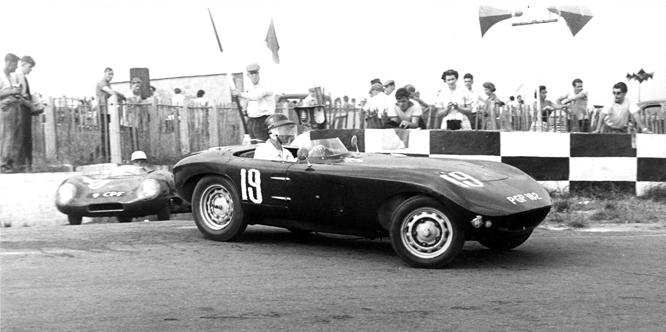
Peter Kirwan Taylor in his #19 Lotus VI at Brands Hatch Undated,

Photo Beaulieu National Motor Museum

The exact details of the ownership of PGP 182 from 1956 to 1963 are not recorded however as can be seen on this link we do know Peter’s car made an appearance at Silverstone in June 1957 in the hands of Tony Wilson-Spratt. (See postscript below)

Thomas Kikaldy owned PGP 182 from 1963 to 1969 and he removed the unique body and sold it to an Italian restaurant owner in London and it has not been seen in public since.

In 1983 Len Pritchard, who produced the panels for the original Lotus VI kits, fabricated new panels for PGP 182 in the style of original Lotus VI’s with which the car, seen on this link 4th from right, is fitted today.

Peter Ross of the Historic Lotus Register informs me that the whereabouts of the drawings for Peter Kirwan Taylors bodywork are known and his one off body work could be recreated if some one desired.

As we shall see next Saturday Peter Kirwan-Taylor’s friendship with Lotus founder Colin Chapman grew from the time he purchased PGP 182 and he would design another Lotus which made a larger mark on the Lotus Cars story.

My thanks to Paul Rochdale of The Nostalgia Forum for first identifying PGP 182 as a Lotus VI to Peter Ross from the Historic Lotus Register for details about Peter Kirwan-Taylor and PGP 182 and to Ted Walker aka Ferret Fotographics for permission to use today’s photograph.

Thanks for joining me on this accountants edition of ‘Gettin a li’l psycho on tyres’ I hope you will join me again tomorrow. Don’t forget to come back now !

10/10/11 POSTSCRIPT. Peter Ross of the Historic Lotus Register has kindly sent a few comments about this blog it would appear the photograph in the link is of Ian Duncan at the wheel and the photographer was Tony Wilson Spratt.

Peter also informs me that an article ‘The Story of the Kirwan-Taylor bodied Lotus VI’ appeared in the Historic Lotus magazine issue #64 which can be ordered through the HLR website linked here.

Share

Awaiting TLC #3 – Lotus Mark 6

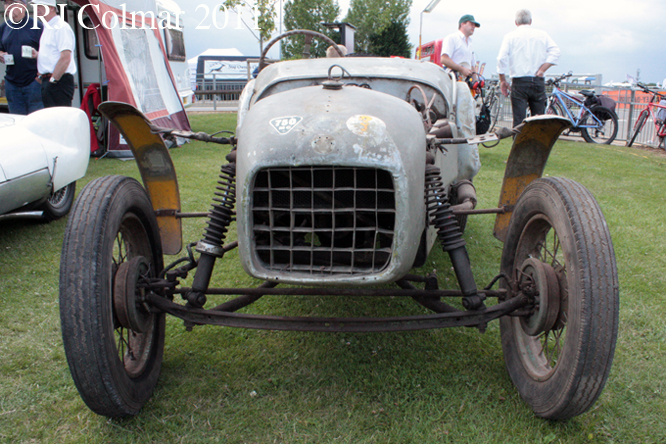
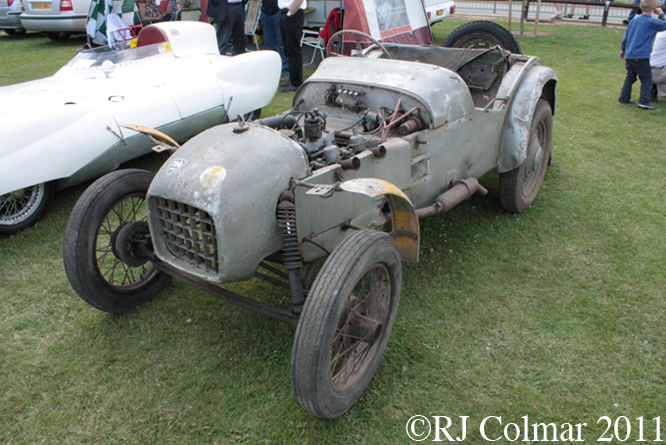
Third in my occasional series of blogs about cars in need of tender loving care is this uniquely ungainly looking Lotus Mark 6 seen earlier this year at the Silverstone Classic.

Lotus XI, Silverstone Classic

The Lotus Mark 6 was the first Lotus design to go into to production and it was sold in kit form saving purchasers a small fortune in new car taxes. The reason this particular vehicle is both unique and ungainly is because it is the only Lotus Mark 6 built as a mud plugging trials car requiring more ground clearance than either the road going or track racing versions.

Lotus VI, Silverstone Classic

The chassis and Williams and Pritchard built body was originally supplied to Mr Horace Sinclair Sweeney in 1953 at a cost of £110. Once Mr Sweeney had finished installing the engine and running gear he entered and won the London Motor Club’s Annecy Spring Sporting Trial on the 7th of June 1953.

Lotus VI, Silverstone Classic

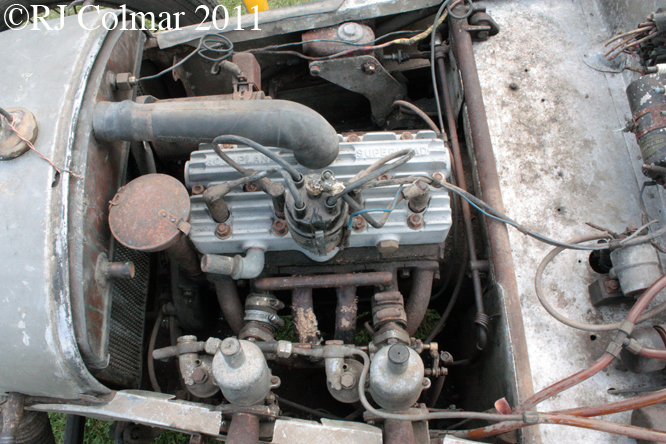
The motor is an Aquaplane tuned 1172 cc / 71.5 cui side valve E93A unit sourced originally from a Ford 10 built in the 1930’s.

Lotus VI, Silverstone Classic

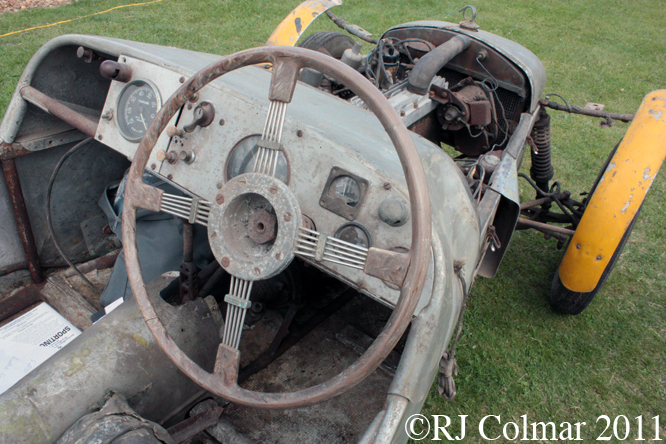
In 1954 Mr Arthur Hay acquired this Mark 6 and over the next ten years won three Motor Cycling Club (MCC) Triple awards for completing the Exeter, Lands End and Edinburgh trials unpenalised in three separate calendar years. Since then car has remained in the Hay family, but unused since 1964.

Lotus VI, Silverstone Classic

The current owner hopes to restore the car to working order and use it for sporting trials as originally intended by Mr Sweeney.

Thanks for joining me on this mud plugging edition of ‘Gettin’ a li’l psycho on tyres, I hope you will join me again tomorrow when I shall be looking at a Jensen. Don’t forget to come back now !

Share

Nissan’s Fairlady – Datsun 240 Z

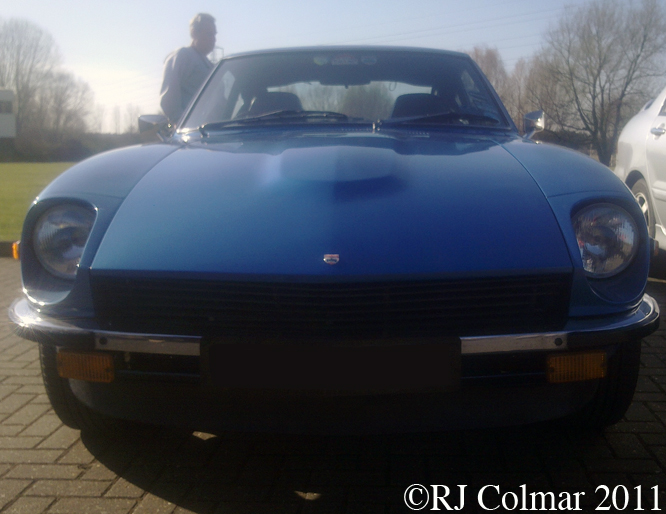
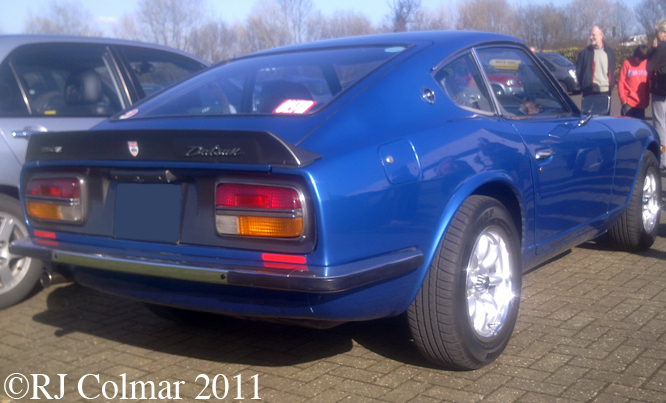
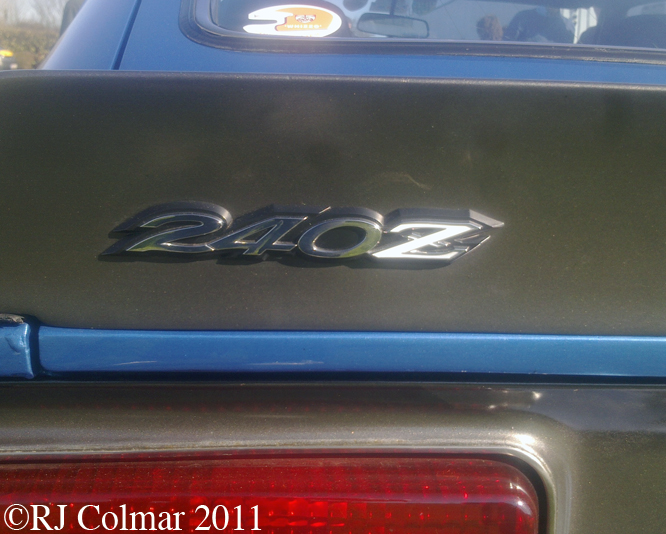
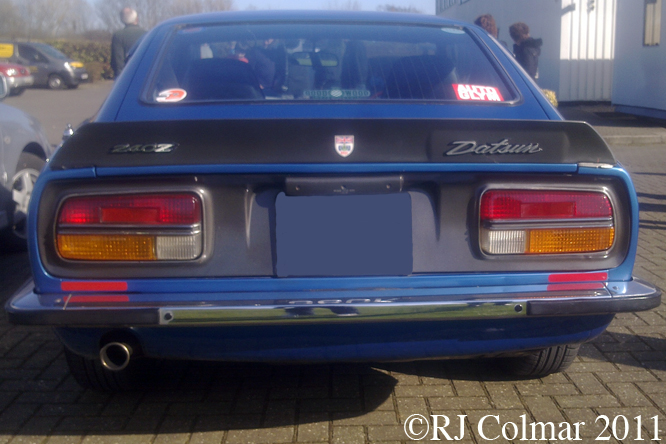
Datsun 240 Z

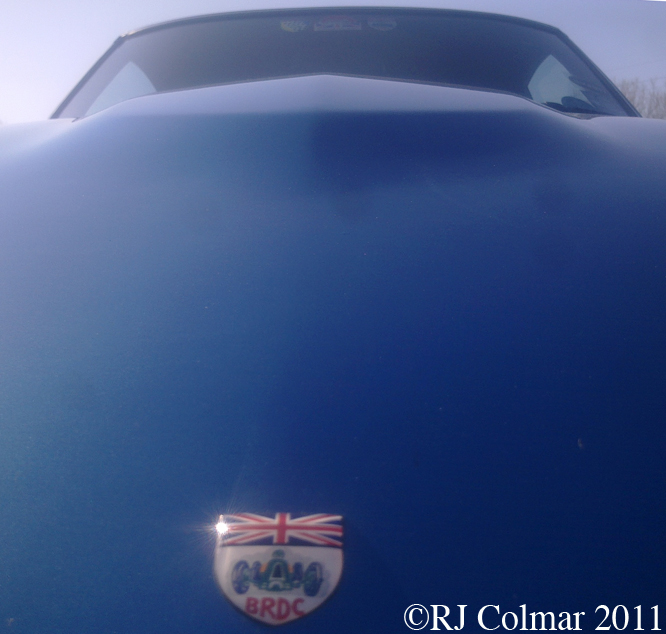
BRDC are the initials of the British Racing Drivers Club and signify that the owner of this vehicle, well known rally and racing driver Barrie ‘Whizzo’ Williams, is a member.

Datsun 240 Z

The Datsun 240 Z, featuring styling cue’s taken from the E-Type Jaguar, was in production from 1970 – 1973.

Datsun 240 Z

Unknown to me until I wrote this, in Japan 2 litre / 122 cui in line 6 cylinder versions of the 240 Z, known locally as the Nissan Fairlady Z, were available with single and double overhead cam options.

Datsun 240 Z

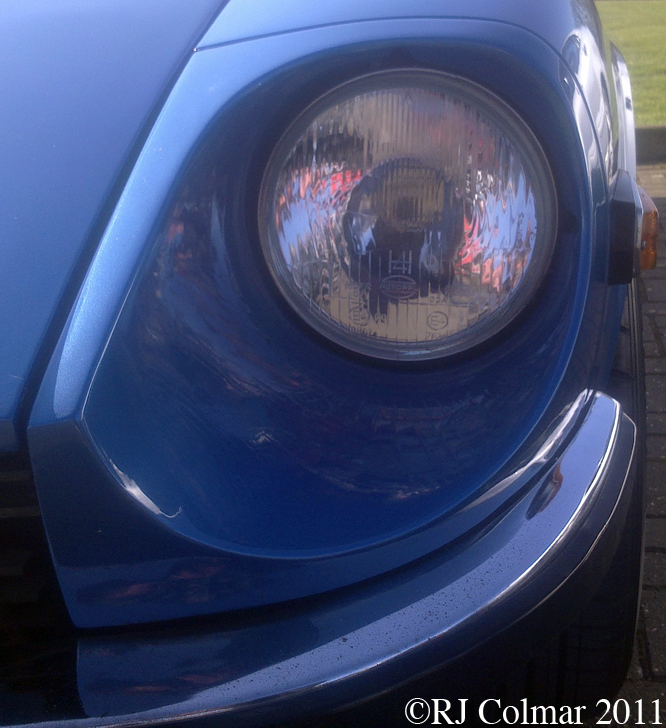
For the rest of us the 150 hp 2.393 cc / 146 cui single overhead cam six cylinder is the more familiar motor. This vehicle is easily identified as a second series model by the Z in the circle on the C pillar.

Datsun 240 Z

Amazingly in 1971 and 1973 Datsun 240 Z’s driven by Edgar Hermann and Shekhar Mehta respectively won the gruelling East African Safari Rally proving this was no flimsy boulevard cruiser.

Datsun 240 Z

In 1996 Nissan launched a programme to buy 240 Z’s back and restore them to factory specifications and sold them for $24,000.

Hope you have enjoyed today’s Fairlady edition of ‘Getting a lil’ psycho on tyres’ and that you will join me again tomorrow. Don’t forget to come back now !

Share