Author Archives: Ralph

The Terror Of Poissy – Simca 1000 Rallye 2

Afrer a varied career, that started aged just 14 when his father disappeared, that included running the family transport business, selling war surplus motorcycles, experience in the coal import business and founding a business importing scrap steel from France to be recycled into FIAT’s in Italy Henri Théodore Pigozzi was appointed as FIAT’s man in France responsible for the distribution of, and later assembly of, FIAT’s for the French market aged just 28.

Henri founded Société Anonyme Français des Automobiles FIAT (SAFAF) to handle the work and purchased premises formerly used by Donnet to establish manufacturing operations in 1934 for a new entity the Société Industrielle de Mécanique et de Carrosserie Automobile (SIMCA) of which FIAT was the major share holder.

The “Simca Mille” was primarily designed by a team headed by Dante Giacosa and was chosen with FIAT’s blessing by Henri from a variety of four door concepts FIAT were exploring to expand the FIAT 500 and 600 series range into the up to 1 litre / 61.5 cui market segment.
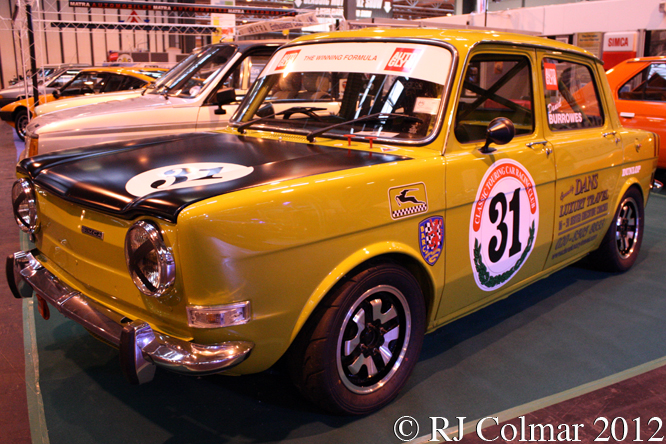
Simca 1000 Rallye 2, Classic Motor Show, NEC, Birmingham

Former GM employee Mario Revelli de Beaumont and Felice Mario Boano were responsible for developing the Simca 1000 to production readiness in time for it’s launch in 1961, by which time FIAT had given up on the idea of launching it’s own four door model electing instead to go with another two door vehicle the FIAT 850 which was launched in 1964.

The Simca Mille remained in production until 1978 by which times variants had been built in France, Spain, Colombia and Morroco with 4 cylinder engines in the boot / trunk varying from 777cc / 47 cui to 1294 cui / 79 cui which were sold at a rate of over 100,000 a year up until 1974 with over 2 million examples built by 1978.

FIAT tuner Abarth started producing modified versions of the Simca Mille but they never went into regular production after SIMCA first bought Ford’s French interests and then itself came under the control of Chrysler’s European arm, however Simca started offering the 53hp, red only, Simca 1000 Rallye in 1970, which became known as the The terror from Poissy, where it was built, to fill the rear engine rear wheel drive gap left by the popular Renault 8 Gordini that was replaced by the front engine front wheel drive Renault 12 Gordini.
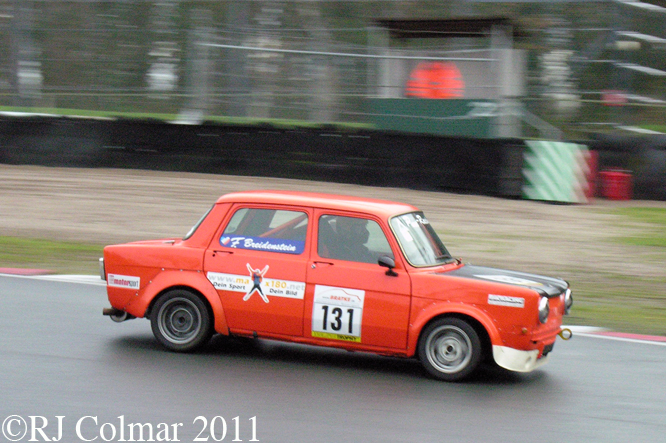
Simca 1000 Rallye 2, Frank Breidenstein, Oulton Park,

The next evolution of the Mille was the 60hp Rallye 1 which had a top speed of 96mph that was launched in 1972, today’s featured model the twin carburetor 82 hp Rallye 2 was built alongside the Rallye 1 and had a top speed of 100 mph and was the first Rallye to be fitted with 4 discs brakes as standard.

The Rallye 2 was used in touring car racing from 1973 to 1981 particularly in France, Belgium, Holland, Italy, Spain and Germany during which time it recorded at least 11 class (1.3 litre / 79.3 cui) victories.

The #31 Rallye 2 seen in these photographs is driven by Daniel Burrows while I believe President of ”Simca Heckmotor (rear engine) Deutschland, Frank Breidenstein is seen at the wheel of the #131 during a track day at Oulton Park a few years ago.

Thanks for joining me on this “The Terror Of Poissy” edition of “Gettin’ a li’l psycho on tyres” I hope you will join me again tomorrow for a Concours d’Elegance edition of Gettin’ a li’l psycho on tyres”. Don’t for get to come back now !

Share

Scoop & Simple Grill Coupé – Mercedes Benz 300 SLR #no.7

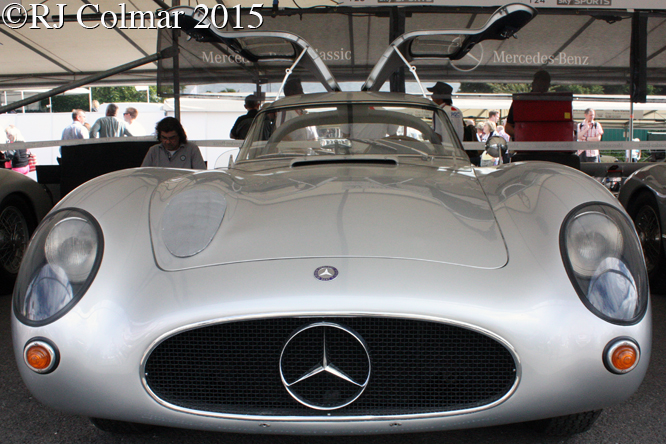
When Mercedes Benz told it’s drivers of the companies plans to return to sports car racing in 1955 with a gull wing bodied version of the W196 R formula one car the drivers were horrified and objected to the idea of sitting in a closed cockpit behind a formula one engine because the noise and heat would be difficult to endure over the longer races such as the 10 hour Mille Miglia where no driver change was permitted or the Le Mans 24 hours where two drivers were permitted.

As a consequence Chief Engineer Rudolf Uhlenhaut furnished his team with the 300 SLR Roadsters that would become the über successful World Sportscar Championship winning cars during a season in which the most famous win was that of Stirling Moss and his co driver Denis Jenkinson on the Mille Miglia.

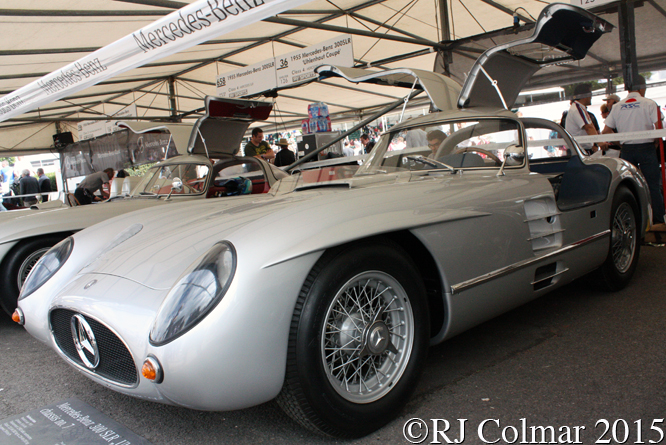
Mercedes Benz 300 SLR Coupé. Goodwood Festival of Speed

During the course of the 1955 season nine 300 SLR’s were built and two of them today’s featured chassis, which I believe is, #no.7 and #no.8 were built with Coupé bodies on the orders of Rudolf.

The two Coupés differ in detail with #no.7 having a squared scoop on the top of the bonnet that does not feature on #no.8, #no.7 also has a much simpler grill decoration, which possibly backs up Mercedes claim that the company was interested in exploring the idea of developing a Gull Wing Coupé for the 1956 season, regardless of the team drivers objections, before the companies plans changed in light of the tragedy at Le Mans in 1955.

Mercedes Benz 300 SLR Coupé. Goodwood Festival of Speed

I believe the 176mph 300 SLR Coupé Rudolf Uhlenhaut used as his personal transport was #no.8.

Thanks for joining me on this Scoop & Simple Grill edition of “Gettin’ a li’l psycho on tyres” I hope you will join me again tomorrow. Don’t forget to come back now !
Share

Two Laps Down – Lola Chevrolet T400 #HU12

John Moreton qualified his #46 Perry Krinitt Lola Chevrolet T400 chassis #HU12 15th, on it’s debut, for the SCCA/USAC F5000 Championship Round at Mid Ohio run on August 10th 1975, he started and finished Heat One 8th and finished the final in 10th two laps down.

Three weeks later John qualified the same car 8th for the Atlanta Grand Prix at Road Atlanta and came home 7th again two laps down.

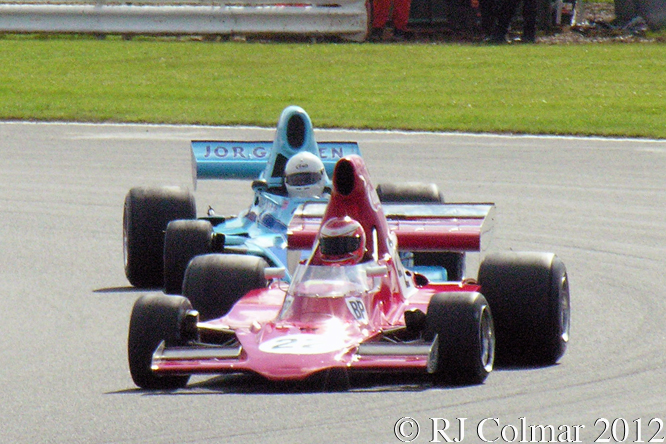
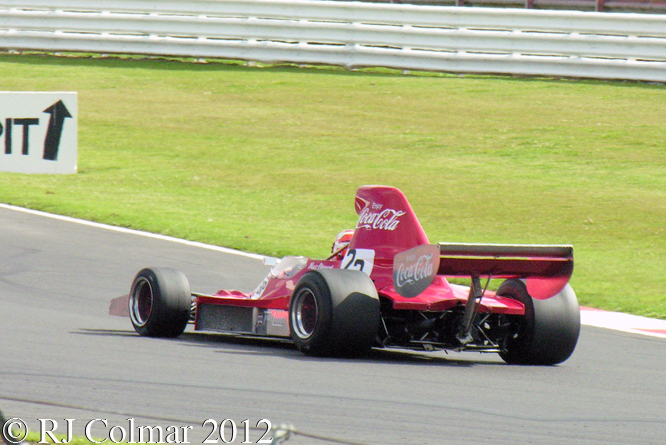
Lola T400, Mark Dwyer, Silverstone Classic

Over the next four weeks Krinitt Racing Ent. ditched the T400 chassis and swapped the engine, gearbox, wheels, instruments, brakes and steering rack over two a new T332 in preparation for the Long Beach Grand Prix where John qualified 17th, finished 16th in Heat One and 9th in the final again two laps down.

At Lagunna Seca John again drove the #46 T332 where he qualified 7th, finished Heat One 4th and came home 12th in the final, two laps down,
John qualified the #46 T332 10th at Riverside, finished Heat Two sixth and came home fifth in the final on the same lap as the leader.

Lola T400, Mark Dwyer, Silverstone Classic

No further racing history is recorded for today’s featured T400 chassis #HU12 until Ed Swart bought the car in 1991, after spending three years rebuilding it he raced it for six seasons before leaving it with Vin Malkie in the UK in 2002.

Ed Jowsey then raced #HU12 in 2003 until it was damaged at Snetterton, repair took over a year to complete and in 2006 the present owner Mark Dwyer bought the car and is seen at the wheel of it in these photo’s at Silverstone Classic in 2012.

My thanks to Allen Brown for confirming the spelling of “Krinitt”.

Thanks for joining me on this “Two Laps Down” edition of “Gettin’ a li’l psycho on tyres”, I hope you will join me again tomorrow for Mercedes Monday. Don’t forget to come back now !
Share

1967 – Chevron B6

In 1966 hitherto builder of Clubman’s racing cars Chevron guided by founder Derek Bennett diversified into building a series of GT Cars starting with two Ford Twin Cam powered Chevron GT’s that retrospectively became known as B3’s an a similar BMW powered car known as the B4.

Chevron B6, Nick Thompson, Sean McClurg, Gold Cup, Oulton Park

Both of these models won first time out as did the one off 2 litre / 122 cui BRM V8 powered B5 built in 1967 which Brian Redman drove to a debut victory at Oulton Park in April 1967.

Chevron B6, Nick Thompson, Sean McClurg, Gold Cup, Oulton Park

1967 also saw the fledgling business build a batch of six similar B6 GT cars similar to the one seen here shared by Nick Thompson and Sean McClurg at Oulton Park in August.

Chevron B6, Nick Thompson, Sean McClurg, Gold Cup, Oulton Park

Like the similar B3, B4 and B5 GT models the B6 was also driven to a debut victory, by Digby Martland at Brands Hatch who also claimed the B3 debut victory in 1966.

Chevron B6, Nick Thompson, Sean McClurg, Gold Cup, Oulton Park

Six of the B6’s were powered by 2 litre / 122 cui BMW motors and the other by a 1600 / 97.6 cui Ford Twin Cam, between them the B6’s are credited with at least 14 wins and an additional 4 class wins.

The last documented in period class win being recorded by Martyn Denley at Silvertone in 1970, Simon Hadfield and Michael Schryver were campaigned their Michael Schryver Antiques example in Thundersports from 1985 to 1986.

Thanks for joining me on this “1967” edition of “Gettin’ a li’l psycho on tyres” I hope you will join me again tomorrow when I’ll be looking at the last in the current series of Lola T400’s. Don’t forget to come back now !
Share

Pull Up Two The Bumpers – Ferrari 212 Inter Vignale Coupé #0257EU

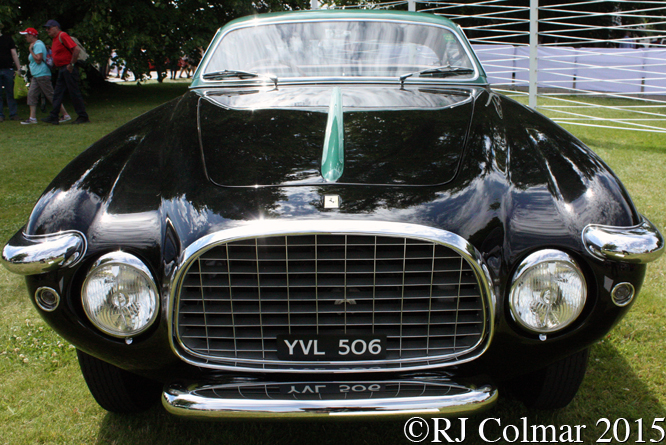
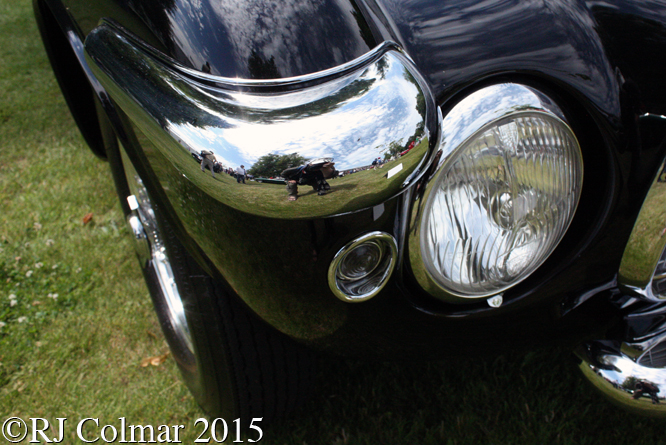
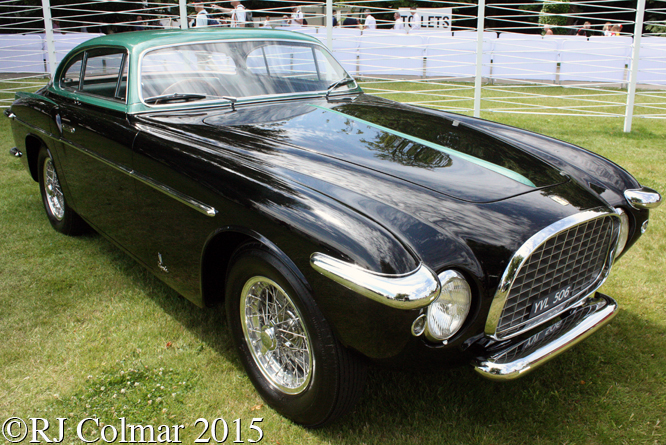
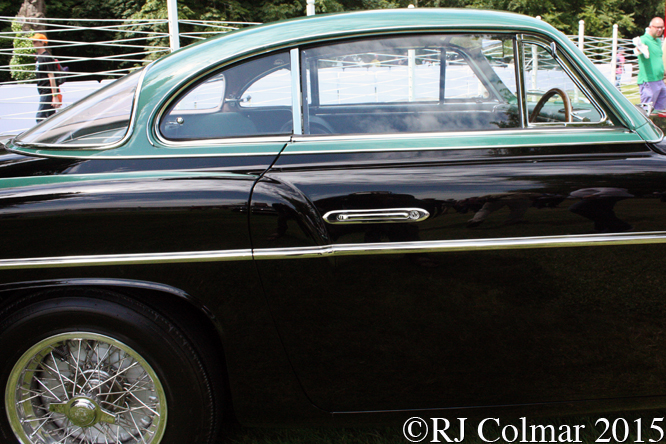
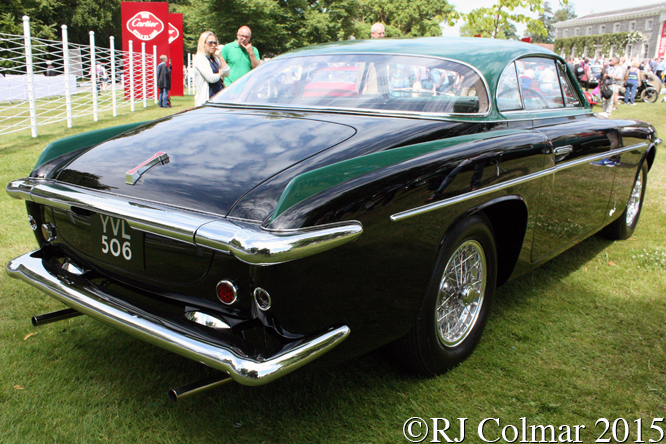
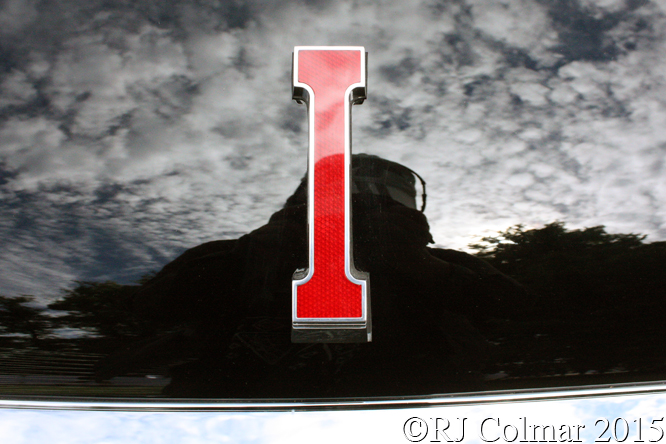
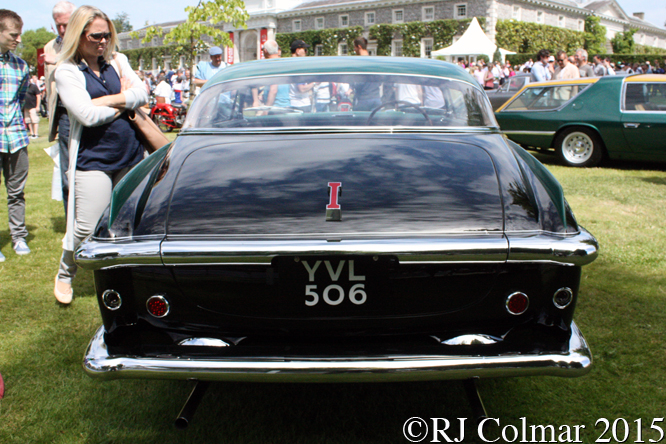
At the end of 1952 Vignale started producing it’s definitive 2 bumper coupé bodies designed by Giovanni Michelotti for the 116 mph Ferrari 212 Inter.

Ferrari 212 Inter Vignale Coupé, Goodwood Festival of Speed,

It is believed no more than six of these twin bumper 212 Inters were produced from a total of 26 Vignale bodied 212 Inters and that today’s featured #0257EU was the first chassis to be so futuristically equipped,

Ferrari 212 Inter Vignale Coupé, Goodwood Festival of Speed,

This particular car was initially sold in 1953 to a Turin dealer called Fontanella who exhibited it at the Concorso d’Eleganza San Remo the following year.

Ferrari 212 Inter Vignale Coupé, Goodwood Festival of Speed,

Later in 1954 Luigi Chinetti sold #0257EU to paper product tycoon Robert C. Wilke of Milwaukee who was president of Leader Card Inc who would become a well known sponsor of Indy cars.

Ferrari 212 Inter Vignale Coupé, Goodwood Festival of Speed,

The cars engine block is believed to have been replaced twice, first due to a crack that developed and secondly after a mechanic who over torqued the heads causing the studs to be pulled from the second block.

Ferrari 212 Inter Vignale Coupé, Goodwood Festival of Speed,

The car resided in the United States until 1979 when it was acquired by a Belgian who kept it until 2006 when it returned to the United States.

Ferrari 212 Inter Vignale Coupé, Goodwood Festival of Speed,

In 2009 Michael Green in Texas bought #0257EU and the original engine block from John Hadjuk in Indiana whom he entrusted with the mechanical restoration of the car while Gassman Automotive in Waynesboro Virginia took care of the rest.

Ferrari 212 Inter Vignale Coupé, Goodwood Festival of Speed,

Mr Green sold the car for just over US$1.7 million including buyers premium at Scottsdale in January 2014 and it is my understanding that the car, seen at Goodwood Festival of Speed in July this year, is being offered for sale again by Tom Hartley Jnr £POA.

Thanks for joining me on this “Pull Up Two The Bumpers” edition of “Gettin’ a li’l psycho on tyres” I hope you will join me again tomorrow when I’ll be looking at a Chevron. Don’t forget to come back now !
Share

Forward Design – Plymouth Savoy

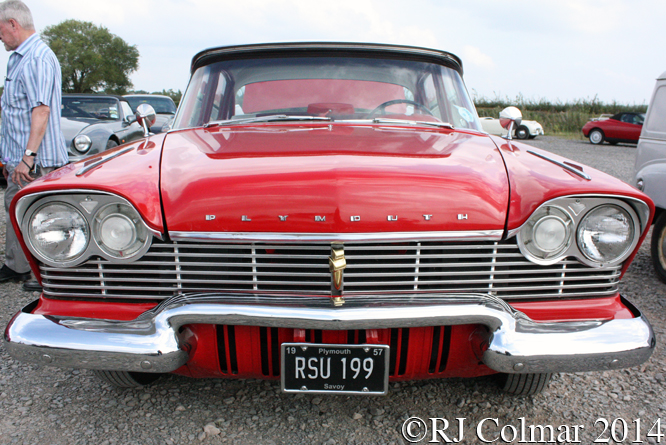
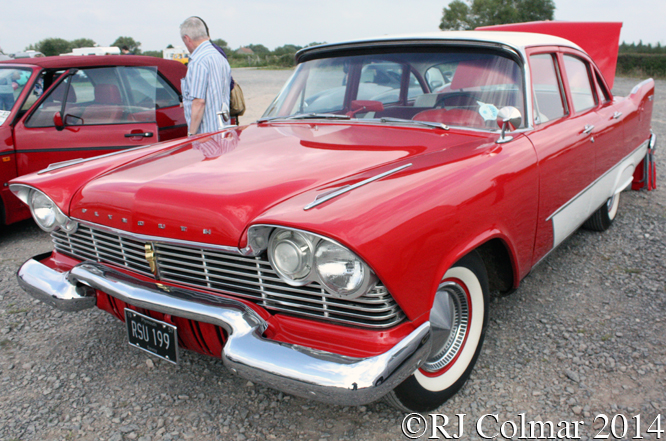
The arrival of of the 1957 Mopars saw a dramatic shift in styling from a conservative Plane Jane to Virgil Exner’s jet age inspired Forward Design featuring the outrageous tail fins that became synonymous with the late 1950’s and lead Plymouths advertising copy to read “Suddenly – It’s 1960!”

Plymouth Savoy, Summer Classics, Easter Compton,

The only car that dared to break the time barrier Plymouth, De Soto, Dodge and Chrysler full size models all featured variations of the same body design that were available to meet a variety of needs at an all important variety of prices.

Plymouth Savoy, Summer Classics, Easter Compton,

Two years after Chrysler replaced the ’55 body styles the Plymouth Savoy alone was offered with 2-door coupe, 2-door hardtop, 4-door sedan, 4-door hardtop and station wagon bodies which with 8 engine options and 3 transmission options allowed a diligent salesman to sell up or down according to the purse of just about anybody who walked through the dealers showroom door.

Plymouth Savoy, Summer Classics, Easter Compton,

Allegedly “The Forward Look of Motion” caused GM’s styling boss Harley Earl to ask Chevrolet exterior designer C.J. MacKichan “Why don’t you quit?” after seeing the 1957 Plymouth catalogue”.

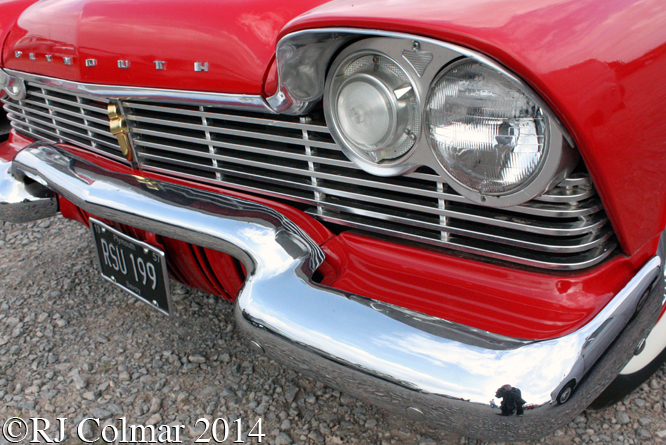
Despite Torsion-Aire Ride using torsion bars but not airbags as the name might suggest, build quality problems with the Forward Designs meant many did not survive long before they started to rust away, the ’57 Savoy featured in these photographs is seen at last years Summer Classics meeting in Easter Compton.

Thanks for joining me on this “Forward Design” edition of “Gettin’ a li’l psycho on tyres” I hope you will join me again tomorrow. Don’t forget to come back now !
Share

Grand Finals – Castle Combe

On Saturday I popped along to Castle Combe for the Grand Finals meeting where the sun was trying in vain to dissipate the clouds, but the fine quality of the racing made up for it’s inadequacies.

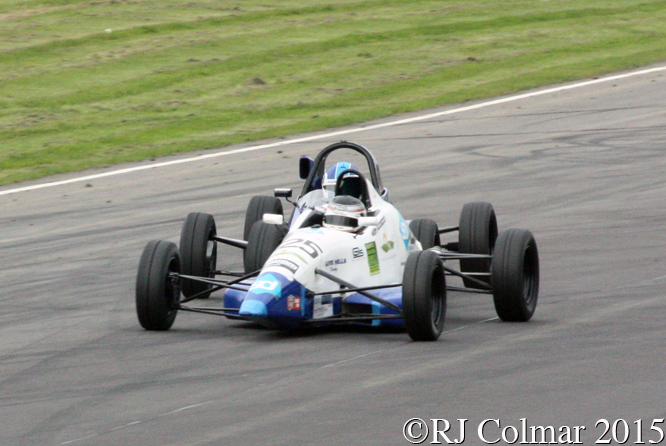
Reynard/Fisher Spectrum/Moyers, FF1600, Castle Combe

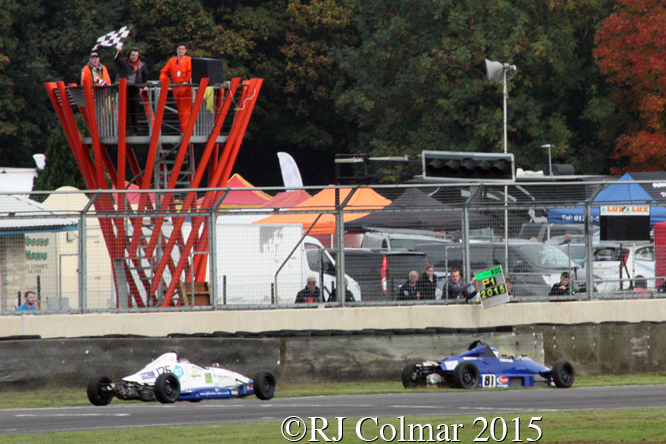
The afternoons racing got off to a scintillating start with the Drive Soutwest and Empire EV Castle Combe Formula Ford 1600, Kent engines, Championship, in which Josh Fisher starting from third on the grid in his 1989 #81 Reynard engaged in a thrilling battle with pole sitter Michael Moyers driving the #125 Spectrum 11c that was twenty years younger than the Reynard.

Josh took the lead on lap six, relinquished it for the next two laps before grabbing it for good on lap 9, Josh is seen above exceeding track limits as he takes the flag after 15 thrilling laps by just 0.212 of a second from Michael, Roger Orgee clinched the championship, 41 years after his farther Roger Snr, won the same championship at he same track, with a third place finish.

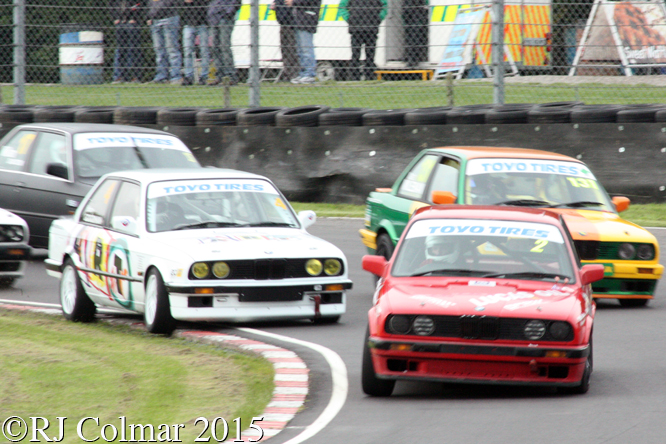
BMW 320i, Swaffer, Wileman, Palmer, Davison, Castle Combe

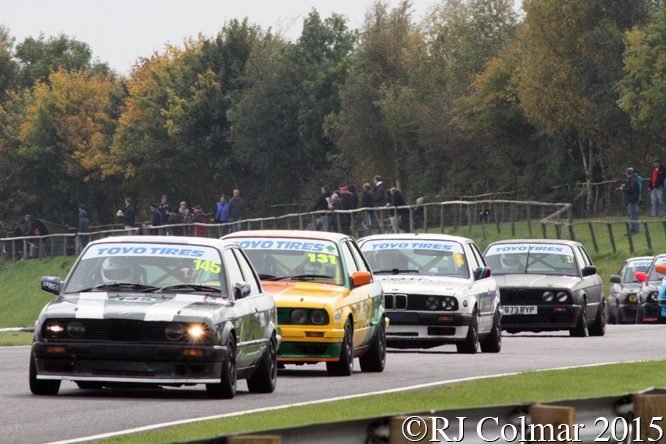
The penultimate round of the Toyo Tyres Production BMW championship saw Gary Feakin and Harry Goodman storm away from the rest and leaving the #145 of Matthew Swaffer, #131 of Matthew Wileman, #8 of Mark Palmer and #17 driven by William Davison to squabble over the final place on the podium in another entertaining race.

When the dust settled William finished third behind Harry but ahead of Matthew Wileman, Rob Cooper and Mark while Matthew Saffer retired the #145, Gary’s win sealed the championship in his favour with one round, run later in the afternoon, to go.

Spire GT3, Tim Gray, Castle Combe

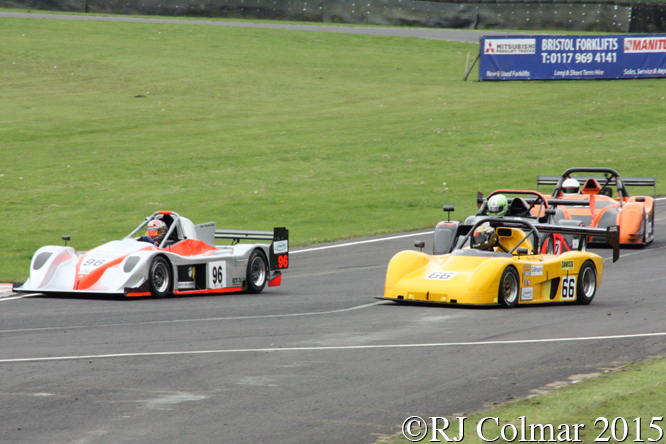
Nottingham’s Tim Gray drove his #96 Spire GT3 to set a pole time for the Castle Combe Sports Racing Series race over three and a half seconds ahead of fellow front row starter Robert Gillman in his #66 Radical Prosport.

It was hardly surprising there for that the closest anyone got to Tim was on the warm up lap when the race ended Robert was 53 seconds ahead of the #12 Radical SR4 driven by Darcey Smith who remained the only unlapped runner, hopefully next year Simon Tilling might bring his Radical out to play in what could be a competitive series.

Audi Hutchings, Volkswagen Scaramanga, Castle Combe

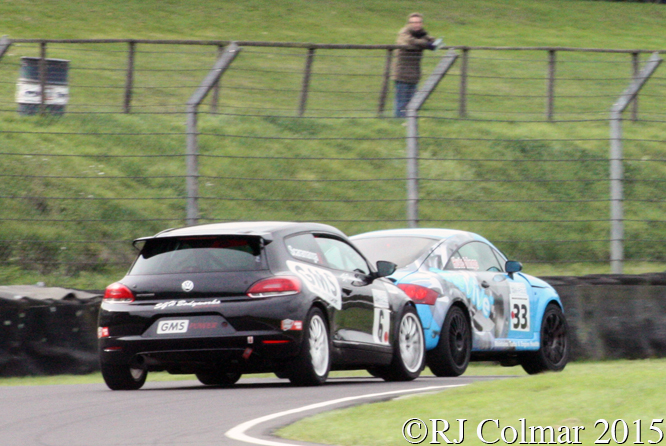
Dave Scaramanga, driving the #6 Volkswagen Scirocco from 9th on the grid, accepted some responsibility for killing Tony Hutchings opportunity to clinch the Class A title of the On Pole Castle Combe Saloon Car Championship after a coming together with the #33 Audi TT a couple of hundred yards after the photo above was taken, leaving Gary Prebble to win the class championship unchallenged in his SEAT Leon 20V T.

Earlier in the race Dave missed the same Bobbies chicane where he came together with Tony on the penultimate lap, after 19 years of trying Mark Wyatt secured his first championship with his class B Vauxhall Astra.

Brabham Thompson, March Armer, Castle Combe

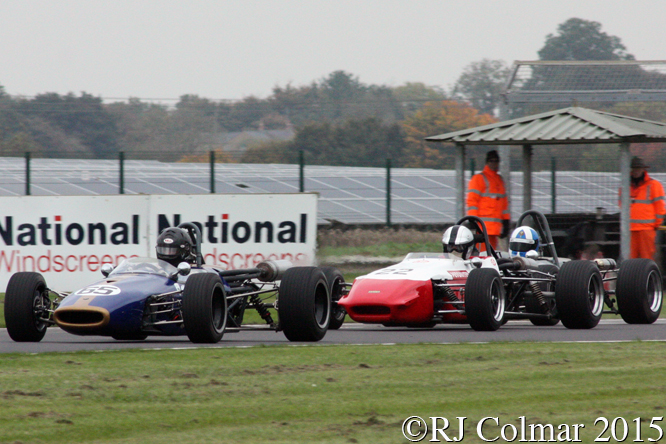
Like Dave Scaramanga, Simon Armer also misjudged Bobbies chicane on the opening lap of the first of two HSCC Historic Formula 3 Races, Simon driving the #22 March 703 is seen making up time as he looks to deprive the #65 Brabham BT21 driven by Peter Thompson of the second place on lap 3 on his way to victory.

Legendary club motorsports journalist and racer Marcus Pye in the commentary box informed us that the Simon’s March belonged to Tom Walkinshaw, who went on to found Tom Walkinshaw Racing with which he won the 1984 European Touring Car Championship at the wheel of a TWR Jaguar before taking Jaguar back to Le Mans in 1986 which resulted in wins for the marque in 1988 and 1990.

Spectrum/Moyers, Reynard/Fisher, FF1600, Castle Combe

The Formula Ford boys made a second appearance at the meeting for the non championship Formula Ford Carnival which again saw a close battle between Michael Moyers and Josh Fisher, this time Michael did not give an inch and won the 15 lap adrenaline rush by less than a second, for his two entertaining drives in such an ancient machine Josh quite rightly won the man of the meeting award.

Ginetta Krayem, Mazda Putt, Castle Combe

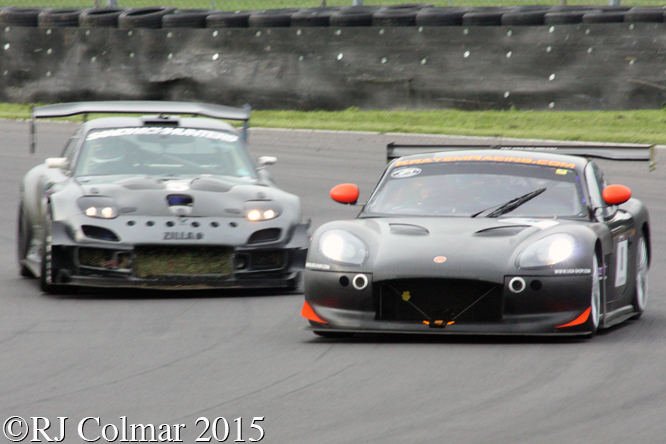
Bristol’s Oliver Bull driving a Ford powered Vauxhall Tigra Silhouette in class B of the Avatar Sports Cars Castle Combe Sports and GT Championship managed to secure the overall title with an incident free drive to second overall from pole. Claimants for the win included Barry Squibb who took the lead on the opening lap only to retire his fire belching Mitsubishi Evo on lap 3 which handed the lead to the fearsome 7 litre / 427 cui V8 powered Zilla Killa Mazda RX7 driven by Steve Putt who started second on the grid.

4th place starter David Krayem, driving a 3.5 litre / 213 cui V8 powered Ginetta G50 is seen above at Quarry having just taken the lead, which he held until the end of the race, from Steve with three laps to go.

BMW 320i, Feakins, Goodman, Wileman, Davison, Castle Combe

Gary Feakin #2, Harry Goodman #4 and William Davison #17 again deprived Matthew Wileman of a podium as they finished the second Toyo Tyres Production BMW championship in the same order as the first, Matthew held third place in the #131 until lap 5 before giving way to the William in another event full of close racing through out the field.

March 703, Simon Armer, Castle Combe, Castle Combe

Simon Armer made no mistakes in the second HSCC Formula 3 race in which he smoked the field and led from start to finish to win by just over 3 seconds, although the finishing order with Peter Thompson and Michael Scott finishing second and third the battle was never certain until the checkered flag was shown.

Ginetta Kraymen, Audi Hall, Castle Combe

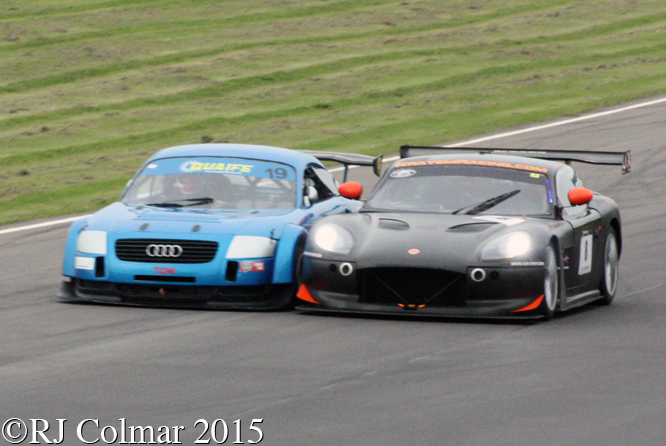
Finally the Castle Combe Sports and GT’s came out to play with the Castle Combe Saloons for a bit of end of term fun, Steve Hall in the #19 Audi TT starting from 5th on the grid made the move on David Kraymen seen above as they approach the The Esses stick and led the opening lap before relinquishing the lead back to David who won the race by 2.5 seconds from the Audi with Adam Prebbles steel bodied Rover Tomcat a highly entertaining 3rd ahead of the Audi TT driven by Tony Hutchings.

With another full day of motorsport planned in Wales for the following day I declined the kind invitation to all to attend a party at the Strawford Centre where no doubt a good time was had by all.

Thanks for joining me on this “Grand Finals” edition of “Gettin’ a li’l psycho on tyres” I hope you will join me again tomorrow when I’ll be looking at a Plymouth. Don’t forget to come back now !
Share