Author Archives: Ralph

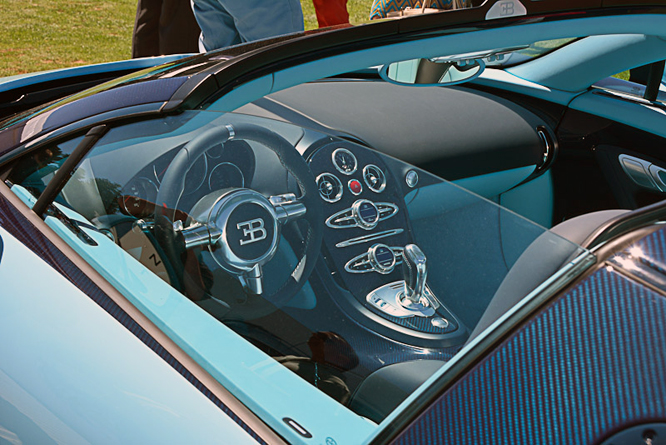
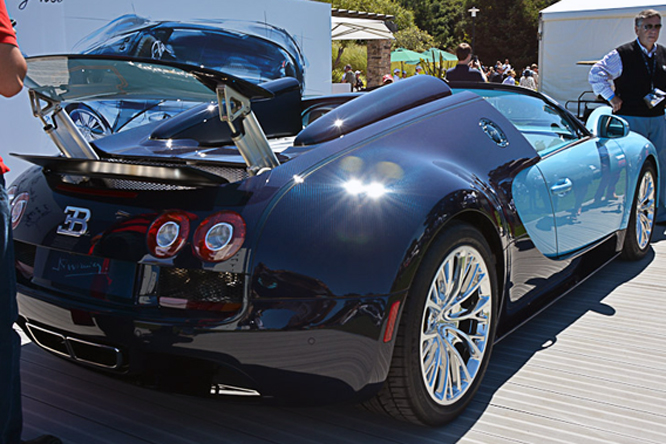
Legend Jean Pierre Wimille – Bugatti Veyron 16.4 Grand Sport Vitesse

The Bugatti Veyron 16.4 Grand Sport Vitesse is a convertible fitted with the 1200hp W16 first seen in the Bugatti Veyron 16.4 Super Sport Coupé.

Bugatti Veyron 16.4 Grand Sport Vitesse Legend Jean Pierre Wimille, Quail Concours d'Elegance

The open top will reach 62 mph from rest in 2.6 seconds and is normally restricted to a top speed of 233 mph, though racing driver Anthony Liu was timed at a smidgeon over 254 mph to make the model the fastest convertible in the world in April 2013.

Bugatti Veyron 16.4 Grand Sport Vitesse Legend Jean Pierre Wimille, Quail Concours d'Elegance

Today’s Legend Jean Pierre Wimille limited edition is one of three built in honour of twice Le Mans winner Jean Pierre Wimille.

Bugatti Veyron 16.4 Grand Sport Vitesse Legend Jean Pierre Wimille, Quail Concours d'EleganceBugatti Veyron 16.4 Grand Sport Vitesse Legend Jean Pierre Wimille, Quail Concours d'Elegance

The Wimille Limited Edition features appear to be solely cosmetic with Clear Blue Carbon Fibre Wings / Fenderes and Wimille Blue body work apparently reversing the colour scheme of the 1937 Le Mans winning Bugatti Type 57G.

My thanks to Geoffrey Horton who took these photographs at last years Quail Concours d’Elegance. This will be the last of the current series of Tuesday Bugatti blogs.

Thanks for joining me on this “Legend Jean Pierre Wimille” edition of “Gettin’ a li’l psycho on tyres” I hope you will join me again tomorrow when I’ll be listening to the sound of an experimental quad cam Jaguar V12 being started for the first time 40 years. Don’t forget to come back now !

Share

Side Saddle With Romy – Maserati 250F #2521

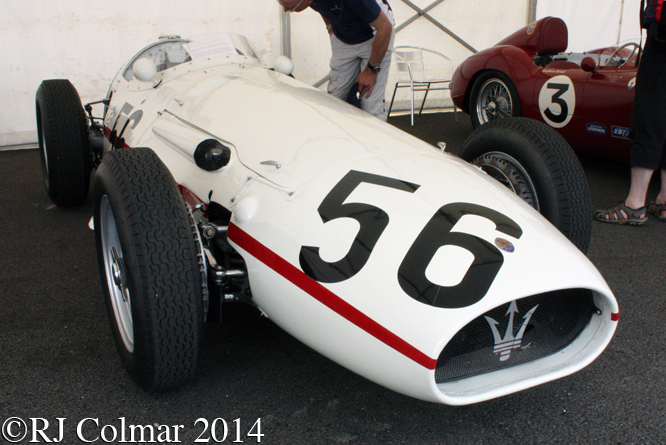
Today’s featured Maserati 250F was a new factory racer for the start of the 1956 season when Jean Behra drove it to a second place finish on it’s debut in the 1956 Argetinian Grand Prix behind the Ferrari shared by Luigi Musso and Juan Manuel Fangio.

Maserati 250F, Silverstone Classic,

Jean drove the car, identified by the #2518 chassis tag on it’s forst two appearances, at least in six further races which included 3rd place finishes in the Grand Prix run at Monaco, Reims in France, Silverstone in Britain and the Nurburgring in Germany.

Maserati 250F, Silverstone Classic,

In 1957 Scuderia Centro Sud entered the car in possibly as many as three events in September 1957 for Bruce Halford who finished 7th in the non Championship International Trophy at Silverstone and Modena Grand Prix races.

Maserati 250F, Silverstone Classic,

In October ’57 Jean Lucas drove #2521 for American entrant John du Puy to an eight place finish in the Moroccan Grand Prix.

Maserati 250F, Silverstone Classic,

In 1958 Monegasque André Testut bought #2521 he failed to finish the 1958 Syracusse Grand Prix after which he had the car rebodied before appearing at the 1959 Monaco Grand Prix where André failed to qualify for the second consecutive year.

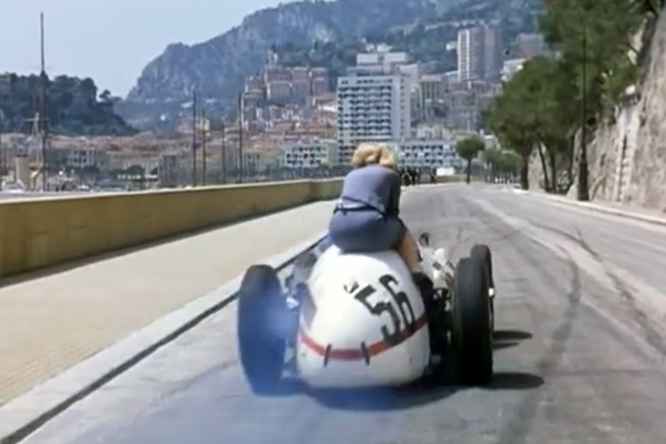
Maserati 250F, Romy Schneider, Monaco

However cinematic feté appears to have smiled kindly on #2521 as at the time of the 1959 Monaco Grand Prix Hungarian film director Géza von Radványi was making a German Romantic Commedy called Ein Engel auf Erden, An Angel on Earth, staring Frenchman Henri Vidal as a suicidal racing driver and Romy Schneider as an air hostess and angel sent to save him.

Maserati 250F, Romy Schneider, Henri Vidal, Nice Airport

In the film Henri is depicted driving #2521, with André Testut acting as his double in the racing scenes, to victory in the Monaco Grand Prix with a little devine intervention from above, at the end of the race he stops to pick up Romy and is seen driving to Nice Airport with Romy riding sidesaddle on the back of #2521.

If you speak German you can see the film on this link, or there is a version of the film called Mademoiselle Ange in French on this link.

Tragically soon after the making of this film Henri Vidal was to die of heart attack in December 1959. Coincidentally Romy Schneider also died of a heart attack in May 1982.

My thanks to Alan Cox at The Nostalgia Forum for confirming the identity of today’s featured car.

Thanks for joining me on this “Side Saddle With Romy” edition of “Gettin’ a li’l psycho on tyres”, I hope you will join me again tomorrow when I shall be looking at the last in the current series of Bugatti’s. Don’t forget to come back now !

Share

Magna Detailing – Maki F101

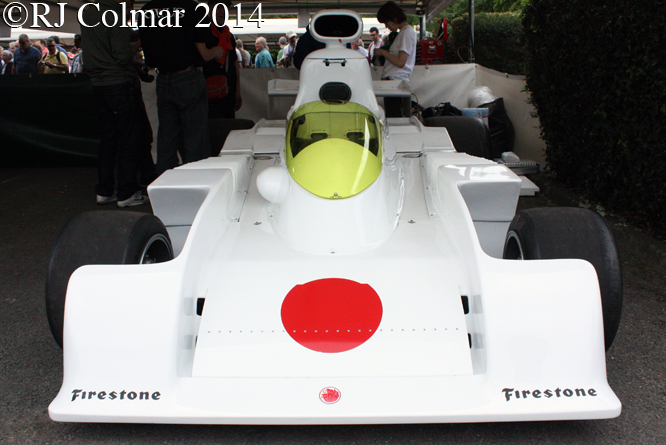
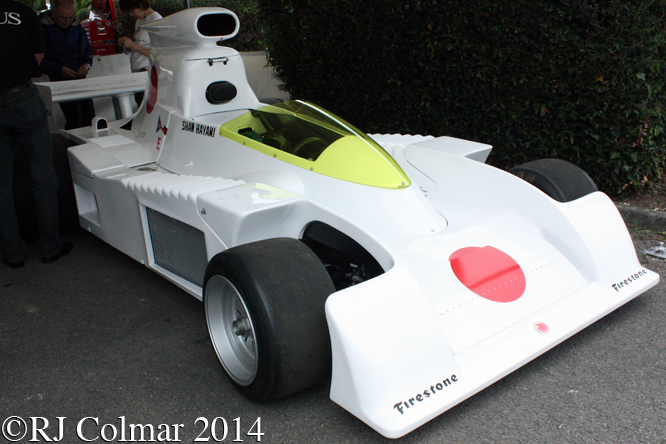
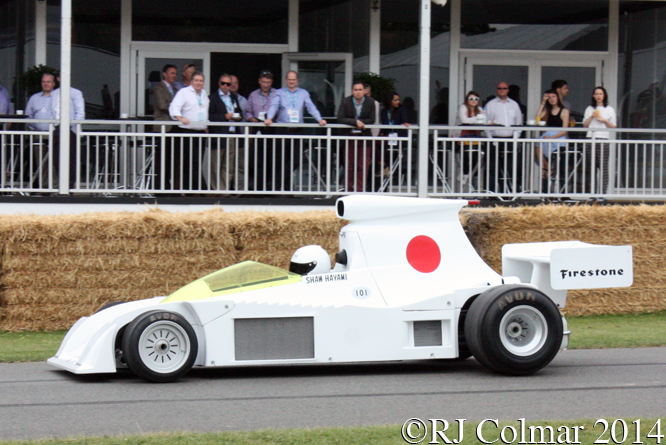
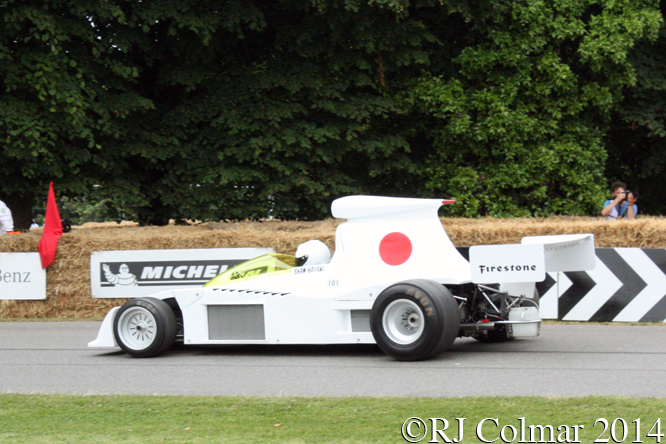
When the Maki F101 was announced in 1974 my first reactions were similar to the announcement of the Eifelland two years earlier, such unfettered enthusiasm for something so different from anything else of course does not always pay dividends as Lotus were two find out with their ultra thin Lotus 76 in the same year.

Maki F101, Goodwood Festival of Speed

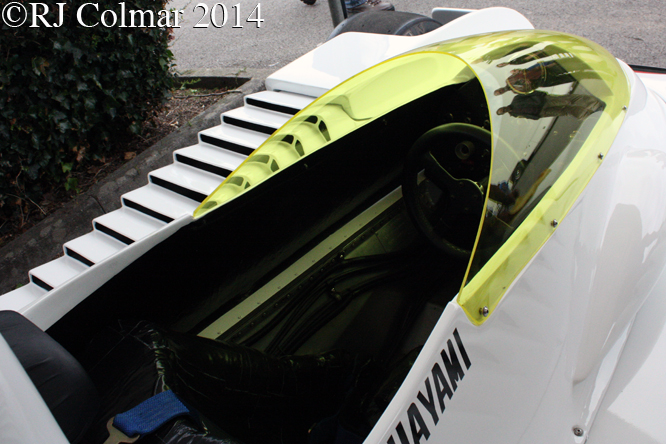
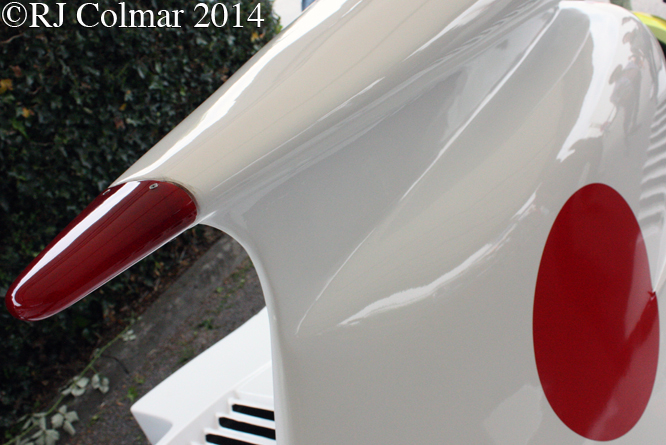
The Maki project was founded by Kenji Mimura who is credited with designing the Ford Cosworth DFV powered car with Masao Ono. The details of some of the features are at once both like something out of a Magna Comic and extremely futuristic, bearing in mind that this was a time when the biggest selling road cars like the Ford Cortina and Morris Marina were little more than 3 boxes with wheels on.

Maki F101, Goodwood Festival of Speed

By the time the F101 now in B Spec made it’s dedut with Howden Ganley driving at the 1974 British Grand Prix it had already shed it’s unique body work for something rather more conservative.

Maki F101, Howden Ganley, Goodwood Festival of Speed

Howden, seen at the wheel above during at the Gooodwood Festival of Speed, while not driving the slowest car in practice failed to qualify for the British Grand Prix.

Maki F101, Goodwood Festival of Speed

At the German Grand Prix disaster struck when the during the first day of practice the rear suspension failed sending Howden into the crash barriers which ripped the front of the car off.

Maki F101, Goodwood Festival of Speed

Amazingly Howden stepped out of the wreckage unaided but his ankles were seriously damaged and this was to be the end of his Formula One career.

Maki F101, Howden Ganley, Goodwood Festival of Speed

The Maki F101 did not appear again in 1974 but a C variant did appear with a new chassis in 1975, the story of which will have to wait for a future edition.

Howden Ganley recovered from his injuries and went on to found a successful racing car manufacturer with fellow F1 refugee Tim Schenken called Tiga.

Thanks for joining me on this “Magna Detailing” edition of “Gettin’ a li’l psycho on tyres” I hope you will join me again tomorrow. Don’t forget to come back now !

Share

Hansgen History For Sale – Hansgen Jaguar Special

Walt Hansgen was working at the family F.G. Hansgen body repair shop in Westfield, New Jersey when he was bitten by the racing bug aged 32.

In 1951 he managed to scrimp, save and borrow enough to buy a brand new Jaguar XK120 but despite ever improving results soon found it was not fast enough to keep pace with the competition and the new C-type Jaguar first seen in September 1952 in particular.

After racing in borrowed vehicles most of the way through 1952 Walt and Emil Hoffman built the chrome molly steel frame for today’s featured Hansgen Jaguar Special and transferred the running gear from his XK120 to save around 700 lbs in weight.

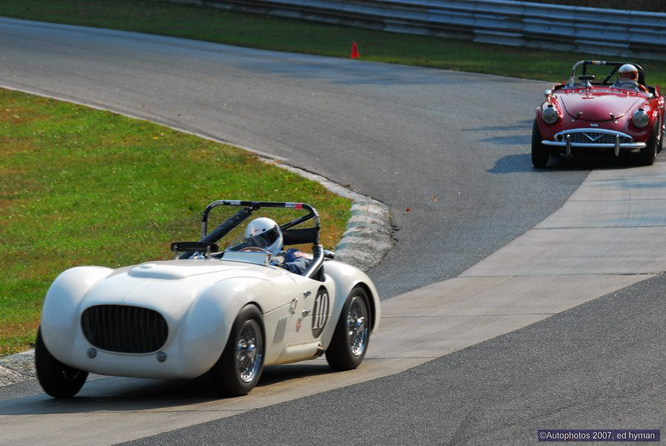
Hansgen Jaguar Special, Lime Rock, Ed Hyman,

Photo Copyright Ed Hyman 2007

Walt is known to have raced the car on at least 9 occasions through 1953 winning the SCCA Regional Cumberland Cup third time out and culminated by winning the 6th Annual Grand Prix of Watkins Glen.

Walt sold the car to Paul Timmins for the 1954 season and continued racing with a C-Type he bought from Marsten Gregory until he was eventually picked up by Briggs Cunningham to race as a professional.

Paul scored at least four second place finishes from at least eight known starts in the Hansgen Special.

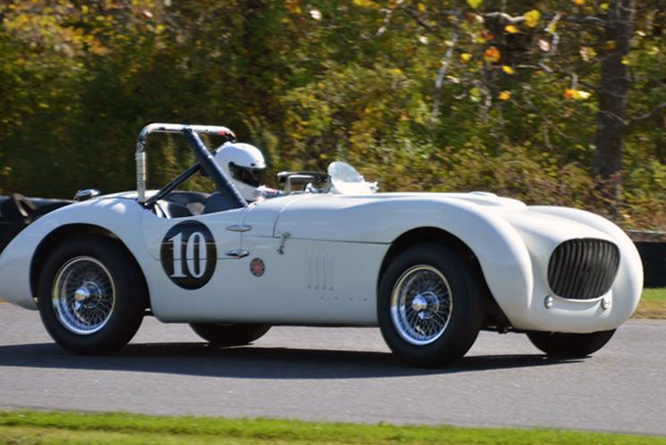
Hansgen Jaguar Special, Lime Rock, Richard Rowley

Photo Copyright Richard Rowley 2014

Today the Hansgen Special is owned by Bob Millstein who bought her in 1983 and set about a six year restoration which was rewarded with a Jaguar Club of North America’s National Concours Champion award in 1989.

Since then Bob has continued to race the Hansgen Special which is seen in these photographs at Lime Rock. Ryan ‘Racer 187’ Smith, seen in the Daimler in the top photo, tells me the Hansgen Special is up for sale. If you would like to know more about this piece of Hansgen History, I will gladly put you in contact with the vendor, usual disclaimers apply.

My thanks to Ryan Smith for arranging permission for me to use the first photo by Ed Hyman and the second by Richard Rowley.

Thanks for joining me on this “Hansgen History For Sale” edition of “Gettin a li’l psycho on tyres” I hope you will join me again tomorrow when I shall be looking at an unusual Japanese Formula One Car. Don’t forget to come back now !

Share

Arise Sir John ? Pt 1 – Ferrari 158 # 006

After the success of winning the 1961 World Drivers and Manufacturers Championships with Phil Hill driving the shark nose V6 powered Ferrari 156 model, the team experienced one of it periodic slumps.

Ferrari 158, Autosport International, NEC, Birmingham

The ensuing 12 months saw Enzo Ferrari fallout with a patential saviour Ford, a couple of customers Ferruccio Lamborghini and Count Giovanni Volpi di Misurata his engineers Carlo Chiti and Giotto Bizzarrini and star driver Phil Hill.
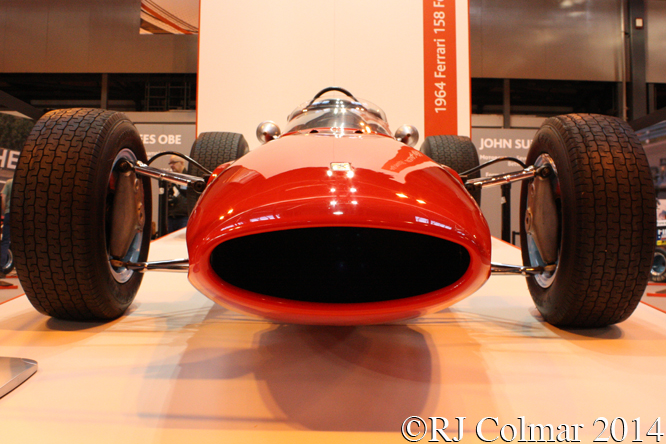
Ferrari 158, Autosport International, NEC, Birmingham

Despite these difficulties Enzo set Mauro ‘Fury’ Forghieri to work on a new V8 powered formula one challenger which was ready at the begining of 1964 for seven time world Motor Cycle Champion John Surtees to drive in his second season with the team.
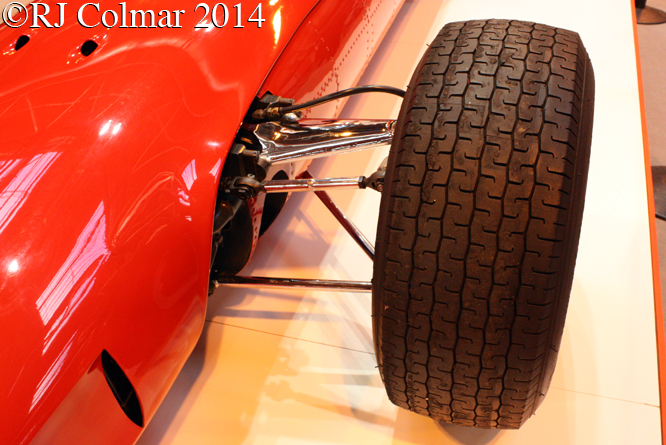
Ferrari 158, Autosport International, NEC, Birmingham

John’s first season with Ferrari driving the old V6 powered shark nose had seen him finish four races in 4th, 3rd, 2nd and culminating with a win in the 1963 German Grand Prix which saw him finish 4th overall in the World Drivers Championship and Ferrari 4th overall in the constructors championship.
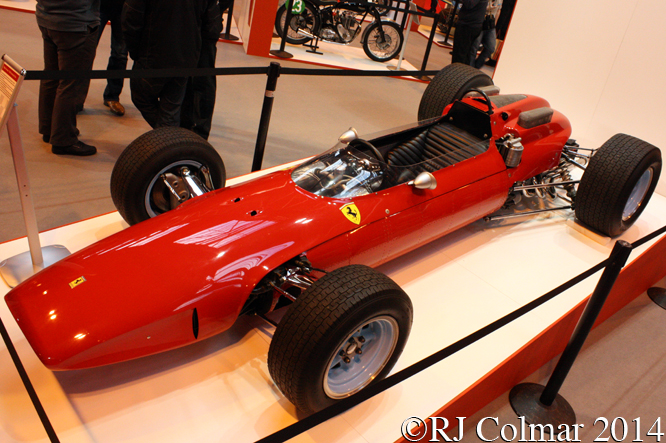
Ferrari 158, Autosport International, NEC, Birmingham

Unlike the 1963 championship wining monocoque chassis Lotus 25, the Ferrari 158 features a semi monocoque chassis which has aluminium sheets riveted to a steel structure.
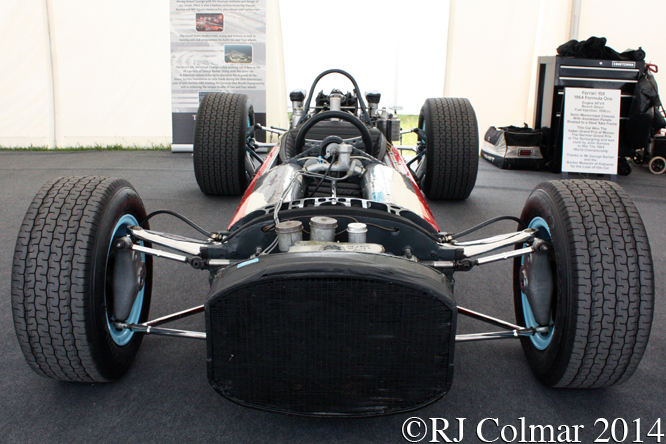
Ferrari 158, Goodwood Revival

The 8 cylinder 1,489 cc / 90.9 cui type 205/B motor like the contemporaneous Coventry Climax V8 that powered the Lotus and BRM V8 has two banks of cylinders inclined at 90 degrees and produces around 210hp.

Ferrari 158, Autosport International, NEC, Birmingham

The motor mounted behind the driver was attached to a Ferrari 6 speed gear box and the whole car weighed in at 468 kg / 1,032 lb with water and oil.
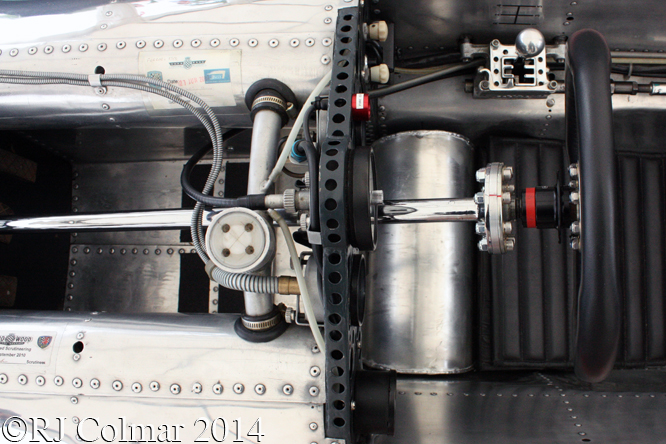
Ferrari 158, Goodwood Revival

There were 10 races counting toward the 1964 World Championship and John qualified 4th for the first round at Monaco but retired after 15 laps with a broken gearbox in a race won by Graham Hill from team mate Richie Ginther driving for BRM.
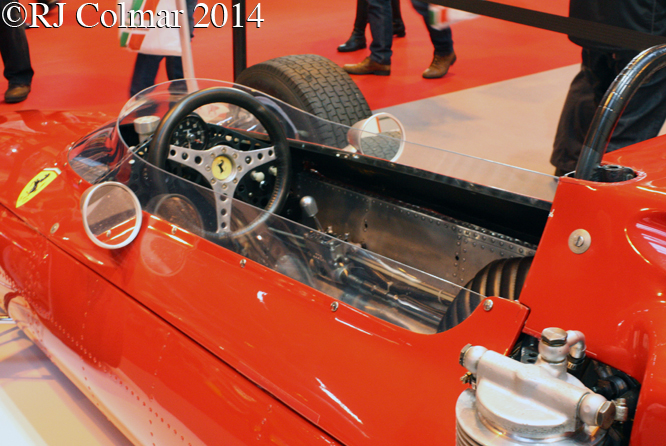
Ferrari 158, Autosport International, NEC, Birmingham

John qualified 4th again for the Dutch Grand Prix and this time finished second to Jim Clark’s Lotus. At the Belgian and French Grand Prix John qualified 5th and 3rd respectively but retired from both with engine problems with less than half a dozen laps completed.
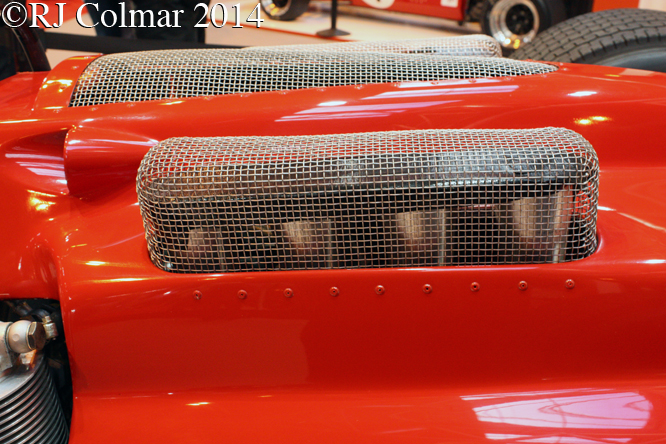
Ferrari 158, Autosport International, NEC, Birmingham

At the 1964 British Grand Prix John qualified fifth but managed to go the whole distance to finish third behind Jim Clark and Graham Hill, Clark who had won the Belgian Grand Prix was leading Hill by four points in the championship with Surtees outside the top five 20 points behind Clark.

Ferrari 158, Autosport International, NEC, Birmingham

John qualified, chassis #006 featured in these photographs, on pole for the German Grand Prix and went on to win the race from Graham Hill while Clark began a series of three consecutive retirements thanks to two engine and one half shaft failure.
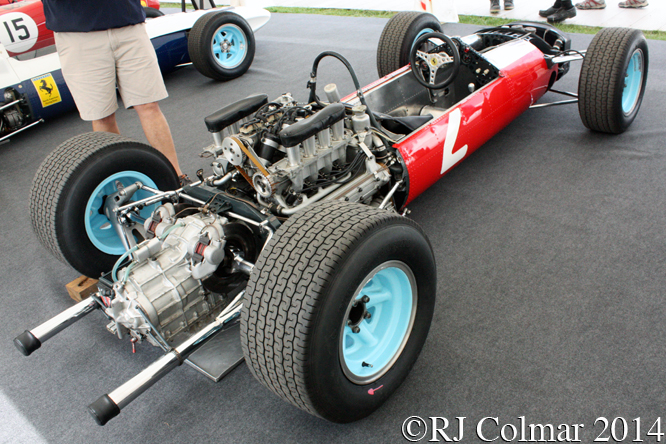
Ferrari 158, Goodwood Revival

All three emergent championship contenders retired from the Austrian Grand Prix which was won by John’s team mate Lorenzo Bandini.

Ferrari 158, Goodwood Revival

Going into the Italian Grand Prix John was 13 points behind championship leader Graham Hill but a second win from pole, again in chassis #006, closed the gap to just four points as both Graham and Jim Clark failed to finish.

I’ll conclude the story of John’s championship Formula One season next week, but meantime there is a petition to get John Surtees the knighthood he so richly deserves for being the only man to win World Championships on two wheels and four, if you would like to sign FOLLOW THIS LINK.

Thanks for joining me on this “Arise Sir John ? Pt 1” edition of “Gettin’ a li’l psychoontyres” I hope you will join me again tomorrow when I’ll be looking at a Jaguar Special. Don’t forget to come back now !
Share

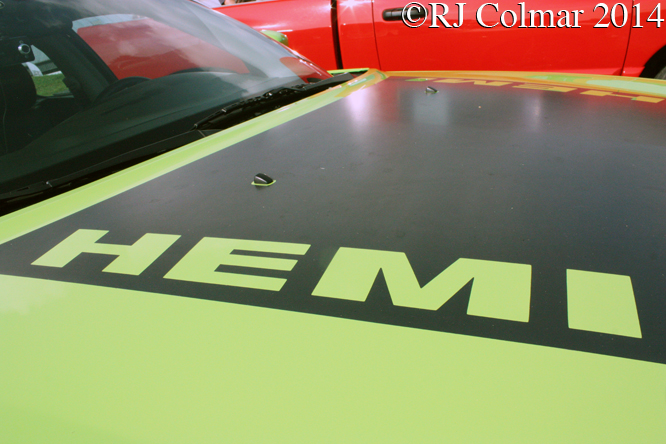
Sublime Hemi – Dodge Charger Daytona R/T

Between 1966 and 1987 the Dodge Charger morphed from 2 door fastback Muscle Car version of the Dodge Coronet to 2 door Dodge Omni platform sub compact.

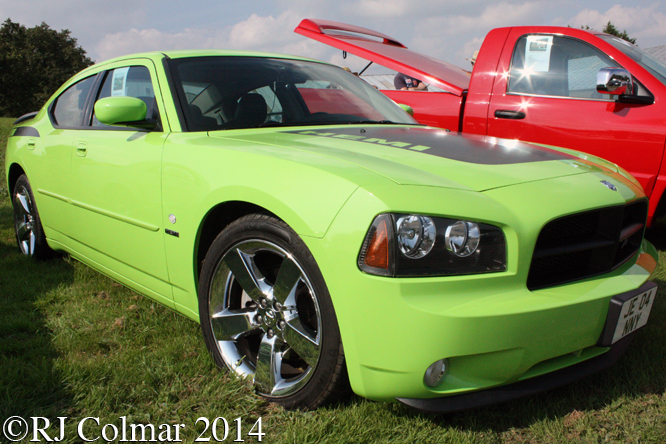
Dodge Charger Daytona R/T, Kernow Mill

When Chrysler reactivated the Charger model in 2005, to replace the front wheel drive Intrepid, it was as a 4 door sedan / saloon that shared the same platform as the 4 door Chrysler 300.

Dodge Charger Daytona R/T, Kernow Mill

Ralph Gilles and Freeman Thomas are credited as being responsible for the design of the car which to my twisted mind remind me of MC Esher’s Curl Up robots.

Dodge Charger Daytona R/T, Kernow Mill

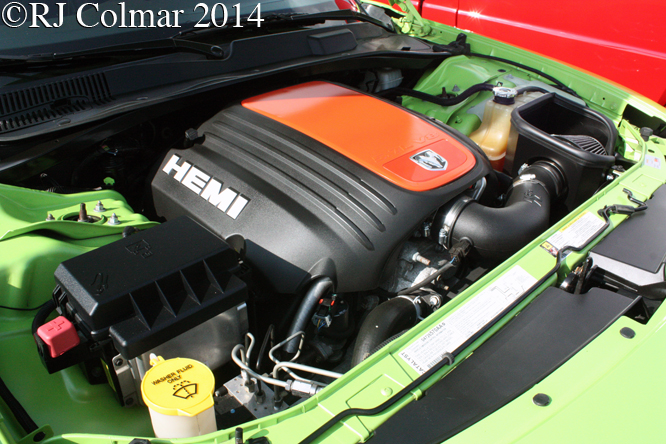
Unlike the Intrepid which it replaced the Charger features Hemi V8 engine options and is either rear wheel drive or four wheel drive.

Dodge Charger Daytona R/T, Kernow Mill

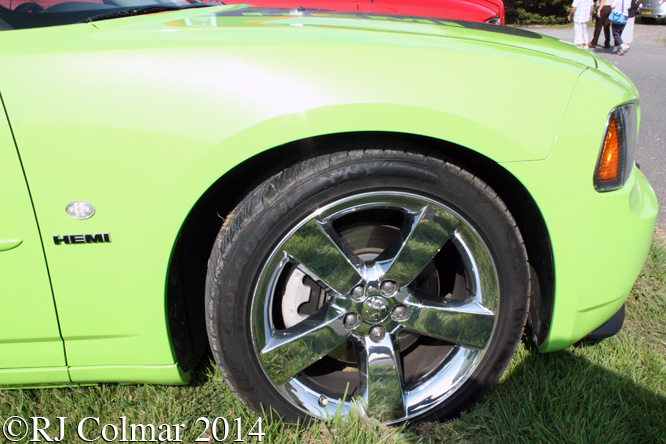
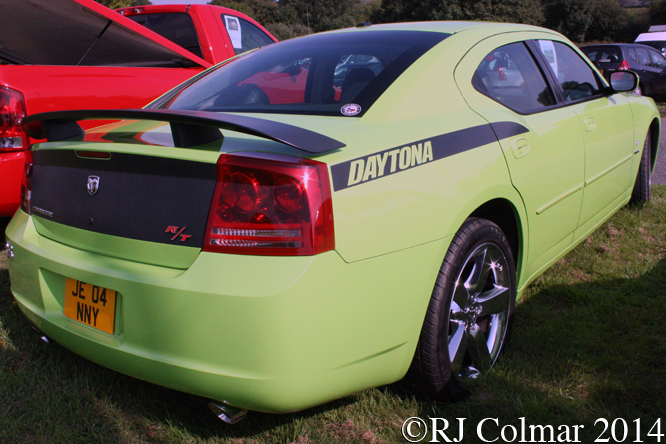
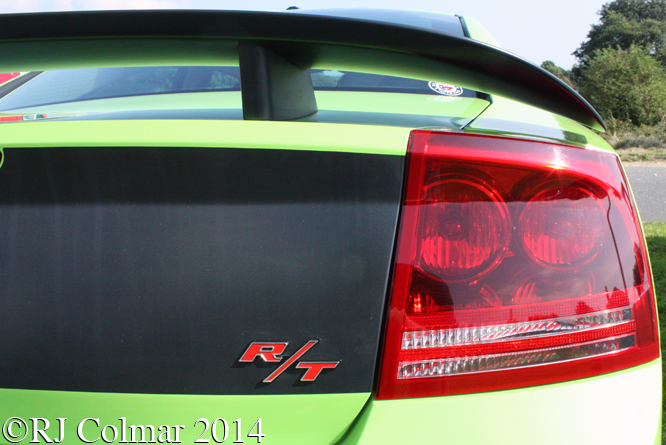
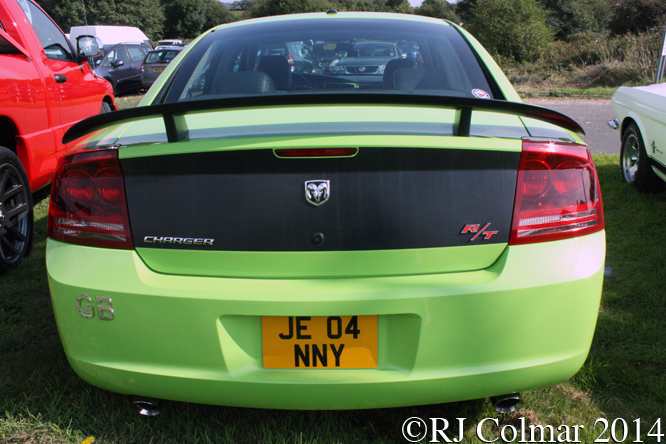
This 2007 Charger Daytona R/T features a 350hp 5.7 litre / 345 cui V8. The 20 inch chrome alloy road wheels are part of the package.

Dodge Charger Daytona R/T, Kernow Mill

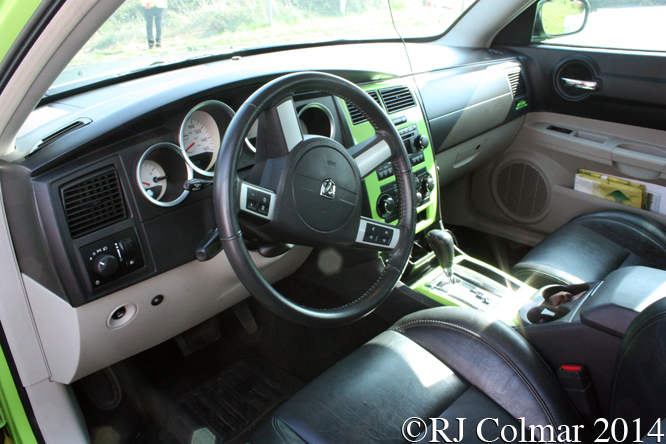
The transmission is a 5 speed Tiptronic automatic.

Dodge Charger Daytona R/T, Kernow Mill

For the 2007 model year 1500 Sublime and 1400 Plum Crazy Charger Daytona R/T’s were built for the US market, no other colours were available with this model.

Dodge Charger Daytona R/T, Kernow Mill

Seen at Kernow Mill this Daytona R/T is believed to be the 876th of the 1500 Sublime cars built.

Dodge Charger Daytona R/T, Kernow Mill

Performance times include rest to 60 mph in 5.5 seconds and a top speed of 150 mph.

Thanks for joining me on this “Sublime Hemi” edition of “Gettin’ a li’l psycho on tyres” I hope you will join me again for Ferrari Friday tomorrow. Don’t forget to come back now !
Share

Classics @ Autumn Classic – Castle Combe

Today’s post looks at some of the non combatants seen at Castle Combe’s Autumn Classic meeting a couple of weeks ago.

Wolseley Hornet, Crayford, Autumn Classic, Castle Combe,

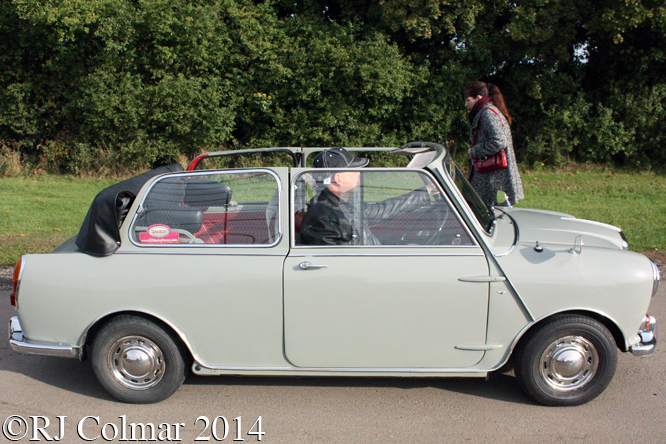
The story behind the 57 1966 Wolseley Hornet Crayford convertibles has all the makings of a great movie seeing as it involves a global baked bean brand, an exclusive deal with a company operating out of two private garages in London and a nudist colony, the rest of the details will have to wait for a future blog.

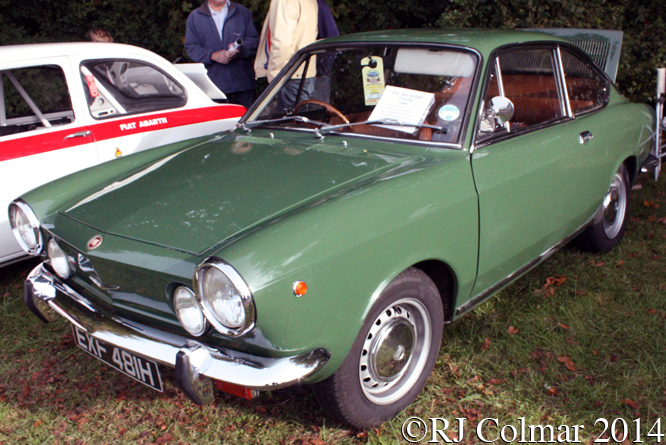
FIAT 850 Coupé, Autumn Classic, Castle Combe

At my very first race meeting out in Zambia one of the more unlikely competitors drove a FIAT 850 Coupé like the 1969 example above on the Bristol Pegasus Motor Club stand.

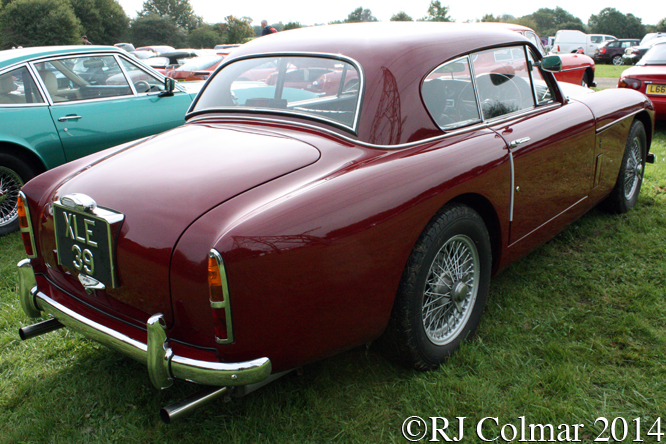
Aston Martin DB Mk III FHC, Autumn Classic, Castle Combe

The 1959 Aston Martin Fixed Head Coupé with a Tickford notch body is an extremely rare vehicle, only five were ever built.

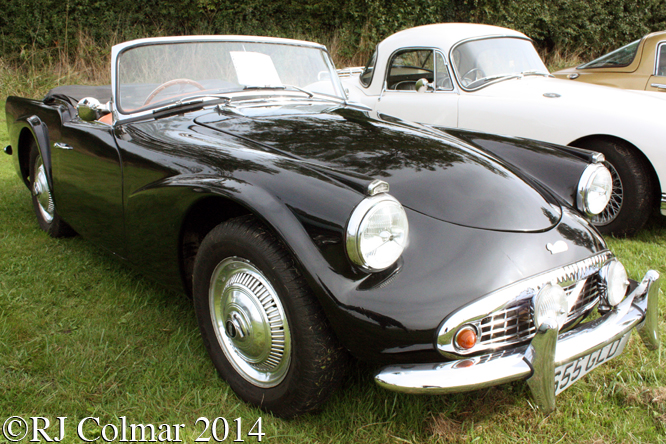
Daimler Dart SP 250, Autumn Classic, Castle Combe

If I had any spare cash I’d be seriously tempted to buy this 1963 Daimler SP250 which has just 38,000 miles on the clock, if you would like to become it’s fifth owner I have the contact details of the vendor.

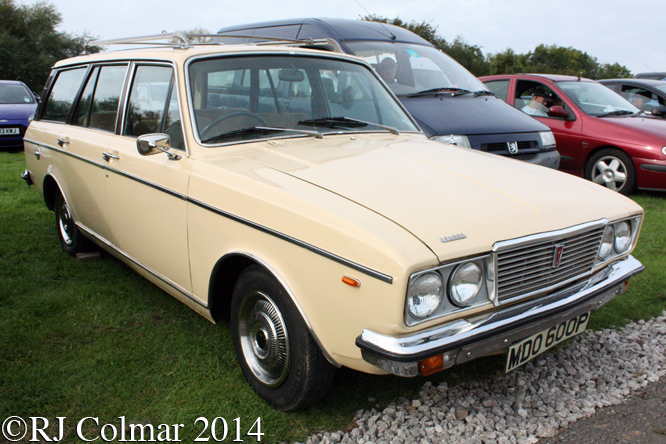
Humber Sceptre Estate, Autumn Classic, Castle Combe

Slightly out of period was this 1976 Humber Sceptre based on a design first seen in 1967. The Sceptre Estate first seen in 1974 was one of the earliest UK station wagons to feature a light in the loading area and a rear screen wiper, the Humber name disappeared under Chrysler UK’s post 1976 branding strategy.

Bristol 450, Autumn Classic, Castle Combe

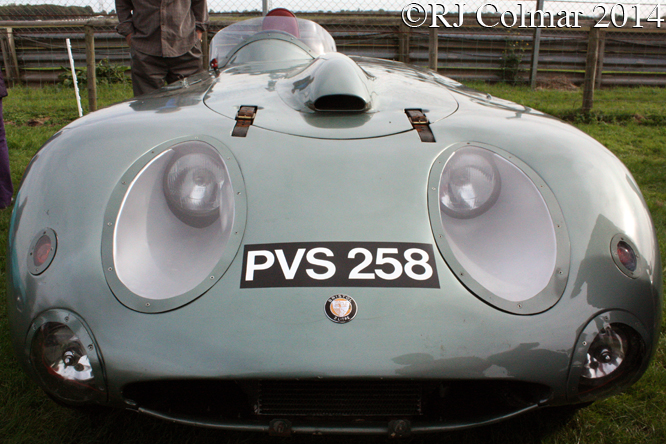
One car I have been waiting see first hand for some time is the sole remaining Bristol 450 belonging to Simon Draper, I believe this car finished 7th over all and first in the 2 litre class at the 1955 Le Mans 24 Hours. The prize money from the teams success was donated to victims of the 1955 Le Mans disaster after the team withdrew from the sport having scored two consecutive Le Mans class victories.

Triumph Dolomite, Autumn Classic, Castle Combe

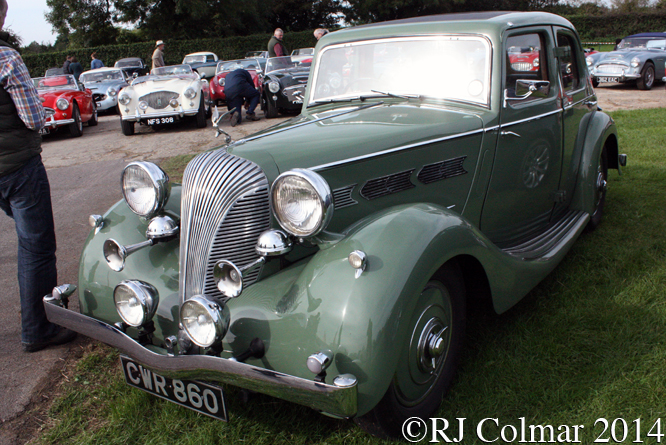
A nice quiz question what is the connection between all of the vehicles in this photograph ? Answer Donald Healey who was responsible for the Austin Healey’s in the back ground and the Hudson Terraplane inspired 1937 Triumph Dolomite Saloon in the foreground.

Lotus IX, Mike Marsden, Autumn Classic, Castle Combe

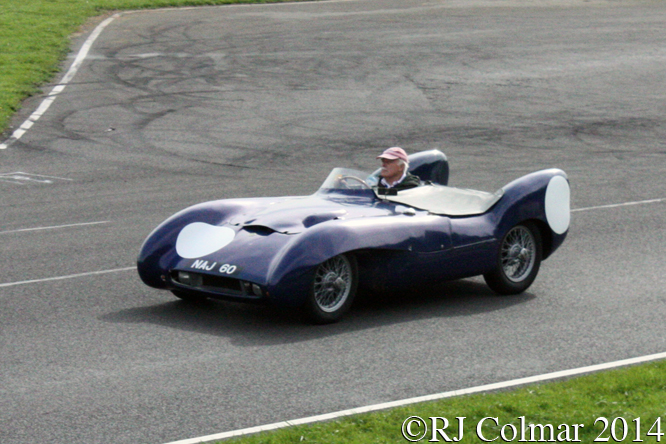
Former Concorde wind tunnel engineer and Historic Lotus Register Lotus Mk IX registrar Mike Marsden is seen above in his 1955 Lotus Mk IX which he has owned since 1967.

Morris Mini Cooper S, Dave Foster, Autumn Classic, Castle Combe

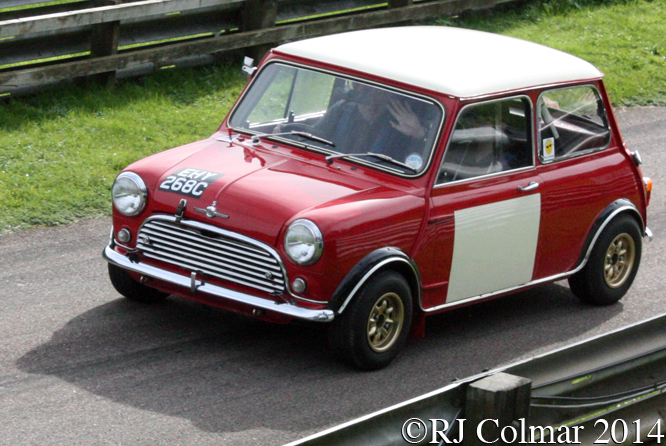
Dave Foster is seen coming into the pits above in his immaculate 1965 Morris Mini Cooper S which he has driven in competition for the last decade clocking up 10,000 competition miles.

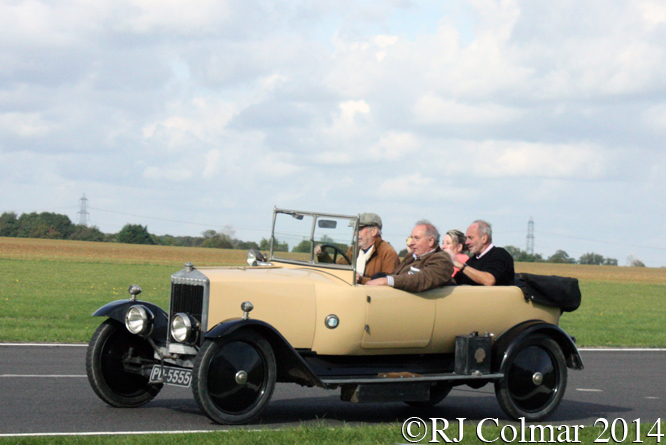
Horstman 4 Seater, Trevor Turpin, Autumn Classic, Castle Combe

Until the Autumn Classic I’d never heard of a Horstman, it turns out they made nearly 3,000 vehicles just down the road in Bath between 1915 and 1929. These days Horstman, which patented a torsion bar suspension system for tracked military vehicles in 1922, continues to specialise in suspensions for military vehicles. The 1923 Horstman above is believed to have belonged to the companies founder Sidney Horstmann OBE.

FIAT Isotta Fraschini, Mike Vardy, Autumn Classic, Castle Combe

In 1905 FIAT drew up plans for a world land speed record car which was to have two in line four cylinder motors producing upto 200 hp. The car never got built but nearly 20 years ago Graham Rankin undertook to build the car anyway. 13 years later he sold the unfinished project complete with a WW1 surplus 250hp Isotta Fraschini 16.5 litre / 1014 cui 6 cylinder aero motor to Mike Vardy who spent another seven years completing the FIAT Isotta Fraschini. Mike appeared to have great fun hanging the tail out on some parts of the circuit during his demonstration.

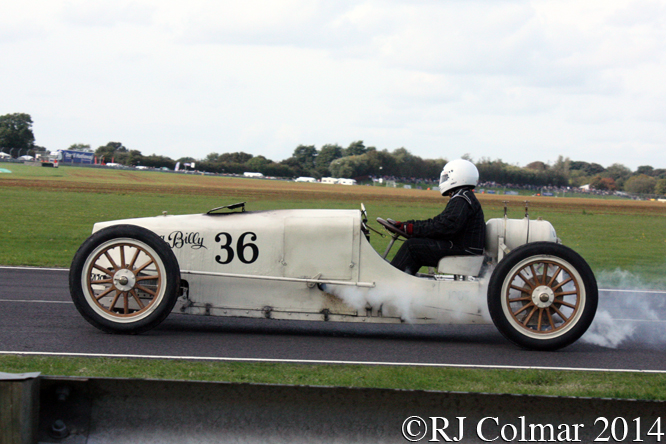
White Whistling Billy, Robert Dyke, Autumn Classic, Castle Combe

Finally last year I saw this recreation White Sprint Car at Race Retro, this year I finally got to see Dr Robert R. Dyke driving it at speed, only 60% of the boilers potential pressure was used but it still moved at an impressive speed given that it only has 2 x twelve inch brake drums on the rear axle.

Thanks for joining me on this “Classics @ Autumn Classic” edition of “Gettin’ a li’l psycho on tyres” I hope you will join me again tomorrow when I’ll be looking at a limited edition Hemi Challenger. Don’t forget to come back now !
Share