Category Archives: Uncategorized

Zwei Eins – 6 Hours Of Silverstone

Thanks to catching a break with my car insurance last week I found I had just enough petrol in the tank and cash in my pocket to take a 2 hour drive to go and see the 6 Hours of Silverstone World Endurance Championship Sports Car race.
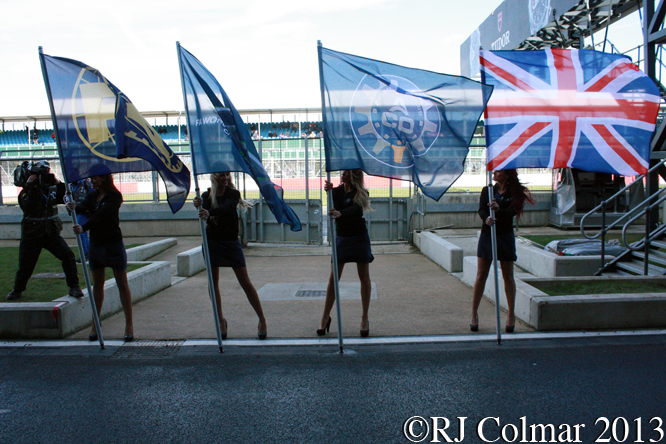
6 Hours Of Siverstone, Silverstone, UK

Recently there has been a lot of debate about the possibility of a female ever winning the World Championship, 33 years ago I remember seeing Desiré Wilson co drive her de Cadenet Ford to victory in the Silverstone 6 hour race with Alain de Cadenet and the top line cars have not become anymore physically demanding since. So it was a tad disappointing to see the sports governing body the FIA setting a bad example of equality by sanctioning the use of so many females as eye candy with out giving the ladies in the audience something corresponding to look at, such a move might just make the sport a little more appealing across the board.
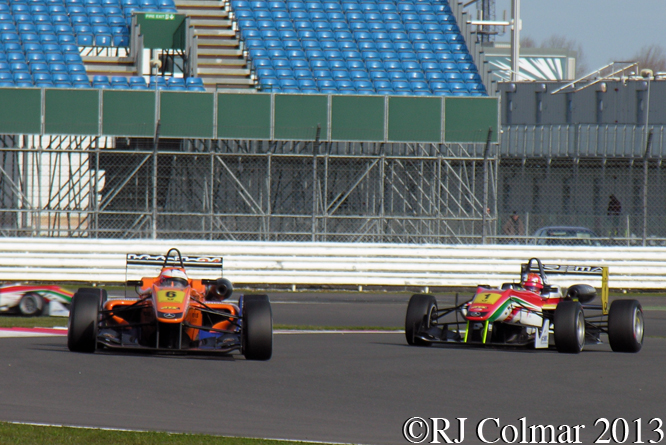
ROSENQVIST,  MARCIELLO, Dallara, FIA Formula 3, Silverstone, UK

First race of the day was the third and final Formula 3 race of the weekend, that forms part of the FIA European Formula 3 Championship. Starting on a slippery track it was not long before six competitors fell off requiring the use of the pace car to clear up some of the mess. Felix Rosenqvist was leading from a third place on the grid, in the #6 Mucke Motorsport Dallara-Mercedes, when the action resumed but Raffaele Marciello driving the #1 Prema Powerteam Dallara-Merc who was the man on the move having out braked his team mate and pole sitter Alex Lynn going into Club after the Safety Car was withdrawn and then chased down Rosenqvist and over taking him on the outside of Stowe. Full results for all three FIA Formula 3 races can be found on this link. Ferrari protege Marciello leads the new championship from Rosenqvist, Harry Tincknell, and third place finisher Lynn, the next round is at Hockenheim on May 4th.
Howson, Ka To, Impertori, 6 Hours Of Siverstone, Silverstone, UK

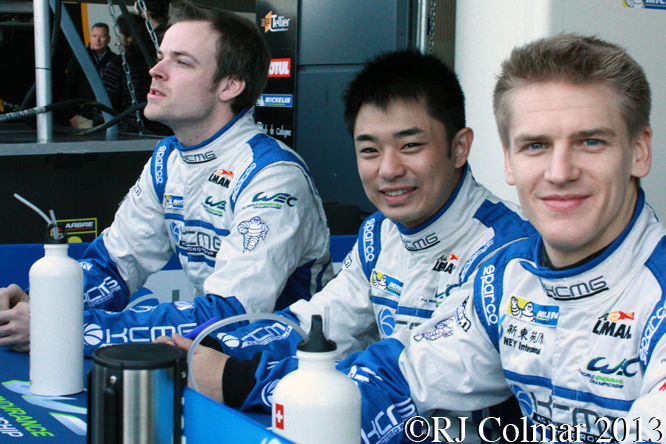
After the Formula 3 race it was time to go on the pits walk about where many of the drivers were busy signing autographs that is all except KCMG Motorsports trio (left to right) Matthew Howson, Jim Ka To and Alexander Imperrori who had no giveaways to sign, they were however armed with their own pens and they kindly signed my programme before going on to finish the race 12th overall, 6th in class from a 25th place start in their #47 Morgan Nissan.
Lotus Praga T128, 6 Hours Of Siverstone, Silverstone, UK

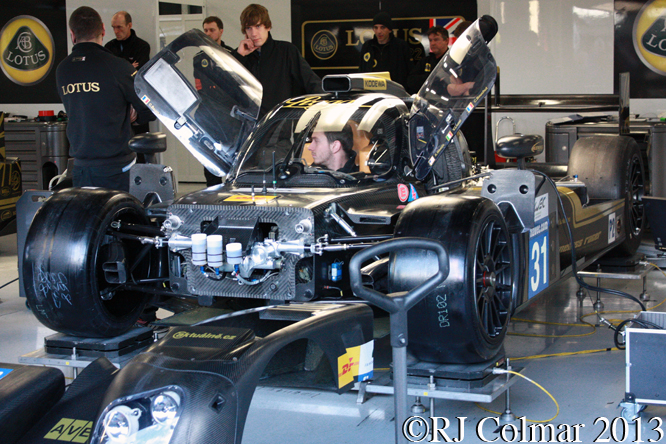
Not for the first time two Lotus share the same Type Number, the original Lotus T128 was a Renault powered 2011 Formula One car built by what is now called the Caterham Formula One team while seen in the pits above is the new Type 128 a LMP 2 Endurance racer running with a Judd V8 motor that carries the name plate of the Czechoslovakian kart manufacturer Praga. The #31 Lotus Praga T128 scheduled to be driven by Kevin Weeda, Vitantonio Liuzzi and Christophe Bouchut completed the least number of laps, 44, and was classified 31st and last, while the sister #32 driven by Thomas Holzer, Dominik Kraihamer and Jan Charouz completed 113 laps and was classified 29th on the teams debut outing.
Aston Martin, 6 Hours Of Siverstone, Silverstone, UK

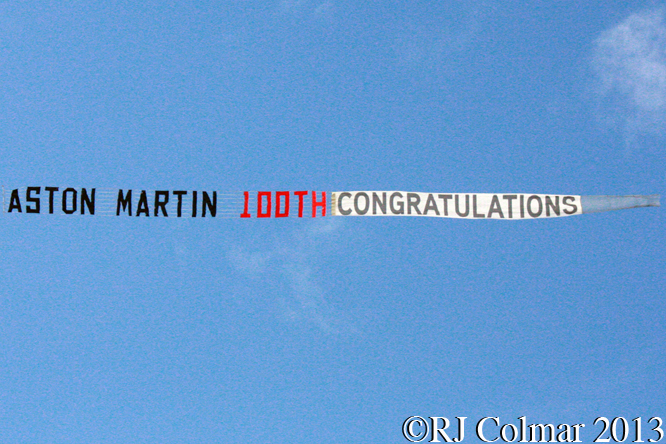
A timely reminder of Aston Martin‘s centenary year appeared just before the start of the race, expect to see some more Aston Martin blogs in the months ahead.
Start, 6 Hours Of Siverstone, Silverstone, UK

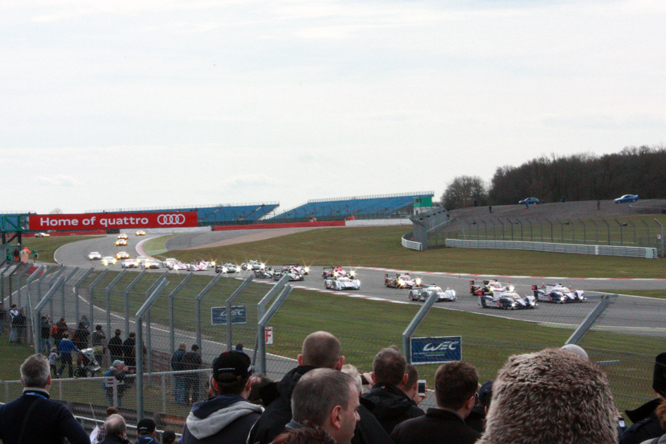
31, of an expected entry of 33, cars took the start of the 6 Hours of Silverstone race the front row was locked out by Toyota TS030 Hybrids with Alexander Wurz starting on pole in the #7 car. The Audi R18 e-Tron quattro‘s of Tom Kristensen and André Lotterer started line astern in 3rd and 5th places flanked by the Lola Toyota B12/60 Coupé’s of Nicolas Prost and Matthias Beche.
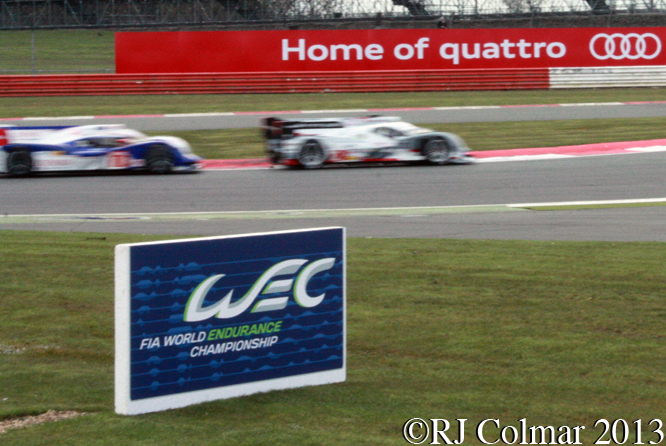
Kristensen.Audi, Wurz, Toyota, 6 Hours Of Siverstone, Silverstone, UK

Toyota’s moment of glory proved to be short lived as Kristensen relieved Wurz of the lead going into Vale after only a hand full of laps, the sister Audi also made short work of both Toyota’s and soon settled into second place.
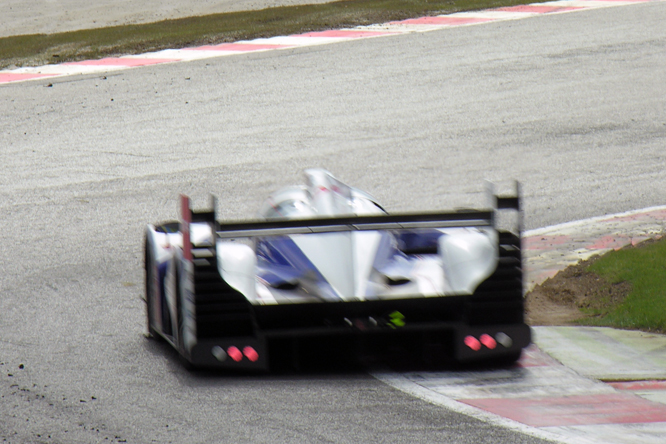
Toyota TS030 Hybrid, Maggotts, 6 Hours Of Siverstone, Silverstone, UK

While the Audi’s sailed into the distance the Toyota’s which looked great in the corners like Maggotts above were visibly unstable on the straights when compared to the overall leaders.
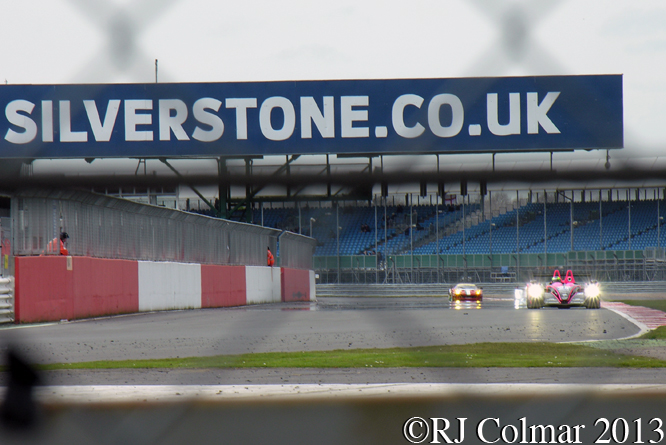
Pla, Morgan Nissan, Pit Straight, 6 Hours Of Siverstone, Silverstone, UK

While I was spectating at the end of, the original now ‘National’ pits straight, I remembered that it was 35 years since I had first attended the Silverstone 6 hours and seen the awesome Porsche 935/78 “Moby Dick” win by a comfortable 7 laps. Above Oliver Pla guides the #24 OAK Racing Morgan Nissan he shared with David Heinemeier Hanson and Alex Brundle to an eight place overall finish, 2nd in class.
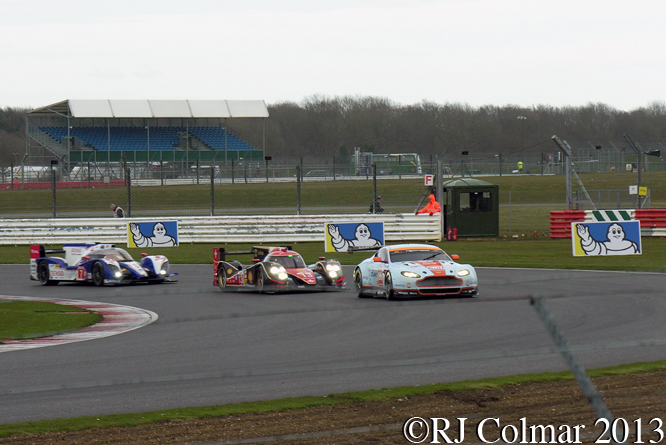
Aston Martin, Lola, Toyota, Luffield, 6 Hours Of Siverstone,

Aston Martin fielded four Vantage V8’s two in the LMGTE Pro class and two in the LMGTE Am class all four cars finished with the #97 of Darren Turner, Stefan Mücke and Bruno Senna winning the Pro class and #95 of Christoffer Nygaard, Kristian Poulsen and Allan Simonsen winning the Am class. Above the Am class #96 of Roald Goethe, Stuart Hall and Jamie Campbell-Walter leads the Rebellion Racing #13 Lola Toyota B12/60 Coupé of Andrea Belicchi, Mathias Beche and Cong Fu Cheng, which finished 6th overall and the 4th place finishing #7 Toyota of Wurz and Nicolas Lapierre through a slippery Luffield as light rain that caught out a couple of competitors was falling.
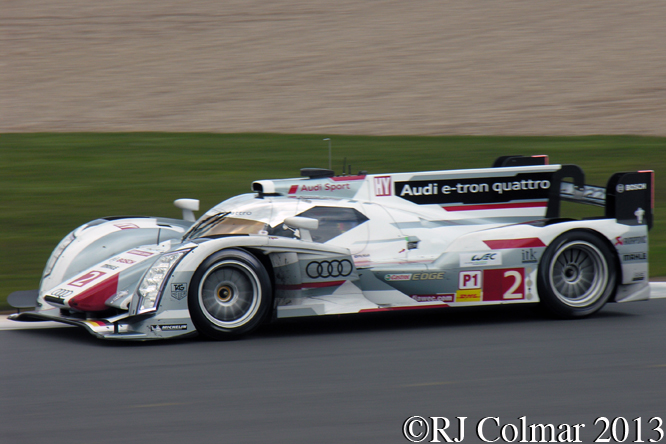
Loic Duval, Audi R18 e-tron quattro, 6 Hours Of Siverstone,

Loic Duval, seen above at Club, drove the winning Audi through the middle of the race swapping the lead with the sister Audi as the pit stops cycled through.
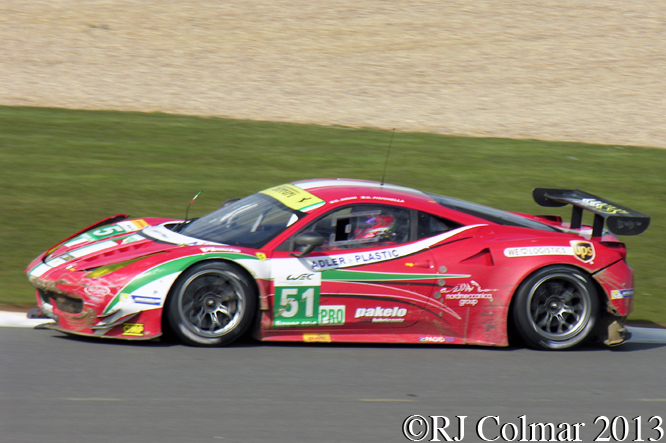
Bruni, Ferrari F458 Italia, Club, 6 Hours Of Siverstone,

The LMGTE class Ferrari 348 Italia’s all appeared to get involved in incidents of one kind or another the AF Corse #51 Pro entry for former Formula One Drivers Gianmaria Bruni and Giancarlo Fisichella carries war wounds on it’s way to an 18th place finish overall, 5th in class.
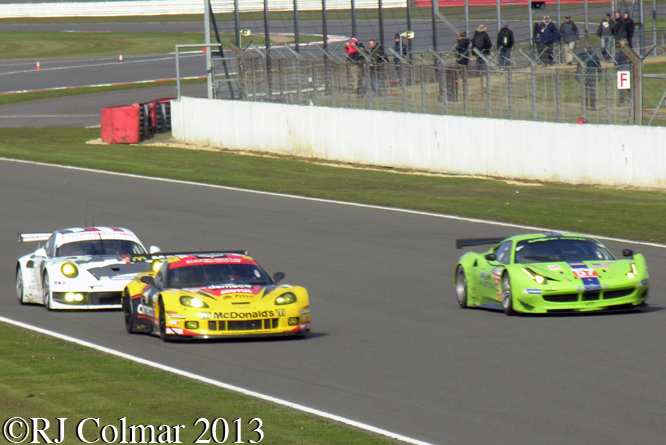
Ferrari, Chevrolet, Porsche, Hangar Straight, 6 Hours Of Siverstone,

The appeal of Endurance racing is that somewhere there is always a battle over tarmac above the 6th in class #57 LMGTE Am Krohn Racing Ferrari of Tracey Krohn, Nicoläs Johnson and Maurizio Mediani dukes it out going on to the hangar straight with the 2nd in class LMGTE AM class Labre Compétition Chevrolet Corvette C6-ZR1 of Patrick Bornhauser, Julien Canal and Fernando Rees with the 3rd in class LMGTE Pro works Porsche AG Team Manthey Porsche 911 RSR of Marc Lieb, Richard Lietz and Domain Dumas in hot pursuit.
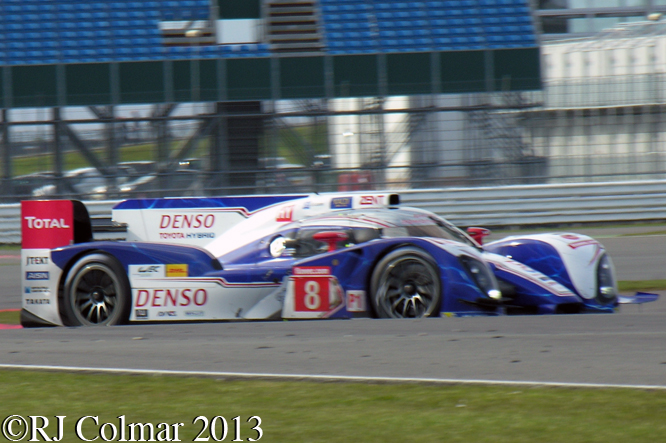
SARRAZIN, Toyota TS030 Hybrid, The Loop, 6 Hours of Silverstone

Like the works Porsche AG Manthey team cars the works Toyota and Audi entries finished in reverse order the #8 Toyota of Anthony Davidson, Sébastian Buemi and Stéphane Sarrazin leading the #7 Toyota home to 3rd and 4th place finishes respectively. Sarrazin is seen above negotiating the Loop.
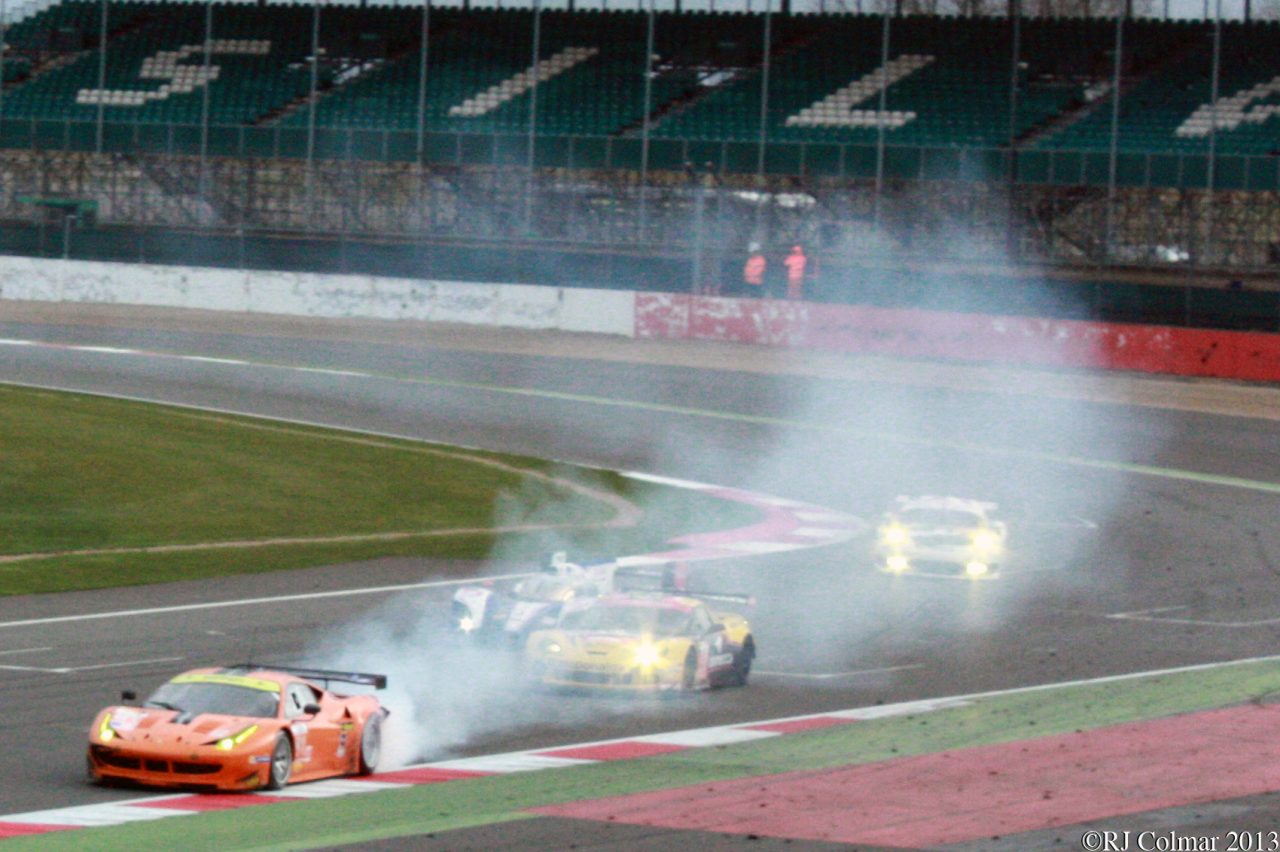
Ferrari, Chevrolet, Toyota, Porsche, Club, 6 Hours of Silverstone

There was drama right through the field right up until the end with only 5 mins to go a tyre on the 8 Stars Motorsports LMGTE Am #81 Ferrari 458 Italia of Vicente Potolicchio, Rui Aguas and Philip Peter let go demoting it to a 3rd in class finish on it’s WEC debut, behind the following #50 Corvette above, despite having earlier had to stop to replace a door.
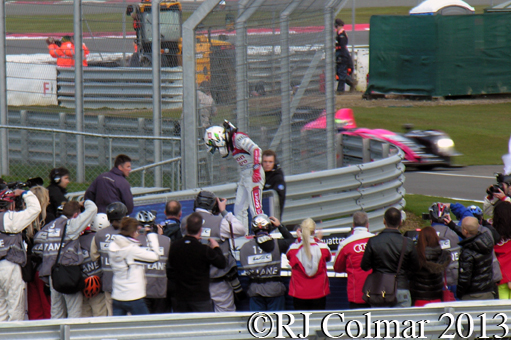
Alan McNish, 6 Hours of Silverstone

The #1 Audi of reigning world endurance champions Lotterer, Benoit Treluyer and Marcel Fässler was leading with 5 mins to go when a front drive shaft broke which allowed team mate Allan McNish to nip through and take a three second victory over the now two wheel drive #1 both Audi’s finishing a lap ahead of the #8 and #7 Toyota’s. McNish is seen above taking a bow after finishing the race. Full results for the 6 Hours of Silverstone can be found on this link.

All in all £40 including official programme well spent on 6 hours of nonstop action with an 8 mile walk in and around the track thrown in. Next time I must remember to take more batteries for my trusty AM/FM Sony Walkman Compact Cassette player with which to stay in touch with the on track action via Radio Silverstone.

Thanks for joining me on this “Zwei Eins” edition of “Gettin’ a li’l psycho on tyres” I hope you will join me again tomorrow. Don’t forget to come back now !

Share

More Power Bigger Drums – Morris Oxford II

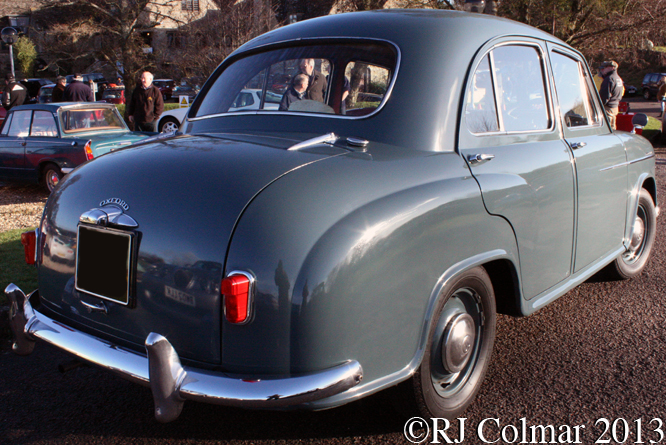
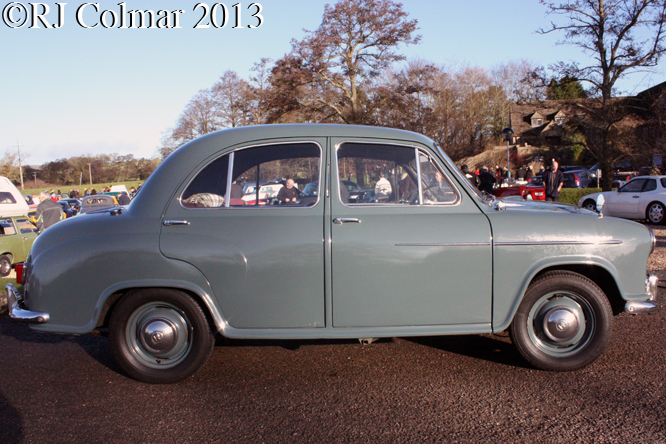
For 1948 Alex Issigonis designed the Morris Oxford to compliment the smaller Morris Minor is the Morris model mix, the Oxford MO boasted a 40.5 hp 4 cylinder side valve motor inherited from the prewar Morris 10 which it replaced, unitary body construction, torsion bar front suspension and hydraulically activated 8 inch drum brakes with which to bring the 72 mph vehicle to rest.

Morris Oxford II, Cotswold Classic Car Club, Frogsmill, Andoversford

In 1952 Morris merged with it’s great rival Austin with William Morris, now Lord Nuffield, becoming the British Motor Corporation’s first Chairman, thanks to the merger Morris was able to ditch it’s antiquated motors for those from the Austin range.

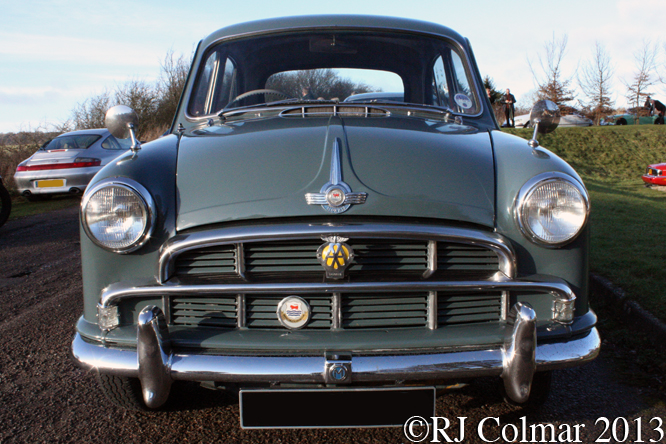
Morris Oxford II, Cotswold Classic Car Club, Frogsmill, Andoversford

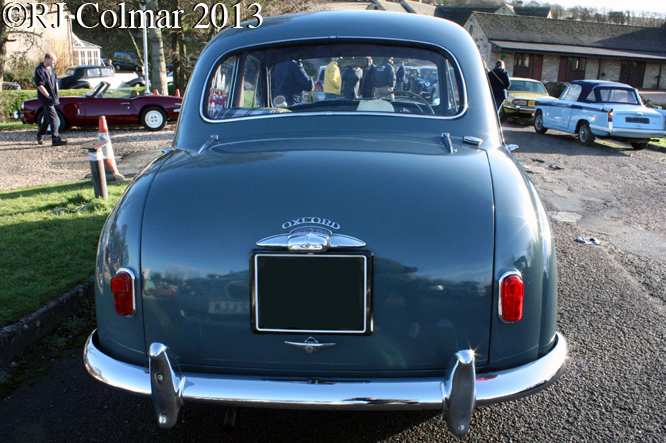
As a consequence the Morris Oxford II first seen in 1954 was powered by a 50 hp Austin designed 4 cylinder over head valve B series motor which increased the top speed to 74 mph better acceleration and better fuel consumption 28 mpg up from 26 mpg of the Oxford MO.

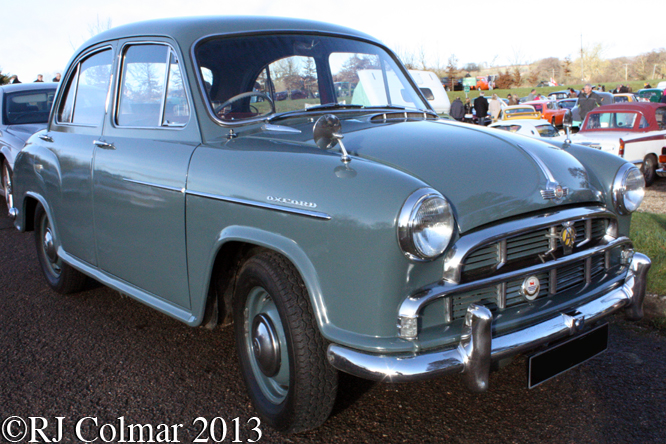
Morris Oxford II, Cotswold Classic Car Club, Frogsmill, Andoversford

The column shift 1955 Oxford II, seen here earlier this year as the Cotswold Classic Car Club Meeting held at Frogsmill Andoversford, was equipped with 9 inch hydraulic brakes to cope with the increase in performance and came with a heater as standard.

Morris Oxford II, Cotswold Classic Car Club, Frogsmill, Andoversford

The Oxford II was available in 4 door saloon / sedan or 2 door Traveller Estate / Station wagon variants, the former of which would live on as the Hindustan Landmaster built under licence until 1958 in India.

Morris Oxford II, Cotswold Classic Car Club, Frogsmill, Andoversford

From 1954 87,342 Oxford II’s were built at plants in the UK and Australia until 1956 when the model was replaced by the Morris Oxford III.

Thanks for joining me on this “More Power Bigger Brakes” edition of “Gettin’ a li’l psycho on tyres”, I hope you will join me again tomorrow. Don’t forget to come back now !

Share

Short Step Side – Chevrolet Apache 31

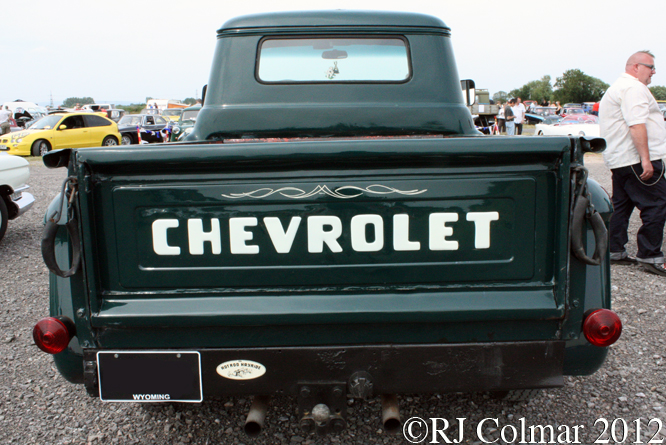
In 1955 Chevrolet replaced it’s Advanced Design pickups with the Task Force range which along with squared front styling offered options that included 12 volt electrics, V8 motors and 6′, 7′ or 8′ bed lengths.

Chevrolet Apache 31, Summer Classics, Easter Compton

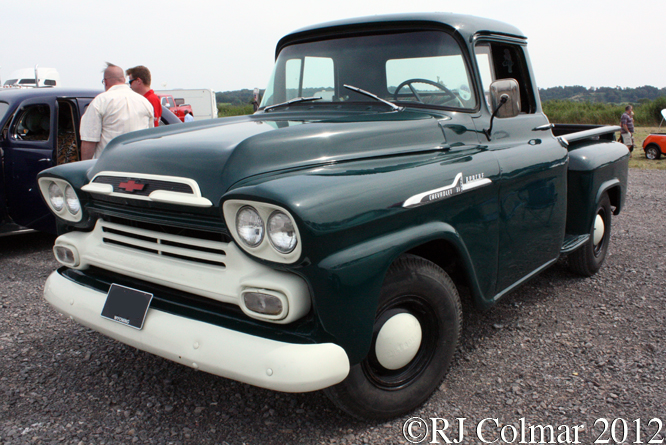
The Task Force or early era V8 Chevy pickups were built with three different cab styles from ’55 to ’59. In ’55 the first series Task Force pickups featured a cab with distinctively separate wings/fenders and bonnet/hood similar to the Advanced Design series which the Task Force replaced. Mid way through ’55 a new Task Force hood was introduced with integrated wings/fenders and bonnet/hood with a pair of head lights and in 1958 the Task Force Series cabs received a face lift distinguished by two pairs of head lights as seen here.

Chevrolet Apache 31, Summer Classics, Easter Compton

Power options for 1958 Apaches were either 145 hp 3.8 litre 235 cui Thriftmaster in line six or 160 hp 4.6 litre 283 cui small block Trademaster V8, today’s featured vehicle is officially recorded as having a 4 litre / 244 cui motor of yet to be determined origin.

Chevrolet Apache 31, Summer Classics, Easter Compton

The trim details on this workhorse were totally in keeping with the wonders of the late 50’s jet age, Apache 31 denotes that this is the 1/2 ton in the Task Force series.

Chevrolet Apache 31, Summer Classics, Easter Compton

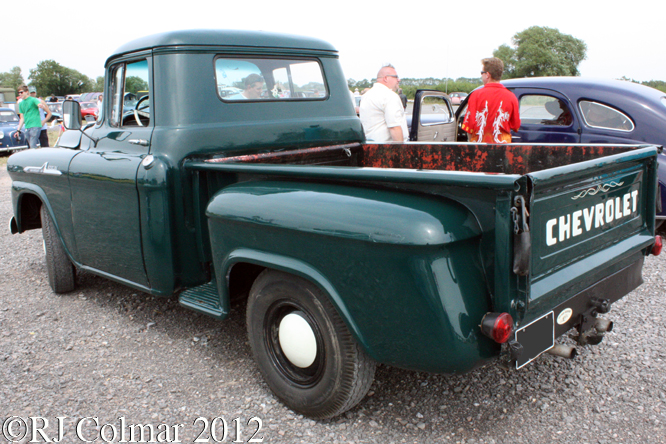
After the introduction of the optional full width Fleetline bodies in 1959, an example of which I’ll be looking at next week, pick ups with non integrated rear wheel arches became known as step sides.

Chevrolet Apache 31, Summer Classics, Easter Compton

Apache 31’s were built on the shortest 114 inch wheel base option with a 6 and a half foot bed. With the introduction of the small block V8 to the Task Force Chevrolet maintained a dominant position in the Pickup market over Ford.

Thanks for joining me on this “Short Step Side” edition of “Gettin’ a li’l psycho on tyres” I hope you will join me again tomorrow. Don’t forget to come back now !
Share

Pete Aron’s Yamura – McLaren Ford M2B

With the decline in fortunes of the Cooper Car Companies Grand Prix program, for which he had been driving since his arrival in Formula One in 1958, Bruce McLaren decided that with the success of his McLaren M1 sports cars he could follow his former mentor Jack Brabham, who left Cooper to build his own Formula One cars in 1962, and start his own Grand Prix team in time for the new 3 litre / 183 cui regulations which came into effect in 1966.

Through 1965 McLaren built and extensively tested the M2A which was designed by Robin Herd and fitted with a 4.5 litre / 274.5 Oldsmobile V8 from the McLaren M1 program.

McLaren Ford M2B, Donington Park Museum

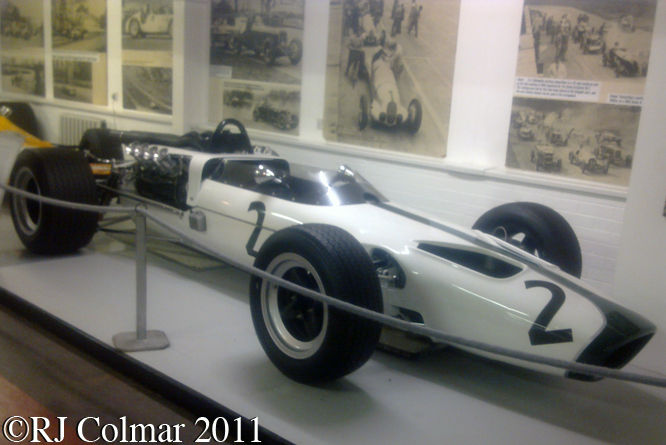
The monococoque of the McLaren M2A made extensive use of compressed balsa wood sandwiched between thin sheets of aluminium called Malite which made the monocoque much stiffer than a conventional monocoque as had been successfully used in the Lotus 25 and it’s successor the Lotus 33.

However Malite proved to be difficult to work with and repair and so for the McLaren M2B the use of Malite was restricted to the inner skins and upper surfaces of the monocoque which still offered significant advantages to the stiffness of the structure.

McLaren Ford M2B, Donington Park Museum

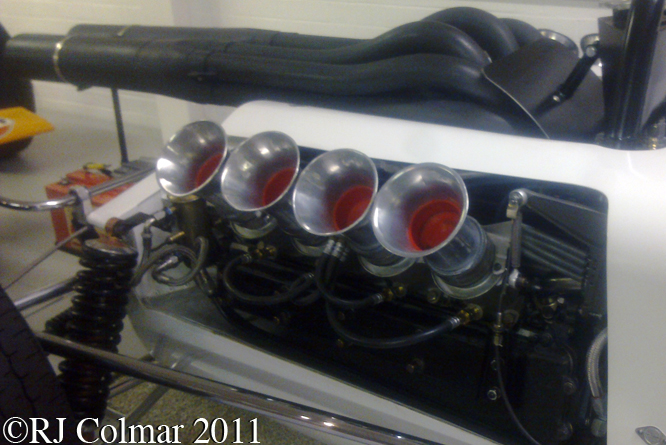
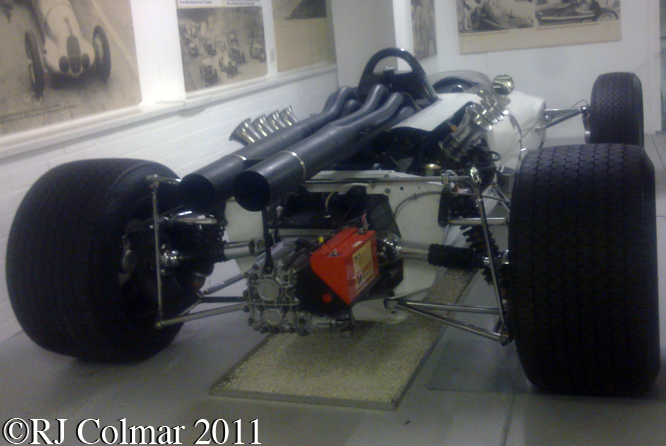
Originally the M2B was powered by a V8 motor derived from Ford’s Indy programme, but this proved way to heavy allegedly when connected to the gearbox the whole power train weighed as much as some rivals entire cars, while later on a much lighter and less powerful Serenissima motor was also tried.

The two engines are easily distinguished the Indy derived Ford has exhausts between the Vee formed by the eight cylinders as seen here and the Serenissima had more conventional side exhausts.

McLaren Ford M2B, Donington Park Museum

Bruce McLaren made 4 starts in the M2B, after retiring at Monaco he realised the Ford based motor needed less weight and more power so he secured the use of the Serenissima’s as an interim measure. At the British Grand Prix Bruce scored his first World Championship point in a car bearing his own name. By the US Grand Prix improved Ford based motors were back from Traco and Bruce came in 5th, before retiring at the Mexican Grand Prix which closed the season.

Although the season was a failure the team learned from their mistakes and made do with BRM 2 litre / 122 cui V8 motors for 1967 before becoming one of the three teams using the Ford Cosworth DFV, alongside Lotus and Tyrrell in 1968.

The white and green colour scheme of the M2B is said to have been mandated by a deal between Bruce and the producers of the John Frankenheimer’s film “Grand Prix” which required the McLaren M2B to look like the fictional Japanese “Yamura” which James Garners character Pete Aron drove to a championship win in the film.

Thanks for joining me me on this Malite Monocoque edition of “Gettin a li’l psycho on tyres”, I hope you will join me again tomorrow. Don’t forget to come back now !

Share

Project Sport 500 – Lotus Esprit Sport 350 No.26

When the Lotus Type 82 Esprit Turbo was introduced in April 1981 it had a new chassis which was built to accommodate a V8 or the hitherto ubiquitous 4 cylinder type 907/910 motors. It was not until two complete body restyles later that the V8 type 918 would finally see the light of day in the back of a Julian Thompson styled Esprit in 1996.

Lotus Esprit, Sport 350, Classic and Sports Car Action Day, Castle Combe

The Julian Thompson styled Esprit replaced the Peter Stevenson styled Esprit in 1993 alongside the new body came a redesigned interior and for the first time on an Esprit power steering.

Lotus Esprit, Sport 350, Classic and Sports Car Action Day, Castle Combe

The twin turbocharged all aluminium 918 V8 Esprits were restricted to 350 hp which was deemed the most that the Renault derived transmission and drive train could handle. In 1998 V8 Esprits were built to either luxury SE or sporty GT specification.

Lotus Esprit, Sport 350, Classic and Sports Car Action Day, Castle Combe

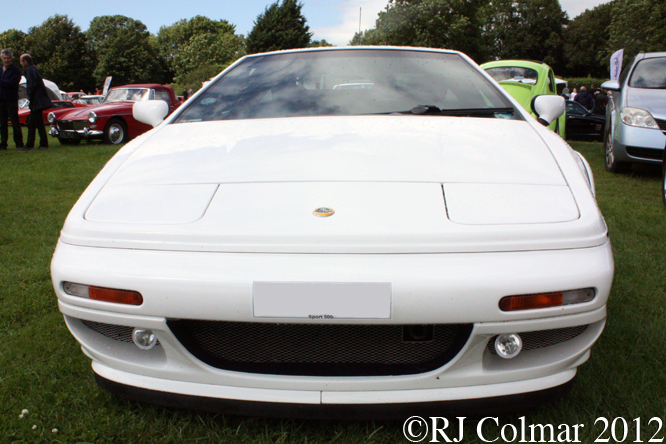
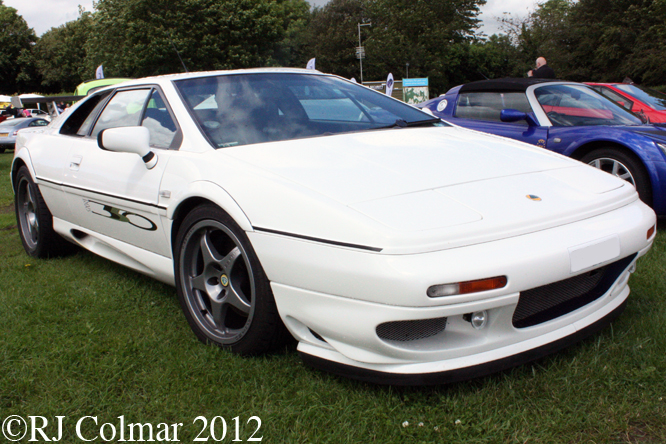
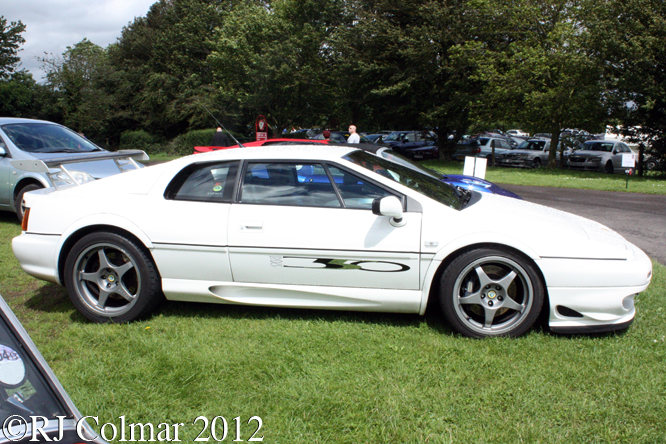
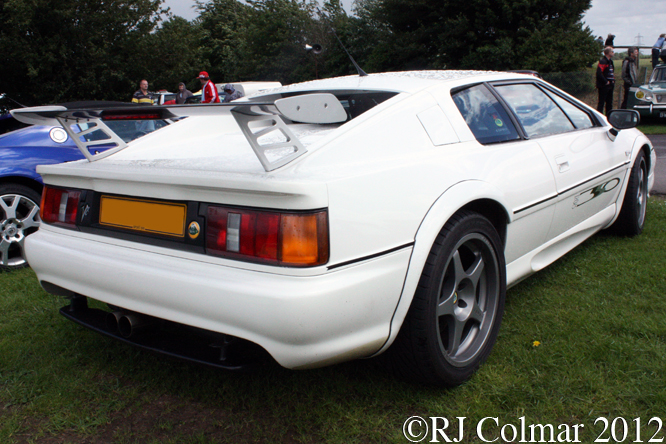
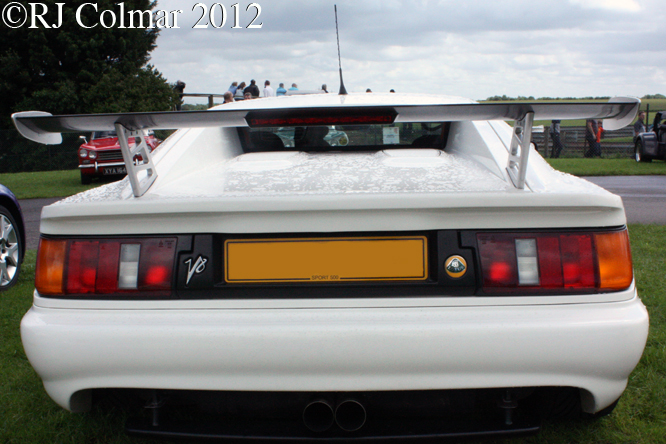
The ultimate incarnation of the Esprit was the Sport 350, such as the one seen here during last years Classic and Sports Car Action Day at Castle Combe. These models were built with AP racing brakes, stiffer suspension, revised electronic control unit (ECU) for the motor and a carbon fibre rear wing mounted on aluminium uprights. With 350 hp these cars can reach 100 mph from rest in just under 10 seconds.

Lotus Esprit, Sport 350, Classic and Sports Car Action Day, Castle Combe

Only 55 of an intended production run of 50 Esprit Sport 350’s were built between 1999 and 2001, all bar 48 of them were painted silver, four were black, two white and one ice blue.
Lotus Esprit, Sport 350, Classic and Sports Car Action Day, Castle Combe

Rob the owner of Sport 350 No.26, also known as Project Sport 500, has upgraded this particular vehicle to produce 500 hp and “run right past 60 mph in (the) first of it’s six gears”. You can see some of the work Rob has undertaken to achieve this performance on this linked page.

Only 15 Sport 350’s remain in the UK according to Rob one of them is a right off in a salvage yard.

My thanks to Rob for his help with today’s post.

Thanks for joining me on this “Project Sport 500” edition of “Gettin’ a li’l psycho on tyres”, I hope you will join me again tomorrow. Don’t forget to come back now !

Share

Four Pot Revisited – Ferrari 860 Monza #0604M

A couple of years ago Steve Arnaudin sent me a photo of todays featured 1956 Ferrari 860 Monza, chassis #0604, purchased by his father from the Californian photographer and racing driver Carlyle Blackwell. I wrote a blog which summarised the 1956 World Sports Car Championship which is linked here.

Ferrari 860 Monza. Goodwood Revival

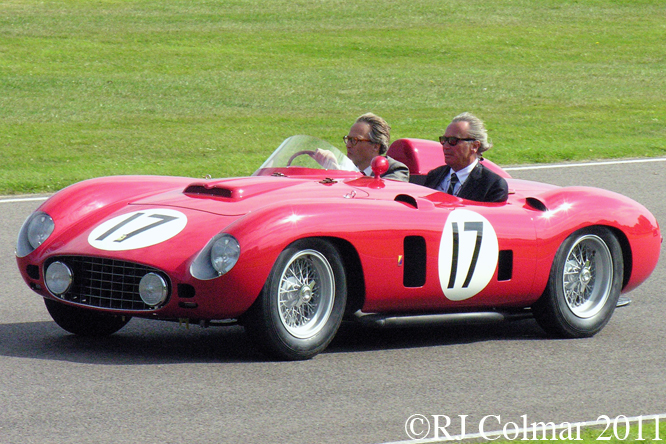
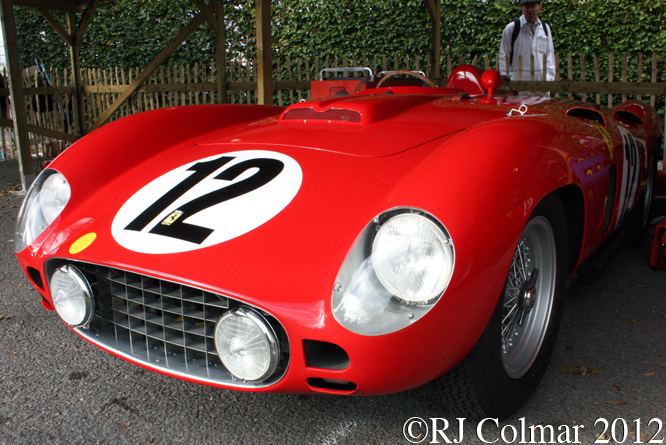
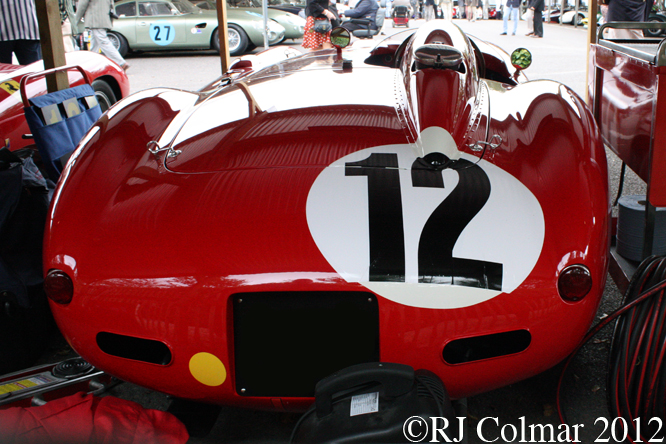
Today’s blog will focus on the story of this particular chassis which is seen above with Lord March at the wheel in the Juan Manuel Fangio Celebration parade at the Goodwood Revival in 2011. The car is seen above carrying the same #17 as when Fangio and Eugenio Castellotti drove it to a debut victory in the Sebring 12 Hours Race in March 1956.

Ferrari 860 Monza. Goodwood Revival

#0604M was subsequently sold to Californian John von Neuman and the following month he entered it for Phil Hill to drive at Pebble Beech where he finished second overall and first in class behind Carrol Shelby who was driving 1955 Ferrari 750 Monza #0510M.

Ferrari 860 Monza. Goodwood Revival

John Von Neuman took over the driving duties in #0604M for the rest of the 1956 season and through 1957 until he put Ritchie Ginther in the car at Laguna Secca at the end of 1957 and at Riverside at the beginning of 1958. Ginther scored a class win and 5th overall first time out and 2nd overall at Riverside. Up to that point von Neumans best results had been a couple of 2nd place finishes in ’56

Ferrari 860 Monza. Goodwood Revival

Jerry Barker bought the car for the 1959 season and on every occasion it finished it was either 1st or 2nd driven by Lew Florence, Barker took the wheel at the Maryhill Lops Hillclimb and also won setting a new record.

Ferrari 860 Monza. Goodwood Revival

Charles Caverns was the owner of 0604M in 1960 and he also recorded a win in the Novice Race at Shelton in April 1960 which is the car last recorded contemporary race appearance.

Ferrari 860 Monza. Goodwood Revival

Amongst the owners of #0604M since 1960 was Jean Sage former Sporting Director of the Renault Formula One team from it’s inception in 1977 and eventual, temporary closure, in 1987. Not long before the top photo was taken #0604M was bought by the current owner a DJ by the name of Chris Evans.

Ferrari 860 Monza. Goodwood Revival

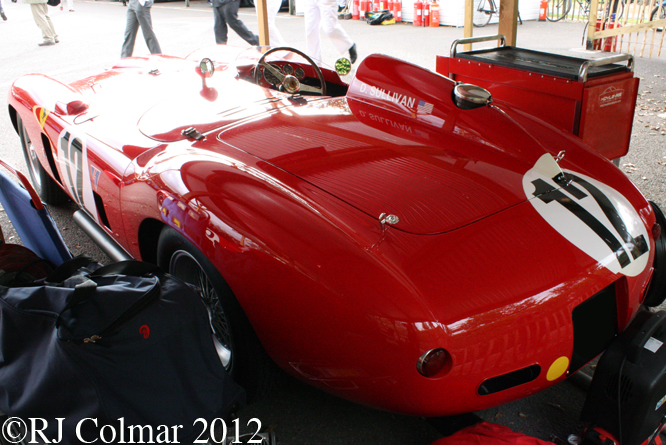
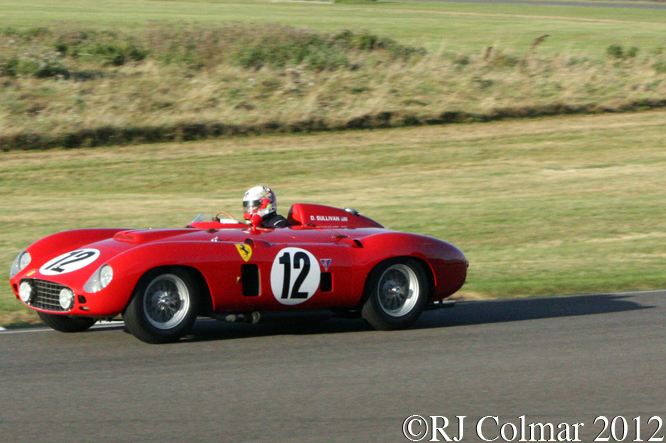
At last years Goodwood Revival meeting Danny Sullivan became the fifth Grand Prix driver to sit at the wheel, after Fangio, Castellotti Hill and Ginther, and only Indy 500 winner to race the car powered by a Lampredi designed 4 cylinder motor. He qualified 15th for the Sussex Trophy Race but did not finish.

Thanks for joining me one this ‘Four Pot Revisited’ edition of “Gettin’ a li’l psycho on tyres”, I hope you will join me again tomorrow. Don’t forget to come back now !

Share

Luxury Elegant Loss Leader – Continental Mark II

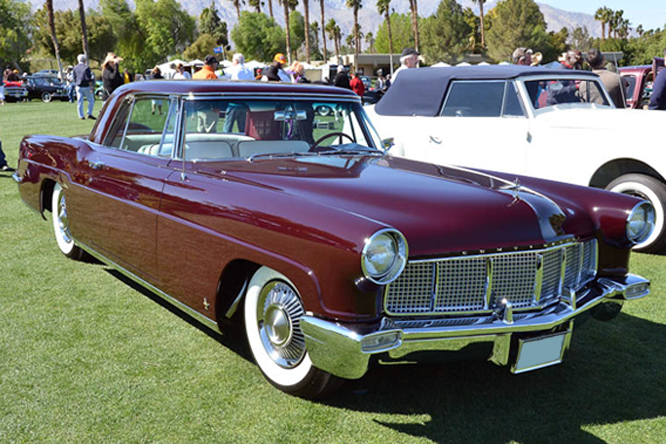
Continental was designed to be a stand alone luxury and elegance brand from Lincoln to compete with GM’s Cadillac and Chrysler’s Imperial Brands that would build on the success of the 1940’s Lincoln Continental.

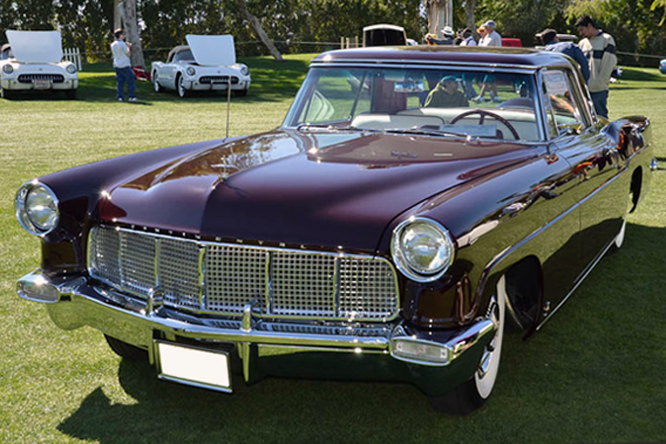
Continental Mark II, Desert Classic C d'E, Palm Springs

Having considered and rejected the idea of employing an outside team to design such an important vehicle Ford designated a team from it’s own special products division comprising chief stylist John Reinhart, chief body engineer Gordon Buehrig assisted by Robert McGuffery Thomas and chief engineer Harley Copp to design the Continental Mark II in late 1952.

Continental Mark II, Desert Classic C d'E, Palm Springs

Ford had hoped to build the car using unibody / monocoque construction but Copp is credited with rejecting the idea on grounds of tooling costs for what was always intended to be a low volume hand built vehicle, and so the car was built with separate chassis and body.

Continental Mark II, Desert Classic C d'E, Palm Springs

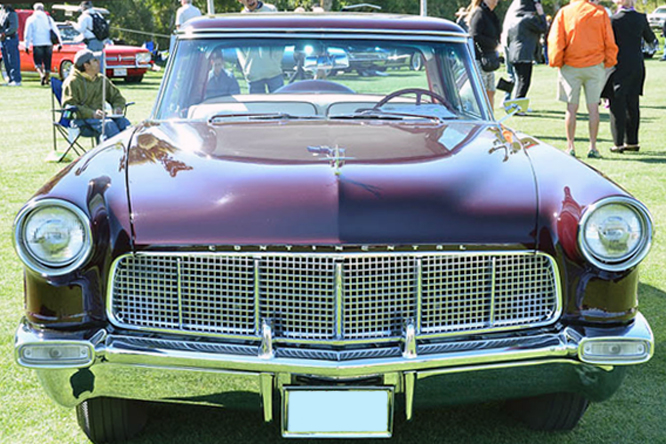
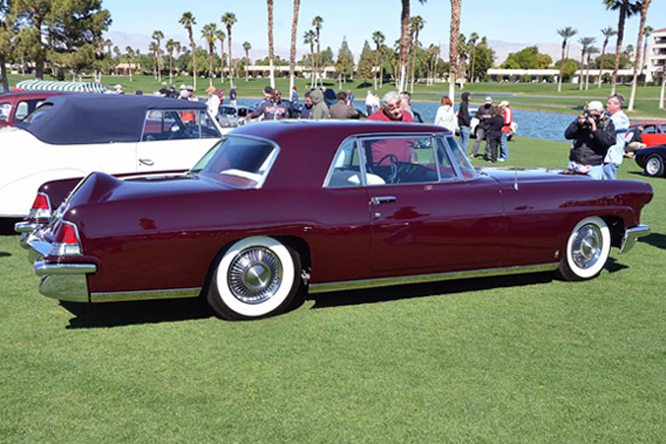
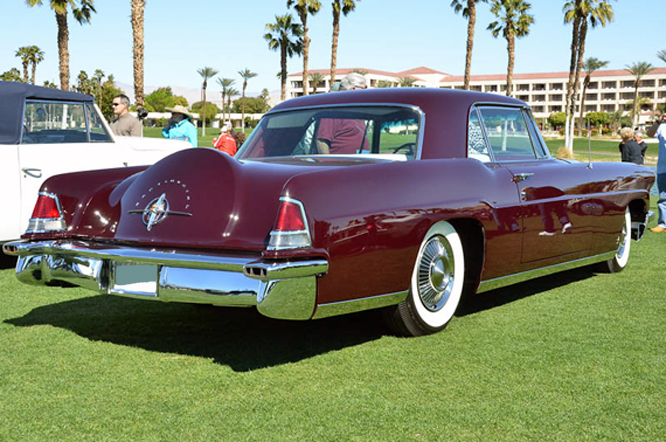
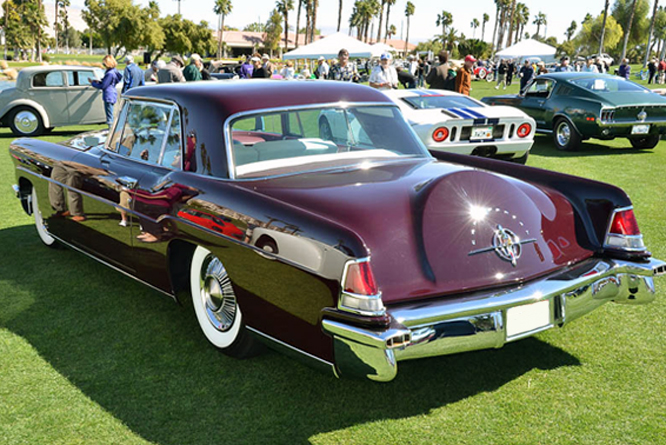
For a car that was launched in 1956 there is a remarkable absence of chrome work giving it, size not withstanding, a refined European look. Power came from a factory blueprinted (hand made from closest to specification hand picked parts), 6 litre / 368 cui Lincoln V8 that was tuned to give 300 hp.

Continental Mark II, Desert Classic C d'E, Palm Springs

The likes of Continental owners Elvis Presley, Frank Sinatra, and the Shah of Iran had only one option choice to make, wether or not to have the US$595 factory fitted air conditioning or not. Elizabeth Taylor was given a Continental Mark II by Warner Brothers that was specially painted to match the colour of her eyes.

Continental Mark II, Desert Classic C d'E, Palm Springs

Priced at US$ 10,000 in 1956 the Continental cost the same as a contemporary Rolls Royce or two Cadillacs, until the arrival of the US$ 13,074 Cadillac Eldordo Brougham in 1957. Surprisingly Ford reckoned they were loosing US$ 1,000 on each Continental Mark II built.

Continental Mark II, Desert Classic C d'E, Palm Springs

Between late 1955 and 1957 around 3000 Continental Mark IIs were built at the end of the production run the Continental brand was reabsorbed into the Lincoln brand and the name hence forth continued as a Lincoln model name.

My thanks to Geoffrey Horton for the photographs of today’s featured 1956 model seen earlier this years at the Desert Classic Concours d’Elegance at Palm Springs.

Thanks for joining me on this “Luxury Elegant Loss Leader” edition of “Gettin’ a li’l psycho on tyres” I hope you will join me again tomorrow. Don’t forget to come back now !
Share