Category Archives: Uncategorized

Enigmatic Swiss Shark – Monteverdi Hai 450 SS

Peter Monteverdi is once quoted as having said “If I didn’t build cars I’d probably be an infinitely richer man as well as a much healtheir one” and looking at the story of the four cars that bear the Monteverdi Hai name it is easy to see why, he only sold one and kept the other three.
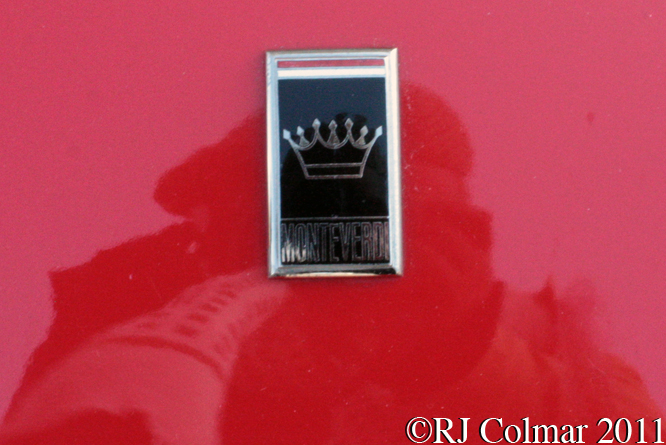
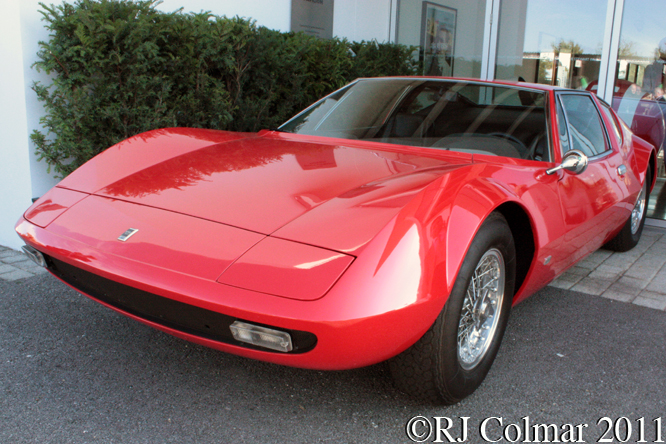
Montiverdi Hai 450 SS, Goodwood Revival

The Hai (German translates as shark) appears to have been developed as Monteverdi’s ultimate sports car, it has precious little luggage space under the bonnet there is just enough room for the spare wheel while the space behind the engine is just big enough for a couple of overnight bags. This car appears to have been built to take on the man who pushed Peter Monteverdi into building his own cars, by demanding an order for 100 cars and payment for them up front, none other than Enzo Ferrari himself.
Montiverdi Hai 450 SS, Goodwood Revival

Peter backed out of this ludicrous deal with Enzo in 1964 gave up his Ferrari dealership and built his 375 horsepower Grand Tourers, an example of which we saw last Wednesday, instead. Monteverdi then set about building the Hai for which Chrysler built a special one off Hemi that at the time was the only one in the world fitted with air conditioning which Monteverdi wisely insisted on. Mid engine cars usually have cabins that are heat sinks thanks to front mounted radiators, the plumbing required for them that runs alongside the cabin and the engine heat that get transmitted forward from engine bay.
Montiverdi Hai 450 SS, Goodwood Revival

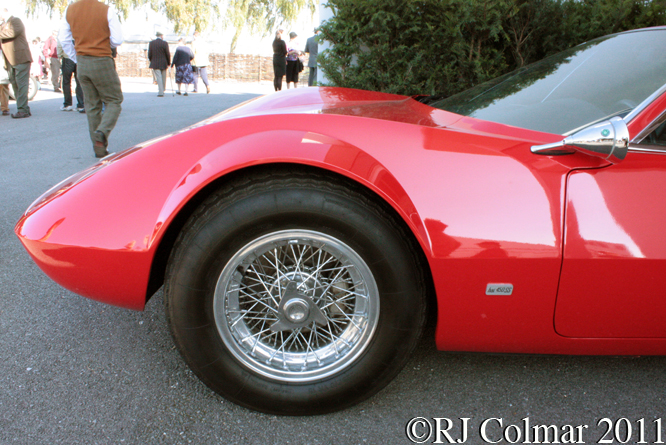
The chassis is by a steel box section frame and incorporates a de Dion rear suspension which keeps the rear wheels at a constant track and camber when cornering. There is no power assistance for the steering the 49/51% front to rear weight distribution apparently renders it unnecessary.
Montiverdi Hai 450 SS, Goodwood Revival

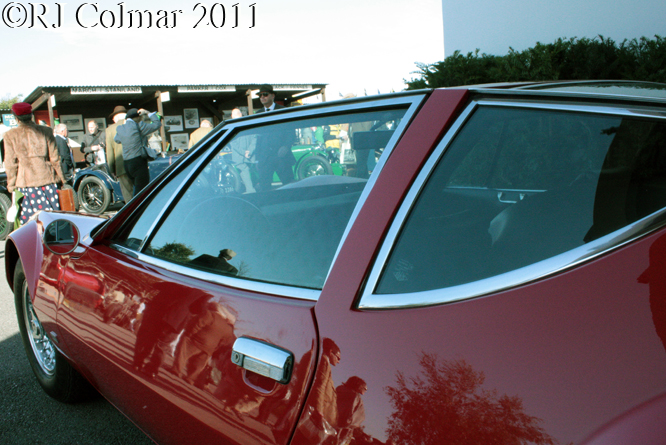
The 450 hp power Hemi is attached to a ZF gearbox the gate pattern of which is by all accounts less than orthodox, the body work is said to have been designed by Trevor Fiore and built by Fissore. The first car, painted in a unique metallic magenta, appeared at Geneva in 1970 there after it was tested and appeared at Geneva in 1971 with detail differences including repositioned door handles, allegedly in order to give the illusion that more than one of these cars had been built.
Montiverdi Hai 450 SS, Goodwood Revival

The original 450 SS was clocked at 176 mph, before it ran out of road, by Automobile Quarterly while Road & Track timed the acceleration from rest to 60 mph at 4.7 seconds, a sensational time for any vehicle built in 1970 let alone 2013.

The first car was sold and is still in private hands having been returned to it’s original metallic magenta colour in 2006. The second Hai 450 was built on a longer wheel base, with a 440 Magnum motor, higher door handles, alloy wheels and Ferrari 375 GT/4 Daytona like indicators on the front wings the Red and Black car was given the 450 GTS designation. The GTS has been in the Monteverdi collection since it first appeared in 1973.

It is not known why Monteverdi never completed his intended production run of 49 Hai vehicles. The figure may have been spin or hype, Monteverdi may have been concerned about the safety of his customers and their ability to handle such a high performance mid engined vehicle which was quite a rare configuration at the time. The cost of US$ 27,000 dollars would certainly have been prohibitive that kind of money would be the price of a couple of contemporary Aston Martin’s or one and a half Ferrari Daytona’s, alternatively it maybe that Peter Monteverdi realised the first Hai he built was just the kind of man bate eye candy necessary to draw potential customers in for his lesser models.

In the 1990’s two further Hai’s were built, it is said both were on the longer GTS type wheel base and that they were built from left over stock. Of the four cars said to have been built frustratingly I have only been able to discern the original magenta 450 SS and a GTS.

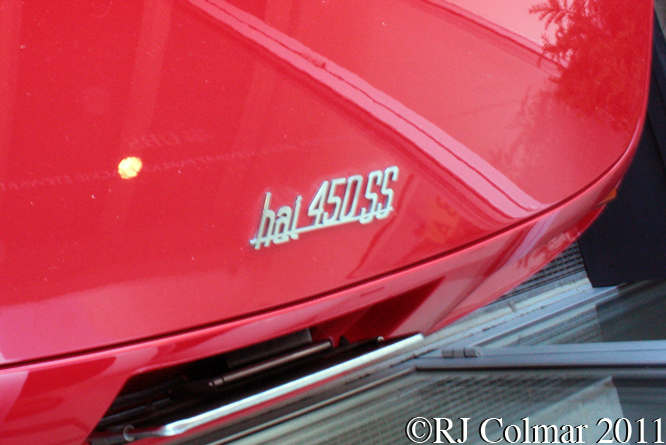
Today’s featured Hai seen at Goodwood in 2011 is a bit of an enigma, it closely resembles the original magenta car with it’s wire spoke knock off wheels, the high door handles mean it was certainly one of the last two built, but is the 450 SS badge simply left over stock on a 440 Magnum powered car or is it just possible that the perfectionist Peter Monteverdi managed to procure a second 426 Hemi with an air conditioning unit attached, having regretted ever selling the original Hai 450 SS ?

The only glimpse I can give you into the possibility that Peter built a second 450 SS is that the first quote with which I opened this blog that ends, “but I’d certainly not be a happier man!”

Thanks for joining me on this “Enigmatc Swiss Shark” edition of “Gettin’ a li’l psycho on tyres”, I hope you will join me again tomorrow. Don’t forget to come back now !

Share

Jumpin’ Motorcycles – Singer 8 Junior Sports

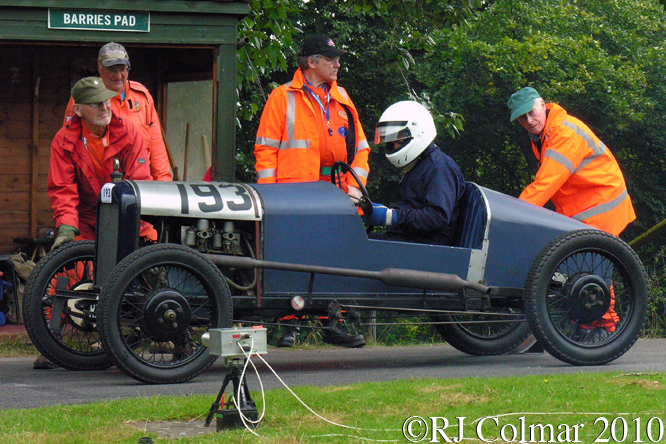
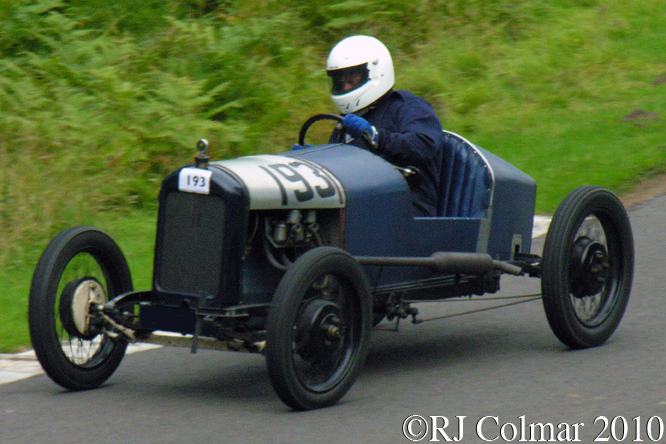
Today’s featured 1928 Singer 8 Junior Sports is essentially mechanically identical to the 4 seat Coachbuilt saloon I looked at last week. The two cars were first registered a couple of months apart.

Singer 8 Junior Sports, VSCC, Loton Park

The boat tailed wire wheeled sports, originally fitted with cycle wings, running board, lights and a windscreen became known as the Porllock Sports after an unusual reliability record was set in 1930 by a Singer Sports on the famous 1 in 4 Porlock Hill in Devon where officials from Royal Automobile Club observed one being driven up and down the hill one hundred times in the space of 15 hours.

Singer 8 Junior Sports, VSCC, Loton Park

Singer Sports also had a multitude of other uses the Royal Signals Corps used one with a driver crouched in the cockpit as a hurdle for its motorcycle AND horse jumping display team.

The stripped car seen here at Loton Park is being driven by Ed Swain at Loton Park.

Thanks for joining me on this ‘Jumpin’ Motorcycles’ edition, of “Gettin’ a li’l psycho on tyres” I hope you will join me again tomorrow. Don’t forget to come back now !
Share

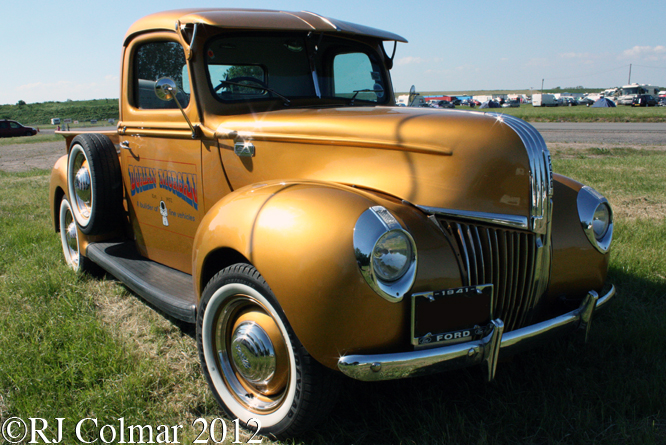
Prow Front – Ford Prow Front 1/2 Ton Pickup

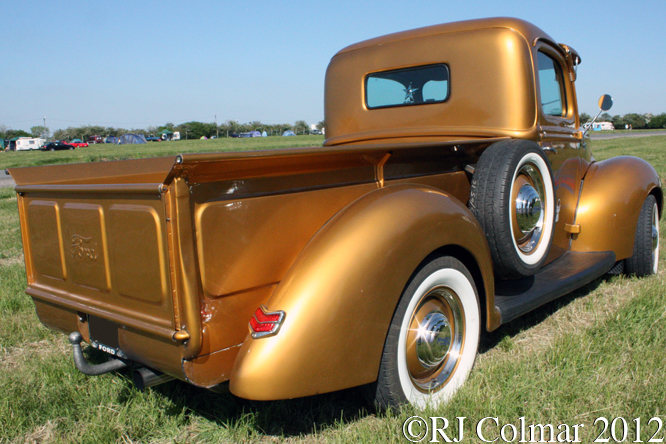
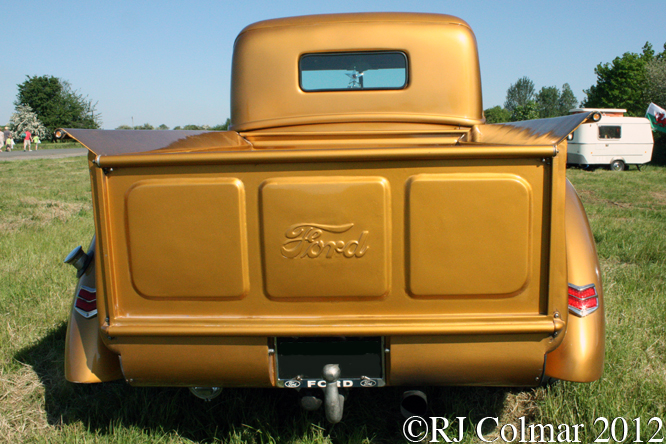
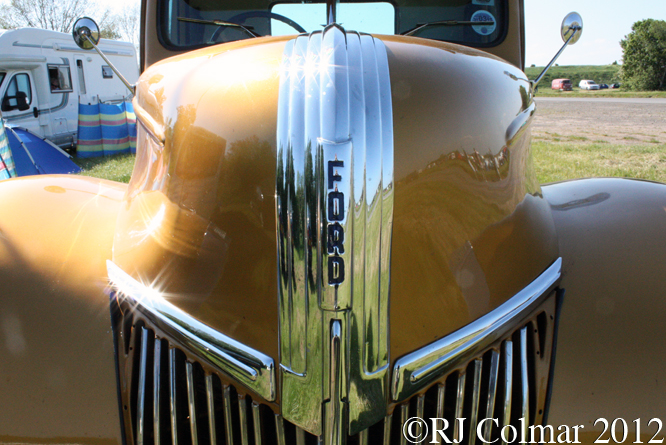
1n 1937 Ford introduced it new series of “Prow Front” full size models to replace the Ford 48 Series.

Ford Pickup, Yanks Picnic, Shakespeare, County Raceway

Ford’s chief designer E.T. “Bob” Gregorie passed the styling features of the Prow Front full sized Fords to the half ton pickups that were new for 1940/41.

Ford Pickup, Yanks Picnic, Shakespeare, County Raceway

Power options for the Prow Front pick ups included 60, 90 or 95 hp flathead Ford V8 with the 60hp being replaced by a 1996 cc / 120 cui four cylinder sourced from the Ford 6N tractor midway through 1941.

Ford Pickup, Yanks Picnic, Shakespeare, County Raceway

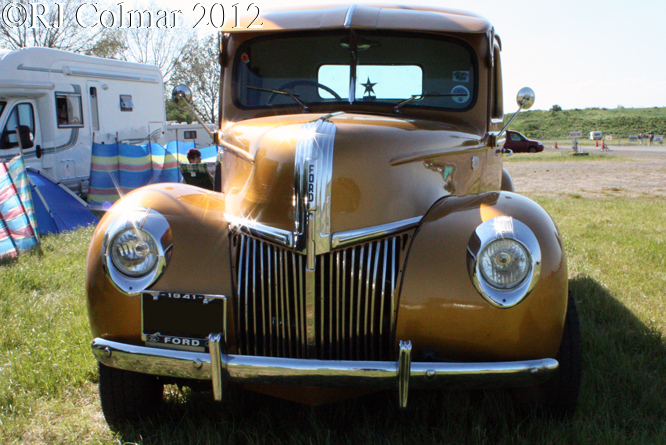
This particular pickup seen at the Yanks Picnic, Shakespeare County Raceway, is registered with a 4500 cc / 274 cui motor of unknown origin.

Ford Pickup, Yanks Picnic, Shakespeare, County Raceway

The chassis of the Prow Front Pickups and Cars are almost identical except the commercial application has the frame stamped out of heavier gauge steel. The pickup rode on trans leaf springs both front and rear. At an additional cost the prow front 1/2 tons could be ordered with pin striped body panels.

Ford Pickup, Yanks Picnic, Shakespeare, County Raceway

70,190 of these 1941 Ford 1/2 ton pickups were built which would have cost of the order of US$ 650 new.

Thanks for joining me on this “Prow Front” Edition of “Gettin’ a li’l psycho on tyres” I hope you will join me again tomorrow. Don’t forget to come back now !
Share

Flint Stones – Surtees Ford TS14A #03 & #04

In 1972 new regulations were rushed through for Formula One cars mandating deformable structures be fitted to the sides of the vehicles in an attempt to reduce the risk of cars bursting into flames in the event of a side impact. Two sets of regulations were written one for more or less immediate effect in 1972 and a seperate more robust set of deformable structures regulations for 1973.

Surtees Ford TS14A, Wings & Wheels, Dunsfold Aerodrome

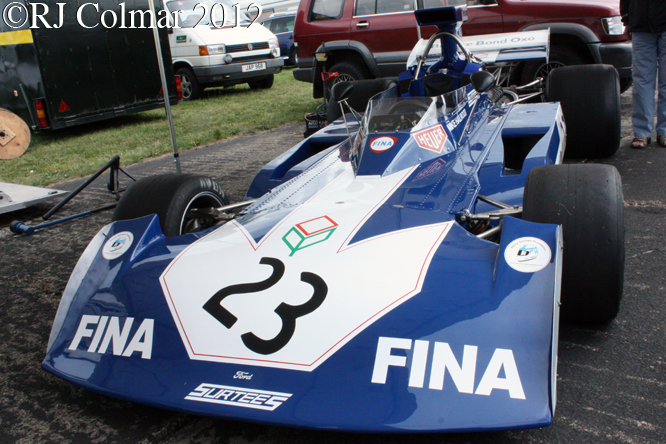
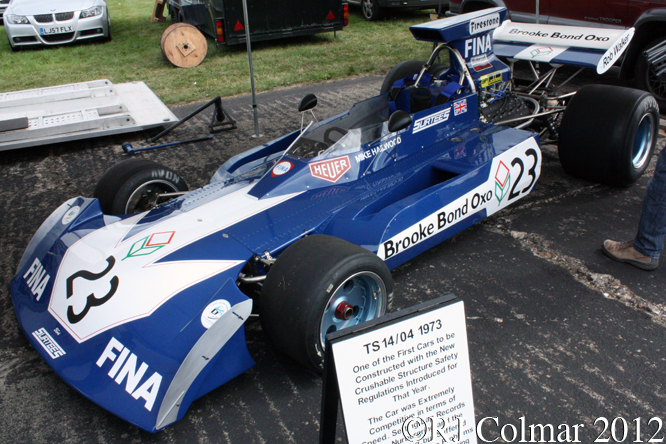
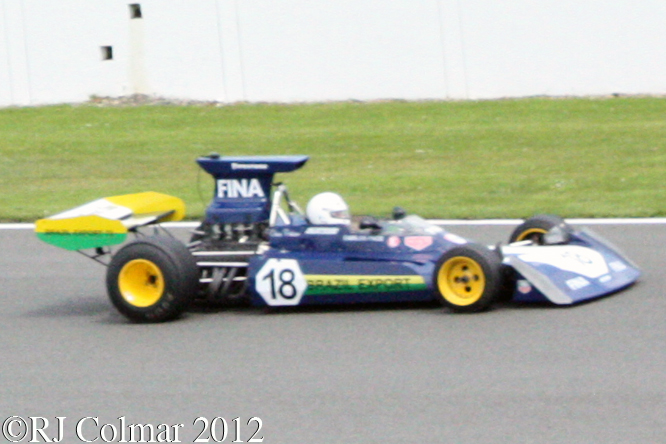
Towards the end of the 1972 season John Surtees 1973 challenger was the first to appear at the 1972 Italian Grand Prix built to the latest safety regulations. John qualified 19th and retired from what turned out to be his final Grand Prix race after 113 starts over 13 seasons which included six wins and one World Drivers Championship. Tim Schenken qualified 31st in the final race of the 1972 season at Watkins Glen but also retired.

Surtees Ford TS14A, Wings & Wheels, Dunsfold Aerodrome

During the off season John Surtees was caught on the hop with the wrong tyre contract after Firestone which had been used by the 1972 Champions Emerson Fittipaldi and Lotus were to quit the sport at the end of 1973 and would not be developing their tyres any further through the 1973 season while their supply contracts to the likes of BRM, Surtees and Williams ran out.

Surtees Ford TS14A, Silverstone Classic

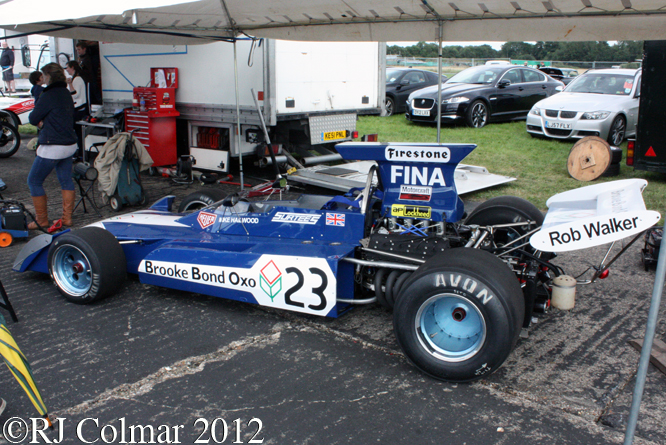
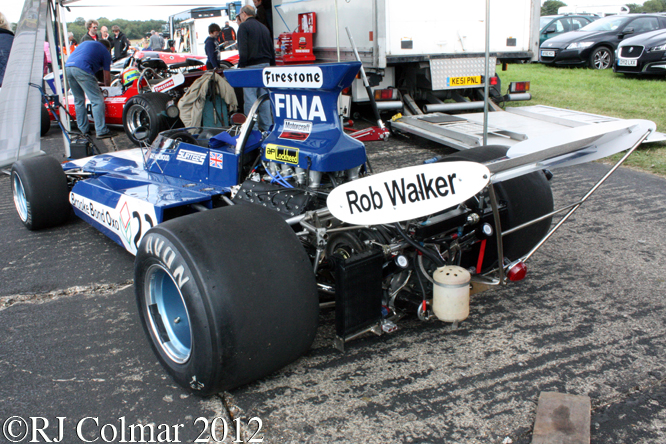
So with little hope of achieving any worth results Surtees ploughed on through the 1973 season. Nominal team leader Mike Hailwood managed a season best qualification of 6th in the 1973 US Grand Prix, using the #04 chassis seen carrying the #23 race number here at Wings and Wheels at Dunsfold Aerodrome, and a best season race finish non points 7th in the 1973 Italian Grand Prix.

Surtees Ford TS14A, Wings & Wheels, Dunsfold Aerodrome

Team mate Carlos Pace meanwhile scored a season high 5th in the 1973 Italian Grand Prix and finished 4th in the German Grand Prix and 3rd in the following Austrian Grand Prix as well as taking fastest lap on the way to both points scoring finishes. Carlos finished 11th in the Drivers Championship and Surtees 9th in the 1973 Constructors championship. For 1974 Surtees built two new TS16 cars to be driven by Carlos Pace and Jochen Mass. When sponsorship for the season failed to materialise Carlos found his way into a drive at Brabham.

Surtees Ford TS14A, Wings & Wheels, Dunsfold Aerodrome

Mike Hailwood drove a third works car for McLaren in 1974 until an accident at the Nurburgring prematurely ended his career. Jochen Mass would end up taking over the drive at the end of 1974.

The low point for the Surtees team in 1973 came at the British Grand Prix where they had three cars of Hailwood, Pace and Mass all wiped out in the first lap collision at Woodcote Corner that eliminated a six additional vehicles see this linked clip, note that thanks to the new deformable structures no fire’s were started in the accident.

Share

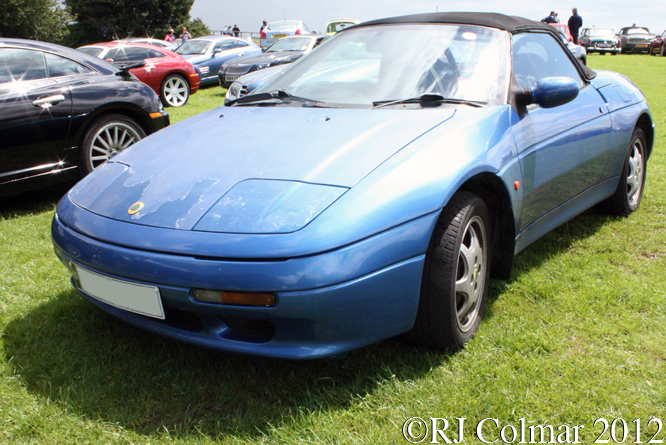
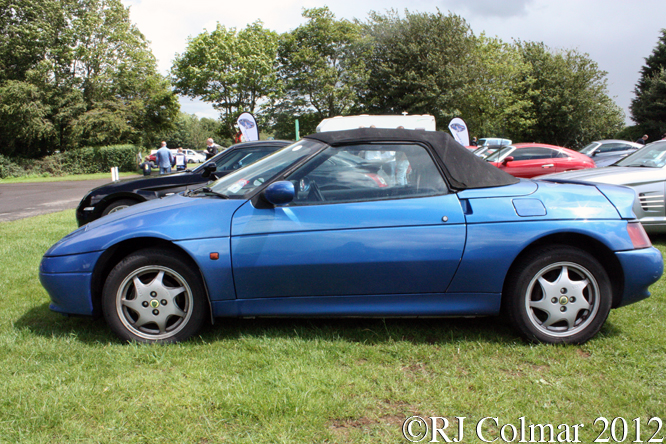
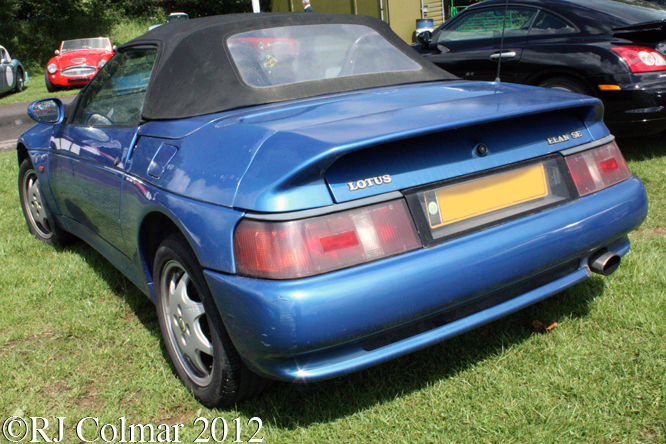
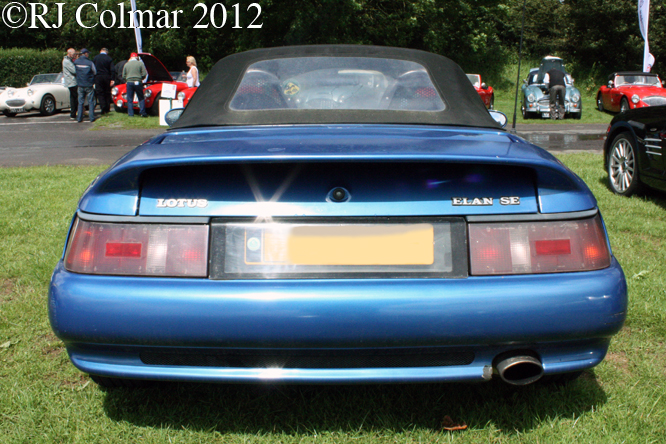
Worlds Best Handling FWD – Lotus M100 Elan SE Turbo

When General Motors acquired Lotus Cars in 1986 it committed to investing £35m / US$55m in to a new affordable car that was to be built on the reputation of the Lotus Elan which was discontinued in 1973.

Lotus M100 Elan SE Turbo, Classic Sports Car and Action Day, Castle Combe

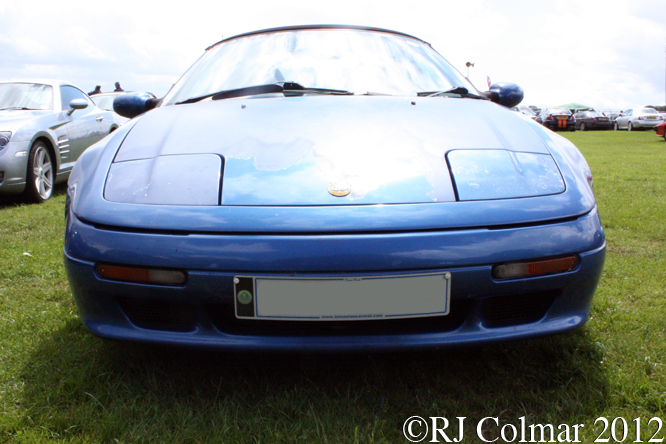
Unlike the original rear wheel drive Elan the new Peter Stevens designed M100 Elan featured front wheel drive, and was powered by a development of an Isuzu motor that produced 130 horsepower in normally aspirated form and 162 hp in SE Turbo form.

Lotus M100 Elan SE Turbo, Classic Sports Car and Action Day, Castle Combe

The rest to 60 mph time of 6.5 seconds and top speed of 137 mph was matched by the handling described by some sources as ‘the finest front wheel drive car bar none’.

Lotus M100 Elan SE Turbo, Classic Sports Car and Action Day, Castle Combe

Unfortunately as the Lotus M100 Elan came to market in 1989 Europe and the USA were entering a recession and Mazda had already flooded the market with it’s retro ‘Elan’ the MX5/Eunos/Mita series and so Lotus ended up selling just 3,855 M100 Elan’s between Nov 1989 and July 1992.

Lotus M100 Elan SE Turbo, Classic Sports Car and Action Day, Castle Combe

Second series of 800 155 hp Elan’s were built between June 1994 and and July 1995 featuring mandatory catalytic converters and slightly longer and heavier body work to accommodate the latest US spec safety features including airbags.

Lotus M100 Elan SE Turbo, Classic Sports Car and Action Day, Castle Combe

General Motors had sold it’s interest in Lotus to Bugatti by this stage and the new Lotus owners did a deal with Kia Motors to license the manufacture of an updated Kia Elan complete with a Kia sourced power unit. Kia wound up production of it’s M100 Elan in 1999.

Today’s featured M100 Elan SE Turbo seen at last years Classic Sports Car Action Day at Castle Combe was built in 1991.

Thanks for joining me for this “Worlds Best Handling FWD” edition of “Gettin’ a li’l psycho on tyres” I hope you will join me again tomorrow. Don’t forget to come back now.

Share

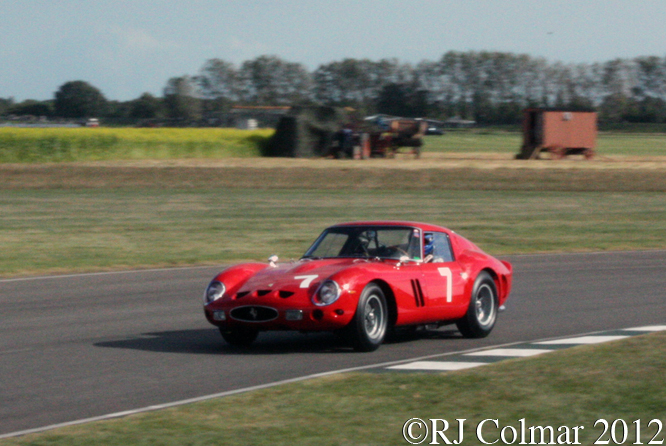
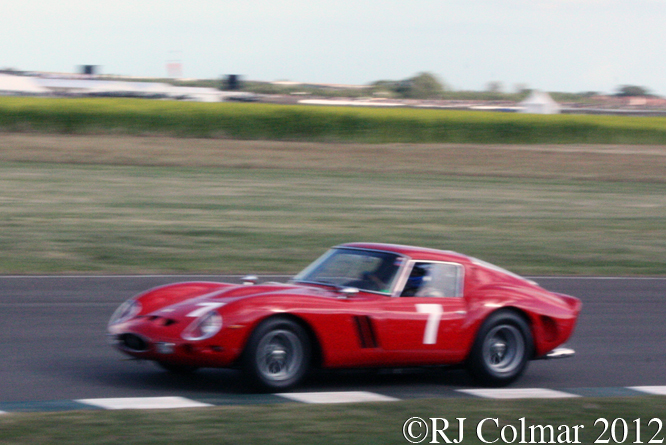
Au Danger, Mon Plaisir – Ferrari 250 GTO Berlinetta #3607GT

On June 6th 1962 Ferdinando “Nanado” Pagliarini took delivery of today’s featured Ferrari 250 GTO Berlinetta chassis #3607, he used it to compete in at least nine events up until November 1963, in which he won his class at least 4 times in Hillclimb events.

By the following season #3607 had been acquired by Ecurie Francochamps who entered the car in the 1964 Tour de France for Claude Dubois and Philippe de Montaigu who finished 8th overall and 3rd in class. Portuguese driver António Peixinho next drove the car to 5th place in the 1964 Angola Grand Prix.

Ferrari 250 GTO Berlinetta, Goodwood Revival

Philippe de Montaigu bought the car in 1965, Philippe was married to junior French Tennis Legend Annie Soisbault who at 21 had turned her hand to professional rallying and racing “because I did want to be dependent on my parents”. During her competition career she would occasionally be accompanied by her cheetah, Annie’s motto was ‘In danger, my pleasure”.

In 1965 Annie drove chassis #3607 to an overall win in the Grand Prix of Paris before crashing the car into a bridge on the Mont Ventoux Hillclimb. Alongside her competition career Annie sold Aston Martin’s to the likes of Eddie Barclay, Johnny Hallyday, Régine, Françoise Sagan and his brother Jacques Quoirez.

Ferrari 250 GTO Berlinetta, Goodwood Revival

#3607 passed into the hands of Jean-Michel Giorgi after the crash and his best of four known outings resulted in a class win on the the 1965 Agaci Rallye held in Reims.

The car remained in France until 1987 when it went to the USA. In 1990 it went under the hammer for $9,588,780 plus commission but the winning bidder never paid, the following year it sold for £6,900,000 to a Swiss gentleman who swapped it for a Ferrari P3/4 the following year.

#3607 is seen in these photographs taken during last years 50th Anniversary 250 GTO demonstration at Goodwood Revival driven by R Walton.

Thanks for joining me on this “Au Danger, Mon Plaisir” edition of “Gettin’ a li’l psycho on tyres” I hope you will join me again tomorrow. Don’t forget to come back now !
Share

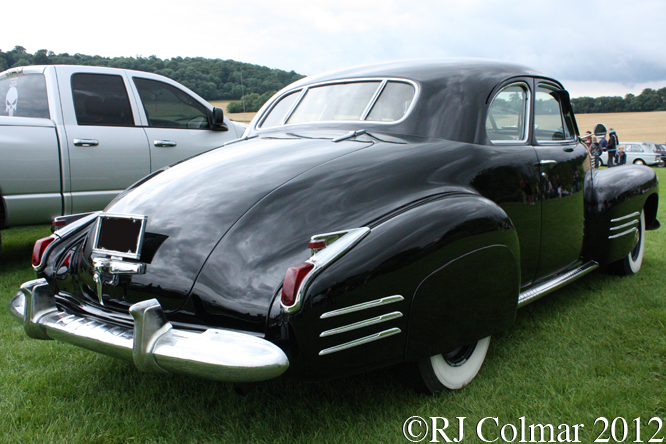
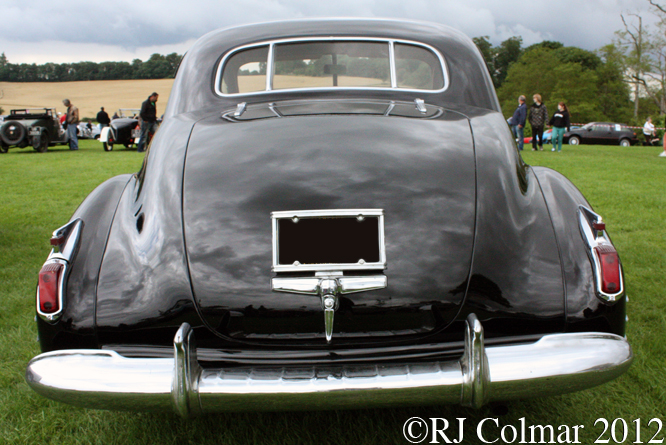
Closing In On Packard – Cadillac Series 62 Coupé

In 1940 the Cadillac Series 62 replaced the Series 61 as the entry level model in the Cadillac line up.

Buick Series 62 Coupé, Classics at the Castle, Sherborne

Sales of 5903 torpedo bodied ’40 Series 62 models accounted for 45% of Cadillac sales.

Buick Series 62 Coupé, Classics at the Castle, Sherborne

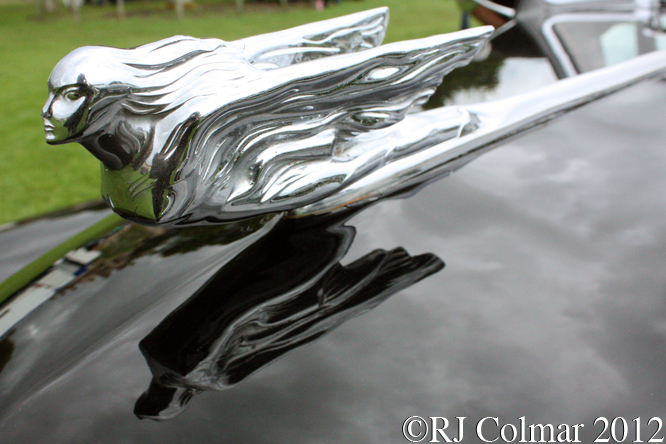
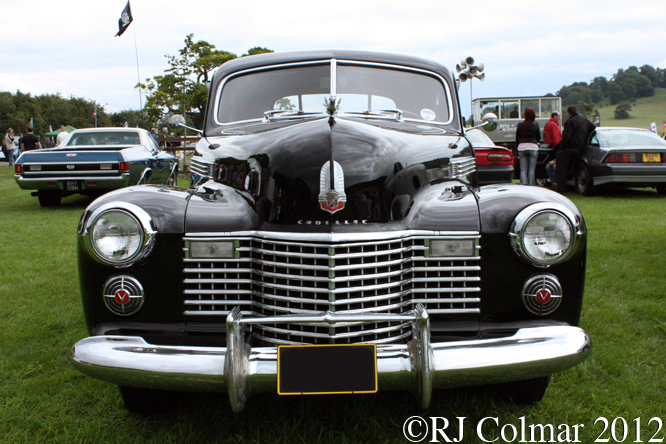
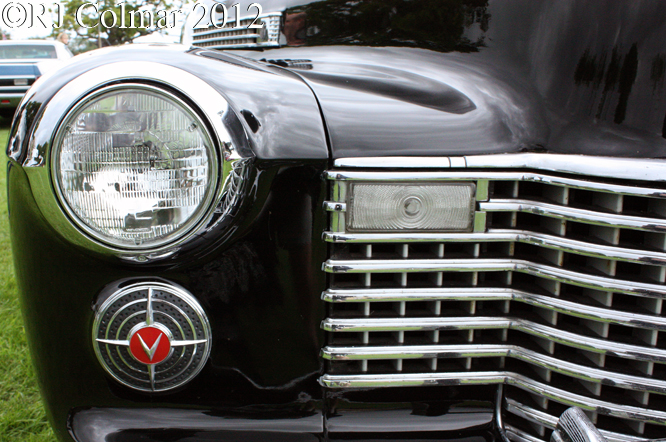
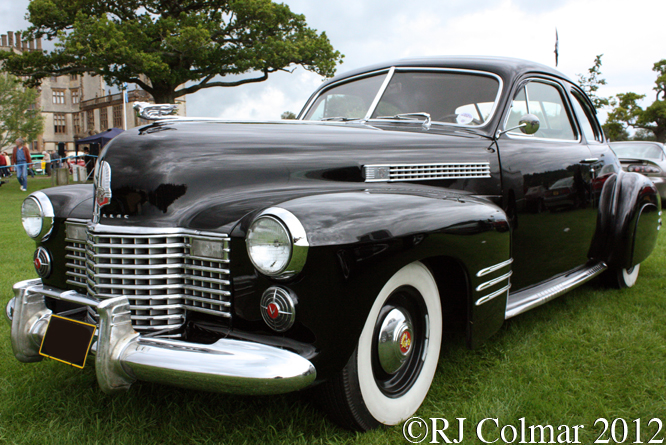
For 1941 the Series 62 received a dramatic face lift gone was the rounded vertical grill and in came the the horizontal rectangular grill into which parking lights were incorporated.

Buick Series 62 Coupé, Classics at the Castle, Sherborne

The headights which were mounted on the wings / fenders of the ’40 Series 62 were integrated into the wings / fenders of the ’41 Series ’62.

Buick Series 62 Coupé, Classics at the Castle, Sherborne

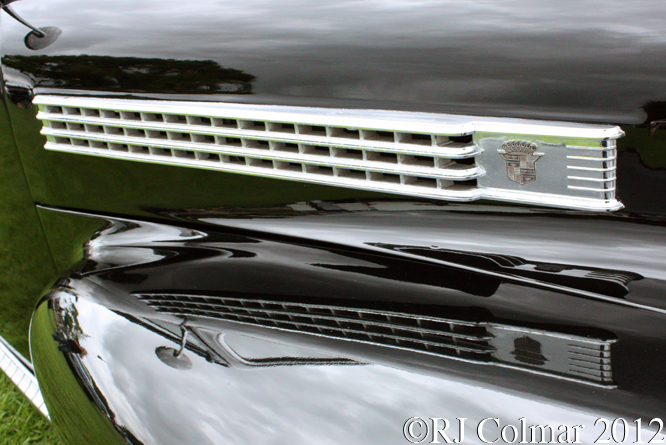
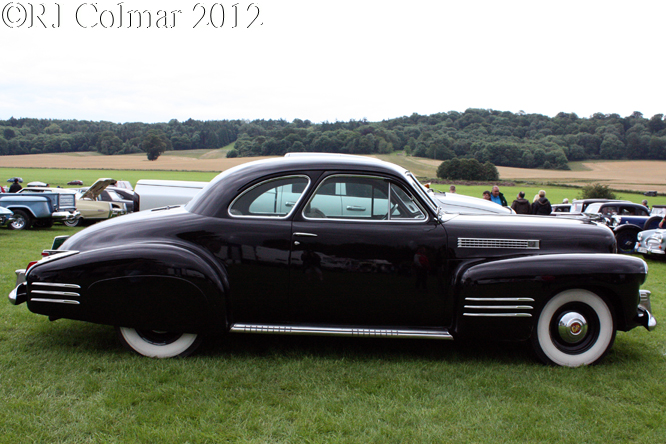
A single rectangular louvre on the side of the bonnet / hood replaced the twin louvre’s of the older model giving the vehicle a fresher and smarter appearance.

Buick Series 62 Coupé, Classics at the Castle, Sherborne

The ’40/’41 Fisher body cars shared the same platform as the Buick Roadmaster/Super, Oldsmobile Series 90 an Pontiac Torpedo but had a 5 inch wider cabin space because the body was taken out to where the running boards were on the Buick, Olds and Pontiac models.

Buick Series 62 Coupé, Classics at the Castle, Sherborne

The 5 inches of extra width meant that the Series 62 could seat three up front and three more in the back.

Buick Series 62 Coupé, Classics at the Castle, Sherborne

All ’41 Cadillacs shared the same 5.7 litre / 346 cui L head V8 which produced 150 hp.

Buick Series 62 Coupé, Classics at the Castle, Sherborne

Sales of the ’41 more than quadrupled the previous years numbers to 24,734 which accounted for 37% of Cadillacs 62,290 sales just 7,000 short of premium market leader Packard.

Thanks for joining me on this “Closing In On Packard” edition of ‘Gettin’ a li’l psycho on tyres” I hope you will join me again tomorrow. Don’t forget to come back now !
Share