Avante Garde Hyper Typage – Devine DS

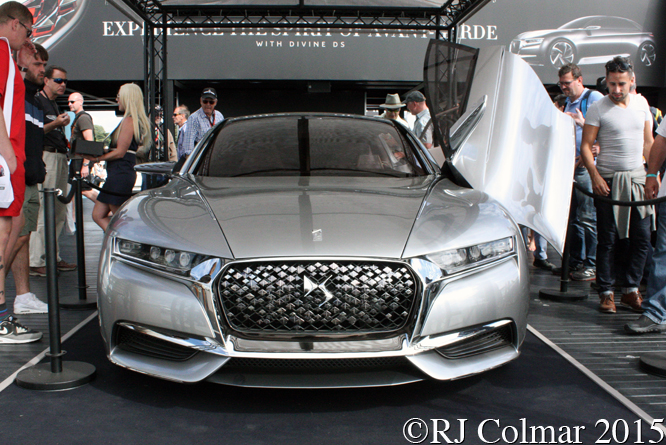
Star of the seriously bizzare at the 2014 French Motorshow was the Devine DS which Citroen offered up as a vision for the future of it’s DS brand.
Divine DS, Goodwood Festival of Speed,

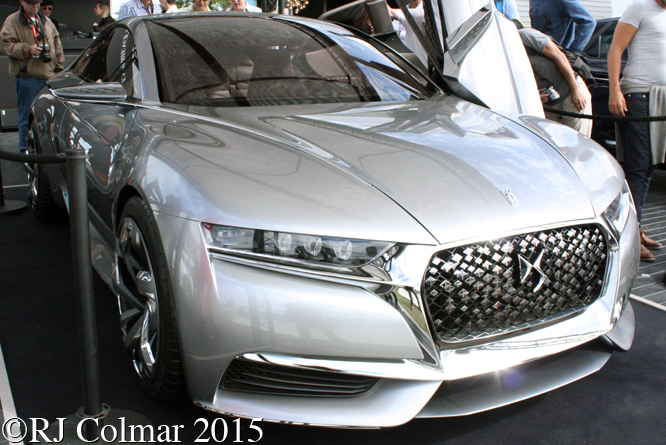
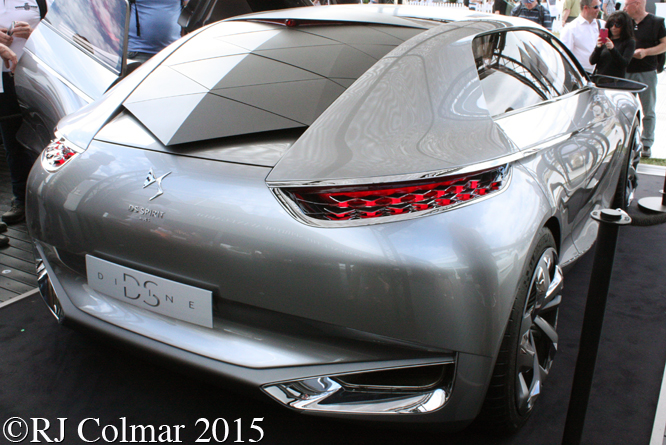
As if to emphasise the DS as a stand alone brand the Devine features no Citroën badging.
Divine DS, Goodwood Festival of Speed,

While the avant garde design is based on the most important C segment hatchback dimensions, think Citroën C4, Volkswagen Golf, Ford Focus, the Divine DS does not prefigure any specific model that is being planned for production.
Divine DS, Goodwood Festival of Speed,

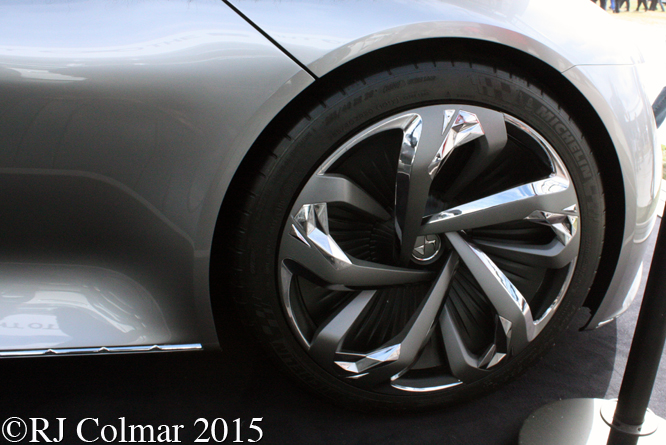
The 20 inch front wheels are powered by a 266hp 1.6 litre four cylinder engine sourced from sister company Peugoet’s RCZ R model.
Divine DS, Goodwood Festival of Speed,

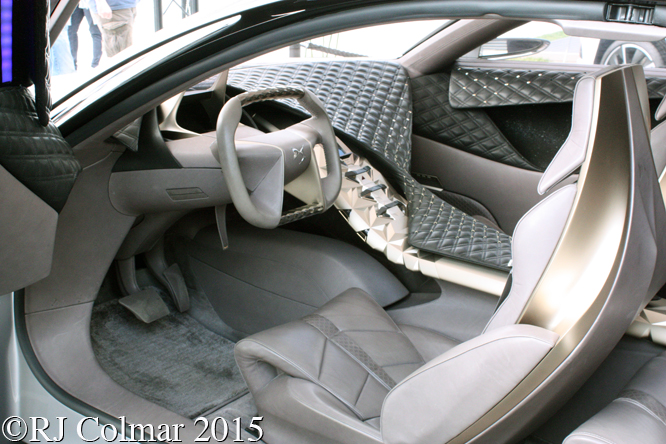
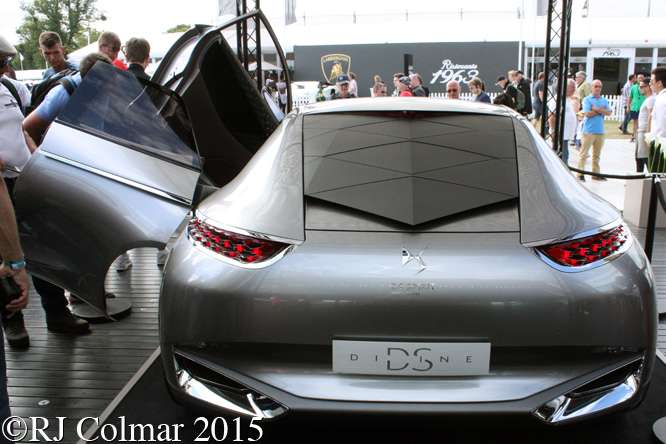
It is unlikely that the front hinged front and rear hinged rear scissor doors will ever go into production on any model, they were fitted merely to offer viewers a great view of the bold hyper typage interior.
Divine DS, Goodwood Festival of Speed,

According to Citroën ‘Hyper-typage’ is a new concept for an interchangeable interior ambience manifested by dashboard and door scrolls that can be changed in just 15 minutes.
Divine DS, Goodwood Festival of Speed,

The three ambiances envisaged are sober‘Mâle’ alternating alternating carbon fibre textile with glazed, burnished leather, sophisticated and elegant ‘Parisienne Chic’ made in cooperation with fashion embroidery experts Maison Lesage, and finally a darker and even more glamourous ‘Fatale Punk’.
Divine DS, Goodwood Festival of Speed,

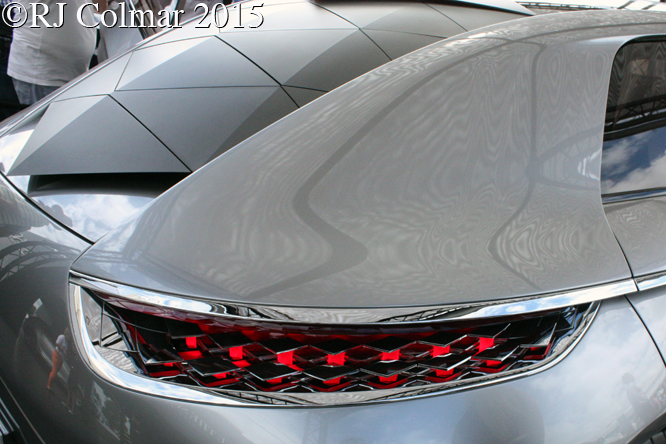
Fashion jeweler Swarovski was responsible for setting crystals into the Divines head lights and door panels.
Divine DS, Goodwood Festival of Speed,

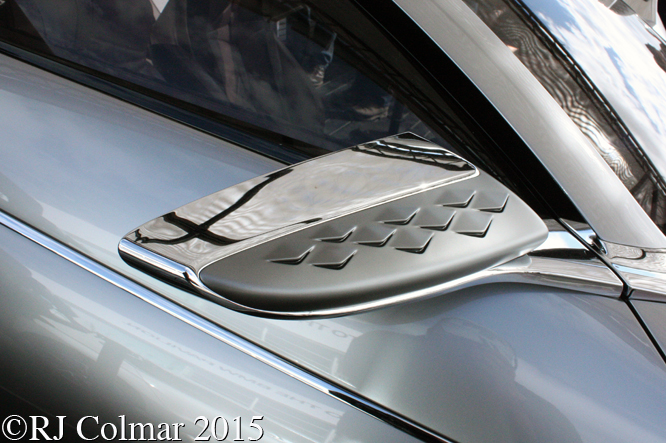
Exterior design leader Bertrand Dantec points out that since technology provides a panoramic digital rear view both the interior rear-view mirror and rear window have been dispensed with, though the rear view door mirrors have been retained.

Thanks for joining me on this “Avante Garde Hyper Typage” edition of “Gettin’ a li’l psycho on tyres” I hope you will join me again tomorrow. Don’t forget to come back now !

Share

Fuel Injected RHD Cabriolet – Mercedes Benz W128 220SE

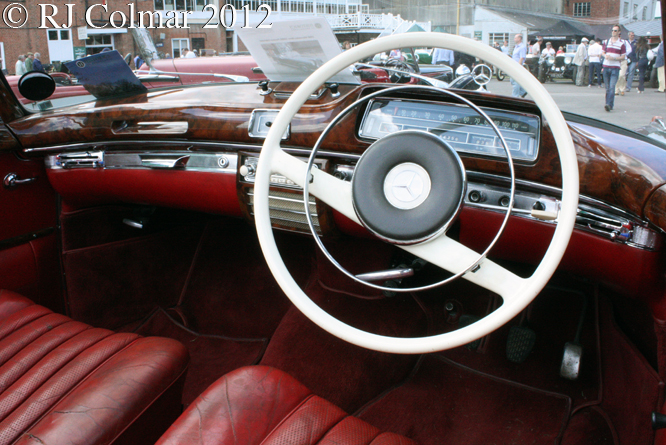
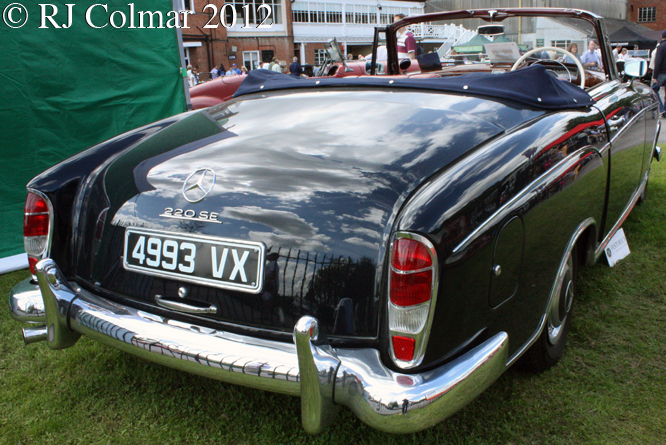
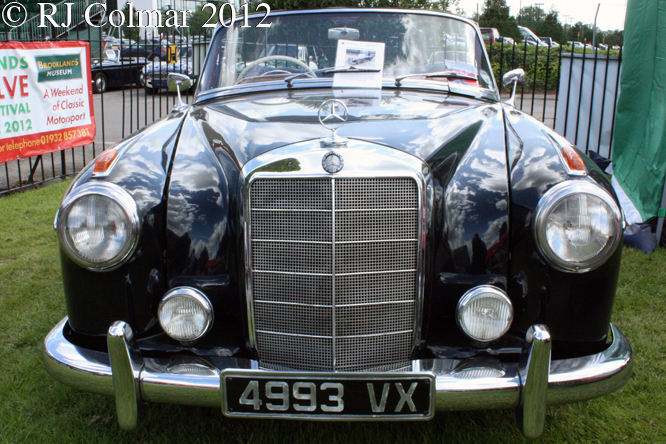
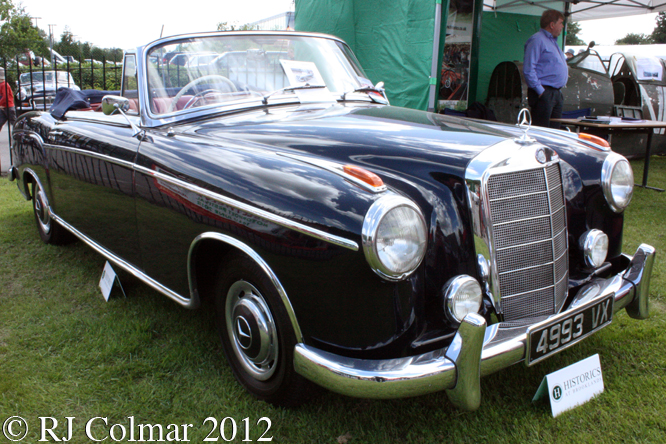
From July 1958 through to November 1960 Mercedes Benz introduced a fuel injected version of the W180 220S model known at the 220SE such as the 1960 cabriolet seen here.

Mercedes 220SE Cabriolet, Brooklands Double Twelve,

E standing for Einspritz or fuel injection which is one of the three way’s one can tell a 220S from an SE the second being the chassis number starting ‘128’ and the third is the 220SE badge on the back.

Mercedes 220SE Cabriolet, Brooklands Double Twelve,

Costing the same as a contemporary Cadillac Biarritz, but without the Power Steering, Electric Windows, Air Conditioning or regular automatic transmission that were available on the Cadillac only 1,112 220SE Cabriolet’s were produced.

Mercedes 220SE Cabriolet, Brooklands Double Twelve,

Today’s featured 220SE, seen at a Brooklands Double Twelve Meeting is one of only 17 Right Hand Drive (RHD) examples delivered in 1960 and is said to have been imported to the UK by a Nigerian Diplomat from Nigeria.

Mercedes 220SE Cabriolet, Brooklands Double Twelve,

According to the DVLA website this car was first registered in the UK on the 1st of December 1983 and if the chassis number is correct, shown incorrectly to have been built in 1955.

Thanks for joining me on this “Fuel Injected LHD Cabriolet” edition of “Gettin’ a li’l psycho on tyres” I hope you will join me again tomorrow when I’ll be looking at a Citroën DS Concept. Don’t forget to come back now !

Share

Heavy Electricity – Leyland Crompton Electricar

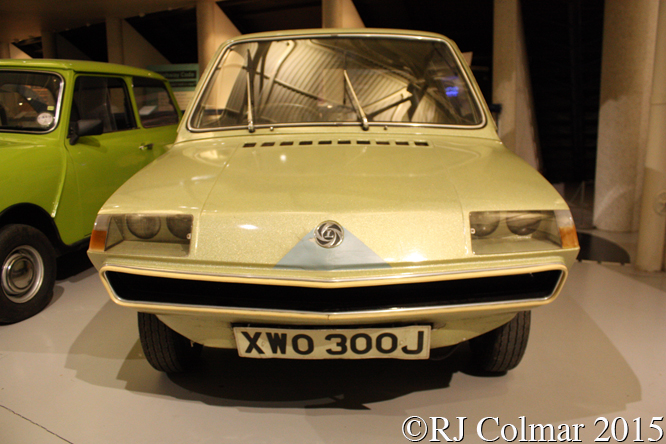
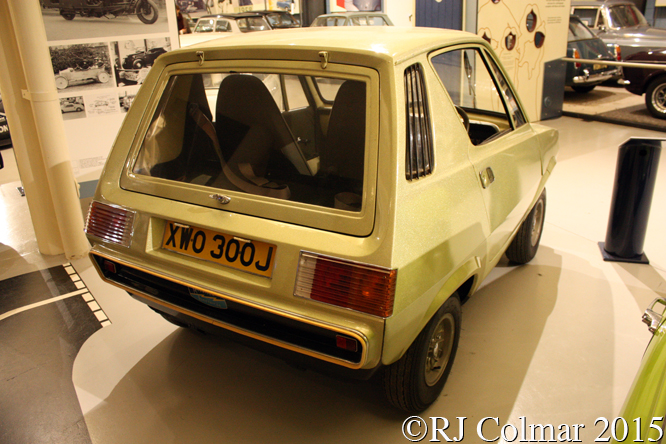
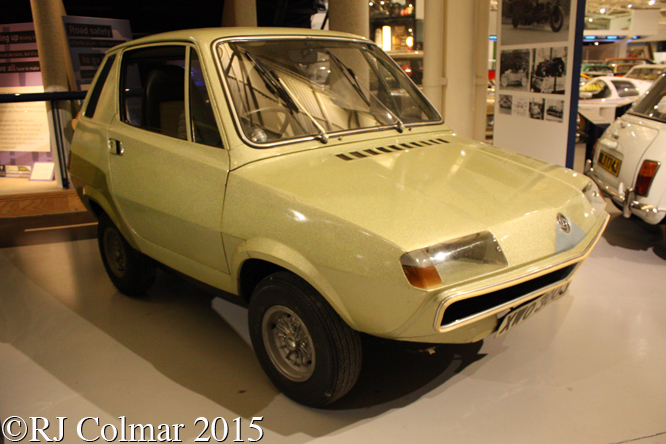
The Leyland Crompton Electicar was a concept designed to look at the future of motoring in 1972.

Leyland Crompton Electricar, British Motor Museum, Gaydon

To keep the costs down the car was designed to make use of many standard Mini parts.

Leyland Crompton Electricar, British Motor Museum, Gaydon

Power came from 2 3.9hp electric motors that were fed by no less than 24 standard lead acid batteries.

Leyland Crompton Electricar, British Motor Museum, Gaydon

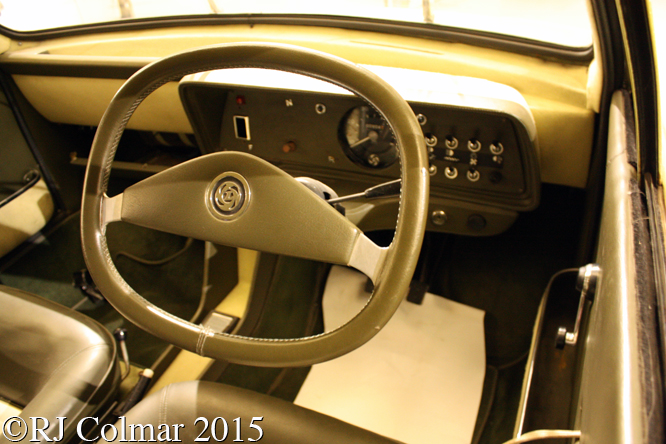
The body was by Michelotti and the interior featured a Quartic steering wheel, that, despite it’s space saving practicality, would become the butt of many jokes when introduced with the Austin Allegro production car the following year.

Leyland Crompton Electricar, British Motor Museum, Gaydon

Top speed for the Electricar was 33 mph and the range dependent on gradient and other operating conditions was 40 miles.

Leyland Crompton Electricar, British Motor Museum, Gaydon

Electricar was fitted with an on board charger that could be plugged into a house hold socket, operating costs at 1972 prices were of the order of a penny per mile.

Leyland Crompton Electricar, British Motor Museum, Gaydon

Weighing a third more than a regular powered petrol powered Mini, thanks to those lead acid batteries, the Electricar seen here at the British Motor Museum Gaydon was shown to the public for the first time at the 1972 Geneva Motor Show.

Thanks for joining me on this “Heavy Electricity” edition of “Gettin’ a li’l psycho on tyres” I hope you will join me again for Mercedes Monday tomorrow. Don’t forget to come back now !
Share

Jack’s 500 – Waye JAP

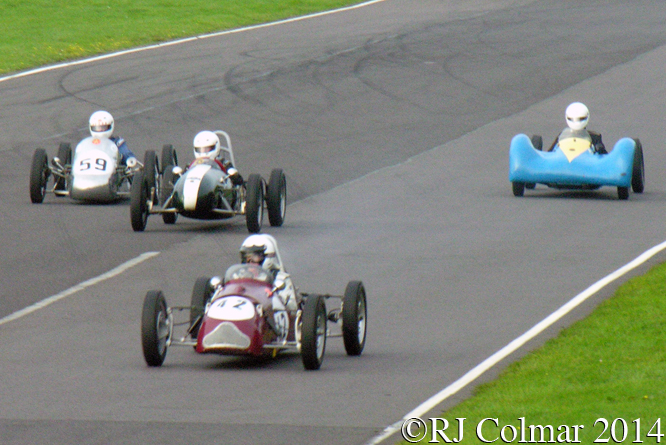
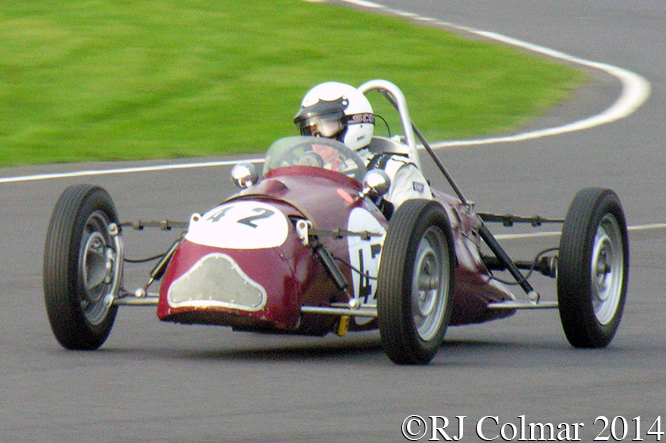
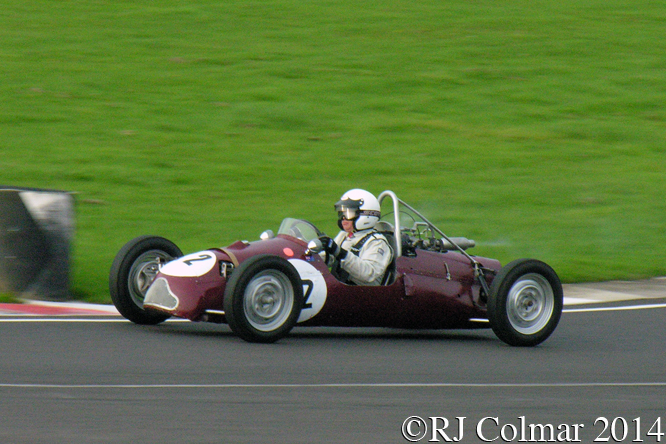
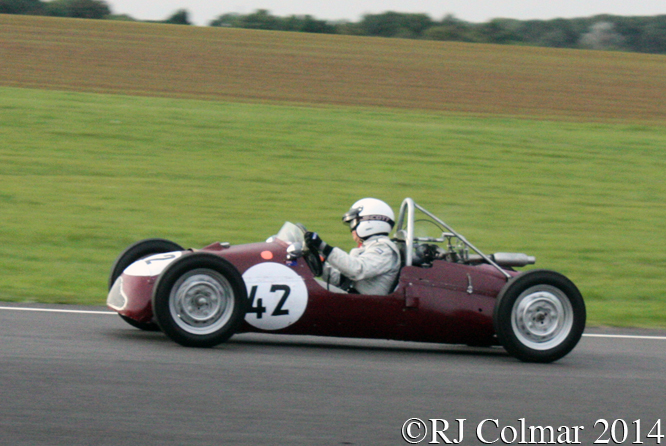
Based in Adelaide, Australia Jack Waye built today’s featured Waye 500 in 1953 and painted it red.

Waye 500, Doug Yates, Autumn Classic, Castle Combe

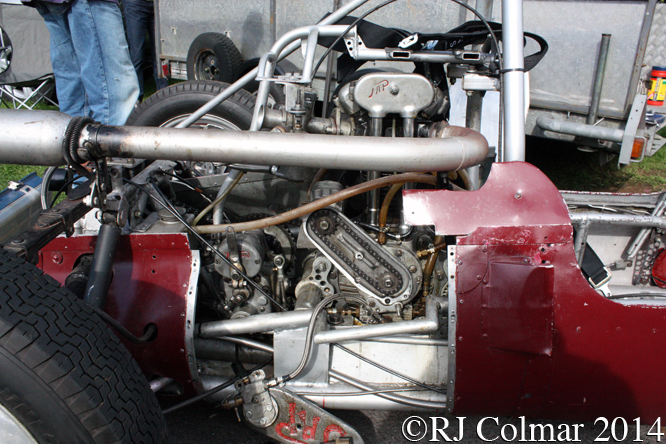
Featuring a pair of conventional if no longer on trend transverse leaf springs front and rear the Waye was orignally powered by a JAP speedway engine fitted with a Norton gearbox.

Waye 500, Doug Yates, Autumn Classic, Castle Combe

Jack sold the Waye 500 to Kevin Fuss in 1955 and in the ’56 / ’57 off season Kevin swapped the JAP motor for a Manx Norton, and made sprockets with different ratio’s for hillclimbing and circuit racing.

Waye 500, Doug Yates, Autumn Classic, Castle Combe

While Kevin mostly drove the car while it was in his ownership, until 1966, on one occasion Bernie O’Hare was credited with recording a top speed of 98mph at the wheel of the Waye 500 at Collingwood.

Waye 500, Doug Yates, Autumn Classic, Castle Combe

John Vinall became the third owner of the Waye 500 but only raced it until the end of 1967 when he discovered cracks in the flywheel.

Waye 500, Doug Yates, Autumn Classic, Castle Combe

John and his fiancee were killed in a road accident four years later and it was not until 1993 Waye 500 ran again after his brother David had the engine overhauled.

Waye 500, Autumn Classic, Castle Combe

The overhauled engine did not run well after it’s second practice run and the car was put back into storage until it was bought by David and Andrew Halliday in Sydney, Australia.

When they removed the Manx Norton to fit it into a Cooper they discovered that the timing had slipped which is what had caused the engine to malfunction in 1993.

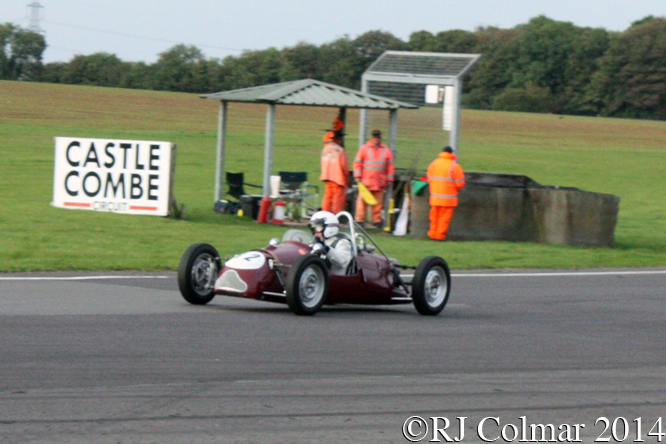
In 2011 Andrew Halliday advertised the Waye now fitted with a JAP engine again and it was bought by Doug Yates, who is seen at the wheel in these photographs at Castle Combe.

My thanks to members of The Nostalgia Forum who contributed to the Motorbike powered race cars 1950 to 1980 thread, particularly Greg Mackie and John Medley and to one lung who contributed to the Personal photos of Australian motor racing ’50s to ’70s thread all of which helped lead to discovering that J Waye was the most likely candidate to have built the Waye 500.

I’d also like to thank John Bolly Blog Low for helping me establish that J stood for Jack and finally previous owner Andrew Halliday for :-

a) advertising the Waye for sale on Loose Fillings PDF in 2011

and

b) sharing details about the Waye 500 with editor Graham Howard, producer Terry Wright and publisher Garry Simkin who ran a small article, on which most of today’s blog is based on, in the 2nd edition of Loose Fillings published in Winter 1999.

Thanks for joining me on this “Jack’s 500” edition of “Gettin’ a li’l psycho on tyres”, I hope you will join me again tomorrow when I’ll be looking at a Leyland Concept car with a square wheel. Don’t forget to come back now !
Share

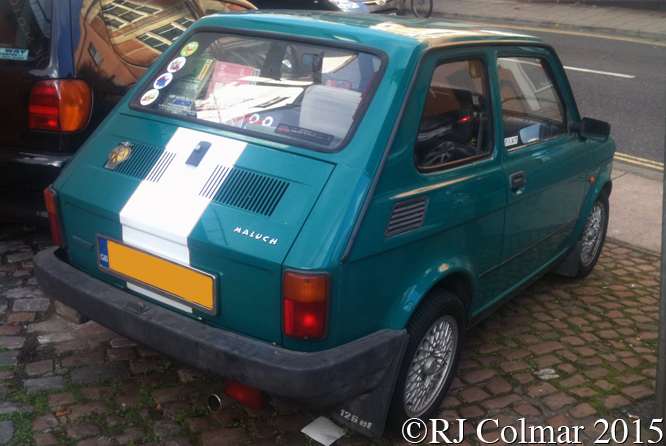
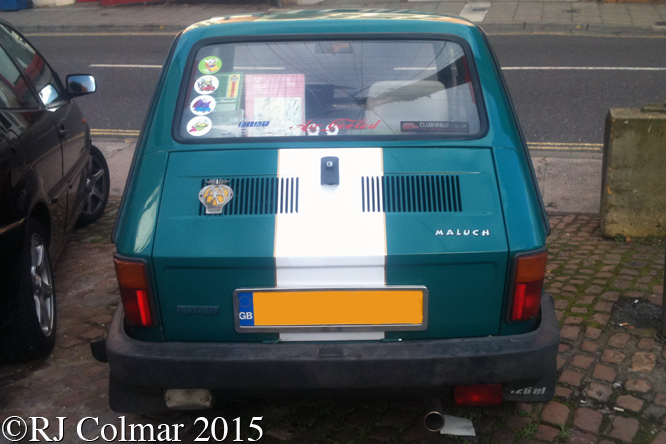
Maluch – FIAT 126 ELX

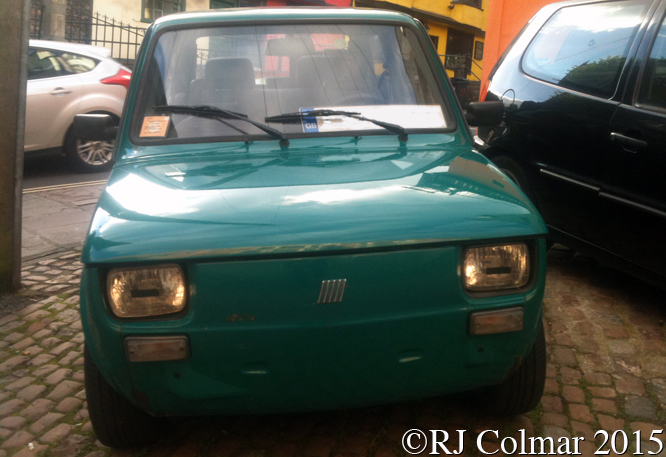
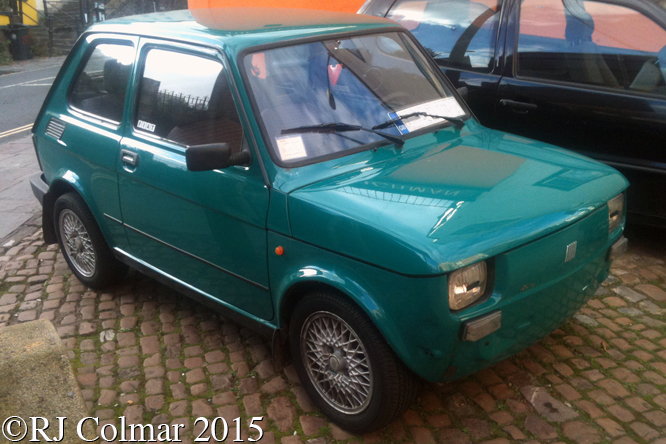
Based on the little FIAT 500, Cinquecento, floor plan with the same 23hp 594 cc engine the otherwise all new FIAT 126 was launched at the Turin Show in October 1972.

FIAT 126, Bristol,

Five years later a larger capacity 652cc engine was introduced that offered more torque, pulling power, though there was no increase in horse power.

FIAT 126, Bristol,

As if to confirm the growing maturity of the car market in western Europe the FIAT 126 was never as popular as the FIAT 500 had been, but in emergent Eastern European market the model easily out sold those sold in the West.

FIAT 126, Bristol,

Production of the 126 in Poland, where the model was also manufactured with the 126p model name and production did not cease until 2000, in particular outnumbered the production of the 126 in Italy, where production ended in 1980, by nearly three to one, 2,069 126’s were manufactured in Austria by Fiat-Steyr and an unknown number of Zastava 126’s were built in the former Yugoslavia, now Serbia.

FIAT 126, Bristol,

The 126 was continuously upgraded while in production in Poland, culminating in 1997 with the ELX that featured a catalytic converter and the adoption of the Polish nick name Malusch meaning “toddler” or “small one”.

FIAT 126, Bristol,

The 1999 left hand drive Malusch seen in these photograph’s in Bristol was first registered in the UK on the 1st of September 2015.

Thanks for joining me on this “Malusch” edition of “Gettin’ a li’l psycho on tyres I hope you will join me again tomorrow when I’ll be looking at another the last in the current series of 500 F3 cars.

Don’t forget to come back now !
Share

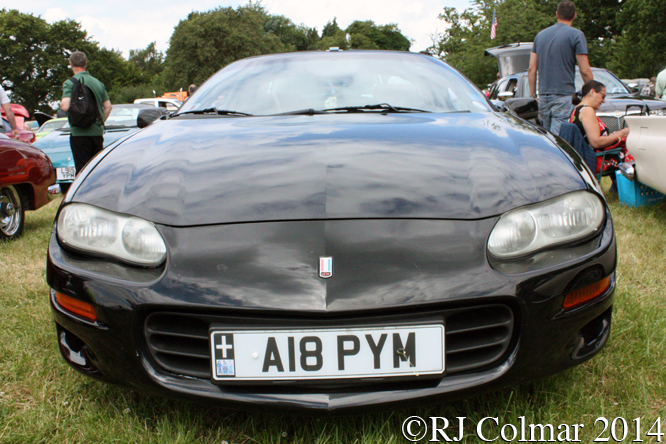
Oillife Monitoring System – Chevrolet Camaro V6

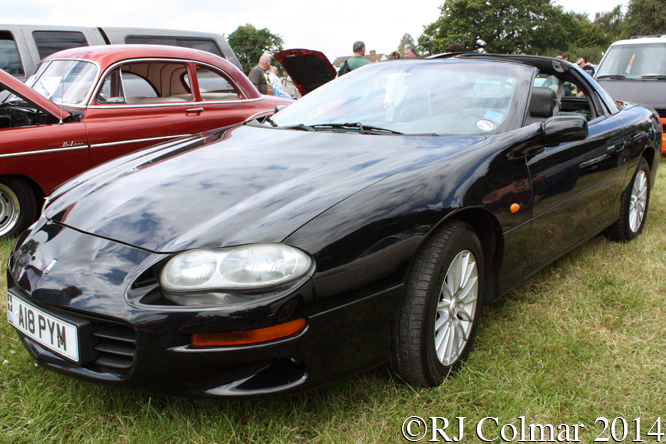
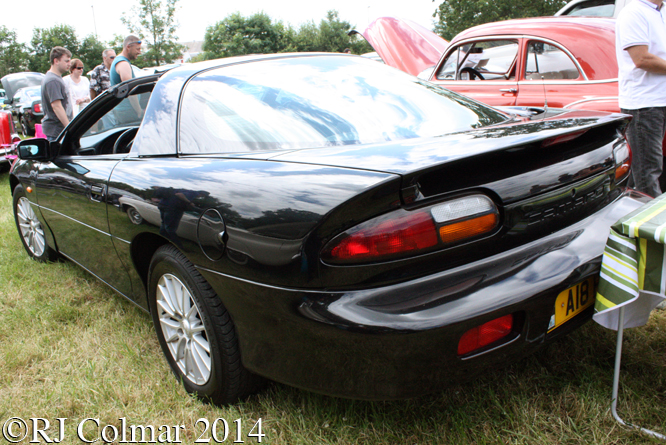
It’s seventh year the fourth generation Camaro’s upgrades were relatively minor the new for ’98 front light clusters were retained and Hugger Orange was added to the paint options.

Chevrolet Camaro V6, Bristol American Car Show, Yate Town FC

Beneath the car the 15.5 gallon metal fuel tanks were replaced with 16.8 gallon plastic items and traction control was now available on V6 models.

Chevrolet Camaro V6, Bristol American Car Show, Yate Town FC

Inside the only difference was the addition of GM’s oil-life monitoring system which manifested itself in the form of an oil change light in the instrument cluster.

Chevrolet Camaro V6, Bristol American Car Show, Yate Town FC

Today’s featured ’99 targa topped Chevrolet Camaro V6 with automatic transmission, seen at the Bristol American Car Show, Yate Town FC, was first registered in the UK on the 19th of January 1999.

Thanks for joining me on this “Oillife Monitoring System” edition of “Gettin’ a li’l psycho on tyres” I hope you will join me again tomorrow when I will be looking at a FIAT built in Poland. Don’t forget to come back now !
Share

Still Friendly Still Great Value – Atwell Wilson Motor Museum

In 2011 I visited the Atwell Wilson Museum in Calne and found it to be friendly and great value a couple of weeks ago I took the opportunity to visit again and unsurprisingly found Wiltshire’s only Motor Museum to be just as friendly and still great value.

MG Midget, Atwell Wilson Motor Museum, Calne

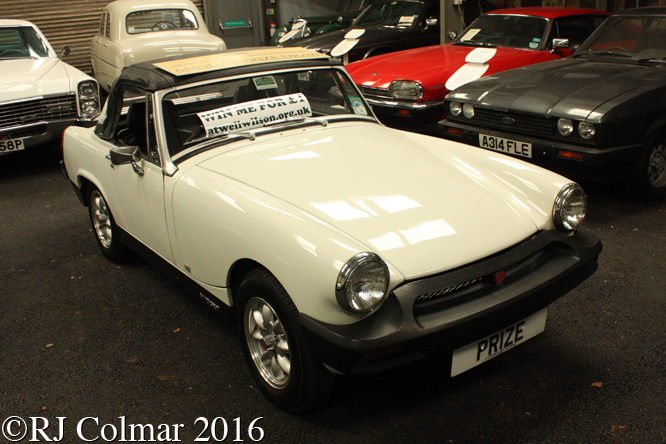
Every year the friends of the Museum raffle a classic car, this year your one pound ticket could win you the immaculate 1976 MG Midget 1500 with federal spec bumpers above.

Ford Consul, Atwell Wilson Motor Museum, Calne

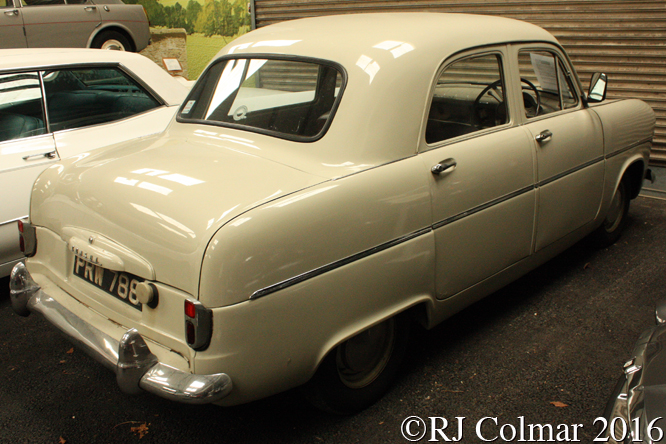
In the days before photocopying and scanning an army of tracers was employed by engineering firms to trace the technical drawings required for just about anything that was made to pattern, Trevlynn “Trev” Hildred joined her father at the Armstrong Whitworth Aircraft works in Coventry at 16 and rose to become Head Tracer at the company in 1960 and remained in the post until technology made here redundant in 1969, above is her 1954 Ford Consul “Connie”.

Austin Mini 5cwt Van, Atwell Wilson Motor Museum, Calne

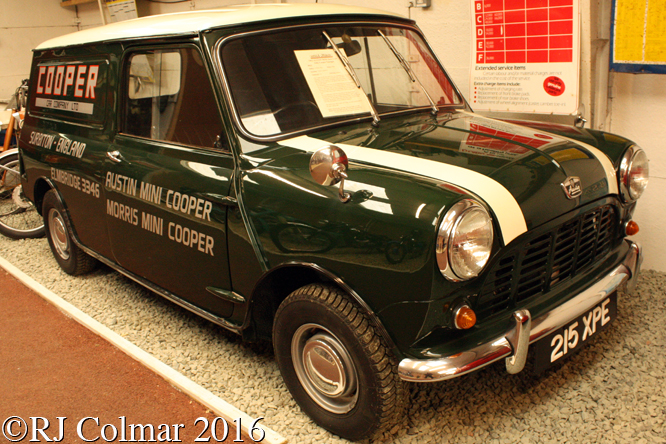
In 1997 the Gaydon Motor Museum built this replica of of one of John Coopers Austin Mini 5 cwt Vans for the Frankfurt Motor Show restoring a 1962 van for the purpose with John Coopers full approval and cooperation, the 70th anniversary of Cooper Cars this year will be celebrated at Prescott on July 30th.

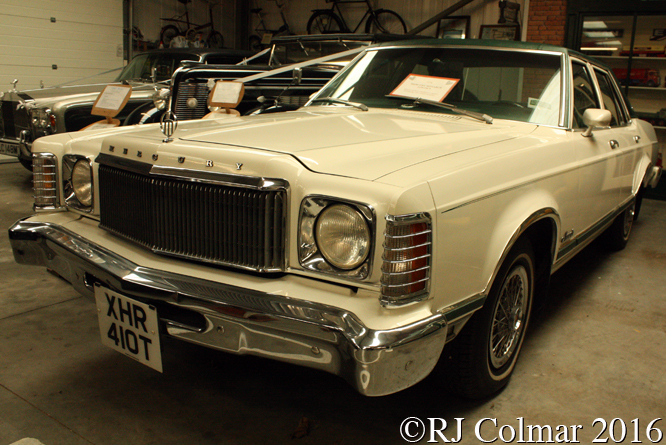
Mercury Monarch Ghia, Atwell Wilson Motor Museum, Calne

Ford introduced the Mercury Monarch in 1975 as an upmarket version of it’s (US) Granda both models being aimed at the downsizing US market in the wake of the early ’70’s oil crises which pushed the price of oil to new high’s, this Ghia version was the top of the range 1978 Monarch though only powered by a mid sized 250 cui 4.1 litre straight six.

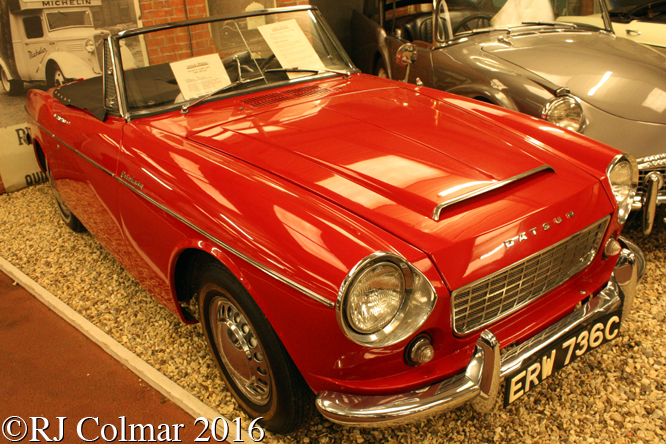
Datsun Fairlady 1500, Atwell Wilson Motor Museum, Calne

The roadster above is believed to be the first Datsun to have ever been imported into the UK, this 1964 85 hp twin carburettor Fairlady 1500 was purchased by Standard Triumph for evaluation purposes and registered by them on the 2nd of April 1965.

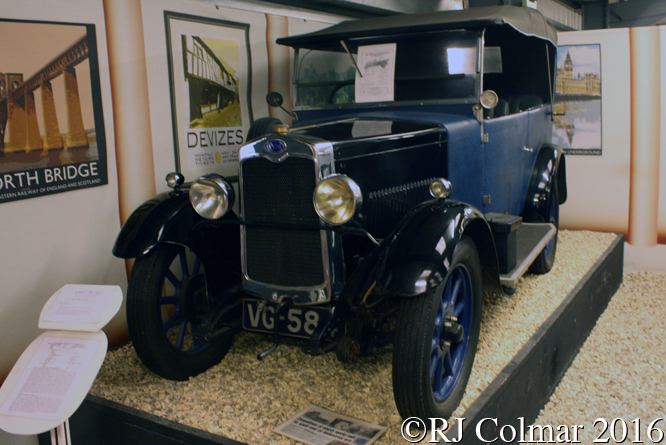
Clyno Royale, Atwell Wilson Motor Museum, Calne

Finally in the space of 9 years Clyno became the third biggest manufacturer of motor cars between 1920 and 1929 when creditors called time on the company, the 1928 Clyno Royale above is powered by a 20hp Coventry Climax engine which powered the ash and fabric body up to speeds of 55 mph.

Further details about the Atwell Wilson Museum can be found on this link.

Thanks for joining me on this “Still Friendly Still Great Value” edition of “Gettin’ a li’l psycho on tyres” I hope you will join me again tomorrow when I’ll be looking at a Targa top Camaro. Don’t forget to come back now !
Share