High Front Wheel Vents – Bugatti Type 57G #57335

Two years after disassociating himself from remarks made in the the French Press in which Ettore Bugatti is alleged to have described the dominant Bentleys of the day as the “fastest lorries in the world” Bugatti made his first official attempt at the Le Mans 24 Hours in 1931.

The three supercharged 5 litre / 302 cui straight eight powered Type 50S models however proved unreliable and up until 1936 when today’s featured Type 57G was built the marques best result on the worlds fastest roundabout was a sixth place recorded by the privateers Jean Sébilleau and Georges Delaroche aboard there 1.5 litre / 91.5 cui Type 40 in 1932.
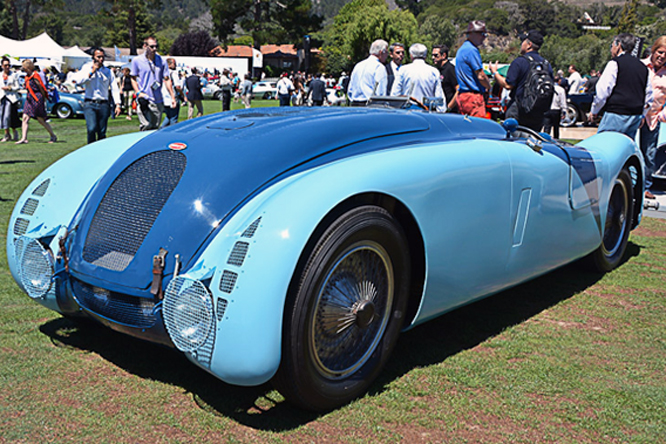
Bugatti Type 57G, The Quail

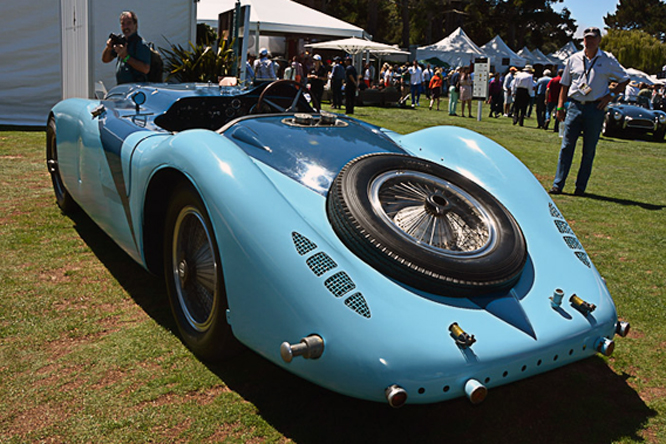
For 1936 Bugatti are believed to have taken four low slung Type 57S chassis fitted with Type 59 (Grand Prix car) wheels and brakes, unsupercharged 3.3 litre 24 valve straight eight motors and built aerodynamic bodies for them that did away with the prevalent cycle wings / fenders giving the whole body a unitary look more familiar to a Land Speed Record vehicle.

During testing at Montlhéry in prior to Le Mans the prototype car is believed to have been damaged. The Le Mans 24 Hours was cancelled because of a General Strike in 1936.
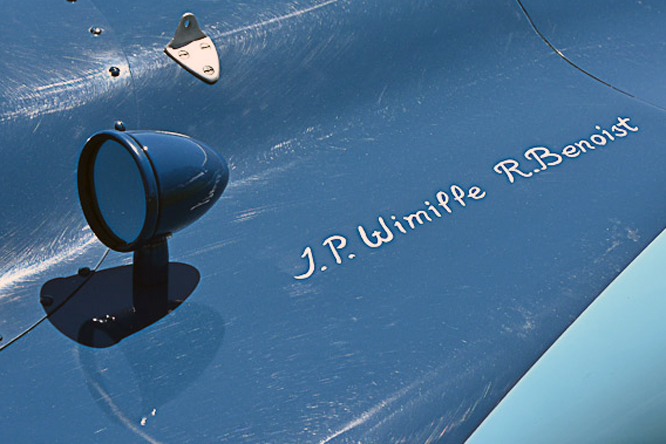
Bugatti Type 57G, The Quail

In preparation for their delayed attempt at the Le Mans 24 hours the three remaining cars were all entered into the GP de l’A.C.F run at Circuit Routier de Linas-Montlhéry and then again the Marne Grand Prix run at Reims in June and July 1936.

The owner of today’s featured car neurosurgeon Fred Simeone believes his chassis #57335 won both of them, with Jean-Pierre Wimille and Raymond Sommer sharing the honours driving the #84 at Montlhéry and Jean-Pierre driving the #12 solo at Reims.
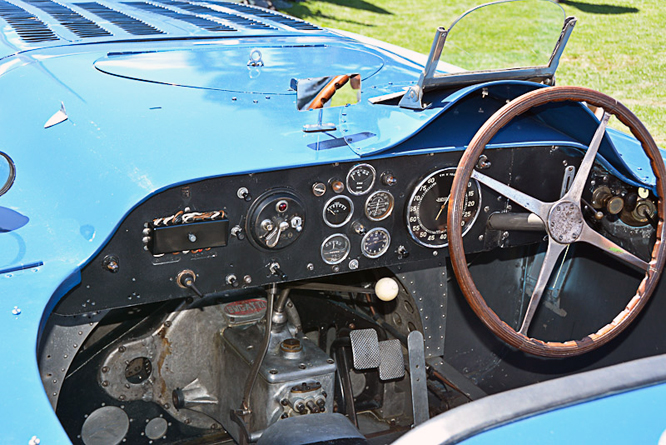
Bugatti Type 57G, The Quail

This proved a powerful portent of things to come, over the winter of 1936 and 1937 chassis #57355 in particular appear to have gone on a diet.

Only two Type 57Gs were entered into the 24 Hours of Le Mans both entered by Roger Labric a driver and journalist, the #1 for Roger and Pierre Veyron while the lighter #2 chassis #57355 was driven by Jean Pierre and Robert Benoist.
Bugatti Type 57G, The Quail

The #1 entry retired just after half distance while Jean Pierre and Robert went on to win by 7 laps from the 2nd place Delhaye driven by Joseph Paul and Marcel Mongin to score the first of Bugatti’s two overall Le Mans victories.

#57355 is easily distinguished from it’s siblings by the high front wheel vents, unique to the #84, which can easily be seen in this linked black white photo of the three undamaged cars taken at Montlhéry in 1936 and confirms that #57355 won each of the three races into which it was entered.

Today #57355 is the only 57G survivor, though there is at least one copy that was finished earlier this year that appeared at Goodwood. #57355 is normally to be found at the Simeone Foundation Automotive Museum in Philadelphia, Pa. but is seen in these photographs by Geoffrey Horton at The Quail last year.

My thanks to Geoffrey Horton for sharing his photographs. I’d also like to thank The Nostalgia Forum contributors Roger Clark for debunking the “Fastest Lorry Myth” and MT Anorak for his insights into the story of the Bugatti Type 57G cars.

Thanks for joining me on this “High Front Wheel Vent” edition of “Gettin’ A Li’l Psycho On Tyres” I hope you will join me again tomorrow. Don’t forget to come back now !

Share

Unwelcome Early Night – Maserati 300S #3054

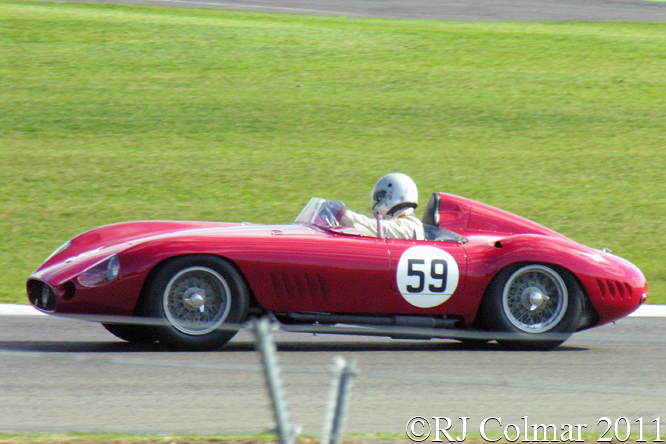
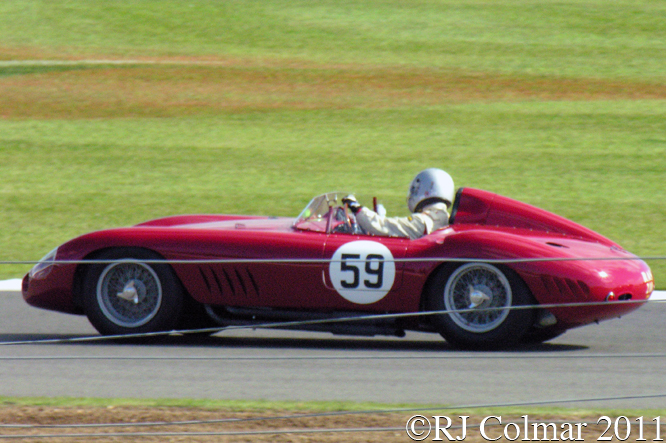
Carrying the #15 on the 1955 Le Mans entry list, one spot below Mike Sparken’s #14 Ferrari 750 Monza chassis 0504M which I looked at some time ago, was today’s featured Maserati 300S chassis #3054 which was to be driven by Roberto Mieres and Cesare Perdisa two weeks after the car had been driven to victory at Monza by Luigi Musso and Jean Behra.

24 laps into the race #3054 was running in second place overall when it retired with a gearbox problem giving the drivers an unwelcome early night. Ironically this occurred 1 lap after the #14 Ferrari had retired with a broken motor.

Maserati 300S, Rettenmaier, Silverstone Classic

A second Maserati 300S #3055, driven by Luigi Musso and Luigi Valenzano lasted 239 laps before it’s gearbox also failed making it the last car to retire from the 24 hour classic.

From it’s first four starts, by a 2 litre A 6GS in ’54 another in ’55 along side the two 3 litre cars, in the Le Mans 24 Hours Maserati had yet to record a single finish.

Maserati 300S, Rettenmaier, Silverstone Classic

With it’s gearbox repaired Jean Behra drove #3054 two weeks later to victory in the 1955 Portuguese Grand Prix and at the end of 1955 Juan Manuel Fangio drove #3054 to victory in the first Venezuelan Grand Prix.

For 1956 the #3054 was fitted with a long nose body and the car was taken to Buenos Aires where Stirling Moss and Carlos Menditeguy drove her to victory in the 1000km race. Piero Taruffi and Jean Behra then drove #3054 to 5th overall and 1st in class in Sebring 12 Hours.

Carlos Menditeguy teamed up with Jean Behra to drive #3054 in the 1957 1000kms race at Buenos Aires finishing second but 1st in class.

The #3054 was subsequently sold to Venezuelan Escuderia Sorocaima and the known results during his ownership include a 22 overall and 3rd in class finish in the 1962 3 hour Daytona race with Guido Lollobrigida at the wheel.

After Daytona Charlie Kolb bought the car and recorded 2nd place finishes with it at Fernandina Beach and Marlboro before going one better to record a win at Savanah which appears to be the last recorded in period outing for #3054.

The car is seen in these photo’s at the Silverstone Classic with Stephan Rettenmaier at the wheel.

Thanks for joining me on this “Unwelcome Early Night” edition of “Gettin’ A L’il Psycho On Tyres”, I hope you will join me again tomorrow for a look at the first Le Mans winning Bugatti. Don’t forget to come back now !

Share

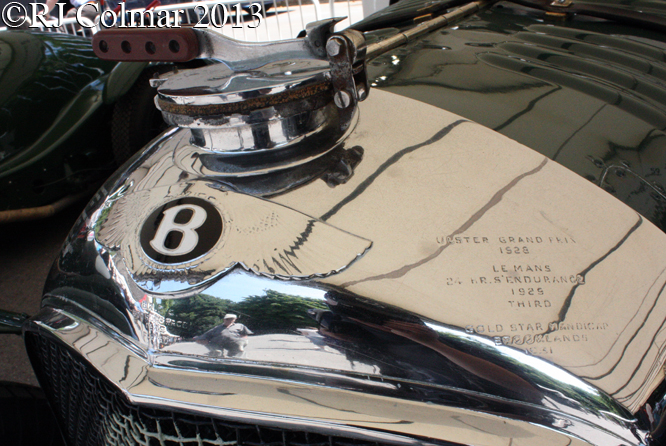
4th Of Four – Bentley 4 1/2 Litre #TX3246

Just as May is the month motorsport turns it’s attentions to the Indianapolis 500 and Monaco Grand Prix June is traditionally the sports interest focuses on the Le Mans 24 Hours. This month I have lined up 29 vehicles that either competed in the event, are of a type that competed in the event and or were designed to compete in the event but for one reason or another did not compete on the fastest roundabout in the world.

Humphrey Wyndham Cook is listed on the peerage.com as being born in 1893 to Wyndham Francis Cook and Frederica Evelyn Stillwell Freeland he attending Harrow on the Hill School and Christ Church, Oxford University.

Bentley 4 1/2 Litre, Goodwood Festival of Speed

Described as quiet and enthusiastic Humphrey started racing in 1914 and continued after The Great 1914/18 war racing Vauxhall’s and Bugatti’s mostly at Brooklands.

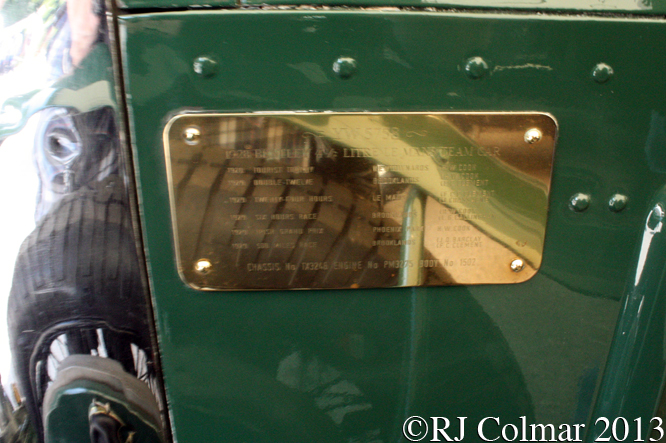
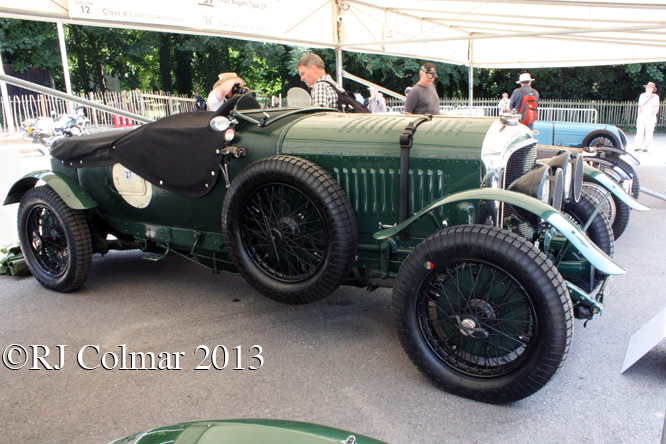
In 1928 he entered today’s featured car an unsupercharged 4 1/2 litre Bentley, chassis #TX3246 in the 1928 Tourist Trophy at Ards where he finished 7th.

Bentley 4 1/2 Litre, Goodwood Festival of Speed

The car next appears to have been entered by W.O. Bentley in to the Double Twelve at Brooklands, two 12 hour races being run in daylight on the same weekend, so as not to disturb the neighbors at night, in May 1929 where Humphrey and Frank Clement retired with a big end failure.

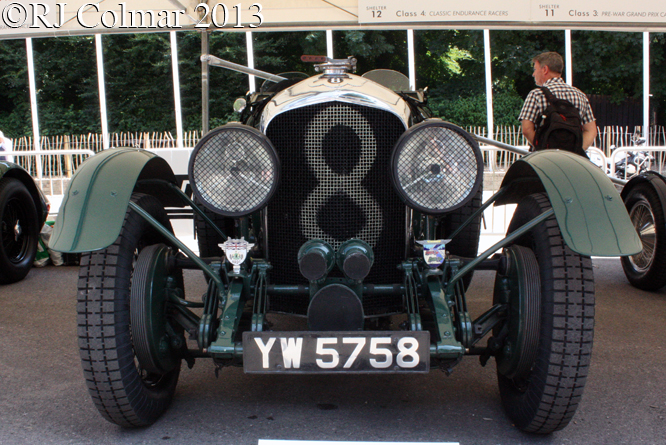
A month later and with the big end repaired #TX3246 powered by it’s original motor #PM3275 was entered into the Le Mans 24 Hour race by Bentley Motors Ltd for Frank Clement and Jean Chassagne to drive. Carrying the #8 They finished 4th completing a 1st to 4th place sweep for the Marque behind the Woolf Barnato and Henry Birkin driving the #1 Speed Six and the #9 and #10 4 1/2 litre cars driven by Jack Dunfee and Glen Kidston with Dr. Dudley Benjafield and André d’Erlanger in the latter.

Bentley 4 1/2 Litre, Goodwood Festival of Speed

Humphrey Cook and Leslie Callingham drove #TX3246 to a third place finish in the Brooklands 6 hour race at the end of June 1929 where a Bentley 1,2 finish interupted by an ALFA Romeo running in the 2 litre / 122cui class.

Two weeks later in the Irish GP Eireann Cup run at Phoenix Park Humphrey finished 5th before #TX3246 returned to Brooklands where Jack Barclay and Frank Clement drove her to victory lane in the Brooklands 500, the first race ever organised by the British Racing Drivers Club, BRDC, in October 1929.

Bentley 4 1/2 Litre, Goodwood Festival of Speed

Humphrey Cook went on to fund and race Raymond Mays and Peter Berthon’s English Racing Automobiles, ERA, project.

While Jack Barclay is still best known in London for his Rolls Royce and Bentley Dealerships in Mayfair.

Bentley 4 1/2 Litre, Goodwood Festival of Speed

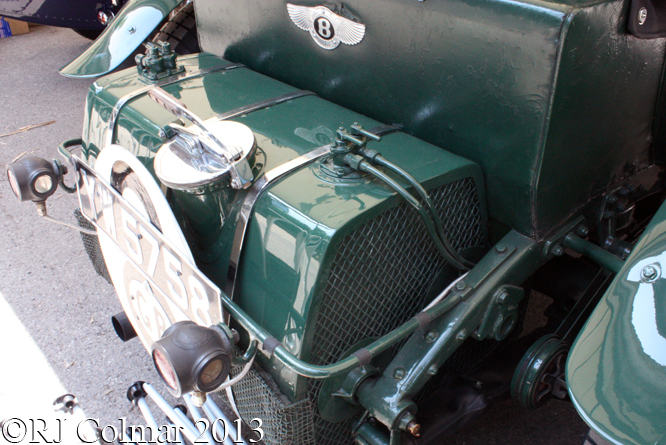
#TX3246 powered by the 4 1/2 litre motor number #PM3275 is seen in these photographs at Goodwood Festival of Speed last year.

Thanks for joining me on this “4th Of Four” edition of “Getting A Little Psycho On Tyres” I hope you will join me again tomorrow. Don’t forget to come back now !
Share

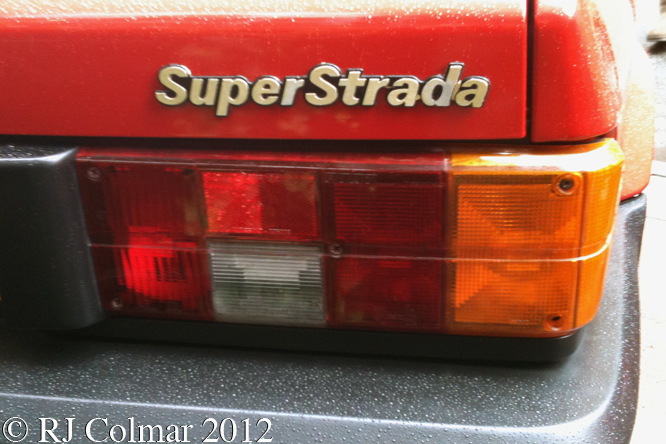
Designed and Assembled By Bertone – FIAT Super Strada Cabrio

The launch of the hatchback Volkswagen Golf to rave reviews and wild customer enthusiasm in 1974 left all the other big manufacturers wanting to cash in on the hatchback market that boomed with the arrival of the boxy little car from Wolfsburg.

FIAT Super Strada Cabriolet, BIAMF, Bristol

FIAT’s response was to commission Bertone to design a completely new body to fit onto the chassis and running gear of 1970’s European Car Of The Year the front wheel drive FIAT 128.

FIAT Super Strada Cabriolet, BIAMF, Bristol

The internal code for the new model was FIAT 138 but FIAT’s marketing department decided to give the car the Ritmo name in most non English speaking markets and Strada in most English speaking markets excluding the USA until the Italians found out that Ritmo was a US brand of non automotive product.

FIAT Super Strada Cabriolet, BIAMF, Bristol

The Strada was launched in the UK with the strap line “Designed with a computer, silenced by a laser and built by robot” in 1978 and remained in production until 1988 with over a million units being manufactured. In 1982 the Ritmo / Strada range received the quad lamp face lift and further changes including large plastic side protection strips were introduced in 1985.

FIAT Super Strada Cabriolet, BIAMF, Bristol

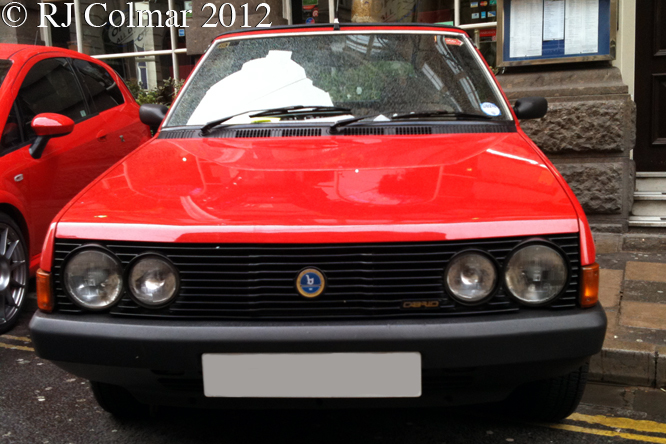
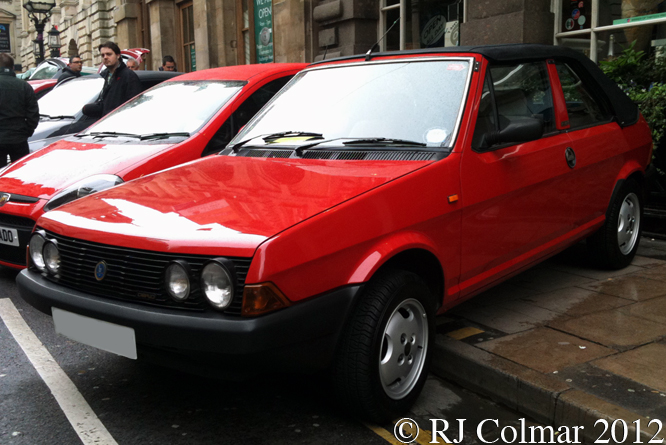
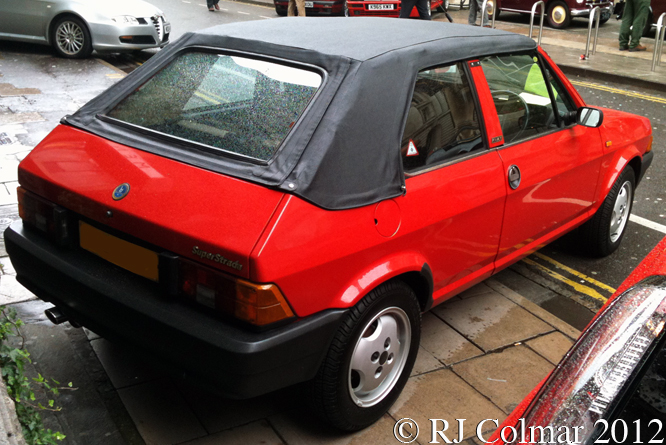
Just as Volkswagen had contracted Karmann to build the Golf Cabriolet, FIAT contracted Bertone to design and build a Cabriolet version of the Ritmo/Strada which was sold as the Bertone Cabrio in some markets but was registered as a FIAT with the authorities in the UK.

FIAT Super Strada Cabriolet, BIAMF, Bristol

This particular 1.5 litre / 91.5 cui Super Strada Cabriolet, seen at the Bristol Italian Auto Moto Fest, was first registered in January 1985 and originally painted Metallic Brown with a Cream roof. It was repainted red and fitted with it’s current roof during a 15 year lay off from the road.

Thanks for joining me on this “Designed and Assembled By Bertone” edition of “Gettin’ a li’l psycho on tyres” I hope you will join me again tomorrow when I’ll be starting a month long series on vehicles that competed in the Le Mans 24 Hours. Don’t forget to come back now !

Share

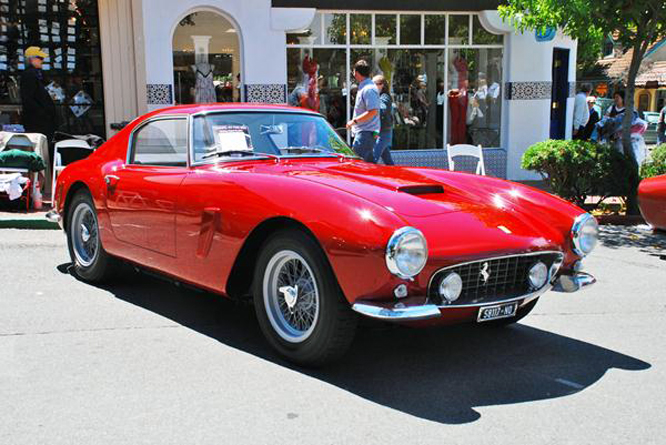
Moka Express – Ferrari 250 GT SWB Competizione #1905

In 1933 inventor Luigi De Ponti patented his design for an aluminium stove top coffee maker known as the Moka Pot for Alfonso Bialetti who sold 70,000 of them locally in Italy up until the start of ’39-’45 war.

In 1946 Alfonso’s son Renato took over the business and focused it’s attention entirely on manufacturing and marketing the Moka Express so that by 2001 over 220 million units had been sold.

Ferrari 250 GT SWB Competizione, Concours on the Avenue, Carmel by the Sea,

In 1960 Renato paid 5.5 million Lira for today’s featured Ferrari 250 GT SWB Competizione chassis #1608 which was delivered appropriately enough for someone involved in the coffee industry painted white with a black interior.

Chassis #1905 has no known in period competition history and it was sold to it’s fifth owner RM’s Scottsdale auction in January 2013 for US$18.14 million including buyers premium.

My thanks to Geoffrey Horton for sharing today’s photograph which was taken at Concours on the Avenue in Carmel by the Sea in 2011.

Thanks for joining me on this “Moka Express” edition of “Gettin’ a li’l psycho on tyres” I hope you will join me again tomorrow when I be looking at a cabriolet built by Bertone. Don’t forget to come back now !

Share

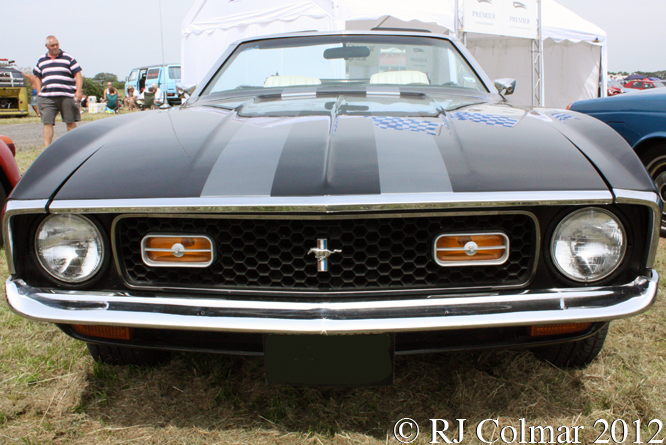
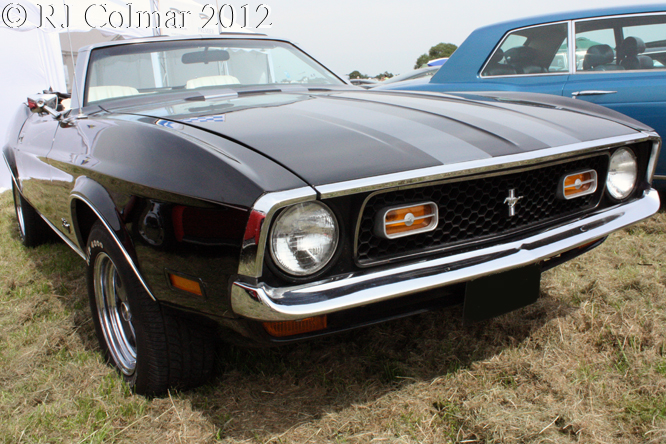
Fasten Seat Belt – Ford Mustang 302 Convertible

Seven years after the introduction of the original Mustang, Ford launched the forth and final face lifted version on the original 108″ wheel base chassis in 1971.

Ford Mustang Convertible, Summer Classics, Easter Compton

The model aimed originally at the youth market was now aimed at a far more affluent market that could afford to double the price of a basic model with sports packages.

Ford Mustang Convertible, Summer Classics, Easter Compton

By 1972 however, when today’s featured model was built things were beginning to radically change. As an oil crises drove up fuel prices, sales of performance orientated models with high end 275 hp Boss 351 motors plummeted to just 351 units.

Ford Mustang Convertible, Summer Classics, Easter Compton

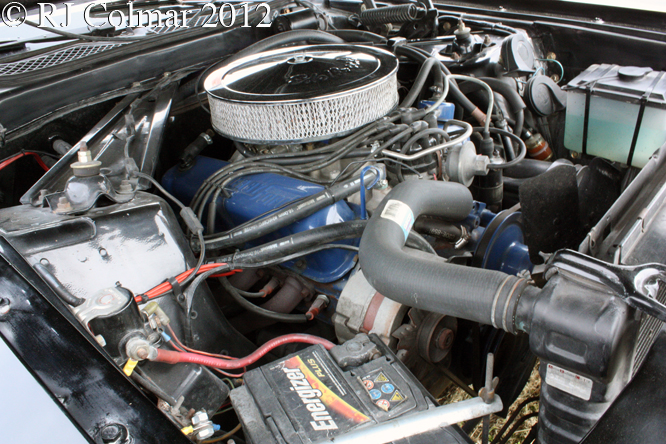
With the increased perceived need for fuel conservation even the 140 hp 5 litre / 302 cui Windsor motor like the one above stood to be demonised as a gas guzzler against national interests.

Ford Mustang Convertible, Summer Classics, Easter Compton

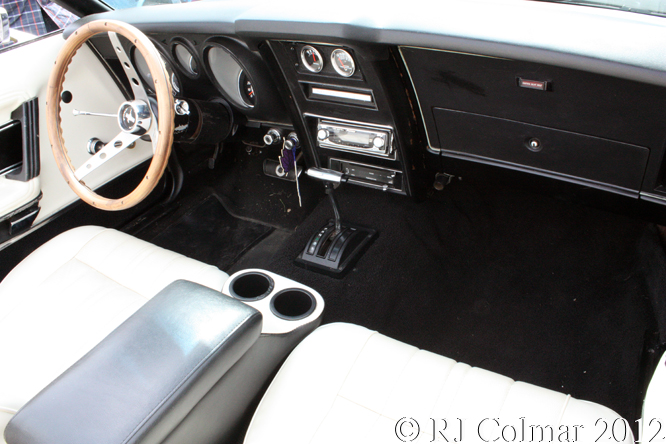
While performance was “out” safety was rapidly becoming the new “in”, the ’72 Mustang was the first to be fitted with a “Fasten Seat Belt” warning lamp on the dash panel.

Ford Mustang Convertible, Summer Classics, Easter Compton

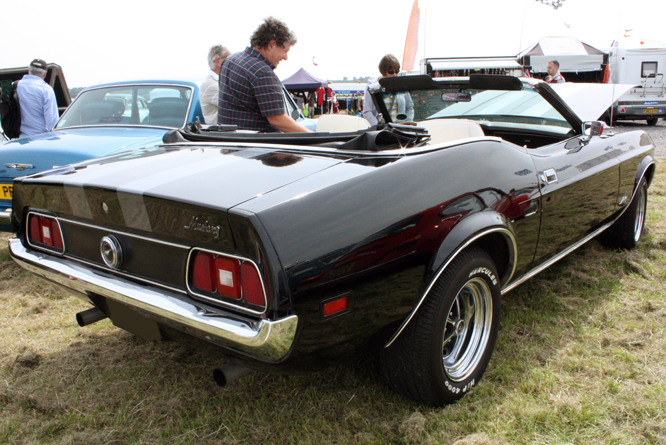
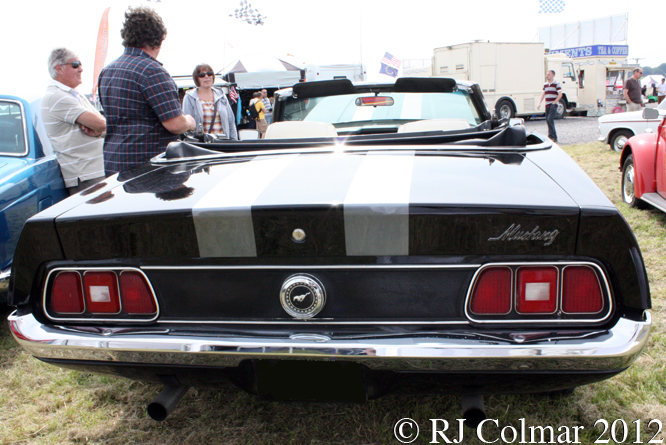
This particular ’72 model seen at Summer Classics in Easter Compton, fitted with a Mach 1 honeycomb sport lamp grill option was imported into the UK in May 2000.

Ford Mustang Convertible, Summer Classics, Easter Compton

1972 saw Mustang sales dip below 130,000 for the first time since the models launch in 1964 to just 125,903, the forth face lifted Mustang continued to be built with minor revisions into 1973 when sales slightly picked up.

Thanks for joining me on this “Fasten Safety Belts” edition of “Gettin’ a li’l psycho on tyres”, I hope you will join me again for Ferrari Friday tomorrow . Don’t forget to come back now !

Share

ADAC GT Tribute – BMW 328i

In late 1990 BMW launched it’s third generation 3 Series also known as the E36 which was seen a big improvement on the previous E30 3 Series.

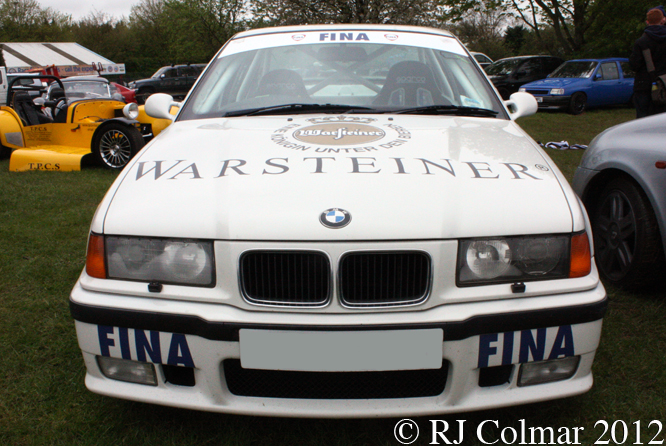
BMW 328i, Castle Combe

In 1995 the first 328i’s became available fitted 190 hp 2.8 litre 170 cui six cylinder 24 valve motor capable of reaching 60 mph from rest in 7 seconds and a top speed of 140 mph.

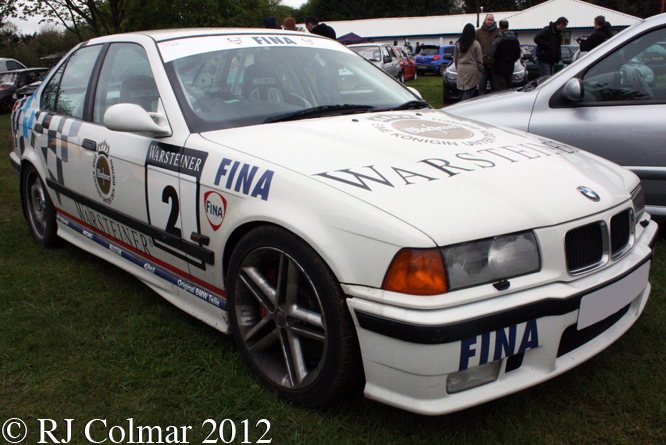
BMW 328i, Castle Combe

To promote sales of BMW their products BMW have been engaged in touring car racing going back to the introduction of the “Neue Classe” in 1961.

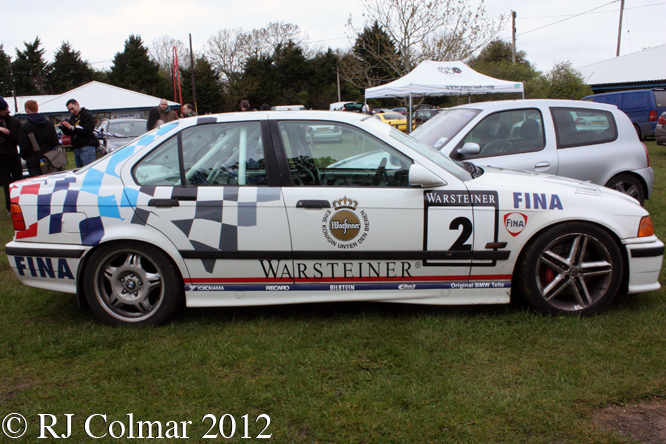
BMW 328i, Castle Combe

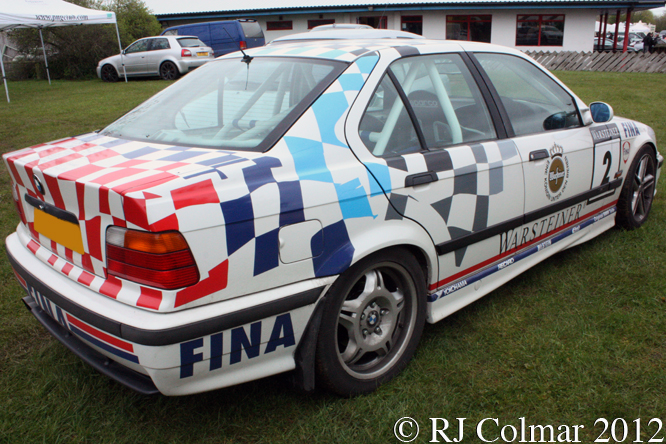
When I first saw today’s featured stickered 1995 328i I thought it might be a tribute to “Smokin” Jo Winklehock’s 1993 British Touring car championship winning season when he drove a BMW 318i, however that year Jo drove the #22 an the series was sponsored by Autotrader.

BMW 328i, Castle Combe

There was however also a German series sponsored by Warsteiner in 1993 called the ADAC GT Cup and the winner driving a #2 BMW M3 E36 GTR Coupé was former world motor cycle champion Johnny Cecotto from Venezuela and it would appear that is whom today’s sticker car is a tribute to.

Thanks for joining me on this “ADAC GT Cup” tribute edition of “Gettin’ a li’l psycho on tyres” I hope you will join me again for Ferrari Friday tomorrow. Don’t forget to come back now !
Share