Do Not Touch The Cars – Bugatti Type 13 Brescia

This month’s Tuesday blogs will feature some Vintage Bugatti’s starting with today’s featured Type 13 Brescia.

After the success enjoyed by Bugatti following the second place finish in the 1911 French Grand Prix by Ernest Friderich driving a 1368 cc / 83 cui Voiturette Type 13 to the mighty 10 litre / 589 cui winning FIAT S76 driven by Victor Hemery Bugatti future up until the beginning of the Great War hostilities in 1914.
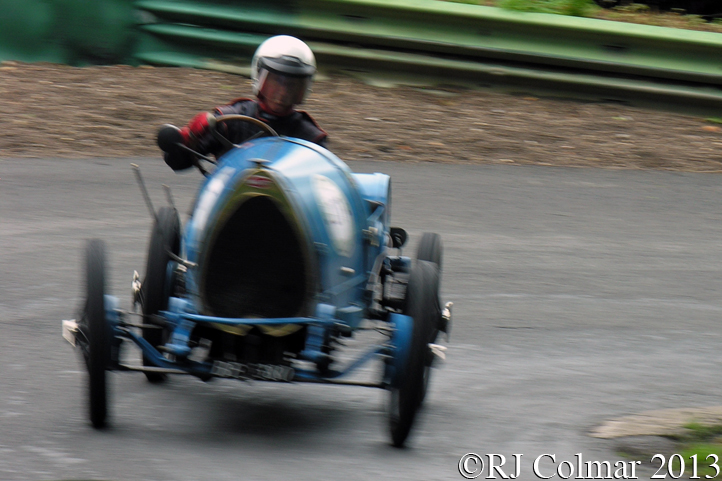
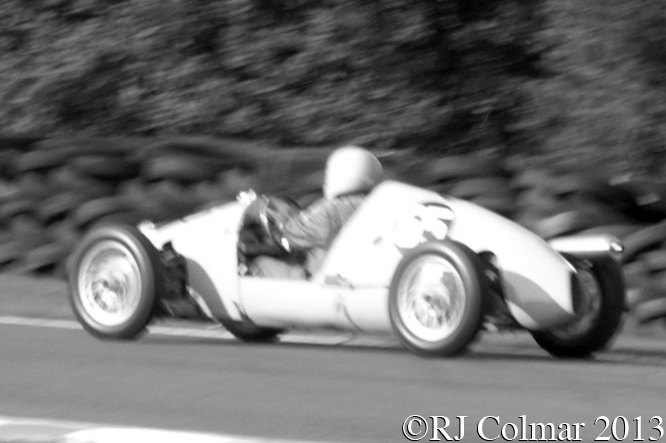
Bugatti Type 13 Brescia, Ward, Prescott

At the out break of hostilities Ettore Bugatti took two Type 13’s to Milan and buried the parts of three more for the duration. In 1918 Ettore returned to his factory in Molsheim with his two Type 13’s and built up three more from the buried parts.

These cars were entered into the 1920 VIII Coupe des Voiturettes at Le Mans where Ernest Friderich drove one of the cars two victory Team mate Pierre de Vizcaya was disqualified from the event after Ettore was observed by officials to have touched the radiator of the #18 which counted as receiving outside assistance.
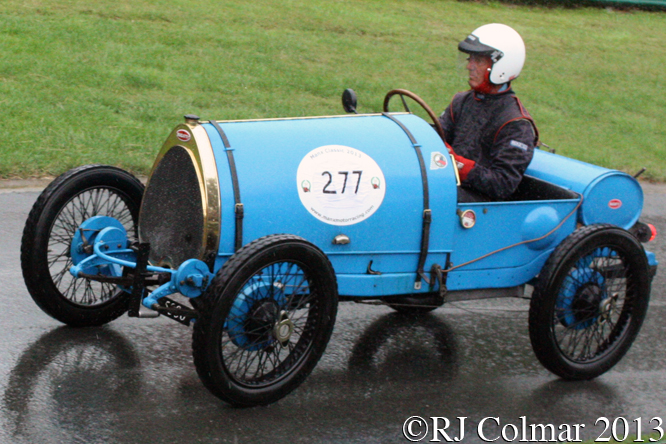
Bugatti Type 13 Brescia, Ward, Prescott

In September 1921 Ettore sent a team of four cars with slightly larger 1,453cc / 88.6 cui motors to compete in the I Gran Premio delle Vetturette run in Brescia, Northern Italy and after just under 3 hours of racing Ernest Friderich led home a Bugatti sweep of the first four places, subsequently all Bugatti’s with 16 valve heads including the Type 13’s, Type 22’s and Type 23’s fitted with 16 valve head motors, were given the Brescia moniker in memory of the victory.
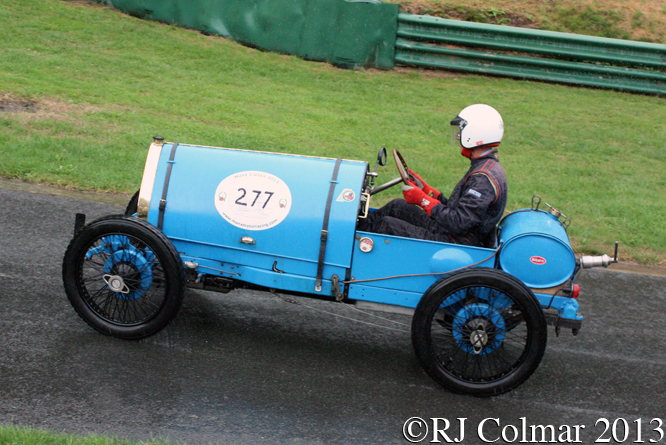
Bugatti Type 13 Brescia, Ward, Prescott

The Type 13 was manufactured with 8 valve and 16 valve cylinder heads from 1910 to 1926 being fitted with front brakes as standard only in the final year of production, Ettore having oft been quoted as saying “I make cars to go, not to stop.”
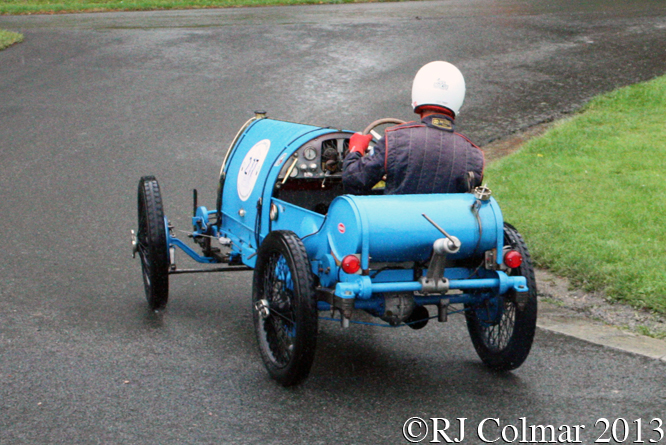
Bugatti Type 13 Brescia, Ward, Prescott

The 1921 Type 13 Brescia seen above driven by Michael Ward at Prescott is notable for having front brakes fitted.

My thanks to Michael Fines, Felix Muelas and Barttore at The Nostalgia Forum for their help in determining which cars Ettore sent to Brescia in 1921.

Thanks for joining me on this “Do Not Touch The Cars” edition of “Gettin’ a li’l psycho on tyres” I hope you will join me again tomorrow, when I be looking at how the Mercedes Formula One team got on in 2013. Don’t forget to come back now !

Share

Maserati Monday – Maserati 250F 2507/23/22

I thought it would be fun to give the pick ups, commercial and agricultural vehicles that have been a feature of Monday’s posts and restyle the day Maserati Monday, bookend the working week with two Italian marques can’t be bad, can it ?

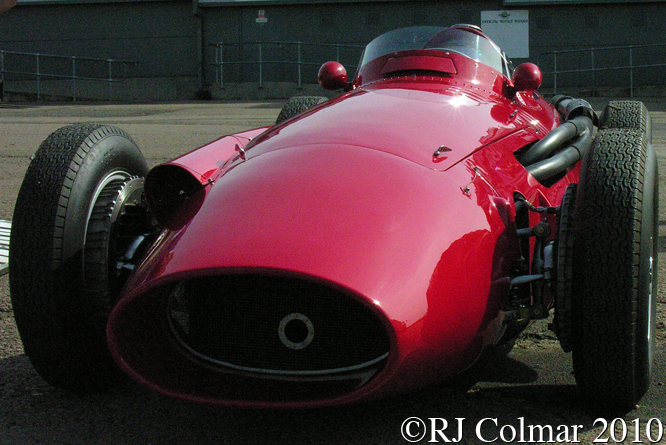
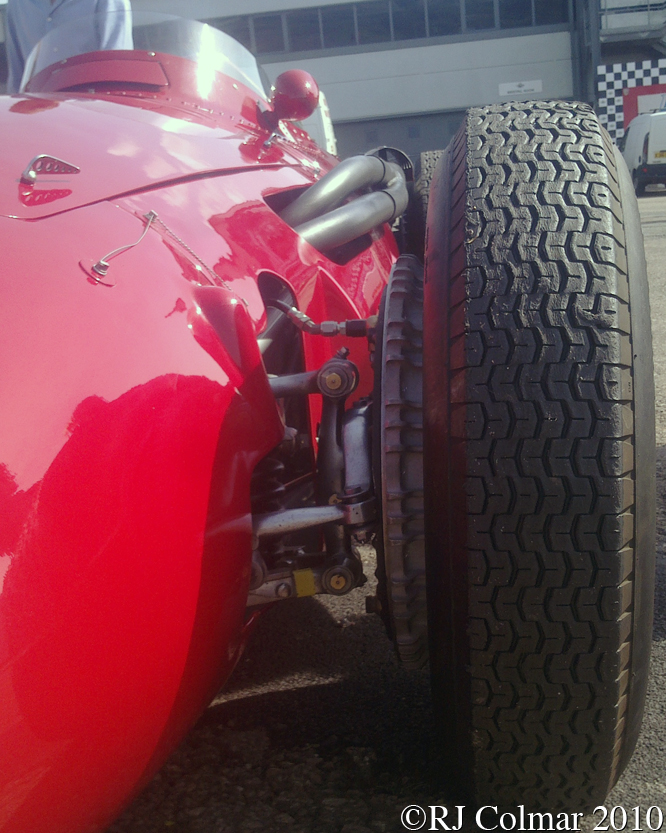
Of the seven World Drivers Championship era’s perhaps the most romanticised is the 3rd from 1954 to 1960 when the rules mandated 2.5 litre / 152.5 cui motors to replace the 2 litre / 122 cui Formula 2 motors that had been used to determine the 1952 and 1953 World Drivers Championships.

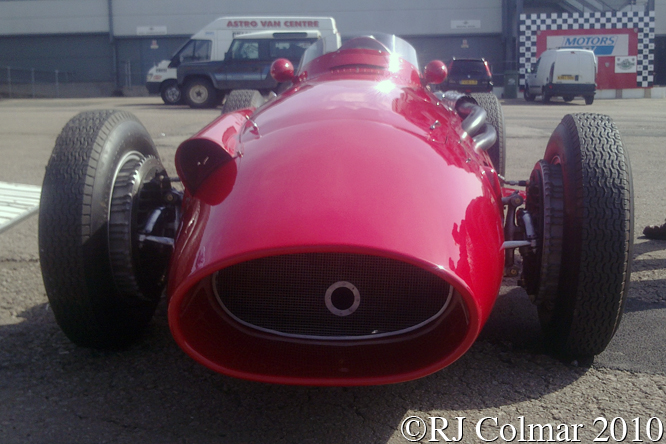
Maserati 250F, Test Day, Mallory Park

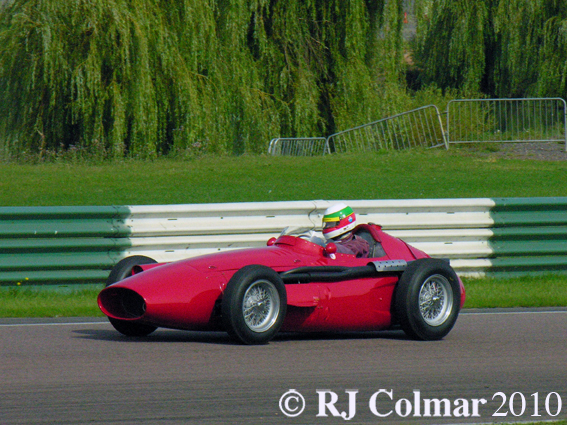
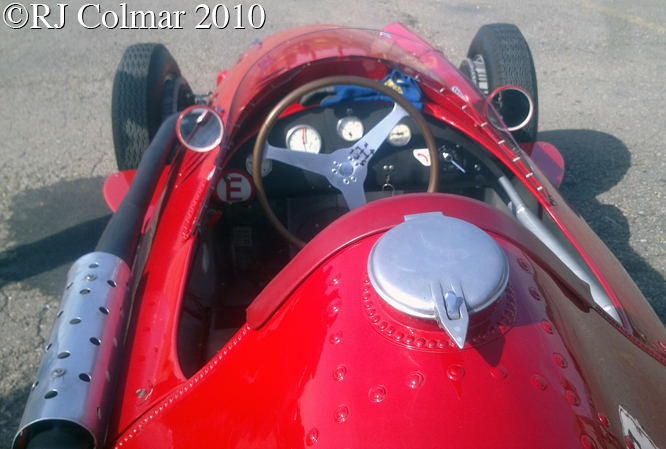
If one car epitomises the era more than other then it is the Maserati 205F versions which took part in the very first and very last championship race of the era winning the first the 1954 Argentinian Grand Prix in the hands of Juan Manuel Fangio and being long since surpassed by the rear engined cars from Cooper and Lotus when Robert Drake soldiered away to a 13th place finish in his Joe Lubin entered 250F, 7 laps down on the winning Lotus Climax driven by Stirling Moss in the last race of the 2.5 litre era the 1960 US Grand Prix.

Maserati 250F, Test Day, Mallory Park

Apart from the 8 World Championship Grand Prix won by 250F variants, bettered only by Mercedes Benz with nine victories, while the 250F clocked up an unequaled 23 non championship Formula One race victories in the same era.

Maserati 250F, Test Day, Mallory Park

Most of the twenty six 250F’s built led hard racing lives and consequently have complicated histories today’s featured car #2507 is no exception having originally been bought by Gilbey Engineering for Roy Salvadori to drive in 1954. Roy one a non championship race at Snetterton with the car and scored many other podium placings before he crashed at Oulton Park which led to the car being returned to the Maserati factory for repairs.

Maserati 250F, Albuquerque, Test Day, Mallory Park

Maserati replaced the chassis of 2507 and sent it back to Gilbey Engineering an now it get’s complicated, the Gilbey car was eventually retired after Ivor Beub had raced it, but the damaged Gilbey chassis was repaired and given a new identity #2523 for the 1956 season in which Bristol’s Horace Gould drove the car in the Belgian Grand Prix and Piero Taruffi in the French, on each occasion it retired.

Maserati 250F, Test Day, Mallory Park

In 1957 #2523 was rebodied and given a the identity #2522 and from then until 1959 it was driven by a dozen different drivers, including Taruffi, Gould, Harry Schell, Masten Gregory, Ivor Bueb, Hans Herrmann, Joakim Bonnier, Wolfgang Seidel, Carroll Shelby, Cliff Allison, Hernando da Silva Ramos and Fritz d’Orey of which Harry Schell scored the best result a second place in the non championship 1957 Grand Prix de Pau.

By 1960 #2507/23/22 had been shipped to Brazil Gino Munaron raced it at least once before selling it on, eventually the car was fitted with a Chevrolet V8 before being brought back to Europe by Colin Crabbe in 1972. The current owner, Jose Albuquerque seen enjoying the car at a Mallory Park test day a couple of years ago, acquired #2507/23/22 in 1999.

My thanks to David McKinney, Michael ‘Tuboscocca’ Catsch, John Winfield, Allan Luton and Alan Cox at the Nostalgia Forum for their patience and understanding answering my questions and not least to Tim Murray who kindly lent me a copy of David McKinney’s excellent book ‘Maserati 250F‘ which is as good as it get’s in print on the subject of these wonderful cars. New evidence is always being shed on the stories of these cars so if you know different to what is written above, please do not hesitate to chime in below.

Thanks for joining me on this “Maserati Monday” edition of “Gettin’ a li’l psycho on tyres” I hope you will join me again tomorrow when I’ll be starting the first in a series of Bugatti blogs. Don’t forget to come back now !
Share

Backyard Hi Tec – Amon Cosworth AF101

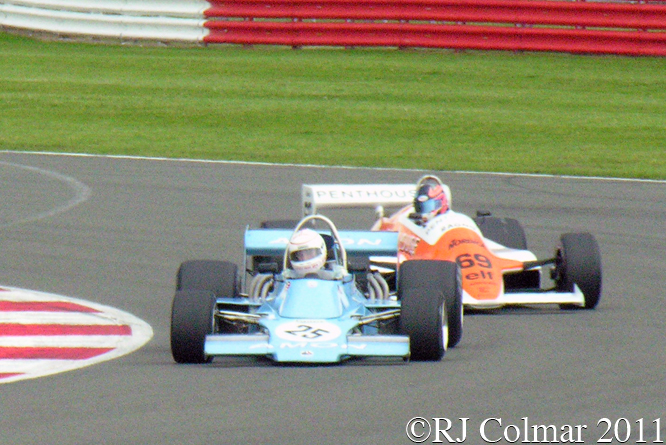
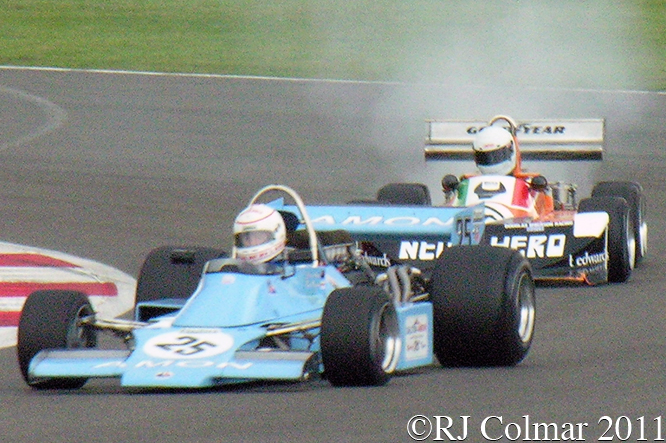
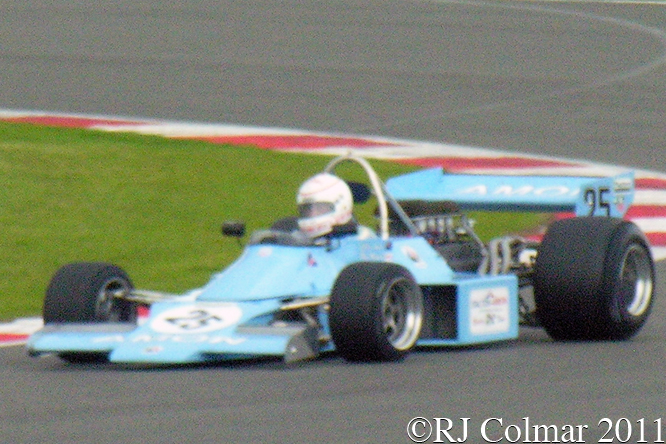
This month’s Sunday posts will feature 5 Formula One cars that ran in the 1974 season for which the then 31 year old Le Mans winner Chris Amon decided to follow in the foot steps of Jack Brabham and Bruce McLaren by building a car bearing his own name.

Amon Ford F101, Maydon, Siverstone Classic

It would appear Chris had plans to build both Formula 1 and Formula 5000 cars the latter to race in the lucrative US series with up and coming Australian Larry Perkins; a driver, engineer and sofa surfer who was making his way through the junior ranks in the UK. However despite financial backing from amateur racer John Dalton only the Formula One spec AF101 featured here ever saw the light of day.

Chris commissioned Gordon Fowell to provide him “with a sophisticated chassis” powered by a Ford Corsworth DFV motor driving the rear wheels through a Hewland gearbox. Gordon had designed the attractive, if underpowered, Martini sponsored 1973 Tecno E731 that Chris drove in practice at three meetings in 1973 but had never raced.

Amon Ford F101, Maydon, Siverstone Classic

The AF101 chassis, fabricated by Thompson who were also responsible for fabricating the Tecno E731 and Ferrari 312 B3, was certainly sophisticated with unique, for the time, central fuel cell that would become deriguer once ground effects were better understood with the introduction of the Lotus 79 in 1978. The car also had titanium torsion bar suspension and inboard front brakes, as did the well proven Lotus 72.

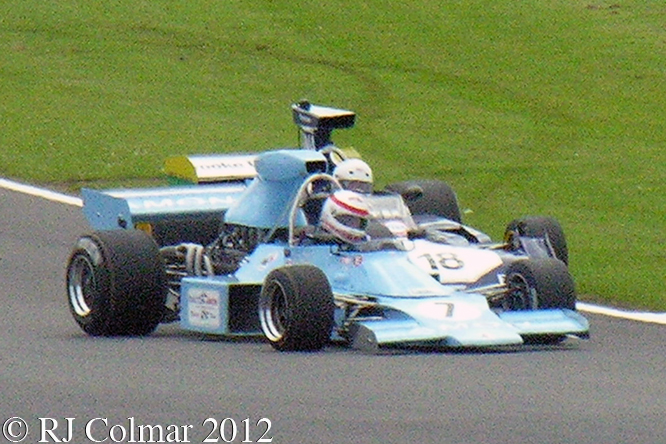
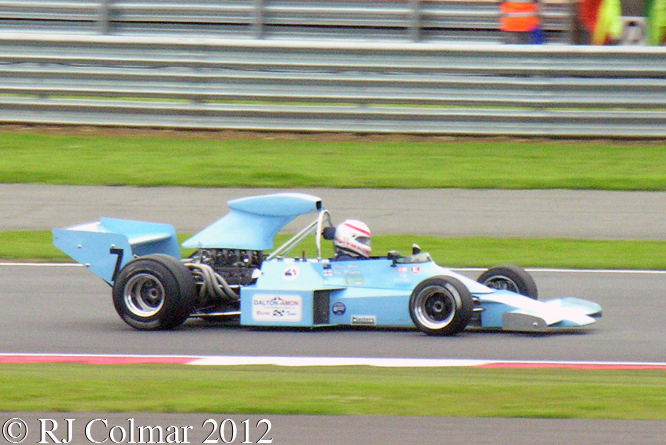
Responsibility for the aerodynamics was handed over to Professor Tom Boyce, and almost every time the car appeared it had a different nose including a high wing when it was first tested, a chisel nose in Spain where it first raced, a shovel at Monaco where the car qualified but did not race and then a lower full width wing was tried when the car failed to qualify in Germany and Italy.

Amon Ford F101, Maydon, Siverstone Classic

Unfortunately the AF101 proved a little to sophisticated for Chris’s budget, despite Larry Perkins saving a fortune in hotel bills with his sofa surfing skills, the little team folded having clocked just 22 laps in the 1974 Spanish Grand Prix before a brake shaft broke. Looking back on the project Chris conceded that he had attempted to build, what turned out to be a fragile hi tec vehicle on a backyard budget when he might have achieved more with a vehicle that was a little less ambitious and a little more reliable.

Larry Perkins loyalty was rewarded with an attempt at qualifying the Amon in the German Grand Prix after Chris was taken ill, unfortunately the combination of the Nurburgring, a rookie driver and a fragile car proved too much of a challenge for the team.

Amon Ford F101, Maydon, Siverstone Classic

After out qualifying Ricky von Opel and his works Brabham BT44 in the 1974 Spanish Grand Prix Chris was offered the second works Brabham drive for the rest of 1974, but turned it down out of loyalty to his own employees. Just as in 1973 when Tyrrell stepped in to offer Chris a couple of end of season drives after the demise of the Tecno team, at the end of 1974 BRM stepped in to offer Chris a couple of drives in the wonderful BRM P201, a model I’ll be looking at in a couple of weeks.

Post Italy 1974 the Amon was abandoned, restored and languished in a German Museum before it was restored to running condition in 2005. It is currently owned and raced by Ron Maydon in the Grand Prix Masters Series, Ron is seen driving the AF101 at Silverstone a few years ago.

Amon Ford F101, Maydon, Siverstone Classic

Thanks for joining me on this Backyard Hi Tec edition of “Gettin’ a li’l psycho on tyres” I hope you will join me again tomorrow when I’ll be starting a new GALPOT feature “Maserati Monday”. Don’t forget to come back now !
Share

Buckler Framed – Smith Special Mk2

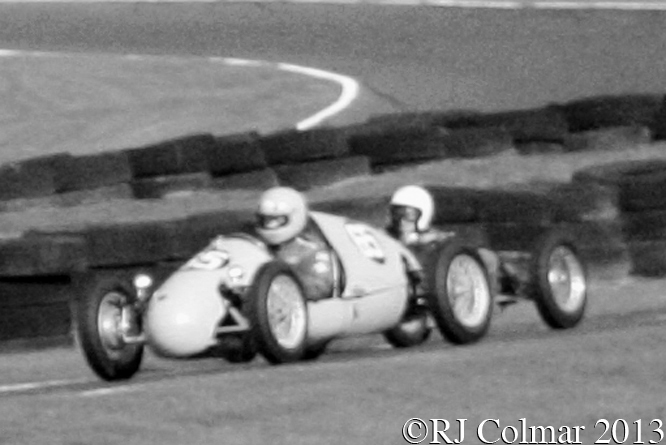
Over the coming Saturday’s I’ll be looking a few vehicles built by Buckler of Reading including today’s Smith Special Mk2 500 Formula 3 car for which Buckler built the space frame in 1950.

‘500’ Formula 3 was a low cost formula devised by a group of enthusiasts working for the Bristol Aeroplane Company during the 1939-45 war. After the cessation of hostilities the group organised an event at the wartime Silverstone Aerodrome in 1946 which had to decamp to the nearby grounds of Lord Hesketh where a hill climb was run for open wheelers with 500 cc / 30.5 cui motorcycle motors.

Ken Smith built his first Smith Special in 1948 to run in the class and after this was damaged at Brands Hatch in October 1950 Ken ordered a new one off frame from Buckler in Reading to build the Smith Special Mk2.

Smith Special Mk2, de la Roche, Oulton Park

The 9′ 10″ car with the chain drive Norton transmission was powered by a mid mounted Norton twin cam shaft motor fed by two two fuel tanks one a 1 1/2 gallon gravity tank over the motor and another 7 1/4 gallon saddle tank mounted over the drivers legs from which fuel was directed to the gravity tank by a fuel pump.

The suspension featured upper transverse leaf springs and lower wishbones, the road wheels, front brakes, steering box, steering column and track rods were sourced from a FIAT while the brake master cylinder and rear brakes were sourced from a Morris.

Smith Special Mk2, de la Roche, Oulton Park

Ken Smith drove the car from 1951 to 1954 during which time if it finished it usually finished in the top six, more often than not in the top 3 which included several wins of which the 1953 Autosport Non production Car Trophy was it’s last in Ken’s hands.

These photo’s show the car being driven by present owner Richard de La Roche at the Oulton Park Gold Cup meeting last year, more detailed information on the Smith Special can be found on this link. I hope to be returning with a fuller history of ‘500’ Formula 3 towards the end of the year when the ‘500’ Formula 3 class cars will returning to Castle Combe for the first time since 1955 to compete for the “Bristol Aeroplane Company Motor Sports Club Challenge Trophy”, owned by the Bristol Pegasus Motor Club, on Sunday the 5th of October.

Thanks for joining me on this “Buckler Framed” edition of “Gettin’ a li’l psycho on tyres”, I hope you will join me again tomorrow when I’ll be looking at a Formula One car built by one of New Zealands most accomplished race car drivers. Don’t forget to come back now !
Share

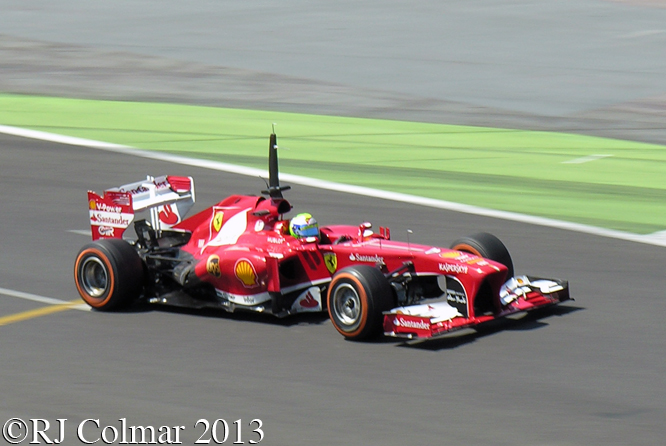
Dreaming About Someone Else’s Car – Ferrari F138

Since Alberto Ascari finished second driving a Ferrari on their debut in the second round of the World Drivers Championship in 1950 Ferrari have made 868 further championship Grand Prix starts, scored 207 championship Grand Prix pole positions, 221 championship Grand Prix victories contributed to 15 World Drivers Championships and won 16 Constructors championships, the latter first being introduced in 1958.

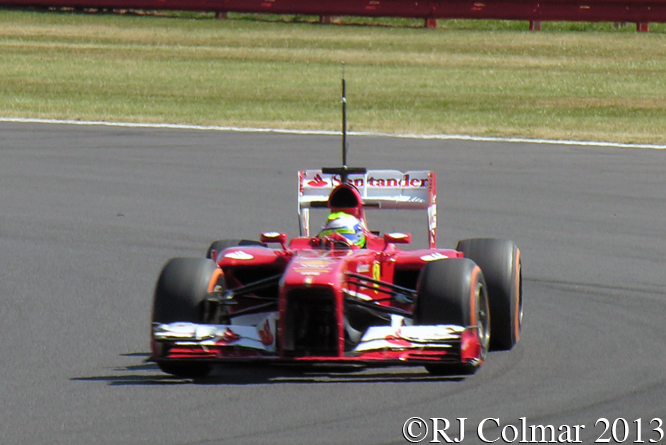
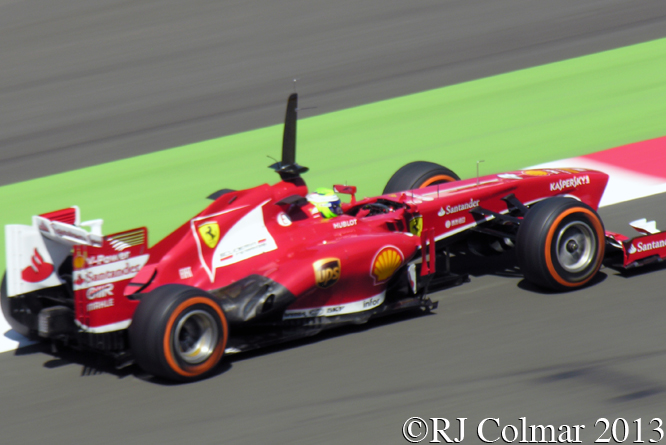
Ferrari F138, Massa, Young Diver Test, Silverstone

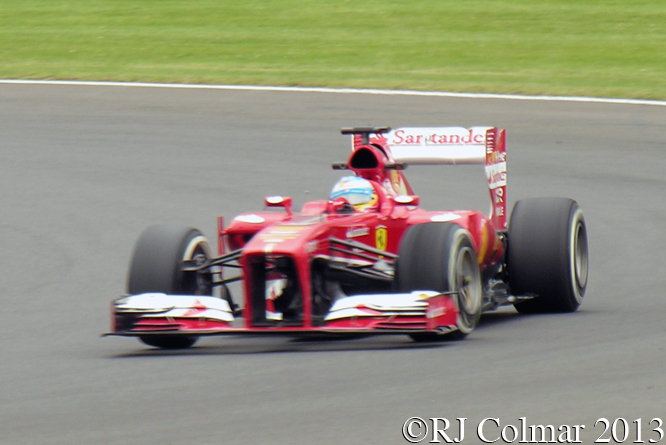
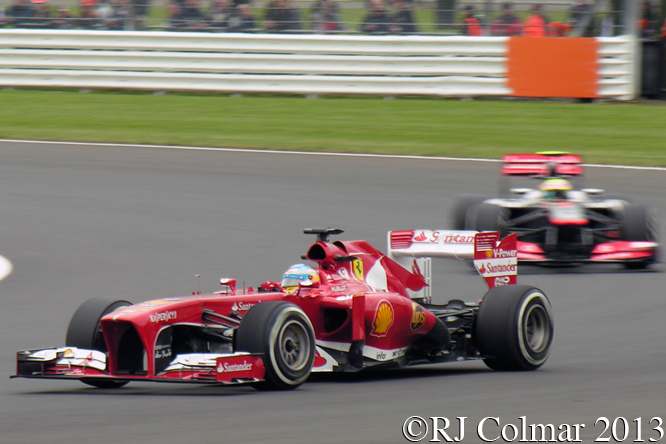
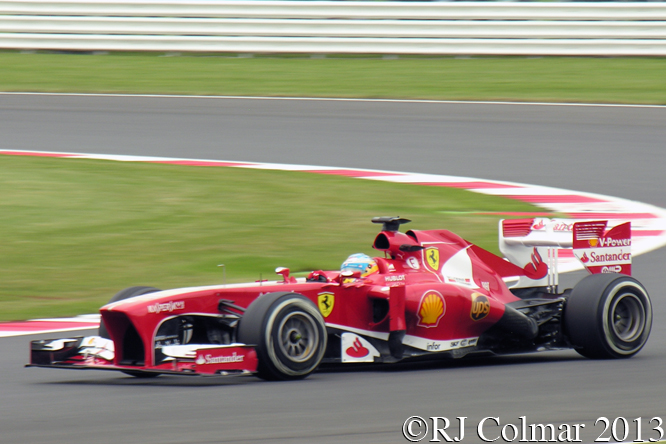
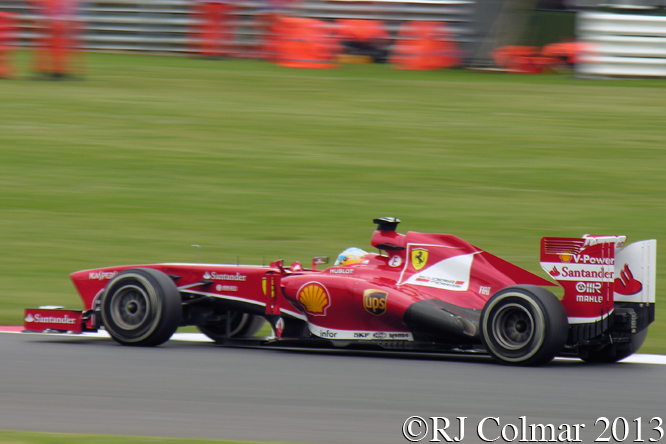
When Fernando Alonso seen below left Renault to sign up to replace Kimi Raikkönen at Ferrari for the 2010 season few could have imagined that four seasons later his tally of 11 wins, 2 poles and 8 fastest laps would not have added any further championships to Scuderia Ferrari’s unsurpassed tally.

Ferrari F138, Alonso, British Grand Prix P2, Silverstone

Such has been Ferrari’s technical disadvantage that despite being regularly hailed as the best driver on the Formula One circuit by pundits Fernando has managed three 2nd place finishes in the season end championship standings in 3 of the last four years.

Ferrari F138, Alonso, British Grand Prix P2, Silverstone

The 2013 season started quite well for the Spaniard with a second place to Raikkönen’s Lotus followed by wins in China and Spain interrupted only by a rare retirement in Malaysia, there after the best Fernando could manage was four second place finishes while his championship rival since 2010 Sebastian clocked no less than 11 victories out of 14 following the Spanish Grand Prix to claim his and Red Bulls 4th successive title.

Ferrari F138, Massa, Young Diver Test, Silverstone

So Fernando finished second in the 2013 points standings yet again and perhaps crucially for 2014 championship aspirations, let slip that for his 32nd Birthday he might like something other than a Ferrari.

Ferrari F138, Alonso, British Grand Prix P2, Silverstone

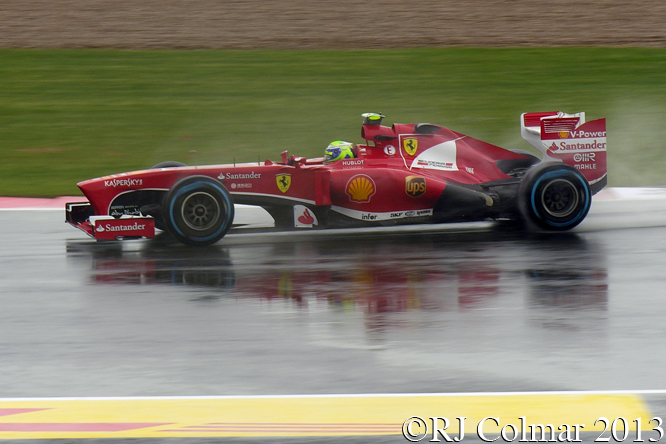
Fernando’s team mate Felipe Massa, seen driving the F138 during the Young Driver Test at Silverstone below, has been the Ferrari defacto No.2 driver since 2006 when he replaced Rubins Barrichello to drive alongside Michael Schumacher.

Ferrari F138, Massa, Young Diver Test, Silverstone

Felipe’s best shot at winning a World Drivers Championship came in 2008 when he comprehensively out drove his team mate and reigning 2007 World Champion Kimi Raikkönen in 2008 only to lose the championship by a songle point to Lewis Hamilton.

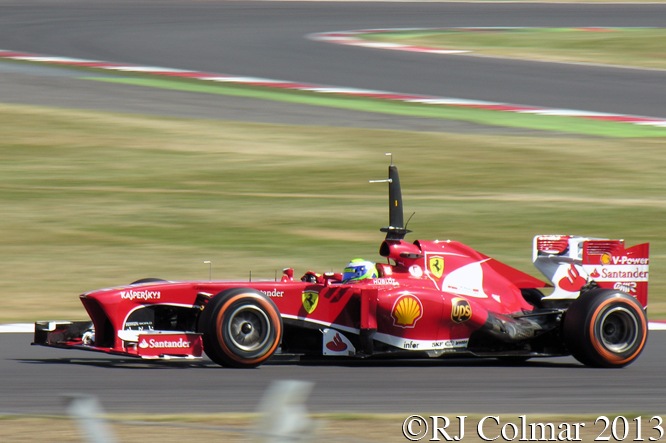
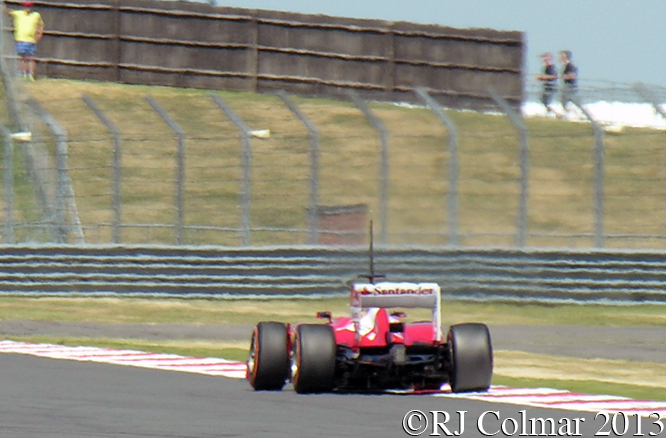
Ferrari F138, Massa, British Grand Prix P1, Silverstone

In 2009 Felipe’s season was cut short when a spring fell off his compatriot Ruben’s Barrichello’s Brawn and caught Felipe’s helmet. Lucky not to loose his eye, Felipe returned to Formula one the following season since when he has scored 3 podium finishes, 2 fastest laps and was ordered to hand over lead of the 2010 German Grand Prix to his team mate Alonso.

Ferrari F138, Alonso, British Grand Prix P2, Silverstone

Last season saw Felipe score a season high third place finish in the Spanish Grand Prix and finish 8th in the season end drivers championship standings having contributed to Ferrari’s third over all finish in the constructors championship.

Ferrari F138, Massa, Young Diver Test, Silverstone

Unsurprisingly Felipe was not retained for 2014 and he has found a new job at Williams where he will be team leader, Alonso meanwhile may yet rue the day he told a reporter that he would like “someone else’s car” for his 32nd Birthday as Ferrari President Luca di Montemozolo appears to have taken the humorous comment to heart and reemployed a very much in form Kimi Raikkönen, the same driver he sacked to take on Fernado Alonso in the first place.

Ferrari F138, Massa, Young Diver Test, Silverstone

Without question if the 2014 Ferrari F14T is even vaguely reliable the goings on at Maranello should be fascinating as the team comes to terms with having signed two drivers capable of taking points of each other and possibly letting a rival from another team win the drivers championship.

You can follow Ferrari through their website on this link, on their facebook page linked here and twitter feed linked here.

Thanks for joining me on this “Dreaming About Someone Else’s Car” edition of “Gettin’ a li’l psycho on tyres” I hope you will join me again tomorrow when I’ll be starting a new series of Saturday blogs on Buckler cars. Don’t forget to come back now !
Share

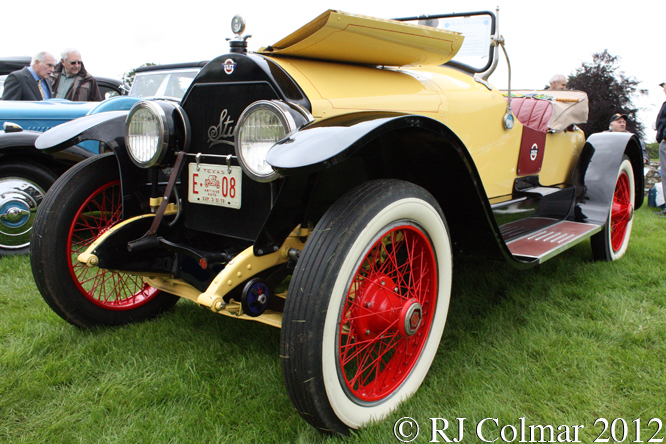
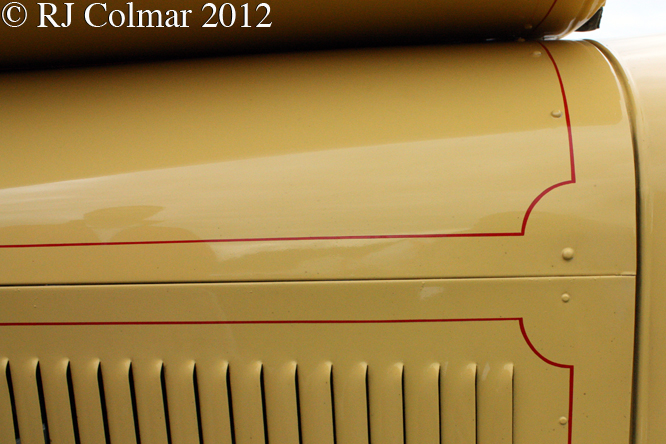
Creature Comforts – Stutz Bearcat

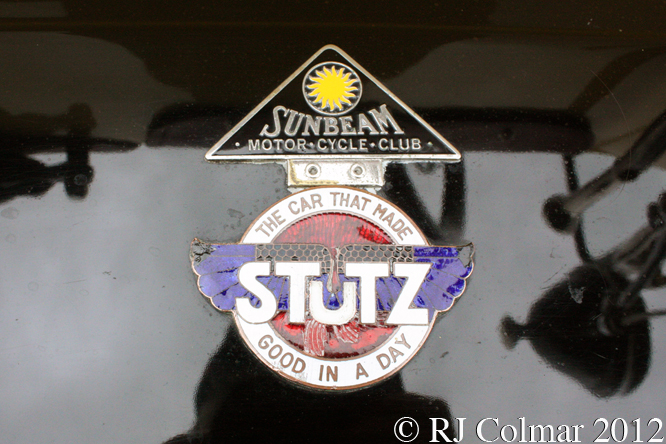
After building his first race car in five weeks in time for the 1911 Indy 500 where the car placed 11th behind cars with larger motors Harry C. Stutz renamed his Ideal Motor Company, founded in 1911, as the Stutz Motor Company and with the strap line “the car that made good in a day” in 1913.

Stutz Bearcat, Classics at the Castle, Sherborne Castle

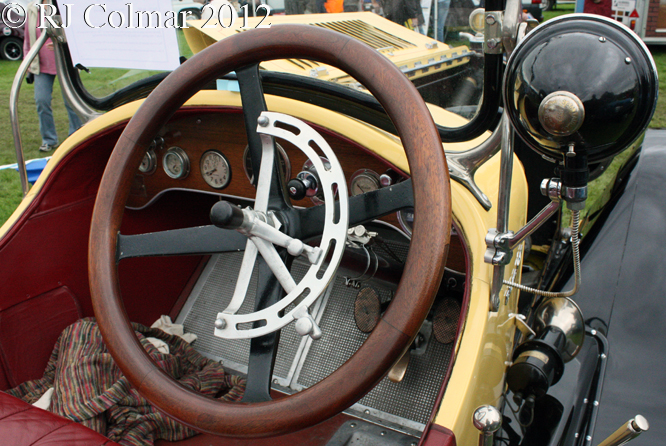
Early Stutz Bearcats, first seen in 1914, were built like the successful Stutz “White Squadron” racers with twin bloc four cylinder Wisconsin Motor Company motors, and few creature comforts except essential lights and a tiny ‘monocle’ windscreen.

Stutz Bearcat, Classics at the Castle, Sherborne Castle

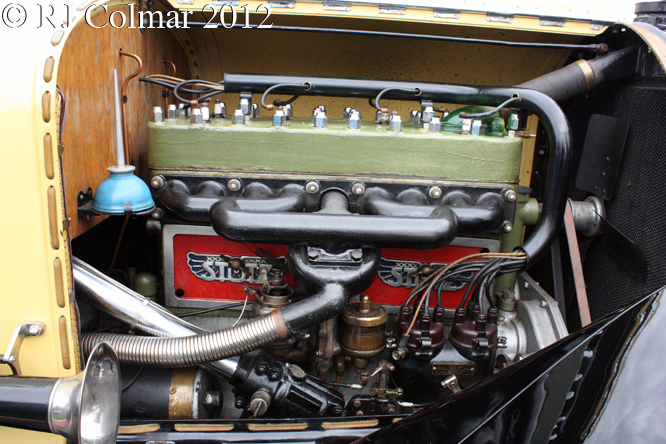
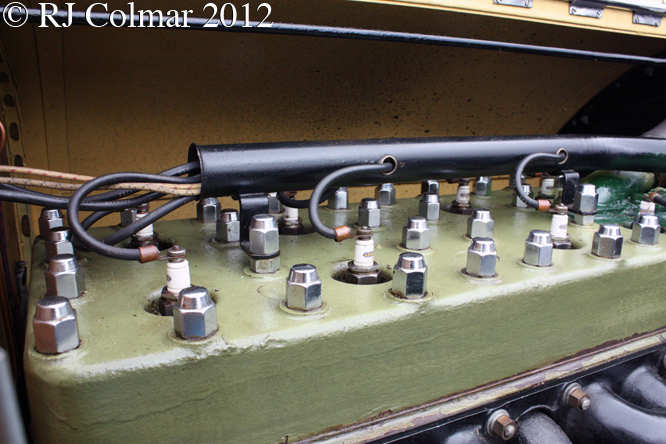
In 1915 Harry Stutz built a motor of his own monoblock 4 cylinder design based on the 115hp 1914 Mercedes Grand Prix car motor with four valves per cylinder and dual ignition.

Stutz Bearcat, Classics at the Castle, Sherborne Castle

Two White Squadron Racers fitted with these motors came home 3rd and 4th in the Indy 500, despite many successes else where this result would remain the teams best performance and final appearance in the “The Greatest Spectacle in Racing”.

Stutz Bearcat, Classics at the Castle, Sherborne Castle

Turning all of his attention to the production of road cars Harry Stutz had a detuned version of his four cylinder motor fitted to the Series S Bearcats built in 1917.

Stutz Bearcat, Classics at the Castle, Sherborne Castle

The new motor developed 80 hp and was good enough to power the Bearcat up to a respectable, for the period, 85 mph.

Stutz Bearcat, Classics at the Castle, Sherborne Castle

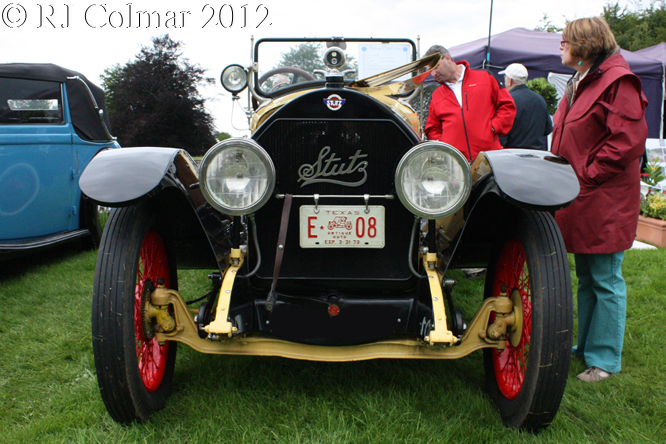
1917 Bearcats like the one seen here also introduced a few creature comforts…

Stutz Bearcat, Classics at the Castle, Sherborne Castle

including a closed cockpit with ‘step over doors, a fold down full width windscreen and rudimentary fold away protection from inclement overhead weather.

Stutz Bearcat, Classics at the Castle, Sherborne Castle

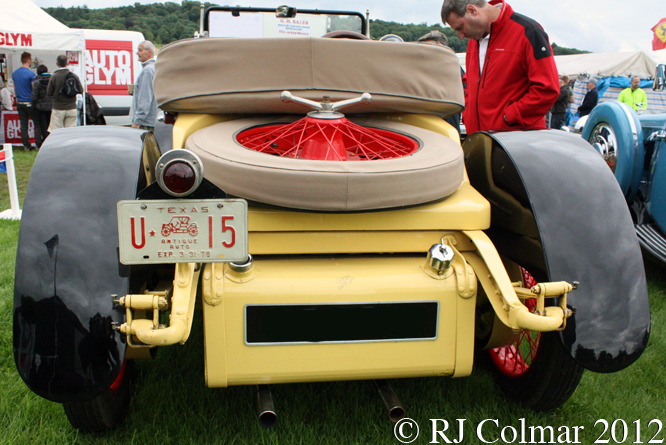
Built on a 120 inch chassis and for the price of several Model T Fords it is thought that around 1,000 Bearcats were built from 1915 up until 1922.

Stutz Bearcat, Classics at the Castle, Sherborne Castle

Today’s featured car was imported from California by the present owner in 1991 and was restored by him with the period correct US market right hand drive.

Thanks for joining me on this “Creature Comforts” edition of “Gettin’ a li’l psycho on tyres” I hope you will join me again tomorrow when I’ll be reviewing Ferrari’s 2013 Formula One season. Don’t forget to come back now !
Share

Promises Promises – Lotus Renault E21

In four short years Toleman Motorsport rose from sponsor of drivers in junior categories to becoming Champion Formula 2 constructors and by the end of 1980 they made an ambitious move into Formula One with turbocharged 4 cylinder Hart motors from their premises in Whitney in Oxfordshire. Over the next five years Toleman struggled to qualify for races for two year and then struggled to finish races for a further two years but high lights including three podium finishes in 1984 with rookie Ayrton Senna driving and Teo Fabi’s pole position at the German Grand Prix in 1985 showed enough promise for 1985 sponsor Benetton to buy the team.

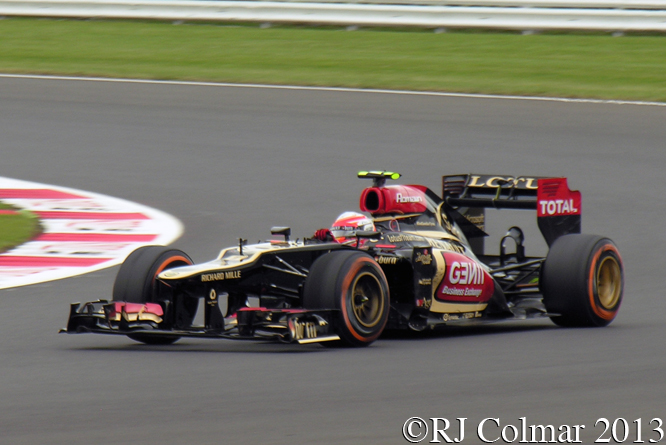
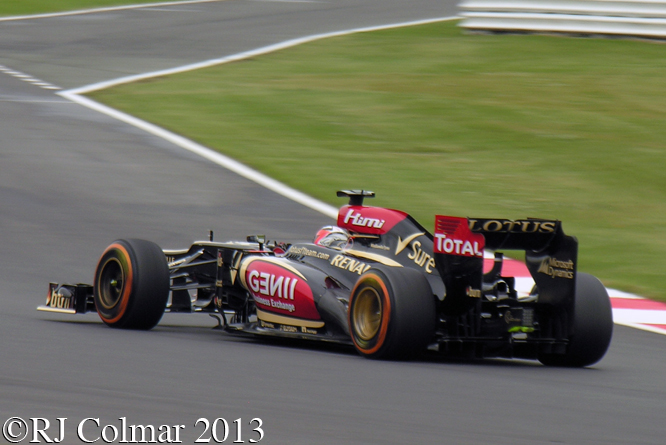
Lotus Renault E21, Raikkönnen, British Grand Prix P2, Silverstone

Under Benetton ownership the team from from Whitney raced for one season with BMW motors with which Gerhard Berger scored a single win in the Mexican Grand Prix before switching to Ford motors in a partnership which lasted until 1994 when Michael Schumacher won his first of two consecutive championships in 1994 despite two disqualifications and a highly contentious maneuver which eliminated his only championship rival in the season finale. By now the team had moved to premises in Enstone, Oxfordshire.

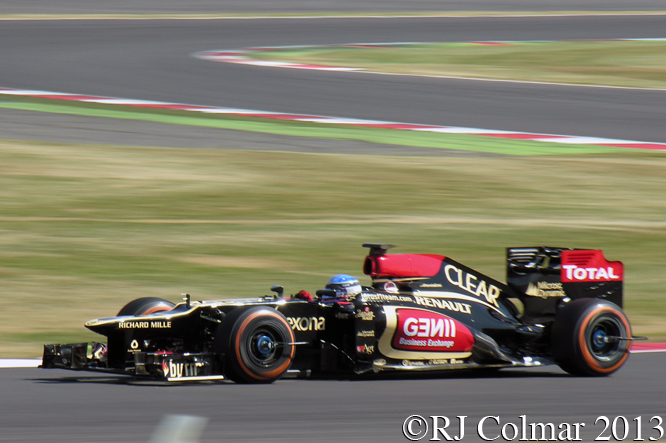
Lotus Renault E21, Grosjean, British Grand Prix P2, Silverstone

In 1995 Benetton secured a supply of Renault Motors with which Michael secured his second championship before moving to Ferrari. Benetton slipped from 1995 Constructors Champions into a graceful decline until 2001. A year earlier Renault bought Benetton out but refrained from renaming the team Renault until 2002 when their latest motor was fully competitive.

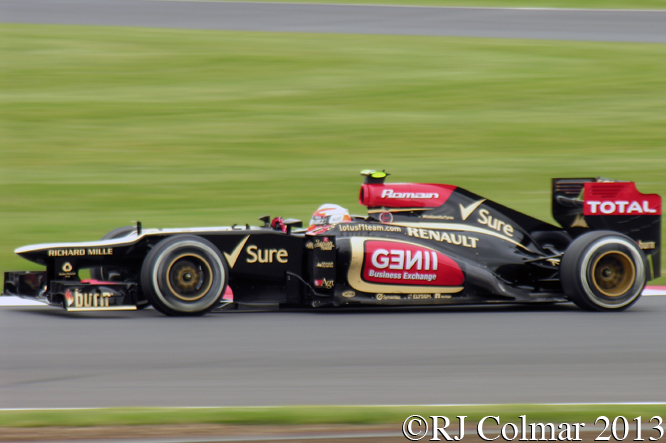
Lotus Renault E21, Prost, British Grand Prix P2, Silverstone

Under Renault’s ownership the team from Enstone won two drivers championships with Fernando Alonso in 2005 and 2006 breaking Michael Schumachers five year strangle hold on the championship. Renault also became only the second French constructor after Matra in 1969 to win the Constuctors Championship in 2005 and 2006. Alonso left for an ill feted spell with McLaren in 2007 but returned in 2008 for a two year spell during which the team could not match McLaren or Ferrari for top honors.

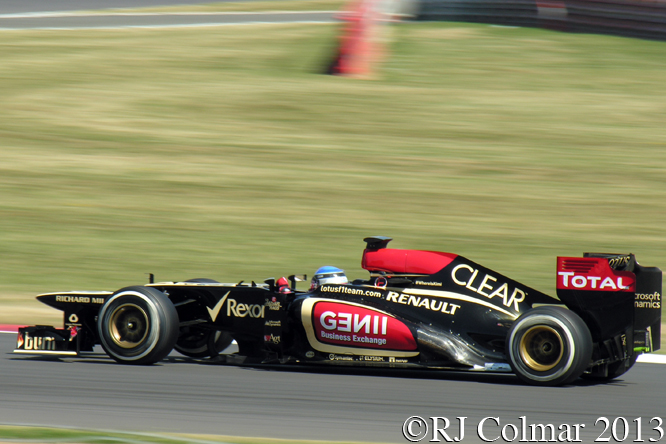
Lotus Renault E21, Grosjean, British Grand Prix P2, Silverstone

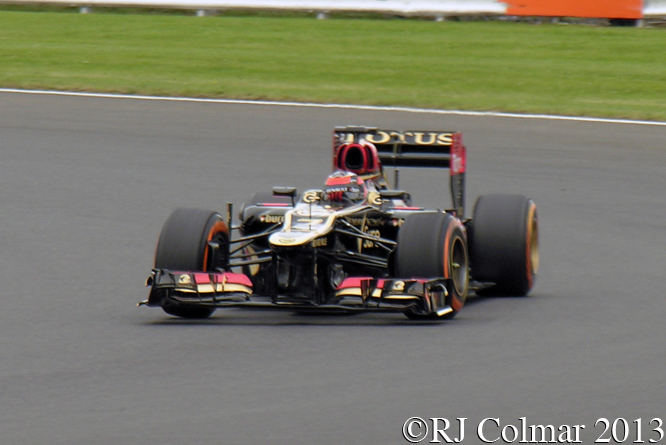
After a scandal involving race fixing allegations in 2009 Renault moved swiftly to divest itself of it’s interest in the Enstone team and the Luxembourg group Genii Capital became majority owners of the team which in 2011 was rebranded Lotus Renault GP. In 2012 the somewhat underfunded Lotus Renault GP Team pulled off a coup by bringing Kimi Raikkönen back to Formula one after an enforced sabbatical which had seen his place at Ferrari taken by Alonso in 2010. Raikkönen’s return netted a single win in 2012 for the team now known simply as Lotus F1 at the Abu Dhabi Grand Prix.

Lotus Renault E21, Prost, British Grand Prix P2, Silverstone

Last season promised much for Lotus F1 as Kimi Raikkönen took a comfortable win in the Australian Grand Prix and there was talk of a new backer being brought into the team. Kimi followed his win up with a string six second place finishes and until midway in the season looked to be a genuine contender for the title until the development of tyres decisively went to the advantage of Sebastian Vettel and Red Bull. By the seasons end the promising backer had all but disappeared and it emerged that Lotus F1 were struggling to pay Kimi his promised bonuses to the point where Kimi had a back operation and missed the last two races of the season consequently dropping from 3rd to 5th in the seasons standings secure in the knowledge that for 2014 he would be returning to Ferrari to partner Fernando Alonso the man who usurped him at the end of 2009 !

Lotus Renault E21, Raikkönnen, British Grand Prix P2, Silverstone

Lotus F1 who name their cars with an E for Enstone were among the last to confirm a drive train deal for 2014 and the last to show their 2014 contender will start the season with Kimi’s team mate Romain Grosjean and Venezuelan Williams refugee Pastor Maldonado sharing the driving duties. 4 time champion Alain Prost’s son Nicholas is seen driving the unnamed car in the 3rd and final photographs during the Young Driver Day at Silverstone last year.

You can follow the fortunes of Lotus F1 on their website linked here, on their facebook page linked here and on their twitter feed linked here.

Thanks for joining me on this “Promises, Promises” edition of “Gettin’ a li’l psycho on tyres” I hope you will join me again tomorrow. Don’t forget to come back now !
Share