Racing For Life – Benz Prince Henry

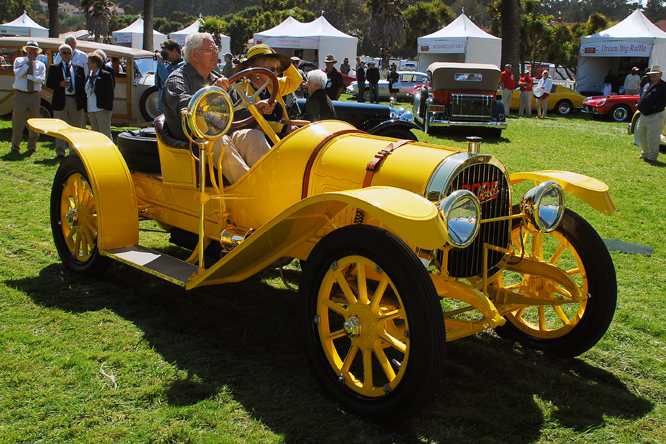
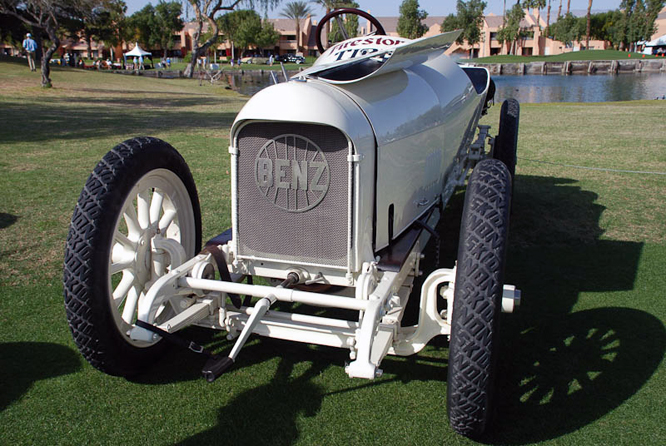
After his successes racing, Stern bicycles, a motorbike, Ford “No 999”, becoming the first man to drive a timed lap of 60 mph at Indianapolis State Fairgrounds in 1903 and building a reputation as a match racer Barney Oldfield went to New York and bought today’s featured Benz, of the type that won the Prinz Henry Car Trails in Europe, from the Broadway Benz Co. showroom floor in 1907.

Benz Prince Henry, Desert Classic Concours d'Elegance, Palm Springs

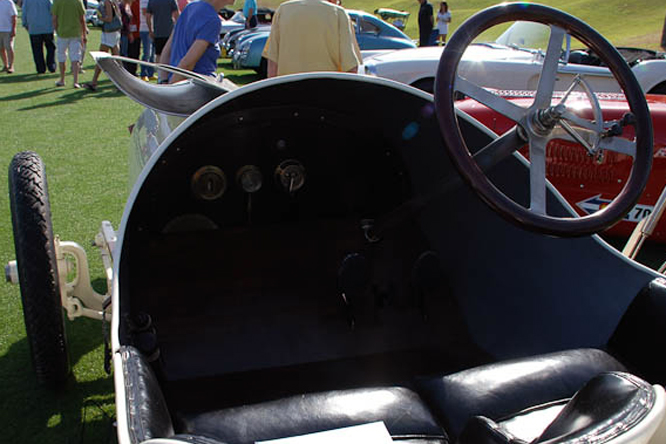
Barney and baseball star Ty Cobb are said to have driven this Benz in barnstorming events and it bears a plaque saying that it was timed at 115 mph.

Benz Prince Henry, Desert Classic Concours d'Elegance, Palm Springs

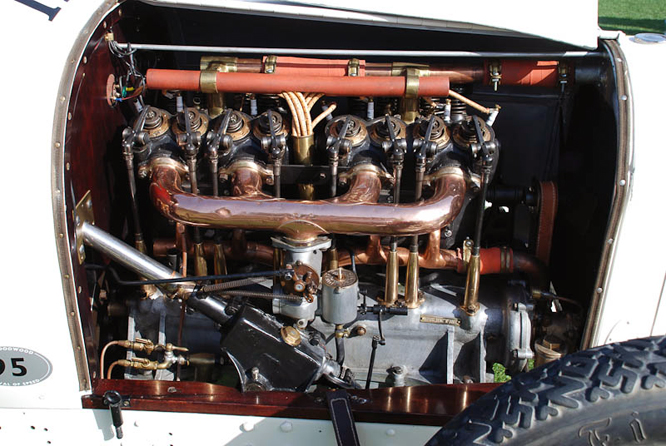
The 7.4 litre / 451 cui 4 cylinder motor featured a hemi head with four valves per cylinder and produced 100hp when new and is said to have produced 130hp with further tuning.

Benz Prince Henry, Desert Classic Concours d'Elegance, Palm Springs

In 1913 Barney Oldfield and his 1907 Benz stared in a 12 minuet silent Keystone production directed by Max Sennett called ‘Barney Oldfield’s Race For Life’ which featured a damsel in distress a steam train and the Keystone Cops operating a hand cart. A fuller synopsis of the film can be seen here.

Benz Prince Henry, Desert Classic Concours d'Elegance, Palm Springs

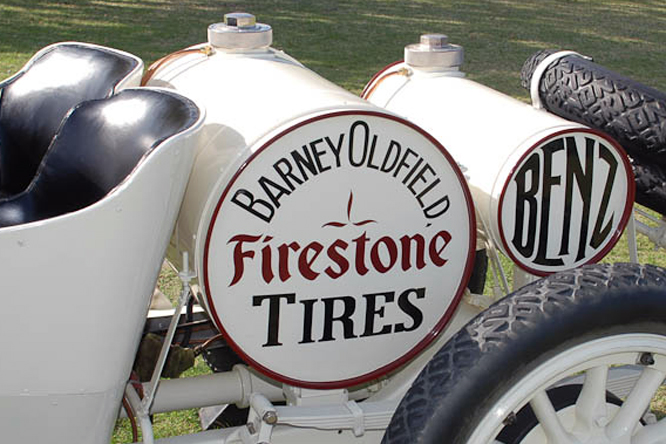
The Barney Oldfield was one of the earliest to drive cars carrying sponsorship Barney used the slug line ‘Tires are my only life insurance!’

My thanks to Geoffrey Horton who took these photo’s of the Benz at the Desert Classic Concours d’Elegance a couple of years ago.

Thanks for joining me on this “Race For Life” edition of “Gettin’ a li’l psycho on tyres” I hope you’ll be joining me again tomorrow when I’ll be looking at the Lotus Renault F1 team’s 2013 season. Don’t forget to come back now !

Share

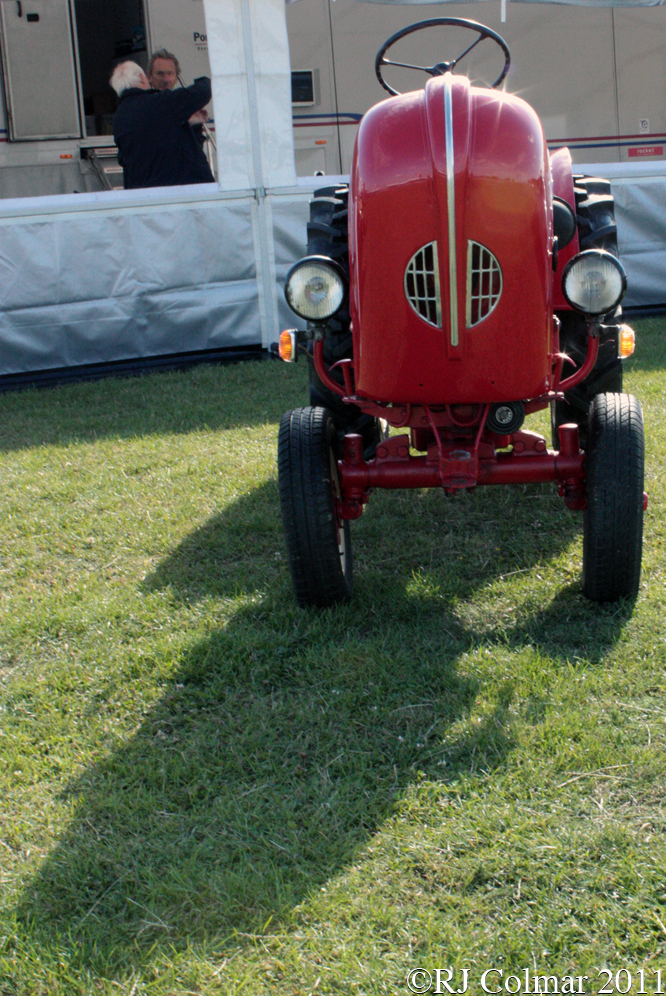
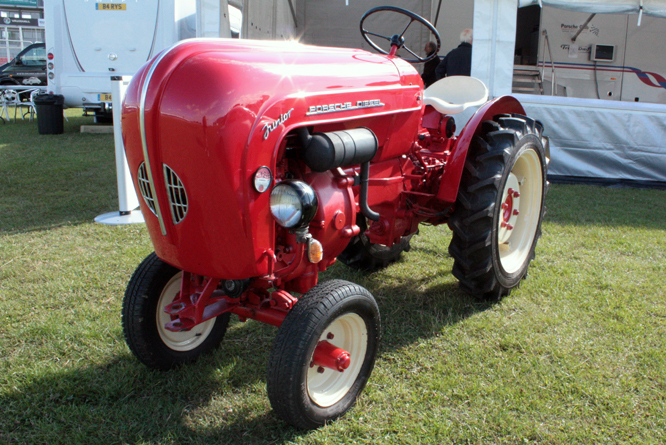
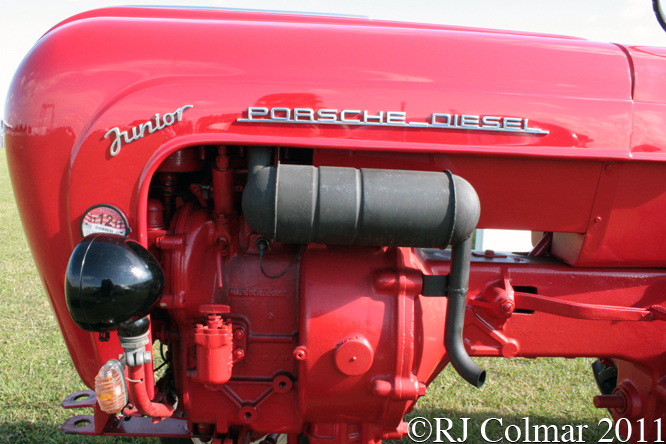
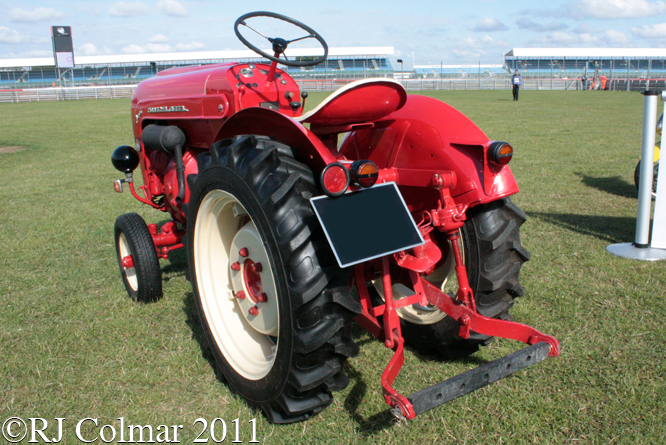
Sturdy, Powerful and Foolproof – Porsche Diesel Junior AP 108

Dr Ferdinand Porsche looked at agricultural applications of his products as early as 1914 when he used a military Austro Daimler vehicle to plough fields at the Austro Daimler works.

Porsche Diesel Junior AP108, Silverstone Classic, Siverstone

By 1937 Ferdinand had noted that “Tractors must have a low purchase price. Secondly, they must have low maintenance cost. Thirdly, they must be of universal application in agriculture. Sturdy, powerful and foolproof” in a list of criteria for an agricultural vehicle that was to become known as the ‘Volksschlepper’ for which many prototypes were built, but never went into production.

Porsche Diesel Junior AP108, Silverstone Classic, Siverstone

By the 1950’s Porsche had designed a range of four air cooled diesel powered tractors producing 14 – 50 hp with the advantage of all the motors being multiples of the basic 1 cylinder 14hp design meaning all the parts including cylinders, pistons and cylinder heads were interchangeable.

Porsche Diesel Junior AP108, Silverstone Classic, Siverstone

Porsche initially sold the production rights to a German Company called Allgaier who marketed their vehicles as Allgaier – System Porsches, and the Austrian manufacturer Hofherr Schrantz who’s products were marketed as Hofherr Schrantz – System Porsches.

Porsche Diesel Junior AP108, Silverstone Classic, Siverstone

Mannesmann AG bought the Allgaier – System Porsche rights in 1956 and converted the former Zepplin works at Fredrichshafen, Lake Konstanz in to a state of the art facility at which 20,000 units were manufactured in 1958. Production at the plant ceased in 1963 when the facility was turned over to the production of motors for military motors for use in NATO vehicles.

Porsche Diesel Junior AP108, Silverstone Classic, Siverstone

In part to meet the fool proof criteria and in part because the tractor operates most efficiently at constant revs a fluid transmission commissioned from Voith, based on their marine transmissions, for Porsche Diesel tractors, a feature well ahead of the development curve of other tractor manufacturers of the period.

Porsche Diesel Junior AP108, Silverstone Classic, Siverstone

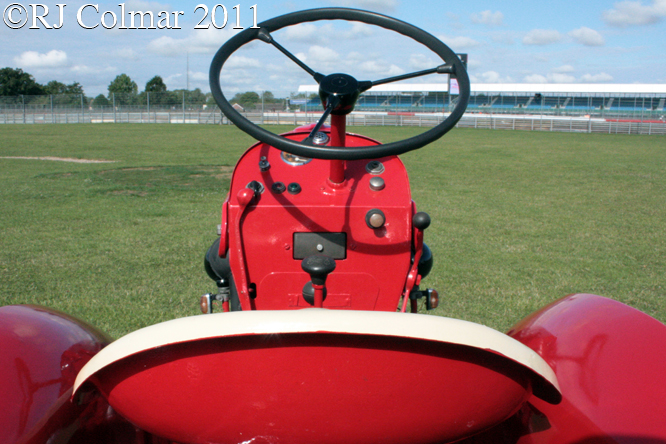
Today’s 1958 Junior fitted with a single cylinder 822 cc / 50 cui 14hp motor is one of the 125,000 Porsche-Diesel tractors produced at the Mannesmann AG facility between 1956 and 1963, when an arrangement was reached with Renault to continue servicing them world wide.

Thanks for joining me on this “Sturdy, Powerful and Foolproof” edition of “Gettin’ a li’l psycho on tyres” I hope you will join me again tomorrow when I’ll be looking at an Edwardian competition car that was among the earliest to carry sponsorship. Don’t forget to come back now !

Share

Last Finest And Most Exciting – Bristol Fighter

When I got up at some absolutely ungodly, dark and cold, hour last November to join some friends from the Bristol Pegasus Motor Club for a trip to the Classic Motor Show at the NEC in Birmingham the last thing I could have imagined was finding my self sitting at the wheel of a 210 mph car, the last Bristol ever built to boot, taking a selfie, a couple of hours later thanks to the generosity of owner Mr Gibbs that is exactly what happened.
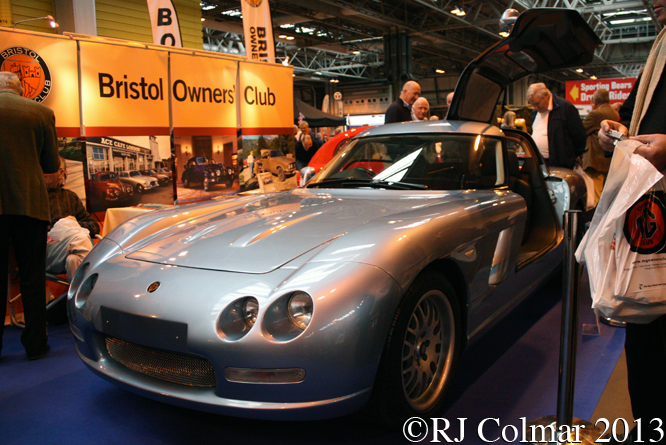
Bristol Fighter, Classic Motor Show, NEC Birmingham

The Bristol Fighter was designed by Max Bostrom, regular GALPOT readers might remember another vehicle from his design portfolio the rumbling Aston Martin AMR 1 Group C Le Mans challenger. The design of the Fighter seems to center on it’s motor which is based on the 8 litre / 487 cui all aluminium Chrysler V10 as used in the Dodge Viper and Dodge Ram SRT-10 pick up.
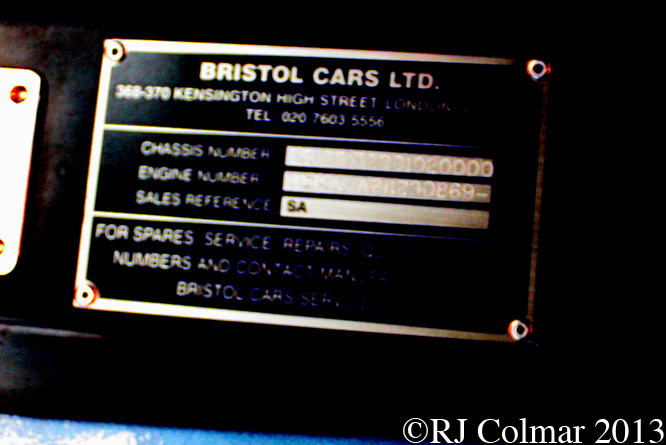
Bristol Fighter, Classic Motor Show, NEC Birmingham

Fitted with Bristol’s own heads the motor was made available with 525 hp in normally aspirated base form, a 628 hp option was also available which with the effects of ram air when in motion is boosted to 660 hp, and if that was not was not enough in turbocharged from the motor produced 1012 hp to become the second most powerful motor ever offered by a manufacturer second only to the 1046 hp quoted for the SSC Aero.
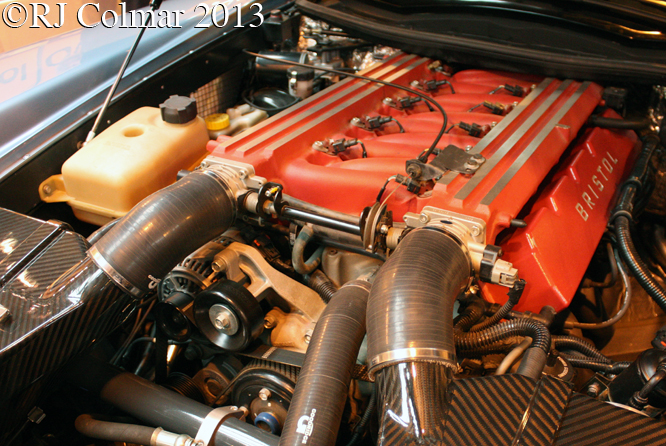
Bristol Fighter, Classic Motor Show, NEC Birmingham

The standard transmission is a six speed manual and with all the torque from the V10, when Richard Porter tested one for evo magazine in in 2008 he found the motor would pull in sixth gear from as low as 30 mph. A 4 speed automatic was an option with performance being the same regardless of transmission meaning 60 mph could be reached from rest in a claimed 4 seconds with the 525 hp motor.

Bristol Fighter, Classic Motor Show, NEC Birmingham

Despite extensive use of aluminium and carbon fiber to save weight and keep the center of gravity than almost every weekend apart from a Ferrari Enzo the interior is completely civilised and decked with finest Wilton carpet over extra thick soundproofing underlays to provide a “perfect environment in which to enjoy the car’s astonishing performance.
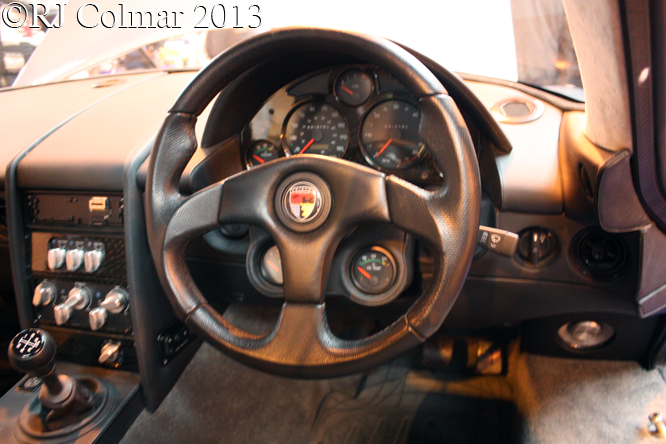
Bristol Fighter, Classic Motor Show, NEC Birmingham

At 6′ tall I find many performance vehicles no go area’s, however the Bristol is different it was designed to accommodate individuals between 5′ and 6′ 7″. I can just picture my 5′ 2″ mother loving this car since she recently passed her Institute of Advanced Motorists test. Notice the swicth gear, finest military grade good enough to last the life of the car, just as well since a replacement switch would cost you £60 each in 2008.
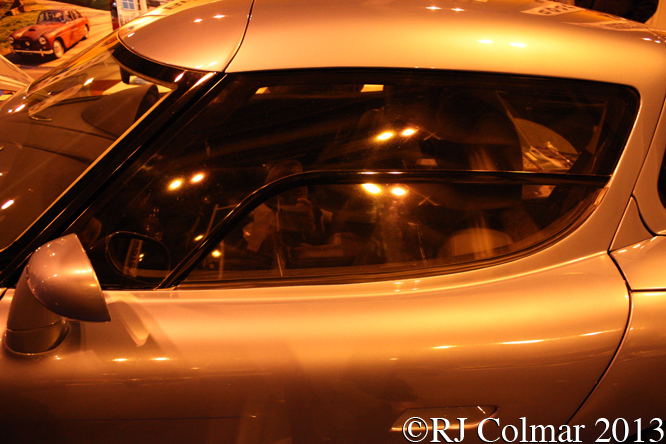
Bristol Fighter, Classic Motor Show, NEC Birmingham

With all of that glass parking should be a piece of cake, no having to open the gull wing doors and getting a mate to talk you in as would be mandatory with some of Marchello Gandini or Pininfarina’s finest designs.
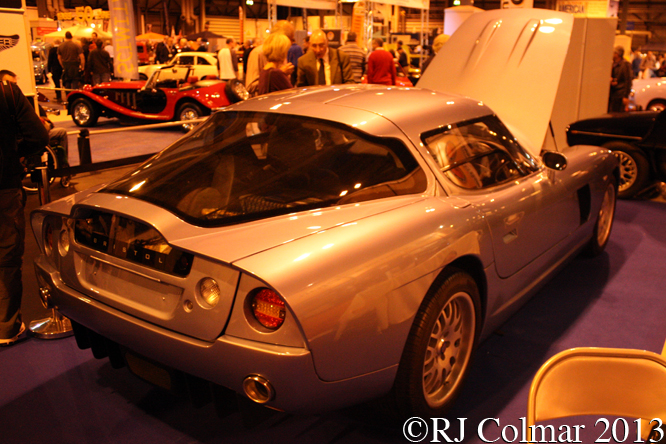
Bristol Fighter, Classic Motor Show, NEC Birmingham

As Bristol said “in a world where cars are styled first and tested for function afterwards the Fighter is again unique”. The 0.28 drag coefficient of the body is class leading, in part because this 210 mph car has no need of wings, Gurney flaps or even venturi because it was designed to set new aerodynamic standards not follow the crowd.
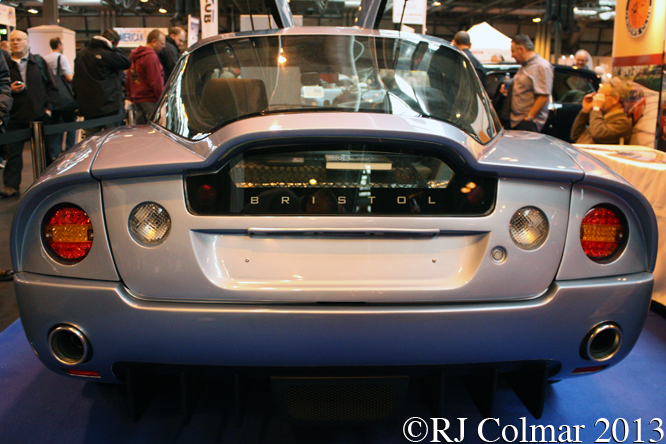
Bristol Fighter, Classic Motor Show, NEC Birmingham

Exact production numbers for the Fighter are hard to come by one source says sixteen Fighters were built while another suggests at least 46 may have been built. What is for sure is that today’s featured car was the last completed Bristol to leave the factory, the owner Mr Gibbs also tells me that one incomplete Fighter left the factory when it closed down in 2011.

In the advertising cody for the Fighter model Bristol claim that it is “Designed according according to engineering and aerodynamic principles, it is intended to represent the finest and most exciting way for two people to travel by road.” One day I’d like to put that to the test, meantime I’d like to thank Mr Gibbs for letting me try his Fighter, the very last complete Bristol to leave the factory, for size.

Now all I have to do is see if I can save my pennies fast than any one else before Mr Gibbs parts with it, did I mention this car which has never been registered is for sale ? It was and if you would like to purchase it get in touch and I’ll gladly pass the message on.

Thanks for joining me on this “Last Finest And Most Exciting” edition of “Gettin’ a li’l psycho on tyres” I hope you will join me again tomorrow. When I’ll be looking at a agricultural super vehicle. Don’t forget to come back now !
Share

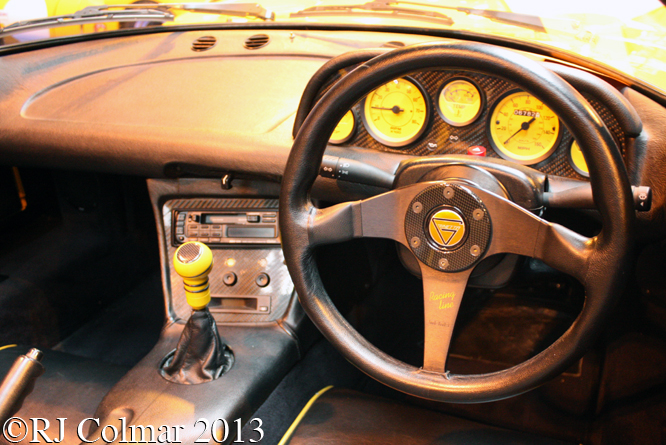
Another Napkin Job – Ginetta G33

By the mid 1980’s Ginetta were looking to return to their glory days of the G15 in terms of volume and they developed a mid engined vehicle known as the G32 and invested in type approval so that the car could be sold as a turn key model. The Walketts even sold out to a team led by Martin Phaff and Mike Modiri with Ivor Walkett remaining as Technical Director to secure the companies future in 1989.

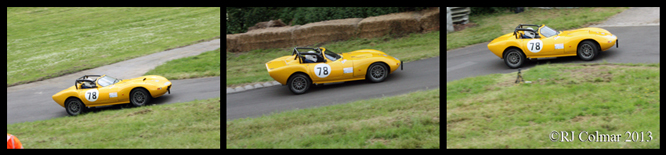
Ginetta G.33, Beale, Gurston Down

The G32 was scheduled to be launched at the 1990 British International Motor Show at the NEC in Birmingham. A couple of months earlier Mark Warklett and Noel Palmer, a former TVR employee, were eating pizza in a restaurant when they hatched a plan to fit a ubiquitous all aluminium Rover 3.9 litre / 240 cui V8 developed from the 1960’s Buick 215 V8, into a 4 cylinder Ginetta G27, sketching out the idea on a napkin.

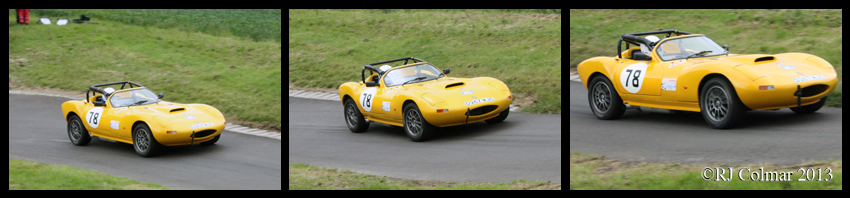
Ginetta G.33, Beale, Gurston Down

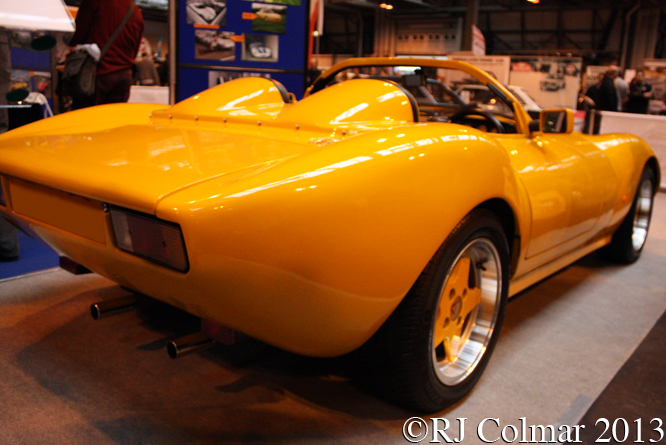
While preparing the G32 for it’s launch Ginetta managed to find the time to squeeze a Rover V8 into a G27 which became the prototype G33 that appeared next to the G32 on Ginetta’s stand at the 1990 International Motor Show. The Prototype G33 was tested by Tiff Needell on Top Gear and before they new what was happening Ginetta received a flood of enquiries about the G33 which could reach 60 mph from rest in 5 seconds and had a top speed of 150 mph from it’s standard Rover V8 which produced 205 hp.

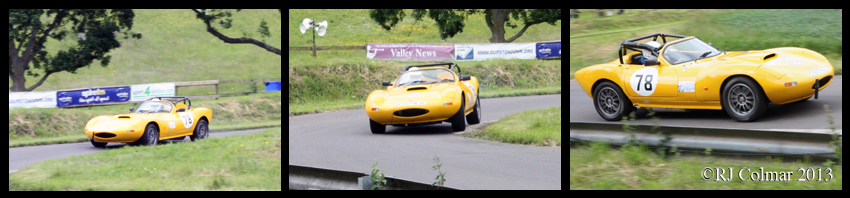
Ginetta G.33, Beale, Gurston Down

To meet the unexpected demand Ginetta rushed the G33 into production with a steel space frame chassis and fibre glass body that was wider than the G27 to accommodate the V8. Not having the resources to get the car type approved the G33 was sold in virtually complete form, as was possible in those days, with instructions on how to finish the car off for the same price as a modest performance saloon/sedan.

Ginetta G.33, Beale, Gurston Down

It is thought 90 G33s were built, many with subtle differences due to the lack of time to develop the model properly, up until 1993 when the company had to be rescued from financial difficulties with insufficient resources to continue production of the G33. A prototype 4 cylinder Ford Cosworth powered example of the G33 was built but the car was stolen from the factory before it was developed.

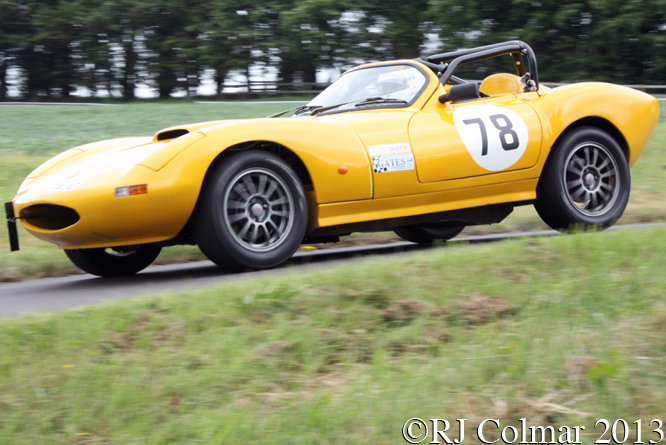
Ginetta G.33, Gurston Down, Classic Motor Show, NEC, Birmingham,

To raise cash the rights to manufacture along with the G33 moulds were sold to a Swedish concern called Gin 1, pronounced Gin Ettain Swedish who manufactured the renamed G34 with a turbocharged 2 litre Volvo motor taken from the 900 Series.

Ginetta G.33, Gurston Down, Classic Motor Show, NEC, Birmingham,

16 Gin 1s were manufactured before they folded with the manufacturing rights and moulds returning to Ginetta who based their 1998 40th Anniversary G40 model on the G33. The #78 seen at Gurston Down is being driven by Graham Beale and according to the programme is fitted with a 1993 cc turbo charged motor, possibly a Ford YB RS Cosworth motor.

Thanks for joining me on this “Another Napkin Job” edition of “Gettin’ a li’l psycho on tyres” I hope you will join me again tomorrow when I’ll be looking at the very last complete car to leave the Bristol factory. Don’t forget to come back now !
Share

Never Beaten In Class – Ferrari 250 GTO #4293GT

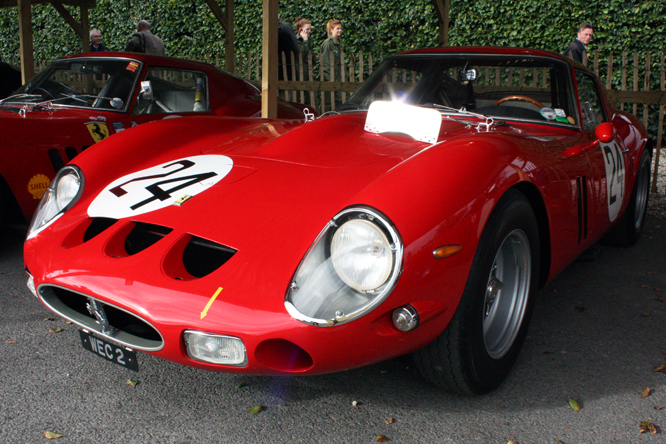
Today’s featured Ferrari 250 GTO chassis #4293GT was originally assigned to Scuderia San Ambreous, the same team who famously fielded Formula One debutant Giancarlo Baghetti in the 1961 French Grand Prix which he promptly won, however for reasons that are not clear to me at the time of writing Scuderia San Ambreous never took delivery of the car which instead ended up in the hands of Belgian Jacques Swaters and his Ecurie Francorchamps equipe in April 1963.

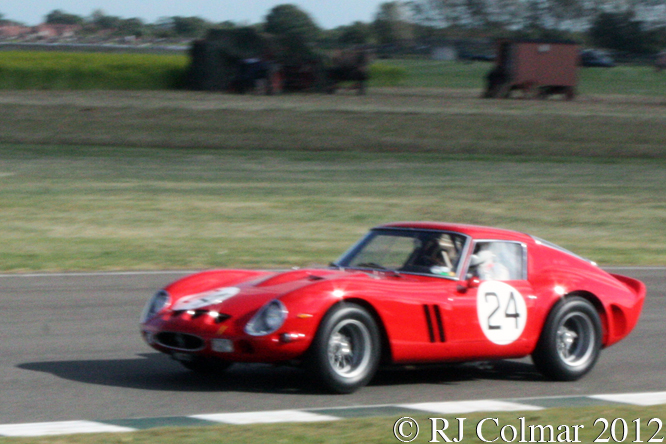
Ferrari 250 GTO, Goodwood Revival

Willy Mairesse drove #4293GT to an overall victory on it’s debut in the 500km race at Spa. The cars next outing was in the Le Mans 24 hours where noted Businessman/Jazz Guitarist/Car Collector and Sponsor Jean “Beurlys” Blaton shared the driving with Gérald Langlois van Ophem to record the 250 GTO models 2nd consecutive second place finish some 16 laps behind the winning prototype Ferrari 250 P driven by Lorenzo Bandini and Ludovico Scarfiotti.

Ferrari 250 GTO, Connor, Goodwood Revival

“Beurlys” then drove #4293 GT to victory in a race at Zolder before the cars final appearance race appearance in the 1963 12 hour race at Reims where the car appears to have been driven solo by Belgian Lucien Bianchi to a 3rd overall and first in class. #4293 was driven in practice for the 1964 1000kms race at the Nurburgring by Lucien Bianchi, Jean Guichet and Nino Vaccarella but the car never took the start meaning it record of four starts and four class victories remained intact.

Ferrari 250 GTO, Connor, Goodwood Revival

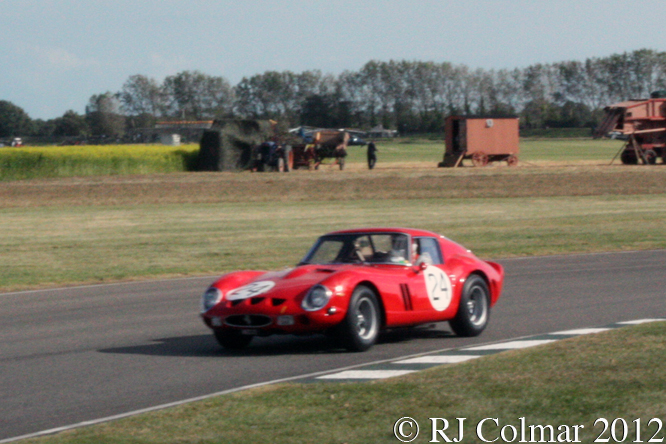
No further in period races are recorded for #4293GT and by the end of 1963 the car was in the United States where it remained until 1982. From 1982 to to 1996 #4293GT went to Japan and thence to Hong Kong until 2002 when it was acquired by William E. ‘Chip’ Connor of Incline Village, NV who is seen driving the car above in the 250 GTO 50th Anniversary demonstration at Goodwood Revival a couple of years ago.

Thanks for joining me on this “Never Beaten In Class” edition of “Gettin’ a li’l psycho on tyres”, I hope you will join me again tomorrow when I’ll be looking a my favorite Ginetta model. Don’t forget to come back now !
Share

“Li’l Baja”- Pope Hartford Public Service Wagon

In 1876 Civil war veteran Brevet Lieutenant-Colonel Albert Augustus Pope visited the Philadelphia Exposition and left with a new found passion for cycling that saw him corner the market in US patents for the new mode of transport which reputedly financially rewarded him to the tune of $10 per cycle made in the USA as the new past time took off. By 1896 Pope’s own Columbia brand cycles had become the largest cycle manufacturer in the USA.

Pope’s interests diversified to include motor cycles and mopeds as internal combustion motors evolved and in 1897 Pope started manufacturing electric vehicles in Hartford, Connecticut. With over 500 vehicles built under the engineer Hiram Percy Maxim the electric vehicle manufacturing department was spun off as an independent business to become the Columbia Automobile Company.

Pope Hartford, Public Service Wagon, San Francisco Presidio Concours d'Elegance

In 1901 Pope reentered the motor vehicle manufacturing business with the first of a string of enterprises that included Pope-Hartford, Pope-Robinson, Pope-Toledo, Pope-Tribune and Pope-Waverly.

In 1909 the 4 cylinder 40 hp Pope Hartford Public Service Wagon was marketed as a vehicle suitable for Fire Chiefs and Law Enforcement patrols.

That same year Jack Flemming drove one to a one lap victory in the 254 mile Oakland Portola Road road race in California, in front of an estimated 300,000 spectators spread along the 21 mile track, at a record road race speed of 64.51 mph, faster than the Vanderbuilt Cup races in which both Pope Hartford and Pope Toledo models took part.

Thereafter the Public Service Wagon model also became known as the Portola Roadster. The 1913 example seen in this photograph, taken by Geoffrey Horton at the 2011 San Francisco Presidio Concours d’Elegance, was restored originally by Elan Frank Tafiaferro and allegedly raced by him in Baja California, Mexico, in the 1950’s.

The cars current owners Bill and Lee Gularte have owned the car since 2000 and undertook their own five year restoration which was rewarded in 2006 with Class honours in the the Hillsborough and Palo Alto Concours d’Elegance and best in show at the Half Moon Concours, the following year “Lil Baja” was best in show at Niello, Serrano and Hillsborough.

Brevet Lieutenant-Colonel Albert Augustus Pope went bankrupt in 1907 and died two years later, the Pope Hartford marque survived until 1914, while Colombia bicycles are still manufactured at One Clycle Street, Westfield Connecticut.

My thanks to Geoffrey Horton for sharing the photograph of the Gularte’s magnificent “Li’l Baja”.

Thanks for joining me on this “Li’l Baja” edition of “Gettin’ a li’l psycho on tyres” I hope you will join me for Ferrari Friday tomorrow. Don’t forget to come back now !
Share

There Will Be Changes – McLaren Mercedes MP4-28

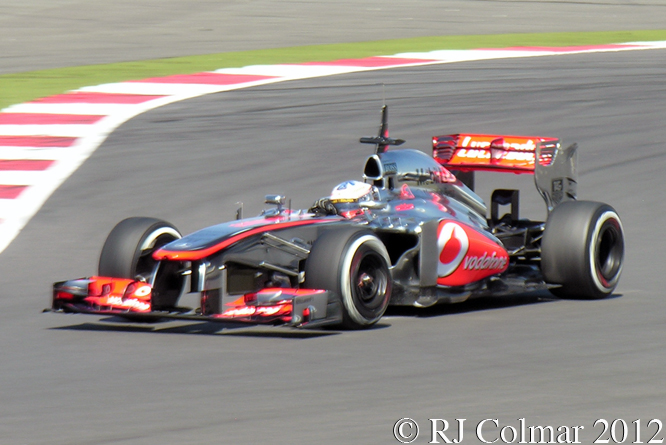
Going into their 48th consecutive season of the Formula One World Championship McLaren had a record of winning 8 Constructors Championships and 30 top 3 finishes in the World Constructors Championship, so coming off a 2012 season which included 7 race victories and a 3rd place finish in final championship standings behind the old foe Ferrari and young upstarts Red Bull it would have been a brave man who would bet that McLaren would not at least finish in the top 3 for the 31st time and at least score a race win or two.

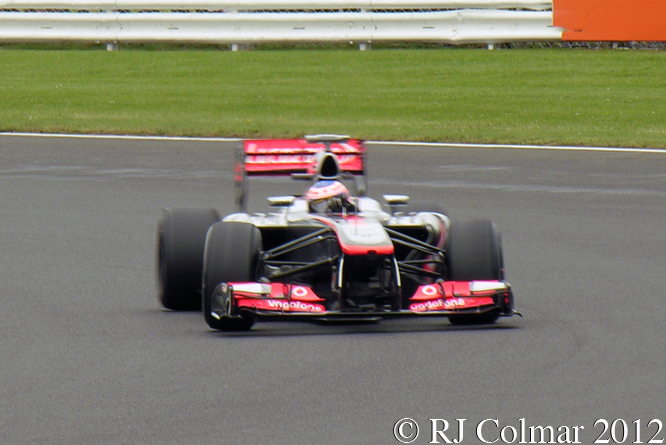
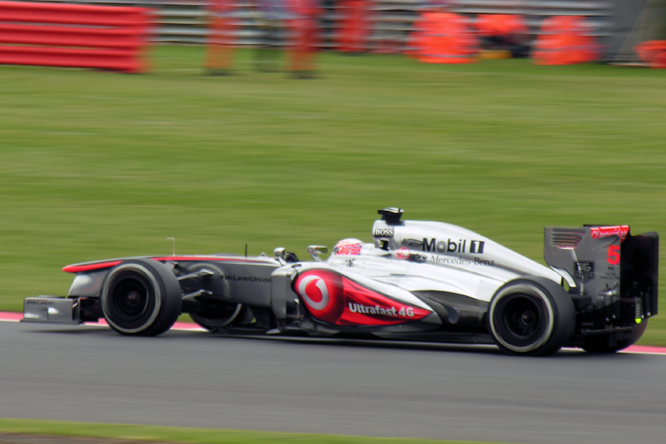
McLaren Mercedes MP4-28, Button, British GP P2, Silverstone

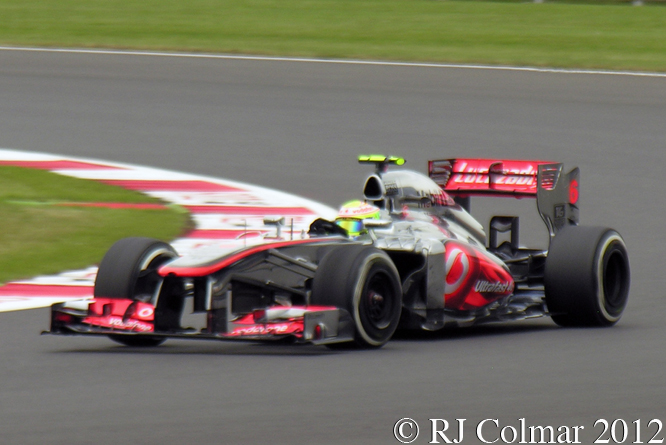
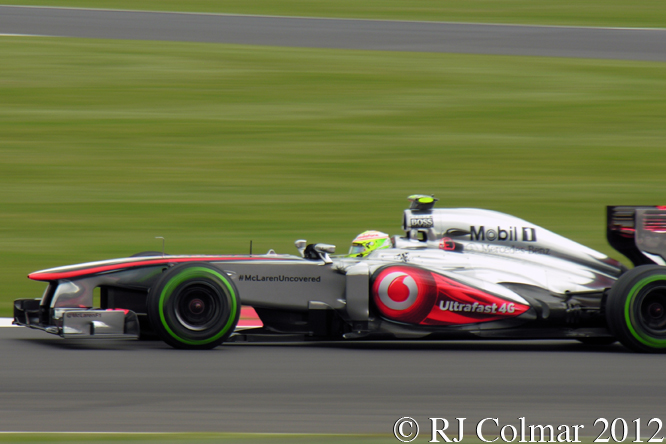
Jenson Button, above, who had won the opening and closing races of the 2012 season was joined by young Mexican charger Sergio Perez, below, after Lewis Hamilton left the team, which had nutured him from a talented teenager to the 2008 World Drivers championship, for bigger bucks and the fresh waters at Mercedes Benz.

McLaren Mercedes MP4-28, Perez, British GP P2, Silverstone

The all new Mercedes powered MP4-28 was the work of a team led by Paddy Lowe incorporating new suspension with rear wishbones designed to manage rear tyre wear by adding camber to the rear wheels as the vehicles speed increased. The car flattered in pre season testing due to an incorrectly fitted suspension part that saw the cars ride height lowered to a level that proved unsustainable by the time the championship season started.

McLaren Mercedes MP4-28, Paffett, British GP P2, Silverstone

As a consequence for the first half of the season McLaren were struggling to maintain 5th place in the championship ahead of the similarly powered Force Indias, a team to which McLaren were supplying gearboxes. The low point of the season came when both cars failed to score any points at either the Canadian or British Grand Prix, breaking a run of 64 races in which McLaren had at least one car in the points going back to the 2009 Abu Dhabi Grand Prix. Test driver Gary Paffett is seen in the MP4-28 above during the Young Driver Test at Silverstone.

McLaren Mercedes MP4-28, Perez, British GP P2, Silverstone

By the season’s end the team’s best result was a single 4th place scored by Jenson Button in the final race of the season in Brazil, Sergio Perez manged a season high 5th place in India and for the first time since 1980 no McLaren driver had finished a season with at least one podium finish.

McLaren Mercedes MP4-28, Button, British GP P2, Silverstone

Unsurprisingly before the season had ended changes in the team were being announced, towards the end of the season it was announced the McLaren will use Honda motors form 2015 reforming an alliance that brought McLaren four World Constructors Championships and one drivers championship for Alain Prost and three for Ayrton Senna.

Technical director Paddy Lowe had already moved to Mercedes Benz where he has replaced Ross Brawn and was himself replaced at McLaren by Tim Goss, Sergio Perez was more or less fired and announced he would be joining Force India with McLaren’s test driver Kevin Magnussen replacing Sergio at McLaren.

Further changes are anticipated in the wake of the announcement that Ron Dennis has returned to the role of CEO at McLaren, having left that post in 2012 to focus on the role of Chairman. On his reappointment Ron was quoted as saying “There will be changes” and these are expected to include a newly defined role for incumbent CEO and Team Principle Martin Whitmarsh. Since Ron’s reappointment former Lotus F1 Team Principle Eric Boullier has been recruited to the role of Race Director.

To stay abreast of developments at McLaren visit their website linked here, official facebook page linked here and twitter feed linked here.

Thanks for joining me on this “There will be changes” edition of “Gettin’ a li’l psycho on tyres” I hope you will join me for a look at an Edwardian vehicle designed as a law enforcement vehicle that turned out to be a race winner. Don’t forget to come back now !
Share